

Molecular subgroups of medulloblastoma: the current consensus
Open accessThe DOI matches its Crossref record; 52 of the 53 references it cites were found in a registry or an index.
Abstract
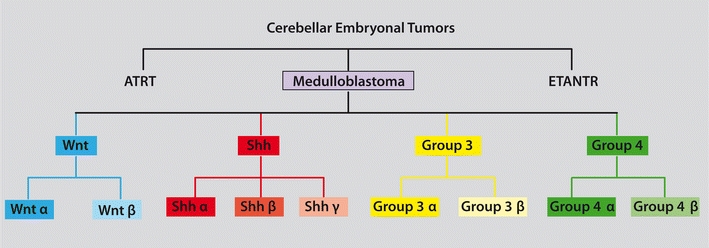
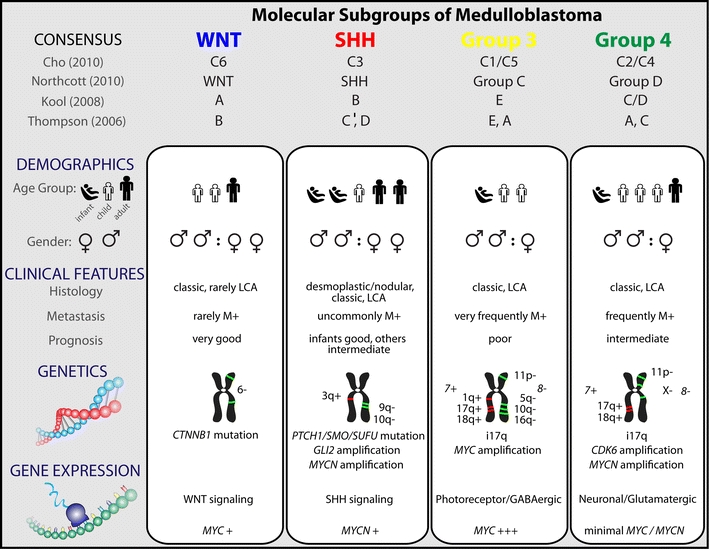
Medulloblastoma, a small blue cell malignancy of the cerebellum, is a major cause of morbidity and mortality in pediatric oncology. Current mechanisms for clinical prognostication and stratification include clinical factors (age, presence of metastases, and extent of resection) as well as histological subgrouping (classic, desmoplastic, and large cell/anaplastic histology). Transcriptional profiling studies of medulloblastoma cohorts from several research groups around the globe have suggested the existence of multiple distinct molecular subgroups that differ in their demographics, transcriptomes, somatic genetic events, and clinical outcomes. Variations in the number, composition, and nature of the subgroups between studies brought about a consensus conference in Boston in the fall of 2010. Discussants at the conference came to a consensus that the evidence supported the existence of four main subgroups of medulloblastoma (Wnt, Shh, Group 3, and Group 4). Participants outlined the demographic, transcriptional, genetic, and clinical differences between the four subgroups. While it is anticipated that the molecular classification of medulloblastoma will continue to evolve and diversify in the future as larger cohorts are studied at greater depth, herein we outline the current consensus nomenclature, and the differences between the medulloblastoma subgroups.
Overview
The claims and statistics of this paper haven’t been checked yet.
Free: it reads the open-access text and checks the first 5 claims that cite a source we can check. Create a free account to check every claim.
Integrity signals
Registry
Cites
Statistics
Figures
Verification
Claims the paper makes
The claims and statistics of this paper haven’t been checked yet.
Free: it reads the open-access text and checks the first 5 claims that cite a source we can check. Create a free account to check every claim.
Self-check
Percentages, sums and reported differences re-computed from the paper’s own numbers.
The self-check needs the paper’s full text.
Citations
Cites
The 2007 WHO Classification of Tumours of the Central Nervous System
Louis, D. N., Ohgaki, H., Wiestler, O. D., Cavenee, W. K., Burger, P. C., Jouvet, A., Scheithauer, B. W., & Kleihues, P. (2007) · Acta Neuropathologica · doi:10.1007/s00401-007-0243-4 · Cited by 15,397
Golub, T. R., Slonim, D. K., Tamayo, P., Huard, C., Gaasenbeek, M., Mesirov, J. P., Coller, H., Loh, M. L., Downing, J. R., Caligiuri, M. A., et al. (1999) · Science · doi:10.1126/science.286.5439.531 · Cited by 11,516 · cited 1×
“This transcriptional approach to tumor sub-classification has also been applied to a number of different non-medullo-blastoma histologies [4, 16, 18, 31, 35, 43], with the underlying assumption that tumors with similar transcriptomes will behave in a biologically similar manner, allowing a…”
BackgroundErratum to: The 2007 WHO classification of tumours of the central nervous system
Louis, D. N., Ohgaki, H., Wiestler, O. D., Cavenee, W. K., Burger, P. C., Jouvet, A., Scheithauer, B. W., & Kleihues, P. (2007) · Zurich Open Repository and Archive (University of Zurich) · doi:10.5167/uzh-156115 · Cited by 4,442
Phillips, H. S., Kharbanda, S., Chen, R., Forrest, W. F., Soriano, R. H., Wu, T. D., Misra, A., Nigro, J. M., Colman, H., Soroceanu, L., et al. (2006) · Cancer Cell · doi:10.1016/j.ccr.2006.02.019 · Cited by 3,143 · cited 1×
“…transcriptional approach to tumor sub-classification has also been applied to a number of different non-medullo-blastoma histologies [4, 16, 18, 31, 35, 43], with the underlying assumption that tumors with similar transcriptomes will behave in a biologically similar manner, allowing a…”
BackgroundBhattacharjee, A., Richards, W. G., Staunton, J., Li, C., Monti, S., Vasa, P., Ladd, C., Beheshti, J., Bueno, R., Gillette, M., et al. (2001) · Proceedings of the National Academy of Sciences · doi:10.1073/pnas.191502998 · Cited by 2,576 · cited 1×
“This transcriptional approach to tumor sub-classification has also been applied to a number of different non-medullo-blastoma histologies [4, 16, 18, 31, 35, 43], with the underlying assumption that tumors with similar transcriptomes will behave in a biologically similar manner, allowing a…”
BackgroundPrediction of central nervous system embryonal tumour outcome based on gene expression
Pomeroy, S. L., Tamayo, P., Gaasenbeek, M., Sturla, L. M., Angelo, M., McLaughlin, M. E., Kim, J. Y. H., Goumnerova, L. C., Black, P. M., Lau, C., et al. (2002) · Nature · doi:10.1038/415436a · Cited by 2,371 · cited 2×
“With recent developments in the ability to monitor transcription across the genome in the setting of a single experiment, various groups have started to sub-classify medulloblastoma on the basis of differences in the transcriptome [36].”
BackgroundSelf-citationIdentification of a CpG Island Methylator Phenotype that Defines a Distinct Subgroup of Glioma
Noushmehr, H., Weisenberger, D. J., Diefes, K., Phillips, H. S., Pujara, K., Berman, B. P., Pan, F., Pelloski, C. E., Sulman, E. P., Bhat, K. P., et al. (2010) · Cancer Cell · doi:10.1016/j.ccr.2010.03.017 · Cited by 2,337 · cited 1×
“This transcriptional approach to tumor sub-classification has also been applied to a number of different non-medullo-blastoma histologies [4, 16, 18, 31, 35, 43], with the underlying assumption that tumors with similar transcriptomes will behave in a biologically similar manner, allowing a…”
BackgroundMedulloblastoma Comprises Four Distinct Molecular Variants
Northcott, P. A., Korshunov, A., Witt, H., Hielscher, T., Eberhart, C. G., Mack, S., Bouffet, E., Clifford, S. C., Hawkins, C. E., French, P., et al. (2011) · Journal of Clinical Oncology · doi:10.1200/jco.2009.27.4324 · Cited by 1,339 · cited 12×
“Others approaches to identify Shh medulloblastomas have included immunohistochemical staining for SFRP1 [2, 28, 48], or GAB1 [11].”
BackgroundMethodInfluentialSelf-citationThe Molecular Basis of Turcot's Syndrome
Hamilton, S. R., Liu, B., Parsons, R. E., Papadopoulos, N., Jen, J., Powell, S. M., Krush, A. J., Berk, T., Cohen, Z., Tetu, B., et al. (1995) · New England Journal of Medicine · doi:10.1056/nejm199503303321302 · Cited by 1,133 · cited 1×
“Germline mutations of the Wnt pathway inhibitor APC predispose to Turcot syndrome, which includes a proclivity to medulloblastoma, in addition, somatic mutations of CTNNB1 encoding b-catenin have been found in sporadic medulloblastomas [19, 50].”
BackgroundKool, M., Korshunov, A., Remke, M., Jones, D. T. W., Schlanstein, M., Northcott, P. A., Cho, Y.-J., Koster, J., Schouten-van Meeteren, A., van Vuurden, D., et al. (2012) · Acta Neuropathologica · doi:10.1007/s00401-012-0958-8 · Cited by 1,056 · cited 3×
“…to identify target cohorts for certain drugs (e.g., SHH inhibitors), but also add significantly to outcome prediction by the time of diagnosis [21], much more than any of the established clinical markers such as patient age, metastatic stage at diagnosis, level of resection, and histological…”
BackgroundMethodInfluentialSelf-citation
Cited by
Items 901–1,000 of 1,003
Epigenetic mechanisms in paediatric brain tumours: regulators lose control
Badodi, S., & Marino, S. (2022) · Biochemical Society Transactions · doi:10.1042/bst20201227 · Cited by 14
How Genetics and Genomics Advances Are Rewriting Pediatric Cancer Research and Clinical Care
Cipri, S., Abenavoli, L., Boccuto, L., Baldo, G. D., & Mastronuzzi, A. (2022) · Medicina · doi:10.3390/medicina58101386 · Cited by 13
The Molecular Landscape of Pediatric Brain Tumors in the Next-Generation Sequencing Era
Firme, M. R., & Marra, M. A. (2014) · Current Neurology and Neuroscience Reports · doi:10.1007/s11910-014-0474-4 · Cited by 13
Arnhold, V., Boos, J., & Lanvers‐Kaminsky, C. (2016) · Cancer Chemotherapy and Pharmacology · doi:10.1007/s00280-016-2962-5 · Cited by 14
“The SHH subgroup of medulloblastoma is supposed to be driven by aberrantly activated hedgehog signaling [18].”
BackgroundVermeulen, J. F., Hecke, W. V., Spliet, W. G. M., Hidalgo, J. V., Fisch, P., Broekhuizen, R., & Bovenschen, N. (2016) · PLoS ONE · doi:10.1371/journal.pone.0151465 · Cited by 13
“Histologically they appear as small round blue progenitor cell tumors, but biologically andmolecularly they are distinct entities [2, 3].”
Senfter, D., Erkan, E. P., Özer, E., Jungwirth, G., Madlener, S., Kool, M., Ströbel, T., Saydam, N., & Saydam, O. (2017) · Pediatric Blood & Cancer · doi:10.1002/pbc.26670 · Cited by 13
Self-citationCole, B., Pritchard, C. C., Anderson, M. S., & Leary, S. E. S. (2017) · Pediatric and Developmental Pathology · doi:10.1177/1093526617743905 · Cited by 13
MicroRNA–mRNA expression profiles associated with medulloblastoma subgroup 4
Gershanov, S., Toledano, H., Michowiz, S. D., Barinfeld, O., Pinhasov, A., Goldenberg‐Cohen, N., & Salmon‐Divon, M. (2018) · Cancer Management and Research · doi:10.2147/cmar.s156709 · Cited by 14
“Overall, genetic characterization of the tumor is essential for appropriate clinical decision-making.(8,11) While the SHH and WNT subgroups have well-defined and specific biomarkers, the diagnosis of Group 3 and Group 4 is more challenging; hence, it is of high priority to detect novel genes or microRNAs (miRNAs) that…”
Okolie, O., Irvin, D., Bagó, J. R., Sheets, K., Satterlee, A., Carey-Ewend, A. G., Lettry, V., Dumitru, R., Elton, S., Ewend, M. G., et al. (2018) · PLoS ONE · doi:10.1371/journal.pone.0198596 · Cited by 14
Medulloblastoma: Challenges and advances in treatment and research
Martirosian, V., & Neman, J. (2018) · Cancer Reports · doi:10.1002/cnr2.1146 · Cited by 13
“Furthermore, MB occurs in more male than female patients.(3,6) While mortality rates for nodular lymphoid hyperplasia (NLH), acute lymphocytic leukemia (ALL), and acute myelogenous leukemia (AML) were reduced by 75% and 60% (NLH/ALL, AML), respectively, survival rates for solid tumors, especially those with disseminat…”
BackgroundKorshunov, A., Sahm, F., Okonechnikov, K., Ryzhova, M. V., Stichel, D., Schrimpf, D., Casalini, B., Sievers, P., Meyer, J., Zheludkova, O., et al. (2019) · Acta Neuropathologica · doi:10.1007/s00401-019-01981-6 · Cited by 13
Self-citationAntibodies Targeting K V Potassium Channels: A Promising Treatment for Cancer
Hernández‐Reséndiz, I., Hartung, F., & Pardo, L. A. (2019) · Bioelectricity · doi:10.1089/bioe.2019.0022 · Cited by 16
Stock, A., Mynarek, M., Pietsch, T., Pfister, S. M., Clifford, S. C., Goschzik, T., Sturm, D., Schwalbe, E. C., Hicks, D., Rutkowski, S., et al. (2019) · American Journal of Neuroradiology · doi:10.3174/ajnr.a6286 · Cited by 13
Self-citationLee, J. W., Lim, D. H., Sung, K. W., Cho, H. W., Ju, H. Y., Hyun, J. K., Yoo, K. H., Koo, H. H., Suh, Y., Joung, Y., et al. (2020) · Cancer Medicine · doi:10.1002/cam4.3199 · Cited by 13
“Days to reach a PLT count 20 000/μLa,c 18 (13-35) 21 (14-99) 22 (13-294) 24 (15-88)”
The 100 Most Influential Publications on Medulloblastoma: Areas of Past, Current, and Future Focus
Brown, N. J., Wilson, B. R., Shahrestani, S., Choi, E. H., Lien, B. V., Paladugu, A., Tran, K., Ransom, S. C., Tafreshi, A. R., Ransom, R. C., et al. (2020) · World Neurosurgery · doi:10.1016/j.wneu.2020.11.038 · Cited by 13
Werbowetski‐Ogilvie, T. E. (2021) · FEBS Journal · doi:10.1111/febs.15817 · Cited by 16
Shiraishi, R., & Kawauchi, D. (2021) · Cancer Science · doi:10.1111/cas.14990 · Cited by 14
Mahdavi, M., Moghaddam, S. S., Abbasi‐Kangevari, M., Mohammadi, E., Shobeiri, P., Sharifi, G., Jafari, A., Rezaei, N., Ebrahimi, N., Rezaei, N., et al. (2023) · Cancer Medicine · doi:10.1002/cam4.5553 · Cited by 13
Lee, S. J., Litan, A., Li, Z., Graves, B., Lindsey, S. C., Barwe, S. P., & Langhans, S. A. (2015) · Molecular Cancer · doi:10.1186/s12943-015-0430-1 · Cited by 15
“Medulloblastoma is divided into four biologically different subsets of tumors defined as Wnt, Shh, Group 3 and Group 4 that have distinct genetic profiles, pathway signatures, and clinicopathological properties [3, 4].”
BackgroundPersonalized diagnosis of medulloblastoma subtypes across patients and model systems
Gendoo, D. M. A., Smirnov, P., Lupien, M., & Haibe‐Kains, B. (2015) · Genomics · doi:10.1016/j.ygeno.2015.05.002 · Cited by 13
“These differ based on histopathology, epidemiology, prognosis, and genomic profiles [4, 5].”
BackgroundTargeting Upstream Kinases of STAT3 in Human Medulloblastoma Cells
Wei, J., Ma, L., Li, C., Pierson, C. R., Finlay, J. L., & Lin, J. (2018) · Current Cancer Drug Targets · doi:10.2174/1568009618666181016165604 · Cited by 17
Molecularly Targeted Agents in the Therapy of Pediatric Brain Tumors
Bornhorst, M., & Hwang, E. I. (2019) · Pediatric Drugs · doi:10.1007/s40272-019-00369-z · Cited by 14
Wefers, A. K., Lindner, S., Schulte, J. H., & Schüller, U. (2016) · The Cerebellum · doi:10.1007/s12311-016-0774-0 · Cited by 13
Essentially all models are wrong, but some are useful
Simard, J. M. (2015) · Neurology · doi:10.1212/wnl.0000000000001769 · Cited by 13
Arrested development: the dysfunctional life history of medulloblastoma
Tao, R., Han, K., Wu, S., Friske, J. D., Roussel, M. F., & Northcott, P. A. (2024) · Genes & Development · doi:10.1101/gad.351936.124 · Cited by 18
Self-citationBúzová, D., Fröhlich, J., Zapletalová, D., Raffaele, M., Re, O. L., Tsoneva, D. K., Štěrba, J., Červený, J., & Vinciguerra, M. (2023) · Frontiers in Molecular Biosciences · doi:10.3389/fmolb.2023.1254699 · Cited by 12
Qin, N., Paisana, E., Picard, D. J., Leprivier, G., Langini, M., Custódia, C., Cascão, R., Conrad, C., Peitzsch, M., Stefanski, A., et al. (2023) · Journal of Neuro-Oncology · doi:10.1007/s11060-023-04508-y · Cited by 16
Self-citationMedulloblastoma: Current Standard of Care and Future Treatment Opportunities
Mayr, L., Azizi, A. A., Gojo, J., & Peyrl, A. (2025) · Pediatric Drugs · doi:10.1007/s40272-025-00726-1 · Cited by 13
“Group 3 (often MYC amplified) affects infants and young children, with the worst overall survival, while Group 4 has an intermediate prognosis [8].”
Bull, K., Kennedy, C., Bailey, S., Ellison, D. W., & Clifford, S. C. (2014) · Acta Neuropathologica · doi:10.1007/s00401-014-1300-4 · Cited by 12
“recent biological advances have allowed the distinction of medulloblastomas into four consensus molecular subgroups—WNT, sHH, Group 3 and Group 4—which display distinct molecular, clinical, and pathological disease characteristics [3, 4, 8, 9].”
BackgroundSelf-citationLong Noncoding RNAs: Emerging Players in Medulloblastoma
Laneve, P., Rea, J. N., & Caffarelli, E. (2019) · Frontiers in Pediatrics · doi:10.3389/fped.2019.00067 · Cited by 13
Restoration of miR-193a expression is tumor-suppressive in MYC amplified Group 3 medulloblastoma
Bharambe, H. S., Joshi, A. A., Yogi, K., Kazi, S., & Shirsat, N. V. (2020) · Acta Neuropathologica Communications · doi:10.1186/s40478-020-00942-5 · Cited by 12
Vriend, J. P., & Rastegar, M. (2020) · Biochimica et Biophysica Acta (BBA) - Molecular Basis of Disease · doi:10.1016/j.bbadis.2020.165839 · Cited by 13
Indolactam Dipeptides as Nanomolar Gli Inhibitors
Mendoza, M., Tran, U. C., Zhang, G. C., Leister, J., To, K., Malepeai-Tofaeono, T., Ondrus, A. E., & Billingsley, K. L. (2022) · ACS Medicinal Chemistry Letters · doi:10.1021/acsmedchemlett.1c00562 · Cited by 12
OLIG2 Is a Determinant for the Relapse of MYC -Amplified Medulloblastoma
Xu, Z., Murad, N., Malawsky, D. S., Tao, R., Rivero-Hinojosa, S., Holdhof, D., Schüller, U., Zhang, P., Lazarski, C. A., Rood, B. R., et al. (2022) · Clinical Cancer Research · doi:10.1158/1078-0432.ccr-22-0527 · Cited by 12
Korshunov, A., Okonechnikov, K., Stichel, D., Schrimpf, D., Delaidelli, A., Tonn, S., Mynarek, M., Sievers, P., Sahm, F., Jones, D., et al. (2022) · Acta Neuropathologica · doi:10.1007/s00401-022-02460-1 · Cited by 13
“Medulloblastoma (MB) is a heterogenous disease comprised different clinico-molecular subtypes [3, 14, 15, 20, 22, 25, 28, 32].”
BackgroundSelf-citationPatterns of failure in pediatric medulloblastoma and implications for hippocampal sparing
Baliga, S., Adams, J., Bajaj, B. V. M., Benthuysen, L. V., Daartz, J., Gallotto, S. L., Lewy, J. R., DeNunzio, N. J., Weyman, E. A., Lawell, M. P., et al. (2022) · Cancer · doi:10.1002/cncr.34574 · Cited by 12
Targeting B7‑H3 through EZH2 inhibition in MYC‑positive Group 3 medulloblastoma
Shishido, K., Purvis, I. J., Velpula, K. K., Venkataraman, S., Vibhakar, R., & Asuthkar, S. (2023) · Oncology Reports · doi:10.3892/or.2023.8556 · Cited by 12
Potassium channels as novel molecular targets in hepatocellular carcinoma (Review)
Chen, X., Zhang, L., He, L., Zheng, L., & Tuo, B. (2023) · Oncology Reports · doi:10.3892/or.2023.8622 · Cited by 12
“1 has been demonstrated to be a marker for a subgroup of medulloblastomas (23); elevated levels of Kv1.”
Contenti, J., Guo, Y., Mazzu, A., Irondelle, M., Rouleau, M., Lago, C., Leva, G., Tiberi, L., Ben‐Sahra, I., Bost, F., et al. (2023) · Cell Death and Disease · doi:10.1038/s41419-023-06275-0 · Cited by 12
“MBs are divided into four subgroups based on the molecular characteristics of the tumor cells: wingless (WNT), sonic hedgehog (SHH), Group 3, and Group 4 [2 – 4].”
miR-124-3p and miR-194-5p regulation of the PI3K/AKT pathway via ROR2 in medulloblastoma progression
Wang, C., Fu, R., Wang, Y., Jia, W. P., Yu, Y., Hu, L., & Zhang, C. (2024) · Cancer Gene Therapy · doi:10.1038/s41417-024-00762-y · Cited by 13
Sexton‐Oates, A., MacGregor, D. P., Dodgshun, A. J., & Saffery, R. (2015) · Annals of Oncology · doi:10.1093/annonc/mdv024 · Cited by 15
“The SHH subgroup typically affects infants and adults and confers a good prognosis in infants and an intermediate prognosis in adults [11].”
BackgroundPrecision Revisited: Targeting Microcephaly Kinases in Brain Tumors
Pallavicini, G., Berto, G. E., & Cunto, F. D. (2019) · International Journal of Molecular Sciences · doi:10.3390/ijms20092098 · Cited by 12
“Based on microarray and genomic sequencing technologies, MB has been classified into four biological subgroups (WNT, SHH, group 3, and group 4) [1,2].”
MethodPrabhu, S. P., & Poussaint, T. Y. (2016) · Elsevier eBooks · doi:10.1016/b978-0-12-800945-1.00050-1 · Cited by 12
Protein phosphatase 4 promotes Hedgehog signaling through dephosphorylation of Suppressor of fused
Liao, H., Cai, J., Liu, C., Shen, L., Pu, X., Yao, Y., Han, B., Yu, T., Cheng, S. Y., & Yue, S. (2020) · Cell Death and Disease · doi:10.1038/s41419-020-02843-w · Cited by 14
Groves, A. P., Clymer, J. R., & Filbin, M. G. (2022) · Pharmaceuticals · doi:10.3390/ph15060665 · Cited by 14
Progress in precision therapy in pediatric oncology
O’Donohue, T. J., Sait, S. F., & Bender, J. G. (2022) · Current Opinion in Pediatrics · doi:10.1097/mop.0000000000001198 · Cited by 15
Damiani, D., Suciu, V., Andreiuolo, F. D. M., Caldéraro, J., & Vielh, P. R. (2015) · Cancer Cytopathology · doi:10.1002/cncy.21633 · Cited by 13
“It is more common in males (2:1) and is invariably correlated with a poor prognosis, with 50% of patients developing metastasis at the age of diagnosis.(23,25) Such MBs frequently exhibit large-cell/anaplastic histology, and amplification of MYC is highly associated with this subgroup.”
BackgroundImproving Diagnostic and Therapeutic Outcomes in Pediatric Brain Tumors
Grob, S. T., & Levy, J. M. M. (2017) · Molecular Diagnosis & Therapy · doi:10.1007/s40291-017-0299-3 · Cited by 12
Molnar, C., Heinen, J. P., Reina, J., Llamazares, S., Palumbo, E., Breschi, A., Gay, M., Villarreal, L., Vilaseca, M., Pollarolo, G., et al. (2019) · Science Advances · doi:10.1126/sciadv.aaw7965 · Cited by 12
Baliga, S., & Yock, T. I. (2019) · Hematology/Oncology Clinics of North America · doi:10.1016/j.hoc.2019.08.021 · Cited by 12
The origins of medulloblastoma tumours in humans
Phoenix, T. N. (2022) · Nature · doi:10.1038/d41586-022-02951-x · Cited by 16
An Interferon Response Gene Expression Signature Is Activated in a Subset of Medulloblastomas
Staub, E. (2012) · Translational Oncology · doi:10.1593/tlo.12214 · Cited by 14
“, to characterize and discuss the type and relevance of immune activation) and did not enter the consensus view about the major four medulloblastoma subtypes [22].”
BackgroundInfluentialIslam, M. R., Abdulrazak, L. F., Alam, M. K., Paul, B. K., Ahmed, K., Bui, F. M., & Moni, M. A. (2022) · BioMed Research International · doi:10.1155/2022/1776082 · Cited by 11
“MB has different molecular subtypes including Wingless/Integrated (WNT), Sonic hedgehog (SHH), Group 3 (G3), and Group 4 (G4); that is why MB is known as a heterogeneous tumor [1, 2].”
BackgroundRetractedKurdi, M. E., Mulla, N., Malibary, H. M., Bamaga, A. K., Fadul, M. M., Faizo, E., Hakamy, S., & Baeesa, S. S. (2023) · World Journal of Clinical Oncology · doi:10.5306/wjco.v14.i3.117 · Cited by 13
MYCN in human development and diseases
Nishio, Y., Kato, K., Oishi, H., Takahashi, Y., & Saitoh, S. (2024) · Frontiers in Oncology · doi:10.3389/fonc.2024.1417607 · Cited by 11
“Among those tumors, medulloblastoma is grouped into four distinct molecular subgroups in terms of gene expression patterns, one of which is SHH group (43), in which the ampli fi cations of MYCN and MYCL are most frequently observed, de fi ning its pathological signi fi cance in medulloblastoma (44).”
BackgroundSynergy of retinoic acid and BH3 mimetics in MYC(N)-driven embryonal nervous system tumours
Seiboldt, T., Zeiser, C., Nguyen, D., Çelikyürekli, S., Herter, S., Najafi, S., Stroh-Dege, A., Meulenbroeks, C., Mack, N. L., Salem-Altintas, R., et al. (2024) · British Journal of Cancer · doi:10.1038/s41416-024-02740-5 · Cited by 11
“In MB, four distinct molecular subgroups have been identi fi ed, with Group 3 MB (MB G3 ) patients having the worst prognosis [6, 7].”
Self-citationSenescence- and Immunity-Related Changes in the Central Nervous System: A Comprehensive Review
Feng, H., Li, J., Wang, H., Wei, Z., & Feng, S. (2024) · Aging and Disease · doi:10.14336/ad.2024.0755 · Cited by 11
Adiamah, M., Poole, B., Lindsey, J. C., Kohe, S. E., Morcavallo, A., Burté, F., Hill, R. M., Blair, H., Thompson, D., Singh, M., et al. (2024) · Neuro-Oncology · doi:10.1093/neuonc/noae179 · Cited by 11
Self-citationArora, S., Nuechterlein, N., Jensen, M., Glatzer, G., Sievers, P., Varadharajan, S., Korshunov, A., Sahm, F., Mack, S. C., Taylor, M. D., et al. (2025) · Neuro-Oncology · doi:10.1093/neuonc/noaf251 · Cited by 11
Self-citationZhu, M., Wang, H., Wang, C., Fang, Y., Zhu, T., Zhao, W., Dong, X., & Zhang, X. (2019) · Frontiers in Pharmacology · doi:10.3389/fphar.2019.00089 · Cited by 11
“Up to now, MB are termed four subgroups: WNT, SHH, group 3, and group 4 (Taylor et al., 2012).”
BackgroundChen, Z., Liu, W., Qin, Z., Liang, X., & Tian, G. (2020) · Journal of Biochemical and Molecular Toxicology · doi:10.1002/jbt.22471 · Cited by 11
RetractedUpdate on Pediatric Brain Tumors: the Molecular Era and Neuro-immunologic Beginnings
Duke, E. S., & Packer, R. J. (2020) · Current Neurology and Neuroscience Reports · doi:10.1007/s11910-020-01050-6 · Cited by 11
Wauters, M., Uyttebroeck, A., Waele, L. D., Sleurs, C., & Jacobs, S. A. (2021) · The Cerebellum · doi:10.1007/s12311-020-01225-4 · Cited by 11
Whitney, J. R., Dollinger, L., Tamrazi, B., Hawes, D., Couce, M., Marcheque, J., Judkins, A. R., Margol, A., & Madabhushi, A. (2022) · Journal of Pathology Informatics · doi:10.1016/j.jpi.2022.100090 · Cited by 11
“2 Thesefour molecularsubtypes were identi fi ed using unsupervised clustering of mRNA expression, 2,6,7 and the identi fi ed subgroups have differences in the signaling pathways and driver genes, such as MYC, MYCN, KDM6A, GFI1, and GFI1B.”
BackgroundMethodNanomedicine approaches for medulloblastoma therapy
Lim, C., Koo, J., & Oh, K. T. (2022) · Journal of Pharmaceutical Investigation · doi:10.1007/s40005-022-00597-5 · Cited by 11
Iyer, S. R., Ismail, M., Tamrazi, B., Salloum, R., de Blank, P. M. K., Margol, A., Correa, R., Chen, J., Bera, K., Statsevych, V., et al. (2022) · Frontiers in Oncology · doi:10.3389/fonc.2022.915143 · Cited by 11
Valinciute, G., Ecker, J., Selt, F., Hielscher, T., Sigaud, R., Ridinger, J., Thatikonda, V., Gatzweiler, C., Robinson, S., Talbot, J., et al. (2023) · Journal of Neuro-Oncology · doi:10.1007/s11060-023-04319-1 · Cited by 11
“Medulloblastoma (MB) is one of the most common pediatric malignant brain tumors [1], with substantially differing survival rates from nearly 100% to below 50% 5-year overall survival (OS) [2] depending on molecular group (WNT, SHH, group 3 and group 4) [3].”
BackgroundSelf-citationde Ståhl, T. D., Shamikh, A., Mayrhofer, M., Juhos, S., Basmaci, E., Prochazka, G., Garcia, M., Somarajan, P. R., Zielinska-Chomej, K., Illies, C., et al. (2023) · Journal of Translational Medicine · doi:10.1186/s12967-023-04178-4 · Cited by 11
“Since 2012, the general consensus has been that MB can be molecularly separated into at least four core subtypes, including WNT-activated, sonic hedgehog (SHH)-activated, MB group 3 and group 4 [49].”
BackgroundGroup-specific cellular metabolism in Medulloblastoma
Funke, V. L. E., Walter, C., Melcher, V., Wei, L., Sandmann, S., Hotfilder, M., Varghese, J., Jäger, N., Kool, M., Jones, D., et al. (2023) · Journal of Translational Medicine · doi:10.1186/s12967-023-04211-6 · Cited by 11
Self-citationDiagnostic and therapeutic potential of circular RNA in brain tumors
Katsushima, K., Joshi, K., & Perera, R. J. (2023) · Neuro-Oncology Advances · doi:10.1093/noajnl/vdad063 · Cited by 11
“18,19 20–24 Their altered expression is expected to become a new marker for early diagnosis and prognostic assessment of brain tumors or a new target for effective treatment.”
BackgroundBudhiraja, S., Najem, H., Tripathi, S., Wadhawani, N. R., Horbinski, C., McCord, M., Lenzen, A. C., Heimberger, A. B., & DeCuypere, M. G. (2023) · Cancers · doi:10.3390/cancers15143655 · Cited by 11
MYC overexpression and SMARCA4 loss cooperate to drive medulloblastoma formation in mice
Göbel, C., Godbole, S., Schoof, M., Holdhof, D., Kresbach, C., Loose, C., Neumann, J. E., & Schüller, U. (2023) · Acta Neuropathologica Communications · doi:10.1186/s40478-023-01654-2 · Cited by 16
“In this study, we focused on Group 3 MB, which mostly affect younger children and infants and show the worst prognosis of all subgroups with a median 5-year survival below 60% [10, 17, 30, 65].”
BackgroundMethodCSF cytology of common primary CNS neoplasms categorized by CNS WHO 2021
Salimian, M., Viaene, A. N., Chiang, J., & Ho, C. (2023) · Cytopathology · doi:10.1111/cyt.13340 · Cited by 11
“19,20 In addition, anaplasia is commonly observed in SHH-activated tumours with TP53 mutation.”
O’Halloran, K., Margol, A., Davidson, T. B., Estrine, D. B., Tamrazi, B., Cotter, J. A., Ji, J., & Biegel, J. A. (2024) · International Journal of Molecular Sciences · doi:10.3390/ijms25094882 · Cited by 11
“Advances in tumor molecular profiling have identified four distinct molecular groups of medulloblastoma: wingless (WNT), sonic hedgehog (SHH), Group 3, and Group 4 [7,8].”
BackgroundRonsley, R. J., Cole, B., Ketterl, T. G., Wright, J. N., Ermoian, R. P., Hoffman, L. M., Margol, A., & Leary, S. E. S. (2024) · Pediatric Neurology · doi:10.1016/j.pediatrneurol.2024.09.031 · Cited by 12
Medulloblastoma Biology in the Post-Genomic Era
Archer, T. C., & Pomeroy, S. L. (2012) · Future Oncology · doi:10.2217/fon.12.151 · Cited by 13
Self-citationMost frequent molecular and immunohistochemical markers present in selected types of brain tumors
Richterová, R., Jurečeková, J., Evinová, A., Kolarovszki, B., Benčo, M., RIGGO, J. D., Šutovský, J., Mahmood, S., Račay, P., & Dobrota, D. (2014) · General Physiology and Biophysics · doi:10.4149/gpb_2014007 · Cited by 11
The clinical significance of equivocal findings on spinal MRI in children with medulloblastoma
Bennett, J., Ashmawy, R., Ramaswamy, V., Stephens, D., Bouffet, É., Laperrière, N., Taylor, M. D., Shroff, M. M., & Bartels, U. K. (2017) · Pediatric Blood & Cancer · doi:10.1002/pbc.26472 · Cited by 11
Self-citationPerla, A. D. S., Fratini, L., Cardoso, P. S., de Farias, C. B., Jaeger, M. D. C., & Roesler, R. (2019) · Pediatric Hematology and Oncology · doi:10.1080/08880018.2019.1699213 · Cited by 11
“Medulloblastoma (MB), the most common malignant brain tumor in childhood, is currently classified into four molecular subgroups presenting different molecular and clinical features: WNT, SHH, Group 3, and Group 4.(1) Fingolimod (2-amino-2-[2-(4octylphenyl)]-1,3-propanediol; FTY720) is a sphingosine immunosuppressant a…”
BackgroundWu, K.-S., Ho, D. M., Jou, S., Yu, A. L.-T., Tran, H. M., Liang, M., Chen, H., Lee, Y., Chen, Y., Lin, S., et al. (2020) · Cancers · doi:10.3390/cancers12030653 · Cited by 11
“Patients may have APC germline mutation and predispose to Turcot syndrome [1,3,4].”
BackgroundInfluentialNeonatal Central Nervous System Tumors
Shahab, S., & Fangusaro, J. (2021) · Clinics in Perinatology · doi:10.1016/j.clp.2020.11.003 · Cited by 11
Referral Patterns and Treatment Delays in Medulloblastoma: A Large Academic Proton Center Experience
Liu, S. M., Brooks, E. D., Rubin, M., Grosshans, D. R., Frank, S. J., McAleer, M. F., McGovern, S. L., Paulino, A. C., & Woodhouse, K. D. (2020) · International Journal of Particle Therapy · doi:10.14338/ijpt-20-00038.1 · Cited by 11
“Treatment for medulloblastoma has evolved in recent decades, most significantly with the development of trials exploring systemic-agent assignment based on tumor molecular subgroups [3, 4] and with proton therapy becoming a mainstay of treatment for craniospinal irradiation (CSI).”
Xu, K., Jiang, X., Gabriel, A. N. A., Li, X., Wang, Y., & Xu, S. (2021) · Frontiers in Cell and Developmental Biology · doi:10.3389/fcell.2021.737670 · Cited by 13
The Current Landscape of Targeted Clinical Trials in Non-WNT/Non-SHH Medulloblastoma
Ghasemi, D. R., Fleischhack, G., Milde, T., & Pajtler, K. W. (2022) · Cancers · doi:10.3390/cancers14030679 · Cited by 13
“Within the SHH group, which comprises about 25–30% of all cases, mutations and copy number variations (CNVs) of SHH-pathway members (PTCH1, SUFU, SMO, GLI1/2, MYCN) and alterations of TP53 and TERT are characteristic genetic hallmarks [4,8,10,12,13,17].”
BackgroundElevated Kir2.1/nuclear N2ICD defines a highly malignant subtype of non-WNT/SHH medulloblastomas
Wang, Y., Wu, H., Ren, Y., Lv, S., Ji, C., Xiang, D., Zhang, M., Lu, H., Fu, W., Liu, Q., et al. (2022) · Signal Transduction and Targeted Therapy · doi:10.1038/s41392-022-00890-7 · Cited by 11
Coronado, R. Y. D., Reinecke, J. B., Stanek, J. R., Finlay, J. L., Hernández, E., Chávez, S., Tunque, Y. M., Zelaya, A. H., Casavilca-Zambrano, S. A., García-Corrochano, P., et al. (2022) · Pediatric Blood & Cancer · doi:10.1002/pbc.29770 · Cited by 11
“Desmoplastic/extensive nodularity 13 (15) 4 (8) 9 (24)”
BackgroundSaccharomyces cerevisiae as a research tool for RNA ‐mediated human disease
Gastelum, S., Michael, A. F., & Bolger, T. A. (2023) · Wiley Interdisciplinary Reviews - RNA · doi:10.1002/wrna.1814 · Cited by 14
Molekulare Diagnostik in der Neuropathologie
Dietmaier, W., Lorenz, J., & Riemenschneider, M. J. (2015) · Der Pathologe · doi:10.1007/s00292-015-0002-6 · Cited by 12
“Basierend auf genomweiten Analysen des Transkriptoms wurde vor Kurzem ein Konsens über 4 molekular definierte Subgruppen getroffen [24]: Wnt-, Sonic-hedgehog(SHH)-, Gruppe-3- und Gruppe-4-Medulloblastome.”
BackgroundInfluentialLocal control in non-metastatic medulloblastoma
Christopherson, K. M., Bradley, J. A., Rotondo, R. L., Pincus, D. W., Fort, J. A., Morris, C. G., Mendenhall, N. P., Marcus, R. B., & Indelicato, D. J. (2014) · Acta Oncologica · doi:10.3109/0284186x.2014.932434 · Cited by 11
Extraneuraxial metastases in medulloblastoma: is histology and molecular biology important?
Gupta, T., Dasgupta, A., Epari, S., Shirsat, N. V., Chinnaswamy, G., & Jalali, R. (2017) · Journal of Neuro-Oncology · doi:10.1007/s11060-017-2586-6 · Cited by 11
Principles and methods of integrative chromatin analysis in primary tissues and tumors
Cejas, P., & Long, H. W. (2019) · Biochimica et Biophysica Acta (BBA) - Reviews on Cancer · doi:10.1016/j.bbcan.2019.188333 · Cited by 13
Signaling pathway deregulation and molecular alterations across pediatric medulloblastomas
Lhermitte, B., Blandin, A.-F., Coca, A. H., Guérin, É., Durand, A., & Entz‐Werlé, N. (2021) · Neurochirurgie · doi:10.1016/j.neuchi.2018.01.003 · Cited by 11
Khater, A. R., & Abouantoun, T. J. (2021) · Frontiers in Cell and Developmental Biology · doi:10.3389/fcell.2021.654103 · Cited by 13
The Adolescent and Young Adult with Cancer: State of the Art—Brain Tumor
Epelman, S. (2013) · Current Oncology Reports · doi:10.1007/s11912-013-0329-1 · Cited by 13
Childhood Cerebellar Tumors Mirror Conserved Fetal Transcriptional ProgramsPreprint
Vladoiu, M. C., El-Hamamy, I., Donovan, L., Farooq, H., Holgado, B., Ramaswamy, V., Mack, S. C., Lee, J. J., Kumar, S. A., Przelicki, D., et al. (2018) · bioRxiv (Cold Spring Harbor Laboratory) · doi:10.1101/350280 · Cited by 11
Self-citationQi, L., Baxter, P. A., Kogiso, M., Zhang, H., Braun, F., Lindsay, H., Zhao, S., Xiao, S., Abdallah, A. S., Suárez, M., et al. (2024) · Cancers · doi:10.3390/cancers16091716 · Cited by 10
Pediatric CNS tumors: Overview and treatment paradigms
Parikh, K. M., & Sait, S. F. (2025) · Seminars in Pediatric Neurology · doi:10.1016/j.spen.2025.101186 · Cited by 11
Smith, K. S., Dhanda, S. K., Billups, C. A., Sioson, E., Lu, C., Peraza, A. Z., Gangwani, K., Li, Y., Li, Q., Lin, T., et al. (2025) · Neuro-Oncology · doi:10.1093/neuonc/noaf250 · Cited by 11
Self-citationBioinformatic Strategies for the Genomic and Epigenomic Characterization of Brain Tumors
Ramaswamy, V., & Taylor, M. D. (2018) · Methods in molecular biology · doi:10.1007/978-1-4939-8805-1_4 · Cited by 10
Self-citationAutophagy inhibition impairs the invasion potential of medulloblastoma cells
Paul, R., Bharambe, H. S., & Shirsat, N. V. (2020) · Molecular Biology Reports · doi:10.1007/s11033-020-05603-3 · Cited by 10
Metadata
- Authors
- Taylor, M. D., Northcott, P. A., Korshunov, A., Remke, M., Cho, Y.-J., Clifford, S. C., Eberhart, C. G., Parsons, D. W., Rutkowski, S., Gajjar, A., Ellison, D. W., Lichter, P., Gilbertson, R. J., Pomeroy, S. L., Kool, M., & Pfister, S. M.
- Affiliations
- University of Toronto (CA)
- German Cancer Research Center (DE)
- Stanford Medicine (US)
- Newcastle University (GB)
- Johns Hopkins University (US)
- Baylor College of Medicine (US)
- University Medical Center Hamburg-Eppendorf (DE)
- St. Jude Children's Research Hospital (US)
- Boston Children's Hospital (US)
- Corresponding author
- Taylor, Michael D.
- Pfister, Stefan M.
- ORCID
- Venue
- Acta Neuropathologica
- Published
- 2011-12-02
- Volume
- 123
- Issue
- 4
- Pages
- 465-472
- ISSN
- 0001-6322 (ISSN-L)
- 1432-0533
- PMC
- PMC3306779
- OpenAlex
- W2127643721
- Semantic Scholar
- 82d950bbd43e6611fd5d61d766a606f63008e682
- Cited by
- 1,936
- References
- 53
- Citations by year
- 2026: 68 · 2025: 117 · 2024: 127 · 2023: 157 · 2022: 145 · 2021: 153 · 2020: 154 · 2019: 159 · 2018: 163 · 2017: 148 · 2016: 127 · 2015: 134 · 2014: 120 · 2013: 96 · 2012: 58
- FWCI
- 44.64
- Type
- journal article
- Language
- en
- Open access
- hybrid
- doi.org
- Licence
- cc-by-nc
- Locations
- Acta Neuropathologica (publishedVersion, cc-by-nc)
- PubMed Central (publishedVersion, cc-by-nc)
- PubMed (publishedVersion)
- Digital Access to Scholarship at Harvard (DASH) (Harvard University) (submittedVersion, cc-by)
- Newcastle University ePrints (Newcastle Univesity)
- Funders
- Cancer Research UK (13457)
- National Cancer Institute (R01CA129541, R01CA109467)
- National Institute of Neurological Disorders and Stroke (R01NS055089)
- Topics
- Health Sciences › Medicine › Oncology › Glioma Diagnosis and Treatment
- Health Sciences › Medicine › Oncology › Neuroblastoma Research and Treatments
- Health Sciences › Medicine › Hematology › Acute Lymphoblastic Leukemia research
- Keywords
- medulloblastoma, molecular subtypes, WNT subgroup, sonic hedgehog subgroup, Group 3 medulloblastoma, Group 4 medulloblastoma, pediatric brain tumors, gene expression profiling, somatic alterations, histological subtypes, prognostic stratification, consensus classification
- MeSH terms
- Cerebellar Neoplasms, Humans, Medulloblastoma, Gene Expression Profiling, Consensus, Wnt Proteins, Hedgehog Proteins, Transcriptome
About these checks
Registry, retraction, Cites and statistics results are computed, not judged, with one exception: a printed reference that no index lists is read once by a model before it counts as a citation error. Claims are extracted by a model and kept only when their quote appears verbatim in the text; each cited source is then checked, with a model’s help, for whether it says what the claim relies on. Those verdicts can be wrong — read the claim’s quote and the cited source before relying on one.
Statistics and arithmetic are recomputed, not judged.
Confidence bands are shown only for fields calibrated on our annotated test set. None is calibrated yet, so no band is shown.
What counts as a claim ›How we measure confidence ›How we check this ›
Are you an author, or do you see a problem with this page? Request a review
Data sources
Bibliographic data: Semantic Scholar, OpenAlex, Crossref.
Contains information from the Semantic Scholar Academic Graph Datasets, made available under the ODC Attribution License (ODC-BY 1.0).
Semantic Scholar’s data is described in: Kinney, R., et al. (2023). The Semantic Scholar Open Data Platform. arXiv:2301.10140.
