

Molecular subgroups of medulloblastoma: the current consensus
Open accessThe DOI matches its Crossref record; 52 of the 53 references it cites were found in a registry or an index.
Abstract
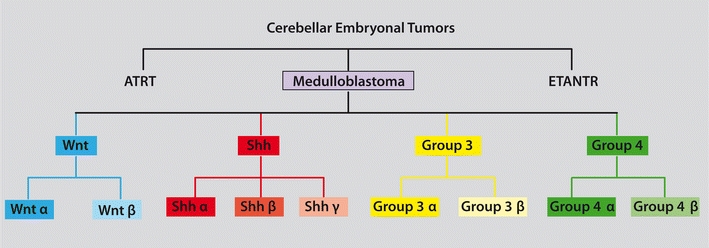
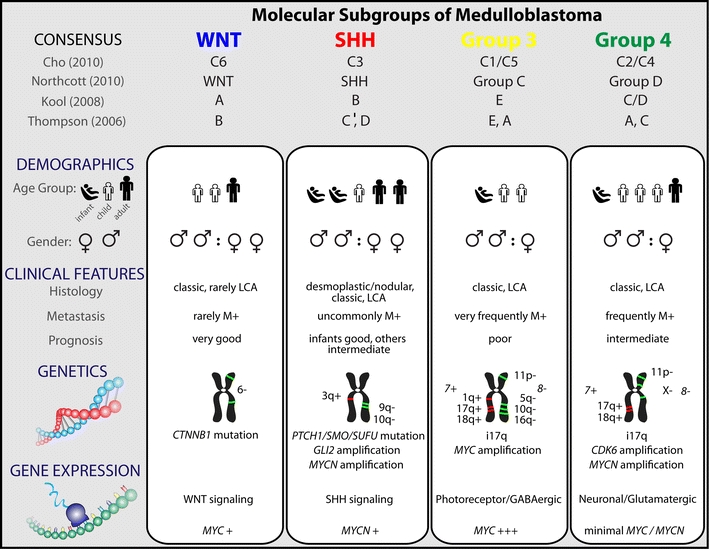
Medulloblastoma, a small blue cell malignancy of the cerebellum, is a major cause of morbidity and mortality in pediatric oncology. Current mechanisms for clinical prognostication and stratification include clinical factors (age, presence of metastases, and extent of resection) as well as histological subgrouping (classic, desmoplastic, and large cell/anaplastic histology). Transcriptional profiling studies of medulloblastoma cohorts from several research groups around the globe have suggested the existence of multiple distinct molecular subgroups that differ in their demographics, transcriptomes, somatic genetic events, and clinical outcomes. Variations in the number, composition, and nature of the subgroups between studies brought about a consensus conference in Boston in the fall of 2010. Discussants at the conference came to a consensus that the evidence supported the existence of four main subgroups of medulloblastoma (Wnt, Shh, Group 3, and Group 4). Participants outlined the demographic, transcriptional, genetic, and clinical differences between the four subgroups. While it is anticipated that the molecular classification of medulloblastoma will continue to evolve and diversify in the future as larger cohorts are studied at greater depth, herein we outline the current consensus nomenclature, and the differences between the medulloblastoma subgroups.
Overview
The claims and statistics of this paper haven’t been checked yet.
Free: it reads the open-access text and checks the first 5 claims that cite a source we can check. Create a free account to check every claim.
Integrity signals
Registry
Cites
Statistics
Figures
Verification
Claims the paper makes
The claims and statistics of this paper haven’t been checked yet.
Free: it reads the open-access text and checks the first 5 claims that cite a source we can check. Create a free account to check every claim.
Self-check
Percentages, sums and reported differences re-computed from the paper’s own numbers.
The self-check needs the paper’s full text.
Citations
Cites
The 2007 WHO Classification of Tumours of the Central Nervous System
Louis, D. N., Ohgaki, H., Wiestler, O. D., Cavenee, W. K., Burger, P. C., Jouvet, A., Scheithauer, B. W., & Kleihues, P. (2007) · Acta Neuropathologica · doi:10.1007/s00401-007-0243-4 · Cited by 15,397
Golub, T. R., Slonim, D. K., Tamayo, P., Huard, C., Gaasenbeek, M., Mesirov, J. P., Coller, H., Loh, M. L., Downing, J. R., Caligiuri, M. A., et al. (1999) · Science · doi:10.1126/science.286.5439.531 · Cited by 11,516 · cited 1×
“This transcriptional approach to tumor sub-classification has also been applied to a number of different non-medullo-blastoma histologies [4, 16, 18, 31, 35, 43], with the underlying assumption that tumors with similar transcriptomes will behave in a biologically similar manner, allowing a…”
BackgroundErratum to: The 2007 WHO classification of tumours of the central nervous system
Louis, D. N., Ohgaki, H., Wiestler, O. D., Cavenee, W. K., Burger, P. C., Jouvet, A., Scheithauer, B. W., & Kleihues, P. (2007) · Zurich Open Repository and Archive (University of Zurich) · doi:10.5167/uzh-156115 · Cited by 4,442
Phillips, H. S., Kharbanda, S., Chen, R., Forrest, W. F., Soriano, R. H., Wu, T. D., Misra, A., Nigro, J. M., Colman, H., Soroceanu, L., et al. (2006) · Cancer Cell · doi:10.1016/j.ccr.2006.02.019 · Cited by 3,143 · cited 1×
“…transcriptional approach to tumor sub-classification has also been applied to a number of different non-medullo-blastoma histologies [4, 16, 18, 31, 35, 43], with the underlying assumption that tumors with similar transcriptomes will behave in a biologically similar manner, allowing a…”
BackgroundBhattacharjee, A., Richards, W. G., Staunton, J., Li, C., Monti, S., Vasa, P., Ladd, C., Beheshti, J., Bueno, R., Gillette, M., et al. (2001) · Proceedings of the National Academy of Sciences · doi:10.1073/pnas.191502998 · Cited by 2,576 · cited 1×
“This transcriptional approach to tumor sub-classification has also been applied to a number of different non-medullo-blastoma histologies [4, 16, 18, 31, 35, 43], with the underlying assumption that tumors with similar transcriptomes will behave in a biologically similar manner, allowing a…”
BackgroundPrediction of central nervous system embryonal tumour outcome based on gene expression
Pomeroy, S. L., Tamayo, P., Gaasenbeek, M., Sturla, L. M., Angelo, M., McLaughlin, M. E., Kim, J. Y. H., Goumnerova, L. C., Black, P. M., Lau, C., et al. (2002) · Nature · doi:10.1038/415436a · Cited by 2,371 · cited 2×
“With recent developments in the ability to monitor transcription across the genome in the setting of a single experiment, various groups have started to sub-classify medulloblastoma on the basis of differences in the transcriptome [36].”
BackgroundSelf-citationIdentification of a CpG Island Methylator Phenotype that Defines a Distinct Subgroup of Glioma
Noushmehr, H., Weisenberger, D. J., Diefes, K., Phillips, H. S., Pujara, K., Berman, B. P., Pan, F., Pelloski, C. E., Sulman, E. P., Bhat, K. P., et al. (2010) · Cancer Cell · doi:10.1016/j.ccr.2010.03.017 · Cited by 2,337 · cited 1×
“This transcriptional approach to tumor sub-classification has also been applied to a number of different non-medullo-blastoma histologies [4, 16, 18, 31, 35, 43], with the underlying assumption that tumors with similar transcriptomes will behave in a biologically similar manner, allowing a…”
BackgroundMedulloblastoma Comprises Four Distinct Molecular Variants
Northcott, P. A., Korshunov, A., Witt, H., Hielscher, T., Eberhart, C. G., Mack, S., Bouffet, E., Clifford, S. C., Hawkins, C. E., French, P., et al. (2011) · Journal of Clinical Oncology · doi:10.1200/jco.2009.27.4324 · Cited by 1,339 · cited 12×
“Others approaches to identify Shh medulloblastomas have included immunohistochemical staining for SFRP1 [2, 28, 48], or GAB1 [11].”
BackgroundMethodInfluentialSelf-citationThe Molecular Basis of Turcot's Syndrome
Hamilton, S. R., Liu, B., Parsons, R. E., Papadopoulos, N., Jen, J., Powell, S. M., Krush, A. J., Berk, T., Cohen, Z., Tetu, B., et al. (1995) · New England Journal of Medicine · doi:10.1056/nejm199503303321302 · Cited by 1,133 · cited 1×
“Germline mutations of the Wnt pathway inhibitor APC predispose to Turcot syndrome, which includes a proclivity to medulloblastoma, in addition, somatic mutations of CTNNB1 encoding b-catenin have been found in sporadic medulloblastomas [19, 50].”
BackgroundKool, M., Korshunov, A., Remke, M., Jones, D. T. W., Schlanstein, M., Northcott, P. A., Cho, Y.-J., Koster, J., Schouten-van Meeteren, A., van Vuurden, D., et al. (2012) · Acta Neuropathologica · doi:10.1007/s00401-012-0958-8 · Cited by 1,056 · cited 3×
“…to identify target cohorts for certain drugs (e.g., SHH inhibitors), but also add significantly to outcome prediction by the time of diagnosis [21], much more than any of the established clinical markers such as patient age, metastatic stage at diagnosis, level of resection, and histological…”
BackgroundMethodInfluentialSelf-citation
Cited by
Items 301–400 of 1,003
Deng, M. Y., Sturm, D., Pfaff, E., Sill, M., Stichel, D., Balasubramanian, G. P., Tippelt, S., Kramm, C. M., Donson, A. M., Green, A. L., et al. (2021) · Nature Communications · doi:10.1038/s41467-021-25708-y · Cited by 64
Self-citationQuinlan, A., & Rizzolo, D. (2017) · JAAPA · doi:10.1097/01.jaa.0000524717.71084.50 · Cited by 57
The Shh Receptor Boc Promotes Progression of Early Medulloblastoma to Advanced Tumors
Mille, F., Tamayo-Orrego, L., Lévesque, M., Remke, M., Korshunov, A., Cardin, J., Bouchard, N., Izzi, L., Kool, M., Northcott, P. A., et al. (2014) · Developmental Cell · doi:10.1016/j.devcel.2014.08.010 · Cited by 65
Self-citationNew perspectives in the treatment of adult medulloblastoma in the era of molecular oncology
Brandes, A. A., Bartolotti, M., Marucci, G., Ghimenton, C., Agati, R., Fioravanti, A., Mascarin, M., Volpin, L., Ammannati, F., Masotto, B., et al. (2015) · Critical Reviews in Oncology/Hematology · doi:10.1016/j.critrevonc.2014.12.016 · Cited by 56
Targeting the Hedgehog Pathway in Pediatric Medulloblastoma
Huang, S., & Yang, J. (2015) · Cancers · doi:10.3390/cancers7040880 · Cited by 57
“Four principal transcriptional subgroups have been identified: (1) WNT; (2) Sonic hedgehog (SHH); (3) Group 3 (N-MYC amplification); and (4) Group 4 (heterogenous genes) [8,9].”
BackgroundDifferential diagnosis of posterior fossa tumours in children: new insights
D’Arco, F., Khan, F., Mankad, K., Ganau, M., Caro‐Domínguez, P., & Bisdas, S. (2018) · Pediatric Radiology · doi:10.1007/s00247-018-4224-7 · Cited by 56
Woolman, M., Kuzan-Fischer, C. M., Ferry, I., Kiyota, T., Luu, B., Wu, M., Muñoz, D. G., Das, S., Aman, A. M., Taylor, M. D., et al. (2019) · Cancer Research · doi:10.1158/0008-5472.can-18-3411 · Cited by 57
“The heterogeneity in MB manifests itself in four known subgroups, named WNT (Wingless/iNTegrated), SHH (Sonic HedgeHog), Group 3 and Group 4 (1, 4).”
BackgroundSelf-citationTransitioning from genotypes to epigenotypes: Why the time has come for medulloblastoma epigenomics
Batora, N. V., Sturm, D., Jones, D., Kool, M., Pfister, S. M., & Northcott, P. A. (2013) · Neuroscience · doi:10.1016/j.neuroscience.2013.07.030 · Cited by 55
Self-citationDevelopmental origins and oncogenic pathways in malignant brain tumors
Lu, Q. R., Qian, L., & Zhou, X. (2019) · Wiley Interdisciplinary Reviews Developmental Biology · doi:10.1002/wdev.342 · Cited by 60
An update on the CNS manifestations of brain tumor polyposis syndromes
Kim, B., Tabori, U. Y., & Hawkins, C. E. (2020) · Acta Neuropathologica · doi:10.1007/s00401-020-02124-y · Cited by 57
“Activation of the WNT pathway is also observed in 10–15% of sporadic medulloblastoma, most commonly through mutations in the CTNNB1 gene [80].”
BackgroundDufour, C., Foulon, S., Geoffray, A., Masliah‐Planchon, J., Figarella‐Branger, D., Bernier, V., Padovani, L., Guerrini‐Rousseau, L., Faure‐Conter, C., Icher, C., et al. (2020) · Neuro-Oncology · doi:10.1093/neuonc/noaa301 · Cited by 55
“Medulloblastoma was considered high-risk if (1) there was a metastatic extension (M1–M3 as defined by modified Chang staging classification),6 or (2) the residual disease assessed within 48 h after surgery was ≥1.”
Medulloblastoma: Molecular understanding, treatment evolution, and new developments
Liu, X., Ding, C., Tan, W., & Zhang, A. (2020) · Pharmacology & Therapeutics · doi:10.1016/j.pharmthera.2020.107516 · Cited by 54
Clinical Trials in High-Risk Medulloblastoma: Evolution of the SIOP-Europe HR-MB Trial
Bailey, S., André, N., Gandola, L., Massimino, M., Wheatley, K., Gates, S., Homer, V., Rutkowski, S., & Clifford, S. C. (2022) · Cancers · doi:10.3390/cancers14020374 · Cited by 56
“The current international consensus recognises four subgroups—WNT, SHH, Group 3 and Group 4 [29] and further subtypes within these subgroups were recently described [3,5,30,31].”
BackgroundSelf-citationCurrent medulloblastoma subgroup specific clinical trials
Thompson, E. M., Ashley, D. M., & Landi, D. B. (2020) · Translational Pediatrics · doi:10.21037/tp.2020.03.03 · Cited by 54
“Medulloblastoma is not a single entity, but rather is comprised of at least four molecular subgroups (7) and 12 subtypes (8).”
BackgroundYan, J., Zhang, S., Li, K. K., Wang, W., Li, K., Duan, W., Yuan, B., Wang, L., Liu, L., Zhan, Y., et al. (2020) · EBioMedicine · doi:10.1016/j.ebiom.2020.103093 · Cited by 56
“Notable findings have been discovered in the aspects of different tumor origins [5], various genetic profiles [6], differential phenotypes [3,4], diverse clinical traits [4], distinct prognosis [3,4] and potential therapeutic responses [2] among the four subgroups.”
BackgroundResultInfluentialFunctional Genomics Identifies Drivers of Medulloblastoma Dissemination
Mumert, M. L., Dubuc, A. M., Wu, X., Northcott, P. A., Chin, S. S., Pedone, C. A., Taylor, M. D., & Fults, D. W. (2012) · Cancer Research · doi:10.1158/0008-5472.can-12-1629 · Cited by 53
“We compared relative expression levels of ERAS, LHX1, and CCRK in 103 human medulloblastoma specimens, which had each been assigned to one of the four distinct, nonoverlapping medulloblastoma subgroups (WNT, SHH, Group 3, and Group 4) based on their gene expression profiles (7, 29).”
Self-citationMedulloblastoma stem cells: Modeling tumor heterogeneity
Manoranjan, B., Venugopal, C., McFarlane, N., Doble, B. W., Dunn, S. E., Scheinemann, K., & Singh, S. K. (2012) · Cancer Letters · doi:10.1016/j.canlet.2012.07.010 · Cited by 53
Bunt, J., Hasselt, N. E., Zwijnenburg, D. A., Köster, J., Versteeg, R., & Kool, M. (2012) · Acta Neuropathologica · doi:10.1007/s00401-012-1069-2 · Cited by 55
“Medulloblastoma samples were classified in four subgroups [16, 32].”
Self-citationMolecular Stratification of Medulloblastoma: Clinical Outcomes and Therapeutic Interventions
Sursal, T., Ronecker, J. S., Dicpinigaitis, A. J., MOHAN, A. L., Tobias, M. E., Gandhi, C. D., & Jhanwar‐Uniyal, M. (2022) · Anticancer Research · doi:10.21873/anticanres.15703 · Cited by 52
Slavc, I., Mayr, L., Stepien, N. M., Gojo, J., Lippolis, M. A., Azizi, A. A., Chocholous, M., Baumgartner, A., Hedrich, C., Holm, S., et al. (2022) · Cancers · doi:10.3390/cancers14205128 · Cited by 53
Self-citationGoschzik, T., Mühlen, A. Z., Kristiansen, G., Haberler, C., Stefanits, H., Friedrich, C., von Hoff, K., Rutkowski, S., Pfister, S. M., & Pietsch, T. (2015) · Neuropathology and Applied Neurobiology · doi:10.1111/nan.12161 · Cited by 60
Self-citationEvasion of Cell Senescence Leads to Medulloblastoma Progression
Tamayo-Orrego, L., Wu, C., Bouchard, N., Khedher, A., Swikert, S. M., Remke, M., Skowron, P., Taylor, M. D., & Charron, F. (2016) · Cell Reports · doi:10.1016/j.celrep.2016.02.061 · Cited by 59
Self-citationModeling pediatric medulloblastoma
Roussel, M. F., & Stripay, J. L. (2019) · Brain Pathology · doi:10.1111/bpa.12803 · Cited by 55
“Medulloblastoma is characterized by four major molecular groups, with different pathologies, outcomes and genetics: two with mutations in developmental pathways, Wingless (WNT) and Sonic Hedgehog (SHH), and two with less well-defined molecular alterations, Group 3 (G3) and Group 4 (G4) (53, 71).”
BackgroundGenomics of adult and pediatric solid tumors.
Rahal, Z., Abdulhai, F., Kadara, H. N., & Saab, R. H. (2018) · Europe PMC (PubMed Central) · Cited by 59
Roper, S. J., Linke, F., Scotting, P. J., & Coyle, B. (2021) · Scientific Reports · doi:10.1038/s41598-021-83809-6 · Cited by 56
Mynarek, M., Milde, T., Padovani, L., Janssens, G. O. R. J., Kwiecien, R., Mosseri, V., Clifford, S. C., Doz, F., & Rutkowski, S. (2021) · Cancers · doi:10.3390/cancers13236077 · Cited by 53
“Group 4 tumours (~40%) are typically either classic or large cell/anaplastic pathology and also frequently harbour i17q [35,36].”
BackgroundSelf-citationJin, Y., Xiong, A., Zhang, Z., Li, S., Huang, H., Yu, T., Cao, X., & Cheng, S. Y. (2014) · Oncotarget · doi:10.18632/oncotarget.2043 · Cited by 51
SHH inhibitors for the treatment of medulloblastoma
Samkari, A., White, J., & Packer, R. J. (2015) · Expert Review of Neurotherapeutics · doi:10.1586/14737175.2015.1052796 · Cited by 53
WNT activation by lithium abrogates TP53 mutation associated radiation resistance in medulloblastoma
Zhukova, N., Ramaswamy, V., Remke, M., Martin, D. C., Castelo‐Branco, P., Zhang, C. H., Fraser, M. E., Tse, K., Poon, R. W. M., Shih, D. J. H., et al. (2014) · Acta Neuropathologica Communications · doi:10.1186/s40478-014-0174-y · Cited by 57
“Most WNT subgroup tumors harbor activating mutations in exon 3 of the β-catenin gene, and this genetic alteration is a universally favorable prognostic marker for both average- and high-risk patients, and long term patient survival exceeds 90% [3,6,7,22,24-28].”
BackgroundSelf-citationDangouloff‐Ros, V., Varlet, P., Levy, R., Beccaria, K., Puget, S., Dufour, C., & Boddaert, N. (2018) · Neurochirurgie · doi:10.1016/j.neuchi.2017.10.003 · Cited by 51
Invited Review: DNA methylation‐based classification of paediatric brain tumours
Pérez, E., & Capper, D. (2020) · Neuropathology and Applied Neurobiology · doi:10.1111/nan.12598 · Cited by 53
Immunotherapy for Medulloblastoma: Current Perspectives
Kabir, T., Kunos, C. A., Villano, J. L., & Chauhan, A. (2020) · ImmunoTargets and Therapy · doi:10.2147/itt.s198162 · Cited by 54
Fang, F. Y., Rosenblum, J. S., Ho, W. S., & Heiss, J. D. (2022) · Cancers · doi:10.3390/cancers14092285 · Cited by 58
“As discussed above, a panel of experts agreed at a conference held in Boston in 2010 to use molecular profiling to subdivide medulloblastoma into four different subtypes (WNT, SHH, Group 3, and Group 4) [13].”
BackgroundInfluentialRay, S., Chaturvedi, N. K., Bhakat, K. K., Rizzino, A., & Mahapatra, S. (2021) · Diagnostics · doi:10.3390/diagnostics12010061 · Cited by 58
“Medullob astomas are now subdivi ed into wingless (WNT), sonic hedgehog (SHH), group 3, and group 4 t mors, with eac subgroup possessing a di tinct transcriptomic and ethylation profiles, somatic genetic aberrations, demographic distributions, histologies, and c inical outcomes (Figure 2) [7,21].”
BackgroundInfluentialPre-mRNA splicing-associated diseases and therapies
Love, S. L., Emerson, J. D., Koide, K., & Hoskins, A. A. (2023) · RNA Biology · doi:10.1080/15476286.2023.2239601 · Cited by 54
“There are four distinct subgroups of medulloblastoma [43], and the hotspot was only found in the subgroup in which the sonic hedgehog signalling pathway is thought to drive tumorigenesis (the sonic hedgehog subgroup, SHHδ).”
BackgroundRao, A. A. N., Wallace, D., Billups, C. A., Boyett, J. M., Gajjar, A. J., & Packer, R. J. (2013) · Pediatric Blood & Cancer · doi:10.1002/pbc.24670 · Cited by 55
Self-citationDruggable glycolytic requirement for Hedgehog-dependent neuronal and medulloblastoma growth
Di Magno, L., Manzi, D., D’Amico, D., Coni, S., Macone, A., Infante, P., Di Marcotullio, L., De Smaele, E., Ferretti, E., Screpanti, I., et al. (2014) · Cell Cycle · doi:10.4161/15384101.2014.952973 · Cited by 47
“Ptch1, Sufu, Smo, Gli2) have been found in MB patients belonging to the so-called SHHmolecular subgroup.(7) Furthermore, hyperactivation of SHH signaling, unrelated to genetic mutations, has been observed in MB and”
BackgroundYang, S. Y., Choi, S. A., Lee, J. Y., Park, A.-K., Wang, K., Phi, J. H., Koh, E. J., Park, W., Park, S., Hwang, D. W., et al. (2015) · Oncotarget · doi:10.18632/oncotarget.6227 · Cited by 50
“For example, patients with group 3 tumors tend to be younger or male, have anaplastic histology, and are associated with a higher incidence of metastasis [2, 3].”
BackgroundMolecular pathology of adamantinomatous craniopharyngioma: review and opportunities for practice
Apps, J. R., & Martínez-Barberá, J. P. (2016) · Neurosurgical FOCUS · doi:10.3171/2016.8.focus16307 · Cited by 50
Merk, D. J., Ohli, J., Merk, N. D., Thatikonda, V., Morrissy, A. S., Schoof, M., Schmid, S. N., Harrison, L., Filser, S., Ahlfeld, J., et al. (2018) · Developmental Cell · doi:10.1016/j.devcel.2018.02.012 · Cited by 57
Self-citationPompe, R. S., von Bueren, A. O., Mynarek, M., von Hoff, K., Friedrich, C., Kwiecien, R., Treulieb, W., Lindow, C., Deinlein, F., Fleischhack, G., et al. (2015) · European Journal of Cancer · doi:10.1016/j.ejca.2015.08.009 · Cited by 50
“Young age, disseminated disease, residual tumour in patients without dissemination, and biological parameters are major prognostic factors [2–7].”
BackgroundSelf-citationGudrunardottir, T., Lannering, B., Remke, M., Taylor, M. D., Wells, E. M., Keating, R. F., & Packer, R. J. (2014) · Child s Nervous System · doi:10.1007/s00381-014-2388-5 · Cited by 54
“WNT tumors are associated with an excellent outcome (>95 % 5-year overall survival) [63], while patients with Group 3 tumors have a poor prognosis despite the application of the same multimodal treatment strategies [92, 120].”
BackgroundSelf-citationThe WIP1 oncogene promotes progression and invasion of aggressive medulloblastoma variants
Buss, M. C., Remke, M., Lee, J. J., Gandhi, K., Schniederjan, M., Kool, M., Northcott, P. A., Pfister, S. M., Taylor, M. D., & Castellino, R. C. (2014) · Oncogene · doi:10.1038/onc.2014.37 · Cited by 55
Self-citationSingh, S. V., Dakhole, A. N., Deogharkar, A., Kazi, S., Kshirsagar, R., Goel, A. H., Moiyadi, A. V., Jalali, R., Epari, S., Gupta, T., et al. (2017) · Biochemical and Biophysical Research Communications · doi:10.1016/j.bbrc.2017.07.140 · Cited by 49
Sreenivasan, L., Wang, H., Yap, S. Q., Leclair, P., Tam, A., & Lim, C. J. (2020) · Cell Death and Disease · doi:10.1038/s41419-020-03241-y · Cited by 51
Ingram, W. J., Crowther, L. M., Little, E. B., Freeman, R., Harliwong, I., Veleva, D., Hassall, T., Remke, M., Taylor, M. D., & Hallahan, A. R. (2013) · Experimental Hematology and Oncology · doi:10.1186/2162-3619-2-26 · Cited by 50
“ABCB1 tended to be more highly expressed in group B, C and D than in the other two groups (refer Additional file 1; Note that groups C and D in this dataset are equivalent to “group 4” in the current consensus nomenclature [39]).”
BackgroundMethodSelf-citationBautista, F. J., Fioravantti, V., de Rojas, T., Carceller, F., Madero, L., Lassaletta, Á., & Moreno, L. (2017) · Cancer Medicine · doi:10.1002/cam4.1171 · Cited by 56
“The advent of the molecular classification of medulloblastoma in 2012 [17] and the progressive implementation of molecular techniques able to clarify key biology aspects have permitted to improve our understanding of this disease and develop more specific strategies.”
BackgroundTGF-β Determines the Pro-migratory Potential of bFGF Signaling in Medulloblastoma
Santhana Kumar, K., Neve, A., Guerreiro Stucklin, A. S., Kuzan-Fischer, C. M., Rushing, E. J., Taylor, M. D., Tripolitsioti, D., Behrmann, L., Kirschenbaum, D., Grotzer, M. A., et al. (2018) · Cell Reports · doi:10.1016/j.celrep.2018.05.083 · Cited by 49
Self-citationKorshunov, A., Sahm, F., Zheludkova, O., Голанов, А. В., Stichel, D., Schrimpf, D., Ryzhova, M. V., Aa, P., Habel, A., Meyer, J., et al. (2018) · Neuro-Oncology · doi:10.1093/neuonc/noy155 · Cited by 50
Self-citationCanonical Hedgehog Pathway and Noncanonical GLI Transcription Factor Activation in Cancer
Suchors, C., & Kim, J. (2022) · Cells · doi:10.3390/cells11162523 · Cited by 50
Pediatric CNS tumors and 2021 WHO classification: what do oncologists need from pathologists?
d’Amati, A., Bargiacchi, L., Rossi, S., Carai, A., Bertero, L., Barresi, V., Errico, M. E., Buccoliero, A. M., Asioli, S., Marucci, G., et al. (2024) · Frontiers in Molecular Neuroscience · doi:10.3389/fnmol.2024.1268038 · Cited by 54
“One example is the diagnosis of medulloblastoma, which combines histopathological and molecular features (Taylor et al., 2012).”
BackgroundGenetic and molecular alterations across medulloblastoma subgroups
Skowron, P., Ramaswamy, V., & Taylor, M. D. (2015) · Journal of Molecular Medicine · doi:10.1007/s00109-015-1333-8 · Cited by 56
“The Group 3 transcriptome is dominated by photoreceptor and GABAergic expression signatures [10].”
Self-citationDey, J., Ditzler, S. H., Knoblaugh, S. E., Hatton, B. A., Schelter, J. M., Cleary, M. A., Mecham, B., Rorke-Adams, L. B., & Olson, J. M. (2012) · Molecular and Cellular Biology · doi:10.1128/mcb.00862-12 · Cited by 50
“The overall prognosis in patients with Shh-driven medulloblastomas, however, remains intermediate (41).”
BackgroundChen, H., Chew, L., Packer, R. J., & Gallo, V. (2013) · Cancer Letters · doi:10.1016/j.canlet.2013.02.058 · Cited by 48
Future of Clinical Genomics in Pediatric Oncology
Janeway, K. A., Place, A. E., Kieran, M. W., & Harris, M. H. (2013) · Journal of Clinical Oncology · doi:10.1200/jco.2012.46.8470 · Cited by 48
“Medulloblastoma is now subdivided into four major molecular subgroups including those with sonic hedgehog (SHH) pathway activation, those with WNT pathway activation, and two others that are more heterogeneous.(57) Identification of molecular subgroups has led to subgroup-specific treatment strategies.”
BackgroundLaneve, P., Pò, A., Favia, A., Legnini, I., Alfano, V., Rea, J. N., Carlo, V. D., Bevilacqua, V., Miele, E., Mastronuzzi, A., et al. (2017) · Oncotarget · doi:10.18632/oncotarget.16049 · Cited by 50
“Larger gaps remain in our understanding of the signalling pathways underlying Group 3 (G3) and Group 4 (G4) MBs, which account for 60% of all prognoses and present the greatest clinical challenges [4].”
BackgroundConvergence of BMI1 and CHD7 on ERK Signaling in Medulloblastoma
Badodi, S., Dubuc, A. M., Zhang, X., Rosser, G., Jaeger, M. D. C., Kameda-Smith, M. M., Morrissy, A. S., Guilhamon, P., Suetterlin, P., Li, X., et al. (2017) · Cell Reports · doi:10.1016/j.celrep.2017.11.021 · Cited by 49
“Gene expression profiling of large cohorts of MBs has dissected this historically monomorphous tumor entity into four distinct molecular subgroups (WNT, SHH, group 3, and group 4) with divergent prognoses and responses to therapy (Taylor et al., 2012).”
BackgroundSelf-citationChaturvedi, N. K., Kling, M. J., Coulter, D. W., McGuire, T. R., Ray, S., Kesherwani, V., Joshi, S. S., & Sharp, J. G. (2018) · Oncotarget · doi:10.18632/oncotarget.24618 · Cited by 49
Latowska-Lysiak, J., Grabowska, A., Zarębska, Ż., Kuczyński, K., Kuczyńska, B., & Rolle, K. (2020) · International Journal of Molecular Sciences · doi:10.3390/ijms21197001 · Cited by 50
“which is characterized by amplification of MYCN, tandem duplications of SNCAIP, and mutations in chromosome 17 in 80% of cases [46,47].”
BackgroundKoral, K., Alford, R. E., Choudhury, N., Mossa‐Basha, M., Gargan, L., Gimi, B., Gao, A., Zhang, S., Bowers, D. C., Koral, K. M., et al. (2014) · Neuroradiology · doi:10.1007/s00234-014-1398-z · Cited by 46
“Embryonal pediatric cerebellar tumors are predominantly comprised of medulloblastomas and atypical teratoid rhabdoid tumors and show similar imaging findings [10, 13, 14, 19].”
BackgroundCNS Anticancer Drug Discovery and Development Conference White Paper
Levin, V. A., Tonge, P. J., Gallo, J. M., Birtwistle, M. R., Dar, A. C., Iavarone, A., Paddison, P. J., Heffron, T. P., Elmquist, W. F., Lachowicz, J. E., et al. (2015) · Neuro-Oncology · doi:10.1093/neuonc/nov169 · Cited by 47
“Reprinted with permission from Michael Taylor.(25) Levin et al.”
BackgroundMethodEmbryonal Tumors of the Central Nervous System in Children: The Era of Targeted Therapeutics
Kram, D. E., Henderson, J. J., Baig, M., Chakraborty, D., Gardner, M. A., Biswas, S., & Khatua, S. (2018) · Bioengineering · doi:10.3390/bioengineering5040078 · Cited by 50
“The internationally accepted subgroups of MB have been termed wingless (WNT), sonic hedgehog (SHH), Group 3, and Group 4, which have been adopted in the 2016 WHO classification of central nervous system tumors [2,15].”
BackgroundPharmacological inhibition of LSD1 activity blocks REST-dependent medulloblastoma cell migration
Callegari, K., Maegawa, S., Bravo-Alegria, J. B., & Gopalakrishnan, V. (2018) · Cell Communication and Signaling · doi:10.1186/s12964-018-0275-5 · Cited by 52
“MB is currently classified into 4 molecular subgroups: Wingless (WNT), Sonic hedgehog (SHH), Group 3, and Group 4 [1].”
von Bueren, A. O., Bacolod, M. D., Hagel, C., Heinimann, K., Fedier, A., Kordes, U., Pietsch, T., Köster, J., Grotzer, M. A., Friedman, H. S., et al. (2012) · British Journal of Cancer · doi:10.1038/bjc.2012.403 · Cited by 46
Self-citationMorrison, L. C., McClelland, R. L., Aiken, C., Bridges, M., Liang, L., Wang, X., Curzio, D. L. D., Bigio, M. R. D., Taylor, M. D., & Werbowetski‐Ogilvie, T. E. (2013) · Neoplasia · doi:10.1593/neo.13148 · Cited by 51
Self-citationRoth, J. J., Santi, M., Rorke-Adams, L. B., Harding, B. N., Busse, T., Tooke, L. S., & Biegel, J. A. (2014) · Cancer Genetics · doi:10.1016/j.cancergen.2014.03.002 · Cited by 47
“This alteration was identified in one third of the LGGs (19 of 56 with the 7q34 duplication; 1 of 56 with 7q34 deletions), including approximately two thirds of the classic PAs (16 of 26) as well as in 4 additional LGGs including: 3 PA-diffuse variants (11-162, 11448, and 12-042) and 1 pilomyxoid/PA (11-271) as demons…”
InfluentialColafati, G. S., Voicu, I. P., Carducci, C., Miele, E., Carai, A., Loreto, S. D., Marrazzo, A., Cacchione, A., Cecinati, V., Tornesello, A., et al. (2018) · Therapeutic Advances in Neurological Disorders · doi:10.1177/1756286418775375 · Cited by 45
Advancements in Neuroimaging to Unravel Biological and Molecular Features of Brain Tumors
Sanvito, F., Castellano, A., & Falini, A. (2021) · Cancers · doi:10.3390/cancers13030424 · Cited by 51
“Medulloblastomas, malignant embryonal tumors (grade 4) relatively common in the pediatric population and arising in the posterior fossa, also acknowledge new molecular subtypes, depending on WNT- and Sonic Hedgehog (SHH-)status [3].”
BackgroundNazio, F., Pò, A., Abballe, L., Ballabio, C., Diomedi‐Camassei, F., Bordi, M., Camera, A., Caruso, S., Caruana, I., Pezzullo, M., et al. (2021) · Acta Neuropathologica · doi:10.1007/s00401-021-02347-7 · Cited by 48
“Based on transcriptional profiling studies, it is now clear that MB is a heterogeneous disease and multiple distinct molecular subgroups have been identified [65, 66, 93].”
BackgroundA novel PLK1 inhibitor onvansertib effectively sensitizes MYC-driven medulloblastoma to radiotherapy
Wang, D., Veo, B. L., Pierce, A. M., Fosmire, S. P., Madhavan, K. P. C., Balakrishnan, I., Donson, A. M., Alimova, I. N., Sullivan, K. D., Joshi, M., et al. (2021) · Neuro-Oncology · doi:10.1093/neuonc/noab207 · Cited by 47
Sox2: regulation of expression and contribution to brain tumors
Mansouri, S., Nejad, R., Karabork, M., Ekinci, C., Solaroğlu, İ., Aldape, K., & Zadeh, G. M. (2016) · CNS Oncology · doi:10.2217/cns-2016-0001 · Cited by 48
Coming in from the cold: overcoming the hostile immune microenvironment of medulloblastoma
Eisemann, T., & Wechsler‐Reya, R. J. (2022) · Genes & Development · doi:10.1101/gad.349538.122 · Cited by 46
Yuan, L., Zhang, H., Liu, J., Rubin, J. B., Cho, Y., Shu, H. G., Schniederjan, M., & MacDonald, T. J. (2013) · Molecular Cancer · doi:10.1186/1476-4598-12-18 · Cited by 49
“Discussion Children diagnosed with sonic hedgehog-activated MB (SHH MB) displaying desmoplastic histology have a good prognosis, while those with non-desmoplastic histology have higher rates of metastasis and an intermediate prognosis, indicating that additional factors to SHH activation account for the clinical dicho…”
BackgroundResultInfluentialSelf-citationM i R ‐34a deficiency accelerates medulloblastoma formation in vivo
Thor, T., Künkele, A., Pajtler, K. W., Wefers, A. K., Stephan, H., Mestdagh, P., Heukamp, L. C., Hartmann, W., Vandesompele, J., Sadowski, N., et al. (2014) · International Journal of Cancer · doi:10.1002/ijc.29294 · Cited by 48
“MYCN amplification or overexpression occurs in Sonic hedgehog signaling activated (Shh) medulloblastomas, while MYC is frequently amplified or overexpressed in Group 3 medulloblastomas, which are often associated with large cell anaplastic (LCA) or classical pathologies.(34) MYCN overexpression in GNPs from transgenic…”
BackgroundIdentification of a neuronal transcription factor network involved in medulloblastoma development
Łastowska, M., Al-Afghani, H. M., Al‐Balool, H. H., Sheth, H. J., Mercer, E., Coxhead, J., Redfern, C. P. F., Peters, H., Burt, A. D., Santibanez‐Koref, M., et al. (2013) · Acta Neuropathologica Communications · doi:10.1186/2051-5960-1-35 · Cited by 46
“PTCH1, SUFU) arise in a significant subset [2,3].”
BackgroundInfluentialSelf-citationNoninvasive Detection of Glutamate Predicts Survival in Pediatric Medulloblastoma
Wilson, M., Gill, S. K., MacPherson, L. K. R., English, M. W., Arvanitis, T. N., & Peet, A. C. (2014) · Clinical Cancer Research · doi:10.1158/1078-0432.ccr-13-2320 · Cited by 48
Ge, X., Milenković, L., Suyama, K. L., Hartl, T. A., Purzner, T., Winans, A., Meyer, T., & Scott, M. P. (2015) · eLife · doi:10.7554/elife.07068 · Cited by 46
“Abnormalities in Hh signaling are responsible for certain birth defects and contribute to a wide range of tumors, including medulloblastoma (MB), the most common malignant pediatric brain tumor (Taylor et al., 2012).”
BackgroundBrain Tumors: Epidemiology and Current Trends in Treatment
Strong, M. J., & Garces, J. (2016) · Journal of Brain Tumors & Neurooncology · doi:10.4172/2475-3203.1000102 · Cited by 49
“group 4 as observed in 80% of females in this group [147].”
BackgroundAn OTX2-PAX3 signaling axis regulates Group 3 medulloblastoma cell fate
Zagozewski, J. L., Shahriary, G. M., Morrison, L. C., Saulnier, O., Stromecki, M., Fresnoza, A. L., Palidwor, G., Porter, C. J., Forget, A., Ayrault, O., et al. (2020) · Nature Communications · doi:10.1038/s41467-020-17357-4 · Cited by 52
Self-citationEpigenomics and immunotherapeutic advances in pediatric brain tumors
Abedalthagafi, M., Mobark, N. A., Alrashed, M. M., & Alharbi, M. (2021) · npj Precision Oncology · doi:10.1038/s41698-021-00173-4 · Cited by 45
Radiomics and radiogenomics in pediatric neuro-oncology: A review
Madhogarhia, R., Haldar, D., Bagheri, S., Familiar, A., Anderson, H., Arif, S., Vossough, A., Storm, P., Resnick, A., Davatzikos, C., et al. (2022) · Neuro-Oncology Advances · doi:10.1093/noajnl/vdac083 · Cited by 39
The G protein Gα s acts as a tumor suppressor in sonic hedgehog signaling-driven tumorigenesis
Rao, R., Salloum, R., Xin, M., & Lu, Q. R. (2016) · Cell Cycle · doi:10.1080/15384101.2016.1164371 · Cited by 50
Isocitrate dehydrogenase 1 primes group-3 medulloblastomas for cuproptosis
Dang, D., Deogharkar, A., McKolay, J., Smith, K. S., Panwalkar, P., HOFFMAN, S. S., Tian, W., Ji, S., Azambujá, A. P., Natarajan, S. K., et al. (2025) · Cancer Cell · doi:10.1016/j.ccell.2025.04.013 · Cited by 44
Self-citationEndocrine sequelae beyond 10 years in survivors of medulloblastoma
Uday, S., Murray, R. D., Picton, S. V., Chumas, P., Raju, M., Chandwani, M., & Alvi, S. (2015) · Clinical Endocrinology · doi:10.1111/cen.12815 · Cited by 44
Deciphering HIC1 control pathways to reveal new avenues in cancer therapeutics
Rood, B. R., & Leprince, D. (2013) · Expert Opinion on Therapeutic Targets · doi:10.1517/14728222.2013.788152 · Cited by 46
“Subsequent evaluations of medulloblastoma clinical samples by single nucleotide polymorphism chips have demonstrated that chromosome 17p LOH events are found in 25, 42, and 63% of sonic hedgehog, group 3 and group 4 tumors, respectively, whereas 17p LOH in the context of isochrome 17q is confined to subgroups 3 and 4…”
BackgroundImpact of miRNA-mRNA Profiling and Their Correlation on Medulloblastoma Tumorigenesis
Kumar, V., Kumar, V., Chaudhary, A., Coulter, D. W., McGuire, T. R., & Mahato, R. I. (2018) · Molecular Therapy — Nucleic Acids · doi:10.1016/j.omtn.2018.06.004 · Cited by 46
“We identified several differentially expressed genes, miRNAs, miRNA-mRNA correlations, and canonical pathways that may lead to actionable targets in MB.”
InfluentialPrinciples of tumorigenesis and emerging molecular drivers of SHH ‐activated medulloblastomas
Menyhárt, O., & Győrffy, B. (2019) · Annals of Clinical and Translational Neurology · doi:10.1002/acn3.762 · Cited by 49
Neurotrophin Signaling in Medulloblastoma
Thomaz, A., Jaeger, M. D. C., Brunetto, A. L., Brunetto, A. T., Gregianin, L. J., de Farias, C. B., Ramaswamy, V., Nör, C., Taylor, M. D., & Roesler, R. (2020) · Cancers · doi:10.3390/cancers12092542 · Cited by 46
Self-citationVeo, B. L., Danis, E. P., Pierce, A. M., Wang, D., Fosmire, S. P., Sullivan, K. D., Joshi, M., Khanal, S., Dahl, N. A., Karam, S. D., et al. (2021) · Cell Reports · doi:10.1016/j.celrep.2021.109013 · Cited by 56
“Previous molecular characterization of MB identified tremendous heterogeneity and categorically subdivided MB into 4 main subgroups (WNT, SHH, group 3, and group 4) with 12 subtypes (Schwalbe et al., 2017; Kool et al., 2012; Taylor et al., 2012; Cavalli et al., 2017a).”
Validation of Whole Genome Methylation Profiling Classifier for Central Nervous System Tumors
Santana‐Santos, L., Kam, K. L., Dittmann, D., Vito, S. D., McCord, M., Jamshidi, P., Fowler, H., Wang, X., Aalsburg, A. M., Brat, D. J., et al. (2022) · Journal of Molecular Diagnostics · doi:10.1016/j.jmoldx.2022.04.009 · Cited by 42
Chemotherapy for children with medulloblastoma
Michiels, E. M. C., Meeteren, A. Y. N. S., Doz, F., Janssens, G. O. R. J., & van Dalen, E. C. (2015) · Cochrane Database of Systematic Reviews · doi:10.1002/14651858.cd006678.pub2 · Cited by 53
Molecular variants and mutations in medulloblastoma
Gururangan, S., & Schroeder, K. (2014) · Pharmacogenomics and Personalized Medicine · doi:10.2147/pgpm.s38698 · Cited by 48
“In recent years, there has been a steady improvement in our understanding of the pathologic, genetic, and molecular heterogeneity of this tumor, that has led not only to better classification of prognostic risk but also to specific leads towards improved targeted therapies for children with this malignancy and perhaps…”
InfluentialHDL nanoparticles targeting sonic hedgehog subtype medulloblastoma
Bell, J. B., Rink, J. S., Eckerdt, F., Clymer, J. R., Goldman, S., Thaxton, C. S., & Platanias, L. C. (2018) · Scientific Reports · doi:10.1038/s41598-017-18100-8 · Cited by 42
Identification of novel GLI1 target genes and regulatory circuits in human cancer cells
Diao, Y., Rahman, M. F., Vyatkin, Y. V., Azatyan, A., Laurent, G. S., Kapranov, P., & Zaphiropoulos, P. G. (2018) · Molecular Oncology · doi:10.1002/1878-0261.12366 · Cited by 42
“To explore the clinical relevance of FOXS1 on HH signaling-dependent tumorigenesis, a large medulloblastoma cohort of 392 samples, which includes the four molecular subgroups (SHH signaling, n = 100; WNT signaling, n = 42; Group 3, n = 101; Group 4, n = 149) (Taylor et al., 2012), was examined (Downing et al.”
BackgroundMRI of intracranial intraventricular lesions
Muly, S., Liu, S., Lee, R. R., Nicolaou, S., Rojas, R., & Khosa, F. (2018) · Clinical Imaging · doi:10.1016/j.clinimag.2018.07.021 · Cited by 42
Blaeschke, F., Paul, M. C., Schuhmann, M. U., Rabsteyn, A., Schroeder, C., Casadei, N., Matthes, J., Mohr, C., Lotfi, R., Wagner, B., et al. (2019) · Cytotherapy · doi:10.1016/j.jcyt.2019.06.009 · Cited by 45
Drug repurposing towards targeting cancer stem cells in pediatric brain tumors
Bahmad, H. F., Elajami, M. K., Zarif, T. E., Bou-Gharios, J., Abouantoun, T. J., & Abou-Kheir, W. G. (2020) · Cancer and Metastasis Reviews · doi:10.1007/s10555-019-09840-2 · Cited by 45
“Variations in the number, composition, and nature of the subgroups between studies brought about a consensus conference in Boston in the fall of 2010, where the discussants agreed on four main transcriptional subgroups of MB named MB, MB, MB (3), and MB (4), clearly distinct in terms of demographics, histology, DNA co…”
BackgroundGupta, S., Aitken, J. F., Bartels, U. K., Bhakta, N. H., Bucurenci, M. S., Brierley, J. D., de Camargo, B., Chokunonga, E., Clymer, J. R., Coza, D., et al. (2020) · The Lancet Oncology · doi:10.1016/s1470-2045(20)30320-x · Cited by 42
Myc proteins in brain tumor development and maintenance
Swartling, F. J. (2012) · Upsala Journal of Medical Sciences · doi:10.3109/03009734.2012.658975 · Cited by 51
“Abnormal activation of molecular pathways like Sonic Hedgehog (SHH) and Wingless (WNT) signaling contributes to tumorigenesis in some patients; however, the majority show no abnormalities in these pathways and are referred to as Group 3 or Group 4 MB (32).”
BackgroundDevelopmental basis of SHH medulloblastoma heterogeneity
Gold, M. P., Ong, W., Masteller, A. M., Ghasemi, D. R., Galindo, J., Park, N. R., Huynh, N. C., Donde, A., Pister, V. I., Saurez, R. A., et al. (2024) · Nature Communications · doi:10.1038/s41467-023-44300-0 · Cited by 42
“Some clusters (2,4,9,10,11,12,13, &14) were primarily around the edges and thus removed as they were likely artifacts.”
Self-citation
Metadata
- Authors
- Taylor, M. D., Northcott, P. A., Korshunov, A., Remke, M., Cho, Y.-J., Clifford, S. C., Eberhart, C. G., Parsons, D. W., Rutkowski, S., Gajjar, A., Ellison, D. W., Lichter, P., Gilbertson, R. J., Pomeroy, S. L., Kool, M., & Pfister, S. M.
- Affiliations
- University of Toronto (CA)
- German Cancer Research Center (DE)
- Stanford Medicine (US)
- Newcastle University (GB)
- Johns Hopkins University (US)
- Baylor College of Medicine (US)
- University Medical Center Hamburg-Eppendorf (DE)
- St. Jude Children's Research Hospital (US)
- Boston Children's Hospital (US)
- Corresponding author
- Taylor, Michael D.
- Pfister, Stefan M.
- ORCID
- Venue
- Acta Neuropathologica
- Published
- 2011-12-02
- Volume
- 123
- Issue
- 4
- Pages
- 465-472
- ISSN
- 0001-6322 (ISSN-L)
- 1432-0533
- PMC
- PMC3306779
- OpenAlex
- W2127643721
- Semantic Scholar
- 82d950bbd43e6611fd5d61d766a606f63008e682
- Cited by
- 1,936
- References
- 53
- Citations by year
- 2026: 68 · 2025: 117 · 2024: 127 · 2023: 157 · 2022: 145 · 2021: 153 · 2020: 154 · 2019: 159 · 2018: 163 · 2017: 148 · 2016: 127 · 2015: 134 · 2014: 120 · 2013: 96 · 2012: 58
- FWCI
- 44.64
- Type
- journal article
- Language
- en
- Open access
- hybrid
- doi.org
- Licence
- cc-by-nc
- Locations
- Acta Neuropathologica (publishedVersion, cc-by-nc)
- PubMed Central (publishedVersion, cc-by-nc)
- PubMed (publishedVersion)
- Digital Access to Scholarship at Harvard (DASH) (Harvard University) (submittedVersion, cc-by)
- Newcastle University ePrints (Newcastle Univesity)
- Funders
- Cancer Research UK (13457)
- National Cancer Institute (R01CA129541, R01CA109467)
- National Institute of Neurological Disorders and Stroke (R01NS055089)
- Topics
- Health Sciences › Medicine › Oncology › Glioma Diagnosis and Treatment
- Health Sciences › Medicine › Oncology › Neuroblastoma Research and Treatments
- Health Sciences › Medicine › Hematology › Acute Lymphoblastic Leukemia research
- Keywords
- medulloblastoma, molecular subtypes, WNT subgroup, sonic hedgehog subgroup, Group 3 medulloblastoma, Group 4 medulloblastoma, pediatric brain tumors, gene expression profiling, somatic alterations, histological subtypes, prognostic stratification, consensus classification
- MeSH terms
- Cerebellar Neoplasms, Humans, Medulloblastoma, Gene Expression Profiling, Consensus, Wnt Proteins, Hedgehog Proteins, Transcriptome
About these checks
Registry, retraction, Cites and statistics results are computed, not judged, with one exception: a printed reference that no index lists is read once by a model before it counts as a citation error. Claims are extracted by a model and kept only when their quote appears verbatim in the text; each cited source is then checked, with a model’s help, for whether it says what the claim relies on. Those verdicts can be wrong — read the claim’s quote and the cited source before relying on one.
Statistics and arithmetic are recomputed, not judged.
Confidence bands are shown only for fields calibrated on our annotated test set. None is calibrated yet, so no band is shown.
What counts as a claim ›How we measure confidence ›How we check this ›
Are you an author, or do you see a problem with this page? Request a review
Data sources
Bibliographic data: Semantic Scholar, OpenAlex, Crossref.
Contains information from the Semantic Scholar Academic Graph Datasets, made available under the ODC Attribution License (ODC-BY 1.0).
Semantic Scholar’s data is described in: Kinney, R., et al. (2023). The Semantic Scholar Open Data Platform. arXiv:2301.10140.
