

Molecular subgroups of medulloblastoma: the current consensus
Open accessThe DOI matches its Crossref record; 52 of the 53 references it cites were found in a registry or an index.
Abstract
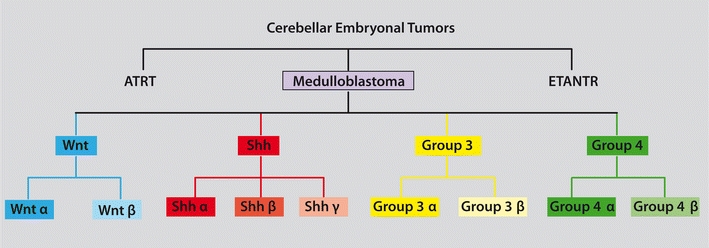
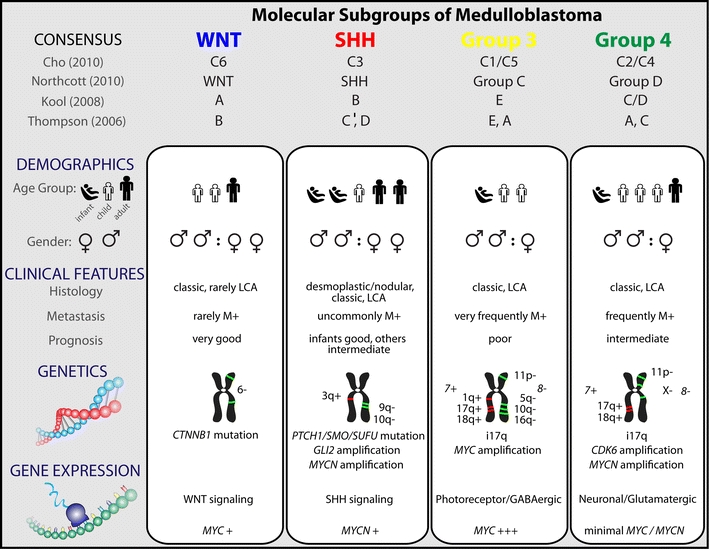
Medulloblastoma, a small blue cell malignancy of the cerebellum, is a major cause of morbidity and mortality in pediatric oncology. Current mechanisms for clinical prognostication and stratification include clinical factors (age, presence of metastases, and extent of resection) as well as histological subgrouping (classic, desmoplastic, and large cell/anaplastic histology). Transcriptional profiling studies of medulloblastoma cohorts from several research groups around the globe have suggested the existence of multiple distinct molecular subgroups that differ in their demographics, transcriptomes, somatic genetic events, and clinical outcomes. Variations in the number, composition, and nature of the subgroups between studies brought about a consensus conference in Boston in the fall of 2010. Discussants at the conference came to a consensus that the evidence supported the existence of four main subgroups of medulloblastoma (Wnt, Shh, Group 3, and Group 4). Participants outlined the demographic, transcriptional, genetic, and clinical differences between the four subgroups. While it is anticipated that the molecular classification of medulloblastoma will continue to evolve and diversify in the future as larger cohorts are studied at greater depth, herein we outline the current consensus nomenclature, and the differences between the medulloblastoma subgroups.
Overview
The claims and statistics of this paper haven’t been checked yet.
Free: it reads the open-access text and checks the first 5 claims that cite a source we can check. Create a free account to check every claim.
Integrity signals
Registry
Cites
Statistics
Figures
Verification
Claims the paper makes
The claims and statistics of this paper haven’t been checked yet.
Free: it reads the open-access text and checks the first 5 claims that cite a source we can check. Create a free account to check every claim.
Self-check
Percentages, sums and reported differences re-computed from the paper’s own numbers.
The self-check needs the paper’s full text.
Citations
Cites
The 2007 WHO Classification of Tumours of the Central Nervous System
Louis, D. N., Ohgaki, H., Wiestler, O. D., Cavenee, W. K., Burger, P. C., Jouvet, A., Scheithauer, B. W., & Kleihues, P. (2007) · Acta Neuropathologica · doi:10.1007/s00401-007-0243-4 · Cited by 15,397
Golub, T. R., Slonim, D. K., Tamayo, P., Huard, C., Gaasenbeek, M., Mesirov, J. P., Coller, H., Loh, M. L., Downing, J. R., Caligiuri, M. A., et al. (1999) · Science · doi:10.1126/science.286.5439.531 · Cited by 11,516 · cited 1×
“This transcriptional approach to tumor sub-classification has also been applied to a number of different non-medullo-blastoma histologies [4, 16, 18, 31, 35, 43], with the underlying assumption that tumors with similar transcriptomes will behave in a biologically similar manner, allowing a…”
BackgroundErratum to: The 2007 WHO classification of tumours of the central nervous system
Louis, D. N., Ohgaki, H., Wiestler, O. D., Cavenee, W. K., Burger, P. C., Jouvet, A., Scheithauer, B. W., & Kleihues, P. (2007) · Zurich Open Repository and Archive (University of Zurich) · doi:10.5167/uzh-156115 · Cited by 4,442
Phillips, H. S., Kharbanda, S., Chen, R., Forrest, W. F., Soriano, R. H., Wu, T. D., Misra, A., Nigro, J. M., Colman, H., Soroceanu, L., et al. (2006) · Cancer Cell · doi:10.1016/j.ccr.2006.02.019 · Cited by 3,143 · cited 1×
“…transcriptional approach to tumor sub-classification has also been applied to a number of different non-medullo-blastoma histologies [4, 16, 18, 31, 35, 43], with the underlying assumption that tumors with similar transcriptomes will behave in a biologically similar manner, allowing a…”
BackgroundBhattacharjee, A., Richards, W. G., Staunton, J., Li, C., Monti, S., Vasa, P., Ladd, C., Beheshti, J., Bueno, R., Gillette, M., et al. (2001) · Proceedings of the National Academy of Sciences · doi:10.1073/pnas.191502998 · Cited by 2,576 · cited 1×
“This transcriptional approach to tumor sub-classification has also been applied to a number of different non-medullo-blastoma histologies [4, 16, 18, 31, 35, 43], with the underlying assumption that tumors with similar transcriptomes will behave in a biologically similar manner, allowing a…”
BackgroundPrediction of central nervous system embryonal tumour outcome based on gene expression
Pomeroy, S. L., Tamayo, P., Gaasenbeek, M., Sturla, L. M., Angelo, M., McLaughlin, M. E., Kim, J. Y. H., Goumnerova, L. C., Black, P. M., Lau, C., et al. (2002) · Nature · doi:10.1038/415436a · Cited by 2,371 · cited 2×
“With recent developments in the ability to monitor transcription across the genome in the setting of a single experiment, various groups have started to sub-classify medulloblastoma on the basis of differences in the transcriptome [36].”
BackgroundSelf-citationIdentification of a CpG Island Methylator Phenotype that Defines a Distinct Subgroup of Glioma
Noushmehr, H., Weisenberger, D. J., Diefes, K., Phillips, H. S., Pujara, K., Berman, B. P., Pan, F., Pelloski, C. E., Sulman, E. P., Bhat, K. P., et al. (2010) · Cancer Cell · doi:10.1016/j.ccr.2010.03.017 · Cited by 2,337 · cited 1×
“This transcriptional approach to tumor sub-classification has also been applied to a number of different non-medullo-blastoma histologies [4, 16, 18, 31, 35, 43], with the underlying assumption that tumors with similar transcriptomes will behave in a biologically similar manner, allowing a…”
BackgroundMedulloblastoma Comprises Four Distinct Molecular Variants
Northcott, P. A., Korshunov, A., Witt, H., Hielscher, T., Eberhart, C. G., Mack, S., Bouffet, E., Clifford, S. C., Hawkins, C. E., French, P., et al. (2011) · Journal of Clinical Oncology · doi:10.1200/jco.2009.27.4324 · Cited by 1,339 · cited 12×
“Others approaches to identify Shh medulloblastomas have included immunohistochemical staining for SFRP1 [2, 28, 48], or GAB1 [11].”
BackgroundMethodInfluentialSelf-citationThe Molecular Basis of Turcot's Syndrome
Hamilton, S. R., Liu, B., Parsons, R. E., Papadopoulos, N., Jen, J., Powell, S. M., Krush, A. J., Berk, T., Cohen, Z., Tetu, B., et al. (1995) · New England Journal of Medicine · doi:10.1056/nejm199503303321302 · Cited by 1,133 · cited 1×
“Germline mutations of the Wnt pathway inhibitor APC predispose to Turcot syndrome, which includes a proclivity to medulloblastoma, in addition, somatic mutations of CTNNB1 encoding b-catenin have been found in sporadic medulloblastomas [19, 50].”
BackgroundKool, M., Korshunov, A., Remke, M., Jones, D. T. W., Schlanstein, M., Northcott, P. A., Cho, Y.-J., Koster, J., Schouten-van Meeteren, A., van Vuurden, D., et al. (2012) · Acta Neuropathologica · doi:10.1007/s00401-012-0958-8 · Cited by 1,056 · cited 3×
“…to identify target cohorts for certain drugs (e.g., SHH inhibitors), but also add significantly to outcome prediction by the time of diagnosis [21], much more than any of the established clinical markers such as patient age, metastatic stage at diagnosis, level of resection, and histological…”
BackgroundMethodInfluentialSelf-citation
Cited by
Items 601–700 of 1,003
Clinical outcome of pediatric medulloblastoma patients with Li–Fraumeni syndrome
Kolodziejczak, A. S., Guerrini‐Rousseau, L., Masliah‐Planchon, J., Ecker, J., Selt, F., Mynarek, M., Obrecht, D., Sill, M., Autry, R. J., Stutheit-Zhao, E., et al. (2023) · Neuro-Oncology · doi:10.1093/neuonc/noad114 · Cited by 26
Self-citationKMT2D suppresses Sonic hedgehog-driven medulloblastoma progression and metastasis
Sanghrajka, R. M., Koche, R. P., Medrano, H., Nagar, S. E., Stephen, D. N., Lao, Z., Bayin, N. S., Ge, K., & Joyner, A. L. (2023) · iScience · doi:10.1016/j.isci.2023.107831 · Cited by 27
Regulation of Nuclear Receptor Nur77 by miR-124
Tenga, A., Beard, J. A., Takwi, A. A., Wang, Y., & Chen, T. (2016) · PLoS ONE · doi:10.1371/journal.pone.0148433 · Cited by 27
“There are 4 subgroups of medulloblastoma: Wnt, Shh, Group 3, and Group 4 [58].”
BackgroundDietl, S., Schwinn, S., Dietl, S., Riedel, S. S., Deinlein, F., Rutkowski, S., von Bueren, A. O., Krauß, J., Schweitzer, T., Vince, G. H., et al. (2016) · BMC Cancer · doi:10.1186/s12885-016-2170-z · Cited by 28
“oncogene seems to be restricted to this group and associated with poor clinical outcome [18, 23, 24].”
BackgroundInfluentialSelf-citationBrain tumor modeling using the CRISPR/Cas9 system: state of the art and view to the future
Mao, X., Dai, J., Zhou, H., Liu, Z., & Jin, W. (2016) · Oncotarget · doi:10.18632/oncotarget.8075 · Cited by 26
“In central nervous system, previous investigations illustrated that animal models of sonic hedgehog medulloblastoma and glioblastoma have been successfully established using CRISPR KO [81, 82].”
BackgroundModern management of medulloblastoma: Molecular classification, outcomes, and the role of surgery
Lam, S. K., Srinivasan, V. M., Ghali, M. G. Z., North, R., Boghani, Z., & Hansen, D. (2016) · Surgical Neurology International · doi:10.4103/2152-7806.196922 · Cited by 26
“[41] The consensus four subgroups, which include WNT, SHH, Group 3, and Group 4, have been correlated to both clinical outcomes and histologic appearance.[2,41] These genetically defined molecular subgroups form a crucial aspect of the forthcoming World Health Organization 2016 guidelines, which divides MB into WNT, S…”
BackgroundMolecular characterization of medulloblastomas with extensive nodularity (MBEN)
Korshunov, A., Sahm, F., Stichel, D., Schrimpf, D., Ryzhova, M. V., Zheludkova, O., Голанов, А. В., Lichter, P., Jones, D., von Deimling, A., et al. (2018) · Acta Neuropathologica · doi:10.1007/s00401-018-1840-0 · Cited by 26
“Immunohistochemistry with GAB1 protein (marker SHH pathway activation [14, 18]) revealed no staining in these tumor samples in contrast to the remaining 23 SHH MBEN which were strongly GAB1 positive.”
BackgroundResultSelf-citationFTY720 Decreases Tumorigenesis in Group 3 Medulloblastoma Patient-Derived Xenografts
Garner, E. F., Williams, A. P., Stafman, L. L., Aye, J. M., Mroczek‐Musulman, E., Moore, B. P., Stewart, J. E., Friedman, G. K., & Beierle, E. A. (2018) · Scientific Reports · doi:10.1038/s41598-018-25263-5 · Cited by 26
Rethinking medulloblastoma from a targeted therapeutics perspective
Hashimoto, Y., Peñas-Prado, M., Zhou, S., Wei, J., Khatua, S., Hodges, T. R., Sanai, N., Xiu, J., Gatalica, Z., Kim, L., et al. (2018) · Journal of Neuro-Oncology · doi:10.1007/s11060-018-2917-2 · Cited by 26
“Recently, in addition to histological classification, molecular subgroups (WNT, SHH, Group 3 and Group 4) with distinct clinical and genomic characteristics have been identified as important prognostic factors in larger retrospective series and are now being validated prospectively [2].”
BackgroundDoussouki, M. E., Gajjar, A. J., & Chamdine, O. (2019) · Future Neurology · doi:10.2217/fnl-2018-0030 · Cited by 29
Self-citationKaur, K., Jha, P., Pathak, P., Suri, V. S., Sharma, M. C., Garg, A. K., Suri, A., & Sarkar, C. (2019) · Journal of Neuro-Oncology · doi:10.1007/s11060-019-03187-y · Cited by 26
NPI-0052 and γ-radiation induce a synergistic apoptotic effect in medulloblastoma
Frisira, E., Rashid, F., Varma, S. N., Badodi, S., Benjamin-Ombo, V. A., Michod, D., & Niklison-Chirou, M. V. (2019) · Cell Death and Disease · doi:10.1038/s41419-019-2026-y · Cited by 32
Long non-coding RNAs in brain tumors
Katsushima, K., Jallo, G. I., Eberhart, C. G., & Perera, R. J. (2021) · NAR Cancer · doi:10.1093/narcan/zcaa041 · Cited by 29
“children and adults, associated with very good prognosis); sonic hedgehog (SHH)-activated MBs (30%; intermediate prognosis, infants and adults; further characterized as TP53 mutant or TP53 wild-type); and two provisional nonWNT/SHH subgroups: group 3 MBs (25%; poor prognosis, infants and children) and group 4 MBs (35%…”
BackgroundSelf-citationPediatric neuro-oncology survival disparities in California
Cooney, T. M., Fisher, P. G., Li, T., Clarke, C. A., & Partap, S. (2018) · Journal of Neuro-Oncology · doi:10.1007/s11060-018-2773-0 · Cited by 26
The Roles of miRNAs in Medulloblastoma: A Systematic Review
Mollashahi, B., Aghamaleki, F. S., & Movafagh, A. (2019) · Journal of Cancer Prevention · doi:10.15430/jcp.2019.24.2.79 · Cited by 26
“KCNA1 function as immunohistochemical markers that are seen in group 4 of medulloblastoma [14].”
BackgroundKling, M. J., Kesherwani, V., Mishra, N. K., Alexander, G. R., McIntyre, E. M., Ray, S., Challagundla, K. B., Joshi, S. S., Coulter, D. W., & Chaturvedi, N. K. (2022) · Journal of Experimental & Clinical Cancer Research · doi:10.1186/s13046-022-02530-y · Cited by 26
“with classically four major molecularly distinct subgroups that include wingless (WNT), Sonic-hedgehog (SHH), Group 3, and Group 4 [3, 4].”
BackgroundPioneering models of pediatric brain tumors
Grigore, F., Yang, S. J., Chen, C. C., & Koga, T. (2023) · Neoplasia · doi:10.1016/j.neo.2022.100859 · Cited by 26
Characterization of novel biomarkers in selecting for subtype specific medulloblastoma phenotypes
Liang, L., Aiken, C., McClelland, R. L., Morrison, L. C., Tatari, N., Remke, M., Ramaswamy, V., Issaivanan, M., Ryken, T. C., Bigio, M. R. D., et al. (2015) · Oncotarget · doi:10.18632/oncotarget.6195 · Cited by 27
“WNT and SHH tumors are characterized by activation of the WNT and SHH signaling pathway respectively and are associated with a more favorable to intermediate prognosis [3].”
BackgroundSelf-citationBode, U., Zimmermann, M., Moser, O., Rutkowski, S., Warmuth‐Metz, M., Pietsch, T., Kortmann, R., Faldum, A., & Fleischhack, G. (2014) · Journal of Neuro-Oncology · doi:10.1007/s11060-014-1598-8 · Cited by 25
Self-citationZhang, Z.-Y., Xu, J. F., Ren, Y., Yao, Y., Li, K. K., Ng, H., Mao, Y. Q., Zhou, L.-F., & Zhong, P. (2014) · PLoS ONE · doi:10.1371/journal.pone.0099490 · Cited by 25
“Of note, patients with WNT medulloblastoma survived significantly longer than patients with other subgroups of medulloblastoma, and there is a consensus that patients in this subgroup may be over treated with the possibilities of reducing current therapies such as RT and CHT [11].”
BackgroundmicroRNA-10b Is Overexpressed and Critical for Cell Survival and Proliferation in Medulloblastoma
Pal, R., & Greene, S. (2015) · PLoS ONE · doi:10.1371/journal.pone.0137845 · Cited by 25
“Medulloblastoma represents a heterogeneous group of tumors that has recently been categorized into 4 subgroups on the basis of clinical factors and molecular signature [1].”
BackgroundSurvival and prognostic factors in pediatric patients with medulloblastoma in southern Thailand
Tunthanathip, T., Nalita, N., Ratanalert, S., Kanjanapradit, K., & Chotsampancharoen, T. (2018) · Journal of Pediatric Neurosciences · doi:10.4103/jpn.jpn_111_17 · Cited by 25
“[6] Furthermore, the current consensus on molecular subgroups of medulloblastoma is that there are four molecular subgroups: wingless (WNT), sonic hedgehog (SHH), group 3, and group 4.[7] In children, as well as adults, WNT tumors clearly have the best outcome compared with others.”
BackgroundUpregulation of the chromatin remodeler HELLS is mediated by YAP1 in Sonic Hedgehog Medulloblastoma
Robinson, M. H., Maximov, V. D., Lallani, S. B., Farooq, H., Taylor, M. D., Read, R. D., & Kenney, A. M. (2019) · Scientific Reports · doi:10.1038/s41598-019-50088-1 · Cited by 26
Self-citationZhang, S., Gong, Z., Oladimeji, P. O., Currier, D. G., Deng, Q., Liu, M., Chen, T., & Li, Y. (2019) · Experimental Hematology and Oncology · doi:10.1186/s40164-019-0153-x · Cited by 27
Schraw, J. M., Desrosiers, T. A., Nembhard, W. N., Langlois, P. H., Meyer, R. E., Canfield, M. A., Rasmussen, S. A., Chambers, T. M., Spector, L. G., Plon, S. E., et al. (2020) · Cancer · doi:10.1002/cncr.32982 · Cited by 26
“For example, variants in BRCA1 and BRCA2 have recently been linked with nonsyndromic cleft lip and/ or palate,(34) and sonic hedgehog (Shh) signaling, a critical regulator of CNS development, is used to define a molecular subtype of medulloblastoma.(35,36) Some studies report that maternal exposures that are associate…”
BackgroundMedulloblastoma: an Old Diagnosis with New Promises
Szalontay, L., & Khakoo, Y. (2020) · Current Oncology Reports · doi:10.1007/s11912-020-00953-4 · Cited by 28
G-protein coupled receptor expression patterns delineate medulloblastoma subgroups
Whittier, K. L., Boese, E. A., Gibson-Corley, K. N., Kirby, P., Darbro, B. W., Qian, Q., Ingram, W. J., Robertson, T., Remke, M., Taylor, M. D., et al. (2013) · Acta Neuropathologica Communications · doi:10.1186/2051-5960-1-66 · Cited by 26
“The results of this study indicate that GPCR expression patterns delineate five groups of medulloblastoma tumors, two of which correlate with high fidelity to the WNT and the SHH subgroups of medulloblastoma [5,7,10,14,17,18,32].”
BackgroundResultInfluentialSelf-citationNeill, S. G., Hauenstein, J., Li, M. M., Liu, Y. J., Luo, M., Saxe, D., & Ligon, A. H. (2020) · Cancer Genetics · doi:10.1016/j.cancergen.2020.02.004 · Cited by 29
Keeling, C., Davies, S., Goddard, J., Ramaswamy, V., Schwalbe, E. C., Bailey, S., Hicks, D., & Clifford, S. C. (2024) · EClinicalMedicine · doi:10.1016/j.eclinm.2024.102469 · Cited by 26
Self-citationRonsley, R. J., Karvonen, K. A., Cole, B., Paulson, V., Stevens, J., Crotty, E. E., Hauptman, J. S., Lee, A. S., Stasi, S. M., Lockwood, C. M., et al. (2024) · Journal of Neuro-Oncology · doi:10.1007/s11060-024-04645-y · Cited by 30
“…each with distinct and clinically relevant molecular characteristics required for either molecular subgrouping in the case of medulloblastoma [34 ]; or for diagnostic confirmation and ther - apy selection in the case of high-grade glioma [35] and for early detection of relapse i.e., prior to…”
Ahmad, Z., Jasnos, L., Gil, V., Howell, L., Hallsworth, A., Petrie, K. R., Sawado, T., & Chesler, L. (2015) · PLoS ONE · doi:10.1371/journal.pone.0119834 · Cited by 28
“In children, medulloblastoma (MB) is the most frequently occurring primitive neuroectodermal tumor (PNET) originating in the brain and has been classified into four major subtypes based on copy number variation and transcription profiles: MB, MB (sonic hedgehog), MB and MB [1,2].”
BackgroundBriel-Pump, A., Beez, T., Ebbert, L., Remke, M., Weinhold, S., Sabel, M., & Sorg, R. V. (2018) · Journal of Photochemistry and Photobiology B Biology · doi:10.1016/j.jphotobiol.2018.11.002 · Cited by 24
Self-citationStensvold, E., Myklebust, T. Å., Cappelen, J., Due‐Tønnessen, B. J., Due‐Tønnessen, P., Kepka, A., Johannesen, T. B., Krossnes, B. K., Lundar, T., Marić, S., et al. (2019) · Pediatric Blood & Cancer · doi:10.1002/pbc.27910 · Cited by 24
MPscore: A Novel Predictive and Prognostic Scoring for Progressive Meningioma
Liu, F., Qian, J., & Ma, C. (2021) · Cancers · doi:10.3390/cancers13051113 · Cited by 24
“Similarly, children with wingless (WNT) subtype of medulloblastoma have the most favorable outcomes than children with others subtypes of medulloblastoma [13].”
BackgroundThe role of sex genotype in paediatric CNS tumour incidence and survival
Soon, W. C., Goacher, E., Solanki, S. P., Hayes, J. L., Kapetanstrataki, M., Picton, S. V., Chumas, P., & Mathew, R. K. (2021) · Child s Nervous System · doi:10.1007/s00381-021-05165-0 · Cited by 25
“However, when the subgroups are examined separately, WNT- and SHHassociated medulloblastomas have been shown to be more prevalent in females, demonstrating an uneven distribution of medulloblastoma subgroups according to sex [35].”
BackgroundAndrade, A. F., Borges, K. S., Suazo, V. K., Geron, L., Corrêa, C. A. P., Castro‐Gamero, A. M., Vasconcelos, E. J. R., de Oliveira, R. S., Neder, L., Yunes, J. A., et al. (2016) · Investigational New Drugs · doi:10.1007/s10637-016-0401-4 · Cited by 24
“SHH pathway activation displays high levels of GLI1 expression [53, 54] and represents ∼ 30% of all human MB cases [5].”
BackgroundInhibiting microcephaly genes as alternative to microtubule targeting agents to treat brain tumors
Iegiani, G., Cunto, F. D., & Pallavicini, G. (2021) · Cell Death and Disease · doi:10.1038/s41419-021-04259-6 · Cited by 26
EHMT2/G9a as an Epigenetic Target in Pediatric and Adult Brain Tumors
Souza, B. K., Freire, N. H., Jaeger, M. D. C., de Farias, C. B., Brunetto, A. L., Brunetto, A. T., & Roesler, R. (2021) · International Journal of Molecular Sciences · doi:10.3390/ijms222011292 · Cited by 27
“The current molecular classification divides MB tumors into four consensus subgroups with distinct genomic, epigenetic, and clinical features: WNT, SHH, Group 3, and Group 4 [51,52].”
BackgroundLncmiRHG-MIR100HG: A new budding star in cancer
Wu, Y., Wang, Z., Yu, S., Liu, D., & Sun, L. (2022) · Frontiers in Oncology · doi:10.3389/fonc.2022.997532 · Cited by 27
Mynarek, M., Obrecht, D., Sill, M., Sturm, D., Kloth‐Stachnau, K., Selt, F., Ecker, J., von Hoff, K., Juhnke, B.-O., Goschzik, T., et al. (2022) · Acta Neuropathologica · doi:10.1007/s00401-022-02522-4 · Cited by 27
Self-citationSuperenhancers as master gene regulators and novel therapeutic targets in brain tumors
Zhuang, H.-H., Qu, Q., Teng, X.-Q., Dai, Y.-H., & Qu, J. (2023) · Experimental & Molecular Medicine · doi:10.1038/s12276-023-00934-0 · Cited by 24
Vaillant, C., Valdivieso, P., Nuciforo, S., Kool, M., Schauerte, A., Méreau, H., Cabuy, E., Lobrinus, J. A., Pfister, S. M., Zúñiga, A., et al. (2015) · PLoS ONE · doi:10.1371/journal.pone.0124870 · Cited by 25
“Genome-wide analyses support the proposal that medulloblastomas arise as a consequence of deregulated cerebellar development [9] and allow molecular distinction of four medulloblastoma subgroups [6,10,11].”
BackgroundSelf-citationProteomic profiling of high risk medulloblastoma reveals functional biology
Staal, J. A., Lau, L. S., Zhang, H., Ingram, W. J., Hallahan, A. R., Northcott, P. A., Pfister, S. M., Wechsler‐Reya, R. J., Rusert, J. M., Taylor, M. D., et al. (2015) · Oncotarget · doi:10.18632/oncotarget.3927 · Cited by 34
“In regard to medulloblastoma (MB), the most common malignant pediatric brain tumor, what was originally perceived to be a single entity is now known to consist of at least four distinct subgroups with significantly different clinical outcomes and therefore warranting individual therapeutic consideration [1].”
InfluentialSelf-citationA chemical screen for medulloblastoma identifies quercetin as a putative radiosensitizer
Lagerweij, T., Hiddingh, L., Biesmans, D., Crommentuijn, M. H. W., Cloos, J. J., Li, X., Kogiso, M., Tannous, B. A., Vandertop, W. P., Noske, D. P., et al. (2016) · Oncotarget · doi:10.18632/oncotarget.7980 · Cited by 24
“Of note are the inhibition of the Wnt/β-catenin pathway, which plays an important role in one of the four medulloblastoma subgroups [23], and the inhibition of the Hepatocyte Growth Factor (HGF)-induced cell migration in medulloblastoma by quercetin [56].”
Embryonal Tumors of the Central Nervous System
Blessing, M. M., & Alexandrescu, S. (2020) · Surgical pathology clinics · doi:10.1016/j.path.2020.01.003 · Cited by 25
Liquid Biomarkers for Pediatric Brain Tumors: Biological Features, Advantages and Perspectives
Madlener, S., & Gojo, J. (2020) · Journal of Personalized Medicine · doi:10.3390/jpm10040254 · Cited by 24
Chan, T. S. Y., Hawkins, C. E., Krieger, J. R., McGlade, C. J., & Huang, A. (2016) · Cancer Research · doi:10.1158/0008-5472.can-15-2194 · Cited by 25
“Recent genomic studies indicate 4 molecular subgroups of MB [3] and confirmed early observations of the strong negative prognostic effect of MYCC amplification which defines the most aggressive group 3 MB [3-5].”
BackgroundSun, L., Moritake, T., Ito, K., Matsumoto, Y., Yasui, H., Nakagawa, H., Hirayama, A., Inanami, O., & Tsuboi, K. (2017) · PLoS ONE · doi:10.1371/journal.pone.0176162 · Cited by 32
Rapalino, O., Batchelor, T. T., & González, R. G. (2016) · Handbook of clinical neurology · doi:10.1016/b978-0-444-53485-9.00014-3 · Cited by 27
Rodríguez‐Blanco, J., Salvador, A., Suter, R. K., Swiderska‐Syn, M., Palomo-Caturla, I., Kliebe, V. M., Shahani, P. H., Peterson, K. D., Turos‐Cabal, M., Vieira, M. E., et al. (2024) · Journal of Clinical Investigation · doi:10.1172/jci171136 · Cited by 24
dos Santos, M. C. T., da Silva, P. B. G., Rodini, C. O., Furukawa, G., Antônio, D. S. M., Zanotto‐Filho, A., Moreira, J. C. F., & Okamoto, O. K. (2015) · Stem Cells and Development · doi:10.1089/scd.2015.0052 · Cited by 23
“While tumors of the WNT and SHH subgroups are correlated with better prognosis, particularly in infant patients, tumors of group 3 and 4 are associated with poorer prognosis [32].”
Robinson, L. C., Santagata, S., & Hankinson, T. C. (2016) · Neurosurgical FOCUS · doi:10.3171/2016.9.focus16308 · Cited by 23
Zhu, S., Lin, F., Chen, Z., Jiang, X., Zhang, J., Yang, Q., Chen, Y., & Wang, J. (2020) · Frontiers in Genetics · doi:10.3389/fgene.2020.563882 · Cited by 23
“More recently there are four major molecular subgroups: two associated with pathogenic abnormalities in the wingless pathway (WNT) and sonic hedgehog (SHH) developmental signaling pathways (the WNT and SHH subgroups), and two that are less well molecularly characterized and referred to as Group 3 and Group 4 tumors (T…”
BackgroundPre-therapeutic efficacy of the CDK inhibitor dinaciclib in medulloblastoma cells
Buzzetti, M., Morlando, S., Solomos, D., Mehmood, A., Cox, A. W. I., Chiesa, M., D’Alessandra, Y., Garofalo, M., Topham, C. H., & Leva, G. D. (2021) · Scientific Reports · doi:10.1038/s41598-021-84082-3 · Cited by 29
The role of artificial intelligence in paediatric neuroradiology
Pringle, C., Kilday, J., Kamaly-Asl, I. D., & Stivaros, S. M. (2022) · Pediatric Radiology · doi:10.1007/s00247-022-05322-w · Cited by 25
Paret, C., Ustjanzew, A., Ersali, S., Seidmann, L., Jennemann, R., Ziegler, N., Malki, K. E., Russo, A., Wingerter, A., Ortmüller, F., et al. (2022) · Cancers · doi:10.3390/cancers14246051 · Cited by 23
“While the WNT subtype has a good prognosis, the other three groups have a mixed response [53].”
BackgroundModeling Human Brain Tumors and the Microenvironment Using Induced Pluripotent Stem Cells
Khamis, Z. I., Sarker, D. B., Xue, Y., Al-Akkary, N., James, V. D., Zeng, C., Li, Y., & Sang, Q. A. (2023) · Cancers · doi:10.3390/cancers15041253 · Cited by 24
“According to an international consensus paper in 2012, medulloblastoma is divided into four molecular subgroups: WNT, SHH, Group 3, and Group 4 [121].”
BackgroundMicroglia in pediatric brain tumors: The missing link to successful immunotherapy
du Chatinier, A., Velilla, I. Q., Meel, M. H., Hoving, E. W., Hulleman, E., & Metselaar, D. S. (2023) · Cell Reports Medicine · doi:10.1016/j.xcrm.2023.101246 · Cited by 24
“58 In general, medullo-blastoma tumors are characterized by low numbers of infiltrating immune cells.”
BackgroundĆwiek, P., Leni, Z., Salm, F., Dimitrova, V., Styp‐Rekowska, B., Chiriano, G., Carroll, M., Höland, K., Djonov, V., Scapozza, L., et al. (2014) · Oncotarget · doi:10.18632/oncotarget.2699 · Cited by 24
“The current classification system for medulloblastoma is based on morphology (histopathology), and include variants such as desmoplastic/nodular, MBEN (medulloblastoma with extensive nodularity), classic medulloblastoma, large cell, and anaplastic medulloblastoma [4, 5].”
BackgroundLindsey, J. C., Kawauchi, D., Schwalbe, E. C., Solecki, D. J., Selby, M. P., McKinnon, P. J., Olson, J. M., Hayden, J. T., Grundy, R. G., Ellison, D. W., et al. (2014) · Oncogene · doi:10.1038/onc.2014.405 · Cited by 23
Self-citationChow, K.-H., Shin, D., Jenkins, M. H., Miller, E. E., Shih, D. J. H., Choi, S., Low, B. E., Philip, V. M., Rybinski, B., Bronson, R. T., et al. (2014) · Cancer Research · doi:10.1158/0008-5472.can-13-3293 · Cited by 23
“Molecularly, human medulloblastomas can be divided into four subgroups: SHH, WNT, Group 3, and Group 4 (8).”
BackgroundSelf-citationThomaz, A., Jaeger, M. D. C., Buendia, M., Bambini-Júnior, V., Gregianin, L. J., Brunetto, A. L., Brunetto, A. T., de Farias, C. B., & Roesler, R. (2015) · Journal of Molecular Neuroscience · doi:10.1007/s12031-015-0689-0 · Cited by 25
Medulloblastoma: molecular pathways and histopathological classification
Borowska, A., & Jóźwiak, J. (2016) · Archives of Medical Science · doi:10.5114/aoms.2016.59939 · Cited by 25
“Shh group tumors show a high incidence in desmoplastic/nodular, rarely classic or LC/A histopathology [2].”
BackgroundInfluentialABCB1 in children's brain tumours
Coyle, B., Kessler, M., Sabnis, D. H., & Kerr, I. D. (2015) · Biochemical Society Transactions · doi:10.1042/bst20150137 · Cited by 23
Higdon, R., Kala, J., Wilkins, D. J., Yan, J., Sethi, M. K., Lin, L., Liu, S., Montague, E., Janko, I., Choiniere, J., et al. (2017) · Proteomes · doi:10.3390/proteomes5010005 · Cited by 23
“Group 3 tumors account for around 25% of all medulloblastomas and are more common in males [11,12].”
BackgroundInfluentialTamayo-Orrego, L., & Charron, F. (2019) · F1000Research · doi:10.12688/f1000research.20013.1 · Cited by 25
Baroni, L., Sampor, C., González, A., Lubieniecki, F. J., Lamas, G., Rugilo, C., Bartels, U. K., Heled, A., Smith, K. S., Northcott, P. A., et al. (2020) · Neuro-Oncology · doi:10.1093/neuonc/noaa122 · Cited by 23
Self-citationAdvances in the classification and treatment of pediatric brain tumors
Fangusaro, J., & Bandopadhayay, P. (2020) · Current Opinion in Pediatrics · doi:10.1097/mop.0000000000000975 · Cited by 32
“The traditional WHO grading classifies ependymoma as grade I (myxopapillary ependymoma, most commonly in the spine), grade II (classic) and grade III (anaplastic) [18].”
BackgroundResultInfluentialHuybrechts, S., Teuff, G. L., Tauziède‐Espariat, A., Rossoni, C., Chivet, A., Indersie, É., Varlet, P., Puget, S., Abbas, R., Ayrault, O., et al. (2020) · Cancers · doi:10.3390/cancers13010053 · Cited by 26
A Regulatory Loop of FBXW7-MYC-PLK1 Controls Tumorigenesis of MYC-Driven Medulloblastoma
Wang, D., Pierce, A. M., Veo, B. L., Fosmire, S. P., Danis, E. P., Donson, A. M., Venkataraman, S., & Vibhakar, R. (2021) · Cancers · doi:10.3390/cancers13030387 · Cited by 25
“Recent genomic analyses have identified multiple sub-groups with differing outcomes, underscoring the heterogeneity of MB [4].”
BackgroundPrince, E. W., Balakrishnan, I., Shah, M., Levy, J. M. M., Griesinger, A. M., Alimova, I. N., Harris, P. S., Birks, D. K., Donson, A. M., Davidson, N. L., et al. (2016) · Oncotarget · doi:10.18632/oncotarget.10692 · Cited by 23
“Group 3 tend to be more aggressive in comparison to other subgroups [2, 4].”
BackgroundSelf-citationAntitumor Activities and Cellular Changes Induced by TrkB Inhibition in Medulloblastoma
Thomaz, A., Pinheiro, K. D. V., Souza, B. K., Gregianin, L. J., Brunetto, A. L., Brunetto, A. T., de Farias, C. B., Jaeger, M. D. C., Ramaswamy, V., Nör, C., et al. (2019) · Frontiers in Pharmacology · doi:10.3389/fphar.2019.00698 · Cited by 22
“Integrative genomic and epigenomic studies on MB biology classify this disease into four clinically relevant consensus subgroups: wingless (Wnt), Sonic hedgehog (Shh), group 3 and group 4 [3, 4].”
BackgroundSelf-citationSignals that regulate the oncogenic fate of neural stem cells and progenitors
Swartling, F. J., Bolin, S., Phillips, J. J., & Persson, A. I. (2013) · Experimental Neurology · doi:10.1016/j.expneurol.2013.01.027 · Cited by 22
Three Down and One To Go: Modeling Medulloblastoma Subgroups
Eberhart, C. G. (2012) · Cancer Cell · doi:10.1016/j.ccr.2012.01.013 · Cited by 22
Self-citationFairley, L., Picton, S. V., McNally, R., Bailey, S., McCabe, M. G., & Feltbower, R. G. (2016) · European Journal of Cancer · doi:10.1016/j.ejca.2016.03.083 · Cited by 27
“Medulloblastomas are considered to comprise at least four distinct diseases that differ according to their demographic characteristics, histology, genetics and clinical outcomes (7-9).”
The Genomic Era of Clinical Oncology: Integrated Genomic Analysis for Precision Cancer Care
Surrey, L. F., Luo, M., Chang, F., & Li, M. M. (2016) · Cytogenetic and Genome Research · doi:10.1159/000454655 · Cited by 25
“Loss of 17p with or without concomitant 17q gain was most frequently found in group 3 and group 4; however, the 2 groups differ in the frequency of these abnormalities with MYC amplification unique for group 3 [Taylor et al., 2012].”
BackgroundMethodZomerman, W. W., Plasschaert, S. L. A., Conroy, S., Scherpen, F. J. G., Boer, T. M.-D., Lourens, H. J., Llobet, S. G., Smit, M. J., Slagter‐Menkema, L., Seitz, A., et al. (2018) · Cell Reports · doi:10.1016/j.celrep.2018.02.089 · Cited by 22
“We divided group 3 tumors into subgroups 3A and 3B due to marked transcriptional heterogeneity and in agreement with earlier findings describing overlap in transcriptomes between subsets of group 3 and group 4 medulloblastoma (Figure S1A) (Kool et al., 2008; Taylor et al., 2012).”
InfluentialSurgery for recurrent medulloblastoma: A review
Rolland, A., & Aquilina, K. (2019) · Neurochirurgie · doi:10.1016/j.neuchi.2019.06.008 · Cited by 22
Dietzsch, S., Placzek, F., Pietschmann, K., von Bueren, A. O., Matuschek, C., Glück, A., Gückenberger, M., Budach, V., Welzel, J., Pöttgen, C., et al. (2020) · Advances in Radiation Oncology · doi:10.1016/j.adro.2020.09.018 · Cited by 22
“2 Gy 43 7 36 13 Other 7 1 6 1 Not documented 0 0 0 16 Time to RT (days) (range) 33 (11-89) 33 (15-80) 32 (11-89) 32 (16-63) Duration RT (days) (range) 46 (30-158) 45 (30-79) 46 (37-158) 43 (21-90) Tumor progressions 51 38 13 29 Deaths 44 32 12 25”
Self-citationLinke, F., Aldighieri, M., Lourdusamy, A., Grabowska, A. M., Stolnik, S., Kerr, I. D., Merry, C. L. R., & Coyle, B. (2020) · The Journal of Pathology · doi:10.1002/path.5591 · Cited by 25
“Metastatic dissemination remains the main challenge and reason for therapy failure in MB [1,29].”
BackgroundPartap, S., & Monje, M. (2020) · CONTINUUM Lifelong Learning in Neurology · doi:10.1212/con.0000000000000955 · Cited by 26
Tanigawa, S., Fujita, M., Moyama, C., Ando, S., Ii, H., Kojima, Y., Fujishita, T., Aoki, M., Takeuchi, H., Yamanaka, T., et al. (2021) · Cancer Gene Therapy · doi:10.1038/s41417-020-00282-5 · Cited by 22
Brown, N. P., Vergara, A. M., Whelan, A. B., Guerra, P., & Bolger, T. A. (2021) · Journal of Biological Chemistry · doi:10.1016/j.jbc.2021.100296 · Cited by 24
Suero‐Abreu, G. A., Raju, G. P., Aristizábal, O., Volkova, E., Wojcinski, A., Houston, E. J., Pham, D., Szulc, K. U., Colon, D., Joyner, A. L., et al. (2014) · Neoplasia · doi:10.1016/j.neo.2014.10.001 · Cited by 25
“4 [13] +++”
BackgroundMedulloblastoma: Toward Biologically Based Management
Samkari, A., White, J. C., & Packer, R. J. (2014) · Seminars in Pediatric Neurology · doi:10.1016/j.spen.2014.12.010 · Cited by 22
REST promotes ETS1‐dependent vascular growth in medulloblastoma
Shaik, S., Maegawa, S., Haltom, A. R., Wang, F., Xiao, X., Dobson, T., Sharma, A., Yang, Y., Swaminathan, J., Kundra, V., et al. (2021) · Molecular Oncology · doi:10.1002/1878-0261.12903 · Cited by 23
Pediatric Brain Tumors in the Molecular Era: Updates for the Radiologist
AlRayahi, J., Alwalid, O., Mubarak, W. M., Maaz, A. U. R., & Mifsud, W. (2022) · Seminars in Roentgenology · doi:10.1053/j.ro.2022.09.004 · Cited by 25
Martell, E., Kuzmychova, H., Kaul, E., Senthil, H., Chowdhury, S. R., Morrison, L. C., Fresnoza, A. L., Zagozewski, J. L., Venugopal, C., Anderson, C. M., et al. (2023) · Nature Communications · doi:10.1038/s41467-023-38049-9 · Cited by 21
Wnt Signaling in Brain Tumors: A Challenging Therapeutic Target
Manfreda, L., Rampazzo, E., & Persano, L. (2023) · Biology · doi:10.3390/biology12050729 · Cited by 23
“The best characterized is the Wnt subgroup, due to its very good long-term survival of patients, exceeding 90% [149].”
BackgroundYang, Y., Valdés-Rives, S. A., Liu, Q., Gao, T., Burudpakdee, C., Li, Y., Tan, J., Tan, Y., Koch, C. A., Rong, Y., et al. (2024) · Cancer Cell · doi:10.1016/j.ccell.2024.07.008 · Cited by 22
Ashour, A. E., Jamal, S., Cheriyan, V. T., Muthu, M., Zoheir, K. M. A., Alafeefy, A. M., Abd‐Allah, A. R. A., Levi, E., Tarca, A. L., Polin, L., et al. (2013) · PLoS ONE · doi:10.1371/journal.pone.0066733 · Cited by 21
“Moreover, recent gene expression profiling studies have defined four MB subgroups that include sonic hedgehog subgroup, the WNT subgroup, and subgroups 3 and 4 [7].”
BackgroundSchwake, M., Günes, D., Köchling, M., Brentrup, A., Schroeteler, J., Hotfilder, M., Fruehwald, M., Stummer, W., & Ewelt, C. (2014) · Acta Neurochirurgica · doi:10.1007/s00701-014-2096-7 · Cited by 21
Martirosian, V., Chen, T. C., Lin, M. P., & Neman, J. (2016) · Journal of Neuroscience Research · doi:10.1002/jnr.23917 · Cited by 22
“Finally, another distinguishing statistic of Group 4 MBLs is the deletion of the X chromosome in a majority of female patients, which is correlated with the higher incidence of female Group 4 MBL patients (Taylor et al., 2012).”
BackgroundResultRamsawhook, A., Lewis, L. C., Coyle, B., & Ruzov, A. S. (2017) · Clinical Epigenetics · doi:10.1186/s13148-016-0306-2 · Cited by 24
“Both tumour types have recently been categorised into clinically relevant molecular subgroups [35, 36], which can be recapitulated by methylation analyses supporting the hypothesis that epigenetic drivers may play a key role in pathogenesis of these tumour types [37, 38].”
BackgroundCowman, S. J., Fan, Y. N., Pizer, B. L., & Sée, V. (2019) · BMC Cancer · doi:10.1186/s12885-019-5476-9 · Cited by 21
“MB is a heterogeneous cancer with distinct genetic variants, classified into 4 principal subgroups; Wnt, SSH, Group 3 and Group 4, based on their transcriptome [2, 3] reviewed in [4].”
BackgroundThe therapeutic and diagnostic potential of regulatory noncoding RNAs in medulloblastoma
Joshi, P. K., Katsushima, K., Zhou, R., Meoded, A., Stapleton, S. L., Jallo, G. I., Raabe, E. H., Eberhart, C. G., & Perera, R. J. (2019) · Neuro-Oncology Advances · doi:10.1093/noajnl/vdz023 · Cited by 23
Self-citationda Silva, L. S., Mançano, B. M., de Paula, F. E., dos Reis, M. B., de Almeida, G. C., Matsushita, M., Carlos, A., Evangelista, A. F., Saggioro, F. P., Serafini, L. N., et al. (2020) · Journal of Molecular Diagnostics · doi:10.1016/j.jmoldx.2020.04.207 · Cited by 22
Self-citationChaturvedi, N. K., Kling, M. J., Griggs, C. N., Kesherwani, V., Shukla, M., McIntyre, E. M., Ray, S., Liu, Y., McGuire, T. R., Sharp, J. G., et al. (2020) · Molecular Cancer Therapeutics · doi:10.1158/1535-7163.mct-19-0996 · Cited by 21
Adolescent and young adult neuro-oncology: a comprehensive review
Yeo, K. K., Burgers, D. E., Brodigan, K., Fasciano, K. M., Frazier, A. L., Warren, K. E., & Reardon, D. A. (2021) · Neuro-Oncology Practice · doi:10.1093/nop/npab001 · Cited by 25
Woolman, M., Katz, L., Tata, A., Basu, S. S., & Zarrine‐Afsar, A. (2021) · Clinics in Laboratory Medicine · doi:10.1016/j.cll.2021.03.004 · Cited by 22
Metadata
- Authors
- Taylor, M. D., Northcott, P. A., Korshunov, A., Remke, M., Cho, Y.-J., Clifford, S. C., Eberhart, C. G., Parsons, D. W., Rutkowski, S., Gajjar, A., Ellison, D. W., Lichter, P., Gilbertson, R. J., Pomeroy, S. L., Kool, M., & Pfister, S. M.
- Affiliations
- University of Toronto (CA)
- German Cancer Research Center (DE)
- Stanford Medicine (US)
- Newcastle University (GB)
- Johns Hopkins University (US)
- Baylor College of Medicine (US)
- University Medical Center Hamburg-Eppendorf (DE)
- St. Jude Children's Research Hospital (US)
- Boston Children's Hospital (US)
- Corresponding author
- Taylor, Michael D.
- Pfister, Stefan M.
- ORCID
- Venue
- Acta Neuropathologica
- Published
- 2011-12-02
- Volume
- 123
- Issue
- 4
- Pages
- 465-472
- ISSN
- 0001-6322 (ISSN-L)
- 1432-0533
- PMC
- PMC3306779
- OpenAlex
- W2127643721
- Semantic Scholar
- 82d950bbd43e6611fd5d61d766a606f63008e682
- Cited by
- 1,936
- References
- 53
- Citations by year
- 2026: 68 · 2025: 117 · 2024: 127 · 2023: 157 · 2022: 145 · 2021: 153 · 2020: 154 · 2019: 159 · 2018: 163 · 2017: 148 · 2016: 127 · 2015: 134 · 2014: 120 · 2013: 96 · 2012: 58
- FWCI
- 44.64
- Type
- journal article
- Language
- en
- Open access
- hybrid
- doi.org
- Licence
- cc-by-nc
- Locations
- Acta Neuropathologica (publishedVersion, cc-by-nc)
- PubMed Central (publishedVersion, cc-by-nc)
- PubMed (publishedVersion)
- Digital Access to Scholarship at Harvard (DASH) (Harvard University) (submittedVersion, cc-by)
- Newcastle University ePrints (Newcastle Univesity)
- Funders
- Cancer Research UK (13457)
- National Cancer Institute (R01CA129541, R01CA109467)
- National Institute of Neurological Disorders and Stroke (R01NS055089)
- Topics
- Health Sciences › Medicine › Oncology › Glioma Diagnosis and Treatment
- Health Sciences › Medicine › Oncology › Neuroblastoma Research and Treatments
- Health Sciences › Medicine › Hematology › Acute Lymphoblastic Leukemia research
- Keywords
- medulloblastoma, molecular subtypes, WNT subgroup, sonic hedgehog subgroup, Group 3 medulloblastoma, Group 4 medulloblastoma, pediatric brain tumors, gene expression profiling, somatic alterations, histological subtypes, prognostic stratification, consensus classification
- MeSH terms
- Cerebellar Neoplasms, Humans, Medulloblastoma, Gene Expression Profiling, Consensus, Wnt Proteins, Hedgehog Proteins, Transcriptome
About these checks
Registry, retraction, Cites and statistics results are computed, not judged, with one exception: a printed reference that no index lists is read once by a model before it counts as a citation error. Claims are extracted by a model and kept only when their quote appears verbatim in the text; each cited source is then checked, with a model’s help, for whether it says what the claim relies on. Those verdicts can be wrong — read the claim’s quote and the cited source before relying on one.
Statistics and arithmetic are recomputed, not judged.
Confidence bands are shown only for fields calibrated on our annotated test set. None is calibrated yet, so no band is shown.
What counts as a claim ›How we measure confidence ›How we check this ›
Are you an author, or do you see a problem with this page? Request a review
Data sources
Bibliographic data: Semantic Scholar, OpenAlex, Crossref.
Contains information from the Semantic Scholar Academic Graph Datasets, made available under the ODC Attribution License (ODC-BY 1.0).
Semantic Scholar’s data is described in: Kinney, R., et al. (2023). The Semantic Scholar Open Data Platform. arXiv:2301.10140.
