

Molecular subgroups of medulloblastoma: the current consensus
Open accessThe DOI matches its Crossref record; 52 of the 53 references it cites were found in a registry or an index.
Abstract
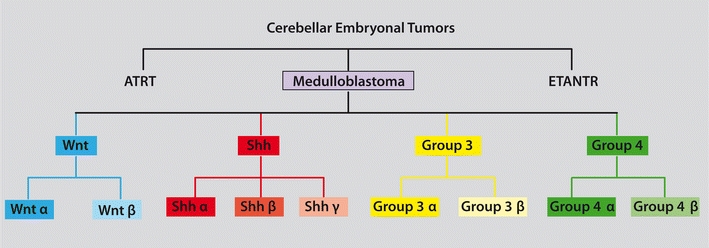
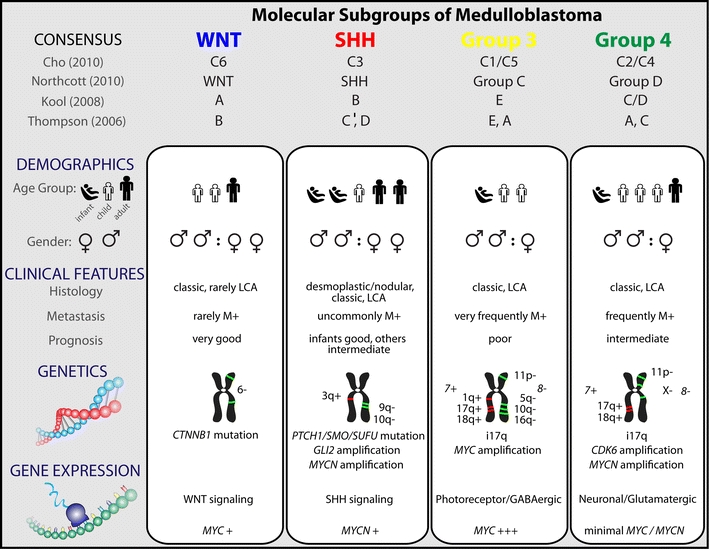
Medulloblastoma, a small blue cell malignancy of the cerebellum, is a major cause of morbidity and mortality in pediatric oncology. Current mechanisms for clinical prognostication and stratification include clinical factors (age, presence of metastases, and extent of resection) as well as histological subgrouping (classic, desmoplastic, and large cell/anaplastic histology). Transcriptional profiling studies of medulloblastoma cohorts from several research groups around the globe have suggested the existence of multiple distinct molecular subgroups that differ in their demographics, transcriptomes, somatic genetic events, and clinical outcomes. Variations in the number, composition, and nature of the subgroups between studies brought about a consensus conference in Boston in the fall of 2010. Discussants at the conference came to a consensus that the evidence supported the existence of four main subgroups of medulloblastoma (Wnt, Shh, Group 3, and Group 4). Participants outlined the demographic, transcriptional, genetic, and clinical differences between the four subgroups. While it is anticipated that the molecular classification of medulloblastoma will continue to evolve and diversify in the future as larger cohorts are studied at greater depth, herein we outline the current consensus nomenclature, and the differences between the medulloblastoma subgroups.
Overview
The claims and statistics of this paper haven’t been checked yet.
Free: it reads the open-access text and checks the first 5 claims that cite a source we can check. Create a free account to check every claim.
Integrity signals
Registry
Cites
Statistics
Figures
Verification
Claims the paper makes
The claims and statistics of this paper haven’t been checked yet.
Free: it reads the open-access text and checks the first 5 claims that cite a source we can check. Create a free account to check every claim.
Self-check
Percentages, sums and reported differences re-computed from the paper’s own numbers.
The self-check needs the paper’s full text.
Citations
Cites
The 2007 WHO Classification of Tumours of the Central Nervous System
Louis, D. N., Ohgaki, H., Wiestler, O. D., Cavenee, W. K., Burger, P. C., Jouvet, A., Scheithauer, B. W., & Kleihues, P. (2007) · Acta Neuropathologica · doi:10.1007/s00401-007-0243-4 · Cited by 15,397
Golub, T. R., Slonim, D. K., Tamayo, P., Huard, C., Gaasenbeek, M., Mesirov, J. P., Coller, H., Loh, M. L., Downing, J. R., Caligiuri, M. A., et al. (1999) · Science · doi:10.1126/science.286.5439.531 · Cited by 11,516 · cited 1×
“This transcriptional approach to tumor sub-classification has also been applied to a number of different non-medullo-blastoma histologies [4, 16, 18, 31, 35, 43], with the underlying assumption that tumors with similar transcriptomes will behave in a biologically similar manner, allowing a…”
BackgroundErratum to: The 2007 WHO classification of tumours of the central nervous system
Louis, D. N., Ohgaki, H., Wiestler, O. D., Cavenee, W. K., Burger, P. C., Jouvet, A., Scheithauer, B. W., & Kleihues, P. (2007) · Zurich Open Repository and Archive (University of Zurich) · doi:10.5167/uzh-156115 · Cited by 4,442
Phillips, H. S., Kharbanda, S., Chen, R., Forrest, W. F., Soriano, R. H., Wu, T. D., Misra, A., Nigro, J. M., Colman, H., Soroceanu, L., et al. (2006) · Cancer Cell · doi:10.1016/j.ccr.2006.02.019 · Cited by 3,143 · cited 1×
“…transcriptional approach to tumor sub-classification has also been applied to a number of different non-medullo-blastoma histologies [4, 16, 18, 31, 35, 43], with the underlying assumption that tumors with similar transcriptomes will behave in a biologically similar manner, allowing a…”
BackgroundBhattacharjee, A., Richards, W. G., Staunton, J., Li, C., Monti, S., Vasa, P., Ladd, C., Beheshti, J., Bueno, R., Gillette, M., et al. (2001) · Proceedings of the National Academy of Sciences · doi:10.1073/pnas.191502998 · Cited by 2,576 · cited 1×
“This transcriptional approach to tumor sub-classification has also been applied to a number of different non-medullo-blastoma histologies [4, 16, 18, 31, 35, 43], with the underlying assumption that tumors with similar transcriptomes will behave in a biologically similar manner, allowing a…”
BackgroundPrediction of central nervous system embryonal tumour outcome based on gene expression
Pomeroy, S. L., Tamayo, P., Gaasenbeek, M., Sturla, L. M., Angelo, M., McLaughlin, M. E., Kim, J. Y. H., Goumnerova, L. C., Black, P. M., Lau, C., et al. (2002) · Nature · doi:10.1038/415436a · Cited by 2,371 · cited 2×
“With recent developments in the ability to monitor transcription across the genome in the setting of a single experiment, various groups have started to sub-classify medulloblastoma on the basis of differences in the transcriptome [36].”
BackgroundSelf-citationIdentification of a CpG Island Methylator Phenotype that Defines a Distinct Subgroup of Glioma
Noushmehr, H., Weisenberger, D. J., Diefes, K., Phillips, H. S., Pujara, K., Berman, B. P., Pan, F., Pelloski, C. E., Sulman, E. P., Bhat, K. P., et al. (2010) · Cancer Cell · doi:10.1016/j.ccr.2010.03.017 · Cited by 2,337 · cited 1×
“This transcriptional approach to tumor sub-classification has also been applied to a number of different non-medullo-blastoma histologies [4, 16, 18, 31, 35, 43], with the underlying assumption that tumors with similar transcriptomes will behave in a biologically similar manner, allowing a…”
BackgroundMedulloblastoma Comprises Four Distinct Molecular Variants
Northcott, P. A., Korshunov, A., Witt, H., Hielscher, T., Eberhart, C. G., Mack, S., Bouffet, E., Clifford, S. C., Hawkins, C. E., French, P., et al. (2011) · Journal of Clinical Oncology · doi:10.1200/jco.2009.27.4324 · Cited by 1,339 · cited 12×
“Others approaches to identify Shh medulloblastomas have included immunohistochemical staining for SFRP1 [2, 28, 48], or GAB1 [11].”
BackgroundMethodInfluentialSelf-citationThe Molecular Basis of Turcot's Syndrome
Hamilton, S. R., Liu, B., Parsons, R. E., Papadopoulos, N., Jen, J., Powell, S. M., Krush, A. J., Berk, T., Cohen, Z., Tetu, B., et al. (1995) · New England Journal of Medicine · doi:10.1056/nejm199503303321302 · Cited by 1,133 · cited 1×
“Germline mutations of the Wnt pathway inhibitor APC predispose to Turcot syndrome, which includes a proclivity to medulloblastoma, in addition, somatic mutations of CTNNB1 encoding b-catenin have been found in sporadic medulloblastomas [19, 50].”
BackgroundKool, M., Korshunov, A., Remke, M., Jones, D. T. W., Schlanstein, M., Northcott, P. A., Cho, Y.-J., Koster, J., Schouten-van Meeteren, A., van Vuurden, D., et al. (2012) · Acta Neuropathologica · doi:10.1007/s00401-012-0958-8 · Cited by 1,056 · cited 3×
“…to identify target cohorts for certain drugs (e.g., SHH inhibitors), but also add significantly to outcome prediction by the time of diagnosis [21], much more than any of the established clinical markers such as patient age, metastatic stage at diagnosis, level of resection, and histological…”
BackgroundMethodInfluentialSelf-citation
Cited by
Items 501–600 of 1,003
Mack, S. C., & Northcott, P. A. (2017) · Journal of Clinical Oncology · doi:10.1200/jco.2017.72.9921 · Cited by 32
Self-citationMedulloblastoma: experimental models and reality
Neumann, J. E., Swartling, F. J., & Schüller, U. (2017) · Acta Neuropathologica · doi:10.1007/s00401-017-1753-3 · Cited by 34
“1), with WNT medulloblastoma having the best and Group 3 medulloblastoma having the worst clinical prognoses [75].”
BackgroundA Novel Method for Rapid Molecular Subgrouping of Medulloblastoma
Gómez‐González, S., Garrido-Garcia, A., Garcia-Gerique, L., de Lemos, I. V., Suñol, M., de Torres, C., Kulis, M., Pérez‐Jaume, S., Carcaboso, A. M., Luu, B., et al. (2018) · Clinical Cancer Research · doi:10.1158/1078-0432.ccr-17-2243 · Cited by 33
Self-citationStimulation of medulloblastoma stem cells differentiation by a peptidomimetic targeting neuropilin-1
Gong, C., Valduga, J., Chateau, A., Richard, M., Pellegrini-Moïse, N., Barberi‐Heyob, M., Chastagner, P. B., & Boura, C. (2018) · Oncotarget · doi:10.18632/oncotarget.24521 · Cited by 32
“A better understanding of the molecular characteristics involved in MB allowed to subdivide this pediatric brain tumor into four molecular subgroups: WNT, SHH, Group 3 and Group 4, with different molecular characteristics and clinical outcomes and thus to consider new therapeutic approaches [4, 5].”
BackgroundHDAC and MAPK/ERK Inhibitors Cooperate To Reduce Viability and Stemness in Medulloblastoma
Jaeger, M. D. C., Ghisleni, E. C., Cardoso, P. S., Siniglaglia, M., Falcón, T., Brunetto, A. T., Brunetto, A. L., de Farias, C. B., Taylor, M. D., Nör, C., et al. (2020) · Journal of Molecular Neuroscience · doi:10.1007/s12031-020-01505-y · Cited by 32
Self-citationRelapsed Medulloblastoma in Pre-Irradiated Patients: Current Practice for Diagnostics and Treatment
Hill, R. M., Plasschaert, S. L. A., Timmermann, B., Dufour, C., Aquilina, K., Avula, S., Donovan, L., Lequin, M. H., Pietsch, T., Thomale, U. W., et al. (2021) · Cancers · doi:10.3390/cancers14010126 · Cited by 33
“Importantly, at diagnosis, the molecularly defined principal groups demonstrate key clinicopathological and survival associations [9,53].”
BackgroundSelf-citationCTNNB1, AXIN1 and APC expression analysis of different medulloblastoma variants
da Silva, R., Marie, S. K. N., Uno, M., Matushita, H., Wakamatsu, A., Rosemberg, S., & Oba‐Shinjo, S. M. (2013) · Clinics · doi:10.6061/clinics/2013(02)oa08 · Cited by 34
“medulloblastoma molecular subclassification (9,10).”
Norrin/Frizzled4 signalling in the preneoplastic niche blocks medulloblastoma initiation
Bassett, E. A., Tokarew, N. J. A., Allemano, E. A., Mazerolle, C. J., Morin, K., Mears, A. J., McNeill, B., Ringuette, R., Campbell, C. M., Smiley, S., et al. (2016) · eLife · doi:10.7554/elife.16764 · Cited by 34
“In human MB, NDP expression is enriched specifically in the Shh subgroup compared to the other three molecularly distinct subgroups: Wnt, driven by aberrant Wnt pathway activation, and Group 3 and 4, which are less clearly defined biologically (Taylor et al., 2012) (Figure 1F).”
BackgroundSelf-citationTailoring Medulloblastoma Treatment Through Genomics: Making a Change, One Subgroup at a Time
Holgado, B., Stücklin, A. G., Garzia, L., Daniels, C., & Taylor, M. D. (2017) · Annual Review of Genomics and Human Genetics · doi:10.1146/annurev-genom-091416-035434 · Cited by 38
Self-citationLi, K. K., Qi, Y., Xia, T., Chan, A. K., Zhang, Z.-Y., Aibaidula, A., Zhang, R., Zhou, L., Yao, Y., & Ng, H. (2017) · Laboratory Investigation · doi:10.1038/labinvest.2017.48 · Cited by 34
Translational genomics of malignant rhabdoid tumours: Current impact and future possibilities
Finetti, M. A., Grabovska, Y., Bailey, S., & Williamson, D. (2020) · Seminars in Cancer Biology · doi:10.1016/j.semcancer.2019.12.017 · Cited by 32
Bailey, S., Jacobs, S. A., Kourti, M., Massimino, M., André, N., Doz, F., Dufour, C., Vennarini, S., Padovani, L., Aquilina, K., et al. (2024) · EJC Paediatric Oncology · doi:10.1016/j.ejcped.2024.100205 · Cited by 40
Self-citationIon Channels in Cancer: Orchestrators of Electrical Signaling and Cellular Crosstalk
Fan, J. J., & Huang, X. (2020) · Reviews of physiology, biochemistry and pharmacology · doi:10.1007/112_2020_48 · Cited by 32
“Immunohistochemical detection of KCNA1 is routinely used for molecular subgrouping (Northcott et al. 2011; Remke et al. 2011; Taylor et al. 2012), although KCNA1 function in medulloblastoma remains undetermined.”
BackgroundSong, H., Xi, S., Chen, Y., Pramanik, S., Zeng, J., Roychoudhury, S., Harris, H. L., Akbar, A., Elhag, S., Coulter, D. W., et al. (2021) · Cancer Letters · doi:10.1016/j.canlet.2021.07.020 · Cited by 33
Heterogeneity and tumoral origin of medulloblastoma in the single-cell era
Sheng, H., Li, H., Zeng, H., Zhang, B., Yu, L., Liu, X., Xu, Z., Zhang, J., & Zhang, L. (2024) · Oncogene · doi:10.1038/s41388-024-02967-9 · Cited by 35
“Based on transcriptomic, genomic, epigenomic and proteomic pro fi les, human MBs are classi fi ed into four principal subgroups: Wingless (WNT), Sonic Hedgehog (SHH), group 3 and group 4 [1, 4 – 6].”
BackgroundNeogenin1 is a sonic hedgehog target in medulloblastoma and is necessary for cell cycle progression
Milla, L. A., Arros, A., Espinoza, N., Remke, M., Kool, M., Taylor, M. D., Pfister, S. M., Wainwright, B. J., & Palma, V. (2013) · International Journal of Cancer · doi:10.1002/ijc.28330 · Cited by 31
“However, approximately one-third of the MB patients remain incurable and recurrence remains frequent.(1) Four major MB subgroups including WNT, SHH, Group 3 and Group 4 have been described showing different genetic alterations, pathological features and cerebellar locations.”
BackgroundSelf-citationJeibmann, A., Eikmeier, K., Linge, A., Kool, M., Koos, B., Schulz, J., Albrecht, S., Bartelheim, K., Frühwald, M. C., Pfister, S. M., et al. (2014) · Nature Communications · doi:10.1038/ncomms5005 · Cited by 31
Self-citationHerrera, A., Saade, M., Menéndez, A., Martí, E., & Pons, S. (2014) · Nature Communications · doi:10.1038/ncomms5168 · Cited by 31
MyoD Is a Tumor Suppressor Gene in Medulloblastoma
Dey, J., Dubuc, A. M., Pedro, K. D., Thirstrup, D. J., Mecham, B., Northcott, P. A., Wu, X., Shih, D. J. H., Tapscott, S. J., LeBlanc, M. L., et al. (2013) · Cancer Research · doi:10.1158/0008-5472.can-13-0730-t · Cited by 34
Self-citationPaediatric intra-axial posterior fossa tumours: pictorial review
Rasalkar, D. D., Chu, C. W., Paunipagar, B. K., Cheng, F. W. T., & Li, C. K. (2012) · Postgraduate Medical Journal · doi:10.1136/postgradmedj-2011-130075 · Cited by 31
Hedgehog-GLI Pathway in Medulloblastoma
Archer, T. C., Weeraratne, S. D., & Pomeroy, S. L. (2012) · Journal of Clinical Oncology · doi:10.1200/jco.2011.41.1181 · Cited by 35
Self-citationLi, M., Lockwood, W., Zieleńska, M., Northcott, P. A., Shing, Y., Bouffet, É., Yoshimoto, M., Rutka, J. T., Yan, H., Taylor, M. D., et al. (2012) · Cancer Genetics · doi:10.1016/j.cancergen.2012.03.002 · Cited by 32
Self-citationSingh, A. R., Joshi, S., Zulcic, M., Alcaraz, M., Garlich, J. R., Morales, G. A., Cho, Y.-J., Bao, L., Levy, M. L., Newbury, R., et al. (2016) · PLoS ONE · doi:10.1371/journal.pone.0150836 · Cited by 33
“Lower panel shows the major classification of medulloblastoma in 4 major subgroups by Taylor et al.[55] (C) List of 22 leading genes obtained from submap analysis.”
Self-citationLou, E., Schomaker, M. L., Wilson, J. D., Ahrens, M., Dolan, M., & Nelson, A. (2016) · Cancer Biology & Therapy · doi:10.1080/15384047.2016.1220453 · Cited by 31
“Agents targeting the sonic hedgehog (SHH) pathway have been investigated in recurrent adult and pediatric medulloblastomas because a significant subgroup of this disease is driven by this molecular pathway.(6,16,19) In the case we describe in this report, our patient had a complete and sustained radiologic response ov…”
BackgroundMPS1 kinase as a potential therapeutic target in medulloblastoma
Alimova, I. N., Ng, J. H. K., Harris, P. S., Birks, D. K., Donson, A. M., Taylor, M. D., Foreman, N. K., Venkataraman, S., & Vibhakar, R. (2016) · Oncology Reports · doi:10.3892/or.2016.5085 · Cited by 31
Self-citationInvestigation of brain tissue infiltration by medulloblastoma cells in an ex vivo model
Neve, A., Kumar, K. S., Tripolitsioti, D., Grotzer, M. A., & Baumgartner, M. (2017) · Scientific Reports · doi:10.1038/s41598-017-05573-w · Cited by 36
Li, Y., Yu, Z., Jiang, T., Shao, L., Liu, Y., Li, N., Wu, Y., Zheng, C., Wu, X., Zhang, M., et al. (2018) · Cancer Science · doi:10.1111/cas.13515 · Cited by 31
Translational control in brain pathologies: biological significance and therapeutic opportunities
Delaidelli, A., Jan, A., Herms, J. W., & Sorensen, P. H. B. (2019) · Acta Neuropathologica · doi:10.1007/s00401-019-01971-8 · Cited by 32
Cooney, T., Lindsay, H., Leary, S. E. S., & Wechsler‐Reya, R. J. (2022) · Neoplasia · doi:10.1016/j.neo.2022.100861 · Cited by 32
Sarić, N., Selby, M. P., Ramaswamy, V., Kool, M., Stockinger, B., Högstrand, C., Williamson, D., Marino, S., Taylor, M. D., Clifford, S. C., et al. (2020) · Scientific Reports · doi:10.1038/s41598-019-56876-z · Cited by 32
Self-citationGhantasala, S., Pai, M. G. J., Biswas, D., Gahoi, N., Mukherjee, S., Manubhai, K. P., Nissa, M. U., Srivastava, A., Epari, S., Shetty, P. M., et al. (2021) · Frontiers in Oncology · doi:10.3389/fonc.2021.548243 · Cited by 32
“Transcriptomic studies have identified four subtypes of medulloblastoma, which include SHH, WNT, G4 and G3, each with a distinct clinical and therapeutic presentation (8).”
BackgroundLiechty, B., Xu, Z., Zhang, Z., Slocum, C., Bahadir, C. D., Sabuncu, M. R., & Pisapia, D. J. (2022) · Scientific Reports · doi:10.1038/s41598-022-26170-6 · Cited by 34
“…approaches to the classification of tumors of the central nervous system (CNS) have demonstrated performance that can exceed traditional histology-based diagnosis 1 , and has allowed for the identification of novel entities 2 and molecular subtypes within established classification systems 2–4 .”
BackgroundJackson, H. K., Mitoko, C. A., Linke, F., Macarthur, D., Kerr, I. D., & Coyle, B. (2023) · Cancers · doi:10.3390/cancers15092601 · Cited by 31
“The underlying biology of group three and group four patients remains less clear, and a substantial number of these patients relapse and are associated with high levels of metastasis [22,23].”
BackgroundPanwalkar, P., Moiyadi, A. V., Goel, A. H., Shetty, P. M., Goel, N., Epari, S., & Shirsat, N. V. (2015) · Journal of Molecular Neuroscience · doi:10.1007/s12031-015-0548-z · Cited by 30
Henrich, N. J., Marra, C. A., Gastonguay, L., Mabbott, D., Malkin, D. M., Fryer, C., Bouffet, É., Taylor, M. D., Hukin, J., Scantlebury, N., et al. (2014) · Pediatric Blood & Cancer · doi:10.1002/pbc.24990 · Cited by 30
Self-citationCase-based review: pediatric medulloblastoma
Kline, C., Packer, R. J., Hwang, E. I., Raleigh, D. R., Braunstein, S. E., Raffel, C., Bandopadhayay, P., Solomon, D. A., Aboian, M., Cha, S., et al. (2017) · Neuro-Oncology Practice · doi:10.1093/nop/npx011 · Cited by 30
Dobson, T., Tao, R.-H., Swaminathan, J., Maegawa, S., Shaik, S., Bravo-Alegria, J. B., Sharma, A., Kennis, B. A., Yang, Y., Callegari, K., et al. (2019) · Science Signaling · doi:10.1126/scisignal.aan8680 · Cited by 30
Management of high-risk medulloblastoma
Bouffet, É. (2019) · Neurochirurgie · doi:10.1016/j.neuchi.2019.05.007 · Cited by 32
Spiombi, E., Angrisani, A., Fonte, S., Feudis, G. D., Fabretti, F., Cucchi, D., Izzo, M., Infante, P., Miele, E., Pò, A., et al. (2019) · Oncogenesis · doi:10.1038/s41389-019-0175-6 · Cited by 31
Asif, M., Usman, M., Ayub, S., Farhat, S., Huma, Z., Ahmed, J., Kamal, M. A., Hussein, D. M., Javed, A., & Khan, I. N. (2020) · Current Pharmaceutical Design · doi:10.2174/1381612826666200224112141 · Cited by 30
Update on molecular and genetic alterations in adult medulloblastoma
Kool, M., Korshunov, A., & Pfister, S. M. (2012) · memo - Magazine of European Medical Oncology · doi:10.1007/s12254-012-0037-9 · Cited by 29
“The current consensus is that there are four major subgroups named WNT, SHH, Group 3, and Group 4 [5, 6].”
BackgroundSelf-citationRole of the miR-17∼92 cluster family in cerebellar and medulloblastoma development
Zindy, F., Kawauchi, D., Lee, Y., Ayrault, O., Merzoug, L. B., McKinnon, P. J., Ventura, A., & Roussel, M. F. (2014) · Biology Open · doi:10.1242/bio.20146734 · Cited by 29
“This SHH-subgroup of MBs (SHHMB) represents ,25% of all human cases (Taylor et al., 2012).”
BackgroundQi, L., Lindsay, H., Kogiso, M., Du, Y., Braun, F., Zhang, H., Guo, L., Zhao, S., Injac, S. G., Baxter, P. A., et al. (2021) · Laboratory Investigation · doi:10.1038/s41374-021-00700-8 · Cited by 29
Modeling Brain Tumors: A Perspective Overview of in vivo and Organoid Models
Antonica, F., Aiello, G., Soldano, A., Abballe, L., Miele, E., & Tiberi, L. (2022) · Frontiers in Molecular Neuroscience · doi:10.3389/fnmol.2022.818696 · Cited by 31
Dormant SOX9-Positive Cells Facilitate MYC-Driven Recurrence of Medulloblastoma
Borgenvik, A., Holmberg, K. O., Bolin, S., Zhao, M., Savov, V., Rosén, G., Hutter, S., Garancher, A., Rahmanto, A. S., Bergström, T., et al. (2022) · Cancer Research · doi:10.1158/0008-5472.can-22-2108 · Cited by 30
Self-citationLuo, Z., Liao, Y., Xin, D., Berry, K., Ogurek, S., Dong, X., Li, H., Yu, J., Zhang, F., Han, R., et al. (2023) · Nature Communications · doi:10.1038/s41467-023-36400-8 · Cited by 30
“CNVs were detected by the following steps: (1) DNA sequences were separated into fragments according to the depth of each base from the alignment results; (2) The P value was calculated for each fragment to estimate its probability to be a CNV; (3) The fragments that passed the criteria (fragment length longer than2 k…”
MethodSelf-citationDownregulation of MYCN through PI3K Inhibition in Mouse Models of Pediatric Neural Cancer
Cage, T. A., Chanthery, Y. H., Chesler, L., Grimmer, M., Knight, Z. A., Shokat, K. M., Weiss, W. A., & Gustafson, W. C. (2015) · Frontiers in Oncology · doi:10.3389/fonc.2015.00111 · Cited by 31
“MYCN is highly expressed in two of the medulloblastoma sub-groups, the Sonic Hedgehog (SHH) group and the Group 4 tumors (13).”
Lozano, C. S., Tam, J., Kulkarni, A. V., & Lozano, A. M. (2015) · Journal of neurosurgery · doi:10.3171/2014.12.jns142553 · Cited by 32
Poussaint, T. Y., Panigrahy, A., & Huisman, T. A. G. M. (2015) · Pediatric Radiology · doi:10.1007/s00247-015-3326-8 · Cited by 29
“Based on the genomic characteristics of medulloblastoma, it can be divided into four categories, namely wingless (WNT), sonic hedgehog (SHH), group 3 and group 4 [9].”
BackgroundSpina, R., Filocamo, G., Iaccino, E., Scicchitano, S., Lupia, M., Chiarella, E., Mega, T., Bernaudo, F., Pelaggi, D., Mesuraca, M., et al. (2013) · Oncotarget · doi:10.18632/oncotarget.1176 · Cited by 29
Self-citationA microRNA-1280/JAG2 network comprises a novel biological target in high-risk medulloblastoma
Wang, F., Remke, M., Bhat, K., Wong, E. T., Zhou, S. Y., Ramaswamy, V., Dubuc, A. M., Fonkem, E., Salem, S., Zhang, H., et al. (2014) · Oncotarget · doi:10.18632/oncotarget.2779 · Cited by 29
“Oncogenic activation of the c-MYC gene is commonly observed in MBs [13, 14, 72, 73] and over-expression of c-MYC is one of the critical features of Group 3 MBs [25, 60].”
BackgroundSelf-citationProteomic analysis of human sonic hedgehog (SHH) medulloblastoma stem-like cells
Ronci, M., Catanzaro, G., Pieroni, L., Pò, A., Besharat, Z. M., Greco, V., Mortera, S. L., Screpanti, I., Ferretti, E., & Urbani, A. (2015) · Molecular BioSystems · doi:10.1039/c5mb00034c · Cited by 30
Diaz, R. J., Golbourn, B. J., Faria, C. C., Picard, D. J., Shih, D. J. H., Raynaud, D., Leadly, M., Mackenzie, D., Bryant, M., Bebenek, M., et al. (2014) · Oncotarget · doi:10.18632/oncotarget.3245 · Cited by 31
“Recent genetic analysis of medulloblastoma (MB) has revealed four genetically and epidemiologically distinct subgroups.[1, 2] One of these subgroups designated as Group 3 medulloblastoma (G3MB) affects primarily infants and children and carries an overall survival of 45% for infants and 58% for children at five years…”
BackgroundSelf-citationThe role of the ubiquitin proteasome system in cerebellar development and medulloblastoma
Vriend, J. P., Ghavami, S., & Marzban, H. (2015) · Molecular Brain · doi:10.1186/s13041-015-0155-5 · Cited by 31
“Clinically and molecularly four main types of MB are recognized [29, 30].”
BackgroundInfluentialSignaling pathway and molecular subgroups of medulloblastoma.
Li, K. K., Lau, K., & Ng, H. (2013) · Europe PMC (PubMed Central) · Cited by 38
Kaur, R., Aiken, C., Morrison, L. C., Rao, R., Bigio, M. R. D., Rampalli, S., & Werbowetski‐Ogilvie, T. E. (2015) · Disease Models & Mechanisms · doi:10.1242/dmm.020594 · Cited by 31
“For example, MB consists of four distinct subtypes exhibiting different genomic alterations, gene expression profiles and response to treatment: WNT, Sonic Hedgehog (SHH), Group 3 and Group 4 (Taylor et al., 2012).”
BackgroundOTX2 expression contributes to proliferation and progression in Myc-amplified medulloblastoma.
Lu, Y., Labak, C. M., Jain, N., Purvis, I. J., Guda, M. R., Bach, S. E., Tsung, A. J., Asuthkar, S., & Velpula, K. K. (2017) · PubMed Central · Cited by 37
Tripolitsioti, D., Kumar, K. S., Neve, A., Migliavacca, J., Capdeville, C., Rushing, E. J., Ma, M., Kijima, N., Sharma, A., Pruschy, M. N., et al. (2018) · Oncotarget · doi:10.18632/oncotarget.25294 · Cited by 30
“Large-scale, genome-wide DNA methylation and gene expression analyses combined with copy number aberrations and clinical features have recently allowed to further refine the four subgroup classification of MB [2] into a total of 12 subtypes [3, 4].”
BackgroundSelf-citationLorenz, J., Rothhammer-Hampl, T., Zoubaa, S., Bumes, E., Pukrop, T., Kölbl, O., Corbacioglu, S., Schmidt, N. O., Proescholdt, M. A., Hau, P., et al. (2020) · Acta Neuropathologica Communications · doi:10.1186/s40478-020-01000-w · Cited by 32
Bagchi, A., Dhanda, S. K., Dunphy, P., Sioson, E., & Robinson, G. W. (2023) · Journal of the National Comprehensive Cancer Network · doi:10.6004/jnccn.2023.7024 · Cited by 28
“Eventually, the findings were pooled and 4 consensus molecular groups of medulloblastoma emerged: WNT, SHH, group 3 (G3), and group 4 (G4).(39) Subsequently, molecular analysis was extended to medulloblastomas in infants and young children and 3 transformative findings were identified: (1) the distribution of molecula…”
BackgroundAdvances in CAR-T therapy for central nervous system tumors
Zhou, D., Zhu, X., & Xiao, Y. (2024) · Biomarker Research · doi:10.1186/s40364-024-00679-6 · Cited by 29
“The G4 group of MBs is the most prevalent molecular subtype, accounting for approximately 35% of all MBs, with characteristic mutations frequently affecting the KDM6A gene [161, 162].”
BackgroundCurran, T. (2018) · Open Biology · doi:10.1098/rsob.180098 · Cited by 29
Casein kinase 2 inhibition sensitizes medulloblastoma to temozolomide
Nitta, R. T., Bolin, S., Luo, E. J., Solow-Cordero, D. E., Samghabadi, P., Purzner, T., Aujla, P. S., Nwagbo, G., Cho, Y., & Li, G. (2019) · Oncogene · doi:10.1038/s41388-019-0927-y · Cited by 28
“Since MB is widely categorized into four different molecular subgroups, we analyzed CK2 α expression across each group 31 .”
Self-citationEpigenetic pathways and plasticity in brain tumors
Suter, R. K., Rodríguez‐Blanco, J., & Ayad, N. G. (2020) · Neurobiology of Disease · doi:10.1016/j.nbd.2020.105060 · Cited by 31
Childhood Medulloblastoma: An Overview
Suk, Y., Gwynne, W. D., Burns, I., Venugopal, C., & Singh, S. K. (2022) · Methods in molecular biology · doi:10.1007/978-1-0716-1952-0_1 · Cited by 32
High-Dose Chemotherapy in Children with Newly Diagnosed Medulloblastoma
Lafay‐Cousin, L., & Dufour, C. (2022) · Cancers · doi:10.3390/cancers14030837 · Cited by 30
“According to the current consensus, four main groups can be distinguished: wingless (WNT), sonic hedgehog (SHH), group 3 and group 4, with transcriptionally and genetically distinct profiles and correlated clinical outcomes [1].”
BackgroundComplement C3a activates astrocytes to promote medulloblastoma progression through TNF-α
Gong, B., Guo, D., Zheng, C., Ma, Z., Zhang, J., Qu, Y., Li, X., Li, G. L., Zhang, L., & Wang, Y. (2022) · Journal of Neuroinflammation · doi:10.1186/s12974-022-02516-9 · Cited by 30
“MB is classified into four main molecular subgroups: Wnt, Hedgehog (Hh), Group 3 and Group 4 [3]; among them, Hh-type MB, which is driven by aberrant activation of Hh signaling, represents more than 30% of the incidence [4].”
Role of Circular RNA in Brain Tumor Development
Ahmed, S. P., Castresana, J. S., & Shahi, M. H. (2022) · Cells · doi:10.3390/cells11142130 · Cited by 29
“Medulloblastoma (MB), a type of primitive neuroectodermal tumor (PNET), is both the most prevalent malignant brain tumor in kids and the most common cause of cancerrelated death in children [24,25].”
BackgroundAdult Medulloblastoma: Updates on Current Management and Future Perspectives
Franceschi, E., Giannini, C., Furtner, J., Pajtler, K. W., Asioli, S., Guzman, R. G., Seidel, C., Gatto, L., & Hau, P. (2022) · Cancers · doi:10.3390/cancers14153708 · Cited by 29
“Group 3 is exceedingly rare in adults and the majority of adult NonWNT/non-SHH-MB cases belong to subgroup 4 [11,21,24].”
BackgroundCAR T-cells to treat brain tumors
Guzman, G., Pellot, K., Reed, M. R., & Rodriguez, A. (2023) · Brain Research Bulletin · doi:10.1016/j.brainresbull.2023.02.014 · Cited by 30
“Now, through deeper analysis involving methylation and transcriptome profiling, 4 subgroups of SHH and 8 subgroups of non-WNT/non-SHH have been created, mirroring current innovations for subgroup-specific treatment of MBs (Gershanov et al., 2021; Louis et al., 2021).”
BackgroundXu, J., Margol, A., Shukla, A., Ren, X., Finlay, J. L., Krieger, M. D., Gilles, F. H., Couch, F. J., Aziz, M., Fung, E. T., et al. (2015) · Frontiers in Oncology · doi:10.3389/fonc.2015.00191 · Cited by 33
da Silva, P. B. G., Rodini, C. O., Kaid, C., Nakahata, A. M., Pereira, M. C. L., Matushita, H., da Costa, S. S., & Okamoto, O. K. (2015) · Cytotechnology · doi:10.1007/s10616-015-9914-5 · Cited by 32
Faria, C. C., Agnihotri, S., Mack, S. C., Golbourn, B. J., Diaz, R. J., Olsen, S., Bryant, M., Bebenek, M., Wang, X., Bertrand, K. C., et al. (2015) · Oncotarget · doi:10.18632/oncotarget.4304 · Cited by 28
“Medulloblastoma is the most common malignant pediatric brain tumor consisting of at least four distinct molecular subgroups: Wingless (WNT), sonic hedgehog (SHH), Group 3 and Group 4 [1, 2].”
BackgroundSelf-citationMcGovern, S. L., Grosshans, D. R., & Mahajan, A. (2014) · The Cancer Journal · doi:10.1097/ppo.0000000000000081 · Cited by 28
Histology and Molecular Aspects of Central Neurocytoma
Bonney, P. A., Boettcher, L. B., Krysiak, R. S., Fung, K.-M. A., & Sughrue, M. E. (2014) · Neurosurgery Clinics of North America · doi:10.1016/j.nec.2014.09.001 · Cited by 28
Heitzer, A. M., Ashford, J. M., Harel, B., Schembri, A. J., Swain, M. A., Wallace, J., Ness, K. K., Wang, F., Zhang, H., Merchant, T. E., et al. (2018) · Journal of Neuro-Oncology · doi:10.1007/s11060-018-03046-2 · Cited by 30
Self-citationGroup 3 medulloblastoma transcriptional networks collapse under domain specific EP300/CBP inhibition
Shendy, N. A. M., Bikowitz, M. J., Sigua, L. H., Zhang, Y., Mercier, A. L., Khashana, Y., Nance, S., Liu, Q., Delahunty, I. M., Robinson, S., et al. (2024) · Nature Communications · doi:10.1038/s41467-024-47102-0 · Cited by 28
“One of the most aggressive MB tumor subtypes are Group 3 medulloblastoma (G3MB), which are commonly characterized by overexpression of the driver oncogene c-MYC due to gene ampli fi - cation in 17% of cases 40,42,43 .”
Zhao, F. Q., Zhang, J., Li, P., Zhou, Q., Zhang, S., Zhao, C., Wang, B., Yang, Z., Li, C., & Liu, P. (2018) · Journal of Neuro-Oncology · doi:10.1007/s11060-018-2865-x · Cited by 27
Re-irradiation for children with recurrent medulloblastoma in Toronto, Canada: a 20-year experience
Tsang, D. S., Sarhan, N., Ramaswamy, V., Nobre, L. F., Yee, R., Taylor, M. D., Hawkins, C. E., Bartels, U. K., Huang, A., Tabori, U. Y., et al. (2019) · Journal of Neuro-Oncology · doi:10.1007/s11060-019-03272-2 · Cited by 27
Self-citationBiological Role of MYCN in Medulloblastoma: Novel Therapeutic Opportunities and Challenges Ahead
Shrestha, S., Morcavallo, A., Gorrini, C., & Chesler, L. (2021) · Frontiers in Oncology · doi:10.3389/fonc.2021.694320 · Cited by 29
Risk Factors for Survival in Patients With Medulloblastoma: A Systematic Review and Meta-Analysis
Liu, Y., Xiao, B., Li, S., & Liu, J. (2022) · Frontiers in Oncology · doi:10.3389/fonc.2022.827054 · Cited by 28
Methylation Profiling in Diffuse Gliomas: Diagnostic Value and Considerations
Wenger, A., & Carén, H. (2022) · Cancers · doi:10.3390/cancers14225679 · Cited by 28
“, for medulloblastoma [52,65] and ependymoma [66,67]).”
Gene Expression of GABAA Receptor Subunits and Association with Patient Survival in Glioma
Badalotti, R., Dalmolin, M., Malafaia, O., Ribas-Filho, J. M., Roesler, R., Fernandes, M. A. C., & Isolan, G. R. (2024) · Brain Sciences · doi:10.3390/brainsci14030275 · Cited by 27
“Current consensus classifies MB tumors into four molecular subgroups, namely wingless activated (WNT), sonic hedgehog (SHH), Group 3, and Group 4, with Group 3 and Group 4 tumors being particularly aggressive [51,52].”
BackgroundGodbole, S., Voß, H., Gocke, A., Schlumbohm, S., Schumann, Y., Peng, B., Mynarek, M., Rutkowski, S., Dottermusch, M., Dorostkar, M. M., et al. (2024) · Nature Communications · doi:10.1038/s41467-024-50554-z · Cited by 28
Self-citationFrick, A., Grammel, D., Schmidt, F., Pöschl, J., Priller, M., Pagella, P., von Bueren, A. O., Peraud, A., Tonn, J., Herms, J. W., et al. (2012) · Glia · doi:10.1002/glia.22314 · Cited by 33
“…the most common malignant brain tumor in childhood, can be divided into four different subgroups depending on their gene expression profile and there is evidence that subtypes of medulloblastoma have distinct developmental origins (Gibson et al., 2010; Taylor et al., 2011).”
BackgroundSelf-citationComputer-assisted quantification of motile and invasive capabilities of cancer cells
Kumar, K. S., Pillong, M., Kunze, J., Burghardt, I., Weller, M., Grotzer, M. A., Schneider, G., & Baumgartner, M. (2015) · Scientific Reports · doi:10.1038/srep15338 · Cited by 29
“Genomic analyses of large cohorts of MB now allow discriminating four molecular subgroups with defined molecular, functional and clinical characteristics 18,29 .”
Keil, V. C., Warmuth‐Metz, M., Reh, C., Enkirch, S. J., Reinert, C., Beier, D., Jones, D., Pietsch, T., Schild, H. H., Hattingen, E., et al. (2017) · American Journal of Neuroradiology · doi:10.3174/ajnr.a5313 · Cited by 27
Preclinical Models of Pediatric Brain Tumors—Forging Ahead
Dobson, T., & Gopalakrishnan, V. (2018) · Bioengineering · doi:10.3390/bioengineering5040081 · Cited by 28
“However, unlike WNT and SHH tumors, many of the lines are MYC-amplified like Group 3 MB [41].”
BackgroundEyrich, N. W., Potts, C. R., Robinson, M. H., Maximov, V. D., & Kenney, A. M. (2019) · Molecular and Cellular Biology · doi:10.1128/mcb.00268-18 · Cited by 28
“Notably, approximately 30% of all cases of medulloblastoma are characterized by perturbations in the expression of Sonic Hedgehog (SHH) pathway components (5).”
BackgroundFoxr2 promotes formation of CNS-embryonal tumors in a Trp53-deficient background
Poh, B. M., Koso, H., Momota, H., Komori, T., Suzuki, Y., Yoshida, N., Ino, Y., Todo, T., & Watanabe, S. (2019) · Neuro-Oncology · doi:10.1093/neuonc/noz067 · Cited by 29
“Brains were embedded in paraffin and examined using 4-μm-thick coronal sections at the following four levels: (1) the prefrontal cortex near the olfactory bulb, (2) the frontal part of the lateral ventricle, (3) the cortex and the hippocampus, and (4) the brainstem and cerebellum.”
MethodSandén, E., Dyberg, C. H., Krona, C. C., Gallo-Oller, G., Olsen, T. K., Pérez, J. E., Wickström, M., Estekizadeh, A., Kool, M., Visse, E., et al. (2017) · Scientific Reports · doi:10.1038/srep46366 · Cited by 27
Self-citationHigh OCT4A levels drive tumorigenicity and metastatic potential of medulloblastoma cells
da Silva, P. B. G., dos Santos, M. C. T., Rodini, C. O., Kaid, C., Pereira, M. C. L., Furukawa, G., da Cruz, D. S. G., Goldfeder, M. B., Rocha, C. R. R., Rosenberg, C., et al. (2017) · Oncotarget · doi:10.18632/oncotarget.15163 · Cited by 31
“Another complicating factor relates to the high degree of intertumor heterogeneity observed in medulloblastoma, which is currently classified in four distinct molecular subtypes, WNT, SHH, Group 3 and Group 4 [6].”
BackgroundPrecision Medicine in Pediatric Oncology: Translating Genomic Discoveries into Optimized Therapies
Tran, T. H., Shah, A. T., & Loh, M. L. (2017) · Clinical Cancer Research · doi:10.1158/1078-0432.ccr-16-0115 · Cited by 30
“The SHH group contains aberrations in the SHH pathway, most commonly in PTCH1 but also in SMO, SUFU, and GLI2 (68).”
BackgroundHan, Y., Lindner, S., Bei, Y., García, H. D., Timme, N., Althoff, K., Odersky, A., Schramm, A. R., Lissat, A., Künkele, A., et al. (2019) · Cancer Letters · doi:10.1016/j.canlet.2018.12.012 · Cited by 28
Long non-coding RNA profiling of pediatric Medulloblastoma
Kesherwani, V., Shukla, M., Coulter, D. W., Sharp, J. G., Joshi, S. S., & Chaturvedi, N. K. (2020) · BMC Medical Genomics · doi:10.1186/s12920-020-00744-7 · Cited by 26
Targeting the medulloblastoma: a molecular-based approach.
Luzzi, S., Lucifero, A. G., Brambilla, I., Mantelli, S. S., Mosconi, M., Foiadelli, T., & Savasta, S. (2020) · Acta bio-medica dell'Ateneo parmense/Acta biomedica · doi:10.23750/abm.v91i7-s.9958 · Cited by 31
“23-25 This novel molecular subgrouping has potential prognostic implications, so the current risk stratification divides the MBs in “low”, “standard”, “high”, and “very high risk”, based on age, presence of metastases, histologic phenotype, prognostic molecular markers, and especially, molecular subtype.(16-18) Table…”
BackgroundLiu, A. P. Y., Northcott, P. A., Robinson, G. W., & Gajjar, A. J. (2021) · Laboratory Investigation · doi:10.1038/s41374-021-00719-x · Cited by 30
Self-citationKhoogar, R., Li, F., Chen, Y., Ignatius, M. S., Lawlor, E. R., Kitagawa, K., Huang, T. H. ‐., Phelps, D. A., & Houghton, P. J. (2022) · Cellular Oncology · doi:10.1007/s13402-021-00640-x · Cited by 28
“Similarly, medulloblastoma, a brain tumor predominantly diagnosed in children, is now defined as encompassing at least four distinct entities based on genomic changes and expression profiles [3, 4].”
BackgroundNew Classification for Central Nervous System Tumors: Implications for Diagnosis and Therapy
Fuller, C. E., Jones, D., & Kieran, M. W. (2017) · American Society of Clinical Oncology Educational Book · doi:10.1200/edbk_175088 · Cited by 28
Linke, F., Johnson, J. E. C., Kern, S., Bennett, C., Lourdusamy, A., Lea, D., Clifford, S. C., Merry, C. L. R., Stolnik, S., Alexander, M. R., et al. (2023) · Acta Neuropathologica Communications · doi:10.1186/s40478-022-01496-4 · Cited by 28
Self-citation
Metadata
- Authors
- Taylor, M. D., Northcott, P. A., Korshunov, A., Remke, M., Cho, Y.-J., Clifford, S. C., Eberhart, C. G., Parsons, D. W., Rutkowski, S., Gajjar, A., Ellison, D. W., Lichter, P., Gilbertson, R. J., Pomeroy, S. L., Kool, M., & Pfister, S. M.
- Affiliations
- University of Toronto (CA)
- German Cancer Research Center (DE)
- Stanford Medicine (US)
- Newcastle University (GB)
- Johns Hopkins University (US)
- Baylor College of Medicine (US)
- University Medical Center Hamburg-Eppendorf (DE)
- St. Jude Children's Research Hospital (US)
- Boston Children's Hospital (US)
- Corresponding author
- Taylor, Michael D.
- Pfister, Stefan M.
- ORCID
- Venue
- Acta Neuropathologica
- Published
- 2011-12-02
- Volume
- 123
- Issue
- 4
- Pages
- 465-472
- ISSN
- 0001-6322 (ISSN-L)
- 1432-0533
- PMC
- PMC3306779
- OpenAlex
- W2127643721
- Semantic Scholar
- 82d950bbd43e6611fd5d61d766a606f63008e682
- Cited by
- 1,936
- References
- 53
- Citations by year
- 2026: 68 · 2025: 117 · 2024: 127 · 2023: 157 · 2022: 145 · 2021: 153 · 2020: 154 · 2019: 159 · 2018: 163 · 2017: 148 · 2016: 127 · 2015: 134 · 2014: 120 · 2013: 96 · 2012: 58
- FWCI
- 44.64
- Type
- journal article
- Language
- en
- Open access
- hybrid
- doi.org
- Licence
- cc-by-nc
- Locations
- Acta Neuropathologica (publishedVersion, cc-by-nc)
- PubMed Central (publishedVersion, cc-by-nc)
- PubMed (publishedVersion)
- Digital Access to Scholarship at Harvard (DASH) (Harvard University) (submittedVersion, cc-by)
- Newcastle University ePrints (Newcastle Univesity)
- Funders
- Cancer Research UK (13457)
- National Cancer Institute (R01CA129541, R01CA109467)
- National Institute of Neurological Disorders and Stroke (R01NS055089)
- Topics
- Health Sciences › Medicine › Oncology › Glioma Diagnosis and Treatment
- Health Sciences › Medicine › Oncology › Neuroblastoma Research and Treatments
- Health Sciences › Medicine › Hematology › Acute Lymphoblastic Leukemia research
- Keywords
- medulloblastoma, molecular subtypes, WNT subgroup, sonic hedgehog subgroup, Group 3 medulloblastoma, Group 4 medulloblastoma, pediatric brain tumors, gene expression profiling, somatic alterations, histological subtypes, prognostic stratification, consensus classification
- MeSH terms
- Cerebellar Neoplasms, Humans, Medulloblastoma, Gene Expression Profiling, Consensus, Wnt Proteins, Hedgehog Proteins, Transcriptome
About these checks
Registry, retraction, Cites and statistics results are computed, not judged, with one exception: a printed reference that no index lists is read once by a model before it counts as a citation error. Claims are extracted by a model and kept only when their quote appears verbatim in the text; each cited source is then checked, with a model’s help, for whether it says what the claim relies on. Those verdicts can be wrong — read the claim’s quote and the cited source before relying on one.
Statistics and arithmetic are recomputed, not judged.
Confidence bands are shown only for fields calibrated on our annotated test set. None is calibrated yet, so no band is shown.
What counts as a claim ›How we measure confidence ›How we check this ›
Are you an author, or do you see a problem with this page? Request a review
Data sources
Bibliographic data: Semantic Scholar, OpenAlex, Crossref.
Contains information from the Semantic Scholar Academic Graph Datasets, made available under the ODC Attribution License (ODC-BY 1.0).
Semantic Scholar’s data is described in: Kinney, R., et al. (2023). The Semantic Scholar Open Data Platform. arXiv:2301.10140.
