

Molecular subgroups of medulloblastoma: the current consensus
Open accessThe DOI matches its Crossref record; 52 of the 53 references it cites were found in a registry or an index.
Abstract
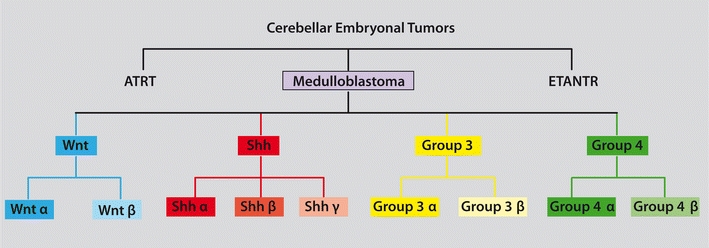
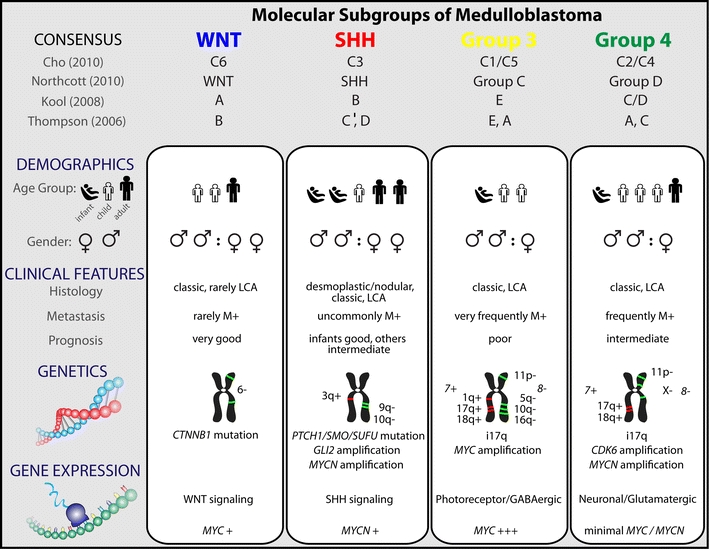
Medulloblastoma, a small blue cell malignancy of the cerebellum, is a major cause of morbidity and mortality in pediatric oncology. Current mechanisms for clinical prognostication and stratification include clinical factors (age, presence of metastases, and extent of resection) as well as histological subgrouping (classic, desmoplastic, and large cell/anaplastic histology). Transcriptional profiling studies of medulloblastoma cohorts from several research groups around the globe have suggested the existence of multiple distinct molecular subgroups that differ in their demographics, transcriptomes, somatic genetic events, and clinical outcomes. Variations in the number, composition, and nature of the subgroups between studies brought about a consensus conference in Boston in the fall of 2010. Discussants at the conference came to a consensus that the evidence supported the existence of four main subgroups of medulloblastoma (Wnt, Shh, Group 3, and Group 4). Participants outlined the demographic, transcriptional, genetic, and clinical differences between the four subgroups. While it is anticipated that the molecular classification of medulloblastoma will continue to evolve and diversify in the future as larger cohorts are studied at greater depth, herein we outline the current consensus nomenclature, and the differences between the medulloblastoma subgroups.
Overview
The claims and statistics of this paper haven’t been checked yet.
Free: it reads the open-access text and checks the first 5 claims that cite a source we can check. Create a free account to check every claim.
Integrity signals
Registry
Cites
Statistics
Figures
Verification
Claims the paper makes
The claims and statistics of this paper haven’t been checked yet.
Free: it reads the open-access text and checks the first 5 claims that cite a source we can check. Create a free account to check every claim.
Self-check
Percentages, sums and reported differences re-computed from the paper’s own numbers.
The self-check needs the paper’s full text.
Citations
Cites
The 2007 WHO Classification of Tumours of the Central Nervous System
Louis, D. N., Ohgaki, H., Wiestler, O. D., Cavenee, W. K., Burger, P. C., Jouvet, A., Scheithauer, B. W., & Kleihues, P. (2007) · Acta Neuropathologica · doi:10.1007/s00401-007-0243-4 · Cited by 15,397
Golub, T. R., Slonim, D. K., Tamayo, P., Huard, C., Gaasenbeek, M., Mesirov, J. P., Coller, H., Loh, M. L., Downing, J. R., Caligiuri, M. A., et al. (1999) · Science · doi:10.1126/science.286.5439.531 · Cited by 11,516 · cited 1×
“This transcriptional approach to tumor sub-classification has also been applied to a number of different non-medullo-blastoma histologies [4, 16, 18, 31, 35, 43], with the underlying assumption that tumors with similar transcriptomes will behave in a biologically similar manner, allowing a…”
BackgroundErratum to: The 2007 WHO classification of tumours of the central nervous system
Louis, D. N., Ohgaki, H., Wiestler, O. D., Cavenee, W. K., Burger, P. C., Jouvet, A., Scheithauer, B. W., & Kleihues, P. (2007) · Zurich Open Repository and Archive (University of Zurich) · doi:10.5167/uzh-156115 · Cited by 4,442
Phillips, H. S., Kharbanda, S., Chen, R., Forrest, W. F., Soriano, R. H., Wu, T. D., Misra, A., Nigro, J. M., Colman, H., Soroceanu, L., et al. (2006) · Cancer Cell · doi:10.1016/j.ccr.2006.02.019 · Cited by 3,143 · cited 1×
“…transcriptional approach to tumor sub-classification has also been applied to a number of different non-medullo-blastoma histologies [4, 16, 18, 31, 35, 43], with the underlying assumption that tumors with similar transcriptomes will behave in a biologically similar manner, allowing a…”
BackgroundBhattacharjee, A., Richards, W. G., Staunton, J., Li, C., Monti, S., Vasa, P., Ladd, C., Beheshti, J., Bueno, R., Gillette, M., et al. (2001) · Proceedings of the National Academy of Sciences · doi:10.1073/pnas.191502998 · Cited by 2,576 · cited 1×
“This transcriptional approach to tumor sub-classification has also been applied to a number of different non-medullo-blastoma histologies [4, 16, 18, 31, 35, 43], with the underlying assumption that tumors with similar transcriptomes will behave in a biologically similar manner, allowing a…”
BackgroundPrediction of central nervous system embryonal tumour outcome based on gene expression
Pomeroy, S. L., Tamayo, P., Gaasenbeek, M., Sturla, L. M., Angelo, M., McLaughlin, M. E., Kim, J. Y. H., Goumnerova, L. C., Black, P. M., Lau, C., et al. (2002) · Nature · doi:10.1038/415436a · Cited by 2,371 · cited 2×
“With recent developments in the ability to monitor transcription across the genome in the setting of a single experiment, various groups have started to sub-classify medulloblastoma on the basis of differences in the transcriptome [36].”
BackgroundSelf-citationIdentification of a CpG Island Methylator Phenotype that Defines a Distinct Subgroup of Glioma
Noushmehr, H., Weisenberger, D. J., Diefes, K., Phillips, H. S., Pujara, K., Berman, B. P., Pan, F., Pelloski, C. E., Sulman, E. P., Bhat, K. P., et al. (2010) · Cancer Cell · doi:10.1016/j.ccr.2010.03.017 · Cited by 2,337 · cited 1×
“This transcriptional approach to tumor sub-classification has also been applied to a number of different non-medullo-blastoma histologies [4, 16, 18, 31, 35, 43], with the underlying assumption that tumors with similar transcriptomes will behave in a biologically similar manner, allowing a…”
BackgroundMedulloblastoma Comprises Four Distinct Molecular Variants
Northcott, P. A., Korshunov, A., Witt, H., Hielscher, T., Eberhart, C. G., Mack, S., Bouffet, E., Clifford, S. C., Hawkins, C. E., French, P., et al. (2011) · Journal of Clinical Oncology · doi:10.1200/jco.2009.27.4324 · Cited by 1,339 · cited 12×
“Others approaches to identify Shh medulloblastomas have included immunohistochemical staining for SFRP1 [2, 28, 48], or GAB1 [11].”
BackgroundMethodInfluentialSelf-citationThe Molecular Basis of Turcot's Syndrome
Hamilton, S. R., Liu, B., Parsons, R. E., Papadopoulos, N., Jen, J., Powell, S. M., Krush, A. J., Berk, T., Cohen, Z., Tetu, B., et al. (1995) · New England Journal of Medicine · doi:10.1056/nejm199503303321302 · Cited by 1,133 · cited 1×
“Germline mutations of the Wnt pathway inhibitor APC predispose to Turcot syndrome, which includes a proclivity to medulloblastoma, in addition, somatic mutations of CTNNB1 encoding b-catenin have been found in sporadic medulloblastomas [19, 50].”
BackgroundKool, M., Korshunov, A., Remke, M., Jones, D. T. W., Schlanstein, M., Northcott, P. A., Cho, Y.-J., Koster, J., Schouten-van Meeteren, A., van Vuurden, D., et al. (2012) · Acta Neuropathologica · doi:10.1007/s00401-012-0958-8 · Cited by 1,056 · cited 3×
“…to identify target cohorts for certain drugs (e.g., SHH inhibitors), but also add significantly to outcome prediction by the time of diagnosis [21], much more than any of the established clinical markers such as patient age, metastatic stage at diagnosis, level of resection, and histological…”
BackgroundMethodInfluentialSelf-citation
Cited by
Items 401–500 of 1,003
Schwalbe, E. C., Lindsey, J. C., Danilenko, M., Hill, R. M., Crosier, S., Ryan, S. L., Williamson, D., Castle, J., Hicks, D., Kool, M., et al. (2024) · Neuro-Oncology · doi:10.1093/neuonc/noae178 · Cited by 41
Self-citationMerve, A., Dubuc, A. M., Zhang, X., Remke, M., Baxter, P. A., Li, X., Taylor, M. D., & Marino, S. (2014) · Acta Neuropathologica Communications · doi:10.1186/2051-5960-2-10 · Cited by 46
“WNT subgroup tumours have the best prognosis and while Group 3 represent the most malignant molecular variant, associated with the worst patient outcome, both SHH Group and Group 4 represents subgroups with an intermediate prognosis [5].”
BackgroundSelf-citationStensvold, E., Krossnes, B. K., Lundar, T., Due‐Tønnessen, B. J., Frič, R., Due‐Tønnessen, P., Bechensteen, A. G., Myklebust, T. Å., Johannesen, T. B., & Brandal, P. (2017) · Acta Oncologica · doi:10.1080/0284186x.2017.1301679 · Cited by 41
The Power of Human Cancer Genetics as Revealed by Low-Grade Gliomas
Jones, D., Bandopadhayay, P., & Jabado, N. (2019) · Annual Review of Genetics · doi:10.1146/annurev-genet-120417-031642 · Cited by 52
von Hoff, K., & Rutkowski, S. (2012) · Current Treatment Options in Neurology · doi:10.1007/s11940-012-0183-8 · Cited by 47
Self-citationThe evolution of medulloblastoma therapy to personalized medicine
Sengupta, S., Krummel, D. P., & Pomeroy, S. L. (2017) · F1000Research · doi:10.12688/f1000research.10859.1 · Cited by 42
Self-citationWei, W., Huang, W., Lin, Y., Becker, E. B. E., Ansorge, O., Flockerzi, V., Conti, D., Cenacchi, G., & Glitsch, M. D. (2017) · The Journal of Physiology · doi:10.1113/jp274659 · Cited by 42
“More recently, genetic and transcriptome analyses have revealed the existence of at least four distinct subtypes based on the main signalling pathways affected: sonic hedgehog (SHH), wingless/integrated (WNT), group 3 (possibly Notch), and group 4 (possibly Myc) (Taylor et al. 2012; Bartlett et al. 2013; Coluccia et a…”
Medulloblastoma in the Molecular Era
Kuzan-Fischer, C. M., Juraschka, K., & Taylor, M. D. (2018) · Journal of Korean Neurosurgical Society · doi:10.3340/jkns.2018.0028 · Cited by 45
Self-citationIncorporating Advances in Molecular Pathology Into Brain Tumor Diagnostics
Vega, J. E. V., & Brat, D. J. (2018) · Advances in Anatomic Pathology · doi:10.1097/pap.0000000000000186 · Cited by 40
Attallah, O., & Zaghlool, S. B. (2022) · Life · doi:10.3390/life12020232 · Cited by 41
“There are four consensus subgroups of MB, each characterized by distinct clinical and molecular features that are now widely recognized, namely, wingless activated (WNT), Sonic hedgehog activated (SHH), Group 3, and Group 4 [9].”
BackgroundGenetic Regulation of Vertebrate Forebrain Development by Homeobox Genes
Leung, R. F., George, A. M., Roussel, E., Faux, M. C., Wigle, J. T., & Eisenstat, D. D. (2022) · Frontiers in Neuroscience · doi:10.3389/fnins.2022.843794 · Cited by 49
Gupta, T., Sarkar, C., Rajshekhar, V., Chatterjee, S., Shirsat, N. V., Muzumdar, D., Pungavkar, S., Chinnaswamy, G., & Jalali, R. (2017) · Neurology India · doi:10.4103/0028-3886.201841 · Cited by 41
Lim-Fat, M. J., Bennett, J., Ostrom, Q. T., Touat, M., Franceschi, E., Schulte, J. D., Bindra, R. S., Fangusaro, J., Dhall, G., Nicholson, J. C., et al. (2024) · Neuro-Oncology · doi:10.1093/neuonc/noae186 · Cited by 39
Zukotynski, K., Fahey, F. H., Koçak, M., Kun, L. E., Boyett, J. M., Fouladi, M., Vajapeyam, S., Treves, S. T., & Poussaint, T. Y. (2014) · Journal of Nuclear Medicine · doi:10.2967/jnumed.114.139626 · Cited by 39
“Classified by cell type and histologically graded using World Health Organization criteria (3), prognosis differs depending on histology, location, extent, and molecular subtypes (4).”
MethodHedgehog pathway and smoothened inhibitors in cancer therapies
Chahal, K. K., Parle, M., & Abagyan, R. A. (2018) · Anti-Cancer Drugs · doi:10.1097/cad.0000000000000609 · Cited by 41
BMI1 is a therapeutic target in recurrent medulloblastoma
Bakhshinyan, D., Venugopal, C., Adile, A., Garg, N., Manoranjan, B., Hallett, R. M., Wang, X., Mahendram, S., Vora, P., Vijayakumar, T., et al. (2018) · Oncogene · doi:10.1038/s41388-018-0549-9 · Cited by 39
Self-citationHuman Medulloblastoma Cell Lines: Investigating on Cancer Stem Cell-Like Phenotype
Casciati, A., Tanori, M., Manczak, R., Saada, S., Tanno, B., Giardullo, P., Porcù, E., Rampazzo, E., Persano, L., Viola, G., et al. (2020) · Cancers · doi:10.3390/cancers12010226 · Cited by 41
Expression of heat shock proteins in medulloblastoma: Laboratory investigation
Alexiou, G. Α., Vartholomatos, G., Stefanaki, K. S., Patereli, A., Dova, L., Karamoutsios, A., Lallas, G., Sfakianos, G., Moschovi, M. A., & Prodromou, N. (2013) · Journal of Neurosurgery Pediatrics · doi:10.3171/2013.7.peds1376 · Cited by 39
Rhabdoid Tumors: Clinical Approaches and Molecular Targets for Innovative Therapy
Kerl, K., Holsten, T., & Frühwald, M. C. (2013) · Pediatric Hematology and Oncology · doi:10.3109/08880018.2013.791737 · Cited by 42
“[80] Taylor MD, Northcott PA, Korshunov A, et al.”
BackgroundLeal, L. F., Evangelista, A. F., de Paula, F. E., de Almeida, G. C., Carloni, A. C., Saggioro, F. P., Stávale, J. N., Malheiros, S. M. F., Mançano, B. M., de Oliveira, M. A., et al. (2018) · Neuropathology · doi:10.1111/neup.12508 · Cited by 43
“14,16,17 Moreover, this molecular classification correlates with several clinicalpathological features, such as patient prognosis, histology and age at diagnosis.(10,17) The MBWNT subgroup has a better prognosis, whereas MBGRP3 patients present with a poor prognosis.”
BackgroundSelf-citationPosterior fossa tumors in children: current insights
Formentin, C., Joaquim, A. F., & Ghizoni, E. (2023) · European Journal of Pediatrics · doi:10.1007/s00431-023-05189-5 · Cited by 42
“Currently, however, four molecular groups have been described: Wingless activated (WNT), Sonic Hedgehog activated (SHH), and the numerically designated “group 3” and “group 4” [33].”
BackgroundThe role of stem cells and progenitors in the genesis of medulloblastoma
Wang, J., & Wechsler‐Reya, R. J. (2012) · Experimental Neurology · doi:10.1016/j.expneurol.2012.11.014 · Cited by 45
NOTCH ligands JAG1 and JAG2 as critical pro-survival factors in childhood medulloblastoma
Fiaschetti, G., Schroeder, C., Castelletti, D., Arcaro, A., Westermann, F., Baumgartner, M., Shalaby, T., & Grotzer, M. A. (2014) · Acta Neuropathologica Communications · doi:10.1186/2051-5960-2-39 · Cited by 38
“Indeed, a subset of WNT MBs also possess high MYC levels [2] (Additional file 3: Figure S3f), but neither high JAG2 expression could be detected in this subgroup (Figure 3b), nor MYC and JAG2 levels correlate among these tumors (Additional file 3: Figure S3h, middle panel).”
CNS embryonal tumours: WHO 2016 and beyond
Pickles, J. C., Hawkins, C. E., Pietsch, T., & Jacques, T. S. (2017) · Neuropathology and Applied Neurobiology · doi:10.1111/nan.12443 · Cited by 41
Neurological update: gliomas and other primary brain tumours in adults
Brandner, S., & Jaunmuktane, Z. (2017) · Journal of Neurology · doi:10.1007/s00415-017-8652-3 · Cited by 46
“distinct signalling pathways and correlates much better with clinical outcome and therapy response than the conventional subclassification approaches based on histological features [54].”
BackgroundRole of protein arginine methyltransferase 5 in group 3 (MYC-driven) Medulloblastoma
Chaturvedi, N. K., Mahapatra, S., Kesherwani, V., Kling, M. J., Shukla, M., Ray, S., Kanchan, R. K., Perumal, N., McGuire, T. R., Sharp, J. G., et al. (2019) · BMC Cancer · doi:10.1186/s12885-019-6291-z · Cited by 40
Holzhauser, S., Lukoseviciute, M., Andonova, T., Ursu, R. G., Dalianis, T., Wickström, M., & Kostopoulou, O. N. (2019) · Anticancer Research · doi:10.21873/anticanres.13925 · Cited by 39
Canadian Pediatric Neuro-Oncology Standards of Practice
Bennett, J., Erker, C., Lafay‐Cousin, L., Ramaswamy, V., Hukin, J., Vanan, M., Cheng, S. S., Coltin, H., Fonseca, A., Johnston, D. L., et al. (2020) · Frontiers in Oncology · doi:10.3389/fonc.2020.593192 · Cited by 40
Badodi, S., Pomella, N., Zhang, X., Rosser, G., Whittingham, J., Niklison-Chirou, M. V., Lim, Y. M., Brandner, S., Morrison, G. M., Pollard, S. M., et al. (2021) · Nature Communications · doi:10.1038/s41467-021-22379-7 · Cited by 49
Self-citationImmunotherapy in Medulloblastoma: Current State of Research, Challenges, and Future Perspectives
Voskamp, M. J., Li, S., van Daalen, K. R., Crnko, S., ten Broeke, T., & Bovenschen, N. (2021) · Cancers · doi:10.3390/cancers13215387 · Cited by 41
“The median age of diagnosis of MB is 6, with the majority being diagnosed before 17 [2,3].”
BackgroundMethodInfluentialHedgehog Pathway Inhibitors against Tumor Microenvironment
Gampala, S., & Yang, J. (2021) · Cells · doi:10.3390/cells10113135 · Cited by 38
“WNT, SHH, group 3, and group 4 are the four major subtypes of MB [2], with their survival rates of 90%, 70%, 50%, and 50–90%, respectively [3–5].”
BackgroundOverview of Primary Brain Tumors
Huttner, A. J. (2012) · Hematology/Oncology Clinics of North America · doi:10.1016/j.hoc.2012.05.004 · Cited by 56
“Recent approaches using advanced genomics, such as transcriptional profiling, however, might enhance the current standards of histologic subclassification through molecular subgrouping, to allow for improved drug target choices.(12) Embryonal tumors outside the cerebellum, but with histologic features similar to medul…”
Yogi, K., Epari, S., Goel, N., Jalali, R., Goel, A. H., Moiyadi, A. V., Thorat, R. A., Panwalkar, P., Khire, A., Dasgupta, A., et al. (2015) · Oncoscience · doi:10.18632/oncoscience.137 · Cited by 38
“MYC over-expression/amplification and expression of the photoreceptor signaling pathway genes is a characteristic of most Group 3 tumors while Group 4 tumors are characterized by the expression of various neuronal differentiation related genes [2, 4].”
Modeling and Targeting MYC Genes in Childhood Brain Tumors
Hutter, S., Bolin, S., Weishaupt, H., & Swartling, F. J. (2017) · Genes · doi:10.3390/genes8040107 · Cited by 39
“Although a smaller set of tumors from the GTML model shows a resemblance to Group 4 medulloblastoma and MYCN-driven postnatal stem cells give rise to tumor cells that are positive for the Group 4 KCNA1 marker [20], there are as yet no reliable Group 4 models for medulloblastoma.”
Molecular determinants of medulloblastoma metastasis and leptomeningeal dissemination
Li, M., Deng, Y., & Zhang, W. (2021) · Molecular Cancer Research · doi:10.1158/1541-7786.mcr-20-1026 · Cited by 37
“A consensus was reached in the early 2010s when four major medulloblastoma subgroups designated wingless (WNT), sonic hedgehog (SHH), Group 3, and Group 4 were proposed on the basis of genomic and transcriptomic studies (3, 4).”
BackgroundRegulation of USP37 Expression by REST-Associated G9a-Dependent Histone Methylation
Dobson, T., Hatcher, R. J., Swaminathan, J., Das, C. M., Shaik, S., Tao, R.-H., Milite, C., Castellano, S., Taylor, P. H., Sbardella, G., et al. (2017) · Molecular Cancer Research · doi:10.1158/1541-7786.mcr-16-0424 · Cited by 38
“It frequently arises in the cerebellum and is characterized by poor neuronal differentiation and hyperproliferation (1 – 3).”
Distinctive localization and MRI features correlate of molecular subgroups in adult medulloblastoma
Zhao, F. Q., Li, C., Zhou, Q., Qu, P., Wang, B., Wang, X., Zhang, S., Wang, X., Zhao, C., Zhang, J., et al. (2017) · Journal of Neuro-Oncology · doi:10.1007/s11060-017-2581-y · Cited by 37
Sredni, S. T., Bailey, A. W., Suri, A., Hashizume, R., He, X., Louis, N., Gökirmak, T., Piper, D. R., Watterson, D. M., & Tomita, T. (2017) · Oncotarget · doi:10.18632/oncotarget.22704 · Cited by 38
“Each subgroup differs in demographics, transcriptomes, somatic genetic events, and clinical outcomes [6, 7].”
Gupta, T., Maitre, M., Sastri, G. J., Krishnatry, R., Shirsat, N. V., Epari, S., Sahay, A., Chinnaswamy, G., Patil, V. M., Shetty, P. M., et al. (2019) · Journal of Neuro-Oncology · doi:10.1007/s11060-019-03225-9 · Cited by 37
High impact of miRNA-4521 on FOXM1 expression in medulloblastoma
Senfter, D., Samadaei, M., Mader, R. M., Gojo, J., Peyrl, A., Krupitza, G., Kool, M., Sill, M., Haberler, C., Ricken, G., et al. (2019) · Cell Death and Disease · doi:10.1038/s41419-019-1926-1 · Cited by 37
Self-citationMalbari, F. (2021) · Neurologic Clinics · doi:10.1016/j.ncl.2021.04.005 · Cited by 43
Advances in the Treatment of Pediatric Brain Tumors
Kulubya, E. S., Kercher, M. J., Phillips, H. W., Antony, R., & Edwards, M. S. B. (2022) · Children · doi:10.3390/children10010062 · Cited by 41
“Molecular subgroups of medulloblastoma have been well defined and now include wingless (WNT)-activated, sonic hedgehog (SHH)-activated and the NON-WNT, NON-SHH medulloblastoma, which includes group 3 and group 4 medulloblastoma [40,47].”
BackgroundZou, H., Poore, B., Brown, E. E., Qian, J., Xie, B., Asimakidou, E., Razskazovskiy, V., Ayrapetian, D., Sharma, V., Xia, S., et al. (2023) · Nature Cell Biology · doi:10.1038/s41556-023-01093-0 · Cited by 38
Self-citationGenetic Grouping of Medulloblastomas by Representative Markers in Pathologic Diagnosis
Min, H. S., Lee, J. Y., Kim, S., & Park, S. (2013) · Translational Oncology · doi:10.1593/tlo.12382 · Cited by 37
“The molecular features of each group reflect the distinct developmental origin of MB and also correlate with clinicopathologic traits [3,5,6].”
BackgroundMethodPajtler, K. W., Weingarten, C., Thor, T., Künkele, A., Heukamp, L. C., Büttner, R., Suzuki, T., Miyata, N., Grotzer, M. A., Rieb, A., et al. (2013) · Acta Neuropathologica Communications · doi:10.1186/2051-5960-1-19 · Cited by 43
“Four tumor subgroups, termed WNT, SHH, group 3 (G3) and group 4 (G4), with distinct clinical, biological and genetic profiles are now recognized [3].”
BackgroundThe identification of human pituitary adenoma-initiating cells
Manoranjan, B., Mahendram, S., Almenawer, S. A., Venugopal, C., McFarlane, N., Hallett, R. M., Vijayakumar, T., Algird, A. R., Murty, N. K., Sommer, D. D., et al. (2016) · Acta Neuropathologica Communications · doi:10.1186/s40478-016-0394-4 · Cited by 39
“Introduction Inter- and intratumoral heterogeneity are hallmark features of human central nervous system (CNS) tumors, as distinct molecular subgroups and cell populations have been described in tumors that otherwise appear histologically homogeneous [9, 29, 31].”
BackgroundWang, Y.-R., Wang, P., Yan, Z., Zhou, Q., Güntürkün, F., Li, P., Hu, Y., Wu, W. E., Zhao, K., Zhang, M., et al. (2024) · Cancer Cell · doi:10.1016/j.ccell.2024.06.002 · Cited by 39
Gajjar, A. J., Mahajan, A., Bale, T., Bowers, D. C., Canan, L., Chi, S. N., Cluster, A. S., Cohen, K. J., Cole, B., Coven, S. L., et al. (2025) · Journal of the National Comprehensive Cancer Network · doi:10.6004/jnccn.2025.0012 · Cited by 38
Self-citationFan, Y. N., Meley, D., Pizer, B. L., & Sée, V. (2014) · PLoS ONE · doi:10.1371/journal.pone.0108514 · Cited by 38
“MB has recently been sub-classified based on the differences in their transcriptome, with the four main subgroups being: WNT, SHH, Group 3 and Group 4 [2].”
BackgroundPediatric Brain Tumors: Current Knowledge and Therapeutic Opportunities
Glod, J. W., Rahme, G. J., Kaur, H., Raabe, E. H., Hwang, E. I., & Israel, M. A. (2016) · Journal of Pediatric Hematology/Oncology · doi:10.1097/mph.0000000000000551 · Cited by 37
Long-term outcomes of adult medulloblastoma patients treated with radiotherapy
De, B. S., Beal, K. P., Braganca, K. C. D., Souweidane, M. M., Dunkel, I. J., Khakoo, Y., Gilheeney, S. W., DeAngelis, L. M., Menzel, P. L., Patel, S. H., et al. (2017) · Journal of Neuro-Oncology · doi:10.1007/s11060-017-2627-1 · Cited by 38
“The vast majority of adults fall into WNT, SHH, and group 4 subgroups, with an estimated adult MB distribution of 15, 60, and 25%, respectively, and 5-year survival rates of 80, 75, and 45–75%, respectively [7, 42].”
Pallavicini, G., Sgrò, F., Garello, F., Falcone, M., Bitonto, V., Berto, G. E., Bianchi, F. T., Gai, M., Chiotto, A. M. A., Filippi, M., et al. (2018) · Cancer Research · doi:10.1158/0008-5472.can-17-4060 · Cited by 38
Genetics of Common Pediatric Brain Tumors
Malbari, F., & Lindsay, H. (2019) · Pediatric Neurology · doi:10.1016/j.pediatrneurol.2019.08.004 · Cited by 42
Advances in Targeted Therapies for Pediatric Brain Tumors
Mueller, T., Stücklin, A. G., Postlmayr, A., Metzger, S. M., Gerber, N. U., Kline, C., Grotzer, M. A., Nazarian, J., & Mueller, S. (2020) · Current Treatment Options in Neurology · doi:10.1007/s11940-020-00651-3 · Cited by 46
The long noncoding RNA lnc-HLX-2-7 is oncogenic in Group 3 medulloblastomas
Katsushima, K., Lee, B., Kunhiraman, H., Zhong, C., Murad, R., Yin, J., Liu, B., Garancher, A., González-Gómez, I., Monforte, H. L., et al. (2020) · Neuro-Oncology · doi:10.1093/neuonc/noaa235 · Cited by 50
Self-citationCastro, L. N. G., Liu, I., & Filbin, M. G. (2022) · Neuro-Oncology · doi:10.1093/neuonc/noac211 · Cited by 38
Aref, D., Moffatt, C. J., Agnihotri, S., Ramaswamy, V., Dubuc, A. M., Northcott, P. A., Taylor, M. D., Perry, A., Olson, J. M., Eberhart, C. G., et al. (2012) · Brain Pathology · doi:10.1111/j.1750-3639.2012.00631.x · Cited by 39
“Smad3 mRNA expression levels in primary MBs Access to two previously described gene expression profiling databases of primary MBs (5, 36) was granted by MD Taylor, Hospital for Sick Children, Toronto.”
BackgroundInfluentialSelf-citationHooper, C. M., Hawes, S. M., Kees, U. R., Gottardo, N. G., & Dallas, P. B. (2014) · PLoS ONE · doi:10.1371/journal.pone.0112909 · Cited by 39
“The current consensus points to the existence of at least four molecular subgroups [3,4] including a predominantly desmoplastic Sonic Hedgehog (SHH) subgroup, a Wingless (WNT) classic subgroup, and two other less clearly defined subgroups, Group 3 and Group 4, which exhibit classic and large-cell/anaplastic histology…”
BackgroundPID1 ( NYGGF4 ), a New Growth-Inhibitory Gene in Embryonal Brain Tumors and Gliomas
Erdreich‐Epstein, A., Robison, N. J., Ren, X., Zhou, H., Xu, J., Davidson, T. B., Schur, M. D., Gilles, F. H., Ji, L., Malvar, J., et al. (2013) · Clinical Cancer Research · doi:10.1158/1078-0432.ccr-13-2053 · Cited by 39
“Supporting this, analysis of PID1 in the four medulloblastoma core molecular subgroups (11, 22, 23) showed that SHH group medulloblastomas had higher mean PID1 mRNA compared with the less favorable subgroup, Group 3 and Group 4 (Fig 1B).”
Self-citationKling, J. C., & Blumenthal, A. (2016) · Journal of Leukocyte Biology · doi:10.1189/jlb.1mr0616-272r · Cited by 36
“Additional information of HH signaling in NKT cells may be deduced from studies on medulloblastoma, a common brain tumor that can be classed into SHH-activated, WNT-activated, or non-SHH/WNT–activated groups, depending on the mutated pathway leading to tumorigenesis [161].”
BackgroundFrancisco, M. A., Wanggou, S., Fan, J. J., Dong, W., Chen, X., Momin, A., Abeysundara, N., Min, H.-K., Chan, J., McAdam, R. F., et al. (2020) · The Journal of Experimental Medicine · doi:10.1084/jem.20190971 · Cited by 36
“MB is composed of four distinct subgroups (WNT, SHH, group 3, and group 4) and further sub-types within each subgroup, which display distinct molecular profiles and clinical features (Cavalli et al., 2017; Taylor et al., 2012).”
BackgroundSelf-citationMolecular markers in pediatric neuro-oncology
Ichimura, K., Nishikawa, R., & Matsutani, M. (2012) · Neuro-Oncology · doi:10.1093/neuonc/nos204 · Cited by 36
“The current consensus for the molecular subgroups of medulloblastomas recognizes 4 distinct major groups, named as Wnt, Shh, group 3, and group 4.(36,37) The existence of these 4 groups has been confirmed with an international meta-analysis followed by a large-scale independent validation.”
BackgroundInfluentialMurdock, T. A., Orr, B. A., Allen, S. J., Ibrahim, J., Sharma, R. B., Ronnett, B. M., & Rodríguez, F. J. (2018) · The American Journal of Surgical Pathology · doi:10.1097/pas.0000000000001131 · Cited by 35
Rodriguez-Blanco, J., Li, B., Long, J., Shen, C., Yang, F., Orton, D., Collins, S., Kasahara, N., Ayad, N. G., McCrea, H. J., et al. (2019) · Clinical Cancer Research · doi:10.1158/1078-0432.ccr-18-1319 · Cited by 34
“Comprehensive genomic and bioinformatic analysis has allowed MB to be stratified into four major subgroups, with distinct molecular drivers and prognoses(2, 3).”
BackgroundMonitoring of intracerebellarly-administered natural killer cells with fluorine-19 MRI
Kennis, B. A., Michel, K. A., Brugmann, W. B., Laureano, Á. M., Tao, R.-H., Somanchi, S. S., Einstein, S. A., Bravo-Alegria, J. B., Maegawa, S., Wahba, A., et al. (2019) · Journal of Neuro-Oncology · doi:10.1007/s11060-019-03091-5 · Cited by 35
Pak, E., MacKenzie, E. L., Zhao, X., Pazyra‐Murphy, M. F., Park, P. M. C., Wu, L., Shaw, D. L., Addleson, E., Cayer, S., Lopez, B. G.-C., et al. (2019) · Neuro-Oncology · doi:10.1093/neuonc/noz089 · Cited by 42
Zou, H., Poore, B., Broniscer, A., Pollack, I. F., & Hu, B. (2020) · Cancers · doi:10.3390/cancers12030643 · Cited by 39
“Recurrent Gene Amplification [7,10,20,21] Recurrent SNVs [7,10,20,21] Gain of Chromo-Some [7,10,21] Loss of Chromo-Some [7,10,21] Other Recurrent Genetic Events [7,10,21,22] Signature Transcriptional Markers [23] Signature Methylation Markers [24] Cell of Origin [17,18]”
BackgroundInfluentialMedeiros, M., Cândido, M. F., Valera, E. T., & Brassesco, M. S. (2021) · Cellular and Molecular Life Sciences · doi:10.1007/s00018-021-03906-7 · Cited by 36
Leary, S. E. S., Kilburn, L. B., Geyer, J. R., Koçak, M., Huang, J., Smith, K. S., Hadley, J. L., Ermoian, R. P., MacDonald, T. J., Goldman, S., et al. (2021) · Neuro-Oncology · doi:10.1093/neuonc/noab293 · Cited by 35
Self-citationIntratumoral heterogeneity of MYC drives medulloblastoma metastasis and angiogenesis
Qin, N., Paisana, E., Langini, M., Picard, D. J., Malzkorn, B., Custódia, C., Cascão, R., Meyer, F.-D., Blümel, L., Göbbels, S., et al. (2022) · Neuro-Oncology · doi:10.1093/neuonc/noac068 · Cited by 36
Self-citationBiflavone Ginkgetin, a Novel Wnt Inhibitor, Suppresses the Growth of Medulloblastoma
Ye, Z.-N., Yu, M., Kong, L., Wang, W., Yang, Y., Liu, J., Qiu, M., & Li, Y. (2015) · Natural Products and Bioprospecting · doi:10.1007/s13659-015-0056-4 · Cited by 35
Notch1 -Induced Brain Tumor Models the Sonic Hedgehog Subgroup of Human Medulloblastoma
Natarajan, S., Li, Y., Miller, E. E., Shih, D. J. H., Taylor, M. D., Stearns, T. M., Bronson, R. T., Ackerman, S. L., Yoon, J. K., & Yun, K. (2013) · Cancer Research · doi:10.1158/0008-5472.can-13-0033 · Cited by 36
“N1ICD-induced medulloblastomas most closely resemble the SHH subgroup of human medulloblastomas Currently, human medulloblastomas are categorized into 4 molecular subgroups: WNT, SHH, group 3, and group 4 (31).”
Self-citationShalaby, T., Fiaschetti, G., Baumgartner, M., & Grotzer, M. A. (2014) · International Journal of Molecular Sciences · doi:10.3390/ijms151121554 · Cited by 38
“predictive biomarkers as well as targets for therapy [50–54].”
BackgroundPosterior fossa ependymoma: current insights
Thompson, Y. Y., Ramaswamy, V., Diamandis, P., Daniels, C. E., & Taylor, M. D. (2015) · Child s Nervous System · doi:10.1007/s00381-015-2823-2 · Cited by 36
“Moreover, children with posterior fossa ependymoma commonly present with torticollis due to growth through the foramen of Magendie, which is distinct from other posterior fossa tumors such as medulloblastoma [5, 6].”
BackgroundSelf-citationChen, X., Wei, J., Li, C., Pierson, C. R., Finlay, J. L., & Lin, J. (2017) · International Journal of Oncology · doi:10.3892/ijo.2017.4211 · Cited by 37
“The current consensus recognizes four genetic (molecular) subgroups of medullo-blastoma, including Wingless (Wnt), Sonic hedgehog (SHH), and the numerically designated ‘group 3’ and ‘group 4’ (3,4).”
Tissue metabolite profiles for the characterisation of paediatric cerebellar tumours
Bennett, C., Kohe, S. E., Gill, S. K., Davies, N. P., Wilson, M., Storer, L. C. D., Ritzmann, T. A., Paine, S., Scott, I. S., Nicklaus‐Wollenteit, I., et al. (2018) · Scientific Reports · doi:10.1038/s41598-018-30342-8 · Cited by 35
Erker, C., Mynarek, M., Bailey, S., Mazewski, C., Baroni, L., Massimino, M., Hukin, J., Aguilera, D. G., Cappellano, A. M., Ramaswamy, V., et al. (2022) · Journal of Clinical Oncology · doi:10.1200/jco.21.02968 · Cited by 34
“72 GTR 61 (18) 30 (24) 29 (22) No surgery at relapse/, GTR 278 (82) 95 (76) 102 (78) Radiotherapy field, No.”
Self-citationRisk factors for glioblastoma are shared by other brain tumor types
Smith, C. J., Perfetti, T. A., Chokshi, C., Venugopal, C., Ashford, J. W., & Singh, S. K. (2024) · Human & Experimental Toxicology · doi:10.1177/09603271241241796 · Cited by 34
Eckerdt, F., Clymer, J. R., Bell, J. B., Beauchamp, E. M., Blyth, G. T., Goldman, S., & Platanias, L. C. (2019) · Scientific Reports · doi:10.1038/s41598-019-49299-3 · Cited by 34
Immunohistochemical and nanoString-Based Subgrouping of Clinical Medulloblastoma Samples
D’Arcy, C. E., Nobre, L. F., Arnaldo, A., Ramaswamy, V., Taylor, M. D., Hazrati, L., & Hawkins, C. E. (2020) · Journal of Neuropathology & Experimental Neurology · doi:10.1093/jnen/nlaa005 · Cited by 35
Self-citationTumor cells generate astrocyte-like cells that contribute to SHH-driven medulloblastoma relapse
Guo, D., Wang, Y., Cheng, Y. F., Liao, S., Hu, J., Du, F., Xu, G., Liu, Y., Cai, K. Q., Cheung, M. C. H., et al. (2021) · The Journal of Experimental Medicine · doi:10.1084/jem.20202350 · Cited by 43
“Molecular analyses have revealed four major MB subgroups: Wnt, Sonic Hedgehog (SHH), Group 3, and Group 4 (Taylor et al., 2012).”
BackgroundBailey, S., Davidson, A., Parkes, J., Tabori, U. Y., Figaji, A., Epari, S., Chinnaswamy, G., Coronado, R. Y. D., Casavilca-Zambrano, S. A., Amayiri, N. Y., et al. (2022) · JCO Global Oncology · doi:10.1200/go.22.00156 · Cited by 35
Self-citationRecent advances in the molecular understanding of medulloblastoma
Funakoshi, Y., Sugihara, Y., Uneda, A., Nakashima, T., & Suzuki, H. (2022) · Cancer Science · doi:10.1111/cas.15691 · Cited by 44
D’Asti, E., Kool, M., Pfister, S. M., & Rak, J. W. (2014) · Journal of Thrombosis and Haemostasis · doi:10.1111/jth.12715 · Cited by 34
Self-citationNatural compounds for pediatric cancer treatment
Ferrucci, V., Boffa, I., Masi, G. D., & Zollo, M. (2015) · Naunyn-Schmiedeberg s Archives of Pharmacology · doi:10.1007/s00210-015-1191-5 · Cited by 34
“…with metastatic or recurrent disease, and thus natural compounds might have the potential to fill these gaps (Giangaspero et al. 1999; Schwab et al. 2003; Blonski et al. 2012; Taylor et al. 2012; Urbanska et al. 2014; da Rocha et al. 2001, Litten and Tomlinson 2008, HaDuong et al. 2015).”
BackgroundIGF1R as a Key Target in High Risk, Metastatic Medulloblastoma
Svalina, M. N., Kikuchi, K., Abraham, J., Lal, S., Davare, M. A., Settelmeyer, T. P., Young, M. C., Peckham, J. L., Cho, Y., Michalek, J. E., et al. (2016) · Scientific Reports · doi:10.1038/srep27012 · Cited by 34
Self-citationMascaro-Cordeiro, B., Oliveira, I. D., Alves, M. T. D. S., Saba‐Silva, N., Capellano, A. M., Cavalheiro, S., Dastoli, P. A., & de Toledo, S. R. C. (2014) · Child s Nervous System · doi:10.1007/s00381-014-2403-x · Cited by 36
“25% of cases [1, 2], with higher incidence in children between 1 and 9 years of age [18, 29].”
BackgroundKumar, K. S., Tripolitsioti, D., Ma, M., Grählert, J., Egli, K. B., Fiaschetti, G., Shalaby, T., Grotzer, M. A., & Baumgartner, M. (2015) · SpringerPlus · doi:10.1186/s40064-015-0784-2 · Cited by 33
“…diverse set of tumors (Northcott et al. 2012a) and four molecular subgroups with differential metastatic potential, named WNT (wingless), SHH (sonic hedgehog), Group 3, and Group 4 (Taylor et al. 2012), have been classified, which remain stable from primary to recurrent MB (Ramaswamy et al. 2013).”
BackgroundTranslating genomic discoveries to the clinic in pediatric oncology
Bender, J. G., Verma, A. R., & Schiffman, J. D. (2014) · Current Opinion in Pediatrics · doi:10.1097/mop.0000000000000172 · Cited by 34
“In medulloblastoma, discoveries continue to build off the finding of four distinct genomic subgroups [61].”
BackgroundSchwalbe, E. C., Hicks, D., Rafiee, G., Bashton, M., Gohlke, H., Enshaei, A., Potluri, S., Matthiesen, J., Mather, M. W., Taleongpong, P., et al. (2017) · Scientific Reports · doi:10.1038/s41598-017-13644-1 · Cited by 33
Self-citationMethylation‐based algorithms for diagnosis: experience from neuro‐oncology
Pickles, J. C., Stone, T. J., & Jacques, T. S. (2020) · The Journal of Pathology · doi:10.1002/path.5397 · Cited by 38
“The clustering of large methylation array datasets reproducibly identifiesmolecularly defined groups of medulloblastoma, separating nonWNT/non-SHH intoGroup 3 andGroup 4 [22].”
BackgroundA comprehensive review on anticancer mechanism of bazedoxifene
Zafar, E., Maqbool, M. F., Iqbal, A., Maryam, A., Shakir, H. A., Irfan, M. I., Khan, M. N., Li, Y., & Ma, T. (2021) · Biotechnology and Applied Biochemistry · doi:10.1002/bab.2150 · Cited by 34
Chang, F., Wong, T., Wu, K.-S., Lu, C., Weng, T.-W., Liang, M., Wu, C., Guo, W., Chen, C., & Hsieh, K. L. (2021) · PLoS ONE · doi:10.1371/journal.pone.0255500 · Cited by 34
“In 2010, an international panel of experts reached consensus on the four main subgroups of MB [24,26].”
BackgroundGupta, T., Pervez, S., Dasgupta, A., Chatterjee, A., Epari, S., Chinnaswamy, G., & Jalali, R. (2022) · Clinical Cancer Research · doi:10.1158/1078-0432.ccr-22-0758 · Cited by 34
Deregulated proliferation and differentiation in brain tumors
Swartling, F. J., Čančer, M., Frantz, A., Weishaupt, H., & Persson, A. I. (2014) · Cell and Tissue Research · doi:10.1007/s00441-014-2046-y · Cited by 33
Pediatric high-grade astrocytomas: a distinct neuro-oncological paradigm
Gerges, N., Fontebasso, A. M., Albrecht, S., Faury, D., & Jabado, N. (2013) · Genome Medicine · doi:10.1186/gm470 · Cited by 40
“Children are not simply ‘young’ adults: genomic and epigenomic analyses reveal clinical and biological subgroups of glioblastoma Genome-wide technologies including sequencing, copy number analysis and gene expression profiling have revolutionized the analysis and subgrouping of tumors, including primary central nervou…”
BackgroundPosterior fossa tumors in infants and neonates
Spennato, P., Nicosia, G., Quaglietta, L., Donofrio, V., Mirone, G., Martino, G. D., Guadagno, E., De, M. D. B., Cascone, D., & Cinalli, G. (2015) · Child s Nervous System · doi:10.1007/s00381-015-2783-6 · Cited by 33
Malhotra, A., Dey, A., Prasad, N., & Kenney, A. M. (2015) · Molecular Cancer Research · doi:10.1158/1541-7786.mcr-15-0278 · Cited by 33
Epigenetic regulation in medulloblastoma
Yi, J., & Wu, J. I. (2017) · Molecular and Cellular Neuroscience · doi:10.1016/j.mcn.2017.09.003 · Cited by 35
“A more recent study showed that higher expression of REST in human medulloblastoma is associated with poor prognosis (P. Taylor et al., 2012).”
BackgroundInfluentialMicroRNA 22 Regulates Cell Cycle Length in Cerebellar Granular Neuron Precursors
Berenguer, J., Herrera, A., Vuolo, L., Torroba, B., Llorens, F., Sumoy, L., & Pons, S. (2013) · Molecular and Cellular Biology · doi:10.1128/mcb.00338-13 · Cited by 36
Metadata
- Authors
- Taylor, M. D., Northcott, P. A., Korshunov, A., Remke, M., Cho, Y.-J., Clifford, S. C., Eberhart, C. G., Parsons, D. W., Rutkowski, S., Gajjar, A., Ellison, D. W., Lichter, P., Gilbertson, R. J., Pomeroy, S. L., Kool, M., & Pfister, S. M.
- Affiliations
- University of Toronto (CA)
- German Cancer Research Center (DE)
- Stanford Medicine (US)
- Newcastle University (GB)
- Johns Hopkins University (US)
- Baylor College of Medicine (US)
- University Medical Center Hamburg-Eppendorf (DE)
- St. Jude Children's Research Hospital (US)
- Boston Children's Hospital (US)
- Corresponding author
- Taylor, Michael D.
- Pfister, Stefan M.
- ORCID
- Venue
- Acta Neuropathologica
- Published
- 2011-12-02
- Volume
- 123
- Issue
- 4
- Pages
- 465-472
- ISSN
- 0001-6322 (ISSN-L)
- 1432-0533
- PMC
- PMC3306779
- OpenAlex
- W2127643721
- Semantic Scholar
- 82d950bbd43e6611fd5d61d766a606f63008e682
- Cited by
- 1,936
- References
- 53
- Citations by year
- 2026: 68 · 2025: 117 · 2024: 127 · 2023: 157 · 2022: 145 · 2021: 153 · 2020: 154 · 2019: 159 · 2018: 163 · 2017: 148 · 2016: 127 · 2015: 134 · 2014: 120 · 2013: 96 · 2012: 58
- FWCI
- 44.64
- Type
- journal article
- Language
- en
- Open access
- hybrid
- doi.org
- Licence
- cc-by-nc
- Locations
- Acta Neuropathologica (publishedVersion, cc-by-nc)
- PubMed Central (publishedVersion, cc-by-nc)
- PubMed (publishedVersion)
- Digital Access to Scholarship at Harvard (DASH) (Harvard University) (submittedVersion, cc-by)
- Newcastle University ePrints (Newcastle Univesity)
- Funders
- Cancer Research UK (13457)
- National Cancer Institute (R01CA129541, R01CA109467)
- National Institute of Neurological Disorders and Stroke (R01NS055089)
- Topics
- Health Sciences › Medicine › Oncology › Glioma Diagnosis and Treatment
- Health Sciences › Medicine › Oncology › Neuroblastoma Research and Treatments
- Health Sciences › Medicine › Hematology › Acute Lymphoblastic Leukemia research
- Keywords
- medulloblastoma, molecular subtypes, WNT subgroup, sonic hedgehog subgroup, Group 3 medulloblastoma, Group 4 medulloblastoma, pediatric brain tumors, gene expression profiling, somatic alterations, histological subtypes, prognostic stratification, consensus classification
- MeSH terms
- Cerebellar Neoplasms, Humans, Medulloblastoma, Gene Expression Profiling, Consensus, Wnt Proteins, Hedgehog Proteins, Transcriptome
About these checks
Registry, retraction, Cites and statistics results are computed, not judged, with one exception: a printed reference that no index lists is read once by a model before it counts as a citation error. Claims are extracted by a model and kept only when their quote appears verbatim in the text; each cited source is then checked, with a model’s help, for whether it says what the claim relies on. Those verdicts can be wrong — read the claim’s quote and the cited source before relying on one.
Statistics and arithmetic are recomputed, not judged.
Confidence bands are shown only for fields calibrated on our annotated test set. None is calibrated yet, so no band is shown.
What counts as a claim ›How we measure confidence ›How we check this ›
Are you an author, or do you see a problem with this page? Request a review
Data sources
Bibliographic data: Semantic Scholar, OpenAlex, Crossref.
Contains information from the Semantic Scholar Academic Graph Datasets, made available under the ODC Attribution License (ODC-BY 1.0).
Semantic Scholar’s data is described in: Kinney, R., et al. (2023). The Semantic Scholar Open Data Platform. arXiv:2301.10140.
