

Molecular subgroups of medulloblastoma: the current consensus
Open accessThe DOI matches its Crossref record; 52 of the 53 references it cites were found in a registry or an index.
Abstract
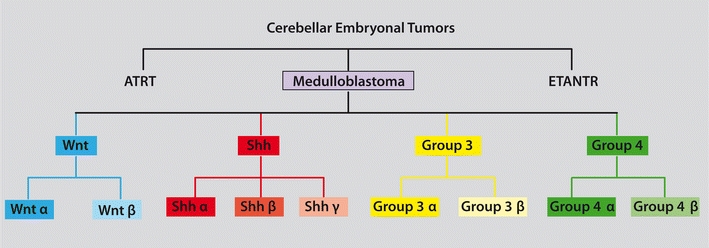
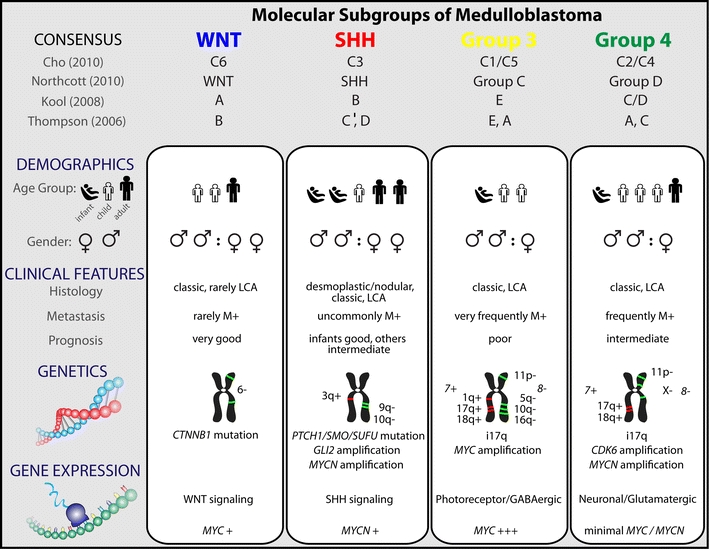
Medulloblastoma, a small blue cell malignancy of the cerebellum, is a major cause of morbidity and mortality in pediatric oncology. Current mechanisms for clinical prognostication and stratification include clinical factors (age, presence of metastases, and extent of resection) as well as histological subgrouping (classic, desmoplastic, and large cell/anaplastic histology). Transcriptional profiling studies of medulloblastoma cohorts from several research groups around the globe have suggested the existence of multiple distinct molecular subgroups that differ in their demographics, transcriptomes, somatic genetic events, and clinical outcomes. Variations in the number, composition, and nature of the subgroups between studies brought about a consensus conference in Boston in the fall of 2010. Discussants at the conference came to a consensus that the evidence supported the existence of four main subgroups of medulloblastoma (Wnt, Shh, Group 3, and Group 4). Participants outlined the demographic, transcriptional, genetic, and clinical differences between the four subgroups. While it is anticipated that the molecular classification of medulloblastoma will continue to evolve and diversify in the future as larger cohorts are studied at greater depth, herein we outline the current consensus nomenclature, and the differences between the medulloblastoma subgroups.
Overview
The claims and statistics of this paper haven’t been checked yet.
Free: it reads the open-access text and checks the first 5 claims that cite a source we can check. Create a free account to check every claim.
Integrity signals
Registry
Cites
Statistics
Figures
Verification
Claims the paper makes
The claims and statistics of this paper haven’t been checked yet.
Free: it reads the open-access text and checks the first 5 claims that cite a source we can check. Create a free account to check every claim.
Self-check
Percentages, sums and reported differences re-computed from the paper’s own numbers.
The self-check needs the paper’s full text.
Citations
Cites
The 2007 WHO Classification of Tumours of the Central Nervous System
Louis, D. N., Ohgaki, H., Wiestler, O. D., Cavenee, W. K., Burger, P. C., Jouvet, A., Scheithauer, B. W., & Kleihues, P. (2007) · Acta Neuropathologica · doi:10.1007/s00401-007-0243-4 · Cited by 15,397
Golub, T. R., Slonim, D. K., Tamayo, P., Huard, C., Gaasenbeek, M., Mesirov, J. P., Coller, H., Loh, M. L., Downing, J. R., Caligiuri, M. A., et al. (1999) · Science · doi:10.1126/science.286.5439.531 · Cited by 11,516 · cited 1×
“This transcriptional approach to tumor sub-classification has also been applied to a number of different non-medullo-blastoma histologies [4, 16, 18, 31, 35, 43], with the underlying assumption that tumors with similar transcriptomes will behave in a biologically similar manner, allowing a…”
BackgroundErratum to: The 2007 WHO classification of tumours of the central nervous system
Louis, D. N., Ohgaki, H., Wiestler, O. D., Cavenee, W. K., Burger, P. C., Jouvet, A., Scheithauer, B. W., & Kleihues, P. (2007) · Zurich Open Repository and Archive (University of Zurich) · doi:10.5167/uzh-156115 · Cited by 4,442
Phillips, H. S., Kharbanda, S., Chen, R., Forrest, W. F., Soriano, R. H., Wu, T. D., Misra, A., Nigro, J. M., Colman, H., Soroceanu, L., et al. (2006) · Cancer Cell · doi:10.1016/j.ccr.2006.02.019 · Cited by 3,143 · cited 1×
“…transcriptional approach to tumor sub-classification has also been applied to a number of different non-medullo-blastoma histologies [4, 16, 18, 31, 35, 43], with the underlying assumption that tumors with similar transcriptomes will behave in a biologically similar manner, allowing a…”
BackgroundBhattacharjee, A., Richards, W. G., Staunton, J., Li, C., Monti, S., Vasa, P., Ladd, C., Beheshti, J., Bueno, R., Gillette, M., et al. (2001) · Proceedings of the National Academy of Sciences · doi:10.1073/pnas.191502998 · Cited by 2,576 · cited 1×
“This transcriptional approach to tumor sub-classification has also been applied to a number of different non-medullo-blastoma histologies [4, 16, 18, 31, 35, 43], with the underlying assumption that tumors with similar transcriptomes will behave in a biologically similar manner, allowing a…”
BackgroundPrediction of central nervous system embryonal tumour outcome based on gene expression
Pomeroy, S. L., Tamayo, P., Gaasenbeek, M., Sturla, L. M., Angelo, M., McLaughlin, M. E., Kim, J. Y. H., Goumnerova, L. C., Black, P. M., Lau, C., et al. (2002) · Nature · doi:10.1038/415436a · Cited by 2,371 · cited 2×
“With recent developments in the ability to monitor transcription across the genome in the setting of a single experiment, various groups have started to sub-classify medulloblastoma on the basis of differences in the transcriptome [36].”
BackgroundSelf-citationIdentification of a CpG Island Methylator Phenotype that Defines a Distinct Subgroup of Glioma
Noushmehr, H., Weisenberger, D. J., Diefes, K., Phillips, H. S., Pujara, K., Berman, B. P., Pan, F., Pelloski, C. E., Sulman, E. P., Bhat, K. P., et al. (2010) · Cancer Cell · doi:10.1016/j.ccr.2010.03.017 · Cited by 2,337 · cited 1×
“This transcriptional approach to tumor sub-classification has also been applied to a number of different non-medullo-blastoma histologies [4, 16, 18, 31, 35, 43], with the underlying assumption that tumors with similar transcriptomes will behave in a biologically similar manner, allowing a…”
BackgroundMedulloblastoma Comprises Four Distinct Molecular Variants
Northcott, P. A., Korshunov, A., Witt, H., Hielscher, T., Eberhart, C. G., Mack, S., Bouffet, E., Clifford, S. C., Hawkins, C. E., French, P., et al. (2011) · Journal of Clinical Oncology · doi:10.1200/jco.2009.27.4324 · Cited by 1,339 · cited 12×
“Others approaches to identify Shh medulloblastomas have included immunohistochemical staining for SFRP1 [2, 28, 48], or GAB1 [11].”
BackgroundMethodInfluentialSelf-citationThe Molecular Basis of Turcot's Syndrome
Hamilton, S. R., Liu, B., Parsons, R. E., Papadopoulos, N., Jen, J., Powell, S. M., Krush, A. J., Berk, T., Cohen, Z., Tetu, B., et al. (1995) · New England Journal of Medicine · doi:10.1056/nejm199503303321302 · Cited by 1,133 · cited 1×
“Germline mutations of the Wnt pathway inhibitor APC predispose to Turcot syndrome, which includes a proclivity to medulloblastoma, in addition, somatic mutations of CTNNB1 encoding b-catenin have been found in sporadic medulloblastomas [19, 50].”
BackgroundKool, M., Korshunov, A., Remke, M., Jones, D. T. W., Schlanstein, M., Northcott, P. A., Cho, Y.-J., Koster, J., Schouten-van Meeteren, A., van Vuurden, D., et al. (2012) · Acta Neuropathologica · doi:10.1007/s00401-012-0958-8 · Cited by 1,056 · cited 3×
“…to identify target cohorts for certain drugs (e.g., SHH inhibitors), but also add significantly to outcome prediction by the time of diagnosis [21], much more than any of the established clinical markers such as patient age, metastatic stage at diagnosis, level of resection, and histological…”
BackgroundMethodInfluentialSelf-citation
Cited by
Items 101–200 of 1,003
Molecular Insights into Pediatric Brain Tumors Have the Potential to Transform Therapy
Gajjar, A. J., Pfister, S. M., Taylor, M. D., & Gilbertson, R. J. (2014) · Clinical Cancer Research · doi:10.1158/1078-0432.ccr-14-0833 · Cited by 158
“Group 3 medulloblastoma arises exclusively in children, is frequently metastatic, and has the worst prognosis of all the subgroups (14).”
BackgroundSelf-citationThe H3K27me3 demethylase UTX in normal development and disease
der Meulen, J. V., Speleman, F., & Vlierberghe, P. V. (2014) · Epigenetics · doi:10.4161/epi.28298 · Cited by 165
Pietsch, T., Schmidt, R., Remke, M., Korshunov, A., Hovestadt, V., Jones, D., Felsberg, J., Kaulich, K., Goschzik, T., Kool, M., et al. (2014) · Acta Neuropathologica · doi:10.1007/s00401-014-1276-0 · Cited by 159
“Medulloblastoma, the most frequent embryonal brain tumor in children, comprises four subgroups (WNT, SHH, group 3, group 4) with distinct cellular origin, histopathological characteristics, pathogenetic events, demographical features, localization within the posterior fossa, and clinical behavior [1, 16, 17, 21, 26, 3…”
BackgroundSelf-citation2016 World Health Organization Classification of Central Nervous System Tumors
Wen, P. Y., & Huse, J. T. (2017) · CONTINUUM Lifelong Learning in Neurology · doi:10.1212/con.0000000000000536 · Cited by 166
“Significant progress has been made in understanding the molecular characteristics of these tumors in recent years.(15,43) By consensus, medulloblastomas have been distilled into four main groups: WNT-activated medulloblastomas, which have the best prognosis; SHHactivated medulloblastomas, which occur in both infants a…”
BackgroundWenger, A., Vega, S. F., Kling, T., Bontell, T. O., Jakola, A. S., & Carén, H. (2019) · Neuro-Oncology · doi:10.1093/neuonc/noz011 · Cited by 160
DDX3, a potential target for cancer treatment
Bol, G. M., Xie, M., & Raman, V. (2015) · Molecular Cancer · doi:10.1186/s12943-015-0461-7 · Cited by 155
“Integrative genomic studies have recently identified at least four distinct molecular subgroups of medulloblastoma – Wnt, sonic hedgehog (SHH), Group 3, and Group 4 – which exhibit highly discriminate transcriptional, cytogenetic, and mutational spectra, in addition to divergent patient demographics and clinical behav…”
BackgroundZhang, L., He, X., Liu, X., Zhang, F., Huang, L. F., Potter, A., Xu, L., Zhou, W., Zheng, T., Luo, Z., et al. (2019) · Cancer Cell · doi:10.1016/j.ccell.2019.07.009 · Cited by 160
Self-citationRamaswamy, V., Remke, M., Adamski, J., Bartels, U., Tabori, U., Wang, X., Huang, A., Hawkins, C., Mabbott, D., Laperriere, N., et al. (2016) · Neuro-Oncology · doi:10.1093/neuonc/nou357 · Cited by 140
Self-citationSpatial heterogeneity in medulloblastoma
Morrissy, A. S., Cavalli, F. M. G., Remke, M., Ramaswamy, V., Shih, D. J. H., Holgado, B., Farooq, H., Donovan, L., Garzia, L., Agnihotri, S., et al. (2017) · Nature Genetics · doi:10.1038/ng.3838 · Cited by 170
Self-citationMilde, T., Lodrini, M., Savelyeva, L., Korshunov, A., Kool, M., Brueckner, L. M., Antunes, A. S. L. M., Oehme, I., Pekrun, A., Pfister, S. M., et al. (2012) · Journal of Neuro-Oncology · doi:10.1007/s11060-012-0978-1 · Cited by 152
Self-citationMLL4 Is Required to Maintain Broad H3K4me3 Peaks and Super-Enhancers at Tumor Suppressor Genes
Dhar, S. S., Zhao, D., Lin, T., Gu, B., Pal, K., Wu, S. J., Alam, H., Lv, J., Yun, K., Gopalakrishnan, V., et al. (2018) · Molecular Cell · doi:10.1016/j.molcel.2018.04.028 · Cited by 145
“We next performed IHC analysis of 7-month-old Mll4 BSKO MB using antibodies against well-known molecular markers for each MB subtype (CTNNB1 and DKK2 for WNT, GAB1 for SHH, NPR3 and Myc for group 3, and KCNA1 for group 4) (Taylor et al., 2012).”
Self-citationSilencing of the miR-17∼92 Cluster Family Inhibits Medulloblastoma Progression
Murphy, B. L., Obad, S., Bihannic, L., Ayrault, O., Zindy, F., Kauppinen, S., & Roussel, M. F. (2013) · Cancer Research · doi:10.1158/0008-5472.can-13-0927 · Cited by 136
Diffuse Intrinsic Pontine Glioma: From Diagnosis to Next-Generation Clinical Trials
Vitanza, N. A., & Monje, M. (2019) · Current Treatment Options in Neurology · doi:10.1007/s11940-019-0577-y · Cited by 147
Cancer cell heterogeneity & plasticity in glioblastoma and brain tumors
Lauko, A. J., Lo, A., Ahluwalia, M. S., & Lathia, J. D. (2021) · Seminars in Cancer Biology · doi:10.1016/j.semcancer.2021.02.014 · Cited by 155
MR Imaging–Based Radiomic Signatures of Distinct Molecular Subgroups of Medulloblastoma
Iv, M., Zhou, M., Shpanskaya, K. S., Perreault, S., Wang, Z., Tranvinh, E., Lanzman, B., Vajapeyam, S., Vitanza, N. A., Fisher, P. G., et al. (2018) · American Journal of Neuroradiology · doi:10.3174/ajnr.a5899 · Cited by 134
Self-citationLafay‐Cousin, L., Smith, A., Chi, S. N., Wells, E., Madden, J., Margol, A., Ramaswamy, V., Finlay, J., Taylor, M. D., Dhall, G., et al. (2016) · Pediatric Blood & Cancer · doi:10.1002/pbc.26042 · Cited by 130
“The assignment of sonic Hedgehog (SHH) subgroup versus group 3 is extremely robust with any of these methods.[4,6,7]”
BackgroundMethodSelf-citationEscudero, L., Llort, A., Arias, A., Diaz-Navarro, A., Martínez-Ricarte, F., Rubio-Perez, C., Mayor, R., Caratù, G., Martínez-Sáez, E., Vázquez-Méndez, É., et al. (2020) · Nature Communications · doi:10.1038/s41467-020-19175-0 · Cited by 124
The G protein α subunit Gαs is a tumor suppressor in Sonic hedgehog−driven medulloblastoma
He, X., Zhang, L., Chen, Y., Remke, M., Shih, D., Lu, F., Wang, H., Deng, Y., Yu, Y., Xia, Y., et al. (2014) · Nature Medicine · doi:10.1038/nm.3666 · Cited by 121
“TopHat output data was then analyzed by Cufflinks to (1) calculate FPKM He et al.”
MethodSelf-citationPediatric Brain Tumor Genetics: What Radiologists Need to Know
AlRayahi, J., Zápotocký, M., Ramaswamy, V., Hanagandi, P. B., Branson, H. M., Mubarak, W. M., Raybaud, C., & Laughlin, S. (2018) · Radiographics · doi:10.1148/rg.2018180109 · Cited by 132
Lian, H., Han, Y., Zhang, Y., Zhao, Y., Yan, S., Li, Q., Wang, B., Wang, J., Meng, W., Yang, J., et al. (2019) · Molecular Oncology · doi:10.1002/1878-0261.12557 · Cited by 140
“WNT and SHH MBs are clearly separable and identifiable across the majority of studies based on transcriptional and DNA methylation profiling data, demonstrating minimal overlap with other MB subgroups (Taylor et al ., 2012).”
BackgroundTaroni, J. N., Grayson, P. C., Hu, Q., Eddy, S., Kretzler, M., Merkel, P. A., & Greene, C. S. (2019) · Cell Systems · doi:10.1016/j.cels.2019.04.003 · Cited by 118
“Medulloblastoma can be classified into 4 subgroups on the basis of gene expression profiling: SHH, WNT, Group 3, and Group 4 (Taylor et al., 2011).”
BackgroundTumor-Associated Macrophages in SHH Subgroup of Medulloblastomas
Margol, A. S., Robison, N. J., Gnanachandran, J., Hung, L. T., Kennedy, R. J., Vali, M., Dhall, G., Finlay, J. L., Erdreich-Epstein, A., Krieger, M. D., et al. (2015) · Clinical Cancer Research · doi:10.1158/1078-0432.ccr-14-1144 · Cited by 122
“Recent data have provided insight into the biology (20) and prognosis of medulloblastomas (21, 22); however, relatively little is known about the role of the tumor microenvironment with respect to these molecular subgroups.”
Subgroup-specific immune and stromal microenvironment in medulloblastoma
Bockmayr, M., Mohme, M., Klauschen, F., Winkler, B., Budczies, J., Rutkowski, S., & Schüller, U. (2018) · OncoImmunology · doi:10.1080/2162402x.2018.1462430 · Cited by 121
Self-citationSaratsis, A. M., Kambhampati, M., Snyder, K. A., Yadavilli, S., Devaney, J. M., Harmon, B. T., Hall, J., Raabe, E. H., An, P., Weingart, M., et al. (2013) · Acta Neuropathologica · doi:10.1007/s00401-013-1218-2 · Cited by 135
“For example, identification of genetic subtypes of medulloblastoma was successful only upon inclusion of a large cohort of specimens [29, 36, 51].”
Nikiforova, M. N., Wald, A. I., Melan, M. A., Roy, S., Zhong, S., Hamilton, R. L., Lieberman, F. S., Drappatz, J., Amankulor, N., Pollack, I. F., et al. (2015) · Neuro-Oncology · doi:10.1093/neuonc/nov289 · Cited by 127
“Medulloblastomas have been recently divided into 4 groups (WNT [wingless], SHH [sonic hedgehog], group 3, and group 4) based on molecular profiling and clinical outcome.(10) – 13 Finally, recurrent mutations in KLF4, AKT1, and SMO genes are often present in NF2-negative sporadic meningiomas.”
BackgroundCohen, A. R. (2022) · New England Journal of Medicine · doi:10.1056/nejmra2116344 · Cited by 130
Role of Macrophages in Brain Tumor Growth and Progression
Guadagno, E., Presta, I., Maisano, D., Donato, A., Pirrone, C., Cardillo, G., Corrado, S., Mignogna, C., Mancuso, T., Donato, G., et al. (2018) · International Journal of Molecular Sciences · doi:10.3390/ijms19041005 · Cited by 118
“Because of its clinical utility, a molecular classification into four groups has been formulated: group I, Wnt-activated medulloblastoma; group II, SHH (Sonic Hedgehog)-activated medulloblastoma; group 3 and 4 composed of so called non-Wnt/non-SHH tumors [120,121].”
BackgroundThe new WHO 2016 classification of brain tumors—what neurosurgeons need to know
Banan, R., & Hartmann, C. J. (2017) · Acta Neurochirurgica · doi:10.1007/s00701-016-3062-3 · Cited by 131
“large cell/anaplastic appearance as well as group 3 MB [64, 65].”
Franceschi, E., Höfer, S., Brandes, A. A., Frappaz, D., Kortmann, R., Bromberg, J. E. C., Dangouloff‐Ros, V., Boddaert, N., Hattingen, E., Wiestler, B., et al. (2019) · The Lancet Oncology · doi:10.1016/s1470-2045(19)30669-2 · Cited by 124
Self-citationGottardo, N. G., Hansford, J. R., McGlade, J. P., Alvaro, F., Ashley, D. M., Bailey, S., Baker, D. L., Bourdeaut, F., Cho, Y., Clay, M. A., et al. (2013) · Acta Neuropathologica · doi:10.1007/s00401-013-1213-7 · Cited by 117
Self-citationGoschzik, T., Schwalbe, E. C., Hicks, D., Smith, A. J., Muehlen, A. Z., Figarella‐Branger, D., Doz, F., Rutkowski, S., Lannering, B., Pietsch, T., et al. (2018) · The Lancet Oncology · doi:10.1016/s1470-2045(18)30532-1 · Cited by 126
Self-citationMedulloblastoma: From Molecular Subgroups to Molecular Targeted Therapies
Wang, J., Garancher, A., Ramaswamy, V., & Wechsler-Reya, R. J. (2018) · Annual Review of Neuroscience · doi:10.1146/annurev-neuro-070815-013838 · Cited by 113
Mynarek, M., von Hoff, K., Pietsch, T., Ottensmeier, H., Warmuth-Metz, M., Bison, B., Pfister, S., Korshunov, A., Sharma, T., Jaeger, N., et al. (2020) · Journal of Clinical Oncology · doi:10.1200/jco.19.03057 · Cited by 106
Self-citationSangar, M. L. C., Genovesi, L. A., Nakamoto, M. W., Davis, M. J., Knobluagh, S. E., Ji, P., Millar, A., Wainwright, B. J., & Olson, J. M. (2017) · Clinical Cancer Research · doi:10.1158/1078-0432.ccr-16-2943 · Cited by 129
“WNT and SHH subgroups are named after the signaling pathway that plays a predominant role in their pathogenesis, whereas the molecular drivers of group 3 and 4 subgroups are currently unknown (10).”
InfluentialManagement of Pediatric and Adult Patients with Medulloblastoma
Martin, A. M., Raabe, E. H., Eberhart, C. G., & Cohen, K. J. (2014) · Current Treatment Options in Oncology · doi:10.1007/s11864-014-0306-4 · Cited by 123
Self-citationMethylation profiling of choroid plexus tumors reveals 3 clinically distinct subgroups
Thomas, C., Sill, M., Ruland, V., Witten, A., Hartung, S., Kordes, U., Jeibmann, A., Beschorner, R., Keyvani, K., Bergmann, M., et al. (2016) · Neuro-Oncology · doi:10.1093/neuonc/nov322 · Cited by 111
Self-citationBrandão, L. A., & Poussaint, T. Y. (2016) · Neuroimaging Clinics of North America · doi:10.1016/j.nic.2016.08.001 · Cited by 116
“For a detailed comprehensive review on the molecular subgroups of MB, see the consensus article by Taylor and colleagues.(52) MB is the most common malignant brain tumor in children and, as such, has been the”
InfluentialHigdon, R., Earl, R. K., Stanberry, L. I., Hudac, C. M., Montague, E., Stewart, E., Janko, I., Choiniere, J., Broomall, W., Kolker, N., et al. (2015) · OMICS A Journal of Integrative Biology · doi:10.1089/omi.2015.0020 · Cited by 124
“In some cancer subtyping, small panels of biomarkers are used to classify patients to subtypes (Bastien et al., 2012; Choudhury et al., 2015; Taylor et al., 2012).”
Medulloblastoma: Molecular Classification-Based Personal Therapeutics
Archer, T. C., Mahoney, E. L., & Pomeroy, S. L. (2017) · Neurotherapeutics · doi:10.1007/s13311-017-0526-y · Cited by 118
“Group 3 medulloblastomas are defined by their expression of MYC, photoreceptor, and γ-aminobutyric acid-ergic gene signatures [1, 6].”
BackgroundInfluentialSelf-citationTargeting BET bromodomain proteins in solid tumors
Sahai, V., Redig, A. J., Collier, K. A., Eckerdt, F., & Munshi, H. G. (2016) · Oncotarget · doi:10.18632/oncotarget.9804 · Cited by 115
“Group 3 medulloblastoma is often associated with amplification of c-MYC and has the worst overall prognosis, with 5-year OS rates of only 50% [76, 77].”
BackgroundRecent developments and current concepts in medulloblastoma
Gerber, N. U., Mynarek, M., von Hoff, K., Friedrich, C., Resch, A., & Rutkowski, S. (2013) · Cancer Treatment Reviews · doi:10.1016/j.ctrv.2013.11.010 · Cited by 117
“Most likely, biological classification will continue to evolve, and further refined subgrouping has already been suggested [7,35,36], Table 2 gives an outlook on a possible future risk classification in medulloblastoma.”
BackgroundSelf-citation2021 WHO classification of tumours of the central nervous system: a review for the neuroradiologist
McNamara, C., Mankad, K., Thust, S. C., Dixon, L. V. M., Limbӓck-Stanic, C., D’Arco, F., Jacques, T. S., & Löbel, U. (2022) · Neuroradiology · doi:10.1007/s00234-022-03008-6 · Cited by 122
Obstacles to Brain Tumor Therapy: Key ABC Transporters
Wijaya, J., Fukuda, Y., & Schuetz, J. D. (2017) · International Journal of Molecular Sciences · doi:10.3390/ijms18122544 · Cited by 107
Bai, R.-Y., Staedtke, V., Rudin, C. M., Bunz, F., & Riggins, G. J. (2015) · Neuro-Oncology · doi:10.1093/neuonc/nou234 · Cited by 100
Fukushima, S., Yamashita, S., Kobayashi, H., Takami, H., Fukuoka, K., Nakamura, T., Yamasaki, K., Matsushita, Y., Nakamura, H. K., Totoki, Y., et al. (2017) · Acta Neuropathologica · doi:10.1007/s00401-017-1673-2 · Cited by 105
“In medulloblastomas, although four molecular subgroups based on mutations and gene expression profiles were established in 2012 [36], genome-wide methylation profiling has also been proposed as a robust and equally, if not better, reliable prognostic method [7, 24].”
BackgroundMisactivation of Hedgehog signaling causes inherited and sporadic cancers
Raleigh, D. R., & Reiter, J. F. (2019) · Journal of Clinical Investigation · doi:10.1172/jci120850 · Cited by 106
“Although this well-established regimen cures approximately 75% of pediatric medulloblastoma patients, longterm survival for some patients within particular medulloblastoma molecular subgroups can be as low as 25% (77, 78).”
BackgroundTrends in childhood cancer: Incidence and survival analysis over 45 years of SEER data
Sultan, I. Y., Alfaar, A. S., Sultan, Y., Salman, Z., & Qaddoumi, I. A. (2025) · PLoS ONE · doi:10.1371/journal.pone.0314592 · Cited by 111
Medulloblastoma subgroups remain stable across primary and metastatic compartments
Wang, X., Dubuc, A. M., Ramaswamy, V., Mack, S. C., Gendoo, D. M. A., Remke, M., Wu, X., Garzia, L., Luu, B., Cavalli, F. M. G., et al. (2015) · Acta Neuropathologica · doi:10.1007/s00401-015-1389-0 · Cited by 113
“Recent integrative genomics have identified four distinct subgroups of medulloblastoma, these include WNT, SHH, Group 3 and Group 4 [2, 13, 16, 27, 28].”
BackgroundSelf-citationCox, J. L., Wilder, P. J., Gilmore, J. M., Wuebben, E. L., Washburn, M. P., & Rizzino, A. (2013) · PLoS ONE · doi:10.1371/journal.pone.0062857 · Cited by 105
“Recent studies have led to the division of MB into several subgroups, including the Shh subgroup and the WNT subgroup, based on RNA expression profiles [37].”
BackgroundIntellectual Outcome in Molecular Subgroups of Medulloblastoma
Moxon‐Emre, I., Taylor, M. D., Bouffet, É., Hardy, K. K., Campen, C. J., Malkin, D. M., Hawkins, C. E., Laperrière, N., Ramaswamy, V., Bartels, U. K., et al. (2016) · Journal of Clinical Oncology · doi:10.1200/jco.2016.66.9077 · Cited by 105
Self-citationSonic hedgehog patterning during cerebellar development
Luca, A. D., Cerrato, V., Fucà, E., Parmigiani, E., Buffo, A., & Leto, K. (2015) · Cellular and Molecular Life Sciences · doi:10.1007/s00018-015-2065-1 · Cited by 103
“It has been demonstrated that Shh-MBs are caused by aberrations in various components of Shh pathway, such as Ptch1 [103, 154], Sufu [155, 156], Gli transcription factors [157] and Smo [158].”
BackgroundInfluentialKarimi, S., Zuccato, J. A., Mamatjan, Y., Mansouri, S., Suppiah, S., Nassiri, F., Diamandis, P., Munoz, D. G., Aldape, K. D., & Zadeh, G. (2019) · Clinical Epigenetics · doi:10.1186/s13148-019-0766-2 · Cited by 90
Targeting class I histone deacetylase 2 in MYC amplified group 3 medulloblastoma
Ecker, J., Oehme, I., Mazitschek, R., Korshunov, A., Kool, M., Hielscher, T., Kiss, J., Selt, F., Konrad, C., Lodrini, M., et al. (2015) · Acta Neuropathologica Communications · doi:10.1186/s40478-015-0201-7 · Cited by 92
Self-citationCancer-selective metabolic vulnerabilities in MYC-amplified medulloblastoma
Gwynne, W. D., Suk, Y., Custers, S., Mikolajewicz, N., Chan, J. K., Zador, Z. E., Chafe, S. C., Zhai, K., Escudero, L., Zhang, C., et al. (2022) · Cancer Cell · doi:10.1016/j.ccell.2022.10.009 · Cited by 108
The transcriptional landscape of Shh medulloblastoma
Skowron, P., Farooq, H., Cavalli, F. M. G., Morrissy, A. S., Ly, M., Hendrikse, L. D., Wang, E. Y., Djambazian, H. H. V., Zhu, H., Mungall, K. L., et al. (2021) · Nature Communications · doi:10.1038/s41467-021-21883-0 · Cited by 104
Self-citationLeukaemia 'firsts' in cancer research and treatment
Greaves, M. F. (2016) · Nature reviews. Cancer · doi:10.1038/nrc.2016.3 · Cited by 102
Advances in the molecular classification of pediatric brain tumors: a guide to the galaxy
Cacciotti, C., Fleming, A. J., & Ramaswamy, V. (2020) · The Journal of Pathology · doi:10.1002/path.5457 · Cited by 97
“These are often termed WNT (wingless), SHH (Sonic Hedgehog), group 3, and group 4 [77].”
BackgroundAkino, T., Han, X., Nakayama, H., McNeish, B. L., Zurakowski, D., Mammoto, A., Klagsbrun, M., & Smith, E. R. (2014) · Cancer Research · doi:10.1158/0008-5472.can-13-3116 · Cited by 95
Kunder, R., Jalali, R., Epari, S., Moiyadi, A. V., Goel, N., Goel, A. H., Gupta, T., Krishnatry, R., Kannan, S., Kurkure, P. A., et al. (2013) · Neuro-Oncology · doi:10.1093/neuonc/not123 · Cited by 92
Self-citationAdvances in paediatric cancer treatment.
Saletta, F., Seng, M. S.-F., & Lau, L. M. S. (2014) · PubMed Central · doi:10.3978/j.issn.2224-4336.2014.02.01 · Cited by 114
“(IV) Molecular profiling performed over the last decade has allowed segregation of MB into four distinct groups: WNT, sonic hedgehog (SHH), Group 3 and Group 4 (112-115) (Table 5): • The WNT tumors, of which only 5% to 10% are Table 5 Four distinct molecular/genetic subgroups in medulloblastoma”
BackgroundMenyhárt, O., & Győrffy, B. (2020) · Cancer and Metastasis Reviews · doi:10.1007/s10555-020-09854-1 · Cited by 99
Blüml, S., Margol, A., Sposto, R., Kennedy, R. J., Robison, N. J., Vali, M., Hung, L. T., Muthugounder, S., Finlay, J. L., Erdreich‐Epstein, A., et al. (2015) · Neuro-Oncology · doi:10.1093/neuonc/nov097 · Cited by 90
“The significance of molecular subgroups of medulloblastoma has been demonstrated by their distinct biologic, molecular, and tumor microenvironment characteristics.(9,11,24,26) Survival outcomes also differ based on molecular subgroup, with higher survival observed in children with WNT tumors and infants with SHH tumor…”
BackgroundMiR ‐383 is Downregulated in Medulloblastoma and Targets Peroxiredoxin 3 ( PRDX3 )
Li, K. K., Pang, J. C., Lau, K., Zhou, L., Mao, Y. Q., Wang, Y., Poon, W. S., & Ng, H. (2013) · Brain Pathology · doi:10.1111/bpa.12014 · Cited by 94
“Recent studies on transcriptional and DNA copy number profilings and mutation analysis have categorized different molecular subgroups with distinct clinical, demographic and biological features and this information vastly enhances the understanding of this disease (7, 24, 39, 53, 54).”
BackgroundPediatric Medulloblastoma – Update on Molecular Classification Driving Targeted Therapies
deSouza, R., Jones, B. R. T., Lowis, S. P., & Kurian, K. M. (2014) · Frontiers in Oncology · doi:10.3389/fonc.2014.00176 · Cited by 103
Sonic hedgehog-associated medulloblastoma arising from the cochlear nuclei of the brainstem
Grammel, D., Warmuth‐Metz, M., von Bueren, A. O., Kool, M., Pietsch, T., Kretzschmar, H. A., Rowitch, D. H., Rutkowski, S., Pfister, S. M., & Schüller, U. (2012) · Acta Neuropathologica · doi:10.1007/s00401-012-0961-0 · Cited by 89
“In this context, it is worth mentioning that a consensus study agreed on four main molecular subgroups for human MBs [33], but that there”
BackgroundSelf-citationCombined BET bromodomain and CDK2 inhibition in MYC-driven medulloblastoma
Bolin, S., Borgenvik, A., Persson, C., Sundström, A., Qi, J., Bradner, J. E., Weiss, W. A., Cho, Y., Weishaupt, H., & Swartling, F. J. (2018) · Oncogene · doi:10.1038/s41388-018-0135-1 · Cited by 90
“Gene expression profiling divides MB into four molecularly distinct subgroups including Wingless (WNT), Sonic Hedgehog (SHH), Group 3, and Group 4 [3].”
Self-citationDeng, M. Y., Sill, M., Sturm, D., Stichel, D., Witt, H., Ecker, J., Wittmann, A., Schittenhelm, J., Ebinger, M., Schuhmann, M. U., et al. (2020) · Neuropathology and Applied Neurobiology · doi:10.1111/nan.12590 · Cited by 89
Self-citationClinical Outcomes and Patient-Matched Molecular Composition of Relapsed Medulloblastoma
Kumar, R., Smith, K. S., Deng, M. Y., Terhune, C., Robinson, G. W., Orr, B. A., Liu, A. P. Y., Lin, T., Billups, C. A., Chintagumpala, M., et al. (2021) · Journal of Clinical Oncology · doi:10.1200/jco.20.01359 · Cited by 92
Self-citationInactivation of Ezh2 Upregulates Gfi1 and Drives Aggressive Myc-Driven Group 3 Medulloblastoma
Vo, B. T., Li, C., Morgan, M. A., Theurillat, I., Finkelstein, D., Wright, S., Hyle, J. W., Smith, S. M. C., Fan, Y., Wang, Y., et al. (2017) · Cell Reports · doi:10.1016/j.celrep.2017.02.073 · Cited by 96
“The four MB subgroups differ in their mutational landscape, gene expression, pathology and prognosis, and attempts to stratify therapies are emerging (Kool et al., 2012; Northcott et al., 2012b; Parsons et al., 2011; Robinson et al., 2012; Taylor et al., 2012).”
BackgroundSelf-citationHuang, X., Dubuc, A. M., Hashizume, R., Berg, J., He, Y., Wang, J., Chiang, C. C., Cooper, M. K., Northcott, P. A., Taylor, M. D., et al. (2012) · Genes & Development · doi:10.1101/gad.193789.112 · Cited by 92
“1), specifically marks group 4 MBs (Taylor et al. 2012).”
Self-citationWilliamson, D., Schwalbe, E. C., Hicks, D., Aldinger, K. A., Lindsey, J. C., Crosier, S., Richardson, S., Goddard, J., Hill, R. M., Castle, J., et al. (2022) · Cell Reports · doi:10.1016/j.celrep.2022.111162 · Cited by 87
“The current consensus is that there exist four major MB subgroups (MBSHH, MBWNT, MBGrp3, MBGrp4), each with unique clinico-biological characteristics (Taylor et al., 2012); MBWNT and MBSHH are named after characteristic disruptions in the WNT (CTNNB1 mutation (Clifford et al.”
BackgroundSelf-citationWorld Health Organization 2016 Classification of Central Nervous System Tumors
Diamandis, P., & Aldape, K. (2018) · Neurologic Clinics · doi:10.1016/j.ncl.2018.04.003 · Cited by 97
Proneural bHLH Genes in Development and Disease
Huang, C., Chan, J. A.-W., & Schuurmans, C. (2014) · Current topics in developmental biology/Current Topics in Developmental Biology · doi:10.1016/b978-0-12-405943-6.00002-6 · Cited by 92
“Since α-cells and other endocrine cells are formed during a narrower window in embryonic development than β-cells ( Johansson et al., 2007), any residual NEUROG3 function may just be enough to allow some β-cell formation and delay the onset of diabetes, but insufficient to support α-cell 109Proneural bHLH Genes format…”
BackgroundInfluentialThe Interaction of Myc with Miz1 Defines Medulloblastoma Subgroup Identity
Vo, B. T., Wolf, E., Kawauchi, D., Gebhardt, A., Rehg, J. E., Finkelstein, D., Walz, S., Murphy, B. L., Youn, Y. H., Han, Y.-G., et al. (2016) · Cancer Cell · doi:10.1016/j.ccell.2015.12.003 · Cited by 83
“…the most commonmalignant pediatric brain tumor, arises in the cerebellum and is characterized by four molecularly distinct subgroups: Wingless-Int (WNT), Sonic Hedgehog (SHH), Group 3 (G3), and G4 (Taylor et al., 2012). hangeable, and yet human medulloblastomas driven by Myc avior, and prognosis.”
Challenges and Recent Advances in Medulloblastoma Therapy
Kumar, V., Kumar, V., McGuire, T. R., Coulter, D. W., Sharp, J. G., & Mahato, R. I. (2017) · Trends in Pharmacological Sciences · doi:10.1016/j.tips.2017.09.002 · Cited by 94
Lsd1 as a therapeutic target in Gfi1-activated medulloblastoma
Lee, C., Rudneva, V. A., Erkek, S., Zapatka, M., Chau, L. Q., Tacheva-Grigorova, S. K., Garancher, A., Rusert, J. M., Aksoy, O., Lea, R., et al. (2019) · Nature Communications · doi:10.1038/s41467-018-08269-5 · Cited by 88
Self-citationMedulloblastoma: WHO 2021 and Beyond
Cotter, J. A., & Hawkins, C. E. (2022) · Pediatric and Developmental Pathology · doi:10.1177/10935266211018931 · Cited by 96
Zhang, Z., Teng, X., Zhao, F. Q., Ma, C., Zhang, J., Xiao, L.-F., Wang, Y., Chang, M., Tian, Y., Li, C., et al. (2022) · Cell Reports · doi:10.1016/j.celrep.2022.111530 · Cited by 91
Vo, D. T., Subramaniam, D., Remke, M., Burton, T. L., Uren, P. J., Gelfond, J. A. L., Abreu, R. D. S., Burns, S. C., Qiao, M., Suresh, U., et al. (2012) · American Journal Of Pathology · doi:10.1016/j.ajpath.2012.07.031 · Cited by 89
Self-citationTan, I., Arifa, R. D. D. N., Rallapalli, H., Kana, V., Lao, Z., Sanghrajka, R. M., Bayin, N. S., Tanne, A. J., Wojcinski, A., Korshunov, A., et al. (2020) · Oncogene · doi:10.1038/s41388-020-01536-0 · Cited by 86
Self-citationStrother, D. R., Lafay‐Cousin, L., Boyett, J. M., Burger, P. C., Aronin, P. A., Constine, L. S., Duffner, P. K., Koçak, M., Kun, L. E., Horowitz, M. E., et al. (2013) · Neuro-Oncology · doi:10.1093/neuonc/not163 · Cited by 85
Self-citationCancer-Associated Mutants of RNA Helicase DDX3X Are Defective in RNA-Stimulated ATP Hydrolysis
Epling, L. B., Grace, C. R., Lowe, B. R., Partridge, J. F., & Enemark, E. J. (2015) · Journal of Molecular Biology · doi:10.1016/j.jmb.2015.02.015 · Cited by 86
“It has been divided into four subgroups based upon transcriptional analysis of primary tumors: WNT, SHH, Group 3, and Group 4 [1].”
BackgroundCell senescence in neuropathology: A focus on neurodegeneration and tumours
Carreno, G., Guiho, R., & Martinez‐Barbera, J. P. (2021) · Neuropathology and Applied Neurobiology · doi:10.1111/nan.12689 · Cited by 74
Choudhury, A., Chen, W., Lucas, C. G., Bayley, J. C., Harmancı, A. S., Maas, S. L. N., Santagata, S., Klisch, T. J., Perry, A., Bi, W. L., et al. (2022) · Neuro-Oncology · doi:10.1093/neuonc/noac224 · Cited by 83
Kaur, K., Kakkar, A., Kumar, A., Mallick, S., Julka, P. K., Gupta, D. K., Suri, A., Suri, V. S., Sharma, M. C., & Sarkar, C. (2015) · Brain Pathology · doi:10.1111/bpa.12293 · Cited by 83
“In recent years, studies based on various high-throughput methods have firmly established that MB is not a single tumor but a heterogeneous entity with four distinct molecular subgroups (3, 13, 14, 19, 29, 30).”
BackgroundMethodInfluentialThe molecular and cell biology of pediatric low-grade gliomas
Chen, Y.-H., & Gutmann, D. H. (2013) · Oncogene · doi:10.1038/onc.2013.148 · Cited by 91
Ramkissoon, S. H., Bandopadhayay, P., Hwang, J., Ramkissoon, L. A., Greenwald, N. F., Schumacher, S. E., O’Rourke, R., Pinches, N., Ho, P., Malkin, H., et al. (2017) · Neuro-Oncology · doi:10.1093/neuonc/now294 · Cited by 85
Potassium Channels as a Target for Cancer Therapy: Current Perspectives
Zúñiga, L., Cayo, Á., González, W., Vilos, C., & Zúñiga, R. (2022) · OncoTargets and Therapy · doi:10.2147/ott.s326614 · Cited by 84
“Moreover, it is overexpressed in cervical cancer tissues and medulloblastoma.(38,39) Additionally, the Kv1.”
BackgroundMedulloblastoma: Current Perspectives and Recent Advances
Choi, J. Y. (2023) · Brain Tumor Research and Treatment · doi:10.14791/btrt.2022.0046 · Cited by 89
“Classic MBL is observed in nearly all WNT and most groups 3 and 4 [13].”
BackgroundAdvancing CNS tumor diagnostics with expanded DNA methylation-based classification
Sill, M., Schrimpf, D., Patel, A., Sturm, D., Jäger, N., Sievers, P., Schweizer, L., Banan, R., Reuss, D., Suwala, A. K., et al. (2025) · Cancer Cell · doi:10.1016/j.ccell.2025.11.002 · Cited by 83
Self-citationSox2 Requirement in Sonic Hedgehog-Associated Medulloblastoma
Ahlfeld, J., Favaro, R., Pagella, P., Kretzschmar, H. A., Nicolis, S. K., & Schüller, U. (2013) · Cancer Research · doi:10.1158/0008-5472.can-13-0238 · Cited by 81
Northcott, P. A., Pfister, S. M., & Jones, D. (2015) · The Lancet Oncology · doi:10.1016/s1470-2045(14)71206-9 · Cited by 91
Self-citationEpigenetic Drivers in Pediatric Medulloblastoma
Roussel, M. F., & Stripay, J. L. (2017) · The Cerebellum · doi:10.1007/s12311-017-0899-9 · Cited by 91
“MB is a heterogeneous class of embryonal cerebellar tumors that experience aberrations in pathways known to play critical roles in cerebellum development [1].”
BackgroundPurzner, T., Purzner, J., Buckstaff, T. M., Cozza, G., Gholamin, S., Rusert, J. M., Hartl, T. A., Sanders, J., Conley, N. R., Ge, X., et al. (2018) · Science Signaling · doi:10.1126/scisignal.aau5147 · Cited by 84
“The protein kinase CK2 emerged as a driver of hundreds of phosphorylation events during the proliferative, MB-like stage of GNP growth, including the phosphorylation of three of the eight proteins commonly amplified in MB. CK2 was critical to the stabilization and activity of the transcription factor GLI2, a late down…”
BackgroundInfluentialSelf-citationAn update on the central nervous system manifestations of Li–Fraumeni syndrome
Orr, B. A., Clay, M. R., Pinto, E. M., & Kesserwan, C. A. (2019) · Acta Neuropathologica · doi:10.1007/s00401-019-02055-3 · Cited by 87
FBW7 suppression leads to SOX9 stabilization and increased malignancy in medulloblastoma
Rahmanto, A. S., Savov, V., Brunner, A., Bolin, S., Weishaupt, H., Malyukova, A., Rosén, G., Čančer, M., Hutter, S., Sundström, A., et al. (2016) · The EMBO Journal · doi:10.15252/embj.201693889 · Cited by 80
“To date, medulloblastoma can be classified into four distinct molecular subgroups: WNT, SHH, Group 3 and Group 4 (Taylor et al , 2012).”
Self-citationGarancher, A., Lin, C. Y., Morabito, M., Richer, W., Rocques, N., Larcher, M., Bihannic, L., Smith, K., Miquel, C., Leboucher, S., et al. (2018) · Cancer Cell · doi:10.1016/j.ccell.2018.02.006 · Cited by 73
Self-citationMoertel, C. L., Xia, J., LaRue, R. S., Waldron, N. N., Andersen, B. M., Prins, R. M., Okada, H., Donson, A. M., Foreman, N. K., Hunt, M. A., et al. (2014) · Journal for ImmunoTherapy of Cancer · doi:10.1186/s40425-014-0046-9 · Cited by 82
“001 respectively) (Figure 1D) [19,20].”
Medulloblastoma: optimizing care with a multidisciplinary approach
Thomas, A., & Noël, G. (2019) · Journal of Multidisciplinary Healthcare · doi:10.2147/jmdh.s167808 · Cited by 83
“There is a strong association between desmoplastic/ nodular histology and SHH tumors since the vast majority of desmoplastic/nodular cases belong to the SHH subgroup,(28,37) but up to 50% of SHH subgroup medulloblastomas are not desmoplastic/nodular.(28) SHH medulloblastomas are most frequently found in infants and ad…”
BackgroundInfluentialPaskeh, M. D. A., Mehrabi, A., Gholami, M. H., Zabolian, A., Ranjbar, E., Saleki, H., Ranjbar, A., Hashemi, M., Ertaş, Y. N., Hushmandi, K., et al. (2021) · Biomedicine & Pharmacotherapy · doi:10.1016/j.biopha.2021.112532 · Cited by 81
Metadata
- Authors
- Taylor, M. D., Northcott, P. A., Korshunov, A., Remke, M., Cho, Y.-J., Clifford, S. C., Eberhart, C. G., Parsons, D. W., Rutkowski, S., Gajjar, A., Ellison, D. W., Lichter, P., Gilbertson, R. J., Pomeroy, S. L., Kool, M., & Pfister, S. M.
- Affiliations
- University of Toronto (CA)
- German Cancer Research Center (DE)
- Stanford Medicine (US)
- Newcastle University (GB)
- Johns Hopkins University (US)
- Baylor College of Medicine (US)
- University Medical Center Hamburg-Eppendorf (DE)
- St. Jude Children's Research Hospital (US)
- Boston Children's Hospital (US)
- Corresponding author
- Taylor, Michael D.
- Pfister, Stefan M.
- ORCID
- Venue
- Acta Neuropathologica
- Published
- 2011-12-02
- Volume
- 123
- Issue
- 4
- Pages
- 465-472
- ISSN
- 0001-6322 (ISSN-L)
- 1432-0533
- PMC
- PMC3306779
- OpenAlex
- W2127643721
- Cited by
- 1,936
- References
- 53
- Citations by year
- 2026: 68 · 2025: 117 · 2024: 127 · 2023: 157 · 2022: 145 · 2021: 153 · 2020: 154 · 2019: 159 · 2018: 163 · 2017: 148 · 2016: 127 · 2015: 134 · 2014: 120 · 2013: 96 · 2012: 58
- FWCI
- 44.64
- Type
- journal article
- Language
- en
- Open access
- hybrid
- doi.org
- Licence
- cc-by-nc
- Locations
- Acta Neuropathologica (publishedVersion, cc-by-nc)
- PubMed Central (publishedVersion, cc-by-nc)
- PubMed (publishedVersion)
- Digital Access to Scholarship at Harvard (DASH) (Harvard University) (submittedVersion, cc-by)
- Newcastle University ePrints (Newcastle Univesity)
- Funders
- Cancer Research UK (13457)
- National Cancer Institute (R01CA129541, R01CA109467)
- National Institute of Neurological Disorders and Stroke (R01NS055089)
- Topics
- Health Sciences › Medicine › Oncology › Glioma Diagnosis and Treatment
- Health Sciences › Medicine › Oncology › Neuroblastoma Research and Treatments
- Health Sciences › Medicine › Hematology › Acute Lymphoblastic Leukemia research
- Keywords
- medulloblastoma, molecular subtypes, WNT subgroup, sonic hedgehog subgroup, Group 3 medulloblastoma, Group 4 medulloblastoma, pediatric brain tumors, gene expression profiling, somatic alterations, histological subtypes, prognostic stratification, consensus classification
- MeSH terms
- Cerebellar Neoplasms, Humans, Medulloblastoma, Gene Expression Profiling, Consensus, Wnt Proteins, Hedgehog Proteins, Transcriptome
About these checks
Registry, retraction, Cites and statistics results are computed, not judged, with one exception: a printed reference that no index lists is read once by a model before it counts as a citation error. Claims are extracted by a model and kept only when their quote appears verbatim in the text; each cited source is then checked, with a model’s help, for whether it says what the claim relies on. Those verdicts can be wrong — read the claim’s quote and the cited source before relying on one.
Statistics and arithmetic are recomputed, not judged.
Confidence bands are shown only for fields calibrated on our annotated test set. None is calibrated yet, so no band is shown.
What counts as a claim ›How we measure confidence ›How we check this ›
Are you an author, or do you see a problem with this page? Request a review
Data sources
Bibliographic data: Semantic Scholar, OpenAlex, Crossref.
Contains information from the Semantic Scholar Academic Graph Datasets, made available under the ODC Attribution License (ODC-BY 1.0).
Semantic Scholar’s data is described in: Kinney, R., et al. (2023). The Semantic Scholar Open Data Platform. arXiv:2301.10140.
