

Molecular subgroups of medulloblastoma: the current consensus
Open accessThe DOI matches its Crossref record; 52 of the 53 references it cites were found in a registry or an index.
Abstract
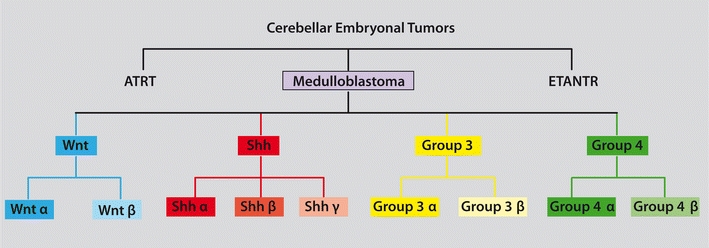
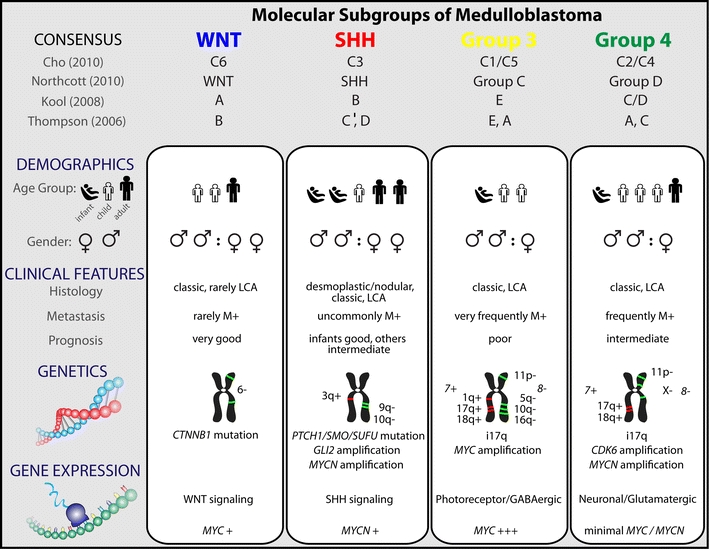
Medulloblastoma, a small blue cell malignancy of the cerebellum, is a major cause of morbidity and mortality in pediatric oncology. Current mechanisms for clinical prognostication and stratification include clinical factors (age, presence of metastases, and extent of resection) as well as histological subgrouping (classic, desmoplastic, and large cell/anaplastic histology). Transcriptional profiling studies of medulloblastoma cohorts from several research groups around the globe have suggested the existence of multiple distinct molecular subgroups that differ in their demographics, transcriptomes, somatic genetic events, and clinical outcomes. Variations in the number, composition, and nature of the subgroups between studies brought about a consensus conference in Boston in the fall of 2010. Discussants at the conference came to a consensus that the evidence supported the existence of four main subgroups of medulloblastoma (Wnt, Shh, Group 3, and Group 4). Participants outlined the demographic, transcriptional, genetic, and clinical differences between the four subgroups. While it is anticipated that the molecular classification of medulloblastoma will continue to evolve and diversify in the future as larger cohorts are studied at greater depth, herein we outline the current consensus nomenclature, and the differences between the medulloblastoma subgroups.
Overview
The claims and statistics of this paper haven’t been checked yet.
Free: it reads the open-access text and checks the first 5 claims that cite a source we can check. Create a free account to check every claim.
Integrity signals
Registry
Cites
Statistics
Figures
Verification
Claims the paper makes
The claims and statistics of this paper haven’t been checked yet.
Free: it reads the open-access text and checks the first 5 claims that cite a source we can check. Create a free account to check every claim.
Self-check
Percentages, sums and reported differences re-computed from the paper’s own numbers.
The self-check needs the paper’s full text.
Citations
Cites
The 2007 WHO Classification of Tumours of the Central Nervous System
Louis, D. N., Ohgaki, H., Wiestler, O. D., Cavenee, W. K., Burger, P. C., Jouvet, A., Scheithauer, B. W., & Kleihues, P. (2007) · Acta Neuropathologica · doi:10.1007/s00401-007-0243-4 · Cited by 15,397
Golub, T. R., Slonim, D. K., Tamayo, P., Huard, C., Gaasenbeek, M., Mesirov, J. P., Coller, H., Loh, M. L., Downing, J. R., Caligiuri, M. A., et al. (1999) · Science · doi:10.1126/science.286.5439.531 · Cited by 11,516 · cited 1×
“This transcriptional approach to tumor sub-classification has also been applied to a number of different non-medullo-blastoma histologies [4, 16, 18, 31, 35, 43], with the underlying assumption that tumors with similar transcriptomes will behave in a biologically similar manner, allowing a…”
BackgroundErratum to: The 2007 WHO classification of tumours of the central nervous system
Louis, D. N., Ohgaki, H., Wiestler, O. D., Cavenee, W. K., Burger, P. C., Jouvet, A., Scheithauer, B. W., & Kleihues, P. (2007) · Zurich Open Repository and Archive (University of Zurich) · doi:10.5167/uzh-156115 · Cited by 4,442
Phillips, H. S., Kharbanda, S., Chen, R., Forrest, W. F., Soriano, R. H., Wu, T. D., Misra, A., Nigro, J. M., Colman, H., Soroceanu, L., et al. (2006) · Cancer Cell · doi:10.1016/j.ccr.2006.02.019 · Cited by 3,143 · cited 1×
“…transcriptional approach to tumor sub-classification has also been applied to a number of different non-medullo-blastoma histologies [4, 16, 18, 31, 35, 43], with the underlying assumption that tumors with similar transcriptomes will behave in a biologically similar manner, allowing a…”
BackgroundBhattacharjee, A., Richards, W. G., Staunton, J., Li, C., Monti, S., Vasa, P., Ladd, C., Beheshti, J., Bueno, R., Gillette, M., et al. (2001) · Proceedings of the National Academy of Sciences · doi:10.1073/pnas.191502998 · Cited by 2,576 · cited 1×
“This transcriptional approach to tumor sub-classification has also been applied to a number of different non-medullo-blastoma histologies [4, 16, 18, 31, 35, 43], with the underlying assumption that tumors with similar transcriptomes will behave in a biologically similar manner, allowing a…”
BackgroundPrediction of central nervous system embryonal tumour outcome based on gene expression
Pomeroy, S. L., Tamayo, P., Gaasenbeek, M., Sturla, L. M., Angelo, M., McLaughlin, M. E., Kim, J. Y. H., Goumnerova, L. C., Black, P. M., Lau, C., et al. (2002) · Nature · doi:10.1038/415436a · Cited by 2,371 · cited 2×
“With recent developments in the ability to monitor transcription across the genome in the setting of a single experiment, various groups have started to sub-classify medulloblastoma on the basis of differences in the transcriptome [36].”
BackgroundSelf-citationIdentification of a CpG Island Methylator Phenotype that Defines a Distinct Subgroup of Glioma
Noushmehr, H., Weisenberger, D. J., Diefes, K., Phillips, H. S., Pujara, K., Berman, B. P., Pan, F., Pelloski, C. E., Sulman, E. P., Bhat, K. P., et al. (2010) · Cancer Cell · doi:10.1016/j.ccr.2010.03.017 · Cited by 2,337 · cited 1×
“This transcriptional approach to tumor sub-classification has also been applied to a number of different non-medullo-blastoma histologies [4, 16, 18, 31, 35, 43], with the underlying assumption that tumors with similar transcriptomes will behave in a biologically similar manner, allowing a…”
BackgroundMedulloblastoma Comprises Four Distinct Molecular Variants
Northcott, P. A., Korshunov, A., Witt, H., Hielscher, T., Eberhart, C. G., Mack, S., Bouffet, E., Clifford, S. C., Hawkins, C. E., French, P., et al. (2011) · Journal of Clinical Oncology · doi:10.1200/jco.2009.27.4324 · Cited by 1,339 · cited 12×
“Others approaches to identify Shh medulloblastomas have included immunohistochemical staining for SFRP1 [2, 28, 48], or GAB1 [11].”
BackgroundMethodInfluentialSelf-citationThe Molecular Basis of Turcot's Syndrome
Hamilton, S. R., Liu, B., Parsons, R. E., Papadopoulos, N., Jen, J., Powell, S. M., Krush, A. J., Berk, T., Cohen, Z., Tetu, B., et al. (1995) · New England Journal of Medicine · doi:10.1056/nejm199503303321302 · Cited by 1,133 · cited 1×
“Germline mutations of the Wnt pathway inhibitor APC predispose to Turcot syndrome, which includes a proclivity to medulloblastoma, in addition, somatic mutations of CTNNB1 encoding b-catenin have been found in sporadic medulloblastomas [19, 50].”
BackgroundKool, M., Korshunov, A., Remke, M., Jones, D. T. W., Schlanstein, M., Northcott, P. A., Cho, Y.-J., Koster, J., Schouten-van Meeteren, A., van Vuurden, D., et al. (2012) · Acta Neuropathologica · doi:10.1007/s00401-012-0958-8 · Cited by 1,056 · cited 3×
“…to identify target cohorts for certain drugs (e.g., SHH inhibitors), but also add significantly to outcome prediction by the time of diagnosis [21], much more than any of the established clinical markers such as patient age, metastatic stage at diagnosis, level of resection, and histological…”
BackgroundMethodInfluentialSelf-citation
Cited by
Items 201–300 of 1,003
Molecular Testing of Brain Tumor
Park, S., Won, J., Kim, S., Lee, Y., Park, C., Kim, S., & Choi, S.-H. (2017) · Journal of Pathology and Translational Medicine · doi:10.4132/jptm.2017.03.08 · Cited by 90
The 2016 WHO classification of central nervous system tumors: what neurologists need to know
DeWitt, J. C., Möck, A., & Louis, D. N. (2017) · Current Opinion in Neurology · doi:10.1097/wco.0000000000000490 · Cited by 89
Genomic and transcriptomic analyses match medulloblastoma mouse models to their human counterparts
Pöschl, J., Stark, S., Neumann, P., Gröbner, S. N., Kawauchi, D., Jones, D., Northcott, P. A., Lichter, P., Pfister, S. M., Kool, M., et al. (2014) · Acta Neuropathologica · doi:10.1007/s00401-014-1297-8 · Cited by 76
“Based on the current consensus of four distinct human molecular subgroups of medulloblastoma [47] we show that the present WNT mouse model (Blbp-cre::Ctnnb1(ex3)Fl/+Trp53Fl/Fl) is suitable for the study of the respective human medulloblastoma subgroup, independent of the TP53 mutation status.”
BackgroundMethodSelf-citationPathological and Molecular Advances in Pediatric Low-Grade Astrocytoma
Rodríguez, F. J., Lim, K. S., Bowers, D. C., & Eberhart, C. G. (2012) · Annual Review of Pathology Mechanisms of Disease · doi:10.1146/annurev-pathol-020712-164009 · Cited by 76
“For pediatric medulloblastomas and adult glioblastomas, such correlations have been critical for parsing clinically and genetically meaningful tumor subgroups and potential cells of origin and for generating molecularly relevant classification schemes (93).”
BackgroundSelf-citationKocakaya, S., Beier, C. P., & Beier, D. (2015) · Neuro-Oncology · doi:10.1093/neuonc/nov185 · Cited by 76
“Beyond this histological differentiation, the genetic landscape of both childhood and adult medulloblastoma is becoming clearer and comprises 4 different molecular subgroups with characteristic mutations and activation of signaling cascades.(3) In adults, medulloblastomas with alteration in the sonic hedgehog (SHH) si…”
BackgroundMolecular Classification of Medulloblastoma
Kijima, N., & Kanemura, Y. (2016) · Neurologia medico-chirurgica · doi:10.2176/nmc.ra.2016-0016 · Cited by 91
Sexual dimorphism in glioma glycolysis underlies sex differences in survival
Ippolito, J. E., Yim, A. K., Luo, J. R., Chinnaiyan, P., & Rubin, J. B. (2017) · JCI Insight · doi:10.1172/jci.insight.92142 · Cited by 82
“For example, boys constitute the majority of group 3 and 4 medulloblastomas, with peak incidences less than 5 years of age and in the peripubertal period (10, 11).”
BackgroundPosterior fossa tumors in children: developmental anatomy and diagnostic imaging
Raybaud, C., Ramaswamy, V., Taylor, M. D., & Laughlin, S. (2015) · Child s Nervous System · doi:10.1007/s00381-015-2834-z · Cited by 81
“In recent years, the perspective on these tumors has changed with the development of the modern genomic approach: distinct molecular variants of MBs are recognized with different evolutive potential [9, 15, 26, 27, 34, 46].”
BackgroundSelf-citationGuerrini‐Rousseau, L., Dufour, C., Varlet, P., Masliah‐Planchon, J., Bourdeaut, F., Guillaud-Bataille, M., Abbas, R., Bertozzi, A., Fouyssac, F., Huybrechts, S., et al. (2017) · Neuro-Oncology · doi:10.1093/neuonc/nox228 · Cited by 83
Smith, M. A., Hampton, O. A., Reynolds, C. P., Kang, M. H., Maris, J. M., Gorlick, R., Kolb, E. A., Lock, R., Carol, H., Keir, S. T., et al. (2015) · Pediatric Blood & Cancer · doi:10.1002/pbc.25201 · Cited by 74
“For BT-45, mutations expected for the WNT subtype of medulloblastoma are observed, including a CTNNB1 mutation (G34R) and a TP53 mutation (R248W) [18,19].”
BackgroundMedulloblastoma genomics in the modern molecular era
Kumar, R., Liu, A. P. Y., & Northcott, P. A. (2019) · Brain Pathology · doi:10.1111/bpa.12804 · Cited by 85
“The hallmark cytogenetic events in SHH MBs include losses of chromosomes 9q and 10q, potentiating loss of heterozygosity for PTCH1 (located on 9q) and SUFU (located on 10q) (48, 63, 101, 107).”
BackgroundInfluentialSelf-citationDunkel, I. J., Doz, F., Foreman, N. K., Hargrave, D., Lassaletta, A., André, N., Hansford, J. R., Hassall, T., Eyrich, M., Gururangan, S., et al. (2023) · Neuro-Oncology · doi:10.1093/neuonc/noad031 · Cited by 73
“28,29 c .”
Self-citationKumar, R., Liu, A. P. Y., Orr, B. A., Northcott, P. A., & Robinson, G. W. (2018) · Cancer · doi:10.1002/cncr.31583 · Cited by 74
“Research within the past decade has revealed clinically relevant molecular heterogeneity within MB, thereby setting the stage for similar work to be performed in other pediatric and adult CNS tumors.(23,24)”
Self-citationNeuroD1 Dictates Tumor Cell Differentiation in Medulloblastoma
Cheng, Y. F., Liao, S., Xu, G., Hu, J., Guo, D., Du, F., Contreras, A. V., Cai, K. Q., Peri, S., Wang, Y., et al. (2020) · Cell Reports · doi:10.1016/j.celrep.2020.107782 · Cited by 76
“Almost all MB patients suffer long-term adverse effects from these cytotoxic drugs, such as cognitive deficits and endocrine disorders (Taylor et al., 2012; Ullrich and Pomeroy, 2003).”
BackgroundTargeted treatment for sonic hedgehog-dependent medulloblastoma
Kieran, M. W. (2014) · Neuro-Oncology · doi:10.1093/neuonc/nou109 · Cited by 80
Hanaford, A. R., Archer, T. C., Price, A. C., Kahlert, U. D., Maciaczyk, J., Nikkhah, G., Kim, J. W., Ehrenberger, T., Clemons, P. A., Dančík, V., et al. (2016) · Clinical Cancer Research · doi:10.1158/1078-0432.ccr-15-3011 · Cited by 80
“The current consensus consists of four molecular subgroups: WNT, SHH, Group 3 and Group 4 (11); however, a previous study analyzing larger cohorts proposed six molecular subgroups—C1 through C6 (referred to here as the Cho and colleagues subgroups, ref.”
Self-citationEZH2-Regulated DAB2IP Is a Medulloblastoma Tumor Suppressor and a Positive Marker for Survival
Smits, M., van Rijn, S., Hulleman, E., Biesmans, D., van Vuurden, D. G., Kool, M., Haberler, C., Aronica, E., Vandertop, W. P., Noske, D. P., et al. (2012) · Clinical Cancer Research · doi:10.1158/1078-0432.ccr-12-0399 · Cited by 72
Self-citationRole of KCNB1 in the prognosis of gliomas and autophagy modulation
Wang, H., Wang, W., Liu, Y., Li, M., Liang, T., Li, J., Hu, H., Yang, L., Yao, C., Ye, Y., et al. (2017) · Scientific Reports · doi:10.1038/s41598-017-00045-7 · Cited by 72
The emerging role of the KCTD proteins in cancer
Angrisani, A., Fiore, A. D., Smaele, E. D., & Moretti, M. (2021) · Cell Communication and Signaling · doi:10.1186/s12964-021-00737-8 · Cited by 76
“KCTD21 Medulloblastoma U/E [12, 15, 66] Hedgehog signaling”
BackgroundMedulloblastoma molecular dissection: the way toward targeted therapy
Remke, M., Ramaswamy, V., & Taylor, M. D. (2013) · Current Opinion in Oncology · doi:10.1097/cco.0000000000000008 · Cited by 85
Self-citationHarris, P. S., Venkataraman, S., Alimova, I. N., Birks, D. K., Balakrishnan, I., Cristiano, B., Donson, A. M., Dubuc, A. M., Taylor, M. D., Foreman, N. K., et al. (2014) · Molecular Cancer · doi:10.1186/1476-4598-13-72 · Cited by 76
“This is particularly problematic since Group 3 and 4 tumors constitute 60% of all medulloblastoma tumors [11].”
BackgroundInfluentialSelf-citationMedulloblastoma stem cells: Promising targets in medulloblastoma therapy
Huang, G., Xu, Q., Cui, Y., Li, N., Bian, X., & Lv, S. (2016) · Cancer Science · doi:10.1111/cas.12925 · Cited by 79
Boulay, G., Awad, M. E., Riggi, N., Archer, T. C., Iyer, S., Boonseng, W. E., Rossetti, N. E., Naigles, B., Rengarajan, S., Volorio, A., et al. (2017) · Cancer Discovery · doi:10.1158/2159-8290.cd-16-0844 · Cited by 81
Self-citationHorbinski, C., Ligon, K. L., Brastianos, P. K., Huse, J. T., Venere, M., Chang, S. M., Buckner, J. C., Cloughesy, T. F., Jenkins, R. B., Giannini, C., et al. (2019) · Neuro-Oncology · doi:10.1093/neuonc/noz119 · Cited by 76
Self-citationAbdelfattah, N., Rajamanickam, S., Subbarayalu, P., Timilsina, S., Yadav, P., Onyeagucha, B. C., Garcia, M., Vadlamudi, R. K., Chen, Y., Brenner, A. J., et al. (2018) · Nature Communications · doi:10.1038/s41467-018-06808-8 · Cited by 71
Clinical implications of medulloblastoma subgroups: incidence of CSF diversion surgery
Schneider, C., Ramaswamy, V., Kulkarni, A. V., Rutka, J. T., Remke, M., Tabori, U. Y., Hawkins, C. E., Bouffet, É., & Taylor, M. D. (2014) · Journal of Neurosurgery Pediatrics · doi:10.3171/2014.9.peds14280 · Cited by 74
Self-citationLindsey, J. C., Schwalbe, E. C., Potluri, S., Bailey, S., Williamson, D., & Clifford, S. C. (2013) · Acta Neuropathologica · doi:10.1007/s00401-013-1225-3 · Cited by 76
“However, large-scale wholeexome sequencing investigations have not identified defining genetic lesions for the non-MBWNT subgroups [8, 11].”
Self-citationThe clinical importance of medulloblastoma extent of resection: a systematic review
Thompson, E. M., Bramall, A. N., Herndon, J. E., Taylor, M. D., & Ramaswamy, V. (2018) · Journal of Neuro-Oncology · doi:10.1007/s11060-018-2906-5 · Cited by 76
Self-citation5-ALA fluorescence–guided surgery in pediatric brain tumors—a systematic review
Schwake, M., Schipmann, S., Müther, M., Köchling, M., Brentrup, A., & Stummer, W. (2019) · Acta Neurochirurgica · doi:10.1007/s00701-019-03898-1 · Cited by 71
Medulloblastoma expresses CD1d and can be targeted for immunotherapy with NKT cells
Liu, D., Song, L., Brawley, V. S., Robison, N. J., Wei, J., Gao, X., Tian, G., Margol, A., Ahmed, N. M., Asgharzadeh, S., et al. (2013) · Clinical Immunology · doi:10.1016/j.clim.2013.06.005 · Cited by 73
Whiteway, S. L., Harris, P. S., Venkataraman, S., Alimova, I., Birks, D. K., Donson, A. M., Foreman, N. K., & Vibhakar, R. (2013) · Journal of Neuro-Oncology · doi:10.1007/s11060-012-1000-7 · Cited by 68
“However, recent genome wide analyses have allowed for subdivision of medulloblastoma into those with Wnt pathway mutations, Sonic Hedgehog pathway mutations, and those termed Group 3 and Group 4, which include intermediate to high risk tumors but whose biology is less well understood [5].”
BackgroundGarg, N., Bakhshinyan, D., Venugopal, C., Mahendram, S., Rosa, D. A., Vijayakumar, T., Manoranjan, B., Hallett, R. M., McFarlane, N., Delaney, K. H., et al. (2016) · Oncogene · doi:10.1038/onc.2016.235 · Cited by 72
Molecular mechanisms and therapeutic targets in pediatric brain tumors
Liu, K.-W., Pajtler, K. W., Worst, B. C., Pfister, S. M., & Wechsler‐Reya, R. J. (2017) · Science Signaling · doi:10.1126/scisignal.aaf7593 · Cited by 71
“WNT-MB is rarely metastatic (8, 9) and is the only subgroup in whichmetastasis is not prognostic (10).”
BackgroundMethodInfluentialSelf-citationThe role of angiogenesis in Group 3 medulloblastoma pathogenesis and survival
Thompson, E. M., Keir, S. T., Venkatraman, T. N., Lascola, C. D., Yeom, K. W., Nixon, A. B., Liu, Y., Picard, D. J., Remke, M., Bigner, D. D., et al. (2017) · Neuro-Oncology · doi:10.1093/neuonc/nox033 · Cited by 69
Self-citationPediatric Brainstem Gangliogliomas Show BRAFV600E Mutation in a High Percentage of Cases
Donson, A. M., Kleinschmidt-DeMasters, B. K., Aisner, D. L., Bemis, L., Birks, D. K., Levy, J. M. M., Smith, A., Handler, M. H., Foreman, N. K., & Rush, S. Z. (2013) · Brain Pathology · doi:10.1111/bpa.12103 · Cited by 73
“Restriction of specific brain tumor-associated mutations to particular anatomic locations and biologic subtypes has been established in glioblastoma, medulloblastoma and ependymoma (10, 20, 21).”
BackgroundMenyhárt, O., Giangaspero, F., & Győrffy, B. (2019) · Journal of Hematology & Oncology · doi:10.1186/s13045-019-0712-y · Cited by 80
Yan, J., Liu, L., Wang, W., Zhao, Y., Li, K. K., Li, K., Wang, L., Yuan, B., Geng, H., Zhang, S., et al. (2020) · Frontiers in Oncology · doi:10.3389/fonc.2020.558162 · Cited by 69
Essential Management of Pediatric Brain Tumors
Lutz, K., Jünger, S. T., & Messing‐Jünger, M. (2022) · Children · doi:10.3390/children9040498 · Cited by 72
“WNT medulloblastomas tend not to occur in infancy, but may be present at any other age [76].”
InfluentialImplications of Tumor Location on Subtypes of Medulloblastoma
Teo, W., Shen, J. J., Su, J. M. F., Yu, A. K.-T., Wang, J., Chow, W.-Y., Li, X., Jones, J. Y., Dauser, R., Whitehead, W. E., et al. (2013) · Pediatric Blood & Cancer · doi:10.1002/pbc.24511 · Cited by 67
Austin, M. T., Hamilton, E., Zebda, D., Nguyen, H., Eberth, J. M., Chang, Y.-C., Elting, L. S., & Sandberg, D. I. (2016) · Journal of Neurosurgery Pediatrics · doi:10.3171/2016.5.peds15704 · Cited by 69
A Novel Notch–YAP Circuit Drives Stemness and Tumorigenesis in Embryonal Rhabdomyosarcoma
Slemmons, K. K., Crose, L. E. S., Riedel, S., Sushnitha, M., Belyea, B., & Linardic, C. M. (2017) · Molecular Cancer Research · doi:10.1158/1541-7786.mcr-17-0004 · Cited by 71
“Perhaps in the future, eRMS tumors will be classified based on expression of developmental pathways, similar to medulloblastoma (76).”
BackgroundWeber, D. C., Habrand, J. L., Hoppe, B. S., Kayser, C. H., Laack, N. N., Langendijk, J. A., MacDonald, S. M., McGovern, S. L., Pater, L. E., Perentesis, J. P., et al. (2018) · Radiotherapy and Oncology · doi:10.1016/j.radonc.2018.05.020 · Cited by 67
Marquardt, V., Theruvath, J. L., Pauck, D., Picard, D. J., Qin, N., Blümel, L., Maue, M., Bartl, J., Ahmadov, U., Langini, M., et al. (2023) · Journal for ImmunoTherapy of Cancer · doi:10.1136/jitc-2022-005871 · Cited by 67
“…poor prognosis in current multimodal therapeutic regimens and aberrant activation of the proto-oncogene MYC in distinct group 3 subtypes, particularly confers dismal outcomes 5–7 with metastasis incidence of 39% and a less than 45% 5-year overall survival rate in tumor with MYC amplification.”
Self-citationSubgroup-specific localization of human medulloblastoma based on pre-operative MRI
Wefers, A. K., Warmuth‐Metz, M., Pöschl, J., von Bueren, A. O., Monoranu, C., Seelos, K., Peraud, A., Tonn, J., Koch, A., Pietsch, T., et al. (2014) · Acta Neuropathologica · doi:10.1007/s00401-014-1271-5 · Cited by 66
“These tumors are classified into four molecular subgroups, namely WNT-, sHH-, Group 3- and Group 4-MB [6].”
BackgroundSelf-citationThe rationale for targeted therapies in medulloblastoma
MacDonald, T. J., Aguilera, D. G., & Castellino, R. C. (2013) · Neuro-Oncology · doi:10.1093/neuonc/not147 · Cited by 72
Clifford, S. C., the SIOP-Europe PNET Group, Lannering, B., Schwalbe, E. C., Hicks, D., Toole, K., Nicholson, S. L., Goschzik, T., Mühlen, A. Z., Figarella‐Branger, D., et al. (2015) · Oncotarget · doi:10.18632/oncotarget.5149 · Cited by 70
“Reactive fiber induction (‘desmoplastic reaction’, e.g. due to leptomeningeal growth) did not qualify as DMB [16, 33].”
InfluentialSelf-citationPietsch, T., & Haberler, C. (2012) · Clinical Neuropathology · doi:10.5414/np300999 · Cited by 66
“In particular, RNA expression studies and DNA methylation profiling have led to the identification of “biological” variants of medulloblastoma defined by predominant signalling pathways and DNA methylation patterns associated to their cellular origin [24].”
BackgroundDasgupta, A., Gupta, T., Pungavkar, S., Shirsat, N. V., Epari, S., Chinnaswamy, G., Mahajan, A., Janu, A., Moiyadi, A. V., Kannan, S., et al. (2018) · Neuro-Oncology · doi:10.1093/neuonc/noy093 · Cited by 68
PTEN Loss Mitigates the Response of Medulloblastoma to Hedgehog Pathway Inhibition
Metcalfe, C., Alicke, B., Crow, A., Lamoureux, M., Dijkgraaf, G. J. P., Peale, F. V., Jr., Gould, S. E., & de Sauvage, F. J. (2013) · Cancer Research · doi:10.1158/0008-5472.can-13-1222 · Cited by 66
ctDNA-Based Liquid Biopsy of Cerebrospinal Fluid in Brain Cancer
Escudero, L., Ricarte, F. M., & Seoane, J. (2021) · Cancers · doi:10.3390/cancers13091989 · Cited by 66
Childhood Malignant Brain Tumors: Balancing the Bench and Bedside
Thorbinson, C., & Kilday, J. (2021) · Cancers · doi:10.3390/cancers13236099 · Cited by 69
“Thought to arise from neural stem cell origin [31], Group 3 MBs have a short symptom interval and are frequently metastatic at diagnosis with small primary tumors [11,28,32].”
BackgroundInfluentialWells, E. M., & Packer, R. J. (2015) · CONTINUUM Lifelong Learning in Neurology · doi:10.1212/01.con.0000464176.96311.d1 · Cited by 82
“In addition to reducing the doses of radiation therapy and chemotherapy for childrenwith average-risk disease to decrease sequelae, some studies are even more aggressively reducing therapy for biologically favorable risk groups, such as children with tumors driven by the Wnt signaling pathway.(5,6) For children with h…”
BackgroundMarkant, S. L., Esparza, L. A., Sun, J., Barton, K. L., McCoig, L. M., Grant, G. A., Crawford, J. R., Levy, M. L., Northcott, P. A., Shih, D. J. H., et al. (2013) · Cancer Research · doi:10.1158/0008-5472.can-12-4258 · Cited by 65
“Patients with SHH-associated tumors have a variable prognosis, with a subset faring poorly despite aggressive therapy (4).”
BackgroundSelf-citationPediatric Brain Tumor Cell Lines
Xu, J., Margol, A., Asgharzadeh, S., & Erdreich‐Epstein, A. (2014) · Journal of Cellular Biochemistry · doi:10.1002/jcb.24976 · Cited by 71
“These subgroups also differ in epidemiology, clinical features, and biology [Northcott, 2011; Kool, 2012; Taylor, 2012].”
BackgroundProton Beam Therapy for Pediatric Brain Tumor
Mizumoto, M., Oshiro, Y., Yamamoto, T., Kohzuki, H., & Sakurai, H. (2017) · Neurologia medico-chirurgica · doi:10.2176/nmc.ra.2017-0003 · Cited by 70
PD-L1 expression in medulloblastoma: an evaluation by subgroup
Martin, A. M., Nirschl, C. J., Polanczyk, M. J., Bell, W. R., Nirschl, T. R., Harris‐Bookman, S., Phallen, J. A., Hicks, J. L., Martínez, D., Ogurtsova, A., et al. (2018) · Oncotarget · doi:10.18632/oncotarget.24951 · Cited by 67
Self-citationM1 macrophage recruitment correlates with worse outcome in SHH Medulloblastomas
Lee, C., Lee, J., Choi, S. A., Kim, S., Wang, K., Park, S., Kim, S. H., Lee, J. Y., & Phi, J. H. (2018) · BMC Cancer · doi:10.1186/s12885-018-4457-8 · Cited by 68
“The SHH pathway plays a crucial role in cerebellar development, inducing the proliferation of neuronal precursors [1, 4].”
BackgroundMethodInfluentialWeishaupt, H., Johansson, P., Sundström, A., Lubovac-Pilav, Z., Olsson, B. E., Nelander, S., & Swartling, F. J. (2019) · Bioinformatics · doi:10.1093/bioinformatics/btz066 · Cited by 75
Warrington, N. M., Sun, T., Luo, J. R., McKinstry, R. C., Parkin, P. C., Ganzhorn, S., Spoljaric, D., Albers, A. C., Merkelson, A., Stewart, D. R., et al. (2014) · Cancer Research · doi:10.1158/0008-5472.can-14-1891 · Cited by 64
“Sex disparities limited to molecular subsets of brain tumors are established in other childhood brain tumors like medulloblastoma (18).”
Differential patterns of metastatic dissemination across medulloblastoma subgroups
Zápotocký, M., Mata‐Mbemba, D., Sumerauer, D., Libý, P., Lassaletta, Á., Zámečník, J., Krsková, L., Kynčl, M., Starý, J., Laughlin, S., et al. (2017) · Journal of Neurosurgery Pediatrics · doi:10.3171/2017.8.peds17264 · Cited by 76
Self-citationDual Regulatory Functions of SUFU and Targetome of GLI2 in SHH Subgroup Medulloblastoma
Yin, W.-C., Satkunendran, T., Mo, R., Morrissy, A. S., Zhang, X., Huang, E. S., Uusküla-Reimand, L., Hou, H., Son, J. E., Liu, W., et al. (2018) · Developmental Cell · doi:10.1016/j.devcel.2018.11.015 · Cited by 66
Self-citationPolo-Like Kinase 4’s Critical Role in Cancer Development and Strategies for Plk4-Targeted Therapy
Zhang, X., Wei, C., Liang, H., & Han, L. (2021) · Frontiers in Oncology · doi:10.3389/fonc.2021.587554 · Cited by 69
“Medulloblastoma (MB), arising in the cerebellum, is the most common pediatric high-grade brain tumors and the major cause of morbidity and mortality in pediatric oncology (174, 175).”
BackgroundDNA methylation as a diagnostic tool
Galbraith, K., & Snuderl, M. (2022) · Acta Neuropathologica Communications · doi:10.1186/s40478-022-01371-2 · Cited by 65
Lazow, M., Palmer, J. D., Fouladi, M., & Salloum, R. (2022) · Neurotherapeutics · doi:10.1007/s13311-022-01273-0 · Cited by 66
Medulloblastoma: A common pediatric tumor: Prognostic factors and predictors of outcome
Kumar, L., Deepa, S. F. A., Moinca, I., Suresh, P., & Naidu, K. V. J. R. (2015) · Asian Journal of Neurosurgery · doi:10.4103/1793-5482.151516 · Cited by 63
“While it is anticipated that the molecular classification of medulloblastoma will continue to evolve and diversify in the future as larger cohorts are studied at greater depth.([20])”
Backgroundβ-Catenin-Gli1 interaction regulates proliferation and tumor growth in medulloblastoma
Zinke, J., Schneider, F. T., Harter, P. N., Thom, S., Ziegler, N., Toftgård, R., Plate, K. H., & Liebner, S. (2015) · Molecular Cancer · doi:10.1186/s12943-015-0294-4 · Cited by 70
“Introduction In medulloblastoma (MB), the most common malignant pediatric brain tumor, Wnt pathway-driven tumors represent one of four distinct molecular subgroups with particularly favorable prognosis [1-4].”
Molecular pathology of paediatric central nervous system tumours
Chiang, J., & Ellison, D. W. (2016) · The Journal of Pathology · doi:10.1002/path.4813 · Cited by 66
Self-citationCerebellar mutism syndrome in children with brain tumours of the posterior fossa
Wibroe, M., Cappelen, J., Castor, C., Clausen, N., Grillner, P., Gudrunardottir, T., Gupta, R., Gustavsson, B., Heyman, M. M., Holm, S., et al. (2017) · BMC Cancer · doi:10.1186/s12885-017-3416-0 · Cited by 70
“With increasing focus on subtyping of medulloblastoma [57] this additional classification may later be added to the risk factor analysis.”
BackgroundČančer, M., Hutter, S., Holmberg, K. O., Rosén, G., Sundström, A., Tailor, J. K., Bergström, T., Garancher, A., Essand, M., Wechsler‐Reya, R. J., et al. (2019) · Cell stem cell · doi:10.1016/j.stem.2019.10.005 · Cited by 67
“Transcriptional, genomic, and epigenomic profiling have revealed four main subgroups of MB—WNT, Sonic Hedgehog (SHH), group 3, and group 4 (Taylor et al., 2012)—with further subtype specification of SHHMB into SHH-a, which mostly contains childhood patients; SHH-b and SHH-g, which include”
BackgroundIvanov, D. P., Parker, T. L., Walker, D. A., Alexander, C., Ashford, M. B., Gellert, P. R., & Garnett, M. C. (2015) · Journal of Biotechnology · doi:10.1016/j.jbiotec.2015.01.002 · Cited by 73
“Moreover, edulloblastoma is made up of least four clinically and molecularly istinct types of tumours (Taylor et al., 2012).”
BackgroundRadiotherapy in Medulloblastoma—Evolution of Treatment, Current Concepts and Future Perspectives
Seidel, C., Heider, S., Hau, P., Glasow, A., Dietzsch, S., & Kortmann, R. (2021) · Cancers · doi:10.3390/cancers13235945 · Cited by 65
“In 2010, genetically defined subgroups of medulloblastoma were introduced dividing medulloblastoma into four different entities (wnt-activated, SHH-activated with p53 wildtype/SH-activated with mutated p53 Group 3 and Group 4) with distinct characteristics and prognoses [81].”
BackgroundFoxG1 Interacts with Bmi1 to Regulate Self-Renewal and Tumorigenicity of Medulloblastoma Stem Cells
Manoranjan, B., Wang, X., Hallett, R. M., Venugopal, C., Mack, S. C., McFarlane, N., Nolte, S. M., Scheinemann, K., Gunnarsson, Þ., Hassell, J. A., et al. (2013) · Stem Cells · doi:10.1002/stem.1401 · Cited by 61
Self-citationMedulloblastoma: Tumor Biology and Relevance to Treatment and Prognosis Paradigm
Coluccia, D., Figuereido, C., Işık, S., Smith, C. A., & Rutka, J. T. (2016) · Current Neurology and Neuroscience Reports · doi:10.1007/s11910-016-0644-7 · Cited by 65
Gruszka, R., & Zakrzewska, M. (2018) · International Journal of Molecular Sciences · doi:10.3390/ijms19030879 · Cited by 63
“The cerebellar stem cells were suspected as the origin of group 3 tumors but origins of group 4 tumors are still unknown [55,73,74].”
Backgroundvan de Stolpe, A., Holtzer, L., van Ooijen, H., de Inda, M. A., & Verhaegh, W. (2019) · Scientific Reports · doi:10.1038/s41598-018-38179-x · Cited by 65
Subgroup-specific prognostic signaling and metabolic pathways in pediatric medulloblastoma
Park, A. K., Lee, J. Y., Cheong, H., Ramaswamy, V., Park, S., Kool, M., Phi, J. H., Choi, S. A., Cavalli, F. M. G., Taylor, M. D., et al. (2019) · BMC Cancer · doi:10.1186/s12885-019-5742-x · Cited by 73
Self-citationTAp73 is a marker of glutamine addiction in medulloblastoma
Niklison-Chirou, M. V., Erngren, I., Engskog, M. K. R., Haglöf, J., Picard, D. J., Remke, M., McPolin, P. H. R., Selby, M. P., Williamson, D., Clifford, S. C., et al. (2017) · Genes & Development · doi:10.1101/gad.302349.117 · Cited by 63
“MBs have been classified recently into four molecular groups; namely, the WNT group, the Sonic Hedgehog (SHH) group, group 3 (G3), and group 4 (G4) (Taylor et al. 2012).”
Self-citationCancer Predisposition Syndromes and Medulloblastoma in the Molecular Era
Carta, R., Baldo, G. D., Miele, E., Pò, A., Besharat, Z. M., Nazio, F., Colafati, G. S., Piccirilli, E., Agolini, E., Rinelli, M., et al. (2020) · Frontiers in Oncology · doi:10.3389/fonc.2020.566822 · Cited by 65
α5-GABAA receptors negatively regulate MYC-amplified medulloblastoma growth
Sengupta, S., Weeraratne, S. D., Sun, H., Phallen, J. A., Rallapalli, S., Teider, N., Kosaras, B., Amani, V. M., Francois, J. P., Tang, Y., et al. (2013) · Acta Neuropathologica · doi:10.1007/s00401-013-1205-7 · Cited by 67
“recent large-scale genomic studies have detailed their genetic heterogeneity and have identified four broad molecular subgroups within this disease: SHH, WNT, group 3, and group 4 [8, 19, 22, 34].”
BackgroundSelf-citationFiaschetti, G., Abela, L., Nonoguchi, N., Dubuc, A. M., Remke, M., Boro, A., Grunder, E., Siler, U., Ohgaki, H., Taylor, M. D., et al. (2013) · British Journal of Cancer · doi:10.1038/bjc.2013.764 · Cited by 62
“Conversely, Group 4 cases rarely express high levels of MYC (Northcott et al, 2011) and are characterised by an over-representation of genes involved in neuronal differentiation (Cho et al, 2011; Taylor et al, 2012).”
BackgroundSelf-citationYang, M., Lee, H., Chen, C., Shen, C., & Ma, H. (2014) · International Journal of Molecular Sciences · doi:10.3390/ijms150611013 · Cited by 63
Actionable Molecular Biomarkers in Primary Brain Tumors
Staedtke, V., Dzaye, O. D. A., & Holdhoff, M. (2016) · Trends in cancer · doi:10.1016/j.trecan.2016.06.003 · Cited by 66
“advancements in our molecular understanding has been linked to inherent molecular differences and resulted in differentiation of at least four MB subtypes: wingless (WNT) activated, sonic hedgehog (SHH) activated, Group 3 that is associated with MYC and OTX2 activation, and Group 4 that lacks a unifying pathway [28-30…”
YAP and the Hippo pathway in pediatric cancer
Ahmed, A. A., Mohamed, A. D., Gener, M., Li, W., & Taboada, E. M. (2017) · Molecular & Cellular Oncology · doi:10.1080/23723556.2017.1295127 · Cited by 62
“A recent study has determined that YAP is expressed in astrocytomas that span the entire World Health Organization (WHO) grading range.(53,54) It is frequently expressed in infiltrating astrocytoma and oligodendroglioma and less often in pilocytic astrocytoma.”
BackgroundmiR‐367 promotes proliferation and stem‐like traits in medulloblastoma cells
Kaid, C., Silva, P. B. G., Cortez, B. A., Rodini, C. O., Semedo, P., & Okamoto, O. K. (2015) · Cancer Science · doi:10.1111/cas.12733 · Cited by 60
Duration of the pre‐diagnostic interval in medulloblastoma is subgroup dependent
Ramaswamy, V., Remke, M., Shih, D. J. H., Wang, X., Northcott, P. A., Faria, C. C., Raybaud, C., Tabori, U. Y., Hawkins, C. E., Rutka, J. T., et al. (2014) · Pediatric Blood & Cancer · doi:10.1002/pbc.25002 · Cited by 66
“The advent of integrated genomics has revealed that medulloblastoma consists of four subgroups with distinct demographics, genetics, transcriptomes, and clinical outcomes [11–21].”
BackgroundSelf-citationShou, Y., Robinson, D., Amakye, D. D., Rose, K. L., Cho, Y., Ligon, K. L., Sharp, T., Haider, A. S., Bandaru, R., Ando, Y., et al. (2015) · Clinical Cancer Research · doi:10.1158/1078-0432.ccr-13-1711 · Cited by 61
“Four subtypes, wingless (WNT), sonic hedgehog (SHH), group 3, and group 4, with distinct gene expression profiles and molecular abnormalities, have been described (5-8).”
BackgroundSelf-citationA Transposon Screen Identifies Loss of Primary Cilia as a Mechanism of Resistance to SMO Inhibitors
Zhao, X., Pak, E., Ornell, K. J., Pazyra‐Murphy, M. F., MacKenzie, E. L., Chadwick, E. J., Ponomaryov, T., Kelleher, J. F., & Segal, R. A. (2017) · Cancer Discovery · doi:10.1158/2159-8290.cd-17-0281 · Cited by 68
Wu, C., Hou, S., Orr, B. A., Kuo, B., Youn, Y. H., Ong, T., Roth, F., Eberhart, C. G., Robinson, G. W., Solecki, D. J., et al. (2017) · Developmental Cell · doi:10.1016/j.devcel.2017.10.011 · Cited by 62
“Medulloblastoma is the most common pediatric brain cancer, and the SHH group constitutes a third of these tumors (Taylor et al., 2012).”
BackgroundInfluentialSelf-citationKhatua, S., Song, A., Sridhar, D. C., & Mack, S. C. (2018) · Current Neuropharmacology · doi:10.2174/1570159x15666171129111324 · Cited by 68
“This has ushered a new era in the realm of MB genomics, and these subgroups are now clearly identified with distinguishing features based on demographics, histology, chromosomal profile, driver genes, and outcome (Table 2) [40-44].”
BackgroundMYC Drives Group 3 Medulloblastoma through Transformation of Sox2+ Astrocyte Progenitor Cells
Tao, R., Murad, N., Xu, Z., Zhang, P., Okonechnikov, K., Kool, M., Rivero-Hinojosa, S., Lazarski, C. A., Zheng, P., Liu, Y., et al. (2019) · Cancer Research · doi:10.1158/0008-5472.can-18-1787 · Cited by 72
“Group 3α tumors frequently involve loss of MYC, group 3β tumors exhibit activation of GFI1 and GFI1B, and group 3γ tumors harbor MYC amplification or overexpression in the absence of other focal aberrations [6].”
BackgroundSelf-citationCAR T Cell Therapy for Pediatric Brain Tumors
Patterson, J. D., Henson, J. C., Breese, R. O., Bielamowicz, K., & Rodriguez, A. (2020) · Frontiers in Oncology · doi:10.3389/fonc.2020.01582 · Cited by 61
“Group 4 tumors remain the least understood of the subgroups, however, they make up >30% of all medulloblastomas (19).”
BackgroundInfluentialTreatment Options for Medulloblastoma and CNS Primitive Neuroectodermal Tumor (PNET)
Braganca, K. C. D., & Packer, R. J. (2013) · Current Treatment Options in Neurology · doi:10.1007/s11940-013-0255-4 · Cited by 59
Peyrl, A., Chocholous, M., Sabel, M., Lassaletta, Á., Štěrba, J., Leblond, P., Nysom, K., Torsvik, I. K., Chi, S. N., Perwein, T., et al. (2023) · JAMA Oncology · doi:10.1001/jamaoncol.2023.4437 · Cited by 60
Self-citationThe Role of Chromatin Remodeling in Medulloblastoma
Jones, D., Northcott, P. A., Kool, M., & Pfister, S. M. (2013) · Brain Pathology · doi:10.1111/bpa.12019 · Cited by 62
Self-citationSurvival After Relapse of Medulloblastoma
Koschmann, C. J., Bloom, K., Upadhyaya, S. A., Geyer, J. R., & Leary, S. E. S. (2016) · Journal of Pediatric Hematology/Oncology · doi:10.1097/mph.0000000000000547 · Cited by 64
Valvona, C. J., & Fillmore, H. L. (2018) · Brain Sciences · doi:10.3390/brainsci8040056 · Cited by 56
“Four main subgroups of MB have been identified and are now recognised by the World Health Organisation (WHO): as Wnt-activated, Shh-activated TP53 wild-type, Shh-activated TP53 mutant and non-Wnt/non-Shh, the latter of which has been subdivided into “Group 3” and “Group 4” [2,3].”
BackgroundClinical and mutational profiles of adult medulloblastoma groups
Wong, G. C.-H., Li, K. K., Wang, W., Liu, A. P. Y., Huang, Q. J., Chan, A. K., Poon, M. F., Chung, N. Y., Wong, Q. H., Chen, H., et al. (2020) · Acta Neuropathologica Communications · doi:10.1186/s40478-020-01066-6 · Cited by 64
Ramaswamy, V., Nör, C., & Taylor, M. D. (2015) · Cold Spring Harbor Perspectives in Medicine · doi:10.1101/cshperspect.a026278 · Cited by 71
“Group 3 medulloblastoma occur most frequently in infants and young children who are regularly metastatic at diagnosis, have a poor prognosis and in 20% of cases harbor amplifications of the MYC oncogene (Cho et al. 2011; Taylor et al. 2012).”
BackgroundSelf-citationEmbryonal Tumors of the Central Nervous System: From the Radiologic Pathology Archives
Shih, R., & Koeller, K. K. (2018) · Radiographics · doi:10.1148/rg.2018170182 · Cited by 57
Lv, T., Miao, Y., Jin, K., Han, S., Xu, T., Qiu, Z., & Zhang, X. (2018) · Cancer Medicine · doi:10.1002/cam4.1613 · Cited by 65
Metadata
- Authors
- Taylor, M. D., Northcott, P. A., Korshunov, A., Remke, M., Cho, Y.-J., Clifford, S. C., Eberhart, C. G., Parsons, D. W., Rutkowski, S., Gajjar, A., Ellison, D. W., Lichter, P., Gilbertson, R. J., Pomeroy, S. L., Kool, M., & Pfister, S. M.
- Affiliations
- University of Toronto (CA)
- German Cancer Research Center (DE)
- Stanford Medicine (US)
- Newcastle University (GB)
- Johns Hopkins University (US)
- Baylor College of Medicine (US)
- University Medical Center Hamburg-Eppendorf (DE)
- St. Jude Children's Research Hospital (US)
- Boston Children's Hospital (US)
- Corresponding author
- Taylor, Michael D.
- Pfister, Stefan M.
- ORCID
- Venue
- Acta Neuropathologica
- Published
- 2011-12-02
- Volume
- 123
- Issue
- 4
- Pages
- 465-472
- ISSN
- 0001-6322 (ISSN-L)
- 1432-0533
- PMC
- PMC3306779
- OpenAlex
- W2127643721
- Semantic Scholar
- 82d950bbd43e6611fd5d61d766a606f63008e682
- Cited by
- 1,936
- References
- 53
- Citations by year
- 2026: 68 · 2025: 117 · 2024: 127 · 2023: 157 · 2022: 145 · 2021: 153 · 2020: 154 · 2019: 159 · 2018: 163 · 2017: 148 · 2016: 127 · 2015: 134 · 2014: 120 · 2013: 96 · 2012: 58
- FWCI
- 44.64
- Type
- journal article
- Language
- en
- Open access
- hybrid
- doi.org
- Licence
- cc-by-nc
- Locations
- Acta Neuropathologica (publishedVersion, cc-by-nc)
- PubMed Central (publishedVersion, cc-by-nc)
- PubMed (publishedVersion)
- Digital Access to Scholarship at Harvard (DASH) (Harvard University) (submittedVersion, cc-by)
- Newcastle University ePrints (Newcastle Univesity)
- Funders
- Cancer Research UK (13457)
- National Cancer Institute (R01CA129541, R01CA109467)
- National Institute of Neurological Disorders and Stroke (R01NS055089)
- Topics
- Health Sciences › Medicine › Oncology › Glioma Diagnosis and Treatment
- Health Sciences › Medicine › Oncology › Neuroblastoma Research and Treatments
- Health Sciences › Medicine › Hematology › Acute Lymphoblastic Leukemia research
- Keywords
- medulloblastoma, molecular subtypes, WNT subgroup, sonic hedgehog subgroup, Group 3 medulloblastoma, Group 4 medulloblastoma, pediatric brain tumors, gene expression profiling, somatic alterations, histological subtypes, prognostic stratification, consensus classification
- MeSH terms
- Cerebellar Neoplasms, Humans, Medulloblastoma, Gene Expression Profiling, Consensus, Wnt Proteins, Hedgehog Proteins, Transcriptome
About these checks
Registry, retraction, Cites and statistics results are computed, not judged, with one exception: a printed reference that no index lists is read once by a model before it counts as a citation error. Claims are extracted by a model and kept only when their quote appears verbatim in the text; each cited source is then checked, with a model’s help, for whether it says what the claim relies on. Those verdicts can be wrong — read the claim’s quote and the cited source before relying on one.
Statistics and arithmetic are recomputed, not judged.
Confidence bands are shown only for fields calibrated on our annotated test set. None is calibrated yet, so no band is shown.
What counts as a claim ›How we measure confidence ›How we check this ›
Are you an author, or do you see a problem with this page? Request a review
Data sources
Bibliographic data: Semantic Scholar, OpenAlex, Crossref.
Contains information from the Semantic Scholar Academic Graph Datasets, made available under the ODC Attribution License (ODC-BY 1.0).
Semantic Scholar’s data is described in: Kinney, R., et al. (2023). The Semantic Scholar Open Data Platform. arXiv:2301.10140.
