

Molecular subgroups of medulloblastoma: the current consensus
Open accessThe DOI matches its Crossref record; 52 of the 53 references it cites were found in a registry or an index.
Abstract
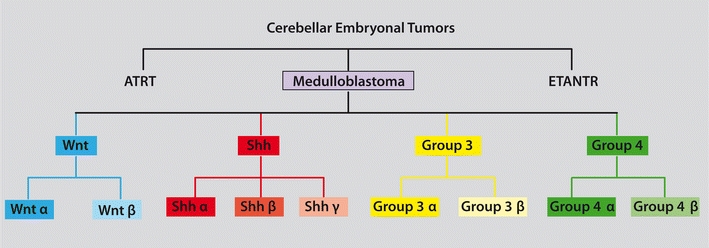
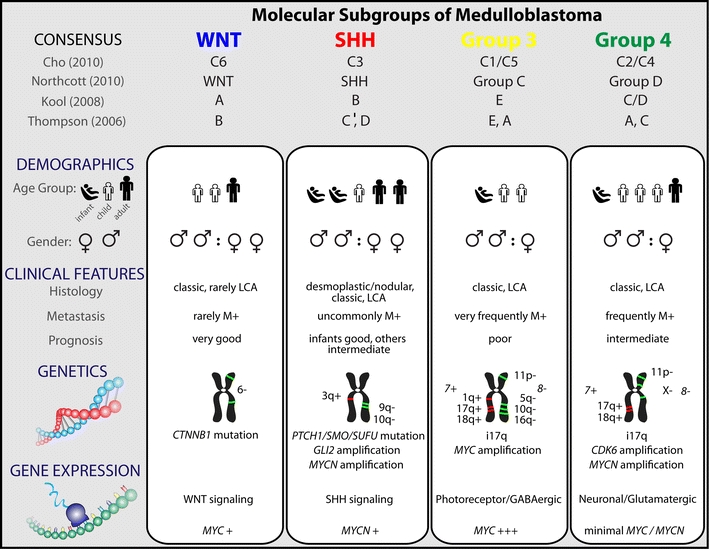
Medulloblastoma, a small blue cell malignancy of the cerebellum, is a major cause of morbidity and mortality in pediatric oncology. Current mechanisms for clinical prognostication and stratification include clinical factors (age, presence of metastases, and extent of resection) as well as histological subgrouping (classic, desmoplastic, and large cell/anaplastic histology). Transcriptional profiling studies of medulloblastoma cohorts from several research groups around the globe have suggested the existence of multiple distinct molecular subgroups that differ in their demographics, transcriptomes, somatic genetic events, and clinical outcomes. Variations in the number, composition, and nature of the subgroups between studies brought about a consensus conference in Boston in the fall of 2010. Discussants at the conference came to a consensus that the evidence supported the existence of four main subgroups of medulloblastoma (Wnt, Shh, Group 3, and Group 4). Participants outlined the demographic, transcriptional, genetic, and clinical differences between the four subgroups. While it is anticipated that the molecular classification of medulloblastoma will continue to evolve and diversify in the future as larger cohorts are studied at greater depth, herein we outline the current consensus nomenclature, and the differences between the medulloblastoma subgroups.
Overview
The claims and statistics of this paper haven’t been checked yet.
Free: it reads the open-access text and checks the first 5 claims that cite a source we can check. Create a free account to check every claim.
Integrity signals
Registry
Cites
Statistics
Figures
Verification
Claims the paper makes
The claims and statistics of this paper haven’t been checked yet.
Free: it reads the open-access text and checks the first 5 claims that cite a source we can check. Create a free account to check every claim.
Self-check
Percentages, sums and reported differences re-computed from the paper’s own numbers.
The self-check needs the paper’s full text.
Citations
Cites
The 2007 WHO Classification of Tumours of the Central Nervous System
Louis, D. N., Ohgaki, H., Wiestler, O. D., Cavenee, W. K., Burger, P. C., Jouvet, A., Scheithauer, B. W., & Kleihues, P. (2007) · Acta Neuropathologica · doi:10.1007/s00401-007-0243-4 · Cited by 15,397
Golub, T. R., Slonim, D. K., Tamayo, P., Huard, C., Gaasenbeek, M., Mesirov, J. P., Coller, H., Loh, M. L., Downing, J. R., Caligiuri, M. A., et al. (1999) · Science · doi:10.1126/science.286.5439.531 · Cited by 11,516 · cited 1×
“This transcriptional approach to tumor sub-classification has also been applied to a number of different non-medullo-blastoma histologies [4, 16, 18, 31, 35, 43], with the underlying assumption that tumors with similar transcriptomes will behave in a biologically similar manner, allowing a…”
BackgroundErratum to: The 2007 WHO classification of tumours of the central nervous system
Louis, D. N., Ohgaki, H., Wiestler, O. D., Cavenee, W. K., Burger, P. C., Jouvet, A., Scheithauer, B. W., & Kleihues, P. (2007) · Zurich Open Repository and Archive (University of Zurich) · doi:10.5167/uzh-156115 · Cited by 4,442
Phillips, H. S., Kharbanda, S., Chen, R., Forrest, W. F., Soriano, R. H., Wu, T. D., Misra, A., Nigro, J. M., Colman, H., Soroceanu, L., et al. (2006) · Cancer Cell · doi:10.1016/j.ccr.2006.02.019 · Cited by 3,143 · cited 1×
“…transcriptional approach to tumor sub-classification has also been applied to a number of different non-medullo-blastoma histologies [4, 16, 18, 31, 35, 43], with the underlying assumption that tumors with similar transcriptomes will behave in a biologically similar manner, allowing a…”
BackgroundBhattacharjee, A., Richards, W. G., Staunton, J., Li, C., Monti, S., Vasa, P., Ladd, C., Beheshti, J., Bueno, R., Gillette, M., et al. (2001) · Proceedings of the National Academy of Sciences · doi:10.1073/pnas.191502998 · Cited by 2,576 · cited 1×
“This transcriptional approach to tumor sub-classification has also been applied to a number of different non-medullo-blastoma histologies [4, 16, 18, 31, 35, 43], with the underlying assumption that tumors with similar transcriptomes will behave in a biologically similar manner, allowing a…”
BackgroundPrediction of central nervous system embryonal tumour outcome based on gene expression
Pomeroy, S. L., Tamayo, P., Gaasenbeek, M., Sturla, L. M., Angelo, M., McLaughlin, M. E., Kim, J. Y. H., Goumnerova, L. C., Black, P. M., Lau, C., et al. (2002) · Nature · doi:10.1038/415436a · Cited by 2,371 · cited 2×
“With recent developments in the ability to monitor transcription across the genome in the setting of a single experiment, various groups have started to sub-classify medulloblastoma on the basis of differences in the transcriptome [36].”
BackgroundSelf-citationIdentification of a CpG Island Methylator Phenotype that Defines a Distinct Subgroup of Glioma
Noushmehr, H., Weisenberger, D. J., Diefes, K., Phillips, H. S., Pujara, K., Berman, B. P., Pan, F., Pelloski, C. E., Sulman, E. P., Bhat, K. P., et al. (2010) · Cancer Cell · doi:10.1016/j.ccr.2010.03.017 · Cited by 2,337 · cited 1×
“This transcriptional approach to tumor sub-classification has also been applied to a number of different non-medullo-blastoma histologies [4, 16, 18, 31, 35, 43], with the underlying assumption that tumors with similar transcriptomes will behave in a biologically similar manner, allowing a…”
BackgroundMedulloblastoma Comprises Four Distinct Molecular Variants
Northcott, P. A., Korshunov, A., Witt, H., Hielscher, T., Eberhart, C. G., Mack, S., Bouffet, E., Clifford, S. C., Hawkins, C. E., French, P., et al. (2011) · Journal of Clinical Oncology · doi:10.1200/jco.2009.27.4324 · Cited by 1,339 · cited 12×
“Others approaches to identify Shh medulloblastomas have included immunohistochemical staining for SFRP1 [2, 28, 48], or GAB1 [11].”
BackgroundMethodInfluentialSelf-citationThe Molecular Basis of Turcot's Syndrome
Hamilton, S. R., Liu, B., Parsons, R. E., Papadopoulos, N., Jen, J., Powell, S. M., Krush, A. J., Berk, T., Cohen, Z., Tetu, B., et al. (1995) · New England Journal of Medicine · doi:10.1056/nejm199503303321302 · Cited by 1,133 · cited 1×
“Germline mutations of the Wnt pathway inhibitor APC predispose to Turcot syndrome, which includes a proclivity to medulloblastoma, in addition, somatic mutations of CTNNB1 encoding b-catenin have been found in sporadic medulloblastomas [19, 50].”
BackgroundKool, M., Korshunov, A., Remke, M., Jones, D. T. W., Schlanstein, M., Northcott, P. A., Cho, Y.-J., Koster, J., Schouten-van Meeteren, A., van Vuurden, D., et al. (2012) · Acta Neuropathologica · doi:10.1007/s00401-012-0958-8 · Cited by 1,056 · cited 3×
“…to identify target cohorts for certain drugs (e.g., SHH inhibitors), but also add significantly to outcome prediction by the time of diagnosis [21], much more than any of the established clinical markers such as patient age, metastatic stage at diagnosis, level of resection, and histological…”
BackgroundMethodInfluentialSelf-citation
Cited by
Items 801–900 of 1,003
Stefanits, H., Bieńkowski, M., Galanski, M., Mitulović, G., Ströbel, T., Gelpí, E., Ribalta, T., Broholm, H., Hartmann, C. J., Kros, J. M., et al. (2015) · Clinical Neuropathology · doi:10.5414/np300907 · Cited by 17
“into clinical (particularly oncological) practice and offer relevant insight into the pathogenesis and prognostic/predictive factors for an individual patient [20, 21, 22].”
BackgroundClinical and pre-clinical utility of genomics in medulloblastoma
Nör, C., & Ramaswamy, V. (2018) · Expert Review of Neurotherapeutics · doi:10.1080/14737175.2018.1503536 · Cited by 17
“The majority of desmoplastic histology tumors are SHH, and previously observations that desmoplastic histology confers a favorable prognosis in infants is consistent with SHH infants as a whole having a good prognosis including those with classic histology [12].”
ResultNeurocognitive dysfunction in adult cerebellar medulloblastoma
Harrison, R. A., Kesler, S. R., Johnson, J. M., Peñas-Prado, M., Sullaway, C. M., & Wefel, J. S. (2018) · Psycho-Oncology · doi:10.1002/pon.4920 · Cited by 18
“It displays a tropism for the cerebellar hemispheres,(3) with less tendency to seed the neuraxis in comparison to pediatric MB,(4) and a distinct constellation of molecular drivers.(5) Impaired neurocognitive function (NCF) is a well‐established sequela of MB in children, with late effects arising from tumor and treat…”
BackgroundThe Non-coding Side of Medulloblastoma
Laneve, P., & Caffarelli, E. (2020) · Frontiers in Cell and Developmental Biology · doi:10.3389/fcell.2020.00275 · Cited by 19
“SHH-MBs are characterized by an intermediate prognosis with overall survival rates ranging from 60 to 80% (Cho et al., 2011; Northcott et al., 2011a,b; Kool et al., 2012; Taylor et al., 2012).”
BackgroundInfluentialMerk, D. J., Zhou, P., Cohen, S. M., Pazyra‐Murphy, M. F., Hwang, G. H., Rehm, K. J., Alfaro, J., Reid, C. M., Zhao, X., Park, E., et al. (2020) · Developmental Neuroscience · doi:10.1159/000512976 · Cited by 18
Paul, R., Bapat, P., Deogharkar, A., Kazi, S., Singh, S. K. V., Gupta, T., Jalali, R., Epari, S., Moiyadi, A. V., Shetty, P. M., et al. (2021) · Human Molecular Genetics · doi:10.1093/hmg/ddab201 · Cited by 17
Miyahara, H., Natsumeda, M., Yoshimura, J., Ogura, R., Okazaki, K., Toyoshima, Y., Fujii, Y., Takahashi, H., & Kakita, A. (2013) · Neuropathology · doi:10.1111/neup.12052 · Cited by 17
“Therefore, sets of candidate proteins, for example secreted fizzled-related protein 1 (SFRP1) and Gli1 for the SHH subgroup, CTNNB1 and DKK1 for the WNT subgroup, NPR3 for Group C, and KCNA1 for Group D, have been introduced.(40,41) We have tried immunohistochemistry with antibodies against these introduced proteins f…”
BackgroundWNT-pathway medulloblastoma: what constitutes low-risk and how low can one go?
Mani, S., Chatterjee, A., Dasgupta, A., Shirsat, N. V., Epari, S., Chinnaswamy, G., & Gupta, T. (2023) · Oncotarget · doi:10.18632/oncotarget.28360 · Cited by 17
PRMT5 as a Potential Therapeutic Target in MYC-Amplified Medulloblastoma
Kumar, D., Jain, S., Coulter, D. W., Joshi, S. S., & Chaturvedi, N. K. (2023) · Cancers · doi:10.3390/cancers15245855 · Cited by 17
“Medulloblastoma is classified into four major molecularly diverse subgroups including wingless (WNT), Sonic hedgehog (SHH, p53 mutant and p53 wild type), Group 3, and Group 4 medulloblastomas [2–4].”
BackgroundTargeting DNA Methylation Machinery in Pediatric Solid Tumors
Cristalli, C., & Scotlandi, K. (2024) · Cells · doi:10.3390/cells13141209 · Cited by 16
“The subtypes of MBs are currently characterized by molecular and clinical features [102] and are designated as: group 1 WNT-MB and group 2 Sonic Hedgehog (SHH)-MB, which are characterized by the constitutive active signaling of WNT and SHH, respectively; and group 3 and group 4, which are…”
BackgroundTsiami, F., Lago, C., Pozza, N., Piccioni, F., Zhao, X., Luelsberg, F., Root, D. E., Tiberi, L., Kool, M., Schittenhelm, J., et al. (2024) · Acta Neuropathologica Communications · doi:10.1186/s40478-024-01831-x · Cited by 16
“MB is a highly heterogeneous tumor entity that is currently categorized into four main subgroups based on genetic, transcriptomic, and proteomic features: wingless (WNT), sonic hedgehog (SHH), Group 3 and Group 4 [1, 59].”
BackgroundSelf-citationAdvances in managing medulloblastoma and intracranial primitive neuro-ectodermal tumors
Adamski, J. K., Ramaswamy, V., Huang, A., & Bouffet, É. (2014) · F1000Prime Reports · doi:10.12703/p6-56 · Cited by 17
“Medulloblastoma subgrouping The current consensus on medulloblastoma subgrouping reproduced from Taylor et al. 2012 [8].”
BackgroundPark, J. Y., Hughes, L. J., Moon, U. Y., Park, R., Kim, S. B., Tran, K., Lee, J., Cho, S., & Kim, S. (2015) · Development · doi:10.1242/dev.124180 · Cited by 16
Bhatia, S., Hirsch, K., Bukkapatnam, S., Baig, N. A., Oweida, A. J., Griego, A., Calame, D. J., Sharma, J., Donson, A. M., Foreman, N. K., et al. (2017) · Cancer Cell International · doi:10.1186/s12935-017-0409-7 · Cited by 17
“The classification of these subgroups is based on the specific signaling pathways thought to be dysregulated in their pathogenesis and by clinical, histological, and genetic features [17].”
BackgroundMethodInfluentialChildhood Medulloblastoma Revisited
Cassia, G. D. S. E., Alves, C., Taranath, A., Sgarbi, N., Öztekin, Ö., Gonçalves, F. G., & Patay, Z. J. (2018) · Topics in Magnetic Resonance Imaging · doi:10.1097/rmr.0000000000000184 · Cited by 20
Albert, T., Interlandi, M., Sill, M., Graf, M., Moreno, N., Menck, K., Rohlmann, A., Melcher, V., Korbanka, S., zu Hörste, G. M., et al. (2020) · Neuro-Oncology · doi:10.1093/neuonc/noaa254 · Cited by 24
“Pde1c (436) Pde3b (467) Pde4b (475) Pde4d (482) P K A si g n al in g Protein synthesis Rps19 (1) Eef1a1 (2) Rpl13a (3) Rpl18a (4) Rps27a (5) Rps5 (6)”
Self-citationGrassberger, C., Shinnick, D. J., Yeap, B. Y., Tracy, M., Ellsworth, S. G., Hess, C. B., Weyman, E. A., Gallotto, S. L., Lawell, M. P., Bajaj, B. V. M., et al. (2021) · International Journal of Radiation Oncology*Biology*Physics · doi:10.1016/j.ijrobp.2021.01.035 · Cited by 16
Classifying Medulloblastoma Subgroups Based on Small, Clinically Achievable Gene Sets
Gershanov, S., Madiwale, S., Feinberg‐Gorenshtein, G., Vainer, I., Nehushtan, T., Michowiz, S. D., Goldenberg‐Cohen, N., Birger, Y., Toledano, H., & Salmon‐Divon, M. (2021) · Frontiers in Oncology · doi:10.3389/fonc.2021.637482 · Cited by 19
“…pathway (2 – 7): WNT (or Group 1) involves Wingless pathway signaling (3); SHH (or Group 2) involves sonic hedgehog pathway signaling (4); Group C (or Group 3) involves photoreceptor and GABAergic pathway signaling; and Group D (or Group 4) involves neuronal and glutamatergic signaling (6).”
BackgroundLuo, J., Wang, J., Yang, J., Huang, W., Liu, J., Tan, W., & Xin, H. (2022) · Journal of Natural Medicines · doi:10.1007/s11418-022-01603-8 · Cited by 16
“They are divided into four consensus molecular subgroups: WNT-MB, SHH-MB, Group 3, and Group 4 [8].”
BackgroundThree-Dimensional Cell Culture Systems in Pediatric and Adult Brain Tumor Precision Medicine
Riedel, N. C., de Faria, F. W., Alfert, A., Bruder, J. M., & Kerl, K. (2022) · Cancers · doi:10.3390/cancers14235972 · Cited by 17
“Medulloblastoma is the most frequent malignant brain tumor of the cerebellum in children [91] and is divided into four consensus molecular subgroups: WNT, SHH, Group 3, and Group 4 [92].”
BackgroundLebrun, L., Allard-Demoustiez, S., Gilis, N., Campenhout, C. V., Rodesch, M., Roman, C., Calò, P., Lolli, V. E., David, P., Fricx, C., et al. (2023) · Acta Neuropathologica Communications · doi:10.1186/s40478-023-01549-2 · Cited by 16
“Among them, the diagnosis of medulloblastomas using integration of histopathological and molecular features is exemplified [18].”
BackgroundSignificance and Therapeutic Value of miRNAs in Embryonal Neural Tumors
Shalaby, T., Fiaschetti, G., Baumgartner, M., & Grotzer, M. A. (2014) · Molecules · doi:10.3390/molecules19055821 · Cited by 17
“Linking the subgroups to clinical follow-up data demonstrated that WNT and SHH carry favorable outcomes while group 3 and 4 are associated with poor prognosis [81,82,84,86,87].”
MethodAdvances in Molecular Targets for the Treatment of Medulloblastomas
Ajeawung, N. F., Wang, H. Y., Gould, P. V., & Kamnasaran, D. (2012) · Clinical and investigative medicine · doi:10.25011/cim.v35i5.18697 · Cited by 21
“Current consensus recognizes four molecular subgroups: WNT/Wingless (WNT), characterized by alterations in the Wnt signaling pathway, Sonic Hedgehog (SHH), characterized by alterations in the Hedgehog signaling pathway, and Groups 3 and 4 [6].”
BackgroundOnvani, S., Terakawa, Y., Smith, C. A., Northcott, P. A., Taylor, M. D., & Rutka, J. T. (2012) · Genes Chromosomes and Cancer · doi:10.1002/gcc.21954 · Cited by 17
“The existence of four main subgroups in medulloblastoma, namely WNT (Wingless), SHH (Sonic Hedgehog), Group C, and GroupD, has reached the common consensus supported by a number of evidence (Taylor et al., 2011).”
BackgroundSelf-citationZhang, Z.-Y., Cai, J., Hong, J., Li, K. K., Zhou, P., Wang, Y., Ng, H., Yao, Y., & Mao, Y. Q. (2016) · Medical Oncology · doi:10.1007/s12032-016-0799-8 · Cited by 16
“Current evidence indicated these subgroups are distinct in transcriptional profiles, genetic abnormalities, and clinical characteristics [9, 10].”
BackgroundA Proteogenomic Approach to Understanding MYC Function in Metastatic Medulloblastoma Tumors
Staal, J. A., Pei, Y., & Rood, B. R. (2016) · International Journal of Molecular Sciences · doi:10.3390/ijms17101744 · Cited by 16
“Group 3 MB remain poorly understood despite accounting for over a quarter of medulloblastoma cases and displaying significant recurrence and mortality rates (around 50% across multiple studies) [2,6].”
BackgroundHuang, P., Lin, S., Lee, Y., Ho, D. M., Guo, W., Chang, K., Chang, F., Liang, M., Chen, H., Liu, Y.-M., et al. (2017) · Child s Nervous System · doi:10.1007/s00381-017-3435-9 · Cited by 18
Oncogenic role of cytomegalovirus in medulloblastoma?
Hortal, A. M., Vermeulen, J. F., Hecke, W. V., & Bovenschen, N. (2017) · Cancer Letters · doi:10.1016/j.canlet.2017.08.024 · Cited by 16
“The majority of group 3 medulloblastomas also contain deregulated expression of the MYC gene [16,18].”
InfluentialMedulloblastoma in Older Adults: A Case Report and Literature Review
Murase, M., Saito, K., Abiko, T., Yoshida, K., & Tomita, H. (2018) · World Neurosurgery · doi:10.1016/j.wneu.2018.05.216 · Cited by 16
Korshunov, A., Okonechnikov, K., Sahm, F., Ryzhova, M. V., Stichel, D., Schrimpf, D., Ghasemi, D. R., Pajtler, K. W., Antonelli, M., Donofrio, V., et al. (2019) · Acta Neuropathologica · doi:10.1007/s00401-019-02102-z · Cited by 16
Self-citationMedulloblastoma: “Onset of the molecular era”
Dhanyamraju, P. K., Patel, T., & Dovat, S. (2020) · Molecular Biology Reports · doi:10.1007/s11033-020-05971-w · Cited by 16
“Classic and LCA are the common histological variants of this group [9].”
BackgroundResultInfluentialDevelopment and Developmental Disorders of the Human Cerebellum
ten Donkelaar, H. J., den Dunnen, W. F. A., Lammens, M. M. Y., Wesseling, P., Willemsen, M. A. A. P., & Hori, A. (2023) · Springer eBooks · doi:10.1007/978-3-031-26098-8_8 · Cited by 17
Replication stress, DNA damage signalling, and cytomegalovirus infection in human medulloblastomas
Bártek, J., Fornara, O., Merchut‐Maya, J. M., Maya‐Mendoza, A., Rahbar, A., Stragliotto, G., Broholm, H., Svensson, M. A., Sehested, A. M., Nauclér, C. S., et al. (2017) · Molecular Oncology · doi:10.1002/1878-0261.12061 · Cited by 17
“Furthermore, medulloblastomas harbour characteristic genetic changes in distinct molecular pathways and are genetically classified into four major groups: (1) WNT-activated, (2) SHH-activated and the more complex non-WNT/non-SHH-activated groups 3 and 4 (Taylor et al., 2012).”
BackgroundMethodInfluentialYao, Y., Wang, Y., Yang, F., Wang, C., Mao, M., Gai, Q., He, J., Qin, Y., Yao, X., Lan, X., et al. (2022) · CNS Neuroscience & Therapeutics · doi:10.1111/cns.13835 · Cited by 15
Surviving the hunger games: Metabolic reprogramming in medulloblastoma
Manfreda, L., Rampazzo, E., Persano, L., Viola, G., & Bortolozzi, R. (2023) · Biochemical Pharmacology · doi:10.1016/j.bcp.2023.115697 · Cited by 15
Current status of DNA methylation profiling in neuro-oncology as a diagnostic support tool: A review
Singh, J., Sahu, S., Mohan, T., Mahajan, S., Sharma, M. C., Sarkar, C., & Suri, V. S. (2023) · Neuro-Oncology Practice · doi:10.1093/nop/npad040 · Cited by 16
Evolution of Systemic Therapy in Medulloblastoma Including Irradiation-Sparing Approaches
Mushtaq, N., Ain, R. U., Hamid, S. A., & Bouffet, É. (2023) · Diagnostics · doi:10.3390/diagnostics13243680 · Cited by 15
“We are currently witnessing an extensive re-assessment of classical risk criteria in the context of this subgrouping [4,22].”
BackgroundApra, C., Bemora, J. S., & Palfi, S. (2024) · World Neurosurgery · doi:10.1016/j.wneu.2024.02.128 · Cited by 15
Mastronuzzi, A., Miele, E., Pò, A., Antonelli, M., Buttarelli, F. R., Colafati, G. S., Bufalo, F. D., Faedda, R., Spinelli, G. P., Carai, A., et al. (2014) · BMC Cancer · doi:10.1186/1471-2407-14-262 · Cited by 16
“In recent years, high-throughput studies [7-14] allowed to classify MBL into four subgroups (WNT, SHH-Sonic Hedgehog, Group 3 and Group 4) and revealed the existence of gene mutations and of expression patterns linked to a worse prognosis.”
BackgroundReoperation for Medulloblastoma Prior to Adjuvant Therapy
Patel, P. G., Wallace, D. A., Boop, F. A., Vaughn, B. N., Robinson, G. W., Gajjar, A. J., & Klimo, P. D. (2018) · Neurosurgery · doi:10.1093/neuros/nyy095 · Cited by 16
Self-citationGeron, L., Salomão, K. B., Borges, K. S., Andrade, A. F., Corrêa, C. A. P., Scrideli, C. A., & Tone, L. G. (2018) · Cytotechnology · doi:10.1007/s10616-018-0260-2 · Cited by 17
GRK2 promotes growth of medulloblastoma cells and protects them from chemotherapy-induced apoptosis
Pathania, A. S., Ren, X., Mahdi, M. Y., Shackleford, G. M., & Erdreich‐Epstein, A. (2019) · Scientific Reports · doi:10.1038/s41598-019-50157-5 · Cited by 16
Stewart, C. F., Campagne, O., Davis, A., Zhong, B., Nair, S. N., Haberman, V., Patel, Y. T., Janke, L. J., & Roussel, M. F. (2019) · Journal of Pharmacy & Pharmaceutical Sciences · doi:10.18433/jpps30608 · Cited by 16
“These brain tumors are highly heterogeneous, and divided molecularly into four major subgroups termed Wingless, Sonic hedgehog, Group 3, and Group 4, with distinctive outcome, transcriptional and epigenetic signatures (2-4).”
BackgroundMini‐symposium in medulloblastoma genomics in the modern molecular era
Ellison, D. W. (2020) · Brain Pathology · doi:10.1111/bpa.12838 · Cited by 15
“Since publication of the consensus paper on medulloblastoma molecular groups, as defined by DNA methylation or gene expression profiling, and their incorporation into the updated fourth edition of the World Health Organization (WHO) classification in 2016 (9,19), clinical research studies have sought to determine how…”
BackgroundSelf-citationKaushik, I., & Srivastava, S. K. (2022) · Molecular Therapy · doi:10.1016/j.ymthe.2022.03.012 · Cited by 16
Burzynski, S. R. (2015) · Journal of Neurology & Stroke · doi:10.15406/jnsk.2015.02.00054 · Cited by 15
“The data from profiling studies permitted to reach a consensus of at least four molecular subgroups of MB: group 1- WNT, group 2- sonic hedgehog (Hh), group 3 and group 4 [14-16].”
BackgroundManagement of recurrent medulloblastoma in adult patients: a systematic review and recommendations
Kostaras, X., & Easaw, J. C. (2013) · Journal of Neuro-Oncology · doi:10.1007/s11060-013-1206-3 · Cited by 15
Cheng, F. Y., Huang, X., Sarangi, A., Ketova, T., Cooper, M. K., Litingtung, Y., & Chiang, C. C. (2012) · PLoS ONE · doi:10.1371/journal.pone.0035541 · Cited by 19
“Recent integrative transcriptional profiling studies have showed that medulloblastoma comprises a collection of four clinically and molecularly diverse subgroups [15,16,17,18,19,20].”
BackgroundCNS Anticancer Drug Discovery and Development: 2016 conference insights
Levin, V. A., Abrey, L. E., Heffron, T. P., Tonge, P. J., Dar, A. C., Weiss, W. A., & Gallo, J. M. (2017) · CNS Oncology · doi:10.2217/cns-2017-0014 · Cited by 15
Hara, J. H., Wu, A., Villanueva-Meyer, J. E., Valdés, G., Daggubati, V., Mueller, S., Solberg, T. D., Braunstein, S. E., Morin, O., & Raleigh, D. R. (2018) · International Journal of Radiation Oncology*Biology*Physics · doi:10.1016/j.ijrobp.2018.05.077 · Cited by 15
Merve, A., Millner, T. O., & Marino, S. (2019) · Histopathology · doi:10.1111/his.13849 · Cited by 15
“Following several recent integrated genomic and transcriptomic studies on MB from groups around the world that uncovered MB subgroups with distinct molecular profiles that correlated strongly with clinical outcomes, a consensus on a new genetic/ molecular classification of MB was proposed in 2012.(24) Following this,…”
BackgroundYeo, K. K., Margol, A., Kennedy, R. J., Hung, L. T., Robison, N. J., Dhall, G., & Asgharzadeh, S. (2019) · Journal of Neuro-Oncology · doi:10.1007/s11060-019-03307-8 · Cited by 15
Aberrantly expressed microRNAs and their implications in childhood central nervous system tumors
Pezuk, J. A., Salomão, K. B., Baroni, M., Corrêa, C. A. P., Geron, L., & Brassesco, M. S. (2019) · Cancer and Metastasis Reviews · doi:10.1007/s10555-019-09820-6 · Cited by 15
“Conversely, Group 3 is characterized by high MYC levels, and Group 4 tumors, with less well-characterized molecular profiles, are usually associated with poor prognosis [18].”
BackgroundThe Essentials of Molecular Testing in CNS Tumors: What to Order and How to Integrate Results
Feldman, A. Z., Jennings, L. J., Wadhwani, N. R., Brat, D. J., & Horbinski, C. (2020) · Current Neurology and Neuroscience Reports · doi:10.1007/s11910-020-01041-7 · Cited by 15
Reddy, N., Ellison, D. W., Soares, B. P., Carson, K. A., Huisman, T. A. G. M., & Patay, Z. J. (2020) · Journal of Neuroimaging · doi:10.1111/jon.12704 · Cited by 15
“Age in years, median (interquartile range) 3 (2-10) 10 (9-11) 7 (5-10) .”
Self-citationRBM5 Acts as Tumor Suppressor in Medulloblastoma through Regulating Wnt/β-Catenin Signaling
Yu, J., Ji, G., Shi, W., Zhao, R., Shen, W., Zheng, J., Li, H., & Jiang, F. (2020) · European Neurology · doi:10.1159/000507759 · Cited by 16
Central Nervous System Tumors in Children
Pehlivan, K. C., Paul, M. R., & Crawford, J. R. (2022) · Pediatrics in Review · doi:10.1542/pir.2020-004499 · Cited by 15
Salomão, K. B., Cruzeiro, G. A. V., Bonfim-Silva, R., Geron, L., Ramalho, F. S., Saggioro, F. P., Serafini, L. N., Moreno, D. A., Queiróz, R. G. D. P., Aguiar, S. D. S., et al. (2018) · Journal of Neuro-Oncology · doi:10.1007/s11060-018-2845-1 · Cited by 16
“Current protocols for this subgroup failed to cure patients and there is a need for an improvement in therapies [9, 45].”
Garner, E. F., Stafman, L. L., Williams, A. P., Aye, J. M., Goolsby, C. D., Atigadda, V. R., Moore, B. P., Nan, L., Stewart, J. E., Hjelmeland, A. B., et al. (2018) · Journal of Neuro-Oncology · doi:10.1007/s11060-018-2950-1 · Cited by 15
Fernández-Rilo, A. C., de Billy, E., Baldo, G. D., Angelis, B. D., Rossi, S., Bufalo, F. D., Quintarelli, C., Locatelli, F., Mastronuzzi, A., & Vinci, M. (2025) · npj Precision Oncology · doi:10.1038/s41698-025-01079-1 · Cited by 17
“However, these treatments often lead to signi fi cant side effects 75,76 .”
Xu, X., Zhang, S., Hu, Q., Song, X., & Pan, W. (2018) · Journal of Cellular Biochemistry · doi:10.1002/jcb.27559 · Cited by 14
“Present day treatment options for MB include craniospinal radiation, surgery, and high‐dose chemotherapy; although these treatments improve the survival rate in MB patients, MB continues to be one of the major causes of morbidity and mortality in pediatric oncology due to the increased risk of recurrence and significa…”
BackgroundRetractedKresbach, C., Holst, L., Schoof, M., Leven, T., Göbel, C., Neyazi, S., Tischendorf, J., Loose, C., Wrzeszcz, A., Yorgan, T. A., et al. (2023) · Neuro-Oncology · doi:10.1093/neuonc/noad191 · Cited by 15
Self-citationHistological subtype of medulloblastoma frequently changes upon recurrence
Pöschl, J., Koch, A., & Schüller, U. (2015) · Acta Neuropathologica · doi:10.1007/s00401-015-1397-0 · Cited by 15
Raleigh, D. R., Tomlin, B., Buono, B. D., Roddy, E., Sear, K., Byer, L., Felton, E., Banerjee, A., Torkildson, J. C., Samuel, D., et al. (2016) · Journal of Neuro-Oncology · doi:10.1007/s11060-016-2307-6 · Cited by 14
BMI-1 Promotes Self-Renewal of Radio- and Temozolomide (TMZ)-Resistant Breast Cancer Cells
Yan, Y., Wang, Y., Zhao, P., Ma, W., Hu, Z., & Zhang, K. (2017) · Reproductive Sciences · doi:10.1177/1933719117697255 · Cited by 16
“Previous study has reported that certain birth defects and tumor initiation were induced by aberrant Hhg signaling.(55) Inhibition of Hhg signaling has been considered as an effective treatment for several malignancies.”
BackgroundConcurrent IDH1 and SMARCB1 Mutations in Pediatric Medulloblastoma: A Case Report
El‐Ayadi, M., Égervári, K., Merkler, D., McKee, T., Gumy‐Pause, F., Stichel, D., Capper, D., Pietsch, T., Ansari, M., & von Bueren, A. O. (2018) · Frontiers in Neurology · doi:10.3389/fneur.2018.00398 · Cited by 15
p53 Function Is Compromised by Inhibitor 2 of Phosphatase 2A in Sonic Hedgehog Medulloblastoma
Wei, Y., Maximov, V. D., Morrissy, A. S., Taylor, M. D., Pallas, D. C., & Kenney, A. M. (2019) · Molecular Cancer Research · doi:10.1158/1541-7786.mcr-18-0485 · Cited by 15
Self-citationConstruction and Validation of a 13-Gene Signature for Prognosis Prediction in Medulloblastoma
Li, C., Zou, H., Xiong, Z., Xiong, Y., Miyagishima, D. F., Wanggou, S., & Li, X. (2020) · Frontiers in Genetics · doi:10.3389/fgene.2020.00429 · Cited by 15
“It is established that medulloblastoma can be characterized into at least four major subgroups, Wingless (WNT), Sonic hedgehog (SHH), group 3, and group 4 (Taylor et al., 2012).”
BackgroundInfluentialReciprocal Induction of MDM2 and MYCN in Neural and Neuroendocrine Cancers
Tran, H. N., Singh, H. P., Guo, W., Cambier, L., Riggan, L., Shackleford, G. M., Thornton, M. E., Grubbs, B. H., Erdreich‐Epstein, A., Qi, D.-L., et al. (2020) · Frontiers in Oncology · doi:10.3389/fonc.2020.563156 · Cited by 14
Genovesi, L. A., Millar, A., Tolson, E., Singleton, M., Hassall, E., Kojic, M., Brighi, C., Girard, E. J., Andradas, C., Kuchibhotla, M., et al. (2021) · Genome Medicine · doi:10.1186/s13073-021-00920-z · Cited by 14
Self-citationNoncoding RNAs in pediatric brain tumors: Molecular functions and pathological implications
Chen, S., Deng, X., Sheng, H., Rong, Y., Zheng, Y., Zhang, Y., & Lin, J. J. (2021) · Molecular Therapy — Nucleic Acids · doi:10.1016/j.omtn.2021.07.024 · Cited by 14
“Considering the nature of its molecular heterogeneity, a great deal of genomic research has helped classify MB into four subgroups: Wingless (WNT), Sonic hedgehog (SHH), group 3, and group 4.(79) These subgroups have different genetic alterations, clinical features, and results.”
BackgroundDasgupta, A., Maitre, M., Pungavkar, S., & Gupta, T. (2022) · Methods in molecular biology · doi:10.1007/978-1-0716-1952-0_18 · Cited by 14
Kim, J. W., Park, S., Choi, S. A., Kim, S., Koh, E. J., Won, J., Nam, S. M., & Phi, J. H. (2022) · BMC Cancer · doi:10.1186/s12885-022-10328-6 · Cited by 14
“Diagnostic criteria of molecular subgrouping using the IHC method were established based on the literature [18].”
BackgroundMethodInfluentialThe LIN28B –let‐7– PBK pathway is essential for group 3 medulloblastoma tumor growth and survival
Shahab, S., Roggeveen, C. M., Sun, J., Kunhiraman, H., McSwain, L., Juraschka, K., Kumar, S. A., Saulnier, O., Taylor, M. D., Schniederjan, M., et al. (2023) · Molecular Oncology · doi:10.1002/1878-0261.13477 · Cited by 14
Self-citationRemke, M., Hering, E., Gerber, N. U., Kool, M., Sturm, D., Rickert, C. H., Gerß, J., Schulz, S., Hielscher, T., Hasselblatt, M., et al. (2013) · Child s Nervous System · doi:10.1007/s00381-013-2142-4 · Cited by 14
“It is interesting to note that apart from the potential role as a prognostic marker in medulloblastoma, high sst2 expression appears to be a common feature in more than 70 % of non-WNT/non-SHH tumors that are associated with poor prognosis [17, 52].”
BackgroundSelf-citationEmbryonal tumor with multilayered rosettes (ETMR): signed, sealed, delivered …
Wesseling, P. (2014) · Acta Neuropathologica · doi:10.1007/s00401-014-1320-0 · Cited by 14
von Bueren, A. O., Gerß, J., Hagel, C., Cai, H., Remke, M., Hasselblatt, M., Feuerstein, B. G., Pernet, S., Delattre, O., Korshunov, A., et al. (2012) · Journal of Neuro-Oncology · doi:10.1007/s11060-012-0911-7 · Cited by 14
Self-citationBien-Willner, G. A., Lopez-Terrada, D. H., Bhattacharjee, M., Patel, K., Stankiewicz, P., Lupski, J. R., Pfeifer, J. D., & Perry, A. (2012) · Neuro-Oncology · doi:10.1093/neuonc/nos086 · Cited by 14
Beier, D., Kocakaya, S., Hau, P., & Beier, C. P. (2016) · Clinical Neuroradiology · doi:10.1007/s00062-016-0517-0 · Cited by 14
Gupta, K., Jogunoori, S., Satapathy, A., Salunke, P., Kumar, N., Radotra, B. D., & Vasishta, R. K. (2018) · Human Pathology · doi:10.1016/j.humpath.2018.01.014 · Cited by 14
Tis21-gene therapy inhibits medulloblastoma growth in a murine allograft model
Presutti, D., Ceccarelli, M., Micheli, L., Papoff, G., Santini, S., Samperna, S., Lalli, C., Zentilin, L., Ruberti, G., & Tirone, F. (2018) · PLoS ONE · doi:10.1371/journal.pone.0194206 · Cited by 16
Radiogenomics of medulloblastoma: imaging surrogates of molecular biology
Dasgupta, A., & Gupta, T. (2018) · Journal of Translational Genetics and Genomics · doi:10.20517/jtgg.2018.21 · Cited by 14
“Reportedly the rarest subgroup (comprising approximately 10% of all medulloblastoma), the WNTpathway medulloblastomas have the best prognosis amongst all four subgroups with 5-year overall survival exceeding 90% in almost all studies([3-6]).”
BackgroundInfluentialPreclinical Models of Craniospinal Irradiation for Medulloblastoma
Stripay, J. L., Merchant, T. E., Roussel, M. F., & Tinkle, C. L. (2020) · Cancers · doi:10.3390/cancers12010133 · Cited by 15
Wu, T., Qu, P., Zhang, S., Li, S., Zhang, J., Wang, B., Liu, P., Li, C., & Zhao, F. Q. (2020) · Scientific Reports · doi:10.1038/s41598-020-66585-7 · Cited by 14
Lukoseviciute, M., Maier, H., Poulou‐Sidiropoulou, E., Rosendahl, E., Holzhauser, S., Dalianis, T., & Kostopoulou, O. N. (2021) · Frontiers in Oncology · doi:10.3389/fonc.2021.748657 · Cited by 14
“Taken together our data suggest that PI3K and FGFR or CDK4/6 inhibitor combinations or single inhibitor CT/RT combinations may provide possible therapeutic opportunities for therapy of resistant MBs and should be investigated further.”
BackgroundInfluentialDelaidelli, A., Dunham, C., Santi, M., Negri, G. L., Triscott, J., Zheludkova, O., Голанов, А. В., Ryzhova, M., Okonechnikov, K., Schrimpf, D., et al. (2022) · Clinical Cancer Research · doi:10.1158/1078-0432.ccr-21-2057 · Cited by 15
“Proposed risk factors for high-risk medulloblastoma include LCA histology (5), metastatic spread at diagnosis (16), STR (14) and Group 3 affiliation (2).”
BackgroundSelf-citationRole of MicroRNAs in the Development and Progression of the Four Medulloblastoma Subgroups
Bevacqua, E., Farshchi, J., Niklison-Chirou, M. V., & Tucci, P. (2021) · Cancers · doi:10.3390/cancers13246323 · Cited by 15
“Emerging evidence suggests that each group may require specific therapeutic strategies [50].”
BackgroundEnrichment of Tumor-Infiltrating B Cells in Group 4 Medulloblastoma in Children
Wu, K.-S., Jian, T.-Y., Sung, S., Hsieh, C., Huang, M., Fang, C., Wong, T., & Lin, Y. (2022) · International Journal of Molecular Sciences · doi:10.3390/ijms23095287 · Cited by 14
“There are four subgroups of SHH MB (α, β, γ, δ) [3] and eight subgroups of non-WNT/nonSHH MB (I-VIII) [4–8].”
BackgroundYamada, A. Y., Moritake, H., Kamimura, S., Yamashita, S., Takeshima, H., & Nunoi, H. (2014) · Pediatric Blood & Cancer · doi:10.1002/pbc.25174 · Cited by 14
“MB has four subgroups (the sonic hedgehog [SHH] group, the WNT group, group 3 and group 4) based on the results of gene expression profiling, with differences in prognosis between the groups [18].”
BackgroundGuérit, S., & Liebner, S. (2016) · Cancer Cell · doi:10.1016/j.ccell.2016.03.024 · Cited by 15
“Only recently, distinct molecular subgroups of medulloblastoma were defined, differing in genetic, as well as in transcriptional and clinical, aspects (Taylor et al., 2012).”
BackgroundWei, L., Murphy, B. L., Wu, G., Parker, M. D., Easton, J. B., Gilbertson, R. J., Zhang, J., & Roussel, M. F. (2017) · Oncotarget · doi:10.18632/oncotarget.19642 · Cited by 15
“Expression profiling of human MBs subdivides this cancer into four major molecularly distinct subgroups: Wingless (WNT), Sonic Hedgehog (SHH), Group 3 (G3) and Group 4 G4 [8-12].”
BackgroundSelf-citationDasgupta, A., Gupta, T., Epari, S., Shirsat, N. V., Krishnatry, R., Goda, J. S., Chinnaswamy, G., & Jalali, R. (2019) · Journal of Pediatric Hematology/Oncology · doi:10.1097/mph.0000000000001484 · Cited by 14
“(4) Isolated spinal: Relapse confined within the spinal canal.”
BackgroundBuchhalter, I., Hutter, B., Alioto, T., Beck, T. A., Boutros, P. C., Brors, B., Butler, A. P., Chotewutmontri, S., Denroche, R. E., Derdak, S. V., et al. (2014) · bioRxiv (Cold Spring Harbor Laboratory) · doi:10.1101/013177 · Cited by 15
Self-citationNRP1 inhibition modulates radiosensitivity of medulloblastoma by targeting cancer stem cells
Douyère, M., Gong, C., Richard, M., Pellegrini-Moïse, N., Daouk, J., Pierson, J., Chastagner, P. B., & Boura, C. (2022) · Cancer Cell International · doi:10.1186/s12935-022-02796-4 · Cited by 13
“Recent studies have concentrated on targeted therapies mainly related to signaling pathways of the main 4 molecular subgroups: WNT, SHH, Group 3 and Group 4 [8].”
BackgroundLee, M. K., Azizgolshani, N., Shapiro, J. A., Nguyen, L., Kolling, F., Zanazzi, G. J., Frost, H. R., & Christensen, B. C. (2024) · Nature Communications · doi:10.1038/s41467-024-47712-8 · Cited by 13
“1, Supplementary Data 1).”
InfluentialZIC1 is a context-dependent medulloblastoma driver in the rhombic lip
Lee, J. J. Y., Tao, R., You, Z., Haldipur, P., Erickson, A. W., Farooq, H., Hendriske, L. D., Abeysundara, N., Richman, C. M., Wang, E. Y., et al. (2025) · Nature Genetics · doi:10.1038/s41588-024-02014-z · Cited by 13
Self-citationKim, D. T., Uloho-Okundaye, M., Frederico, S. C., Guru, S., Kim, M. J., & Chang, S. D. (2025) · Brain Sciences · doi:10.3390/brainsci15080896 · Cited by 13
“The anatomical origin of WNT MB is believed to be the dorsal brainstem or lower rhombic lip, rather than the cerebellar hemispheres, which may partially account for its low metastatic propensity and excellent prognosis [11,12].”
InfluentialCastro‐Gamero, A. M., Borges, K. S., Lira, R. C. P., Andrade, A. F., Fedatto, P. F., Cruzeiro, G. A. V., Bonfim-Silva, R., Fontes, A. M., Valera, E. T., Bobola, M. S., et al. (2013) · Cytotechnology · doi:10.1007/s10616-012-9529-z · Cited by 13
Mather, R. L., Loveson, K. F., & Fillmore, H. L. (2019) · Scientific Reports · doi:10.1038/s41598-019-44950-5 · Cited by 13
Safety Considerations for Nanoparticle Gene Delivery in Pediatric Brain Tumors
Luly, K. M., Choi, J. H., Rui, Y., Green, J. J., & Jackson, E. M. (2020) · Nanomedicine · doi:10.2217/nnm-2020-0110 · Cited by 14
Metadata
- Authors
- Taylor, M. D., Northcott, P. A., Korshunov, A., Remke, M., Cho, Y.-J., Clifford, S. C., Eberhart, C. G., Parsons, D. W., Rutkowski, S., Gajjar, A., Ellison, D. W., Lichter, P., Gilbertson, R. J., Pomeroy, S. L., Kool, M., & Pfister, S. M.
- Affiliations
- University of Toronto (CA)
- German Cancer Research Center (DE)
- Stanford Medicine (US)
- Newcastle University (GB)
- Johns Hopkins University (US)
- Baylor College of Medicine (US)
- University Medical Center Hamburg-Eppendorf (DE)
- St. Jude Children's Research Hospital (US)
- Boston Children's Hospital (US)
- Corresponding author
- Taylor, Michael D.
- Pfister, Stefan M.
- ORCID
- Venue
- Acta Neuropathologica
- Published
- 2011-12-02
- Volume
- 123
- Issue
- 4
- Pages
- 465-472
- ISSN
- 0001-6322 (ISSN-L)
- 1432-0533
- PMC
- PMC3306779
- OpenAlex
- W2127643721
- Semantic Scholar
- 82d950bbd43e6611fd5d61d766a606f63008e682
- Cited by
- 1,936
- References
- 53
- Citations by year
- 2026: 68 · 2025: 117 · 2024: 127 · 2023: 157 · 2022: 145 · 2021: 153 · 2020: 154 · 2019: 159 · 2018: 163 · 2017: 148 · 2016: 127 · 2015: 134 · 2014: 120 · 2013: 96 · 2012: 58
- FWCI
- 44.64
- Type
- journal article
- Language
- en
- Open access
- hybrid
- doi.org
- Licence
- cc-by-nc
- Locations
- Acta Neuropathologica (publishedVersion, cc-by-nc)
- PubMed Central (publishedVersion, cc-by-nc)
- PubMed (publishedVersion)
- Digital Access to Scholarship at Harvard (DASH) (Harvard University) (submittedVersion, cc-by)
- Newcastle University ePrints (Newcastle Univesity)
- Funders
- Cancer Research UK (13457)
- National Cancer Institute (R01CA129541, R01CA109467)
- National Institute of Neurological Disorders and Stroke (R01NS055089)
- Topics
- Health Sciences › Medicine › Oncology › Glioma Diagnosis and Treatment
- Health Sciences › Medicine › Oncology › Neuroblastoma Research and Treatments
- Health Sciences › Medicine › Hematology › Acute Lymphoblastic Leukemia research
- Keywords
- medulloblastoma, molecular subtypes, WNT subgroup, sonic hedgehog subgroup, Group 3 medulloblastoma, Group 4 medulloblastoma, pediatric brain tumors, gene expression profiling, somatic alterations, histological subtypes, prognostic stratification, consensus classification
- MeSH terms
- Cerebellar Neoplasms, Humans, Medulloblastoma, Gene Expression Profiling, Consensus, Wnt Proteins, Hedgehog Proteins, Transcriptome
About these checks
Registry, retraction, Cites and statistics results are computed, not judged, with one exception: a printed reference that no index lists is read once by a model before it counts as a citation error. Claims are extracted by a model and kept only when their quote appears verbatim in the text; each cited source is then checked, with a model’s help, for whether it says what the claim relies on. Those verdicts can be wrong — read the claim’s quote and the cited source before relying on one.
Statistics and arithmetic are recomputed, not judged.
Confidence bands are shown only for fields calibrated on our annotated test set. None is calibrated yet, so no band is shown.
What counts as a claim ›How we measure confidence ›How we check this ›
Are you an author, or do you see a problem with this page? Request a review
Data sources
Bibliographic data: Semantic Scholar, OpenAlex, Crossref.
Contains information from the Semantic Scholar Academic Graph Datasets, made available under the ODC Attribution License (ODC-BY 1.0).
Semantic Scholar’s data is described in: Kinney, R., et al. (2023). The Semantic Scholar Open Data Platform. arXiv:2301.10140.
