

Molecular subgroups of medulloblastoma: the current consensus
Open accessThe DOI matches its Crossref record; 52 of the 53 references it cites were found in a registry or an index.
Abstract
Medulloblastoma, a small blue cell malignancy of the cerebellum, is a major cause of morbidity and mortality in pediatric oncology. Current mechanisms for clinical prognostication and stratification include clinical factors (age, presence of metastases, and extent of resection) as well as histological subgrouping (classic, desmoplastic, and large cell/anaplastic histology). Transcriptional profiling studies of medulloblastoma cohorts from several research groups around the globe have suggested the existence of multiple distinct molecular subgroups that differ in their demographics, transcriptomes, somatic genetic events, and clinical outcomes. Variations in the number, composition, and nature of the subgroups between studies brought about a consensus conference in Boston in the fall of 2010. Discussants at the conference came to a consensus that the evidence supported the existence of four main subgroups of medulloblastoma (Wnt, Shh, Group 3, and Group 4). Participants outlined the demographic, transcriptional, genetic, and clinical differences between the four subgroups. While it is anticipated that the molecular classification of medulloblastoma will continue to evolve and diversify in the future as larger cohorts are studied at greater depth, herein we outline the current consensus nomenclature, and the differences between the medulloblastoma subgroups.
Overview
The claims and statistics of this paper haven’t been checked yet.
Free: it reads the open-access text and checks the first 5 claims that cite a source we can check. Create a free account to check every claim.
Integrity signals
Registry
Cites
Statistics
Figures
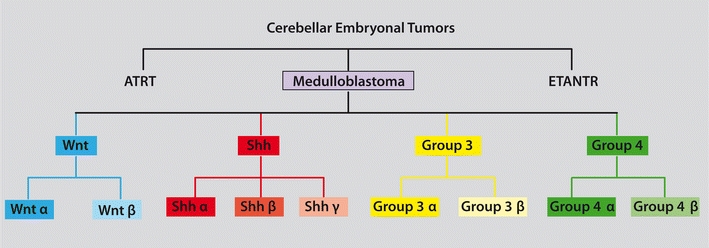
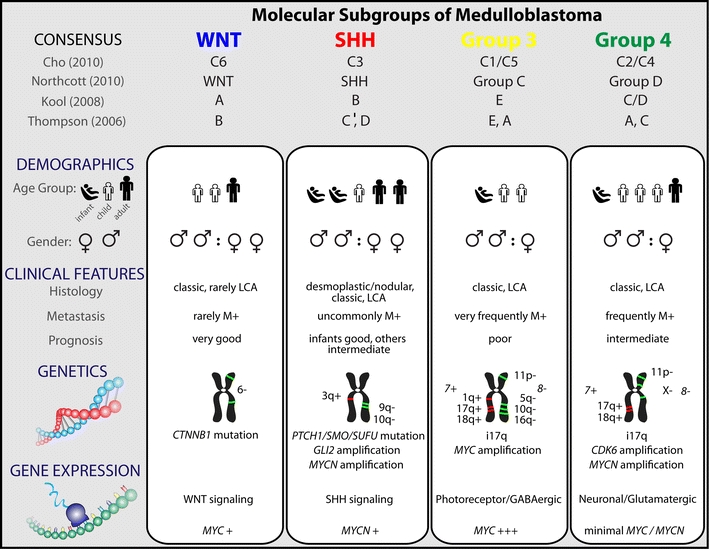
Verification
Claims the paper makes
The claims and statistics of this paper haven’t been checked yet.
Free: it reads the open-access text and checks the first 5 claims that cite a source we can check. Create a free account to check every claim.
Self-check
Percentages, sums and reported differences re-computed from the paper’s own numbers.
The self-check needs the paper’s full text.
Citations
Cites
The 2007 WHO Classification of Tumours of the Central Nervous System
Louis, D. N., Ohgaki, H., Wiestler, O. D., Cavenee, W. K., Burger, P. C., Jouvet, A., Scheithauer, B. W., & Kleihues, P. (2007) · Acta Neuropathologica · doi:10.1007/s00401-007-0243-4 · Cited by 15,397
Golub, T. R., Slonim, D. K., Tamayo, P., Huard, C., Gaasenbeek, M., Mesirov, J. P., Coller, H., Loh, M. L., Downing, J. R., Caligiuri, M. A., et al. (1999) · Science · doi:10.1126/science.286.5439.531 · Cited by 11,516 · cited 1×
“This transcriptional approach to tumor sub-classification has also been applied to a number of different non-medullo-blastoma histologies [4, 16, 18, 31, 35, 43], with the underlying assumption that tumors with similar transcriptomes will behave in a biologically similar manner, allowing a…”
BackgroundErratum to: The 2007 WHO classification of tumours of the central nervous system
Louis, D. N., Ohgaki, H., Wiestler, O. D., Cavenee, W. K., Burger, P. C., Jouvet, A., Scheithauer, B. W., & Kleihues, P. (2007) · Zurich Open Repository and Archive (University of Zurich) · doi:10.5167/uzh-156115 · Cited by 4,442
Phillips, H. S., Kharbanda, S., Chen, R., Forrest, W. F., Soriano, R. H., Wu, T. D., Misra, A., Nigro, J. M., Colman, H., Soroceanu, L., et al. (2006) · Cancer Cell · doi:10.1016/j.ccr.2006.02.019 · Cited by 3,143 · cited 1×
“…transcriptional approach to tumor sub-classification has also been applied to a number of different non-medullo-blastoma histologies [4, 16, 18, 31, 35, 43], with the underlying assumption that tumors with similar transcriptomes will behave in a biologically similar manner, allowing a…”
BackgroundBhattacharjee, A., Richards, W. G., Staunton, J., Li, C., Monti, S., Vasa, P., Ladd, C., Beheshti, J., Bueno, R., Gillette, M., et al. (2001) · Proceedings of the National Academy of Sciences · doi:10.1073/pnas.191502998 · Cited by 2,576 · cited 1×
“This transcriptional approach to tumor sub-classification has also been applied to a number of different non-medullo-blastoma histologies [4, 16, 18, 31, 35, 43], with the underlying assumption that tumors with similar transcriptomes will behave in a biologically similar manner, allowing a…”
BackgroundPrediction of central nervous system embryonal tumour outcome based on gene expression
Pomeroy, S. L., Tamayo, P., Gaasenbeek, M., Sturla, L. M., Angelo, M., McLaughlin, M. E., Kim, J. Y. H., Goumnerova, L. C., Black, P. M., Lau, C., et al. (2002) · Nature · doi:10.1038/415436a · Cited by 2,371 · cited 2×
“With recent developments in the ability to monitor transcription across the genome in the setting of a single experiment, various groups have started to sub-classify medulloblastoma on the basis of differences in the transcriptome [36].”
BackgroundSelf-citationIdentification of a CpG Island Methylator Phenotype that Defines a Distinct Subgroup of Glioma
Noushmehr, H., Weisenberger, D. J., Diefes, K., Phillips, H. S., Pujara, K., Berman, B. P., Pan, F., Pelloski, C. E., Sulman, E. P., Bhat, K. P., et al. (2010) · Cancer Cell · doi:10.1016/j.ccr.2010.03.017 · Cited by 2,337 · cited 1×
“This transcriptional approach to tumor sub-classification has also been applied to a number of different non-medullo-blastoma histologies [4, 16, 18, 31, 35, 43], with the underlying assumption that tumors with similar transcriptomes will behave in a biologically similar manner, allowing a…”
BackgroundMedulloblastoma Comprises Four Distinct Molecular Variants
Northcott, P. A., Korshunov, A., Witt, H., Hielscher, T., Eberhart, C. G., Mack, S., Bouffet, E., Clifford, S. C., Hawkins, C. E., French, P., et al. (2011) · Journal of Clinical Oncology · doi:10.1200/jco.2009.27.4324 · Cited by 1,339 · cited 12×
“Others approaches to identify Shh medulloblastomas have included immunohistochemical staining for SFRP1 [2, 28, 48], or GAB1 [11].”
BackgroundMethodInfluentialSelf-citationThe Molecular Basis of Turcot's Syndrome
Hamilton, S. R., Liu, B., Parsons, R. E., Papadopoulos, N., Jen, J., Powell, S. M., Krush, A. J., Berk, T., Cohen, Z., Tetu, B., et al. (1995) · New England Journal of Medicine · doi:10.1056/nejm199503303321302 · Cited by 1,133 · cited 1×
“Germline mutations of the Wnt pathway inhibitor APC predispose to Turcot syndrome, which includes a proclivity to medulloblastoma, in addition, somatic mutations of CTNNB1 encoding b-catenin have been found in sporadic medulloblastomas [19, 50].”
BackgroundKool, M., Korshunov, A., Remke, M., Jones, D. T. W., Schlanstein, M., Northcott, P. A., Cho, Y.-J., Koster, J., Schouten-van Meeteren, A., van Vuurden, D., et al. (2012) · Acta Neuropathologica · doi:10.1007/s00401-012-0958-8 · Cited by 1,056 · cited 3×
“…to identify target cohorts for certain drugs (e.g., SHH inhibitors), but also add significantly to outcome prediction by the time of diagnosis [21], much more than any of the established clinical markers such as patient age, metastatic stage at diagnosis, level of resection, and histological…”
BackgroundMethodInfluentialSelf-citation
Cited by
Items 701–800 of 1,003
Pham, K., Hanaford, A. R., Poore, B., Maxwell, M. J., Sweeney, H., Parthasarathy, A., Alt, J., Rais, R., Slusher, B. S., Eberhart, C. G., et al. (2022) · Cancers · doi:10.3390/cancers14051311 · Cited by 22
“The poor prognosis for “Group 3”, MYC-amplified medulloblastoma patients [25,26] and the severe complications faced by survivors due to the intensity of the therapy they receive indicate an urgent need for more effective and less toxic therapies.”
BackgroundSelf-citationSomatic cell transfer of c-Myc and Bcl-2 induces large-cell anaplastic medulloblastomas in mice
Jenkins, N., Rao, G., Eberhart, C. G., Pedone, C. A., Dubuc, A. M., & Fults, D. W. (2015) · Journal of Neuro-Oncology · doi:10.1007/s11060-015-1985-9 · Cited by 23
“Integrated genomic analysis has shown that medulloblastomas, once considered a uniform disease entity, comprise a diverse set of tumors, in which tumor growth is driven by activation of different molecular signaling pathways (reviewed in [1]).”
Self-citationPetersen, W., Liu, J., Yuan, L., Zhang, H., Schneiderjan, M., Cho, Y., & MacDonald, T. J. (2014) · Cancer Letters · doi:10.1016/j.canlet.2014.07.038 · Cited by 24
“D556 is MYC amplified, similar to Group 3 MB [4].”
Self-citationDeep Sequencing Identifies IDH1 R132S Mutation in Adult Medulloblastoma
Snuderl, M., Triscott, J., Northcott, P. A., Shih, H. A., Kong, E., Robinson, H. E., Dunn, S. E., Iafrate, A. J., & Yip, S. S. F. (2014) · Journal of Clinical Oncology · doi:10.1200/jco.2013.49.4864 · Cited by 23
“Pediatric medulloblastomas can be subclassified into at least four major groups: SHH, Wnt, group 3 (Group C, photoreceptor/GABAergic, high MYC amplification), and group 4 (Group D, neuronal/glutamatergic, low MYC amplification, CDK6/MYCN amplification), with groups 3 and 4 being more common.(1) IDH1/2 mutations have n…”
BackgroundMethodSelf-citationDual role of the integrated stress response in medulloblastoma tumorigenesis
Stone, S., Ho, Y., Li, X., Jamison, S., Harding, H. P., Ron, D., & Lin, W. (2016) · Oncotarget · doi:10.18632/oncotarget.11873 · Cited by 21
“Medulloblastoma can be classified into four major molecular subgroups based on the molecular profiling: sonic hedgehog (SHH) subgroup, WNT subgroup, subgroup 3, and subgroup 4 [19, 20].”
BackgroundTargeting mTOR as a Therapeutic Approach in Medulloblastoma
Aldaregia, J., Odriozola, A., Matheu, A., & García, I. (2018) · International Journal of Molecular Sciences · doi:10.3390/ijms19071838 · Cited by 21
“These and additional studies gave rise to a consensus conference in Boston in 2010, where the discussants came to a consensus of the existence of four MB subgroups, named WNT, SHH, Group 3, and Group 4 [35].”
ResultBiomarkers in tumors of the central nervous system – a review
Scheie, D., Kufaishi, H., Broholm, H., Lund, E. L., de Stricker, K., Melchior, L. C., & Grauslund, M. (2019) · Apmis · doi:10.1111/apm.12916 · Cited by 24
“split into groups 3 and 4, based on DNA methylation- or gene expression analysis (118).”
BackgroundConi, S., Magno, L. D., Serrao, S. M., Kanamori, Y., Agostinelli, E., & Canettieri, G. (2019) · Cells · doi:10.3390/cells8020150 · Cited by 22
Sajesh, B. V., On, N. H., Omar, R., Alrushaid, S., Kopec, B. M., Wang, W., Sun, H.-D., Lillico, R., Lakowski, T. M., Siahaan, T. J., et al. (2019) · Pharmaceutics · doi:10.3390/pharmaceutics11090481 · Cited by 21
“MBL comprises at least four distinct molecular subgroups, with Group-3 having by far the worst prognosis with a 5-year survival of approximately 30% [17].”
BackgroundCampagne, O., Davis, A., Maharaj, A. R., Zhong, B., Stripay, J. L., Farmer, D. M., Roussel, M. F., & Stewart, C. F. (2019) · European Journal of Pharmaceutical Sciences · doi:10.1016/j.ejps.2019.105106 · Cited by 21
“These brain tumors are highly heterogeneous, and divide molecularly into different subgroups, with distinctive transcriptional and epigenetic signatures, and prognostic implications (Gajjar and Robinson, 2014; Northcott et al., 2011; Taylor et al., 2012).”
BackgroundInfant medulloblastoma — learning new lessons from old strata
Remke, M., & Ramaswamy, V. (2018) · Nature Reviews Clinical Oncology · doi:10.1038/s41571-018-0071-6 · Cited by 21
Self-citationA Diagnostic Algorithm for Posterior Fossa Tumors in Children: A Validation Study
Alves, C., Löbel, U., Saavedra, J. S. M., Toescu, S. M., Tsunemi, M. H., Teixeira, S. R., Mankad, K., Hargrave, D. R., Jacques, T. S., Leite, C. D. C., et al. (2021) · American Journal of Neuroradiology · doi:10.3174/ajnr.a7057 · Cited by 20
Xue, Y., Fu, Y., Zhao, F., Gui, G., Li, Y., Rivero-Hinojosa, S., Liu, G., Li, Y.-Q., Xia, S., Eberhart, C. G., et al. (2021) · Molecular Cancer Therapeutics · doi:10.1158/1535-7163.mct-20-0603 · Cited by 23
“Such combination therapy may more effectively inhibit leptomeningeal dissemination that happens in 40% to 45% of patients in group 3 with MB and is a major challenge for treatment (37, 38, 45).”
BackgroundSelf-citationZagozewski, J. L., Borlase, S., Guppy, B. J., Coudière-Morrison, L., Shahriary, G. M., Gordon, V. D., Liang, L., Cheng, S., Porter, C. J., Kelley, R., et al. (2022) · Communications Biology · doi:10.1038/s42003-022-03654-9 · Cited by 22
Prognostic value of the Weiss and Wieneke (AFIP) scoring systems in pediatric ACC – a mini review
Riedmeier, M., Thompson, L. D. �., Molina, C. A. F., Decarolis, B., Härtel, C., Schlegel, P., Faßnacht, M., & Wiegering, V. A. (2023) · Endocrine Related Cancer · doi:10.1530/erc-22-0259 · Cited by 21
Arthur, C., Jylhä, C., de Ståhl, T. D., Shamikh, A., Sandgren, J., Rosenquist, R., Nordenskjöld, M., Harila‐Saari, A. H., Barbany, G., Sandvik, U., et al. (2023) · Cancers · doi:10.3390/cancers15071972 · Cited by 20
“MB is divided into four principal molecular groups; WNT-activated, SHH-activated, group 3, and 4 [3,4].”
BackgroundCurrent Strategies for Management of Medulloblastoma
Prados, M. D. (2023) · Diagnostics · doi:10.3390/diagnostics13162622 · Cited by 20
“There are now at least four molecular subgroups—Wingless-activated (WNT), Sonic Hedgehog-activated (SHH), and non-WNT/non-SHH (including Groups 3 and 4) [2].”
BackgroundSchoof, M., Godbole, S., Albert, T., Dottermusch, M., Walter, C., Ballast, A., Qin, N., Olivera, M. B., Göbel, C., Neyazi, S., et al. (2023) · Nature Communications · doi:10.1038/s41467-023-43564-w · Cited by 20
“This mouse model is well established as a group 3 MB model although MYCN is usually associated with group 4 MB 29 .”
MethodSelf-citationGhasemi, D. R., Okonechnikov, K., Rademacher, A., Tirier, S. M., Maaß, K. K., Schumacher, H., Joshi, P. K., Gold, M. P., Sundheimer, J. K., Statz, B., et al. (2024) · Nature Communications · doi:10.1038/s41467-023-44117-x · Cited by 21
Self-citationThe Principle of Cortical Development and Evolution
Yang, Z. (2024) · Neuroscience Bulletin · doi:10.1007/s12264-024-01259-2 · Cited by 21
“Dysregulation of the SHH pathway results in SHH-subtype medulloblastoma, one of the most common malignant brain tumors in children [233].”
Medulloblastoma development: tumor biology informs treatment decisions
Gopalakrishnan, V., Tao, R.-H., Dobson, T., Brugmann, W. B., & Khatua, S. (2015) · CNS Oncology · doi:10.2217/cns.14.58 · Cited by 20
Insights into cerebellar development and medulloblastoma
Bihannic, L., & Ayrault, O. (2015) · Bulletin du Cancer · doi:10.1016/j.bulcan.2015.11.002 · Cited by 21
Impact of tumor location and fourth ventricle infiltration in medulloblastoma
Jiang, T., Zhang, Y., Wang, J., Du, J., Ma, Z., Li, C., Liu, R., & Zhang, Y. (2016) · Acta Neurochirurgica · doi:10.1007/s00701-016-2779-3 · Cited by 20
“In recent years, MB has been subdivided into four different subtypes (WNT, SHH, type C, and type D) according to genomic and transcriptional profiling studies [15, 21].”
BackgroundDuality of estrogen receptor β action in cancer progression
Guillette, T. C., Jackson, T. W., & Belcher, S. M. (2018) · Current Opinion in Pharmacology · doi:10.1016/j.coph.2018.05.001 · Cited by 21
“Overall, MB occurs more often in males; however, the gender bias of incidence differs by population and tumor subtypes [71].”
Dual Laser and Desorption Electrospray Ionization Mass Spectrometry Imaging Using the Same Interface
Katz, L., Woolman, M., Talbot, F. O., Amara-Belgadi, S., Wu, M., Tortorella, S., Das, S., Ginsberg, H. J., & Zarrine‐Afsar, A. (2020) · Analytical Chemistry · doi:10.1021/acs.analchem.9b05340 · Cited by 20
Yuan, L., Zhang, H., Liu, J., Malhotra, A., Dey, A., Yu, B., Jella, K. K., McSwain, L., Schniederjan, M., & MacDonald, T. J. (2021) · Molecular Oncology · doi:10.1002/1878-0261.13097 · Cited by 20
Teo, W., Elghetany, M. T., Shen, J. J., Man, T., Li, X., Chintagumpala, M., Su, J. M. F., Dauser, R., Whitehead, W. E., Adesina, A. M., et al. (2014) · Journal of Neuro-Oncology · doi:10.1007/s11060-014-1572-5 · Cited by 20
Epigenetic Silencing of DKK3 in Medulloblastoma
Valdora, F., Banelli, B., Stigliani, S., Pfister, S. M., Moretti, S., Kool, M., Remke, M., Bai, A. H. C., Brigati, C., Hielscher, T., et al. (2013) · International Journal of Molecular Sciences · doi:10.3390/ijms14047492 · Cited by 20
“The current consensus is that there are four major subgroups, named WNT, SHH, Group 3 and Group 4 [7,8].”
BackgroundSelf-citationHo, Y., Li, X., Jamison, S., Harding, H. P., McKinnon, P. J., Ron, D., & Lin, W. (2016) · American Journal Of Pathology · doi:10.1016/j.ajpath.2016.03.004 · Cited by 21
“can be divided into four discrete molecular subgroups: sonic hedgehog (SHH) subgroup, WNT subgroup, subgroup 3, and subgroup 4.(17,18) Although multiple genetic mutations that drive sustained cell proliferation are documented in medulloblastoma, the mechanisms that regulate cell apoptosis during malignant transformati…”
BackgroundIntegrating RNA sequencing into neuro-oncology practice
Rogawski, D. S., Vitanza, N. A., Gauthier, A. C., Ramaswamy, V., & Koschmann, C. J. (2017) · Translational research · doi:10.1016/j.trsl.2017.06.013 · Cited by 22
“WNT medulloblastomas are characterized by activation of the WNT pathway, as evidenced by expression of many downstream WNT targets.(50) Several mutations associated with the hedgehog pathway, including SUFU and SMO, were already known to be associated with medulloblastoma, but RNA expression analysis helped distinguis…”
BackgroundIv, M., Yoon, B. C., Heit, J. J., Fischbein, N. J., & Wintermark, M. (2017) · Seminars in Roentgenology · doi:10.1053/j.ro.2017.11.005 · Cited by 23
Lewińska, A., Klukowska‐Rötzler, J., Deręgowska, A., Adamczyk‐Grochala, J., & Wnuk, M. (2019) · Redox Biology · doi:10.1016/j.redox.2019.101163 · Cited by 21
“The Group 3 is associated with MYC gene amplification and characterized by the highest incidence of metastasis and poor survival among medulloblastomas [3,4].”
BackgroundMechanistic insights into medulloblastoma relapse
Peterson, K. D., Turos‐Cabal, M., Salvador, A., Palomo-Caturla, I., Howell, A. J., Vieira, M. E., Greiner, S. M., Barnoud, T., & Rodríguez‐Blanco, J. (2024) · Pharmacology & Therapeutics · doi:10.1016/j.pharmthera.2024.108673 · Cited by 20
The Emerging Molecular Foundations of Pediatric Brain Tumors
Huse, J. T., & Rosenblum, M. K. (2015) · Journal of Child Neurology · doi:10.1177/0883073815579709 · Cited by 19
“Unlike medulloblastomas in general, which tend to exhibit a male predominance, WNT subgroup tumors are characterized at 1:1 male-to-female gender ratio.(49,59) They arise in patients of all ages, but are uncommon in infants, and the vast majority exhibits classic medulloblastoma histopathology.”
BackgroundResultInfluentialEZH2, HIF-1, and Their Inhibitors: An Overview on Pediatric Cancers
Papale, M., Ferretti, E., Battaglia, G., Bellavia, D., Mai, A., & Tafani, M. (2018) · Frontiers in Pediatrics · doi:10.3389/fped.2018.00328 · Cited by 20
Robbins, C. T., Bou-Dargham, M. J., Sanchez, K. G., Rosen, M. C., & Sang, Q. A. (2018) · Journal of Cancer · doi:10.7150/jca.27993 · Cited by 21
An autocrine ActivinB mechanism drives TGFβ/Activin signaling in Group 3 medulloblastoma
Morabito, M., Larcher, M., Cavalli, F. M. G., Foray, C., Forget, A., Mirabal-Ortega, L., Andrianteranagna, M. J. D. D., Druillennec, S., Garancher, A., Masliah‐Planchon, J., et al. (2019) · EMBO Molecular Medicine · doi:10.15252/emmm.201809830 · Cited by 19
Self-citationPDLIM3 supports hedgehog signaling in medulloblastoma by facilitating cilia formation
Zhang, J., Yang, Y., Li, X., Li, G. L., Mizukami, T., Liu, Y., Wang, Y., Xu, G., Röder, H., Zhang, L., et al. (2023) · Cell Death and Differentiation · doi:10.1038/s41418-023-01131-2 · Cited by 19
“Human MB consists of at least four main groups: WNT, SHH, group 3 and group 4 [1].”
BackgroundIntertumoral and Intratumoral Heterogeneity as a Barrier for Effective Treatment of Medulloblastoma
Wang, X., Ramaswamy, V., Remke, M., Mack, S. C., Dubuc, A. M., Northcott, P. A., & Taylor, M. D. (2013) · Neurosurgery · doi:10.1227/01.neu.0000430318.01821.6f · Cited by 20
Self-citationWhat underlies the diversity of brain tumors?
Swartling, F. J., Hede, S., & Weiss, W. A. (2012) · Cancer and Metastasis Reviews · doi:10.1007/s10555-012-9407-3 · Cited by 23
“While GFAP-positive NSCs isolated from embryonic cerebellum give rise to SHH MB following N-MYC transduction, GFAP-positive NSCs isolated at postnatal ages generates a KCNA1-positive N-MYC-driven MB characteristic of a human group 4 MB lacking SHH dependence [142].”
BackgroundInfluentialDevelopment of zebrafish medulloblastoma-like PNET model by TALEN-mediated somatic gene inactivation
Shim, J., Choi, J., Park, M.-H., Kim, H., Kim, J.-H., Kim, S., Hong, D., Kim, S., Lee, J. E., Kim, C., et al. (2017) · Oncotarget · doi:10.18632/oncotarget.19424 · Cited by 20
Jak2-mediated phosphorylation of Atoh1 is critical for medulloblastoma growth
Klisch, T. J., Vainshtein, A., Patel, A. J., & Zoghbi, H. Y. (2017) · eLife · doi:10.7554/elife.31181 · Cited by 19
“The cell of origin differs among the subgroups, as does the clinical prognosis (Taylor et al., 2012).”
Desmoplastic nodular medulloblastoma in young children: a management dilemma
Abdelbaki, M. S., Boué, D. R., Finlay, J. L., & Kieran, M. W. (2017) · Neuro-Oncology · doi:10.1093/neuonc/nox222 · Cited by 19
“For permissions, please e-mail: journals.permissions@oup.com Head1=Head2=Head1=Head2/Head1 Head2=Head3=Head2=Head3/Head2 Head3=Head4=Head3=Head4/Head3 Medulloblastoma (MB) is the most common malignant brain tumor in children less than 4 years of age.1 According to the 2007 World Health Organization (WHO) classificatio…”
BackgroundInfluentialPrimary Neoplasms of the Pediatric Brain
Jaimes, C. E., & Poussaint, T. Y. (2019) · Radiologic Clinics of North America · doi:10.1016/j.rcl.2019.06.004 · Cited by 19
Targeting MYC-driven replication stress in medulloblastoma with AZD1775 and gemcitabine
Moreira, D. C., Venkataraman, S., Subramanian, A., DeSisto, J. A., Balakrishnan, I., Prince, E. W., Pierce, A. M., Griesinger, A. M., Green, A., Eberhardt, C. G., et al. (2020) · Journal of Neuro-Oncology · doi:10.1007/s11060-020-03457-0 · Cited by 27
VEGFC negatively regulates the growth and aggressiveness of medulloblastoma cells
Penco-Campillo, M., Comoglio, Y., Morel, Á. J. F., Hanna, R. A., Durivault, J., Leloire, M., Mejias, B., Pagnuzzi, M., Morot, A., Burel‐Vandenbos, F., et al. (2020) · Communications Biology · doi:10.1038/s42003-020-01306-4 · Cited by 19
Self-citationTauziède‐Espariat, A., Huybrechts, S., Indersie, É., Dufour, C., Puget, S., Chivet, A., Roux, A., Pagès, M., Gareton, A., Chrétien, F., et al. (2020) · The American Journal of Surgical Pathology · doi:10.1097/pas.0000000000001640 · Cited by 20
Manubhai, K. P., Kumar, A., Biswas, D., Moiyadi, A. V., Shetty, P. M., Gupta, T., Epari, S., Shirsat, N. V., & Srivastava, S. (2021) · Brain Tumor Pathology · doi:10.1007/s10014-020-00391-x · Cited by 29
“Genome-wide expression profiling studies identified four distinct molecular subgroups of medulloblastomas WNT, SHH, Group 3, and Group 4 [2].”
BackgroundGupta, T., Sinha, S., Chinnaswamy, G., Vora, T. S., Prasad, M., Bhat, V., Goda, J. S., Krishnatry, R., Chatterjee, A., Epari, S., et al. (2021) · Pediatric Blood & Cancer · doi:10.1002/pbc.28925 · Cited by 19
CENPE Inhibition Leads to Mitotic Catastrophe and DNA Damage in Medulloblastoma Cells
Iegiani, G., Gai, M., Cunto, F. D., & Pallavicini, G. (2021) · Cancers · doi:10.3390/cancers13051028 · Cited by 19
Asuthkar, S., Venkataraman, S., Janardhan, A., Shishido, K., Vibhakar, R., Veo, B. L., Purvis, I. J., Guda, M. R., & Velpula, K. K. (2022) · Cancers · doi:10.3390/cancers14071673 · Cited by 19
“Current treatment options for MB patients are relatively uniform, centered on craniospinal irradiation, chemotherapy, and palliative care [3].”
BackgroundJacus, M. O., Throm, S. L., Turner, D. C., Patel, Y. T., Freeman, B. B., Morfouace, M., Boulos, N., & Stewart, C. F. (2013) · European Journal of Pharmaceutical Sciences · doi:10.1016/j.ejps.2013.11.010 · Cited by 19
“Although pediatric CNS tumors are the most common cause of cancer-related deaths in children, they only account for 25% of all childhood cancers (Paul et al., 2013), and clinical trials are complicated by the heterogeneity of many CNS malignancies (Taylor et al., 2012).”
Kaur, K., Kakkar, A., Kumar, A., Purkait, S., Mallick, S., Suri, V. S., Sharma, M. C., Julka, P. K., Gupta, D. K., Suri, A., et al. (2016) · Journal of Neuro-Oncology · doi:10.1007/s11060-016-2250-6 · Cited by 20
“, WNT (Wingless), SHH (Sonic Hedgehog), group 3 and group 4 [2].”
BackgroundBelcher, S. M., Burton, C. C., Cookman, C. J., Kirby, M., Miranda, G. L., Saeed, F. O., & Wray, K. E. (2017) · BMC Pharmacology and Toxicology · doi:10.1186/s40360-017-0160-7 · Cited by 20
“By consensus four molecular subgroups are now recognized, they include 75 wingless (WNT), sonic hedgehog (SHH), group 3 and group 4 [12-15].”
Abou-Mrad, Z., Bou-Gharios, J., Moubarak, M. M., Chalhoub, A., Moussalem, C. K., Bahmad, H. F., & Abou-Kheir, W. G. (2021) · World Journal of Stem Cells · doi:10.4252/wjsc.v13.i8.1112 · Cited by 19
Meredith, D. M., & Alexandrescu, S. (2022) · Brain Pathology · doi:10.1111/bpa.13059 · Cited by 19
“They usually have exon 3 activating mutations in CTNNB1, or, rarely, APC mutations, in which case evaluation for Turcot syndrome is indicated [4, 6].”
BackgroundSaraf, A., Yock, T. I., Niemierko, A., Oh, K. S., Curry, W. T., Butler, W. E., Forst, D. A., Arrillaga‐Romany, I., Ebb, D. H., Tarbell, N. J., et al. (2022) · Neuro-Oncology · doi:10.1093/neuonc/noac126 · Cited by 18
DNA methylation alterations across time and space in paediatric brain tumours
Wenger, A., Vega, S. F., Schepke, E., Löfgren, M., Bontell, T. O., Tisell, M., Nilsson, D. T., Kling, T., & Carén, H. (2022) · Acta Neuropathologica Communications · doi:10.1186/s40478-022-01406-8 · Cited by 19
“WNT (wingless)-activated, SHH (sonic hedgehog)activated and TP53-mutated, SHH-activated and TP53wildtype and non-WNT/non-SHH (consisting of the so-called Group 3 and Group 4 classes) [13, 22, 39].”
BackgroundFANCD2 deficiency sensitizes SHH medulloblastoma to radiotherapy via ferroptosis
Zhou, H., Wang, Y., Wu, M., Lan, X., Xiang, D., Cai, R., Ma, Q., Miao, J., Fang, X., Wang, J., et al. (2024) · The Journal of Pathology · doi:10.1002/path.6245 · Cited by 18
“The extensive application of next-generation sequencing on large numbers of MB samples have pro fi led four major molecular subtypes of MB with various clinical relevance and distinctive transcript and epigenetic signatures [6,7].”
BackgroundChildhood Medulloblastoma: The Paradigm Shift in Molecular Stratification and Treatment Profile
Sadighi, Z. S., Vats, T. S., & Khatua, S. (2012) · Journal of Child Neurology · doi:10.1177/0883073812449690 · Cited by 18
“Prognosis for group 4 tumors is considered intermediate, similar to those in the Shh group.(20) Combining histopathology with gene expression profiling should ideally be taken into account in future risk stratification and treatment recommendations (Table 1).”
BackgroundChoudhri, A. F., Siddiqui, A., & Klimo, P. D. (2016) · Magnetic Resonance Imaging Clinics of North America · doi:10.1016/j.mric.2016.07.006 · Cited by 19
“Beyond histologic characteristics, molecular analysis has given rise to 4 subtypes.(15,16) The Sonic Hedgehog pathway (SHH) and WNT pathway, in particular, correlate with the site of origin of these tumors, and importantly with treatment response and outcome.”
BackgroundJiang, T., Zhang, Y., Wang, J., Du, J., Raynald, Qiu, X., Wang, Y., & Li, C. (2017) · Frontiers in Neurology · doi:10.3389/fneur.2017.00198 · Cited by 19
Lee, C.-Y., Chen, Y., Lee, Y., Chang, F., Chen, H., Lin, S., Ho, D. M., Huang, M., Yen, S.-H., Wong, T., et al. (2018) · International Journal of Radiation Oncology*Biology*Physics · doi:10.1016/j.ijrobp.2018.04.032 · Cited by 18
Minasi, S., Baldi, C., Pietsch, T., Donofrio, V., Pollo, B., Antonelli, M., Massimino, M., Giangaspero, F., & Buttarelli, F. R. (2019) · Journal of Neuro-Oncology · doi:10.1007/s11060-019-03127-w · Cited by 18
Chen, X., Fan, Z., Li, K. K., Wu, G., Yang, Z. H., Gao, X., Liu, Y., Wu, H., Chen, H., Tang, Q., et al. (2020) · Neuro-Oncology Advances · doi:10.1093/noajnl/vdaa079 · Cited by 19
Eid, A., & Heabah, N. A. E.-G. (2021) · Journal of the Egyptian National Cancer Institute · doi:10.1186/s43046-021-00060-w · Cited by 19
“reported that SHH medulloblastomas included both desmoplastic types and not desmoplastic/nodular types (up to 50%) [2].”
BackgroundInfluentialSerra, R., Zhao, T., Huq, S., Gorelick, N. L., Casaos, J., Cecia, A. F., Mangraviti, A., Eberhart, C. G., Bai, R.-Y., Olivi, A., et al. (2021) · PLoS ONE · doi:10.1371/journal.pone.0251957 · Cited by 19
“Consequently, extensive research has focused on improving the outcomes of patients with these tumors [2].”
Self-citationOkonechnikov, K., Federico, A., Schrimpf, D., Sievers, P., Sahm, F., Köster, J., Jones, D., von Deimling, A., Pfister, S. M., Kool, M., et al. (2023) · Acta Neuropathologica Communications · doi:10.1186/s40478-023-01504-1 · Cited by 20
“Initially, four consensus MB molecular groups were outlined: WNT-MB, SHHMB, Group 3 MB and Group 4 MB [25].”
BackgroundSelf-citationTargeting the Tumor Microenvironment to Enhance Pediatric Brain Cancer Treatment
Batista, A., Riedemann, L., Vardam, T. D., & Jain, R. K. (2015) · The Cancer Journal · doi:10.1097/ppo.0000000000000125 · Cited by 19
Personalized mice: modelling the molecular heterogeneity of medulloblastoma
Markant, S. L., & Wechsler‐Reya, R. J. (2012) · Neuropathology and Applied Neurobiology · doi:10.1111/j.1365-2990.2011.01235.x · Cited by 21
Behesti, H., Bhagat, H., Dubuc, A. M., Taylor, M. D., & Marino, S. (2012) · Disease Models & Mechanisms · doi:10.1242/dmm.009506 · Cited by 18
“…subgroups, characterised by activation of WNT and SHH pathways, respectively, are associated with a more favourable prognosis, whereas groups 3 and 4 are less well defined at the molecular level but are clinically characterised as a more aggressive disease with poorer outcome (Taylor et al., 2012).”
BackgroundSelf-citationSmoothened Inhibitors in Sonic Hedgehog Subgroup Medulloblastoma
Ransohoff, K. J., Sarin, K. Y., & Tang, J. Y. (2015) · Journal of Clinical Oncology · doi:10.1200/jco.2015.62.2225 · Cited by 19
“though SHH-MB is universally driven by aberrant activation of the SHH signaling pathway, there is significant heterogeneity in terms of other genetic alterations (eg, TP53) that may affect drug response.(16,17)”
BackgroundPLK1-associated microRNAs are correlated with pediatric medulloblastoma prognosis
Pezuk, J. A., Brassesco, M. S., de Oliveira, R. S., Machado, H. R., Neder, L., Scrideli, C. A., & Tone, L. G. (2017) · Child s Nervous System · doi:10.1007/s00381-017-3366-5 · Cited by 18
Trubicka, J., Żemojtel, T., Hecht, J., Falana, K., Piekutowska‐Abramczuk, D., Płoski, R., Perek‐Polnik, M., Drogosiewicz, M., Grajkowska, W., Ciara, E., et al. (2017) · BMC Cancer · doi:10.1186/s12885-017-3211-y · Cited by 19
Inter and intra-tumoral heterogeneity as a platform for personalized therapies in medulloblastoma
Danilenko, M., Clifford, S. C., & Schwalbe, E. C. (2021) · Pharmacology & Therapeutics · doi:10.1016/j.pharmthera.2021.107828 · Cited by 20
Self-citationMolecular Targeted Therapies: Time for a Paradigm Shift in Medulloblastoma Treatment?
Gatto, L., Franceschi, E., Tosoni, A., Nunno, V. D., Bartolini, S., & Brandes, A. A. (2022) · Cancers · doi:10.3390/cancers14020333 · Cited by 19
“Group 4 MB is the most common molecular subgroup, accounting for 35–40% of all MB cases [70].”
BackgroundAndrade, A. F., Borges, K. S., Suazo, V. K., Geron, L., Corrêa, C. A. P., Castro‐Gamero, A. M., Vasconcelos, E. J. R., de Oliveira, R. S., Neder, L., Yunes, J. A., et al. (2016) · Investigational New Drugs · doi:10.1007/s10637-016-0412-1 · Cited by 18
Förster, A., Brand, F. J., Banan, R., Hüneburg, R., Weber, C. A. M., Ewert, W., Kronenberg, J., Previti, C., Elyan, N., Beyer, U., et al. (2021) · Acta Neuropathologica · doi:10.1007/s00401-021-02307-1 · Cited by 17
“medulloblastomas frequently harboring mutations in the CTNNB1 gene encoding β-catenin [58] and glioblastomas [59].”
BackgroundEmerging Epigenetic Therapies for Brain Tumors
Kukreja, L., Li, C. J., Ezhilan, S., Iyer, V. R., & Kuo, J. S. (2021) · NeuroMolecular Medicine · doi:10.1007/s12017-021-08691-x · Cited by 18
Pediatric versus Adult Medulloblastoma: Towards a Definition That Goes beyond Age
Wooley, J. R., & Peñas-Prado, M. (2021) · Cancers · doi:10.3390/cancers13246313 · Cited by 17
Opportunities and Advances in Radiomics and Radiogenomics for Pediatric Medulloblastoma Tumors
Ismail, M., Craig, S., Ahmed, R., de Blank, P. M. K., & Tiwari, P. (2023) · Diagnostics · doi:10.3390/diagnostics13172727 · Cited by 18
Rahmani, E. S., Lawarde, A., Lingasamy, P., Moreno, S. V., Salumets, A., & Modhukur, V. (2023) · Frontiers in Genetics · doi:10.3389/fgene.2023.1233657 · Cited by 19
Pokrajac, N. T., Tokarew, N. J. A., Gurdita, A., Ortín-Martínez, A., & Wallace, V. A. (2023) · Developmental Cell · doi:10.1016/j.devcel.2023.08.033 · Cited by 17
Lin, I.-H., Li, Y., Chang, C.-H., Cheng, Y., Wang, Y., Tsai, Y., Lin, P.-Y., Kao, C.-H., Su, T.-Y., Hsu, C., et al. (2024) · Cell Death and Differentiation · doi:10.1038/s41418-024-01325-2 · Cited by 18
Patel, S. V., Wang, S., Snuderl, M., & Karajannis, M. A. (2017) · Journal of Neuro-Oncology · doi:10.1007/s11060-017-2678-3 · Cited by 17
“SHH medulloblastoma, named after the Sonic Hedgehog signaling pathway, and Group 4 medulloblastoma have a similar prognosis that is intermediate to WNT and Group 3 medulloblastoma [9].”
BackgroundChromatin remodeling defects in pediatric brain tumors
Κλώνου, Α., Spiliotakopoulou, D., Themistocleous, M. S., Piperi, C., & Papavassiliou, A. G. (2018) · Annals of Translational Medicine · doi:10.21037/atm.2018.04.08 · Cited by 17
“Group 3 MB is characterized as classic MBs with dismal prognosis and frequently metastatic, harboring elevated MYC expression (46).”
BackgroundA little piece of mind: best practices for brain tumor intraoperative consultation
Fuller, C. E. (2018) · Modern Pathology · doi:10.1038/s41379-018-0147-y · Cited by 17
Pan, W., Song, X., Hu, Q., Zhang, M., & Xu, X. (2019) · Brain Research · doi:10.1016/j.brainres.2019.05.004 · Cited by 18
Leukotriene Synthesis Is Critical for Medulloblastoma Progression
Du, F., Yuelling, L. W., Lee, E. H., Wang, Y., Liao, S., Cheng, Y. F., Zhang, L., Zheng, C., Peri, S., Cai, K. Q., et al. (2019) · Clinical Cancer Research · doi:10.1158/1078-0432.ccr-18-3549 · Cited by 17
Narayan, V., Sugur, H. S., Jaiswal, J., Arvinda, H. R., Arivazhagan, A., Somanna, S., & Santosh, V. (2019) · Pediatric Neurosurgery · doi:10.1159/000501913 · Cited by 17
de Medeiros, C. B., Moxon‐Emre, I., Scantlebury, N., Malkin, D. M., Ramaswamy, V., Decker, A. L., Law, N., Kumabe, T., Leonard, J. R., Rubin, J., et al. (2019) · Cancer Medicine · doi:10.1002/cam4.2701 · Cited by 17
Self-citationMedulloblastoma epigenetics and the path to clinical innovation
Haltom, A. R., Toll, S. A., Cheng, D., Maegawa, S., Gopalakrishnan, V., & Khatua, S. (2020) · Journal of Neuro-Oncology · doi:10.1007/s11060-020-03591-9 · Cited by 17
Zhao, Y., Jiang, F., Wang, Q., Wang, B., Han, Y., Yang, J., Wang, J., Wang, K., Ao, J., Guo, X., et al. (2020) · Journal of Nanobiotechnology · doi:10.1186/s12951-020-00729-9 · Cited by 17
Drug Repurposing in Medulloblastoma: Challenges and Recommendations
Hammoud, H., Saker, Z., Harati, H., Fares, Y., Bahmad, H. F., & Nabha, S. M. (2020) · Current Treatment Options in Oncology · doi:10.1007/s11864-020-00805-0 · Cited by 18
Drug Resistance in Medulloblastoma Is Driven by YB-1, ABCB1 and a Seven-Gene Drug Signature
Taylor, L., Wade, P., Johnson, J. E. C., Aldighieri, M., Morlando, S., Leva, G. D., Kerr, I. D., & Coyle, B. (2023) · Cancers · doi:10.3390/cancers15041086 · Cited by 18
“It comprises four principal molecular groups with different patterns of metastasis and overall prognosis—WNT (MBWNT), SHH (Sonic Hedgehog; MBSHH), Group 3 (MBGroup3) and Group 4 (MBGroup4)—which can now be further categorised into second-generation sub-groups [1,2].”
BackgroundEpigenetics and immune cells in medulloblastoma
Gorini, F., Miceli, M., Antonellis, P. D., Amente, S., Zollo, M., & Ferrucci, V. (2023) · Frontiers in Genetics · doi:10.3389/fgene.2023.1135404 · Cited by 17
“According to the current consensus, MB segregates into four biologically distinct molecular subgroups that are WNT, sonic hedgehog (SHH), Group 3 (GR3) and Group 4 (GR4) with distinctive transcriptional and chromosome aberrations with prognostic significance (Taylor et al., 2012).”
BackgroundSKCa- and Kv1-type potassium channels and cancer: Promising therapeutic targets?
Dupuy, M., Guéguinou, M., Potier‐Cartereau, M., Lézot, F., Papin, M., Chantôme, A., Rédiní, F., Vandier, C., & Verrecchia, F. (2023) · Biochemical Pharmacology · doi:10.1016/j.bcp.2023.115774 · Cited by 17
Massimino, M., Casanova, M., Polastri, D., Biassoni, V., Modena, P., Pecori, E., Schiavello, E., de Pava, M. V., Indini, A., Rampini, P. M., et al. (2013) · Child s Nervous System · doi:10.1007/s00381-013-2104-x · Cited by 17
“We hope that newly acquired biological medulloblastoma stratification methods [33] might be followed by successful novel pharmacological solutions and we could offer more promising and less toxic therapies for this disease, both at diagnosis and at relapse.”
BackgroundMYC and MYCN amplification can be reliably assessed by aCGH in medulloblastoma
Bourdeaut, F., Grison, C., Maurage, C., Laquerrière, A., Vasiljevic, A., Delisle, M., Michalak, S., Figarella‐Branger, D., Doz, F., Richer, W., et al. (2013) · Cancer Genetics · doi:10.1016/j.cancergen.2013.02.003 · Cited by 17
“Additionally, a systematic search for MYC and MYCN gene amplifications is conducted at diagnosis, because these amplifications have been shown to confer a poor prognosis (2,3).”
BackgroundBuglione, M., Ghirardelli, P., Triggiani, L., Pedretti, S., Pasinetti, N., Bari, B. D., Tonoli, S., Borghetti, P., Spiazzi, L., & Magrini, S. M. (2015) · Reports of Practical Oncology & Radiotherapy · doi:10.1016/j.rpor.2015.03.003 · Cited by 17
Metadata
- Authors
- Taylor, M. D., Northcott, P. A., Korshunov, A., Remke, M., Cho, Y.-J., Clifford, S. C., Eberhart, C. G., Parsons, D. W., Rutkowski, S., Gajjar, A., Ellison, D. W., Lichter, P., Gilbertson, R. J., Pomeroy, S. L., Kool, M., & Pfister, S. M.
- Affiliations
- University of Toronto (CA)
- German Cancer Research Center (DE)
- Stanford Medicine (US)
- Newcastle University (GB)
- Johns Hopkins University (US)
- Baylor College of Medicine (US)
- University Medical Center Hamburg-Eppendorf (DE)
- St. Jude Children's Research Hospital (US)
- Boston Children's Hospital (US)
- Corresponding author
- Taylor, Michael D.
- Pfister, Stefan M.
- ORCID
- Venue
- Acta Neuropathologica
- Published
- 2011-12-02
- Volume
- 123
- Issue
- 4
- Pages
- 465-472
- ISSN
- 0001-6322 (ISSN-L)
- 1432-0533
- PMC
- PMC3306779
- OpenAlex
- W2127643721
- Cited by
- 1,936
- References
- 53
- Citations by year
- 2026: 68 · 2025: 117 · 2024: 127 · 2023: 157 · 2022: 145 · 2021: 153 · 2020: 154 · 2019: 159 · 2018: 163 · 2017: 148 · 2016: 127 · 2015: 134 · 2014: 120 · 2013: 96 · 2012: 58
- FWCI
- 44.64
- Type
- journal article
- Language
- en
- Open access
- hybrid
- doi.org
- Licence
- cc-by-nc
- Locations
- Acta Neuropathologica (publishedVersion, cc-by-nc)
- PubMed Central (publishedVersion, cc-by-nc)
- PubMed (publishedVersion)
- Digital Access to Scholarship at Harvard (DASH) (Harvard University) (submittedVersion, cc-by)
- Newcastle University ePrints (Newcastle Univesity)
- Funders
- Cancer Research UK (13457)
- National Cancer Institute (R01CA129541, R01CA109467)
- National Institute of Neurological Disorders and Stroke (R01NS055089)
- Topics
- Health Sciences › Medicine › Oncology › Glioma Diagnosis and Treatment
- Health Sciences › Medicine › Oncology › Neuroblastoma Research and Treatments
- Health Sciences › Medicine › Hematology › Acute Lymphoblastic Leukemia research
- Keywords
- medulloblastoma, molecular subtypes, WNT subgroup, sonic hedgehog subgroup, Group 3 medulloblastoma, Group 4 medulloblastoma, pediatric brain tumors, gene expression profiling, somatic alterations, histological subtypes, prognostic stratification, consensus classification
- MeSH terms
- Cerebellar Neoplasms, Humans, Medulloblastoma, Gene Expression Profiling, Consensus, Wnt Proteins, Hedgehog Proteins, Transcriptome
About these checks
Registry, retraction, Cites and statistics results are computed, not judged, with one exception: a printed reference that no index lists is read once by a model before it counts as a citation error. Claims are extracted by a model and kept only when their quote appears verbatim in the text; each cited source is then checked, with a model’s help, for whether it says what the claim relies on. Those verdicts can be wrong — read the claim’s quote and the cited source before relying on one.
Statistics and arithmetic are recomputed, not judged.
Confidence bands are shown only for fields calibrated on our annotated test set. None is calibrated yet, so no band is shown.
What counts as a claim ›How we measure confidence ›How we check this ›
Are you an author, or do you see a problem with this page? Request a review
Data sources
Bibliographic data: Semantic Scholar, OpenAlex, Crossref.
Contains information from the Semantic Scholar Academic Graph Datasets, made available under the ODC Attribution License (ODC-BY 1.0).
Semantic Scholar’s data is described in: Kinney, R., et al. (2023). The Semantic Scholar Open Data Platform. arXiv:2301.10140.
