

The DOI matches its Crossref record; 97 of the 97 references it cites were found in a registry or an index.
Role of AhR/ARNT system in skin homeostasis
Open accessAbstract
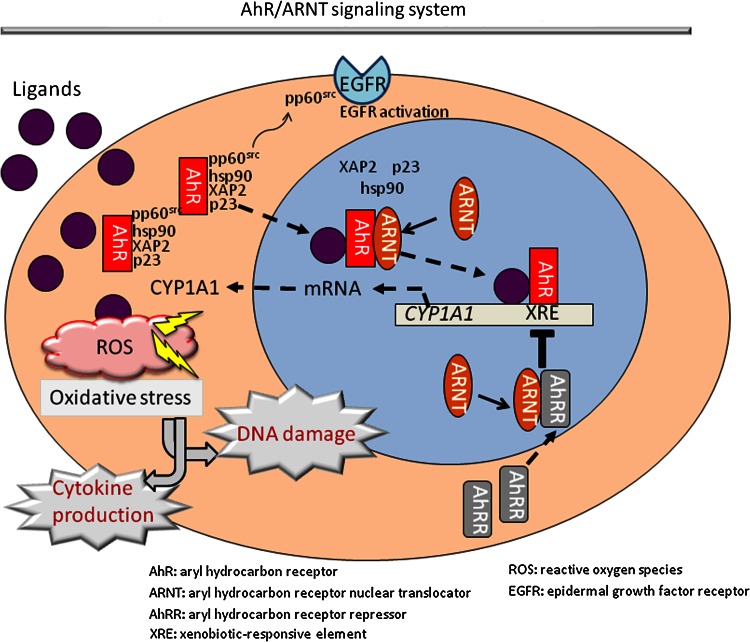
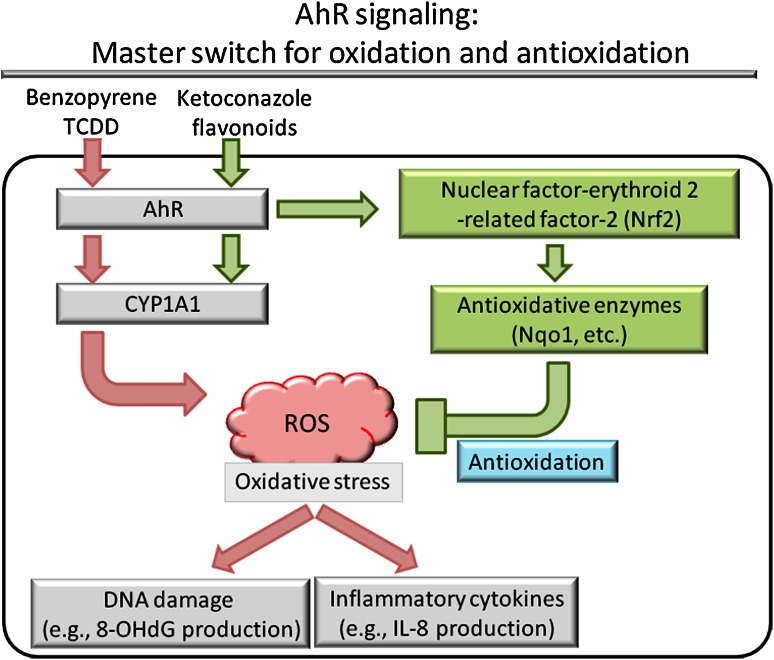
Aryl hydrocarbon receptor (AhR) is a ligand-dependent transcription factor that binds to structurally diverse synthetic and naturally occurring chemicals including dioxins, flavonoids, tryptophan photoproducts, and Malassezia metabolites. Upon binding to its ligands, cytoplasmic AhR translocates to the nucleus, heterodimerizes with aryl hydrocarbon receptor nuclear translocator (ARNT), and mediates numerous biological and toxicological effects by inducing the transcription of various AhR-responsive genes. AhR ligation controls oxidation/antioxidation, epidermal barrier function, photo-induced response, melanogenesis, and innate immunity. This review summarizes recent advances in the understanding of the regulatory mechanisms of skin homeostasis mediated by the AhR/ARNT system.
Overview
The claims and statistics of this paper haven’t been checked yet.
Run the check — free, no account needed. It reads the open-access text and checks the sources it cites.
Integrity signals
Registry
Cites
Statistics
Figures
Verification
Claims the paper makes
The claims and statistics of this paper haven’t been checked yet.
Run the check — free, no account needed. It reads the open-access text and checks the sources it cites.
Claims other papers make about this one
Each is checked against this paper’s own text: does it say what the citing paper says it does?
The source backs part of the claim, not all of it — or backs it for a different population, condition or comparison.
In the citing paper
“Air pollutants contain various exogenous ligands with high affinities for AhR, including PAHs and halogenated aromatic hydrocarbons such as 2,3,7,8-tetrachlorodibenzodioxin (TCDD), dimethylbenz[a]anthracene, methylcholanthrene, and benzo[a]pyrene (BaP)30.”
From Air Pollution and Skin Diseases (2025) · cites this paper as [30]
Experimental — accuracy not yet measuredThe source backs part of the claim, not all of it — or backs it for a different population, condition or comparison.
In the citing paper
“The ligand/AHR complex then binds to specific DNA recognition sites, namely, xenobiotic-responsive elements or dioxin-responsive elements, and upregulates the transcription of a series of responsive genes, such as CYP1A1 leading to a robust generation of reactive oxygen species [16,24].”
From Antioxidant Artemisia princeps Extract Enhances the Expression of Filaggrin and Loricrin via the AHR/OVOL1 Pathway (2017) · cites this paper as [16]
Experimental — accuracy not yet measuredThe source backs part of the claim, not all of it — or backs it for a different population, condition or comparison.
In the citing paper
“AHR is a xenobiotic chemical sensor that is expressed abundantly in epidermal keratinocytes [15,16].”
From Antioxidant Artemisia princeps Extract Enhances the Expression of Filaggrin and Loricrin via the AHR/OVOL1 Pathway (2017) · cites this paper as [16]
Experimental — accuracy not yet measuredThe cited source says what the claim attributes to it.
In the citing paper
“The AhR is widely expressed in the skin, and is important in maintaining skin integrity and immune functions30.”
From Air Pollution and Skin Diseases (2025) · cites this paper as [30]
The cited source says what the claim attributes to it.
In the citing paper
“Various external and internal ligands, such as dioxins, polycyclic aromatic pollutants, benzo[a]pyrene, and phytochemicals, can bind to and activate AHR [15,16].”
From Antioxidant Artemisia princeps Extract Enhances the Expression of Filaggrin and Loricrin via the AHR/OVOL1 Pathway (2017) · cites this paper as [16]
The cited source says what the claim attributes to it.
In the citing paper
“Various herbal and antioxidant phytochemicals have been shown to activate AHR [16,17,19].”
From Antioxidant Artemisia princeps Extract Enhances the Expression of Filaggrin and Loricrin via the AHR/OVOL1 Pathway (2017) · cites this paper as [16]
Self-check
Percentages, sums and reported differences re-computed from the paper’s own numbers.
The self-check needs the paper’s full text.
Citations
Cites
Control of Treg and TH17 cell differentiation by the aryl hydrocarbon receptor
Quintana, F. J., Basso, A. S., Iglesias, A. H., Korn, T., Farez, M. F., Bettelli, E., Caccamo, M., Oukka, M., & Weiner, H. L. (2008) · Nature · doi:10.1038/nature06880 · Cited by 1,865
The Aryl Hydrocarbon Receptor Complex
Hankinson, O. (1995) · Annual Review of Pharmacology and Toxicology · doi:10.1146/annurev.pa.35.040195.001515 · Cited by 1,649 · cited 2×
“The translocated HSP90bound AhR subsequently dissociates from the HSP90 complex by binding to a structurally related nuclear protein, aryl hydrocarbon receptor nuclear translocator (ARNT) [22].”
BackgroundThe aryl hydrocarbon receptor links TH17-cell-mediated autoimmunity to environmental toxins
Veldhoen, M., Hirota, K., Westendorf, A. M., Buer, J., Dumoutier, L., Renauld, J.-C., & Stockinger, B. (2008) · Nature · doi:10.1038/nature06881 · Cited by 1,634
Nrf2 signaling in coordinated activation of antioxidant gene expression
Jaiswal, A. K. (2004) · Free Radical Biology and Medicine · doi:10.1016/j.freeradbiomed.2004.02.074 · Cited by 1,263
Keap1-null mutation leads to postnatal lethality due to constitutive Nrf2 activation
Wakabayashi, N., Itoh, K., Wakabayashi, J., Motohashi, H., Noda, S., Takahashi, S., Imakado, S., KOTSUJI, T., Otsuka, F., Roop, D. R., et al. (2003) · Nature Genetics · doi:10.1038/ng1248 · Cited by 881
Exogenous Stimuli Maintain Intraepithelial Lymphocytes via Aryl Hydrocarbon Receptor Activation
Li, Y., Innocentin, S., Withers, D. R., Roberts, N. A., Gallagher, A., Grigorieva, E. F., Wilhelm, C., & Veldhoen, M. (2011) · Cell · doi:10.1016/j.cell.2011.09.025 · Cited by 837
Functional role of AhR in the expression of toxic effects by TCDD
Mimura, J., & Fujii‐Kuriyama, Y. (2003) · Biochimica et Biophysica Acta (BBA) - General Subjects · doi:10.1016/s0304-4165(02)00485-3 · Cited by 754
Denison, M. S., Soshilov, A. A., He, G., DeGroot, D. E., & Zhao, B. (2011) · Toxicological Sciences · doi:10.1093/toxsci/kfr218 · Cited by 748
The Search for Endogenous Activators of the Aryl Hydrocarbon Receptor
Nguyen, L. P., & Bradfield, C. A. (2007) · Chemical Research in Toxicology · doi:10.1021/tx7001965 · Cited by 718
Nguyen, N. T., Kimura, A., Nakahama, T., Chinen, I., Masuda, K., Nohara, K., Fujii‐Kuriyama, Y., & Kishimoto, T. (2010) · Proceedings of the National Academy of Sciences · doi:10.1073/pnas.1014465107 · Cited by 705
Cited by
Sorted by citations
Natividad, J. M., Agus, A., Planchais, J., Lamas, B., Jarry, A. C., Martin, R., Michel, M.-L., Chong-Nguyen, C., Roussel, R., Straube, M., et al. (2018) · Cell Metabolism · doi:10.1016/j.cmet.2018.07.001 · Cited by 642
Aryl hydrocarbon receptor and intestinal immunity
Lamas, B., Natividad, J. M., & Sokol, H. (2018) · Mucosal Immunology · doi:10.1038/s41385-018-0019-2 · Cited by 551
Furue, M. (2020) · International Journal of Molecular Sciences · doi:10.3390/ijms21155382 · Cited by 419
Self-citationUberoi, A., Bartow‐McKenney, C., Zheng, Q., Flowers, L. J., Campbell, A. E., Knight, S. A. B., Chan, N., Wei, M. H., Lovins, V. M., Bugayev, J., et al. (2021) · Cell Host & Microbe · doi:10.1016/j.chom.2021.05.011 · Cited by 328
Oxidative Stress in Atopic Dermatitis
Ji, H., & Li, X. (2016) · Oxidative Medicine and Cellular Longevity · doi:10.1155/2016/2721469 · Cited by 218
Aryl Hydrocarbon Receptor in Atopic Dermatitis and Psoriasis
Furue, M., Hashimoto-Hachiya, A., & Tsuji, G. (2019) · International Journal of Molecular Sciences · doi:10.3390/ijms20215424 · Cited by 215
Self-citationDijkhoff, I. M., Drasler, B., Karakocak, B. B., Petri-Fink, A., Valacchi, G., Eeman, M., & Rothen-Rutishauser, B. (2020) · Particle and Fibre Toxicology · doi:10.1186/s12989-020-00366-y · Cited by 202
Homeostasis of the sebaceous gland and mechanisms of acne pathogenesis
Clayton, R. W., Göbel, K., Niessen, C. M., Paus, R., Steensel, M. A. M. V., & Lim, X. (2019) · British Journal of Dermatology · doi:10.1111/bjd.17981 · Cited by 187
Ma, N., He, T., Johnston, L. J., & Ma, X. (2020) · Gut Microbes · doi:10.1080/19490976.2020.1758008 · Cited by 162
Gene regulation of filaggrin and other skin barrier proteins via aryl hydrocarbon receptor
Furue, M., Tsuji, G., Mitoma, C., Nakahara, T., Chiba, T., Morino-Koga, S., & Uchi, H. (2015) · Journal of Dermatological Science · doi:10.1016/j.jdermsci.2015.07.011 · Cited by 132
Self-citationThe gut-skin axis: a bi-directional, microbiota-driven relationship with therapeutic potential
Jimenez-Sanchez, M., Celiberto, L. S., Yang, H., Sham, H. P., & Vallance, B. A. (2025) · Gut Microbes · doi:10.1080/19490976.2025.2473524 · Cited by 139
Haarmann-Stemmann, T., Esser, C., & Krutmann, J. (2015) · Journal of Investigative Dermatology · doi:10.1038/jid.2015.285 · Cited by 113
Furue, M., Uchi, H., Mitoma, C., Hashimoto-Hachiya, A., Chiba, T., Ito, T., Nakahara, T., & Tsuji, G. (2017) · Nutrients · doi:10.3390/nu9030223 · Cited by 113
Self-citationOverview of the Potential Role of Malassezia in Gut Health and Disease
Spatz, M., & Richard, M. L. (2020) · Frontiers in Cellular and Infection Microbiology · doi:10.3389/fcimb.2020.00201 · Cited by 99
Environmental Air Pollutants Affecting Skin Functions with Systemic Implications
Bocheva, G., Slominski, R. M., & Slominski, A. T. (2023) · International Journal of Molecular Sciences · doi:10.3390/ijms241310502 · Cited by 94
The mammalian mycobiome: A complex system in a dynamic relationship with the host
Lai, G. C., Tan, T. G., & Pavelka, N. (2018) · WIREs Systems Biology and Medicine · doi:10.1002/wsbm.1438 · Cited by 92
Aryl hydrocarbon receptor: Its roles in physiology
Kou, Z., & Dai, W. H. (2021) · Biochemical Pharmacology · doi:10.1016/j.bcp.2021.114428 · Cited by 94
Oxidative contribution of air pollution to extrinsic skin ageing
Fussell, J. C., & Kelly, F. J. (2019) · Free Radical Biology and Medicine · doi:10.1016/j.freeradbiomed.2019.11.038 · Cited by 89
Uchi, H., Yasumatsu, M., Morino-Koga, S., Mitoma, C., & Furue, M. (2017) · Journal of Dermatological Science · doi:10.1016/j.jdermsci.2016.10.003 · Cited by 82
Self-citationTakei, K., Mitoma, C., Hashimoto‐Hachiya, A., Uchi, H., Takahara, M., Tsuji, G., Kido‐Nakahara, M., Nakahara, T., & Furue, M. (2015) · The Journal of Dermatology · doi:10.1111/1346-8138.12717 · Cited by 81
Self-citationSlominski, A. T., Kim, T., Slominski, R. M., Song, Y., Qayyum, S., Placha, W., Janjetović, Z., Kleszczyński, K., Atigadda, V. R., Song, Y., et al. (2023) · International Journal of Molecular Sciences · doi:10.3390/ijms242015496 · Cited by 67
Noakes, R. (2015) · International Journal of Tryptophan Research · doi:10.4137/ijtr.s19985 · Cited by 68
Perillaldehyde inhibits AHR signaling and activates NRF2 antioxidant pathway in human keratinocytes
Fuyuno, Y., Uchi, H., Yasumatsu, M., Morino-Koga, S., Tanaka, Y., Mitoma, C., & Furue, M. (2018) · Oxidative Medicine and Cellular Longevity · doi:10.1155/2018/9524657 · Cited by 65
Self-citationParticulate Matter and Its Molecular Effects on Skin: Implications for Various Skin Diseases
Paik, K., Na, J.-I., Huh, C.-H., & Shin, J.-W. (2024) · International Journal of Molecular Sciences · doi:10.3390/ijms25189888 · Cited by 64
Ferrara, F., Woodby, B. L., Pecorelli, A., Schiavone, M. L., Pambianchi, E., Messano, N., Therrien, J., Choudhary, H., & Valacchi, G. (2020) · Redox Biology · doi:10.1016/j.redox.2020.101481 · Cited by 64
Role of Aryl Hydrocarbon Receptor Activation in Inflammatory Chronic Skin Diseases
Napolitano, M., Fabbrocini, G., Martora, F., Picone, V., Morelli, P., & Patruno, C. (2021) · Cells · doi:10.3390/cells10123559 · Cited by 59
Hashimoto‐Hachiya, A., Tsuji, G., Murai, M., Yan, X., & Furue, M. (2018) · International Journal of Molecular Sciences · doi:10.3390/ijms19061654 · Cited by 59
Self-citationWhat are the 100 most cited fungal genera?
Bhunjun, C. S., Chen, Y. J., Phukhamsakda, C., Boekhout, T., Groenewald, J. Z., McKenzi, E. H. C., Francisco, E. C., Frisvad, J. C., Groenewald, M., Hurdeal, V. G., et al. (2024) · Studies in Mycology · doi:10.3114/sim.2024.108.01 · Cited by 58
Aryl hydrocarbon receptor (AhR) a possible target for the treatment of skin disease
Napolitano, M., & Patruno, C. (2018) · Medical Hypotheses · doi:10.1016/j.mehy.2018.05.001 · Cited by 56
Mari, O. D. A., Uchi, H., Morino‐Koga, S., & Furue, M. (2018) · Journal of Dermatological Science · doi:10.1016/j.jdermsci.2018.02.014 · Cited by 53
Self-citationSlominski, A. T., Brożyna, A. A., Zmijewski, M. A., Janjetović, Z., Kim, T., Slominski, R. M., Tuckey, R. C., Mason, R. S., Jetten, A. M., Guroji, P., et al. (2020) · Advances in experimental medicine and biology · doi:10.1007/978-3-030-46227-7_13 · Cited by 55
Yusho and its latest findings—A review in studies conducted by the Yusho Group
Mitoma, C., Uchi, H., Tsukimori, K., Yamada, H., Akahane, M., Imamura, T., Utani, A., & Furue, M. (2015) · Environment International · doi:10.1016/j.envint.2015.05.004 · Cited by 53
Self-citationDębińska, A. (2021) · Journal of Clinical Medicine · doi:10.3390/jcm10112506 · Cited by 52
Rademacher, F., Simanski, M., Hesse, B., Dombrowsky, G., Vent, N., Gläser, R., & Harder, J. (2018) · Journal of Innate Immunity · doi:10.1159/000492162 · Cited by 50
Nakahara, T., Mitoma, C., Hashimoto-Hachiya, A., Takahara, M., Tsuji, G., Uchi, H., Yan, X., Hachisuka, J., Chiba, T., Esaki, H., et al. (2015) · Journal of Medicinal Food · doi:10.1089/jmf.2014.3396 · Cited by 49
Self-citationChloracne and Hyperpigmentation Caused by Exposure to Hazardous Aryl Hydrocarbon Receptor Ligands
Furue, M., & Tsuji, G. (2019) · International Journal of Environmental Research and Public Health · doi:10.3390/ijerph16234864 · Cited by 51
Self-citationHost Immunity to Malassezia in Health and Disease
Sparber, F., Ruchti, F., & LeibundGut‐Landmann, S. (2020) · Frontiers in Cellular and Infection Microbiology · doi:10.3389/fcimb.2020.00198 · Cited by 51
Hirano, A., Goto, M., Mitsui, T., Hashimoto-Hachiya, A., Tsuji, G., & Furue, M. (2017) · International Journal of Molecular Sciences · doi:10.3390/ijms18091948 · Cited by 48
Self-citationInteraction between AhR and HIF-1 signaling pathways mediated by ARNT/HIF-1β
Zhang, M., Hu, Y., Yang, F., Zhang, J., Zhang, J., Yu, W., Wang, M., Lv, X., Li, J., Bai, T., et al. (2022) · BMC Pharmacology and Toxicology · doi:10.1186/s40360-022-00564-8 · Cited by 48
Hieda, D. S., Anastacio da Costa Carvalho, L., Vaz de Mello, B., Oliveira, E. A. D., Romano de Assis, S., Wu, J., Du-Thumm, L., Viana da Silva, C. L., Roubicek, D. A., Maria-Engler, S. S., et al. (2020) · Journal of Investigative Dermatology · doi:10.1016/j.jid.2020.03.971 · Cited by 47
EDC-induced mechanisms of immunotoxicity: a systematic review
Sabuz, Ó., Deepika, D., Schuhmacher, M., & Kumar, V. (2021) · Critical Reviews in Toxicology · doi:10.1080/10408444.2021.2009438 · Cited by 50
Quercetin protected the gut barrier in ulcerative colitis by activating aryl hydrocarbon receptor
Wei, Q., Jiang, H., Zeng, J., Xu, J., Zhang, H., Xiao, E., Lu, Q., & Huang, G. (2025) · Phytomedicine · doi:10.1016/j.phymed.2025.156633 · Cited by 53
Hwang, J., Newton, E. M., Hsiao, J. L., & Shi, V. Y. (2022) · Experimental Dermatology · doi:10.1111/exd.14541 · Cited by 47
Takei, K., Mitoma, C., Hashimoto‐Hachiya, A., Takahara, M., Tsuji, G., Nakahara, T., & Furue, M. (2015) · Clinical and Experimental Dermatology · doi:10.1111/ced.12635 · Cited by 45
Self-citationNobile, V., Schiano, I., Peral, A., Giardina, S., Spartà, E., & Caturla, N. (2021) · Food & Nutrition Research · doi:10.29219/fnr.v65.5619 · Cited by 46
Furue, M., Hashimoto‐Hachiya, A., & Tsuji, G. (2018) · Acta Dermato Venereologica · doi:10.2340/00015555-3003 · Cited by 43
Self-citationEleftheriadis, T., Pissas, G., Filippidis, G., Liakopoulos, V., & Stefanidis, I. (2020) · Molecular Medicine Reports · doi:10.3892/mmr.2020.11679 · Cited by 44
Potential role of PM2.5 in melanogenesis
Peng, F., Tsuji, G., Zhang, J.-Z., Chen, Z., & Furue, M. (2019) · Environment International · doi:10.1016/j.envint.2019.105063 · Cited by 42
Self-citationParticulate matter and inflammatory skin diseases: From epidemiological and mechanistic studies
Chao, L., Feng, B., Liang, H., Zhao, X., & Song, J. (2023) · The Science of The Total Environment · doi:10.1016/j.scitotenv.2023.167111 · Cited by 45
Singh, N. P., Nagarkatti, M., & Nagarkatti, P. S. (2020) · International Journal of Molecular Sciences · doi:10.3390/ijms21217849 · Cited by 44
Wang, X., Li, S., Liu, L., Jian, Z., Cui, T., Yang, Y., Guo, S., Yi, X., Wang, G., Li, C., et al. (2019) · Journal of Dermatological Science · doi:10.1016/j.jdermsci.2019.09.001 · Cited by 42
Aryl Hydrocarbon Receptor and Dioxin-Related Health Hazards—Lessons from Yusho
Furue, M., Ishii, Y., Tsukimori, K., & Tsuji, G. (2021) · International Journal of Molecular Sciences · doi:10.3390/ijms22020708 · Cited by 39
Self-citationZi, Y., Jiang, B., He, C., & Liu, L. (2019) · Journal of Cosmetic Dermatology · doi:10.1111/jocd.13005 · Cited by 38
Shah, F., Stepan, A. F., O’Mahony, A., Velichko, S., Folias, A. E., Houle, C. D., Shaffer, C. L., Marcek, J. M., Whritenour, J., Stanton, R. V., et al. (2017) · Cell chemical biology · doi:10.1016/j.chembiol.2017.06.003 · Cited by 36
Takemura, M., Nakahara, T., Hashimoto‐Hachiya, A., Furue, M., & Tsuji, G. (2018) · International Journal of Molecular Sciences · doi:10.3390/ijms19041169 · Cited by 38
Self-citationTanaka, Y., Uchi, H., Hashimoto‐Hachiya, A., & Furue, M. (2018) · Oxidative Medicine and Cellular Longevity · doi:10.1155/2018/9298052 · Cited by 36
Self-citationMurai, M., Tsuji, G., Hashimoto‐Hachiya, A., Kawakami, Y., Furue, M., & Mitoma, C. (2017) · Journal of Dermatological Science · doi:10.1016/j.jdermsci.2017.10.002 · Cited by 35
Self-citationIndirubin-pregnane X receptor-JNK axis accelerates skin wound healing
Tanaka, Y., Uchi, H., Ito, T., & Furue, M. (2019) · Scientific Reports · doi:10.1038/s41598-019-54754-2 · Cited by 34
Self-citationMurai, M., Yamamura, K., Hashimoto‐Hachiya, A., Tsuji, G., Furue, M., & Mitoma, C. (2018) · Journal of Dermatological Science · doi:10.1016/j.jdermsci.2018.04.010 · Cited by 33
Self-citationActivation of the OVOL1-OVOL2 Axis in the Hair Bulb and in Pilomatricoma
Ito, T., Tsuji, G., Ohno, F., Uchi, H., Nakahara, T., Hashimoto‐Hachiya, A., Yoshida, Y., Yamamoto, O., Oda, Y., & Furue, M. (2016) · American Journal Of Pathology · doi:10.1016/j.ajpath.2015.12.013 · Cited by 31
Self-citationTherapeutic Agents with AHR Inhibiting and NRF2 Activating Activity for Managing Chloracne
Furue, M., Fuyuno, Y., Mitoma, C., Uchi, H., & Tsuji, G. (2018) · Antioxidants · doi:10.3390/antiox7070090 · Cited by 30
Self-citationTanaka, Y., Ito, T., Tsuji, G., & Furue, M. (2020) · Antioxidants · doi:10.3390/antiox9060507 · Cited by 31
Self-citationMuzaffer, U., Paul, V. I., Balupillai, A., & Prasad, N. R. (2019) · Biomedicine & Pharmacotherapy · doi:10.1016/j.biopha.2018.12.129 · Cited by 29
Air Pollution and Skin Diseases
Han, H. S., Seok, J., & Park, K. Y. (2025) · Annals of Dermatology · doi:10.5021/ad.24.159 · Cited by 28
“Air pollutants contain various exogenous ligands with high affinities for AhR, including PAHs and halogenated aromatic hydrocarbons such as 2,3,7,8-tetrachlorodibenzodioxin (TCDD), dimethylbenz[a] anthracene, methylcholanthrene, and benzo[a]pyrene (BaP) 30 .”
Diosmin restores the skin barrier by targeting the aryl hydrocarbon receptor in atopic dermatitis
Lee, J., Song, K., & Jung, C. H. (2020) · Phytomedicine · doi:10.1016/j.phymed.2020.153418 · Cited by 26
Aryl Hydrocarbon Receptors: Evidence of Therapeutic Targets in Chronic Inflammatory Skin Diseases
Kim, H.-B., Um, J., Chung, B. Y., Kim, J. C., Kang, S. Y., Park, C. W., & Kim, H. O. (2022) · Biomedicines · doi:10.3390/biomedicines10051087 · Cited by 28
Does, A. V., Ju, T., Mohsin, N., Chopra, D., & Yosipovitch, G. (2023) · Pharmacology & Therapeutics · doi:10.1016/j.pharmthera.2023.108355 · Cited by 25
Mitoma, C., Mine, Y., Utani, A., Imafuku, S., Muto, M., Akimoto, T., Kanekura, T., Furue, M., & Uchi, H. (2015) · Chemosphere · doi:10.1016/j.chemosphere.2015.03.070 · Cited by 25
Self-citationYou, H. S., Fadriquela, A., Sajo, M. E. J., Bajgai, J., Ara, J., Kim, C.-S., Kim, S., Oh, J. R., Shim, K. Y., Lim, H. K., et al. (2017) · Biological and Pharmaceutical Bulletin · doi:10.1248/bpb.b17-00219 · Cited by 24
Buommino, E., Baroni, A., Papulino, C., Nocera, F. P., Coretti, L., Donnarumma, G., Filippis, A. D., & Martino, L. D. (2018) · Medical Mycology · doi:10.1093/mmy/myy004 · Cited by 24
Abbas, S., Alam, S., Singh, K. P., Kumar, M., Gupta, S. K., & Ansari, K. M. (2016) · Chemical Research in Toxicology · doi:10.1021/acs.chemrestox.6b00364 · Cited by 24
Malassezia spp. beyond The Mycobiota
Celis, A. M., Wösten, H. A. B., Triana, S., Restrepo, S., & de Cock, H. (2017) · SM Dermatology Journal · doi:10.36876/smdj.1019 · Cited by 24
A Rose Extract Protects the Skin against Stress Mediators: A Potential Role of Olfactory Receptors
Duroux, R., Mandeau, A., Guiraudie-Capraz, G., Quesnel, Y., & Loing, E. (2020) · Molecules · doi:10.3390/molecules25204743 · Cited by 24
Ghaffarian‐Bahraman, A., Jamshidzadeh, A., Keshavarzi, M., Arabnezhad, M., Mohammadi, H., & Mohammadi‐Bardbori, A. (2021) · International Journal of Toxicology · doi:10.1177/1091581820987548 · Cited by 23
Jin, T., Park, K. Y., & Seo, S. J. (2017) · Annals of Dermatology · doi:10.5021/ad.2017.29.4.407 · Cited by 23
Wutou decoction attenuates rheumatoid arthritis by modulating the Ahr/LOC101928120/SHC1 pathway
Wu, D., Li, X., Liu, J., Hu, C., & Li, J. (2021) · Pharmaceutical Biology · doi:10.1080/13880209.2021.1941131 · Cited by 21
Ligand-independent activation of AhR by hydroquinone mediates benzene-induced hematopoietic toxicity
Yang, X., Li, C., Yu, G., Sun, L., Guo, S., Sai, L., Bo, C., Xing, C., Shao, H., Peng, C., et al. (2022) · Chemico-Biological Interactions · doi:10.1016/j.cbi.2022.109845 · Cited by 21
Tsuji, G., Yamamura, K., Kawamura, K., Kido-Nakahara, M., Ito, T., & Nakahara, T. (2023) · International Journal of Molecular Sciences · doi:10.3390/ijms241914633 · Cited by 21
Self-citationFerrara, F., Yan, X., Pecorelli, A., Guiotto, A., Colella, S., Pasqui, A., Lynch, S., Ivarsson, J., Anderias, S., Choudhary, H., et al. (2024) · Journal of Cosmetic Dermatology · doi:10.1111/jocd.16321 · Cited by 22
Galactomyces Ferment Filtrate Potentiates an Anti-Inflammaging System in Keratinocytes
Yan, X., Tsuji, G., Hashimoto-Hachiya, A., & Furue, M. (2022) · Journal of Clinical Medicine · doi:10.3390/jcm11216338 · Cited by 20
Self-citationExpression of CYP1A1, CYP1B1 and IL-1β in PBMCs and skin samples of PCB exposed individuals
Leijs, M. M., Esser, A., Amann, P. M., Schettgen, T., Heise, R., Fietkau, K., Gube, M., Merk, H. F., Kraus, T., & Baron, J. M. (2018) · The Science of The Total Environment · doi:10.1016/j.scitotenv.2018.06.136 · Cited by 20
A novel oxidative stress marker of atopic dermatitis in infants: thiol–disulfide balance
Karacan, G., Ercan, N., Bostancı, İ., Alışık, M., & Erel, Ö. (2020) · Archives of Dermatological Research · doi:10.1007/s00403-020-02054-5 · Cited by 20
Kallimanis, P., Chinou, İ., Panagiotopoulou, A., Soshilov, A. A., He, G., Denison, M. S., & Magiatis, P. (2022) · Molecules · doi:10.3390/molecules27082499 · Cited by 23
Sato, Y., Fujimura, T., Tanita, K., Lyu, C., Matsushita, S., Fujisawa, Y., Otsuka, A., Yamamoto, Y., Hidaka, T., & Aiba, S. (2019) · Experimental Dermatology · doi:10.1111/exd.13944 · Cited by 20
Prevalence of Malassezia species on the skin of HIV-seropositive patients
Krzyściak, P., Bakuła, Z., Gniadek, A., Garlicki, A., Tarnowski, M., Wichowski, M., & Jagielski, T. (2020) · Scientific Reports · doi:10.1038/s41598-020-74133-6 · Cited by 22
Um, J., Kim, H. B., Kang, S. Y., Son, J., Chung, B. Y., Park, C. W., & Kim, H. O. (2020) · Annals of Dermatology · doi:10.5021/ad.2020.32.5.360 · Cited by 19
Janjetović, Z., & Slominski, A. T. (2024) · Cosmetics · doi:10.3390/cosmetics11020037 · Cited by 23
Doi, K., Mitoma, C., Nakahara, T., Uchi, H., Hashimoto‐Hachiya, A., Takahara, M., Tsuji, G., Nakahara, M., & Furue, M. (2014) · PubMed · doi:10.15017/1495227 · Cited by 19
Self-citationFurue, M., Uchi, H., Mitoma, C., Hashimoto‐Hachiya, A., Tanaka, Y., Ito, T., & Tsuji, G. (2019) · Giornale Italiano di Dermatologia e Venereologia · doi:10.23736/s0392-0488.18.06132-1 · Cited by 19
Self-citationMechanisms of Resorcinol Antagonism of Benzo[a]pyrene-Induced Damage to Human Keratinocytes
Lee, S. E., Kwon, K., Oh, S. W., Park, S. J., Yu, E., Kim, H., Yang, S., Park, J. Y., Chung, W., Cho, J. Y., et al. (2020) · Biomolecules & Therapeutics · doi:10.4062/biomolther.2020.083 · Cited by 18
Rico-Leo, E. M., Lorenzo‐Martín, L. F., Román, Á., Bustelo, X. R., Merino, J. M., & Fernández‐Salguero, P. M. (2021) · Stem Cells · doi:10.1002/stem.3443 · Cited by 20
Chan, T. K., Bramono, D. S., Bourokba, N., Vedula, S. R. K., Wang, S. T., Neo, B. H., Lim, R. Y. X., Kim, H., Misra, N., Lim, S. H., et al. (2021) · Journal of Dermatological Science · doi:10.1016/j.jdermsci.2021.09.003 · Cited by 20
Lim, H. J., Jang, W. B., Rethineswaran, V. K., Choi, J., Lee, E. J., Park, S., Jeong, Y., Ha, J. S., Yun, J., Choi, Y. J., et al. (2023) · Cells · doi:10.3390/cells12152005 · Cited by 17
Wang, D., Li, X., Zhang, R., Yuan, C., Yan, B., Humbert, P. G., & Quan, Z. (2023) · Journal of Clinical Medicine · doi:10.3390/jcm12186078 · Cited by 18
Aryl hydrocarbon receptor role in chronic inflammatory skin diseases: a narrative review
Dec, M., & Arasiewicz, H. (2024) · Advances in Dermatology and Allergology · doi:10.5114/ada.2023.135617 · Cited by 22
The role of aryl hydrocarbon receptor in vitiligo: a review
Li, Y., Zeng, Y., Chen, Z., Tan, X., Mei, X., & Wu, Z. (2024) · Frontiers in Immunology · doi:10.3389/fimmu.2024.1291556 · Cited by 20
Xenobiotic Receptors and Their Mates in Atopic Dermatitis
Minzaghi, D., Pavel, P., & Dubrac, S. (2019) · International Journal of Molecular Sciences · doi:10.3390/ijms20174234 · Cited by 16
Namkoong, J., Kern, D. G., & Knaggs, H. E. (2018) · International Journal of Molecular Sciences · doi:10.3390/ijms19113349 · Cited by 17
Rikken, G., van den Brink, N. J. M., van Vlijmen‐Willems, I. M. J. J., van Erp, P. E. J., Pettersson, L., Smits, J. P. H., & van den Bogaard, E. H. J. (2022) · International Journal of Molecular Sciences · doi:10.3390/ijms23031773 · Cited by 14
Occluded Cigarette Smoke Exposure Causing Localized Chloracne-Like Comedones
Patterson, A. T., Tian, F. T., Elston, D. M., & Kaffenberger, B. H. (2015) · Dermatology · doi:10.1159/000439046 · Cited by 14
Metadata
- Authors
- Furue, M., Takahara, M., Nakahara, T., & Uchi, H.
- Affiliations
- Kyushu University (JP)
- Corresponding author
- Furue, Masutaka
- Venue
- Archives of Dermatological Research
- Published
- 2014-06-26
- Volume
- 306
- Issue
- 9
- Pages
- 769-779
- ISSN
- 0003-9187 (ISSN-L)
- 0340-3696
- 1432-069X
- PMC
- PMC4220966
- OpenAlex
- W1991467319
- Cited by
- 175
- References
- 97
- Citations by year
- 2026: 6 · 2025: 9 · 2024: 14 · 2023: 18 · 2022: 20 · 2021: 17 · 2020: 21 · 2019: 18 · 2018: 22 · 2017: 14 · 2016: 4 · 2015: 9 · 2014: 2
- FWCI
- 1.00
- Type
- journal article
- Language
- en
- Open access
- hybrid
- doi.org
- Locations
- Archives of Dermatological Research (publishedVersion, cc-by)
- Europe PMC (PubMed Central) (publishedVersion, cc-by)
- PubMed Central (publishedVersion, cc-by)
- PubMed (publishedVersion)
- Funders
- Ministry of Education, Culture, Sports, Science and Technology
- Ministry of Health, Labour and Welfare
- Topics
- Physical Sciences › Environmental Science › Health, Toxicology and Mutagenesis › Toxic Organic Pollutants Impact
- Health Sciences › Medicine › Dermatology › Dermatology and Skin Diseases
- Life Sciences › Biochemistry, Genetics and Molecular Biology › Cell Biology › melanin and skin pigmentation
- Keywords
- aryl hydrocarbon receptor, ARNT, skin homeostasis, dioxins, flavonoids, tryptophan photoproducts, skin barrier function, melanogenesis, innate immunity, oxidative stress, transcriptional regulation, xenobiotic toxicity
- MeSH terms
- Animals, Gene Expression Regulation, Homeostasis, Humans, Immunity, Innate, Ligands, Melanins, Permeability, Skin, Skin Diseases, Signal Transduction, Receptors, Aryl Hydrocarbon, Oxidative Stress, Aryl Hydrocarbon Receptor Nuclear Translocator
About these checks
Registry, retraction, Cites and statistics results are computed, not judged, with one exception: a printed reference that no index lists is read once by a model before it counts as a citation error. Claims are extracted by a model and kept only when their quote appears verbatim in the text; each cited source is then checked, with a model’s help, for whether it says what the claim relies on. Those verdicts can be wrong — read the claim’s quote and the cited source before relying on one.
Statistics and arithmetic are recomputed, not judged.
Confidence bands are shown only for fields calibrated on our annotated test set. None is calibrated yet, so no band is shown.
What counts as a claim ›How we measure confidence ›How we check this ›
Are you an author, or do you see a problem with this page? Request a review
