

Modelling inter-individual variability in acute and adaptive responses to interval training: insights into exercise intensity normalisation
Open accessThe DOI matches its Crossref record; 58 of the 58 references it cites were found in a registry or an index.
Abstract
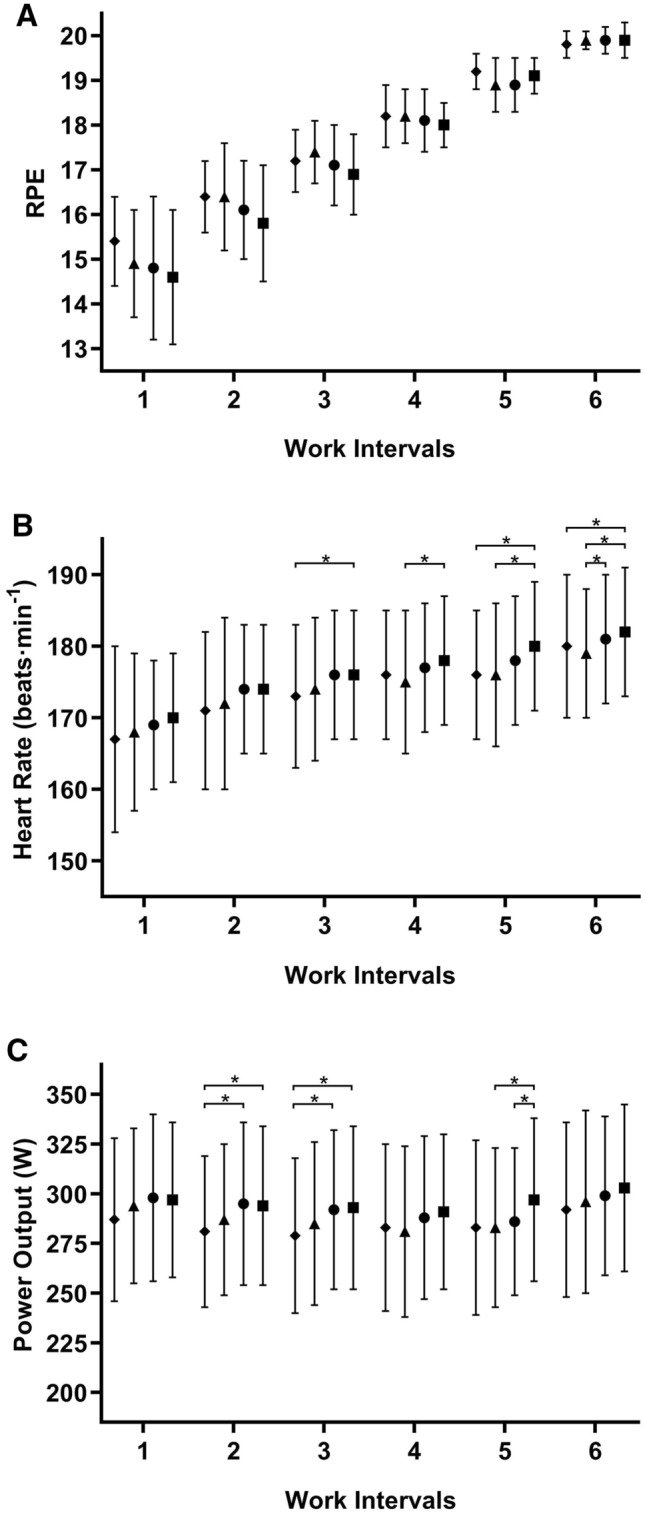
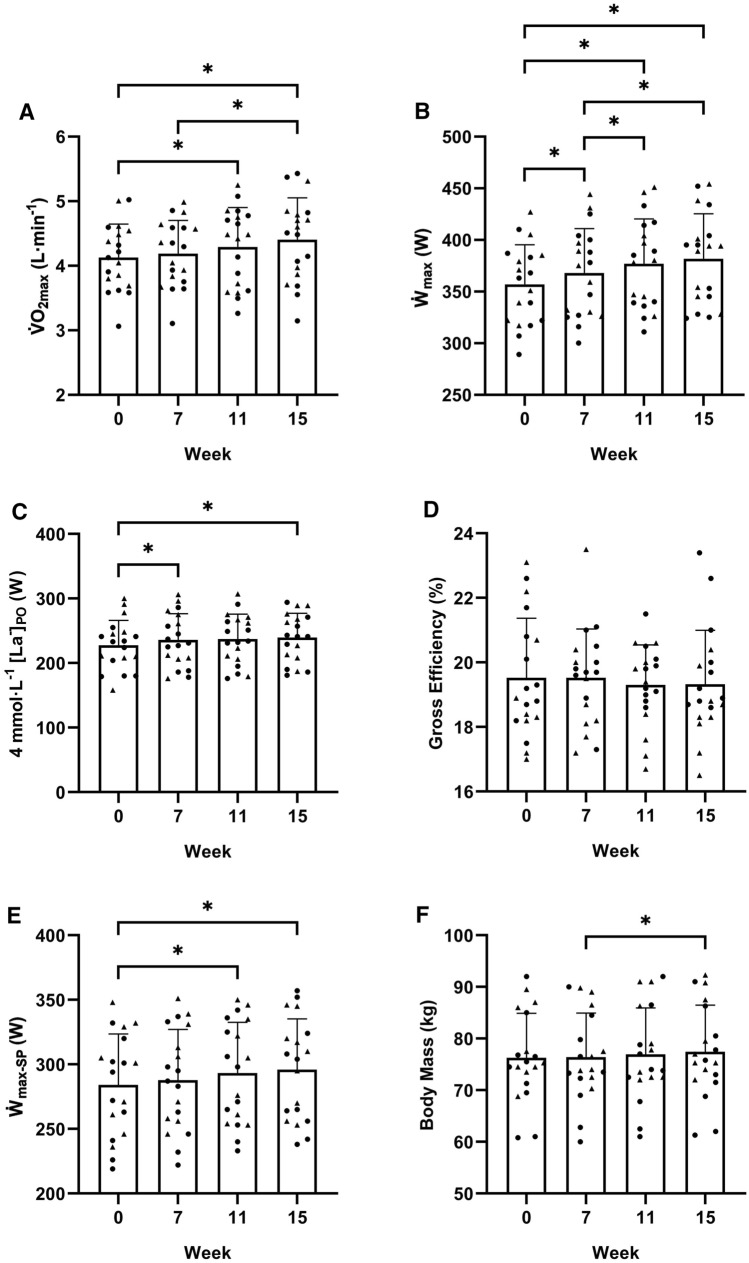
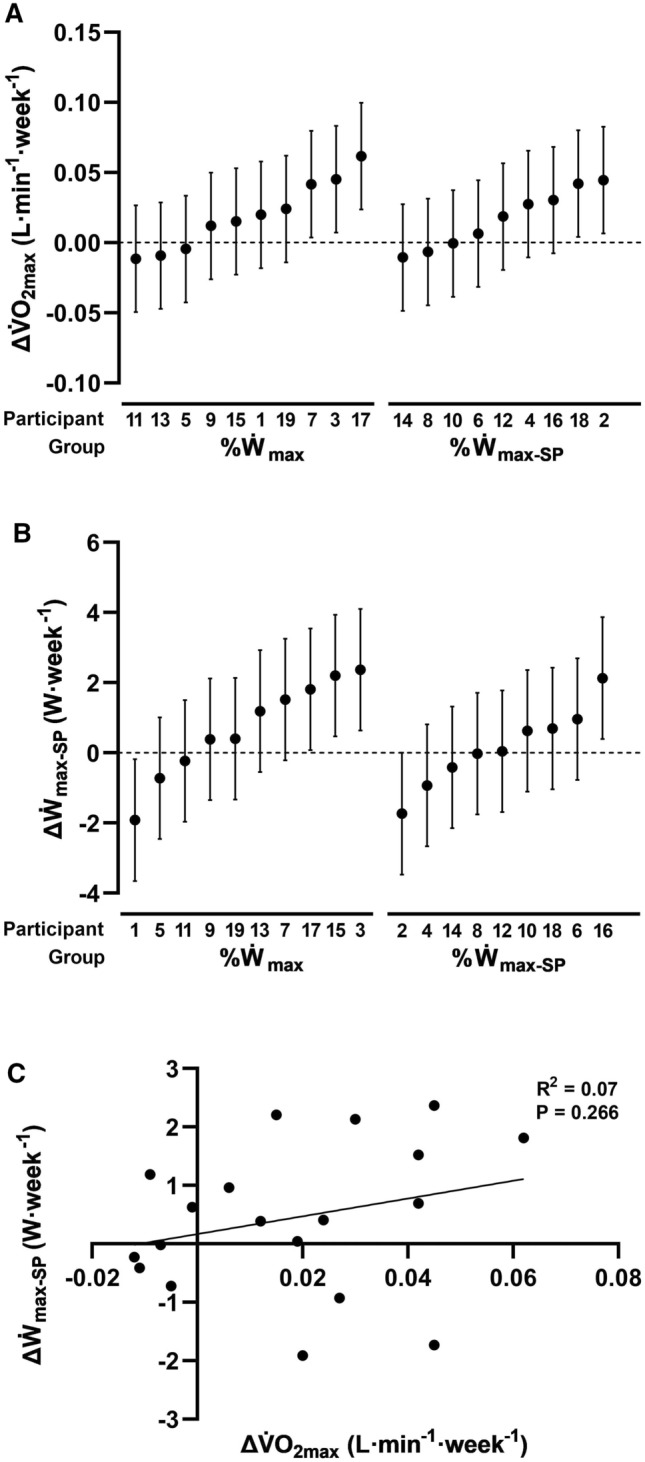
Purpose: To investigate the influence of exercise intensity normalisation on intra- and inter-individual acute and adaptive responses to an interval training programme. Methods: Nineteen cyclists were split in two groups differing (only) in how exercise intensity was normalised: 80% of the maximal work rate achieved in an incremental test (%$$\dot{\text{W}}$$ W ˙ max) vs. maximal sustainable work rate in a self-paced interval training session (%$$\dot{\text{W}}$$ W ˙ max-SP). Testing duplicates were conducted before and after an initial control phase, during the training intervention, and at the end, enabling the estimation of inter-individual variability in adaptive responses devoid of intra-individual variability. Results: Due to premature exhaustion, the median training completion rate was 88.8% for the %$$\dot{\text{W}}$$ W ˙ max group, but 100% for the %$$\dot{\text{W}}$$ W ˙ max-SP the group. Ratings of perceived exertion and heart rates were not sensitive to how intensity was normalised, manifesting similar inter-individual variability, although intra-individual variability was minimised for the %$$\dot{\text{W}}$$ W ˙ max-SP group. Amongst six adaptive response variables, there was evidence of individual response for only maximal oxygen uptake (standard deviation: 0.027 L·min−1·week−1) and self-paced interval training performance (standard deviation: 1.451 W·week−1). However, inter-individual variability magnitudes were similar between groups. Average adaptive responses were also similar between groups across all variables. Conclusions: To normalise completion rates of interval training, %$$\dot{\text{W}}$$ W ˙ max-SP should be used to prescribe relative intensity. However, the variability in adaptive responses to training may not reflect how exercise intensity is normalised, underlining the complexity of the exercise dose–adaptation relationship. True inter-individual variability in adaptive responses cannot always be identified when intra-individual variability is accounted for.
Overview
The claims and statistics of this paper haven’t been checked yet.
Free: it reads the open-access text and checks the first 5 claims that cite a source we can check. Create a free account to check every claim.
Integrity signals
Registry
Cites
Statistics
Figures
Verification
Claims the paper makes
The claims and statistics of this paper haven’t been checked yet.
Free: it reads the open-access text and checks the first 5 claims that cite a source we can check. Create a free account to check every claim.
Claims other papers make about this one
Each is checked against this paper’s own text: does it say what the citing paper says it does?
In the citing paper
“Similarly, there is significant variability in the physiological, performance, and health-related adaptations of individuals undergoing the same exercise training program [595].”
From Global consensus on optimal exercise recommendations for enhancing healthy longevity in older adults (ICFSR) (2025) · cites this paper as [595]
Self-check
Percentages, sums and reported differences re-computed from the paper’s own numbers.
The self-check needs the paper’s full text.
Citations
Cites
Psychophysical bases of perceived exertion
BORG, G. A. V. (1982) · Medicine & Science in Sports & Exercise · doi:10.1249/00005768-198205000-00012 · Cited by 16,580 · cited 1×
“RPE was assessed based on the 6–20 Borg’s scale (Borg 1982).”
MethodMixed-Effects Models in Sand S-PLUS
Pinheiro, J. C., & Bates, D. M. (2000) · Statistics and Computing · doi:10.1007/978-1-4419-0318-1 · Cited by 11,187
Exercise Metabolism and the Molecular Regulation of Skeletal Muscle Adaptation
Egan, B., & Zierath, J. R. (2013) · Cell Metabolism · doi:10.1016/j.cmet.2012.12.012 · Cited by 2,084 · cited 1×
“This theory draws upon molecular biology evidence that chronic adaptations to training originate from the cumulative effects of transient homeostatic perturbations associated with each exercise session (Perry et al. 2010; Egan and Zierath 2013).”
BackgroundEndurance exercise performance: the physiology of champions
Joyner, M. J., & Coyle, E. F. (2008) · The Journal of Physiology · doi:10.1113/jphysiol.2007.143834 · Cited by 1,307 · cited 1×
“Interestingly, modelled gains in ̇ V O 2max and ̇ W resulting from the training intervention did not correlate, despite ̇ V O 2max being generally considered the main endurance performance determinant (Joyner and Coyle 2008).”
BackgroundMixed-Effects Models in S and S-PLUS
(2000) · Statistics and Computing · doi:10.1007/b98882 · Cited by 930
Bouchard, C., An, P., Rice, T., Skinner, J. S., Wilmore, J. H., Gagnon, J., Pérusse, L., Leon, A. S., & Rao, D. C. (1999) · Journal of Applied Physiology · doi:10.1152/jappl.1999.87.3.1003 · Cited by 875 · cited 9×
“A major factor behind this phenomenon is suggested to be genetics (Mann et al. 2014; Meyler et al. 2021), estimated to account for approximately 50% of the changes in maximal oxygen uptake ( ̇ V O 2max ) (Bouchard et al. 1999, 2011).”
BackgroundMethodInfluentialAn Introduction to Linear Mixed-Effects Modeling in R
Brown, V. A. (2021) · Advances in Methods and Practices in Psychological Science · doi:10.1177/2515245920960351 · Cited by 576 · cited 1×
“The reader unfamiliarised with linear mixed models is referred to Brown (2021), Naumova et al. (2001), and Pinheiro and Bates (2020).”
Perry, C. G. R., Lally, J., Holloway, G. P., Heigenhauser, G. J. F., Bonen, A., & Spriet, L. L. (2010) · The Journal of Physiology · doi:10.1113/jphysiol.2010.199448 · Cited by 559 · cited 1×
“This theory draws upon molecular biology evidence that chronic adaptations to training originate from the cumulative effects of transient homeostatic perturbations associated with each exercise session (Perry et al. 2010; Egan and Zierath 2013).”
BackgroundOnset of Blood Lactate Accumulation and Marathon Running Performance
Sjödin, B., & Jacobs, I. (1981) · International Journal of Sports Medicine · doi:10.1055/s-2008-1034579 · Cited by 518 · cited 1×
“Power output associated with 4 mmol·L −1 [La − ], sometimes referred to as the onset of blood lactate accumulation (Sjödin and Jacobs 1981), was calculated for each cyclist from the relationship between [La − ] and power output in the last two stages.”
MethodAn Examination and Critique of Current Methods to Determine Exercise Intensity
Jamnick, N. A., Pettitt, R. W., Granata, C., Pyne, D. B., & Bishop, D. J. (2020) · Sports Medicine · doi:10.1007/s40279-020-01322-8 · Cited by 424 · cited 5×
“…exercise intensity normalisation may vary depending on target population, intensity domain of training (i.e. moderate, heavy, very heavy, or severe; see Rossiter (2011) for review), and exercise pattern (i.e. continuous or intermittent) (Mann et al. 2013; Jamnick et al. 2020; Meyler et al. 2023).”
BackgroundMethodResultInfluentialGenomic predictors of the maximal O2 uptake response to standardized exercise training programs
Bouchard, C., Sarzynski, M. A., Rice, T. K., Kraus, W. E., Church, T. S., Sung, Y. J., Rao, D. C., & Rankinen, T. (2011) · Journal of Applied Physiology · doi:10.1152/japplphysiol.00973.2010 · Cited by 422 · cited 3×
“A major factor behind this phenomenon is suggested to be genetics (Mann et al. 2014; Meyler et al. 2021), estimated to account for approximately 50% of the changes in maximal oxygen uptake ( ̇ V O 2max ) (Bouchard et al. 1999, 2011).”
BackgroundMethodMontero, D., & Lundby, C. (2017) · The Journal of Physiology · doi:10.1113/jp273480 · Cited by 384 · cited 5×
“Interestingly, Montero and Lundby (2017) have demonstrated that a maximised training dose is essential for enhancing the maximal work rate achieved in an incremental test ( ̇ W ) and ̇ V O 2max across all individuals within a study cohort.”
BackgroundInfluentialMann, T. N., Lamberts, R. P., & Lambert, M. I. (2014) · Sports Medicine · doi:10.1007/s40279-014-0197-3 · Cited by 379 · cited 5×
“A major factor behind this phenomenon is suggested to be genetics (Mann et al. 2014; Meyler et al. 2021), estimated to account for approximately 50% of the changes in maximal oxygen uptake ( ̇ V O 2max ) (Bouchard et al. 1999, 2011).”
BackgroundInfluentialMethods of Prescribing Relative Exercise Intensity: Physiological and Practical Considerations
Mann, T., Lamberts, R. P., & Lambert, M. I. (2013) · Sports Medicine · doi:10.1007/s40279-013-0045-x · Cited by 333 · cited 6×
“…exercise intensity normalisation may vary depending on target population, intensity domain of training (i.e. moderate, heavy, very heavy, or severe; see Rossiter (2011) for review), and exercise pattern (i.e. continuous or intermittent) (Mann et al. 2013; Jamnick et al. 2020; Meyler et al. 2023).”
BackgroundMethodInfluentialJones, A. M., & Vanhatalo, A. (2017) · Sports Medicine · doi:10.1007/s40279-017-0688-0 · Cited by 259 · cited 3×
“The relationship between work rate and sustainable duration is largely individual, particularly for intermittent exercise (Ferguson et al. 2013; Jones and Vanhatalo 2017; Meyler et al. 2023).”
BackgroundA Critical Evaluation of Current Methods for Exercise Prescription in Women and Men
IANNETTA, D., INGLIS, E. C., MATTU, A. T., FONTANA, F. Y., POGLIAGHI, S., KEIR, D. A., & MURIAS, J. M. (2020) · Medicine & Science in Sports & Exercise · doi:10.1249/mss.0000000000002147 · Cited by 236 · cited 6×
“…of exercise intensity normalisation in experimental studies do not provide comparable metabolic stress across participants (Mann et al. 2013; Iannetta et al. 2020; Jamnick et al. 2020; Vollaard et al. 2009; Meyler et al. 2021, 2023), contributing to variability in the extent to which…”
BackgroundMethodResultInfluentialExercise: Kinetic Considerations for Gas Exchange
Rossiter, H. B. (2010) · Comprehensive Physiology · doi:10.1002/cphy.c090010 · Cited by 231 · cited 4×
“A major factor behind this phenomenon is suggested to be genetics (Mann et al. 2014; Meyler et al. 2021), estimated to account for approximately 50% of the changes in maximal oxygen uptake ( ̇ V O 2max ) (Bouchard et al. 1999, 2011).”
BackgroundMethodInfluentialExercise at given percentages of VO2max: Heterogeneous metabolic responses between individuals
Scharhag-Rosenberger, F., Meyer, T., Gäßler, N., Faude, O., & Kindermann, W. (2010) · Journal of Science and Medicine in Sport · doi:10.1016/j.jsams.2008.12.626 · Cited by 214 · cited 2×
“2011; Scharhag-Rosenberger et al. 2010; Vollaard et al. 2009; Katch et al. 1978; Meyler et al. 2023), and certainly closer to the true inter-individual variability (Voisin et al. 2019; Hecksteden et al. 2018b).”
BackgroundValidity of the relative percent concept for equating training intensity
Katch, V., Weltman, A., Sady, S., & Freedson, P. (1978) · European Journal of Applied Physiology and Occupational Physiology · doi:10.1007/bf00421445 · Cited by 210 · cited 4×
“Research on exercise intensity normalisation has been ongoing since the late 1970’s, with Katch et al. (1978) and McLellan and Skinner (1985) amongst the first to challenge the efficacy of percentages of maximal heart rate and ̇ V O 2max .”
BackgroundMethodInfluentialVollaard, N. B. J., Constantin-Teodosiu, D., Fredriksson, K., Rooyackers, O., Jansson, E., Greenhaff, P. L., Timmons, J. A., & Sundberg, C. J. (2009) · Journal of Applied Physiology · doi:10.1152/japplphysiol.91453.2008 · Cited by 205 · cited 9×
“…responses to training, several authors have claimed that the extent to which each individual adapts to a standardised programme is fairly unique (Vollaard et al. 2009; Coakley and Passfield 2018; Bonafiglia et al. 2019; Preobrazenski et al. 2019; Astorino et al. 2018; Weatherwax et al. 2019;…”
BackgroundMethodInfluentialNaumova, E. N., Must, A., & Laird, N. M. (2001) · International Journal of Epidemiology · doi:10.1093/ije/30.6.1332 · Cited by 190 · cited 1×
“The reader unfamiliarised with linear mixed models is referred to Brown (2021), Naumova et al. (2001), and Pinheiro and Bates (2020).”
Changes in $$\dot V$$ O2 max and running performance with training
Daniels, J., Yarbrough, R. A., & Foster, C. (1978) · European Journal of Applied Physiology · doi:10.1007/bf00421448 · Cited by 187 · cited 1×
“Björklund et al. (2007) also found no correlation between ̇ V O 2max and time to exhaustion during an interval training session, whilst Daniels et al. (1978) and Vollaard et al. (2009) reported no association between changes in ̇ V O 2max and time-trial performance following a training intervention.”
Time course of the adaptive responses of aerobic power and heart rate to training
HICKSON, R. C., HAGBERG, J. M., EHSANI, A. A., & HOLLOSZY, J. O. (1981) · Medicine & Science in Sports & Exercise · doi:10.1249/00005768-198101000-00012 · Cited by 187 · cited 1×
“As ̇ V O 2max gains have been shown to plateau after 3 weeks of high-intensity training at the same work rates (Hickson et al. 1981), training targets were re-adjusted following the testing phase of week 11, no matter if participants exhibited an increase or a decrease in performance.”
MethodSeiler, S., Jøranson, K., Olesen, B. V., & Hetlelid, K. J. (2013) · Scandinavian Journal of Medicine & Science in Sports · doi:10.1111/j.1600-0838.2011.01351.x · Cited by 168 · cited 3×
“Frequently described as “ how elite athletes train ” (Brosnan et al. 2000; Villerius et al. 2008; Rønnestad et al. 2020; Seiler et al. 2013; Seiler and Sylta 2017; Nicolò et al. 2014), this approach is based on the premise that there exists an individualised maximal sustainable work rate for a…”
BackgroundMethodHow to Construct, Conduct and Analyze an Exercise Training Study?
Hecksteden, A., Faude, O., Meyer, T., & Donath, L. (2018) · Frontiers in Physiology · doi:10.3389/fphys.2018.01007 · Cited by 155 · cited 17×
“Accord-ingly, the question that arises is whether recreationally trained cyclists, as employed herein, are more susceptible to adaptive response heterogeneity than sedentary individuals, as employed in the HERITAGE Family Study (Bouchard et al. 1999) and elsewhere (Hecksteden et al. 2018b).”
BackgroundMethodResultInfluentialThe talk test: a useful tool for prescribing and monitoring exercise intensity
Reed, J. L., & Pipe, A. L. (2014) · Current Opinion in Cardiology · doi:10.1097/hco.0000000000000097 · Cited by 144 · cited 1×
“…(2019) showed no differences in the magnitude of inter-individual variability of several adaptive responses, including ̇ V O 2max , when prescriptions based on the maximal work rate from an incremental test (% ̇ W ) and the talk test were compared (see Reed and Pipe (2014) for talk test details).”
MethodIssues in the determination of ‘responders’ and ‘non‐responders’ in physiological research
Atkinson, G., Williamson, P., & Batterham, A. M. (2019) · Experimental Physiology · doi:10.1113/ep087712 · Cited by 136 · cited 6×
“Unless the pitfalls inherent to the analysis of raw variability are avoided (Voisin et al. 2019; Hecksteden et al. 2018b; Williamson et al. 2017; Atkinson et al. 2019), future investigations are unlikely to clarify our findings.”
BackgroundMethodResultInfluentialInter-Individual Responses of Maximal Oxygen Uptake to Exercise Training: A Critical Review
Williamson, P., Atkinson, G., & Batterham, A. M. (2017) · Sports Medicine · doi:10.1007/s40279-017-0680-8 · Cited by 112
Repeated testing for the assessment of individual response to exercise training
Hecksteden, A., Pitsch, W., Rosenberger, F., & Meyer, T. (2018) · Journal of Applied Physiology · doi:10.1152/japplphysiol.00896.2017 · Cited by 109 · cited 17×
“Accord-ingly, the question that arises is whether recreationally trained cyclists, as employed herein, are more susceptible to adaptive response heterogeneity than sedentary individuals, as employed in the HERITAGE Family Study (Bouchard et al. 1999) and elsewhere (Hecksteden et al. 2018b).”
BackgroundMethodResultInfluentialA ‘New’ Method to Normalise Exercise Intensity
Lansley, K. E., DiMenna, F. J., Bailey, S. J., & Jones, A. M. (2011) · International Journal of Sports Medicine · doi:10.1055/s-0031-1273754 · Cited by 107 · cited 3×
“…likely due to the limited empirical support for alternative approaches, such as the delta concept, which considers different physiological anchors (Lansley et al. 2011; McLellan and Skinner 1985; Meyler et al. 2023), critical power modelling (Ferguson et al. 2013; Jones and Vanhatalo 2017; Meyler…”
BackgroundInfluentialIncidence of V˙O2max Responders to Personalized versus Standardized Exercise Prescription
WEATHERWAX, R. M., HARRIS, N. K., KILDING, A. E., & DALLECK, L. C. (2019) · Medicine & Science in Sports & Exercise · doi:10.1249/mss.0000000000001842 · Cited by 101 · cited 10×
“Moreover, conflicting evidence exists as to whether certain intensity prescription methods could minimise adaptive variability (Weatherwax et al. 2019; McLel-lan and Skinner 1981; Preobrazenski et al. 2019).”
BackgroundMethodResultInfluentialGaskill, S. E., Walker, A. J., Serfass, R. A., Bouchard, C., Gagnon, J., Rao, D. C., Skinner, J. S., Wilmore, J. H., & Leon, A. S. (2001) · International Journal of Sports Medicine · doi:10.1055/s-2001-18522 · Cited by 94 · cited 2×
“Similarly, Gaskill et al. (2001) showed that training intensity in the HERITAGE Family Study, originally normalised as % ̇ V O 2max (Bouchard et al. 1999), accounted for 26% of the gains in the oxygen uptake associated with VT 1 when expressed as %VT 1 .”
BackgroundComparing Continuous and Intermittent Exercise: An “Isoeffort” and “Isotime” Approach
Nicolò, A., Bazzucchi, I., Haxhi, J., Felici, F., & Sacchetti, M. (2014) · PLoS ONE · doi:10.1371/journal.pone.0094990 · Cited by 86 · cited 5×
“…as “ how elite athletes train ” (Brosnan et al. 2000; Villerius et al. 2008; Rønnestad et al. 2020; Seiler et al. 2013; Seiler and Sylta 2017; Nicolò et al. 2014), this approach is based on the premise that there exists an individualised maximal sustainable work rate for a given interval…”
BackgroundMethodResultInfluentialSelf-pacing increases critical power and improves performance during severe-intensity exercise
Black, M. I., Jones, A. M., Bailey, S. J., & Vanhatalo, A. (2015) · Applied Physiology, Nutrition, and Metabolism · doi:10.1139/apnm-2014-0442 · Cited by 79 · cited 1×
“…̇ W neverthe-less assumes that a) individuals can pace maximal efforts to deliver performances consistent with their capacity; and b) self-and ergometer-paced performances are equivalent when the mean work rate is the same, which may not be universally true (Black et al. 2015; Thomas et al. 2013).”
BackgroundThe Effects of Training on Gross Efficiency in Cycling: A Review
Hopker, J., Passfield, L., Coleman, D. A., Jobson, S., Edwards, L., & Carter, H. (2009) · International Journal of Sports Medicine · doi:10.1055/s-0029-1237712 · Cited by 78 · cited 1×
“Gross efficiency, measured as the ratio between power output and energy expenditure (Hopker et al. 2009), was calculated at 150 W from the mean gas exchanges in the last 2.5 min of the stage.”
MethodInfluentialSelf-citationMeyler, S., Bottoms, L., & Muniz‐Pumares, D. (2021) · Experimental Physiology · doi:10.1113/ep089565 · Cited by 67 · cited 3×
“A major factor behind this phenomenon is suggested to be genetics (Mann et al. 2014; Meyler et al. 2021), estimated to account for approximately 50% of the changes in maximal oxygen uptake ( ̇ V O 2max ) (Bouchard et al. 1999, 2011).”
BackgroundMeyler, S., Bottoms, L., Wellsted, D., & Muniz‐Pumares, D. (2023) · Experimental Physiology · doi:10.1113/ep090878 · Cited by 66 · cited 8×
“…anchors (Lansley et al. 2011; McLellan and Skinner 1985; Meyler et al. 2023), critical power modelling (Ferguson et al. 2013; Jones and Vanhatalo 2017; Meyler et al. 2023), and maximal self-paced intervals (Villerius et al. 2008; Seiler and Sylta 2017; Nicolò et al. 2014; Brosnan et al. 2000).”
BackgroundResultInfluentialImpaired interval exercise responses in elite female cyclists at moderate simulated altitude
Brosnan, M. J., Martin, D. T., Hahn, A. G., Gore, C. J., & Hawley, J. A. (2000) · Journal of Applied Physiology · doi:10.1152/jappl.2000.89.5.1819 · Cited by 66 · cited 4×
“Frequently described as “ how elite athletes train ” (Brosnan et al. 2000; Villerius et al. 2008; Rønnestad et al. 2020; Seiler et al. 2013; Seiler and Sylta 2017; Nicolò et al. 2014), this approach is based on the premise that there exists an individualised maximal sustainable work rate for a…”
BackgroundMethodResultInfluentialRønnestad, B. R., Hansen, J., Nygaard, H., & Lundby, C. (2020) · Scandinavian Journal of Medicine and Science in Sports · doi:10.1111/sms.13627 · Cited by 65 · cited 3×
“Frequently described as “ how elite athletes train ” (Brosnan et al. 2000; Villerius et al. 2008; Rønnestad et al. 2020; Seiler et al. 2013; Seiler and Sylta 2017; Nicolò et al. 2014), this approach is based on the premise that there exists an individualised maximal sustainable work rate for a…”
BackgroundMethodConcepts About V˙O2max and Trainability Are Context Dependent
Joyner, M. J., & Lundby, C. (2018) · Exercise and Sport Sciences Reviews · doi:10.1249/jes.0000000000000150 · Cited by 61 · cited 1×
“This suggests that McLellan and Skinner (1981) and Preobrazenski et al. (2019) may not have provided their participants with sufficient training stress, making it difficult to untangle potential between-group differences in adaptive variability (Joyner and Lundby 2018).”
BackgroundReproducibility of Time at or near V·O2max during Intermittent Treadmill Running
Midgley, A. W., McNaughton, L. R., & Carroll, S. (2007) · International Journal of Sports Medicine · doi:10.1055/s-2006-923856 · Cited by 47 · cited 1×
“This is expected, due to normal day-to-day performance variability (Midgley et al. 2007) plus the combined effects of gradual training adaptation and work rate adjustment at week 11 (see RPE on page 2 of supplementary material for evidence of the latter effects).”
Test?retest errors and the apparent heterogeneity of training response
Shephard, R. J., Rankinen, T., & Bouchard, C. (2004) · European Journal of Applied Physiology · doi:10.1007/s00421-003-0990-4 · Cited by 47 · cited 3×
“Given that Shephard et al. (2004) were not able to account for intra-individual variability associated with identical training programmes, either through repeated testing or repeated interventions (Voisin et al. 2019; Hecksteden et al. 2018b), the 0.007–0.006 L·min −1 ·week −1 figure likely still…”
BackgroundMethodInfluentialStatistical Considerations for Exercise Protocols Aimed at Measuring Trainability
Voisin, S., Jacques, M., Lucia, A., Bishop, D. J., & Eynon, N. (2019) · Exercise and Sport Sciences Reviews · doi:10.1249/jes.0000000000000176 · Cited by 40 · cited 10×
“Unless the pitfalls inherent to the analysis of raw variability are avoided (Voisin et al. 2019; Hecksteden et al. 2018b; Williamson et al. 2017; Atkinson et al. 2019), future investigations are unlikely to clarify our findings.”
BackgroundMethodInfluentialOptimizing Interval Training Through Power-Output Variation Within the Work Intervals
Bossi, A. H., Mesquida, C., Passfield, L., Rønnestad, B. R., & Hopker, J. (2020) · International Journal of Sports Physiology and Performance · doi:10.1123/ijspp.2019-0260 · Cited by 38 · cited 1×
“…training, replacing intervals at predefined work rates (Rønnestad et al. 2020; Seiler and Sylta 2017; Seiler et al. 2013), some physiological responses such as oxygen uptake are sensitive to large power output variations within (Bossi et al. 2020) and between work intervals (Ferguson et al. 2013).”
BackgroundSelf-citationDel Giudice, M., Bonafiglia, J. T., Islam, H., Preobrazenski, N., Amato, A., & Gurd, B. J. (2020) · Journal of Science and Medicine in Sport · doi:10.1016/j.jsams.2019.09.007 · Cited by 37 · cited 5×
“…et al. 2009; Bouchard et al. 1999, 2011; Hecksteden et al. 2018b; Coakley and Passfield 2018; Bonafiglia et al. 2019; Montero and Lundby 2017; Del Giudice et al. 2020), most likely due to the limited empirical support for alternative approaches, such as the delta concept, which considers…”
BackgroundMethodInfluentialAstorino, T. A., DeRevere, J. L., Anderson, T., Kellogg, E., Holstrom, P., Ring, S., & Ghaseb, N. (2018) · European Journal of Applied Physiology · doi:10.1007/s00421-018-3910-3 · Cited by 35 · cited 4×
“…inter-individual variability in adaptive responses to a training programme (Bouchard et al. 1999; Vollaard et al. 2009; Coakley and Passfield 2018; Montero and Lundby 2017; Astorino et al. 2018; Bonafiglia et al. 2019; Weatherwax et al. 2019; Del Giudice et al. 2020; Hecksteden et al. 2018b).”
BackgroundResultInfluentialHow Does Interval-Training Prescription Affect Physiological and Perceptual Responses?
Seiler, S., & Sylta, Ø. (2017) · International Journal of Sports Physiology and Performance · doi:10.1123/ijspp.2016-0464 · Cited by 31 · cited 6×
“In line with other studies (Villerius et al. 2008; Seiler and Sylta 2017; Nicolò et al. 2014; Brosnan et al. 2000), RPE increased quasi-linearly during the self-paced interval training sessions, approaching 20 in the last work interval (see Fig.”
BackgroundMethodResultInfluentialPreobrazenski, N., Bonafiglia, J. T., Nelms, M. W., Lu, S., Robins, L., LeBlanc, C., & Gurd, B. J. (2018) · Applied Physiology, Nutrition, and Metabolism · doi:10.1139/apnm-2018-0343 · Cited by 31 · cited 16×
“Moreover, conflicting evidence exists as to whether certain intensity prescription methods could minimise adaptive variability (Weatherwax et al. 2019; McLel-lan and Skinner 1981; Preobrazenski et al. 2019).”
BackgroundMethodResultInfluentialMarini, C. F., Sisti, D., Leon, A. S., Skinner, J. S., Sarzynski, M. A., Bouchard, C., Rocchi, M., Piccoli, G., Stocchi, V., Federici, A., et al. (2020) · Medicine & Science in Sports & Exercise · doi:10.1249/mss.0000000000002434 · Cited by 30 · cited 1×
“Subsequent studies have also identified short-comings in other traditional methods, namely % ̇ W and ̇ V O 2max /heart rate reserve (Iannetta et al. 2020; Jamnick et al. 2020; Mann et al. 2013; Marini et al. 2021).”
BackgroundThe use of the aerobic threshold as a basis for training.
Tm, M., & Skinner, J. S. (1981) · PubMed · Cited by 29
Submaximal endurance performance related to the ventilation thresholds.
Tm, M., & Skinner, J. S. (1985) · PubMed · Cited by 27
Ferguson, C., Wilson, J., Birch, K. M., & Kemi, O. J. (2013) · PLoS ONE · doi:10.1371/journal.pone.0076420 · Cited by 24 · cited 4×
“The relationship between work rate and sustainable duration is largely individual, particularly for intermittent exercise (Ferguson et al. 2013; Jones and Vanhatalo 2017; Meyler et al. 2023).”
BackgroundInfluentialBonafiglia, J. T., Ross, R., & Gurd, B. J. (2019) · European Journal of Applied Physiology · doi:10.1007/s00421-019-04078-w · Cited by 21 · cited 4×
“…that the extent to which each individual adapts to a standardised programme is fairly unique (Vollaard et al. 2009; Coakley and Passfield 2018; Bonafiglia et al. 2019; Preobrazenski et al. 2019; Astorino et al. 2018; Weatherwax et al. 2019; Montero and Lundby 2017; Del Giudice et al. 2020;…”
BackgroundMethodInfluentialThe effect of an even-pacing strategy on exercise tolerance in well-trained cyclists
Thomas, K., Stone, M. R., Gibson, A. S. C., Thompson, K., & Ansley, L. (2013) · European Journal of Applied Physiology · doi:10.1007/s00421-013-2734-4 · Cited by 20 · cited 1×
“…̇ W neverthe-less assumes that a) individuals can pace maximal efforts to deliver performances consistent with their capacity; and b) self-and ergometer-paced performances are equivalent when the mean work rate is the same, which may not be universally true (Black et al. 2015; Thomas et al. 2013).”
BackgroundCoakley, S. L., & Passfield, L. (2017) · Journal of Sports Sciences · doi:10.1080/02640414.2017.1346269 · Cited by 18 · cited 4×
“…physiological adaptations varies between individuals undertaking the same exercise training programme (Bouchard et al. 1999; Vol-laard et al. 2009; Coakley and Passfield 2018; Montero and Lundby 2017; Astorino et al. 2018; Bonafiglia et al. 2019; McLellan and Skinner 1981; Preobrazenski et al.…”
BackgroundMethodInfluentialSelf-citationPerformance predicting factors in prolonged exhausting exercise of varying intensity
Björklund, G., Pettersson, S., & Schagatay, E. K. A. (2006) · European Journal of Applied Physiology · doi:10.1007/s00421-006-0352-0 · Cited by 16 · cited 1×
“Björklund et al. (2007) also found no correlation between ̇ V O 2max and time to exhaustion during an interval training session, whilst Daniels et al. (1978) and Vollaard et al. (2009) reported no association between changes in ̇ V O 2max and time-trial performance following a training intervention.”
Villerius, V., Duc, S., & Grappe, F. (2008) · International Journal of Sports Medicine · doi:10.1055/s-2007-989317 · Cited by 5 · cited 4×
“Frequently described as “ how elite athletes train ” (Brosnan et al. 2000; Villerius et al. 2008; Rønnestad et al. 2020; Seiler et al. 2013; Seiler and Sylta 2017; Nicolò et al. 2014), this approach is based on the premise that there exists an individualised maximal sustainable work rate for a…”
BackgroundMethodResultInfluential(1991) · PubMed
Cited by
Izquierdo, M., de Souto Barreto, P., Arai, H., Bischoff-Ferrari, H. A., Cadore, E. L., Cesari, M., Chen, L.-K., Coen, P. M., Courneya, K. S., Duque, G., et al. (2025) · The Journal of nutrition, health and aging · doi:10.1016/j.jnha.2024.100401 · Cited by 273
Revisiting the ‘Whys’ and ‘Hows’ of the Warm-Up: Are We Asking the Right Questions?
Afonso, J. R., Brito, J., Abade, E., Rendeiro-Pinho, G., Baptista, I., Figueiredo, P., & Nakamura, F. Y. (2023) · Sports Medicine · doi:10.1007/s40279-023-01908-y · Cited by 82
Different categories of VO 2 kinetics in the ‘extreme’ exercise intensity domain
Özkaya, Ö., JONES, A. M., Burnley, M., As, H., & Balcı, G. A. (2023) · Journal of Sports Sciences · doi:10.1080/02640414.2024.2316504 · Cited by 13
“…high-intensity interval training (HIIT), sprint interval training (SIT) and repeated sprint training (RST) lacks a clear scientific foundation and can result in heterogeneous physiological and performance responses between individuals (Bossi, Cole, et al., 2023; Bossi, Naumann, et al., 2023).”
BackgroundSupramaximal interval training using anaerobic speed reserve or sprint interval training in rowers
Yu, T., Jinghui, Z., Chuanwei, D., Zijian, Z., & Yuxiong, X. (2025) · Frontiers in Physiology · doi:10.3389/fphys.2025.1516268 · Cited by 9
Afonso, P., Forte, P. M., Branquinho, L., Ferraz, R. M. P., Garrido, N. D., & Teixeira, J. E. (2026) · Frontiers in Sports and Active Living · doi:10.3389/fspor.2025.1720353 · Cited by 5
Metadata
- Authors
- Bossi, A. H., Naumann, U., Passfield, L., & Hopker, J.
- Affiliations
- University of Kent (GB)
- University of Calgary (CA)
- Corresponding author
- Bossi, Arthur Henrique
- Venue
- European Journal of Applied Physiology
- Published
- 2023-11-15
- Volume
- 124
- Issue
- 4
- Pages
- 1201-1216
- ISSN
- 0020-9376 (ISSN-L)
- 1439-6319
- 1439-6327
- PMC
- PMC10954971
- OpenAlex
- W4388695228
- Cited by
- 13
- References
- 57
- Citations by year
- 2026: 6 · 2025: 4 · 2024: 1 · 2023: 2
- FWCI
- 3.85
- Type
- journal article
- Language
- en
- Open access
- hybrid
- doi.org
- Licence
- cc-by
- creativecommons.org/licenses/by/4.0 (tdm)
- creativecommons.org/licenses/by/4.0 (vor)
- Locations
- European Journal of Applied Physiology (publishedVersion, cc-by)
- PubMed (publishedVersion)
- Edinburgh Napier Research Repository (Edinburgh Napier University) (acceptedVersion, cc-by)
- PUBLISSO (German National Library of Medicine) (submittedVersion, cc-by)
- Kent Academic Repository (University of Kent) (submittedVersion, cc-by)
- Funders
- Conselho Nacional de Desenvolvimento Científico e Tecnológico (200700/2015-4)
- Topics
- Health Sciences › Medicine › Orthopedics and Sports Medicine › Sports Performance and Training
- Health Sciences › Medicine › Physiology (medical) › Cardiovascular and exercise physiology
- Health Sciences › Medicine › Physiology (medical) › Exercise and Physiological Responses
- Keywords
- interval training, interindividual variability, within-person variability, adaptive response, acute exercise response, self-paced exercise, VO2max, cyclists, exercise prescription
- MeSH terms
- High-Intensity Interval Training, Exercise Test, Heart Rate, Humans, Oxygen Consumption, Exercise
About these checks
Registry, retraction, Cites and statistics results are computed, not judged, with one exception: a printed reference that no index lists is read once by a model before it counts as a citation error. Claims are extracted by a model and kept only when their quote appears verbatim in the text; each cited source is then checked, with a model’s help, for whether it says what the claim relies on. Those verdicts can be wrong — read the claim’s quote and the cited source before relying on one.
Statistics and arithmetic are recomputed, not judged.
Confidence bands are shown only for fields calibrated on our annotated test set. None is calibrated yet, so no band is shown.
What counts as a claim ›How we measure confidence ›How we check this ›
Are you an author, or do you see a problem with this page? Request a review
Data sources
Bibliographic data: Semantic Scholar, OpenAlex, Crossref.
Contains information from the Semantic Scholar Academic Graph Datasets, made available under the ODC Attribution License (ODC-BY 1.0).
Semantic Scholar’s data is described in: Kinney, R., et al. (2023). The Semantic Scholar Open Data Platform. arXiv:2301.10140.
