

UTCI—Why another thermal index?
Open accessThe DOI matches its Crossref record; 50 of the 50 references it cites were found in a registry or an index.
Abstract
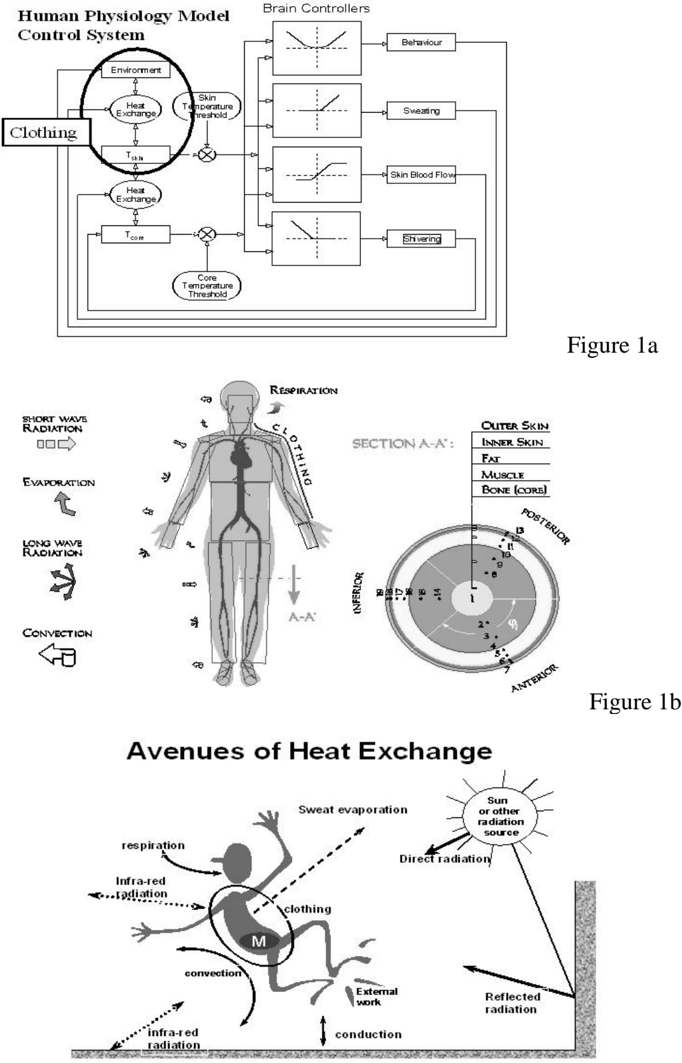
Existing procedures for the assessment of the thermal environment in the fields of public weather services, public health systems, precautionary planning, urban design, tourism and recreation and climate impact research exhibit significant shortcomings. This is most evident for simple (mostly two-parameter) indices, when comparing them to complete heat budget models developed since the 1960s. ISB Commission 6 took up the idea of developing a Universal Thermal Climate Index (UTCI) based on the most advanced multi-node model of thermoregulation representing progress in science within the last three to four decades, both in thermo-physiological and heat exchange theory. Creating the essential research synergies for the development of UTCI required pooling the resources of multidisciplinary experts in the fields of thermal physiology, mathematical modelling, occupational medicine, meteorological data handling (in particular radiation modelling) and application development in a network. It was possible to extend the expertise of ISB Commission 6 substantially by COST (a European programme promoting Cooperation in Science and Technology) Action 730 so that finally over 45 scientists from 23 countries (Australia, Canada, Israel, several Europe countries, New Zealand, and the United States) worked together. The work was performed under the umbrella of the WMO Commission on Climatology (CCl). After extensive evaluations, Fiala's multi-node human physiology and thermal comfort model (FPC) was adopted for this study. The model was validated extensively, applying as yet unused data from other research groups, and extended for the purposes of the project. This model was coupled with a state-of-the-art clothing model taking into consideration behavioural adaptation of clothing insulation by the general urban population in response to actual environmental temperature. UTCI was then derived conceptually as an equivalent temperature (ET). Thus, for any combination of air temperature, wind, radiation, and humidity (stress), UTCI is defined as the isothermal air temperature of the reference condition that would elicit the same dynamic response (strain) of the physiological model. As UTCI is based on contemporary science its use will standardise applications in the major fields of human biometeorology, thus making research results comparable and physiologically relevant.
Overview
The claims and statistics of this paper haven’t been checked yet.
Free: it reads the open-access text and checks the first 5 claims that cite a source we can check. Create a free account to check every claim.
Integrity signals
Registry
Cites
Statistics
Figures

Verification
Claims the paper makes
The claims and statistics of this paper haven’t been checked yet.
Free: it reads the open-access text and checks the first 5 claims that cite a source we can check. Create a free account to check every claim.
Claims other papers make about this one
Each is checked against this paper’s own text: does it say what the citing paper says it does?
The source backs part of the claim, not all of it — or backs it for a different population, condition or comparison.
In the citing paper
“A recently proposed Universal Thermal Climate Index (UTCI) (2009), based on an advanced human thermoregulation model, directly uses meteorological data to predict the impact of outdoor climate on thermal physiological and perceptual responses (Jendritzky et al. 2012; Bröde et al. 2012a, b; Fiala et al. 2012; Havenith et al. 2012; Kampmann et al. 2012; Parsons 2013; Havenith and Fiala 2016).”
From Occupational heat stress assessment and protective strategies in the context of climate change (2018) · cites this paper as Jendritzky et al. 2012
Experimental — accuracy not yet measured
Self-check
Percentages, sums and reported differences re-computed from the paper’s own numbers.
The self-check needs the paper’s full text.
Citations
Cites
Höppe, P. (1999) · International Journal of Biometeorology · doi:10.1007/s004840050118 · Cited by 2,429
Modelling radiation fluxes in simple and complex environments: basics of the RayMan model
Matzarakis, A., Rutz, F., & Mayer, H. (2010) · International Journal of Biometeorology · doi:10.1007/s00484-009-0261-0 · Cited by 1,633
Modelling radiation fluxes in simple and complex environments—application of the RayMan model
Matzarakis, A., Rutz, F., & Mayer, H. (2007) · International Journal of Biometeorology · doi:10.1007/s00484-006-0061-8 · Cited by 1,365
Deriving the operational procedure for the Universal Thermal Climate Index (UTCI)
Bröde, P., Fiala, D., Błażejczyk, K., Holmér, I., Jendritzky, G., Kampmann, B., Tinz, B., & Havenith, G. (2012) · International Journal of Biometeorology · doi:10.1007/s00484-011-0454-1 · Cited by 1,243
Self-citationComparison of UTCI to selected thermal indices
Blazejczyk, K., Epstein, Y., Jendritzky, G., Staiger, H., & Tinz, B. (2012) · International Journal of Biometeorology · doi:10.1007/s00484-011-0453-2 · Cited by 1,129
Self-citationA standard predictive index of human response to the thermal environment
Gagge, A. P., Fobelets, A. P. R., & Berglund, L. G. (1986) · ASHRAE winter conference papers · Cited by 1,053
UTCI-Fiala multi-node model of human heat transfer and temperature regulation
Fiala, D., Havenith, G., Bröde, P., Kampmann, B., & Jendritzky, G. (2012) · International Journal of Biometeorology · doi:10.1007/s00484-011-0424-7 · Cited by 994
Self-citationFiala, D., Lomas, K. J., & Stohrer, M. (1999) · Journal of Applied Physiology · doi:10.1152/jappl.1999.87.5.1957 · Cited by 849
Fiala, D., Lomas, K. J., & Stohrer, M. (2001) · International Journal of Biometeorology · doi:10.1007/s004840100099 · Cited by 754
A model of human physiology and comfort for assessing complex thermal environments
Huizenga, C., Hui, Z., & Arens, E. (2001) · Building and Environment · doi:10.1016/s0360-1323(00)00061-5 · Cited by 585
Research works printed but not linked: 12
- 3. Blazejczyk K, Epstein Y, Jendritzky G, Staiger H, Tinz B (2011) Comparison of UTCI to selected thermal indices. Int J Biometeorol XX; YY-YZ Bröde P, Kampmann B, Havenith G, Jendritzky G (2008) Effiziente Berechnung des klimatischen Belastungs-Index UTCI. In: Gesellschaft für Arbeitswissenschaft (ed.): Produkt-und Produktions-Ergonomie -Aufgabe für Entwickler und Planer, GfA-Press, Dortmund: 271-274.
- 4. Bröde P, Fiala D, Blazejczyk K, Epstein Y, Holmér I, Jendritzky G, Kampmann B, Richards M, Rintamäki H, Shitzer A, Havenith G (2009a) Calculating UTCI Equivalent Temperature. In: Castellani, JW; Endrusick, TL (eds.): Environmental Ergonomics XIII, University of Wollongong, Wollongong: 49-53
- 5. Bröde P, Fiala D, Kampmann B, Havenith G, Jendritzky G (2009b) Der Klimaindex UTCI - Multivariate Analyse der Reaktion eines thermophysiologischen Simulationsmodells. In: Gesellschaft für Arbeitswissenschaft (ed.): Arbeit, Beschäftigungsfähigkeit und Produktivität im 21. Jahrhundert, GfA-Press, Dortmund: 705-708
- 9. Driscoll DM (1992) Thermal Comfort Indexes. Current Uses and Abuses. Nat. Weather Digest, 17, (4): 33-38
- 11. Fanger PO (1970) Thermal Comfort. Analysis and Application in Environmental Engineering. Danish Technical Press, Copenhagen
- 22. Horikoshi T, Tsuchikawa T, Kurazumi Y, Matsubara N (1995): Mathematical expression of combined and separate effect of air temperature, humidity, air velocity and thermal radiation on thermal comfort. Archives of Complex Environmental Studies, 7 (3-4): 9- 12
- 30. Jendritzky G (1990) Bioklimatische Bewertungsgrundlage der Räume am Beispiel von mesoskaligen Bioklimakarten. In: Jendritzky G, Schirmer H, Menz G, Schmidt- Kessen W: Methode zur raumbezogenen Bewertung der thermischen Komponente im Bioklima des Menschen (Fortgeschriebenes Klima-Michel-Modell). Akad Raumforschung Landesplanung, Hannover, Beiträge 114: 7-69
- 31. Jendritzky G, Maarouf A, Fiala D, Staiger H (2002) An Update on the Development of a Universal Thermal Climate Index. 15 th Conf. Biomet. Aerobiol. and 16 th ICB02, 27 Oct -1 Nov 2002, Kansas City, AMS: 129-133
- 33. Kampmann B, Bröde P (2009) Physiological Responses to Temperature and Humidity Compared With Predictions of PHS and WBGT. In: Castellani, JW; Endrusick, TL (eds.): Environmental Ergonomics XIII, University of Wollongong, Wollongong: 54- 58.
- 43. Psikuta A, Fiala D, Richards M (2007) Validation of the Fiala Model of Human Physiology and Comfort for COST 730. In: Mekjavic IB, Kounalakis SN, Taylor NAS (eds.) Proceedings of the 12th International Conference on Environmental Ergonomics XII, Biomed, Ljubljana: 516
- 45. Richards M and Havenith G (2007) Progress towards the final UTCI model. In: Mekjavic IB, Kounalakis SN, Taylor NAS (eds.) Proceedings of the 12th International Conference on Environmental Ergonomics. August 19-24, 2007, Piran Slovenia. Biomed, Ljubljana: 521-524
- 50. Steadman RG (1994): Norms of apparent temperature in Australia. Aust. Met. Mag. 43: 1-16
Cited by
Items 901–1,000 of 1,000
Wieczorek, J., Bochenek, B., Strzyżewski, T., Hajto, M. J., Sekuła, P., Bokwa, A., & Zimnoch, M. (2024) · Acta Geographica Lodziensia · doi:10.26485/agl/2024/117/9 · Cited by 3
Cheung, P. K., & Livesley, S. J. (2025) · Building and Environment · doi:10.1016/j.buildenv.2025.112679 · Cited by 4
Determination of Bioclimatic Comfort Structure of the Isparta City Center for Outdoor Recreation
Sert, E. M., & Topay, M. (2023) · Polish Journal of Environmental Studies · doi:10.15244/pjoes/170004 · Cited by 3
“With the development of the human body’s energy balance models in the seventies and eighties, thermal comfort studies have made significant progress in developing rational indices [38].”
BackgroundThermal Comfort Simulation-Based Forest Management Scenarios for Forest Healing
Song, D., Park, S., Lee, Y. H., & Kim, G. (2024) · Forests · doi:10.3390/f15111859 · Cited by 3
Numerical experiments on the impact of wetland park on regional climatic comfort
Zhu, H., Liu, X., Ji, S., Wang, Y., Dai-qiang, L. I. A. O., & Jie, Z. H. O. U. (2019) · 自然资源学报 · doi:10.31497/zrzyxb.20190216 · Cited by 3
Green Footprint Calibration to Addressing Urban Health While Enhancing Outdoor Thermal Comfort
Allam, S. Z. (2021) · Civil Engineering and Architecture · doi:10.13189/cea.2021.090315 · Cited by 3
How Thermal Perceptual Schema Mediates Landscape Quality Evaluation and Activity Willingness
Li, W., Wu, J., Xu, W., Zhong, Y., & Wang, Z. (2022) · International Journal of Environmental Research and Public Health · doi:10.3390/ijerph192013681 · Cited by 3
“In the past decades, a variety of thermal perception evaluation metrics have been constructed [3,4].”
BackgroundAssessing the potential of heat stress mitigation in asymmetrical street conditions of Bhopal city
Ojha, S. K., & Mukherjee, M. (2024) · Theoretical and Applied Climatology · doi:10.1007/s00704-024-05175-3 · Cited by 3
Peng, Z., Bardhan, R., & Steemers, K. (2022) · Strathprints: The University of Strathclyde institutional repository (University of Strathclyde) · doi:10.17868/strath.00080408 · Cited by 3
Cañedo, J. Y. L., Rincón-Martínez, J. C., & Fernández-Melchor, F. (2021) · Revista de Ciencias Tecnológicas · doi:10.37636/recit.v425880 · Cited by 3
“A lo largo del tiempo se han desarrollado índices térmicos para determinar el confort, sin embargo, estos han sido basados con un enfoque de intercambio de calor los cuales se han clasificado en índices empíricos como lo son el índice de malestar [14], índice de temperatura-humedad [15], índice de sensación térmica [1…”
BackgroundThermal Comfort and Vulnerability of Residents to Heat Stress in Ikare, Akoko, Ondo State, Nigeria
Eludoyin, O. M., & Oluwatumise, O. E. (2021) · Springer eBooks · doi:10.1007/978-3-030-57281-5_191 · Cited by 3
Extreme weather and climate in Europe
van der Linden, P., Dempsey, P., Dunn, R., Caesar, J., Kurnik, B., Dankers, R., Jol, A., Kunz, M., Lanen, H. A. J. V., Benestad, R. E., et al. (2015) · NERC Open Research Archive (Natural Environment Research Council) · Cited by 3
Urban Climate at Street Scale: Analysis and Adaptation
Schrijvers, P. J. C. (2020) · Research Repository (Delft University of Technology) · doi:10.4233/uuid:6d00bdc4-f985-4b3a-9238-38be68cb3f2f · Cited by 3
Perera, K. (2022) · Open Access Victoria University of Wellington | Te Herenga Waka (Figshare) · doi:10.26686/wgtn.19345385 · Cited by 3
Spatiotemporal Changes in Universal Thermal Climate Index Over South AsiaPreprint
Kyaw, A. K., Hamed, M. M., & Shahid, S. (2022) · SSRN Electronic Journal · doi:10.2139/ssrn.4192604 · Cited by 3
Land use and land cover dynamics influence the thermal stress spread and energy demandsPreprint
Adeyeri, O. E., Zhou, W., Laux, P., Wang, X., Dieng, D., Widana, L. A. E., & Usman, M. N. (2023) · Research Square · doi:10.21203/rs.3.rs-3517470/v1 · Cited by 3
(Slim) Shady - The relative role of buildings and trees in urban shade provision for pedestriansPreprint
Beuster, L., van Selm, M., Venverloo, T., García‐Sánchez, C., Duarte, F., & Ledoux, H. (2025) · Research Square · doi:10.21203/rs.3.rs-6966874/v1 · Cited by 3
Foken, T. (2017) · Springer eBooks · doi:10.1007/978-3-642-25440-6_8 · Cited by 2
Yang, M., & Liu, Y. (2024) · Buildings · doi:10.3390/buildings15010013 · Cited by 2
Temporal and spatial patterns of heat extremes in Hesse, Germany
Krikau, S., & Benz, S. A. (2025) · Environmental Research Communications · doi:10.1088/2515-7620/adce59 · Cited by 3
Nam, C., Pilon, R., & Bouwer, L. M. (2025) · Space Policy · doi:10.1016/j.spacepol.2025.101689 · Cited by 2
Sharma, A., Dutta, P., Shah, P., Iyer, V. J., He, H., Gao, C., Sapkota, A., & Wang, Y.-C. (2025) · International Journal of Biometeorology · doi:10.1007/s00484-025-02959-8 · Cited by 2
“However, prior evidence suggests that a single parameter cannot fully capture the complexity of the human thermal environment (Jendritzky et al. 2012, Di Napoli et al. 2018 , Romaszko et al. 2022).”
InfluentialModelling the Outdoor Thermal Benefit of Urban Trees: A Case Study in Lecce, Italy
Giangrande, F., Pappaccogli, G., Cesari, R., Esposito, A., Emmanuel, R., IPPOLITO, F., & Buccolieri, R. (2025) · International Electronic Conference on Atmospheric Sciences (ECAS) · doi:10.3390/eesp2025034008 · Cited by 2
Al-Dın, S. S. M., Hafizi, N., & Altan, H. (2025) · Atmosphere · doi:10.3390/atmos16101132 · Cited by 2
Evaluating Climate Change Risks for Greek Tourism Destinations: A Bioclimatic Approach
Nastos, P. T., Kapsomenakis, J., & Zerefos, C. (2025) · International Conference on Meteorology, Climatology and Atmospheric Physics (COMECAP) · doi:10.3390/eesp2025035047 · Cited by 2
Oh, S., Son, S., Jeong, S., & Yeh, S. (2025) · Environmental Research Letters · doi:10.1088/1748-9326/ae0ce1 · Cited by 2
“More integrative metrics, such as wet-bulb globe temperature (Davis et al 2024), Humidex (Masterton and Richardson 1979), or universal thermal climate index (Jendritzky et al 2012), could be utilized instead.”
Zhao, X., McDermott, B. P., & Vanos, J. (2025) · Temperature · doi:10.1080/23328940.2025.2572271 · Cited by 2
“Similar to WBGT, UTCI is another popular heat stress indicator that estimates heat strain via the integrated measure of environmental parameters (air temperature, humidity, solar radiation, and wind speed) into a biophysical, thermoregulatory model [25,26].”
Liu, Y., Xing, H., Hu, S., Zeng, J., Yang, Z., & Li, J. (2025) · Sustainable Cities and Society · doi:10.1016/j.scs.2025.106933 · Cited by 2
Yang, J., Wen, J., Fang, Z., Li, Y., Zhang, X., Lu, F., Guo, T., Zhao, Y., & Lu, J. (2025) · Case Studies in Thermal Engineering · doi:10.1016/j.csite.2025.107450 · Cited by 2
Are present microclimate assessments valid in future changing climates? A case study from Hong Kong
Weerasuriya, A. U., Lu, B., Zhang, X., Kudagama, B. J., Tsang, E. K. W., & Li, Q. S. (2025) · Building and Environment · doi:10.1016/j.buildenv.2025.114131 · Cited by 2
Yang, J., Fang, Z., Gan, S., Wen, J., Zhang, X., Fan, Y., Huang, Z., Lin, Y., & Lu, J. (2026) · Building and Environment · doi:10.1016/j.buildenv.2026.114195 · Cited by 2
Zou, J., Wang, L., Wang, L. L., Yan, S., Lacasse, M., Laouadi, A., James, A., Ganapathy, G., Nicholls, M., & Jandaghian, Z. (2026) · Science and Technology for the Built Environment · doi:10.1080/23744731.2025.2587289 · Cited by 2
Anatomy of moist heatwaves in India during the summer monsoon season
Deoras, A., Turner, A. G., Lekshmi, S., Birch, C. E., Volonté, A., Menon, A., Schiemann, R. K. H., & Wilcox, L. J. (2026) · Climate Dynamics · doi:10.1007/s00382-025-08023-w · Cited by 2
“Many indices have been developed to measure moist heat stress, including, for example, the Heat Index, Universal Thermal Climate Index, and Wet-Bulb Globe Temperature (e.g., Minard 1961; Steadman 1979; Jendritzky et al. 2012).”
Heat and Cold Waves in Brazil: An ERA5 ‐Based Analysis of Trends and Seasonality (1980–2024)
Silva, A. L., & Sheridan, S. C. (2026) · International Journal of Climatology · doi:10.1002/joc.70294 · Cited by 2
“…ERA5-based studies indicate that WBGT may be more sensitive to nighttime humidity, while UTCI often exhibits larger diurnal variability due to its stronger dependence on wind and radiation parameterizations (Khan, Ahmad, and Shahid 2025; d'Ambrosio Alfano et al. 2014; Jendritzky et al. 2012).”
Neural network-enhanced BIM framework for designing thermally comfortable urban environments
Yoo, W., & Clayton, M. J. (2026) · Sustainable Cities and Society · doi:10.1016/j.scs.2026.107255 · Cited by 2
Empirical calibration of UTCI stress categories in a hot arid urban environment
Ibrahim, Y., Khamis, A. A., & Mokhtar, H. (2026) · Sustainable Cities and Society · doi:10.1016/j.scs.2026.107265 · Cited by 2
Araźny, A., Chmist, K., Przybylak, R., Wyszyński, P., & Singh, G. P. (2026) · International Journal of Biometeorology · doi:10.1007/s00484-026-03132-5 · Cited by 2
“Based on one of these models, a new thermal index (UTCI – Universal Ther - mal Climate Index) was created to assess human thermal loads (Jendritzky et al. 2012 ; Błażejczyk 2013 ).”
Ren, J., Cai, Y., Pan, M., Wang, L., Li, J., Bian, Y., Huo, K., Ma, X., & Wang, J. (2026) · Land · doi:10.3390/land15040630 · Cited by 2
Wang, M., Huang, Y., Tang, S., Zong, X., Li, S., Stouffs, R. M. F. A., & Gao, Y. (2026) · Sustainable Cities and Society · doi:10.1016/j.scs.2026.107423 · Cited by 2
Heatwave characterization in Chile according to the Excess Heat Factor (1979–2018)
Díaz-Poso, A., Royé, D., Lemus‐Canovas, M., Sarricolea, P., Fuentealba, M., & Meseguer-Ruiz, Ó. (2026) · Natural Hazards · doi:10.1007/s11069-026-08188-5 · Cited by 2
“Other index, the Universal Thermal Climate Index (UTCI), demonstrates the increasing persistence of thermal stress (Miranda et al. 2024).”
Dong, T., & Tadi, M. (2026) · Smart Cities · doi:10.3390/smartcities9060097 · Cited by 2
“The sampled Land Surface Temperature values are further classified according to the Universal Thermal Climate Index (UTCI) [76], which provides a human-centered benchmark to interpret outdoor thermal stress.”
Shade deserts: Mapping shade supply-demand gaps using hyperlocal microclimate simulations
Ahmed, N., Shaver, H., Soukhov, A., Liu, D., Voogt, J., Wang, J., & Lee, J. (2026) · Urban forestry & urban greening · doi:10.1016/j.ufug.2026.129546 · Cited by 2
The influence of urban and tree morphology on modeled daytime mean radiant temperature
Daelman, T., Demuzere, M., Vancoillie, F., D’hont, B., Lindberg, F., Wallenberg, N., & Verbeeck, H. (2026) · Urban Climate · doi:10.1016/j.uclim.2026.103000 · Cited by 2
Kong, J. C., Zou, J., Yan, S., Zhao, Y., Ma, X., Tan, Z., Carmeliet, J., & Lei, C. (2026) · Building and Environment · doi:10.1016/j.buildenv.2026.114903 · Cited by 2
Tan, Z., & Liu, Z. J. (2026) · Sustainable Cities and Society · doi:10.1016/j.scs.2026.107726 · Cited by 2
Zonato, A., Kamath, H., Sudharsan, N., Monaco, L., Kittner, J., Wolf, L. (. S. )., Demuzere, M., Middel, A., Bechtel, B., & Milelli, M. (2026) · Geoscientific model development · doi:10.5194/gmd-19-7389-2026 · Cited by 2
“Daily outputs (24 radiative and meteorological fields) are stored as compressed GeoTIFFs to reduce disk usage and accelerate downstream processing.”
Synoptic Analysis and Subseasonal Predictability of an Early Heatwave in the Eastern Mediterranean
Mitropoulos, D., Pytharoulis, I., Zanis, P., & Αnagnostopoulou, C. (2024) · Atmosphere · doi:10.3390/atmos15040442 · Cited by 3
“One of these heat indices is the Universal Thermal Climate Index (UTCI) [63].”
BackgroundMasoud, B. G., Roura, H. C., & Beckers, B. (2019) · 9° Congresso Città e Territorio Virtuale, Roma, 2, 3 e 4 ottobre 2013 · doi:10.5821/ctv.8641 · Cited by 2
KIYI ALANLARINDAKİ BİYOKLİMATİK KOŞULLARIN REKREASYONEL PLANLAMA AÇISINDAN DEĞERLENDİRİLMESİ
Düzgüneş, E., & Bezirkan, M. (2020) · Ata planlama ve tasarım dergisi · Cited by 2
Brzoska, P., Fügener, T., Moderow, U., Ziemann, A., Schünemann, C., Westermann, J. R., Grunewald, K., & Maul, L. (2022) · One Ecosystem · doi:10.3897/oneeco.7.e85559 · Cited by 2
Comparison of Thermal Indices in Urban Environments with SkyHelios Model
Gangwisch, M., & Matzarakis, A. (2023) · Urban sustainability · doi:10.1007/978-981-99-3675-5_12 · Cited by 2
Hogyan optimalizálható a lakások fűtése és hűtése egyszerű lépésekkel?
Szalkai, Z., Ács, F., & Kristóf, E. (2024) · Egyetemi meteorológiai füzetek · doi:10.31852/emf.36.2024.073.077 · Cited by 2
Significant trends and structural shifts in rainfall patterns in Nigeria
Obot, N. I., Ibifubara, H., & Jolayemi, O. R. (2024) · Acta hydrotechnica · doi:10.15292/acta.hydro.2024.06 · Cited by 2
Su, A. J., Brown, C. X. Y., Mermelstein, R., & Davila, C. C. (2025) · Journal of Building Performance Simulation · doi:10.1080/19401493.2025.2539323 · Cited by 2
Antomi, Y., Fajrin, F., Nofrianto, H., Defwaldi, & Alhadi, Z. (2025) · International Journal of Environmental Impacts · doi:10.18280/ijei.080413 · Cited by 2
“The UTCI was conceived as a standardized tool to investigate the ramifications of heat stress on individuals by taking into account primary meteorological factors, including air temperature, relative humidity, wind velocity, and thermal radiation [39].”
Matsumoto, N., Yamamura, Y., Uraguchi, K., Obara, T., Naito, H., & Yorifuji, T. (2026) · International Journal of Biometeorology · doi:10.1007/s00484-026-03146-z · Cited by 2
Schmidt, T., Paas, B., Ziefle, M., Maras, I., & Stienen, J. (2015) · RWTH Publications (RWTH Aachen) · Cited by 2
Andrejiová, M., Králíková, R., Piňosová, M., & Rusko, M. (2019) · Advances in Science and Technology – Research Journal · doi:10.12913/22998624/105978 · Cited by 2
Schlegel, I., & Matzarakis, A. (2019) · Atmosphere · doi:10.3390/atmos10060334 · Cited by 2
Tourism climate conditions in the Western Sudetes (Poland) in relation to UTCI
Bartłomiej, B. (2021) · Geographia Polonica · doi:10.7163/gpol.0205 · Cited by 2
Ren, Y., Tang, X., Guo, N., & Du, M. (2022) · Journal of Environmental Engineering and Landscape Management · doi:10.3846/jeelm.2022.15219 · Cited by 2
Human Adaptation to Higher Ambient Temperature
Pigliautile, I., Cureau, R. J., & Pisello, A. L. (2022) · Advances in sustainability science and technology · doi:10.1007/978-981-19-4707-0_5 · Cited by 2
Exploring the Association of Heat Stress and Human Health in Cyprus
Kekkou, F., Lazoglou, G., Economou, T., & Αnagnostopoulou, C. (2023) · International Conference on Meteorology, Climatology and Atmospheric Physics (COMECAP) · doi:10.3390/environsciproc2023026084 · Cited by 2
Spatiotemporal Changes in Universal Thermal Climate Index Over South AsiaPreprint
Kyaw, A. K., Hamed, M. M., & Shahid, S. (2022) · SSRN Electronic Journal · doi:10.2139/ssrn.4192606 · Cited by 2
Evaluating Climate Change Impacts on Building Level Steady-State and Dynamic Outdoor Thermal ComfortPreprint
Zou, J., Yu, Y., Mortezazadeh, M., Lu, H., Gaur, A., & Wang, L. L. (2024) · SSRN Electronic Journal · doi:10.2139/ssrn.4782099 · Cited by 2
Zhang, H. (2023) · Refubium (Universitätsbibliothek der Freien Universität Berlin) · doi:10.17169/refubium-44673 · Cited by 2
Bonell, A. (2023) · LSHTM Research Online (London School of Hygiene and Tropical Medicine) · doi:10.17037/pubs.04670991 · Cited by 2
Herdt, A. J. (2017) · ThinkTech (Texas Tech University) · Cited by 2
Matzarakis, A., Gangwisch, M., & Fröhlich, D. (2022) · International Conference on Countermeasures to Urban Heat Islands (IC2UHI) · doi:10.37285/bsp.ic2uhi.44 · Cited by 1
Tan, M., Wang, Y., Li, W., Xia, J., Hui, R., Zhao, H., & Zhou, B. (2025) · Building and Environment · doi:10.1016/j.buildenv.2025.113778 · Cited by 1
Analysis of Spatial Patterns of Discomfort Index (DI) Classes in Iran
Pakbaz, H., Khosravi, M., Tavousi, T., & mahmoudi, P. (2018) · Journal of Spatial Analysis Environmental Hazarts · doi:10.29252/jsaeh.5.2.73 · Cited by 1
Investigation and zoning of thermal physiological stresses in Iran
Jalali, M., مقیم, غ. م., فرجی, ع., Mansourzadeh, A. M., Tehran, seddigh, S. M. H., & zanjan (2020) · Journal of Spatial Analysis Environmental Hazarts · doi:10.29252/jsaeh.6.4.177 · Cited by 1
Thermal Comfort and Adaptive Behaviors in Medical Buildings: A Literature Review
Wang, C., Zhou, T., Lyu, Y., Deng, W., & Hong, S. H. (2022) · Lecture notes in civil engineering · doi:10.1007/978-3-030-94514-5_40 · Cited by 1
Morbidity of persons of an organized collective in the Arctic
Rakhmanov, R. S., Bogomolova, E. S., Narutdinov, D. A., & Razgulin, S. A. (2023) · Hygiene and Sanitation · doi:10.47470/0016-9900-2023-102-1-82-87 · Cited by 1
Normal climatológica do conforto térmico das cidades que já sediaram o ENCAC/ELACAC
Neto, J. B. F., Pereira, G., & Gobo, J. P. A. (2023) · Encontro Nacional de Conforto no Ambiente Construído e Encontro Latino-Americano de Conforto no Ambiente Construído · doi:10.46421/encac.v17i1.3787 · Cited by 1
“…Climate Index), como um parâmetro multivariado que descreve as trocas de calor sinérgicas entre o ambiente e o corpo humano, nomeadamente o seu balanço energético, fisiologia e vestuário, e que consegue classificar faixas de conforto e sensação térmica de forma universal (JENDRITZKY et al. 2012).”
BackgroundHavenga, H., Coetzee, B., Burger, R. P., & Piketh, S. (2024) · South African Journal of Science · doi:10.17159/sajs.2024/17474 · Cited by 1
Streamlined Urban Thermal Comfort simulation workflow
Ivanov, D. (2023) · Building Simulation Conference proceedings · doi:10.26868/25222708.2023.1387 · Cited by 1
Observed trends in full-daytime and part-daytime thermal stress conditions in Asia
Yan, Y., Xu, Y., & Yue, S. (2024) · Environmental Research Letters · doi:10.1088/1748-9326/ad9ba6 · Cited by 1
“…as a human-perceived equivalent temperature that accounts for a suite of relevant meteorological variables (e.g. air temperature, humidity, wind, and radiation), making it suitable for assessing outdoor human thermal comfort across various climates, seasons, and spatial scales [41, 44, 45].”
He, X., Nice, K. A., Tang, Y., & Shao, L. (2025) · Urban Climate · doi:10.1016/j.uclim.2025.102378 · Cited by 1
Effects of landscape elements on outdoor thermal comfort in Bayburt City
Mutlu, E., & Yılmaz, H. (2025) · Theoretical and Applied Climatology · doi:10.1007/s00704-025-05532-w · Cited by 1
“PET index and many popular indices used today (PMV, SET, UTCI, OUT_SET) are included in the equivalent temperatures class within the mechanism model (Lai et al. 2020).”
InfluentialA relation between calculated working body exergy transfer and thermal subjective vote
Wu, G., Liu, H., Wu, Z., You, B., Chen, S., & Huang, Y. (2025) · Journal of Building Engineering · doi:10.1016/j.jobe.2025.112854 · Cited by 1
Peri, S. H. P., & Satyanarayana, A. N. V. (2025) · Theoretical and Applied Climatology · doi:10.1007/s00704-025-05657-y · Cited by 1
Okoniewska, M., Sionkowski, P., Kruszewska, N., Błażejczyk, K., & Domino, K. (2025) · IEEE Transactions on Geoscience and Remote Sensing · doi:10.1109/tgrs.2025.3597503 · Cited by 1
“The index provides complete information about thermophysiological processes in humans in the full range of possible environmental conditions (taking into account climate seasonality) and at all spatial scales [24], [49].”
Shimazaki, Y., Yuan, J., & Tajima, M. (2025) · Discover Cities · doi:10.1007/s44327-025-00124-9 · Cited by 1
“The most frequently used indices for assessing outdoor thermal comfort include Physiologically Equivalent Temperature [14], Universal Thermal Climate Index (UTCI) [16], indoor-oriented Pre-dicted Mean Vote [15], and Standard Effective Temperature [10].”
A comprehensive evaluation framework for climate effect on plant viewing activities
Gao, X., Dai, J., Tao, Z., & Lv, J.-J. (2025) · International Journal of Biometeorology · doi:10.1007/s00484-025-03029-9 · Cited by 1
“Notable indices include the Tourism climate index (TCI) (Mieczkowski et al., 1985)), Holiday climate index (HCI) (Scott et al. 2016), Temperature-humidity index (THI) (Thom 1959), Physiological equivalent temperature (PET) (Mayer and Höppe 1987) and Universal thermal cli - mate index (UTCI) (Jendritzky et al. 2012 ).”
Cotlier, G. I., & Jimenez-Munoz, J. C. (2025) · Climate · doi:10.3390/cli13090184 · Cited by 1
“…the key strengths of UTCI lies in its broad applicability across diverse research fields, climatic zones, spatial scales—from global to local—and throughout all seasons, making it a versatile tool for outdoor thermal stress assessment under varied environmental conditions and populations [11–14].”
Liu, Y., Wu, D., Yan, P., Ning, S., & Zhang, X. (2026) · Buildings · doi:10.3390/buildings16112233 · Cited by 1
Vinogradova, V. V., & Титкова, Т. Б. (2025) · Izvestiya Atmospheric and Oceanic Physics · doi:10.1134/s0001433825700963 · Cited by 1
The impact of work intensity on scaffolding workers’ safety
Szer, I., Lipecki, T., & Szer, J. (2025) · Safety Science · doi:10.1016/j.ssci.2025.107013 · Cited by 1
Urban Climate Research in the Russian Federation in the 21st Century
Konstantinov, P., Varentsov, M. I., & Baklanov, A. A. (2025) · Izvestiya Atmospheric and Oceanic Physics · doi:10.1134/s000143382570104x · Cited by 1
“The most popular among them are the PET (Physio-logically Equivalent Temperature) and UTCI (Universal Thermal Comfort Index) (Jendritzky et al., 2012).”
Geneletti, D., Cortinovis, C., Parretta, C., Caridi, S., Formetta, G., Giovannini, L., Laporta, L., Vitti, A., & Kato-Huerta, J. (2025) · SpringerBriefs in applied sciences and technology · doi:10.1007/978-3-032-06617-6_12 · Cited by 1
Bae, G., Kim, E. J., & Ham, K.-M. (2025) · Sustainability · doi:10.3390/su17219910 · Cited by 1
“UTCI combines advanced thermophysiological models and clothing considerations [45,46].”
Kwon, T. K., Lim, Y.-S., & Kim, T. H. (2025) · Applied Sciences · doi:10.3390/app152211872 · Cited by 1
Sonuç, C. Y., Tiryaki, G. O., & Ünal, Y. (2025) · International Journal of Biometeorology · doi:10.1007/s00484-025-03045-9 · Cited by 1
“Recently, the energy balance-based indices such as Universal Thermal Climate Index - UTCI (Jendritzky et al. 2012) and Physiologically Equivalent Temperature - PET (Höppe 1999) are widely used in heat stress-related studies and provide a more thermo-physiologically consistent assessment of the human thermal environmen…”
Rahman, F., Hossain, M. D., & Akhter, M. A. E. (2025) · City and Environment Interactions · doi:10.1016/j.cacint.2025.100275 · Cited by 1
Sieck, N. E., Liang, M., Song, H., He, H., Raimann, J. G., Cruz‐Cano, R., Salawitch, R. J., Sapkota, A. R., Maddux, F. W., Usvyat, L. A., et al. (2025) · Environmental Health · doi:10.1186/s12940-025-01249-5 · Cited by 1
“Recent studies have begun to incorporate the universal thermal climate index (UTCI), a temperature metric that incorporates ambient temperature, humidity, wind speed, and solar radiation [17, 18].”
Diab, Z. A., Kachmar, H. H., & Ghaddar, N. (2025) · Sustainability · doi:10.3390/su172411365 · Cited by 1
A bibliometric review of architectural studies in the field of tourism
Aksoy, E., & Özdemir, İ. M. (2025) · IDA: International Design and Art Journal · Cited by 1
Zhang, J., Zhu, F., & Liu, T. (2026) · Indoor and Built Environment · doi:10.1177/1420326x251401734 · Cited by 1
“28,35,36 PET, amongst the most widely utilised indicators of bioclimatic conditions within urban environments, was adopted as the index for this study.”
Introducing the T-MCCR Index for Evaluating Urban Thermal Comfort and Morphological Performance
Abdeyazdan, H., & Santucci, D. (2026) · Urban Science · doi:10.3390/urbansci10030123 · Cited by 1
“Owing to its foundation in contemporary human biometeorological science, the UTCI enables the harmonization of thermal comfort assessments, ensuring that research outcomes are both physiologically relevant and comparable across studies and regions, an advantage over many traditional indices [11].”
Metadata
- Authors
- Jendritzky, G., de Dear, R., & Havenith, G.
- Affiliations
- University of Freiburg (DE)
- Loughborough University (GB)
- Corresponding author
- Jendritzky, Gerd
- ORCID
- Havenith, George
- Venue
- International Journal of Biometeorology
- Published
- 2011-12-21
- Volume
- 56
- Issue
- 3
- Pages
- 421-428
- ISSN
- 0020-7128 (ISSN-L)
- 1432-1254
- OpenAlex
- W1975324114
- Cited by
- 1,162
- References
- 50
- Citations by year
- 2026: 170 · 2025: 161 · 2024: 131 · 2023: 119 · 2022: 112 · 2021: 105 · 2020: 77 · 2019: 60 · 2018: 37 · 2017: 46 · 2016: 49 · 2015: 36 · 2014: 30 · 2013: 25 · 2012: 3
- FWCI
- 16.44
- Type
- journal article
- Language
- en
- Open access
- green
- figshare.com
- Licence
- cc-by-nc-nd
- www.springer.com/tdm (tdm)
- Locations
- International Journal of Biometeorology (publishedVersion)
- PubMed (publishedVersion)
- Loughborough University Research Repository (Loughborough University) (submittedVersion, cc-by-nc-nd)
- Loughborough University Institutional Repository (Loughborough University) (submittedVersion, cc-by-nc-nd)
- Topics
- Physical Sciences › Environmental Science › Environmental Engineering › Urban Heat Island Mitigation
- Health Sciences › Medicine › Physiology (medical) › Thermoregulation and physiological responses
- Physical Sciences › Environmental Science › Health, Toxicology and Mutagenesis › Climate Change and Health Impacts
- Keywords
- Universal Thermal Climate Index, thermal comfort, human thermoregulation, clothing insulation, equivalent temperature, heat stress, thermal environment evaluation, biometeorology
- MeSH terms
- Body Temperature Regulation, Climate, Humans, Meteorological Concepts, Models, Biological, Thermosensing
About these checks
Registry, retraction, Cites and statistics results are computed, not judged, with one exception: a printed reference that no index lists is read once by a model before it counts as a citation error. Claims are extracted by a model and kept only when their quote appears verbatim in the text; each cited source is then checked, with a model’s help, for whether it says what the claim relies on. Those verdicts can be wrong — read the claim’s quote and the cited source before relying on one.
Statistics and arithmetic are recomputed, not judged.
Confidence bands are shown only for fields calibrated on our annotated test set. None is calibrated yet, so no band is shown.
What counts as a claim ›How we measure confidence ›How we check this ›
Are you an author, or do you see a problem with this page? Request a review
Data sources
Bibliographic data: Semantic Scholar, OpenAlex, Crossref.
Contains information from the Semantic Scholar Academic Graph Datasets, made available under the ODC Attribution License (ODC-BY 1.0).
Semantic Scholar’s data is described in: Kinney, R., et al. (2023). The Semantic Scholar Open Data Platform. arXiv:2301.10140.
