

UTCI—Why another thermal index?
Open accessThe DOI matches its Crossref record; 50 of the 50 references it cites were found in a registry or an index.
Abstract
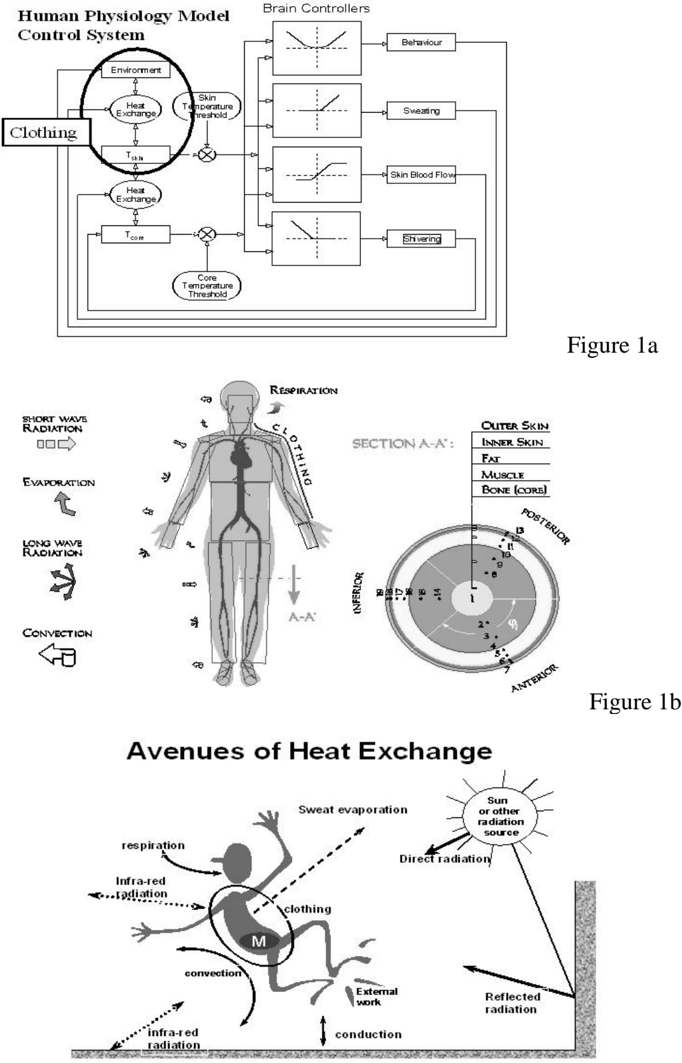
Existing procedures for the assessment of the thermal environment in the fields of public weather services, public health systems, precautionary planning, urban design, tourism and recreation and climate impact research exhibit significant shortcomings. This is most evident for simple (mostly two-parameter) indices, when comparing them to complete heat budget models developed since the 1960s. ISB Commission 6 took up the idea of developing a Universal Thermal Climate Index (UTCI) based on the most advanced multi-node model of thermoregulation representing progress in science within the last three to four decades, both in thermo-physiological and heat exchange theory. Creating the essential research synergies for the development of UTCI required pooling the resources of multidisciplinary experts in the fields of thermal physiology, mathematical modelling, occupational medicine, meteorological data handling (in particular radiation modelling) and application development in a network. It was possible to extend the expertise of ISB Commission 6 substantially by COST (a European programme promoting Cooperation in Science and Technology) Action 730 so that finally over 45 scientists from 23 countries (Australia, Canada, Israel, several Europe countries, New Zealand, and the United States) worked together. The work was performed under the umbrella of the WMO Commission on Climatology (CCl). After extensive evaluations, Fiala's multi-node human physiology and thermal comfort model (FPC) was adopted for this study. The model was validated extensively, applying as yet unused data from other research groups, and extended for the purposes of the project. This model was coupled with a state-of-the-art clothing model taking into consideration behavioural adaptation of clothing insulation by the general urban population in response to actual environmental temperature. UTCI was then derived conceptually as an equivalent temperature (ET). Thus, for any combination of air temperature, wind, radiation, and humidity (stress), UTCI is defined as the isothermal air temperature of the reference condition that would elicit the same dynamic response (strain) of the physiological model. As UTCI is based on contemporary science its use will standardise applications in the major fields of human biometeorology, thus making research results comparable and physiologically relevant.
Overview
The claims and statistics of this paper haven’t been checked yet.
Free: it reads the open-access text and checks the first 5 claims that cite a source we can check. Create a free account to check every claim.
Integrity signals
Registry
Cites
Statistics
Figures

Verification
Claims the paper makes
The claims and statistics of this paper haven’t been checked yet.
Free: it reads the open-access text and checks the first 5 claims that cite a source we can check. Create a free account to check every claim.
Claims other papers make about this one
Each is checked against this paper’s own text: does it say what the citing paper says it does?
The source backs part of the claim, not all of it — or backs it for a different population, condition or comparison.
In the citing paper
“A recently proposed Universal Thermal Climate Index (UTCI) (2009), based on an advanced human thermoregulation model, directly uses meteorological data to predict the impact of outdoor climate on thermal physiological and perceptual responses (Jendritzky et al. 2012; Bröde et al. 2012a, b; Fiala et al. 2012; Havenith et al. 2012; Kampmann et al. 2012; Parsons 2013; Havenith and Fiala 2016).”
From Occupational heat stress assessment and protective strategies in the context of climate change (2018) · cites this paper as Jendritzky et al. 2012
Experimental — accuracy not yet measured
Self-check
Percentages, sums and reported differences re-computed from the paper’s own numbers.
The self-check needs the paper’s full text.
Citations
Cites
Höppe, P. (1999) · International Journal of Biometeorology · doi:10.1007/s004840050118 · Cited by 2,429
Modelling radiation fluxes in simple and complex environments: basics of the RayMan model
Matzarakis, A., Rutz, F., & Mayer, H. (2010) · International Journal of Biometeorology · doi:10.1007/s00484-009-0261-0 · Cited by 1,633
Modelling radiation fluxes in simple and complex environments—application of the RayMan model
Matzarakis, A., Rutz, F., & Mayer, H. (2007) · International Journal of Biometeorology · doi:10.1007/s00484-006-0061-8 · Cited by 1,365
Deriving the operational procedure for the Universal Thermal Climate Index (UTCI)
Bröde, P., Fiala, D., Błażejczyk, K., Holmér, I., Jendritzky, G., Kampmann, B., Tinz, B., & Havenith, G. (2012) · International Journal of Biometeorology · doi:10.1007/s00484-011-0454-1 · Cited by 1,243
Self-citationComparison of UTCI to selected thermal indices
Blazejczyk, K., Epstein, Y., Jendritzky, G., Staiger, H., & Tinz, B. (2012) · International Journal of Biometeorology · doi:10.1007/s00484-011-0453-2 · Cited by 1,129
Self-citationA standard predictive index of human response to the thermal environment
Gagge, A. P., Fobelets, A. P. R., & Berglund, L. G. (1986) · ASHRAE winter conference papers · Cited by 1,053
UTCI-Fiala multi-node model of human heat transfer and temperature regulation
Fiala, D., Havenith, G., Bröde, P., Kampmann, B., & Jendritzky, G. (2012) · International Journal of Biometeorology · doi:10.1007/s00484-011-0424-7 · Cited by 994
Self-citationFiala, D., Lomas, K. J., & Stohrer, M. (1999) · Journal of Applied Physiology · doi:10.1152/jappl.1999.87.5.1957 · Cited by 849
Fiala, D., Lomas, K. J., & Stohrer, M. (2001) · International Journal of Biometeorology · doi:10.1007/s004840100099 · Cited by 754
A model of human physiology and comfort for assessing complex thermal environments
Huizenga, C., Hui, Z., & Arens, E. (2001) · Building and Environment · doi:10.1016/s0360-1323(00)00061-5 · Cited by 585
Research works printed but not linked: 12
- 3. Blazejczyk K, Epstein Y, Jendritzky G, Staiger H, Tinz B (2011) Comparison of UTCI to selected thermal indices. Int J Biometeorol XX; YY-YZ Bröde P, Kampmann B, Havenith G, Jendritzky G (2008) Effiziente Berechnung des klimatischen Belastungs-Index UTCI. In: Gesellschaft für Arbeitswissenschaft (ed.): Produkt-und Produktions-Ergonomie -Aufgabe für Entwickler und Planer, GfA-Press, Dortmund: 271-274.
- 4. Bröde P, Fiala D, Blazejczyk K, Epstein Y, Holmér I, Jendritzky G, Kampmann B, Richards M, Rintamäki H, Shitzer A, Havenith G (2009a) Calculating UTCI Equivalent Temperature. In: Castellani, JW; Endrusick, TL (eds.): Environmental Ergonomics XIII, University of Wollongong, Wollongong: 49-53
- 5. Bröde P, Fiala D, Kampmann B, Havenith G, Jendritzky G (2009b) Der Klimaindex UTCI - Multivariate Analyse der Reaktion eines thermophysiologischen Simulationsmodells. In: Gesellschaft für Arbeitswissenschaft (ed.): Arbeit, Beschäftigungsfähigkeit und Produktivität im 21. Jahrhundert, GfA-Press, Dortmund: 705-708
- 9. Driscoll DM (1992) Thermal Comfort Indexes. Current Uses and Abuses. Nat. Weather Digest, 17, (4): 33-38
- 11. Fanger PO (1970) Thermal Comfort. Analysis and Application in Environmental Engineering. Danish Technical Press, Copenhagen
- 22. Horikoshi T, Tsuchikawa T, Kurazumi Y, Matsubara N (1995): Mathematical expression of combined and separate effect of air temperature, humidity, air velocity and thermal radiation on thermal comfort. Archives of Complex Environmental Studies, 7 (3-4): 9- 12
- 30. Jendritzky G (1990) Bioklimatische Bewertungsgrundlage der Räume am Beispiel von mesoskaligen Bioklimakarten. In: Jendritzky G, Schirmer H, Menz G, Schmidt- Kessen W: Methode zur raumbezogenen Bewertung der thermischen Komponente im Bioklima des Menschen (Fortgeschriebenes Klima-Michel-Modell). Akad Raumforschung Landesplanung, Hannover, Beiträge 114: 7-69
- 31. Jendritzky G, Maarouf A, Fiala D, Staiger H (2002) An Update on the Development of a Universal Thermal Climate Index. 15 th Conf. Biomet. Aerobiol. and 16 th ICB02, 27 Oct -1 Nov 2002, Kansas City, AMS: 129-133
- 33. Kampmann B, Bröde P (2009) Physiological Responses to Temperature and Humidity Compared With Predictions of PHS and WBGT. In: Castellani, JW; Endrusick, TL (eds.): Environmental Ergonomics XIII, University of Wollongong, Wollongong: 54- 58.
- 43. Psikuta A, Fiala D, Richards M (2007) Validation of the Fiala Model of Human Physiology and Comfort for COST 730. In: Mekjavic IB, Kounalakis SN, Taylor NAS (eds.) Proceedings of the 12th International Conference on Environmental Ergonomics XII, Biomed, Ljubljana: 516
- 45. Richards M and Havenith G (2007) Progress towards the final UTCI model. In: Mekjavic IB, Kounalakis SN, Taylor NAS (eds.) Proceedings of the 12th International Conference on Environmental Ergonomics. August 19-24, 2007, Piran Slovenia. Biomed, Ljubljana: 521-524
- 50. Steadman RG (1994): Norms of apparent temperature in Australia. Aust. Met. Mag. 43: 1-16
Cited by
Items 501–600 of 1,000
Spatio-temporal changes in heat waves and cold spells: an analysis of 55 U.S. cities
Allen, M. J., & Sheridan, S. C. (2016) · Physical Geography · doi:10.1080/02723646.2016.1184078 · Cited by 22
“With changes in frequency, duration, and seasonal onset observed and predicted (Fischer & Schär, 2010; Grundstein & Dowd, 2011; Habeeb et al., 2015; Peterson et al., 2013), further understanding of ATEs and the ways in which they have changed will continue to be an emphasis of future climate change research (Davis, Kn…”
InfluentialYang, S.-Q., & Matzarakis, A. (2019) · Theoretical and Applied Climatology · doi:10.1007/s00704-019-02856-2 · Cited by 22
Asghari, M., Teimori-Boghsani, G., Abbasinia, M., Shakeri, F., Tajik, R., Ghanadzadeh, M. J., & Ghalhari, G. F. (2019) · Weather · doi:10.1002/wea.3612 · Cited by 22
Trimmel, H., Weihs, P., Faroux, S., Formayer, H., Hamer, P., Hasel, K., Laimighofer, J., Leidinger, D., Masson, V., Nadeem, I., et al. (2019) · Meteorologische Zeitschrift · doi:10.1127/metz/2019/0966 · Cited by 23
Hua, L., Zhang, H., Liu, X., Yang, X., Duan, H., Wu, T., & Nastos, P. T. (2020) · Advances in Meteorology · doi:10.1155/2020/4256164 · Cited by 22
“)e empirical indices are also limited in terms of time and space scales [15].”
BackgroundMethodInfluentialComparison of thermal comfort in different kinds of building spaces: Field study in Guangzhou, China
Wu, P., Zhang, Y., Fang, Z., & Gao, Y. (2021) · Indoor and Built Environment · doi:10.1177/1420326x20981714 · Cited by 22
“The UTCI, as an equivalent ambient temperature, was based on a multi-node model of human thermoregulation.(49) For UTCI, we used a wind velocity, measured at a 10-m height following meteorological convention of 0.”
MethodOutdoor Cold Stress and Cold Risk for Children during Winter: A Study in China’s Severe Cold Regions
Shao, L., He, X., Tang, Y., & Wu, S. (2022) · Buildings · doi:10.3390/buildings12070936 · Cited by 22
“It can be applied to all weathers, seasons, and spatial scales [56].”
BackgroundAn approach to evaluate the intra-urban thermal variability in summer using an urban indicator
Massetti, L., Petralli, M., Brandani, G., & Orlandini, S. (2014) · Environmental Pollution · doi:10.1016/j.envpol.2014.04.026 · Cited by 22
Comparison of selected approaches for urban roughness determination based on voronoi cells
Ketterer, C., Gangwisch, M., Fröhlich, D., & Matzarakis, A. (2016) · International Journal of Biometeorology · doi:10.1007/s00484-016-1203-2 · Cited by 22
“…conditions are analyzed in cities all over the world in order to assess the prevailing microclimate and to quantify mitigation and adaptation measures (Jendritzky et al. 2012; Johansson and Emmanuel 2006; Lin and Matzarakis 2008; Fröhlich and Matzarakis 2013; Charalampopoulos et al. 2013, 2015).”
BackgroundWatanabe, S., Horikoshi, T., Ishii, J., & Tomita, A. (2012) · Building and Environment · doi:10.1016/j.buildenv.2012.09.018 · Cited by 22
Roy, T. B., Middey, A., & Krupadam, R. J. (2025) · Building and Environment · doi:10.1016/j.buildenv.2025.112726 · Cited by 22
Lindberg, F., Wallenberg, N., Thorsson, S., Haeger‐Eugensson, M., Lönn, J., Holmberg, B., Frid, M., & Fahlström, J. (2025) · International Journal of Biometeorology · doi:10.1007/s00484-025-03030-2 · Cited by 21
“Also, as UTCI imple - ments a dynamic clothing model (Jendritzky et al. 2012), the large spatial differences seen in PET is not as evident in UTCI.”
Li, K., Liu, X., & Bao, Y. (2022) · Frontiers in Environmental Science · doi:10.3389/fenvs.2022.1071668 · Cited by 21
“To cover wider range of outdoor weather conditions, the UTCI index was designed based on Fiala’s multi-node model (Jendritzky et al., 2012).”
BackgroundMethodHuang, J., Shen, S., Zhao, M. J., & Cheng, C. (2022) · GeoHealth · doi:10.1029/2022gh000725 · Cited by 21
“UTCI is defined as the “equivalent temperature for a given combination of wind speed, radiation, humidity, and air temperature as the air temperature of the reference environment which produces the same strain index value” (Jendritzky et al., 2012).”
BackgroundMethodInfluentialda Silva, P. W. S., Duarte, D. H. S., & Pauleit, S. (2023) · Land · doi:10.3390/land12020427 · Cited by 22
Peng, Z., Lu, W., Hao, T., Tang, X., Huang, J., & Webster, C. J. (2023) · Energy and Buildings · doi:10.1016/j.enbuild.2023.113317 · Cited by 21
Han, Y., Jo, Y., & Kim, E. J. (2023) · Heliyon · doi:10.1016/j.heliyon.2023.e19436 · Cited by 22
Nam, C., Lierhammer, L., Buntemeyer, L., Evadzi, P., Cabana, D., & Celliers, L. (2024) · Climate Services · doi:10.1016/j.cliser.2024.100447 · Cited by 22
The Indoor Thermal Comfort Indexes PMV and PPD
Fabbri, K. (2024) · Springer eBooks · doi:10.1007/978-3-031-52610-7_4 · Cited by 21
How to plant trees on an elevated road to improve thermal comfort in a street canyon
Kang, G., & Kim, J. (2025) · Sustainable Cities and Society · doi:10.1016/j.scs.2025.106207 · Cited by 21
Lokys, H. L., Junk, J., & Krein, A. (2017) · International Journal of Biometeorology · doi:10.1007/s00484-017-1326-0 · Cited by 21
“They are widely used in Europe for policy support or direct information for the public about air quality and thermal stress (van den Elshout et al. 2008; Jendritzky et al. 2012).”
BackgroundInfluentialSeasonal Regional Differentiation of Human Thermal Comfort Conditions in Algeria
Abed, S. S., & Matzarakis, A. (2017) · Advances in Meteorology · doi:10.1155/2017/9193871 · Cited by 21
Kang, M., Kim, K. R., & Shin, J. (2020) · International Journal of Environmental Research and Public Health · doi:10.3390/ijerph17082631 · Cited by 21
Liu, Y., Ma, H., Zhang, C., & Luo, X. (2022) · Sustainable Cities and Society · doi:10.1016/j.scs.2022.104081 · Cited by 21
The Indices of Feeling—Predicted Mean Vote PMV and Percentage People Dissatisfied PPD
Fabbri, K. (2015) · Springer eBooks · doi:10.1007/978-3-319-18651-1_4 · Cited by 21
Bauche, J. P., Grigorieva, E. A., & Matzarakis, A. (2013) · Advances in Meteorology · doi:10.1155/2013/749270 · Cited by 21
Human thermal perception related to Föhn winds due to Saharan dust outbreaks in Crete Island, Greece
Nastos, P. T., Bleta, A., & Matsangouras, I. T. (2016) · Theoretical and Applied Climatology · doi:10.1007/s00704-015-1724-3 · Cited by 21
“…Climate Index (UTCI, www.utci.org, Jendritzky et al. 2012) developed under the framework of the International Society on Biometeorology (ISB) and the COST Action 730 (Cooperation in Science and Technical Development, supported by the EU RT D Framework Program) (Jendritzky et al. 2010, 2012).”
MethodShort-term changes in thermal perception associated with heatwave conditions in Melbourne, Australia
Lam, C. K. C., Gallant, A., & TAPPER, N. J. (2018) · Theoretical and Applied Climatology · doi:10.1007/s00704-018-2512-7 · Cited by 21
Talhi, A., Barlet, A., Bruneau, D., & Aichour, B. (2020) · International Journal of Biometeorology · doi:10.1007/s00484-019-01854-3 · Cited by 21
Gao, M., & Zhu, X. (2025) · Building and Environment · doi:10.1016/j.buildenv.2025.113269 · Cited by 20
Zhao, H., Zhao, L., Ou, J., Meng, Q., Niu, J., & Brown, R. D. (2025) · Sustainable Cities and Society · doi:10.1016/j.scs.2025.107019 · Cited by 20
Detection and projection of climatic comfort changes in China's mainland in a warming world
Zhang, J., Ren, G., & You, Q. (2022) · Advances in Climate Change Research · doi:10.1016/j.accre.2022.04.008 · Cited by 20
Liu, L., & Qin, X. (2023) · International Journal of Biometeorology · doi:10.1007/s00484-023-02562-9 · Cited by 20
“The COST Action 730 initiative, supported by the European Union, proposed UTCI as a one-dimensional quantity to comprehensively assess thermal comfort (Jendritzky et al. 2012).”
BackgroundLiu, T., Wang, S., Zhang, J., He, L., Cheng, B., Peng, H., Liu, F., Tan, B., Shang, X., & Liu, F. (2024) · Scientific Reports · doi:10.1038/s41598-024-64729-7 · Cited by 20
“Normally, PET 14 and UTCI 46 have been frequently used.”
BackgroundMethodInfluentialEvaluating climate change impacts on building level steady-state and dynamic outdoor thermal comfort
Zou, J., Yu, Y., Mortezazadeh, M., Lu, H., Gaur, A., & Wang, L. L. (2025) · Building and Environment · doi:10.1016/j.buildenv.2025.112604 · Cited by 20
UTCI field measurements in an urban park in Florence (Italy)
Petralli, M., Massetti, L., Pearlmutter, D., Brandani, G., Messeri, A., & Orlandini, S. (2020) · Miscellanea Geographica · doi:10.2478/mgrsd-2020-0017 · Cited by 20
Banerjee, S., Middel, A., & Chattopadhyay, S. (2021) · International Journal of Biometeorology · doi:10.1007/s00484-021-02136-7 · Cited by 20
“Personal and environmental factors are commonly integrated into thermal comfort indices such as physiological equivalent temperature (PET) (Höppe 1999) or Universal Thermal Climate Index (UTCI) (Błażejczyk et al. 2010; Jendritzky et al. 2012).”
BackgroundInfluentialMorabito, M., Grifoni, D., Crisci, A., Fibbi, L., Orlandini, S., Gensini, G. F., & Zipoli, G. (2013) · Journal of Photochemistry and Photobiology B Biology · doi:10.1016/j.jphotobiol.2013.12.009 · Cited by 20
A New Performance Indicator to Assess Building and District Cooling Strategies
Gros, A., Bozonnet, E., Inard, C., & Musy, M. (2016) · Procedia Engineering · doi:10.1016/j.proeng.2016.10.014 · Cited by 20
“However, in order to compare several urban planning strategies, detailed indexes were developed considering outdoor thermal comfort such as Universal Thermal Climate Index (UTCI) [21] or Physiological Equivalent Temperature (PET) [22].”
BackgroundYi, S., Li, X., Tu, W., & Zhao, T. (2025) · Urban forestry & urban greening · doi:10.1016/j.ufug.2025.129101 · Cited by 20
Sargazi, M. A., Heidari, A., Davtalab, J., & Piri, J. (2025) · Scientific Reports · doi:10.1038/s41598-025-33440-6 · Cited by 19
“Identifying specific areas where method choice has the greatest practical impact (indicated by high improvement ratios) 3.”
Global near real‐time daily apparent temperature and heat wave dataset
Yin, C., Yang, Y., Chen, X., Yue, X., Liu, Y., & Xin, Y. (2022) · Geoscience Data Journal · doi:10.1002/gdj3.155 · Cited by 19
Grigorieva, E. A., Alexeev, V. A., & Walsh, J. E. (2023) · International Journal of Biometeorology · doi:10.1007/s00484-023-02531-2 · Cited by 19
“The main categories of thermal stress, along with the corresponding physiological response and recommended protection measures, are listed in Table 2, which synthesizes results from previous research (Błażejczyk et al. 2012; Jendritzky et al. 2012; Di Napoli et al. 2019; Antonescu et al. 2021).”
A Bibliometric Analysis of Integrating Tourism Development into Urban Planning
Krabokoukis, T., & Polyzos, S. (2023) · Sustainability · doi:10.3390/su152014886 · Cited by 19
“Title Citations [15] Integrating local and scienti fi c knowledge for environmental management 725 [13] Internet of Things and Big Data Analytics for Smart and Connected Communities 640 [16] UTCI-Why another thermal index?”
BackgroundSong, D., Lu, M., & Xing, J. (2024) · Urban Climate · doi:10.1016/j.uclim.2024.101949 · Cited by 19
Khorat, S., Khatun, R., Das, D., Siddiqui, A., Khan, A., Mondal, N., Aziz, S. M., Anand, P., Doan, Q., Niyogi, D., et al. (2025) · Energy and Buildings · doi:10.1016/j.enbuild.2025.115996 · Cited by 19
Outdoor exercise performance in ambient heat: Time to overcome challenging factors?
Brocherie, F., Girard, O., Pezzoli, A., & Millet, G. P. (2014) · International Journal of Hyperthermia · doi:10.3109/02656736.2014.979257 · Cited by 20
“universal thermal climate index (UTCI) based on the most advanced multi-node model of thermoregulation is emerging from both thermo-physiological and heat exchange theories [31].”
BackgroundShin, J., Kim, K. R., & Ha, J.-C. (2020) · Environmental Research · doi:10.1016/j.envres.2020.109964 · Cited by 19
Yan, S., Liu, N., Wang, W., Han, S., & Zhang, J. (2021) · Building and Environment · doi:10.1016/j.buildenv.2020.107571 · Cited by 19
Investigating an accurate method for measuring the outdoor mean radiation temperature
Fang, Z., He, H., Mao, Y., Feng, X., Zheng, Z., & Guo, Z. (2023) · International Journal of Thermal Sciences · doi:10.1016/j.ijthermalsci.2023.108219 · Cited by 19
USOS DOS ÍNDICES PET E UTCI NA AVALIAÇÃO DO CONFORTO TERMAL NO CAMPUS DA UFMT EM CUIABÁ-MT
Nince, P. C. D. C., Musis, C. R. D., Bíudes, M. S., Nogueira, J. D. S., & Nogueira, M. C. D. J. A. (2013) · Revista Eletrônica em Gestão Educação e Tecnologia Ambiental · doi:10.5902/223611707707 · Cited by 19
Mohraz, M. H., Ghahri, A., Karimi, M., & Golbabaei, F. (2016) · PubMed Central · Cited by 20
Wybrane zagadnienia z bioklimatu Lublina
Dobek, M., & Krzyżewska, A. (2016) · Annales Universitatis Mariae Curie-Sklodowska sectio B – Geographia Geologia Mineralogia et Petrographia · doi:10.17951/b.2015.70.2.117 · Cited by 19
Ongoma, V., Muange, K., & Shilenje, Z. W. (2016) · Geographica Pannonica · doi:10.5937/geopan1601019o · Cited by 19
“The development was initiated since the previous methods exhibited significant shortcomings (Jendritzky et al., 2012, 2007).”
MethodA Simple Method to Evaluate Adaptation Measures for Urban Heat Island
Takebayashi, H. (2018) · Environments · doi:10.3390/environments5060070 · Cited by 20
Qiu, L., Ma, H., Yuan, H., & Chen, H. (2025) · Building and Environment · doi:10.1016/j.buildenv.2025.113249 · Cited by 18
Jiang, J., Li, Z., Bedra, K. B., Long, C., Wu, J., & Zhong, Q. (2025) · Building and Environment · doi:10.1016/j.buildenv.2025.113315 · Cited by 18
Modelling urban dwellers’ indoor heat stress to enhance heat-health warning and planning
Yi, C. Y., Peng, C., & Robinson, D. (2023) · Building and Environment · doi:10.1016/j.buildenv.2023.110623 · Cited by 19
Patle, S., & Ghuge, V. V. (2024) · International Journal of Environmental Science and Technology · doi:10.1007/s13762-024-05703-8 · Cited by 18
He, X., Shao, L., Tang, Y., & Hao, L. (2024) · Land · doi:10.3390/land13060864 · Cited by 18
Janků, Z., Belda, M., Bureš, M., Krč, P., Lehnert, M., Resler, J., Řezníček, H., Krayenhoff, E. S., Krüger, E. L., & Geletič, J. (2024) · Urban forestry & urban greening · doi:10.1016/j.ufug.2024.128500 · Cited by 18
Development of accumulated heat stress index based on time-weighted function
Lee, J., Byun, H., & Kim, D. (2015) · Theoretical and Applied Climatology · doi:10.1007/s00704-015-1434-x · Cited by 18
“For further details about the above thermal indices, see Jendritzky et al. (2012).”
BackgroundUniversal thermal climate index in Russia
Виноградова, В. В. (2019) · Izvestiya Rossiiskoi Akademii Nauk Seriya Geograficheskaya · doi:10.31857/s2587-5566201923-19 · Cited by 18
Winter UTCI variability in Poland in the 21st century
Wereski, S., Krzyżewska, A., & Dobek, M. (2020) · Miscellanea Geographica · doi:10.2478/mgrsd-2020-0021 · Cited by 18
Rüdisser, D., Weiß, T., & Unger, L. (2021) · Sensors · doi:10.3390/s21144847 · Cited by 18
Lee, H., Oertel, A., & Mayer, H. (2022) · Urban Climate · doi:10.1016/j.uclim.2022.101210 · Cited by 18
The impact of human-biometeorological factors on perceived thermal comfort in urban public places
Maras, I., Schmidt, T., Paas, B., Ziefle, M., & Schneider, C. (2016) · Meteorologische Zeitschrift · doi:10.1127/metz/2016/0705 · Cited by 19
“Developed by scientists from 22 countries (18 European countries) in 2005, the UTCI sets a new international standard for a better comparison of thermal comfort (Jendritzky et al., 2012; Urban and Kyselyì, 2014).”
BackgroundMethodInfluentialSpatiotemporal changes in heat stress exposure in India, 1981-2023
Shah, A., Sugathan, A., Malghan, D. V., Kim, R., & Subramanian, S. V. (2025) · Nature Communications · doi:10.1038/s41467-025-64840-x · Cited by 19
HadISDH.extremes Part II: Exploring Humid Heat Extremes Using Wet Bulb Temperature Indices
Willett, K. M. (2023) · Advances in Atmospheric Sciences · doi:10.1007/s00376-023-2348-7 · Cited by 17
Hu, L., & Uejio, C. K. (2024) · GeoHealth · doi:10.1029/2024gh001114 · Cited by 17
“All of these variables are strongly influenced by cross‐scale urban structures and functions (Höppe, 1999; Jendritzky et al., 2012; Lindberg et al., 2016), resulting in complex patterns that are challenging to observe or model.”
BackgroundZheng, J., Du, Y., Zhu, X., & Dong, W. (2025) · Sustainable Cities and Society · doi:10.1016/j.scs.2024.106111 · Cited by 17
Urban heat mitigation through misting, and its role in broader blue infrastructure portfolios
Huang, X., Bou-Zeid, E. R., Vanos, J., Middel, A., & Ramamurthy, P. (2025) · Landscape and Urban Planning · doi:10.1016/j.landurbplan.2024.105290 · Cited by 17
Pantavou, K. G., Kotroni, V., Lagouvardos, K., & Kyriakou, P. (2025) · The Science of The Total Environment · doi:10.1016/j.scitotenv.2025.179514 · Cited by 18
Thermal Environment Evaluation According to Indices in Industrial Workplaces
Králíková, R., Sokolová, H., & Wessely, E. (2014) · Procedia Engineering · doi:10.1016/j.proeng.2014.02.216 · Cited by 17
Modelling the effect of urban design on thermal comfort and air quality: The SMARTUrban Project
Massetti, L., Petralli, M., Brandani, G., Napoli, M., Ferrini, F., Fini, A., Pearlmutter, D., Orlandini, S., & Giuntoli, A. (2019) · Building Simulation · doi:10.1007/s12273-018-0490-4 · Cited by 17
Development of physiological human model considering mist wettedness for mist-spraying environments
Oh, W., Ooka, R., Nakano, J., Kikumoto, H., Ogawa, O., & Choi, W. (2020) · Building and Environment · doi:10.1016/j.buildenv.2020.106706 · Cited by 17
Thermal Environment Map in Street Canyon for Implementing Extreme High Temperature Measures
Takebayashi, H., Okubo, M., & Danno, H. (2020) · Atmosphere · doi:10.3390/atmos11060550 · Cited by 17
Wang, R., Chen, Q., & Wang, D. (2022) · Sustainability · doi:10.3390/su14073882 · Cited by 17
Foken, T. (2016) · Springer eBooks · doi:10.1007/978-3-642-25525-0_8 · Cited by 17
Savić, S. M., Trbić, G., Milošević, D. D., Dunjić, J., Ivanišević, M., & Marković, M. (2022) · Theoretical and Applied Climatology · doi:10.1007/s00704-022-04237-8 · Cited by 17
Association between thermal stress and cardiovascular mortality in the subtropics
Jingesi, M., Lan, S., Hu, J., Dai, M., Huang, S., Chen, S., Liu, N., Lv, Z., Ji, J., Li, X., et al. (2023) · International Journal of Biometeorology · doi:10.1007/s00484-023-02565-6 · Cited by 17
“…including Standard Effective Temperature (SET) (Gagge et al. 1986; Gonzalez et al. 1974), Physiological Equivalent Temperature (PET) (Höppe 1999; Mayer and Höppe 1987) and Universal Thermal Comfort Index (UTCI) (Bröde et al. 2012; Fiala et al. 2012; Havenith et al. 2012; Jendritzky et al. 2012).”
BackgroundHanipah, M. H., Abdullah, A. H., Sidik, N. A. C., Yunus, R., Yasin, M. N., & Yazid, M. N. A. W. M. (2016) · MATEC Web of Conferences · doi:10.1051/matecconf/20164704005 · Cited by 17
Bioclimatic evaluation of the human discomfort level for several Antarctic regions
Belkin, V., Dyurgerov, M. B., Finaev, A., & Si, S. (2016) · Human Physiology · doi:10.1134/s0362119716020043 · Cited by 17
Trends in summer air temperature and vapor pressure and their impacts on thermal comfort in China
Yan, Y., Wang, D., Yue, S., & Qu, J. J. (2019) · Theoretical and Applied Climatology · doi:10.1007/s00704-019-02909-6 · Cited by 17
Physiological strain and comfort in sports clothing
Daanen, H. A. M. (2015) · Elsevier eBooks · doi:10.1016/b978-1-78242-229-7.00007-2 · Cited by 17
Mapping summer tourism climate resources in China
Huang, J., Li, L., Tan, C., Ji, S., & Wang, G. (2018) · Theoretical and Applied Climatology · doi:10.1007/s00704-018-2740-x · Cited by 17
Thermal comfort investigation of membrane-assisted radiant cooling in outdoor settings
Yang, J., Liang, Y., Zhong, Z., Dharmasastha, K., Xie, Y., & Niu, J. (2024) · Sustainable Cities and Society · doi:10.1016/j.scs.2024.105634 · Cited by 16
Li, Y., Li, Y., Shang, G., Peng, Z., Zhang, X., & Hong, B. (2025) · Building and Environment · doi:10.1016/j.buildenv.2025.112638 · Cited by 16
Caste Inequality in Occupational Exposure to Heat Waves in India
Shah, A., Thapliyal, S., Sugathan, A., Mishra, V. K., & Malghan, D. V. (2025) · Demography · doi:10.1215/00703370-11803010 · Cited by 16
Salamanca, F., Guzmán-Echavarría, G., Vanos, J., Moseley, P. L., Domino, M. E., & Georgescu, M. (2025) · Earth s Future · doi:10.1029/2024ef004983 · Cited by 16
“It assumes a light activity rate of 2.3 METs (135 W m 2 ), 1.1 m s 1 activity speed (walking), and an “average” person (74 kg, 1.9 m 2 ) (Bröde et al., 2012; Jendritzky et al., 2012).”
InfluentialFindings from a field study of urban microclimate in Korea using mobile meteorological measurements
Kim, H., Kim, S. W., Jo, Y.-J., & Kim, E. J. (2022) · Open House International · doi:10.1108/ohi-12-2021-0280 · Cited by 16
Liu, J., Zhou, G., Linderholm, H. W., Song, Y., Liu, D. L., Shen, Y., Liu, Y., & Du, J. (2022) · International Journal of Environmental Research and Public Health · doi:10.3390/ijerph19138111 · Cited by 16
“This category has been extensively validated by both climate chamber and wind tunnel experiments [3,19], and widely accepted by both the International Society on Biometeorology [3,7,16] and the researchers in this domain [21–26].”
BackgroundMethodInfluentialBiometeorological forecasts for health surveillance and prevention of meteor-tropic effects
Estela, L. L. (2017) · International Journal of Biometeorology · doi:10.1007/s00484-017-1405-2 · Cited by 16
Xu, X., Rioux, T. P., MacLeod, T., Patel, T., Rome, M. N., & Potter, A. W. (2016) · International Journal of Biometeorology · doi:10.1007/s00484-016-1227-7 · Cited by 16
Kong, Q., Ge, Q., Xi, J., & Zheng, J. (2016) · Theoretical and Applied Climatology · doi:10.1007/s00704-016-1933-4 · Cited by 16
“For a comprehensive introduction of the UTCI, we refer to the final report of COST Action 730 (Jendritzky et al. 2009) and a UTCI special issue including ten papers on International Journal of Biometeorology (56; 2012).”
BackgroundMethodHeat Balance When Climbing Mount Everest
Szymczak, R. K., & Błażejczyk, K. (2021) · Frontiers in Physiology · doi:10.3389/fphys.2021.765631 · Cited by 15
Abbasi, M., Golbabaei, F., Yazdanirad, S., Dehghan, H., & Ahmadi, A. R. (2023) · International Journal of Biometeorology · doi:10.1007/s00484-023-02580-7 · Cited by 15
“In this index, the values higher than 32 °C show strong heat stress (Jendritzky et al. 2012).”
Huang, J., Tang, X., Jones, P., Hao, T., Tundokova, R., Walmsley, C. A., Lannon, S., Frost, P., & Jackson, J. (2024) · Building and Environment · doi:10.1016/j.buildenv.2024.111168 · Cited by 15
Prefecture-level health risk assessment for hot extremes in China
Huang, J., Shen, S., Cheng, C., & Song, C. (2024) · International Journal of Disaster Risk Reduction · doi:10.1016/j.ijdrr.2024.104561 · Cited by 15
Developing thermal prediction models for children in outdoor environments
Li, Y., Wang, X., Li, J., Chen, S., & Hong, B. (2024) · Sustainable Cities and Society · doi:10.1016/j.scs.2024.105574 · Cited by 15
Metadata
- Authors
- Jendritzky, G., de Dear, R., & Havenith, G.
- Affiliations
- University of Freiburg (DE)
- Loughborough University (GB)
- Corresponding author
- Jendritzky, Gerd
- ORCID
- Havenith, George
- Venue
- International Journal of Biometeorology
- Published
- 2011-12-21
- Volume
- 56
- Issue
- 3
- Pages
- 421-428
- ISSN
- 0020-7128 (ISSN-L)
- 1432-1254
- OpenAlex
- W1975324114
- Cited by
- 1,162
- References
- 50
- Citations by year
- 2026: 170 · 2025: 161 · 2024: 131 · 2023: 119 · 2022: 112 · 2021: 105 · 2020: 77 · 2019: 60 · 2018: 37 · 2017: 46 · 2016: 49 · 2015: 36 · 2014: 30 · 2013: 25 · 2012: 3
- FWCI
- 16.44
- Type
- journal article
- Language
- en
- Open access
- green
- figshare.com
- Licence
- cc-by-nc-nd
- www.springer.com/tdm (tdm)
- Locations
- International Journal of Biometeorology (publishedVersion)
- PubMed (publishedVersion)
- Loughborough University Research Repository (Loughborough University) (submittedVersion, cc-by-nc-nd)
- Loughborough University Institutional Repository (Loughborough University) (submittedVersion, cc-by-nc-nd)
- Topics
- Physical Sciences › Environmental Science › Environmental Engineering › Urban Heat Island Mitigation
- Health Sciences › Medicine › Physiology (medical) › Thermoregulation and physiological responses
- Physical Sciences › Environmental Science › Health, Toxicology and Mutagenesis › Climate Change and Health Impacts
- Keywords
- Universal Thermal Climate Index, thermal comfort, human thermoregulation, clothing insulation, equivalent temperature, heat stress, thermal environment evaluation, biometeorology
- MeSH terms
- Body Temperature Regulation, Climate, Humans, Meteorological Concepts, Models, Biological, Thermosensing
About these checks
Registry, retraction, Cites and statistics results are computed, not judged, with one exception: a printed reference that no index lists is read once by a model before it counts as a citation error. Claims are extracted by a model and kept only when their quote appears verbatim in the text; each cited source is then checked, with a model’s help, for whether it says what the claim relies on. Those verdicts can be wrong — read the claim’s quote and the cited source before relying on one.
Statistics and arithmetic are recomputed, not judged.
Confidence bands are shown only for fields calibrated on our annotated test set. None is calibrated yet, so no band is shown.
What counts as a claim ›How we measure confidence ›How we check this ›
Are you an author, or do you see a problem with this page? Request a review
Data sources
Bibliographic data: Semantic Scholar, OpenAlex, Crossref.
Contains information from the Semantic Scholar Academic Graph Datasets, made available under the ODC Attribution License (ODC-BY 1.0).
Semantic Scholar’s data is described in: Kinney, R., et al. (2023). The Semantic Scholar Open Data Platform. arXiv:2301.10140.
