

UTCI—Why another thermal index?
Open accessThe DOI matches its Crossref record; 50 of the 50 references it cites were found in a registry or an index.
Abstract
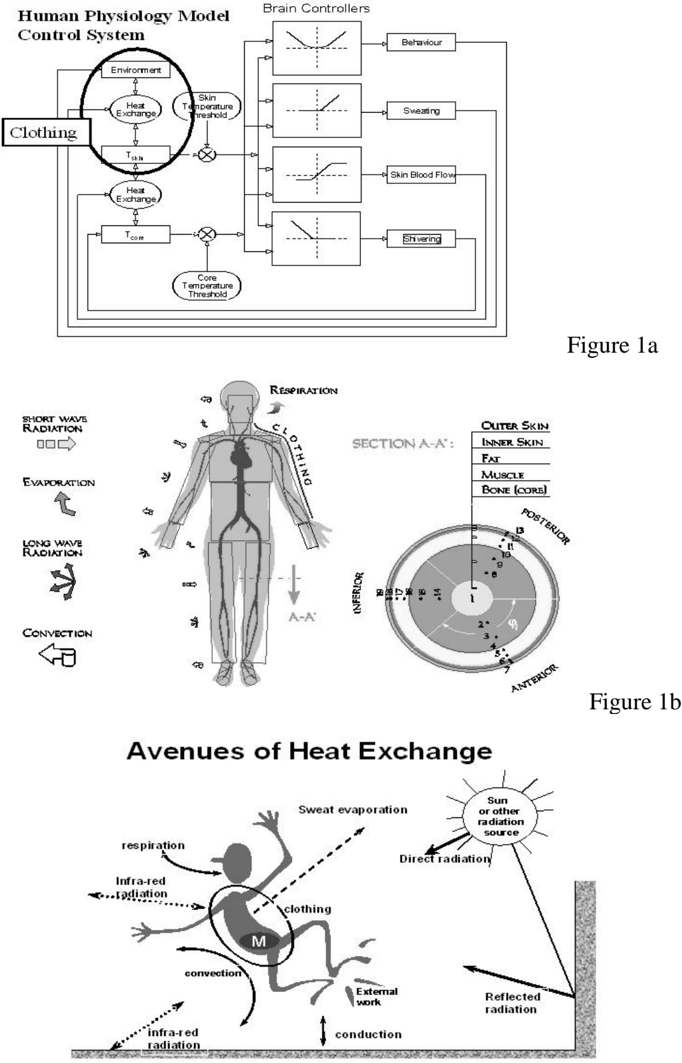
Existing procedures for the assessment of the thermal environment in the fields of public weather services, public health systems, precautionary planning, urban design, tourism and recreation and climate impact research exhibit significant shortcomings. This is most evident for simple (mostly two-parameter) indices, when comparing them to complete heat budget models developed since the 1960s. ISB Commission 6 took up the idea of developing a Universal Thermal Climate Index (UTCI) based on the most advanced multi-node model of thermoregulation representing progress in science within the last three to four decades, both in thermo-physiological and heat exchange theory. Creating the essential research synergies for the development of UTCI required pooling the resources of multidisciplinary experts in the fields of thermal physiology, mathematical modelling, occupational medicine, meteorological data handling (in particular radiation modelling) and application development in a network. It was possible to extend the expertise of ISB Commission 6 substantially by COST (a European programme promoting Cooperation in Science and Technology) Action 730 so that finally over 45 scientists from 23 countries (Australia, Canada, Israel, several Europe countries, New Zealand, and the United States) worked together. The work was performed under the umbrella of the WMO Commission on Climatology (CCl). After extensive evaluations, Fiala's multi-node human physiology and thermal comfort model (FPC) was adopted for this study. The model was validated extensively, applying as yet unused data from other research groups, and extended for the purposes of the project. This model was coupled with a state-of-the-art clothing model taking into consideration behavioural adaptation of clothing insulation by the general urban population in response to actual environmental temperature. UTCI was then derived conceptually as an equivalent temperature (ET). Thus, for any combination of air temperature, wind, radiation, and humidity (stress), UTCI is defined as the isothermal air temperature of the reference condition that would elicit the same dynamic response (strain) of the physiological model. As UTCI is based on contemporary science its use will standardise applications in the major fields of human biometeorology, thus making research results comparable and physiologically relevant.
Overview
The claims and statistics of this paper haven’t been checked yet.
Free: it reads the open-access text and checks the first 5 claims that cite a source we can check. Create a free account to check every claim.
Integrity signals
Registry
Cites
Statistics
Figures

Verification
Claims the paper makes
The claims and statistics of this paper haven’t been checked yet.
Free: it reads the open-access text and checks the first 5 claims that cite a source we can check. Create a free account to check every claim.
Claims other papers make about this one
Each is checked against this paper’s own text: does it say what the citing paper says it does?
The source backs part of the claim, not all of it — or backs it for a different population, condition or comparison.
In the citing paper
“A recently proposed Universal Thermal Climate Index (UTCI) (2009), based on an advanced human thermoregulation model, directly uses meteorological data to predict the impact of outdoor climate on thermal physiological and perceptual responses (Jendritzky et al. 2012; Bröde et al. 2012a, b; Fiala et al. 2012; Havenith et al. 2012; Kampmann et al. 2012; Parsons 2013; Havenith and Fiala 2016).”
From Occupational heat stress assessment and protective strategies in the context of climate change (2018) · cites this paper as Jendritzky et al. 2012
Experimental — accuracy not yet measured
Self-check
Percentages, sums and reported differences re-computed from the paper’s own numbers.
The self-check needs the paper’s full text.
Citations
Cites
Höppe, P. (1999) · International Journal of Biometeorology · doi:10.1007/s004840050118 · Cited by 2,429
Modelling radiation fluxes in simple and complex environments: basics of the RayMan model
Matzarakis, A., Rutz, F., & Mayer, H. (2010) · International Journal of Biometeorology · doi:10.1007/s00484-009-0261-0 · Cited by 1,633
Modelling radiation fluxes in simple and complex environments—application of the RayMan model
Matzarakis, A., Rutz, F., & Mayer, H. (2007) · International Journal of Biometeorology · doi:10.1007/s00484-006-0061-8 · Cited by 1,365
Deriving the operational procedure for the Universal Thermal Climate Index (UTCI)
Bröde, P., Fiala, D., Błażejczyk, K., Holmér, I., Jendritzky, G., Kampmann, B., Tinz, B., & Havenith, G. (2012) · International Journal of Biometeorology · doi:10.1007/s00484-011-0454-1 · Cited by 1,243
Self-citationComparison of UTCI to selected thermal indices
Blazejczyk, K., Epstein, Y., Jendritzky, G., Staiger, H., & Tinz, B. (2012) · International Journal of Biometeorology · doi:10.1007/s00484-011-0453-2 · Cited by 1,129
Self-citationA standard predictive index of human response to the thermal environment
Gagge, A. P., Fobelets, A. P. R., & Berglund, L. G. (1986) · ASHRAE winter conference papers · Cited by 1,053
UTCI-Fiala multi-node model of human heat transfer and temperature regulation
Fiala, D., Havenith, G., Bröde, P., Kampmann, B., & Jendritzky, G. (2012) · International Journal of Biometeorology · doi:10.1007/s00484-011-0424-7 · Cited by 994
Self-citationFiala, D., Lomas, K. J., & Stohrer, M. (1999) · Journal of Applied Physiology · doi:10.1152/jappl.1999.87.5.1957 · Cited by 849
Fiala, D., Lomas, K. J., & Stohrer, M. (2001) · International Journal of Biometeorology · doi:10.1007/s004840100099 · Cited by 754
A model of human physiology and comfort for assessing complex thermal environments
Huizenga, C., Hui, Z., & Arens, E. (2001) · Building and Environment · doi:10.1016/s0360-1323(00)00061-5 · Cited by 585
Research works printed but not linked: 12
- 3. Blazejczyk K, Epstein Y, Jendritzky G, Staiger H, Tinz B (2011) Comparison of UTCI to selected thermal indices. Int J Biometeorol XX; YY-YZ Bröde P, Kampmann B, Havenith G, Jendritzky G (2008) Effiziente Berechnung des klimatischen Belastungs-Index UTCI. In: Gesellschaft für Arbeitswissenschaft (ed.): Produkt-und Produktions-Ergonomie -Aufgabe für Entwickler und Planer, GfA-Press, Dortmund: 271-274.
- 4. Bröde P, Fiala D, Blazejczyk K, Epstein Y, Holmér I, Jendritzky G, Kampmann B, Richards M, Rintamäki H, Shitzer A, Havenith G (2009a) Calculating UTCI Equivalent Temperature. In: Castellani, JW; Endrusick, TL (eds.): Environmental Ergonomics XIII, University of Wollongong, Wollongong: 49-53
- 5. Bröde P, Fiala D, Kampmann B, Havenith G, Jendritzky G (2009b) Der Klimaindex UTCI - Multivariate Analyse der Reaktion eines thermophysiologischen Simulationsmodells. In: Gesellschaft für Arbeitswissenschaft (ed.): Arbeit, Beschäftigungsfähigkeit und Produktivität im 21. Jahrhundert, GfA-Press, Dortmund: 705-708
- 9. Driscoll DM (1992) Thermal Comfort Indexes. Current Uses and Abuses. Nat. Weather Digest, 17, (4): 33-38
- 11. Fanger PO (1970) Thermal Comfort. Analysis and Application in Environmental Engineering. Danish Technical Press, Copenhagen
- 22. Horikoshi T, Tsuchikawa T, Kurazumi Y, Matsubara N (1995): Mathematical expression of combined and separate effect of air temperature, humidity, air velocity and thermal radiation on thermal comfort. Archives of Complex Environmental Studies, 7 (3-4): 9- 12
- 30. Jendritzky G (1990) Bioklimatische Bewertungsgrundlage der Räume am Beispiel von mesoskaligen Bioklimakarten. In: Jendritzky G, Schirmer H, Menz G, Schmidt- Kessen W: Methode zur raumbezogenen Bewertung der thermischen Komponente im Bioklima des Menschen (Fortgeschriebenes Klima-Michel-Modell). Akad Raumforschung Landesplanung, Hannover, Beiträge 114: 7-69
- 31. Jendritzky G, Maarouf A, Fiala D, Staiger H (2002) An Update on the Development of a Universal Thermal Climate Index. 15 th Conf. Biomet. Aerobiol. and 16 th ICB02, 27 Oct -1 Nov 2002, Kansas City, AMS: 129-133
- 33. Kampmann B, Bröde P (2009) Physiological Responses to Temperature and Humidity Compared With Predictions of PHS and WBGT. In: Castellani, JW; Endrusick, TL (eds.): Environmental Ergonomics XIII, University of Wollongong, Wollongong: 54- 58.
- 43. Psikuta A, Fiala D, Richards M (2007) Validation of the Fiala Model of Human Physiology and Comfort for COST 730. In: Mekjavic IB, Kounalakis SN, Taylor NAS (eds.) Proceedings of the 12th International Conference on Environmental Ergonomics XII, Biomed, Ljubljana: 516
- 45. Richards M and Havenith G (2007) Progress towards the final UTCI model. In: Mekjavic IB, Kounalakis SN, Taylor NAS (eds.) Proceedings of the 12th International Conference on Environmental Ergonomics. August 19-24, 2007, Piran Slovenia. Biomed, Ljubljana: 521-524
- 50. Steadman RG (1994): Norms of apparent temperature in Australia. Aust. Met. Mag. 43: 1-16
Cited by
Items 301–400 of 1,000
Improving children's outdoor thermal comfort: A field study in China's severely cold regions
He, X., Shao, L., Tang, Y., & Wu, S. (2023) · Urban Climate · doi:10.1016/j.uclim.2023.101620 · Cited by 42
Kolendowicz, L., Półrolniczak, M., Szyga–Pluta, K., & Bednorz, E. (2017) · Theoretical and Applied Climatology · doi:10.1007/s00704-017-2279-2 · Cited by 42
“…among various research institutions operating within the framework of European COST 730 and is actually recommended by the World Meteorological Organization (WMO) for operational use by meteorological services worldwide (Błażejczyk et al., 2012; Jendritzky et al. 2012; Bröde et al. 2012).”
BackgroundOutdoor Wellbeing and Quality of Life: A Scientific Literature Review on Thermal Comfort
Antonini, E., Vodola, V., Gaspari, J., & Giglio, M. D. (2020) · Energies · doi:10.3390/en13082079 · Cited by 42
Literature Review on UTCI Applications
Krüger, E. L. (2021) · Springer eBooks · doi:10.1007/978-3-030-76716-7_3 · Cited by 42
Błażejczyk, K., Twardosz, R., Wałach, P., Czarnecka, K., & Błażejczyk, A. (2021) · International Journal of Biometeorology · doi:10.1007/s00484-021-02202-0 · Cited by 42
“The newest and most complex one is Universal Thermal Climate Index (UTCI) (Jendritzky et al. 2012).”
BackgroundA monthly performance comparison of green infrastructures enhancing urban outdoor thermal comfort
Schibuola, L., & Tambani, C. (2022) · Energy and Buildings · doi:10.1016/j.enbuild.2022.112368 · Cited by 42
Xu, T., Yao, R., Du, C., Li, B., & Fang, F. (2023) · Building and Environment · doi:10.1016/j.buildenv.2023.110308 · Cited by 42
Spatiotemporal changes in Universal Thermal Climate Index over South Asia
Kyaw, A. K., Hamed, M. M., & Shahid, S. (2023) · Atmospheric Research · doi:10.1016/j.atmosres.2023.106838 · Cited by 42
Walikewitz, N., Jänicke, B., Langner, M., & Endlicher, W. R. (2015) · International Journal of Biometeorology · doi:10.1007/s00484-015-1066-y · Cited by 44
Taleb, H. M., & Taleb, D. (2014) · Urban forestry & urban greening · doi:10.1016/j.ufug.2014.01.003 · Cited by 42
Nouri, A. S., Fröhlich, D., Silva, M. M., & Matzarakis, A. (2018) · Atmosphere · doi:10.3390/atmos9010012 · Cited by 43
A comparative sensitivity analysis of human thermal comfort indices with generalized additive models
Charalampopoulos, I. (2019) · Theoretical and Applied Climatology · doi:10.1007/s00704-019-02900-1 · Cited by 42
Thorsson, S., Rayner, D., Palm, G., Lindberg, F., Carlström, E., Börjesson, M., Nilson, F., Khorram-Manesh, A., & Holmer, B. (2021) · British Journal of Sports Medicine · doi:10.1136/bjsports-2019-100632 · Cited by 41
A review of thermal perception and adaptation strategies across global climate zones
Li, J., Sun, R., & Chen, L. (2023) · Urban Climate · doi:10.1016/j.uclim.2023.101559 · Cited by 42
The effect of solar radiation on pedestrian thermal comfort: A climate chamber experiment
Zhao, H., Wang, S., Zhang, Y., Zhao, L., Zhai, Y., Brown, R. D., Jin, L., & Wu, R. (2023) · Building and Environment · doi:10.1016/j.buildenv.2023.110869 · Cited by 42
Li, Y., Yang, T., Zhao, G., Ma, C., Yan, Y., Xu, Y., Wang, L., & Wang, L. (2023) · Ecological Indicators · doi:10.1016/j.ecolind.2023.111424 · Cited by 43
Zare, S., Hasheminejad, N., Sarebanzadeh, K., Zolala, F., Hemmatjo, R., & Hassanvand, D. (2018) · Urban Climate · doi:10.1016/j.uclim.2018.08.001 · Cited by 41
limona, S. S., Al-Hagla, K. S., & EL-SAYAD, Z. (2019) · Alexandria Engineering Journal · doi:10.1016/j.aej.2019.02.002 · Cited by 41
Summer UTCI variability in Poland in the twenty-first century
Krzyżewska, A., Wereski, S., & Dobek, M. (2020) · International Journal of Biometeorology · doi:10.1007/s00484-020-01965-2 · Cited by 41
“) as the air temperature of the reference environment which produces the same response index value” (Jendritzky et al. 2012).”
BackgroundKatavoutas, G., & Founda, D. (2019) · International Journal of Biometeorology · doi:10.1007/s00484-019-01742-w · Cited by 41
Nyadanu, S. D., Tessema, G. A., Mullins, B. J., & Pereira, G. F. (2022) · The Science of The Total Environment · doi:10.1016/j.scitotenv.2022.155750 · Cited by 40
Predicting the unprecedented: forecasting the June 2021 Pacific Northwest heatwave
Emerton, R., Brimicombe, C., Magnusson, L., Roberts, C. D., Napoli, C. D., Cloke, H., & Pappenberger, F. (2022) · Weather · doi:10.1002/wea.4257 · Cited by 40
Land use and land cover dynamics: Implications for thermal stress and energy demands
Adeyeri, O. E., Zhou, W., Laux, P., Wang, X., Dieng, D., Arachchige, E. L. W., & Usman, M. N. (2023) · Renewable and Sustainable Energy Reviews · doi:10.1016/j.rser.2023.113274 · Cited by 39
Bandiera, D., Racinais, S., Garrandes, F., Adami, P. E., Bermon, S., Pitsiladis, Y. P., & Tessitore, A. (2024) · British Journal of Sports Medicine · doi:10.1136/bjsports-2024-108310 · Cited by 39
“51 52 UTCI has been developed by a working group of 45 scientists from 23 countries, 50 aiming to create a standard index able to represent the thermal strain of individuals in every region of the globe (computable on Climate Chip ).”
BackgroundGenerative design of walkable urban cool spots using a novel heuristic GAN×GAN approach
Li, X., Lu, W., Peng, Z., Zhang, Y., & Huang, J. (2024) · Building and Environment · doi:10.1016/j.buildenv.2024.112027 · Cited by 39
Bonell, A., Vicedo-Cabrera, A. M., Moirano, G., Sonko, B. J., Jeffries, D. J., Moore, S. E., Haines, A., Prentice, A. M., & Murray, K. A. (2024) · The Lancet Planetary Health · doi:10.1016/s2542-5196(24)00208-0 · Cited by 40
“34,56 We also did not have data on dietary practices, maternal infections, or socioeconomic status, which ideally would have been included.”
Subjective information in thermal comfort evaluation methods: A critical review
Yang, Y., Lyu, J., Lian, Z., Xie, Y., Jiang, Y., Lin, J., & Niu, J. (2024) · Energy and Buildings · doi:10.1016/j.enbuild.2024.115019 · Cited by 39
Human-biometeorological conditions and thermal perception in a Mediterranean coastal park
Saaroni, H., Pearlmutter, D., & Hatuka, T. (2014) · International Journal of Biometeorology · doi:10.1007/s00484-014-0944-z · Cited by 39
“This further indicates the dominant effect of solar radiation and wind speed on the subjective sensation of thermal stress (as summarized by Jendritzky et al. (2012)).”
BackgroundMatzarakis, A., & Fröhlich, D. (2018) · Acta Horticulturae · doi:10.17660/actahortic.2018.1215.1 · Cited by 39
Roffe, S., van der Walt, A. J., & Fitchett, J. M. (2023) · International Journal of Climatology · doi:10.1002/joc.8009 · Cited by 39
“…and wind conditions, all of which are included in the index), depicts temporal variability of thermal conditions better than other indices, and is valid at all spatiotemporal scales and not only specific meteorological and geographical situations (Błażejczyk et al., 2012; Jendritzky et al., 2012).”
BackgroundInfluentialRoshan, G., Yousefi, R., Kovács, A., & Matzarakis, A. (2016) · Theoretical and Applied Climatology · doi:10.1007/s00704-016-1950-3 · Cited by 39
Human migration on a heating planet: A scoping review
Issa, R., van Daalen, K. R., Faddoul, A., Collias, L., James, R., Chaudhry, U. A. R., Graef, V., Sullivan, A., Erasmus, P., Chesters, H., et al. (2023) · PLOS Climate · doi:10.1371/journal.pclm.0000214 · Cited by 38
“One measure often used to quantify heat exposure of relevance to human wellbeing, is the Universal Thermal Climate Index (UTCI) [6, 18].”
MethodBinabid, J., & Anteet, Q. (2023) · Environmental Advances · doi:10.1016/j.envadv.2023.100482 · Cited by 38
Li, Y., Nian, X., Gu, C., Deng, P., He, S., & Hong, B. (2024) · Building and Environment · doi:10.1016/j.buildenv.2024.111556 · Cited by 38
Huang, X., Song, J., Wang, C., & Chan, P. W. (2022) · Renewable and Sustainable Energy Reviews · doi:10.1016/j.rser.2022.112919 · Cited by 37
Future heat extremes and impacts in a convection-permitting climate ensemble over Germany
Hundhausen, M., Feldmann, H., Laube, N., & Pinto, J. G. (2023) · Natural hazards and earth system sciences · doi:10.5194/nhess-23-2873-2023 · Cited by 38
Heat stress in South America over the last four decades: a bioclimatic analysis
de Miranda, V. F. V. V., dos Santos, D. M., Peres, L. F., Salvador, C., Nieto, R., Müller, G. V., Thielen, D., & Libonati, R. (2023) · Theoretical and Applied Climatology · doi:10.1007/s00704-023-04668-x · Cited by 37
“Finally, the UTCI (°C) is derived from the UTCI-Fiala model, trying to represent the air temperature of a reference outdoor environment that would produce the same UTCI-Fiala modeled physiological response under actual environmental temperature conditions (Jendritzky et al. 2012).”
Relevance of Thermal Indices for the Assessment of the Urban Heat Island
Matzarakis, A., Martinelli, L., & Ketterer, C. (2016) · Springer eBooks · doi:10.1007/978-3-319-10425-6_4 · Cited by 37
“Commonly used thermal indices, based on the human energy balance, are Predicted Mean VotePMV (Fanger 1972), Physiologically Equivalent Temperature PET (Mayer and Höppe 1987; Höppe 1999; Matzarakis et al. 1999), Standard Effective Temperature SET* (Gagge et al. 1986) or Outdoor Standard Effective Temperature Out_SET* (…”
BackgroundInfluentialBaruti, M. M., Johansson, E., & Yahia, M. W. (2020) · Sustainable Cities and Society · doi:10.1016/j.scs.2020.102380 · Cited by 38
Lankford, H. V., & Fox, L. R. (2021) · Wilderness and Environmental Medicine · doi:10.1016/j.wem.2021.04.005 · Cited by 37
“1,29,30 There are still concerns.”
Szer, I., Lipecki, T., Szer, J., & Czarnocki, K. (2021) · Automation in Construction · doi:10.1016/j.autcon.2021.104079 · Cited by 37
Piga, B. E. A., Stancato, G., Rainisio, N., & Boffi, M. (2021) · Sustainability · doi:10.3390/su132313388 · Cited by 38
Factors of subjective heat stress of urban citizens in contexts of everyday life
Kunz-Plapp, T., Hackenbruch, J., & Schipper, J. W. (2016) · Natural hazards and earth system sciences · doi:10.5194/nhess-16-977-2016 · Cited by 38
“They combine meteorological parameters (temperature, humidity, wind velocity, radiation fluxes, and others) with energy balance and thermoregulation models of the human body (Laschewski and Jendritzky, 2002; Blazejczyk et al., 2012; Jendritzky et al., 2012).”
BackgroundSpatial and temporal analysis of extreme bioclimate conditions in Vojvodina, Northern Serbia
Basarin, B., Lukić, T., Mesaroš, M., Pavić, D., Đorđević, J., & Matzarakis, A. (2017) · International Journal of Climatology · doi:10.1002/joc.5166 · Cited by 37
“…Mayer, 1993; Höppe, 1999), Physiologically Equivalent Temperature (PET) (Mayer and Höppe, 1987; Höppe, © 2017 Royal Meteorological Society 1999; Matzarakis et al., 1999), Universal Thermal Climate Index (UTCI) (Jendritzky et al., 2012) as well as Perceived Temperature (PT) (Staiger et al., 2012).”
BackgroundEnvironmental index for evaluating thermal sensations in a mist spraying environment
Oh, W., Ooka, R., Nakano, J., Kikumoto, H., & Ogawa, O. (2019) · Building and Environment · doi:10.1016/j.buildenv.2019.106219 · Cited by 38
Sensitivity and vulnerability to summer heat extremes in major cities of the United States
Li, X., Wang, G., Zaitchik, B. F., Hsu, A., & Chakraborty, T. (2024) · Environmental Research Letters · doi:10.1088/1748-9326/ad6c64 · Cited by 37
“The UTCI considers the human body’s energy balance, accounting for air temperature, shade, wind speed, and humidity (Blazejczyk et al 2012, Bröde et al 2012, Jendritzky et al 2012).”
Comparison of rectal and tympanic membrane temperature in healthy exercising dogs
Hall, E. J., & Carter, A. J. (2017) · Comparative Exercise Physiology · doi:10.3920/cep160034 · Cited by 36
Obiefuna, J. N., Okolie, C. J., Nwilo, P. C., Daramola, O. E., & Isiofia, L. C. (2021) · Quaestiones Geographicae · doi:10.2478/quageo-2021-0001 · Cited by 36
“The key climatic variables affecting outdoor thermal comfort that are the most concrete and the most frequently considered include air temperature, solar exposure, mean radiant temperature, air velocity and humidity (AchourYounsi, Kharrat 2016, Jendritzky et al. 2012, Johansson et al. 2014).”
BackgroundMethodInfluentialAssessment of Outdoor Thermal Comfort in Serbia’s Urban Environments during Different Seasons
Lukić, M., Filipović, D., Pecelj, M. M., Crnogorac, L., Lukić, B., Divjak, L., Lukić, A., & Vučićević, A. L. (2021) · Atmosphere · doi:10.3390/atmos12081084 · Cited by 36
“claim, the UTCI has unwaveringly acquired the position of an internationally standardized tool for the evaluation of outdoor thermal comfort [68].”
BackgroundPanoMRT: Panoramic infrared thermography to model human thermal exposure and comfort
Middel, A., Huff, M., Krayenhoff, E. S., Udupa, A., & Schneider, F. A. (2022) · The Science of The Total Environment · doi:10.1016/j.scitotenv.2022.160301 · Cited by 36
Xu, T., Yao, R., Du, C., & Li, B. (2023) · Urban Climate · doi:10.1016/j.uclim.2023.101724 · Cited by 37
Bartzokas, A., Lolis, C. J., Kassomenos, P. A., & McGregor, G. R. (2013) · Natural hazards and earth system sciences · doi:10.5194/nhess-13-3271-2013 · Cited by 37
L’îlot de chaleur urbain et le changement climatique : application à l’agglomération rennaise
Foissard, X. (2015) · theses.fr (ABES) · doi:10.70675/302e2c97zb386z45c0z9d4dzc5bf6768d66d · Cited by 36
Towards city-wide, building-resolving analysis of mean radiant temperature
Jänicke, B., Meier, F., Lindberg, F., Schubert, S., & Scherer, D. (2015) · Urban Climate · doi:10.1016/j.uclim.2015.11.003 · Cited by 35
Ma, P., Zhou, J., Wang, S., Li, T., Fan, X., Fan, J., & Xie, J. (2018) · The Science of The Total Environment · doi:10.1016/j.scitotenv.2018.07.080 · Cited by 35
A heat-health watch and warning system with extended season and evolving thresholds
Issa, M. A., Chebana, F., Masselot, P., Campagna, C., Lavigne, É., Gosselin, P., & Ouarda, T. B. M. J. (2021) · BMC Public Health · doi:10.1186/s12889-021-10982-8 · Cited by 35
Anderson, V., Leung, A. C. W., Mehdipoor, H., Jänicke, B., Milošević, D. D., Oliveira, A., Manavvi, S., Kabano, P., Dzyuban, Y., Aguilar, R., et al. (2021) · International Journal of Biometeorology · doi:10.1007/s00484-020-02063-z · Cited by 35
Matzarakis, A. (2021) · Atmosphere · doi:10.3390/atmos12050546 · Cited by 35
“It has to be mentioned that studies applying thermal indices (PET or UTCI), compared to studies based on air temperature only, disagree with these results [39].”
MethodFahad, M. G. R., Karimi, M. E., Nazari, R., & Sabrin, S. (2021) · Sustainable Cities and Society · doi:10.1016/j.scs.2021.103204 · Cited by 36
Borderless Heat Hazards With Bordered Impacts
Brimicombe, C., Napoli, C. D., Cornforth, R., Pappenberger, F., Petty, C., & Cloke, H. (2021) · Earth s Future · doi:10.1029/2021ef002064 · Cited by 36
Clothing adjustment in outdoor environment: A new clothing model based on temperature change
Qu, S., Wang, Z., & Liu, W. (2021) · Building and Environment · doi:10.1016/j.buildenv.2021.108395 · Cited by 37
Identifying sensitive population associated with summer extreme heat in Beijing
Li, J., Sun, R., & Chen, L. (2022) · Sustainable Cities and Society · doi:10.1016/j.scs.2022.103925 · Cited by 36
Xue, S., Chao, X., Wang, K., Wang, J., Xu, J., Liu, M., & Ma, Y. (2023) · Forests · doi:10.3390/f14102098 · Cited by 35
“In order to quantitatively assess the impact of greening on human thermal comfort, previous studies have proposed different thermal indices, such as Physiological Equivalent Temperature (PET) [17], Predicted Mean Vote (PMV) [18], Universal Thermal Climate Index (UTCI) [19], and so on.”
Outdoor thermal comfort in built environment: A review of studies in India
Khaire, J. D., Madrigal, L. O., & Lanzarote, B. S. (2023) · Energy and Buildings · doi:10.1016/j.enbuild.2023.113758 · Cited by 36
Improving Heat-Related Health Outcomes in an Urban Environment with Science-Based Policy
Sailor, D. J., Shepherd, J. M., Sheridan, S. C., Stone, B., Kalkstein, L. S., Russell, A. G., Vargo, J., & Andersen, T. K. (2016) · Sustainability · doi:10.3390/su8101015 · Cited by 35
“This space can include parks or recreational areas where restful, shaded green space is available; full thermoregulation models account for incident solar radiation and work performed [41].”
BackgroundUrban Greening and Microclimate Modification
Erell, E. (2017) · Advances in 21st century human settlements · doi:10.1007/978-981-10-4113-6_4 · Cited by 35
Prioritizing social vulnerability in urban heat mitigation
Fung, K. Y., Yang, Z., Martilli, A., Krayenhoff, E. S., & Niyogi, D. (2024) · PNAS Nexus · doi:10.1093/pnasnexus/pgae360 · Cited by 34
“This study addresses this gap by employing the Universal Thermal Climate Index (UTCI (36)), which derives its thermal assessment from the human energy balance equation, by incorporating factors such as temperature, relative humidity, wind speed, and radiation components.”
MethodOutdoor space design and its effect on mental work performance in a subtropical climate
Luo, Y., Ma, X., Li, J., Wang, C., de Dear, R., & Lu, S. (2024) · Building and Environment · doi:10.1016/j.buildenv.2024.112470 · Cited by 34
Yang, S., Chong, A., Liu, P., & Biljecki, F. (2025) · Building and Environment · doi:10.1016/j.buildenv.2025.112569 · Cited by 35
Zendeli, D., Colaninno, N., Maiullari, D., van Esch, M., van Timmeren, A., Marconi, G., Bonora, R., & Morello, E. (2025) · Sustainable Cities and Society · doi:10.1016/j.scs.2025.106181 · Cited by 34
Climate change and summer thermal comfort in China
Kong, Q., Zheng, J., Fowler, H. J., Ge, Q., & Xi, J. (2018) · Theoretical and Applied Climatology · doi:10.1007/s00704-018-2648-5 · Cited by 34
“It is defined as the equivalent temperature that would elicit the same dynamic physiological response under a set of reference conditions (Bröde et al. 2012; Jendritzky et al. 2012).”
BackgroundHeat Warnings in Switzerland: Reassessing the Choice of the Current Heat Stress Index
Burgstall, A., Casanueva, A., Kotlarski, S., & Schwierz, C. (2019) · International Journal of Environmental Research and Public Health · doi:10.3390/ijerph16152684 · Cited by 34
UTCI climatology and its future change in Germany – an RCM ensemble approach
Brecht, B., Schädler, G., & Schipper, J. W. (2020) · Meteorologische Zeitschrift · doi:10.1127/metz/2020/1010 · Cited by 35
“We give only a brief description here, details can be found e.g. in Jendritzky et al. (2012), Bröde et al. (2012), Fiala et al. (2010); Fiala et al. (2012), and Havenith et al. (2012).”
MethodInfluentialChi, X., Li, R., Cubasch, U., & Cao, W. (2017) · Theoretical and Applied Climatology · doi:10.1007/s00704-017-2099-4 · Cited by 34
Analysis of Solar Radiation Shading Effects by Trees in the Open Space around Buildings
Takebayashi, H., Kasahara, M., Tanabe, S., & Kouyama, M. (2017) · Sustainability · doi:10.3390/su9081398 · Cited by 33
“In addition, the recently proposed UTCI (Universal thermal climate index) presents a more complex heat budget-based approach and has been increasingly used by bio-meteorological researchers [12,13].”
Evaluation of the observation methods of outdoor mean radiant temperature in a subtropical city
Tang, P., & Li, Q. (2021) · Building and Environment · doi:10.1016/j.buildenv.2021.108462 · Cited by 33
Gamero-Salinas, J., Kishnani, N., Gutiérrez, A. S.-O., Monge-Barrio, A., & Benítez, É. (2022) · Energy and Buildings · doi:10.1016/j.enbuild.2022.112339 · Cited by 34
Collazo, S., Suli, S., Zaninelli, P. G., García‐Herrera, R., Barriopedro, D., & Garrido‐Pérez, J. M. (2024) · Communications Earth & Environment · doi:10.1038/s43247-024-01386-8 · Cited by 33
“This index describes the physiological comfort of the human body under speci fi c meteorological conditions 96 .”
Urban, A., Hondula, D. M., Hanzlíková, H., & Kyselý, J. (2019) · International Journal of Biometeorology · doi:10.1007/s00484-019-01684-3 · Cited by 33
Evaluation of tourism climate comfort in the Grand Shangri-La region
Cheng, Q., & Zhong, F. (2019) · Journal of Mountain Science · doi:10.1007/s11629-018-5081-4 · Cited by 33
“In warm climates, the main parameters are air temperature and humidity; in cold climates, they are air temperature and wind speed (Jendritzky et al. 2012).”
BackgroundInfluentialImpact of ganga canal on thermal comfort in the city of Roorkee, India
Rahul, A., Mukherjee, M., & Sood, A. (2020) · International Journal of Biometeorology · doi:10.1007/s00484-020-01981-2 · Cited by 33
A systematic review of the influence of physiological factors on outdoor thermal comfort
Luo, M., Guo, F., Tang, H., Ming, R., Huang, L., & Zhao, H. (2025) · Human Settlements and Sustainability · doi:10.1016/j.hssust.2025.02.001 · Cited by 33
Ghada, W., Estrella, N., Ankerst, D. P., & Menzel, A. (2021) · PLoS ONE · doi:10.1371/journal.pone.0259086 · Cited by 32
“Indices, such as the Universal Thermal Climate Index (UTCI), have been recommended as physiologically relevant indices for biometeorology and climate impact studies [39].”
BackgroundMoving in a hotter world: Maintaining adequate childhood fitness as a climate change countermeasure
Morrison, S. A. (2022) · Temperature · doi:10.1080/23328940.2022.2102375 · Cited by 34
“Today, the Universal Thermal Climate Index (UTCI [63], justified here [64]) is the most comprehensive model for characterizing exercising heat strain in humans.”
BackgroundSpatial differences in thermal comfort in summer in coastal areas: A study on Dalian, China
Zhang, H., Guo, F., Liu, K., Wang, J., Dong, J., & Zhu, P. (2022) · Frontiers in Public Health · doi:10.3389/fpubh.2022.1024757 · Cited by 32
Kianmehr, A., Lim, T. C., & Li, X. (2023) · Sustainable Cities and Society · doi:10.1016/j.scs.2023.104619 · Cited by 33
Urban heat islands characterized by six thermal indicators
Wang, C., Zhan, W., Li, L., Wang, S., Wang, C., Miao, S., Du, H., Jiang, L., & Jiang, S. (2023) · Building and Environment · doi:10.1016/j.buildenv.2023.110820 · Cited by 32
Schinasi, L. H., Bakhtsiyarava, M., Sánchez, B. N., Kephart, J. L., Ju, Y., Arunachalam, S., Gouveia, N., Caiaffa, W. T., O’Neill, M. S., Dronova, I., et al. (2023) · Environment International · doi:10.1016/j.envint.2023.108230 · Cited by 32
“For example, in hot tropical climate regions, vegetation may increase humidity levels and thus reduce rather than improve thermal comfort (although it can offer localized comfort through shading) (Jendritzky et al., 2012).”
BackgroundHuang, B., Dong, X., Tian, Y. X., Yin, M., Qiu, Y., & He, B. (2023) · Natural Hazards · doi:10.1007/s11069-023-06266-6 · Cited by 32
“The PMV, PET and UTCI, which include atmospheric and human physiological parameters, are widely used for the assessment of outdoor thermal conditions and heat stress (Jendritzky et al.2012).”
Quantification of summertime thermal stress and PET range in a tropical Indian city
Kotharkar, R., Dongarsane, P., & Ghosh, A. (2023) · Urban Climate · doi:10.1016/j.uclim.2023.101758 · Cited by 33
Pompei, L., Nardecchia, F., Gugliermetti, L., & Cinquepalmi, F. (2024) · Energy and Buildings · doi:10.1016/j.enbuild.2024.113946 · Cited by 33
The moderating effect of water-efficient ground cover vegetation on pedestrian thermal stress
Snir, K., Pearlmutter, D., & Erell, E. (2016) · Landscape and Urban Planning · doi:10.1016/j.landurbplan.2016.04.008 · Cited by 32
Long-term changes in hazardous heat and cold stress in humans: multi-city study in Poland
Kuchcik, M., Błażejczyk, K., & Hałaś, A. (2021) · International Journal of Biometeorology · doi:10.1007/s00484-020-02069-7 · Cited by 32
Comparing existing heat wave indices in identifying dangerous heat wave outdoor conditions
Mohammad, P., & Weng, Q. (2024) · Nexus · doi:10.1016/j.ynexs.2024.100027 · Cited by 31
Evening humid-heat maxima near the southern Persian/Arabian Gulf
Raymond, C., Matthews, T. K. R., & Tuholske, C. P. (2024) · Communications Earth & Environment · doi:10.1038/s43247-024-01763-3 · Cited by 32
Liu, Z., Jin, Y., & Jin, H. (2019) · International Journal of Environmental Research and Public Health · doi:10.3390/ijerph16203960 · Cited by 31
“In order to assess the outdoor thermal comfort, thermal indices, including PET [11], Predicted Mean Vote (PMV) [12], Universal Thermal Climate Index (UTCI) [13], Standard effective temperature (SET*) [14], Temperature-Humidity Index (THI) [15,16], Discomfort Index (DI) [17], and Wet-Bulb Int.”
MethodInfluentialBłażejczyk, K., Baranowski, J., Jendritzky, G., Błażejczyk, A., Bröde, P., & Fiala, D. (2015) · Geographia Polonica · doi:10.7163/gpol.0027 · Cited by 31
“In line with the global nature of the Köppen-Geiger classification, the bioclimatic index should also be valid for all climates around the world – a requirement that is met by the newly-developed Universal Thermal Climate Index (UTCI) (Jendritzky et al. 2012).”
BackgroundSelf-citationBiometeorological conditions during an extreme heatwave event in Poland in August 2015
Krzyżewska, A., Wereski, S., & Demczuk, P. (2019) · Weather · doi:10.1002/wea.3497 · Cited by 31
Shimazaki, Y., Aoki, M., 健次, 唐., & Yoshida, A. (2021) · Building and Environment · doi:10.1016/j.buildenv.2021.108695 · Cited by 31
Tarkhan, N., Klimenka, M., Fang, K., Duarte, F., Ratti, C., & Reinhart, C. F. (2025) · Scientific Reports · doi:10.1038/s41598-025-86307-1 · Cited by 30
Metadata
- Authors
- Jendritzky, G., de Dear, R., & Havenith, G.
- Affiliations
- University of Freiburg (DE)
- Loughborough University (GB)
- Corresponding author
- Jendritzky, Gerd
- ORCID
- Havenith, George
- Venue
- International Journal of Biometeorology
- Published
- 2011-12-21
- Volume
- 56
- Issue
- 3
- Pages
- 421-428
- ISSN
- 0020-7128 (ISSN-L)
- 1432-1254
- OpenAlex
- W1975324114
- Cited by
- 1,162
- References
- 50
- Citations by year
- 2026: 170 · 2025: 161 · 2024: 131 · 2023: 119 · 2022: 112 · 2021: 105 · 2020: 77 · 2019: 60 · 2018: 37 · 2017: 46 · 2016: 49 · 2015: 36 · 2014: 30 · 2013: 25 · 2012: 3
- FWCI
- 16.44
- Type
- journal article
- Language
- en
- Open access
- green
- figshare.com
- Licence
- cc-by-nc-nd
- www.springer.com/tdm (tdm)
- Locations
- International Journal of Biometeorology (publishedVersion)
- PubMed (publishedVersion)
- Loughborough University Research Repository (Loughborough University) (submittedVersion, cc-by-nc-nd)
- Loughborough University Institutional Repository (Loughborough University) (submittedVersion, cc-by-nc-nd)
- Topics
- Physical Sciences › Environmental Science › Environmental Engineering › Urban Heat Island Mitigation
- Health Sciences › Medicine › Physiology (medical) › Thermoregulation and physiological responses
- Physical Sciences › Environmental Science › Health, Toxicology and Mutagenesis › Climate Change and Health Impacts
- Keywords
- Universal Thermal Climate Index, thermal comfort, human thermoregulation, clothing insulation, equivalent temperature, heat stress, thermal environment evaluation, biometeorology
- MeSH terms
- Body Temperature Regulation, Climate, Humans, Meteorological Concepts, Models, Biological, Thermosensing
About these checks
Registry, retraction, Cites and statistics results are computed, not judged, with one exception: a printed reference that no index lists is read once by a model before it counts as a citation error. Claims are extracted by a model and kept only when their quote appears verbatim in the text; each cited source is then checked, with a model’s help, for whether it says what the claim relies on. Those verdicts can be wrong — read the claim’s quote and the cited source before relying on one.
Statistics and arithmetic are recomputed, not judged.
Confidence bands are shown only for fields calibrated on our annotated test set. None is calibrated yet, so no band is shown.
What counts as a claim ›How we measure confidence ›How we check this ›
Are you an author, or do you see a problem with this page? Request a review
Data sources
Bibliographic data: Semantic Scholar, OpenAlex, Crossref.
Contains information from the Semantic Scholar Academic Graph Datasets, made available under the ODC Attribution License (ODC-BY 1.0).
Semantic Scholar’s data is described in: Kinney, R., et al. (2023). The Semantic Scholar Open Data Platform. arXiv:2301.10140.
