

UTCI—Why another thermal index?
Open accessThe DOI matches its Crossref record; 50 of the 50 references it cites were found in a registry or an index.
Abstract
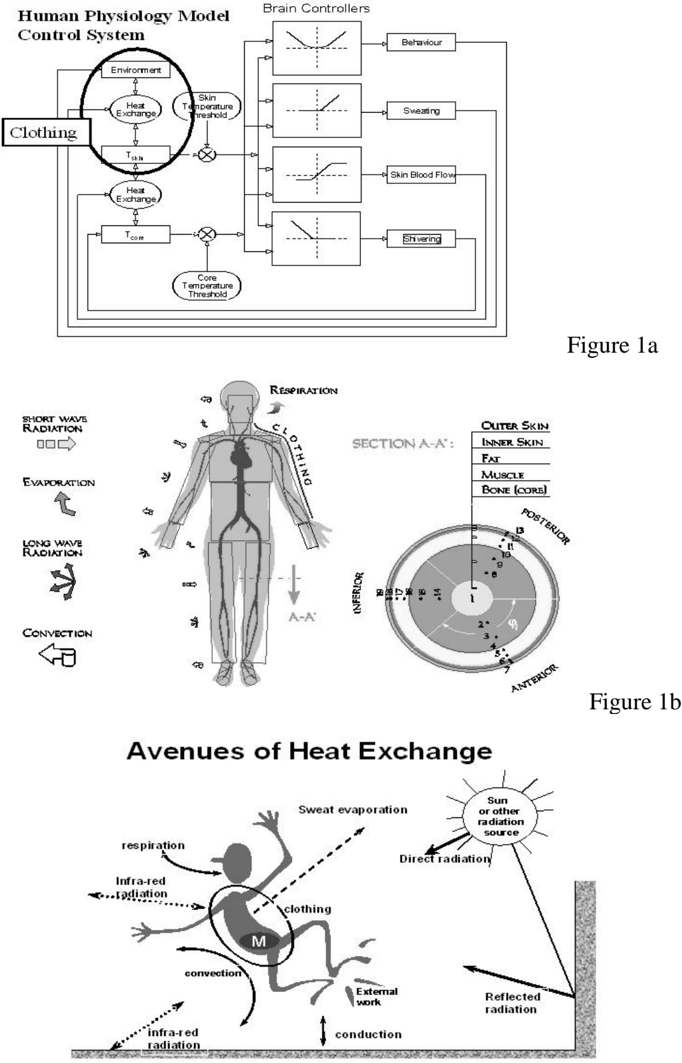
Existing procedures for the assessment of the thermal environment in the fields of public weather services, public health systems, precautionary planning, urban design, tourism and recreation and climate impact research exhibit significant shortcomings. This is most evident for simple (mostly two-parameter) indices, when comparing them to complete heat budget models developed since the 1960s. ISB Commission 6 took up the idea of developing a Universal Thermal Climate Index (UTCI) based on the most advanced multi-node model of thermoregulation representing progress in science within the last three to four decades, both in thermo-physiological and heat exchange theory. Creating the essential research synergies for the development of UTCI required pooling the resources of multidisciplinary experts in the fields of thermal physiology, mathematical modelling, occupational medicine, meteorological data handling (in particular radiation modelling) and application development in a network. It was possible to extend the expertise of ISB Commission 6 substantially by COST (a European programme promoting Cooperation in Science and Technology) Action 730 so that finally over 45 scientists from 23 countries (Australia, Canada, Israel, several Europe countries, New Zealand, and the United States) worked together. The work was performed under the umbrella of the WMO Commission on Climatology (CCl). After extensive evaluations, Fiala's multi-node human physiology and thermal comfort model (FPC) was adopted for this study. The model was validated extensively, applying as yet unused data from other research groups, and extended for the purposes of the project. This model was coupled with a state-of-the-art clothing model taking into consideration behavioural adaptation of clothing insulation by the general urban population in response to actual environmental temperature. UTCI was then derived conceptually as an equivalent temperature (ET). Thus, for any combination of air temperature, wind, radiation, and humidity (stress), UTCI is defined as the isothermal air temperature of the reference condition that would elicit the same dynamic response (strain) of the physiological model. As UTCI is based on contemporary science its use will standardise applications in the major fields of human biometeorology, thus making research results comparable and physiologically relevant.
Overview
The claims and statistics of this paper haven’t been checked yet.
Free: it reads the open-access text and checks the first 5 claims that cite a source we can check. Create a free account to check every claim.
Integrity signals
Registry
Cites
Statistics
Figures

Verification
Claims the paper makes
The claims and statistics of this paper haven’t been checked yet.
Free: it reads the open-access text and checks the first 5 claims that cite a source we can check. Create a free account to check every claim.
Claims other papers make about this one
Each is checked against this paper’s own text: does it say what the citing paper says it does?
The source backs part of the claim, not all of it — or backs it for a different population, condition or comparison.
In the citing paper
“A recently proposed Universal Thermal Climate Index (UTCI) (2009), based on an advanced human thermoregulation model, directly uses meteorological data to predict the impact of outdoor climate on thermal physiological and perceptual responses (Jendritzky et al. 2012; Bröde et al. 2012a, b; Fiala et al. 2012; Havenith et al. 2012; Kampmann et al. 2012; Parsons 2013; Havenith and Fiala 2016).”
From Occupational heat stress assessment and protective strategies in the context of climate change (2018) · cites this paper as Jendritzky et al. 2012
Experimental — accuracy not yet measured
Self-check
Percentages, sums and reported differences re-computed from the paper’s own numbers.
The self-check needs the paper’s full text.
Citations
Cites
Höppe, P. (1999) · International Journal of Biometeorology · doi:10.1007/s004840050118 · Cited by 2,429
Modelling radiation fluxes in simple and complex environments: basics of the RayMan model
Matzarakis, A., Rutz, F., & Mayer, H. (2010) · International Journal of Biometeorology · doi:10.1007/s00484-009-0261-0 · Cited by 1,633
Modelling radiation fluxes in simple and complex environments—application of the RayMan model
Matzarakis, A., Rutz, F., & Mayer, H. (2007) · International Journal of Biometeorology · doi:10.1007/s00484-006-0061-8 · Cited by 1,365
Deriving the operational procedure for the Universal Thermal Climate Index (UTCI)
Bröde, P., Fiala, D., Błażejczyk, K., Holmér, I., Jendritzky, G., Kampmann, B., Tinz, B., & Havenith, G. (2012) · International Journal of Biometeorology · doi:10.1007/s00484-011-0454-1 · Cited by 1,243
Self-citationComparison of UTCI to selected thermal indices
Blazejczyk, K., Epstein, Y., Jendritzky, G., Staiger, H., & Tinz, B. (2012) · International Journal of Biometeorology · doi:10.1007/s00484-011-0453-2 · Cited by 1,129
Self-citationA standard predictive index of human response to the thermal environment
Gagge, A. P., Fobelets, A. P. R., & Berglund, L. G. (1986) · ASHRAE winter conference papers · Cited by 1,053
UTCI-Fiala multi-node model of human heat transfer and temperature regulation
Fiala, D., Havenith, G., Bröde, P., Kampmann, B., & Jendritzky, G. (2012) · International Journal of Biometeorology · doi:10.1007/s00484-011-0424-7 · Cited by 994
Self-citationFiala, D., Lomas, K. J., & Stohrer, M. (1999) · Journal of Applied Physiology · doi:10.1152/jappl.1999.87.5.1957 · Cited by 849
Fiala, D., Lomas, K. J., & Stohrer, M. (2001) · International Journal of Biometeorology · doi:10.1007/s004840100099 · Cited by 754
A model of human physiology and comfort for assessing complex thermal environments
Huizenga, C., Hui, Z., & Arens, E. (2001) · Building and Environment · doi:10.1016/s0360-1323(00)00061-5 · Cited by 585
Research works printed but not linked: 12
- 3. Blazejczyk K, Epstein Y, Jendritzky G, Staiger H, Tinz B (2011) Comparison of UTCI to selected thermal indices. Int J Biometeorol XX; YY-YZ Bröde P, Kampmann B, Havenith G, Jendritzky G (2008) Effiziente Berechnung des klimatischen Belastungs-Index UTCI. In: Gesellschaft für Arbeitswissenschaft (ed.): Produkt-und Produktions-Ergonomie -Aufgabe für Entwickler und Planer, GfA-Press, Dortmund: 271-274.
- 4. Bröde P, Fiala D, Blazejczyk K, Epstein Y, Holmér I, Jendritzky G, Kampmann B, Richards M, Rintamäki H, Shitzer A, Havenith G (2009a) Calculating UTCI Equivalent Temperature. In: Castellani, JW; Endrusick, TL (eds.): Environmental Ergonomics XIII, University of Wollongong, Wollongong: 49-53
- 5. Bröde P, Fiala D, Kampmann B, Havenith G, Jendritzky G (2009b) Der Klimaindex UTCI - Multivariate Analyse der Reaktion eines thermophysiologischen Simulationsmodells. In: Gesellschaft für Arbeitswissenschaft (ed.): Arbeit, Beschäftigungsfähigkeit und Produktivität im 21. Jahrhundert, GfA-Press, Dortmund: 705-708
- 9. Driscoll DM (1992) Thermal Comfort Indexes. Current Uses and Abuses. Nat. Weather Digest, 17, (4): 33-38
- 11. Fanger PO (1970) Thermal Comfort. Analysis and Application in Environmental Engineering. Danish Technical Press, Copenhagen
- 22. Horikoshi T, Tsuchikawa T, Kurazumi Y, Matsubara N (1995): Mathematical expression of combined and separate effect of air temperature, humidity, air velocity and thermal radiation on thermal comfort. Archives of Complex Environmental Studies, 7 (3-4): 9- 12
- 30. Jendritzky G (1990) Bioklimatische Bewertungsgrundlage der Räume am Beispiel von mesoskaligen Bioklimakarten. In: Jendritzky G, Schirmer H, Menz G, Schmidt- Kessen W: Methode zur raumbezogenen Bewertung der thermischen Komponente im Bioklima des Menschen (Fortgeschriebenes Klima-Michel-Modell). Akad Raumforschung Landesplanung, Hannover, Beiträge 114: 7-69
- 31. Jendritzky G, Maarouf A, Fiala D, Staiger H (2002) An Update on the Development of a Universal Thermal Climate Index. 15 th Conf. Biomet. Aerobiol. and 16 th ICB02, 27 Oct -1 Nov 2002, Kansas City, AMS: 129-133
- 33. Kampmann B, Bröde P (2009) Physiological Responses to Temperature and Humidity Compared With Predictions of PHS and WBGT. In: Castellani, JW; Endrusick, TL (eds.): Environmental Ergonomics XIII, University of Wollongong, Wollongong: 54- 58.
- 43. Psikuta A, Fiala D, Richards M (2007) Validation of the Fiala Model of Human Physiology and Comfort for COST 730. In: Mekjavic IB, Kounalakis SN, Taylor NAS (eds.) Proceedings of the 12th International Conference on Environmental Ergonomics XII, Biomed, Ljubljana: 516
- 45. Richards M and Havenith G (2007) Progress towards the final UTCI model. In: Mekjavic IB, Kounalakis SN, Taylor NAS (eds.) Proceedings of the 12th International Conference on Environmental Ergonomics. August 19-24, 2007, Piran Slovenia. Biomed, Ljubljana: 521-524
- 50. Steadman RG (1994): Norms of apparent temperature in Australia. Aust. Met. Mag. 43: 1-16
Cited by
Items 701–800 of 1,000
UTCI Based Assessment of Urban Outdoor Thermal Comfort in Belgrade, Serbia
Lukić, M., & Milovanović, J. (2020) · International Scientific Conference Sinteza · doi:10.15308/sinteza-2020-70-77 · Cited by 11
“Thanks to that, this index is slowly gaining the status of “an internationally standardized instrument for the assessment of thermal environments“ [24].”
BackgroundResultKoerniawan, M. D., & Gao, W. (2015) · International Journal of Building Urban Interior and Landscape Technology (BUILT) · doi:10.14456/built.2015.9 · Cited by 11
Past, present and future of the climate and human health commission
Fdez-Arróyabe, P., & Robau, D. T. (2017) · International Journal of Biometeorology · doi:10.1007/s00484-017-1413-2 · Cited by 11
Wang, J., Li, J., & Niu, J. (2024) · Building and Environment · doi:10.1016/j.buildenv.2024.112340 · Cited by 10
Rupendra, S., Rijal, H. B., Khadka, S., Aqilah, N., & Lamsal, P. (2025) · Frontiers in Built Environment · doi:10.3389/fbuil.2024.1526919 · Cited by 10
Patel, N., Jänicke, B., Burghardt, R., Vulova, S., & Otto, F. (2025) · Climate Resilience and Sustainability · doi:10.1002/cli2.70009 · Cited by 10
VARQUEZ, A. C. G., Taerakul, J., Renard, F., Alonso, L., Choi, S., Hiroki, R., Ashie, Y., Kumakura, E., Okumura, M., Hanaoka, S., et al. (2025) · Sustainable Cities and Society · doi:10.1016/j.scs.2025.106344 · Cited by 10
Chen, T., Singh, V. K., Zhang, S., Zhang, L., & Yuan, C. (2025) · Building and Environment · doi:10.1016/j.buildenv.2025.113760 · Cited by 11
Enabling urban climate resilience through integrated optimization of urban design
Feng, W., Yang, L. E., Zeng, F., Jing, J., Zhang, H., & Wu, Z. Y. (2025) · Frontiers in Sustainable Cities · doi:10.3389/frsc.2025.1657008 · Cited by 11
Yao, Z., Wang, P., Tian, Y., Zhang, Y., Zhang, Q., Wang, X., Wang, P., & Han, Q. (2025) · Buildings · doi:10.3390/buildings15224121 · Cited by 10
Heat waves in buildings: A review of detection methods and performance assessment
Bracht, M. K., Melo, A. P., & Lamberts, R. (2026) · Building and Environment · doi:10.1016/j.buildenv.2026.114205 · Cited by 10
Lehnert, M., Geletič, J., & Jurek, M. (2023) · Geografie · doi:10.37040/geografie.2023.012 · Cited by 10
From BIM to thermal comfort: Leveraging BIM for rapid outdoor comfort assessments
Yoo, W., Clayton, M. J., & Brown, R. D. (2024) · Energy and Buildings · doi:10.1016/j.enbuild.2024.114664 · Cited by 10
Édouard, P., Dandrieux, P., Klöwer, M., Junge, A., Racinais, S., Branco, P., Hollander, K., & Navarro, L. (2024) · British Journal of Sports Medicine · doi:10.1136/bjsports-2023-108050 · Cited by 10
Combined Thermal Index Development for Urban Heat Island Detection in Area of Split, Croatia
Ćesić, M., Rogulj, K., & Krtalić, A. (2025) · Land · doi:10.3390/land14010175 · Cited by 10
Yang, J., Zhao, Y., Guo, T., Zhang, X., Fang, Z., & Wu, P. (2025) · Thermal Science and Engineering Progress · doi:10.1016/j.tsep.2025.103564 · Cited by 10
Bioclimatic and climatic tourism conditions at Zlatibor Mountain (Western Serbia)
Basarin, B., Lukić, T., Bjelajac, D., Ponjiger, T. M., Stojićević, G., Stamenković, I., Đorđević, J., Đorđević, T., & Matzarakis, A. (2018) · Időjárás · doi:10.28974/idojaras.2018.3.6 · Cited by 10
“, 2012), and UTCI (universal thermal climate index) (Jendritzky et al., 2012).”
BackgroundMethodInfluentialGorman, J. M., Regnier, M., & Abraham, J. (2020) · Advances in heat transfer · doi:10.1016/bs.aiht.2020.07.001 · Cited by 10
Temperature and trading behaviours
Liu, H., Zhang, W., Zhang, X., & Liu, J. (2021) · International Review of Financial Analysis · doi:10.1016/j.irfa.2021.101890 · Cited by 11
Reis, C., Nouri, A. S., & Lopes, A. M. S. (2023) · Frontiers in Earth Science · doi:10.3389/feart.2023.1099045 · Cited by 10
“One of the most well-known indices is the Universal Thermal Climate Index or UTCI (Jendritzky et al., 2012), based on the heat balance of the human body (Matzarakis et al.”
BackgroundMethodInfluentialKonstantinov, P., Shartova, N. V., Varentsov, M. I., & Revich, B. (2020) · Geographica Pannonica · doi:10.5937/gp24-24738 · Cited by 10
“254 Geographica Pannonica • Volume 24, Issue 4, 252–260 (December 2020) UTCI is also based on the model of human heat budget (Bajšanski et al., 2015; Havenith et al., 2012; Jendritzky et al., 2012; Lam & Lau, 2018; Milošević et al., 2017; Weihs et al., 2012).”
BackgroundLiu, Y., Li, S., Wang, Y., Tian, Z., Peng, J., & Li, T. (2015) · Natural Hazards · doi:10.1007/s11069-015-1885-5 · Cited by 10
“By combining air temperature, wind, radiation, and humidity, the UTCI provides a deeper understanding of the principles of human thermoregulation (Jendritzky et al. 2012).”
BackgroundUrban human-biometeorology supports urban planning to handle the challenge by increasing severe heat
Lee, H., & Mayer, H. (2013) · mediaTUM (Technical University of Munich) · Cited by 10
Thermal comfort in open public spaces – A critical review in Indian context
Sehgal, J., & Kumar, G. (2024) · Building and Environment · doi:10.1016/j.buildenv.2024.112239 · Cited by 9
Wang, Y., Yi, S., Li, X., Liu, P., Yang, Z., Bardhan, R., & Stouffs, R. M. F. A. (2026) · Sustainable Cities and Society · doi:10.1016/j.scs.2026.107659 · Cited by 10
“…to represent pedestrian-level heat stress, which is buffered by atmospheric processes such as convection, radiation exchange, and physiological factors (Bröde et al., 2012; Fiala et al., 2012; Jendritzky et al., 2012; Zhan et al., 2025), leading to a more moderated spatial and temporal pattern.”
POTENTIAL RISKS OF OUTDOOR SPORTS IN A CHANGING CLIMATE
GÖKÇE, U., DALBOY, A., An, N., Turp, M. T., & KURNAZ, L. (2022) · Ankara Üniversitesi Beden Eğitimi ve Spor Yüksekokulu SPORMETRE Beden Eğitimi ve Spor Bilimleri Dergisi · doi:10.33689/spormetre.964457 · Cited by 9
“, eating and drinking, activity and rest, clothing, exposure, shelter, relocation) driven by conscious feelings of thermal discomfort (Jendritzky et al., 2012).”
BackgroundPhilippopoulos, K., Pantavou, K. G., Cartalis, C., Agathangelidis, I., Mavrakou, T., Polydoros, A., & Nikolopoulos, G. K. (2023) · The Science of The Total Environment · doi:10.1016/j.scitotenv.2023.164734 · Cited by 9
Malet-Damour, B., Bigot, D., & Rivière, G. (2023) · Eng—Advances in Engineering · doi:10.3390/eng4030138 · Cited by 9
Xu, S., Zhu, P., Guo, F., Yan, D., Miao, S., Zhang, H., Dong, J., & Fan, X. (2024) · Buildings · doi:10.3390/buildings14103176 · Cited by 9
Contributions of temperature and humidity to intra-city variations in humid heat
Yang, Y., & Lee, X. (2024) · Urban Climate · doi:10.1016/j.uclim.2024.102201 · Cited by 9
Vaz, I. C. M., Ghisi, E., Thives, L. P., Vieira, A. S., Rupp, R. F., Schaefer, A., Flores, R. A., Bastos, M. B., Marinoski, D. L., Silva, A. S., et al. (2024) · Energy and Buildings · doi:10.1016/j.enbuild.2024.115059 · Cited by 9
Fabbri, K., Catalano, M., & Ugolini, A. (2025) · Sustainability · doi:10.3390/su17062712 · Cited by 9
Li, J., Zhao, Z., Chen, H., & Fu, Z. (2025) · Case Studies in Thermal Engineering · doi:10.1016/j.csite.2025.106196 · Cited by 9
Effects of Climate Change on the Season of Botanical Tourism: A Case Study in Beijing
Zang, Y., Dai, J., Tao, Z., Wang, H., & Ge, Q. (2020) · Advances in Meteorology · doi:10.1155/2020/8527860 · Cited by 9
Miszuk, B. (2021) · Atmosphere · doi:10.3390/atmos12020163 · Cited by 9
Human Bioclimate Analysis for the Paris Olympic Games
Matzarakis, A., & Graw, K. (2022) · Atmosphere · doi:10.3390/atmos13020269 · Cited by 9
“In the results section, the thermal conditions in Paris throughout the year have been described based on the thermal indices PET, mPET and UTCI to provide the thermal comfort and stress conditions for each decad (periods of about 10 days averaged over the years 1990–2020).”
BackgroundInfluentialThoughts about the Thermal Environment and the Development of Human Civilisation
Charalampopoulos, I., & Matzarakis, A. (2022) · Atmosphere · doi:10.3390/atmos13111925 · Cited by 10
Supporting sustainability initiatives through biometeorology education and training
Allen, M. J., Vanos, J., Hondula, D. M., Vecellio, D. J., Knight, D. B., Mehdipoor, H., Lucas, R. A. I., Fuhrmann, C. M., Lokys, H. L., Lees, A. M., et al. (2017) · International Journal of Biometeorology · doi:10.1007/s00484-017-1408-z · Cited by 10
The impact of extreme temperatures on human mortality in the most populated cities of Romania
Scripcă, A.-S., Acquaotta, F., Croitoru, A., & Fratianni, S. (2021) · International Journal of Biometeorology · doi:10.1007/s00484-021-02206-w · Cited by 9
Outdoor space quality: Impact of deep canyon thermal comfort in an urban residential community
Abdallah, A. S. H., & Al-Saadi, S. N. (2020) · Science and Technology for the Built Environment · doi:10.1080/23744731.2020.1858680 · Cited by 9
“…the microclimate and spaces around buildings in urban areas has increased because it affects the indoor thermal comfort, energy consumption, energy demand for cooling and heating, outdoor thermal comfort for people to use open spaces, and decreases air pollution with air quality (Johansson 2006).”
BackgroundPecelj, M. M., Błażejczyk, A., Vagić, N., & Ivanović, P. (2021) · Geographia Polonica · doi:10.7163/gpol.0201 · Cited by 9
“…of clothing (clothing insulation, permeability) are taken as universal constants in the model which implies the activity of a person who is outdoor and walking 4 kmh-1 (1.1 m·s-1) corresponding to the production of metabolic energy of 2.3 met (Havenith et al., 2012; Jendritzky et al., 2012).”
BackgroundInfluentialComparative Analysis of Thermoregulation Models to Assess Heat Strain in Moderate to Extreme Heat
Joshi, A., Twidwell, B., Park, M., & Rykaczewski, K. (2024) · Journal of Thermal Biology · doi:10.1016/j.jtherbio.2024.104035 · Cited by 8
Zhou, H., Wang, R., Hou, H., Xie, B., & Hu, T. (2025) · Buildings · doi:10.3390/buildings15132261 · Cited by 8
Assessing green walls’ effects on outdoor human thermal exposure in temperate climate cities
Lehnert, M., Kremser, J., Janků, Z., Květoňová, V., & Geletič, J. (2025) · Scientific Reports · doi:10.1038/s41598-025-26214-7 · Cited by 8
Zhang, H., Wang, Y., Chen, B., Bai, J., Zhao, J. L., Guo, F., & Zhu, P. (2025) · Sustainable Cities and Society · doi:10.1016/j.scs.2025.107031 · Cited by 8
Fünfgeld, H., Christen, A., Briegel, F., Schrodi, S., Speidel, A., Felder, C., Hoffmann, J., Irscheid, L., Merkle, D., Meyer, J., et al. (2025) · Landscape and Urban Planning · doi:10.1016/j.landurbplan.2025.105574 · Cited by 8
Kafy, A. ‐. A., Alsulamy, S. H., & Alsaleh, A. M. (2026) · Natural Hazards · doi:10.1007/s11069-025-07930-9 · Cited by 8
“The UTCI was computed following the procedure outlined by Jendritzky et al. (2012) and Błażejczyk et al. ( 2013).”
Geometrical Assessment of Sunlit and Shaded Area of Urban Trees Based on Aligned Orthographic Views
Gangwisch, M., Fröhlich, D., Christen, A., & Matzarakis, A. (2021) · Atmosphere · doi:10.3390/atmos12080968 · Cited by 8
“It is a steady-state, time-independent model capable of estimating several thermal indices [42]: Physiologically Equivalent Temperature (PET [44,45]), Universal Thermal Climate Index (UTCI [46]) and Perceived Temperature (PT [47]).”
BackgroundGajjar, H. H., Jeyaraman, J. D., & Kaul, D. S. (2022) · International Journal of Biometeorology · doi:10.1007/s00484-022-02340-z · Cited by 8
“The modelled trees however were able to provide shading benefit (ΔMRT) and reducing thermal stress (ΔPET), by up to 2.0 °C for both indices, and UTCI by 1.3 °C. Figure 9 shows spatio-temporal maps of difference in air temperature reduction due to Asopalav trees and Neem trees compared to base case.”
BackgroundInfluentialMa, H., Mi, Z., Chen, H., & Wang, Y. (2024) · 气象学报:英文版 · doi:10.1007/s13351-024-3111-4 · Cited by 8
Han, M., Fang, Y., Li, Y., & Liu, S. (2024) · Buildings · doi:10.3390/buildings14041095 · Cited by 8
Lu, X., Zhao, S., Zhai, Y., & Liu, J. (2024) · Building Simulation · doi:10.1007/s12273-024-1157-y · Cited by 9
Gebremedhin, A. T., Nyadanu, S. D., Hanigan, I., & Pereira, G. F. (2024) · Environmental Science and Pollution Research · doi:10.1007/s11356-024-34689-6 · Cited by 8
“UTCI was developed based on the most advanced Fiala multi-node models of human thermoregulation (Blazejczyk et al. 2013; Bröde et al. 2012; Jendritzky et al. 2012).”
BackgroundMethodInfluentialOjha, S. K., Mukherjee, M., & Raje, A. R. (2024) · International Journal of Biometeorology · doi:10.1007/s00484-024-02809-z · Cited by 8
Planning for a Warmer Future: Heat Risk Assessment and Mitigation in Lahti, Finland
Negi, A., Emmanuel, R., & Aarrevaara, E. (2025) · Atmosphere · doi:10.3390/atmos16020146 · Cited by 8
Land Use Based Urban Vulnerability to Climate Change Assessment
Kaveckis, G., & Bechtel, B. (2014) · Environmental engineering · doi:10.3846/enviro.2014.122 · Cited by 8
“Secondly, it should be 'physically' meaningful, which means it should be related to the urban canopy layer air temperature or even better a bioclimatological index like PET or UTCI [29].”
BackgroundCooling effect of fanned parasol for mitigating outdoor heat stress
Zhang, S., Niu, D., Song, D., Sun, Y., Huan, C., & Lin, Z. (2023) · Solar Energy · doi:10.1016/j.solener.2023.05.042 · Cited by 8
The stimuli of thermal environment defined according to UTCI in Poland
Kuchcik, M., Błażejczyk, K., & Hałaś, A. (2021) · Geographia Polonica · doi:10.7163/gpol.0200 · Cited by 8
“The socalled “thermal environment” comprises both atmospheric heat exchange conditions (stress) and the physiological response (strain) (Jendritzky et al., 2012).”
BackgroundKang, M., Kim, K. R., Lee, J., & Shin, J. (2022) · International Journal of Biometeorology · doi:10.1007/s00484-022-02261-x · Cited by 8
Shin, J.-Y., Kim, K. R., & Lee, Y. H. (2022) · Urban Climate · doi:10.1016/j.uclim.2022.101286 · Cited by 8
Establishing a baseline for thermal stress conditions – A high-resolution radiative perspective
Weeding, B., Lucieer, A., Love, P. T., Remenyi, T., & Harris, R. M. B. (2023) · Urban Climate · doi:10.1016/j.uclim.2023.101523 · Cited by 8
Pryor, S. C., & Schoof, J. T. (2016) · Journal of Geophysical Research Atmospheres · doi:10.1002/2015jd024539 · Cited by 8
“Thus, Te, which is related to two widely used indices from the health community (physiologically equivalent temperature and the universal thermal climate index [Jendritzky et al., 2011]) but is easier to compute from standard meteorological observations and output from RCM, may also prove useful in developing projecti…”
BackgroundMazzotta, A., & Mutani, G. (2015) · Energy Procedia · doi:10.1016/j.egypro.2015.11.059 · Cited by 8
Developments in the International Society of Biometeorology over the decade, 2007–2016
Keatley, M. R. (2017) · International Journal of Biometeorology · doi:10.1007/s00484-017-1396-z · Cited by 8
“Currently, ISB is affiliated with the following societies: American Meteorological Society, Center for Renewable Energy Sources and Saving , German Meteorological Society, International Society of Medical Hydrology and Climatology, International Society of Zoological Sciences, International Union of Biological Science…”
BackgroundInfluential(2018) · Global NEST Journal · doi:10.30955/gnj.002556 · Cited by 8
Avaliação do Risco de Acidente na Indústria Extrativa a Céu Aberto
Silva, J. C. B. D. (2018) · Portuguese National Funding Agency for Science, Research and Technology (RCAAP Project by FCT) · doi:10.34626/sacz-er98 · Cited by 8
Zhen, M., Xia, W., Sun, G., Huang, C., & Ji, J. (2025) · Energy and Buildings · doi:10.1016/j.enbuild.2025.115703 · Cited by 7
Kim, J., Park, S., Jung, S., & Lee, G. (2025) · Sustainable Cities and Society · doi:10.1016/j.scs.2025.106830 · Cited by 7
Lin, D., Lu, R., Xia, W., & Zhen, M. (2025) · Journal of Building Engineering · doi:10.1016/j.jobe.2025.114207 · Cited by 7
Lamberti, G., Vista, D. D., Leccese, F., & Salvadori, G. (2025) · Energy and Buildings · doi:10.1016/j.enbuild.2025.116609 · Cited by 7
Fang, Z., Wu, Z., Feng, X., & Yang, J. (2025) · Building and Environment · doi:10.1016/j.buildenv.2025.113933 · Cited by 7
Lindner-Cendrowska, K., Czarnecka, K., & Rabczenko, D. (2025) · Sustainable Cities and Society · doi:10.1016/j.scs.2025.107011 · Cited by 7
Biometeorological conditions during cold spells in south-east Poland and west Ukraine
Tomczyk, A. M., Shevchenko, О., & Matzarakis, A. (2023) · International Journal of Biometeorology · doi:10.1007/s00484-023-02559-4 · Cited by 7
“The UTCI has been developed as a universal thermal indicator, which could be used in different climates (Jendritzky et al. 2012); however, a comprehensive review of approaches and methods of outdoor human thermal perception, conducted by Potchter et al. (2018), has shown that PET is still the most…”
MethodJurek, M., Geletič, J., Koukalová, A., Květoňová, V., Létal, A., & Lehnert, M. (2025) · Energy and Buildings · doi:10.1016/j.enbuild.2025.115952 · Cited by 7
Zhang, D., Liu, G., Kang, K., Chen, X., Sun, S. H., Xie, Y., & Lin, B. (2025) · Buildings · doi:10.3390/buildings15132156 · Cited by 7
The Journal of Climate Change and Health
Méndez‐Lázaro, P., Napoli, C. D., Rivas‐Tumanyan, S., Pérez-Ríos, N., Sepúlveda, L. G., Rodríguez, E., Morales, E., Martínez-Sánchez, O., Cabrera-Rivera, L. T., Sanchez-Sepulveda, M. V., et al. (2025) · RWTH Publications (RWTH Aachen) · doi:10.1016/j.joclim.2025.100484
“The UTCI estimates physiological heat stress based on air temperature, humidity, wind speed, and radiant heat, and has been used in studies of heat-related cardiovascular mortality [40,41].”
Outdoor Thermal Comfort & Human Behavior Factors, Models, and Methodologies
Khan, Z., & Azari, R. S. (2021) · Springer eBooks · doi:10.1007/978-3-030-73692-7_7 · Cited by 7
Future Changes in Thermal Bioclimate Conditions over West Bengal, India, Based on a Climate Model
Bal, S., & Kirchner, I. (2023) · Atmosphere · doi:10.3390/atmos14030505 · Cited by 7
Ahan, M. M., Nouri, A. S., & Matzarakis, A. (2023) · Atmosphere · doi:10.3390/atmos14091407 · Cited by 7
A satellite-based approach for thermal comfort simulation: A case study in the GBA
Zhang, D., Liu, C., Wu, J., & Wang, H. (2023) · Urban Climate · doi:10.1016/j.uclim.2023.101776 · Cited by 7
Modeling on Outdoor Thermal Comfort in Traditional Residential Neighborhoods in Beijing Based on GAN
Gong, P., Huang, X., Huang, C., & Wang, S. (2024) · Computational design and robotic fabrication · doi:10.1007/978-981-99-8405-3_23 · Cited by 7
Weeding, B., Love, P. T., Beyer, K., Lucieer, A., & Remenyi, T. (2024) · International Journal of Biometeorology · doi:10.1007/s00484-024-02622-8 · Cited by 7
Xiong, Y., He, Y., Xie, X., Zhai, T., Chu, N., Shen, L., & Yang, Y. (2025) · PLoS ONE · doi:10.1371/journal.pone.0323252 · Cited by 7
“Various indicators are commonly employed to evaluate human thermal comfort, including WGBT [48], SET [49], PMV [50,51], PET [42] and UTCI [52,53].”
Maniatis, S., Nastos, P. T., Moustris, K., Polychroni, I. D., & Kamoutsis, A. (2020) · International Journal of Biometeorology · doi:10.1007/s00484-020-01993-y · Cited by 7
Bach, A. J. E., Borg, D. N., Minett, G. M., Maley, M. J., & Stewart, I. B. (2020) · Safety Science · doi:10.1016/j.ssci.2020.104980 · Cited by 7
Scale of human thermal sensation using seasonal anchor method: A Chinese case study
Yu, D., & Shan, L. I. (2019) · 自然资源学报 · doi:10.31497/zrzyxb.20190806 · Cited by 7
Bröde, P., Fiala, D., & Kampmann, B. (2024) · Atmosphere · doi:10.3390/atmos15060703 · Cited by 7
Chi, X., Cubasch, U., & Sodoudi, S. (2018) · Theoretical and Applied Climatology · doi:10.1007/s00704-018-2632-0 · Cited by 7
Dış Mekân Termal Konfor Koşullarının Zamansal ve Mekânsal Dağılımı: Konyaaltı-Antalya Örneği
Karakuş, N., & Selim, S. (2022) · Mehmet Akif Ersoy Üniversitesi Fen Bilimleri Enstitüsü Dergisi · doi:10.29048/makufebed.1151024 · Cited by 7
Evaluation of Tourism-Climate Conditions in the Region of Kłodzko Land (Poland)
Miszuk, B. (2021) · Atmosphere · doi:10.3390/atmos12070907 · Cited by 7
Analysis of the complex role of trees in street canyons using a large‐eddy simulation model
Řezníček, H., Geletič, J., Belda, M., Beneš, L., Bureš, M., Eben, K., Fuka, V., Krč, P., Michálek, P., Patiño, W. R., et al. (2025) · Quarterly Journal of the Royal Meteorological Society · doi:10.1002/qj.4954 · Cited by 6
“…of UTCI in the PALM model system is based on the Fiala–UTCI multi-node dynamic of the human heat transfer and regulation model (Fiala et al. , 2012; Jendritzky et al. , 2012) and includes a clothing model reflecting the behavioural adaptation of clothing insulation by the general urban population…”
Khan, Z., & Ghiai, M. M. (2025) · Buildings · doi:10.3390/buildings15162829 · Cited by 6
Zou, S., Sun, F., Maeyer, P. D., de Voorde, T. V., & Duan, W. (2025) · Geography and sustainability · doi:10.1016/j.geosus.2025.100374 · Cited by 6
Shrestha, B., Rai, Y., Rijal, H. B., & Shrestha, R. (2025) · Architecture · doi:10.3390/architecture5040100 · Cited by 6
Ojha, S. K., & Mukherjee, M. (2025) · Urban Climate · doi:10.1016/j.uclim.2025.102658 · Cited by 6
Li, Y., Liang, L., Song, S., Xu, F., Chen, J., Duan, X., & Wang, W. (2026) · Sustainable Cities and Society · doi:10.1016/j.scs.2026.107289 · Cited by 6
From street level to science: advancing methods for climate walks to improve human thermal comfort
Lau, K., Lam, C. K. C., Krüger, E. L., Nouri, A. S., Peng, Z., Santucci, D., & Matzarakis, A. (2026) · International Journal of Biometeorology · doi:10.1007/s00484-026-03167-8 · Cited by 6
“Examples include identifying thermal diversity and shade-driven differences in thermal indices such as physiologically equivalent temperature (PET) (Mayer and Höppe, 1987) or universal thermal climate index (UTCI) (Jendritzky et al., 2012) across positions (Lam et al. 2024) and decomposing radiative drivers (Siret et…”
InfluentialCool routes: Real-time human thermal exposure routing
Buo, I., Khan, W. H., CRABTREE, E., EMMOTT, F., HARIYANI, D., & Middel, A. (2026) · Building and Environment · doi:10.1016/j.buildenv.2026.114622 · Cited by 6
Duran, A., Waibel, C., & Schlueter, A. (2023) · Building Simulation Conference proceedings · doi:10.26868/25222708.2023.1308 · Cited by 6
“The details of UTCI calculation can be found in the original research article by Jendritzky et al. (2012).”
Background
Metadata
- Authors
- Jendritzky, G., de Dear, R., & Havenith, G.
- Affiliations
- University of Freiburg (DE)
- Loughborough University (GB)
- Corresponding author
- Jendritzky, Gerd
- ORCID
- Havenith, George
- Venue
- International Journal of Biometeorology
- Published
- 2011-12-21
- Volume
- 56
- Issue
- 3
- Pages
- 421-428
- ISSN
- 0020-7128 (ISSN-L)
- 1432-1254
- OpenAlex
- W1975324114
- Cited by
- 1,162
- References
- 50
- Citations by year
- 2026: 170 · 2025: 161 · 2024: 131 · 2023: 119 · 2022: 112 · 2021: 105 · 2020: 77 · 2019: 60 · 2018: 37 · 2017: 46 · 2016: 49 · 2015: 36 · 2014: 30 · 2013: 25 · 2012: 3
- FWCI
- 16.44
- Type
- journal article
- Language
- en
- Open access
- green
- figshare.com
- Licence
- cc-by-nc-nd
- www.springer.com/tdm (tdm)
- Locations
- International Journal of Biometeorology (publishedVersion)
- PubMed (publishedVersion)
- Loughborough University Research Repository (Loughborough University) (submittedVersion, cc-by-nc-nd)
- Loughborough University Institutional Repository (Loughborough University) (submittedVersion, cc-by-nc-nd)
- Topics
- Physical Sciences › Environmental Science › Environmental Engineering › Urban Heat Island Mitigation
- Health Sciences › Medicine › Physiology (medical) › Thermoregulation and physiological responses
- Physical Sciences › Environmental Science › Health, Toxicology and Mutagenesis › Climate Change and Health Impacts
- Keywords
- Universal Thermal Climate Index, thermal comfort, human thermoregulation, clothing insulation, equivalent temperature, heat stress, thermal environment evaluation, biometeorology
- MeSH terms
- Body Temperature Regulation, Climate, Humans, Meteorological Concepts, Models, Biological, Thermosensing
About these checks
Registry, retraction, Cites and statistics results are computed, not judged, with one exception: a printed reference that no index lists is read once by a model before it counts as a citation error. Claims are extracted by a model and kept only when their quote appears verbatim in the text; each cited source is then checked, with a model’s help, for whether it says what the claim relies on. Those verdicts can be wrong — read the claim’s quote and the cited source before relying on one.
Statistics and arithmetic are recomputed, not judged.
Confidence bands are shown only for fields calibrated on our annotated test set. None is calibrated yet, so no band is shown.
What counts as a claim ›How we measure confidence ›How we check this ›
Are you an author, or do you see a problem with this page? Request a review
Data sources
Bibliographic data: Semantic Scholar, OpenAlex, Crossref.
Contains information from the Semantic Scholar Academic Graph Datasets, made available under the ODC Attribution License (ODC-BY 1.0).
Semantic Scholar’s data is described in: Kinney, R., et al. (2023). The Semantic Scholar Open Data Platform. arXiv:2301.10140.
