

UTCI—Why another thermal index?
Open accessThe DOI matches its Crossref record; 50 of the 50 references it cites were found in a registry or an index.
Abstract
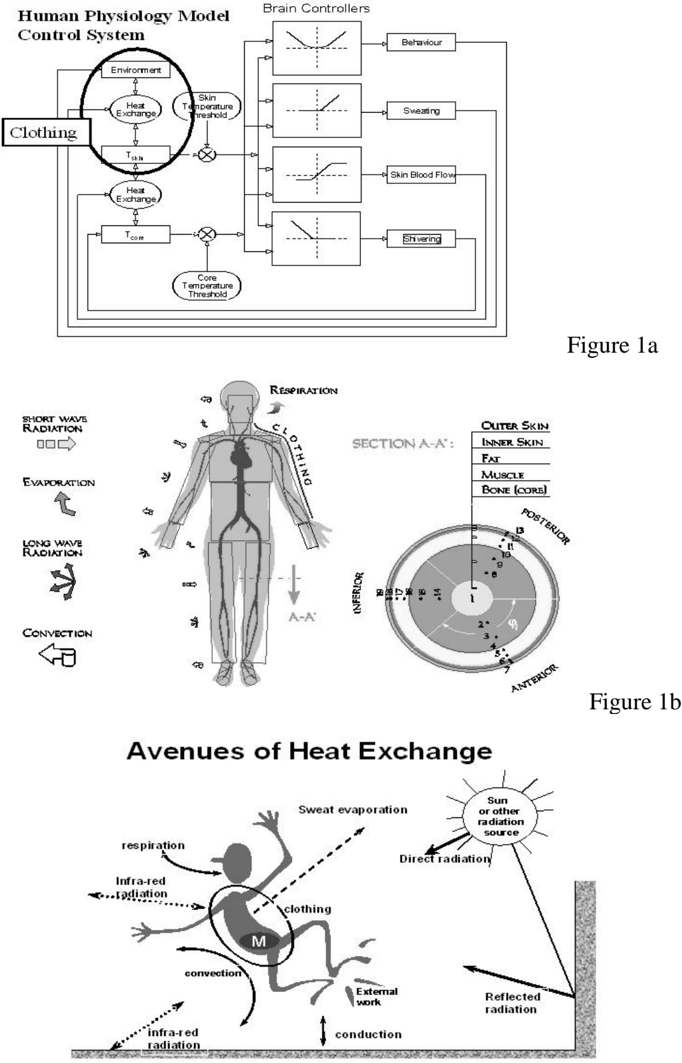
Existing procedures for the assessment of the thermal environment in the fields of public weather services, public health systems, precautionary planning, urban design, tourism and recreation and climate impact research exhibit significant shortcomings. This is most evident for simple (mostly two-parameter) indices, when comparing them to complete heat budget models developed since the 1960s. ISB Commission 6 took up the idea of developing a Universal Thermal Climate Index (UTCI) based on the most advanced multi-node model of thermoregulation representing progress in science within the last three to four decades, both in thermo-physiological and heat exchange theory. Creating the essential research synergies for the development of UTCI required pooling the resources of multidisciplinary experts in the fields of thermal physiology, mathematical modelling, occupational medicine, meteorological data handling (in particular radiation modelling) and application development in a network. It was possible to extend the expertise of ISB Commission 6 substantially by COST (a European programme promoting Cooperation in Science and Technology) Action 730 so that finally over 45 scientists from 23 countries (Australia, Canada, Israel, several Europe countries, New Zealand, and the United States) worked together. The work was performed under the umbrella of the WMO Commission on Climatology (CCl). After extensive evaluations, Fiala's multi-node human physiology and thermal comfort model (FPC) was adopted for this study. The model was validated extensively, applying as yet unused data from other research groups, and extended for the purposes of the project. This model was coupled with a state-of-the-art clothing model taking into consideration behavioural adaptation of clothing insulation by the general urban population in response to actual environmental temperature. UTCI was then derived conceptually as an equivalent temperature (ET). Thus, for any combination of air temperature, wind, radiation, and humidity (stress), UTCI is defined as the isothermal air temperature of the reference condition that would elicit the same dynamic response (strain) of the physiological model. As UTCI is based on contemporary science its use will standardise applications in the major fields of human biometeorology, thus making research results comparable and physiologically relevant.
Overview
The claims and statistics of this paper haven’t been checked yet.
Free: it reads the open-access text and checks the first 5 claims that cite a source we can check. Create a free account to check every claim.
Integrity signals
Registry
Cites
Statistics
Figures

Verification
Claims the paper makes
The claims and statistics of this paper haven’t been checked yet.
Free: it reads the open-access text and checks the first 5 claims that cite a source we can check. Create a free account to check every claim.
Claims other papers make about this one
Each is checked against this paper’s own text: does it say what the citing paper says it does?
The source backs part of the claim, not all of it — or backs it for a different population, condition or comparison.
In the citing paper
“A recently proposed Universal Thermal Climate Index (UTCI) (2009), based on an advanced human thermoregulation model, directly uses meteorological data to predict the impact of outdoor climate on thermal physiological and perceptual responses (Jendritzky et al. 2012; Bröde et al. 2012a, b; Fiala et al. 2012; Havenith et al. 2012; Kampmann et al. 2012; Parsons 2013; Havenith and Fiala 2016).”
From Occupational heat stress assessment and protective strategies in the context of climate change (2018) · cites this paper as Jendritzky et al. 2012
Experimental — accuracy not yet measured
Self-check
Percentages, sums and reported differences re-computed from the paper’s own numbers.
The self-check needs the paper’s full text.
Citations
Cites
Höppe, P. (1999) · International Journal of Biometeorology · doi:10.1007/s004840050118 · Cited by 2,429
Modelling radiation fluxes in simple and complex environments: basics of the RayMan model
Matzarakis, A., Rutz, F., & Mayer, H. (2010) · International Journal of Biometeorology · doi:10.1007/s00484-009-0261-0 · Cited by 1,633
Modelling radiation fluxes in simple and complex environments—application of the RayMan model
Matzarakis, A., Rutz, F., & Mayer, H. (2007) · International Journal of Biometeorology · doi:10.1007/s00484-006-0061-8 · Cited by 1,365
Deriving the operational procedure for the Universal Thermal Climate Index (UTCI)
Bröde, P., Fiala, D., Błażejczyk, K., Holmér, I., Jendritzky, G., Kampmann, B., Tinz, B., & Havenith, G. (2012) · International Journal of Biometeorology · doi:10.1007/s00484-011-0454-1 · Cited by 1,243
Self-citationComparison of UTCI to selected thermal indices
Blazejczyk, K., Epstein, Y., Jendritzky, G., Staiger, H., & Tinz, B. (2012) · International Journal of Biometeorology · doi:10.1007/s00484-011-0453-2 · Cited by 1,129
Self-citationA standard predictive index of human response to the thermal environment
Gagge, A. P., Fobelets, A. P. R., & Berglund, L. G. (1986) · ASHRAE winter conference papers · Cited by 1,053
UTCI-Fiala multi-node model of human heat transfer and temperature regulation
Fiala, D., Havenith, G., Bröde, P., Kampmann, B., & Jendritzky, G. (2012) · International Journal of Biometeorology · doi:10.1007/s00484-011-0424-7 · Cited by 994
Self-citationFiala, D., Lomas, K. J., & Stohrer, M. (1999) · Journal of Applied Physiology · doi:10.1152/jappl.1999.87.5.1957 · Cited by 849
Fiala, D., Lomas, K. J., & Stohrer, M. (2001) · International Journal of Biometeorology · doi:10.1007/s004840100099 · Cited by 754
A model of human physiology and comfort for assessing complex thermal environments
Huizenga, C., Hui, Z., & Arens, E. (2001) · Building and Environment · doi:10.1016/s0360-1323(00)00061-5 · Cited by 585
Research works printed but not linked: 12
- 3. Blazejczyk K, Epstein Y, Jendritzky G, Staiger H, Tinz B (2011) Comparison of UTCI to selected thermal indices. Int J Biometeorol XX; YY-YZ Bröde P, Kampmann B, Havenith G, Jendritzky G (2008) Effiziente Berechnung des klimatischen Belastungs-Index UTCI. In: Gesellschaft für Arbeitswissenschaft (ed.): Produkt-und Produktions-Ergonomie -Aufgabe für Entwickler und Planer, GfA-Press, Dortmund: 271-274.
- 4. Bröde P, Fiala D, Blazejczyk K, Epstein Y, Holmér I, Jendritzky G, Kampmann B, Richards M, Rintamäki H, Shitzer A, Havenith G (2009a) Calculating UTCI Equivalent Temperature. In: Castellani, JW; Endrusick, TL (eds.): Environmental Ergonomics XIII, University of Wollongong, Wollongong: 49-53
- 5. Bröde P, Fiala D, Kampmann B, Havenith G, Jendritzky G (2009b) Der Klimaindex UTCI - Multivariate Analyse der Reaktion eines thermophysiologischen Simulationsmodells. In: Gesellschaft für Arbeitswissenschaft (ed.): Arbeit, Beschäftigungsfähigkeit und Produktivität im 21. Jahrhundert, GfA-Press, Dortmund: 705-708
- 9. Driscoll DM (1992) Thermal Comfort Indexes. Current Uses and Abuses. Nat. Weather Digest, 17, (4): 33-38
- 11. Fanger PO (1970) Thermal Comfort. Analysis and Application in Environmental Engineering. Danish Technical Press, Copenhagen
- 22. Horikoshi T, Tsuchikawa T, Kurazumi Y, Matsubara N (1995): Mathematical expression of combined and separate effect of air temperature, humidity, air velocity and thermal radiation on thermal comfort. Archives of Complex Environmental Studies, 7 (3-4): 9- 12
- 30. Jendritzky G (1990) Bioklimatische Bewertungsgrundlage der Räume am Beispiel von mesoskaligen Bioklimakarten. In: Jendritzky G, Schirmer H, Menz G, Schmidt- Kessen W: Methode zur raumbezogenen Bewertung der thermischen Komponente im Bioklima des Menschen (Fortgeschriebenes Klima-Michel-Modell). Akad Raumforschung Landesplanung, Hannover, Beiträge 114: 7-69
- 31. Jendritzky G, Maarouf A, Fiala D, Staiger H (2002) An Update on the Development of a Universal Thermal Climate Index. 15 th Conf. Biomet. Aerobiol. and 16 th ICB02, 27 Oct -1 Nov 2002, Kansas City, AMS: 129-133
- 33. Kampmann B, Bröde P (2009) Physiological Responses to Temperature and Humidity Compared With Predictions of PHS and WBGT. In: Castellani, JW; Endrusick, TL (eds.): Environmental Ergonomics XIII, University of Wollongong, Wollongong: 54- 58.
- 43. Psikuta A, Fiala D, Richards M (2007) Validation of the Fiala Model of Human Physiology and Comfort for COST 730. In: Mekjavic IB, Kounalakis SN, Taylor NAS (eds.) Proceedings of the 12th International Conference on Environmental Ergonomics XII, Biomed, Ljubljana: 516
- 45. Richards M and Havenith G (2007) Progress towards the final UTCI model. In: Mekjavic IB, Kounalakis SN, Taylor NAS (eds.) Proceedings of the 12th International Conference on Environmental Ergonomics. August 19-24, 2007, Piran Slovenia. Biomed, Ljubljana: 521-524
- 50. Steadman RG (1994): Norms of apparent temperature in Australia. Aust. Met. Mag. 43: 1-16
Cited by
Items 801–900 of 1,000
Exploring the Multi-Sensory Coupling Relationship of Open Space on a Winter Campus
Li, S., Zhang, Y., Zhang, Q., Xue, P., Wu, H., Xu, W., Ye, J., Chen, L., He, T., & Zheng, Y. (2024) · Forests · doi:10.3390/f15050876 · Cited by 6
Putra, I. D. G. A., Nimiya, H., Sopaheluwakan, A., Kubota, T., Lee, H. S., Alfata, M. N. F., Permana, D. S., & Perdana, R. B. (2025) · Building and Environment · doi:10.1016/j.buildenv.2025.112877 · Cited by 6
Thermal stress in Tokyo and Sapporo during the 2020 Olympics period
Seo, Y. S., & Honjo, T. (2021) · doi:10.11492/ceispapersen.2021.1_29 · Cited by 6
Towards a Generic Residential Building Model for Heat–Health Warning Systems
Pfafferott, J., Rißmann, S., Halbig, G., Schröder, F., & Saad, S. (2021) · International Journal of Environmental Research and Public Health · doi:10.3390/ijerph182413050 · Cited by 6
“Public Health 2021, 18, 13050. https://doi.org/10.3390/ijerph182413050 https://www.mdpi.com/journal/ijerph a physiological heat-balance model and results in the so-called UTCI universal thermal comfort index [5].”
BackgroundInfluentialOperational multiscale predictions of hazardous events
Magnusson, L., Prudhomme, C., Giuseppe, F. D., Napoli, C. D., & Pappenberger, F. (2022) · Elsevier eBooks · doi:10.1016/b978-0-12-820124-4.00008-6 · Cited by 6
Lai, A. K. L., Kwok, Y. T., Maing, M., & Ng, E. (2017) · Architectural Science Review · doi:10.1080/00038628.2017.1409614 · Cited by 6
Thermalscape of Ecological City and its Visualized Evaluation
Ye, H., & Feng, Q. (2018) · Energy Procedia · doi:10.1016/j.egypro.2018.09.141 · Cited by 6
Scherber, K. (2014) · edoc Publication server (Humboldt University of Berlin) · doi:10.18452/17019 · Cited by 7
Análise climatológica do município de Caicó/RN : subsídios à avaliação do conforto humano
Lucena, R. L. (2016) · RIUnB Institutional Repository (University of Brasília) · doi:10.26512/2016.11.t.23004 · Cited by 6
TerraBench: Can Agents Reason Over Heterogeneous Earth-System Data?Preprint
Nguyen, D. T., Nguyen, T., Maani, F. A., Le, H. M., Sheikh, M. U., Saeed, N., Khan, M. H., & Khan, S. (2026) · arXiv (Cornell University) · doi:10.48550/arxiv.2606.13148 · Cited by 6
“], CLIMADA [2], EnergyPlus [8], UTCI/health-risk tools [14], and SUMO traffic simulation [21]; Visualization , which renders maps, overlays, and derived visual products; Web Search , which retrieves external scientific context or methodological references when permitted; and Execution server ,…”
Impact of BIPV on Outdoor Thermal Comfort: Comparative Study of Four Urban Block Typologies
Duran, A., Sogno, R., Büttiker, D., Mettas, L., Stengele, K., Waibel, C., & Schlueter, A. (2024) · Lecture notes in civil engineering · doi:10.1007/978-981-97-8313-7_73 · Cited by 5
Assessing Summer Humid Heat in Europe: Trends, Extremes, and Drivers
Milrad, S. M., & Ennis, K. E. (2025) · International Journal of Climatology · doi:10.1002/joc.8913 · Cited by 5
“Finally, it would be interesting to examine trends in the Universal Thermal Comfort Index (UTCI; Jendritzky et al. 2011) over Europe, a newer humid heat metric based on contemporary thermo-physiological and heat exchange science that has been used in some recent humid heat trend studies (e.g., Di…”
Atalell, K. A., Pereira, G. F., Duko, B., Nyadanu, S. D., O’Donnell, M., & Tessema, G. A. (2025) · Environment International · doi:10.1016/j.envint.2025.109642 · Cited by 5
Trends and developments in health systems modeling: a bibliometric analysis
Maguraushe, K., Ndayizigamiye, P., & Bokaba, T. (2025) · Frontiers in Digital Health · doi:10.3389/fdgth.2025.1595310 · Cited by 5
He, X., Li, M., Xu, H., Zhang, B., Lv, X., Wang, L., Zhao, C., Shan, X., He, Y., Fang, Y., et al. (2025) · Nature Communications · doi:10.1038/s41467-025-64410-1 · Cited by 5
“The detailed calculation procedure of UTCI has been described in prior studies 16,62 .”
Sustainable thermal comfort assessment of evaporative cooling systems in hot and arid climates
Al-Jubainawi, A., Mohammad, O. A. M., Al-Maidi, A. A. H., Hussein, Z. A., & Abdelzaher, M. A. (2026) · Scientific Reports · doi:10.1038/s41598-026-43175-7 · Cited by 5
Li, Z., Xu, R., Huang, W., Zhou, S., Xu, Z., Liu, Y., Xing, Y., Yang, Z., Huang, J., Chen, B., et al. (2025) · Environmental Science & Technology · doi:10.1021/acs.est.5c07211 · Cited by 5
Lefevre, A., Malet-Damour, B., Boyer, H., & Rivière, G. (2025) · Building Simulation Conference proceedings · doi:10.26868/25222708.2025.1158 · Cited by 5
Lin, Z., Ji, Z., Yuan, J., & Zhu, Z. (2025) · Urban Climate · doi:10.1016/j.uclim.2025.102715 · Cited by 5
Shao, Z., Guo, Y., Wu, J., Ni, Z., Wang, Y., Liang, Y., Wang, Y., & Chen, S. (2026) · Building and Environment · doi:10.1016/j.buildenv.2025.114194 · Cited by 6
Kang, G., Choi, W., Eum, J.-H., & Kim, J. (2026) · Sustainable Cities and Society · doi:10.1016/j.scs.2026.107131 · Cited by 5
Bounnah, A., & Bourbia, F. (2026) · Energy and Buildings · doi:10.1016/j.enbuild.2026.117118 · Cited by 5
Xuan, X., Liu, R., Zhang, Z., Yang, L., Zheng, Y., & Liu, Y. (2026) · Energy and Buildings · doi:10.1016/j.enbuild.2026.117115 · Cited by 5
Pinto, J. G., Hundhausen, M., Weber, A., Kohlhepp, R., Mihalyfi-Dean, C., Schipper, J. W., & Feldmann, H. (2026) · International Journal of Climatology · doi:10.1002/joc.70304 · Cited by 5
Mihalakakou, G. K., & Romeos, A. (2026) · Building and Environment · doi:10.1016/j.buildenv.2026.114595 · Cited by 5
>6°(C) of separation: Exploring the difference between perceived and measured temperature
Fitchett, J. M. (2025) · Journal of Thermal Biology · doi:10.1016/j.jtherbio.2025.104044 · Cited by 5
Reis, C., Oettl, D., Lopes, A. M. S., Nouri, A. S., & Vasconcelos, J. (2025) · Building and Environment · doi:10.1016/j.buildenv.2025.112702 · Cited by 5
Wang, B., Zhang, W., Jia, L., Han, B., & Zhao, H. (2025) · Case Studies in Thermal Engineering · doi:10.1016/j.csite.2025.105976 · Cited by 5
Space Design for Thermal Comfort and Energy Efficiency in Summer
Du, X. (2019) · Architecture and the Built Environment · doi:10.59490/abe.19.10.4101 · Cited by 5
Intensity of heat stress in 2015 and 2018 summer seasons in the region of the Lower Silesia (Poland)
Miszuk, B. (2020) · Miscellanea Geographica · doi:10.2478/mgrsd-2020-0020 · Cited by 5
Owczarek, M. (2021) · Geographia Polonica · doi:10.7163/gpol.0204 · Cited by 5
“The Universal Thermal Climate Index (UTCI) is one of the most appropriate indices for applications in human biometeorological studies (Jendritzky et al., 2012; Staiger et al., 2019).”
BackgroundNyadanu, S. D., Tessema, G. A., Dunne, J., Roy, A., & Pereira, G. F. (2025) · Urban Climate · doi:10.1016/j.uclim.2025.102316 · Cited by 5
Zhang, X., Zhang, Z., & Song, S. (2021) · Environmental Research Communications · doi:10.1088/2515-7620/abdae1 · Cited by 5
Daily Spatial Distribution of Apparent Temperature Comfort Zone in China Based on Heat Index
Wang, Z., Zhang, A., & Liu, M. (2022) · Remote Sensing · doi:10.3390/rs14194999 · Cited by 5
Biometeorological conditions of urban and suburban areas in Bosnia and Herzegovina
Milićević, S. M. (2023) · Theoretical and Applied Climatology · doi:10.1007/s00704-023-04501-5 · Cited by 5
Głogowski, A., Perona, P., Bryś, K., & Bryś, T. (2021) · International Journal of Biometeorology · doi:10.1007/s00484-021-02101-4 · Cited by 5
Human Biometeorological Models: Existing and Future Reflections for Lisbon
Nouri, A. S., & Matzarakis, A. (2021) · Springer eBooks · doi:10.1007/978-3-030-65421-4_21 · Cited by 5
Bonell, A., Vicedo‐Cabrera, A. M., Murray, K. A., Moirano, G., Sonko, B. J., Moore, S. E., Haines, A., & Prentice, A. M. (2023) · Research Square · doi:10.21203/rs.3.rs-2358038/v1 · Cited by 5
A Global High-Resolution Comprehensive Heat Indices Dataset from 1950 to 2024
Malik, A., Sateesh, M., Shaikh, M. A., Kong, Q., Usman, M., Dasari, H. P., & Hoteit, I. (2026) · Scientific Data · doi:10.1038/s41597-025-06519-y · Cited by 5
“It is defined as the temperature of a reference environment that would elicit the same dynamic physiological response as the actual environment 57 .”
Scolaro, T. P., Vaz, I. C. M., & Ghisi, E. (2025) · Energy and Buildings · doi:10.1016/j.enbuild.2025.116566 · Cited by 4
Relief or Aggravation? A 31-Year study of sea-Land Breezes and Their Impacts on Coastal Heat Stress
Napoli, C. D., Lavers, D. A., Bechtold, P., & Pappenberger, F. (2025) · Earth Systems and Environment · doi:10.1007/s41748-025-00917-3 · Cited by 5
“The UTCI is a thermophysiological-relevant parameter that describes the heat stress experienced by the human body in the attempt to maintain a thermal equilibrium with the surrounding outdoor environment and to reduce thermal discomfort therein (Jendritzky et al. 2012).”
Zhao, L., Cheng, X., Wu, J., Ma, H., Wang, S., & Wang, J. (2025) · Solar Energy · doi:10.1016/j.solener.2025.114235 · Cited by 4
Hafeznia, H., Alva, P., Chen, T., Bui, D. P. T., Chao, Y., Stouffs, R. M. F. A., & Stojadinović, B. (2025) · International Journal of Disaster Risk Reduction · doi:10.1016/j.ijdrr.2025.105963 · Cited by 4
Li, X., Liu, J., Zhang, R., Jareemit, D., & Liu, J. (2025) · Building Simulation · doi:10.1007/s12273-025-1369-9 · Cited by 4
“…thermal comfort metrics, and common metrics used to evaluate outdoor environments include standard effective temperature ( SET* ) (Ye et al. 2003), physiological equivalent temperature ( PET ) (Matzarakis et al. 1999), and universal thermal climate index ( UTCI ) (Jendritzky et al. 2012).”
Pierucci, G., Baia, M., & Balocco, C. (2025) · Energies · doi:10.3390/en19010217 · Cited by 4
Guo, T., Fan, Y., Zhang, X., Yang, J., Liu, Y., Feng, X., Fang, Z., & Lin, Z. (2026) · Building and Environment · doi:10.1016/j.buildenv.2026.114385 · Cited by 4
What do thermal indices lack to help predict heat-related risk in elite Athletics?
Bandiera, D., Garrandes, F., Kowalski, J. H., Adami, P. E., Racinais, S., Matzarakis, A., Pitsiladis, Y. P., Tessitore, A., & Bermon, S. (2026) · British Journal of Sports Medicine · doi:10.1136/bjsports-2025-110822 · Cited by 4
“26 Additionally, more advanced thermal indices that account for human thermoregulatory responses and clothing insulation, such as the UTCI, 27 the PET 28 and its modified version (mPET), 29 were computed using the RayMan Model.”
InfluentialMihalakakou, G. K., Paravantis, J. A., Romeos, A., Malefaki, S., Georgiou, P. N., & Giannadakis, A. (2026) · Sustainability · doi:10.3390/su18052600 · Cited by 5
Intensifying global heat threatens livability for younger and older adults
Parsons, L. A., Baldwin, J. W., Guzmán-Echavarría, G., Jay, O., Kalmus, P. M., Staudmyer, H., Vanos, J., & Wolff, N. H. (2026) · Environmental Research Health · doi:10.1088/2752-5309/ae3c3a · Cited by 4
“For instance, the HI combines air temperature and relative humidity to estimate the apparent temperature [2], while UTCI accounts for temperature, humidity, wind speed, and solar radiation, estimating temperatures that yield an equivalent physiological strain [16].”
Adıgüzel, F., Beştaş, M., Karadeniz, E., Kaya, A. Y., & Karlı, R. G. Ö. (2026) · International Journal of Biometeorology · doi:10.1007/s00484-026-03180-x · Cited by 4
Urban green infrastructure delivers carbon benefits primarily through microclimate cooling
Zheng, B.-X., Zhao, R., Yang, R., Wang, Y., Yu, R., Wang, H., He, F., & Kang, J. (2026) · Resources Environment and Sustainability · doi:10.1016/j.resenv.2026.100338 · Cited by 4
Moderow, U., Ziemann, A., Goldberg, V., & Sinning, H. (2023) · Meteorologische Zeitschrift · doi:10.1127/metz/2023/1175 · Cited by 4
Qin, Y., Ma, H., & Chen, H. (2024) · International Journal of Climatology · doi:10.1002/joc.8601 · Cited by 4
“Over the past four decades, numerous biometeorologi-cal indices have been developed with interdisciplinary efforts based on human body heat balance models (Jendritzky et al., 2012).”
Analysis of the outdoor training effects on fatigue performance and thermal comfort in summer
Tang, T., Zhu, Y., Huang, S., Lin, Z., & Fang, Z. (2025) · Case Studies in Thermal Engineering · doi:10.1016/j.csite.2025.106341 · Cited by 4
Relaciones entre confort acústico y térmico en espacios urbanos abiertos de la ciudad de São Paulo
Monteiro, L. M. (2021) · Revista Latino-americana de Ambiente Construído & Sustentabilidade · doi:10.17271/rlass.v2i8.3084 · Cited by 4
“…térmico en espacios urbanos abiertos (PICKUP E DE DEAR, 2000; NIKOLOPOULOU et al., 2004; JENDRITZKY E DE DEAR, 2009; MONTEIRO AND ALLUCI, 2011; JENDRITZKY et al., 2012; LAM et al., 2016; KRÜEGER et al., 2017; LENZHOLZER et al., 2018) y muchos otros que consideran el confort acústico en esta…”
BackgroundDownscaling the Midsummer Temperature-Humidity Index Based on Multiple Machine Learning Methods
Wu, D. L., Yao, Z., Wu, L., Luo, X., Sun, S., He, B., & Zhang, Y. (2023) · IEEE Journal of Selected Topics in Applied Earth Observations and Remote Sensing · doi:10.1109/jstars.2023.3299459 · Cited by 4
“Other influential climate comfort models include the apparent temperature (AT) model [6], [7], [8] and universal thermal climate index (UTCI) [9], [10].”
BackgroundPouri, S., Saadatjoo, P., & Rahimi, L. (2024) · Environment Development and Sustainability · doi:10.1007/s10668-023-04223-8 · Cited by 4
“Various factors have been used to assess outdoor thermal comfort, including thermal indices, Physiologically Equivalent Temperature (PET) (Höppe, 1999; Mayer & Höppe, 1987), Predicted Mean Vote (PMV) (Fanger, 1970; Gagge et al., 1986), Universal Thermal Climate Index (UTCI) (Jendritzky et al., 2012), Standard Effectiv…”
Zhao, Z., Li, J., & Fu, Z. (2024) · Sustainability · doi:10.3390/su16177687 · Cited by 4
Jingesi, M., Yin, Z., Huang, S., Liu, N., Ji, J., Lv, Z., Wang, P., Ji, P., Cheng, J., & Yin, P. (2024) · BMC Public Health · doi:10.1186/s12889-024-20144-1 · Cited by 4
“Conceptually, UTCI is defined as the equivalent temperature (ET)(°C) of the reference conditions (calm air, 50% relative humidity, and no extra thermal radiation), which would elicit the same dynamic physiological response to actual climatic conditions [28, 29].”
BackgroundMethodBioclimatic Zoning of the Pantanal
Neto, J. B. F., Pereira, G., da Silva, R. H., Oliveira, M. D. R., & Damasceno‐Júnior, G. A. (2024) · Raega - O Espaço Geográfico em Análise · doi:10.5380/raega.v61i1.96550 · Cited by 4
Unveiling the Spectrum of Personal Heat Stress Responses in Buildings
Babon-Ayeng, P., & Jung, W. (2025) · Lecture notes in civil engineering · doi:10.1007/978-3-031-84224-5_14 · Cited by 4
Yan, Y., Wang, Q., Zhou, H., & Song, Y. (2025) · Buildings · doi:10.3390/buildings15060876 · Cited by 4
Amaro, J., Ramusga, R., Bonifácio, A., Almeida, A., Frazão, J., Cruz, B. F., Erskine, A., Carvalho, F., Lopes, G., Chokhachian, A., et al. (2025) · Sensors · doi:10.3390/s25237163 · Cited by 4
Morais, J. H. D. A., Cruz, D. M. D. O. E., Saraceni, V., Ferreira, C. D., Aguilar, G. M. O., & Cruz, O. G. (2026) · Environmental Epidemiology · doi:10.1097/ee9.0000000000000473 · Cited by 4
Application of the UTCI in High-Resolution Urban Climate Modeling Techniques
Geletič, J., Lehnert, M., Resler, J., & Krč, P. (2021) · Springer eBooks · doi:10.1007/978-3-030-76716-7_9 · Cited by 4
Kim, Y., & Ham, Y. (2024) · Journal of Construction Engineering and Management · doi:10.1061/jcemd4.coeng-14023 · Cited by 4
Basdanis, T., Tatsios, G., & Valougeorgis, D. (2021) · Journal of Thermal Biology · doi:10.1016/j.jtherbio.2021.103045 · Cited by 4
Bröde, P., Napoli, C. D., Rosa, L. A., da Cunha, E. G., & Krüger, E. L. (2021) · Springer eBooks · doi:10.1007/978-3-030-76716-7_4 · Cited by 4
Ács, F., Kristóf, E., Szabó, A. I., & Zsákai, A. (2022) · Theoretical and Applied Climatology · doi:10.1007/s00704-022-04297-w · Cited by 4
Outdoor thermal comfort: A model based on thermal adaptation in New Zealand
Perera, K., Donn, M., & Schnabel, M. A. (2020) · Open Access Victoria University of Wellington | Te Herenga Waka (Figshare) · doi:10.25455/wgtn.14821494 · Cited by 4
Weather and Climate for Coastal Tourism
Rutty, M. (2014) · UWSpace (University of Waterloo) · Cited by 5
The Journal and Society turn 60
Sheridan, S. C. (2017) · International Journal of Biometeorology · doi:10.1007/s00484-017-1411-4 · Cited by 4
“First, Jendritzky and Höppe discuss the Universal Thermal Climate Index (UTCI), the culmination of decades of development of heat budget models to assess the effects of the thermal environment on the human body; the UTCI has arguably been the most visible project associated with the ISB in recent decades, and was feat…”
BackgroundVeisi, O., Tehrani, A. A., Gharaei, B., & Shakibamanesh, A. (2024) · SSRN Electronic Journal · doi:10.2139/ssrn.4840700 · Cited by 4
Staiger, H. (2014) · FreiDok plus (Universitätsbibliothek Freiburg) · Cited by 4
Parameters for Designing Functional and Quality Pocket Open Spaces in High-Density Cities
Thilakaratne, R. (2022) · IntechOpen eBooks · doi:10.5772/intechopen.103136 · Cited by 3
Periyaswamy, T., & Balasubramanian, M. (2022) · SN Applied Sciences · doi:10.1007/s42452-022-05199-2 · Cited by 3
“Both PHS and UTCI are limited in their suitability for various clothing conditions.”
BackgroundHow Tmrt Affects PET Assessment in Outdoor Environments: A Comparative Study
Labdaoui, K., Mahar, W. A., Qureshi, S., & Marri, S. A. (2022) · Journal of Art Architecture and Built Environment · doi:10.32350/jaabe.51.06 · Cited by 3
“…temperature (PT) (Jendritzky et al., 2000; Potchter et al., 2018; Staiger et al., 2012), universal thermal climate index (UTCI) (Fiala et al., 2012; Jendritzky et al., 2012), and the predicted mean vote (PMV) (Berkovic et al., 2012; de Freitas & Grigorieva, 2015; Lai et al., 2014; Potchter et al.,…”
BackgroundDu, X. (2019) · Architecture and the Built Environment · doi:10.59490/abe.19.10.4103 · Cited by 3
Biometeorological Conditions During Heat Events in Polish Cities in Summer Months from 2020 to 2024
Owczarek, M., & Krzyżewska, A. (2025) · Atmosphere · doi:10.3390/atmos16060645 · Cited by 3
Innovative multimodal fusion framework for human-scale humid-heat parameters prediction
Gong, Z., Li, S., Zeng, Q., Guo, G., Ni, J., Zhu, H. C., & Wu, Z. (2025) · Building and Environment · doi:10.1016/j.buildenv.2025.113898 · Cited by 3
Yuan, X., Wang, H., Li, X., Lyu, J., Zhou, S., Ji, Y., Wang, H., Liu, J., Li, Q., & Wang, H. (2025) · Environmental Research · doi:10.1016/j.envres.2025.123167 · Cited by 3
Şahingöz, M., Berberoğlu, S., & Külahlıoğlu, M. (2025) · International Journal of Biometeorology · doi:10.1007/s00484-025-03047-7 · Cited by 3
Qin, Y., Ma, H., & Chen, H. (2025) · Journal of Climate · doi:10.1175/jcli-d-25-0229.1 · Cited by 3
Urban heat mitigation under realistic roof and land area constraints
Kamath, H., Lin, T., Sudharsan, N., Fung, K. Y., Zonato, A., Singh, M., He, C., Yang, Z., Coudert, M., & Niyogi, D. (2026) · Environmental Research Letters · doi:10.1088/1748-9326/ae32a7 · Cited by 3
“Thus, recent studies have emphasized physiological heat metrics like the universal thermal climate index (UTCI) (Jendritzky et al 2012) for understanding human heat health impacts and planning effective heat mitigation strategies (HMS) (Kamath et al 2023).”
Wang, H., Liu, G., & Wu, F. (2026) · International Journal of Biometeorology · doi:10.1007/s00484-026-03139-y · Cited by 3
Zhang, Y., Feng, X., Fang, Z., & Lin, Z. (2026) · Building and Environment · doi:10.1016/j.buildenv.2026.114347 · Cited by 3
Onačillová, K., Fedor, T., Gallay, M., Šašak, J., Bogľarský, J., Kaňuk, J., & Salajová, N. (2026) · Remote Sensing Applications Society and Environment · doi:10.1016/j.rsase.2026.101933 · Cited by 3
Zhaowan, F. U., Matzarakis, A., & Li, Y. (2026) · Sustainable Cities and Society · doi:10.1016/j.scs.2026.107243 · Cited by 3
Plenzler, J., Piotrowicz, K., & Owczarek, M. (2026) · International Journal of Biometeorology · doi:10.1007/s00484-025-03099-9 · Cited by 3
He, X., Li, M., Ying, Y., Lv, X., Xu, H., Zhang, B., Wang, L., Zhao, C., Liu, J., He, Y., et al. (2026) · Environmental Research · doi:10.1016/j.envres.2026.124192 · Cited by 3
Machine learning-based design optimization of urban greening for cooling in tropical cities
Chen, T., Liu, X., & Yuan, C. (2026) · Building and Environment · doi:10.1016/j.buildenv.2026.114468 · Cited by 3
Lieber, J., & Yang, J. (2026) · Urban Climate · doi:10.1016/j.uclim.2026.102885 · Cited by 3
Rooftop photovoltaics in urban microscale LES modeling: Implementation and validation
Anders, J., Heusinger, J., Mauder, M. R., Riechelmann, S., Schrempf, M., Zhai, H., & Maronga, B. (2026) · Energy and Buildings · doi:10.1016/j.enbuild.2026.117511 · Cited by 3
Fedor, T., Hofierka, J., Onačillová, K., & Svetozarov, N. (2026) · Urban Climate · doi:10.1016/j.uclim.2026.102923 · Cited by 3
Adaptive thermal comfort in urban parks across temperate and subtropical climates
Rupendra, S., Rijal, H. B., & Ooka, R. (2026) · Building and Environment · doi:10.1016/j.buildenv.2026.114888 · Cited by 3
Evaluation methods of adaptation cities
Yoshida, S., Yoshida, A., & Kinoshita, S. (2020) · Elsevier eBooks · doi:10.1016/b978-0-12-817624-5.00005-1 · Cited by 3
Ionita, G., Bonafede, M., Ariani, F., Marinaccio, A., Morabito, M., & Levi, M. (2023) · International Journal of Environmental Research and Public Health · doi:10.3390/ijerph20054530 · Cited by 3
“org/), currently considered the state of the art for outdoor biometeorological indices [25].”
BackgroundKozak, M., Krupa, K., & Hołownia, D. (2024) · Budownictwo i Architektura · doi:10.35784/bud-arch.5542 · Cited by 4
CUTCI: A GPU-Accelerated Computing Method for the Universal Thermal Climate Index
Jian, H., Du, X., Yan, Z., Qin, Z., Xu, C., & Fan, X. (2024) · IEEE Geoscience and Remote Sensing Letters · doi:10.1109/lgrs.2024.3378696 · Cited by 3
“Hence, it is significant to investigate the long-term global-scale UTCI [10], [11].”
BackgroundEvaluation of overall comfort based on combined thermal-acoustic effects in urban squares
Jin, Y., Kang, J., Zhao, L., Lin, Y., & Jin, H. (2024) · Architectural Science Review · doi:10.1080/00038628.2024.2335256 · Cited by 3
“…environmental parameters, considering the thermal acclimatization of the human body, which is more sensitive to changes in environmental stimuli and suitable for the climatic conditions in severe cold regions (Blazejczyk et al. 2012; Jendritzky, de Dear, and Havenith 2012; Pantavou et al. 2013).”
Metadata
- Authors
- Jendritzky, G., de Dear, R., & Havenith, G.
- Affiliations
- University of Freiburg (DE)
- Loughborough University (GB)
- Corresponding author
- Jendritzky, Gerd
- ORCID
- Havenith, George
- Venue
- International Journal of Biometeorology
- Published
- 2011-12-21
- Volume
- 56
- Issue
- 3
- Pages
- 421-428
- ISSN
- 0020-7128 (ISSN-L)
- 1432-1254
- OpenAlex
- W1975324114
- Cited by
- 1,162
- References
- 50
- Citations by year
- 2026: 170 · 2025: 161 · 2024: 131 · 2023: 119 · 2022: 112 · 2021: 105 · 2020: 77 · 2019: 60 · 2018: 37 · 2017: 46 · 2016: 49 · 2015: 36 · 2014: 30 · 2013: 25 · 2012: 3
- FWCI
- 16.44
- Type
- journal article
- Language
- en
- Open access
- green
- figshare.com
- Licence
- cc-by-nc-nd
- www.springer.com/tdm (tdm)
- Locations
- International Journal of Biometeorology (publishedVersion)
- PubMed (publishedVersion)
- Loughborough University Research Repository (Loughborough University) (submittedVersion, cc-by-nc-nd)
- Loughborough University Institutional Repository (Loughborough University) (submittedVersion, cc-by-nc-nd)
- Topics
- Physical Sciences › Environmental Science › Environmental Engineering › Urban Heat Island Mitigation
- Health Sciences › Medicine › Physiology (medical) › Thermoregulation and physiological responses
- Physical Sciences › Environmental Science › Health, Toxicology and Mutagenesis › Climate Change and Health Impacts
- Keywords
- Universal Thermal Climate Index, thermal comfort, human thermoregulation, clothing insulation, equivalent temperature, heat stress, thermal environment evaluation, biometeorology
- MeSH terms
- Body Temperature Regulation, Climate, Humans, Meteorological Concepts, Models, Biological, Thermosensing
About these checks
Registry, retraction, Cites and statistics results are computed, not judged, with one exception: a printed reference that no index lists is read once by a model before it counts as a citation error. Claims are extracted by a model and kept only when their quote appears verbatim in the text; each cited source is then checked, with a model’s help, for whether it says what the claim relies on. Those verdicts can be wrong — read the claim’s quote and the cited source before relying on one.
Statistics and arithmetic are recomputed, not judged.
Confidence bands are shown only for fields calibrated on our annotated test set. None is calibrated yet, so no band is shown.
What counts as a claim ›How we measure confidence ›How we check this ›
Are you an author, or do you see a problem with this page? Request a review
Data sources
Bibliographic data: Semantic Scholar, OpenAlex, Crossref.
Contains information from the Semantic Scholar Academic Graph Datasets, made available under the ODC Attribution License (ODC-BY 1.0).
Semantic Scholar’s data is described in: Kinney, R., et al. (2023). The Semantic Scholar Open Data Platform. arXiv:2301.10140.
