

UTCI—Why another thermal index?
Open accessThe DOI matches its Crossref record; 50 of the 50 references it cites were found in a registry or an index.
Abstract
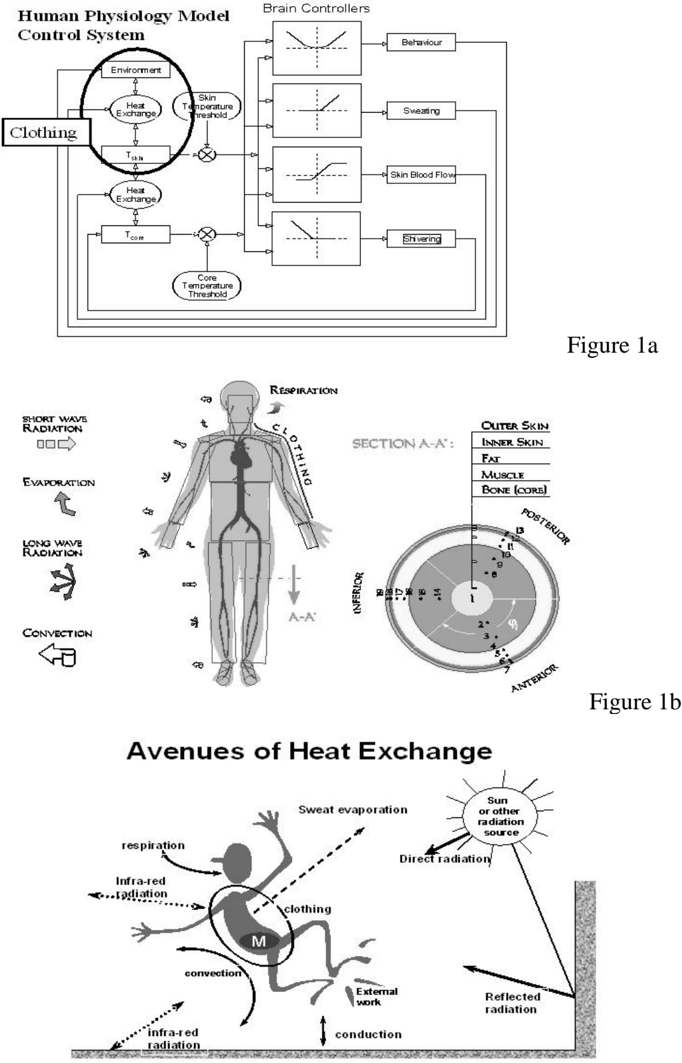
Existing procedures for the assessment of the thermal environment in the fields of public weather services, public health systems, precautionary planning, urban design, tourism and recreation and climate impact research exhibit significant shortcomings. This is most evident for simple (mostly two-parameter) indices, when comparing them to complete heat budget models developed since the 1960s. ISB Commission 6 took up the idea of developing a Universal Thermal Climate Index (UTCI) based on the most advanced multi-node model of thermoregulation representing progress in science within the last three to four decades, both in thermo-physiological and heat exchange theory. Creating the essential research synergies for the development of UTCI required pooling the resources of multidisciplinary experts in the fields of thermal physiology, mathematical modelling, occupational medicine, meteorological data handling (in particular radiation modelling) and application development in a network. It was possible to extend the expertise of ISB Commission 6 substantially by COST (a European programme promoting Cooperation in Science and Technology) Action 730 so that finally over 45 scientists from 23 countries (Australia, Canada, Israel, several Europe countries, New Zealand, and the United States) worked together. The work was performed under the umbrella of the WMO Commission on Climatology (CCl). After extensive evaluations, Fiala's multi-node human physiology and thermal comfort model (FPC) was adopted for this study. The model was validated extensively, applying as yet unused data from other research groups, and extended for the purposes of the project. This model was coupled with a state-of-the-art clothing model taking into consideration behavioural adaptation of clothing insulation by the general urban population in response to actual environmental temperature. UTCI was then derived conceptually as an equivalent temperature (ET). Thus, for any combination of air temperature, wind, radiation, and humidity (stress), UTCI is defined as the isothermal air temperature of the reference condition that would elicit the same dynamic response (strain) of the physiological model. As UTCI is based on contemporary science its use will standardise applications in the major fields of human biometeorology, thus making research results comparable and physiologically relevant.
Overview
The claims and statistics of this paper haven’t been checked yet.
Free: it reads the open-access text and checks the first 5 claims that cite a source we can check. Create a free account to check every claim.
Integrity signals
Registry
Cites
Statistics
Figures

Verification
Claims the paper makes
The claims and statistics of this paper haven’t been checked yet.
Free: it reads the open-access text and checks the first 5 claims that cite a source we can check. Create a free account to check every claim.
Claims other papers make about this one
Each is checked against this paper’s own text: does it say what the citing paper says it does?
The source backs part of the claim, not all of it — or backs it for a different population, condition or comparison.
In the citing paper
“A recently proposed Universal Thermal Climate Index (UTCI) (2009), based on an advanced human thermoregulation model, directly uses meteorological data to predict the impact of outdoor climate on thermal physiological and perceptual responses (Jendritzky et al. 2012; Bröde et al. 2012a, b; Fiala et al. 2012; Havenith et al. 2012; Kampmann et al. 2012; Parsons 2013; Havenith and Fiala 2016).”
From Occupational heat stress assessment and protective strategies in the context of climate change (2018) · cites this paper as Jendritzky et al. 2012
Experimental — accuracy not yet measured
Self-check
Percentages, sums and reported differences re-computed from the paper’s own numbers.
The self-check needs the paper’s full text.
Citations
Cites
Höppe, P. (1999) · International Journal of Biometeorology · doi:10.1007/s004840050118 · Cited by 2,429
Modelling radiation fluxes in simple and complex environments: basics of the RayMan model
Matzarakis, A., Rutz, F., & Mayer, H. (2010) · International Journal of Biometeorology · doi:10.1007/s00484-009-0261-0 · Cited by 1,633
Modelling radiation fluxes in simple and complex environments—application of the RayMan model
Matzarakis, A., Rutz, F., & Mayer, H. (2007) · International Journal of Biometeorology · doi:10.1007/s00484-006-0061-8 · Cited by 1,365
Deriving the operational procedure for the Universal Thermal Climate Index (UTCI)
Bröde, P., Fiala, D., Błażejczyk, K., Holmér, I., Jendritzky, G., Kampmann, B., Tinz, B., & Havenith, G. (2012) · International Journal of Biometeorology · doi:10.1007/s00484-011-0454-1 · Cited by 1,243
Self-citationComparison of UTCI to selected thermal indices
Blazejczyk, K., Epstein, Y., Jendritzky, G., Staiger, H., & Tinz, B. (2012) · International Journal of Biometeorology · doi:10.1007/s00484-011-0453-2 · Cited by 1,129
Self-citationA standard predictive index of human response to the thermal environment
Gagge, A. P., Fobelets, A. P. R., & Berglund, L. G. (1986) · ASHRAE winter conference papers · Cited by 1,053
UTCI-Fiala multi-node model of human heat transfer and temperature regulation
Fiala, D., Havenith, G., Bröde, P., Kampmann, B., & Jendritzky, G. (2012) · International Journal of Biometeorology · doi:10.1007/s00484-011-0424-7 · Cited by 994
Self-citationFiala, D., Lomas, K. J., & Stohrer, M. (1999) · Journal of Applied Physiology · doi:10.1152/jappl.1999.87.5.1957 · Cited by 849
Fiala, D., Lomas, K. J., & Stohrer, M. (2001) · International Journal of Biometeorology · doi:10.1007/s004840100099 · Cited by 754
A model of human physiology and comfort for assessing complex thermal environments
Huizenga, C., Hui, Z., & Arens, E. (2001) · Building and Environment · doi:10.1016/s0360-1323(00)00061-5 · Cited by 585
Research works printed but not linked: 12
- 3. Blazejczyk K, Epstein Y, Jendritzky G, Staiger H, Tinz B (2011) Comparison of UTCI to selected thermal indices. Int J Biometeorol XX; YY-YZ Bröde P, Kampmann B, Havenith G, Jendritzky G (2008) Effiziente Berechnung des klimatischen Belastungs-Index UTCI. In: Gesellschaft für Arbeitswissenschaft (ed.): Produkt-und Produktions-Ergonomie -Aufgabe für Entwickler und Planer, GfA-Press, Dortmund: 271-274.
- 4. Bröde P, Fiala D, Blazejczyk K, Epstein Y, Holmér I, Jendritzky G, Kampmann B, Richards M, Rintamäki H, Shitzer A, Havenith G (2009a) Calculating UTCI Equivalent Temperature. In: Castellani, JW; Endrusick, TL (eds.): Environmental Ergonomics XIII, University of Wollongong, Wollongong: 49-53
- 5. Bröde P, Fiala D, Kampmann B, Havenith G, Jendritzky G (2009b) Der Klimaindex UTCI - Multivariate Analyse der Reaktion eines thermophysiologischen Simulationsmodells. In: Gesellschaft für Arbeitswissenschaft (ed.): Arbeit, Beschäftigungsfähigkeit und Produktivität im 21. Jahrhundert, GfA-Press, Dortmund: 705-708
- 9. Driscoll DM (1992) Thermal Comfort Indexes. Current Uses and Abuses. Nat. Weather Digest, 17, (4): 33-38
- 11. Fanger PO (1970) Thermal Comfort. Analysis and Application in Environmental Engineering. Danish Technical Press, Copenhagen
- 22. Horikoshi T, Tsuchikawa T, Kurazumi Y, Matsubara N (1995): Mathematical expression of combined and separate effect of air temperature, humidity, air velocity and thermal radiation on thermal comfort. Archives of Complex Environmental Studies, 7 (3-4): 9- 12
- 30. Jendritzky G (1990) Bioklimatische Bewertungsgrundlage der Räume am Beispiel von mesoskaligen Bioklimakarten. In: Jendritzky G, Schirmer H, Menz G, Schmidt- Kessen W: Methode zur raumbezogenen Bewertung der thermischen Komponente im Bioklima des Menschen (Fortgeschriebenes Klima-Michel-Modell). Akad Raumforschung Landesplanung, Hannover, Beiträge 114: 7-69
- 31. Jendritzky G, Maarouf A, Fiala D, Staiger H (2002) An Update on the Development of a Universal Thermal Climate Index. 15 th Conf. Biomet. Aerobiol. and 16 th ICB02, 27 Oct -1 Nov 2002, Kansas City, AMS: 129-133
- 33. Kampmann B, Bröde P (2009) Physiological Responses to Temperature and Humidity Compared With Predictions of PHS and WBGT. In: Castellani, JW; Endrusick, TL (eds.): Environmental Ergonomics XIII, University of Wollongong, Wollongong: 54- 58.
- 43. Psikuta A, Fiala D, Richards M (2007) Validation of the Fiala Model of Human Physiology and Comfort for COST 730. In: Mekjavic IB, Kounalakis SN, Taylor NAS (eds.) Proceedings of the 12th International Conference on Environmental Ergonomics XII, Biomed, Ljubljana: 516
- 45. Richards M and Havenith G (2007) Progress towards the final UTCI model. In: Mekjavic IB, Kounalakis SN, Taylor NAS (eds.) Proceedings of the 12th International Conference on Environmental Ergonomics. August 19-24, 2007, Piran Slovenia. Biomed, Ljubljana: 521-524
- 50. Steadman RG (1994): Norms of apparent temperature in Australia. Aust. Met. Mag. 43: 1-16
Cited by
Items 401–500 of 1,000
Active route choice to minimize pedestrian thermal discomfort in a high-density subtropical city
Ma, X., Zeng, T., de Dear, R., Xie, Y., Yuan, C., & Lu, S. (2025) · Sustainable Cities and Society · doi:10.1016/j.scs.2025.106697 · Cited by 31
Expanded comfort assessment in outdoor urban public spaces using Box-Cox transformation
Peng, Y., Feng, T., & Timmermans, H. J. P. (2019) · Landscape and Urban Planning · doi:10.1016/j.landurbplan.2019.103594 · Cited by 30
Choi, G. Y., Kim, H. S., Kim, H., & Lee, J. S. (2021) · International Journal of Climate Change Strategies and Management · doi:10.1108/ijccsm-06-2020-0063 · Cited by 31
Curiosities about Thermal Indices Estimation and Application
Matzarakis, A. (2021) · Atmosphere · doi:10.3390/atmos12060721 · Cited by 30
“The only discrepancy is wind speed, where according to the definitions of UTCI, wind speed should be incorporated at a height of 10 m.”
BackgroundInfluentialThe Use of Cool Pavements for the Regeneration of Industrial Districts
Croce, S., D’Agnolo, E., Caini, M., & Paparella, R. (2021) · Sustainability · doi:10.3390/su13116322 · Cited by 30
“The UTCI assesses the outdoor thermal environment for biometeorological applications [83,84], and it was selected as suitable as it provides a high level of detail with regard to human thermal responses in urban areas [85].”
BackgroundForehead temperatures as an indicator of outdoor thermal comfort and the influence of tree shade
Speak, A. F., Montagnani, L., Wellstein, C., & Zerbe, S. (2021) · Urban Climate · doi:10.1016/j.uclim.2021.100965 · Cited by 30
Sunlight perception and outdoor thermal comfort in college campuses: a new perspective
Ning, S., Jing, W., & Ge, Z. (2023) · Scientific Reports · doi:10.1038/s41598-023-43077-y · Cited by 31
“Among the current thermal comfort indices, PET 9 and UTCI 10 are the main indices applicable to outdoor thermal environment evaluation.”
BackgroundFassbender, E., Rott, J., & Hemmerle, C. (2024) · Buildings · doi:10.3390/buildings14040923 · Cited by 30
Models of Pedestrian Adaptive Behaviour in Hot Outdoor Public Spaces
Melnikov, V. R., Krzhizhanovskaya, V. V., & Sloot, P. M. A. (2017) · Procedia Computer Science · doi:10.1016/j.procs.2017.05.006 · Cited by 31
“This is usually done by calculating the distribution of thermal comfort indices, such as PET (Physiologically Equivalent Temperature) [7] or UTCI (Universal Thermal Comfort Index) [8].”
Lehnert, M., Jirmus, R., Květoňová, V., Geletič, J., Jurek, M., Středová, H., & Frajer, J. (2024) · Urban Climate · doi:10.1016/j.uclim.2024.101873 · Cited by 29
Zhang, X., Chen, T., Zhang, S., Yuan, C., & Tan, P. Y. (2025) · Sustainable Cities and Society · doi:10.1016/j.scs.2025.106648 · Cited by 30
Fonseca‐Rodríguez, O., Sheridan, S. C., Lundevaller, E. H., & Schumann, B. (2020) · International Journal of Biometeorology · doi:10.1007/s00484-020-01921-0 · Cited by 29
Approaching environmental human thermophysiological thresholds for the case of Ankara, Turkey
Nouri, A. S., Afacan, Y., Çalışkan, O., Lin, T., & Matzarakis, A. (2020) · Theoretical and Applied Climatology · doi:10.1007/s00704-020-03436-5 · Cited by 29
Parametric Design and Comfort Optimization of Dynamic Shading Structures
Chi, D. A., Meza, E. G., Valdivia, R., & Juárez, E. G. (2021) · Sustainability · doi:10.3390/su13147670 · Cited by 29
“The UTCI equivalent temperature for any combination of the prevailing outdoor climate conditions (that is, air temperature, wind speed, radiation, and relative humidity), is then defined as “the air temperature of the reference environment that would elicit the same dynamic response (strain index value) of the physiol…”
BackgroundMethodNyadanu, S. D., Tessema, G. A., Mullins, B. J., & Pereira, G. F. (2022) · International Journal of Hygiene and Environmental Health · doi:10.1016/j.ijheh.2022.114029 · Cited by 29
Zheng, X., Zhang, N., & Wang, X. (2022) · Ecosystem Health and Sustainability · doi:10.1080/20964129.2022.2130095 · Cited by 29
Lam, C. K. C., & Hang, J. (2017) · Procedia Engineering · doi:10.1016/j.proeng.2017.09.877 · Cited by 29
Yang, J., Zhang, Z., Li, X., Xi, J., & Feng, Z. (2017) · Theoretical and Applied Climatology · doi:10.1007/s00704-017-2312-5 · Cited by 29
Nouri, A. S., & Matzarakis, A. (2019) · Climate · doi:10.3390/cli7120134 · Cited by 29
Assessment of bioclimatic conditions within the area of Szczecin agglomeration
Nidzgorska-Lencewicz, J., & Mąkosza, A. (2013) · Meteorologische Zeitschrift · doi:10.1127/0941-2948/2013/0451 · Cited by 29
Modeling Mean Radiant Temperature Distribution in Urban Landscapes Using DART
Dissegna, M. A., Yin, T., Wu, H., Lauret, N., Wei, S., Gastellu‐Etchegorry, J., & Grêt‐Regamey, A. (2021) · Remote Sensing · doi:10.3390/rs13081443 · Cited by 28
Climate change impacts on thermal stress in four climatically diverse European cities
Katavoutas, G., Founda, D., Varotsos, K. V., & Giannakopoulos, C. (2022) · International Journal of Biometeorology · doi:10.1007/s00484-022-02361-8 · Cited by 29
“The advantage of using the UTCI is the consideration of all energy exchange mechanisms between the human body and the thermal environment, covering the full range of hot to cold environmental conditions (Jendritzky et al. 2012).”
BackgroundBröde, P., & Kampmann, B. (2023) · Biology · doi:10.3390/biology12060802 · Cited by 27
“When looking for advanced, but easy-to-use modeling approaches, the Universal Thermal Climate Index (UTCI) [32], developed for moderately active persons (2.”
MethodRomaszko, J., Skutecki, R., Bocheński, M., Cymes, I., Dragańska, E., Jastrzębski, P., Morocka-Tralle, I., Jalali, R., Jeznach-Steinhagen, A. E., & Glińska‐Lewczuk, K. (2019) · International Journal of Biometeorology · doi:10.1007/s00484-019-01740-y · Cited by 27
Issues in UTCI Calculation from a Decade’s Experience
Bröde, P. (2021) · Springer eBooks · doi:10.1007/978-3-030-76716-7_2 · Cited by 27
Shade and Thermal Comfort in Courtyards: Experimental versus Simulation Results
López-Cabeza, V. P., Diz-Mellado, E., Rivera-Gómez, C., & Galán-Marín, C. (2022) · Buildings · doi:10.3390/buildings12111961 · Cited by 27
Wu, J., Jin, T., Wu, Y., Ding, Y., Mu, Y., & Zeng, D. (2022) · Sustainability · doi:10.3390/su142215047 · Cited by 27
Katal, A., Leroyer, S., Zou, J., Nikiema, O., Albettar, M., Bélair, S., & Wang, L. L. (2022) · The Science of The Total Environment · doi:10.1016/j.scitotenv.2022.161276 · Cited by 27
Bedra, K. B., Zheng, B., Li, J., & Luo, X. (2023) · Sustainability · doi:10.3390/su15118902 · Cited by 27
Spangler, K. R., Adams, Q. H., Hu, J. K., Braun, D., Weinberger, K. R., Dominici, F., & Wellenius, G. A. (2023) · Environmental Epidemiology · doi:10.1097/ee9.0000000000000261 · Cited by 28
Bian, G., Gao, X., Zou, Q., Cheng, Q., Sun, T., Sha, S., & Zhen, M. (2023) · Environmental Science and Pollution Research · doi:10.1007/s11356-023-29130-3 · Cited by 27
Spatiotemporal changes in Universal Thermal Climate Index in the Middle East and North Africa
Hamed, M. M., Kyaw, A. K., Nashwan, M. S., & Shahid, S. (2023) · Atmospheric Research · doi:10.1016/j.atmosres.2023.107008 · Cited by 27
Nyadanu, S. D., Tessema, G. A., Mullins, B. J., Chai, K. E. K., Yitshak‐Sade, M., & Pereira, G. F. (2023) · Environmental Health Perspectives · doi:10.1289/ehp12660 · Cited by 27
“37,38,61 In this study, we obtained 24-h averages for daily gridded UTCI from the Copernicus Climate Data Store 61 For each birth, we assigned daily UTCI exposures from 12 wk preconception 21,24,47 through to birth based on dates of conception and birth and SA1 of the maternal residential address.”
InfluentialThermal responses and perceptions under distinct ambient temperature and wind conditions
Shimazaki, Y., Yoshida, A., & Yamamoto, T. (2015) · Journal of Thermal Biology · doi:10.1016/j.jtherbio.2015.01.005 · Cited by 27
Lin, T., Yang, S.-R., & Matzarakis, A. (2015) · International Journal of Biometeorology · doi:10.1007/s00484-015-0990-1 · Cited by 27
Variability of Human-Biometeorological Conditions in Gdańsk
Nidzgorska-Lencewicz, J. (2014) · Polish Journal of Environmental Studies · doi:10.15244/pjoes/26116 · Cited by 27
“the World Meteorological Organization (WMO) it was recommended to be used by the weather service worldwide [25-28].”
MethodShimazaki, Y., Aoki, M., Nitta, J., Okajima, H., & Yoshida, A. (2021) · Atmosphere · doi:10.3390/atmos12020127 · Cited by 27
“To solidify the findings of this study, comparisons with outdoor thermal indices such as PET and UTCI can be conducted as a future work.”
BackgroundVecellio, D. J., Bardenhagen, E. K., Lerman, B., & Brown, R. D. (2021) · Environmental Research · doi:10.1016/j.envres.2021.111583 · Cited by 28
Designing with thermal comfort indices in outdoor sites
Walls, W., Parker, N., & Walliss, J. (2015) · Cited by 27
Effects of ventilation behaviour on indoor heat load based on test reference years
Rosenfelder, M., Koppe, C., Pfafferott, J., & Matzarakis, A. (2015) · International Journal of Biometeorology · doi:10.1007/s00484-015-1024-8 · Cited by 27
Feigel, G., Plein, M., Zeeman, M., Metzger, S., Matzarakis, A., Schindler, D., & Christen, A. (2024) · Sustainable Cities and Society · doi:10.1016/j.scs.2024.105991 · Cited by 28
Kim, J., Park, S., & Lee, G. (2025) · Sustainable Cities and Society · doi:10.1016/j.scs.2025.106627 · Cited by 26
A machine learning-enhanced design optimizer for urban cooling
Hao, T., Huang, J., He, X., Li, L., & Jones, P. (2022) · Indoor and Built Environment · doi:10.1177/1420326x221112857 · Cited by 26
“Pedestrian Heat Stress (UTCI) was assessed using the equivalent temperature in Universal Thermal Climate Index (UTCI), the state-of the-art thermal comfort metrics.(47) UTCI is based on the human body energy balance and thermal regulation.”
MethodBrimicombe, C., Conway, F., Portela, A. G., Lakhoo, D. P., Roos, N., Gao, C., Solarin, I., & Jackson, D. J. (2024) · BMJ Public Health · doi:10.1136/bmjph-2023-000308 · Cited by 27
Lefevre, A., Malet-Damour, B., Boyer, H., & Rivière, G. (2024) · Sustainability · doi:10.3390/su16073093 · Cited by 27
“These parameters are essential for the computation of thermal comfort indices such as the Universal Thermal Climate Index (UTCI) [41] or the Physiological Equivalent Temperature (PET) [42,43], which can be calculated.”
BackgroundShin, J., Kang, M., & Kim, K. R. (2021) · The Science of The Total Environment · doi:10.1016/j.scitotenv.2021.150132 · Cited by 26
Analysis of the adaptive thermal comfort of the children in outdoor spaces: Case study in Guangzhou
Yang, J., Zhao, Y., Guo, T., Feng, X., & Fang, Z. (2025) · Building and Environment · doi:10.1016/j.buildenv.2025.112926 · Cited by 25
Urban, A., & Kyselý, J. (2015) · International Journal of Biometeorology · doi:10.1007/s00484-015-1055-1 · Cited by 25
Spatial Patterns of Human Thermal Comfort Conditions in Russia: Present Climate and Trends
Varentsov, M. I., Shartova, N. V., Grischenko, M., & Konstantinov, P. (2020) · Weather Climate and Society · doi:10.1175/wcas-d-19-0138.1 · Cited by 25
Climate Change and Thermal Comfort in Top Tourist Destinations—The Case of Santorini (Greece)
Katavoutas, G., Founda, D., Kitsara, G., & Giannakopoulos, C. (2021) · Sustainability · doi:10.3390/su13169107 · Cited by 26
“Another advantage of UTCI is its ability to describe all climates, quantifying thermal sensations from extreme heat stress to extreme cold stress [45,46].”
BackgroundMethodInfluentialA simple technique for the traditional method to estimate mean radiant temperature
Lee, H., 조상만, & Park, S. (2021) · International Journal of Biometeorology · doi:10.1007/s00484-021-02213-x · Cited by 25
Chau, P. H., Lau, K. K., Qian, X., Luo, H., & Woo, J. (2022) · International Journal of Biometeorology · doi:10.1007/s00484-022-02332-z · Cited by 25
“The UTCI is defined as “the isothermal air temperature of the reference condition that would elicit the same dynamic response of the physiological model” (Jendritzky et al., 2012).”
BackgroundHu, R., Liu, J., Xie, Y., Jiao, J., Fang, Z., & Lin, B. (2022) · Building Simulation · doi:10.1007/s12273-022-0978-9 · Cited by 25
“The calculated thermal sensitivity and neutral UTCI from its regressions with mTSV, in-situ, and the ERA5 reanalysis data were quite similar.”
BackgroundInfluentialIdentification and Analysis of Heatwave Events Considering Temporal Continuity and Spatial Dynamics
Ren, Y., Liu, J., Zhang, T., Shalamzari, M. J., Arshad, A., Liu, T., Willems, P., Gao, H., Tao, H., & Wang, T. (2023) · Remote Sensing · doi:10.3390/rs15051369 · Cited by 25
Detection and regional analysis of heatwave characteristics in İstanbul
Yılmaz, M., Kara, Y., Çulpan, H. C., Can, G., & Toros, H. (2023) · Sustainable Cities and Society · doi:10.1016/j.scs.2023.104789 · Cited by 25
How persistent and hazardous will extreme temperature events become in a warming Portugal?
Cardoso, R. M., Lima, D. C. A., & Soares, P. M. M. (2023) · Weather and Climate Extremes · doi:10.1016/j.wace.2023.100600 · Cited by 25
Kamath, H., Martilli, A., Singh, M., Brooks, T., Lanza, K., Bixler, R. P., Coudert, M., Yang, Z., & Niyogi, D. (2023) · Urban Climate · doi:10.1016/j.uclim.2023.101675 · Cited by 25
Wehrle, J., Jung, C., Giometto, M. G., Christen, A., & Schindler, D. (2024) · Urban Climate · doi:10.1016/j.uclim.2024.102173 · Cited by 25
Urbanity and Urbanization: An Interdisciplinary Review Combining Cultural and Physical Approaches
Schneider, C., Achilles, B., & Merbitz, H. (2014) · Land · doi:10.3390/land3010105 · Cited by 25
“thermal sensation [44–48].”
Charalampopoulos, I., & Nouri, A. S. (2019) · Atmosphere · doi:10.3390/atmos10100580 · Cited by 25
“It must, however, be noted that UTCI has restrictions for VP exceeding that of 20 hPa [78,103,104].”
BackgroundMicroclimate Analysis as a Design Driver of Architecture
Graham, J., Berardi, U., Turnbull, G., & McKaye, R. (2020) · Climate · doi:10.3390/cli8060072 · Cited by 25
“(UTCI) and Physiological Equivalent Temperature (PET) [19,20].”
MethodSea Breeze Front and Outdoor Thermal Comfort during Summer in Northeastern Brazil
dos Anjos, M. W. B., Lopes, A. M. S., de Lucena, A. J., & Mendonça, F. (2020) · Atmosphere · doi:10.3390/atmos11091013 · Cited by 25
Cool Cities: Counteracting Potential Climate Change and its Health Impacts
Taha, H. (2015) · Current Climate Change Reports · doi:10.1007/s40641-015-0019-1 · Cited by 25
Lindner-Cendrowska, K., Leziak, K., Bröde, P., Fiala, D., & Konefał, M. (2024) · Scientific Reports · doi:10.1038/s41598-024-77540-1 · Cited by 25
A Comparative Analysis of Outdoor Thermal Comfort Indicators Applied in China and Other Countries
Tao, Z., Zhu, X., Xu, G., Zou, D., & Li, G. (2023) · Sustainability · doi:10.3390/su152216029 · Cited by 24
Dashti, A., Mohammadsharifi, N., Shokuhi, M. A., & Matzarakis, A. (2024) · Sustainable Cities and Society · doi:10.1016/j.scs.2024.105658 · Cited by 24
Li, Y., Liang, L., Wang, W., Kong, H., Chen, L., & Yang, L. (2024) · Urban Climate · doi:10.1016/j.uclim.2024.102053 · Cited by 24
Vitt, R., Gulyás, Á., & Matzarakis, A. (2015) · Advances in Meteorology · doi:10.1155/2015/987576 · Cited by 24
Gómez, F., Valcuende, M., Matzarakis, A., & Carcel, J. A. (2018) · Environmental Science and Pollution Research · doi:10.1007/s11356-018-2736-1 · Cited by 24
Sadeghi, M., de Dear, R., Wood, G. S., & Samali, B. (2018) · International Journal of Biometeorology · doi:10.1007/s00484-018-1597-0 · Cited by 24
The influence of large-scale factors on the heat load on human beings in Poland in the summer months
Owczarek, M. (2018) · Theoretical and Applied Climatology · doi:10.1007/s00704-018-2633-z · Cited by 24
Reflective Parking Lots for Microscale Urban Heat Island Mitigation
Sen, S., Fernandèz, J. P. R. M.-R., & Roesler, J. R. (2020) · Transportation Research Record Journal of the Transportation Research Board · doi:10.1177/0361198120919401 · Cited by 24
“The Universal Thermal Climate Index (UTCI) was developed in 2012 to address these additional aspects of thermal comfort (45).”
BackgroundInfluence of geographical factors on thermal stress in northern Carpathians
Błażejczyk, K., Nejedlík, P., Skrynyk, O., Hałaś, A., Skrynyk, O., Błażejczyk, A., & Mikulová, K. (2020) · International Journal of Biometeorology · doi:10.1007/s00484-020-02011-x · Cited by 24
Digital Simulation for Buildings’ Outdoor Thermal Comfort in Urban Neighborhoods
Zhang, Y., & Liu, C. (2021) · Buildings · doi:10.3390/buildings11110541 · Cited by 24
Kianmehr, A., & Lim, T. C. (2022) · Climate · doi:10.3390/cli10040060 · Cited by 24
“There are several metrics for measuring thermal comfort, such as Predicted Mean Vote (PMV) [51], Perceived Temperature (PT) [52], Outdoor Standard Equivalent Temperature (OUT_SET) [53], Physiologically Equivalent Temperature (PET) [54] and UTCI [55].”
BackgroundMonteiro, L. M. (2018) · Digital Library of Theses and Dissertations (Universidade de São Paulo) · doi:10.11606/t.16.2018.tde-26112020-184250 · Cited by 26
A high temporal resolution global gridded dataset of human thermal stress metrics
Jian, H., Yan, Z., Fan, X., Qin, Z., Chen, X., Bei, W., Xu, J., Huang, M., Du, X., Zhu, J., et al. (2024) · Scientific Data · doi:10.1038/s41597-024-03966-x · Cited by 24
Květoňová, V., Pánek, J., Geletič, J., Šimáček, P., & Lehnert, M. (2024) · Heliyon · doi:10.1016/j.heliyon.2024.e36101 · Cited by 23
Global heat stress intensification and its expanding footprint on the human population
Emerton, R., Nicolas, J. P., Lombardi, A., & Napoli, C. D. (2026) · Nature Climate Change · doi:10.1038/s41558-026-02670-5 · Cited by 23
“Here, we use the Universal Thermal Climate Index (UTCI), a widely adopted biometeorological thermal stress index 10 accounting for temperature, humidity, wind and radiation, alongside modelling how the human body responds to the environment.”
Evaluating the Tourist Climate Comfortable Period of China in a Changing Climate
Yu, D., Li, S., & Guo, Z. (2020) · Advances in Meteorology · doi:10.1155/2020/8886316 · Cited by 23
“Yang [22] analyzed the spatial differentiation of China’s summer tourist destinations using the UTCI and analytic hierarchy process model from 1960 to 2014.”
BackgroundInfluentialDavey, S., Downie, V., Griggs, K., & Havenith, G. (2021) · European Journal of Applied Physiology · doi:10.1007/s00421-021-04642-3 · Cited by 24
Self-citationLiu, L., Cai, Y., Jin, L., Zhu, Y., Gao, Y., Ding, Y., Xia, J., & Zhang, K. (2022) · Urban Climate · doi:10.1016/j.uclim.2022.101297 · Cited by 23
Peng, Z., Debnath, R., Bardhan, R., & Steemers, K. (2022) · Sustainable Cities and Society · doi:10.1016/j.scs.2022.104275 · Cited by 23
Future changes in heatwaves characteristics in Romania
Antonescu, B., Ene, D., Boldeanu, M., Andrei, S., Mărmureanu, L., Marin, C. A., & Pîrloagă, R. (2023) · Theoretical and Applied Climatology · doi:10.1007/s00704-023-04412-5 · Cited by 23
Li, Y., Yang, M., Bai, H., Li, R., Liang, J., Huang, J., & Du, Y. (2023) · Building and Environment · doi:10.1016/j.buildenv.2023.110568 · Cited by 23
Rapid Acceleration of Dangerous Compound Heatwaves and Their Impacts in a Warmer China
Dong, W. G., Jia, X., Qian, Q., & Li, X. (2023) · Geophysical Research Letters · doi:10.1029/2023gl104850 · Cited by 23
Li, K., Liu, X., Zhang, H., Ma, J., & He, B. (2023) · Developments in the Built Environment · doi:10.1016/j.dibe.2023.100278 · Cited by 23
Assessment of Outdoor Thermal Comfort in a Hot Summer Region of Europe
Jiménez, J. L. S., & de Adana, M. R. (2024) · Atmosphere · doi:10.3390/atmos15020214 · Cited by 23
“The urban heat island effect was defined using Equation (2): where T ws 1 and T ws 2 correspond to the dry air temperature registered at the same time by the weather station WS1 and the weather station WS2.”
Radović, J., Belda, M., Resler, J., Eben, K., Bureš, M., Geletič, J., Krč, P., Řezníček, H., & Fuka, V. (2024) · Geoscientific model development · doi:10.5194/gmd-17-2901-2024 · Cited by 23
Heat stress risk at an intra-urban level: A case study of Delhi, India
Kacker, K., Srivastava, P., & Mukherjee, M. (2024) · Building and Environment · doi:10.1016/j.buildenv.2024.111897 · Cited by 24
Chen, Y., Deng, S., Hou, Y., & Yan, Q. (2024) · Energy and Buildings · doi:10.1016/j.enbuild.2024.115238 · Cited by 23
Urban outdoor thermal environment and adaptive thermal comfort during the summer
Zhen, M., Zou, W., Zheng, R., & Lu, Y. (2022) · Environmental Science and Pollution Research · doi:10.1007/s11356-022-21162-5 · Cited by 23
Chen, J., Jin, Y., & Jin, H. (2022) · Frontiers in Psychology · doi:10.3389/fpsyg.2022.954402 · Cited by 22
Chen, Y., Liu, F., Lin, X., Liu, J., Chen, Z., Shi, K., Li, J., & Dong, J. (2023) · Forests · doi:10.3390/f14061161 · Cited by 22
Gangwisch, M., Saha, S., & Matzarakis, A. (2023) · Urban Climate · doi:10.1016/j.uclim.2023.101624 · Cited by 22
“These conditions can be summarized by thermal indices in a comprehensive way (H ¨ oppe, 1999; Jendritzky et al., 2012; Matzarakis et al., 1999; Staiger et al., 2019).”
BackgroundWei, R., Yan, J., Cui, Y., Song, D., Yin, X. H., & Sun, N. (2023) · Buildings · doi:10.3390/buildings13102473 · Cited by 22
Enhancing Urban Microclimates: Potential Benefits of Greenery Strategies in a Semi-Arid Environment
Brahimi, M., Benabbas, M., Altan, H., Nocera, F., & Costanzo, V. (2023) · Sustainability · doi:10.3390/su152316380 · Cited by 22
Silva, T., Lopes, A. M. S., Vasconcelos, J., Chokhachian, A., Wagenfeld, M., & Santucci, D. (2024) · International Journal of Biometeorology · doi:10.1007/s00484-024-02639-z · Cited by 22
“Human interaction with the thermal environment is undeniable (Jendritzky et al. 2012).”
BackgroundAnalysis of the summer thermal comfort indices in İstanbul
Yılmaz, M., Kara, Y., Toros, H., & İncecik, S. (2024) · International Journal of Biometeorology · doi:10.1007/s00484-024-02669-7 · Cited by 22
“When the body’s response to thermal stress under actual conditions aligns with that in reference conditions, UTCI corresponds to the ambient air temperature within the reference environment (Blazejczyk et al. 2013; Jendritzky et al. 2012 ).”
BackgroundMethodWebMRT: An online tool to predict summertime mean radiant temperature using machine learning
AlKhaled, S. R., Middel, A., Shaeri, P., Buo, I., & Schneider, F. A. (2024) · Sustainable Cities and Society · doi:10.1016/j.scs.2024.105861 · Cited by 22
Metadata
- Authors
- Jendritzky, G., de Dear, R., & Havenith, G.
- Affiliations
- University of Freiburg (DE)
- Loughborough University (GB)
- Corresponding author
- Jendritzky, Gerd
- ORCID
- Havenith, George
- Venue
- International Journal of Biometeorology
- Published
- 2011-12-21
- Volume
- 56
- Issue
- 3
- Pages
- 421-428
- ISSN
- 0020-7128 (ISSN-L)
- 1432-1254
- OpenAlex
- W1975324114
- Cited by
- 1,162
- References
- 50
- Citations by year
- 2026: 170 · 2025: 161 · 2024: 131 · 2023: 119 · 2022: 112 · 2021: 105 · 2020: 77 · 2019: 60 · 2018: 37 · 2017: 46 · 2016: 49 · 2015: 36 · 2014: 30 · 2013: 25 · 2012: 3
- FWCI
- 16.44
- Type
- journal article
- Language
- en
- Open access
- green
- figshare.com
- Licence
- cc-by-nc-nd
- www.springer.com/tdm (tdm)
- Locations
- International Journal of Biometeorology (publishedVersion)
- PubMed (publishedVersion)
- Loughborough University Research Repository (Loughborough University) (submittedVersion, cc-by-nc-nd)
- Loughborough University Institutional Repository (Loughborough University) (submittedVersion, cc-by-nc-nd)
- Topics
- Physical Sciences › Environmental Science › Environmental Engineering › Urban Heat Island Mitigation
- Health Sciences › Medicine › Physiology (medical) › Thermoregulation and physiological responses
- Physical Sciences › Environmental Science › Health, Toxicology and Mutagenesis › Climate Change and Health Impacts
- Keywords
- Universal Thermal Climate Index, thermal comfort, human thermoregulation, clothing insulation, equivalent temperature, heat stress, thermal environment evaluation, biometeorology
- MeSH terms
- Body Temperature Regulation, Climate, Humans, Meteorological Concepts, Models, Biological, Thermosensing
About these checks
Registry, retraction, Cites and statistics results are computed, not judged, with one exception: a printed reference that no index lists is read once by a model before it counts as a citation error. Claims are extracted by a model and kept only when their quote appears verbatim in the text; each cited source is then checked, with a model’s help, for whether it says what the claim relies on. Those verdicts can be wrong — read the claim’s quote and the cited source before relying on one.
Statistics and arithmetic are recomputed, not judged.
Confidence bands are shown only for fields calibrated on our annotated test set. None is calibrated yet, so no band is shown.
What counts as a claim ›How we measure confidence ›How we check this ›
Are you an author, or do you see a problem with this page? Request a review
Data sources
Bibliographic data: Semantic Scholar, OpenAlex, Crossref.
Contains information from the Semantic Scholar Academic Graph Datasets, made available under the ODC Attribution License (ODC-BY 1.0).
Semantic Scholar’s data is described in: Kinney, R., et al. (2023). The Semantic Scholar Open Data Platform. arXiv:2301.10140.
