

UTCI—Why another thermal index?
Open accessThe DOI matches its Crossref record; 50 of the 50 references it cites were found in a registry or an index.
Abstract
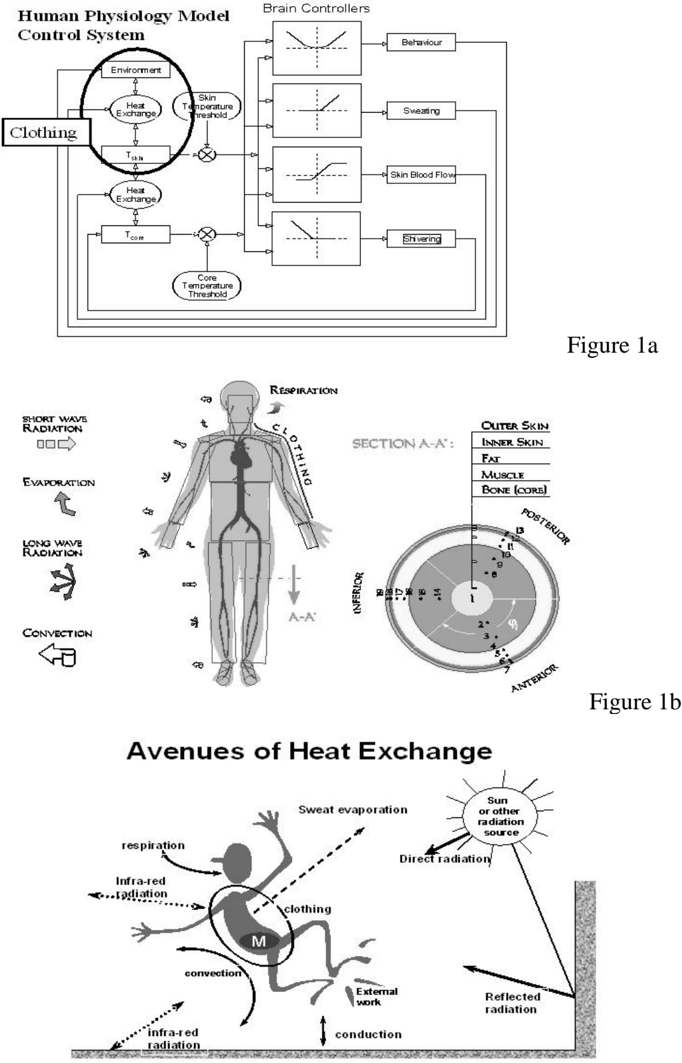
Existing procedures for the assessment of the thermal environment in the fields of public weather services, public health systems, precautionary planning, urban design, tourism and recreation and climate impact research exhibit significant shortcomings. This is most evident for simple (mostly two-parameter) indices, when comparing them to complete heat budget models developed since the 1960s. ISB Commission 6 took up the idea of developing a Universal Thermal Climate Index (UTCI) based on the most advanced multi-node model of thermoregulation representing progress in science within the last three to four decades, both in thermo-physiological and heat exchange theory. Creating the essential research synergies for the development of UTCI required pooling the resources of multidisciplinary experts in the fields of thermal physiology, mathematical modelling, occupational medicine, meteorological data handling (in particular radiation modelling) and application development in a network. It was possible to extend the expertise of ISB Commission 6 substantially by COST (a European programme promoting Cooperation in Science and Technology) Action 730 so that finally over 45 scientists from 23 countries (Australia, Canada, Israel, several Europe countries, New Zealand, and the United States) worked together. The work was performed under the umbrella of the WMO Commission on Climatology (CCl). After extensive evaluations, Fiala's multi-node human physiology and thermal comfort model (FPC) was adopted for this study. The model was validated extensively, applying as yet unused data from other research groups, and extended for the purposes of the project. This model was coupled with a state-of-the-art clothing model taking into consideration behavioural adaptation of clothing insulation by the general urban population in response to actual environmental temperature. UTCI was then derived conceptually as an equivalent temperature (ET). Thus, for any combination of air temperature, wind, radiation, and humidity (stress), UTCI is defined as the isothermal air temperature of the reference condition that would elicit the same dynamic response (strain) of the physiological model. As UTCI is based on contemporary science its use will standardise applications in the major fields of human biometeorology, thus making research results comparable and physiologically relevant.
Overview
The claims and statistics of this paper haven’t been checked yet.
Free: it reads the open-access text and checks the first 5 claims that cite a source we can check. Create a free account to check every claim.
Integrity signals
Registry
Cites
Statistics
Figures

Verification
Claims the paper makes
The claims and statistics of this paper haven’t been checked yet.
Free: it reads the open-access text and checks the first 5 claims that cite a source we can check. Create a free account to check every claim.
Claims other papers make about this one
Each is checked against this paper’s own text: does it say what the citing paper says it does?
The source backs part of the claim, not all of it — or backs it for a different population, condition or comparison.
In the citing paper
“A recently proposed Universal Thermal Climate Index (UTCI) (2009), based on an advanced human thermoregulation model, directly uses meteorological data to predict the impact of outdoor climate on thermal physiological and perceptual responses (Jendritzky et al. 2012; Bröde et al. 2012a, b; Fiala et al. 2012; Havenith et al. 2012; Kampmann et al. 2012; Parsons 2013; Havenith and Fiala 2016).”
From Occupational heat stress assessment and protective strategies in the context of climate change (2018) · cites this paper as Jendritzky et al. 2012
Experimental — accuracy not yet measured
Self-check
Percentages, sums and reported differences re-computed from the paper’s own numbers.
The self-check needs the paper’s full text.
Citations
Cites
Höppe, P. (1999) · International Journal of Biometeorology · doi:10.1007/s004840050118 · Cited by 2,429
Modelling radiation fluxes in simple and complex environments: basics of the RayMan model
Matzarakis, A., Rutz, F., & Mayer, H. (2010) · International Journal of Biometeorology · doi:10.1007/s00484-009-0261-0 · Cited by 1,633
Modelling radiation fluxes in simple and complex environments—application of the RayMan model
Matzarakis, A., Rutz, F., & Mayer, H. (2007) · International Journal of Biometeorology · doi:10.1007/s00484-006-0061-8 · Cited by 1,365
Deriving the operational procedure for the Universal Thermal Climate Index (UTCI)
Bröde, P., Fiala, D., Błażejczyk, K., Holmér, I., Jendritzky, G., Kampmann, B., Tinz, B., & Havenith, G. (2012) · International Journal of Biometeorology · doi:10.1007/s00484-011-0454-1 · Cited by 1,243
Self-citationComparison of UTCI to selected thermal indices
Blazejczyk, K., Epstein, Y., Jendritzky, G., Staiger, H., & Tinz, B. (2012) · International Journal of Biometeorology · doi:10.1007/s00484-011-0453-2 · Cited by 1,129
Self-citationA standard predictive index of human response to the thermal environment
Gagge, A. P., Fobelets, A. P. R., & Berglund, L. G. (1986) · ASHRAE winter conference papers · Cited by 1,053
UTCI-Fiala multi-node model of human heat transfer and temperature regulation
Fiala, D., Havenith, G., Bröde, P., Kampmann, B., & Jendritzky, G. (2012) · International Journal of Biometeorology · doi:10.1007/s00484-011-0424-7 · Cited by 994
Self-citationFiala, D., Lomas, K. J., & Stohrer, M. (1999) · Journal of Applied Physiology · doi:10.1152/jappl.1999.87.5.1957 · Cited by 849
Fiala, D., Lomas, K. J., & Stohrer, M. (2001) · International Journal of Biometeorology · doi:10.1007/s004840100099 · Cited by 754
A model of human physiology and comfort for assessing complex thermal environments
Huizenga, C., Hui, Z., & Arens, E. (2001) · Building and Environment · doi:10.1016/s0360-1323(00)00061-5 · Cited by 585
Research works printed but not linked: 12
- 3. Blazejczyk K, Epstein Y, Jendritzky G, Staiger H, Tinz B (2011) Comparison of UTCI to selected thermal indices. Int J Biometeorol XX; YY-YZ Bröde P, Kampmann B, Havenith G, Jendritzky G (2008) Effiziente Berechnung des klimatischen Belastungs-Index UTCI. In: Gesellschaft für Arbeitswissenschaft (ed.): Produkt-und Produktions-Ergonomie -Aufgabe für Entwickler und Planer, GfA-Press, Dortmund: 271-274.
- 4. Bröde P, Fiala D, Blazejczyk K, Epstein Y, Holmér I, Jendritzky G, Kampmann B, Richards M, Rintamäki H, Shitzer A, Havenith G (2009a) Calculating UTCI Equivalent Temperature. In: Castellani, JW; Endrusick, TL (eds.): Environmental Ergonomics XIII, University of Wollongong, Wollongong: 49-53
- 5. Bröde P, Fiala D, Kampmann B, Havenith G, Jendritzky G (2009b) Der Klimaindex UTCI - Multivariate Analyse der Reaktion eines thermophysiologischen Simulationsmodells. In: Gesellschaft für Arbeitswissenschaft (ed.): Arbeit, Beschäftigungsfähigkeit und Produktivität im 21. Jahrhundert, GfA-Press, Dortmund: 705-708
- 9. Driscoll DM (1992) Thermal Comfort Indexes. Current Uses and Abuses. Nat. Weather Digest, 17, (4): 33-38
- 11. Fanger PO (1970) Thermal Comfort. Analysis and Application in Environmental Engineering. Danish Technical Press, Copenhagen
- 22. Horikoshi T, Tsuchikawa T, Kurazumi Y, Matsubara N (1995): Mathematical expression of combined and separate effect of air temperature, humidity, air velocity and thermal radiation on thermal comfort. Archives of Complex Environmental Studies, 7 (3-4): 9- 12
- 30. Jendritzky G (1990) Bioklimatische Bewertungsgrundlage der Räume am Beispiel von mesoskaligen Bioklimakarten. In: Jendritzky G, Schirmer H, Menz G, Schmidt- Kessen W: Methode zur raumbezogenen Bewertung der thermischen Komponente im Bioklima des Menschen (Fortgeschriebenes Klima-Michel-Modell). Akad Raumforschung Landesplanung, Hannover, Beiträge 114: 7-69
- 31. Jendritzky G, Maarouf A, Fiala D, Staiger H (2002) An Update on the Development of a Universal Thermal Climate Index. 15 th Conf. Biomet. Aerobiol. and 16 th ICB02, 27 Oct -1 Nov 2002, Kansas City, AMS: 129-133
- 33. Kampmann B, Bröde P (2009) Physiological Responses to Temperature and Humidity Compared With Predictions of PHS and WBGT. In: Castellani, JW; Endrusick, TL (eds.): Environmental Ergonomics XIII, University of Wollongong, Wollongong: 54- 58.
- 43. Psikuta A, Fiala D, Richards M (2007) Validation of the Fiala Model of Human Physiology and Comfort for COST 730. In: Mekjavic IB, Kounalakis SN, Taylor NAS (eds.) Proceedings of the 12th International Conference on Environmental Ergonomics XII, Biomed, Ljubljana: 516
- 45. Richards M and Havenith G (2007) Progress towards the final UTCI model. In: Mekjavic IB, Kounalakis SN, Taylor NAS (eds.) Proceedings of the 12th International Conference on Environmental Ergonomics. August 19-24, 2007, Piran Slovenia. Biomed, Ljubljana: 521-524
- 50. Steadman RG (1994): Norms of apparent temperature in Australia. Aust. Met. Mag. 43: 1-16
Cited by
Items 201–300 of 1,000
Liu, J., Zhang, X., Niu, J., & Tse, K. T. (2019) · Building Simulation · doi:10.1007/s12273-019-0541-5 · Cited by 66
Li, Y., Hong, B., Wang, Y., Bai, H., & Chen, H. (2022) · Sustainable Cities and Society · doi:10.1016/j.scs.2022.103813 · Cited by 65
Cárdenas-Jirón, L. A., Graw, K., Gangwisch, M., & Matzarakis, A. (2022) · Urban Climate · doi:10.1016/j.uclim.2022.101361 · Cited by 65
Urban atmospheric environment and human biometeorological studies in Dar es Salaam, Tanzania
Ndetto, E. L., & Matzarakis, A. (2014) · Air Quality Atmosphere & Health · doi:10.1007/s11869-014-0261-z · Cited by 65
Spatial Estimation of Thermal Indices in Urban Areas—Basics of the SkyHelios Model
Fröhlich, D., & Matzarakis, A. (2018) · Atmosphere · doi:10.3390/atmos9060209 · Cited by 65
Analysis of the Universal Thermal Climate Index during heat waves in Serbia
Pecelj, M. M., Lukić, M., Filipović, D., Protić, B., & Bogdanović, U. M. (2020) · Natural hazards and earth system sciences · doi:10.5194/nhess-20-2021-2020 · Cited by 65
“, the fact that they are not universally applicable to all climatic regions (including different seasons), the dominance in the analysis of biothermal conditions and thermal stress over the last 30 years has been taken over by so-called heat budget indices (Blazejczyk, 1994; Höppe, 1999; Jendritzky et al., 2012).”
BackgroundMethodInfluentialOdnoletkova, N., & Patzek, T. W. (2021) · Journal of Applied Meteorology and Climatology · doi:10.1175/jamc-d-20-0273.1 · Cited by 65
Su, Y., Wang, C., Li, Z., Meng, Q., Gong, A., Wu, Z., & Zhao, Q. (2023) · Sustainable Cities and Society · doi:10.1016/j.scs.2023.105062 · Cited by 65
Foster, J., Hodder, S., Goodwin, J., & Havenith, G. (2020) · Annals of Work Exposures and Health · doi:10.1093/annweh/wxaa082 · Cited by 65
Self-citationZhou, S., Jia, W., Diao, H., Geng, X., Wu, Y., Wang, M., Wang, Y., Xu, H., Lu, Y., & Wu, Z. (2025) · Sustainable Cities and Society · doi:10.1016/j.scs.2025.106400 · Cited by 64
Nicholson, S., Nikolopoulou, M., Watkins, R., Löve, M., & Ratti, C. (2024) · Urban Climate · doi:10.1016/j.uclim.2024.102041 · Cited by 62
Xi, T., Wang, Q., Qin, H., & Jin, H. (2020) · Building and Environment · doi:10.1016/j.buildenv.2020.106757 · Cited by 60
Environmental heat-related health symptoms among community in a tropical city
Aghamohammadi, N., Fong, C. S., Idrus, M. H. M., Ramakreshnan, L., & Sulaiman, N. M. N. (2021) · The Science of The Total Environment · doi:10.1016/j.scitotenv.2021.146611 · Cited by 60
Matzarakis, A., Gangwisch, M., & Fröhlich, D. (2021) · Springer eBooks · doi:10.1007/978-3-030-65421-4_16 · Cited by 60
Khalili, S., Fayaz, R., & Zolfaghari, S. A. (2022) · Urban Climate · doi:10.1016/j.uclim.2022.101128 · Cited by 62
Optimization of tree locations to reduce human heat stress in an urban park
Hao, T., Zhao, Q., & Huang, J. (2023) · Urban forestry & urban greening · doi:10.1016/j.ufug.2023.128017 · Cited by 59
“The UTCI accounts for human body energy balance under radiative, convective, and conductive heat transfer with the surrounding environment, it also models the thermal regulatory responses based on laboratory-based datasets (Jendritzky et al., 2012).”
BackgroundYang, L., Zhang, L., Stettler, M. E. J., Sukitpaneenit, M., Xiao, D., & van Dam, K. H. (2019) · Sustainable Cities and Society · doi:10.1016/j.scs.2019.101796 · Cited by 62
Liu, K., Lian, Z., Dai, X., & Lai, D. (2022) · The Science of The Total Environment · doi:10.1016/j.scitotenv.2022.154009 · Cited by 58
Huang, J., Hao, T., Wang, Y., & Jones, P. (2022) · Sustainable Cities and Society · doi:10.1016/j.scs.2022.103908 · Cited by 58
Giannaros, C., Agathangelidis, I., Papavasileiou, G., Galanaki, E., Kotroni, V., Lagouvardos, K., Giannaros, T. M., Cartalis, C., & Matzarakis, A. (2022) · The Science of The Total Environment · doi:10.1016/j.scitotenv.2022.159300 · Cited by 59
Temporal Analysis of Urban-Suburban PET, mPET and UTCI Indices in Belgrade (Serbia)
Pecelj, M. M., Matzarakis, A., Vujadinovic, M., Radovanovic, M. M., Vagić, N., Đurić, D., & Cvetkovic, M. (2021) · Atmosphere · doi:10.3390/atmos12070916 · Cited by 58
“9 clo clothing parameter, while the UTCI index model adjusts the clothing parameter by adapting to the specific exterior conditions [36].”
BackgroundMethodInfluentialMartilli, A., Nazarian, N., Krayenhoff, E. S., Lachapelle, J. A., Lu, J., Rivas, E., Rodríguez-Sánchez, A., Sánchez, B., & Santiago, J. L. (2024) · Geoscientific model development · doi:10.5194/gmd-17-5023-2024 · Cited by 57
Zhang, Y., Zheng, Z., Zhang, S., Fang, Z., & Lin, Z. (2024) · Building and Environment · doi:10.1016/j.buildenv.2024.111933 · Cited by 59
Evaluating thermal comfort indices for outdoor spaces on a university campus
Jing, W., Qin, Z., Mu, T., Ge, Z., & Dong, Y. (2024) · Scientific Reports · doi:10.1038/s41598-024-71805-5 · Cited by 57
Виноградова, В. В. (2020) · International Journal of Biometeorology · doi:10.1007/s00484-020-01901-4 · Cited by 57
“…(е) or relative humidity (R) (Błażejczyk et al. 2013): UTCI ¼ f T a; Tmrt; va; еð Þ ¼ T a þΔ T a; Tmrt; va; еð Þ The UTCI’s sensitivity to temperature, humidity, radiation, and wind speed shows that the index is applicable in hot and cold conditions (Jendritzky et al. 2012; Błażejczyk et al. 2013).”
BackgroundGlobal reductions in manual agricultural work capacity due to climate change
Nelson, G. C., Vanos, J., Havenith, G., Jay, O., Ebi, K. L., & Hijmans, R. J. (2024) · Global Change Biology · doi:10.1111/gcb.17142 · Cited by 56
“This can be done with either the WBGT or the Universal Thermal Climate Index (Bröde et al., 2012; Jendritzky et al., 2012).”
MethodSelf-citationEvaluation of environmental heat stress on physiological parameters
Zamanian, Z., Sedaghat, Z., Hamerezaee, M., & Khajehnasiri, F. (2017) · Journal of Environmental Health Science and Engineering · doi:10.1186/s40201-017-0286-y · Cited by 56
Wang, C., Zhan, W., Liu, Z., Li, J., Li, L., Fu, P., Huang, F., Lai, J., Chen, J., Hong, F., et al. (2020) · Journal of Cleaner Production · doi:10.1016/j.jclepro.2020.123830 · Cited by 56
Xue, J., You, R., Liu, W., Chen, C., & Lai, D. (2020) · Sustainability · doi:10.3390/su12198083 · Cited by 56
“The effect of thermal stress on human health can also be assessed by using indices such as Physiologically Equivalent Temperature (PET) [41] or the Universal Thermal Climate Index (UTCI) [42].”
MethodOccurrence of strong and very strong heat stress in Poland and its circulation conditions
Tomczyk, A. M., & Owczarek, M. (2019) · Theoretical and Applied Climatology · doi:10.1007/s00704-019-02998-3 · Cited by 55
“UTCI is a universal index and can be applied in different climate zones (Jendritzky et al. 2012; Błażejczyk et al. 2012).”
BackgroundInequality of Global Thermal Comfort Conditions Changes in a Warmer World
Zhang, J., You, Q., Ren, G., Ullah, S., Normatov, I. S., & Chen, D. (2023) · Earth s Future · doi:10.1029/2022ef003109 · Cited by 55
“We recognize that mechanistic indicators based on the human heat exchange model are expected to give more accurate results for human thermal comfort conditions due to their rigorous physical basis (Jendritzky et al., 2012); however, the calculation of mechanistic indicators involves many non-conventional meteorologica…”
BackgroundChen, T., Meili, N., Fatichi, S., Hang, J., Tan, P. Y., & Yuan, C. (2023) · Building and Environment · doi:10.1016/j.buildenv.2023.111006 · Cited by 55
Comparison of selected thermal indices in the northwest of Iran
Farajzadeh, H., Saligheh, M., Alijani, B., & Matzarakis, A. (2015) · Cited by 55
Ward, H. C., & Grimmond, S. (2017) · Landscape and Urban Planning · doi:10.1016/j.landurbplan.2017.04.001 · Cited by 55
“Well-known examples include the physiological equivalent temperature (Höppe, 1999), mean radiant temperature (Thorsson et al., 2014) and universal thermal climate index (Jendritzky, de Dear, & Havenith, 2012).”
A rapid fine-scale approach to modelling urban bioclimatic conditions
Back, Y., Bach, P. M., Jasper‐Tönnies, A., Rauch, W. A., & Kleidorfer, M. (2020) · The Science of The Total Environment · doi:10.1016/j.scitotenv.2020.143732 · Cited by 55
“, 2010), an adaptive clothingmodel considering the clothingbehaviour of an urban population aswell as reference conditions (Bröde et al., 2013; Jendritzky et al., 2012).”
BackgroundThe health benefits of greening strategies to cool urban environments – A heat health impact method
Sadeghi, M., Chaston, T. B., Hanigan, I., de Dear, R., Santamouris, M., Jalaludin, B. B., & Morgan, G. G. (2021) · Building and Environment · doi:10.1016/j.buildenv.2021.108546 · Cited by 54
Urban Heat Island and Thermal Comfort Assessment in a Medium-Sized Mediterranean City
Kalogeropoulos, G., Dimoudi, A., Toumboulidis, P., & Zoras, S. (2022) · Atmosphere · doi:10.3390/atmos13071102 · Cited by 54
“Finally, the ”Universal Thermal Climate Index (UTCI)“ is a relatively newly developed rational index, which is based on a multinode heat budget based approach and is extensively used in many case studies [31,32].”
BackgroundHegazy, I., & Qurnfulah, E. (2020) · International Journal of Low-Carbon Technologies · doi:10.1093/ijlct/ctaa028 · Cited by 54
Weather to scoot? How weather shapes shared e-scooter ridership patterns
Kimpton, A., Loginova, J., Pojani, D., Bean, R. W., Sigler, T., & Corcoran, J. (2022) · Journal of Transport Geography · doi:10.1016/j.jtrangeo.2022.103439 · Cited by 54
A Systematic Review of Outdoor Thermal Comfort Studies for the Urban (Re)Design of City Squares
Mandič, L., Đjukić, A., Marić, J., & Mitrović, B. (2024) · Sustainability · doi:10.3390/su16124920 · Cited by 53
“Different thermal indices used in studies about OTC urban squares (Table 5), PET [185], PMV and PPD [183], Tmrt [116,123,225–227, 233– 235 ], UTCI [ 195”
Huang, J., Chen, Y., Jones, P., & Hao, T. (2020) · Indoor and Built Environment · doi:10.1177/1420326x20950448 · Cited by 53
“UTCI is widely used to asses thermos-physiological effects of the atmospheric environment divided into 10 stress levels to reflect human biometeorology.(35) Compared with other thermal indices such as the standard effective temperature (SET*),(36) Out_SET(37) and the physiological equivalent temperature (PET),(38) UTC…”
BackgroundAssessing current and future heat risk in Dublin city, Ireland
Paranunzio, R., Dwyer, E., Fitton, J. M., Alexander, P. J., & O’Dwyer, B. (2021) · Urban Climate · doi:10.1016/j.uclim.2021.100983 · Cited by 55
Guerri, G., Crisci, A., & Morabito, M. (2023) · Building and Environment · doi:10.1016/j.buildenv.2023.110854 · Cited by 52
Modelling of radiation-based thermal stress indicators for urban numerical weather prediction
Leroyer, S., Bélair, S., Spacek, L., & Gültepe, I. (2018) · Urban Climate · doi:10.1016/j.uclim.2018.05.003 · Cited by 52
“More recently, in 2009, the Universal Thermal Climate Index (UTCI) was created through a large project with the objective of simplifying thermal comfort communications for all weather types including wintertime (Blazejczyk et al., 2012; Jendritzky et al., 2012).”
Yan, T., Jin, Y., & Jin, H. (2022) · Building and Environment · doi:10.1016/j.buildenv.2022.109895 · Cited by 51
Huang, X., Wang, J., Wang, Z., Wang, L., & Cheng, C. (2023) · Frontiers in Psychology · doi:10.3389/fpsyg.2022.1062876 · Cited by 52
“…hearing, touch, etc.) and previous knowledge, memory, and experience in the real world, the experiencer acquired information from the virtual tourism space and form the temperature comfort perception, such as cold, heat, comfort, or discomfort (Jendritzky et al., 2012; Hemmatjo et al., 2017).”
BackgroundUse of the UTCI in the Czech Republic
Novák, M. (2013) · Geographia Polonica · doi:10.7163/gpol.2013.3 · Cited by 51
Yu, Y., & de Dear, R. (2022) · Sustainable Cities and Society · doi:10.1016/j.scs.2022.104149 · Cited by 51
Huang, X., Yao, R., Xu, T., & Zhang, S. (2023) · Building and Environment · doi:10.1016/j.buildenv.2023.110586 · Cited by 51
Kariminia, S., Shamshirband, S., Motamedi, S., Hashim, R., & Roy, C. (2016) · Renewable and Sustainable Energy Reviews · doi:10.1016/j.rser.2015.12.321 · Cited by 50
Τσίτουρα, Μ., Michailidou, M., & Tsoutsos, T. D. (2016) · Sustainable Cities and Society · doi:10.1016/j.scs.2016.05.006 · Cited by 52
Du, J. L., Sun, C. T., Xiao, Q., Chen, X., & Liu, J. (2019) · The Science of The Total Environment · doi:10.1016/j.scitotenv.2019.136175 · Cited by 50
Gamero-Salinas, J., Kishnani, N., Monge-Barrio, A., López–Fidalgo, J., & Gutiérrez, A. S.-O. (2020) · Energy and Buildings · doi:10.1016/j.enbuild.2020.110544 · Cited by 50
Weerasuriya, A. U., Zhang, X., Wang, J., Lu, B., Tse, K. T., & Liu, C. (2021) · Building and Environment · doi:10.1016/j.buildenv.2021.107855 · Cited by 50
Gamero-Salinas, J., Kishnani, N., Monge-Barrio, A., López–Fidalgo, J., & Gutiérrez, A. S.-O. (2021) · Building and Environment · doi:10.1016/j.buildenv.2021.108255 · Cited by 50
A functional seasonal thermal hot-spot classification: Focus on industrial sites
Guerri, G., Crisci, A., Congedo, L., Munafò, M., & Morabito, M. (2021) · The Science of The Total Environment · doi:10.1016/j.scitotenv.2021.151383 · Cited by 50
Fröhlich, D., & Matzarakis, A. (2015) · Theoretical and Applied Climatology · doi:10.1007/s00704-015-1410-5 · Cited by 50
“Other uncertainty is to be expected due to vapour pressure of the reference environment, which is limited to 20 hPa (Jendritzky et al. 2012).”
BackgroundMethodInfluentialXue, J., Hu, X. F., Nuke, S. S., Wu, Y., Li, X., Chai, L., & Lai, D. (2020) · Sustainability · doi:10.3390/su12219284 · Cited by 49
“Thermal Indices Two thermal indices were chosen for the analysis of outdoor thermal comfort: Physiologically Equivalent Temperature (PET) [33] and Universal Thermal Climate Index (UTCI) [34].”
MethodJustine, J., Monteiro, J. M., Shah, H. M., & Rao, N. V. (2023) · Communications Earth & Environment · doi:10.1038/s43247-023-00897-0 · Cited by 50
Present and Future Climate—Tourism Conditions in Milos Island, Greece
Nastos, P. T., & Matzarakis, A. (2019) · Atmosphere · doi:10.3390/atmos10030145 · Cited by 49
“UTCI was developed following the concept of an equivalent temperature and has been applied in recent human biometeorological studies [26].”
InfluentialSpatial-Temporal Pattern Changes of UTCI in the China-Pakistan Economic Corridor in Recent 40 Years
Zeng, D., Wu, J., Mu, Y., Deng, M., Wei, Y., & Sun, W. (2020) · Atmosphere · doi:10.3390/atmos11080858 · Cited by 49
“Stepping into the 21st century, with the high integration of multi-disciplinary techniques, on the basis of the latest scientific progress in human response-related thermo-physiological modeling over the past few decades, the Universal Thermal Climate Index (UTCI) is a combination of multi-disciplinary cutting-edge ac…”
BackgroundInfluentialPioppi, B., Pisello, A. L., & Ramamurthy, P. (2021) · Solar Energy · doi:10.1016/j.solener.2021.05.076 · Cited by 49
Hamed, M. M., Al-Hasani, A. A. J., Nashwan, M. S., Sa’adi, Z., & Shahid, S. (2024) · Journal of Cleaner Production · doi:10.1016/j.jclepro.2024.141639 · Cited by 49
Urban heat island in the tropics: A review of advances, challenges, and future directions
Lefevre, A., Malet-Damour, B., Boyer, H., & Rivière, G. (2025) · City and Environment Interactions · doi:10.1016/j.cacint.2025.100265 · Cited by 48
Liu, J., & Niu, J. (2019) · Building and Environment · doi:10.1016/j.buildenv.2019.02.011 · Cited by 48
Exploring outdoor thermal perception—a revised model
Lenzholzer, S., & de Vries, S. (2019) · International Journal of Biometeorology · doi:10.1007/s00484-019-01777-z · Cited by 48
YAMAMOTO, Y., & Ishikawa, H. (2020) · Urban Climate · doi:10.1016/j.uclim.2019.100578 · Cited by 48
A 41‐year bioclimatology of thermal stress in Europe
Antonescu, B., Mărmureanu, L., Vasilescu, J., Marin, C. A., Andrei, S., Boldeanu, M., Ene, D., & Ţilea, A. (2021) · International Journal of Climatology · doi:10.1002/joc.7051 · Cited by 49
“One of these indices is the Universal Thermal Climate Index (UTCI; Jendritzky et al., 2012; Bröde et al., 2013).”
BackgroundVecellio, D. J., Wolf, S. T., Cottle, R. M., & Kenney, W. L. (2022) · International Journal of Biometeorology · doi:10.1007/s00484-022-02316-z · Cited by 47
“To determine how well the thresholds of the three chosen indices dictate heat stress compensability based on the data collected as part of the PSU HEAT project, we plotted the categorical heat stress thresholds of the HI, WBGT, and UTCI against the critical environmental limits described above (Fig.”
InfluentialAugmented human thermal discomfort in urban centers of the Arabian Peninsula
Ullah, S., Aldossary, A., Ullah, W., & Al‐Ghamdi, S. G. (2024) · Scientific Reports · doi:10.1038/s41598-024-54766-7 · Cited by 47
“As a human heat exchange model, it is often applied to study the interplay between human health and meteorological factors 12,18–20 .”
BackgroundTowards multi-scale and context-specific heat health risk assessment - A systematic review
Ye, J., & Yang, F. (2025) · Sustainable Cities and Society · doi:10.1016/j.scs.2024.106102 · Cited by 47
Fan, P. Y., Chun, K. P., Mijić, A., Mah, D. N., He, Q., Choi, B. K. K., Lam, C. K. C., & Yetemen, Ö. (2021) · Urban Climate · doi:10.1016/j.uclim.2021.101034 · Cited by 47
Migliari, M., Babut, R., Gaulmyn, C. D., Chesne, L., & Baverel, O. (2022) · Sustainable Cities and Society · doi:10.1016/j.scs.2022.103852 · Cited by 47
A systematic review of research on personal thermal comfort using infrared technology
Wu, Y., Zhao, J., & Cao, B. (2023) · Energy and Buildings · doi:10.1016/j.enbuild.2023.113666 · Cited by 46
Heath, K. M., Axton, J. H., McCullough, J., & Harris, N. (2016) · American Journal of Physical Anthropology · doi:10.1002/ajpa.22937 · Cited by 46
“Since more than one climate factor ultimately impacts human physiology, indices based on multiple climate variables have long been used to predict human physiological outcomes (Jendritzky et al., 2012).”
BackgroundThermal comfort along the marathon course of the 2020 Tokyo Olympics
Honjo, T., Seo, Y., YAMASAKI, Y., Tsunematsu, N., Yokoyama, H., Yamato, H., & Mikami, T. (2018) · International Journal of Biometeorology · doi:10.1007/s00484-018-1539-x · Cited by 46
Konefał, M., Chmura, P., Zacharko, M., Baranowski, J., Andrzejewski, M., Błażejczyk, K., & Chmura, J. (2020) · International Journal of Biometeorology · doi:10.1007/s00484-020-01964-3 · Cited by 46
Evaluating outdoor thermal comfort in “Haats” – The open air markets in a humid subtropical region
Manavvi, S., & Rajasekar, E. (2020) · Building and Environment · doi:10.1016/j.buildenv.2020.107527 · Cited by 47
Analyzing the influence of urban morphological features on pedestrian thermal comfort
Ma, X., Leung, T. M., Chau, C. K., & Yung, E. H. K. (2022) · Urban Climate · doi:10.1016/j.uclim.2022.101192 · Cited by 47
Langner, M., Scherber, K., & Endlicher, W. R. (2014) · Die Erde · doi:10.12854/erde-144-18 · Cited by 46
“It gives an isothermal air tem perature with respect to a reference environment that produces the same dynamic response from the human body ( Jendritzky et al. 2012).”
BackgroundCarter, A. J., & Hall, E. J. (2017) · Journal of Thermal Biology · doi:10.1016/j.jtherbio.2017.12.006 · Cited by 46
“To evaluate the overall impact of these environmental conditions, the results were used to calculate Universal Thermal Comfort Index (UTCI) values (Jendritzy et al., 2012).”
MethodSignificant social inequalities exist between hot and cold extremes along urban-rural gradients
Zeng, P., Sun, F., Liu, Y., Chen, C., Tian, T., Dong, Q., & Che, Y. (2022) · Sustainable Cities and Society · doi:10.1016/j.scs.2022.103899 · Cited by 46
Hondula, D. M., Balling, R. C., Andrade, R., Krayenhoff, E. S., Middel, A., Urban, A., Georgescu, M., & Sailor, D. J. (2017) · International Journal of Biometeorology · doi:10.1007/s00484-017-1412-3 · Cited by 45
Evaluation of thermal indices for their applicability in obstacle-resolving meteorology models
Fischereit, J., & Schlünzen, K. H. (2018) · International Journal of Biometeorology · doi:10.1007/s00484-018-1591-6 · Cited by 45
Mean Radiant Temperature Measurements through Small Black Globes under Forced Convection Conditions
Alfano, F. R. D., Ficco, G., Frattolillo, A., Palella, B. I., & Riccio, G. (2021) · Atmosphere · doi:10.3390/atmos12050621 · Cited by 45
Haghshenas, M., Hadianpour, M., Matzarakis, A., Mahdavinejad, M., & Ansari, M. (2021) · Sustainable Cities and Society · doi:10.1016/j.scs.2021.103205 · Cited by 45
The influence of thermal discomfort on the attention index of teenagers: an experimental evaluation
Mazón, J. (2013) · International Journal of Biometeorology · doi:10.1007/s00484-013-0652-0 · Cited by 45
“This UTCI equivalent temperature for a defined wind, radiation, humidity and air temperature is the same temperature of the reference environment in which the same strain index is produced (Jendritzky et al. 2012).”
BackgroundKim, Y., & Brown, R. D. (2022) · International Journal of Biometeorology · doi:10.1007/s00484-022-02262-w · Cited by 44
Heat and park attendance: Evidence from “small data” and “big data” in Hong Kong
Hao, T., Chang, H., Liang, S., Jones, P., Chan, P. W., Li, L., & Huang, J. (2023) · Building and Environment · doi:10.1016/j.buildenv.2023.110123 · Cited by 44
Zhao, H., Zhao, L., Zhai, Y., Jin, L., Meng, Q., Yan, J., Wu, R., & Brown, R. D. (2024) · Building and Environment · doi:10.1016/j.buildenv.2024.111599 · Cited by 45
Li, R., Luo, L., Li, X., Wu, J., Jiang, F., & Wang, W. (2024) · Energy and Buildings · doi:10.1016/j.enbuild.2024.114282 · Cited by 44
Xu, S., Wang, S., Li, G., Zhou, H., Meng, C., Yuchen, Q., & He, B. (2024) · Building and Environment · doi:10.1016/j.buildenv.2024.111926 · Cited by 44
Prototyping of Environmental Kit for Georeferenced Transient Outdoor Comfort Assessment
Nouman, A. S., Chokhachian, A., Santucci, D., & Auer, T. (2019) · ISPRS International Journal of Geo-Information · doi:10.3390/ijgi8020076 · Cited by 44
Su, M., Hong, B., Su, X., Liu, A., & Chang, J. (2022) · Building and Environment · doi:10.1016/j.buildenv.2022.108968 · Cited by 44
Anders, J., Schubert, S., Maronga, B., & Salim, M. (2025) · Building and Environment · doi:10.1016/j.buildenv.2025.112658 · Cited by 43
Physiological Equivalent Temperature Index and mortality in Tabriz (The northwest of Iran)
Sharafkhani, R., Khanjani, N., Bakhtiari, B., Jahani, Y., & Tabrizi, J. S. (2017) · Journal of Thermal Biology · doi:10.1016/j.jtherbio.2017.11.012 · Cited by 43
Zhao, H., Xu, G., Shi, Y., Li, J., & Zhang, Y. (2022) · Building and Environment · doi:10.1016/j.buildenv.2022.109361 · Cited by 43
Characteristics of human thermal stress in South Asia during 1981–2019
Ullah, S., You, Q., Wang, G., Ullah, W., Sachindra, D. A., Yan, Y., Bhatti, A. S., Abbas, A., & Jan, M. A. (2022) · Environmental Research Letters · doi:10.1088/1748-9326/ac8fa6 · Cited by 43
“The UTCI is a state-of-the-art thermal index that determines the physiological comfort of the human body under specific meteorological conditions (Jendritzky et al 2012, Seo and Honjo 2021, Yan et al 2021).”
BackgroundNyadanu, S. D., Tessema, G. A., Mullins, B. J., Kumi-Boateng, B., Ofosu, A. A., & Pereira, G. F. (2023) · Environmental Research · doi:10.1016/j.envres.2023.115385 · Cited by 43
Gu, H., Hu, Q., Zhu, D., Diao, J., Liu, Y., & Fang, M. (2022) · Atmosphere · doi:10.3390/atmos13122016 · Cited by 42
“UTCI was widely used in outdoor thermal comfort studies and can be applied to different weather, seasonal and spatial scales [31].”
Method
Metadata
- Authors
- Jendritzky, G., de Dear, R., & Havenith, G.
- Affiliations
- University of Freiburg (DE)
- Loughborough University (GB)
- Corresponding author
- Jendritzky, Gerd
- ORCID
- Havenith, George
- Venue
- International Journal of Biometeorology
- Published
- 2011-12-21
- Volume
- 56
- Issue
- 3
- Pages
- 421-428
- ISSN
- 0020-7128 (ISSN-L)
- 1432-1254
- OpenAlex
- W1975324114
- Cited by
- 1,162
- References
- 50
- Citations by year
- 2026: 170 · 2025: 161 · 2024: 131 · 2023: 119 · 2022: 112 · 2021: 105 · 2020: 77 · 2019: 60 · 2018: 37 · 2017: 46 · 2016: 49 · 2015: 36 · 2014: 30 · 2013: 25 · 2012: 3
- FWCI
- 16.44
- Type
- journal article
- Language
- en
- Open access
- green
- figshare.com
- Licence
- cc-by-nc-nd
- www.springer.com/tdm (tdm)
- Locations
- International Journal of Biometeorology (publishedVersion)
- PubMed (publishedVersion)
- Loughborough University Research Repository (Loughborough University) (submittedVersion, cc-by-nc-nd)
- Loughborough University Institutional Repository (Loughborough University) (submittedVersion, cc-by-nc-nd)
- Topics
- Physical Sciences › Environmental Science › Environmental Engineering › Urban Heat Island Mitigation
- Health Sciences › Medicine › Physiology (medical) › Thermoregulation and physiological responses
- Physical Sciences › Environmental Science › Health, Toxicology and Mutagenesis › Climate Change and Health Impacts
- Keywords
- Universal Thermal Climate Index, thermal comfort, human thermoregulation, clothing insulation, equivalent temperature, heat stress, thermal environment evaluation, biometeorology
- MeSH terms
- Body Temperature Regulation, Climate, Humans, Meteorological Concepts, Models, Biological, Thermosensing
About these checks
Registry, retraction, Cites and statistics results are computed, not judged, with one exception: a printed reference that no index lists is read once by a model before it counts as a citation error. Claims are extracted by a model and kept only when their quote appears verbatim in the text; each cited source is then checked, with a model’s help, for whether it says what the claim relies on. Those verdicts can be wrong — read the claim’s quote and the cited source before relying on one.
Statistics and arithmetic are recomputed, not judged.
Confidence bands are shown only for fields calibrated on our annotated test set. None is calibrated yet, so no band is shown.
What counts as a claim ›How we measure confidence ›How we check this ›
Are you an author, or do you see a problem with this page? Request a review
Data sources
Bibliographic data: Semantic Scholar, OpenAlex, Crossref.
Contains information from the Semantic Scholar Academic Graph Datasets, made available under the ODC Attribution License (ODC-BY 1.0).
Semantic Scholar’s data is described in: Kinney, R., et al. (2023). The Semantic Scholar Open Data Platform. arXiv:2301.10140.
