

The impact of COVID-19 lockdown on child and adolescent mental health: systematic review
Open accessThe DOI matches its Crossref record; 128 of the 128 references it cites were found in a registry or an index.
Abstract
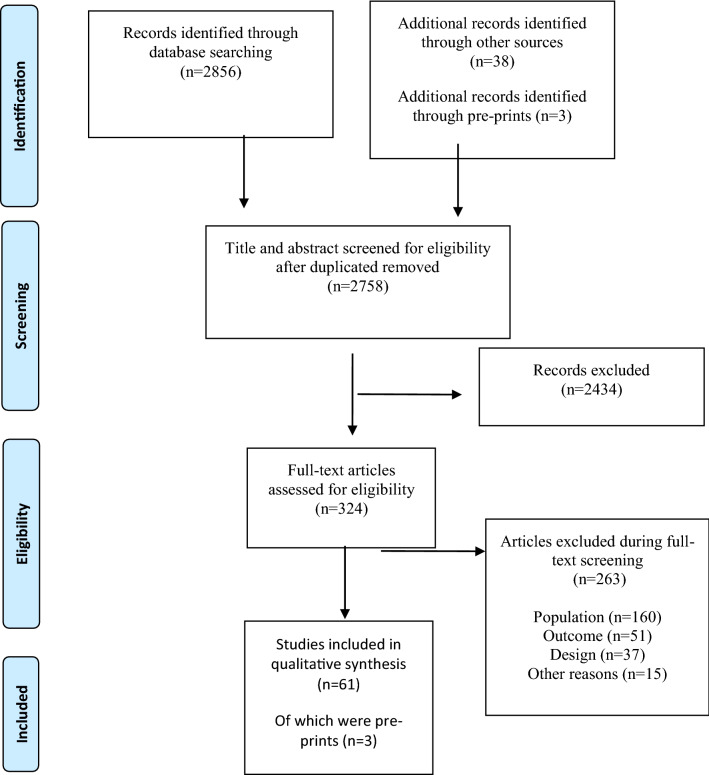
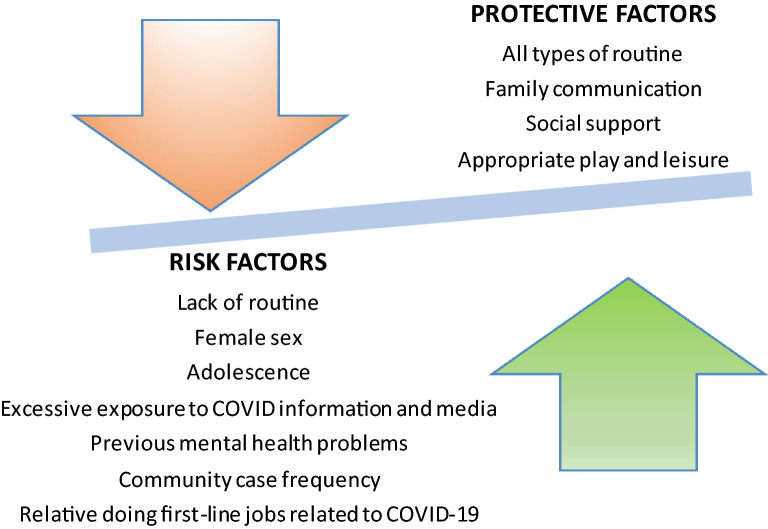
COVID-19 was declared a pandemic in March 2020, resulting in many countries worldwide calling for lockdowns. This study aimed to review the existing literature on the effects of the lockdown measures established as a response to the COVID-19 pandemic on the mental health of children and adolescents. Embase, Ovid, Global Health, PsycINFO, Web of Science, and pre-print databases were searched in this PRISMA-compliant systematic review (PROSPERO: CRD42021225604). We included individual studies reporting on a wide range of mental health outcomes, including risk and protective factors, conducted in children and adolescents (aged ≤ 19 years), exposed to COVID-19 lockdown. Data extraction and quality appraisal were conducted by independent researchers, and results were synthesised by core themes. 61 articles with 54,999 children and adolescents were included (mean age = 11.3 years, 49.7% female). Anxiety symptoms and depression symptoms were common in the included studies and ranged 1.8–49.5% and 2.2–63.8%, respectively. Irritability (range = 16.7–73.2%) and anger (range = 30.0–51.3%), were also frequently reported by children and adolescents. Special needs and the presence of mental disorders before the lockdown, alongside excessive media exposure, were significant risk factors for anxiety. Parent–child communication was protective for anxiety and depression. The COVID-19 lockdown has resulted in psychological distress and highlighted vulnerable groups such as those with previous or current mental health difficulties. Supporting the mental health needs of children and adolescents at risk is key. Clinical guidelines to alleviate the negative effects of COVID-19 lockdown and public health strategies to support this population need to be developed.
Overview
The claims and statistics of this paper haven’t been checked yet.
Free: it reads the open-access text and checks the first 5 claims that cite a source we can check. Create a free account to check every claim.
Integrity signals
Registry
Cites
Statistics
Figures
Verification
Claims the paper makes
The claims and statistics of this paper haven’t been checked yet.
Free: it reads the open-access text and checks the first 5 claims that cite a source we can check. Create a free account to check every claim.
Claims other papers make about this one
Each is checked against this paper’s own text: does it say what the citing paper says it does?
The source backs part of the claim, not all of it — or backs it for a different population, condition or comparison.
In the citing paper
“Overall, the COVID-19 pandemic led to a decrease in children’s and adolescents’ general wellbeing, an increase of mental health problems and psychiatric diagnoses, and a growing demand for (non-specialized and specialized) mental health care.”
From Interventions to build resilience and to ameliorate negative psychosocial effects of the COVID-19 pandemic on children and adolescents: a systematic review and meta-analysis (2024) · cites this paper as [7]
Experimental — accuracy not yet measuredThe source backs part of the claim, not all of it — or backs it for a different population, condition or comparison.
In the citing paper
“Specifically, a rise in depressive symptoms, anxiety, suicidal ideation, loneliness, sleep disturbance, eating disorders, gaming and increased screen time has been reported [4–8].”
From Interventions to build resilience and to ameliorate negative psychosocial effects of the COVID-19 pandemic on children and adolescents: a systematic review and meta-analysis (2024) · cites this paper as [7]
Experimental — accuracy not yet measuredThe source backs part of the claim, not all of it — or backs it for a different population, condition or comparison.
In the citing paper
“A systematic review reported a lockdown-associated increase in anxiety and depressive symptoms in children and adolescents and an increase in sleep disorders; as risk factors, a priori mental illness and high media exposure were identified [16].”
From Effectiveness of Online and Remote Interventions for Mental Health in Children, Adolescents, and Young Adults After the Onset of the COVID-19 Pandemic: Systematic Review and Meta-Analysis (2024) · cites this paper as [16]
Experimental — accuracy not yet measuredThe cited source says what the claim attributes to it.
In the citing paper
“A systematic review reported a lockdown-associated increase in anxiety and depressive symptoms in children and adolescents and an increase in sleep disorders; as risk factors, a priori mental illness and high media exposure were identified [16].”
Self-check
Percentages, sums and reported differences re-computed from the paper’s own numbers.
The self-check needs the paper’s full text.
Citations
Cites
Preferred Reporting Items for Systematic Reviews and Meta-Analyses: the PRISMA statement
Moher, D., Liberati, A., Tetzlaff, J., Altman, D. G., & for the PRISMA Group (2009) · BMJ · doi:10.1136/bmj.b2535 · Cited by 83,823
Preferred reporting items for systematic reviews and meta-analyses: the PRISMA Statement.
(2009) · PubMed Central · Cited by 44,859
The Psychological Impact of Quarantine and How to Reduce It: Rapid Review of the Evidence
Brooks, S. K., Webster, R. K., Smith, L. E., Woodland, L., Wessely, S., Greenberg, N., & Rubin, G. J. (2020) · doi:10.2139/ssrn.3532534 · Cited by 16,394
The psychological impact of quarantine and how to reduce it: Rapid review of the evidence
Brooks, S. K., Webster, R. K., Smith, L. E., Woodland, L., Wessely, S., Greenberg, N., & Rubin, G. J. (2020) · The Lancet · doi:10.1016/s0140-6736(20)30460-8 · Cited by 16,378
WHO Declares COVID-19 a Pandemic.
Cucinotta, D., & Vanelli, M. (2020) · Acta bio-medica dell'Ateneo parmense/Acta biomedica · doi:10.23750/abm.v91i1.9397 · Cited by 7,457
Merikangas, K. R., He, J.-P., Burstein, M., Swanson, S. A., Avenevoli, S., Cui, L., Benjet, C., Georgiades, K., & Swendsen, J. (2010) · Journal of the American Academy of Child & Adolescent Psychiatry · doi:10.1016/j.jaac.2010.05.017 · Cited by 6,278
Impact of COVID-19 pandemic on mental health in the general population: a systematic review
Xiong, J., Lipsitz, O., Nasri, F., Lui, L. M. W., Gill, H., Phan, L., Chen-Li, D., Iacobucci, M., Ho, R., Majeed, A., et al. (2020) · Journal of Affective Disorders · doi:10.1016/j.jad.2020.08.001 · Cited by 5,204
Mental health problems and social media exposure during COVID-19 outbreak
Gao, J., Zheng, P., Jia, Y., Chen, H., Mao, Y., Chen, S., Wang, Y., Fu, H., & Dai, J. (2020) · PLoS ONE · doi:10.1371/journal.pone.0231924 · Cited by 2,830
Mental Health Problems and Social Media Exposure During COVID-19 Outbreak
Gao, J., Zheng, P., Jia, Y., Chen, H., Mao, Y., Chen, S., Wang, Y., Fu, H., & Dai, J. (2020) · SSRN Electronic Journal · doi:10.2139/ssrn.3541120 · Cited by 2,830
Mitigate the effects of home confinement on children during the COVID-19 outbreak
Wang, G., Zhang, Y., Zhao, J., Zhang, J., & Jiang, F. (2020) · The Lancet · doi:10.1016/s0140-6736(20)30547-x · Cited by 2,148
Research works printed but not linked: 1
- Majeed S Ashraf M Psychological impacts of social distancing during COVID-19 pandemic in adolescents of Lahore, Pakistan Ann King Edward Med Univ Lahore Pak 2020 26 165 169
Cited by
Items 901–998 of 998
BIO Girls: Effect of a Community-Based Empowerment Program on Youth Self-Esteem
Gust, A. M., Salafia, E. H. B., & Sell, D. M. (2025) · SAGE Open · doi:10.1177/21582440251367528 · Cited by 1
“Adolescent females are especially at risk for increased rates of poor mental health, as being female was identified as a significant risk factor for increasing symptoms of anxiety during the pandemic (Chen et al., 2020l; Panchal et al., 2023).”
Fritz, D., Kulshreshtha, A., Leiser, M., & Gazmararian, J. A. (2025) · Journal of Sleep Medicine · doi:10.13078/jsm.250011
The hidden pandemic: changes in outpatient mental health care among French children and adolescents
Valtuille, Z., Trebossen, V., Ouldali, N., Huguet, M., Peyre, H., Delorme, R., & Kaguelidou, F. (2025) · European Child & Adolescent Psychiatry · doi:10.1007/s00787-025-02847-x · Cited by 1
Job, A., & Saßmann, H. (2025) · International Journal of Environmental Research and Public Health · doi:10.3390/ijerph22091431 · Cited by 1
“In line with previous studies [7,13,14,17,20–22], YACCs more frequently reported clinically relevant symptoms of depression (PHQ-9 ≥ 10) compared with healthy peers (33.0% vs. 20.5%).”
InfluentialIntegrated Behavioral Health Services and Psychosocial Symptoms in Children
Kim, J., Cole, M. B., Rosenberg, J., Morris, A., Feinberg, E., & Sheldrick, R. C. (2025) · JAMA Network Open · doi:10.1001/jamanetworkopen.2025.32020
The impact of COVID-19 on depression in adolescents
Qiao, L. (2025) · SHS Web of Conferences · doi:10.1051/shsconf/202522202005
Casper-White, R., Shloim, N., Hebron, J., & Hugh‐Jones, S. (2025) · Research Square · doi:10.21203/rs.3.rs-7288544/v1
Mental health changes in different adolescent groups from before to throughout the COVID-19 pandemic
Achterhof, R., Kirtley, O. J., Lafit, G., Akcaoglu, Z., Bamps, E., Hiekkaranta, A. P., Hagemann, N., Hermans, K. S. F. M., Janssens, J. J., Lecei, A., et al. (2025) · Psychiatry Research · doi:10.1016/j.psychres.2025.116733
Working Set: adapted model to the epidemiological context
Murzakhmetov, A., Borankulova, G., Tungatarova, A. T., Dulatbayeva, S., Zhoranova, N., & Taszhurekova, Z. (2025) · Mathematical Biosciences & Engineering · doi:10.3934/mbe.2025110
Beliefs and Behaviors: Mind-Body Health Influences on Health Behaviors Amidst COVID-19
Bellara, A. P., Winter, E. L., deLeyer-Tiarks, J. M., Bray, A. M., & Bray, M. A. (2025) · COVID · doi:10.3390/covid5100169
“Students reported increased symptoms of depression, anxiety, and suicidality [13,14], disproportionality impacting students from various minoritized backgrounds [15].”
Benavente, M., Alfaro, J., Chuecas, M. J., Bedin, L. M., Galdames, A., & Ditzel, A. L. (2025) · International Journal of Applied Positive Psychology · doi:10.1007/s41042-025-00253-x · Cited by 1
“Particularly in the post-COVID-19 pandemic context, the development of interventions aimed at mitigating its impact on children’s and adolescents’ development and mental health has become increasingly relevant (Bell et al., 2023; Gadermann et al., 2022; Panchal et al., 2023 ; Wolf & Schmitz, 2023).”
Horváth, Z., Sebestyén, E., Várnai, D., Király, O., Demetrovics, Z., & Németh, Á. (2025) · Psychiatry Research · doi:10.1016/j.psychres.2025.116776
Risner, M., Hu, L., & Stamoulis, C. (2025) · PLoS ONE · doi:10.1371/journal.pone.0334028 · Cited by 1
“They have shown that prolonged stress, social isolation, school-related disruptions, decreased physical activity, and increased social media use, had extensive negative effects on brain development and mental health [17,18], especially in girls and youth from racio-ethnic minorities [19,20].”
Moura, C. D. C., Toledo, L. V., Boscarol, G. T., Chaves, R. L., Nogueira, D. A., Marinho, C. A. D. C., Alves, B. D. O., Lourenço, B. G., Chaves, É. D. C. L., & Chianca, T. C. M. (2025) · Revista Latino-Americana de Enfermagem · doi:10.1590/1518-8345.7741.4672 · Cited by 1
Moura, C. D. C., Toledo, L. V., Boscarol, G. T., Chaves, R. L., Nogueira, D. A., Marinho, C. A. D. C., Alves, B. D. O., Lourenço, B. G., Chaves, É. D. C. L., & Chianca, T. C. M. (2025) · Revista Latino-Americana de Enfermagem · doi:10.1590/1518-8345.7741.4670
Zouki, C.-J. E., Malaeb, D. N., Sakr, F., Dabbous, M., Hallit, S. R., Fekih‐Romdhane, F., & Obeïd, S. (2025) · International Journal of Adolescence and Youth · doi:10.1080/02673843.2025.2573645
AlShammari, M. A., Alnasser, A. H., Alsalman, A., Alkhalifah, A., Alawadh, Y. W., Aljabri, A., Alwail, A. T., Aljaili, Z. K., Alsaihati, M. I., Alkufair, A. H., et al. (2025) · Journal of Family Medicine and Primary Care · doi:10.4103/jfmpc.jfmpc_282_25
Chen, W., & Chen, J.-H. (2025) · Journal of Adolescent Health · doi:10.1016/j.jadohealth.2025.09.016
Bayar, Ö. (2025) · Psikiyatride Guncel Yaklasimlar - Current Approaches in Psychiatry · doi:10.18863/pgy.1668424
Kiani, P., Hendriksen, P. A., Dijkgraaf, D. M., Merlo, A., Zijlstra, M. N., Garssen, J., Bruce, G., Scholey, A. B., & Verster, J. C. (2025) · COVID · doi:10.3390/covid5110186
“More than half of the general population experienced psychiatric symptoms [17], with the burden especially high among individuals with pre-existing mental health conditions, lower socioeconomic status, or healthcare-related occupations [15,18].”
Floredin, I., Husbands, S., Hancock, J., Mitchell, P. M., Coast, J., Frew, E. J., Adab, P., Murphy, M., Clarke, J. L., Pallan, M. J., et al. (2025) · Child Indicators Research · doi:10.1007/s12187-025-10294-y · Cited by 1
“…and levels of pandemic-related restrictions highlight associations between sociodemographic factors and CYP’s physical and mental health in the context of the pandemic (Kauhanen et al., 2023; Kharel et al., 2022; Lorthe et al., 2023; Panchal et al., 2023; Scrimin et al., 2022; Viner et al., 2022).”
Barbic, S. P., Warren, C., Marchand, K., Beggs, T., Tsou, S., Smit, B., Lockhart, L., Turuba, R., Mathias, S., & Ben‐David, S. (2025) · Child Psychiatry & Human Development · doi:10.1007/s10578-025-01926-z
Saldanha, A. B., Ferreira, M. A. D., Araújo, L. F., Magalhães, K. D. N., Albuquerque, P. L. M. M., & Correia, L. L. (2025) · Ciência & Saúde Coletiva · doi:10.1590/1413-812320253010.09562025 · Cited by 3
COVID-19 E SAÚDE MENTAL DE CRIANÇAS E ADOLESCENTES NO BRASIL: Uma revisão de escopo
Fernandes, E. D. S., & Neto, F. L. (2025) · Psicologia e Saúde em Debate · doi:10.22289/2446-922x.v11a2a44
Addae, E. A., Adjei, M., Anaduaka, U. S., Wuollah-Dire, D. K., & Bondong, R. (2025) · PLoS ONE · doi:10.1371/journal.pone.0337188
“Fear of COVID-19 and induced changes in multiple life domains have been linked to poorer quality of live and poorer SWB among diverse population groups including adolescents [6,7,13].”
Williford, D. N., Kelleher, J. A., Davidov, D. M., & Duncan, C. L. (2025) · Frontiers in Pediatrics · doi:10.3389/fped.2025.1516773
“The COVID-19 pandemic exacerbated MBH concerns globally (4, 5); however, pre-pandemic, MBH concerns and reduced health-related quality of life were well-documented for youth with complex medical needs (6).”
Dorri-Mashhadi, N., Mashhadi, A., Maleki, Z. H., & Bigdeli, I. (2026) · Internet Interventions · doi:10.1016/j.invent.2026.100946
O’Reilly, M. (2025) · The journal of classics teaching · doi:10.1017/s2058631025100354
“…contributing factor to this increase, and applicable to other countries in addition to Scotland, has been the coronavirus disease 2019 (COVID-19) pandemic, in particular the impact of lockdown, both in terms of the social isolation imposed and the increased time spent online (Panchal et al. 2023).”
Sokolová, L., Gecková, A. M., Boberová, Z., Bosáková, L., & Husárová, D. (2025) · Current Psychology · doi:10.1007/s12144-025-08684-0
“Several studies reported decreasing levels of adolescent well-being and increased levels of stress as a result of the COVID-19 pandemic, school closures, and social isolation (Meherali et al., 2021; Panchal et al., 2021).”
Utilization Of Serious Game On Screening Severity Level Of Social Anxiety Disorder
Fung, J., Ariel, J., Soerianata, M. F. A., & Pratama, G. D. (2025) · doi:10.1109/icet67257.2025.11290895
“But 31.4% of children aged 9-year-olds were calmer during the pandemic compared to before, and most children were able to adapt to the pandemic conditions[11], [12].”
InfluentialDey, M., Volken, T., Altwicker-Hámori, S., von Rhein, M., Seiler, M., Laasner, U., Wieber, F., & Dratva, J. (2025) · Zürcher Hochschule für Angewandte Wissenschaften digital collection (Zurich University of Applied Sciences) · doi:10.21256/zhaw-33162
Orozco, A. L., Thomas, A. J., Raggatt, M. H., Scott, N., Eddy, S., Douglass, C. H., Wright, C. C. J., Spelman, T., & Lim, M. S. C. (2024) · Figshare · doi:10.6084/m9.figshare.27116073
Orozco, A. L., Thomas, A. J., Raggatt, M. H., Scott, N., Eddy, S., Douglass, C. H., Wright, C. C. J., Spelman, T., & Lim, M. S. C. (2024) · Figshare · doi:10.6084/m9.figshare.27116076
Ludwig‐Walz, H., Dannheim, I., Pfadenhauer, L. M., Fegert, J. M., & Bujard, M. (2024) · Figshare · doi:10.6084/m9.figshare.26558672
Fujimoto, H., Heywood, A. E., Maston, K., Brown, L., Bartholomew, A., Werner‐Seidler, A., Christensen, H. M., & Batterham, P. J. (2024) · Figshare · doi:10.6084/m9.figshare.26728663
Orozco, A. L., Thomas, A. J., Raggatt, M. H., Scott, N., Eddy, S., Douglass, C. H., Wright, C. C. J., Spelman, T., & Lim, M. S. C. (2024) · Figshare · doi:10.6084/m9.figshare.27116079
Doyle, A. E., Colvin, M. K., Beery, C. S., Koven, M. R., Vuijk, P. J., & Braaten, E. B. (2022) · Figshare · doi:10.6084/m9.figshare.19194248
Orozco, A. L., Thomas, A. J., Raggatt, M. H., Scott, N., Eddy, S., Douglass, C. H., Wright, C. C. J., Spelman, T., & Lim, M. S. C. (2024) · Figshare · doi:10.6084/m9.figshare.27116067
Reiß, F., Cosma, A. P., Bersia, M., Erhart, M., Dalmasso, P., Devine, J., Hulbert, S., Catunda, C., Gobiņa, I., Giladi, A., et al. (2024) · Figshare · doi:10.6084/m9.figshare.26751161
Geprägs, A., Bürgin, D., Fegert, J. M., Brähler, E., & Clemens, V. (2024) · Figshare · doi:10.6084/m9.figshare.26339865
Goreis, A., Pfeffer, B., Zesch, H. E., Klinger, D., Reiner, T., Bock, M. M., Ohmann, S., Sackl‐Pammer, P., Werneck‐Rohrer, S., Eder, H., et al. (2024) · Figshare · doi:10.6084/m9.figshare.26563893
Fujimoto, H., Heywood, A. E., Maston, K., Brown, L., Bartholomew, A., Werner‐Seidler, A., Christensen, H. M., & Batterham, P. J. (2024) · Figshare · doi:10.6084/m9.figshare.26728666
Fujimoto, H., Heywood, A. E., Maston, K., Brown, L., Bartholomew, A., Werner‐Seidler, A., Christensen, H. M., & Batterham, P. J. (2024) · Figshare · doi:10.6084/m9.figshare.26728669
Orozco, A. L., Thomas, A. J., Raggatt, M. H., Scott, N., Eddy, S., Douglass, C. H., Wright, C. C. J., Spelman, T., & Lim, M. S. C. (2024) · Figshare · doi:10.6084/m9.figshare.27116070
New Frontiers in Pediatric Psychology: Dismantling Barriers Through Integrated School Health Care
Smith, N. D. W., Perry, D., & Pulgarón, E. R. (2025) · Clinical Practice in Pediatric Psychology · doi:10.1177/21694826251383506
“%) symptoms during the associated quar-antine (Panchal et al., 2023).”
Enablers of students’ health-promoting lifestyle: evidence from PLS-SEM and fsQCA
Zhang, L., & Zhao, F. (2025) · Frontiers in Public Health · doi:10.3389/fpubh.2025.1667920 · Cited by 2
Ma, X., Boisen, M. R. M., Dillard, C., Lee, Y., Absalon, E., & Doty, J. L. (2025) · Journal of Adolescence · doi:10.1002/jad.70090 · Cited by 2
“…after the COVID‐19 pandemic found that adolescents increasingly turned to digital platforms to maintain social connections, and this shift has been associated with developmental challenges, specifically impaired in‐person social skills and increased loneliness (Panchal et al 2021; Wiederhold 2020).”
Final Remarks—And a Call to Action
Buckingham, S. L., & Oster, G. D. (2026) · Springer eBooks · doi:10.1007/978-3-032-04068-8_16
Azaklı, T. K., Ergan, S. N., & Semerci, D. (2025) · Ondokuz Mayis Univ Egitim Fakultesi · doi:10.7822/omuefd.1703681
Grazzani, I., & Cavioni, V. (2026) · European Journal of Psychology of Education · doi:10.1007/s10212-025-01050-5
“Growing concern over youth mental health in the aftermath of the COVID-19 emergency (WHO, 2021; Panchal et al., 2023) has drawn the attention of researchers, education practitioners, and policymakers to schools as critical settings for both risk prevention and the promotion of well-being (Cefai et…”
Concha, I. D., Valdebenito, R., López, F. G., Romero, L. O., & Vergara, A. V. (2026) · BMC Public Health · doi:10.1186/s12889-025-25815-1
“In addition, lockdown has resulted in psychological distress among children and adolescents [62]– [63], which, compounded by a stressful environment in the home and increased parenting stress, can increase negative parent‒child interactions and family functioning and further affect children’s…”
Zang, B., Gu, R., Yu, J., & Xu, P. (2026) · Frontiers in Public Health · doi:10.3389/fpubh.2025.1696218
“However, the indirect impacts of the COVID-19 pandemic and public health measures on children, including psychological effects, should not be overlooked (10, 25– 27).”
Hebrard, L., Loyal, D., Brockbank-Chasey, S., & Rascle, N. (2026) · Journal of Psychoeducational Assessment · doi:10.1177/07342829251414533
“A systematic review compiled the effects of the pandemic and lockdown situation on the mental health of children and adolescents and pointed the common presence of symptoms of anxiety and depression (Panchal et al., 2023).”
The Longitudinal Relationship Between Mindful Parenting and Child Emotional Self‐Regulation
Quach, J., Burke, K. E., Schleibs, D., Zannino, D., & Deery, B. (2026) · Child Care Health and Development · doi:10.1111/cch.70235 · Cited by 1
Malinauskiene, V. A., & Малинаускас, Р. К. (2026) · Healthcare · doi:10.3390/healthcare14020263 · Cited by 3
“A systematic review of 61 articles found significant increases in the rates of anxiety among children and adolescents [3].”
Baldwin, R., Rowland, B., Melvin, G. A., Nehme, Z., Lubman, D. I., & Ogeil, R. P. (2026) · Journal of Child Psychology and Psychiatry · doi:10.1111/jcpp.70108
Runkle, J. D., Herbst, K., Ryan, S. C., Thompson, M. P., & Sugg, M. M. (2026) · Personalized Medicine in Psychiatry · doi:10.1016/j.pmip.2026.100178
Lin, H., Hu, Q., & Zheng, H. Y. (2026) · Current Psychology · doi:10.1007/s12144-025-08528-x
“Psychological problems, such as anxiety, depression, and even suicide, are likely to occur among adolescents during the epidemic (Panchal et al., 2023; Racine et al., 2020; Rong et al., 2024).”
Camacho, C., Healion, N. G., Abreu, M. A., Bulhões, A. R., Roberto, M. S., & Marques-Pinto, A. (2026) · School Mental Health · doi:10.1007/s12310-025-09839-x
Youth, Crisis, and Systemic Change: Generational Agency in a Warming World
Ogwu, M. C., & Izah, S. C. (2026) · World-systems evolution and global futures · doi:10.1007/978-3-032-17639-4_11 · Cited by 1
Lauzon, A., Bradley, K. L., Vakili, N., Blenus, J., MacLean, L., Rosenberg, L., Wang, J., & McGrath, P. J. (2026) · doi:10.2196/preprints.91287
Kiani, P., Hendriksen, P. A., Dijkgraaf, D. M., Zijlstra, M. N., Garssen, J., & Verster, J. C. (2026) · European Journal of Pharmacology · doi:10.1016/j.ejphar.2026.178732
Equity gaps in neglected tropical disease research in Malaysia: a systematic review, 2014–2024
Aminuddin, M. A. H., Rahim, F. A. A., Naba, A., Ngesom, A. M. M., & Dom, N. C. (2026) · BMC Public Health · doi:10.1186/s12889-026-26911-6
“Existing studies also point to persistent challenges in demographic reporting, with vulnerable groups such as children and adolescents frequently neglected in surveillance and research outputs [17, 18].”
Langfield, C. T. (2026) · Youth Justice · doi:10.1177/14732254261428263
Clinique des violences auto-infligées à l’adolescence : vers de nouvelles « neurotica » ?
Moutte, J.-P. (2026) · Nouvelle Revue de l enfance et de l adolescence · doi:10.3917/nrea.013.0045
Trends and determinants of childhood anxiety disorders burden in Asia, 1990–2023
Zhang, K., Kan, C., Han, F., Li, X., Zheng, T., Hou, N., Xue, Y., & Sun, X. (2026) · Journal of Anxiety Disorders · doi:10.1016/j.janxdis.2026.103156 · Cited by 1
Bhushan, N. L., Stoner, M. C. D., Browne, E. N., Shapley‐Quinn, M. K., Jaime-Aguilar, A., Raymond‐Flesch, M., & Minnis, A. M. (2026) · Journal of Adolescent Health · doi:10.1016/j.jadohealth.2026.02.006
Nishioka, S. A., Huang, C. Y., Rajan, S., & Mehta, R. (2026) · Education Sciences · doi:10.3390/educsci16040511
“Recent studies show that the pandemic hindered the acquisition of reading and mathematical skills (Panagouli et al., 2021) and increased mental health symptoms such as anxiety, depression, and social isolation (Panchal et al., 2021).”
Howard, M., Menezes, M., Rispoli, M. J., & Mazurek, M. O. (2026) · Journal of Developmental and Physical Disabilities · doi:10.1007/s10882-026-10057-9
“Previous findings indicate that the COVID-19 pandemic resulted in higher levels of psychological distress among children, especially among those with neurodevelopmental differences (Panchal et al., 2023).”
Erbasi, E., Muir, S., & McLean, K. (2026) · Child and Adolescent Social Work Journal · doi:10.1007/s10560-026-01093-7
“…health needs during the pandemic support existing related Australian research (Li et al., 2021; Thomas et al., 2022; Upton et al., 2021), including that involving children with increased adversity (Bryson et al., 2021), and international findings (Panchal et al., 2023 ; Wolf & Schmitz, 2024).”
Just a Little Melancholic, Maybe a Little Blue: Mental Health as an Emerging Political Identity
Hey, L. V. D. (2026) · Political Behavior · doi:10.1007/s11109-025-10118-3
Belzer, K., Mulder, M., & Hitters, E. (2026) · International Journal of Music Business Research · doi:10.2478/ijmbr-2026-0004
“Young people prominently stated missing social contact during the lockdown and reported increased loneliness during this period (Panchal et al. 2021).”
Understanding the mental health crisis in Austrian youth after COVID-19: age and gender differences
Stross, T. M., Dalkner, N., Painold, A., Zurl, C., Strenger, V., Schmid, D., Kanitz, E. E., & Reininghaus, E. Z. (2026) · International Journal of Adolescence and Youth · doi:10.1080/02673843.2026.2659773
Vukets, G., & Jose, P. E. (2026) · Research on Child and Adolescent Psychopathology · doi:10.1007/s10802-026-01461-y
“Moreover, literature suggests that global adolescent mental health may have been worsened or exacerbated by the COVID-19 pandemic, resulting in increased internalising problems (Panchal et al., 2023; Wolf & Schmitz, 2024) and even long-lasting neurological changes (Gotlib et al., 2023).”
Determinants and Challenges of Metrology 5.0
Wieczorowski, M., Kurkiewicz, A., Bigerelle, M., Pereira, A., Krolczyk, G., Berkmans, F., & Gapiński, B. (2026) · Lecture notes in mechanical engineering · doi:10.1007/978-3-032-23038-6_1
Logan, N., Neelakantan, L., Russell, M. A., & Reavley, N. J. (2026) · Research Square · doi:10.21203/rs.3.rs-9004628/v1
Golden, T. L., Ng, T. W. C., Mohanty, A., Block, S. J., Tiedemann, A., & Magsamen, S. H. (2026) · Frontiers in Health Services · doi:10.3389/frhs.2026.1837334
Donno, F., Prandini, M., Abbracciavento, G., Agus, M., Balia, C., Carta, A., Albizzati, A., Boeri, S., Bravaccio, C., Cavassa, V., et al. (2026) · Pediatric Research · doi:10.1038/s41390-026-04978-6
Malcolm, S. D., Brown, J. L., Malcolm, A. B., Walrond, S., Malcolm, K. O., Garland, K. S., Robinson, N., Kasting, M. L., Ruiz, Y., & SIMEON, D. T. (2026) · Frontiers in Public Health · doi:10.3389/fpubh.2026.1747234 · Cited by 1
“Emerging research from across the globe illustrates that COVID-19 is linked to poor outcomes among adolescents, including substance use (24).”
Malcolm, S. D., & Garland, K. S. (2026) · Global Epidemiology · doi:10.1016/j.gloepi.2026.100272
“Given its profound impact on adolescents, our findings offer unique insights into adolescent behaviors in the region during the post-pandemic period [19].”
Woodgate, R. L., Mary-Quigley, L., Bell, A., Bennett, M., & Hatala, A. R. (2026) · PLoS ONE · doi:10.1371/journal.pone.0349860
“Studies investigating the mental health impact of the COVID-19 pandemic among youth have predominantly been carried out using quantitative methods [52–54].”
Nguyen, P. T.-H., Nguyen-Thanh, N., My, T. N. Y., Ngoc, N.-B., & Hong, V. T. T. (2026) · Humanities and Social Sciences Communications · doi:10.1057/s41599-026-07779-8
“According to Panchal et al. (2023), the scholars categorize such engagement as crisis-driven behavior, our study suggests that users value these platforms as essential resources for knowledge and support during public health emergencies.”
Mella, N., Rey, G., ZAHARIA, A. L., Smith, M. M., Samson, A. C., Gentaz, É., Piguet, C., & Sander, D. (2026) · Social and Emotional Learning Research Practice and Policy · doi:10.1016/j.sel.2026.100213 · Cited by 2
“This finding aligns with recent reports of increased mental health issues among vulnerable adolescents (Lane et al., 2021; Panchal et al., 2023; Pellerin & Raufaste, 2020; Pizarro-Ruiz & Ord ´ o ˜ nez-Camblor, 2021; Schmidt et al., 2021; Wolf & Schmitz, 2024).”
Solecki, R., & Trusz, S. (2026) · Studia z Teorii Wychowania · doi:10.5604/01.3001.0055.8025
Park, J.-Y., Endo, B., & Flores, S. (2026) · Journal of Child and Adolescent Mental Health · doi:10.2989/17280583.2026.2680867
Berring-Uldum, A. A., Pann, L. Y., Miranda, M. J., & Debes, N. M. (2026) · Journal of Child Neurology · doi:10.1177/08830738261456884
Ergenlerin Mevcut Gelişimsel Sorunlarının Yordanması: Zekâ ve Kişiliğin Rolü
Demir, Y., & YILDIRIM, O. (2026) · Ondokuz Mayis Univ Egitim Fakultesi · doi:10.7822/omuefd.1899868
Low, S. A., Ryzin, M. J. V., Lee, S., Osborne, K. R., Johnson, B., & Garbacz, S. A. (2026) · Psychology in the Schools · doi:10.1002/pits.70183 · Cited by 2
Coughtrey, A. E., Bennett, S. D., Blackstone, J., Byford, S., Chorpita, B. F., Chowdhury, K., Cross, J. H., Dalrymple, E., Fonagy, P., Ford, T. J., et al. (2026) · Programme Grants for Applied Research · doi:10.3310/gjrs1001
Hegazi, M. A., Abudawoud, D. H., Alahmadi, T. S., Alghamdi, W., Atwah, A. F., Almazrui, M. M., Alahmadi, R. A., Alshuwayki, M. M., Alzahrani, A. A., Alqahtani, A. S., et al. (2026) · Frontiers in Psychiatry · doi:10.3389/fpsyt.2026.1878623
“The fi ndings in univariate analysis (Table 3) linked poor friendships, poor family relationships and communication with mother/father, bullying, low self-esteem and low social skills with depressive symptoms consistent with the fi ndings in other Saudi (12, 14, 27) and international studies (28, 29).”
Boonstra, A., van Mastrigt, G. A. P. G., Evers, S., Osstyn, S. L., de Winter, R. F. P., Boonstra, N., van Amelsvoort, T., & Leijdesdorff, S. M. J. (2026) · PLoS ONE · doi:10.1371/journal.pone.0352652
“Most earlier studies have shown higher symptoms of anxiety and depression among youth during the COVID-19 pandemic, as concluded in a large systematic review [48].”
Abdulhamed, R., Beattie, M. M., Hietajärvi, L., & Lonka, K. (2026) · Child Indicators Research · doi:10.1007/s12187-026-10411-5 · Cited by 1
Behavioral Inhibition in Young Children: A Descriptive Study in a Very Large Non-Clinical Population
Komrij, N. L., Kösters, M. P., & Vreeke, L. J. (2026) · International Journal of Behavioral Development · doi:10.1177/01650254261461445
Chi, Y., Huang, J., Tai, S., Kawachi, I. I., Chen, Y., & Lu, T. (2026) · Journal of Adolescent Health · doi:10.1016/j.jadohealth.2026.05.009
Elementary Students’ Conceptualizations of Disability in Written and Illustrated Forms
Freer, J. R. R., Somma, M., Miklas, E. P., & Scibetta, L. (2026) · American Educational Research Journal · doi:10.3102/00028312261460584
Bourion-Bédès, S., Boulch, A., Speranza, M., Motreff, Y., Falissard, B., Pastorello, A., Rouquette, A., The EpiCov study group, Warszawski, J., Bajos, N., et al. (2026) · European Child & Adolescent Psychiatry · doi:10.1007/s00787-026-03127-y
Ji, Y., Hu, H., & Tang, X. (2026) · BMC Psychiatry · doi:10.1186/s12888-026-08410-5
“Depression and anxiety are among the most prevalent psychiatric conditions during this life stage, and they frequently co-occur [5–7].”
O’Shea, T. M., McGrath, M., Douglas, J., Blackwell, C. K., Ganiban, J., McGowan, E. C., Junior, H. P. D. O. S., Margolis, A. E., Fry, R. C., Smith, B. P., et al. (2026) · BMC Pediatrics · doi:10.1186/s12887-026-07337-w
“Two reviews of studies conducted in the United States (U.S.) and Europe found general increases in anxiety and stress among children and adolescents and inconsistent changes in the rate of substance use [1–3].”
Metadata
- Authors
- Panchal, U., Salazar de Pablo, G., Franco, M., Moreno, C., Parellada, M., Arango, C., & Fusar-Poli, P.
- Affiliations
- Universidad Autónoma de Madrid (ES)
- Hospital General Universitario Gregorio Marañón (ES)
- ORCID
- Venue
- European Child & Adolescent Psychiatry
- Published
- 2021-08-18
- Volume
- 32
- Issue
- 7
- Pages
- 1151-1177
- ISSN
- 1018-8827 (ISSN-L)
- 1435-165X
- PMC
- PMC8371430
- OpenAlex
- W3188471381
- Cited by
- 1,028
- References
- 121
- Citations by year
- 2026: 100 · 2025: 204 · 2024: 290 · 2023: 257 · 2022: 165 · 2021: 11
- FWCI
- 24.00
- Type
- journal article
- Language
- en
- Open access
- hybrid
- doi.org
- Licence
- cc-by
- creativecommons.org/licenses/by/4.0 (tdm)
- creativecommons.org/licenses/by/4.0 (vor)
- Locations
- European Child & Adolescent Psychiatry (publishedVersion, cc-by)
- PubMed Central (publishedVersion, cc-by)
- PubMed (publishedVersion)
- Funders
- Fundación Alicia Koplowitz
- Topics
- Social Sciences › Psychology › Clinical Psychology › COVID-19 and Mental Health
- Social Sciences › Psychology › Clinical Psychology › Child and Adolescent Psychosocial and Emotional Development
- Health Sciences › Medicine › Public Health, Environmental and Occupational Health › Maternal Mental Health During Pregnancy and Postpartum
- Keywords
- COVID-19 lockdown, child mental health, adolescent mental health, anxiety symptoms, depressive symptoms, irritability, anger, risk factors, protective factors, special needs, pre-existing mental disorders, media exposure, parent-child communication, psychological distress
- MeSH terms
- COVID-19, SARS-CoV-2, Adolescent, Anxiety, Child, Communicable Disease Control, Depression, Female, Humans, Male, Mental Health, Pandemics
About these checks
Registry, retraction, Cites and statistics results are computed, not judged, with one exception: a printed reference that no index lists is read once by a model before it counts as a citation error. Claims are extracted by a model and kept only when their quote appears verbatim in the text; each cited source is then checked, with a model’s help, for whether it says what the claim relies on. Those verdicts can be wrong — read the claim’s quote and the cited source before relying on one.
Statistics and arithmetic are recomputed, not judged.
Confidence bands are shown only for fields calibrated on our annotated test set. None is calibrated yet, so no band is shown.
What counts as a claim ›How we measure confidence ›How we check this ›
Are you an author, or do you see a problem with this page? Request a review
Data sources
Bibliographic data: Semantic Scholar, OpenAlex, Crossref.
Contains information from the Semantic Scholar Academic Graph Datasets, made available under the ODC Attribution License (ODC-BY 1.0).
Semantic Scholar’s data is described in: Kinney, R., et al. (2023). The Semantic Scholar Open Data Platform. arXiv:2301.10140.
