

The impact of COVID-19 lockdown on child and adolescent mental health: systematic review
Open accessThe DOI matches its Crossref record; 128 of the 128 references it cites were found in a registry or an index.
Abstract
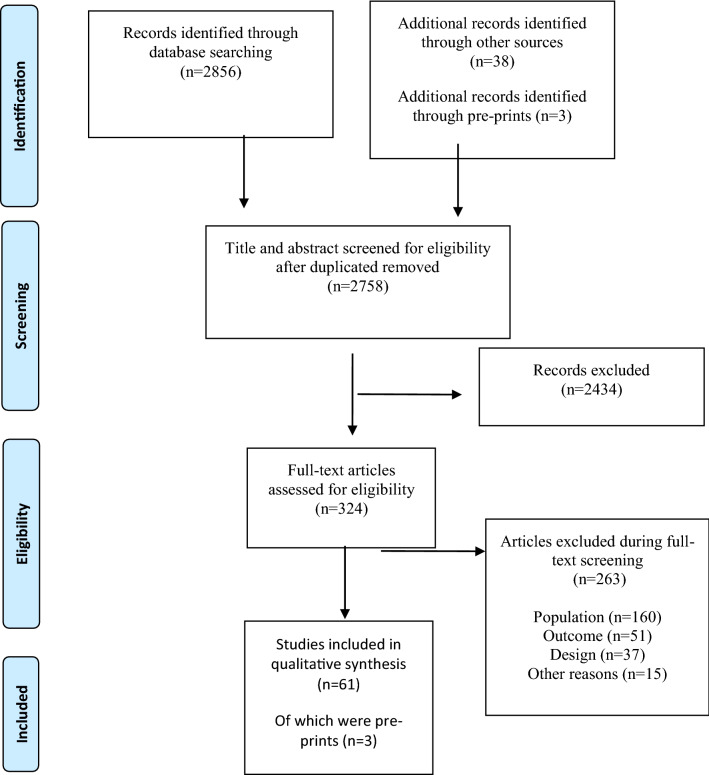
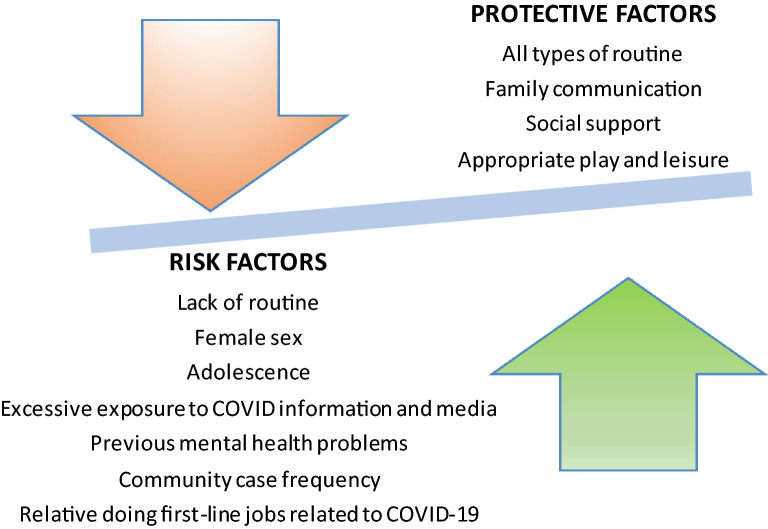
COVID-19 was declared a pandemic in March 2020, resulting in many countries worldwide calling for lockdowns. This study aimed to review the existing literature on the effects of the lockdown measures established as a response to the COVID-19 pandemic on the mental health of children and adolescents. Embase, Ovid, Global Health, PsycINFO, Web of Science, and pre-print databases were searched in this PRISMA-compliant systematic review (PROSPERO: CRD42021225604). We included individual studies reporting on a wide range of mental health outcomes, including risk and protective factors, conducted in children and adolescents (aged ≤ 19 years), exposed to COVID-19 lockdown. Data extraction and quality appraisal were conducted by independent researchers, and results were synthesised by core themes. 61 articles with 54,999 children and adolescents were included (mean age = 11.3 years, 49.7% female). Anxiety symptoms and depression symptoms were common in the included studies and ranged 1.8–49.5% and 2.2–63.8%, respectively. Irritability (range = 16.7–73.2%) and anger (range = 30.0–51.3%), were also frequently reported by children and adolescents. Special needs and the presence of mental disorders before the lockdown, alongside excessive media exposure, were significant risk factors for anxiety. Parent–child communication was protective for anxiety and depression. The COVID-19 lockdown has resulted in psychological distress and highlighted vulnerable groups such as those with previous or current mental health difficulties. Supporting the mental health needs of children and adolescents at risk is key. Clinical guidelines to alleviate the negative effects of COVID-19 lockdown and public health strategies to support this population need to be developed.
Overview
The claims and statistics of this paper haven’t been checked yet.
Free: it reads the open-access text and checks the first 5 claims that cite a source we can check. Create a free account to check every claim.
Integrity signals
Registry
Cites
Statistics
Figures
Verification
Claims the paper makes
The claims and statistics of this paper haven’t been checked yet.
Free: it reads the open-access text and checks the first 5 claims that cite a source we can check. Create a free account to check every claim.
Claims other papers make about this one
Each is checked against this paper’s own text: does it say what the citing paper says it does?
The source backs part of the claim, not all of it — or backs it for a different population, condition or comparison.
In the citing paper
“Overall, the COVID-19 pandemic led to a decrease in children’s and adolescents’ general wellbeing, an increase of mental health problems and psychiatric diagnoses, and a growing demand for (non-specialized and specialized) mental health care.”
From Interventions to build resilience and to ameliorate negative psychosocial effects of the COVID-19 pandemic on children and adolescents: a systematic review and meta-analysis (2024) · cites this paper as [7]
Experimental — accuracy not yet measuredThe source backs part of the claim, not all of it — or backs it for a different population, condition or comparison.
In the citing paper
“Specifically, a rise in depressive symptoms, anxiety, suicidal ideation, loneliness, sleep disturbance, eating disorders, gaming and increased screen time has been reported [4–8].”
From Interventions to build resilience and to ameliorate negative psychosocial effects of the COVID-19 pandemic on children and adolescents: a systematic review and meta-analysis (2024) · cites this paper as [7]
Experimental — accuracy not yet measuredThe source backs part of the claim, not all of it — or backs it for a different population, condition or comparison.
In the citing paper
“A systematic review reported a lockdown-associated increase in anxiety and depressive symptoms in children and adolescents and an increase in sleep disorders; as risk factors, a priori mental illness and high media exposure were identified [16].”
From Effectiveness of Online and Remote Interventions for Mental Health in Children, Adolescents, and Young Adults After the Onset of the COVID-19 Pandemic: Systematic Review and Meta-Analysis (2024) · cites this paper as [16]
Experimental — accuracy not yet measuredThe cited source says what the claim attributes to it.
In the citing paper
“A systematic review reported a lockdown-associated increase in anxiety and depressive symptoms in children and adolescents and an increase in sleep disorders; as risk factors, a priori mental illness and high media exposure were identified [16].”
Self-check
Percentages, sums and reported differences re-computed from the paper’s own numbers.
The self-check needs the paper’s full text.
Citations
Cites
Preferred Reporting Items for Systematic Reviews and Meta-Analyses: the PRISMA statement
Moher, D., Liberati, A., Tetzlaff, J., Altman, D. G., & for the PRISMA Group (2009) · BMJ · doi:10.1136/bmj.b2535 · Cited by 83,823
Preferred reporting items for systematic reviews and meta-analyses: the PRISMA Statement.
(2009) · PubMed Central · Cited by 44,859
The Psychological Impact of Quarantine and How to Reduce It: Rapid Review of the Evidence
Brooks, S. K., Webster, R. K., Smith, L. E., Woodland, L., Wessely, S., Greenberg, N., & Rubin, G. J. (2020) · doi:10.2139/ssrn.3532534 · Cited by 16,394
The psychological impact of quarantine and how to reduce it: Rapid review of the evidence
Brooks, S. K., Webster, R. K., Smith, L. E., Woodland, L., Wessely, S., Greenberg, N., & Rubin, G. J. (2020) · The Lancet · doi:10.1016/s0140-6736(20)30460-8 · Cited by 16,378
WHO Declares COVID-19 a Pandemic.
Cucinotta, D., & Vanelli, M. (2020) · Acta bio-medica dell'Ateneo parmense/Acta biomedica · doi:10.23750/abm.v91i1.9397 · Cited by 7,457
Merikangas, K. R., He, J.-P., Burstein, M., Swanson, S. A., Avenevoli, S., Cui, L., Benjet, C., Georgiades, K., & Swendsen, J. (2010) · Journal of the American Academy of Child & Adolescent Psychiatry · doi:10.1016/j.jaac.2010.05.017 · Cited by 6,278
Impact of COVID-19 pandemic on mental health in the general population: a systematic review
Xiong, J., Lipsitz, O., Nasri, F., Lui, L. M. W., Gill, H., Phan, L., Chen-Li, D., Iacobucci, M., Ho, R., Majeed, A., et al. (2020) · Journal of Affective Disorders · doi:10.1016/j.jad.2020.08.001 · Cited by 5,204
Mental health problems and social media exposure during COVID-19 outbreak
Gao, J., Zheng, P., Jia, Y., Chen, H., Mao, Y., Chen, S., Wang, Y., Fu, H., & Dai, J. (2020) · PLoS ONE · doi:10.1371/journal.pone.0231924 · Cited by 2,830
Mental Health Problems and Social Media Exposure During COVID-19 Outbreak
Gao, J., Zheng, P., Jia, Y., Chen, H., Mao, Y., Chen, S., Wang, Y., Fu, H., & Dai, J. (2020) · SSRN Electronic Journal · doi:10.2139/ssrn.3541120 · Cited by 2,830
Mitigate the effects of home confinement on children during the COVID-19 outbreak
Wang, G., Zhang, Y., Zhao, J., Zhang, J., & Jiang, F. (2020) · The Lancet · doi:10.1016/s0140-6736(20)30547-x · Cited by 2,148
Research works printed but not linked: 1
- Majeed S Ashraf M Psychological impacts of social distancing during COVID-19 pandemic in adolescents of Lahore, Pakistan Ann King Edward Med Univ Lahore Pak 2020 26 165 169
Cited by
Items 701–800 of 998
Kiss, P., Moser, U., Habenbacher, M., Walla, K., Pock, J., & Andrianakis, A. (2024) · Life · doi:10.3390/life14121554 · Cited by 2
Asbrand, J., Hilbert, K., Langhammer, T., Ertle, A., Horváth, L., & Lueken, U. (2024) · Kindheit und Entwicklung · doi:10.1026/0942-5403/a000461 · Cited by 1
Agudelo‐Hernández, F., Guapacha-Montoya, M., & Vélez-Botero, H. (2025) · Vulnerable Children and Youth Studies · doi:10.1080/17450128.2025.2459690 · Cited by 1
“…non-suicidal self-harm, have been described, along with the presence of mental disorders, behavioral problems, alcohol and psychoactive substance consumption, a history of violence or abuse, inadequate family functioning, and insufficient social support, among others (Panchal et al., 2023).”
Lin, Y.-F. F., & Sheng-bin, Y. (2024) · IEEE International Conference on Data Intelligence and Innovative Application (DIIA) · doi:10.1109/diia62678.2024.10871842 · Cited by 1
Martínez-Rives, N. L., Babu, H., Kotera, Y., Martín, P., Colman, R. D., & Gilmour, S. (2025) · Healthcare · doi:10.3390/healthcare13050451 · Cited by 1
“The pandemic also affected mental health, being more relevant and applicable to current prevention strategies, especially for its psychological and social impact on children and young people [26].”
Broek, E. M., Meyer, R. D., van der Rijken, R., Zijlmans, J., van Oers, H. A., Luijten, M. A. J., Alrouh, H., Popma, A., Bartels, M., Vermeiren, R. R. J. M., et al. (2025) · European Child & Adolescent Psychiatry · doi:10.1007/s00787-025-02665-1 · Cited by 3
“In addition, children who experience more social support, both from their friends [52, 53] and their families [16, 49], experience fewer negative emotional effects of the COVID-19 pandemic.”
Floriánková, M., Uhlíková, P., Dostálová, V., Vecka, M., Szitányi, P., & Žák, A. (2025) · Bratislavské lekárske listy/Bratislava medical journal · doi:10.1007/s44411-025-00077-w · Cited by 1
“Among adolescents with preexisting mental health issues, pandemic restrictions often worsened their condition [27].”
Durak, F., Tezol, Ö., Aksu, G. G., & Bozlu, G. (2025) · The Journal of Pediatric Academy · doi:10.4274/jpea.2025.398 · Cited by 1
“This review indicates that irritability was reported in 16.7% to 73.2% of cases, while anger was reported in 30.0% to 51.3% of cases 17 .”
InfluentialRedford, R. K., & Barker, B. A. (2025) · Perspectives of the ASHA Special Interest Groups · doi:10.1044/2025_persp-24-00186 · Cited by 1
Kane‐Grade, F., Glad, D. M., Anzalone, C., Evans, M. D., Kizilbash, S. J., & Gu, L. (2025) · Pediatric Transplantation · doi:10.1111/petr.70152
“Based on the greater susceptibility of children in general to psychopathology due to COVID-19 [11], we hypothesized that (1) pediatric kidney transplant candidates evaluated during the COVID-19 pandemic would have greater mental health concerns and lower EF, on average, compared to candidates…”
Impact of Parasocial Relationships and Communication on Mental Health in Digital Fandom
Saputra, N., & Rezkianiza, A. (2025) · International Conference on Creative Communication and Innovative Technology (ICCIT) · doi:10.1109/iccit65724.2025.11166696 · Cited by 1
“Research underscores the positive impact of interpersonal skills on mental health, showing that effective communication and relationship-building support well-being and resilience [26].”
Hutchins, C., Poudel, S., Tambyraja, S. R., & Schmitt, M. B. (2025) · International Journal of Language & Communication Disorders · doi:10.1111/1460-6984.70142 · Cited by 1
Gilbert, A. S., Jabbari, J., & Hernández, R. (2022) · International Journal of Environmental Research and Public Health · doi:10.3390/ijerph191811206 · Cited by 2
“While research has been conducted on child and adolescent activities and health during COVID-19, much of the focus has been either on PH or MH [33,34], and the research conducted on both PH and MH is largely outside the United States [35,36].”
BackgroundKambayashi, D., Manabe, T., Hirohara, M., & Akatsu, H. (2022) · International Journal of Environmental Research and Public Health · doi:10.3390/ijerph192012993 · Cited by 2
“However, the unintended negative effects of this behavior change have included decreased physical activity and increased mental distress [2], in addition to the deterioration of mental health among children and adolescents [3].”
BackgroundCiudad-Fernández, V., Schoeps, K., & Montoya‐Castilla, I. (2022) · Scandinavian Journal of Child and Adolescent Psychiatry and Psychology · doi:10.2478/sjcapp-2022-0015 · Cited by 2
“(21) conducted a systematic review stating that the COVID-19 lockdown has caused psychological distress in vulnerable groups such as adolescents and children, especially those with previous psychological distress.”
BackgroundRomero, J. C. G., Villa, E. G., Domínguez, A. P., & Lugo, S. G. (2023) · Revista de Psicología de la Universidad Autónoma del Estado de México · doi:10.36677/rpsicologia.v12i29.20626 · Cited by 1
McKune, S. L., Acosta, D., Fujii, Y., Joyce‐Beaulieu, D., Sayeed, M. A., Cato, E. T., Flaherty, K. E., Creasy-Marrazzo, A., Pu, R., Kariyawasam, S., et al. (2023) · Frontiers in Public Health · doi:10.3389/fpubh.2023.1003923 · Cited by 3
COVID-19 and children's behavioral health: An overview
Pajek, J. A., Mancini, K. J., & Murray, M. S. (2023) · Current problems in pediatric and adolescent health care · doi:10.1016/j.cppeds.2023.101491 · Cited by 3
Morgül, E., Kallitsoglou, A., & Essau, C. A. (2022) · Research Square · doi:10.21203/rs.3.rs-1184183/v2 · Cited by 1
“The COVID19 lockdown has had an unprecedented impact on the psychological wellbeing of children and young people in both countries (Adıbelli & Sümen, 2020; Creswell et al., 2021; Panchal et al., 2021), making the identification of the factors that predict it an important research and policy imperative.”
BackgroundRockstroh, F., & Kaess, M. (2022) · BJPsych Open · doi:10.1192/bjo.2022.606 · Cited by 1
The Psychological Impact of Covid-19: A National Survey among Iranian CitizensPreprint
Momtaz, Y. A., Zanjari, N., Delbari, A., & Forughan, M. (2023) · Preprints.org · doi:10.20944/preprints202305.0779.v1 · Cited by 1
Positive and Negative Affect Schedule in early COVID-19 pandemic
Andreu-Sánchez, C., & Martín-Pascual, M. Á. (2023) · Scientific Data · doi:10.1038/s41597-023-02371-0
Morris, R. D. (2023) · medRxiv · doi:10.1101/2023.11.30.23299157 · Cited by 1
Broek, E. M., Meyer, R. D., van der Rijken, R., Zijlmans, J., van Oers, H. A., Luijten, M. A. J., Alrouh, H., Popma, A., Bartels, M., Vermeiren, R. R. J. M., et al. (2023) · medRxiv · doi:10.1101/2023.12.11.23299052 · Cited by 1
Chaufan, C., & Hemsing, N. (2024) · doi:10.31235/osf.io/z7usq · Cited by 1
Editorial: Pediatric integrated care: from vision to practice
Green, C. M., Hostutler, C. A. A., Lovero, K. L., Mautone, J. A., & Platt, R. E. (2024) · Frontiers in Psychiatry · doi:10.3389/fpsyt.2024.1445148 · Cited by 2
Gabrić, P. (2021) · OSF Preprints (OSF Preprints) · doi:10.31219/osf.io/sjhra
Morgül, E., Kallitsoglou, A., & Essau, C. A. (2021) · Research Square · doi:10.21203/rs.3.rs-1184183/v1
“The COVID-19 lockdown has had an unprecedented impact on the psychological wellbeing of children and young people in both countries (Adıbelli & Sümen, 2020; Creswell et al., 2021; Panchal et al., 2021).”
BackgroundWong, K. K., Loke, K., & Melville, K. M. K.-L. (2022) · PsyArXiv (OSF Preprints) · doi:10.31234/osf.io/8sdg4
Exenberger, S., Wenter, A., Taferner, C., Haid-Stecher, N., Schickl, M., Juen, B. H., Sevecke, K., & Siller, H. U. (2022) · Research Square · doi:10.21203/rs.3.rs-1227969/v1 · Cited by 1
Wong, K. K., Loke, K., & Melville, K. M. K.-L. (2022) · doi:10.14324/111.444/000119.v1
Children Exposed to Intimate Partner Violence During Confinement: Characteristics by Age and Sex
Alcántara-López, M., Sáez, M. C., Pérez, A. M., Fernández, V., Negrón-Medina, K., & Soler, C. L. (2022) · Frontiers in Psychology · doi:10.3389/fpsyg.2022.889697
عبادي, ع. س. (2022) · المجلة التربوية لکلية التربية بسوهاج · doi:10.21608/edusohag.2022.246470
Busch, J., Haehner, P., Spierling, S. K., & Leyendecker, B. (2022) · doi:10.31234/osf.io/x5t78
Mascheroni, E., Kalmanson, B., Innocenti, M. S., & Montirosso, R. (2022) · Frontiers in Psychology · doi:10.3389/fpsyg.2022.968945
“The uncertainty and lack of predictability associated with the pandemic in these recent years has been a highly stressful and traumatic experience for children, adolescents and their families (Alonzi et al., 2021; Panchal et al., 2021).”
BackgroundReflective functioning in children and their caregivers during the COVID-19 pandemicPreprint
Costa‐Cordella, S., Rossi, A., Sieverson, C., Grasso‐Cladera, A., Badilla, M. P., Carmona, K. B., León, M. J., Mora, S. C., & Bizzi, F. (2022) · Research Square · doi:10.21203/rs.3.rs-1692444/v1
"Sars-Cov-2, Its Variants, and the Impact of Pandemic on Adolescent Mental Health"
Huang, Z. (2022) · Biomedical Journal of Scientific & Technical Research · doi:10.26717/bjstr.2022.44.007118
Immer wieder neue und lang andauernde Corona-Einschränkungen
Tegtmeyer-Metzdorf, H. (2022) · Ärztliche Psychotherapie · doi:10.21706/aep-17-3-197
Winters, K. C., & Ingwalson, A. (2022) · Oxford University Press eBooks · doi:10.1093/med-psych/9780190678487.003.0001
Impact of coronavirus disease 2019 on children’s health
Kang, J. W. (2022) · Korean Journal of Pediatrics · doi:10.3345/cep.2022.00682
Leisure Time, Physical Activity, and Psychological Well-Being among Adolescents during COVID-19
Amin, F. M., Lawend, J., Samra, O. M. A., & Abd-Elmageed, F. N. M. (2022) · Egyptian Journal of Health Care · doi:10.21608/ejhc.2022.260322
Feasibility of a secondary school-based Mental Health Intervention: Reprezents’ On The LevelPreprint
Bisal, N., Miller, J. G., Cox, C., Carey, S., & Levita, L. (2022) · Research Square · doi:10.21203/rs.3.rs-2030534/v1
EMERGING VACCINATION STANCE IN ADOLESCENTS, AND EMERGING ADULTS: THE ROLE OF TRUST AND KNOWLEDGEPreprint
Lazić, M., Pavlović, I., Ilić, S., & Damnjanović, K. (2022) · doi:10.31234/osf.io/37cn8
The Impact of Covid -19 on Physical and Mental Health of Children: A Descriptive Study
Pabani, G., Mehta, R. R., Jha, L., Shah, U., & Sanghavi, A. J. (2022) · Indian Journal of Public Health Research & Development · doi:10.37506/ijphrd.v14i1.18800 · Cited by 1
Laurenzi, C. A. (2022) · Cambridge Prisms Global Mental Health · doi:10.1017/gmh.2022.58.pr7
Laurenzi, C. A. (2022) · Cambridge Prisms Global Mental Health · doi:10.1017/gmh.2022.58.pr1
Laurenzi, C. A., Mamutse, S., Marlow, M., et al. (2022) · Cambridge Prisms Global Mental Health · doi:10.1017/gmh.2022.58.pr2
Decision: The environmental impact of data-driven precision medicine initiatives — R1/PR11
Camara, C., Surkan, P. J., van der Waerden, J. E. B., et al. (2022) · Cambridge Prisms Precision Medicine · doi:10.1017/pcm.2022.1.pr11
Laurenzi, C. A., Mamutse, S., Marlow, M., et al. (2022) · Cambridge Prisms Global Mental Health · doi:10.1017/gmh.2022.58.pr11
Laurenzi, C. A., Mamutse, S., Marlow, M., et al. (2022) · Cambridge Prisms Global Mental Health · doi:10.1017/gmh.2022.58.pr4
Gutiérrez, L. C. M., Mesa, M. P. Q., Rodríguez, L. Y. V., Escobar, I. C. F., & Briceño, J. I. C. (2022) · Revista Latino-Americana de Enfermagem · doi:10.1590/1518-8345.6240.3806
Laurenzi, C. A., Mamutse, S., Marlow, M., et al. (2022) · Cambridge Prisms Global Mental Health · doi:10.1017/gmh.2022.58.pr10
Laurenzi, C. A., Mamutse, S., Marlow, M., et al. (2022) · Cambridge Prisms Global Mental Health · doi:10.1017/gmh.2022.58.pr8
Smith, F. (2022) · Springer eBooks · doi:10.1007/978-3-031-13388-6_9
Recommendation: The environmental impact of data-driven precision medicine initiatives — R1/PR10
Camara, C., Surkan, P. J., van der Waerden, J. E. B., et al. (2022) · Cambridge Prisms Precision Medicine · doi:10.1017/pcm.2022.1.pr10
Decision: The environmental impact of data-driven precision medicine initiatives — R1/PR12
Camara, C., Surkan, P. J., van der Waerden, J. E. B., et al. (2022) · Cambridge Prisms Precision Medicine · doi:10.1017/pcm.2022.1.pr12
Laurenzi, C. A., Mamutse, S., Marlow, M., et al. (2022) · Cambridge Prisms Global Mental Health · doi:10.1017/gmh.2022.58.pr9
Laurenzi, C. A., Mamutse, S., Marlow, M., et al. (2022) · Cambridge Prisms Global Mental Health · doi:10.1017/gmh.2022.58.pr6
Laurenzi, C. A., Mamutse, S., Marlow, M., et al. (2022) · Cambridge Prisms Global Mental Health · doi:10.1017/gmh.2022.58.pr3
Laurenzi, C. A., Mamutse, S., Marlow, M., et al. (2022) · Cambridge Prisms Global Mental Health · doi:10.1017/gmh.2022.58.pr5
Experiencia subjetiva de los niños durante el confinamiento en España: un estudio descriptivo
Murillo, L. G., Castaño, L. M., de Neira, M. D., Fernández, B. I., Forti-Buratti, M. A., Domenjó, A. M., Fontecilla, H. B., & Maresca, I. P. (2022) · Revista de Psiquiatría Infanto-Juvenil · doi:10.31766/revpsij.v39n3a3
Kılıç, B. O., Kılıç, S., Ateş, E. G., Adi, A., Dalati, S., Shaaban, L., SEVİM, E., & Konuksever, D. (2023) · Turkish Journal of Pediatric Disease · doi:10.12956/tchd.1213544
Grundschulkinder in der COVID-19-Pandemie
Wenter, A., Hartl, S., Sevecke, K., Juen, B. H., & Exenberger, S. (2023) · Kindheit und Entwicklung · doi:10.1026/0942-5403/a000410
Himle, M. B. (2023) · Education and Treatment of Children · doi:10.1007/s43494-023-00093-x
“It is clear that the COVID-19 pandemic had a profound negative impact on the social, emotional, and behavioral health of children worldwide, especially those already at risk for experiencing emotional and behavioral problems (see Panchal et al., 2021, for a review).”
BackgroundBalkin, R. S., Winburn, A., Schmit, E. L., & Mendoza, S. M. (2023) · Oxford University Press eBooks · doi:10.1093/oso/9780197586761.003.0010
Prakash, K., Tu, J. W., & Staples, A. (2022) · Journal of Applied Research on Children Informing Policy for Children at Risk · doi:10.58464/2155-5834.1490
Gracia-Liso, R., Portella, M. J., Pujals, E., Puntí, J., Llorens, M., Pàmias, M., Fradera, M., Montalvo, I., & Palao, D. J. (2023) · Research Square · doi:10.21203/rs.3.rs-2967738/v1
Kumar, M., Kumar, N. S., & Brydges, C. R. (2023) · doi:10.31234/osf.io/ym9ve
Depression and insomnia among students during COVID-19 pandemic - cross sectional study
Ристовска, Г., Manusheva, N., Aleksovski, B., Bukovetz, J., Stojanovska, V., & Babinkostova, Z. (2023) · Srpski arhiv za celokupno lekarstvo · doi:10.2298/sarh230324052r
Wadsworth, R., Hochard, K. D., Doyle, L., Watkin, A., & Jaydeokar, S. (2023) · Research Square · doi:10.21203/rs.3.rs-3135175/v1
Personal Pandemonium: Stress and Mental Health
Burns, R. B. (2023) · Springer eBooks · doi:10.1007/978-981-99-1710-5_8 · Cited by 1
Emotional problems in young children during the SARS-CoV-2-pandemic and child attachment
Zwönitzer, A., Rost, K., Fegert, J. M., Ziegenhain, U., & Köhler‐Dauner, F. (2023) · Frontiers in Pediatrics · doi:10.3389/fped.2023.1191032 · Cited by 1
PERCEIVED LONELINESS IN ADOLESCENTS POST COVID 19
Anoupama., M., Adiksha., A., & Gajalakshmi, S. (2023) · IARJSET · doi:10.17148/iarjset.2023.10752
Ferrer, M., Calvo, N., Rué, À., Andión, Ó., Dia, A. S., Domínguez, M. G., Pardo, L. G., Castillo-Martínez, M., Ron, M. S., González‐Peris, S., et al. (2023) · Revista de Psiquiatría Infanto-Juvenil · doi:10.31766/revpsij.v40n3a3
“Debido a la falta de precedentes de una crisis comparable a la provocada por la Pandemia de COVID-19, analizar las consecuencias que ésta ha tenido en el ámbito de la SM resulta fundamental (16,26).”
BackgroundLiu, H., Sun, W., Chen, Q., Chen, B., & Bi, H.-Y. (2023) · PubMed Central · doi:10.7499/j.issn.1008-8830.2302153
Ahmad, F. (2023) · Journal of Development and Social Sciences · doi:10.47205/jdss.2023(4-ii)70
REPERCUSSÕES DA PANDEMIA COVID-19 NO DESENVOLVIMENTO INFANTIL: SCOPING REVIEW
Domingues, S., Figueiredo, A. R., & Diogo, P. (2023) · New Trends in Qualitative Research · doi:10.36367/ntqr.18.2023.e906 · Cited by 1
Buimer, E. E. L. (2023) · Utrecht University Repository (Utrecht University) · doi:10.33540/1936
The pandemic has permanently changed us, and its biopsychosocial sequelae linger…
Nasrallah, H. A. (2023) · Current Psychiatry · doi:10.12788/cp.0402
Daoust, A. R., Green, H. E., Vandermeer, M. R. J., Liu, P., Stanton, K. J., Harkness, K. L., & Hayden, E. P. (2023) · Biological Psychology · doi:10.1016/j.biopsycho.2023.108714
IMPLICAÇÕES DO ISOLAMENTO SOCIAL DURANTE A PANDEMIA DO COVID-19 NA COMUNICAÇÃO DE CRIANÇAS
dos Santos, J. F., Mostarda, A. P. A., & Mostarda, C. T. (2023) · Brazilian Journal of Implantology and Health Sciences · doi:10.36557/2674-8169.2023v5n5p2141-2152
(2023) · Cambridge Prisms Global Mental Health · doi:10.1017/gmh.2023.66.pr10
(2023) · Cambridge Prisms Global Mental Health · doi:10.1017/gmh.2023.66.pr9
(2023) · Cambridge Prisms Global Mental Health · doi:10.1017/gmh.2023.66.pr8
(2023) · Cambridge Prisms Global Mental Health · doi:10.1017/gmh.2023.66.pr7
Tran, T. D. (2023) · Cambridge Prisms Global Mental Health · doi:10.1017/gmh.2023.66.pr6
(2023) · Cambridge Prisms Global Mental Health · doi:10.1017/gmh.2023.66.pr4
(2023) · Cambridge Prisms Global Mental Health · doi:10.1017/gmh.2023.66.pr5
(2023) · Cambridge Prisms Global Mental Health · doi:10.1017/gmh.2023.66.pr2
(2023) · Cambridge Prisms Global Mental Health · doi:10.1017/gmh.2023.66.pr3
Tran, T. D. (2023) · Cambridge Prisms Global Mental Health · doi:10.1017/gmh.2023.66.pr1
Pandemic Pulse: Orchestrating Student Well-being with SVM-Enhanced Mental Health Forecasting
Ghosh, R. S., Mandal, S., Jakaria, M., & Keya, M. A. (2023) · International Journal of Research Publication and Reviews · doi:10.55248/gengpi.4.1123.113122
Dale, R., Cocca, A., Humer, E. C., O’Rourke, T., Haider, K., Probst, T., & Pieh, C. (2023) · OSF Preprints (OSF Preprints) · doi:10.31219/osf.io/m2973
Psychological Impact of COVID-19 Lockdown among Adolescents
Saravanan, S. (2023) · International Journal of Nursing Education and Research · doi:10.52711/2454-2660.2023.00065
Mwale, P. N. (2023) · Routledge eBooks · doi:10.4324/9781003425861-5
Navigating the nexus: Exploring COVID-19's influence on cardiovascular risk in Pediatric population
Nasrallah, J., Jebawi, K. A., Danaf, N., Chahine, D., Shoufy, M. A., Khalil, A. F., Eldeen, N. N., Alayli, Z., Shamseddine, M., Salha, R., et al. (2023) · International Journal of Science and Research Archive · doi:10.30574/ijsra.2023.10.2.1066
Neto, J. A. D. A., Moraes, N. M. M., Somensi, L. B., de Souza, A. P., & Pinculini, A. P. G. (2024) · OBSERVATÓRIO DE LA ECONOMÍA LATINOAMERICANA · doi:10.55905/oelv22n1-116
Mental health in selected MENA countries during COVID-19: an empirical investigation
Fikry, P. M. (2024) · Seikei ronsō/Review of economics and political science · doi:10.1108/reps-06-2023-0050 · Cited by 1
Metadata
- Authors
- Panchal, U., Salazar de Pablo, G., Franco, M., Moreno, C., Parellada, M., Arango, C., & Fusar-Poli, P.
- Affiliations
- Universidad Autónoma de Madrid (ES)
- Hospital General Universitario Gregorio Marañón (ES)
- ORCID
- Venue
- European Child & Adolescent Psychiatry
- Published
- 2021-08-18
- Volume
- 32
- Issue
- 7
- Pages
- 1151-1177
- ISSN
- 1018-8827 (ISSN-L)
- 1435-165X
- PMC
- PMC8371430
- OpenAlex
- W3188471381
- Cited by
- 1,028
- References
- 121
- Citations by year
- 2026: 100 · 2025: 204 · 2024: 290 · 2023: 257 · 2022: 165 · 2021: 11
- FWCI
- 24.00
- Type
- journal article
- Language
- en
- Open access
- hybrid
- doi.org
- Licence
- cc-by
- creativecommons.org/licenses/by/4.0 (tdm)
- creativecommons.org/licenses/by/4.0 (vor)
- Locations
- European Child & Adolescent Psychiatry (publishedVersion, cc-by)
- PubMed Central (publishedVersion, cc-by)
- PubMed (publishedVersion)
- Funders
- Fundación Alicia Koplowitz
- Topics
- Social Sciences › Psychology › Clinical Psychology › COVID-19 and Mental Health
- Social Sciences › Psychology › Clinical Psychology › Child and Adolescent Psychosocial and Emotional Development
- Health Sciences › Medicine › Public Health, Environmental and Occupational Health › Maternal Mental Health During Pregnancy and Postpartum
- Keywords
- COVID-19 lockdown, child mental health, adolescent mental health, anxiety symptoms, depressive symptoms, irritability, anger, risk factors, protective factors, special needs, pre-existing mental disorders, media exposure, parent-child communication, psychological distress
- MeSH terms
- COVID-19, SARS-CoV-2, Adolescent, Anxiety, Child, Communicable Disease Control, Depression, Female, Humans, Male, Mental Health, Pandemics
About these checks
Registry, retraction, Cites and statistics results are computed, not judged, with one exception: a printed reference that no index lists is read once by a model before it counts as a citation error. Claims are extracted by a model and kept only when their quote appears verbatim in the text; each cited source is then checked, with a model’s help, for whether it says what the claim relies on. Those verdicts can be wrong — read the claim’s quote and the cited source before relying on one.
Statistics and arithmetic are recomputed, not judged.
Confidence bands are shown only for fields calibrated on our annotated test set. None is calibrated yet, so no band is shown.
What counts as a claim ›How we measure confidence ›How we check this ›
Are you an author, or do you see a problem with this page? Request a review
Data sources
Bibliographic data: Semantic Scholar, OpenAlex, Crossref.
Contains information from the Semantic Scholar Academic Graph Datasets, made available under the ODC Attribution License (ODC-BY 1.0).
Semantic Scholar’s data is described in: Kinney, R., et al. (2023). The Semantic Scholar Open Data Platform. arXiv:2301.10140.
