

The impact of COVID-19 lockdown on child and adolescent mental health: systematic review
Open accessThe DOI matches its Crossref record; 128 of the 128 references it cites were found in a registry or an index.
Abstract
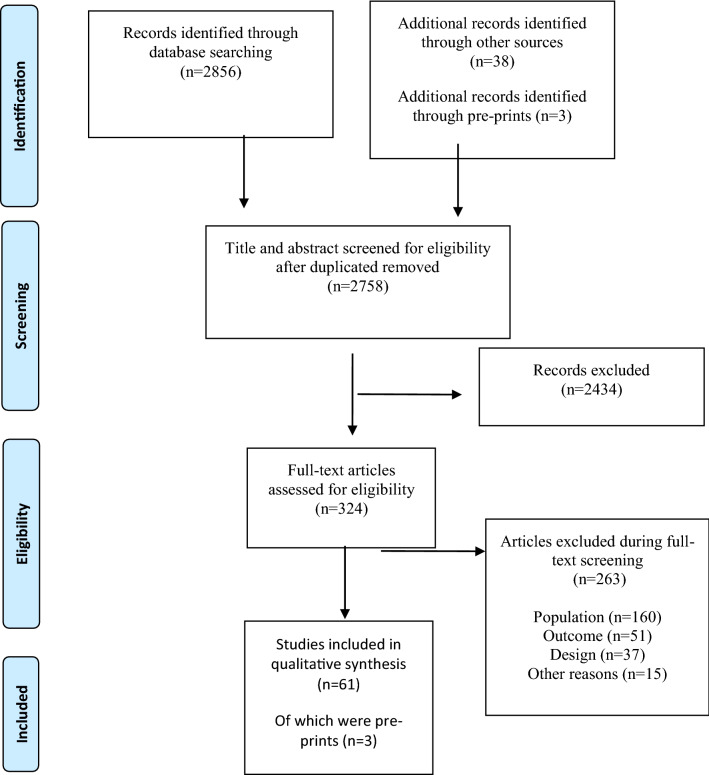
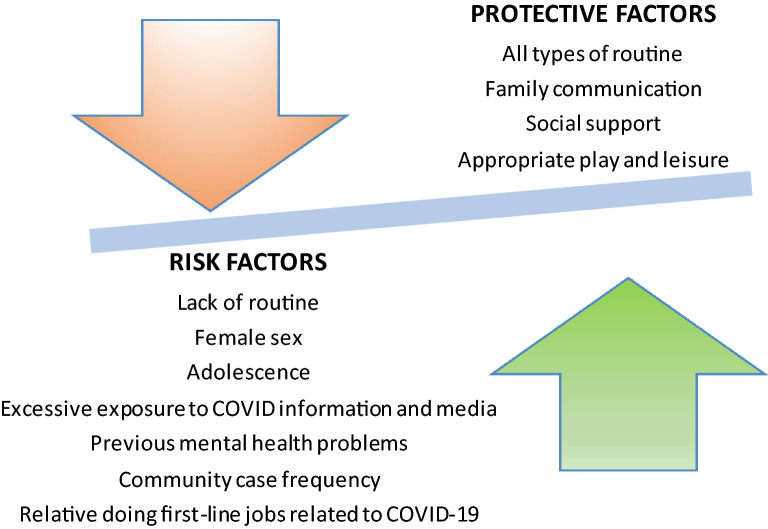
COVID-19 was declared a pandemic in March 2020, resulting in many countries worldwide calling for lockdowns. This study aimed to review the existing literature on the effects of the lockdown measures established as a response to the COVID-19 pandemic on the mental health of children and adolescents. Embase, Ovid, Global Health, PsycINFO, Web of Science, and pre-print databases were searched in this PRISMA-compliant systematic review (PROSPERO: CRD42021225604). We included individual studies reporting on a wide range of mental health outcomes, including risk and protective factors, conducted in children and adolescents (aged ≤ 19 years), exposed to COVID-19 lockdown. Data extraction and quality appraisal were conducted by independent researchers, and results were synthesised by core themes. 61 articles with 54,999 children and adolescents were included (mean age = 11.3 years, 49.7% female). Anxiety symptoms and depression symptoms were common in the included studies and ranged 1.8–49.5% and 2.2–63.8%, respectively. Irritability (range = 16.7–73.2%) and anger (range = 30.0–51.3%), were also frequently reported by children and adolescents. Special needs and the presence of mental disorders before the lockdown, alongside excessive media exposure, were significant risk factors for anxiety. Parent–child communication was protective for anxiety and depression. The COVID-19 lockdown has resulted in psychological distress and highlighted vulnerable groups such as those with previous or current mental health difficulties. Supporting the mental health needs of children and adolescents at risk is key. Clinical guidelines to alleviate the negative effects of COVID-19 lockdown and public health strategies to support this population need to be developed.
Overview
The claims and statistics of this paper haven’t been checked yet.
Free: it reads the open-access text and checks the first 5 claims that cite a source we can check. Create a free account to check every claim.
Integrity signals
Registry
Cites
Statistics
Figures
Verification
Claims the paper makes
The claims and statistics of this paper haven’t been checked yet.
Free: it reads the open-access text and checks the first 5 claims that cite a source we can check. Create a free account to check every claim.
Claims other papers make about this one
Each is checked against this paper’s own text: does it say what the citing paper says it does?
The source backs part of the claim, not all of it — or backs it for a different population, condition or comparison.
In the citing paper
“Overall, the COVID-19 pandemic led to a decrease in children’s and adolescents’ general wellbeing, an increase of mental health problems and psychiatric diagnoses, and a growing demand for (non-specialized and specialized) mental health care.”
From Interventions to build resilience and to ameliorate negative psychosocial effects of the COVID-19 pandemic on children and adolescents: a systematic review and meta-analysis (2024) · cites this paper as [7]
Experimental — accuracy not yet measuredThe source backs part of the claim, not all of it — or backs it for a different population, condition or comparison.
In the citing paper
“Specifically, a rise in depressive symptoms, anxiety, suicidal ideation, loneliness, sleep disturbance, eating disorders, gaming and increased screen time has been reported [4–8].”
From Interventions to build resilience and to ameliorate negative psychosocial effects of the COVID-19 pandemic on children and adolescents: a systematic review and meta-analysis (2024) · cites this paper as [7]
Experimental — accuracy not yet measuredThe source backs part of the claim, not all of it — or backs it for a different population, condition or comparison.
In the citing paper
“A systematic review reported a lockdown-associated increase in anxiety and depressive symptoms in children and adolescents and an increase in sleep disorders; as risk factors, a priori mental illness and high media exposure were identified [16].”
From Effectiveness of Online and Remote Interventions for Mental Health in Children, Adolescents, and Young Adults After the Onset of the COVID-19 Pandemic: Systematic Review and Meta-Analysis (2024) · cites this paper as [16]
Experimental — accuracy not yet measuredThe cited source says what the claim attributes to it.
In the citing paper
“A systematic review reported a lockdown-associated increase in anxiety and depressive symptoms in children and adolescents and an increase in sleep disorders; as risk factors, a priori mental illness and high media exposure were identified [16].”
Self-check
Percentages, sums and reported differences re-computed from the paper’s own numbers.
The self-check needs the paper’s full text.
Citations
Cites
Preferred Reporting Items for Systematic Reviews and Meta-Analyses: the PRISMA statement
Moher, D., Liberati, A., Tetzlaff, J., Altman, D. G., & for the PRISMA Group (2009) · BMJ · doi:10.1136/bmj.b2535 · Cited by 83,823
Preferred reporting items for systematic reviews and meta-analyses: the PRISMA Statement.
(2009) · PubMed Central · Cited by 44,859
The Psychological Impact of Quarantine and How to Reduce It: Rapid Review of the Evidence
Brooks, S. K., Webster, R. K., Smith, L. E., Woodland, L., Wessely, S., Greenberg, N., & Rubin, G. J. (2020) · doi:10.2139/ssrn.3532534 · Cited by 16,394
The psychological impact of quarantine and how to reduce it: Rapid review of the evidence
Brooks, S. K., Webster, R. K., Smith, L. E., Woodland, L., Wessely, S., Greenberg, N., & Rubin, G. J. (2020) · The Lancet · doi:10.1016/s0140-6736(20)30460-8 · Cited by 16,378
WHO Declares COVID-19 a Pandemic.
Cucinotta, D., & Vanelli, M. (2020) · Acta bio-medica dell'Ateneo parmense/Acta biomedica · doi:10.23750/abm.v91i1.9397 · Cited by 7,457
Merikangas, K. R., He, J.-P., Burstein, M., Swanson, S. A., Avenevoli, S., Cui, L., Benjet, C., Georgiades, K., & Swendsen, J. (2010) · Journal of the American Academy of Child & Adolescent Psychiatry · doi:10.1016/j.jaac.2010.05.017 · Cited by 6,278
Impact of COVID-19 pandemic on mental health in the general population: a systematic review
Xiong, J., Lipsitz, O., Nasri, F., Lui, L. M. W., Gill, H., Phan, L., Chen-Li, D., Iacobucci, M., Ho, R., Majeed, A., et al. (2020) · Journal of Affective Disorders · doi:10.1016/j.jad.2020.08.001 · Cited by 5,204
Mental health problems and social media exposure during COVID-19 outbreak
Gao, J., Zheng, P., Jia, Y., Chen, H., Mao, Y., Chen, S., Wang, Y., Fu, H., & Dai, J. (2020) · PLoS ONE · doi:10.1371/journal.pone.0231924 · Cited by 2,830
Mental Health Problems and Social Media Exposure During COVID-19 Outbreak
Gao, J., Zheng, P., Jia, Y., Chen, H., Mao, Y., Chen, S., Wang, Y., Fu, H., & Dai, J. (2020) · SSRN Electronic Journal · doi:10.2139/ssrn.3541120 · Cited by 2,830
Mitigate the effects of home confinement on children during the COVID-19 outbreak
Wang, G., Zhang, Y., Zhao, J., Zhang, J., & Jiang, F. (2020) · The Lancet · doi:10.1016/s0140-6736(20)30547-x · Cited by 2,148
Research works printed but not linked: 1
- Majeed S Ashraf M Psychological impacts of social distancing during COVID-19 pandemic in adolescents of Lahore, Pakistan Ann King Edward Med Univ Lahore Pak 2020 26 165 169
Cited by
Items 801–900 of 998
Maciá-Casas, A., de la Iglesia-Larrad, J. I., García-Ullán, L., Matellán, B. R., Cossio, C. M., Díaz-Trejo, S., Berdión-Marcos, V., Calama-Martín, J., Roncero, C., & Pérez, J. (2024) · Research Square · doi:10.21203/rs.3.rs-3875169/v1
Vaccination stance in adolescents and emerging adults: The role of trust and knowledge
Lazić, M., Pavlović, I., Ilić, S., & Damnjanović, K. (2023) · Psiholoska istrazivanja · doi:10.5937/psistra26-43292
“…their education (Petrovic, 2021; Viner et al., 2020), impending changes in the economy (Lep & Zupančič, 2020), mental health issues (Power et al., 2020; Racine et al, 2021), and social relationships (Orben et al., 2020), all of which were confirmed in the systematic review by Panchal et al. (2021).”
BackgroundShtayermman, O., & Zhang, Y. (2024) · Elsevier eBooks · doi:10.1016/b978-0-323-96023-6.00101-9
Rosely, M., Meurice, L., Larrieu, S., Vilain, P., Chatignoux, É., Forgeot, C., & Filleul, L. (2024) · L Encéphale · doi:10.1016/j.encep.2023.11.019
From crisis to opportunity: integrating insights from COVID-19 into the autism research
Failla, C., Chilà, P., Vetrano, N., Doria, G., Scarcella, I., Minutoli, R., Gismondo, S., Pioggia, G., & Marino, F. (2024) · Frontiers in Psychiatry · doi:10.3389/fpsyt.2024.1341737 · Cited by 1
Bhogal, A., Heeter, A., Gowatch, L. C., Jovanović, T., & Marusak, H. A. (2024) · Mental Health Science · doi:10.1002/mhs2.53
Vleet, B. V., Fuller, H. R., Kinkade, E., & Huseth‐Zosel, A. L. (2024) · Personal Relationships · doi:10.1111/pere.12538
Perez-Siguas, R. E., Matta-Solis, H. H., Tacas-Yarcuri, V., Matta-Perez, H., Cruzata-Martínez, A., Hernández, E. M. V., Meneses-Claudio, B., & Ríos, O. G. V. (2024) · Salud Ciencia y Tecnología · doi:10.56294/saludcyt2024778
Madhanagopal, N., Ahmad, A., Hu, Y.-H., Olango, G., & Molla, M. (2024) · Cureus · doi:10.7759/cureus.55160
“…stressors, such as missing graduation and inability to socialize with peers, were associated with a presentation of anxiety, whereas Panchal et al. [21] identified special needs, preexisting mental health disorders, and excessive screen exposure as risk factors for anxiety during the pandemic.”
BackgroundAdolescent Mental Health Care: Time for Revolution
Marini, S., D’Agostino, L., Ciamarra, C., LenaMara, R. D., Giacomodonato, M., Molinero, M., Corsi, L., Gentile, A., & Acciavatti, T. (2024) · Juniper Online Journal of Case Studies · doi:10.19080/jojcs.2024.14.555891
The Influence of the COVID-19 Pandemic on Baseline Concussion Symptom Assessments Among Adolescents
Rivera, D. K., Brown, J., Bay, R. C., & McLeod, T. C. V. (2024) · Cureus · doi:10.7759/cureus.56235
“This only included student-athletes in Arizona, compared to out-of-state [5] or international studies [20-21].”
ResultTringali, D., Carli, B., Amato, A., Grotto, R. L., & Taddei, S. (2024) · PSICOLOGIA DELLA SALUTE · doi:10.3280/pds2024-001008
Clinical mental health interventions with adolescents during the COVID-19 pandemic: A scoping review
Costa, Í. M., Tabaczinski, C., Remor, E., & Bedin, L. M. (2024) · Suma Psicológica · doi:10.14349/sumapsi.2024.v31.n1.2
Esnard, T., Descartes, C. H., Gomes, S., Wallace, W. C., & Huggins, C. (2024) · Springer eBooks · doi:10.1007/978-3-031-55293-9_1
Benítez, N. A., Quiñónez, M. S. G., & Mesquita, M. (2024) · Pediatría (Asunción) · doi:10.31698/ped.51012024008
The mental health of high school students returning to in-class lessons
Bouvard, M. A., Casarin, S., Coutereau, F., & Fournet, N. (2024) · L Encéphale · doi:10.1016/j.encep.2024.02.005 · Cited by 1
Mols, B. (2024) · University of Groningen research database (University of Groningen / Centre for Information Technology) · doi:10.33612/diss.999187051 · Cited by 2
Lessons for Schools from Quaker Education
Newton, N. (2024) · Palgrave studies in alternative education · doi:10.1007/978-3-031-51784-6_12
Short Term Regional and Age-Specific Disparities in Suicide Epidemiology in Poland
Olszańska, N., Waszak, P. M., & Zagożdżon, P. (2024) · Epidemiology Biostatistics and Public Health · doi:10.54103/2282-0930/22856
“In almost all studies, it was observed that people from lower socioeconomic backgrounds had a greater likelihood of dying by suicide compared to their counterparts in higher socioeconomic groups [18].”
BackgroundZouki, C.-J. E., Malaeb, D. N., Sakr, F., Dabbous, M., Hallit, S. R., Fekih‐Romdhane, F., & Obeïd, S. (2024) · Research Square · doi:10.21203/rs.3.rs-4522801/v1
Suicidal thoughts and behaviors among adolescents during the COVID-19 pandemic
Robillard, C. L., Shen, A., & Turner, B. J. (2024) · Elsevier eBooks · doi:10.1016/b978-0-323-95648-2.00043-5
Hoseini, S. M., Kakavand, A., Shiri, E., & Hasanvand, M. B. (2024) · Child & Family Behavior Therapy · doi:10.1080/07317107.2024.2367403 · Cited by 1
“This crisis has yielded detrimental repercussions not only on public health and economic stability but also on the well-being of families (Achterberg et al., 2021; Buechel et al., 2022; O’Connor et al., 2015; Panchal et al., 2023; Winfield et al., 2023).”
Richelle, J., & Peters, B. (2024) · Journal of Substance Use · doi:10.1080/14659891.2024.2374800
Caregiving stress and maternal mental health during the COVID‐19 pandemic
Quigley, K. M., Kwon, R., Nelson, C. A., & Enlow, M. B. (2024) · Family Process · doi:10.1111/famp.13033 · Cited by 1
Rabasco, A., Browne, J., Kingston, J. L., Krkovic, K., Thompson, E., Ellett, L., Kunicki, Z. J., & Gaudiano, B. A. (2024) · Research on Child and Adolescent Psychopathology · doi:10.1007/s10802-024-01228-3
“The COVID-19 pandemic is one recent and significant global, contextual stressor that has negatively impacted adolescents’ mental health, stress, and social isolation (Jost et al., 2023; Panchal et al., 2023; Villanti et al., 2022).”
Delgado‐Floody, P., Navarrete, F. C., Barahona-Fuentes, G. D. F., Arriagada-Hernández, C., Valdés-Badilla, P. A., del‐Cuerpo, I., Barria, M. A. C., & López, M. G. (2024) · Children · doi:10.3390/children11070866 · Cited by 2
“Some studies have reported an increase in mental health disorders in youths [1], including internalizing Children 2024 , 11 , 866 2 of 14 psychological disorders such as depression and anxiety and externalizing disorders such as conduct problems.”
BackgroundGeprägs, A., Bürgin, D., Fegert, J. M., Brähler, E., & Clemens, V. (2024) · BMC Public Health · doi:10.1186/s12889-024-19203-4
“Furthermore, excessive media consumption [56] and risky behaviour like substance abuse being adolescent-specific challenges during the pandemic [57].”
BackgroundJusienė, R., Lisauskienė, L., Baukienė, E., Laurinaitytė, I., Praninskienė, R., & Urbonas, V. (2024) · Central European Journal of Public Health · doi:10.21101/cejph.a8007
Brault, M. A., Peskin, M. F., Jones, A. N., Saikia, A., Bhutia, R. O., Cheruvu, S. S., Jagtap, V. M., Singh, R., Nair, P., Vedanthan, R., et al. (2024) · International Journal of Environmental Research and Public Health · doi:10.3390/ijerph21081007 · Cited by 1
“Support of family members during lockdowns helped cope with stress [26,80,83,84].”
BackgroundLehrer, L. W., Lewis, A. M., Tolliver, S., Degen, M. J., Singh, R. K., Houser, S., & Rao, J. (2024) · Journal of Water and Health · doi:10.2166/wh.2024.085
The Impact of Long COVID-19 Symptoms on Adolescent Mental Health
Chakraborty, K., & Conrad, L. (2024) · Journal of Student Research · doi:10.47611/jsrhs.v13i1.6168
“Anxiety, depression, and irritability and anger were common during COVID-19 quarantine, and the period caused psychological damage (Panchal et al., 2021).”
BackgroundPositive Psychological Functioning Scale in Spanish Adolescents (PPF-A)
Merino, M. D., & Privado, J. (2024) · Anales de Psicología · doi:10.6018/analesps.580371 · Cited by 2
Saint-Louis, N. M., Harrison, E. A., & Lancaster, G. (2024) · Urban Social Work · doi:10.1891/usw-2024-0004 · Cited by 1
Short, stringent lockdowns halted SARS-CoV-2 transmissions in Danish municipalities
Ege, F. (2024) · Scientific Reports · doi:10.1038/s41598-024-68929-z
Una Salud: Nuevos desafíos a partir de la pandemia de COVID-19
Zunino, P. (2024) · Veterinaria (Montevideo) · doi:10.29155/vet.60.222.3 · Cited by 4
COVID-19, Afetler ve Akıllı Telefon Bağımlılığının Adölesan Ruh Sağlığı Üzerine Etkileri
Koç, E. S., & Oğuzhan, H. (2024) · Gazi Sağlık Bilimleri Dergisi · doi:10.52881/gsbdergi.1418094
EDUCATIONAL APPLICATION -ASSISTED BOARD GAME FOR PSYCHOLOGICAL FIRST AID LEARNING AMONG PRE-CADETS
Apichonpongsakorn, C., Puttakiaw, P., Wittayasai, W., & Prasartkaew, C. (2024) · Journal of Southeast Asian Medical Research · doi:10.55374/jseamed.v8.220
Vedova, A. M. D., Covolo, L., Fiammenghi, C., Marconi, S., Gelatti, U., Castellano, M., & Zanini, B. (2024) · Behavioral Sciences · doi:10.3390/bs14090775 · Cited by 2
“Nevertheless, the results of this study are consistent with the evidence retrieved so far concerning the impact of the pandemic on the mental health of young people [27,58].”
ResultLuo, L., Li, G., Tang, W., Wu, D., & Hall, B. J. (2024) · JMIR Formative Research · doi:10.2196/51470
Acknowledging a Shared Destiny
Ocampo, R. (2024) · Global perspectives in applied sport and performance psychology. · doi:10.1007/978-3-031-69320-5_4
Evaluation of the Wellness of Children’s and Affecting Factors during the COVID-19 Pandemic Process
Kösem, D. D., & Bektaş, M. (2025) · Turkish Journal of Pediatric Disease · doi:10.12956/tchd.1478138
“In studies conducted from an emotional and psychological point of view, it was determined that lockdowns caused negative emotional states, such as fear, anxiety, and unhappiness among children and adolescents (10-12).”
Mardini, M., Khalil, G. E., Bai, C., DivaKaran, A. M., & Ray, J. M. (2024) · doi:10.2196/preprints.66665
Casa, J. A. V., & Astorga, E. J. R. (2024) · International Journal of Research Studies in Education · doi:10.5861/ijrse.2024.24825
Revah, A., Gindt, M., Guivarch, J., Fossard, O., Metelkina-Fernandez, V., Nachon, O., Richez, A., Askenazy-Gittard, F., & Fernandez, A. (2024) · L Encéphale · doi:10.1016/j.encep.2024.07.001
Adolescent mental well‐being in time of crises: The role of social and residential contexts
Bitar, S., Minary, L., Lalloué, B., Kestens, Y., Manneville, F., O’Loughlin, J. L., Ligier, F., & Agrinier, N. (2024) · Journal of Adolescence · doi:10.1002/jad.12424
Deng, X., & Liu, X. (2024) · Research Square · doi:10.21203/rs.3.rs-4887106/v1
Fox, S. (2024) · Cambridge University Press eBooks · doi:10.1017/9781108769617.002
Munguía, L., Baenas, I., Granero, R., Ohsako, N., Gaspar‐Pérez, A., Perales, I., Rosińska, M., Sánchez, I., Toro, J. J., Sánchez‐González, J., et al. (2024) · European Eating Disorders Review · doi:10.1002/erv.3142 · Cited by 1
Sahni, S. K., & Mehta, S. (2024) · Abhigyan · doi:10.1177/09702385241287613
Criminological, Psychological, and Developmental Aspects of Pandemic Strain and Online Cruelty
Parti, K., Sanders, C. E., Breaux, R., & McCoy, M. K. (2024) · Springer eBooks · doi:10.1007/978-3-031-69362-5_61
Denson, N., Dunn, K. M., Kamp, A., Ben, J., Pitman, D., Sharples, R., Lim, G., Paradies, Y., & McGarty, C. (2024) · Journal of Clinical Medicine · doi:10.3390/jcm13247495 · Cited by 1
Krízisben. Az elmúlt 10 év történéseinek hatása a gyermekek mentális egészségére
Lassú, Z. F. (2024) · Gyermeknevelés Tudományos Folyóirat · doi:10.31074/gyntf.2024.3.186.215
Němečková, K., & Hricová, A. (2023) · Journal of Nursing Social Studies Public Health and Rehabilitation · doi:10.32725/jnss.2023.003
Incidence and severity of paediatric sledding injuries during the COVID-19 pandemic
Alaimo, D. F., Sharif, N. T., Carciumaru, R., Scott, S. C., & Kam, A. J. (2024) · Paediatrics & Child Health · doi:10.1093/pch/pxae098
McKay, C., & McCubbin, I. (2024) · British Journal of Visual Impairment · doi:10.1177/02646196241305553
“A recent systematic review found that the pandemic had a negative impact on children’s mental health and was particularly damaging to individuals with additional needs (Panchal et al., 2023).”
Filipino Children during the First Wave of COVID-19 Pandemic and Three Years Later
Ligon, C. C. M., Agbing, L. U., Agapito, J. D., Baradi, A. M. A., & Lozano, A. T. (2024) · Open Journal of Social Sciences · doi:10.4236/jss.2024.1212045
“A participant’s wish for his father not to work abroad (Matt, 14) seems to show that having his father stay with them during the pandemic was a much-needed support (Panchal et al., 2023; Weissbourd et al., 2020).”
Secondary Effects of Covid-19 and Secondary Risks of Covid-19 Responses
Ellinport, B., Klasa, K., Galaitsi, S., Wells, E., Jarman, H., & Cummings, C. L. (2024) · Risk, systems and decisions · doi:10.1007/978-3-031-74062-6_13
Johnson, U., Hertting, K., Lindgren, E., & Jönsson, L. (2025) · Sport Education and Society · doi:10.1080/13573322.2024.2442491
“The same situation is found among young people (Panchal et al., 2021) and youth athletes (McGuine et al., 2021), especially in the early stages of the COVID-19 pandemic (Watson et al., 2023).”
Heffer, T., Borg, M. E., & Willoughby, T. (2025) · Journal of Adolescence · doi:10.1002/jad.12470 · Cited by 1
Competenze in gioco. Un’esperienza di serious game applicata alle competenze sociali ed emotive
Cavaletto, G. M. (2024) · Media Education · doi:10.36253/me-16147
Examining a Short Form of the Positive Family Support Strengths and Needs Assessment
Garbacz, S. A., Flack, C. E., Huang, Q., Bowen, A. M., Stormshak, E. A., & McIntyre, L. L. (2025) · Assessment for Effective Intervention · doi:10.1177/15345084251314799
“…crisis was further exacerbated by the global coronavirus pandemic beginning in 2019, during which there was an acceleration of youths’ growing mental health problems (Panchal et al., 2023), with some estimates suggesting the prevalence of anxiety and depression doubling (Racine et al., 2021).”
Dimitrov, L. V., & Lewin, A. B. (2025) · Child Psychiatry & Human Development · doi:10.1007/s10578-025-01817-3
SARS-CoV-2: A synergy to the Alzheimer’s disease
Shaik, K. M., Kumar, D., Srikanth, P., & Nandi, S. (2025) · Journal of NeuroVirology · doi:10.1007/s13365-025-01247-w
“(Simon et al. 2021; Mak et al. 2022; Panchal et al. 2023; Hammad et al. 2023).”
Košir, K., Pivec, T., & Kozina, A. (2025) · Social Psychology of Education · doi:10.1007/s11218-025-10047-3
Taïeb, O., Defontaine, J., Du, C. L., Mouma, M., & Baubet, T. (2025) · The International Journal of Psychoanalysis · doi:10.1080/00207578.2024.2434378
“…ictual enclosed spaces with parents, etc.) have had a signi fi - cant impact on adolescents ’ mental health, especially adolescents with pre-existing di ffi culties, even if there are still not enough studies on the topic (Guessoum et al. 2020; Orben, Tomova, and Blakemore 2020; Panchal et al. 2021).”
Pediatric Self-Harm Injuries and Child Protection Histories
Rebbe, R., Huang, J. S., Kuelbs, C. L., Laub, N., Lanier, P., & Putnam‐Hornstein, E. (2025) · The Journal of Pediatrics · doi:10.1016/j.jpeds.2025.114619
Cho, Y. J., Kim, E. J., Kim, Y. S., Kim, H. H., Kim, J., Shin, B., Martino, A. D., & LEVENTHAL, B. L. (2025) · JAACAP Open · doi:10.1016/j.jaacop.2025.04.004
“8,12 Two different studies of children with ASD reported increasing behavioral problems and the need for additional caregiver support, 13 emotional management dif-fi culties, and anxiety in children with ASD.”
Sarintohe, E., van den Broek, N., Larsen, J. K., Burk, W. J., & Vink, J. M. (2025) · Acta Psychologica · doi:10.1016/j.actpsy.2025.105061
Ong, J., Agrawal, P. M., Garofano, J. S., Parrish, C., Psoter, K. J., & Brady, T. M. (2025) · Clinical Pediatrics · doi:10.1177/00099228251339076
Rising Rates of Obesity Amongst Children on the Autism Spectrum During the COVID-19 Pandemic
Yuen, W. Y., Lim, T. S. H., Karthik, S. V., Lim, Y. Y., Teo, E. M., Chan, Y. H., Shen, L., & Mulay, K. V. (2025) · Nutrients · doi:10.3390/nu17101683 · Cited by 2
“Children on the autism spectrum found it challenging to cope with the changes brought about by the pandemic, resulting in higher levels of psychological distress [1].”
Children in crises: Disasters, the COVID-19 pandemic, and climate change
Balsari, S., & Leaning, J. (2025) · Oxford University Press eBooks · doi:10.1093/oso/9780192844071.003.0005
Assessing the Status of Mental Well-Being for Students of HEI: A Data-Driven Approach
Verma, P., Pant, M., & Barua, M. K. (2025) · Lecture notes in mechanical engineering · doi:10.1007/978-981-96-1158-4_50
Risk Prediction Models in Adolescents Using ML Techniques
Deshpande, P. D. (2025) · International Journal for Research in Applied Science and Engineering Technology · doi:10.22214/ijraset.2025.71171
Discussing the Hand-Over-Mouth Technique
Garbelini, C. C. D., Machado, M. A. D. A. M., Volpato, L. E. R., Mazetto, A., & de Farias, A. C. (2025) · Pesquisa Brasileira em Odontopediatria e Clínica Integrada · doi:10.1590/pboci.2025.105
Sutton, S. (2023) · Scholars Archive - University at Albany (University at Albany, State University of New York) · doi:10.54014/ma7q-67dh · Cited by 1
Bolaséll, L. T., Hermel, J. S., Zegarra, N. R. M., Marcantonio, S. P., Iuchno, C. W., Rocha, T. B.-M., Lorenzi, J., & Krauzer, J. R. M. (2025) · Rev. Soc. Bras. Enferm. Ped · doi:10.31508/1676-3793202418i
Bolaséll, L. T., Hermel, J. S., Zegarra, N. R. M., Marcantonio, S. P., Iuchno, C. W., Rocha, T. B.-M., Lorenzi, J., & Krauzer, J. R. M. (2024) · Rev. Soc. Bras. Enferm. Ped · doi:10.31508/1676-3793202418
Gong, J., Bian, X., Jin, G., Zhou, T., Liu, J., Coplan, R. J., & Sang, B. (2025) · Journal of Child and Family Studies · doi:10.1007/s10826-025-03039-6
“For example, due to data collection restrictions, our sample was relatively small as compared to some others during COVID-19 (e.g., Panchal et al., 2021).”
Suicide prevented or delayed? Suicide rates during North Carolina’s stay-at-home order
Miller, V. E., Pence, B. W., Swilley-Martinez, M. E., Fitch, K. V., Kavee, A. L., Perera, P., Song, Z., Alam, I. Z., Gaynes, B. N., Carey, T. S., et al. (2025) · Injury Prevention · doi:10.1136/ip-2024-045497
“36 Although increased rates of depression and anxiety were reported among patients during and post-quarantine, 37 few reported on suicide rates during or after outbreaks in the general population and even fewer studies made comparisons to baseline preisolation rates.”
Posttraumatic growth in children and adolescents induced by the COVID-19 pandemic: A scoping review
Tamiolaki, A., & Kalaitzaki, A. E. (2025) · European Journal of Trauma & Dissociation · doi:10.1016/j.ejtd.2025.100563
Daniels, S., Wei, H., Clayson, A., van Tongeren, M., Bannan, T. J., Carder, M., Munford, L. A., & Gartland, N. (2025) · Frontiers in Public Health · doi:10.3389/fpubh.2025.1550439
Dorjee, D. (2025) · PsyArXiv (OSF Preprints) · doi:10.31234/osf.io/7vx45_v3
Predictive Modeling of COVID-19 progression in Kenya using a Deterministic SEIR Framework
Kiarie, J. W., Mwalili, S. M., & Mbogo, R. W. (2025) · Journal of Physics Conference Series · doi:10.1088/1742-6596/3042/1/012008
Impactos de la pandemia de COVID-19 en la salud mental de adolescentes uruguayos
Cracco, C., Anselmi, A., Machado, A. I., Estrade, N., Estradé, A., Solmi, M., & Correll, C. U. (2025) · Suma Psicológica · doi:10.14349/sumapsi.2025.v32.n1.5 · Cited by 1
Zhao, X., Zhang, L., Kramer, L., Wang, B., Guan, M., & Ma, Q. (2025) · Postgraduate Medicine · doi:10.1080/00325481.2025.2529772 · Cited by 2
“As noted by Panchal et al. symptoms of depression and anxiety in children increased markedly during the pandemic period and may cause long-term effects [3].”
Pratt, M. T. G., Le, H., Lin, A. P., Mace, A. O., Blyth, C. C., & Moore, H. C. (2025) · Journal of Paediatrics and Child Health · doi:10.1111/jpc.70111
“…adolescent mental wellbeing by enforcing social isolation, impairing access to community mental-health services (including those facilitated at schools), encouraging excessive Internet and social media use, and imposing home confinement—possibly increasing exposure to intra-familial violence [18].”
Ren, X., Yan, L., Yu, B., & Dai, Q. (2025) · BMC Psychology · doi:10.1186/s40359-025-03128-7
“Unlike existing tools, this scale is age-appropriate, comprehensible, and relevant to children’s experiences during the pandemic ( [62]– [63]).”
Shockey, T. M., Silver, S. R., & Mpofu, J. J. (2025) · American Journal of Industrial Medicine · doi:10.1002/ajim.70005
Ogundiran, O., Abbate, J. L., Kim, S., Diallo, M. S. K., Muteba, M. K., Câmara, D. C. P., Bianchi, L., Balde, T., Oyugi, B., Fortin, A., et al. (2025) · Frontiers in Public Health · doi:10.3389/fpubh.2025.1562525
Contributors to positive mental health among youth: a qualitative study in British Columbia, Canada
Chaplin, A., McGuinness, L., Gadermann, A., Poon, B. T., & Jenkins, E. (2025) · Health Promotion International · doi:10.1093/heapro/daaf127
“2023, Panchal et al .”
Pessoa, A. S. G., Veloso, M. M. X., Sanches, A. M., & Komatsu, A. V. (2025) · Springer eBooks · doi:10.1007/978-3-031-91786-8_14
Mactavish, A., Mastronardi, C., Babb, K. A., Menna, R., Amstadter, A. B., Battaglia, M., & Rappaport, L. M. (2025) · Journal of Child and Family Studies · doi:10.1007/s10826-025-03121-z
“…research has documented varied psychosocial impacts of the COVID-19 pandemic on adults (e.g., Czeisler et al., 2021; Vahratian et al., 2021) as well as on children and adolescents, who may be at heightened risk for psychopathology during crises (e.g., Panchal et al., 2023; Samji et al., 2022).”
Navigating change: The journey of the child guidance clinic before and after the COVID-19 pandemic
Biswas, H., & Sahoo, M. K. (2025) · Industrial Psychiatry Journal · doi:10.4103/ipj.ipj_28_25
“[12] Post-COVID mental health trends in similar Low middle income country like Brazil also showed varied impacts on children and adolescents.”
InfluentialMasanneck, L., Repple, J., Meuth, S. G., Holtmann, M., Föcker, M., & Pawlitzki, M. (2025) · Zeitschrift für Kinder- und Jugendpsychiatrie und Psychotherapie · doi:10.1024/1422-4917/a001037 · Cited by 1
Rocha‐Hidalgo, J., Ostlund, B. D., LoBue, V., Buss, K. A., & Pérez‐Edgar, K. E. (2025) · Infancy · doi:10.1111/infa.70041
Woodward, M. L., Wolsey, M. W., Shalchy-Tabrizi, S., Bone, J. N., Black, T. R., & Doan, Q. H. (2025) · PLoS ONE · doi:10.1371/journal.pone.0329898
Tungal, A., Singh, K., & Singh, P. (2025) · Lecture notes in networks and systems · doi:10.1007/978-981-96-4170-3_13
Santos, M. F., Gómez‐Baya, D., Simões, C., Grazzani, I., & Lebre, P. (2025) · Child Indicators Research · doi:10.1007/s12187-025-10277-z · Cited by 1
“Furthermore, positive family engagement, communication, and interactions acted as protective factors contributing to enhanced well-being (Blackwell et al., 2022; Lockyer et al., 2022; Panchal et al., 2023; Skeens et al., 2023 ).”
InfluentialMachacca, O. R. T., Cuentas, J. A. A., Fernández-Collado, Y., Bautista-Vanegas, F. E., & Carías, P. (2024) · SAP Nursing Depths Series · doi:10.56294/nds2024118
Metadata
- Authors
- Panchal, U., Salazar de Pablo, G., Franco, M., Moreno, C., Parellada, M., Arango, C., & Fusar-Poli, P.
- Affiliations
- Universidad Autónoma de Madrid (ES)
- Hospital General Universitario Gregorio Marañón (ES)
- ORCID
- Venue
- European Child & Adolescent Psychiatry
- Published
- 2021-08-18
- Volume
- 32
- Issue
- 7
- Pages
- 1151-1177
- ISSN
- 1018-8827 (ISSN-L)
- 1435-165X
- PMC
- PMC8371430
- OpenAlex
- W3188471381
- Cited by
- 1,028
- References
- 121
- Citations by year
- 2026: 100 · 2025: 204 · 2024: 290 · 2023: 257 · 2022: 165 · 2021: 11
- FWCI
- 24.00
- Type
- journal article
- Language
- en
- Open access
- hybrid
- doi.org
- Licence
- cc-by
- creativecommons.org/licenses/by/4.0 (tdm)
- creativecommons.org/licenses/by/4.0 (vor)
- Locations
- European Child & Adolescent Psychiatry (publishedVersion, cc-by)
- PubMed Central (publishedVersion, cc-by)
- PubMed (publishedVersion)
- Funders
- Fundación Alicia Koplowitz
- Topics
- Social Sciences › Psychology › Clinical Psychology › COVID-19 and Mental Health
- Social Sciences › Psychology › Clinical Psychology › Child and Adolescent Psychosocial and Emotional Development
- Health Sciences › Medicine › Public Health, Environmental and Occupational Health › Maternal Mental Health During Pregnancy and Postpartum
- Keywords
- COVID-19 lockdown, child mental health, adolescent mental health, anxiety symptoms, depressive symptoms, irritability, anger, risk factors, protective factors, special needs, pre-existing mental disorders, media exposure, parent-child communication, psychological distress
- MeSH terms
- COVID-19, SARS-CoV-2, Adolescent, Anxiety, Child, Communicable Disease Control, Depression, Female, Humans, Male, Mental Health, Pandemics
About these checks
Registry, retraction, Cites and statistics results are computed, not judged, with one exception: a printed reference that no index lists is read once by a model before it counts as a citation error. Claims are extracted by a model and kept only when their quote appears verbatim in the text; each cited source is then checked, with a model’s help, for whether it says what the claim relies on. Those verdicts can be wrong — read the claim’s quote and the cited source before relying on one.
Statistics and arithmetic are recomputed, not judged.
Confidence bands are shown only for fields calibrated on our annotated test set. None is calibrated yet, so no band is shown.
What counts as a claim ›How we measure confidence ›How we check this ›
Are you an author, or do you see a problem with this page? Request a review
Data sources
Bibliographic data: Semantic Scholar, OpenAlex, Crossref.
Contains information from the Semantic Scholar Academic Graph Datasets, made available under the ODC Attribution License (ODC-BY 1.0).
Semantic Scholar’s data is described in: Kinney, R., et al. (2023). The Semantic Scholar Open Data Platform. arXiv:2301.10140.
