

The DOI matches its Crossref record, with a small difference in title or year; 89 of the 89 references it cites were found in a registry or an index.
Longitudinal associations between digital media use and ADHD symptoms in children and adolescents: a systematic literature review
Open accessAbstract
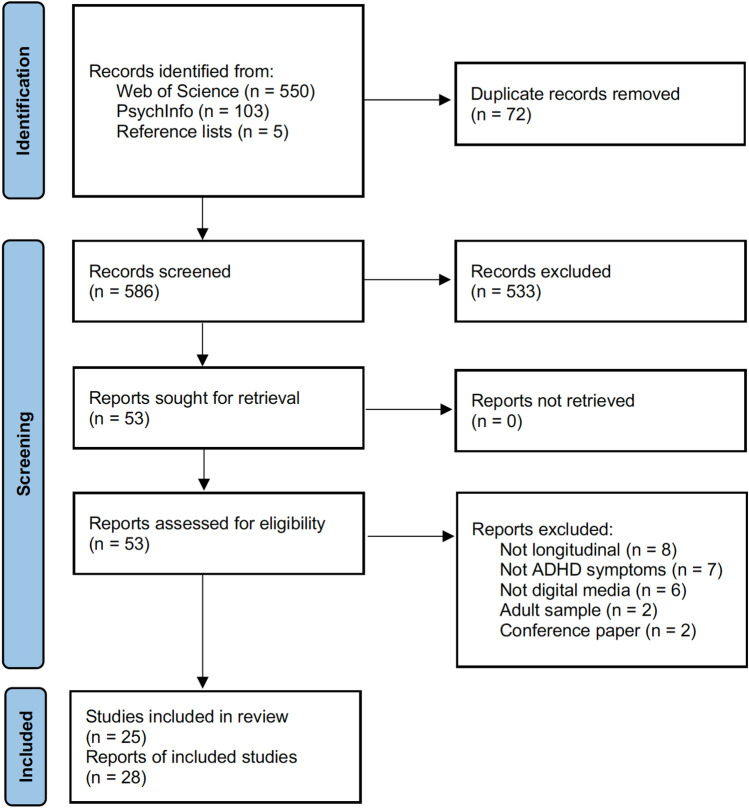
Previous reviews have often shown a link between digital media ADHD symptom levels. However, longitudinal studies are needed to find stronger evidence of a causal effect as well as to determine the direction of effects. The aim of the present review (PROSPERO CRD42021262695) was therefore to provide a systematic review of studies meeting the following inclusion criteria: (1) include longitudinal data investigating associations between digital media (i.e., gaming and social media) and later ADHD symptoms or vice versa, (2) be published within the past 10 years (i.e., 2011 until June 2021), (3) be published in a peer-reviewed journal in English, and (4) include children or adolescents (age 0-17 years). After a systematic search in the Web of Science and PsycInfo databases, we included 28 studies, all with adequate or high quality. Results showed support for reciprocal associations between digital media and ADHD symptoms, with associations being more consistent for problematic use of digital media than for screen time. Thus, children with ADHD symptoms appear more vulnerable to developing high or problematic use of digital media (i.e., selection effects), and digital media also have effects on later ADHD symptom levels, either because of specific characteristics of digital media or because of indirect effects on, for example, sleep and social relations (i.e., media effects). However, it should be emphasized that further studies investigating potential moderators and mediators are needed if we are to better understand the complex associations between digital media and ADHD symptom levels.
Overview
The claims and statistics of this paper haven’t been checked yet.
Run the check — free, no account needed. It reads the open-access text and checks the sources it cites.
Integrity signals
Registry
Cites
Statistics
Figures
Verification
Claims the paper makes
The claims and statistics of this paper haven’t been checked yet.
Run the check — free, no account needed. It reads the open-access text and checks the sources it cites.
Claims other papers make about this one
Each is checked against this paper’s own text: does it say what the citing paper says it does?
In the citing paper
“A more recent review evaluating the longitudinal associations between digital media use and ADHD symptoms found reciprocal associations between digital media use and ADHD symptoms [57].”
From Screen time and mental health: a prospective analysis of the Adolescent Brain Cognitive Development (ABCD) Study (2024) · cites this paper as [57]
Self-check
Percentages, sums and reported differences re-computed from the paper’s own numbers.
The self-check needs the paper’s full text.
Citations
Cites
Diagnostic and Statistical Manual of Mental Disorders
American Psychiatric Association (2013) · doi:10.1176/appi.books.9780890425596 · Cited by 116,369
The PRISMA 2020 statement: An updated guideline for reporting systematic reviews
Page, M. J., McKenzie, J. E., Bossuyt, P. M., Boutron, I., Hoffmann, T. C., Mulrow, C. D., Shamseer, L., Tetzlaff, J. M., Akl, E. A., Brennan, S. E., et al. (2021) · BMJ · doi:10.1136/bmj.n71 · Cited by 108,283
International Statistical Classification of Diseases and Related Health Problems 10th Revision
(2013) · Oxford University Press eBooks · doi:10.1093/med/9780199669493.005.0005 · Cited by 2,069
Screen time and sleep among school-aged children and adolescents: a systematic literature review
Hale, L., & Guan, S. (2015) · Sleep Medicine Reviews · doi:10.1016/j.smrv.2014.07.007 · Cited by 1,468 · cited 2×
“Two of the most important activities commonly affected by extensive use of digital media are physical activity [e.g., reviews 30, 31] and sleep [e.g., 32].”
BackgroundResultThe Differential Susceptibility to Media Effects Model
Valkenburg, P. M., & Peter, J. (2013) · Journal of Communication · doi:10.1111/jcom.12024 · Cited by 1,340
Online Social Network Site Addiction: A Comprehensive Review
Andreassen, C. S. (2015) · Current Addiction Reports · doi:10.1007/s40429-015-0056-9 · Cited by 1,212 · cited 1×
“However, it has been argued that criteria similar to those described above for IGD can also be applied to social media use [13–16].”
BackgroundCharacterizing cognition in ADHD: beyond executive dysfunction
Castellanos, F. X., Sonuga-Barke, E. J. S., Milham, M. P., & Tannock, R. (2006) · Trends in Cognitive Sciences · doi:10.1016/j.tics.2006.01.011 · Cited by 1,170 · cited 1×
“…such as executive functions (i.e., working memory, inhibitory con-trol, and planning), delay aversion and emotion regulation, given that these functions have been linked to digital media use [81–83], other types of additions such as alcohol/drug addiction or gambling [84, 85], and ADHD [86].”
BackgroundInternet Gaming Addiction: A Systematic Review of Empirical Research
Kuss, D. J., & Griffiths, M. D. (2012) · International Journal of Mental Health and Addiction · doi:10.1007/s11469-011-9318-5 · Cited by 1,113 · cited 1×
“There are now several reviews and meta-analyses investigating the link between digital media in general and ADHD [4, 5], as well as more specific reviews focusing on the link between gaming and ADHD [6, 7] or ADHD symptom levels for individuals diagnosed with Internet gaming disorder [8, 9].”
BackgroundDelayed reward discounting and addictive behavior: a meta-analysis
MacKillop, J., Amlung, M. T., Few, L. R., Ray, L. A., Sweet, L. H., & Munafò, M. R. (2011) · Psychopharmacology · doi:10.1007/s00213-011-2229-0 · Cited by 1,021 · cited 1×
“…such as executive functions (i.e., working memory, inhibitory con-trol, and planning), delay aversion and emotion regulation, given that these functions have been linked to digital media use [81–83], other types of additions such as alcohol/drug addiction or gambling [84, 85], and ADHD [86].”
BackgroundProblematic social media use: Results from a large-scale nationally representative adolescent sample
Bányai, F., Zsila, Á., Király, O., Maraz, A., Elekes, Z., Griffiths, M. D., Andreassen, C. S., & Demetrovics, Z. (2017) · PLOS ONE · doi:10.1371/journal.pone.0169839 · Cited by 984
The social media disorder scale
van den Eijnden, R. J. J. M., Lemmens, J. S., & Valkenburg, P. M. (2016) · Computers in Human Behavior · doi:10.1016/j.chb.2016.03.038 · Cited by 948
Early television exposure and subsequent attentional problems in children
Christakis, D. A., Zimmerman, F. J., DiGiuseppe, D. L., & McCarty, C. A. (2004) · Pediatrics · doi:10.1542/peds.113.4.708 · Cited by 926 · cited 1×
“…it has been hypothesized that children who have high levels of screen time have a harder time paying attention to less interesting activities, possibly because they lose the ability to regulate their attention internally after having gotten used to external regulation through digital media [21].”
BackgroundPISA 2018 Results (Volume III)
OECD (2019) · Programme for international student assessment/Internationale Schulleistungsstudie · doi:10.1787/acd78851-en · Cited by 825
The Association between Pathological Internet Use and Comorbid Psychopathology: A Systematic Review
Carli, V., Durkee, T., Wasserman, D., Hadlaczky, G., Despalins, R., Kramarz, E., Wasserman, C., Sarchiapone, M., Hoven, C. W., Brunner, R., et al. (2013) · Psychopathology · doi:10.1159/000337971 · Cited by 639 · cited 1×
“More specifically, several reviews [8, 9, 36, 37] have shown that there is an overrepresentation of ADHD among children/adolescents with problematic use of digital media (often defined as symptoms of IGD or Internet addiction).”
BackgroundZywica, J., & Danowski, J. (2008) · Journal of Computer-Mediated Communication · doi:10.1111/j.1083-6101.2008.01429.x · Cited by 625 · cited 1×
“Of importance here is also the “social compensation hypothesis,” which states that individuals with poor social networks offline try to compensate for this by focusing more on online relations [e.g., 29].”
BackgroundThe association between internet addiction and psychiatric co-morbidity: a meta-analysis
Ho, R., Zhang, M. W., Tsang, T. Y., Toh, A. H., Pan, F., Lu, Y., Cheng, C., Yip, P. S. F., Lam, L. T.-M., Lai, C. M., et al. (2014) · BMC Psychiatry · doi:10.1186/1471-244x-14-183 · Cited by 611 · cited 2×
“More specifically, several reviews [8, 9, 36, 37] have shown that there is an overrepresentation of ADHD among children/adolescents with problematic use of digital media (often defined as symptoms of IGD or Internet addiction).”
BackgroundWong, H. Y., Mo, H. Y., Potenza, M. N., Chan, M. N. M., Lau, W. M., Chui, T. K., Pakpour, A. H., & Lin, C. (2020) · International Journal of Environmental Research and Public Health · doi:10.3390/ijerph17061879 · Cited by 546
Ferguson, C. J. (2015) · Perspectives on Psychological Science · doi:10.1177/1745691615592234 · Cited by 524
Twenge, J. M., Spitzberg, B. H., & Campbell, W. K. (2019) · Journal of Social and Personal Relationships · doi:10.1177/0265407519836170 · Cited by 520 · cited 1×
“In addition, excessive use of digital media early in life has been shown to be associated with lower levels of social interaction [e.g., 33] and delayed speech development [e.g., 34], which in turn can have a negative impact on peer relations.”
BackgroundSedentary behaviour and health in adults: an overview of systematic reviews
Saunders, T. J., McIsaac, T., Douillette, K., Gaulton, N., Hunter, S., Rhodes, R. E., Prince, S. A., Carson, V., Chaput, J., CHASTIN, S. F. M., et al. (2020) · Applied Physiology, Nutrition, and Metabolism · doi:10.1139/apnm-2020-0272 · Cited by 518 · cited 1×
“Two of the most important activities commonly affected by extensive use of digital media are physical activity [e.g., reviews 30, 31] and sleep [e.g., 32].”
BackgroundXu, G., Strathearn, L., Liu, B., Yang, B., & Bao, W. (2018) · JAMA Network Open · doi:10.1001/jamanetworkopen.2018.1471 · Cited by 510
Daley, D., & Birchwood, J. (2010) · Child Care Health and Development · doi:10.1111/j.1365-2214.2009.01046.x · Cited by 490 · cited 1×
“Individuals with ADHD also often have problematic peer relations [e.g., 26] and show poor academic achievement [e.g., 27].”
BackgroundAssociations Between Screen Use and Child Language Skills: A Systematic Review and Meta-analysis
Madigan, S., McArthur, B. A., Anhorn, C., Eirich, R., & Christakis, D. A. (2020) · JAMA Pediatrics · doi:10.1001/jamapediatrics.2020.0327 · Cited by 489 · cited 1×
“In addition, excessive use of digital media early in life has been shown to be associated with lower levels of social interaction [e.g., 33] and delayed speech development [e.g., 34], which in turn can have a negative impact on peer relations.”
BackgroundMedia use and brain development during adolescence
Crone, E. A., & Konijn, E. A. (2018) · Nature Communications · doi:10.1038/s41467-018-03126-x · Cited by 464 · cited 1×
“Because adolescence is a period of substantial restructuring of the brain, it has been argued to be an especially sensitive period, also regarding the influences of digital media use [73].”
BackgroundAdachi, P., & Willoughby, T. (2015) · European Journal of Developmental Psychology · doi:10.1080/17405629.2014.963549 · Cited by 448 · cited 1×
“Second, it has been argued [71] that when controlling for baseline levels in longitudinal studies, even small associations should be considered meaningful when there is high stability in the outcome variable.”
BackgroundPearson, N., Braithwaite, R. E., Biddle, S., van Sluijs, E. M. F., & Atkin, A. J. (2014) · Obesity Reviews · doi:10.1111/obr.12188 · Cited by 411 · cited 1×
“Two of the most important activities commonly affected by extensive use of digital media are physical activity [e.g., reviews 30, 31] and sleep [e.g., 32].”
BackgroundSleep Problems in Children With Attention-Deficit/Hyperactivity Disorder
Sung, V., Hiscock, H., Sciberras, E., & Efron, D. (2008) · Archives of Pediatrics and Adolescent Medicine · doi:10.1001/archpedi.162.4.336 · Cited by 407 · cited 1×
“Their results are in line with previous studies demonstrating a link between sleep and both digital media use [32] and ADHD [80].”
ResultMontag, C., Lachmann, B., Herrlich, M., & Zweig, K. (2019) · International Journal of Environmental Research and Public Health · doi:10.3390/ijerph16142612 · Cited by 387 · cited 1×
“These characteristics include infinite scrolling, autoplay, rewarding users for merely using their services, and photo filters that encourage unhealthy beauty ideals [e.g., 91, 92].”
BackgroundLiu, M., Wu, L., & Yao, S. (2016) · British Journal of Sports Medicine · doi:10.1136/bjsports-2015-095084 · Cited by 364 · cited 1×
“A previous meta-analysis [72] even found that moderate use of digital media (i.e., less than 2 h/day) was related to lower levels of mental health problems compared to no digital media use at all, while the reverse was true for more excessive use.”
BackgroundRadesky, J. S., & Christakis, D. A. (2016) · Pediatric Clinics of North America · doi:10.1016/j.pcl.2016.06.006 · Cited by 364 · cited 1×
“Importantly, previous research [e.g., 89, 90] has shown that, in many countries, the average screen time for children greatly exceeds these limits, with averages continuously increasing and families with low SES being less likely to follow recommendations.”
BackgroundRa, C. K., Cho, J., Stone, M. D., De La Cerda, J., Goldenson, N. I., Moroney, E., Tung, I., Lee, S. S., & Leventhal, A. M. (2018) · JAMA · doi:10.1001/jama.2018.8931 · Cited by 360 · cited 2×
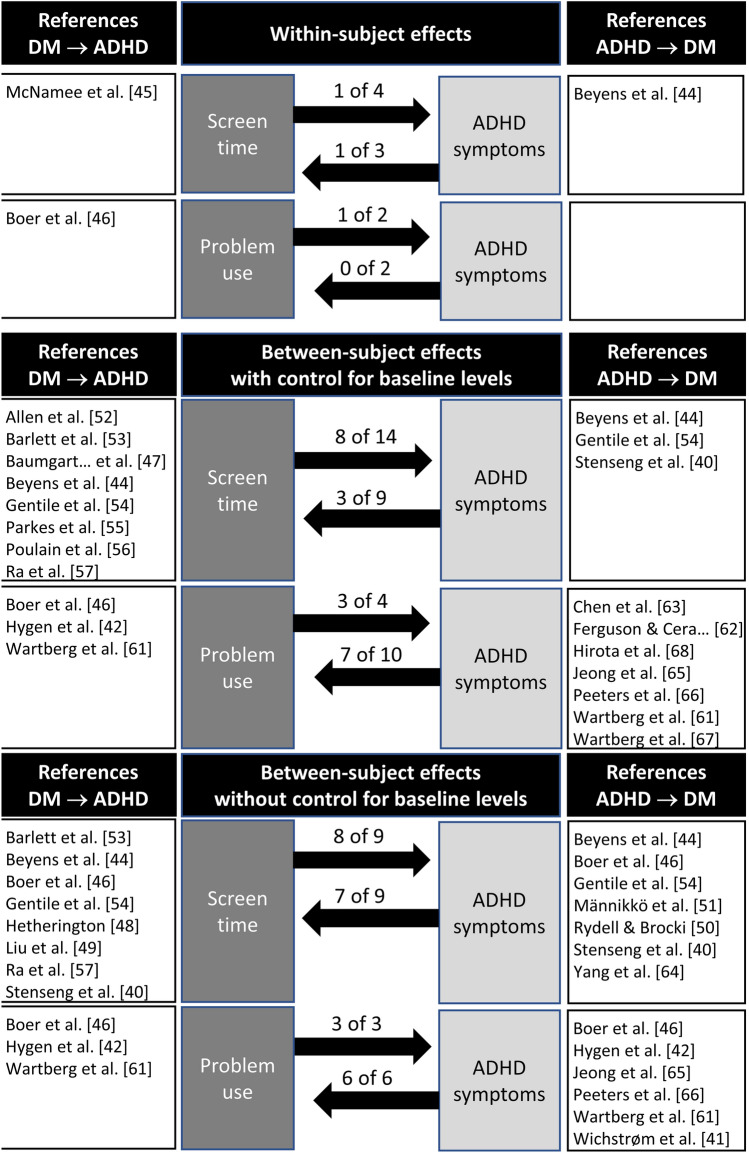
“…measure of use of computers, game consoles, mobile phones, and TV), the results of the current review show that eight studies found significant positive associations with later ADHD symptom levels or with symptoms of inattention when controlling for baseline levels of screen time [44, 47, 52–57].”
BackgroundResultVideo game playing, attention problems, and impulsiveness: evidence of bidirectional causality
Gentile, D. A., Swing, E. L., Lim, C. G., & Khoo, A. (2012) · Psychology of Popular Media Culture · doi:10.1037/a0026969 · Cited by 352 · cited 3×
“Finally, Gentile et al. [54] found that attention problems were related to later video game playing.”
BackgroundResultInfluentialMedia use and ADHD-related behaviors in children and adolescents: A meta-analysis
Nikkelen, S. W. C., Valkenburg, P. M., Huizinga, M., & Bushman, B. J. (2014) · Developmental Psychology · doi:10.1037/a0037318 · Cited by 339 · cited 2×
“Violent media content has also been linked to ADHD symptoms, most likely because violent media are high in arousal, and the characters in this type of media often act impulsively [22].”
BackgroundSuchert, V., Hanewinkel, R., & Isensee, B. (2015) · Preventive Medicine · doi:10.1016/j.ypmed.2015.03.026 · Cited by 329 · cited 1×
“Ferguson [6] concluded that computer gaming is not significantly associated with inattention, while another study [38] found an association between Internet use in general and ADHD symptom levels.”
BackgroundThe Effects of Background Television on the Toy Play Behavior of Very Young Children
Schmidt, M. E., Pempek, T. A., Kirkorian, H. L., Lund, A. F., & Anderson, D. R. (2008) · Child Development · doi:10.1111/j.1467-8624.2008.01180.x · Cited by 329 · cited 1×
“Interestingly, previous research has found associations even when infants are only exposed to a TV in the background [e.g., 78] or when parents are disrupted by their digital media devices when interacting with their preschool child [e.g., 79].”
BackgroundSlater, M. D. (2014) · Media Psychology · doi:10.1080/15213269.2014.897236 · Cited by 324 · cited 3×
“This is sometimes referred to as the “Reinforcing Spiral Model” [10], which indicates that individuals with, for example, ADHD choose specific media content that is in line with their prevailing predisposition, which in turn may reinforce problematic behaviors.”
BackgroundInfluentialMelodia, F., Canale, N., & Griffiths, M. D. (2020) · International Journal of Mental Health and Addiction · doi:10.1007/s11469-020-00422-w · Cited by 315 · cited 1×
“Thus, escapism can be both a predictor of IGD and a mediator between digital media use and poor mental health [review by 28].”
BackgroundNeurocognitive Deficits in Cocaine Users: A Quantitative Review of the Evidence
Jovanovski, D., Erb, S. M., & Zakzanis, K. K. (2005) · Journal of Clinical and Experimental Neuropsychology · doi:10.1080/13803390490515694 · Cited by 313 · cited 1×
“…such as executive functions (i.e., working memory, inhibitory con-trol, and planning), delay aversion and emotion regulation, given that these functions have been linked to digital media use [81–83], other types of additions such as alcohol/drug addiction or gambling [84, 85], and ADHD [86].”
BackgroundEvolution and Revolution in Child Psychiatry: ADHD as a Disorder of Adaptation
Jensen, P. S., Mrazek, D. A., Knapp, P., Steinberg, L. D., Pfeffer, C. R., Schowalter, J. E., & Shapiro, T. (1997) · Journal of the American Academy of Child & Adolescent Psychiatry · doi:10.1097/00004583-199712000-00015 · Cited by 297 · cited 1×
“The “scan and shift hypothesis” [20] states that the fast pace of digital media may encourage using attentional resources to quickly scan and shift, making it more difficult to later engage in tasks requiring sustained attention.”
BackgroundInfant media exposure and toddler development
Tomopoulos, S., Dreyer, B. P., Berkule, S., Fierman, A. H., Brockmeyer, C., & Mendelsohn, A. L. (2010) · Archives of Pediatrics & Adolescent Medicine · doi:10.1001/archpediatrics.2010.235 · Cited by 292 · cited 1×
“…greatest in preschool children, owing to the rapid cognitive and socioemotional development that takes place during this period in life, and research has shown that early screen time does have effects on cognition [e.g., 75], externalizing behaviors [76] and attentional networks in the brain [77].”
BackgroundWartberg, L., Kriston, L., Zieglmeier, M., Lincoln, T., & Kammerl, R. (2019) · Psychological Medicine · doi:10.1017/s003329171800082x · Cited by 270 · cited 3×
“Regarding studies examining associations between ADHD symptoms and later gaming addiction, all studies except three [41, 42, 46] found significant relations [61–63, 65– 67 ], when controlling for baseline levels.”
BackgroundResultMeasuring Children's Media Use in the Digital Age
Vandewater, E. A., & Lee, S.-J. (2009) · American Behavioral Scientist · doi:10.1177/0002764209331539 · Cited by 246
Cognitive deficits in problematic internet use: meta-analysis of 40 studies
Ioannidis, K., Hook, R., Goudriaan, A. E., Vlies, S., Fineberg, N. A., Grant, J. E., & Chamberlain, S. R. (2019) · British Journal of Psychiatry · doi:10.1192/bjp.2019.3 · Cited by 246
Wang, B.-Q., Yao, N.-Q., Zhou, X., Liu, J., & Lv, Z. (2017) · BMC Psychiatry · doi:10.1186/s12888-017-1408-x · Cited by 242 · cited 2×
“More specifically, several reviews [8, 9, 36, 37] have shown that there is an overrepresentation of ADHD among children/adolescents with problematic use of digital media (often defined as symptoms of IGD or Internet addiction).”
BackgroundDelay and reward choice in ADHD: An experimental test of the role of delay aversion.
Marco, R., Miranda, A., Schlotz, W., Melia, A., Mulligan, A., Müller, U., Andreou, P., Butler, L., Christiansen, H., Gabriels, I., et al. (2009) · Neuropsychology · doi:10.1037/a0014914 · Cited by 214 · cited 1×
“With regard to ADHD, it has been suggested that individuals with this disorder are more attracted than others to fast-paced activities, creating high arousal and delivering immediate rewards [5, 25].”
BackgroundChen, Y., Chen, S., & Gau, S. S. (2015) · Research in Developmental Disabilities · doi:10.1016/j.ridd.2014.12.025 · Cited by 196 · cited 3×
“Regarding studies examining associations between ADHD symptoms and later gaming addiction, all studies except three [41, 42, 46] found significant relations [61–63, 65– 67 ], when controlling for baseline levels.”
BackgroundParkes, A., Sweeting, H. N., Wight, D., & Henderson, M. (2013) · Archives of Disease in Childhood · doi:10.1136/archdischild-2011-301508 · Cited by 196
Symptoms of Internet Gaming Disorder in Youth: Predictors and Comorbidity
Wichstrøm, L., Stenseng, F., Belsky, J., von Soest, T., & Hygen, B. W. (2018) · Research on Child and Adolescent Psychopathology · doi:10.1007/s10802-018-0422-x · Cited by 194 · cited 1×
“Regarding studies examining associations between ADHD symptoms and later gaming addiction, all studies except three [41, 42, 46] found significant relations [61–63, 65– 67 ], when controlling for baseline levels.”
BackgroundPeer Functioning in Children With ADHD
Hoza, B. (2007) · Ambulatory Pediatrics · doi:10.1016/j.ambp.2006.04.011 · Cited by 192 · cited 1×
“Individuals with ADHD also often have problematic peer relations [e.g., 26] and show poor academic achievement [e.g., 27].”
BackgroundScreen media use and ADHD-related behaviors: Four decades of research
Beyens, I., Valkenburg, P. M., & Piotrowski, J. T. (2018) · Proceedings of the National Academy of Sciences · doi:10.1073/pnas.1611611114 · Cited by 190
Memory failure predicted by attention lapsing and media multitasking
Madore, K. P., Khazenzon, A. M., Backes, C. W., Jiang, J., Uncapher, M. R., Norcia, A. M., & Wagner, A. D. (2020) · Nature · doi:10.1038/s41586-020-2870-z · Cited by 184 · cited 1×
“It has also been shown that media multitasking is related to inattention, the hypothesis being that individuals engaged in media multitasking have difficulties focusing on one task, because they are accustomed to task-switching between media activities and other (offline or online) activities [23].”
BackgroundLiu, W., Wu, X., Huang, K., Yan, S., Ma, L., Cao, H., Gan, H., & Tao, F. (2021) · Environmental Health and Preventive Medicine · doi:10.1186/s12199-020-00926-w · Cited by 178 · cited 3×
“In addition, three studies [40, 48, 49] only found relations when not controlling for baseline levels.”
BackgroundResultInfluentialMcNeill, J., Howard, S. J., Vella, S. A., & Cliff, D. P. (2019) · Academic Pediatrics · doi:10.1016/j.acap.2019.02.010 · Cited by 162 · cited 1×
“…greatest in preschool children, owing to the rapid cognitive and socioemotional development that takes place during this period in life, and research has shown that early screen time does have effects on cognition [e.g., 75], externalizing behaviors [76] and attentional networks in the brain [77].”
BackgroundBoer, M., Stevens, G., Finkenauer, C., & van den Eijnden, R. (2020) · Child Development · doi:10.1111/cdev.13334 · Cited by 157 · cited 6×
“Although a few studies included in the present review examined Internet addiction (i.e., a combined measure of all types of digital media activities), only two of them [45, 46] focused specifically on social media.”
BackgroundInfluentialResponse inhibition and internet gaming disorder: a meta-analysis
Argyriou, E., Davison, C. B., & Lee, T. T. C. (2017) · Addictive Behaviors · doi:10.1016/j.addbeh.2017.02.026 · Cited by 142
An Overview of Structural Characteristics in Problematic Video Game Playing
Griffiths, M. D., & Nuyens, F. M. (2017) · Current Addiction Reports · doi:10.1007/s40429-017-0162-y · Cited by 136 · cited 1×
“These characteristics include infinite scrolling, autoplay, rewarding users for merely using their services, and photo filters that encourage unhealthy beauty ideals [e.g., 91, 92].”
BackgroundReciprocal Associations between Electronic Media Use and Behavioral Difficulties in Preschoolers
Poulain, T., Vogel, M., Neef, M., Abicht, F., Hilbert, A., Genuneit, J., Körner, A., & Kieß, W. (2018) · International Journal of Environmental Research and Public Health · doi:10.3390/ijerph15040814 · Cited by 116 · cited 4×
“Finally, one study [56] failed to find a moderating effect of sex.”
BackgroundInfluentialWhy and how to include parents in the treatment of adolescents presenting Internet gaming disorder?
Bonnaire, C., Liddle, H. A., Har, A., Nielsen, P., & Phan, O. (2019) · Journal of Behavioral Addictions · doi:10.1556/2006.8.2019.27 · Cited by 99 · cited 1×
“However, we believe that parents need to monitor their child’s digital media use carefully as early prevention is important and parents play a vital role in teaching children how to use digital media in a balanced way [69, 70].”
BackgroundPredicting Internet Gaming Disorder symptoms in young adolescents: A one-year follow-up study
Peeters, M., Koning, I. M., & van den Eijnden, R. J. J. M. (2017) · Computers in Human Behavior · doi:10.1016/j.chb.2017.11.008 · Cited by 98 · cited 1×
“However, Peeters et al. [66] found that the effect of attention problems in relation to later symptoms of IGD was stronger for adolescents who had fewer close relationships and who were less satisfied with life.”
BackgroundSleep as a Mediator of Screen Time Effects on US Children's Health Outcomes
Barlett, N. D., Gentile, D. A., Barlett, C. P., Eisenmann, J. C., & Walsh, D. A. (2011) · Journal of Children and Media · doi:10.1080/17482798.2011.633404 · Cited by 92 · cited 2×
“Regarding mediators and covariates, there are studies showing that only the effects of school performance and peer problems [63] or sleep problems [53] remained significant when investigating the association between digital media use and later ADHD symptoms.”
BackgroundPaschke, K., Austermann, M. I., & Thomasius, R. (2021) · Frontiers in Psychiatry · doi:10.3389/fpsyt.2021.661483 · Cited by 77
Allen, M. S., & Vella, S. A. (2015) · Mental Health and Physical Activity · doi:10.1016/j.mhpa.2015.10.002 · Cited by 75 · cited 3×
“…measure of use of computers, game consoles, mobile phones, and TV), the results of the current review show that eight studies found significant positive associations with later ADHD symptom levels or with symptoms of inattention when controlling for baseline levels of screen time [44, 47, 52–57].”
BackgroundResultKaraca, S., Saleh, A., Canan, F., & Potenza, M. N. (2016) · International Journal of Mental Health and Addiction · doi:10.1007/s11469-016-9660-8 · Cited by 75 · cited 1×
“More specifically, several reviews [8, 9, 36, 37] have shown that there is an overrepresentation of ADHD among children/adolescents with problematic use of digital media (often defined as symptoms of IGD or Internet addiction).”
BackgroundRelationship Between Family Technoference and Behavior Problems in Children Aged 4–5 Years
Sundqvist, A., Heimann, M., & Koch, F. (2020) · Cyberpsychology Behavior and Social Networking · doi:10.1089/cyber.2019.0512 · Cited by 74 · cited 1×
“Interestingly, previous research has found associations even when infants are only exposed to a TV in the background [e.g., 78] or when parents are disrupted by their digital media devices when interacting with their preschool child [e.g., 79].”
BackgroundHygen, B. W., Skalická, V., Stenseng, F., Belsky, J., Steinsbekk, S., & Wichstrøm, L. (2020) · Journal of Child Psychology and Psychiatry · doi:10.1111/jcpp.13289 · Cited by 73 · cited 7×
“Hygen et al. [42] found that symptoms of IGD at age 10 years were related to ADHD symptom levels both 2 and 4 years later, although these associations were only found in the between-subject (with and without control for baseline levels) and not in the within-subject analyses.”
BackgroundResultInfluentialThe Association of Lifestyle Factors and ADHD in Children
Holton, K. F., & Nigg, J. T. (2016) · Journal of Attention Disorders · doi:10.1177/1087054716646452 · Cited by 70 · cited 1×
“These health-promoting activities are also linked to ADHD symptoms [35], and excessive use of digital media might therefore amplify pre-existing difficulties with maintaining unhealthy behaviors that children and adolescents with ADHD may already display due to the nature of their diagnosis.”
BackgroundEmotion Regulation and Desire Thinking as Predictors of Problematic Facebook Use
Marino, C., Caselli, G., Lenzi, M., Monaci, M. G., Vieno, A., Nikčević, A. V., & Spada, M. M. (2019) · Psychiatric Quarterly · doi:10.1007/s11126-019-09628-1 · Cited by 65 · cited 1×
“…such as executive functions (i.e., working memory, inhibitory con-trol, and planning), delay aversion and emotion regulation, given that these functions have been linked to digital media use [81–83], other types of additions such as alcohol/drug addiction or gambling [84, 85], and ADHD [86].”
BackgroundZivan, M., Bar, S., Xiang, J., Hutton, J., Farah, R., & Horowitz‐Kraus, T. (2019) · Trends in Neuroscience and Education · doi:10.1016/j.tine.2019.100117 · Cited by 65 · cited 1×
“…greatest in preschool children, owing to the rapid cognitive and socioemotional development that takes place during this period in life, and research has shown that early screen time does have effects on cognition [e.g., 75], externalizing behaviors [76] and attentional networks in the brain [77].”
BackgroundIs excessive use of social media an addiction?
Zendle, D., & Bowden-Jones, H. (2019) · BMJ · doi:10.1136/bmj.l2171 · Cited by 64 · cited 1×
“It has also been suggested that a Social Media Disorder (SMD) should be included as a psychiatric disorder in the next version of the DSM, the argument being that social media use can be just as addictive and have just as serious effects on mental health as excessive gaming [16–19].”
BackgroundMcNamee, P., Mendolia, S., & Yerokhin, O. (2021) · Economics & Human Biology · doi:10.1016/j.ehb.2021.100992 · Cited by 62 · cited 4×
“With regard to more specific measures of screen time, McNamee et al. [45] found a significant relation between screen time for social media and later ADHD symptom levels in within-subject analyses, whereas Boer et al. [46] only found a significant association when not controlling for base-line…”
BackgroundMethodInfluentialFerguson, C. J., & Ceranoglu, T. A. (2013) · Psychiatric Quarterly · doi:10.1007/s11126-013-9276-0 · Cited by 53 · cited 2×
“…[44, 54, 61], four studies found unidirectional associations between digital media use and later ADHD symptoms [42, 46, 47, 56], two studies found unidirectional associations between ADHD symptoms and later digital media use [40, 62], and one study did not find any significant associations [59].”
BackgroundResultNiiranen, J., Kiviruusu, O. H., Vornanen, R., Saarenpää‐Heikkilä, O., & Paavonen, E. J. (2021) · BMJ Open · doi:10.1136/bmjopen-2020-040848 · Cited by 53 · cited 2×
“Significant associations were found in some studies of younger children [48, 49], but not in other studies looking at children of a similar age [58].”
BackgroundResultJeong, H., Yim, H. W., Lee, S., Lee, H. K., Potenza, M. N., Jo, S., Son, H. J., & Kim, G. (2020) · Journal of Behavioral Addictions · doi:10.1556/2006.2020.00039 · Cited by 51 · cited 2×
“Regarding studies examining associations between ADHD symptoms and later gaming addiction, all studies except three [41, 42, 46] found significant relations [61–63, 65– 67 ], when controlling for baseline levels.”
BackgroundGaming Disorder in Children and Adolescents: Risk Factors and Preventive Approaches
Bender, P. K., Kim, E., & Gentile, D. A. (2020) · Current Addiction Reports · doi:10.1007/s40429-020-00337-5 · Cited by 51 · cited 1×
“However, we believe that parents need to monitor their child’s digital media use carefully as early prevention is important and parents play a vital role in teaching children how to use digital media in a balanced way [69, 70].”
BackgroundReciprocal Longitudinal Associations Between Adolescents’ Media Consumption and Psychological Health
Poulain, T., Vogel, M., Ludwig, J., Grafe, N., Körner, A., & Kiess, W. (2019) · Academic Pediatrics · doi:10.1016/j.acap.2018.08.009 · Cited by 45 · cited 2×
“…[44, 54, 61], four studies found unidirectional associations between digital media use and later ADHD symptoms [42, 46, 47, 56], two studies found unidirectional associations between ADHD symptoms and later digital media use [40, 62], and one study did not find any significant associations [59].”
BackgroundWartberg, L., Zieglmeier, M., & Kammerl, R. (2020) · Psychological Reports · doi:10.1177/0033294120913488 · Cited by 43 · cited 1×
“Regarding studies examining associations between ADHD symptoms and later gaming addiction, all studies except three [41, 42, 46] found significant relations [61–63, 65– 67 ], when controlling for baseline levels.”
BackgroundBurén, J., Nutley, S. B., Sandberg, D., Wiman, J. S., & Thorell, L. B. (2021) · Frontiers in Psychiatry · doi:10.3389/fpsyt.2021.740867 · Cited by 42 · cited 2×
“It has also been suggested that a Social Media Disorder (SMD) should be included as a psychiatric disorder in the next version of the DSM, the argument being that social media use can be just as addictive and have just as serious effects on mental health as excessive gaming [16–19].”
BackgroundSelf-citationMäättä, S., Konttinen, H. M., Haukkala, A., Erkkola, M., & Roos, E. (2017) · BMJ Open · doi:10.1136/bmjopen-2017-016690 · Cited by 37 · cited 1×
“Importantly, previous research [e.g., 89, 90] has shown that, in many countries, the average screen time for children greatly exceeds these limits, with averages continuously increasing and families with low SES being less likely to follow recommendations.”
BackgroundBaumgartner, S. E., van der Schuur, W. A., Lemmens, J. S., & Poel, F. T. (2017) · Human Communication Research · doi:10.1111/hcre.12111 · Cited by 37
Stenseng, F., Hygen, B. W., & Wichstrøm, L. (2019) · European Child & Adolescent Psychiatry · doi:10.1007/s00787-019-01398-2 · Cited by 35 · cited 7×
“Only three reports included in the present review [40–42] used interviews to assess digital media addiction and/or ADHD symptom levels, and this should clearly be considered an important strength of these studies.”
BackgroundResultInfluentialYang, S.-J., Stewart, R., Lee, J.-Y., Kim, J.-M., Kim, S.-W., Shin, I.-S., & Yoon, J.-S. (2014) · Psychiatry Investigation · doi:10.4306/pi.2014.11.1.24 · Cited by 27 · cited 1×
“…to find associations when controlling for ADHD symptom levels at baseline (or failed to control for baseline levels altogether) investigated screen time in general [51, 63, 64], screen time for multitasking [47], social media [46], violent games [50], and Internet bullying/sexual harassment [64].”
BackgroundFerguson, C. J., & Wang, J. (2020) · Cyberpsychology Behavior and Social Networking · doi:10.1089/cyber.2020.0027 · Cited by 22 · cited 1×
“…screen time for violent media (usually violent computer games) and later ADHD symptom levels, one study failed to find a significant association [60], while another study [54] found a significant association, although it did not remain significant when controlling for ADHD symptom levels at…”
ResultBeyens, I., Piotrowski, J. T., & Valkenburg, P. M. (2020) · Communication Research · doi:10.1177/0093650218782300 · Cited by 21 · cited 6×
“A third study [44] found that screen time for violent media at Time 1 was not related to ADHD symptoms at Time 2.”
BackgroundResultInfluentialEngelhard, M., & Kollins, S. H. (2019) · Current Psychiatry Reports · doi:10.1007/s11920-019-1077-1 · Cited by 21 · cited 3×
“With regard to ADHD, it has been suggested that individuals with this disorder are more attracted than others to fast-paced activities, creating high arousal and delivering immediate rewards [5, 25].”
BackgroundHetherington, E., McDonald, S., Racine, N. M., & Tough, S. (2020) · Children · doi:10.3390/children7100186 · Cited by 20 · cited 4×
“In addition, three studies [40, 48, 49] only found relations when not controlling for baseline levels.”
BackgroundResultInfluentialHirota, T., Takahashi, M., Adachi, M., Sakamoto, Y., & Nakamura, K. (2020) · Journal of Autism and Developmental Disorders · doi:10.1007/s10803-020-04620-2 · Cited by 17
Männikkö, N., Ruotsalainen, H., Miettunen, J., & Kääriäinen, M. (2020) · Issues in Mental Health Nursing · doi:10.1080/01612840.2020.1725195 · Cited by 12 · cited 2×
“However, four studies [48–51] failed to control for baseline levels altogether.”
BackgroundResultADHD symptoms and callous‐unemotional traits as predictors of violent media use in adolescence
Rydell, A., & Brocki, K. C. (2020) · Scandinavian Journal of Psychology · doi:10.1111/sjop.12693 · Cited by 5 · cited 4×
“However, one study found support for a stronger association between violent media and ADHD symptoms among boys [50], and another study found some support for a stronger association between media multitasking and ADHD symptoms among girls [47].”
BackgroundResultInfluentialWhite, J. M. L., Kita, M., Krpelanová, E., et al. (2026) · Bulletin of the World Health Organization · doi:10.2471/blt.25.294650
Cited by
Sorted by citations
Problematic social media use in childhood and adolescence
Montag, C., Demetrovics, Z., Elhai, J. D., Grant, D., Koning, I. M., Rumpf, H., Spada, M. M., Throuvala, M. A., & van den Eijnden, R. J. J. M. (2024) · Addictive Behaviors · doi:10.1016/j.addbeh.2024.107980 · Cited by 207
Nagata, J. M., Al-Shoaibi, A. A. A., Leong, A. W., Zamora, G., Testa, A., Ganson, K. T., & Baker, F. C. (2024) · BMC Public Health · doi:10.1186/s12889-024-20102-x · Cited by 103
“…longitudinal data and larger cohorts other than the ABCD Study cohort, we found weak but significant correlations between screen time and adolescents’ internalizing and externalizing behavior symptoms, including depression, anxiety, ADHD, somatic, ODD, and conduct symptoms [12, 57, 84, 110, 111].”
BackgroundEffects of Social Media Use on Youth and Adolescent Mental Health: A Scoping Review of Reviews
Agyapong-Opoku, N., Agyapong-Opoku, F., & Greenshaw, A. J. (2025) · Behavioral Sciences · doi:10.3390/bs15050574 · Cited by 133
“Passive social media use is defined as observing content, nighttime social media consumption, and engaging in appearance-based activities, while active social media use is associated with cyberbullying or sexting (Prasad et al., 2023).”
González‐Cabrera, J. M., Basterra-González, A., Ortega-Barón, J., Caba‐Machado, V., Díaz‐López, A., Pontes, H. M., & Machimbarrena, J. M. (2023) · Computers in Human Behavior · doi:10.1016/j.chb.2023.107685 · Cited by 67
“…to online gambling, minors (who cannot legally gamble) constitute a population that requires additional safeguards (Gibson et al., 2022) as children appear to be more vulnerable to developing problematic use of digital media, particularly when they present other comorbities (Thorell et al., 2022).”
Long-term impact of digital media on brain development in children
Nivins, S., Sauce, B., Liebherr, M., Judd, N., & Klingberg, T. (2024) · Scientific Reports · doi:10.1038/s41598-024-63566-y · Cited by 51
Metadata
- Authors
- Thorell, L. B., Burén, J., Ström Wiman, J., Sandberg, D., & Nutley, S. B.
- Affiliations
- Karolinska Institutet (SE)
- Corresponding author
- Thorell, Lisa B.
- Venue
- European Child & Adolescent Psychiatry
- Published
- 2022-12-23
- Volume
- 33
- Issue
- 8
- Pages
- 2503-2526
- ISSN
- 1018-8827 (ISSN-L)
- 1435-165X
- PMC
- PMC11272698
- OpenAlex
- W4312115048
- Cited by
- 132
- References
- 88
- Citations by year
- 2026: 55 · 2025: 55 · 2024: 19 · 2023: 3
- FWCI
- 3.31
- Type
- journal article
- Language
- en
- Open access
- hybrid
- doi.org
- Locations
- European Child & Adolescent Psychiatry (publishedVersion, cc-by)
- PubMed Central (publishedVersion, cc-by)
- PubMed (publishedVersion)
- Funders
- Forskningsrådet om Hälsa, Arbetsliv och Välfärd (2020-00630)
- Karolinska Institute
- Topics
- Health Sciences › Medicine › Psychiatry and Mental health › Attention Deficit Hyperactivity Disorder
- Social Sciences › Education › Child Development and Digital Technology
- Social Sciences › Sociology and Political Science › Impact of Technology on Adolescents
- Keywords
- ADHD symptoms, digital media use, video gaming, social media, problematic media use, screen time, children, adolescents, bidirectional relationship, selection effects, sleep, interpersonal relationships, causal effects
- MeSH terms
- Screen Time, Adolescent, Attention Deficit Disorder with Hyperactivity, Child, Humans, Longitudinal Studies, Video Games, Social Media
About these checks
Registry, retraction, Cites and statistics results are computed, not judged, with one exception: a printed reference that no index lists is read once by a model before it counts as a citation error. Claims are extracted by a model and kept only when their quote appears verbatim in the text; each cited source is then checked, with a model’s help, for whether it says what the claim relies on. Those verdicts can be wrong — read the claim’s quote and the cited source before relying on one.
Statistics and arithmetic are recomputed, not judged.
Confidence bands are shown only for fields calibrated on our annotated test set. None is calibrated yet, so no band is shown.
What counts as a claim ›How we measure confidence ›How we check this ›
Are you an author, or do you see a problem with this page? Request a review
