

Promoting positive youth development with adolescent boys in UK schools: A theory-driven evaluation of the "Becoming a Man" programme
Open accessThe DOI matches its Crossref record; 55 of the 55 references it cites were found in a registry or an index; 9 of the 25 sources its claims cite were checked for support.
Abstract
Youth violence, including gender-based violence, is a major public health issue in the UK, yet evidence on effective interventions in the UK remains limited. Becoming a Man (BAM) is a two-year school-based positive youth development programme for adolescent boys, developed in Chicago, US, where two RCTs found reduced violent crime arrests and improved academic engagement. This study evaluated BAM's potential in the UK using a theory-driven design (no comparison group). 97 boys aged 12-14 years (66% Black/Black British) in three London schools enrolled in BAM. Data sources included: implementation records (recruitment, attendance, adherence, quality, youth socio-demographics); school data (attendance, exclusions, attainment); 36 qualitative interviews (11 scholars, 14 parents, 3 school staff, 3 BAM counsellors (2 interviews each), 1 each from delivery organisation and intervention developer); and a counsellor focus group. Interviews focused on implementation, outcomes and BAM contribution to outcomes. Quantitative data were analysed using descriptive statistics, and qualitative data were analysed using framework analysis. Case studies of 11 scholars explored what worked, for whom, under what circumstances and why. Implementation outcomes were mixed. Attendance targets were met but those for group size, reach and curriculum progression were not. Case study scholars who engaged deeply with BAM's values demonstrated improved self-control and decision-making, although external influences also affected their development. Concerns about negative labelling were mitigated through balanced recruitment. Limited adverse effects on academic attainment were reported. BAM has potential in the UK but requires further adaptation, implementation support and evaluation (including impact on gender norms).
Overview
CoChat Summary
## TL;DR
This pilot, theory-driven evaluation found that BAM could support some boys’ social-emotional development and responsible decision-making in three London schools, but implementation was mixed and several delivery targets were not met. The study concludes BAM has potential in the UK, but needs further adaptation, stronger implementation support, and a later effectiveness evaluation.
## Key findings
- Of 97 boys enrolled in BAM, 78 (80%) remained by July 2023; 66% were Black/Black British and 89% were in Years 8–9 (ages 12–14) at entry.
- Attendance targets were met overall: all scholars attended at least one group session, and average attendance met the target of 13 sessions per year (17 in year one, 13 in year two).
- Other implementation targets were not met: only 6 of 9 groups reached the target size of 8–12 scholars by end of December 2021, the target of one brief encounter per scholar per month was not met at Birch or Pine and only once at Oak, and around 10% of scholars were expected to receive one-to-one support, which happened at Pine but not at Oak or Birch.
- In 11 embedded case studies, scholars who engaged deeply with BAM’s values showed improved self-control, emotional regulation, and decision-making; however, only the first four core values were fully delivered, and the final two—Respect for Womanhood and Visionary Goal Setting—were not delivered.
- Limited adverse academic effects were reported: no counsellors, scholars, or parents reported negative academic impacts from missing lessons, though some school staff remained concerned about school-hour interventions.
## Methods
- Non-randomised, theory-driven pilot evaluation with no comparison group, conducted in three London schools from 2021–2023.
- Sample and data sources: 97 boys aged 12–14 enrolled in BAM; 36 qualitative interviews plus one counsellor focus group; implementation records; school data on attendance, exclusions, and attainment; and Holistic Student Assessment data.
- Analysis combined descriptive statistics for quantitative data, framework analysis for qualitative data, and 11 embedded case studies using realist evaluation plus contribution analysis to test the programme theory.
## Limitations
- The paper states that the absence of a comparison group limits the significance of the quantitative outcome data.
- The authors state that the focus on BAM’s contribution may have overshadowed other influences, and that BAM’s prominence in interviews could have led participants to emphasize its effects more than other factors.
- The paper states there was risk of bias from counsellor-reported adherence; additionally, it did not measure impact on attitudes and behaviours towards women, and because Respect for Womanhood was not implemented, the paper says it cannot comment on that content’s acceptability or contribution to outcomes.
Model-written summary. Check it against the paper before relying on it.
Integrity signals
Registry
Cites
Statistics
Figures
Verification
Claims the paper makes
7 Valid · 5 Not valid · 14 Not checked · 108 Own results and interpretations
Every source the paper cites for this claim was checked and supports it.
In the paper
“Evidence suggests that such approaches are promising in terms of supporting attitude and behaviour change among men (Casey et al., 2018).”
§ Promoting Positive Youth Development with Adolescent Boys in UK Schools: A Theory-Driven Evaluation of the “Becoming a Man” Programme > Introduction
What the sources say
- Supportedcites Casey et al., 2018 matched to “Gender Transformative Approaches to Engaging Men in Gender-Based Violence Prevention: A Review and Conceptual Model” (2018) source
In “Engaging men and boys: The rationale for a gender transformative lens,” the review says that programs using this approach support attitude and behavior change among men. The claim’s cautious wording is consistent with that passage. (LLM, conf=0.94)
hedgedstates a possible cause- Asserted: passes — The authors put it forward as true.
- Checkable: passes — It can be checked against evidence.
- Load-bearing: passes — The paper’s conclusions depend on it.
- Based: passes — The paper gives a reason why it holds.
- Supported
The cited sources support only part of this claim — read each source’s verdict below.
In the paper
“Starting with adaptation, the positive learning environment in which the counsellors operated played a key role in adapting BAM to the UK. This collaborative process facilitated changes to both the curriculum and implementation support (Green et al., 2023b).”
§ Promoting Positive Youth Development with Adolescent Boys in UK Schools: A Theory-Driven Evaluation of the “Becoming a Man” Programme > Results > Implementation Support
What the sources say
- Partly supportedcites Green et al., 2023b matched to “Transporting an Evidence-based Youth Development Program to a New Country: A Narrative Description and Analysis of Pre-implementation Adaptation” (2023) sourceExperimental — accuracy not yet measured
The Adaptation Process section says the delivery partners led curriculum adaptation and reached decisions by consensus; the Implementation Adaptations section also documents changes to delivery and support. But our copy does not establish that a positive learning environment for counsellors played a key role in producing those changes. In Critical Reflection and Learning, the authors also leave open whether BAM was adapted for London or for the UK more broadly. (LLM, conf=0.82)
plainstates a cause- Asserted: passes — The authors put it forward as true.
- Checkable: passes — It can be checked against evidence.
- Load-bearing: unclear — It is unclear whether the paper’s conclusions depend on it.
- Based: passes — The paper gives a reason why it holds.
- Partly supported
Every source the paper cites for this claim was checked and supports it.
In the paper
“Recognising these challenges, BAM was carefully adapted (Green et al., 2023b) before being evaluated in the UK.”
§ Promoting Positive Youth Development with Adolescent Boys in UK Schools: A Theory-Driven Evaluation of the “Becoming a Man” Programme > Discussion
What the sources say
- Supportedcites Green et al., 2023b matched to “Transporting an Evidence-based Youth Development Program to a New Country: A Narrative Description and Analysis of Pre-implementation Adaptation” (2023) source
The Adaptation Process section describes a structured, lesson-by-lesson adaptation of BAM before implementation. The Introduction says the research team was undertaking a UK feasibility study and pilot outcomes evaluation, supporting the sequence in the claim. (LLM, conf=0.93)
plain- Asserted: passes — The authors put it forward as true.
- Checkable: passes — It can be checked against evidence.
- Load-bearing: passes — The paper’s conclusions depend on it.
- Based: passes — The paper gives a reason why it holds.
- Supported
A result the paper reports from its own data — it cites no other source for it, so there is none to check. The quote shows it is in the paper.
In the paper
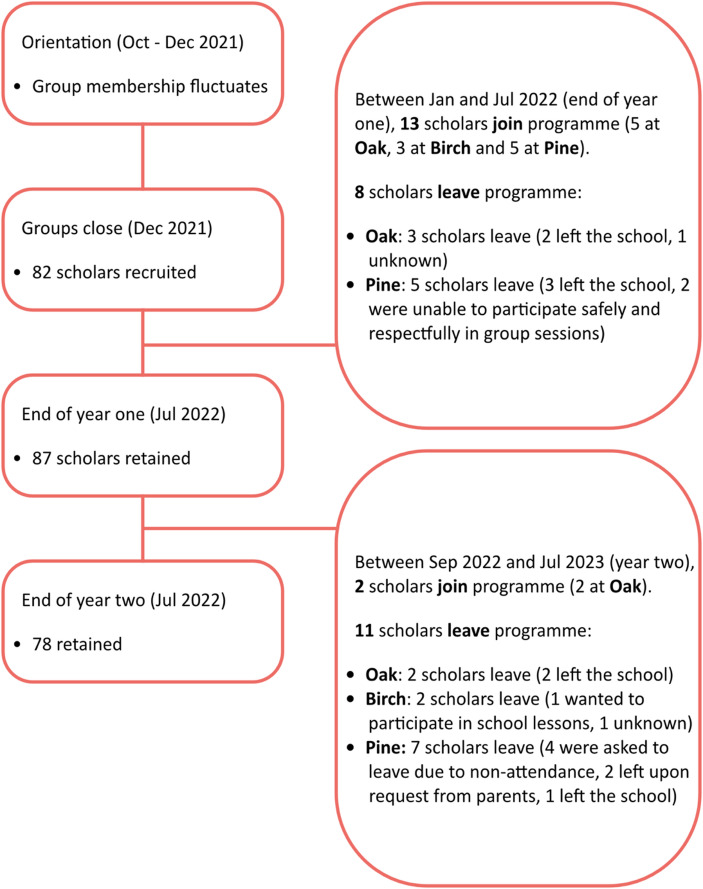
“Of 97 scholars enrolled in BAM in October 2021, 78 (80%) remained by July 2023 (Fig. 2).”
§ Promoting Positive Youth Development with Adolescent Boys in UK Schools: A Theory-Driven Evaluation of the “Becoming a Man” Programme > Results
plain- Asserted: passes — The authors put it forward as true.
- Checkable: passes — It can be checked against evidence.
- Load-bearing: unclear — It is unclear whether the paper’s conclusions depend on it.
- Based: passes — The paper gives a reason why it holds.
A result the paper reports from its own data — it cites no other source for it, so there is none to check. The quote shows it is in the paper.
In the paper
“97 boys aged 12–14 years (66% Black/Black British) in three London schools enrolled in BAM.”
§ Promoting Positive Youth Development with Adolescent Boys in UK Schools: A Theory-Driven Evaluation of the “Becoming a Man” Programme > Abstract Youth violence, including gender-based violence, is a major public health issue in the UK, yet evidence on effective interventions in the UK remains limited. Becoming a Man (BAM) is a two-year school-based positive youth development programme for adolescent boys, developed in Chicago, US, where two RCTs found reduced violent crime arrests and improved academic engagement. This study evaluated BAM’s potential in the UK using a theory-driven design (no comparison group). 97 boys aged 12–14 years (66% Black/Black British) in three London schools enrolled in BAM. Data sources included: implementation records (recruitment, attendance, adherence, quality, youth socio-demographics); school data (attendance, exclusions, attainment); 36 qualitative interviews (11 scholars, 14 parents, 3 school staff, 3 BAM counsellors (2 interviews each), 1 each from delivery organisation and intervention developer); and a counsellor focus group. Interviews focused on implementation, outcomes and BAM contribution to outcomes. Quantitative data were analysed using descriptive statistics, and qualitative data were analysed using framework analysis. Case studies of 11 scholars explored what worked, for whom, under what circumstances and why. Implementation outcomes were mixed. Attendance targets were met but those for group size, reach and curriculum progression were not. Case study scholars who engaged deeply with BAM’s values demonstrated improved self-control and decision-making, although external influences also affected their development. Concerns about negative labelling were mitigated through balanced recruitment. Limited adverse effects on academic attainment were reported. BAM has potential in the UK but requires further adaptation, implementation support and evaluation (including impact on gender norms).
plain- Asserted: passes — The authors put it forward as true.
- Checkable: passes — It can be checked against evidence.
- Load-bearing: passes — The paper’s conclusions depend on it.
- Based: passes — The paper gives a reason why it holds.
32 more claims
Create a free account to see all 134 claims and every source verdict.
- Probably not a substantial claim. 43
- It may state two separate claims as one. 71
Citations
Cites
Gale, N. K., Heath, G., Cameron, E., Rashid, S., & Redwood, S. (2013) · BMC Medical Research Methodology · doi:10.1186/1471-2288-13-117 · Cited by 10,865 · cited 1×
“Qualitative data were analysed using framework analysis (Ritchie & Spen - cer, 1994 ; Brand et al., 2019 ; Gale et al., 2013), a deductive method suitable for researchers with predefined ideas of how to interpret the data (guided here by the ToC).”
Hoffmann, T. C., Glasziou, P. P., Boutron, I., Milne, R., Perera, R., Moher, D., Altman, D. G., Barbour, V., Macdonald, H., Johnston, M., et al. (2014) · BMJ · doi:10.1136/bmj.g1687 · Cited by 10,548
Proctor, E., Silmere, H., Raghavan, R., Hovmand, P., Aarons, G., Bunger, A., Griffey, R., & Hensley, M. (2011) · Administration and Policy in Mental Health and Mental Health Services Research · doi:10.1007/s10488-010-0319-7 · Cited by 8,721 · cited 2×
“…(Lansing & Rapoport, 2016 ; Heller et al., 2013 , 2017 ), frameworks for group therapy (Yalom & Leszcz, 2005 ), psychotherapy (Jung, 1969 ), youth development research (Nagaoka et al., 2015 ; Bonell et al., 2016 ) and implementation science models (Moore et al., 2015 ; Proctor et al., 2011 ).”
Process evaluation of complex interventions: Medical Research Council guidance
Moore, G. F., Audrey, S., Barker, M., Bond, L., Bonell, C., Hardeman, W., Moore, L., O'Cathain, A., Tinati, T., Wight, D., et al. (2015) · BMJ · doi:10.1136/bmj.h1258 · Cited by 6,204 · cited 1×
“…(Lansing & Rapoport, 2016 ; Heller et al., 2013 , 2017 ), frameworks for group therapy (Yalom & Leszcz, 2005 ), psychotherapy (Jung, 1969 ), youth development research (Nagaoka et al., 2015 ; Bonell et al., 2016 ) and implementation science models (Moore et al., 2015 ; Proctor et al., 2011 ).”
Qualitative data analysis for applied policy research
(2002) · Analyzing Qualitative Data · doi:10.4324/9780203413081-14 · Cited by 4,964
Qualitative data analysis for applied policy research
Ritchie, J., & Spencer, L. (2010) · Analyzing qualitative data · doi:10.4324/9780203413081_chapter_9 · Cited by 4,800
The updated consolidated framework for implementation research based on user feedback
Damschroder, L. J., Reardon, C. M., Widerquist, M. A. O., & Lowery, J. (2022) · Implementation Science · doi:10.1186/s13012-022-01245-0 · Cited by 4,452 · cited 1×
“…were made to implementation support to enhance intervention-context fit, informed by the ToC and key contextual factors (Craig et al., 2018; Damschroder et al., 2022 ) – for example, revising the school-level agreement between MHF and participating schools to use more collaborative and…”
CONSORT 2010 statement: extension to randomised pilot and feasibility trials.
Eldridge, S. M., Chan, C. L., Campbell, M. J., Bond, C. M., Hopewell, S., Thabane, L., & Lancaster, G. A. (2016) · BMJ · doi:10.1136/bmj.i5239 · Cited by 3,404
A conceptual framework for implementation fidelity
Carroll, C., Patterson, M., Wood, S., Booth, A., Rick, J., & Balain, S. (2007) · Implementation Science · doi:10.1186/1748-5908-2-40 · Cited by 2,559
Developing and Implementing a Triangulation Protocol for Qualitative Health Research
Farmer, T., Robinson, K., Elliott, S. J., & Eyles, J. (2006) · Qualitative Health Research · doi:10.1177/1049732305285708 · Cited by 997 · cited 1×
“Using Campbell et al. ( 2020 ) and Farmer et al. ( 2006 ), convergence was assessed at three levels: among individu - als, across stakeholders and across methods.”
Using Numbers in Qualitative Research
Maxwell, J. A. (2010) · Qualitative Inquiry · doi:10.1177/1077800410364740 · Cited by 985 · cited 1×
“In reporting the results from qualitative data we use verbal markers to indicate the number of scholars and parents sharing particular views, following common research practices (Maxwell, 2010 ; Sandelowski, 2001 ); ‘most’ refers to the majority, while ‘some’ refers to less than half.”
Jewkes, R., Flood, M., & Lang, J. (2015) · The Lancet · doi:10.1016/s0140-6736(14)61683-4 · Cited by 905 · cited 3×
“…other forms of male violence, whether with mixed or male-only populations, are therefore increasingly ‘gender transformative’, mean - ing that they seek to foster gender-equitable attitudes, behaviours and community structures (Jewkes et al., 2015 ; Casey et al., 2018; Kato-Wallace et al., 2019 ).”
What’s in a mechanism? Development of a key concept in realist evaluation
Dalkin, S. M., Greenhalgh, J., Jones, D., Cunningham, B., & Lhussier, M. (2015) · Implementation Science · doi:10.1186/s13012-015-0237-x · Cited by 896
Real qualitative researchers do not count: The use of numbers in qualitative research
Sandelowski, M. (2001) · Research in Nursing & Health · doi:10.1002/nur.1025 · Cited by 886 · cited 1×
“In reporting the results from qualitative data we use verbal markers to indicate the number of scholars and parents sharing particular views, following common research practices (Maxwell, 2010 ; Sandelowski, 2001 ); ‘most’ refers to the majority, while ‘some’ refers to less than half.”
The craft of interviewing in realist evaluation
Manzano, A. (2016) · Evaluation · doi:10.1177/1356389016638615 · Cited by 691
Guidelines for reporting non-randomised pilot and feasibility studies
Lancaster, G. A., & Thabane, L. (2019) · Pilot and Feasibility Studies · doi:10.1186/s40814-019-0499-1 · Cited by 527 · cited 1×
“Methods and results are summarised here using the CONSORT extension for pilot and feasibility studies (Eldridge et al., 2016 ), exclud - ing non-applicable items (Lancaster & Thabane, 2019 ) (Supplementary File 2 ).”
Resnick, M. D., Ireland, M., & Borowsky, I. (2004) · Journal of Adolescent Health · doi:10.1016/j.jadohealth.2004.01.011 · Cited by 502 · cited 1×
“Protective factors such as educational engagement and cognitive development mitigate risks (Resnick et al., 2004 ; Ttofi et al., 2016 ).”
Thinking, fast and slow? Some field experiments to reduce crime and dropout in Chicago
Heller, S. B., Shah, A. K., Guryan, J., Ludwig, J., Mullainathan, S., & Pollack, H. A. (2017) · The Quarterly Journal of Economics · doi:10.1093/qje/qjw033 · Cited by 493
O’Cathain, A., Hoddinott, P., Lewin, S., Thomas, K. J., Young, B., Adamson, J., Jansen, Y. J., Mills, N., Moore, G., & Donovan, J. L. (2015) · Pilot and Feasibility Studies · doi:10.1186/s40814-015-0026-y · Cited by 458 · cited 1×
“Iterating data collection methods is crucial for enhancing feasibility and pilot study quality (O’Cathain et al., 2015 ).”
Using theory of change to design and evaluate public health interventions: a systematic review
Breuer, E., Lee, L., De Silva, M., & Lund, C. (2015) · Implementation Science · doi:10.1186/s13012-016-0422-6 · Cited by 425 · cited 5×
“ToCs complement this by providing a holistic, visual representation of the intervention’s logic, which engages stakeholders and helps prioritise key elements for testing (Blamey & Mack - enzie, 2007 ; Rolfe, 2019 ).”
InfluentialContribution analysis: Coming of age?
Mayne, J. (2012) · Evaluation · doi:10.1177/1356389012451663 · Cited by 387 · cited 3×
“Stakeholders iteratively review the evidence to build a “plausible contribution story” (Mayne, 2012 ).”
InfluentialTheories of Change and Realistic Evaluation: Peas in a Pod or Apples and Oranges?
Blamey, A., & Mackenzie, M. (2007) · Evaluation · doi:10.1177/1356389007082129 · Cited by 383
Craig, P., Di Ruggiero, E., Frohlich, K. L., Mykhalovskiy, E., White, M., on behalf of the Canadian Institutes of Health Research (CIHR)–National Institute for Health Research (NIHR) Context Guidance Authors Group (listed alphabetically), Campbell, R., Cummins, S., Edwards, N., Hunt, K., et al. (2018) · doi:10.3310/cihr-nihr-01 · Cited by 370 · cited 2×
“Adjustments were made to implementation support to enhance intervention-context fit, informed by the ToC and key contextual factors (Craig et al., 2018; Damschroder et al., 2022 ) – for example, revising the school-level agreement between MHF and participating schools to use more collaborative and…”
The Effects of Youth Mentoring Programs: A Meta-analysis of Outcome Studies
Raposa, E. B., Rhodes, J., Stams, G. J. J. M., Card, N., Burton, S., Schwartz, S., Sykes, L. A. Y., Kanchewa, S., Kupersmidt, J., & Hussain, S. (2019) · Journal of Youth and Adolescence · doi:10.1007/s10964-019-00982-8 · Cited by 366 · cited 1×
“These include school-based bullying and dating violence prevention and social-emotional learning programmes, as well as one-on-one youth mentoring (Gaffney et al., 2021 ; Raposa et al., 2019 ; Maxwell & Corliss, 2020 ; Farmer et al., 2023; Chawla et al., 2024 ).”
Addressing Attribution through Contribution Analysis: Using Performance Measures Sensibly
Mayne, J. (2001) · Canadian Journal of Program Evaluation · doi:10.3138/cjpe.016.001 · Cited by 350 · cited 1×
“Contribution analysis triangulates data from multiple sources to assess how an intervention contributes to specific outcomes (Mayne, 2001 ).”
Pawson, R., & Manzano-Santaella, A. (2012) · Evaluation · doi:10.1177/1356389012440912 · Cited by 349 · cited 1×
“A common challenge in theory-driven evalu - ations is that individual elements of the programme theory can become disconnected, with more emphasis placed on the elements themselves rather than on the relationships between them (Pawson & Manzano-Santaella, 2012 ).”
Movsisyan, A., Arnold, L., Evans, R., Hallingberg, B., Moore, G., O’Cathain, A., Pfadenhauer, L. M., Segrott, J., & Rehfuess, E. (2019) · Implementation Science · doi:10.1186/s13012-019-0956-5 · Cited by 331 · cited 1×
“Flawed programme adaptation efforts can also unintentionally undermine their ToC, reducing effective - ness (Movsisyan et al., 2019 ).”
Gaffney, H., Ttofi, M. M., & Farrington, D. P. (2021) · Campbell Systematic Reviews: Better Evidence for a Better World · doi:10.1002/cl2.1143 · Cited by 313 · cited 1×
“These include school-based bullying and dating violence prevention and social-emotional learning programmes, as well as one-on-one youth mentoring (Gaffney et al., 2021 ; Raposa et al., 2019 ; Maxwell & Corliss, 2020 ; Farmer et al., 2023; Chawla et al., 2024 ).”
Casey, E., Carlson, J., Two Bulls, S., & Yager, A. (2018) · Trauma, Violence, & Abuse · doi:10.1177/1524838016650191 · Cited by 275 · cited 2×
“…other forms of male violence, whether with mixed or male-only populations, are therefore increasingly ‘gender transformative’, mean - ing that they seek to foster gender-equitable attitudes, behaviours and community structures (Jewkes et al., 2015 ; Casey et al., 2018; Kato-Wallace et al., 2019 ).”
Farrington, D. P., Gaffney, H., Lösel, F., & Ttofi, M. M. (2017) · Aggression and Violent Behavior · doi:10.1016/j.avb.2016.11.003 · Cited by 185 · cited 1×
“While there is considerable evidence on what works to prevent and intervene early to address youth violence (Farrington et al., 2017 ; Russell, 2021 ; Kovalenko et al., 2022 ), interventions proven to be effective in the UK are limited (Youth Endowment Fund, 2020 ).”
Campbell, R., Goodman-Williams, R., Feeney, H., & Fehler-Cabral, G. (2020) · American Journal of Evaluation · doi:10.1177/1098214018804195 · Cited by 150 · cited 1×
“Using Campbell et al. ( 2020 ) and Farmer et al. ( 2006 ), convergence was assessed at three levels: among individu - als, across stakeholders and across methods.”
Applying contribution analysis: Lessons from five years of practice
Delahais, T., & Toulemonde, J. (2012) · Evaluation · doi:10.1177/1356389012450810 · Cited by 125
Marchal, B., Kegels, G., & Belle, S. V. (2018) · SAGE Publications Ltd eBooks · doi:10.4135/9781526451729.n6 · Cited by 115
Foundations for Young Adult Success: A Developmental Framework
Nagaoka, J., Farrington, C. A., Ehrlich, S. B., & Heath, R. D. (2015) · doi:10.59656/yd-g1389.001 · Cited by 115 · cited 1×
“…(Lansing & Rapoport, 2016 ; Heller et al., 2013 , 2017 ), frameworks for group therapy (Yalom & Leszcz, 2005 ), psychotherapy (Jung, 1969 ), youth development research (Nagaoka et al., 2015 ; Bonell et al., 2016 ) and implementation science models (Moore et al., 2015 ; Proctor et al., 2011 ).”
Service evaluation, audit and research: what is the difference?
Twycross, A., & Shorten, A. (2014) · Evidence Based Nursing · doi:10.1136/eb-2014-101871 · Cited by 110 · cited 1×
“At the start of the programme (October 2021), MHF gained informed consent from all parents and scholars to participate in service evaluation activities (ongoing, routine monitoring activity concerned with current service activity) (Twycross & Shorten, 2014 ).”
Pérez‐Martínez, V., Marcos‐Marcos, J., Cerdán-Torregrosa, A., Briones‐Vozmediano, E., Sanz‐Barbero, B., Davó-Blanes, M. C., Daoud, N., Edwards, C., Salazar, M., Parra‐Casado, D. L., et al. (2021) · Trauma Violence & Abuse · doi:10.1177/15248380211030242 · Cited by 102
What Works in Violence Prevention Among Young People?: A Systematic Review of Reviews
Kovalenko, A. G., Abraham, C., Graham-Rowe, E., Levine, M., & O’Dwyer, S. (2020) · Trauma Violence & Abuse · doi:10.1177/1524838020939130 · Cited by 102 · cited 1×
“While there is considerable evidence on what works to prevent and intervene early to address youth violence (Farrington et al., 2017 ; Russell, 2021 ; Kovalenko et al., 2022 ), interventions proven to be effective in the UK are limited (Youth Endowment Fund, 2020 ).”
Fonagy, P., Butler, S., Cottrell, D., Scott, S., Pilling, S., Eisler, I., Fuggle, P., Kraam, A., Byford, S., Wason, J., et al. (2018) · The Lancet Psychiatry · doi:10.1016/s2215-0366(18)30001-4 · Cited by 99 · cited 2×
“This is arguably due in part to differences in service systems, cultural norms and school environments, which complicate implementation (e.g., Skärstrand et al., 2014 ; Baldus et al., 2016 ; Humayun et al., 2017 ; Fonagy et al., 2018; Segrott et al., 2022 ).”
Ebenso, B., Manzano, A., Uzochukwu, B. S. C., Etiaba, E., Huss, R., Ensor, T., Newell, J. N., Onwujekwe, O. E., Ezumah, N., Hicks, J. P., et al. (2018) · Evaluation and Program Planning · doi:10.1016/j.evalprogplan.2018.12.002 · Cited by 93 · cited 1×
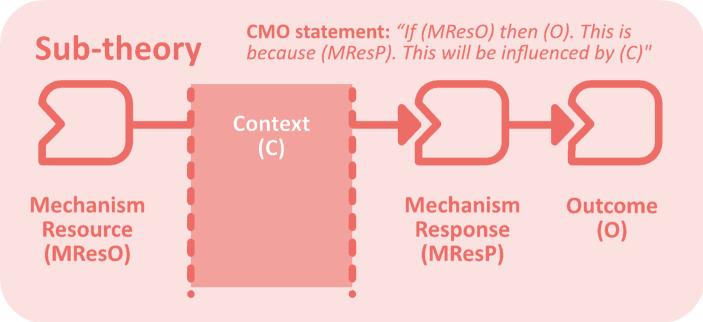
“The sub-theories were structured as realist matrices (Ebenso et al., 2019 ) in which different combinations of contextual factors, mechanisms and outcomes are grouped under a higher-order CMO statement.”
Exposure to Community Violence and Physical Health Outcomes in Youth: A Systematic Review
Wright, A. W., Austin, M., Booth, C., & Kliewer, W. (2016) · Journal of Pediatric Psychology · doi:10.1093/jpepsy/jsw088 · Cited by 82
Preventing Youth Violence and Dropout: A Randomized Field Experiment
Heller, S., Pollack, H., Ander, R., & Ludwig, J. (2013) · doi:10.3386/w19014 · Cited by 79 · cited 3×
“Targets were set for recruitment, attendance and adherence, guided by YG’s benchmarks and published research on BAM (Heller et al., 2013; 2017 ).”
Protective factors against offending and violence: Results from prospective longitudinal studies
Ttofi, M. M., Farrington, D. P., Piquero, A. R., & DeLisi, M. (2016) · Journal of Criminal Justice · doi:10.1016/j.jcrimjus.2016.02.001 · Cited by 70 · cited 1×
“Protective factors such as educational engagement and cognitive development mitigate risks (Resnick et al., 2004 ; Ttofi et al., 2016 ).”
Lemire, S. T., Nielsen, S. B., & Dybdal, L. (2012) · Evaluation · doi:10.1177/1356389012450654 · Cited by 66 · cited 2×
“This was chosen for its ability to: (i) systematically assess the contribution of interventions to results (Lemire et al., 2012 ), addressing challenges seen in realist evaluations (Marchal et al., 2018) and ToCs (Breuer et al., 2016 ); and (ii) consider rival influences, often overlooked in…”
Rolfe, S. (2019) · Evaluation · doi:10.1177/1356389019835229 · Cited by 66 · cited 1×
“ToCs complement this by providing a holistic, visual representation of the intervention’s logic, which engages stakeholders and helps prioritise key elements for testing (Blamey & Mack - enzie, 2007 ; Rolfe, 2019 ).”
Evaluation of a Swedish version of the Strengthening Families Programme
Skarstrand, E., Sundell, K., & Andreasson, S. (2014) · The European Journal of Public Health · doi:10.1093/eurpub/ckt146 · Cited by 61 · cited 1×
“This is arguably due in part to differences in service systems, cultural norms and school environments, which complicate implementation (e.g., Skärstrand et al., 2014 ; Baldus et al., 2016 ; Humayun et al., 2017 ; Fonagy et al., 2018; Segrott et al., 2022 ).”
Humayun, S., Herlitz, L., Chesnokov, M., Doolan, M., Landau, S., & Scott, S. (2017) · Journal of Child Psychology and Psychiatry · doi:10.1111/jcpp.12743 · Cited by 57 · cited 1×
“This is arguably due in part to differences in service systems, cultural norms and school environments, which complicate implementation (e.g., Skärstrand et al., 2014 ; Baldus et al., 2016 ; Humayun et al., 2017 ; Fonagy et al., 2018; Segrott et al., 2022 ).”
Brand, S. L., Quinn, C., Pearson, M., Lennox, C., Owens, C., Kirkpatrick, T., Callaghan, L., Stirzaker, A., Michie, S., Maguire, M., et al. (2019) · Evaluation · doi:10.1177/1356389018802134 · Cited by 56 · cited 2×
“Qualitative data were analysed using framework analysis (Ritchie & Spen - cer, 1994 ; Brand et al., 2019 ; Gale et al., 2013), a deductive method suitable for researchers with predefined ideas of how to interpret the data (guided here by the ToC).”
Self-citationBaldus, C., Thomsen, M., Sack, P.-M., Bröning, S., Arnaud, N., Daubmann, A., & Thomasius, R. (2016) · The European Journal of Public Health · doi:10.1093/eurpub/ckw082 · Cited by 49 · cited 1×
“This is arguably due in part to differences in service systems, cultural norms and school environments, which complicate implementation (e.g., Skärstrand et al., 2014 ; Baldus et al., 2016 ; Humayun et al., 2017 ; Fonagy et al., 2018; Segrott et al., 2022 ).”
Farmer, C., Shaw, N., Rizzo, A. J., Orr, N., Chollet, A., Hagell, A., Rigby, E., Young, H., Berry, V., Bonell, C. P., et al. (2023) · American Journal of Public Health · doi:10.2105/ajph.2022.307153 · Cited by 45 · cited 2×
“This has multiple adverse social and health conse - quences for victims and perpetrators (Farmer et al., 2023).”
Self-citationKato-Wallace, J., Barker, G., Garg, A., Feliz, N. B., Levack, A., Ports, K., & Miller, E. P. (2019) · Global Social Welfare · doi:10.1007/s40609-018-00135-y · Cited by 38 · cited 1×
“…other forms of male violence, whether with mixed or male-only populations, are therefore increasingly ‘gender transformative’, mean - ing that they seek to foster gender-equitable attitudes, behaviours and community structures (Jewkes et al., 2015 ; Casey et al., 2018; Kato-Wallace et al., 2019 ).”
Bonell, C., Dickson, K., Hinds, K., Melendez-Torres, G., Stansfield, C., Fletcher, A., Thomas, J., Lester, K., Oliver, E., Murphy, S., et al. (2016) · Public Health Research · doi:10.3310/phr04050 · Cited by 37 · cited 1×
“…(Lansing & Rapoport, 2016 ; Heller et al., 2013 , 2017 ), frameworks for group therapy (Yalom & Leszcz, 2005 ), psychotherapy (Jung, 1969 ), youth development research (Nagaoka et al., 2015 ; Bonell et al., 2016 ) and implementation science models (Moore et al., 2015 ; Proctor et al., 2011 ).”
Segrott, J., Gillespie, D., Lau, M., Holliday, J., Murphy, S., Foxcroft, D., Hood, K., Scourfield, J., Phillips, C. J., Roberts, Z., et al. (2022) · BMJ Open · doi:10.1136/bmjopen-2021-049647 · Cited by 20 · cited 1×
“This is arguably due in part to differences in service systems, cultural norms and school environments, which complicate implementation (e.g., Skärstrand et al., 2014 ; Baldus et al., 2016 ; Humayun et al., 2017 ; Fonagy et al., 2018; Segrott et al., 2022 ).”
Foundations for Young Adult Success: A Developmental Framework: Research Brief
Nagaoka, J., Farrington, C. A., Ehrlich, S. B., & Heath, R. D. (2015) · doi:10.59656/yd-g1389.002 · Cited by 19
Chawla, S. A., Solomon, J., & Sarnquist, C. (2024) · Trauma Violence & Abuse · doi:10.1177/15248380241246779 · Cited by 9 · cited 1×
“These include school-based bullying and dating violence prevention and social-emotional learning programmes, as well as one-on-one youth mentoring (Gaffney et al., 2021 ; Raposa et al., 2019 ; Maxwell & Corliss, 2020 ; Farmer et al., 2023; Chawla et al., 2024 ).”
Green, F., Axford, N., Eastmond, N., Berry, V., Mannes, J., Allen, K., Callaghan, L., & Hobbs, T. (2023) · Journal of Prevention · doi:10.1007/s10935-023-00742-2 · Cited by 3 · cited 4×
“This collaborative process facilitated changes to both the curriculum and implementation support (Green et al., 2023b).”
InfluentialSelf-citation
Research works printed but not linked: 13
- Funnell, S. C., & Rogers, P. J. (2011). Purposeful program theory: Effective Use of theories of change and logic models. Jossey-Bass.
- Green, F., Axford, N., Harris, J., Preece, C., Mannes, J., Allen, K., Callaghan, L., Berry, V., de Santana, E., & Woodburn, A. (2023a). Becoming a man (BAM): Feasibility study report. Youth Endowment Fund.
- Green, F., Axford, N., Preece, C., Harris, J., Allen, K., Manzi, S., Mannes, J., Callaghan, L., Berry, V., Hobbs, T., de Santana, E., & Woodburn, A. (2024). Becoming a man (BAM): Pilot study report. Youth Endowment Fund.
- Jung, C. G. (1969). Archetypes and the collective unconscious (R. F. C. Hull, Trans.). Princeton University Press.
- Lansing, J., & Rapoport, E. (2016). Bolstering belonging in BAM and beyond: Youth guidance’s becoming a man (BAM) program components, experiential processes, and mechanisms. Chapin Hall at the University of Chicago.
- Maxwell, N., & Corliss, J. (2020). Good practice in youth violence prevention: A mapping and horizon scanning review. Wales Violence Prevention Unit.
- Moore, D., Proctor, R., Benham-Clarke, S., Gains, H., Melendez-Torres, G. J., Axford, N., Rogers, M., Anderson, R., Hall, D., Hawkins, J., Berry, V., Forbes, C., & Lloyd, J. (2024). Review of evidence on implementation in education. Education Endowment Foundation.
- Patton, M. Q. (2015). Qualitative research and evaluation methods (4th ed.). Sage.
- Pawson, R., & Tilley, N. (1997). Realistic evaluation. Sage.
- Russell, K. (2021). What works to prevent youth violence: A summary of the evidence. Scottish Government.
- Yalom, I. D., & Leszcz, M. (2005). The theory and practice of group psychotherapy (5th ed.). Basic Books.
- Yin, R. K. (2018). Case study research and applications: Design and methods (6th ed.). Sage.
- Youth Endowment Fund. (2024). How do boys and girls experience violence? Youth Endowment Fund.
Cited by
Preventing Youth Crime and Violence: Intervention and Evaluation Issues
Axford, N., & Humayun, S. (2026) · Behavioral Sciences · doi:10.3390/bs16020247 · Cited by 6
“…third behind other influences (e.g., family, friends, football), in line with the programme ToC, it supported CYP engagement in action and reflection, which in turn helped CYP to manage their emotions, bolstered their self-esteem and contributed to responsible decision-making (Green et al., 2025).”
Self-citationHumayun, S., Green, F., Downham, H., & Axford, N. (2026) · Journal of Prevention · doi:10.1007/s10935-026-00921-x
“However, the process for obtaining such data was initially opaque and forecast delays (up to 18 months) in obtaining data would have made it impossible to report find - ings within the project timeline (Green et al., 2025).”
Self-citation
Metadata
- Authors
- Green, F., Preece, C., Allen, K., Manzi, S., Mannes, J., Callaghan, L., Berry, V., de Lima, E. S., Woodburn, A., Hobbs, T., Harris, J., & Axford, N.
- Affiliations
- Dartington Service Design Lab (GB)
- University of Exeter (GB)
- University of Cambridge (GB)
- University of Plymouth (GB)
- Cambridgeshire and Peterborough NHS Foundation Trust (GB)
- Corresponding author
- Berry, Vashti
- ORCID
- Venue
- Journal of Prevention
- Published
- 2025-12-08
- Volume
- 47
- Issue
- 2
- Pages
- 285-310
- ISSN
- 2731-5533 (ISSN-L)
- 2731-5541
- PMC
- PMC13046572
- OpenAlex
- W4417106856
- Cited by
- 2
- References
- 48
- Citations by year
- 2026: 2
- FWCI
- 3.43
- Type
- journal article
- Language
- en
- Open access
- hybrid
- doi.org
- Licence
- cc-by
- creativecommons.org/licenses/by/4.0 (tdm)
- creativecommons.org/licenses/by/4.0 (vor)
- Locations
- Journal of Prevention (publishedVersion, cc-by)
- PubMed (publishedVersion)
- PubMed Central (publishedVersion, cc-by)
- PEARL (University of Plymouth) (submittedVersion, cc-by)
- Apollo (University of Cambridge) (submittedVersion, cc-by)
- Funders
- Youth Endowment Fund (Launch Grant Round)
- Topics
- Social Sciences › Sociology and Political Science › Crime Patterns and Interventions
- Social Sciences › Psychology › Developmental and Educational Psychology › Youth Development and Social Support
- Health Sciences › Medicine › Public Health, Environmental and Occupational Health › Adolescent Sexual and Reproductive Health
- Keywords
- positive youth development, adolescent boys, school-based intervention, youth violence, gender-based violence, implementation outcomes, implementation fidelity, self-control, decision-making, academic performance, gender norms, London schools
- MeSH terms
- Adolescent, Child, United Kingdom, Humans, Male, Schools, Violence, Program Evaluation, Adolescent Development
About these checks
Registry, retraction, Cites and statistics results are computed, not judged, with one exception: a printed reference that no index lists is read once by a model before it counts as a citation error. Claims are extracted by a model and kept only when their quote appears verbatim in the text; each cited source is then checked, with a model’s help, for whether it says what the claim relies on. Those verdicts can be wrong — read the claim’s quote and the cited source before relying on one.
The claim verdicts this report counts are experimental: their accuracy is not yet measured.
A language model drew the claims from the paper on 2026-10-11, under version 3 of the claim definition (model deepseek-v4.1-flash, prompt extract-v3).
A second model labelled each claim on 2026-10-11 (model jev-1.13-20260917, definition revision gold-guideline-v0.2).
Cited sources are checked with a language model’s help (gpt-6-sol).
Statistics and arithmetic are recomputed, not judged.
Confidence bands are shown only for fields calibrated on our annotated test set. None is calibrated yet, so no band is shown.
What counts as a claim ›How we measure confidence ›How we check this ›
Are you an author, or do you see a problem with this page? Request a review
Data sources
Bibliographic data: Semantic Scholar, OpenAlex, Crossref.
Contains information from the Semantic Scholar Academic Graph Datasets, made available under the ODC Attribution License (ODC-BY 1.0).
Semantic Scholar’s data is described in: Kinney, R., et al. (2023). The Semantic Scholar Open Data Platform. arXiv:2301.10140.
