

Leader autonomy support in the workplace: A meta-analytic review
Open accessThe DOI matches its Crossref record; 107 of the 109 references it cites were found in a registry or an index.
Abstract
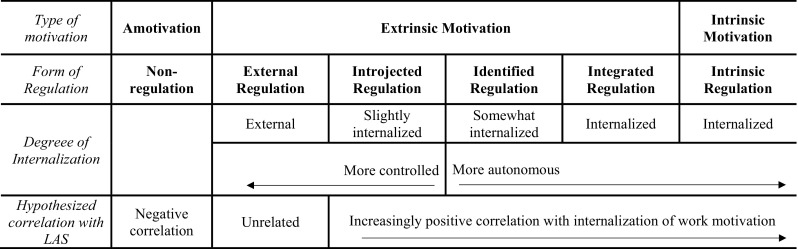
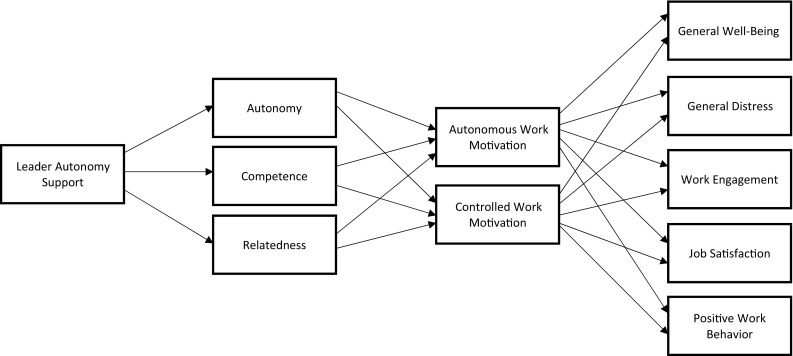
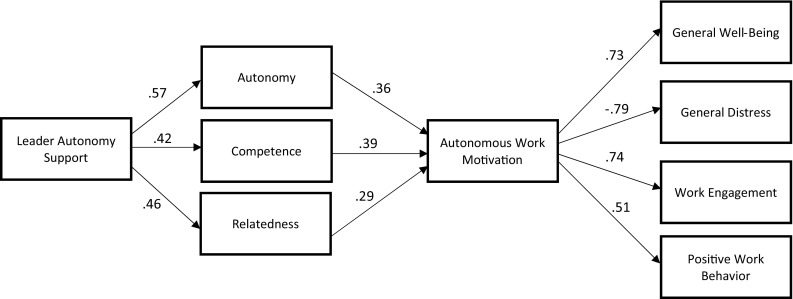
Leader autonomy support (LAS) refers to a cluster of supervisory behaviors that are theorized to facilitate self-determined motivation in employees, potentially enabling well-being and performance. We report the results of a meta-analysis of perceived LAS in work settings, drawing from a database of 754 correlations across 72 studies (83 unique samples, N = 32,870). Results showed LAS correlated strongly and positively with autonomous work motivation, and was unrelated to controlled work motivation. Correlations became increasingly positive with the more internalized forms of work motivation described by self-determination theory. LAS was positively associated with basic needs, well-being, and positive work behaviors, and was negatively associated with distress. Correlations were not moderated by the source of LAS, country of the sample, publication status, or the operationalization of autonomy support. In addition, a meta-analytic path analysis supported motivational processes that underlie LAS and its consequences in workplaces. Overall, our findings lend support for autonomy support as a leadership approach that is consistent with self-determination and optimal functioning in work settings.
Overview
The claims and statistics of this paper haven’t been checked yet.
Free: it reads the open-access text and checks the first 5 claims that cite a source we can check. Create a free account to check every claim.
Integrity signals
Registry
Cites
Statistics
Figures
Verification
Claims the paper makes
The claims and statistics of this paper haven’t been checked yet.
Free: it reads the open-access text and checks the first 5 claims that cite a source we can check. Create a free account to check every claim.
Claims other papers make about this one
Each is checked against this paper’s own text: does it say what the citing paper says it does?
The source backs part of the claim, not all of it — or backs it for a different population, condition or comparison.
In the citing paper
“Confirming existing research (Slemp et al., 2018(Slemp et al., , 2020)), the relationship between autonomy support and structure did not vary among individualistic versus collectivistic cultures in our sample.”
From Blending Teacher Autonomy Support and Provision of Structure in the Classroom for Optimal Motivation: A Systematic Review and Meta-Analysis (2025) · cites this paper as Slemp et al., 2018
Experimental — accuracy not yet measuredThe source backs part of the claim, not all of it — or backs it for a different population, condition or comparison.
In the citing paper
“it fosters agentic employee work behaviors and reduces employee job strain and burnout (Slemp et al., 2018).”
From Job Demands—Resources theory and self-regulation: New explanations and remedies for job burnout (2021) · cites this paper as Slemp et al., 2018
Experimental — accuracy not yet measuredThe cited source says what the claim attributes to it.
In the citing paper
“Meta-analytic evidence shows culture does not moderate the relationship between autonomy support and need satisfaction (Slemp et al., 2018) or teacher outcomes (Slemp et al., 2020).”
From Blending Teacher Autonomy Support and Provision of Structure in the Classroom for Optimal Motivation: A Systematic Review and Meta-Analysis (2025) · cites this paper as Slemp et al., 2018
The cited source says what the claim attributes to it.
In the citing paper
“Cross-cultural evidence has now been meta-analytically analyzed with autonomy as defined within BPNT appearing to carry similar benefits for individuals from diverse cultures (e.g., Slemp et al. 2018;Yu et al. 2018).”
From Basic psychological need theory: Advancements, critical themes, and future directions (2020) · cites this paper as Slemp et al. 2018
Self-check
Percentages, sums and reported differences re-computed from the paper’s own numbers.
The self-check needs the paper’s full text.
Citations
Cites
Hu, L., & Bentler, P. M. (1999) · Structural Equation Modeling A Multidisciplinary Journal · doi:10.1080/10705519909540118 · Cited by 108,788
Statistical Power Analysis for the Behavioral Sciences
Muller, K. (1989) · Technometrics · doi:10.1080/00401706.1989.10488618 · Cited by 99,167
Podsakoff, P. M., MacKenzie, S. B., Lee, J.-Y., & Podsakoff, N. P. (2003) · Journal of Applied Psychology · doi:10.1037/0021-9010.88.5.879 · Cited by 82,194 · cited 1×
“Finally, almost all of the measures in the studies were self-report instruments, which raises the possibility that our results are affected by self-report bias and shared method variance (Podsakoff et al. 2003).”
BackgroundStatistical power analysis for the behavioral sciences
(1990) · Computers, Environment and Urban Systems · doi:10.1016/0198-9715(90)90050-4 · Cited by 65,269
Ryan, R. M., & Deci, E. L. (2000) · American Psychologist · doi:10.1037//0003-066x.55.1.68 · Cited by 54,599 · cited 10×
“An important part of this SDT framework is the process of internalization, which refers to a natural tendency for people to transform controlled motivation into more autonomous forms of motivation (Ryan and Deci 2000).”
BackgroundResultInfluentialSelf-citationThe "what" and "why" of goal pursuits: Human needs and the self-determination of behavior
Deci, E. L., & Ryan, R. M. (2000) · Psychological Inquiry · doi:10.1207/s15327965pli1104_01 · Cited by 34,210 · cited 1×
“Relations of leader autonomy support to basic needs, well‑being, and work outcomes SDT posits that individuals experience optimal psychological functioning to the extent that three basic psychological needs for autonomy, competence, and relatedness are satisfied (Deci and Ryan 2000).”
BackgroundSelf-citationlavaan : An R Package for Structural Equation Modeling
Rosseel, Y. (2012) · Journal of Statistical Software · doi:10.18637/jss.v048.i02 · Cited by 27,955 · cited 1×
“The path analysis was performed using the lavaan package (Rosseel 2012) of the open source R software (version 3.3.1), using Ordinary Least Squares (OLS) estimation.”
MethodInfluentialCulture's Consequences: Comparing Values, Behaviors, Institutions, and Organizations across Nations
Bhagat, R. S., & Hofstede, G. (2002) · The Academy of Management Review · doi:10.2307/4134391 · Cited by 21,664
Borenstein, M., Hedges, L. V., Higgins, J. P. T., & Rothstein, H. R. (2009) · doi:10.1002/9780470743386 · Cited by 14,225
Self-Determination Theory: Basic Psychological Needs in Motivation, Development, and Wellness
(2017) · doi:10.1521/978.14625/28806 · Cited by 12,588
Self-citation
Research works printed but not linked: 2
- Schmidt FL Le H Software for the Hunter-Schmidt meta-analysis methods, version 2.0 2014 Iowa City, IA University of Iowa, Department of Management & Organizations
- Slemp GR Oades LG Steger MF Delle Fave A Passmore J Job Crafting The Wiley Blackwell handbook of the psychology of positivity and strengths-based approaches at work 2017 Hoboken Wiley 342 365
Cited by
Items 101–200 of 637
How autonomy-supportive leaders influence employee service performance: a multilevel study
Shih, C., Chen, S., & Chao, M. (2019) · Service Industries Journal · doi:10.1080/02642069.2019.1691168 · Cited by 32
“ees’ perspectives, provide opportunities for choice and input, encourage self-initiation, and avoid the use of external rewards or sanctions to motivate behavior (Slemp et al., 2018).”
BackgroundInfluentialHaw, J. Y., & King, R. B. (2023) · Social Psychology of Education · doi:10.1007/s11218-023-09790-2 · Cited by 33
“Over the last four decades, SDT studies have provided rich examples of how school leaders can support their teachers’ need for autonomy, competence, and relatedness (e.g., Deci et al., 1989, 2001; Gagné et al., 2016; Rothmann & Fouché, 2018; Slemp et al., 2018).”
InfluentialLongitudinal dynamics of psychological need satisfaction, meaning in work, and burnout
Maunz, L. A., & Glaser, J. (2024) · Journal of Vocational Behavior · doi:10.1016/j.jvb.2024.103971 · Cited by 31
“The satisfaction of the need for autonomy at work indicates that employees value and pursue intrinsic aspirations (see Ryan et al., 2022; Slemp et al., 2018; Weinstein & Ryan, 2011).”
InfluentialOlmos-Gómez, M. D. C. (2020) · International Journal of Environmental Research and Public Health · doi:10.3390/ijerph17145036 · Cited by 30
“Likewise, prior research [74,75] has demonstrated the importance of psychological needs to the development and wellbeing of individuals.”
BackgroundA self-support approach to satisfy basic psychological needs during difficult situations
Behzadnia, B., & FatahModares, S. (2022) · Motivation and Emotion · doi:10.1007/s11031-022-09968-9 · Cited by 31
Кокун, О. М., Пішко, І. О., & Lozinska, N. (2022) · Military Psychology · doi:10.1080/08995605.2022.2147360 · Cited by 29
“Leadership behavior is strongly associated with vital work-related attitudes, such as job satisfaction (Braun et al., 2013), motivation, and well-being (Slemp et al., 2018).”
BackgroundBoyraz, M., & Gilbert, R. (2024) · Employee Relations · doi:10.1108/er-09-2023-0478 · Cited by 29
Managing Employee Performance and Reward: Systems, Practices and Prospects (third edition)
Shields, J. L., Rooney, J., Brown, M., & Kaine, S. (2020) · Cited by 30
Liu, L., Lv, Z., Zhou, Y., Liu, M., & Liu, Y. (2023) · Journal of Nursing Management · doi:10.1155/2023/5741160 · Cited by 29
“Research shows that managers’ autonomy support and positive feedback can mobilize the three basic psychological needs of autonomy, competence, and belonging of employees, thus increasing their job satisfaction and reducing the rate of turnover [50].”
Mendoza, N. B., & Dizon, J. I. W. T. (2023) · Social Psychology of Education · doi:10.1007/s11218-023-09834-7 · Cited by 29
“In the work context, autonomy support is considered an important 1 3 Principal autonomy‑support buffers the effect of stress on… need-supportive context that satisfies one’s basic psychological need for autonomy (Deci et al., 1989; Slemp et al., 2018).”
When do extrinsic rewards undermine intrinsic motivation? A meta-analysis
Lehtivuori, A. (2022) · UTUPub (University of Turku) · Cited by 28
DESIGNING FOR DIVERSITY: INCLUSIVE SAMPLING
Roscoe, R. D. (2021) · Ergodesign & HCI · doi:10.22570/ergodesignhci.v9i1.1502 · Cited by 27
Geary, E., Allen, K., Gamble, N., & Pahlevansharif, S. (2023) · Journal of University Teaching and Learning Practice · doi:10.53761/1.20.01.13 · Cited by 30
Need-Supportive and Need-Thwarting Socialization: A Circumplex Approach
Aelterman, N., & Vansteenkiste, M. (2023) · Oxford University Press eBooks · doi:10.1093/oxfordhb/9780197600047.013.21 · Cited by 27
Psychological and relational conditions for job crafting to occur
Huyghebaert‐Zouaghi, T., Berjot, S., Cougot, B., & Gillet, N. (2020) · Stress and Health · doi:10.1002/smi.3014 · Cited by 28
Self-directed teaching: a holistic framework for educator autonomy
Mohiyeddini, C. (2024) · Frontiers in Medicine · doi:10.3389/fmed.2024.1479885 · Cited by 27
Li, C., Hu, X., Wu, Y., Kee, Y. H., & Cho, H. (2023) · Asian Journal of Sport and Exercise Psychology · doi:10.1016/j.ajsep.2023.08.004 · Cited by 26
da Costa, S., Martínez‐Moreno, E., Gorriti, V. D., Hermosilla, D., Amutio, A., Padoan, S., Méndez, D., Etchebehere, G., Torres, A., Telletxea, S., et al. (2020) · Frontiers in Psychology · doi:10.3389/fpsyg.2020.604412 · Cited by 26
“…can be addressed through interventions (e.g., Galanakis et al., 2009; Mesmer-Magnus et al., 2012; Bolier et al., 2013; Chaplin and Aldao, 2013; Lever et al., 2017; Slemp et al., 2018; Mendoza-Castejon et al., 2020; Pyhältö et al., 2020), with a gender perspective (e.g., Shannon et al., 2019).”
BackgroundAutonomy support and prosocial impact facilitate meaningful work: A daily diary study
Meng, L., Lin, X., Du, J., Zhang, X., & Lu, X. (2023) · Motivation and Emotion · doi:10.1007/s11031-023-10006-5 · Cited by 25
“When it comes to leader autonomy support, a large body of research has confirmed its importance in promoting employees’ positive work behaviors (Slemp et al., 2018), work performance and well-beings (Deci et al.”
InfluentialImproving employee-robot collaboration in hospitality: Understanding the zero-sum mindset
Jin, D., Lu, L., & Lee, W. (2025) · International Journal of Hospitality Management · doi:10.1016/j.ijhm.2024.104062 · Cited by 23
Ryan, R. M., Jang, H., Wang, J., Matos, L., Гордеева, Т. О., Kaplan, H., Behzadnia, B., Kantaş, Ö., Ferber, K. A., Soenens, B., et al. (2025) · Educational Psychology Review · doi:10.1007/s10648-025-10088-2 · Cited by 24
“…teachers’ mental health, reduce burnout, and improve job satisfaction, recognizing that teachers who feel supported in their own needs are more likely to create a need-supportive learning environment for their students as shown in much SDT research (e.g., Reeve et al., 2022; Slemp et al., 2018).”
Self-citationMagson, N. R., Craven, R. G., Ryan, R. M., Dillon, A., Mooney, J., Blacklock, F., Yeung, A. S., Kadir, M. S., & Franklin, A. (2022) · Journal of Cross-Cultural Psychology · doi:10.1177/00220221211060441 · Cited by 23
“Organizations and supervisors that create work climates optimal to the satisfaction of these needs are referred to as “need-supportive” (Slemp et al., 2018), and are expected to foster intrinsic motivation and desirable job outcomes.”
BackgroundSelf-citationForest, J., Dubord, M. G., Olafsen, A. H., & Carpentier, J. (2023) · Oxford University Press eBooks · doi:10.1093/oxfordhb/9780197600047.013.45 · Cited by 23
Zhang, L., Liang, J., & Liu, F. (2022) · Human Relations · doi:10.1177/00187267221110781 · Cited by 22
“Second, by including both managerial and employee ratings of employee voice, this study advances the knowledge about the role of leadership in explaining the complexity of employee proactivity (Morrison, 2014; Slemp et al., 2018).”
ResultHenning, G., Stenling, A., Tafvelin, S., Ebener, M., & Lindwall, M. (2022) · Journal of Occupational and Organizational Psychology · doi:10.1111/joop.12406 · Cited by 23
Han, Y., & Sears, G. J. (2023) · Stress and Health · doi:10.1002/smi.3334 · Cited by 22
Dash, S. S., Gupta, R. K., & Jena, L. K. (2022) · International Journal of Public Sector Management · doi:10.1108/ijpsm-02-2022-0046 · Cited by 22
ADHD and Psychological Need Fulfillment in College Students
Serrano, J. W., Abu-Ramadan, T. M., Vasko, J. M., Leopold, D. R., Canu, W. H., Willcutt, E. G., & Hartung, C. M. (2023) · Journal of Attention Disorders · doi:10.1177/10870547231161530 · Cited by 21
“…research suggests that the satisfaction or frustration of autonomy, competence, and relatedness are salient to the development, adjustment, and wellness of individuals across ages, contexts (e.g., academic, health, occupational), and cultures (e.g., Kluwer et al., 2020; Slemp et al., 2018).”
BackgroundIto, T., Umemoto, T., & Nakaya, M. (2024) · International Journal of Educational Research Open · doi:10.1016/j.ijedro.2024.100339 · Cited by 21
Selar, A. N., Falkenberg, H., Hellgren, J., Gagné, M., & Sverke, M. (2020) · Scandinavian Journal of Work and Organizational Psychology · doi:10.16993/sjwop.107 · Cited by 22
Olafsen, A. H., & Marescaux, B. P. C. (2025) · Motivation and Emotion · doi:10.1007/s11031-025-10113-5 · Cited by 19
Empowering leadership and employee work engagement: a diary study using self-determination theory
Knevelsrud, H.-C., Hetland, J., Bakker, A. B., Krabberød, T., Sørlie, H. O., Espevik, R., & Olsen, O. K. (2025) · European Journal of Work and Organizational Psychology · doi:10.1080/1359432x.2025.2594485 · Cited by 20
“We found that daily autonomy support was linked to work engagement through all three needs, emphasizing the broad motivational role of leader autonomy support (Slemp et al., 2018).”
InfluentialMaunz, L. A., Thal, S. B., & Glaser, J. (2024) · Applied Psychology · doi:10.1111/apps.12546 · Cited by 20
Way, K. A., Jimmieson, N. L., & Bordia, P. (2019) · International Journal of Conflict Management · doi:10.1108/ijcma-03-2019-0054 · Cited by 21
Kong, L., Wu, Y., Zhang, W., & Huang, L. (2025) · Acta Psychologica · doi:10.1016/j.actpsy.2025.106033 · Cited by 19
Facilitating Health Behavior Change: A Self-Determination Theory Perspective
Ntoumanis, N., & Moller, A. C. (2023) · Oxford University Press eBooks · doi:10.1093/oxfordhb/9780197600047.013.39 · Cited by 19
Ghasemzadegan, R. S., Xodabande, I., Koleini, N., & Gaskaree, B. L. (2025) · Discover Psychology · doi:10.1007/s44202-025-00368-x · Cited by 18
Why they fight? Reconsidering the role of motivation in combat environments
Pawiński, M., & Chami, G. (2019) · Defence Studies · doi:10.1080/14702436.2019.1632198 · Cited by 21
“…or leader autonomy supportive, is empathetic towards supervisees, encourages self-invitation, sense of control, promotes creative and innovative problem solving as well as provides opportunities for choice and input into the daily life of organization (Gözükara and Şimşek 2015, Slemp et al. 2018).”
BackgroundO LADRÃO DO TEMPO E A SUSTENTABILIDADE SOCIAL: ANÁLISE DE UM MODELO DE PROCRASTINAÇÃO NO TRABALHO
Mosquera, P., Soares, M. E., Dordio, P., & Melo, L. A. E. (2022) · Revista de Administração de Empresas · doi:10.1590/s0034-759020220510 · Cited by 19
Autonomy-supportive agents: whose support matters most, and how does it unfold in the workplace?
Mokgata, N., van der Vaart, L., & Beer, L. T. D. (2022) · Current Psychology · doi:10.1007/s12144-022-03550-9 · Cited by 18
“Autonomy support (from others) are characterized by acknowledging an employee’s frame of reference and perspective, minimizing external incentives and threats, providing opportunities for choices and input, and avoiding controlling behaviors and language such as criticism and controlling statements (Slemp et al., 2018…”
BackgroundBenveniste, T., Madsen, K., Chappel, S. E., & Sprajcer, M. (2024) · Residential Treatment for Children & Youth · doi:10.1080/0886571x.2023.2298463 · Cited by 17
“In their meta-analysis, Slemp et al. (2018) highlight that supervisor support that encourages workers’ sense of autonomy is correlated with positive outcomes considered contraindicators of burnout (Maslach et al., 2001), including: employee wellbeing, work engagement, job attitudes, job…”
Clegg, K., Levine, S. L., Zuroff, D. C., Holding, A. C., Shahar, G., & Koestner, R. (2022) · Motivation and Emotion · doi:10.1007/s11031-022-09995-6 · Cited by 17
“Additionally, meta-analyses focusing on teacher-student and manager-employee autonomy support have confirmed a strong relation between autonomy support and autonomous motivation in over 80 studies (Slemp et al., 2018; Su & Reeves, 2011).”
Guaranteed Basic Income from the Perspective of Self‐Determination Theory
Howard, J. L. (2024) · Journal of Management Studies · doi:10.1111/joms.13075 · Cited by 17
Stenling, A., Tafvelin, S., Bentzen, M., & Olafsen, A. H. (2025) · Journal of Management & Organization · doi:10.1017/jmo.2025.10056 · Cited by 17
“…leadership behaviors have a positive impact on employees’ motivation and performance, whereas controlling and laissez-faire leadership behaviors generally have a weak or negative impact on employee motivation and performance (Deci, Olafsen, & Ryan, 2017; Gagné et al., 2022; Slemp et al., 2018).”
InfluentialLin, Y., & Liu, W. (2025) · Teaching and Teacher Education · doi:10.1016/j.tate.2025.105164 · Cited by 16
Laurent, F.-A., Houlfort, N., & Malchelosse, K. (2021) · Current Psychology · doi:10.1007/s12144-021-02230-4 · Cited by 16
“…for the decisions made by the organization and management, and clarifying them if necessary, 4) listening to and acknowledging employees’ point of view, emotions, and disagreements, and 5) avoiding the use of rewards and sections to motivate behaviors (Ryan & Deci, 2017; Slemp et al., 2018).”
BackgroundWong, K. P., Man, S. S., & Chan, A. H. S. (2022) · Sustainability · doi:10.3390/su141912092 · Cited by 16
“Apparently, the influence of a high level of AS on OWB could enhance WP. Consistent with the literature on leader autonomy support [45–47], we interpreted this finding as evidence that the management style of nurturing the inner motivational resources of workers, as well as providing AS, yields…”
Khan, M. A. (2022) · IIM Ranchi Journal of Management Studies · doi:10.1108/irjms-03-2022-0036 · Cited by 16
Manuoğlu, E. (2023) · PLoS ONE · doi:10.1371/journal.pone.0291312 · Cited by 16
Gonzales, L. L., Matos, L., den Broeck, A. V., & Burga-León, A. (2024) · Heliyon · doi:10.1016/j.heliyon.2024.e25478 · Cited by 15
“However, autonomy support is well-studied in the context of work, as well as in other contexts [27,37,38].”
InfluentialHudecek, M. F. C., Grünwald, K., von Gehlen, J., Lermer, E., & Heiss, S. F. (2024) · Cogent Business & Management · doi:10.1080/23311975.2024.2406361 · Cited by 15
“…2016), favorable attitudes (e.g. job satisfaction; Van den Broeck et al., 2010), and work-related behavior (e.g. performance; cerasoli et al., 2014; slemp et al., 2018) compared to controlled motivation performance. the degree to which the three basic needs of autonomy, competence, and relatedness…”
A Systematic Review of Self-Determination Theory’s Application in Military and Police Organizations
Loverre, M., Chirico, A., Cinque, L., Palombi, T., Alivernini, F., Lucidi, F., Alessandri, G., & Livi, S. (2024) · Journal of Police and Criminal Psychology · doi:10.1007/s11896-024-09718-2 · Cited by 15
“Exploring engagement and motivation at the team level could provide valuable insights, even if the existing research has not focused on military settings (Slemp et al. 2018).”
Making a career in hospitals: Determinants of registered nurses’ aspirations to become a manager
Haaland, G. H., Olsen, E., & Mikkelsen, A. (2019) · Journal of Advanced Nursing · doi:10.1111/jan.14002 · Cited by 15
Velez, M. J. (2020) · Análise Psicológica · doi:10.14417/ap.1738 · Cited by 15
Aiyoob, T. B., Lee, A. N., & Nie, Y. (2024) · The Asia-Pacific Education Researcher · doi:10.1007/s40299-024-00880-z · Cited by 15
“…drawn from the present study also corroborated with the existing literature that perceived supervisor learning support significantly predicted the three subscales of basic psychological needs satisfaction of autonomy, competence, and relatedness (Slemp et al., 2018; Tack & Vanderlinde, 2019).”
InfluentialDonald, J. N., Bradshaw, E. L., Ryan, R. M., Basarkod, G., Ciarrochi, J., Duineveld, J. J., Guo, J., & Sahdra, B. K. (2019) · PsyArXiv (OSF Preprints) · doi:10.31234/osf.io/5xnyr · Cited by 15
Self-citationGoenaga, R. R. (2024) · ScholarWorks (Walden University) · Cited by 15
The existence of manual mode increases human blame for AI mistakes
Arnestad, M. N., Meyers, S., Gray, K. J., & Bigman, Y. (2024) · Cognition · doi:10.1016/j.cognition.2024.105931 · Cited by 14
Nature, predictor, and outcomes of motivation trajectories during a professional training program
Sandrin, É., Morin, A. J. S., Fernet, C., Huyghebaert‐Zouaghi, T., Suarez, M., Duarte, F., & Gillet, N. (2021) · European Journal of Work and Organizational Psychology · doi:10.1080/1359432x.2021.1950140 · Cited by 16
“…of autonomy-supportive behaviours from their teachers (Gillet et al., 2012a b; for a review, see Núñez & León, 2015) or work supervisors (Gillet et al., 2013a; for a meta-analysis, see Slemp et al., 2018) predicted increases in autonomous motivation and decreases in controlled motivation.”
Navigating Autonomy, Competence, and Relatedness: Insights from Middle Managers in Norway
Spieler, K. S. (2024) · Administrative Sciences · doi:10.3390/admsci14050102 · Cited by 15
Dynamics of autonomy support leadership on Gen‐Y employees in the Nigerian Public Service
Ogunmokun, O. A., Eluwole, K. K., Ikhide, J. E., & Lasisi, T. T. (2020) · Journal of Public Affairs · doi:10.1002/pa.2571 · Cited by 14
Mokretsova, L. A., Sychev, O. A., Bespalov, A. M., Vlasov, M. S., & Prudnikova, M. (2021) · The Education and science journal · doi:10.17853/1994-5639-2021-9-115-141 · Cited by 14
Stenling, A., Nielsen, K. M., Olafsen, A. H., & Tafvelin, S. (2024) · Applied Psychology · doi:10.1111/apps.12523 · Cited by 13
“Autonomy support involves understanding employees' perspectives, acknowledging their feelings, encouraging exploration and curiosity, providing a meaningful rationale, and providing opportunities for choice (Slemp et al., 2018).”
BackgroundResultInfluentialValidation of the German work-related basic need satisfaction scale (W-BNS-G)
Grünwald, K., den Broeck, A. V., Colledani, D., Lermer, E., Falvo, R., & Hudecek, M. F. C. (2024) · Current Psychology · doi:10.1007/s12144-024-06927-0 · Cited by 14
“When individuals’ basic needs are satisfied, they are more likely to experience a higher quality of motivation, i.e., a more self-determined type of motivation like intrinsic motivation (Deci & Ryan, 2000; Gagné, 2003; Ryan et al., 2022; Slemp et al., 2018; Van Wingerden et al., 2018).”
Waddimba, A. C., Ashmore, J. A., Douglas, M. E., Thompson, L. M., Parro, C., DiMaio, J. M., & Shanafelt, T. D. (2025) · Leadership in health services · doi:10.1108/lhs-01-2025-0001 · Cited by 13
Exploring the Hedonic and Eudaimonic Motivations of Teachers for Pursuing Graduate Studies
Ramirez, A., Himang, C. M., Selerio, E., Manalastas, R. D., Himang, M. M., Giango, W. C., Tenerife, P., & Ocampo, L. A. (2020) · The Asia-Pacific Education Researcher · doi:10.1007/s40299-020-00542-w · Cited by 13
Clerck, T. D., Willem, A., Morbée, S., Dyck, D. V., & Haerens, L. L. (2022) · The Sport Psychologist · doi:10.1123/tsp.2021-0130 · Cited by 14
Bradshaw, E. L., Anderson, J., Banday, M. A. J., Basarkod, G., Daliri-Ngametua, R., Ferber, K. A., Henry, D., & Ryan, R. M. (2023) · The Gerontologist · doi:10.1093/geront/gnad135 · Cited by 12
“…of autonomy support interventions in schools (Cheon et al., 2019), healthcare (Williams et al., 2000), sports (Cheon et al., 2015), workplaces (Slemp et al., 2018), and families (Joussemet et al., 2008), so there is good reason to expect that such an intervention would prove useful for staff…”
BackgroundSelf-citationThe structure of principal-teacher conversation: Why it matters for school leadership
Adams, C. M., & Adigun, O. B. (2024) · International Journal of Educational Management · doi:10.1108/ijem-09-2023-0432 · Cited by 12
“Such behaviors consist of taking an interest in employee perspectives, affording choice and opportunities for self-directed actions and fostering personal initiative (Slemp et al. , 2018).”
BackgroundEvaluating Need Crafting: Scale Validation and Workplace Implications
Putter, I., van der Vaart, L., & Bosman, J. (2024) · Behavioral Sciences · doi:10.3390/bs14040301 · Cited by 12
“…the NCS and exploring the motivational processes initiated by need crafting contribute to the literature in several important ways: First, while SDT traditionally emphasized self-determination [3,22], studies have highlighted others’ rather than one’s own role in achieving it (e.g., [4,23,24]).”
BackgroundTóth, R., Dunavölgyi, M., Mitev, A. Z., & MARCINIAK, A. R. (2025) · Humanities and Social Sciences Communications · doi:10.1057/s41599-025-05449-9 · Cited by 12
“Managerial autonomy support refers to a set of supervisory behaviours that are postulated to enhance employees ’ self-determined motivation, thereby indirectly fostering their well-being and performance (Slemp et al., 2018).”
Autonomy, multitasking and well-being: Perceptions in telework
da Silva, D. C., Teston, S. D. F., Zawadzki, P., Lizote, S. A., & Oro, I. M. (2022) · Contextus - Revista Contemporânea de Economia e Gestão · doi:10.19094/contextus.2022.78275 · Cited by 12
“Autonomous motivation refers to the activities for which motivation resides in one's own behavior (Slemp et al., 2018).”
BackgroundConde, R., Prybutok, V. R., & Thompson, K. N. (2022) · Journal of Business and Industrial Marketing · doi:10.1108/jbim-02-2021-0099 · Cited by 12
Audet, É. C., Dubois, P., Levine, S. L., & Koestner, R. (2023) · Cogent Mental Health · doi:10.1080/28324765.2023.2255040 · Cited by 13
“…the sample, ethnicity, gender, age, publication status, or the operationalization of autonomy support (Burgueño et al., 2020; Mossman et al., 2022; Slemp et al., 2018) and criterion validity showed acceptable to good internal consistency (Burgueño et al., 2020; Zimmermann et al., 2020),…”
Chiu, R. M. Y., & Chan, D. K. C. (2024) · Behavioral Sciences · doi:10.3390/bs14080701 · Cited by 12
“Secondly, while our study focused exclusively on the context of domestic injury prevention, the other two meta-analyses in the review examined motivation in broader life domains [86] and work settings [87], respectively, which may have led to different conclusions.”
BackgroundMáynez-Guaderrama, A. I. (2021) · Estudios Gerenciales · doi:10.18046/j.estger.2021.160.4195 · Cited by 13
“Trabajos en distintos entornos han identificado que un estilo de supervisión que favorece la autonomía reconoce distintas perspectivas individuales, busca el empoderamiento y ofrece oportunidades para elegir (Chen, Kirkman, Kanfer, Allen y Rosen, 2007; Sguera et al., 2018; Slemp et al., 2018).”
BackgroundDose, É., Desrumaux, P., & Bernaud, J. (2022) · International Journal for Educational and Vocational Guidance · doi:10.1007/s10775-022-09522-6 · Cited by 12
Promoting organizational vision integration among hospital employees
Slåtten, T., Lien, G., & Mutonyi, B. R. (2022) · BMC Health Services Research · doi:10.1186/s12913-021-07430-z · Cited by 12
Stover, O. (2020) · ScholarWorks (Walden University) · Cited by 12
Steindórsdóttir, B. D., Sanders, K., Nordmo, M., & Dysvik, A. (2023) · Journal of Occupational and Organizational Psychology · doi:10.1111/joop.12471 · Cited by 12
Köse, M. F., KÖSE, E. K., & Özdemir, S. N. Y. (2024) · TED EĞİTİM VE BİLİM · doi:10.15390/eb.2024.12146 · Cited by 11
Minh, L. C., Dung, N. T. M., Hieu, P. N. V., Linh, N. T., Han, N. T. N., & Trong, H. (2024) · Advances in Intelligent Systems Research · doi:10.2991/978-94-6463-583-6_19 · Cited by 7
Park, R., & Kim, J. (2022) · The International Journal of Human Resource Management · doi:10.1080/09585192.2022.2144407 · Cited by 11
“This concept has been extensively adopted in the organizational behavior field (e.g. Liu & Fu, 2011; Slemp et al., 2018; Vansteenkiste et al., 2004) as well as in the educational psychology field (e.g. Brisimis et al., 2021; Dincer et al., 2012).”
Detoni, M. F. D. F. S., Allan, A., Connelly, S., Summerfield, T. C., Townsend, S. M., & Shephard, K. L. (2024) · Educational Research for Policy and Practice · doi:10.1007/s10671-024-09375-6 · Cited by 11
“Metanalysis of research also suggests that supporting leaders to address the autonomy of employees also contributes to work motivation (Slemp et al., 2018).”
Burstyn, I., & Holt, K. E. (2022) · BMC Nursing · doi:10.1186/s12912-022-01075-x · Cited by 11
“In particular, autonomy-supportive leadership is suggested to be related to improved well-being in a recent meta-analysis [19].”
BackgroundForner, V. W. (2019) · Research Online (University of Wollongong) · Cited by 12
Kinoshita, K., MacIntosh, E., & Sato, S. (2024) · International Journal of Sport and Exercise Psychology · doi:10.1080/1612197x.2023.2203699 · Cited by 10
“Theoretically, if autonomy support is carried out as an integral approach by important social fi gures, the supportive behaviors should signi fi cantly facilitate followers ’ positive functioning (Slemp et al., 2018).”
Teraoka, E., Honda, S., Okade, Y., & Yomoda, K. (2025) · Teaching and Teacher Education · doi:10.1016/j.tate.2025.105149 · Cited by 10
Martha, & Efstathios (2019) · International Journal of Economics and Business Administration · doi:10.35808/ijeba/335 · Cited by 11
Kim, H.-J., & Choo, J. (2022) · Workplace Health & Safety · doi:10.1177/21650799221079388 · Cited by 10
“Moreover, a meta-analysis (Slemp et al., 2018) found that”
Embalsado, J. V. M., Balilu, B. C., Montoya, M. A. J. T., Chavez, R. L. C., Tulabut, O. A. P., Mangalus, R. S., De, C. L. M., Gonzales, A. H., & Leon, J. R. D. (2023) · Psychocentrum Review · doi:10.26539/pcr.511307 · Cited by 10
“Our findings are aligned with existing research on the importance of respecting autonomy in improving well-being in an organization (Slemp et al., 2018).”
BackgroundResultInfluentialClerck, T. D., Haerens, L. L., Dyck, D. V., Devos, G., & Willem, A. (2023) · Journal of Organizational Change Management · doi:10.1108/jocm-01-2023-0028 · Cited by 10
Guertin, R., Malo, M., & Gilbert, M. (2023) · Frontiers in Psychology · doi:10.3389/fpsyg.2023.1277416 · Cited by 10
Brafford, A., Ellis, B., Guldner, G., Riazi, G., Liu, X., Wells, J. C., & Siegel, J. T. (2024) · HCA Healthcare Journal of Medicine · doi:10.36518/2689-0216.1837 · Cited by 10
Siddiqui, F., & Salleh, R. (2024) · International Journal of Academic Research in Business and Social Sciences · doi:10.6007/ijarbss/v14-i8/22135 · Cited by 10
“The controversy between organizational setting and employee work demands results in stress, burnout, tension, anxiety, loss of job satisfaction, and turnover intentions (Slemp, et al. 2018).”
BackgroundHoward, J. L., & Slemp, G. R. (2025) · Motivation and Emotion · doi:10.1007/s11031-025-10132-2 · Cited by 10
Self-citationWaddimba, A. C., Mohr, D. C., Beckman, H., & Meterko, M. M. (2020) · PLoS ONE · doi:10.1371/journal.pone.0230907 · Cited by 10
Self-Leadership Practices of Nurse Educators at South African Nursing Education Institutions
Matahela, V. E., & Rensburg, G. H. V. (2021) · The Open Nursing Journal · doi:10.2174/1874434602115010422 · Cited by 10
Madi, A., Alsoussi, A., & Shubailat, O. M. (2023) · Journal of Global Mobility The Home of Expatriate Management Research · doi:10.1108/jgm-09-2022-0049 · Cited by 10
Unlocking Perceived Algorithmic Autonomy-Support: Scale Development and Validation
Jabagi, N., Croteau, A.-M., Audebrand, L., & Marsan, J. (2021) · Proceedings of the Annual Hawaii International Conference on System Sciences · doi:10.24251/hicss.2021.781 · Cited by 9
Metadata
- Authors
- Slemp, G. R., Kern, M. L., Patrick, K. J., & Ryan, R. M.
- Affiliations
- The University of Melbourne (AU)
- University of Rochester (US)
- Corresponding author
- Slemp, Gavin R.
- Venue
- Motivation and Emotion
- Published
- 2018-05-17
- Volume
- 42
- Issue
- 5
- Pages
- 706-724
- ISSN
- 0146-7239 (ISSN-L)
- 1573-6644
- PMC
- PMC6133074
- OpenAlex
- W2804181490
- Semantic Scholar
- 17f7e93721aaf32132b9cc1e58e80c9eb0431dba
- Cited by
- 407
- References
- 109
- Citations by year
- 2026: 66 · 2025: 59 · 2024: 65 · 2023: 56 · 2022: 62 · 2021: 42 · 2020: 32 · 2019: 24
- FWCI
- 33.24
- Type
- journal article
- Language
- en
- Open access
- hybrid
- doi.org
- Licence
- cc-by
- creativecommons.org/licenses/by/4.0 (tdm)
- Locations
- Motivation and Emotion (publishedVersion, cc-by)
- Europe PMC (PubMed Central) (publishedVersion, other-oa)
- PubMed Central (publishedVersion, cc-by)
- PubMed (publishedVersion)
- Minerva Access (University of Melbourne) (submittedVersion, cc-by)
- Research Bank (Australian Catholic University) (submittedVersion, cc-by)
- Topics
- Social Sciences › Psychology › Social Psychology › Motivation and Self-Concept in Sports
- Social Sciences › Business, Management and Accounting › Organizational Behavior and Human Resource Management › Job Satisfaction and Organizational Behavior
- Health Sciences › Medicine › Public Health, Environmental and Occupational Health › Workplace Health and Well-being
- Keywords
- self-determination theory, employee motivation, autonomous motivation, controlled motivation, basic psychological needs, employee well-being, workplace leadership, supervisor behavior, employee performance
About these checks
Registry, retraction, Cites and statistics results are computed, not judged, with one exception: a printed reference that no index lists is read once by a model before it counts as a citation error. Claims are extracted by a model and kept only when their quote appears verbatim in the text; each cited source is then checked, with a model’s help, for whether it says what the claim relies on. Those verdicts can be wrong — read the claim’s quote and the cited source before relying on one.
Statistics and arithmetic are recomputed, not judged.
Confidence bands are shown only for fields calibrated on our annotated test set. None is calibrated yet, so no band is shown.
What counts as a claim ›How we measure confidence ›How we check this ›
Are you an author, or do you see a problem with this page? Request a review
Data sources
Bibliographic data: Semantic Scholar, OpenAlex, Crossref.
Contains information from the Semantic Scholar Academic Graph Datasets, made available under the ODC Attribution License (ODC-BY 1.0).
Semantic Scholar’s data is described in: Kinney, R., et al. (2023). The Semantic Scholar Open Data Platform. arXiv:2301.10140.
