

Leader autonomy support in the workplace: A meta-analytic review
Open accessThe DOI matches its Crossref record; 107 of the 109 references it cites were found in a registry or an index.
Abstract
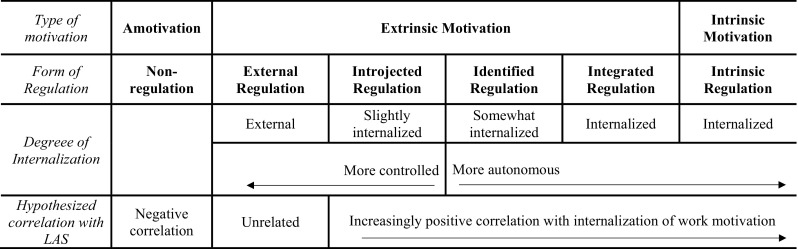
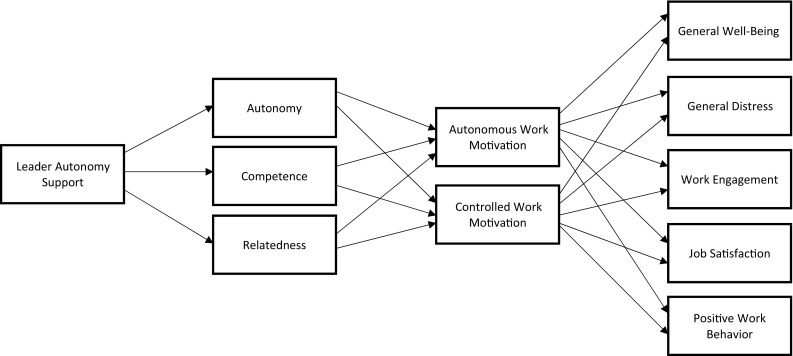
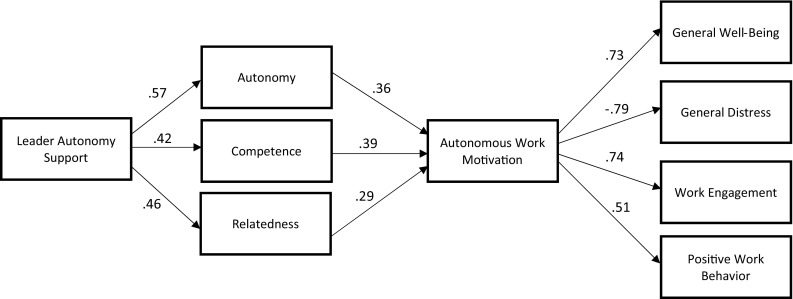
Leader autonomy support (LAS) refers to a cluster of supervisory behaviors that are theorized to facilitate self-determined motivation in employees, potentially enabling well-being and performance. We report the results of a meta-analysis of perceived LAS in work settings, drawing from a database of 754 correlations across 72 studies (83 unique samples, N = 32,870). Results showed LAS correlated strongly and positively with autonomous work motivation, and was unrelated to controlled work motivation. Correlations became increasingly positive with the more internalized forms of work motivation described by self-determination theory. LAS was positively associated with basic needs, well-being, and positive work behaviors, and was negatively associated with distress. Correlations were not moderated by the source of LAS, country of the sample, publication status, or the operationalization of autonomy support. In addition, a meta-analytic path analysis supported motivational processes that underlie LAS and its consequences in workplaces. Overall, our findings lend support for autonomy support as a leadership approach that is consistent with self-determination and optimal functioning in work settings.
Overview
The claims and statistics of this paper haven’t been checked yet.
Free: it reads the open-access text and checks the first 5 claims that cite a source we can check. Create a free account to check every claim.
Integrity signals
Registry
Cites
Statistics
Figures
Verification
Claims the paper makes
The claims and statistics of this paper haven’t been checked yet.
Free: it reads the open-access text and checks the first 5 claims that cite a source we can check. Create a free account to check every claim.
Claims other papers make about this one
Each is checked against this paper’s own text: does it say what the citing paper says it does?
The source backs part of the claim, not all of it — or backs it for a different population, condition or comparison.
In the citing paper
“Confirming existing research (Slemp et al., 2018(Slemp et al., , 2020)), the relationship between autonomy support and structure did not vary among individualistic versus collectivistic cultures in our sample.”
From Blending Teacher Autonomy Support and Provision of Structure in the Classroom for Optimal Motivation: A Systematic Review and Meta-Analysis (2025) · cites this paper as Slemp et al., 2018
Experimental — accuracy not yet measuredThe source backs part of the claim, not all of it — or backs it for a different population, condition or comparison.
In the citing paper
“it fosters agentic employee work behaviors and reduces employee job strain and burnout (Slemp et al., 2018).”
From Job Demands—Resources theory and self-regulation: New explanations and remedies for job burnout (2021) · cites this paper as Slemp et al., 2018
Experimental — accuracy not yet measuredThe cited source says what the claim attributes to it.
In the citing paper
“Meta-analytic evidence shows culture does not moderate the relationship between autonomy support and need satisfaction (Slemp et al., 2018) or teacher outcomes (Slemp et al., 2020).”
From Blending Teacher Autonomy Support and Provision of Structure in the Classroom for Optimal Motivation: A Systematic Review and Meta-Analysis (2025) · cites this paper as Slemp et al., 2018
The cited source says what the claim attributes to it.
In the citing paper
“Cross-cultural evidence has now been meta-analytically analyzed with autonomy as defined within BPNT appearing to carry similar benefits for individuals from diverse cultures (e.g., Slemp et al. 2018;Yu et al. 2018).”
From Basic psychological need theory: Advancements, critical themes, and future directions (2020) · cites this paper as Slemp et al. 2018
Self-check
Percentages, sums and reported differences re-computed from the paper’s own numbers.
The self-check needs the paper’s full text.
Citations
Cites
Hu, L., & Bentler, P. M. (1999) · Structural Equation Modeling A Multidisciplinary Journal · doi:10.1080/10705519909540118 · Cited by 108,788
Statistical Power Analysis for the Behavioral Sciences
Muller, K. (1989) · Technometrics · doi:10.1080/00401706.1989.10488618 · Cited by 99,167
Podsakoff, P. M., MacKenzie, S. B., Lee, J.-Y., & Podsakoff, N. P. (2003) · Journal of Applied Psychology · doi:10.1037/0021-9010.88.5.879 · Cited by 82,194 · cited 1×
“Finally, almost all of the measures in the studies were self-report instruments, which raises the possibility that our results are affected by self-report bias and shared method variance (Podsakoff et al. 2003).”
BackgroundStatistical power analysis for the behavioral sciences
(1990) · Computers, Environment and Urban Systems · doi:10.1016/0198-9715(90)90050-4 · Cited by 65,269
Ryan, R. M., & Deci, E. L. (2000) · American Psychologist · doi:10.1037//0003-066x.55.1.68 · Cited by 54,599 · cited 10×
“An important part of this SDT framework is the process of internalization, which refers to a natural tendency for people to transform controlled motivation into more autonomous forms of motivation (Ryan and Deci 2000).”
BackgroundResultInfluentialSelf-citationThe "what" and "why" of goal pursuits: Human needs and the self-determination of behavior
Deci, E. L., & Ryan, R. M. (2000) · Psychological Inquiry · doi:10.1207/s15327965pli1104_01 · Cited by 34,210 · cited 1×
“Relations of leader autonomy support to basic needs, well‑being, and work outcomes SDT posits that individuals experience optimal psychological functioning to the extent that three basic psychological needs for autonomy, competence, and relatedness are satisfied (Deci and Ryan 2000).”
BackgroundSelf-citationlavaan : An R Package for Structural Equation Modeling
Rosseel, Y. (2012) · Journal of Statistical Software · doi:10.18637/jss.v048.i02 · Cited by 27,955 · cited 1×
“The path analysis was performed using the lavaan package (Rosseel 2012) of the open source R software (version 3.3.1), using Ordinary Least Squares (OLS) estimation.”
MethodInfluentialCulture's Consequences: Comparing Values, Behaviors, Institutions, and Organizations across Nations
Bhagat, R. S., & Hofstede, G. (2002) · The Academy of Management Review · doi:10.2307/4134391 · Cited by 21,664
Borenstein, M., Hedges, L. V., Higgins, J. P. T., & Rothstein, H. R. (2009) · doi:10.1002/9780470743386 · Cited by 14,225
Self-Determination Theory: Basic Psychological Needs in Motivation, Development, and Wellness
(2017) · doi:10.1521/978.14625/28806 · Cited by 12,588
Self-citation
Research works printed but not linked: 2
- Schmidt FL Le H Software for the Hunter-Schmidt meta-analysis methods, version 2.0 2014 Iowa City, IA University of Iowa, Department of Management & Organizations
- Slemp GR Oades LG Steger MF Delle Fave A Passmore J Job Crafting The Wiley Blackwell handbook of the psychology of positivity and strengths-based approaches at work 2017 Hoboken Wiley 342 365
Cited by
Basic psychological need theory: Advancements, critical themes, and future directions
Vansteenkiste, M., Ryan, R. M., & Soenens, B. (2020) · Motivation and Emotion · doi:10.1007/s11031-019-09818-1 · Cited by 1,891
“Abundant research, some of which has been summarized in meta-analyses (Ng et al. 2012; Slemp et al. 2018; Van den Broeck et al. 2016; Vasquez et al. 2016; Yu et al. 2018), has since shown that these three psychological needs indeed play a prominent role in development, adjustment, and wellness across cultures, with st…”
Self-citationNtoumanis, N., Ng, J. Y. Y., Prestwich, A., Quested, E., Hancox, J. E., Thøgersen-Ntoumani, C., Deci, E. L., Ryan, R. M., Lonsdale, C., & Williams, G. C. (2021) · Health Psychology Review · doi:10.1080/17437199.2020.1718529 · Cited by 1,154
Self-citationJob Demands—Resources theory and self-regulation: New explanations and remedies for job burnout
Bakker, A. B., & de Vries, J. D. (2021) · Anxiety, Stress, & Coping · doi:10.1080/10615806.2020.1797695 · Cited by 1,131
“, 2017); it fosters agentic employee work behaviors and reduces employee job strain and burnout (Slemp et al., 2018).”
BackgroundStudent Motivation and Associated Outcomes: A Meta-Analysis From Self-Determination Theory
Howard, J. L., Bureau, J., Guay, F., Chong, J. X. Y., & Ryan, R. M. (2021) · Perspectives on Psychological Science · doi:10.1177/1745691620966789 · Cited by 1,001
“Recent meta-analytic research in different domains, although not exactingly paralleling our methods, has in fact revealed findings that are generally consistent with those of the present study, holding promise for such generalizability (e.g., Ntoumanis et al., 2021; Slemp et al., 2018; Vasconcellos et al., 2019).”
ResultSelf-citationSelf-determination theory applied to physical education: A systematic review and meta-analysis.
Vasconcellos, D., Parker, P. D., Hilland, T., Cinelli, R., Owen, K. B., Kapsal, N., Lee, J., Antczak, D., Ntoumanis, N., Ryan, R. M., et al. (2020) · Journal of Educational Psychology · doi:10.1037/edu0000420 · Cited by 811
Self-citationBrick by Brick: The Origins, Development, and Future of Self-Determination Theory
Ryan, R. M., & Deci, E. L. (2019) · Advances in Motivation Science · doi:10.1016/bs.adms.2019.01.001 · Cited by 697
“This was supported in a recent meta-analysis by Slemp et al. (2018). Drawing form over 30,000 employees from 70 firms in nine nations, Slemp et al.”
ResultSelf-citationAhmadi, A., Noetel, M., Parker, P., Ryan, R. M., Ntoumanis, N., Reeve, J., Beauchamp, M., Dicke, T., Yeung, A., Ahmadi, M., et al. (2023) · Journal of Educational Psychology · doi:10.1037/edu0000783 · Cited by 476
Self-citationUnderstanding and shaping the future of work with self-determination theory
Gagné, M., Parker, S. K., Griffin, M. A., Dunlop, P. D., Knight, C., Klonek, F. E., & Parent-Rocheleau, X. (2022) · Nature Reviews Psychology · doi:10.1038/s44159-022-00056-w · Cited by 434
Van den Broeck, A., Howard, J. L., Van Vaerenbergh, Y., Leroy, H., & Gagné, M. (2021) · Organizational Psychology Review · doi:10.1177/20413866211006173 · Cited by 409
“These assumptions stand in strong contrast to SDT’s claim of being universal (Deci & Ryan, 2000), and research supporting SDT’s propositions in collective cultures (Chirkov et al., 2003; Slemp et al., 2018; Yu et al., 2018) and among blue-collar workers (Ilardi et al., 1993).”
Ryan, R. M., Deci, E. L., Vansteenkiste, M., & Soenens, B. (2021) · Motivation Science · doi:10.1037/mot0000194 · Cited by 394
“Another meta-analysis by Slemp et al. (2018) showed that across nine countries managers’ autonomy support was similarly associated with employees’ basic need satisfactions, work autonomy and thriving.”
BackgroundSelf-citationFactors Associated with Teacher Wellbeing: A Meta-Analysis
Zhou, S., Slemp, G. R., & Vella‐Brodrick, D. (2024) · Educational Psychology Review · doi:10.1007/s10648-024-09886-x · Cited by 312
“For example, positive workplace climates are thought to facilitate higher levels of autonomous motivation for work, and in turn, wellbeing (e.g., Collie, 2023c; Slemp et al., 2018).”
Self-citationSelf-Determination Theory and Workplace Outcomes: A Conceptual Review and Future Research Directions
McAnally, K., & Hagger, M. S. (2024) · Behavioral Sciences · doi:10.3390/bs14060428 · Cited by 296
“The review focuses on prior primary research applying self-determination theory in workplace contexts, particularly research referred to in leading conceptual, systematic, and meta-analytic reviews in this context [26,29,35] and key primary studies that have been published since [13,36].”
BackgroundInfluentialManaging Employee Performance and Reward: Concepts, Practices, Strategies
Shields, J. L., Brown, M., Kaine, S., Dolle-Samuel, C., North-Samardzic, A., McLean, P., Johns, R., O’Leary, P., Plimmer, G., & Robinson, J. (2007) · Cambridge University Press eBooks · doi:10.1017/9781009520355 · Cited by 271
Teacher well‐being and turnover intentions: Investigating the roles of job resources and job demands
Collie, R. J. (2023) · British Journal of Educational Psychology · doi:10.1111/bjep.12587 · Cited by 258
“Principals who promote teachers' self-initiative and self-empowerment help teachers to feel supported, trusted, and agentic at work (Slemp et al., 2018), which are important for well-being.”
Slemp, G. R., Lee, M. A., & Mossman, L. H. (2021) · Journal of Occupational and Organizational Psychology · doi:10.1111/joop.12338 · Cited by 234
“In the workplace, autonomy support refers to actions that foster more exploratory, discretionary work behaviours: offering opportunities for choice and input, encouraging self-initiation, and avoiding the use of external controls such as rewards or sanctions to prompt specific job behaviours (Deci, Connell, & Ryan, 19…”
BackgroundMethodInfluentialSelf-citationMotivating workers: how leaders apply self-determination theory in organizations
Forner, V. W., Jones, M., Berry, Y. J., & Eidenfalk, J. (2020) · Organization Management Journal · doi:10.1108/omj-03-2020-0891 · Cited by 236
Kohnen, D., Witte, H. D., Schaufeli, W. B., Dello, S., Bruyneel, L., & Sermeus, W. (2024) · Human Resources for Health · doi:10.1186/s12960-023-00886-6 · Cited by 237
“These findings find support by Slemp et al. [38] who conducted a meta-analytic review of 72 studies on the motivational processes and consequences of leader autonomy support in the workplace—behaviours that may be also typical of EL.”
ResultSæther, E. A. (2019) · The Journal of High Technology Management Research · doi:10.1016/j.hitech.2019.100350 · Cited by 233
Family Business Succession: What’s Motivation Got to Do With It?
Gagné, M., Marwick, C., de Pontet, S. B., & Wrosch, C. (2019) · Family Business Review · doi:10.1177/0894486519894759 · Cited by 207
“These results echo what has been found more generally about the role of need support and need satisfaction in employee motivation (Slemp et al., 2018; Van den Broeck et al., 2016).”
ResultHamann, K. R. S., Wullenkord, M. C., Reese, G., & van Zomeren, M. (2023) · Personality and Social Psychology Review · doi:10.1177/10888683231178056 · Cited by 202
“By highlighting the need for desirable efficacy aims, we create a basis for discussing the (autonomous) motivation behind those aims (Deci & Ryan, 1985, 2000b; Núñez & León, 2015; Ryan & Deci, 2017; Slemp et al., 2018).”
BackgroundDonald, J. N., Bradshaw, E. L., Ryan, R. M., Basarkod, G., Ciarrochi, J., Duineveld, J. J., Guo, J., & Sahdra, B. K. (2020) · Personality and Social Psychology Bulletin · doi:10.1177/0146167219896136 · Cited by 182
“Autonomous motivation has been associated with wellness, vitality, and flourishing across contexts (e.g., Slemp et al., 2018), cultures (e.g., Yu et al., 2018), and age groups (e.g., Duineveld et al., 2017).”
BackgroundSelf-citationSlemp, G. R., Field, J. G., Ryan, R. M., Forner, V. W., Van den Broeck, A., & Lewis, K. J. (2024) · Journal of Personality and Social Psychology · doi:10.1037/pspi0000459 · Cited by 182
“An opportunity for future work is to establish cross-domain meta-analytic data that could be tested via a structural equation model (see Bureau et al., 2022; Ng et al., 2012; Slemp et al., 2018; Vasconcellos et al., 2020, for examples within speci fi c domains).”
InfluentialSelf-citationMartela, F., Hankonen, N. E., Ryan, R. M., & Vansteenkiste, M. (2021) · European Review of Social Psychology · doi:10.1080/10463283.2020.1857082 · Cited by 185
“, 2014), and workplaces (Slemp et al., 2018) have confirmed the critical role of autonomy-support in fostering adherence and commitment to transmitted guidelines.”
BackgroundInfluentialSelf-citationA meta-analysis of autonomous and controlled forms of teacher motivation
Slemp, G. R., Field, J. G., & Cho, A. S. H. (2020) · Journal of Vocational Behavior · doi:10.1016/j.jvb.2020.103459 · Cited by 179
Self-citationKong, H., Yin, Z., Chon, K., Yuan, Y., & Yu, J. (2024) · Journal of Hospitality Marketing & Management · doi:10.1080/19368623.2023.2258116 · Cited by 179
“…of supervisor autonomy support on individuals’ work satisfaction, wellbeing, and positive work behaviors (Baard et al., 2004; Gillet et al., 2013; Slemp et al., 2018), we take employees’ innovative performance (an effective performance in “implementing ideas toward better procedures, practices,…”
BackgroundMutonyi, B. R., Slåtten, T., Lien, G., & González‐Piñero, M. (2022) · BMC Health Services Research · doi:10.1186/s12913-022-08042-x · Cited by 172
“The findings of this study are in line with the meta-analysis by Slemp, Kern [112], who asserted the importance of understanding organizational culture and its effect on leadership autonomy support at work.”
ResultAutonomy support in sport and exercise settings: a systematic review and meta-analysis
Mossman, L. H., Slemp, G. R., Lewis, K. J., Colla, R. H., & O’Halloran, P. (2024) · International Review of Sport and Exercise Psychology · doi:10.1080/1750984x.2022.2031252 · Cited by 163
“…predict all three basic needs — not just autonomy — because self-governed behaviors made possible by autonomy support allow people to seek out and fi nd ful fi lment across all three needs, including competence and relatedness (Bartholomew et al., 2010, 2011; Ryan & Deci, 2017; Slemp et al., 2018).”
BackgroundResultInfluentialSelf-citationA meta‐analysis of the effects of electronic performance monitoring on work outcomes
Ravid, D. M., White, J. C., Tomczak, D. L., Miles, A. F., & Behrend, T. S. (2023) · Personnel Psychology · doi:10.1111/peps.12514 · Cited by 159
Huyghebaert‐Zouaghi, T., Ntoumanis, N., Berjot, S., & Gillet, N. (2020) · Journal of Career Assessment · doi:10.1177/1069072720978792 · Cited by 154
“Research based on SDT has consistently shown the key role played by need-supportive and thwarting supervisory behaviors in the prediction of employees’ psychological need states (e.g., Gillet et al., 2012a; Slemp et al., 2018).”
BackgroundSelf‐determination theory and its implications for team motivation
Grenier, S., Gagné, M., & O’Neill, T. (2024) · Applied Psychology · doi:10.1111/apps.12526 · Cited by 149
Engaging leadership: Enhancing work engagement through intrinsic values and need satisfaction
van Tuin, L., Schaufeli, W. B., & den Broeck, A. V. (2021) · Human Resource Development Quarterly · doi:10.1002/hrdq.21430 · Cited by 144
“Through empowering and autonomy support, leaders recognize the individual contributions of team members which induce positive work behaviors (Slemp et al., 2018).”
BackgroundBasic Psychological Needs in the Work Context: A Systematic Literature Review of Diary Studies
Coxen, L., van der Vaart, L., den Broeck, A. V., & Rothmann, S. (2021) · Frontiers in Psychology · doi:10.3389/fpsyg.2021.698526 · Cited by 128
“However, from the literature, it is evident that the interpersonal behaviours of leaders are important for need satisfaction (Ryan and Deci, 2017; Slemp et al., 2018).”
BackgroundEbersold, S., Rahm, T., & Heise, E. (2019) · Social Psychology of Education · doi:10.1007/s11218-019-09499-1 · Cited by 125
“Correspondingly, recent meta-analytic reviews of leader autonomy support in the workplace show that leader autonomy support and employee satisfaction of each of the three needs were strongly and positively correlated, though the strongest association was found with autonomy satisfaction (Slemp et al. 2018; Van den Bro…”
BackgroundTeachers’ work motivation: Examining perceived leadership practices and salient outcomes
Collie, R. J. (2023) · Teaching and Teacher Education · doi:10.1016/j.tate.2023.104348 · Cited by 126
“Prior work has shown that teachers ’ perceptions of autonomy-supportive leadership practices are associated with positive work-related experiences (Ebersold et al., 2019; Ryan et al., 2022; Slemp et al., 2018), including motivation (Collie et al., 2016; Nie et al., 2015; Wu et al., 2022).”
Self-Determination Theory and Its Relation to Organizations
Olafsen, A. H., & Deci, E. L. (2020) · Oxford University Press eBooks · doi:10.1093/acrefore/9780190236557.013.112 · Cited by 120
Koopman, J., Rosen, C. C., Gabriel, A. S., Puranik, H. G., Johnson, R. E., & Ferris, D. L. (2019) · Personnel Psychology · doi:10.1111/peps.12354 · Cited by 115
Well-Being, Burnout, and Depression Among North American Psychiatrists: The State of Our Profession
Summers, R. F., Gorrindo, T., Hwang, S., Aggarwal, R., & Guille, C. (2020) · American Journal of Psychiatry · doi:10.1176/appi.ajp.2020.19090901 · Cited by 119
Howard, J. L., Slemp, G. R., & Wang, X. (2025) · Personality and Social Psychology Bulletin · doi:10.1177/01461672231225364 · Cited by 114
“…other related sources for relevant records we may have missed, including reference lists from Cochrane library sources, and reference lists of key SDT-related books, literature reviews, empirical papers, and book chapters (e.g., Howard et al., 2017; Mossman et al., 2022; Slemp et al., 2018).”
Self-citationJob crafting, leader autonomy support, and passion for work: Testing a model in Australia and China
Slemp, G. R., Zhao, Y., Hou, H., & Vallerand, R. J. (2020) · Motivation and Emotion · doi:10.1007/s11031-020-09850-6 · Cited by 105
Self-citationInclusive leadership and innovative work behaviour: the mediating role of job autonomy
Shakil, R. M., Memon, M. A., & Ting, H. (2021) · Quality & Quantity · doi:10.1007/s11135-021-01102-0 · Cited by 102
Rewards, autonomous motivation and turnover intention: Results from a non-Western cultural context
Mustafa, G., & Ali, N. (2019) · Cogent Business & Management · doi:10.1080/23311975.2019.1676090 · Cited by 102
“…supportive interpersonal environments have been found to encourage more autonomous motivation in different contexts (Gillet et al., 2013; Koponen, Simonsen, & Suominen, 2017; Kuvaas, 2009; Muraven, Gagné, & Rosman, 2008; Nie, Chua, Yeung, Ryan, & Chan, 2015; Slemp, Kern, Patrick, & Ryan, 2018).”
Basic Psychological Need‐Satisfying Activities during the COVID‐19 Outbreak
Behzadnia, B., & FatahModares, S. (2020) · Applied Psychology Health and Well-Being · doi:10.1111/aphw.12228 · Cited by 95
Daily Self-Leadership and Playful Work Design: Proactive Approaches of Work in Times of Crisis
Bakker, A. B., Breevaart, K., Scharp, Y. S., & de Vries, J. D. (2021) · The Journal of Applied Behavioral Science · doi:10.1177/00218863211060453 · Cited by 94
“Previous studies have particularly shown that the availability or provision of job resources like social support and job autonomy can satisfy basic needs (Slemp et al., 2018; Van den Broeck et al., 2016).”
BackgroundSatisfying Newcomers’ Needs: The Role of Socialization Tactics and Supervisor Autonomy Support
Chong, J. X. Y., Beenen, G., Gagné, M., & Dunlop, P. D. (2020) · Journal of Business and Psychology · doi:10.1007/s10869-019-09678-z · Cited by 94
Gardner, D. G. (2019) · Personality and Individual Differences · doi:10.1016/j.paid.2019.109731 · Cited by 85
Self-Determination Theory and Language Learning: A Multilevel Meta-Analysis
Alamer, A., Robat, E. S., Shirvan, M. E., & Ryan, R. M. (2025) · Educational Psychology Review · doi:10.1007/s10648-025-10038-y · Cited by 87
Self-citationMotivations for personal financial management: A Self-Determination Theory perspective
Domenico, S. I. D., Ryan, R. M., Bradshaw, E. L., & Duineveld, J. J. (2022) · Frontiers in Psychology · doi:10.3389/fpsyg.2022.977818 · Cited by 70
“, 2017) and supported metaanalytically (Slemp et al., 2018).”
BackgroundSelf-citationPelletier, L. G., & Rocchi, M. (2023) · Oxford University Press eBooks · doi:10.1093/oxfordhb/9780197600047.013.4 · Cited by 71
Yang, D., Chen, P., Wang, H., Wang, K., & Huang, R. (2022) · Frontiers in Psychology · doi:10.3389/fpsyg.2022.925955 · Cited by 65
Motivational school climate and teachers' achievement goal orientations: A hierarchical approach
Dickhäuser, O., Janke, S., Daumiller, M. H., & Dresel, M. (2020) · British Journal of Educational Psychology · doi:10.1111/bjep.12370 · Cited by 65
Autonomy supportive and controlling leadership as antecedents of work design and employee well-being
Sarmah, P., den Broeck, A. V., Schreurs, B. H. J., Proost, K., & Germeys, F. (2021) · BRQ Business Research Quarterly · doi:10.1177/23409444211054508 · Cited by 68
“Extant literature shows that to motivate their employees, autonomy supportive leaders indeed allow them to exercise autonomy, pursue their interests, and build their skills to enhance competence (Slemp et al., 2018).”
InfluentialDonald, J. N., Bradshaw, E. L., Conigrave, J. H., Parker, P. D., Byatt, L. L., Noetel, M., & Ryan, R. M. (2021) · Psychological Bulletin · doi:10.1037/bul0000338 · Cited by 65
Self-citationHartnell, C. A., Christensen-Salem, A., Walumbwa, F. O., Stotler, D. J., Chiang, F. F. T., & Birtch, T. A. (2023) · Journal of Business Ethics · doi:10.1007/s10551-023-05330-2 · Cited by 67
“…for choice, encourage self-initiation, promote decision-making latitude, and refrain from using rewards and sanctions to motivate employees (Baard et al., 2004; Slemp et al., 2018), thereby making the job more interesting by fostering responsibility over work outcomes (Hum-phrey et al., 2007).”
BackgroundInfluentialContemplative interventions and employee distress: A meta‐analysis
Slemp, G. R., Jach, H. K., Chia, A., Loton, D. J., & Kern, M. L. (2019) · Stress and Health · doi:10.1002/smi.2857 · Cited by 47
Self-citationThe tripartite model of intrinsic motivation in education: A 30‐year retrospective and meta‐analysis
Howard, J. L., Chong, J. X. Y., & Bureau, J. S. (2020) · Journal of Personality · doi:10.1111/jopy.12570 · Cited by 64
“…despite our observation that competence is the most impactful predictor of intrinsic motivations in education settings, autonomy has been shown to be the most important predictor of general intrinsic motivation in work-places (Slemp et al., 2018; Van den Broeck, Ferris, Chang, & Rosen, 2016).”
Wannheden, C., Stenfors, T., Stenling, A., & Schwarz, U. V. T. (2021) · Frontiers in Public Health · doi:10.3389/fpubh.2020.623773 · Cited by 63
Toxic Leadership and Empowering Leadership: Relations with Work Motivation
Semedo, C., Salvador, A., dos Santos, N. R., Pais, L., & Mónico, L. D. S. M. (2022) · Psychology Research and Behavior Management · doi:10.2147/prbm.s340863 · Cited by 63
“This confirms previous results showing leader autonomy support strengthens higher forms of work motivation such as identified and intrinsic work motivation.(9) However, in our results, the effect of empowering leadership is preserved even if the leader has some narcissistic dimension in the way he or she performs the…”
BackgroundResultAddimando, L. (2019) · Frontiers in Psychology · doi:10.3389/fpsyg.2019.02129 · Cited by 63
Predictors and outcomes of teachers’ burnout trajectories over a seven-year period
Gillet, N., Morin, A. J. S., Sandrin, É., & Fernet, C. (2022) · Teaching and Teacher Education · doi:10.1016/j.tate.2022.103781 · Cited by 60
“Likewise, changes in the need-supportive conditions of the school board to foster more positive leadership behaviors and skills among principals may be useful to help teachers cope with job stressors and burnout (Slemp et al., 2018).”
BackgroundParent, N. (2023) · Human Development · doi:10.1159/000529449 · Cited by 54
Huyghebaert‐Zouaghi, T., Morin, A. J. S., Ntoumanis, N., Berjot, S., & Gillet, N. (2022) · Applied Psychology · doi:10.1111/apps.12423 · Cited by 55
“…core assumption of SDT has thus far been supported across various domains in research focusing on the need supportive interpersonal behaviors of sport coaches (Ntoumanis et al., 2018), healthcare workers (Ntoumanis et al., 2020), teachers (Cheon et al., 2019), and supervisors (Slemp et al., 2018).”
BackgroundInfluentialClerck, T. D., Aelterman, N., Haerens, L. L., & Willem, A. (2020) · Nonprofit Management and Leadership · doi:10.1002/nml.21444 · Cited by 53
Towards a neo-configurational theory of intrinsic motivation
Swiatczak, M. D. (2021) · Motivation and Emotion · doi:10.1007/s11031-021-09906-1 · Cited by 53
Patzak, A., & Zhang, X. (2025) · Educational Psychology Review · doi:10.1007/s10648-025-09994-2 · Cited by 52
“Confirming existing research (Slemp et al., 2018, 2020), the relationship between autonomy support and structure did not vary among individualistic versus collectivistic cultures in our sample.”
Weinstein, N., Haddock, G., Chubb, J., Wilsdon, J., & Manville, C. M. (2023) · Higher Education Quarterly · doi:10.1111/hequ.12420 · Cited by 53
“Specifically, individuals are supported for their need for autonomy when they can have a voice at work and make meaningful decisions (Slemp et al., 2015 , 2018).”
BackgroundDong, E., Liu, H., Li, J.-Y., & Lee, Y. (2024) · Public Relations Review · doi:10.1016/j.pubrev.2024.102509 · Cited by 53
Mouratidis, A. A., Michou, A., Sayıl, M., & Altan, S. (2020) · Learning and Instruction · doi:10.1016/j.learninstruc.2020.101433 · Cited by 52
Ni, Y., Wu, D., Bao, Y., Li, J., & You, G. (2022) · International Nursing Review · doi:10.1111/inr.12797 · Cited by 51
Early childhood educators’ workplace well-being: It’s everyone’s right!
Jones, C., Johnstone, M., Hadley, F., & Waniganayake, M. (2020) · Australasian Journal of Early Childhood · doi:10.1177/1836939120966086 · Cited by 50
“Extant literature of workplace well-being and SDT in a diverse range of sectors suggests an autonomy-supportive leader context (i.e., one who supports the satisfaction of autonomy, competence and relatedness) positively influences employee well-being (Deci et al., 2001; Slemp et al., 2018).”
BackgroundWu, G., Zhang, L., Liu, X., & Liang, Y. (2022) · Current Psychology · doi:10.1007/s12144-022-03147-2 · Cited by 51
How supervisors can support employees' needs and motivation? an experimental study based on SDT
Kaabomeir, N., Mazhari, K., Arshadi, N., & Karami, M. (2022) · Current Psychology · doi:10.1007/s12144-022-02922-5 · Cited by 52
“…Van den Broeck, Cooman et al., 2013, De Cooman et al., 2013), hardiness and persistence (Deci & Ryan, 2008), in-role performance (Moran, Diefendorff, Kim, & Liu, 2012), job engagement (Slemp et al., 2018), creativity (Kark et al., 2018), and lower turnover intentions (Williams et al., 2014).”
Factors Impacting Work Engagement of Gen Z Employees: A Regression Analysis
Lee, C. C., Aravamudhan, V., Roback, T., Lim, H. S., & Ruane, S. G. (2021) · Journal of Leadership Accountability and Ethics · doi:10.33423/jlae.v18i3.4414 · Cited by 48
A meta-analysis of leadership and intrinsic motivation: examining relative importance and moderators
Xue, H., Luo, Y., Luan, Y., & Wang, N. (2022) · Frontiers in Psychology · doi:10.3389/fpsyg.2022.941161 · Cited by 47
“This argument has been confirmed by meta-analytic evidence (Slemp et al., 2018).”
ResultSedlářík, Z., Bauwens, R., & Engen, M. L. V. (2023) · Leadership & Organization Development Journal · doi:10.1108/lodj-12-2021-0545 · Cited by 46
Naegle, M. A., Kelly, L. A., Embree, J. L., Valentine, N. M., Sharp, D. L., Grinspun, D. R., Hines-Martin, V. P., Crawford, C. L., & Rosa, W. E. (2023) · Nursing Outlook · doi:10.1016/j.outlook.2023.101917 · Cited by 46
Business Results and Well-Being: An Engaging Leadership Intervention Study
van Tuin, L., Schaufeli, W. B., van Rhenen, W., & Kuiper, R. M. (2020) · International Journal of Environmental Research and Public Health · doi:10.3390/ijerph17124515 · Cited by 45
“It also substantiates the claim that basic need satisfaction through autonomy-supportive leadership behaviors, such as described in engaging leadership, positively associates with enhanced performance [11,65,66].”
BackgroundYun, M.-S., Lee, M. Y., & Choi, E.-H. (2024) · BMC Nursing · doi:10.1186/s12912-024-01845-9 · Cited by 45
“As positive psychological capital influences employees’ positivity toward their work and the organization [60], individuals with a highly positive mentality tend to work actively toward achieving their goals and take the initiative in designing their work [61].”
BackgroundMustafa, M., Ramos, H. M., & Badri, S. K. Z. (2020) · Journal of Family Business Management · doi:10.1108/jfbm-08-2020-0079 · Cited by 46
Holtan, K. H., Halvari, A. E. M., Olafsen, A. H., Øvergård, K. I., & Halvari, H. (2024) · Journal of Advanced Nursing · doi:10.1111/jan.16084 · Cited by 46
Mission command: A self-determination theory perspective
Knevelsrud, H.-C., Sørlie, H. O., & Valaker, S. (2023) · Military Psychology · doi:10.1080/08995605.2023.2252718 · Cited by 44
“For example, Slemp et al. (2018) found that satisfaction of the basic needs for autonomy, competence, and relatedness mediates the effect of leadership on autonomous motivation, which in turn influences work performance and well-being.”
Gagné, M., Morin, A. J. S., Schabram, K., Wang, Z. N., Chemolli, E., & Briand, M. (2020) · Journal of Business and Psychology · doi:10.1007/s10869-019-09649-4 · Cited by 41
Self‐Determination Theory and Workplace Outcomes: A Meta‐Analysis
Hagger, M. S., & McAnally, K. (2026) · Stress and Health · doi:10.1002/smi.70151 · Cited by 43
Jungert, T., Schattke, K. P., Proulx, F. A., Taylor, G., & Koestner, R. (2020) · Canadian Journal of Administrative Sciences / Revue Canadienne des Sciences de l Administration · doi:10.1002/cjas.1598 · Cited by 44
Bradshaw, E. L., Ryan, R. M., Noetel, M., Saeri, A. K., Slattery, P., Grundy, E. A. C., & Calvo, R. A. (2021) · Frontiers in Psychology · doi:10.3389/fpsyg.2020.591638 · Cited by 41
“…messages provide a meaningful rationale for a recommendation and minimize feelings of pressure by emphasizing individual choice (e.g., Jang, 2008) thereby promoting behavior endorsement due to identified value, rather than external pressure (Ryan and Deci, 2017; Vansteenkiste et al., 2018).”
BackgroundSelf-citationNi, Y., Wen, Y., Xu, Y., He, L., & You, G.-Y. (2023) · Frontiers in Public Health · doi:10.3389/fpubh.2023.1123580 · Cited by 40
A Longitudinal Person-Centered Perspective on Positive and Negative Affect at Work
Sandrin, É., Morin, A. J. S., Fernet, C., & Gillet, N. (2020) · The Journal of Psychology · doi:10.1080/00223980.2020.1781033 · Cited by 40
“Contrary to those found by Slemp et al. (2018) in their recent meta-analysis (see also Gillet, Colombat et al., 2013; Gillet, Gagné et al., 2013), these results suggest that supervisor autonomy-supportive behaviors did not predict workers’ affect.”
BackgroundResultSelf-determination Theory and Social Work Values
Kirzner, R. S., & Miserandino, M. (2023) · Research on Social Work Practice · doi:10.1177/10497315231155424 · Cited by 40
“…is a broad theory of engagement, motivation, and human flourishing that has been applied effectively in education (Miserandino, 1996; Reeve & Cheon, 2021), business (Slemp et al., 2018), health care (Ntoumanis et al., 2020; Ryan et al., 2008), and, more recently, social work (Kirzner et al., 2021).”
BackgroundDeHaan, C. R., Bradshaw, E. L., Diaz-Castillo, S., Trautman, T. C., Rigby, C. S., & Ryan, R. M. (2024) · Frontiers in Psychology · doi:10.3389/fpsyg.2024.1413901 · Cited by 38
Self-citationSelf-determination theory in the workplace: the evolution, present, and beyond
Gagné, M., Olafsen, A. H., Carpini, J. A., & Frølund, C. W. (2026) · Journal of Business Research · doi:10.1016/j.jbusres.2026.116146 · Cited by 39
Balk, Y. A., de Jonge, J., Geurts, S. A. E., & Oerlemans, W. G. M. (2019) · Psychology of Sport and Exercise · doi:10.1016/j.psychsport.2019.04.020 · Cited by 37
Balancing the Freedom–Security Trade-Off During Crises and Disasters
Cheek, N. N., Reutskaja, E., & Schwartz, B. N. (2022) · Perspectives on Psychological Science · doi:10.1177/17456916211034499 · Cited by 37
Jungert, T., Dubord, M. G., Högberg, M., & Forest, J. (2022) · International Journal of Training and Development · doi:10.1111/ijtd.12267 · Cited by 38
Chong, J. X. Y., Gagné, M., Dunlop, P. D., & Wee, S. (2024) · Human Resource Management Review · doi:10.1016/j.hrmr.2024.101041 · Cited by 37
Self-Determination Theory for Work Motivation
Chong, J. X. Y., & Gagné, M. (2019) · Oxford University Press eBooks · doi:10.1093/obo/9780199846740-0182 · Cited by 38
Fleming, C. M., Calvert, H. G., & Turner, L. R. (2023) · School Mental Health · doi:10.1007/s12310-023-09594-x · Cited by 39
“Prior research has shown that an outcome of successful transformational leadership is an increase in workers’ feelings of autonomy and self-directed motivation (Slemp et al., 2018) and that autonomous teacher motivation is negatively associated with distress and burnout (Slemp et al.”
BackgroundNtoumanis, N. (2022) · Advances in motivation science · doi:10.1016/bs.adms.2022.11.002 · Cited by 36
Leadership Training to Increase Need Satisfaction at Work: A Quasi-Experimental Mixed Method Study
Tafvelin, S., Schwarz, U. V. T., & Stenling, A. (2019) · Frontiers in Psychology · doi:10.3389/fpsyg.2019.02175 · Cited by 35
“Empirical studies suggest that managers’ display of need support is an important predictor of employee need satisfaction at work (Gagné, 2014; Slemp et al., 2018).”
BackgroundExploring Volunteer Turnover Reasons, Intentions, and Behavior
Holtrop, D., Soo, C. W., Gagné, M., Kragt, D., Dunlop, P. D., & Luksyte, A. (2024) · Group & Organization Management · doi:10.1177/10596011241237841 · Cited by 33
“…theory may offer solutions to this problem with the use of autonomy supportive technique to help volunteers internalize the reasons for the need for strict procedures and structures, such as providing a rationale and acknowledging feelings (Slemp et al., 2018, 2021; Steingut et al., 2017).”
Money talks? The motivational mechanisms of base pay on well‐being and work performance
Olafsen, A. H., Jauvin, F., Cécire, P., & Forest, J. (2024) · Scandinavian Journal of Psychology · doi:10.1111/sjop.13033 · Cited by 33
Aquino, M. K. A., Bumacod, A. M., Calapine, A., Yaco, J. M. T., Dimailig, M. L., Amores, A. P., & Francisco, J. (2025) · Frontiers in Psychology · doi:10.3389/fpsyg.2025.1553620 · Cited by 33
Metadata
- Authors
- Slemp, G. R., Kern, M. L., Patrick, K. J., & Ryan, R. M.
- Affiliations
- The University of Melbourne (AU)
- University of Rochester (US)
- Corresponding author
- Slemp, Gavin R.
- Venue
- Motivation and Emotion
- Published
- 2018-05-17
- Volume
- 42
- Issue
- 5
- Pages
- 706-724
- ISSN
- 0146-7239 (ISSN-L)
- 1573-6644
- PMC
- PMC6133074
- OpenAlex
- W2804181490
- Semantic Scholar
- 17f7e93721aaf32132b9cc1e58e80c9eb0431dba
- Cited by
- 407
- References
- 109
- Citations by year
- 2026: 66 · 2025: 59 · 2024: 65 · 2023: 56 · 2022: 62 · 2021: 42 · 2020: 32 · 2019: 24
- FWCI
- 33.24
- Type
- journal article
- Language
- en
- Open access
- hybrid
- doi.org
- Licence
- cc-by
- creativecommons.org/licenses/by/4.0 (tdm)
- Locations
- Motivation and Emotion (publishedVersion, cc-by)
- Europe PMC (PubMed Central) (publishedVersion, other-oa)
- PubMed Central (publishedVersion, cc-by)
- PubMed (publishedVersion)
- Minerva Access (University of Melbourne) (submittedVersion, cc-by)
- Research Bank (Australian Catholic University) (submittedVersion, cc-by)
- Topics
- Social Sciences › Psychology › Social Psychology › Motivation and Self-Concept in Sports
- Social Sciences › Business, Management and Accounting › Organizational Behavior and Human Resource Management › Job Satisfaction and Organizational Behavior
- Health Sciences › Medicine › Public Health, Environmental and Occupational Health › Workplace Health and Well-being
- Keywords
- self-determination theory, employee motivation, autonomous motivation, controlled motivation, basic psychological needs, employee well-being, workplace leadership, supervisor behavior, employee performance
About these checks
Registry, retraction, Cites and statistics results are computed, not judged, with one exception: a printed reference that no index lists is read once by a model before it counts as a citation error. Claims are extracted by a model and kept only when their quote appears verbatim in the text; each cited source is then checked, with a model’s help, for whether it says what the claim relies on. Those verdicts can be wrong — read the claim’s quote and the cited source before relying on one.
Statistics and arithmetic are recomputed, not judged.
Confidence bands are shown only for fields calibrated on our annotated test set. None is calibrated yet, so no band is shown.
What counts as a claim ›How we measure confidence ›How we check this ›
Are you an author, or do you see a problem with this page? Request a review
Data sources
Bibliographic data: Semantic Scholar, OpenAlex, Crossref.
Contains information from the Semantic Scholar Academic Graph Datasets, made available under the ODC Attribution License (ODC-BY 1.0).
Semantic Scholar’s data is described in: Kinney, R., et al. (2023). The Semantic Scholar Open Data Platform. arXiv:2301.10140.
