

Flourishing Across Europe: Application of a New Conceptual Framework for Defining Well-Being
Open accessThe DOI matches its Crossref record, with a small difference in title or year; 80 of the 88 references it cites were found in a registry or an index.
Abstract
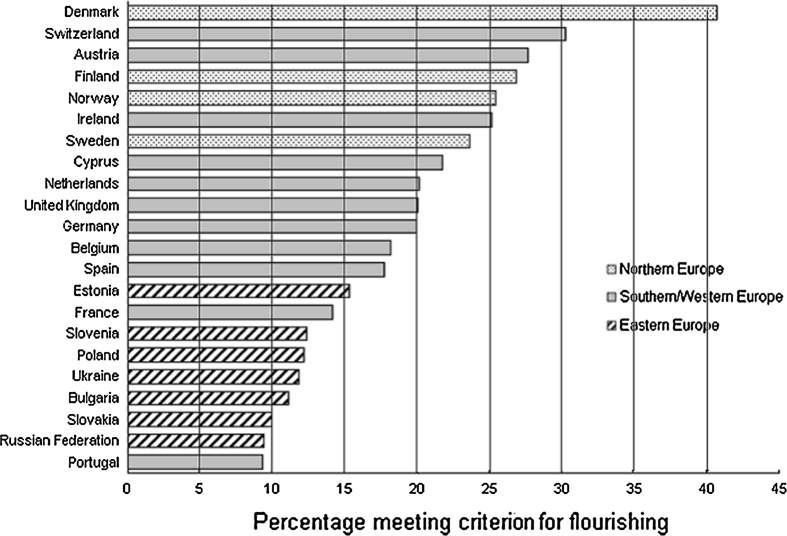
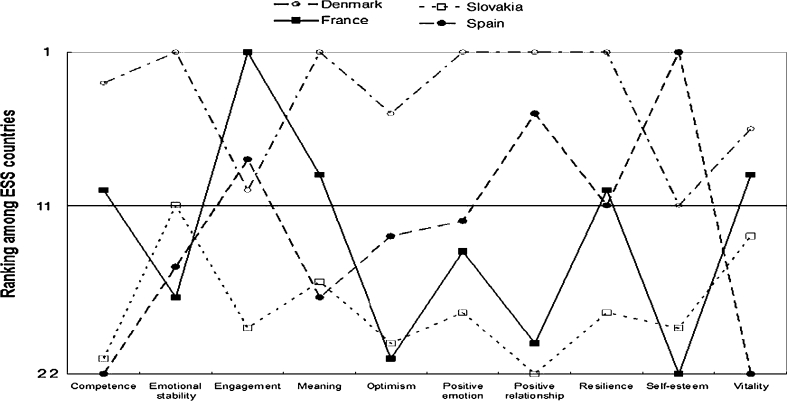
Governments around the world are recognising the importance of measuring subjective well-being as an indicator of progress. But how should well-being be measured? A conceptual framework is offered which equates high well-being with positive mental health. Well-being is seen as lying at the opposite end of a spectrum to the common mental disorders (depression, anxiety). By examining internationally agreed criteria for depression and anxiety (DSM and ICD classifications), and defining the opposite of each symptom, we identify ten features of positive well-being. These combine feeling and functioning, i.e. hedonic and eudaimonic aspects of well-being: competence, emotional stability, engagement, meaning, optimism, positive emotion, positive relationships, resilience, self esteem, and vitality. An operational definition of flourishing is developed, based on psychometric analysis of indicators of these ten features, using data from a representative sample of 43,000 Europeans. Application of this definition to respondents from the 23 countries which participated in the European Social Survey (Round 3) reveals a four-fold difference in flourishing rate, from 41% in Denmark to less than 10% in Slovakia, Russia and Portugal. There are also striking differences in country profiles across the 10 features. These profiles offer fresh insight into cultural differences in well-being, and indicate which features may provide the most promising targets for policies to improve well-being. Comparison with a life satisfaction measure shows that valuable information would be lost if well-being was measured by life satisfaction. Taken together, our findings reinforce the need to measure subjective well-being as a multi-dimensional construct in future surveys.
Overview
The claims and statistics of this paper haven’t been checked yet.
Free: it reads the open-access text and checks the first 5 claims that cite a source we can check. Create a free account to check every claim.
Integrity signals
Registry
Cites
Statistics
Figures
Verification
Claims the paper makes
The claims and statistics of this paper haven’t been checked yet.
Free: it reads the open-access text and checks the first 5 claims that cite a source we can check. Create a free account to check every claim.
Claims other papers make about this one
Each is checked against this paper’s own text: does it say what the citing paper says it does?
The source backs part of the claim, not all of it — or backs it for a different population, condition or comparison.
In the citing paper
“If flourishing encompasses emotional resonance, relational quality, and mutual regulation (4, 5), then sex differences in physiological attunement may influence how individuals engage in supportive, co-regulatory interactions that sustain psychological health.”
From Physiological attunement and flourishing: understanding the influence of relationships on health (2025) · cites this paper as [4]
Experimental — accuracy not yet measured
Self-check
Percentages, sums and reported differences re-computed from the paper’s own numbers.
The self-check needs the paper’s full text.
Citations
Cites
Diagnostic and Statistical Manual of Mental Disorders
Williams, J. B. W., & First, M. (2013) · Encyclopedia of Social Work · doi:10.1093/acrefore/9780199975839.013.104 · Cited by 109,519
The CES-D Scale: A Self-Report Depression Scale for Research in the General Population
Radloff, L. S. (1977) · Applied Psychological Measurement · doi:10.1177/014662167700100306 · Cited by 53,267
Development and validation of brief measures of positive and negative affect: The PANAS scales.
Watson, D., Clark, L. A., & Tellegen, A. (1988) · Journal of Personality and Social Psychology · doi:10.1037/0022-3514.54.6.1063 · Cited by 32,433 · cited 2×
“Proponents of this view have included Bradburn (1969), Watson et al. (1988), and Diener et al. (1999).”
BackgroundAlternative Ways of Assessing Model Fit
Browne, M. W., & Cudeck, R. (1992) · Sociological Methods & Research · doi:10.1177/0049124192021002005 · Cited by 27,200 · cited 2×
“In general, CFI and GFI values of .90 or above, and RMSEA values of .06 or below are indicative of good empirical fit (Browne and Cudeck 1993; Byrne 1994).”
BackgroundTesting Structural Equation Models.
Mueller, C. W., Bollen, K. A., & Long, J. S. (1994) · Contemporary Sociology · doi:10.2307/2074955 · Cited by 14,120
Subjective well-being: Three decades of progress.
Diener, E., Suh, E. M., Lucas, R. E., & Smith, H. L. (1999) · Psychological Bulletin · doi:10.1037/0033-2909.125.2.276 · Cited by 12,910
On Happiness and Human Potentials: A Review of Research on Hedonic and Eudaimonic Well-Being
Ryan, R. M., & Deci, E. L. (2001) · Annual Review of Psychology · doi:10.1146/annurev.psych.52.1.141 · Cited by 11,567 · cited 4×
“Some conceptual approaches to well-being have focused exclusively on the hedonic aspects (e.g. Bradburn 1969; Diener et al. 1999; Watson et al. 1988), while others have focused exclusively on eudaimonic aspects (e.g. Antonovsky 1993; Jahoda 1958; Ryan and Deci 2001; Ryff 1989).”
BackgroundMethodInfluentialThe structure of psychological well-being revisited.
Ryff, C. D., & Keyes, C. L. M. (1995) · Journal of Personality and Social Psychology · doi:10.1037//0022-3514.69.4.719 · Cited by 10,285 · cited 4×
“Similar findings have been reported in other studies (e.g. Chirkov and Ryan 2001; Diener et al. 2009; Ryff and Keyes 1995), indicating that a global measure of life satisfaction is no substitute for the information gained from a multi-dimensional approach.”
BackgroundResultInfluentialTesting Structural Equation Models.
Clogg, C. C., Bollen, K. A., & Long, J. S. (1995) · Social Forces · doi:10.2307/2580595 · Cited by 8,211
Flourish: A Visionary New Understanding of Happiness and Well-Being
(2011) · Choice Reviews Online · doi:10.5860/choice.48-7217 · Cited by 5,543 · cited 3×
“Our conceptual framework is more in keeping with the approaches of Keyes (2002), Seligman (2002, 2011), Tennant et al. (2007), and the recent work of Diener et al. (2010a, b), all of which incorporate both hedonic and eudaimonic aspects of wellbeing.”
BackgroundMethodResult
Research works printed but not linked: 4
- Böhnke P First European quality of life survey: Life satisfaction, happiness and sense of belonging 2005 Luxembourg Office for Official Publications of the European Communities
- Diener, E., Suh, E. M., & Sapyta, J. (1997). Cited in Diener, E., & Oshi, M. (2004). Are Scandinavians happier than Asians? Issues in comparing nations on subjective wellbeing. In F. Columbus (Ed.), Politics and economics of Asia (pp. 1–25). Hauppauge, NY: Nova Science Publishers.
- Jowell R The Central Co-ordinating Team European Social Survey 2002/2003: Technical report 2003 London Centre for Comparative Social Surveys, City University
- Seligman M Authentic happiness: Using the new positive psychology to realize your potential for lasting fulfilment 2002 New York Free Press
Cited by
Items 901–1,000 of 1,000
Floridou, G. A., Katre, F., & Jeuken, E. (2025) · JMIR Formative Research · doi:10.2196/73713 · Cited by 9
“Theoretically, this structure resonates with recent multidimensional and ecological models of well-being [70,71], which move beyond binary hedonic or eudaimonic frameworks and instead frame well-being as a dynamic model influenced by physical, psychological, social, and contextual factors.”
An integrated framework for academic staff well-being: Positive and relational lenses
Zwane, N. C. (2025) · SA Journal of Human Resource Management · doi:10.4102/sajhrm.v23i0.3032 · Cited by 9
Promoting Child Wellness: A Narrative Review of Positive Childhood Experiences
Rovnaghi, C. R., Castilla-Liu, D., Lee, A. M., Shrivastava, A., & Anand, K. J. S. (2025) · Behavioral Sciences · doi:10.3390/bs15111432 · Cited by 7
Caprara, G. V., Corbelli, G., Caprara, M., Felipe, A. C., Paciello, M., & Zuffianò, A. (2025) · Journal of Happiness Studies · doi:10.1007/s10902-025-00972-7 · Cited by 7
Thilagavathy, S. (2025) · Sustainable Futures · doi:10.1016/j.sftr.2025.101491 · Cited by 7
Padgett, R. N., Felton, C., Bradshaw, M., Chen, Y. (., Cowden, R. G., Kim, E. S., Wilkinson, R., Johnson, B. R., & VanderWeele, T. J. (2026) · BMC Global and Public Health · doi:10.1186/s44263-026-00287-6 · Cited by 8
Gender Differences of Experiencing of Subjective Social Well-Being
Данильченко, Т. В. (2018) · European Journal of Psychology and Educational Research · doi:10.12973/ejper.1.1.1 · Cited by 9
Positive Personality Traits as Predictors of Psychotherapy Progress
Eidman, L., & de la Iglesia, G. (2021) · Journal of Contemporary Psychotherapy · doi:10.1007/s10879-021-09490-y · Cited by 8
“2000; Huppert and So 2013; Leising et al.”
Glassner, A. (2021) · Learning Environments Research · doi:10.1007/s10984-021-09391-w · Cited by 8
A new forum for sharing happiness and health research
Burke, J., & Arslan, G. (2021) · Journal of Happiness and Health · Cited by 9
Frimpong, S., Sunindijo, R. Y., Wang, C., Hon, C. K. H., Boadu, E. F., Dansoh, A., & Yiu, T. W. (2023) · Construction Innovation · doi:10.1108/ci-06-2023-0139 · Cited by 8
Like a bridge over troubled water: Wellbeing and trust in governance during turbulent times
Vigoda‐Gadot, E., & Levitats, Z. (2024) · International Review of Administrative Sciences · doi:10.1177/00208523231221971 · Cited by 7
“We chose to use three distinct indicators of wellbeing following the authors ’ acknowledgment that wellbeing is a multi-dimensional construct, that should be assessed via comprehensive measures (Huppert and So, 2013).”
Moortel, D. D., Vos, M., Spruyt, B., Vanroelen, C., Hofmans, J., & Dóci, E. (2024) · PLoS ONE · doi:10.1371/journal.pone.0310031 · Cited by 10
“Statements a, b, and d primarily tap into self-efficacy, item c primarily taps into optimism, and statements e and f primarily tap into resilience [26, 27].”
BackgroundLiu, Q., Razza, R. A., Zhang, Y., & Merrin, G. J. (2024) · Applied Developmental Science · doi:10.1080/10888691.2024.2405578 · Cited by 8
Black, M. H., Buitelaar, J. K., Charman, T., Ecker, C., Gallagher, L., Hens, K., Jones, E. J. H., Murphy, D., Sadaka, Y., Schaer, M., et al. (2024) · BMJ Mental Health · doi:10.1136/bmjment-2024-301283 · Cited by 8
“10 Salutogenesis, positive psychology and resilience are three different but highly compatible approaches that may benefit psychiatry when applied to big data.”
Teacher Mental Health and Wellbeing: What, Why and How
Dixon, J. (2023) · Education Research and Perspectives · doi:10.70953/erpv50.23006 · Cited by 10
Varga, B. A., Oláh, A., Urbán, R., Jakab, J., & Vargha, A. (2025) · Current Psychology · doi:10.1007/s12144-025-07356-3 · Cited by 9
“Notably, Keyes ( 2007 ), Diener et al., ( 2010 ) and Seligman ( 2011) provide differing interpretations of the concept, while Huppert and So ( 2013) also take a different approach.”
Psychometric Properties of the Arabic Flourishing Scale
Sabah, A., Aljaberi, M. A. A., El-Mir, M., Hajji, J., & Alduais, A. M. S. (2025) · Research on Social Work Practice · doi:10.1177/10497315251315942 · Cited by 7
Determinants of Marital Flourishing among Married individuals: An Asian Perspective
Fahd, S., & Hanif, R. (2019) · Review of Economics and Development Studies · doi:10.26710/reads.v5i1.513 · Cited by 9
“Researchers have become progressively attracted in the construct of flourishing (Diener et al. 2010; Keyes 2002; Huppert & So, 2013; Seligman, 2011).”
BackgroundNah, K.-O., Bjørgen, K., Go, Y.-H., & Yoo, Y.-L. (2020) · European Early Childhood Education Research Journal · doi:10.1080/1350293x.2020.1836585 · Cited by 7
Meta-analysis of dimension of autonomy on the psychological well-being measurement in Indonesia
Kiswantomo, H., & Wardani, R. (2021) · Indigenous Jurnal Ilmiah Psikologi · doi:10.23917/indigenous.v6i2.11945 · Cited by 7
“The focus of mental health research and practice puts a spotlight on overcoming pathological cases, such as depression and anxiety, which is often accompanied by prevention measures, has been ongoing for a long time (Huppert & So, 2013).”
BackgroundInfluentialReimagining Mathematics Education for the 21st Century in the 21st Century
The Korea Society Of Educational Studies In Mathematics, Seah, W. T., Kim, H.-J., & Kim, D. (2021) · doi:10.29275/jerm.2021.31.3.393 · Cited by 7
The IWH-BEAT Questionnaire Validation
Toledo, M., Charles‐Leija, H., Castro, C. G., Guerrero, I., & Ballesteros-Valdés, R. (2022) · International Journal of Environmental Research and Public Health · doi:10.3390/ijerph19063559 · Cited by 7
“Understanding and fostering well-being should be approached from an interdisciplinary perspective at multiple levels within a system that includes individuals, organizations, communities, and nations [7].”
BackgroundCommunity construals of CSR for happiness: a mixed-method study using natural language
Chia, A., Doyle, K., & Kern, M. L. (2022) · Society and Business Review · doi:10.1108/sbr-05-2022-0149 · Cited by 7
Porter, E. F., Jessen, M., Coleman, J. J., Sinha, S., Devor, N. G., Sauer-Zavala, S. E., Levitt, H. M., Tao, K. W., Zanarini, M. C., Farchione, T. J., et al. (2023) · Counselling Psychology Quarterly · doi:10.1080/09515070.2023.2225033 · Cited by 7
“…as living within a range of subjective experiences that include optimal functioning, growth, and resilience (Fredrickson & Losada, 2005); feeling satisfied that one’s life is going well (Huppert & So, 2013); having self-determination, and positive relations with others in one’s life (Keyes, 2002).”
Psychometric properties of the PERMA-Profiler for measuring well-being in Spanish older adults
Paniagua-Granados, T., Fernández-Fernández, V., Molina, M. Á., & Luque-Reca, O. (2023) · Current Psychology · doi:10.1007/s12144-023-04883-9 · Cited by 8
Resourcefulness as an Important Indicator of Personal Well-Being
Savchenko, O. V., Корват, Л., & Lavrynenko, D. (2024) · Sustainable development · doi:10.5772/intechopen.112119 · Cited by 9
Gonzalez-Alvarez, A., Rosenkranz, R. R., Rosenkranz, S. K., Mailey, E. L., & Kimmel, K. A. (2024) · Journal of Healthy Eating and Active Living · doi:10.51250/jheal.v3i3.66 · Cited by 7
“However, more evidence is needed that focuses on well-being or aspirational health markers in younger people (Huppert & So, 2013), as there is a lack of evidence concerning adolescents specifically (Kelder et al., 1994; te Velde et al., 2007; Telama et al., 2005).”
BackgroundCarbone, S. R. (2024) · Mental Health & Prevention · doi:10.1016/j.mhp.2024.200324 · Cited by 7
Parsons, R. D., McParland, J. L., Halligan, S. L., Goubert, L., & Jordan, A. L. (2024) · Journal of Health Psychology · doi:10.1177/13591053241237341 · Cited by 7
“These findings align with how flourishing has been conceptualized in previous literature, with aspects of well-being or ‘life going well’ (Huppert and So, 2013; Keyes, 2002, 2005) represented by positive changes, outcomes and constructs (Jordan et al., 2018; Soltani et al., 2018).”
BackgroundResultZhang, Y., Liu, Q., & Razza, R. A. (2024) · Children and Youth Services Review · doi:10.1016/j.childyouth.2024.107553 · Cited by 7
Urbina‐Garcia, A. (2024) · Journal of Happiness and Health · doi:10.47602/johah.v4i2.74 · Cited by 9
“This interplay is dynamic, with SWB reciprocally influencing happiness over time (Huppert & So, 2013).”
MethodThe role of flourishing in the STEM trajectories of emerging adults
Hammerness, K. M., Chaffee, R., Björklund, P., Hinton, P.-S. L., Daly, A. J., MacPherson, A. C., Gupta, P., Adams, J. D., Braverman, C., Francis, J., et al. (2024) · Frontiers in Education · doi:10.3389/feduc.2024.1409672 · Cited by 8
Yendork, J. S., Kliewer, W. L., & Cyrus, J. W. W. (2024) · Journal of Adolescence · doi:10.1002/jad.12418 · Cited by 9
Operationalization and Estimation of Balanced Development Index for Poland 1999-2016
Kozminski, A. K., Noga, A., Piotrowska, K., & Zagórski, K. (2015) · Statistics in Transition New Series · doi:10.21307/stattrans-2015-026 · Cited by 9
Hossaini, S. S., Boogar, I. R., & Najafi, M. (2017) · International Journal of School Health · doi:10.5812/intjsh.44811 · Cited by 8
“Well-being as a multidimensional phenomenon has integrated bio-psycho-socialspiritual dimensions (7-9).”
BackgroundFlorescimento no trabalho: Revisão integrativa da literatura
Bedin, L. M., & Zamarchi, M. (2019) · Revista Psicologia Organizações e Trabalho · doi:10.17652/rpot/2019.1.15093 · Cited by 22
Anwar, M. K., & Ningsih, R. (2019) · Counsellia Jurnal Bimbingan dan Konseling · doi:10.25273/counsellia.v9i1.3209 · Cited by 7
THE LEVEL OF WELL-BEING IN CHINESE UNIVERSITY EFL STUDENTS
Yang, L., & Saad, M. R. B. M. (2020) · International Journal of Education Psychology and Counseling · doi:10.35631/ijepc.536001 · Cited by 7
Pre-service Teachers’ Perceptions of Character and Well-Being
White, M. A. (2020) · Springer eBooks · doi:10.1007/978-981-15-6667-7_9 · Cited by 9
Roseth, N. E., & Blackwell, J. (2022) · Journal of Music Teacher Education · doi:10.1177/10570837221120762 · Cited by 8
Bordbari, S., Mousabeygi, T., & Zare, H. (2022) · Journal of Health and Care · doi:10.52547/jhc.24.1.28 · Cited by 7
Hope and Flourishing: A Cross-Cultural Examination Between Spanish and South African Samples
Flores-Lucas, V., Martínez-Sinovas, R., López‐Benítez, R., & Guse, T. (2023) · Cross-cultural advancements in positive psychology · doi:10.1007/978-3-031-24412-4_8 · Cited by 7
Abbott, P., Nixon, G., Stanley, I., & D’Ambruoso, L. (2024) · Frontiers in Public Health · doi:10.3389/fpubh.2023.1309649 · Cited by 8
“…is multidimensional and includes eudaemonic (positive functioning - seeking meaning, personal growth, and self-realization), hedonic (positive feelings - pursuing pleasurable experiences and positive emotions) (100–102) and harmonic wellbeing (contentment, inner peace, harmony and balance) (103).”
BackgroundFord, T. J., & Finning, K. (2020) · Mental health and illness worldwide · doi:10.1007/978-981-10-0753-8_40-1 · Cited by 10
Puppy island: theory-driven design of a serious game for young children with cystic fibrosis
McEwan, M., Phillips, C. J., Wyeth, P. A., & Johnson, D. M. (2020) · ACM International Conference on Interaction Design and Children (IDC) · doi:10.1145/3392063.3394435 · Cited by 7
“Although wellbeing is often thought of as pertaining solely to physical wellbeing, the term also encompasses a diverse range of social and emotional constructs such as self-esteem, optimism and resilience [22].”
BackgroundInvestigating the Physiological Correlates of Daily Well-being: A PERMA Model-Based Study
Feng, X., Lu, X. S., Li, Z., Zhang, M., Li, J., & Zhang, D. (2020) · The Open Psychology Journal · doi:10.2174/1874350102013010169 · Cited by 9
VALIDITY AND RELIABILITY OF THE FLOURISHING SCALE: LATVIAN VERSION
Sadauska, I., & Koļesovs, A. (2021) · SOCIETY INTEGRATION EDUCATION Proceedings of the International Scientific Conference · doi:10.17770/sie2021vol7.6402 · Cited by 7
“Huppert and So (2013) have defined flourishing as a combination of feeling good and functioning effectively or “life going well”, identifying ten features of positive mental functioning: competence, emotional stability, engagement, meaning, optimism, positive emotion, positive relationship,…”
BackgroundLing, T.-Y. J., Yen, N., Lin, C.-H., & Chandra, W. (2021) · Journal of Building Engineering · doi:10.1016/j.jobe.2021.103278 · Cited by 7
Hallam, S., & Himonides, E. (2022) · Open Book Publishers · doi:10.11647/obp.0292.14 · Cited by 8
Abdallah, S., & Mahoney, J. (2024) · OECD papers on well-being and inequalities · doi:10.1787/667fbe08-en · Cited by 9
Aydın, F. (2025) · Frontiers in Psychology · doi:10.3389/fpsyg.2025.1603654 · Cited by 7
“As stressed by Huppert and So (2013), it is not the absence of mental disorders; it is the opposite.”
Toldos, M. P., Criado, J. R., & Agredano, C. (2026) · Acta Psychologica · doi:10.1016/j.actpsy.2026.106377 · Cited by 6
Stevenson, J. (2024) · Child Protection and Practice · doi:10.1016/j.chipro.2024.100009 · Cited by 9
Sociodemographic predictors of flourishing among community older adults in China
Yi, X., Liu, X., Liu, X., Chen, G., Xie, Y., Lin, C., Lv, H., Li, Y., & Wu, S. F. (2025) · Frontiers in Psychology · doi:10.3389/fpsyg.2024.1435456 · Cited by 8
The effect of nature-based landscape design on human health and well-being: a thematic synthesis
Zhu, Q., Yao, P., & Li, J. (2025) · Journal of Environmental Engineering and Landscape Management · doi:10.3846/jeelm.2025.22944 · Cited by 6
“…emphasizes what makes people and communities thrive (Seligman & Csikszentmihalyi, 2000), and indicates the presence of positive life experiences and their optimal function (Baumeister et al., 2013; Cobaleda Cordero et al., 2020; Deci & Ryan, 2006; Grant et al., 2009; Huppert & So, 2013; Tov, 2018).”
Adebayo, D., Hashim, I. H. M., & Bono, S. A. (2025) · International Journal of Adolescence and Youth · doi:10.1080/02673843.2025.2502556 · Cited by 7
“Flourishing can influence the well-being of individuals and society (Huppert & So, 2013; Seligman, 2011).”
Dadandı, İ., & Aydın, F. (2025) · Behavioral Sciences · doi:10.3390/bs15060800 · Cited by 6
“Definitions, drawn from various philosophical frameworks, often include descriptions such as “the experience of life going well” (Huppert & So, 2013), “the state in which all aspects of life are positive” (VanderWeele, 2017), and “the ultimate end in psychology” (Schotanus-Dijkstra et al., 2016).”
Mack, D. E., Wilson, P. M., & Gunnell, K. E. (2016) · International Review of Sport and Exercise Psychology · doi:10.1080/1750984x.2016.1216149 · Cited by 8
“As identified by Huppert and So (2013), instruments designed to assess HRQoL may be of limited utility to describe positive aspects of well-being given their focus on functional limitations.”
BackgroundRecent Issues of Employability and Career Management
Horváth, Z. (2017) · Opus et Educatio · doi:10.3311/ope.195 · Cited by 7
“There is a growing body of literature focusing on the connection between self-employment and subjective well-being, or flourishing (Huppert & So, 2013; Arthur, Khapova, & Wilderom, 2005; Binder, 2013; Diener & Chan, 2011; Doenges, 2011) .”
BackgroundDefensive Citizenship in Europe: Definition and Measurement
Berkovich, I. (2020) · Political Studies Review · doi:10.1177/1478929920906996 · Cited by 6
Gender and socioeconomic inequalities in health and wellbeing across age in France and Switzerland
Barbuscia, A., & Comolli, C. L. (2021) · Vienna Yearbook of Population Research · doi:10.1553/populationyearbook2021.res2.2 · Cited by 8
Physical Education Participation and Student Anxiety, Depression, and/or Stress: A Scoping Review
Lanier, K. V., Killian, C. M., Wilson, K. E., & Ellis, R. (2022) · Kinesiology Review · doi:10.1123/kr.2022-0002 · Cited by 6
Well-being and relative deprivation in a digital era
Hatami, Z., Yi, S., & Hall, M. (2022) · Heliyon · doi:10.1016/j.heliyon.2022.e11233 · Cited by 6
Positive Traits Inventory: Psychometric analyses of a short form
de la Iglesia, G., Solano, A. C., & Gallagher, S. M. (2022) · Análise Psicológica · doi:10.14417/ap.1769 · Cited by 7
“courage, humanity, peace, integrity; Cosentino & Castro Solano, 2017; De Raad et al., 2010; Huppert & So, 2013; Peterson & Seligman, 2004).”
BackgroundWell-Being Across the Globe - New Perspectives, Concepts, Correlates and Geography
Mullings, J., Paul, T., Dunn, L. L., Arbor, S., Meeks-Gardner, J., & Arbor, T. (2023) · Sustainable development · doi:10.5772/intechopen.104197 · Cited by 6
Salud mental en la vejez: bienestar y autopercepción de salud en adultos mayores de Buenos Aires
Cortese, R. H., Canales, M. M. F., & Góngora, V. C. (2022) · Psicología del desarrollo · doi:10.59471/psicologia20222 · Cited by 8
Figueredo, J.-M., García‐Ael, C., Gragnano, A., & Topa, G. (2023) · European Review of Applied Psychology · doi:10.1016/j.erap.2022.100865 · Cited by 8
What Do Korean Students Value in Mathematics Learning? Insights into Mathematical Well-Being
Kim, H.-J., Kim, W. S., & Lee, G. (2024) · Springer eBooks · doi:10.1007/978-981-99-9454-0_11 · Cited by 6
Üzmez, A., & Kavaklı, N. (2024) · Smart Learning Environments · doi:10.1186/s40561-024-00302-z · Cited by 7
“…to individual well-being over the last several years, including social relationships (Diener & Seligman, 2002; Keyes, 1998), physical health (Huppert & So, 2013; Steptoe et al., 2015), mental health (Diener et al., 2010; Ryff & Keyes, 1995), personality traits (DeNeve & Cooper, 1998; Steel…”
BackgroundButter, S., Shevlin, M. E., Miller, J. G., McBride, O., Hartman, T. K., Bentall, R. P., Bennett, K. M., Murphy, J., Mason, L., Martínez, A. P., et al. (2024) · Discover Mental Health · doi:10.1007/s44192-024-00071-8 · Cited by 7
A Qualitative Study on Workplace Mental Wellbeing in the Singapore Context
Yip, C. C. E., Machin, T. M., & Goh, Y. W. (2024) · The Qualitative Report · doi:10.46743/2160-3715/2024.6795 · Cited by 6
Fitzpatrick, D., & Parker, R. (2024) · British Journal of Learning Disabilities · doi:10.1111/bld.12619 · Cited by 6
Flourishing Among Elderly Population: The Role of Social Support and Gratitude
Anand, P., Choudhary, P., Bali, M., & Gupta, R. (2024) · Psychological Reports · doi:10.1177/00332941241285845 · Cited by 7
“…better emotional health, higher engagement with daily life activities, ful fi lment and purpose in life, resilience, generativity, and high intimacy (Huppert & So, 2013; Keyes, 2007; Seligman, 2011) as well as a negative relationship with helplessness, cardiovascular disease risk, and chronic…”
InfluentialTrainor, L. R., Bundon, A., Wadey, R., Faulkner, G., & Crocker, P. R. E. (2025) · Qualitative Research in Sport Exercise and Health · doi:10.1080/2159676x.2025.2465423 · Cited by 6
“Potentially connection to: ● Relationships - Diener et al. (2010); Fowers, (2012); Huta (2013); Huppert and So, (2013); Keyes, Shmotkin, and Ryff (2002); Ryff (1989); Seligman (2002) Emphasis on: ● Inclusivity and safety, unconditional support, and experiencing a sense of belonging ● Sport ethic…”
InfluentialFung, S.-F., Zeng, G., Chuang, H.-L. H., Li, S.-M., Lee, J., & Tse, J. C. L. (2025) · Frontiers in Psychology · doi:10.3389/fpsyg.2025.1422065 · Cited by 6
“Mental health has received increased attention within the literature, specifically when referring to subjective well-being and functioning well in hedonic and eudaimonic areas (Forgeard et al., 2011; Huppert and So, 2013; McQuaid and Kern, 2017).”
A Pursuit of Human Wellbeing: An Islamic Perspective
Ali, J. A. (2024) · Springer eBooks · doi:10.1007/978-3-031-76730-2_2 · Cited by 8
Malabayabas, M. E., Torres, P. C., Sapin, S. B., & Tamban, V. E. (2022) · International Journal on Research in STEM Education · doi:10.31098/ijrse.v4i2.1123 · Cited by 6
Mankiewicz, P. D. (2015) · International Journal of Wellbeing · doi:10.5502/ijw.v5i4.346 · Cited by 6
“Huppert and So (2013) emphasised the significance of the measurement of SWB as a recovery indicator in mental health.”
BackgroundWellbeing as Emergent from the Leveraging of Polarities: Harnessing Component Interdependencies
Newey, L. R., & de Oliveira, R. T. (2019) · Social Indicators Research · doi:10.1007/s11205-019-02061-8 · Cited by 5
Coming Full Circle: Taking Positive Psychology to GCC Universities
Lambert, L., Abdulrehman, R., & Mirza, C. (2019) · Springer eBooks · doi:10.1007/978-3-030-13921-6_5 · Cited by 6
Arikrishnan, K., Krishnamoorthy, Y., Sarveswaran, G., Majella, M. G., Deeparaj, L., Swapna, B., & Chinnakali, P. (2020) · International Journal of Adolescent Medicine and Health · doi:10.1515/ijamh-2018-0205 · Cited by 6
Walter, O., & Siwar, S. (2021) · Journal of Ethnic and Cultural Studies · doi:10.29333/ejecs/807 · Cited by 6
“Cognitively, an individual's well-being includes autonomy, environmental control, positive relationships with others, setting goals in life, realizing personal potential (Dodge et al., 2012), effective learning, productivity, and creativity (Huppert & So, 2013).”
BackgroundYENİ ESENLİK ÖLÇEĞİ: TÜRKÇE FORMU GEÇERLİLİK VE GÜVENİLİRLİK ÇALIŞMASI
Alkan, N. (2022) · Uluslararası Anadolu Sosyal Bilimler Dergisi · doi:10.47525/ulasbid.1011395 · Cited by 6
Özbiler, Ş. (2020) · Psikoloji Çalışmaları / Studies in Psychology · doi:10.26650/sp2019-0075 · Cited by 9
Prevalencia del flourishing en adolescentes argentinos
Rizzo, I., & Góngora, V. C. (2022) · Revista de Psicología · doi:10.18800/psico.202202.020 · Cited by 6
The construction of a new Clinical Quality of Life Scale (CLINQOL)
Jones, P. M., & Drummond, P. D. (2022) · BMC Psychology · doi:10.1186/s40359-022-00912-7 · Cited by 6
“For example, whilst money can be positively related to well-being, that effect can be reversed if material goals are prized more than other values or if people are struggling financially [18, 98].”
BackgroundCann, R. F., Sinnema, C. E. L., Daly, A. J., & Rodway, J. (2023) · International Journal of Applied Positive Psychology · doi:10.1007/s41042-023-00123-4 · Cited by 6
“For example, relationships are part of the PERMA framework (Positive Emotion, Engagement, Relationships, Meaning, and Accomplishment: Seligman, 2011), and positive relationships are one of Ryff’s six dimensions of wellbeing (Ryff, 1989) and one of the 10 features of flourishing (Huppert & So, 2013).”
The economic recession and subjective well-being in older adults in the Republic of Ireland
Duffy, R. M., Mullin, K., O’Dwyer, S., Wrigley, M., & Kelly, B. D. (2016) · Irish Journal of Psychological Medicine · doi:10.1017/ipm.2016.21 · Cited by 6
“SWB has beenmeasured in a variety of ways ranging from simple linear scales (Sacks et al. 2012) to more complex, constructed measures (Huppert & So, 2013).”
BackgroundEudaimonia and Culture: The Anthropology of Virtue
McKay, F. (2016) · International handbooks of quality-of-life · doi:10.1007/978-3-319-42445-3_27 · Cited by 9
The Psychology of Positivity at Work
Green, S., McQuaid, M., Purtell, A., & Dulagil, A. (2016) · doi:10.1002/9781118977620.ch2 · Cited by 6
Time indicator of the Human Development Index
Ibar-Alonso, R., Martínez, C. C., & Hewings, G. J. D. (2017) · Time & Society · doi:10.1177/0961463x17716553 · Cited by 6
Aproximación a un Modelo de Bienestar en Adultos Ecuatorianos
Lima-Castro, S., Peña-Contreras, E., Aguilar-Sizer, M., Pacheco, A., & Árias-Medina, P. (2019) · Revista Iberoamericana de Diagnóstico y Evaluación - e Avaliação Psicológica · doi:10.21865/ridep51.2.01 · Cited by 6
“…subjetivo y emocional, es decir la experiencia de felicidad y satisfacción con la vida y, por otro lado, de la perspectiva eudaimónica que estudia el bienestar psicológico y social, o el funcionamiento humano óptimo (Huppert 2009; Huppert & So, 2013; Keyes, 2005; Seligman, 2011; Wong, 2011).”
BackgroundInfluentialServant Leadership in Sport: Theory and Practice
Sullivan, G. S. (2019) · Palgrave studies in workplace spirituality and fulfillment · doi:10.1007/978-3-030-11248-6_1 · Cited by 6
Guo, S., Cheung, C., Ning, X., & Low, Y. T. A. (2019) · Asia Pacific Journal of Social Work and Development · doi:10.1080/02185385.2019.1668839 · Cited by 7
Social Determinants of Positive Mental Health in Iranian Society: A Qualitative Approach
Falahat, K., Mirabzadeh, A., Eftekhari, M. B., Sajjadi, H., Vameghi, M., Harouni, G. G., & Feizzadeh, G. (2019) · International Journal of Preventive Medicine · doi:10.4103/ijpvm.ijpvm_94_18 · Cited by 7
“[8,19] A study conducted by Huppert and So on the data collected from 23 European countries showed a difference of four times between different countries in the prevalence of flourishing.[20] These differences suggest the important role of the social determinants of PMH in different countries.”
BackgroundSalud mental positiva: Del concepto al constructo. Evolución histórica y revisión de teorías
Santiago, J., Bernarás, E., & Jaureguizar, J. (2020) · Revista Portuguesa de Enfermagem de Saúde Mental · doi:10.19131/rpesm.0256 · Cited by 6
An exploratory study on Turkish EFL pre-service teachers’ subjective wellbeing
Kurt, G., Demir, B., & Atay, D. (2021) · Zbornik Instituta za pedagoska istrazivanja · doi:10.2298/zipi2101121k · Cited by 11
“…autonomy, goal orientation and sense of purpose – key components of psychological wellbeing – can have a significant effect on positive affect and life satisfaction * E-mail: burcu.demir@es.bau.edu.tr (Bullough, Hall-Kenyon & MacKay, 2012; Huppert & So, 2013; Ryan & Deci, 2001; Seligman, 2011).”
BackgroundEmotional regulation and Arnold’s self-ideal: a way to flourishment
Ruiz-Fuster, F., Bernal-Martínez de Soria, A., & Echavarría, M. F. (2024) · Frontiers in Psychology · doi:10.3389/fpsyg.2024.1425850 · Cited by 3
Brunzell, T., Stokes, H., & Waters, L. (2016) · Contemporary School Psychology · doi:10.1007/s40688-015-0070-0
“Well-being is linked to a constellation of positive outcomes, including effective learning, productivity, creativity, positive relationships, prosocial behavior, health, and life expectancy (Huppert and So 2013) .”
Background
Metadata
- Authors
- Huppert, F. A., & So, T. T. C.
- Affiliations
- University of Cambridge (GB)
- Corresponding author
- Huppert, Felicia A.
- ORCID
- Huppert, Felicia A.
- Venue
- Social Indicators Research
- Published
- 2011-12-15
- Volume
- 110
- Issue
- 3
- Pages
- 837-861
- ISSN
- 0303-8300 (ISSN-L)
- 1573-0921
- PMC
- PMC3545194
- OpenAlex
- W1992646537
- Cited by
- 1,864
- References
- 88
- Citations by year
- 2026: 170 · 2025: 196 · 2024: 209 · 2023: 187 · 2022: 214 · 2021: 173 · 2020: 159 · 2019: 131 · 2018: 109 · 2017: 101 · 2016: 74 · 2015: 67 · 2014: 46 · 2013: 24 · 2012: 4
- FWCI
- 32.30
- Type
- journal article
- Language
- en
- Open access
- hybrid
- doi.org
- Licence
- cc-by-nc
- Locations
- Social Indicators Research (publishedVersion, cc-by-nc)
- Europe PMC (PubMed Central) (publishedVersion, cc-by-nc)
- PubMed Central (publishedVersion, cc-by-nc)
- PubMed (publishedVersion)
- Research Bank (Australian Catholic University) (submittedVersion)
- RePEc: Research Papers in Economics (submittedVersion)
- Topics
- Social Sciences › Psychology › Social Psychology › Psychological Well-being and Life Satisfaction
- Social Sciences › Sociology and Political Science › Quality of Life Measurement
- Social Sciences › Psychology › Developmental and Educational Psychology › Flow Experience in Various Fields
- Keywords
- eudaimonia, subjective well-being, positive mental health, positive well-being, hedonic well-being, eudaimonic well-being, depression, anxiety, life satisfaction, well-being measurement, European Social Survey
About these checks
Registry, retraction, Cites and statistics results are computed, not judged, with one exception: a printed reference that no index lists is read once by a model before it counts as a citation error. Claims are extracted by a model and kept only when their quote appears verbatim in the text; each cited source is then checked, with a model’s help, for whether it says what the claim relies on. Those verdicts can be wrong — read the claim’s quote and the cited source before relying on one.
Statistics and arithmetic are recomputed, not judged.
Confidence bands are shown only for fields calibrated on our annotated test set. None is calibrated yet, so no band is shown.
What counts as a claim ›How we measure confidence ›How we check this ›
Are you an author, or do you see a problem with this page? Request a review
Data sources
Bibliographic data: Semantic Scholar, OpenAlex, Crossref.
Contains information from the Semantic Scholar Academic Graph Datasets, made available under the ODC Attribution License (ODC-BY 1.0).
Semantic Scholar’s data is described in: Kinney, R., et al. (2023). The Semantic Scholar Open Data Platform. arXiv:2301.10140.
