

Flourishing Across Europe: Application of a New Conceptual Framework for Defining Well-Being
Open accessThe DOI matches its Crossref record, with a small difference in title or year; 80 of the 88 references it cites were found in a registry or an index.
Abstract
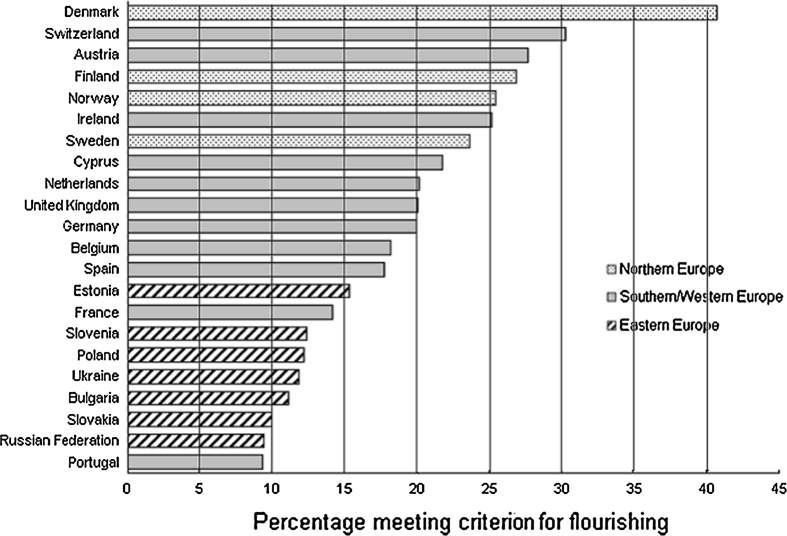
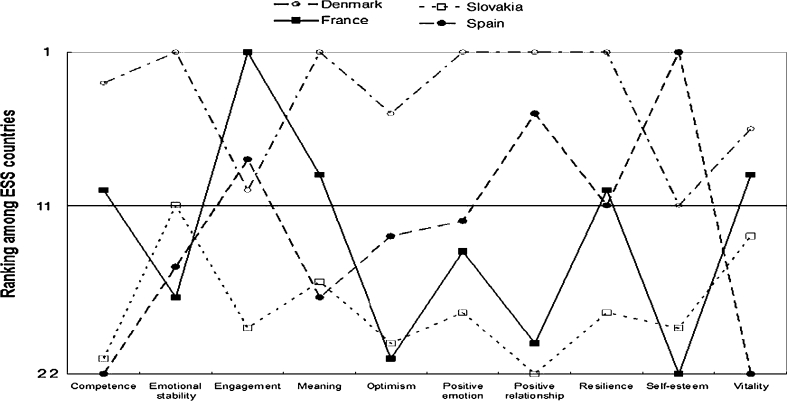
Governments around the world are recognising the importance of measuring subjective well-being as an indicator of progress. But how should well-being be measured? A conceptual framework is offered which equates high well-being with positive mental health. Well-being is seen as lying at the opposite end of a spectrum to the common mental disorders (depression, anxiety). By examining internationally agreed criteria for depression and anxiety (DSM and ICD classifications), and defining the opposite of each symptom, we identify ten features of positive well-being. These combine feeling and functioning, i.e. hedonic and eudaimonic aspects of well-being: competence, emotional stability, engagement, meaning, optimism, positive emotion, positive relationships, resilience, self esteem, and vitality. An operational definition of flourishing is developed, based on psychometric analysis of indicators of these ten features, using data from a representative sample of 43,000 Europeans. Application of this definition to respondents from the 23 countries which participated in the European Social Survey (Round 3) reveals a four-fold difference in flourishing rate, from 41% in Denmark to less than 10% in Slovakia, Russia and Portugal. There are also striking differences in country profiles across the 10 features. These profiles offer fresh insight into cultural differences in well-being, and indicate which features may provide the most promising targets for policies to improve well-being. Comparison with a life satisfaction measure shows that valuable information would be lost if well-being was measured by life satisfaction. Taken together, our findings reinforce the need to measure subjective well-being as a multi-dimensional construct in future surveys.
Overview
The claims and statistics of this paper haven’t been checked yet.
Free: it reads the open-access text and checks the first 5 claims that cite a source we can check. Create a free account to check every claim.
Integrity signals
Registry
Cites
Statistics
Figures
Verification
Claims the paper makes
The claims and statistics of this paper haven’t been checked yet.
Free: it reads the open-access text and checks the first 5 claims that cite a source we can check. Create a free account to check every claim.
Claims other papers make about this one
Each is checked against this paper’s own text: does it say what the citing paper says it does?
The source backs part of the claim, not all of it — or backs it for a different population, condition or comparison.
In the citing paper
“If flourishing encompasses emotional resonance, relational quality, and mutual regulation (4, 5), then sex differences in physiological attunement may influence how individuals engage in supportive, co-regulatory interactions that sustain psychological health.”
From Physiological attunement and flourishing: understanding the influence of relationships on health (2025) · cites this paper as [4]
Experimental — accuracy not yet measured
Self-check
Percentages, sums and reported differences re-computed from the paper’s own numbers.
The self-check needs the paper’s full text.
Citations
Cites
Diagnostic and Statistical Manual of Mental Disorders
Williams, J. B. W., & First, M. (2013) · Encyclopedia of Social Work · doi:10.1093/acrefore/9780199975839.013.104 · Cited by 109,519
The CES-D Scale: A Self-Report Depression Scale for Research in the General Population
Radloff, L. S. (1977) · Applied Psychological Measurement · doi:10.1177/014662167700100306 · Cited by 53,267
Development and validation of brief measures of positive and negative affect: The PANAS scales.
Watson, D., Clark, L. A., & Tellegen, A. (1988) · Journal of Personality and Social Psychology · doi:10.1037/0022-3514.54.6.1063 · Cited by 32,433 · cited 2×
“Proponents of this view have included Bradburn (1969), Watson et al. (1988), and Diener et al. (1999).”
BackgroundAlternative Ways of Assessing Model Fit
Browne, M. W., & Cudeck, R. (1992) · Sociological Methods & Research · doi:10.1177/0049124192021002005 · Cited by 27,200 · cited 2×
“In general, CFI and GFI values of .90 or above, and RMSEA values of .06 or below are indicative of good empirical fit (Browne and Cudeck 1993; Byrne 1994).”
BackgroundTesting Structural Equation Models.
Mueller, C. W., Bollen, K. A., & Long, J. S. (1994) · Contemporary Sociology · doi:10.2307/2074955 · Cited by 14,120
Subjective well-being: Three decades of progress.
Diener, E., Suh, E. M., Lucas, R. E., & Smith, H. L. (1999) · Psychological Bulletin · doi:10.1037/0033-2909.125.2.276 · Cited by 12,910
On Happiness and Human Potentials: A Review of Research on Hedonic and Eudaimonic Well-Being
Ryan, R. M., & Deci, E. L. (2001) · Annual Review of Psychology · doi:10.1146/annurev.psych.52.1.141 · Cited by 11,567 · cited 4×
“Some conceptual approaches to well-being have focused exclusively on the hedonic aspects (e.g. Bradburn 1969; Diener et al. 1999; Watson et al. 1988), while others have focused exclusively on eudaimonic aspects (e.g. Antonovsky 1993; Jahoda 1958; Ryan and Deci 2001; Ryff 1989).”
BackgroundMethodInfluentialThe structure of psychological well-being revisited.
Ryff, C. D., & Keyes, C. L. M. (1995) · Journal of Personality and Social Psychology · doi:10.1037//0022-3514.69.4.719 · Cited by 10,285 · cited 4×
“Similar findings have been reported in other studies (e.g. Chirkov and Ryan 2001; Diener et al. 2009; Ryff and Keyes 1995), indicating that a global measure of life satisfaction is no substitute for the information gained from a multi-dimensional approach.”
BackgroundResultInfluentialTesting Structural Equation Models.
Clogg, C. C., Bollen, K. A., & Long, J. S. (1995) · Social Forces · doi:10.2307/2580595 · Cited by 8,211
Flourish: A Visionary New Understanding of Happiness and Well-Being
(2011) · Choice Reviews Online · doi:10.5860/choice.48-7217 · Cited by 5,543 · cited 3×
“Our conceptual framework is more in keeping with the approaches of Keyes (2002), Seligman (2002, 2011), Tennant et al. (2007), and the recent work of Diener et al. (2010a, b), all of which incorporate both hedonic and eudaimonic aspects of wellbeing.”
BackgroundMethodResult
Research works printed but not linked: 4
- Böhnke P First European quality of life survey: Life satisfaction, happiness and sense of belonging 2005 Luxembourg Office for Official Publications of the European Communities
- Diener, E., Suh, E. M., & Sapyta, J. (1997). Cited in Diener, E., & Oshi, M. (2004). Are Scandinavians happier than Asians? Issues in comparing nations on subjective wellbeing. In F. Columbus (Ed.), Politics and economics of Asia (pp. 1–25). Hauppauge, NY: Nova Science Publishers.
- Jowell R The Central Co-ordinating Team European Social Survey 2002/2003: Technical report 2003 London Centre for Comparative Social Surveys, City University
- Seligman M Authentic happiness: Using the new positive psychology to realize your potential for lasting fulfilment 2002 New York Free Press
Cited by
Items 501–600 of 1,000
Alfayez, A. A., Noman, M., Alqahtani, A. S., Altuwaijri, A. I., & Kaur, A. (2021) · Educational Studies · doi:10.1080/03055698.2021.1960150 · Cited by 30
“…(Collie et al. 2015) as it is domain-specific and presents a broader definition of human flourishing from eudemo-nic wellbeing (Huppert and So 2013) and psychological wellbeing (Ryff 1989) perspective which is a “combination of feeling good and functioning effectively” (Huppert and So 2013, 1).”
BackgroundSolano, A. C., & Cosentino, A. C. (2017) · Interdisciplinaria Revista de Psicología y Ciencias Afines · doi:10.16888/interd.2016.33.1.4 · Cited by 32
Thriving in Residency: a Qualitative Study
Hyman, J., & Doolittle, B. R. (2022) · Journal of General Internal Medicine · doi:10.1007/s11606-022-07504-6 · Cited by 25
“Within the field of positive psychology, “flourishing” is viewed as a pinnacle state of well-being.(33) And while there are various theoretical formulations that each seek to define and delineate the features that constitute flourishing, what they share in common is an emphasis on well-being that goes beyond mere happ…”
BackgroundOshimi, D., & Kinoshita, K. (2022) · Managing Sport and Leisure · doi:10.1080/23750472.2022.2147857 · Cited by 25
“As PERMA is one of the most prominent well-being theories, including both hedonic and eudaimonic components (Gallagher et al., 2009; Huppert & So, 2013; Slade, 2010), the framework is compatible with that of this study.”
Differences in Multi-Dimensional Well-Being Among Factory Workers: Evidence from Six Countries
Białowolski, P., Lee, M. T., Węziak‐Białowolska, D., Chen, Y., Cowden, R. G., McNeely, E., & VanderWeele, T. J. (2023) · Applied Research in Quality of Life · doi:10.1007/s11482-023-10181-0 · Cited by 24
MHQ: constructing an aggregate metric of population mental wellbeing
Newson, J. J., Sukhoi, O., & Thiagarajan, T. C. (2024) · Population Health Metrics · doi:10.1186/s12963-024-00336-y · Cited by 25
“In contrast, Huppert and So [6] reviewed DSM-IV and ICD-10 symptom criteria for both anxiety and depression to identify 10 features of psychological well-being (competence, emotional stability, engagement, meaning, optimism, positive emotion, positive relationships, resilience, self-esteem, and…”
BackgroundWaluyo, B., & Balazon, F. G. (2024) · Acta Psychologica · doi:10.1016/j.actpsy.2024.104638 · Cited by 24
Stewart-Brown, S. L. (2014) · European Journal of Integrative Medicine · doi:10.1016/j.eujim.2014.08.004 · Cited by 32
LA PSICOLOGÍA POSITIVA Y SUS ENEMIGOS: UNA RÉPLICA EN BASE A LA EVIDENCIA CIENTÍFICA
Vázquez, C. (2013) · Redalyc (Universidad Autónoma del Estado de México) · Cited by 38
Things are looking up: Physical beauty, social mobility, and optimistic dispositions
Urbatsch, R. (2018) · Social Science Research · doi:10.1016/j.ssresearch.2018.01.006 · Cited by 26
“Virtually all fields of social science have found significant consequences of individuals’ having hopeful or optimistic outlooks (e.g., Huppert and So, 2013; Key and Donovan, 2017; Puri and Robinson, 2007; Seligman and Csikszentmihalyi, 2000; Rosler et al., 2017).”
BackgroundMuñoz, C. P., & Nieto, B. B. (2019) · Frontiers in Psychology · doi:10.3389/fpsyg.2019.00035 · Cited by 24
“In relation to the fields of application, previous investigations have verified the association between flourishing and less limitations in daily life, as well as flourishing and better health (Howell et al., 2013; Huppert and So, 2013; Gilmour, 2015).”
ResultWellbeing Impacts of City Policies for Reducing Greenhouse Gas Emissions
Hiscock, R., Mudu, P., Braubach, M., Martuzzi, M., Pérez, L., & Sabel, C. E. (2014) · International Journal of Environmental Research and Public Health · doi:10.3390/ijerph111212312 · Cited by 25
“In our conceptual model we have therefore considered studies that measure mental health to be measuring wellbeing; however it must be noted that wellbeing is more than just absence of psychological distress [22,28,29].”
MethodWould You Like to Know What Makes People Happy? An Overview of the Datasets on Subjective Well-Being
Powdthavee, N. (2015) · Australian Economic Review · doi:10.1111/1467-8462.12105 · Cited by 23
“…joy, 3 Latest research has also argued that there is also a third component of SWB, which is eudaimonic well being (i.e. feelings of meaningfulness and purpose) (Huppert and So, 2013).”
Hidayat, R., Habibi, A., Saad, M. R. M., Mukminin, A., & Idris, W. I. W. (2019) · Pedagogika · doi:10.15823/p.2018.132.9 · Cited by 28
Michaeli, Y., Dickson, D. J., Hakhmigari, M. K., Scharf, M., & Shulman, S. (2019) · Emerging Adulthood · doi:10.1177/2167696819882199 · Cited by 23
Zhang, G., Huang, K., & Shen, S. (2023) · Frontiers in Psychology · doi:10.3389/fpsyg.2023.1136755 · Cited by 26
A’yuninnisa, R. N., Carminati, L., & Wilderom, C. P. M. (2024) · Frontiers in Organizational Psychology · doi:10.3389/forgp.2024.1283067 · Cited by 28
What is positive psychological functioning?
Martela, F. (2025) · The Journal of Positive Psychology · doi:10.1080/17439760.2025.2498130 · Cited by 24
“…Deci, 2001), in Keyes’s conceptualization of flourishing in life (Keyes, 2002, 2007), in Huppert’s definition of flourishing and mental well-being (Huppert & So, 2013; Huppert et al., 2009), in OECD’s guidelines on measuring subjective well-being (OECD, 2013), in Warwick-Edinburgh Mental…”
InfluentialOrganisational Factors and Nurses' Well‐Being in the Workplace: An Integrative Review
Bond, C., Jarden, R., Watson, A. L., & Jackson, D. W. (2025) · Journal of Advanced Nursing · doi:10.1111/jan.70333 · Cited by 23
Burns, R., Crisp, D., Chng, J., & Murray, K. (2022) · Applied Research in Quality of Life · doi:10.1007/s11482-022-10075-7 · Cited by 15
Kushwaha, B. P., Shiva, A., & Tyagi, V. K. (2023) · Sustainability · doi:10.3390/su15021699 · Cited by 31
The Tripartite Occupational Well-Being Scale: Evidence of Validity Among Teachers
Collie, R. J. (2023) · Journal of Psychoeducational Assessment · doi:10.1177/07342829231202313 · Cited by 23
“The literature includes several accepted de fi nitions of general well-being (Huppert & So, 2013; Ryan & Fredricks, 1997; Ryff et al., 1995), along with various models of occupational well-being (Van Horn et al., 2004; Viac & Fraser, 2020).”
BackgroundWell-being and ill-being on campus
Morrison, P. S., Liu, I., & Zeng, D. (2023) · International Journal of Wellbeing · doi:10.5502/ijw.v13i3.2785 · Cited by 23
“The same point was made yet again by Huppert and Whittington (2003) and Huppert and So (2013).”
BackgroundStudents’ values in science education: a scoping review
Hill, J. L., DRIEL, J. H. V., Seah, W. T., & Kern, M. L. (2024) · Studies in Science Education · doi:10.1080/03057267.2024.2412456 · Cited by 25
Intervenciones clínicas positivas: ¿Por qué son importantes y cómo funcionan?
Bohlmeijer, E. T., Bolier, L., Lamers, S. M. A., & Westerhof, G. J. (2017) · Papeles del Psicólogo - Psychologist Papers · doi:10.23923/pap.psicol2017.2819 · Cited by 26
Reliability of Creative Composite Indicators with Territorial Specification in the EU
Miguel, I. B.-S., & Prieto, L. C. H. (2020) · Sustainability · doi:10.3390/su12083070 · Cited by 22
“PCA has been used by numerous authors when constructing social wellbeing indicators [63,64] as well as for indicators of talent and creativity [3].”
MethodTHE IMPACT OF ONLINE GAMING ADDICTION ON MENTAL HEALTH AMONG IIUM STUDENTS
Kamal, N. S. Z., & Wok, S. (2020) · International Journal of Heritage Art and Multimedia · doi:10.35631/ijham.311001 · Cited by 31
The hierarchical framework of wellbeing (HiFWB)
Disabato, D. J., Goodman, F. R., & Kashdan, T. B. (2025) · Frontiers in Psychology · doi:10.3389/fpsyg.2025.1515423 · Cited by 24
“A different measurement model proposed 10 dimensions of wellbeing: competence, emotional stability, engagement, meaning, optimism, positive emotion, positive relationships, resilience, self-esteem, and vitality (Huppert and So, 2013).”
Whitaker, R. C., Dearth‐Wesley, T., Herman, A. N., Nagel, K. E., Smith, H. G., & Weil, H. (2020) · JAMA Network Open · doi:10.1001/jamanetworkopen.2020.0427 · Cited by 22
The Older, the Happier?: A Cross-Sectional Study on the “Paradox of Aging” in China
Li, J., Lai, D. W. L., & Chappell, N. L. (2021) · Research on Aging · doi:10.1177/0164027521994225 · Cited by 23
“This question has been previously used by Huppert and So (2013) and Longo et al. (2016) to measure emotional stability in the European Li et al. 3”
MethodMahmic, S., Kern, M. L., & Janson, A. (2021) · Frontiers in Psychology · doi:10.3389/fpsyg.2021.663640 · Cited by 21
A Cultural Perspective of Well-Being
Maulana, H., & Khawaja, N. G. (2022) · Springer eBooks · doi:10.1007/978-981-16-8263-6_2 · Cited by 25
Forgiveness, gratitude, and the flourishing of emerging adults with divorced parents
Tessy, N. R. B., Setiasih, S., & Nanik, N. (2022) · Psikohumaniora Jurnal Penelitian Psikologi · doi:10.21580/pjpp.v7i1.10606 · Cited by 28
“According to positive psychology, flourishing is a condition in which individuals have high levels of both hedonic and eudaimonic well-being (Huppert & So, 2013; Schotanus-Dijkstra et al., 2016).”
BackgroundExploring Associations of Positive Relationships and Adolescent Well-Being Across Cultures
Chue, K. L., & Yeo, A. (2022) · Youth & Society · doi:10.1177/0044118x221109305 · Cited by 23
Shwashreh, L., Taki, A., & Kagioglou, M. (2024) · Buildings · doi:10.3390/buildings14020316 · Cited by 24
The Self-Directed Biological Transformation Initiative and Well-Being
Mills, P. J., Wilson, K. L., Pung, M. A., Weiss, L., Patel, S., Doraiswamy, P. M., Peterson, C. T., Porter, V., Schadt, E. E., Chopra, D., et al. (2016) · The Journal of Alternative and Complementary Medicine · doi:10.1089/acm.2016.0002 · Cited by 21
Rothmann, S., van Zyl, L. E., & Rautenbach, C. (2019) · Springer eBooks · doi:10.1007/978-3-030-20020-6_11 · Cited by 25
White, M. A., & McCallum, F. (2020) · Springer eBooks · doi:10.1007/978-981-15-4124-7_7 · Cited by 22
The relationship between flourishing, injury status, and resilience in collegiate athletes
Martin, C. L., Shanley, E., Harnish, C., Knab, A. M., Christopher, S. M., Vallabhajosula, S., & Bullock, G. S. (2021) · International Journal of Sports Science & Coaching · doi:10.1177/1747954121994559 · Cited by 22
Charalampi, A., Michalopoulou, C., & Richardson, C. (2018) · Applied Research in Quality of Life · doi:10.1007/s11482-018-9666-4 · Cited by 22
Correlation between African Hospitality and Human Flourishing among Young African adults in Kenya
Wanjiru, K. J., Selvam, S. G., & Njiru, L. (2019) · International Journal of Scientific and Research Publications · doi:10.29322/ijsrp.9.09.2019.p9327 · Cited by 20
“It also refers to wellbeing and the experience of life going well (Huppert & So, 2013).”
BackgroundInfluentialHoosen, P., Savahl, S., Adams, S., & Casas, F. (2024) · Child Indicators Research · doi:10.1007/s12187-024-10174-x · Cited by 29
Lillelien, K., & Jensen, M. T. (2025) · Education Sciences · doi:10.3390/educsci15070799 · Cited by 23
The relationship between media literacy and well-being: A systematic review and meta-analysis
Gordon, C. S., Ferber, K. A., Notley, T., Rodgers, R., Bradshaw, E. L., Basarkod, G., Anderson, J., McLean, S. A., Mizzi, S., Jarman, H. K., et al. (2025) · Educational Research Review · doi:10.1016/j.edurev.2025.100731 · Cited by 20
Effects of Culture on the Balance Between Mathematics Achievement and Subjective Wellbeing
Meng, J., & Liu, S. (2022) · Frontiers in Psychology · doi:10.3389/fpsyg.2022.894774 · Cited by 24
O'Brien, E. J., Whitman, K., Buerke, M. L., Galfalvy, H., & Szántó, K. (2022) · American Journal of Geriatric Psychiatry · doi:10.1016/j.jagp.2022.12.192 · Cited by 22
Psychometric Properties of the Portuguese Version of The PERMA-Profiler
Alves, M. A., Palmer, S., & Gouveia, M. J. (2023) · Trends in Psychology · doi:10.1007/s43076-023-00261-3 · Cited by 23
“The diversity of instruments that attempt to measure well-being confirms the necessity of increasingly complex models that integrate different perspectives harmoniously (Friedman & Kern, 2014; Huppert & So, 2013).”
Children’s Lived Experiences of Wellbeing at School in England: a Phenomenological Inquiry
Clarke, T., & Platt, R. (2023) · Child Indicators Research · doi:10.1007/s12187-023-10016-2 · Cited by 23
“Three ‘waves’ of positive psychology (Lomas et al., 2021) have led researchers to conceptualise wellbeing as two distinct but overlapping experiences: feeling (hedonia) and functioning (eudaimonia) (Huppert & So, 2011; Huta & Ryan, 2010), together constituting overall wellbeing.”
BackgroundInfluentialFinch, J., Waters, A. M., & Farrell, L. J. (2023) · Child Psychiatry & Human Development · doi:10.1007/s10578-023-01568-z · Cited by 22
“The concept of SWB has been paramount in the assessment of factors that enable individuals, organisa - tions and nations to flourish [17 –19 ]; whereby flourishing describes high levels of subjective wellbeing [ 20].”
The Indonesian Version of the Flourishing Scale: Is it Reliable and Valid for Indonesian People?
Nurcahyo, F. A., & Valentina, T. D. (2023) · Evaluation & the Health Professions · doi:10.1177/01632787231215316 · Cited by 20
“Theterm fl ourishing is frequently used to describe a heightened state of psychological well-being (Compton & Hoffman, 2013) in which an individual feels good and functions effectively in their daily routine (Huppert & So, 2013).”
BackgroundMeasuring Your Best You: A Gamification Framework for Well-Being Measurement
Hall, M., Glanz, S., Caton, S. J., & Weinhardt, C. (2013) · International Conference on Cloud and Green Computing · doi:10.1109/cgc.2013.51 · Cited by 20
“Therefore, to investigate how gamification can assist in the collection of data for the study of well-being, we implemented a gamified framework for the measurement of Human Flourishing as an extension to the model presented in Hall et al. [2].”
BackgroundMethodInfluentialBaumann, D., & Eiroá‐Orosa, F. J. (2016) · International Journal of Applied Positive Psychology · doi:10.1007/s41042-017-0004-0 · Cited by 22
“Positive mental health includes both hedonic and eudaimonic components that relate to positive feeling and optimal functioning (Huppert & So, 2013).”
BackgroundAssessment of the Mental Health Continuum in a Sample of Argentinean Adults
Góngora, V. C., & Solano, A. C. (2017) · Psychology · doi:10.4236/psych.2017.83018 · Cited by 20
“Different authors have developed the conceptualization and operationalization of flourishing—Keyes (2002), Diener et al. (2010), Seligman (2011), and Huppert and So (2013)—however, Keyes’ (2002, 2005) formulation has become the most relevant in terms of development and international research.”
BackgroundWellbeing elements leading to resilience among undergraduate nursing students
Abiola, T., Olorukooba, H. O., & Afolayan, J. A. (2017) · International Journal of Africa Nursing Sciences · doi:10.1016/j.ijans.2017.05.001 · Cited by 24
Factors Determining Children and Young People’s Well-being at School
Stašulāne, A. (2017) · Journal of Teacher Education for Sustainability · doi:10.1515/jtes-2017-0021 · Cited by 20
“It is worth noting that a high level of subjective well-being is not assumed to develop from the absence of negative mood, but from a positive balance of negative and positive mood (Fredrickson & Losada, 2005; Huppert & So, 2013).”
BackgroundIdentifying county characteristics associated with resident well-being: A population based study
Roy, B., Riley, C. L., Herrin, J. S., Spatz, E. S., Arora, A., Kell, K. P., Welsh, J. W., Rula, E. Y., & Krumholz, H. M. (2018) · PLoS ONE · doi:10.1371/journal.pone.0196720 · Cited by 20
Keyes, C. L. M., Sohail, M. M., Molokwu, N. J., Parnell, H. E., Amanya, C., Kaza, V. G. K., Saddo, Y. B., Vann, V., Tzudier, S., & Proeschold‐Bell, R. J. (2020) · Journal of Happiness Studies · doi:10.1007/s10902-020-00293-x · Cited by 21
A magyar nyelvű PERMA Jóllét Profil kérdőív megbízhatóságának és érvényességének vizsgálata
Varga, B. A., Oláh, A., & Vargha, A. (2022) · Mentálhigiéné és Pszichoszomatika · doi:10.1556/0406.23.2022.001 · Cited by 27
Ampuero, D., Goldswosthy, S., Delgado, L. E., & Jaña, C. M. (2015) · Impact Assessment and Project Appraisal · doi:10.1080/14615517.2015.1023564 · Cited by 20
A Community Partnered Approach for Defining Child and Youth Thriving
Ettinger, A. K., Ray, K. N., Burke, J. G., Thompson, J. R., Navratil, J. L., Chavis, V., Cole, S., Jenks, T., & Miller, E. P. (2020) · Academic Pediatrics · doi:10.1016/j.acap.2020.04.011 · Cited by 21
Achieving optimal best practice: An inquiry into its nature and characteristics
Phan, H. P., Ngu, B. H., Wang, H., Shih, J.-H., Shi, S.-Y., & Lin, R.-Y. (2019) · PLoS ONE · doi:10.1371/journal.pone.0215732 · Cited by 19
Mai, Y., Yang, R., Wu, X., Xie, Z.-M., Zhang, X., Yang, X., Liu, H., & Zhao, J. (2021) · Psychology and Psychotherapy Theory Research and Practice · doi:10.1111/papt.12312 · Cited by 20
Shafique, S., Rajput, A., Javed, U., & Alnakhli, H. (2022) · Marketing Intelligence & Planning · doi:10.1108/mip-12-2021-0446 · Cited by 21
Trait emotional intelligence and flourishing: The mediating role of positive coping behaviour
du Plessis, M. (2023) · SA Journal of Industrial Psychology · doi:10.4102/sajip.v49i0.2063 · Cited by 23
Li, L., Khan, A. A., & Rameli, M. R. M. (2023) · European Journal of Investigation in Health Psychology and Education · doi:10.3390/ejihpe13100153 · Cited by 24
Scalas, L. F., Lodi, E., Magnano, P., & Marsh, H. W. (2023) · BMC Psychology · doi:10.1186/s40359-023-01485-9 · Cited by 22
“According to Huppert and So [21], well-being goes beyond a neutral point reflecting the absence of mental ill-being symptoms.”
BackgroundInfluentialYang, C., Chen, H.-T., Luo, K., Watanabe, K., Chuang, H., Wu, C., Dai, C., Kuo, C., & Kawakami, N. (2024) · BMC Public Health · doi:10.1186/s12889-024-18194-6 · Cited by 19
“In 2013, the tool developed by Huppert and So, consisted the 5 proportions of PERMA, as well as emotional stability, optimism, resilience, self-esteem, and vitality, which one item represents each dimension [8].”
MethodDiverse Students’ Mathematical Wellbeing
Hill, J. L., & Hunter, J. (2024) · New Zealand Journal of Educational Studies · doi:10.1007/s40841-024-00318-6 · Cited by 22
Azcurra, D. S. (2015) · Acta Colombiana de Psicología · doi:10.14718/acp.2015.18.1.8 · Cited by 30
“Sin embargo el AFE reveló una estructura bi-factorial que se corresponde con los hallazgos de oros investigadores (Huppert & So, 2013) y que explicaba el 51% de la varianza, con cada ítem saturando no menos de 0.5 en el correspondiente factor.”
BackgroundInfluentialRuini, C., Vescovelli, F., Carpi, V., & Masoni, L. (2017) · Indo-Pacific Journal of Phenomenology · doi:10.1080/20797222.2017.1299287 · Cited by 27
“The findings of this qualitative study confirm Keyes’s model of flourishing, which includes psychological, emotional and social well-being (Keyes, 2002a, 2002b) and is considered a basic indicator of positive human development (Huppert & So, 2013).”
BackgroundKazak, Z., & Lochbaum, M. R. (2018) · Sports · doi:10.3390/sports6020048 · Cited by 19
“Typically, flourishing is thought to reflect self-reported thoughts of one’s life going well [1].”
BackgroundLivas, C., Katsanakis, I., & Vayia, E. (2018) · Education and Information Technologies · doi:10.1007/s10639-018-9791-6 · Cited by 21
Race, Flourishing, and All-Cause Mortality in the United States, 1995–2016
Louie, P., Upenieks, L., Siddiqi, A., Williams, D. R., & Takeuchi, D. T. (2021) · American Journal of Epidemiology · doi:10.1093/aje/kwab067 · Cited by 19
“Although there are multiple ways to measure flourishing (27, 28), we opted to use Keyes’ measure of flourishing because it is an established scale for measuring flourishing, well-validated, and has good psychometric properties (29).”
MethodHuman flourishing: an enabler of entrepreneurial intention in Latin American students
Silveyra, G., Rodriguez-Aceves, L. A., Charles‐Leija, H., & Sáiz-Álvarez, J. M. (2021) · European Business Review · doi:10.1108/ebr-11-2020-0283 · Cited by 22
Measuring Happiness to Guide Public Policy Making: A Survey of Instruments and Policy Initiatives
Musikanski, L. (2015) · Journal of Social Change · doi:10.5590/josc.2015.07.1.04 · Cited by 19
“Journal of Social Change 42 Huppert and So (2013): To what extent do you agree with the following statements? “I lead a purposeful and meaningful life.”
BackgroundInfluentialThe persistent challenge: living, working and caring in Australia in 2014
Skinner, N., & Pocock, B. (2014) · Cited by 44
Understanding teacher well-being and motivation : measurement, theory, and change over time
Collie, R. J. (2014) · cIRcle (University of British Columbia) · doi:10.14288/1.0165878 · Cited by 50
Construction of an Islamically-Integrated Psychological Well-Being Model
Aycan, S. (2024) · Journal of Muslim Mental Health · doi:10.3998/jmmh.6026 · Cited by 24
“Furthermore, secularizing religion or extracting secular notions of “meaning’ ” or transcendence, as demonstrated by Diener (2009), Seligman (2011), Huppert & So (2013), and Kushlev et al. (2017), tends to overlook the significance and centrality of the role of God and one’s relationship with Him…”
Curelaru, M., & Curelaru, V. (2024) · Behavioral Sciences · doi:10.3390/bs15010026 · Cited by 21
Granziera, H., Collie, R. J., & Slemp, G. R. (2025) · Teaching and Teacher Education · doi:10.1016/j.tate.2025.105290 · Cited by 21
Flourishing Scale: Adaptation and Evidence of Validity in a Chilean High School Context
Carmona-Halty, M. A., Marín-Gutiérrez, M., Mena‐Chamorro, P., Sepúlveda-Páez, G. L., & Ferrer‐Urbina, R. (2022) · Frontiers in Psychology · doi:10.3389/fpsyg.2022.795452 · Cited by 18
Easton-Gomez, S. C., Mouritz, M., & Breadsell, J. K. (2022) · Sustainability · doi:10.3390/su142113966 · Cited by 19
Optimal Functioning in Society: A Conceptualization, a Measure, and a Look at Determinants
Chénard‐Poirier, L. A., Vallerand, R. J., Verner‐Filion, J., Houlfort, N., Forest, J., & Rinfret, N. (2023) · Journal of Happiness Studies · doi:10.1007/s10902-023-00617-7 · Cited by 23
“…of flourishing argue that an individual should not only feel connected to others, but also benefit and grow from satisfying, rewarding, warm, trusting, loving, or supporting social relationships (Diener et al., 2010; Huppert & So, 2013; Keyes, 2005; Ryff, 1989; Seligman, 2011; VanderWeele, 2017).”
BackgroundInfluentialSociodemographic predictors of flourishing among older adults in rural and urban Mongolia
Otgon, S., Myagmarjav, S., Burnette, D., Lkhagvasuren, K., & Casati, F. (2023) · Scientific Reports · doi:10.1038/s41598-023-28791-x · Cited by 18
Zhang, W., Balloo, K., Hosein, A., & Medland, E. (2025) · Humanities and Social Sciences Communications · doi:10.1057/s41599-025-04602-8 · Cited by 22
“Huppert and So (2013) proposed that well-being is feeling good and functioning well, encompassing both hedonic and eudaimonic aspects.”
Ghasemzadegan, R. S., Xodabande, I., Koleini, N., & Gaskaree, B. L. (2025) · Discover Psychology · doi:10.1007/s44202-025-00368-x · Cited by 18
“…study, teacher well-being is approached holistically, recognizing that educators derive satisfaction not just from the joy of teaching (hedonic) but also from the sense of purpose and fulfillment they gain through their professional growth and contribution to student development (eudaimonic) [62].”
Abdollahi, A., Hosseinian, S., Sadeghi, H., & Hamid, T. A. (2018) · Archive for the Psychology of Religion · doi:10.1163/15736121-12341350 · Cited by 20
“Some scholars use hedonic measures to evaluate well-being in terms of emotional well-being (Abdollahi, Talib, Yaacob, & Ismail, 2014), whereas others use eudaimonic measures to evaluate well-being in terms of personal growth (Huppert & So, 2013).”
BackgroundDesign and Validation of a Scale for Measuring Well-Being of Children in Lockdown (WCL)
Sancho, N. B., Mondragón, N. I., Santamaría, M. D., & Munitis, A. E. (2020) · Frontiers in Psychology · doi:10.3389/fpsyg.2020.02225 · Cited by 18
Elvin, O. M., Modecki, K. L., Finch, J., Donnolley, K., Farrell, L. J., & Waters, A. M. (2020) · Behaviour Research and Therapy · doi:10.1016/j.brat.2020.103779 · Cited by 19
INTRODUCTION - Latest developments in Positive Psychology: The case of Greece
Pezirkianidis, C., & Stalikas, A. (2020) · Psychology the Journal of the Hellenic Psychological Society · doi:10.12681/psy_hps.25328 · Cited by 21
“…(among others) of the experiencing of positive emotions, life satisfaction, positive relationships with others, engagement, a sense of competence or achievement, and a sense of meaning in life (Diener et al., 2010; Disabato et al., 2019; Huppert & So, 2013; Keyes, 2005; Ryff, 1989; Seligman, 2011).”
BackgroundGuo, S., Cheung, C., Hu, J., & Ning, X. (2021) · Psicologia Reflexão e Crítica · doi:10.1186/s41155-020-00166-5 · Cited by 23
Rivan, N. F. M., Shahar, S., Singh, D. K. A., Ibrahim, N., Ludin, A. F. M., Yahya, H. M., Sakian, N. I. M., Mahadzir, H., Subramaniam, P., & Kamaruddin, M. Z. A. (2021) · Aging & Mental Health · doi:10.1080/13607863.2021.1972281 · Cited by 18
Santini, Z. I., Nielsen, L., Hinrichsen, C., Nelausen, M. K., Meilstrup, C., Koyanagi, A., McDaid, D., Lyubomirsky, S., VanderWeele, T. J., & Koushede, V. (2021) · Mental Health & Prevention · doi:10.1016/j.mhp.2021.200222 · Cited by 24
Hyvinvointi, kouluonnellisuus ja vahvuuksien käyttö kuudes- ja yhdeksäsluokkalaisilla
Fernström, N., Vuorinen, K., & Uusitalo‐Malmivaara, L. (2021) · Sosiaalipedagoginen aikakauskirja · doi:10.30675/sa.102943 · Cited by 28
Current Recommendations on the Selection of Measures for Well-Being
VanderWeele, T. J., Trudel‐Fitzgerald, C., Allin, P. V., Farrelly, C., Fletcher, G., Frederick, D. E., Hall, J., Helliwell, J. F., Kim, E. S., Lauinger, W. A., et al. (2021) · Oxford University Press eBooks · doi:10.1093/oso/9780197512531.003.0018 · Cited by 18
Mental Health and Mental Wellbeing Impact Assessment Frameworks—A Systematic Review
Cresswell‐Smith, J., Kauppinen, T., Laaksoharju, T., Rotko, T., Solin, P., Suvisaari, J., Wahlbeck, K., & Tamminen, N. (2022) · International Journal of Environmental Research and Public Health · doi:10.3390/ijerph192113985 · Cited by 18
“Another shift in attention is towards positive components of mental health which represents an approach which not only focuses on the treatment or prevention of mental health disorders, but also emphasises the importance of feeling good and functioning effectively [6].”
BackgroundThe unknown citizen: epidemiological challenges in child mental health
Kvalsvig, A., O’Connor, M., Redmond, G., & Goldfeld, S. R. (2014) · Journal of Epidemiology & Community Health · doi:10.1136/jech-2013-203712 · Cited by 18
What are people saying when they report they are happy or life satisfied
Baptista, A., Camilo, C., Santos, I. F., Brites, J. D. A., Rosa, J. B., & Fernández-Abascal, E. G. (2016) · Anales de Psicología · doi:10.6018/analesps.32.3.229121 · Cited by 25
Creativity Policy, Partnerships and Practice in Education
Asquith, S., Wang, X., & Abraham, A. (2018) · Springer eBooks · doi:10.1007/978-3-319-96725-7 · Cited by 18
Introducing ‘holistic psychology’ for life qualities: A theoretical model for consideration
Phan, H. P., Ngu, B. H., & White, M. O. (2021) · Heliyon · doi:10.1016/j.heliyon.2020.e05843 · Cited by 23
Metadata
- Authors
- Huppert, F. A., & So, T. T. C.
- Affiliations
- University of Cambridge (GB)
- Corresponding author
- Huppert, Felicia A.
- ORCID
- Huppert, Felicia A.
- Venue
- Social Indicators Research
- Published
- 2011-12-15
- Volume
- 110
- Issue
- 3
- Pages
- 837-861
- ISSN
- 0303-8300 (ISSN-L)
- 1573-0921
- PMC
- PMC3545194
- OpenAlex
- W1992646537
- Cited by
- 1,864
- References
- 88
- Citations by year
- 2026: 170 · 2025: 196 · 2024: 209 · 2023: 187 · 2022: 214 · 2021: 173 · 2020: 159 · 2019: 131 · 2018: 109 · 2017: 101 · 2016: 74 · 2015: 67 · 2014: 46 · 2013: 24 · 2012: 4
- FWCI
- 32.30
- Type
- journal article
- Language
- en
- Open access
- hybrid
- doi.org
- Licence
- cc-by-nc
- Locations
- Social Indicators Research (publishedVersion, cc-by-nc)
- Europe PMC (PubMed Central) (publishedVersion, cc-by-nc)
- PubMed Central (publishedVersion, cc-by-nc)
- PubMed (publishedVersion)
- Research Bank (Australian Catholic University) (submittedVersion)
- RePEc: Research Papers in Economics (submittedVersion)
- Topics
- Social Sciences › Psychology › Social Psychology › Psychological Well-being and Life Satisfaction
- Social Sciences › Sociology and Political Science › Quality of Life Measurement
- Social Sciences › Psychology › Developmental and Educational Psychology › Flow Experience in Various Fields
- Keywords
- eudaimonia, subjective well-being, positive mental health, positive well-being, hedonic well-being, eudaimonic well-being, depression, anxiety, life satisfaction, well-being measurement, European Social Survey
About these checks
Registry, retraction, Cites and statistics results are computed, not judged, with one exception: a printed reference that no index lists is read once by a model before it counts as a citation error. Claims are extracted by a model and kept only when their quote appears verbatim in the text; each cited source is then checked, with a model’s help, for whether it says what the claim relies on. Those verdicts can be wrong — read the claim’s quote and the cited source before relying on one.
Statistics and arithmetic are recomputed, not judged.
Confidence bands are shown only for fields calibrated on our annotated test set. None is calibrated yet, so no band is shown.
What counts as a claim ›How we measure confidence ›How we check this ›
Are you an author, or do you see a problem with this page? Request a review
Data sources
Bibliographic data: Semantic Scholar, OpenAlex, Crossref.
Contains information from the Semantic Scholar Academic Graph Datasets, made available under the ODC Attribution License (ODC-BY 1.0).
Semantic Scholar’s data is described in: Kinney, R., et al. (2023). The Semantic Scholar Open Data Platform. arXiv:2301.10140.
