

Flourishing Across Europe: Application of a New Conceptual Framework for Defining Well-Being
Open accessThe DOI matches its Crossref record, with a small difference in title or year; 80 of the 88 references it cites were found in a registry or an index.
Abstract
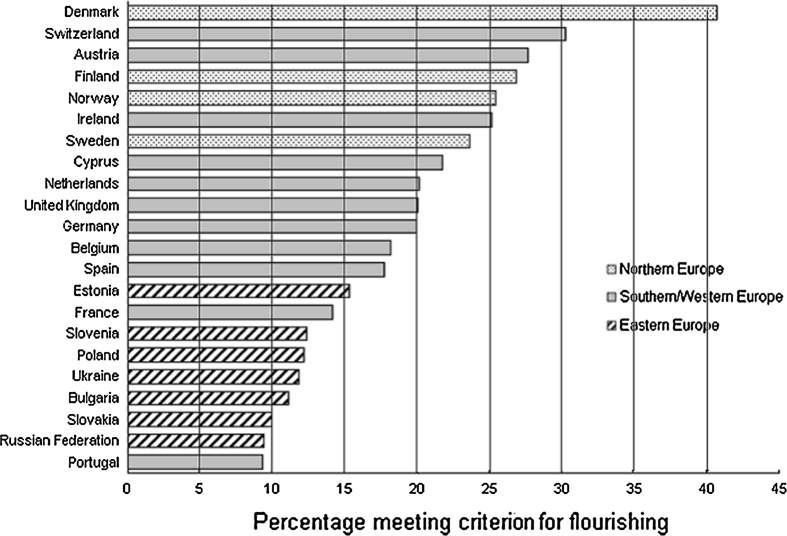
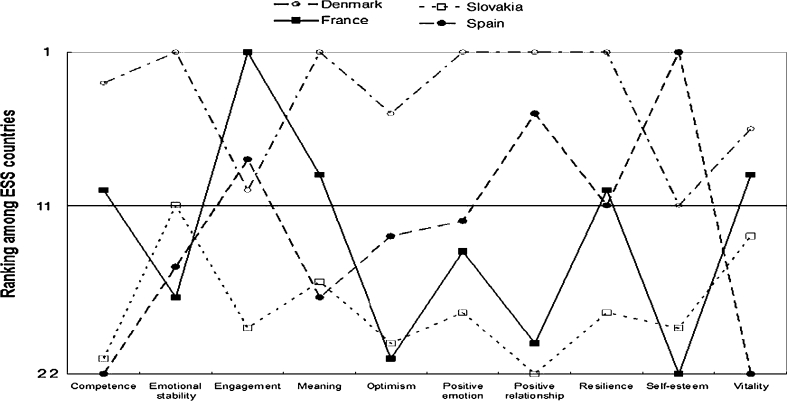
Governments around the world are recognising the importance of measuring subjective well-being as an indicator of progress. But how should well-being be measured? A conceptual framework is offered which equates high well-being with positive mental health. Well-being is seen as lying at the opposite end of a spectrum to the common mental disorders (depression, anxiety). By examining internationally agreed criteria for depression and anxiety (DSM and ICD classifications), and defining the opposite of each symptom, we identify ten features of positive well-being. These combine feeling and functioning, i.e. hedonic and eudaimonic aspects of well-being: competence, emotional stability, engagement, meaning, optimism, positive emotion, positive relationships, resilience, self esteem, and vitality. An operational definition of flourishing is developed, based on psychometric analysis of indicators of these ten features, using data from a representative sample of 43,000 Europeans. Application of this definition to respondents from the 23 countries which participated in the European Social Survey (Round 3) reveals a four-fold difference in flourishing rate, from 41% in Denmark to less than 10% in Slovakia, Russia and Portugal. There are also striking differences in country profiles across the 10 features. These profiles offer fresh insight into cultural differences in well-being, and indicate which features may provide the most promising targets for policies to improve well-being. Comparison with a life satisfaction measure shows that valuable information would be lost if well-being was measured by life satisfaction. Taken together, our findings reinforce the need to measure subjective well-being as a multi-dimensional construct in future surveys.
Overview
The claims and statistics of this paper haven’t been checked yet.
Free: it reads the open-access text and checks the first 5 claims that cite a source we can check. Create a free account to check every claim.
Integrity signals
Registry
Cites
Statistics
Figures
Verification
Claims the paper makes
The claims and statistics of this paper haven’t been checked yet.
Free: it reads the open-access text and checks the first 5 claims that cite a source we can check. Create a free account to check every claim.
Claims other papers make about this one
Each is checked against this paper’s own text: does it say what the citing paper says it does?
The source backs part of the claim, not all of it — or backs it for a different population, condition or comparison.
In the citing paper
“If flourishing encompasses emotional resonance, relational quality, and mutual regulation (4, 5), then sex differences in physiological attunement may influence how individuals engage in supportive, co-regulatory interactions that sustain psychological health.”
From Physiological attunement and flourishing: understanding the influence of relationships on health (2025) · cites this paper as [4]
Experimental — accuracy not yet measured
Self-check
Percentages, sums and reported differences re-computed from the paper’s own numbers.
The self-check needs the paper’s full text.
Citations
Cites
Diagnostic and Statistical Manual of Mental Disorders
Williams, J. B. W., & First, M. (2013) · Encyclopedia of Social Work · doi:10.1093/acrefore/9780199975839.013.104 · Cited by 109,519
The CES-D Scale: A Self-Report Depression Scale for Research in the General Population
Radloff, L. S. (1977) · Applied Psychological Measurement · doi:10.1177/014662167700100306 · Cited by 53,267
Development and validation of brief measures of positive and negative affect: The PANAS scales.
Watson, D., Clark, L. A., & Tellegen, A. (1988) · Journal of Personality and Social Psychology · doi:10.1037/0022-3514.54.6.1063 · Cited by 32,433 · cited 2×
“Proponents of this view have included Bradburn (1969), Watson et al. (1988), and Diener et al. (1999).”
BackgroundAlternative Ways of Assessing Model Fit
Browne, M. W., & Cudeck, R. (1992) · Sociological Methods & Research · doi:10.1177/0049124192021002005 · Cited by 27,200 · cited 2×
“In general, CFI and GFI values of .90 or above, and RMSEA values of .06 or below are indicative of good empirical fit (Browne and Cudeck 1993; Byrne 1994).”
BackgroundTesting Structural Equation Models.
Mueller, C. W., Bollen, K. A., & Long, J. S. (1994) · Contemporary Sociology · doi:10.2307/2074955 · Cited by 14,120
Subjective well-being: Three decades of progress.
Diener, E., Suh, E. M., Lucas, R. E., & Smith, H. L. (1999) · Psychological Bulletin · doi:10.1037/0033-2909.125.2.276 · Cited by 12,910
On Happiness and Human Potentials: A Review of Research on Hedonic and Eudaimonic Well-Being
Ryan, R. M., & Deci, E. L. (2001) · Annual Review of Psychology · doi:10.1146/annurev.psych.52.1.141 · Cited by 11,567 · cited 4×
“Some conceptual approaches to well-being have focused exclusively on the hedonic aspects (e.g. Bradburn 1969; Diener et al. 1999; Watson et al. 1988), while others have focused exclusively on eudaimonic aspects (e.g. Antonovsky 1993; Jahoda 1958; Ryan and Deci 2001; Ryff 1989).”
BackgroundMethodInfluentialThe structure of psychological well-being revisited.
Ryff, C. D., & Keyes, C. L. M. (1995) · Journal of Personality and Social Psychology · doi:10.1037//0022-3514.69.4.719 · Cited by 10,285 · cited 4×
“Similar findings have been reported in other studies (e.g. Chirkov and Ryan 2001; Diener et al. 2009; Ryff and Keyes 1995), indicating that a global measure of life satisfaction is no substitute for the information gained from a multi-dimensional approach.”
BackgroundResultInfluentialTesting Structural Equation Models.
Clogg, C. C., Bollen, K. A., & Long, J. S. (1995) · Social Forces · doi:10.2307/2580595 · Cited by 8,211
Flourish: A Visionary New Understanding of Happiness and Well-Being
(2011) · Choice Reviews Online · doi:10.5860/choice.48-7217 · Cited by 5,543 · cited 3×
“Our conceptual framework is more in keeping with the approaches of Keyes (2002), Seligman (2002, 2011), Tennant et al. (2007), and the recent work of Diener et al. (2010a, b), all of which incorporate both hedonic and eudaimonic aspects of wellbeing.”
BackgroundMethodResult
Research works printed but not linked: 4
- Böhnke P First European quality of life survey: Life satisfaction, happiness and sense of belonging 2005 Luxembourg Office for Official Publications of the European Communities
- Diener, E., Suh, E. M., & Sapyta, J. (1997). Cited in Diener, E., & Oshi, M. (2004). Are Scandinavians happier than Asians? Issues in comparing nations on subjective wellbeing. In F. Columbus (Ed.), Politics and economics of Asia (pp. 1–25). Hauppauge, NY: Nova Science Publishers.
- Jowell R The Central Co-ordinating Team European Social Survey 2002/2003: Technical report 2003 London Centre for Comparative Social Surveys, City University
- Seligman M Authentic happiness: Using the new positive psychology to realize your potential for lasting fulfilment 2002 New York Free Press
Cited by
Items 401–500 of 1,000
Lin, T., Wang, Q., Tan, Z., Zuo, W., & Wu, R. (2024) · Frontiers in Public Health · doi:10.3389/fpubh.2024.1502020 · Cited by 32
“Studies have shown that SWB as a crucial indicator is used for evaluating residents’ well-being, and Huppert et al. considered happiness to measure the characteristics of residents and communities (72).”
Phan, H. P., & Ngu, B. H. (2020) · Social Psychology of Education · doi:10.1007/s11218-020-09569-9 · Cited by 36
“2018) and flourishing (Diener et al. 2010; Huppert and So 2013), acknowledges a person’s effortful attempt to seek out a realistic and/or an ambitious endeavor for accomplishment (e.”
BackgroundThe Fertility of a Concept: A Bibliometric Review of Human Flourishing
Cebral-Loureda, M., Tamés-Muñoz, E., & Baqueiro, A. H. (2022) · International Journal of Environmental Research and Public Health · doi:10.3390/ijerph19052586 · Cited by 31
“A closer examination of the documents from these two most productive subject areas reveals the most cited documents in the social sciences to be: Flourishing Across Europe: Application of a New Conceptual Framework for Defining Well-Being [29], with 524 citations; followed by A Participatory Inquiry Paradigm [30], wit…”
BackgroundInfluentialde la Fuente, J., Uríen, B., Luís, E. O., Torres, M. C. G., Garde, R. A., & Balaguer, Á. (2022) · Frontiers in Psychology · doi:10.3389/fpsyg.2022.856558 · Cited by 33
Parola, A., & Marcionetti, J. (2022) · Societies · doi:10.3390/soc13010005 · Cited by 33
O'Connor, E., Prebble, K., & Waterworth, S. (2023) · International Journal of Mental Health Nursing · doi:10.1111/inm.13218 · Cited by 33
Centeredness Theory: Understanding and Measuring Well-Being Across Core Life Domains
Bloch-Jorgensen, Z. T., Cilione, P. J., Yeung, W. W. H., & Gatt, J. M. (2018) · Frontiers in Psychology · doi:10.3389/fpsyg.2018.00610 · Cited by 35
“However, the science of well-being remains at an early stage, with particularly little known about the upper end of the well-being spectrum (Huppert and So, 2013).”
BackgroundThe decision to return home and wellbeing after the Fukushima disaster
Murakami, M., Takebayashi, Y., Ono, K., Kubota, A., & Tsubokura, M. (2020) · International Journal of Disaster Risk Reduction · doi:10.1016/j.ijdrr.2020.101538 · Cited by 31
The Socioemotional Well-Being Index (SEWBI): Theoretical Framework and Empirical Operationalisation
Bericat, E. (2014) · Social Indicators Research · doi:10.1007/s11205-013-0528-z · Cited by 30
“However, the SEWBI, in contrast with these univariate scales (Huppert et al. 2010:13; Huppert and So 2013; Michaelson et al. 2009:55), results from a much more robust and richer measurement model.”
ResultUnderstanding Factors Affecting Positive Education in Practice: an Australian Case Study
Halliday, A. J., Kern, M. L., Garrett, D. K., & Turnbull, D. A. (2020) · Contemporary School Psychology · doi:10.1007/s40688-019-00229-0 · Cited by 30
The Complete State Model of Mental Health
Keyes, C. L. M., & Martin, C. C. (2017) · Cambridge University Press eBooks · doi:10.1017/9781316339275.009 · Cited by 40
Fabio, A. D., & Duradoni, M. (2019) · Frontiers in Psychology · doi:10.3389/fpsyg.2019.01805 · Cited by 33
Concepts and Principles of Mental Health Promotion
Barry, M. (2019) · Implementing Mental Health Promotion · doi:10.1007/978-3-030-23455-3_1 · Cited by 26
Liu, Y., Ni, X., & Niu, G. (2020) · Children and Youth Services Review · doi:10.1016/j.childyouth.2020.105689 · Cited by 32
Kim, H., & Florack, A. (2021) · Frontiers in Psychology · doi:10.3389/fpsyg.2021.668272 · Cited by 16
“We used the Scale of Positive and Negative Experience (SPANE) developed by Diener et al. (2010), a widely used measure for gauging subjective well-being (e.g., Huppert and So, 2013; Söllner et al., 2021).”
MethodCOVID-19 and human flourishing: The moderating role of gender
Sürücü, L., Ertan, Ş. S., Bağlarbaşı, E., & Maşlakçı, A. (2021) · Personality and Individual Differences · doi:10.1016/j.paid.2021.111111 · Cited by 34
“Human flourishing pertains to the lack of mental health issues that may include depression or anxiety (Huppert & So, 2013).”
BackgroundJones, P. M., & Drummond, P. D. (2021) · Frontiers in Psychology · doi:10.3389/fpsyg.2021.747435 · Cited by 34
Kleynhans, D. J., Heyns, M. M., & Stander, M. W. (2022) · Frontiers in Psychology · doi:10.3389/fpsyg.2022.955300 · Cited by 38
Hospitality as the bridge: advancing transformative service research towards human flourishing
Mody, M. A. (2023) · Service Industries Journal · doi:10.1080/02642069.2023.2197222 · Cited by 30
“symbiotic value, shared value) apply to collective flourishing? Izenberg and Fullilove (2016) Aksoy et al.”
BackgroundCourtney, M. G. R., Hernández, D., Karakuş, M., & Singh, N. (2023) · Large-scale Assessments in Education · doi:10.1186/s40536-023-00170-y · Cited by 31
Beyond polarization towards dynamic balance: harmony as the core of mental health
Fave, A. D., Wissing, M. P., & Brdar, I. (2023) · Frontiers in Psychology · doi:10.3389/fpsyg.2023.1177657 · Cited by 33
Flourishing: positive emotion regulation strategies of pharmacy students
Basson, M., & Rothmann, S. (2017) · International Journal of Pharmacy Practice · doi:10.1111/ijpp.12420 · Cited by 33
“Ten features of flourishing individuals are competence, emotional stability, engagement, meaning, optimism, positive emotion, positive relationships, resilience, self-esteem and vitality.([8])”
BackgroundInfluentialPerfectionism and PERMA: The benefits of otheroriented perfectionism
Birch, H. A., Riby, L. M., & McGann, D. (2019) · International Journal of Wellbeing · doi:10.5502/ijw.v9i1.749 · Cited by 37
“…of pleasure seeking and pain avoidance; others, eudaimonic wellbeing (e.g. Ryff 1989), which focuses on meaning and being fully-engaged in life; and yet others use a blend of the two (Butler & Kern, 2016; Disabato, Goodman, Kashdan, Short & Jarden, 2016; Huppert & So, 2013; Ryan & Deci, 2001).”
BackgroundMethodInfluentialConceptual model for intensive care nurse work well‐being: A qualitative secondary analysis
Jarden, R., Sandham, M. H., Siegert, R. J., & Koziol‐McLain, J. (2019) · Nursing in Critical Care · doi:10.1111/nicc.12485 · Cited by 35
Guo, C., Tomson, G. B., Jizhi, G., Li, X., Keller, C., & Söderqvist, F. (2016) · Health and Quality of Life Outcomes · doi:10.1186/s12955-015-0404-4 · Cited by 30
Cann, R. F., Sinnema, C., Daly, A. J., Rodway, J., & Liou, Y.-H. (2022) · Frontiers in Psychology · doi:10.3389/fpsyg.2022.775614 · Cited by 29
Design for Human Flourishing: A Novel Design Approach for a More ‘Humane’ Architecture
Stevens, R., Petermans, A., & Vanrie, J. (2019) · The Design Journal · doi:10.1080/14606925.2019.1612574 · Cited by 38
Optimization: In-Depth Examination and Proposition
Phan, H. P., Ngu, B. H., & Yeung, A. S. (2019) · Frontiers in Psychology · doi:10.3389/fpsyg.2019.01398 · Cited by 31
“, 2009, 2010) and other colleagues (e.g., Keyes, 2002; Huppert and So, 2013) have explored the concept of flourishing, which is defined as a person’s experience that life is going well.”
BackgroundLusa, S., Käpykangas, S., Ansio, H., Houni, P., & Uitti, J. A. (2019) · Frontiers in Public Health · doi:10.3389/fpubh.2019.00358 · Cited by 29
“The response options were on a five-point scale ranging from “strongly agree” to “strongly disagree” (25).”
BackgroundPositive Psychological Well-Being at Work: The Role of Eudaimonia
der Kinderen, S., & Khapova, S. N. (2019) · Springer eBooks · doi:10.1007/978-3-030-02470-3_79-1 · Cited by 32
Is there a relationship between spectator sports consumptionand life satisfaction?
Oh, T., Kang, J., & Kwon, K. D. (2020) · Managing Sport and Leisure · doi:10.1080/23750472.2020.1784035 · Cited by 29
Przybylko, G., Morton, D. P., Morton, J. K., Renfrew, M. E., & Hinze, J. S. (2021) · The Journal of Positive Psychology · doi:10.1080/17439760.2021.1897868 · Cited by 32
“Huppert and So (2013) defined flourishing as the combination of feeling good and functioning effectively to achieve high levels of mental wellbeing – the experience of life going well.”
BackgroundMethodInfluentialDoyle, J. P., Filo, K. R., Thomson, A., & Kunkel, T. (2021) · Journal of Sport Management · doi:10.1123/jsm.2020-0258 · Cited by 29
Unanue, W., Barros, E. P., & Gómez, M. E. (2021) · International Journal of Environmental Research and Public Health · doi:10.3390/ijerph18126387 · Cited by 31
“Flourishing is one of the terms that several academics have used to unify the eudaimonic and hedonic models of happiness [12,34,35].”
BackgroundZhao, H., & Zhang, H. (2022) · Current Psychology · doi:10.1007/s12144-021-02593-8 · Cited by 32
Ding, C. (2022) · International Journal of Educational Research Open · doi:10.1016/j.ijedro.2022.100191 · Cited by 34
“…learning achievement has focused on teacher beliefs and perceptions regarding the school environment; these beliefs and perceptions shape instructional strategies, which in turn influence the learning experiences of students (Holzberger et al., 2014; Huppert & So, 2013; Woolfolk et al., 2009).”
Wellbeing in Education: Staff Matter
Lovett, N., & Lovett, T. (2015) · International Journal of Social Science and Humanity · doi:10.7763/ijssh.2016.v6.628 · Cited by 44
“wellbeing [18], [19], PERMA, Seligman‟s 2011 theory of”
Filbay, S. R., Bishop, F. L., Peirce, N. S., Jones, M. E., & Arden, N. (2017) · BMJ Open · doi:10.1136/bmjopen-2017-016541 · Cited by 29
“In 2013, 20% of a representative sample of the UK general population were found to be ‘flourishing’ (possessing 9 of 10 signs of positive well-being including resilience, optimism, competence, self-esteem and meaning).(21) Retired cricketers who took part in the interviews exhibited many attributes consistent with the…”
Psychometric properties of the Psychological Flourishing Scale in an Egyptian setting
Salama-Younes, M. (2017) · Journal of Psychology in Africa · doi:10.1080/14330237.2017.1347749 · Cited by 29
Measuring dispositional optimism in student Veterans: An item response theory analysis
Umucu, E., Brooks, J., Lee, B., Iwanaga, K., Wu, J.-R., Chen, A., & Chan, F. (2018) · Military Psychology · doi:10.1080/08995605.2018.1522161 · Cited by 29
Mackay, L. M., Egli, V., Booker, L.-J., & Prendergast, K. B. (2019) · Kōtuitui New Zealand Journal of Social Sciences Online · doi:10.1080/1177083x.2019.1603165 · Cited by 34
The Meanings Ascribed to Happiness, Life Satisfaction and Flourishing
Bakracheva, M. (2020) · Psychology · doi:10.4236/psych.2020.111007 · Cited by 42
“In latest research on well-being and flourishing, experienced as feeling good and functioning effectively, Bulgarians score lower compared to more of the Eastern European countries, especially in relation to emotional stability, positive emotion, resilience (Huppert & So, 2013).”
BackgroundDoes Flourishing Reduce Engagement in Unhealthy and Risky Lifestyle Behaviours in Emerging Adults?
Sofija, E., Harris, N., Phung, D. T., Sav, A., & Sebar, B. (2020) · International Journal of Environmental Research and Public Health · doi:10.3390/ijerph17249472 · Cited by 31
“These were developed by Keyes [22], Huppert and So [23], Diener et al.”
MethodCollie, R. J. (2025) · Educational Psychology · doi:10.1080/01443410.2025.2466652 · Cited by 35
“Teacher well-being is defined as “a combination of feeling good and functioning effectively” (Huppert & So, 2013, p. 838).”
Mašková, I., Mägdefrau, J., & Nohavová, A. (2021) · Teaching and Teacher Education · doi:10.1016/j.tate.2021.103560 · Cited by 30
A new complex mental health test in a positive psychological framework
Zábó, V., Oláh, A., & Vargha, A. (2022) · Frontiers in Psychology · doi:10.3389/fpsyg.2022.775622 · Cited by 32
“Mental health as mirror opposite to the symptoms of mental disorders An alternative approach is to argue that mental health is characterized by symptoms that are the mirror opposite of mental disorders (Huppert and So, 2013; Caprara et al., 2019; Oláh, 2019).”
BackgroundMethodA closer look at the relationships between aspects of connectedness and flourishing
Rahe, M., & Jansen, P. (2023) · Frontiers in Psychology · doi:10.3389/fpsyg.2023.1137752 · Cited by 33
County-Level Determinants of Mental Health, 2002–2008
Goetz, S. J., Davlasheridze, M., & Han, Y. (2014) · Social Indicators Research · doi:10.1007/s11205-014-0792-6 · Cited by 30
“…and other spatial determinants of differences in mental health within the population have been examined recently in cross-country studies such as Huppert and So (2013) as well as within countries ranging from Chile (Riumallo-Herl et al. 2014), Indonesia (Tampubolon and Hanandita 2014), New…”
BackgroundSocial Capital and Self Perceived Health Among European Older Adults
Arezzo, M. F., & Giudici, C. (2015) · Social Indicators Research · doi:10.1007/s11205-015-1195-z · Cited by 40
Analysis of the Better Life Index Trough a Cluster Algorithm
Monteiro, R. L. D. C., Pereira, V., & Costa, H. G. (2018) · Social Indicators Research · doi:10.1007/s11205-018-1902-7 · Cited by 29
Bullock, G. S., Collins, G. S., Peirce, N., Arden, N., & Filbay, S. R. (2020) · Health and Quality of Life Outcomes · doi:10.1186/s12955-020-01301-7 · Cited by 30
Conceptualizations of Wellbeing: Insights from a Prototype Analysis on New Zealand Workers
Hone, L. C., & Jarden, A. (2015) · Cited by 55
Elucidating the constructs happiness and wellbeing: A mixed-methods approach
Jongbloed, J., & Andres, L. (2015) · International Journal of Wellbeing · doi:10.5502/ijw.v5i3.1 · Cited by 32
“A recent article compared the four extant scales of Keyes (2002), Diener and others (2010), Seligman (2011), and Huppert and So (2013) for measuring flourishing both conceptually and empirically.”
BackgroundEducação Positiva: A aplicação da Psicologia Positiva a instituições educacionais
Cintra, C. L., & Guerra, V. M. (2017) · Psicologia Escolar e Educacional · doi:10.1590/2175-35392017021311191 · Cited by 27
Daily Stressor-Related Negative Mood and its Associations with Flourishing and Daily Curiosity
Drake, A., Doré, B., Falk, E. B., Zurn, P., Bassett, D. S., & Lydon‐Staley, D. M. (2021) · Journal of Happiness Studies · doi:10.1007/s10902-021-00404-2 · Cited by 28
Wellbeing Literacy and Positive Education
Oades, L. G., Baker, L. M., Francis, J. J., & Taylor, J. (2021) · Springer eBooks · doi:10.1007/978-3-030-64537-3_13 · Cited by 37
Approaches to Positive Education
Green, S., Leach, C., & Falecki, D. (2021) · Springer eBooks · doi:10.1007/978-3-030-64537-3_2 · Cited by 33
Magare, I., Graham, M. A., & Eloff, I. (2022) · International Journal of Environmental Research and Public Health · doi:10.3390/ijerph192416886 · Cited by 30
The structure of well-being: a single underlying factor with genetic and environmental influences
Bjørndal, L. D., Nes, R. B., Czajkowski, N. O., & Røysamb, E. (2023) · Quality of Life Research · doi:10.1007/s11136-023-03437-7 · Cited by 34
Ruíz-Ortega, A. M., Sánchez‐Álvarez, N., & Martos, M. P. B. (2024) · Nurse Education Today · doi:10.1016/j.nedt.2024.106406 · Cited by 33
Propiedades psicométricas y dimensionalidad de “The Flourishing Scale” en población hispanohablante
Muñoz, C. P., Garzón-Umerenkova, A., Nieto, B. B., & Charry, C. (2016) · Electronic Journal of Research in Educational Psychology · doi:10.14204/ejrep.38.15044 · Cited by 34
Chia, A., & Kern, M. L. (2020) · Applied Research in Quality of Life · doi:10.1007/s11482-020-09846-x · Cited by 29
Mitchell, K. R., Palmer, M. J., Lewis, R., Pérez, R. B., Maxwell, K., Macdowall, W. G., Reid, D., Bonell, C. P., Mercer, C. H., Sonnenberg, P., et al. (2023) · The Journal of Sex Research · doi:10.1080/00224499.2023.2278530 · Cited by 27
“For instance, Huppert and So (2013) identified 10 features of flourishing (high well-being) using data from the European Social Survey (Huppert & So, 2013) including self-esteem, resilience, meaning, and positive relationships.”
Principals’ well-being: understanding its multidimensional nature
Wang, F. (2024) · School Leadership and Management · doi:10.1080/13632434.2024.2334942 · Cited by 27
Turecek, S., Brymer, E., & Rahimi‐Golkhandan, S. (2024) · Psychology of sport and exercise · doi:10.1016/j.psychsport.2024.102769 · Cited by 27
Physical activity and mental health in an Irish population
Bowe, A. K., Owens, M., Codd, M., LAWLOR, B. A., & Glynn, R. W. (2018) · Irish Journal of Medical Science (1971 -) · doi:10.1007/s11845-018-1863-5 · Cited by 29
1,2,3,4 tell me how to grow more: A position paper on children, design ethics and biowearables
Antle, A. N., & Kitson, A. (2021) · International Journal of Child-Computer Interaction · doi:10.1016/j.ijcci.2021.100328 · Cited by 27
“Identity formation strongly impacts self-esteem, competence and self-efficacy, which in turn are critical factors impacting well-being [33].”
BackgroundAhrnberg, H., Appelqvist‐Schmidlechner, K., Mustonen, P., Fröjd, S. A., & Aktan–Collan, K. (2021) · International Journal of Mental Health Promotion · doi:10.32604/ijmhp.2021.016408 · Cited by 36
“Higher positive mental health has been associated with better learning outcomes, productivity and creativity, good relationships, prosocial behaviour, and general good health and life expectancy [10].”
BackgroundDutta, B., Peng, M.-H., Chen, C.-C., & Sun, S.-L. (2021) · Sustainability · doi:10.3390/su13169329 · Cited by 28
“According to Huppert and So [64] and Steptoe et al.”
MethodPerkins, H., Gesun, J., Scheidt, M., Major, J. C., Chen, J. L., Berger, E., & Godwin, A. (2021) · International Journal of Community Well-Being · doi:10.1007/s42413-021-00149-z · Cited by 29
Kwok, S. Y. C. L., Gu, M., & Kwok, K. (2022) · Child Abuse & Neglect · doi:10.1016/j.chiabu.2022.105629 · Cited by 27
A longitudinal study on the stability and predictors of flourishing among emerging adults.
de la Fuente, R., Sánchez‐Queija, I., & Jiménez, Á. P. (2023) · Canadian Journal of Behavioural Science/Revue canadienne des sciences du comportement · doi:10.1037/cbs0000327 · Cited by 26
Buchner, L., Amesberger, G., Finkenzeller, T., Moore, S. R., & Würth, S. (2022) · Frontiers in Psychology · doi:10.3389/fpsyg.2022.948906 · Cited by 26
“Comparable findings (Huppert and So, 2013), and also higher correlations, between optimism and subjective vitality (Longo et al.”
BackgroundHutton, E. A., Skues, J., Sullivan, J., & Wise, L. Z. (2022) · Mental Health & Prevention · doi:10.1016/j.mhp.2022.200249 · Cited by 28
Young People as Agents of Sustainable Society: Reclaiming the Future
Honkatukia, P., & Rättilä, T. (2023) · Routledge eBooks · doi:10.4324/9781003345114 · Cited by 37
Measuring subjective well-being
OECD (2013) · OECD eBooks · doi:10.1787/9789264191655-7-en · Cited by 29
Exploring Attachment to the “Homeland” and Its Association with Heritage Culture Identification
Ferenczi, N., & Marshall, T. C. (2013) · PLoS ONE · doi:10.1371/journal.pone.0053872 · Cited by 28
“Flourishing has been postulated as a distinct measure of well-being that is separate to life satisfaction, which taps into more evaluative judgements of subjective-well-being [70,71]; the flourishing construct taps into perceptions of self-efficacy, optimism, success at social relationships, purpose in life, and self…”
BackgroundTransforming the wellbeing focus in education: A document analysis of policy in Aotearoa New Zealand
Higgins, J., & Goodall, S. (2021) · International Journal of Qualitative Studies on Health and Well-Being · doi:10.1080/17482631.2021.1879370 · Cited by 31
“The terms “wellness” or “welfare” are synonymous with “wellbeing” (Brasfield, 2015; Pfieffer, 2017), whereas the term “flourishing” is associated with optimal feeling and functioning (Hone et al., 2014; Huppert & So, 2013).”
BackgroundFake it or make it: employee well-being in emotional work settings
Mehta, P. (2020) · Benchmarking An International Journal · doi:10.1108/bij-07-2020-0377 · Cited by 27
Cheung, A., Chao, G. C. N., Lau, E., Leung, A. N. M., & Chui, H. T. (2021) · Applied Research in Quality of Life · doi:10.1007/s11482-021-09959-x · Cited by 29
Solving the income-happiness paradox
Khalil, E. L. (2022) · International Review of Economics · doi:10.1007/s12232-022-00398-0 · Cited by 30
Multiple Motives for Adventure Sport Revisited: A Multi-Activity Investigation
Frühauf, A., Mackenzie, S. H., Boudreau, P., Hodge, K. P., & Kopp, M. (2022) · Leisure Sciences · doi:10.1080/01490400.2022.2126910 · Cited by 30
“Emerging adventure frameworks: Eudaimonic motives Eudaimonic well-being encompasses meaning, purpose, optimal functioning, self-realiza-tion and flourishing (Huppert & So, 2013), whereas hedonic well-being consists of pleasure, positive emotions and avoidance of pain (Waterman et al., 2008).”
Spor Yapmak ve Psikolojik İyi Oluş: Üniversite Öğrencileri Profili
Yavuz, Ü., & İlhan, E. L. (2023) · Gazi Beden Eğitimi ve Spor Bilimleri Dergisi · doi:10.53434/gbesbd.1117950 · Cited by 25
Effect of Positive Well-Being on Incidence of Symptomatic Coronary Artery Disease
Yanek, L. R., Kral, B. G., Moy, T. F., Vaidya, D. M., Lazo, M., Becker, L. C., & Becker, D. M. (2013) · The American Journal of Cardiology · doi:10.1016/j.amjcard.2013.05.055 · Cited by 25
Calvo, R. A., Vella-Brodrick, D., Desmet, P., & M. Ryan, R. (2016) · Psychology of Well-Being · doi:10.1186/s13612-016-0047-1 · Cited by 19
Mindfulness and Nondual Well-Being – What is the Evidence that We Can Stay Happy?
Jones, P. M. (2022) · Review of General Psychology · doi:10.1177/10892680221093013 · Cited by 26
Lifestyle medicine pillars as predictors of psychological flourishing
Burke, J., & Dunne, P. J. (2022) · Frontiers in Psychology · doi:10.3389/fpsyg.2022.963806 · Cited by 29
“Flourishing was measured using the Huppert and So conceptualization (Huppert and So, 2013).”
MethodThe Benefits and Challenges of a Unifying Conceptual Framework for Well-being Constructs
Willroth, E. C. (2022) · Affective Science · doi:10.1007/s42761-022-00152-3 · Cited by 27
“ships factor of Ryff’s (1989) model of psychological wellbeing and Keyes’ (1998) social well-being model.”
Yoshida, M., Sato, M., & Doyle, J. P. (2023) · Journal of Sport Management · doi:10.1123/jsm.2021-0174 · Cited by 28
Attitudes toward Ethical Consumption in Clothing: Comparing Peruvian and Portuguese Consumers
Bairrada, C. M., Coelho, A., & Moreira, J. (2023) · Journal of International Consumer Marketing · doi:10.1080/08961530.2023.2200221 · Cited by 26
“Therefore, an individual’s satisfaction or dissatisfaction with life is influenced by how they feel about the important aspects of their life (Huppert and So 2013; Sirgy et al. 2013; Ganglmair-Wooliscroft and Wooliscroft 2019).”
BackgroundImpact of the Relationship of Stress and the Immune System in the Appearance of Alzheimer’s Disease
Ortí, J. E. D. L. R., Sancho-Castillo, S., Benlloch, M., Rochina, M. J., Corchón, S., & García-Pardo, M. P. (2016) · Journal of Alzheimer s Disease · doi:10.3233/jad-160903 · Cited by 24
Understanding levels of best practice: An empirical validation
Phan, H. P., Ngu, B. H., Wang, H., Shih, J.-H., Shi, S.-Y., & Lin, R.-Y. (2018) · PLoS ONE · doi:10.1371/journal.pone.0198888 · Cited by 26
Abid, G., Ijaz, S., Butt, T. H., Farooqi, S., & Rehmat, M. (2018) · Cogent Business & Management · doi:10.1080/23311975.2018.1507276 · Cited by 25
“Generally, flourishing means feeling happy and positive which leads to effective functioning (Huppert & So, 2013).”
BackgroundA unified ecological framework for studying effects of digital places on well-being
Shankardass, K., Robertson, C., Shaughnessy, K., Sykora, M. D., & Feick, R. (2018) · Social Science & Medicine · doi:10.1016/j.socscimed.2018.09.022 · Cited by 26
Clench‐Aas, J., & Holte, A. (2021) · Frontiers in Public Health · doi:10.3389/fpubh.2021.629118 · Cited by 31
“” Responses were given on a 5-point scale ranging from “Agree strongly” to “Disagree strongly” (24).”
BackgroundMeasuring Whole-School Well-being in Students and Staff
Kern, M. L., Adler, A., Waters, L. E., & White, M. A. (2015) · Springer eBooks · doi:10.1007/978-94-017-9667-5_4 · Cited by 30
Constructing a definition: Adolescent wellbeing from the perspective of the child and expert
Gennings, E. K., Brown, H. J., & Hewlett, D. (2021) · International Journal of Wellbeing · doi:10.5502/ijw.v11i1.1461 · Cited by 23
“…themes as Group 1 entitled, holism, positive feelings, and external influences. www.internationaljournalofwellbeing.org 75 Wellbeing is perceived as multidimensional within the context of adults (Huppert & So, 2013) and adolescents (Dunlop-Bennett, Bryant-Tokalau & Dowell, Anthony, 2019).”
BackgroundAustralian teachers’ conceptualisations of wellbeing at work: A prototype analysis
Vo, D. T., Allen, K., & Reupert, A. (2024) · Teaching and Teacher Education · doi:10.1016/j.tate.2024.104653 · Cited by 24
Weckroth, M., & Kemppainen, T. T. (2021) · Regional Studies Regional Science · doi:10.1080/21681376.2021.1925146 · Cited by 23
“The literature on positive psychology contains arguments on the importance of the so-called eudaimonic dimension of human well-being (Huppert, 2013; Ryan & Deci, 2001; Ryff & Singer, 2008).”
BackgroundGrenawalt, T. A., Umucu, E., Reyes, A., Baylin, A., Strauser, D. R., Tansey, T. N., & Wagner, S. (2021) · Rehabilitation Counseling Bulletin · doi:10.1177/00343552211025509 · Cited by 25
“While the PERMA-Profiler (Butler & Kern, 2016) is a brief measure of well-being, it is the only PERMA-focused measure that includes several items per domain as opposed to just one or two (e.g., Huppert & So, 2013).”
BackgroundMethod
Metadata
- Authors
- Huppert, F. A., & So, T. T. C.
- Affiliations
- University of Cambridge (GB)
- Corresponding author
- Huppert, Felicia A.
- ORCID
- Huppert, Felicia A.
- Venue
- Social Indicators Research
- Published
- 2011-12-15
- Volume
- 110
- Issue
- 3
- Pages
- 837-861
- ISSN
- 0303-8300 (ISSN-L)
- 1573-0921
- PMC
- PMC3545194
- OpenAlex
- W1992646537
- Cited by
- 1,864
- References
- 88
- Citations by year
- 2026: 170 · 2025: 196 · 2024: 209 · 2023: 187 · 2022: 214 · 2021: 173 · 2020: 159 · 2019: 131 · 2018: 109 · 2017: 101 · 2016: 74 · 2015: 67 · 2014: 46 · 2013: 24 · 2012: 4
- FWCI
- 32.30
- Type
- journal article
- Language
- en
- Open access
- hybrid
- doi.org
- Licence
- cc-by-nc
- Locations
- Social Indicators Research (publishedVersion, cc-by-nc)
- Europe PMC (PubMed Central) (publishedVersion, cc-by-nc)
- PubMed Central (publishedVersion, cc-by-nc)
- PubMed (publishedVersion)
- Research Bank (Australian Catholic University) (submittedVersion)
- RePEc: Research Papers in Economics (submittedVersion)
- Topics
- Social Sciences › Psychology › Social Psychology › Psychological Well-being and Life Satisfaction
- Social Sciences › Sociology and Political Science › Quality of Life Measurement
- Social Sciences › Psychology › Developmental and Educational Psychology › Flow Experience in Various Fields
- Keywords
- eudaimonia, subjective well-being, positive mental health, positive well-being, hedonic well-being, eudaimonic well-being, depression, anxiety, life satisfaction, well-being measurement, European Social Survey
About these checks
Registry, retraction, Cites and statistics results are computed, not judged, with one exception: a printed reference that no index lists is read once by a model before it counts as a citation error. Claims are extracted by a model and kept only when their quote appears verbatim in the text; each cited source is then checked, with a model’s help, for whether it says what the claim relies on. Those verdicts can be wrong — read the claim’s quote and the cited source before relying on one.
Statistics and arithmetic are recomputed, not judged.
Confidence bands are shown only for fields calibrated on our annotated test set. None is calibrated yet, so no band is shown.
What counts as a claim ›How we measure confidence ›How we check this ›
Are you an author, or do you see a problem with this page? Request a review
Data sources
Bibliographic data: Semantic Scholar, OpenAlex, Crossref.
Contains information from the Semantic Scholar Academic Graph Datasets, made available under the ODC Attribution License (ODC-BY 1.0).
Semantic Scholar’s data is described in: Kinney, R., et al. (2023). The Semantic Scholar Open Data Platform. arXiv:2301.10140.
