

Flourishing Across Europe: Application of a New Conceptual Framework for Defining Well-Being
Open accessThe DOI matches its Crossref record, with a small difference in title or year; 80 of the 88 references it cites were found in a registry or an index.
Abstract
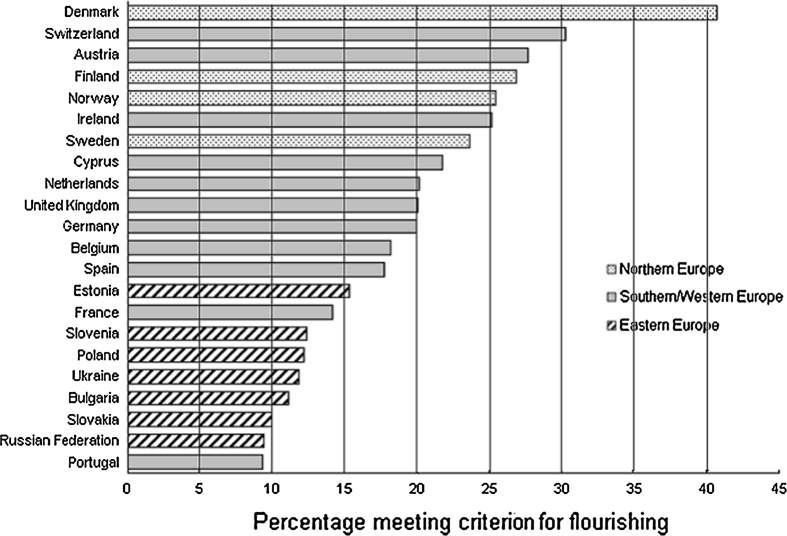
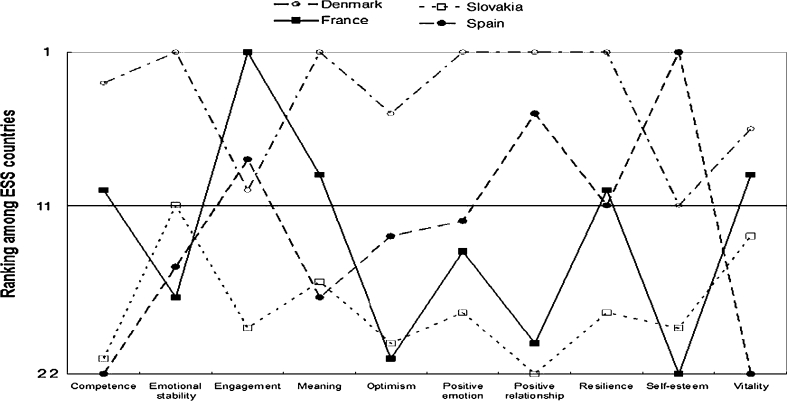
Governments around the world are recognising the importance of measuring subjective well-being as an indicator of progress. But how should well-being be measured? A conceptual framework is offered which equates high well-being with positive mental health. Well-being is seen as lying at the opposite end of a spectrum to the common mental disorders (depression, anxiety). By examining internationally agreed criteria for depression and anxiety (DSM and ICD classifications), and defining the opposite of each symptom, we identify ten features of positive well-being. These combine feeling and functioning, i.e. hedonic and eudaimonic aspects of well-being: competence, emotional stability, engagement, meaning, optimism, positive emotion, positive relationships, resilience, self esteem, and vitality. An operational definition of flourishing is developed, based on psychometric analysis of indicators of these ten features, using data from a representative sample of 43,000 Europeans. Application of this definition to respondents from the 23 countries which participated in the European Social Survey (Round 3) reveals a four-fold difference in flourishing rate, from 41% in Denmark to less than 10% in Slovakia, Russia and Portugal. There are also striking differences in country profiles across the 10 features. These profiles offer fresh insight into cultural differences in well-being, and indicate which features may provide the most promising targets for policies to improve well-being. Comparison with a life satisfaction measure shows that valuable information would be lost if well-being was measured by life satisfaction. Taken together, our findings reinforce the need to measure subjective well-being as a multi-dimensional construct in future surveys.
Overview
The claims and statistics of this paper haven’t been checked yet.
Free: it reads the open-access text and checks the first 5 claims that cite a source we can check. Create a free account to check every claim.
Integrity signals
Registry
Cites
Statistics
Figures
Verification
Claims the paper makes
The claims and statistics of this paper haven’t been checked yet.
Free: it reads the open-access text and checks the first 5 claims that cite a source we can check. Create a free account to check every claim.
Claims other papers make about this one
Each is checked against this paper’s own text: does it say what the citing paper says it does?
The source backs part of the claim, not all of it — or backs it for a different population, condition or comparison.
In the citing paper
“If flourishing encompasses emotional resonance, relational quality, and mutual regulation (4, 5), then sex differences in physiological attunement may influence how individuals engage in supportive, co-regulatory interactions that sustain psychological health.”
From Physiological attunement and flourishing: understanding the influence of relationships on health (2025) · cites this paper as [4]
Experimental — accuracy not yet measured
Self-check
Percentages, sums and reported differences re-computed from the paper’s own numbers.
The self-check needs the paper’s full text.
Citations
Cites
Diagnostic and Statistical Manual of Mental Disorders
Williams, J. B. W., & First, M. (2013) · Encyclopedia of Social Work · doi:10.1093/acrefore/9780199975839.013.104 · Cited by 109,519
The CES-D Scale: A Self-Report Depression Scale for Research in the General Population
Radloff, L. S. (1977) · Applied Psychological Measurement · doi:10.1177/014662167700100306 · Cited by 53,267
Development and validation of brief measures of positive and negative affect: The PANAS scales.
Watson, D., Clark, L. A., & Tellegen, A. (1988) · Journal of Personality and Social Psychology · doi:10.1037/0022-3514.54.6.1063 · Cited by 32,433 · cited 2×
“Proponents of this view have included Bradburn (1969), Watson et al. (1988), and Diener et al. (1999).”
BackgroundAlternative Ways of Assessing Model Fit
Browne, M. W., & Cudeck, R. (1992) · Sociological Methods & Research · doi:10.1177/0049124192021002005 · Cited by 27,200 · cited 2×
“In general, CFI and GFI values of .90 or above, and RMSEA values of .06 or below are indicative of good empirical fit (Browne and Cudeck 1993; Byrne 1994).”
BackgroundTesting Structural Equation Models.
Mueller, C. W., Bollen, K. A., & Long, J. S. (1994) · Contemporary Sociology · doi:10.2307/2074955 · Cited by 14,120
Subjective well-being: Three decades of progress.
Diener, E., Suh, E. M., Lucas, R. E., & Smith, H. L. (1999) · Psychological Bulletin · doi:10.1037/0033-2909.125.2.276 · Cited by 12,910
On Happiness and Human Potentials: A Review of Research on Hedonic and Eudaimonic Well-Being
Ryan, R. M., & Deci, E. L. (2001) · Annual Review of Psychology · doi:10.1146/annurev.psych.52.1.141 · Cited by 11,567 · cited 4×
“Some conceptual approaches to well-being have focused exclusively on the hedonic aspects (e.g. Bradburn 1969; Diener et al. 1999; Watson et al. 1988), while others have focused exclusively on eudaimonic aspects (e.g. Antonovsky 1993; Jahoda 1958; Ryan and Deci 2001; Ryff 1989).”
BackgroundMethodInfluentialThe structure of psychological well-being revisited.
Ryff, C. D., & Keyes, C. L. M. (1995) · Journal of Personality and Social Psychology · doi:10.1037//0022-3514.69.4.719 · Cited by 10,285 · cited 4×
“Similar findings have been reported in other studies (e.g. Chirkov and Ryan 2001; Diener et al. 2009; Ryff and Keyes 1995), indicating that a global measure of life satisfaction is no substitute for the information gained from a multi-dimensional approach.”
BackgroundResultInfluentialTesting Structural Equation Models.
Clogg, C. C., Bollen, K. A., & Long, J. S. (1995) · Social Forces · doi:10.2307/2580595 · Cited by 8,211
Flourish: A Visionary New Understanding of Happiness and Well-Being
(2011) · Choice Reviews Online · doi:10.5860/choice.48-7217 · Cited by 5,543 · cited 3×
“Our conceptual framework is more in keeping with the approaches of Keyes (2002), Seligman (2002, 2011), Tennant et al. (2007), and the recent work of Diener et al. (2010a, b), all of which incorporate both hedonic and eudaimonic aspects of wellbeing.”
BackgroundMethodResult
Research works printed but not linked: 4
- Böhnke P First European quality of life survey: Life satisfaction, happiness and sense of belonging 2005 Luxembourg Office for Official Publications of the European Communities
- Diener, E., Suh, E. M., & Sapyta, J. (1997). Cited in Diener, E., & Oshi, M. (2004). Are Scandinavians happier than Asians? Issues in comparing nations on subjective wellbeing. In F. Columbus (Ed.), Politics and economics of Asia (pp. 1–25). Hauppauge, NY: Nova Science Publishers.
- Jowell R The Central Co-ordinating Team European Social Survey 2002/2003: Technical report 2003 London Centre for Comparative Social Surveys, City University
- Seligman M Authentic happiness: Using the new positive psychology to realize your potential for lasting fulfilment 2002 New York Free Press
Cited by
Items 801–900 of 1,000
Earthquake fear and flourishing: serial mediation of meaningful living and psychological adjustment
Okur, S., Karaağaç, Z. G., Yılmaz, F. B., Kütük, H., & Satıcı, S. A. (2024) · Environmental Hazards · doi:10.1080/17477891.2024.2354784 · Cited by 10
“Emphasising the psychological development of individuals, this concept evokes growth, development, and wellbeing (Huppert & So, 2013).”
Yang, L., & Saad, M. R. B. M. (2024) · The Asia-Pacific Education Researcher · doi:10.1007/s40299-024-00891-w · Cited by 11
“Well-being has been recognized as a critical and essential construct in mental health and human flourishing (Gallagher et al., 2009; Huppert & So, 2013; M. E. Seligman, 2012).”
Yuan, M., Yin, Y. S., Liu, J., & Sang, B. (2024) · Journal of Adolescence · doi:10.1002/jad.12444 · Cited by 12
Narayanan, A., Stewart, T. I., Duncan, S., & Pacheco, G. A. (2025) · Scientific Reports · doi:10.1038/s41598-025-90852-0 · Cited by 11
Majauskienė, D., Skurvydas, A., Istomina, N., Dadelienė, R., Strazdaite, E., Valančienė, D., Ušpurienė, A. B., & Šarkauskienė, A. (2025) · BMC Psychiatry · doi:10.1186/s12888-025-06639-0 · Cited by 14
Towards the gamification of well-being measures
Hall, M., Kimbrough, S. O., Haas, C. S., Weinhardt, C., & Caton, S. J. (2012) · IEEE International Conference on eScience · doi:10.1109/escience.2012.6404457 · Cited by 10
“Emerging studies in big data and crowdsourcing could also determine the reasons behind the differing results between the pretest and original study [2].”
BackgroundMethodResultInfluentialIs Happiness the Best Measure of Well- Being?
Clark, A. E. (2014) · Cited by 10
Weckroth, M., Kemppainen, T. T., & Dorling, D. (2017) · Irish Journal of Sociology · doi:10.1177/0791603517697326 · Cited by 11
“An interesting option would be to focus on a so-called ‘flourishing’ account within SWB, emphasizing the active functioning of an individual instead of simply an evaluative and reflective life satisfaction account (see e.g. Huppert and So, 2013; Ryan and Deci, 2001).”
BackgroundWell-Being in Healthy People 2030: A Missed Opportunity
Griffith, D. M. (2021) · Health Education & Behavior · doi:10.1177/1090198121997744 · Cited by 10
Bullock, G. S., Nicholson, K. F., Waterman, B. R., Niesen, E., Salamh, P. A., Thigpen, C. A., Shanley, E., Devaney, L. L., Collins, G. S., Arden, N., et al. (2021) · Orthopaedic Journal of Sports Medicine · doi:10.1177/23259671211056645 · Cited by 12
“People with high flourishing have been shown to have positive individual and societal influences and overall life satisfaction.(34,35,40,73) Few studies have investigated flourishing in athletes; professional current and former cricketers have reported high flourishing as compared with lower playing standards,(9) demo…”
BackgroundBrough, N., Abel, S., & Priddle, L. (2022) · European Journal of Integrative Medicine · doi:10.1016/j.eujim.2022.102182 · Cited by 11
“Wellbeing is feeling good and functioning well [18] and as most of the participants had not been feeling good or functioning well prior to attending the sessions, having their symptoms and challenges acknowledged and heard by professionals and to share experiences with others who were having similar experiences improv…”
BackgroundExperiences of Chinese international students living in Australia: Wellbeing from "we" to "me"
Huang, L., Kern, M. L., & Oades, L. G. (2022) · International Journal of Wellbeing · doi:10.5502/ijw.v12i3.1915 · Cited by 10
Vella, K., & Johnson, D. M. (2012) · Australasian Conference On Interactive Entertainment · doi:10.1145/2336727.2336746 · Cited by 11
“space for a positive relationship between video game play and wellbeing by applying current video game research to the criteria that defines the wellbeing construct ‘flourishing’ [1].”
MethodStill worlds apart: flourishing in people with mental health problems
Allen, R. E., Carson, J. F., Merrifield, B., & Bush, S. (2020) · Mental Health and Social Inclusion · doi:10.1108/mhsi-05-2020-0027 · Cited by 10
Miljević-Riđički, R., Simões, C., & Kimber, B. (2020) · Drustvena istrazivanja · doi:10.5559/di.29.4.03 · Cited by 11
“Sweden was 7th (Huppert & So, 2013).”
The flourishing–happiness concordance thesis: Some troubling counterexamples
Kristjansson, K. R. (2017) · The Journal of Positive Psychology · doi:10.1080/17439760.2017.1365159 · Cited by 10
Physical Activity and Positive Psychological Well-Being Attributes Among U.S. Latino Older Adults
Lee, B., & Howard, E. (2019) · Journal of Gerontological Nursing · doi:10.3928/00989134-20190426-01 · Cited by 10
Flourishing Scale: Evidence of Its Suitability to the Brazilian Context
da Silva Nascimento, B. (2016) · Social Inquiry into Well-Being · doi:10.13165/siiw-15-1-2-07 · Cited by 10
The Power of Music: an exploration of the evidence [PREPRINT]Preprint
Hallam, S., & Himonides, E. (2021) · OSF Preprints (OSF Preprints) · doi:10.31219/osf.io/7tzjr · Cited by 10
Buzzi, M., Minary, L., Kestens, Y., Agrinier, N., Ricci, L., & Epstein, J. (2022) · Quality of Life Research · doi:10.1007/s11136-021-03077-9 · Cited by 9
Flourishing: Development of a Higher-Level Uses Well-Being Scale and Concept in Positive Psychology
Nur'aini, N. A., & Mulyana, O. P. (2024) · Jurnal Psikologi Teori dan Terapan · doi:10.26740/jptt.v15n02.p194-207 · Cited by 11
“Flourishing is the highest welfare concept in positive psychology, and it combines the theories of hedonic well-being and eudaimonic well-being (Huppert & So, 2013).”
BackgroundInfluentialPhan, H. P., Ngu, B. H., Zhong, H. F., Usop, H. H., & Anding, P. N. (2025) · Psychology in the Schools · doi:10.1002/pits.23469 · Cited by 10
“Model f , in contrast, tested a one ‐ factor congeneric model of the Flourishing Subscale.”
InfluentialUvhagen, L., Gustafsson, J., & Söderqvist, F. (2025) · PLoS ONE · doi:10.1371/journal.pone.0323963 · Cited by 9
“There is an imperative for a paradigm shift that emphasizes the positive dimensions of health [4,5].”
Mathematical wellbeing: an emerging construct with exciting potential
Campbell, T. G. (2025) · Mathematics Education Research Journal · doi:10.1007/s13394-025-00532-5 · Cited by 9
“…wellbeing in mathematics—or ‘mathematical wellbeing’ [MWB]—as the fulfilment of core values (Tiberius, 2018) within the mathematics learning experience, accompanied by positive feelings (e.g., enjoyment, pride) and functioning (e.g. accomplishment, engagement) in mathematics (Huppert & So, 2013).”
Yu, H., Teo, E. W., Tan, C. C., Chang, J., & Liu, S. (2025) · Frontiers in Psychology · doi:10.3389/fpsyg.2025.1644253 · Cited by 11
“Despite the significance of well-being, no universally accepted definition exists within the social sciences (Huppert and So, 2013), and researchers continue to debate its conceptualization and measurement.”
Donisi, V., Tedeschi, F., González-Caballero, J. L., Cresswell‐Smith, J., Lara, E., Miret, M., Forsman, A. K., Wahlbeck, K., Amaddeo, F., & Kalseth, J. (2020) · Journal of Happiness Studies · doi:10.1007/s10902-020-00292-y · Cited by 11
“2014; Huppert and So 2013; Nyqvist et al.”
BackgroundInfluentialKjærandsen, K. S., Handegård, B. H., Brøndbo, P. H., & Halvorsen, M. B. (2020) · Journal of Applied Research in Intellectual Disabilities · doi:10.1111/jar.12834 · Cited by 9
Adaptación chilena de la Escala de Bienestar Adolescente EPOCH
Ortiz, P., Leiva-Gutiérrez, J., & Maturana, A. P. (2020) · Revista Electrónica en Educación y Pedagogía · doi:10.15658/rev.electron.educ.pedagog20.11040705 · Cited by 9
Yang, H. M., He, M., Cheung, F. Y.-L., Chau, C. T. J., Cheong, I. S., & Wu, A. M. S. (2022) · International Journal for Educational and Vocational Guidance · doi:10.1007/s10775-022-09541-3 · Cited by 9
Well-being, malaise, and quality of working life management
Ferreira, M. C., Santos, L. A., & Paschoal, T. (2022) · Psicologia - Teoria e Prática · doi:10.5935/1980-6906/eptpss15511.en · Cited by 14
“The second refers to the need to consider clearly positive experiences when talking about well-being and not only the absence of negative experiences, such as stress and burnout (Demo & Paschoal, 2016; Huppert & So, 2013; Warr, 2013).”
Han, M. (2023) · SHS Web of Conferences · doi:10.1051/shsconf/202318002008 · Cited by 9
Appreciation of differences: promoting diversity and flourishing among college students
Zhang, Y., Shen, F., Paredes, J., & Wang, C. (2024) · Journal of Applied Research in Higher Education · doi:10.1108/jarhe-09-2023-0439 · Cited by 10
“Flourishing is a complex construct that encompasses various positive psychological attributes contributing to a sense of contentment and success in life (Huppert and So, 2013; We x ziak-Bia ł owolska et al. , 2019).”
BackgroundHow does civilization promote happiness? Insights from the Civilized Cities Program in China
Zhu, P., Hu, Y., & Zhang, N. (2024) · Humanities and Social Sciences Communications · doi:10.1057/s41599-024-03539-8 · Cited by 9
Noonan, R. J. (2024) · Health Promotion International · doi:10.1093/heapro/daae090 · Cited by 10
“…1989; Deci and Ryan, 2000; Tennant et al ., 2007; New Economics Foundation, 2008a; Diener et al. , 2010; Waterman et al ., 2010; Seligman, 2011; Huppert and So, 2013), identified by Martela and Sheldon (Martela and Shel-don, 2019), were pooled together, and a word cloud was created to visually…”
Mansouri, M. (2025) · Measurement Instruments for the Social Sciences · doi:10.5964/miss.15497 · Cited by 10
Han, M. T. (2025) · Research in Sport Education and Sciences · doi:10.62425/rses.1679329 · Cited by 10
Soleimani, S., Rezaei, A. M., Kianersi, F., Hojabrian, H., & پاجی, ک. خ. (2015) · DOAJ (DOAJ: Directory of Open Access Journals) · Cited by 16
Fuller‐Thomson, E., Lung, Y., West, K. J., Keyes, C. L. M., & Baiden, P. (2020) · Journal of Psychosomatic Research · doi:10.1016/j.jpsychores.2020.110176 · Cited by 9
“[3], the Netherlands [37], Denmark [38], South Africa [39], France [38], and Korea [40], where the prevalence of flourishing ranges from 8% to 40.”
BackgroundInfluentialGuo, S., Ning, X., & Qin, T. (2020) · Children and Youth Services Review · doi:10.1016/j.childyouth.2020.105341 · Cited by 11
Chung, K.-S. (2021) · Event Management · doi:10.3727/152599521x16106577965134 · Cited by 9
Bhagtani, N. (2022) · Worldwide Hospitality and Tourism Themes · doi:10.1108/whatt-02-2022-0022 · Cited by 10
Contributing to a Healthier World: Exploring the Impact of Wellbeing on Nursing Burnout
Sanders, C., Burke, J., & Muzyk, A. J. (2022) · Journal of Happiness and Health · doi:10.47602/johah.v2i2.14 · Cited by 10
Zhao, D., Li, G., Zhou, M., Wang, Q., Gao, Y., Zhao, X., Zhang, X., & Li, P. (2022) · International Journal of Environmental Research and Public Health · doi:10.3390/ijerph192013135 · Cited by 9
“Well-being is a measure of how well life goes for the person who lives it [1], which includes emotional stability, engagement, meaning, optimism, positive emotion, and positive relationships [2].”
BackgroundAltweck, L., Hahm, S., Schmidt, S., Ulke, C., Fleischer, T., Helmert, C., Speerforck, S., Schomerus, G., Beutel, M. E., Brähler, E., et al. (2022) · Applied Research in Quality of Life · doi:10.1007/s11482-022-10130-3 · Cited by 9
Career readiness and well-being: The mediation role of strategies for coping with career indecision
Russo, A., Zammitti, A., & Zarbo, R. (2023) · Australian Journal of Career Development · doi:10.1177/10384162221142747 · Cited by 12
“Life satisfaction and flourishing are related constructs (Huppert & So, 2013), and recently the two well-being constructs have been integrated due to their overlap (Disabato et al., 2016).”
BackgroundTörténeti tabló a pozitív pszichológiai jóllét és mentális egészség elméletekről és előzményeikről
Zábó, V., Oláh, A., & Vargha, A. (2023) · Magyar Pszichológiai Szemle · doi:10.1556/0016.2023.00041 · Cited by 9
Dijkstra, P., Barelds, D. P. H., & van Brummen-Girigori, O. J. (2015) · Sex Roles · doi:10.1007/s11199-015-0528-3 · Cited by 13
“More in general, high self-esteem is considered to be indicative of flourishing, that is the experience that life is going well (Huppert and So 2013).”
BackgroundCan Good Life Be Measured? The Dimensions and Measurability of a Life Worth Living
Martela, F. (2017) · Happiness studies book series · doi:10.1007/978-3-319-61810-4_2 · Cited by 11
Hienuki, S., Noguchi, K., Shibutani, T., Saigo, T., & Miyake, A. (2019) · Sustainability · doi:10.3390/su11123385 · Cited by 9
Assessing Subjective Well-being in Wide Populations. A Posetic Approach to Micro-data Analysis
Alaimo, L. S., & Conigliaro, P. (2021) · Springer eBooks · doi:10.1007/978-3-030-59683-5_16 · Cited by 12
Light at the end of the bottle: flourishing in people recovering from alcohol problems
Makin, P., Allen, R. E., Carson, J. F., Bush, S., & Merrifield, B. (2021) · Journal of Substance Use · doi:10.1080/14659891.2021.1905092 · Cited by 10
“Flourishing can be defined as “the experience of life going well and a combination of feeling good and functioning effectively” (Huppert & So, 2013).”
BackgroundEken, A. (2021) · Biomedical Signal Processing and Control · doi:10.1016/j.bspc.2021.102645 · Cited by 9
Phan, H. P., Ngu, B. H., Chen, S.-C., Lin, R.-Y., Wang, H., Shih, J.-H., & Shi, S.-Y. (2021) · PLoS ONE · doi:10.1371/journal.pone.0259762 · Cited by 10
“The study of optimal best, situated within the context of academic learning, is insightful and may provide relevant information pertaining to a student’s state of motivation (e.g., buoy-ancy) [17, 18], perceived experience of flourishing [19, 20], and positive or negative emotions [21, 22].”
Grenawalt, T. A., Tansey, T. N., Phillips, B. N., Strauser, D. R., Rosenthal, D. A., & Wagner, S. (2022) · Disability and Rehabilitation · doi:10.1080/09638288.2022.2094478 · Cited by 9
Testing multidimensional well-being among university community samples in Italy and Serbia
Lietz, F., Piumatti, G., Mosso, C. O., Marinković, J., & Bjegovic-Mikanovic, V. M. (2016) · Health Promotion International · doi:10.1093/heapro/daw082 · Cited by 9
“Nevertheless, experts have agreed that the framework of well-being should include ‘satisfaction with life’ as a whole and its specific domains, such as health, economic situation and relationships (Huppert and So, 2011).”
BackgroundPost-Traumatic Growth Following Politically Motivated Acts of Violence: 10 Years Post Injury
Hawley, C. E., Armstrong, A. J., Shiri, S., Czarnota, J., Blumenfeld, S., Schwartz, I., & Meiner, Z. (2017) · Australian Journal of Rehabilitation Counselling · doi:10.1017/jrc.2017.6 · Cited by 11
“Positive relationships also have been found to be a necessary feature to experience wellbeing, often providing a basis for one’s sense of meaning and purpose (Huppert & So, 2013; Lyubomirsky, Sheldon, & Schkade, 2005).”
BackgroundHorstmann, D., Tolks, D., Dadaczynski, K., & Paulus, P. (2018) · Prävention und Gesundheitsförderung · doi:10.1007/s11553-018-0659-9 · Cited by 9
Wang, X., & Wang, Y. (2024) · European Journal of Psychology of Education · doi:10.1007/s10212-024-00853-2 · Cited by 9
“Previous studies have found that subjective well-being promotes active learning, critical thinking, optimal performance, learning participation, and physical and mental health among college students (Huppert & So, 2013; Steptoe et al., 2015).”
Showmiya, S., & Kumar, G. S. (2024) · Elsevier eBooks · doi:10.1016/b978-0-443-23788-1.00014-2 · Cited by 10
An Adaptive Motivation Approach to Understanding the ‘How’ and ‘Why’ of Wellbeing
Rusk, R. D. (2022) · International Journal of Environmental Research and Public Health · doi:10.3390/ijerph191912784 · Cited by 9
“Positive emotion (Experiential and reflective layers, covering all cues) General increase in fitness, or absence of decrease Positive emotion/feelings [73,76,77] Happiness [5,75] Emotional stability [72] Calmness [5] Absence of negative feelings [73]”
BackgroundInfluentialInteracting Dimensions of Locus-Of-Hope and Well-Being of Filipino Students
Bernardo, A. B. I., & Cunanan, A. L. P. (2023) · Positive education · doi:10.1007/978-981-99-5571-8_5 · Cited by 9
Chaplitskaya, A., Heijman, W., & van Ophem, J. (2024) · Regional Sustainability · doi:10.1016/j.regsus.2024.100114 · Cited by 8
Santi, G., Williams, T., Mellalieu, S. D., Wadey, R., & Carraro, A. (2024) · Psychology of sport and exercise · doi:10.1016/j.psychsport.2024.102656 · Cited by 10
Nind, M., & Grace, J. (2024) · Disability & Society · doi:10.1080/09687599.2024.2407819 · Cited by 9
“…disabilities and those who work with them. a positive sense of wellbeing is a component of mental health (Fergusson, howley, and Rose 2008; huppert and so 2013) and emotional wellbeing is important to health (stewart-Brown 1998), human functioning and flourishing such that it is a…”
Factors influencing students’ happiness, vitality, and self-esteem
Majauskienė, D., Istomina, N., Valančienė, D., Dadelienė, R., Šidlauskienė, A., Aukštikalnis, T., Jamontaitė, I. E., Strazdaite, E., Žilinskienė, R., Gintilienė, M., et al. (2024) · Frontiers in Psychology · doi:10.3389/fpsyg.2024.1463459 · Cited by 10
Research on the Effectiveness of Driving Simulation Systems in Risky Traffic Environments
Chen, L., Fang, J., Li, J., & Xie, J. (2025) · Systems · doi:10.3390/systems13050329 · Cited by 8
Using an alternate reality game to facilitate student engagement during orientation
Glencross, S., Elsom, S., Westacott, M., & Stieler‐Hunt, C. (2019) · Student Success · doi:10.5204/ssj.v10i2.1298 · Cited by 8
“It is generally agreed that there is a considerable overlap between these two states (Ryan & Deci, 2001) and optimally functioning individuals report high levels of hedonic as well as eudaimonic well-being (Huppert, 2009; Huppert & So, 2013; Keyes, 2002).”
Backgroundde Medeiros, S. A., Gonçalves, M. A., Veiga, R. T., & Caraciolo, G. B. (2020) · Revista Brasileira de Pesquisa em Turismo · doi:10.7784/rbtur.v14i1.1599 · Cited by 12
Corrales, C. L. A., Ruiz, D. M., & Armenta, M. F. (2020) · psicología desde el caribe · doi:10.14482/psdc.36.2.303.2 · Cited by 12
HOME-RELATED SUBJECTIVE WELL-BEING BASED ON WELL-BEING STUDIES AND ITS DETERMINANTS
Arima, Y. (2021) · Journal of Environmental Engineering (Transactions of AIJ) · doi:10.3130/aije.86.680 · Cited by 9
Phan, H. P., & Ngu, B. H. (2021) · Frontiers in Psychology · doi:10.3389/fpsyg.2021.740965 · Cited by 9
“One interesting line of inquiry, spanning the course of more than two decades relates to the positive psychology of a person, organization, and community – a state of flourishing (Keyes and Haidt, 2003; Seligman, 2010; Huppert and So, 2013), for example, is positive and reflects the enactment of the psychological proc…”
BackgroundTong, K. K., Wu, A. M. S., & Chen, J. H. (2022) · Journal of Gambling Studies · doi:10.1007/s10899-021-10104-4 · Cited by 8
Measuring Subjective Wellbeing
Fabian, M. (2022) · Oxford University Press eBooks · doi:10.1093/oso/9780197635261.003.0011 · Cited by 8
Unpacking the factors related to flourishing among bilingual adults in the U.S.
Chen, X., Padilla, A. M., & Fan, X. (2022) · Journal of Multilingual and Multicultural Development · doi:10.1080/01434632.2022.2104861 · Cited by 9
Developing Psychological Well-Being Among School Children Through Conceptualization Approach
Adu, G. A., & Mpuangnan, K. N. (2022) · European Journal of Education and Pedagogy · doi:10.24018/ejedu.2022.3.4.374 · Cited by 9
“Well-being is a complex concept because of its theoretical and practical connotations, which cut across all the domains of life (Huppert & So, 2011).”
BackgroundPawar, D., & Kunte, M. (2022) · Cardiometry · doi:10.18137/cardiometry.2022.23.456467 · Cited by 12
A process map of flourishing between the coach and athlete in Canadian university sport
Pankow, K., Mosewich, A. D., McHugh, T.-L., & Holt, N. L. (2022) · Qualitative Research in Sport Exercise and Health · doi:10.1080/2159676x.2022.2127859 · Cited by 8
Bishop, C. S., Beale, J. T., & Bruce‐Low, S. (2023) · Physical Activity and Health · doi:10.5334/paah.243 · Cited by 9
Ullibarriarana-Garate, A., Agirre-Aramburu, I., & de Miguel, M. M. (2023) · Higher Education Skills and Work-based Learning · doi:10.1108/heswbl-12-2022-0268 · Cited by 8
How are We Doing Today? Using Natural Speech Analysis to Assess Older Adults’ Subjective Well-Being
Finze, N., Jechle, D., Faußer, S., & Gewald, H. (2024) · Business & Information Systems Engineering · doi:10.1007/s12599-024-00877-4 · Cited by 9
Ortí, J. E. D. L. R., García-Pardo, M. P., Pérez‐Ros, P., Rochina, M. J., & Sancho-Castillo, S. (2018) · Neuropsychiatry · doi:10.4172/neuropsychiatry.1000359 · Cited by 9
Armstrong, A. J., Hawley, C. E., Darter, B. J., Sima, A. P., DiNardo, J., & Inge, K. J. (2018) · Journal of Vocational Rehabilitation · doi:10.3233/jvr-180923 · Cited by 9
“One aspect of flourishing is an individual’s resilience capacity (Huppert & So, 2013).”
BackgroundTeachers’ Life Satisfaction and Wellbeing: Engagement Influences
Colomeischi, A. A. (2018) · Lumen Proceedings · doi:10.18662/lumproc.icsed2017.16 · Cited by 9
Daily monitoring of the wish to live and the wish to die with suicidal inpatients
Goods, N. A. R., Page, A. C., Stritzke, W. G. K., Kyron, M. J., & Hooke, G. R. (2020) · Elsevier eBooks · doi:10.1016/b978-0-12-814297-4.00005-4 · Cited by 8
Leibovich, L., Wachtel, P. L., Nof, A., & Zilcha‐Mano, S. (2020) · Psychotherapy · doi:10.1037/pst0000290 · Cited by 8
“Huppert and So (2013) defined flourishing as the experience of mental well-being and effective functioning by mirroring the opposite of mental illnesses symptoms, consisting of 10 positive components: competence, emotional stability, engagement, meaning, optimism, positive emotions, positive…”
BackgroundTeaching strategies for gifted students in interior design program
Samanoudy, G. E., & Mahmoud, N. S. A. (2020) · Journal for the Education of Gifted Young Scientists · doi:10.17478/jegys.685451 · Cited by 8
“It is essential to elaborate on the effective teaching strategies for teaching the students of interior designing with positive feelings and optimal human functioning (Huppert & So, 2013).”
BackgroundGuo, S., & Qu, D. (2021) · International Journal of Environmental Research and Public Health · doi:10.3390/ijerph18158158 · Cited by 8
“One’s flourishing is intertwined with diverse protective or detrimental factors, but studies focusing on these factors are inadequate [11,17].”
Backgroundvan Trijp, C. P. J., Lekhal, R., Drugli, M. B., Rydland, V., & Buøen, E. S. (2021) · Frontiers in Psychology · doi:10.3389/fpsyg.2021.767137 · Cited by 8
Bienestar subjetivo y su estudio con redes semánticas en análisis lineal y no lineal
Flores-Cano, O. B., Reyes‐Lagunes, I., Aragón, S. R., & Mansilla-Corona, R. (2020) · INTERdisciplina · doi:10.22201/ceiich.24485705e.2020.20.71207 · Cited by 8
Religiosity over the Life Course and Flourishing: Are There Educational Differences?
Upenieks, L., & Schieman, S. (2022) · Review of Religious Research · doi:10.1007/s13644-022-00497-y · Cited by 10
Marujo, H. Á., & Neto, L. M. (2014) · Journal of Psychology in Africa · doi:10.1080/14330237.2014.904096 · Cited by 11
“…for opening discussions on what makes for a good life and a good society (e.g. Diener, Lucas, Schimmack, & Helliwell, 2009; Diener & Ryan, 2011; Huppert & So, 2009, 2013; Huppert, Marks, Vázquez, & Vitersso, 2012; Veenhoven; 2004, 2011), and what builds a meaningful existence worth living…”
BackgroundHamling, K., & Jarden, A. (2015) · Cited by 17
Labor earnings reductions, happiness levels and needs hierarchy
Drakopoulos, S. A., & Grimani, A. (2017) · International Journal of Wellbeing · doi:10.5502/ijw.v7i1.540 · Cited by 8
“Finally, happiness is higher for Nordic countries and lower for southern contiguous countries compared to Greece (Huppert & So, 2013; Drakopoulos & Grimani, 2013b).”
BackgroundInfluentialNotions of Well-Being, the State of Child Well-Being Research and the MYWeB Project
Pollock, G., Ozan, J., & Goswami, H. (2018) · Children's well-being · doi:10.1007/978-3-319-76063-6_1 · Cited by 8
“It is to note that a high level of subjective well-being is not assumed to develop from the absence of negative mood, but from a positive balance of negative and positive mood (Fredrickson and Losada 2005; Huppert and So 2013).”
BackgroundOne Size Does Not Fit All: Alternative Values-Based ‘Recipes’ for Life Satisfaction
Headey, B., & Wagner, G. G. (2019) · Social Indicators Research · doi:10.1007/s11205-019-02108-w · Cited by 9
“That is, human beings flourish when their lives are characterised by Pleasure, Engagement, (good) Relationships, Meaning and Accomplishment (Seligman, 2011).”
BackgroundInfluentialMuñoz, C. P., Nieto, B. B., & López, M. Á. V. (2021) · International Journal of Environmental Research and Public Health · doi:10.3390/ijerph182312587 · Cited by 8
“Huppert and So [18] defined it as a mixture of feeling good and functioning effectively, having better social relationships, demonstrating a positive coping attitude towards stressful events, and experiencing fewer obstacles in daily activities.”
BackgroundPhysiological attunement and flourishing: understanding the influence of relationships on health
Bastos, M. A. V., Braz, D. F., Porto, A. L. M., Cordeiro, K. S. D. S., Portella, R. B., & Granger, D. A. (2025) · Frontiers in Psychiatry · doi:10.3389/fpsyt.2025.1614379 · Cited by 7
“If fl ourishing encompasses emotional resonance, relational quality, and mutual regulation (4, 5), then sex differences in physiological attunement may in fl uence how individuals engage in supportive, co-regulatory interactions that sustain psychological health.”
InfluentialFactors Influencing Young Children’s Mathematical Wellbeing in the United States
Campbell, T. G., & Bean, B. (2025) · Social Indicators Research · doi:10.1007/s11205-025-03581-2 · Cited by 7
“Mathematical Wellbeing (MWB) is derived from philosophical and psychological literature on general wellbeing (Diener, 1984; Diener et al., 2018; Huppert & So, 2013; Ryan & Deci, 2001; Seligman, 2011).”
Li, R., Xu, W. J., Nie, H., & Zhang, W. (2025) · Behavioral Sciences · doi:10.3390/bs15040480 · Cited by 8
What About Well‐Being? Measuring What We Really Care About in Sexual and Reproductive Health
Dehlendorf, C. E., Sarnaik, S., Bell, A. J., Lindsey, A., Hart, J., Desai, S., Balde, B., Galavotti, C., Gebrehanna, E., Hall, J., et al. (2025) · Studies in Family Planning · doi:10.1111/sifp.70022 · Cited by 9
“…and growing emphasis on well-being in political and economic spheres as the desired end goal that governments should strive towards for their citizens (Adler and Seligman 2016; Exton and Shinwell 2018; Seligman et al. 2011; Huppert and So 2011; McGregor, Camfield, and Woodcock 2009; OECD 2020).”
Metadata
- Authors
- Huppert, F. A., & So, T. T. C.
- Affiliations
- University of Cambridge (GB)
- Corresponding author
- Huppert, Felicia A.
- ORCID
- Huppert, Felicia A.
- Venue
- Social Indicators Research
- Published
- 2011-12-15
- Volume
- 110
- Issue
- 3
- Pages
- 837-861
- ISSN
- 0303-8300 (ISSN-L)
- 1573-0921
- PMC
- PMC3545194
- OpenAlex
- W1992646537
- Cited by
- 1,864
- References
- 88
- Citations by year
- 2026: 170 · 2025: 196 · 2024: 209 · 2023: 187 · 2022: 214 · 2021: 173 · 2020: 159 · 2019: 131 · 2018: 109 · 2017: 101 · 2016: 74 · 2015: 67 · 2014: 46 · 2013: 24 · 2012: 4
- FWCI
- 32.30
- Type
- journal article
- Language
- en
- Open access
- hybrid
- doi.org
- Licence
- cc-by-nc
- Locations
- Social Indicators Research (publishedVersion, cc-by-nc)
- Europe PMC (PubMed Central) (publishedVersion, cc-by-nc)
- PubMed Central (publishedVersion, cc-by-nc)
- PubMed (publishedVersion)
- Research Bank (Australian Catholic University) (submittedVersion)
- RePEc: Research Papers in Economics (submittedVersion)
- Topics
- Social Sciences › Psychology › Social Psychology › Psychological Well-being and Life Satisfaction
- Social Sciences › Sociology and Political Science › Quality of Life Measurement
- Social Sciences › Psychology › Developmental and Educational Psychology › Flow Experience in Various Fields
- Keywords
- eudaimonia, subjective well-being, positive mental health, positive well-being, hedonic well-being, eudaimonic well-being, depression, anxiety, life satisfaction, well-being measurement, European Social Survey
About these checks
Registry, retraction, Cites and statistics results are computed, not judged, with one exception: a printed reference that no index lists is read once by a model before it counts as a citation error. Claims are extracted by a model and kept only when their quote appears verbatim in the text; each cited source is then checked, with a model’s help, for whether it says what the claim relies on. Those verdicts can be wrong — read the claim’s quote and the cited source before relying on one.
Statistics and arithmetic are recomputed, not judged.
Confidence bands are shown only for fields calibrated on our annotated test set. None is calibrated yet, so no band is shown.
What counts as a claim ›How we measure confidence ›How we check this ›
Are you an author, or do you see a problem with this page? Request a review
Data sources
Bibliographic data: Semantic Scholar, OpenAlex, Crossref.
Contains information from the Semantic Scholar Academic Graph Datasets, made available under the ODC Attribution License (ODC-BY 1.0).
Semantic Scholar’s data is described in: Kinney, R., et al. (2023). The Semantic Scholar Open Data Platform. arXiv:2301.10140.
