

Flourishing Across Europe: Application of a New Conceptual Framework for Defining Well-Being
Open accessThe DOI matches its Crossref record, with a small difference in title or year; 80 of the 88 references it cites were found in a registry or an index.
Abstract
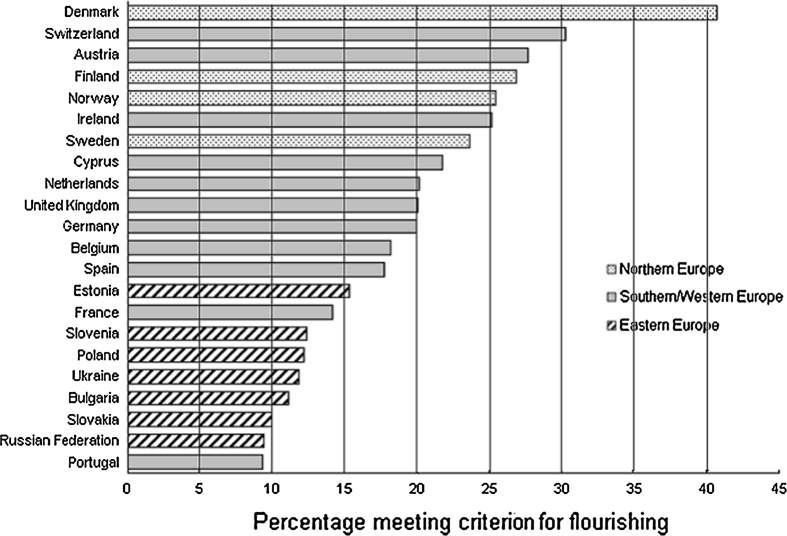
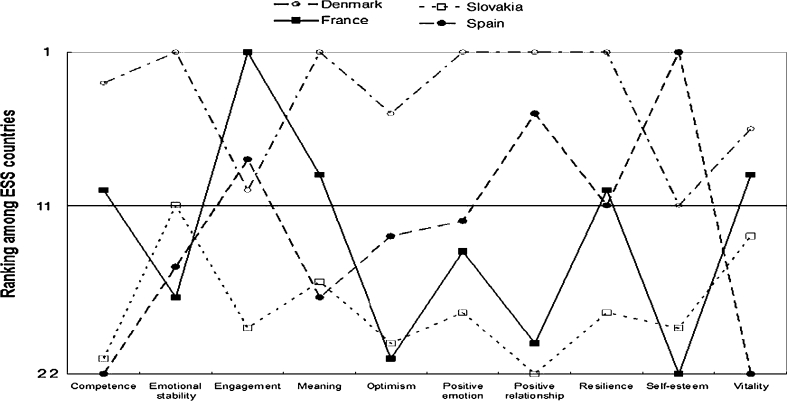
Governments around the world are recognising the importance of measuring subjective well-being as an indicator of progress. But how should well-being be measured? A conceptual framework is offered which equates high well-being with positive mental health. Well-being is seen as lying at the opposite end of a spectrum to the common mental disorders (depression, anxiety). By examining internationally agreed criteria for depression and anxiety (DSM and ICD classifications), and defining the opposite of each symptom, we identify ten features of positive well-being. These combine feeling and functioning, i.e. hedonic and eudaimonic aspects of well-being: competence, emotional stability, engagement, meaning, optimism, positive emotion, positive relationships, resilience, self esteem, and vitality. An operational definition of flourishing is developed, based on psychometric analysis of indicators of these ten features, using data from a representative sample of 43,000 Europeans. Application of this definition to respondents from the 23 countries which participated in the European Social Survey (Round 3) reveals a four-fold difference in flourishing rate, from 41% in Denmark to less than 10% in Slovakia, Russia and Portugal. There are also striking differences in country profiles across the 10 features. These profiles offer fresh insight into cultural differences in well-being, and indicate which features may provide the most promising targets for policies to improve well-being. Comparison with a life satisfaction measure shows that valuable information would be lost if well-being was measured by life satisfaction. Taken together, our findings reinforce the need to measure subjective well-being as a multi-dimensional construct in future surveys.
Overview
The claims and statistics of this paper haven’t been checked yet.
Free: it reads the open-access text and checks the first 5 claims that cite a source we can check. Create a free account to check every claim.
Integrity signals
Registry
Cites
Statistics
Figures
Verification
Claims the paper makes
The claims and statistics of this paper haven’t been checked yet.
Free: it reads the open-access text and checks the first 5 claims that cite a source we can check. Create a free account to check every claim.
Claims other papers make about this one
Each is checked against this paper’s own text: does it say what the citing paper says it does?
The source backs part of the claim, not all of it — or backs it for a different population, condition or comparison.
In the citing paper
“If flourishing encompasses emotional resonance, relational quality, and mutual regulation (4, 5), then sex differences in physiological attunement may influence how individuals engage in supportive, co-regulatory interactions that sustain psychological health.”
From Physiological attunement and flourishing: understanding the influence of relationships on health (2025) · cites this paper as [4]
Experimental — accuracy not yet measured
Self-check
Percentages, sums and reported differences re-computed from the paper’s own numbers.
The self-check needs the paper’s full text.
Citations
Cites
Diagnostic and Statistical Manual of Mental Disorders
Williams, J. B. W., & First, M. (2013) · Encyclopedia of Social Work · doi:10.1093/acrefore/9780199975839.013.104 · Cited by 109,519
The CES-D Scale: A Self-Report Depression Scale for Research in the General Population
Radloff, L. S. (1977) · Applied Psychological Measurement · doi:10.1177/014662167700100306 · Cited by 53,267
Development and validation of brief measures of positive and negative affect: The PANAS scales.
Watson, D., Clark, L. A., & Tellegen, A. (1988) · Journal of Personality and Social Psychology · doi:10.1037/0022-3514.54.6.1063 · Cited by 32,433 · cited 2×
“Proponents of this view have included Bradburn (1969), Watson et al. (1988), and Diener et al. (1999).”
BackgroundAlternative Ways of Assessing Model Fit
Browne, M. W., & Cudeck, R. (1992) · Sociological Methods & Research · doi:10.1177/0049124192021002005 · Cited by 27,200 · cited 2×
“In general, CFI and GFI values of .90 or above, and RMSEA values of .06 or below are indicative of good empirical fit (Browne and Cudeck 1993; Byrne 1994).”
BackgroundTesting Structural Equation Models.
Mueller, C. W., Bollen, K. A., & Long, J. S. (1994) · Contemporary Sociology · doi:10.2307/2074955 · Cited by 14,120
Subjective well-being: Three decades of progress.
Diener, E., Suh, E. M., Lucas, R. E., & Smith, H. L. (1999) · Psychological Bulletin · doi:10.1037/0033-2909.125.2.276 · Cited by 12,910
On Happiness and Human Potentials: A Review of Research on Hedonic and Eudaimonic Well-Being
Ryan, R. M., & Deci, E. L. (2001) · Annual Review of Psychology · doi:10.1146/annurev.psych.52.1.141 · Cited by 11,567 · cited 4×
“Some conceptual approaches to well-being have focused exclusively on the hedonic aspects (e.g. Bradburn 1969; Diener et al. 1999; Watson et al. 1988), while others have focused exclusively on eudaimonic aspects (e.g. Antonovsky 1993; Jahoda 1958; Ryan and Deci 2001; Ryff 1989).”
BackgroundMethodInfluentialThe structure of psychological well-being revisited.
Ryff, C. D., & Keyes, C. L. M. (1995) · Journal of Personality and Social Psychology · doi:10.1037//0022-3514.69.4.719 · Cited by 10,285 · cited 4×
“Similar findings have been reported in other studies (e.g. Chirkov and Ryan 2001; Diener et al. 2009; Ryff and Keyes 1995), indicating that a global measure of life satisfaction is no substitute for the information gained from a multi-dimensional approach.”
BackgroundResultInfluentialTesting Structural Equation Models.
Clogg, C. C., Bollen, K. A., & Long, J. S. (1995) · Social Forces · doi:10.2307/2580595 · Cited by 8,211
Flourish: A Visionary New Understanding of Happiness and Well-Being
(2011) · Choice Reviews Online · doi:10.5860/choice.48-7217 · Cited by 5,543 · cited 3×
“Our conceptual framework is more in keeping with the approaches of Keyes (2002), Seligman (2002, 2011), Tennant et al. (2007), and the recent work of Diener et al. (2010a, b), all of which incorporate both hedonic and eudaimonic aspects of wellbeing.”
BackgroundMethodResult
Research works printed but not linked: 4
- Böhnke P First European quality of life survey: Life satisfaction, happiness and sense of belonging 2005 Luxembourg Office for Official Publications of the European Communities
- Diener, E., Suh, E. M., & Sapyta, J. (1997). Cited in Diener, E., & Oshi, M. (2004). Are Scandinavians happier than Asians? Issues in comparing nations on subjective wellbeing. In F. Columbus (Ed.), Politics and economics of Asia (pp. 1–25). Hauppauge, NY: Nova Science Publishers.
- Jowell R The Central Co-ordinating Team European Social Survey 2002/2003: Technical report 2003 London Centre for Comparative Social Surveys, City University
- Seligman M Authentic happiness: Using the new positive psychology to realize your potential for lasting fulfilment 2002 New York Free Press
Cited by
Items 701–800 of 1,000
Assessing the Impact of Waterfront Environments on Public Well-Being Through Digital Twin Technology
Luo, J., Zheng, Y., Xu, L., & Xu, W. (2025) · IEEE Journal of Selected Topics in Applied Earth Observations and Remote Sensing · doi:10.1109/jstars.2025.3530762 · Cited by 16
“These indicators comprehensively reflect participants’ psychological feelings and emotional states [65], [136].”
Perceived parental expectations and their role in academic and psychosocial functioning
Liem, G. A. D., Wong, Z. Y., Chan, M. C. Y., Liu, W. C., Zainudin, N. I., Tan, S. H., Poon, K. K., Kang, T., & Ng, S. C. (2025) · International Journal of Behavioral Development · doi:10.1177/01650254251321444 · Cited by 15
“The EPOCH framework aligns with both hedonic and eudaimonic perspectives on well-being and the concept of flour-ishing, characterized by both feeling good and functioning well (Huppert & So, 2013).”
Jeliseh, M. T., Valızadeh, M., Zohrabi, M., & Xodabande, I. (2025) · Psychology in the Schools · doi:10.1002/pits.70005 · Cited by 13
“Well ‐ being in the context of positive psychology is conceptualized not simply as the absence of negative conditions or feelings, but as the presence of positive attributes that contribute to a full and meaningful life (Huppert and So 2013; M. Seligman 2011).”
The nature of the relation between mental well-being and ill-being
Tamnes, C. K., Bekkhus, M., Eilertsen, M., Nes, R. B., Prydz, M. B., Ystrøm, E., Aksnes, E. R., Andersen, S. N., Ask, H., Ayorech, Z., et al. (2025) · Nature Human Behaviour · doi:10.1038/s41562-025-02319-x · Cited by 16
Upenieks, L., Andersson, M. A., & Schafer, M. H. (2021) · Journal of Happiness Studies · doi:10.1007/s10902-021-00363-8 · Cited by 16
A Community Mental Health and Wellbeing Literacy Study Among Australian Adults
Chng, J., Burns, R. A., Murray, K., & Crisp, D. A. (2022) · Journal of Happiness and Health · doi:10.47602/johah.v2i1.13 · Cited by 14
“A total of 11 items from the ESS Wellbeing Module encompassed dimensions of social, psychological and subjective wellbeing, including items: "Feeling close to community and people in the local area"; " Having a lot of energy"; "Feeling very positive about oneself"; "Being able to bounce back when things go wrong"; "Ha…”
BackgroundInfluentialPsychosocial Well-Being Determinants and Occupants’ Happiness in a Green Neighbourhood/Community
Ekhaese, E. N., & Husain, W. (2022) · Frontiers in Built Environment · doi:10.3389/fbuil.2022.816390 · Cited by 13
Clarke, T., & Hoskin, S. (2022) · Educational Psychology in Practice · doi:10.1080/02667363.2022.2100321 · Cited by 16
“Wellbeing has been defined according to two overlapping forms of experience: hedonic (feelings) and eudaimonic (functioning; Huppert & So, 2011).”
BackgroundRamirez-Duran, D., Stokes, H., & Kern, M. L. (2022) · Frontiers in Psychology · doi:10.3389/fpsyg.2022.1018620 · Cited by 15
“These include vitality (Huppert and So, 2013), positive emotions (Diener et al.”
BackgroundKinoshita, K., Sato, S., & Sugimoto, D. (2023) · International Journal of Sport and Exercise Psychology · doi:10.1080/1612197x.2023.2246055 · Cited by 18
Self-Esteem, Resilience, And Mental Well-Being Among Students
Farooq, S., & Majeed, J. (2024) · doi:10.53555/kuey.v30i5.4647 · Cited by 15
Skalski‐Bednarz, S. B., Webb, J. R., Wilson, C. M., Toussaint, L. L., Surżykiewicz, J., Reid, S. D., Williams, D. R., & Worthington, E. L. (2024) · Religions · doi:10.3390/rel15091060 · Cited by 14
Murray, M., Murray, L., & Donnelly, M. (2015) · Systematic Reviews · doi:10.1186/s13643-015-0098-z · Cited by 13
“The flourishing scale developed by Huppert and So [18] situates well-being as sitting on a continuum that comprises the opposite constructs of the symptoms of common mental disorders defined in the International Classification of Diseases 10 [30] and the Diagnostic and Statistical Manual of Mental Disorder 4 [31].”
BackgroundA conceptual comparison of well-being measures used in the UK
Peasgood, T., Brazier, J. E., Mukuria, C., & Rowen, D. (2024) · White Rose Research Online (University of Leeds, The University of Sheffield, University of York) · doi:10.15131/shef.data.25118510 · Cited by 14
Paths to success of Israeli immigrants from different countries of origin
Kushnirovich, N., & Youngmann, R. (2017) · International Journal of Intercultural Relations · doi:10.1016/j.ijintrel.2017.07.002 · Cited by 21
Moradi, S., Quaquebeke, N. V., & Hunter, J. A. (2018) · PLoS ONE · doi:10.1371/journal.pone.0200062 · Cited by 17
Guilbert, L., Auzoult, L., Gilibert, D., Sovet, L., & Bosselut, G. (2019) · Psychologie du Travail et des Organisations · doi:10.1016/j.pto.2018.11.004 · Cited by 13
Safari, S., & Akbari, B. (2018) · Avicenna Journal of Neuro Psych Physiology · doi:10.32598/ajnpp.5.3.113 · Cited by 16
Baranowski, M., & Jabkowski, P. (2021) · Economics & Sociology · doi:10.14254/2071-789x.2021/14-2/9 · Cited by 15
“…(due to very diverse criteria); however, it is used in studies based on survey data as it allows for identifying differences in attitudes of respondents from different parts of the old continent (Huppert & So, 2013; Keating, 2009; Lipsmeyer & Nordstrom, 2003; Roosma & van Oorschot, 2017).”
Andrade, V., Quarta, S., Tagarro, M., Miloseva, L., Massaro, M., Chervenkov, M., Ivanova, T., Jorge, R., Maksimova, V., Smilkov, K., et al. (2022) · International Journal of Environmental Research and Public Health · doi:10.3390/ijerph19031715 · Cited by 15
How the sensory experience of buildings can contribute to wellbeing and productivity
Keeling, T., Clements-Croome, D. J., Luck, R., Pointer, P., & Happold, B. (2012) · Cited by 16
Development of a Future Orientation Model in Emerging Adulthood in Hungary
Horváth, Z., & Nováky, E. (2016) · Social Change Review · doi:10.1515/scr-2016-0023 · Cited by 13
Major depression in Cyprus amid financial crisis: prevalence and correlates
Economou, M. P., Souliotis, K. N., Peppou, L. Ε., Agapidaki, I., Tzavara, C. K., & Stefanis, C. N. (2017) · International Journal of Culture and Mental Health · doi:10.1080/17542863.2017.1364283 · Cited by 13
“It is noteworthy that the prevalence rate of the present study parallels evidence from Huppert and So (2013), who have found that approximately 12.5% of Cypriots experienced depressive symptoms and over 25% reported low levels of positive affect in Cyprus in 2013.”
ResultInfluentialWell-being as a staged social responsibility process for business and society
Newey, L. R. (2018) · Social Responsibility Journal · doi:10.1108/srj-10-2017-0213 · Cited by 14
Owens, M., Watkins, E. R., Bot, M., Brouwer, I. A., Roca, M., Kohls, E., Penninx, B. W. J. H., van Grootheest, G., Hegerl, U., Gili, M., et al. (2020) · Nutrition Bulletin · doi:10.1111/nbu.12447 · Cited by 15
Finding meaning through work: eudaimonic well-being and job type in the US and UKPreprint
Bryce, A. (2018) · RePEc: Research Papers in Economics · Cited by 27
Do scores ‘define’ us? Adolescents' experiences of wellbeing as ‘welldoing’ at school in England
Clarke, T. (2023) · Review of Education · doi:10.1002/rev3.3393 · Cited by 15
Conceptualising and measuring positive mental health literacy: a systematic literature review
Cresswell‐Smith, J., Solin, P., Wahlbeck, K., & Tamminen, N. (2023) · Journal of Public Mental Health · doi:10.1108/jpmh-12-2022-0128 · Cited by 13
Oshimi, D., Kinoshita, K., & Yamashita, R. (2023) · Journal of Leisure Research · doi:10.1080/00222216.2023.2287009 · Cited by 12
“For domain-specific well-being, we used Seligman’s (2011) PERMA framework—an acronym for five well-being components incorporating both hedonic and eudaimonic well-being (Huppert & So, 2013): positive emotion, engagement, relationships, meaning, and accomplishment.”
Hill, J. L., Kern, M. L., Seah, W. T., & DRIEL, J. H. V. (2024) · Springer eBooks · doi:10.1007/978-981-99-9454-0_13 · Cited by 14
Akahori, W., Yamashita, N., Jamieson, J., Nakatani, M., Hashimoto, R., & Watanabe, M. (2024) · CHI Conference on Human Factors in Computing Systems · doi:10.1145/3613904.3641928 · Cited by 14
The Flourishing Scale: Psychometric Properties in Breast Cancer Patients
Cerezo, M. V., Soria‐Reyes, L. M., Alarcón, R., & Blanca, M. J. (2024) · Integrative Cancer Therapies · doi:10.1177/15347354241249935 · Cited by 12
“4,5 One of the first attempts to assess flourishing was the European Social Survey.”
BackgroundJiang, A. L., Sun, K., & Qin, T. L. (2024) · System · doi:10.1016/j.system.2024.103356 · Cited by 13
The importance of childhood social capitals in the future well-being of children
Hosoda, C., YunFeng, Z., Watanabe, J., Maruya, K., Tabuchi, R., Hosokawa, K., & Matsuhashi, T. (2024) · Frontiers in Psychology · doi:10.3389/fpsyg.2024.1389269 · Cited by 13
“The burgeoning literature links SC to diverse health outcomes and well-being measures (Helliwell and Putnam, 2004; Kawachi et al., 2004; Huppert and So, 2013; Haanpää et al., 2019), though the evidence strength varies based on SC conceptualization and measurement, study population demographics,…”
BackgroundDoes the good life feel good? The role of positive emotion in competing conceptions of the good life
Novak, L. F., & Kiknadze, N. C. (2024) · Frontiers in Psychology · doi:10.3389/fpsyg.2024.1425415 · Cited by 12
“In order to develop their measure, Huppert and So (2013) select 10 items from the European Social Survey.”
BackgroundFlourishing at the end of life
Symons, X., Rhee, J. Y., Tanous, A., Balboni, T. A., & VanderWeele, T. J. (2024) · Metamedicine · doi:10.1007/s11017-024-09679-x · Cited by 14
Collie, R. J., & Hascher, T. (2024) · Learning and Instruction · doi:10.1016/j.learninstruc.2024.102002 · Cited by 12
Predictors and outcomes of teachers’ perceived social-emotional competence
Collie, R. J. (2025) · Teaching and Teacher Education · doi:10.1016/j.tate.2025.105255 · Cited by 13
Layers of strain: An ecological perspective on teacher burnout in Ireland
O'Farrell, P., Fitzsimons, S., Furlong, C., & Scully, C. (2025) · British Educational Research Journal · doi:10.1002/berj.70097 · Cited by 12
Hojabrian, H., Rezaei, A. M., Bigdeli, I., Najafi, M., & Mohammadifar, M. A. (2018) · Practice in Clinical Psychology · doi:10.29252/nirp.jpcp.6.2.129 · Cited by 15
“The measurement of flourishing or, say, the high level of well-being are among the important research topics that have created global interests (Hone et al., 2014; Butler & Kern, 2016; Huppert & So, 2013; Diener et al., 2009; Keyes, 2005).”
BackgroundInfluentialde la Iglesia, G., & Solano, A. C. (2019) · Psychological Thought · doi:10.5964/psyct.v12i2.377 · Cited by 12
General well‐being of intensive care nurses: A prototype analysis
Jarden, R., Sandham, M. H., Siegert, R. J., & Koziol‐McLain, J. (2021) · Nursing in Critical Care · doi:10.1111/nicc.12706 · Cited by 14
Teacher Trainees’ Well-Being—The Role of Personal Resources
Hohensee, E., & Weber, K. E. (2022) · International Journal of Environmental Research and Public Health · doi:10.3390/ijerph19148821 · Cited by 12
“This shift is important to avoid a deficit view [26] and to examine personal resources [27].”
BackgroundDeng, X., Wei, Z., Lu, H., Tu, C., & Yang, Y. (2024) · Social Sciences · doi:10.3390/socsci13040214 · Cited by 12
“Flourishing can be defined as “a combination of feeling good and functioning effectively, and the experience that life is going well” (Huppert and So 2013).”
BackgroundPlacing Relationships in the Foreground: The Role of Workplace Friendships in Engagement
McBain, R., & Parkinson, A. (2017) · Emerald Group Publishing Limited eBooks · doi:10.1108/s1746-979120170000013011 · Cited by 15
“…giving in organisations (Cameron et al , (2003) in Jeung, 2011), has led to research into engagement, meaning, vitality and positive relationships (Huppert et al , 2013), with research findings suggesting that a person’s sense of choice and contentment with their situation is associated with…”
THE PRECONDITIONS TO FLOURISHING: STRUCTURAL NECESSITIES FOR ACHIEVING WELL-BEING IN SCHOOLS
Gunawardena, H., Merlo, S., & Stevens, R. J. (2020) · British Journal of Educational Studies · doi:10.1080/00071005.2020.1711857 · Cited by 12
Subjective Well-Being in Italian Regions
Conigliaro, P. (2020) · Social Indicators Research · doi:10.1007/s11205-020-02391-y · Cited by 12
“Several scholars set up new tools to assess it (Diener et al. 2010; Seligman 2011; Huppert and So 2013).”
BackgroundEthical imperatives for legal educators to promote law student wellbeing
Duncan, N. J., Field, R., & Strevens, C. (2020) · Legal Ethics · doi:10.1080/1460728x.2020.1834070 · Cited by 15
Transformative place management (TPM) in commercial settings and business performance
Losada-Otálora, M., & Siqueira, J. R. (2020) · Journal of Services Marketing · doi:10.1108/jsm-08-2019-0323 · Cited by 13
Mitchell, E. S., Yang, Q., Behr, H., Ho, A. S., DeLuca, L., May, C. N., & Michaelides, A. P. (2021) · International Journal of Environmental Research and Public Health · doi:10.3390/ijerph18041712 · Cited by 13
“Well-being is thought to be composed of two aspects: hedonic, or emotion, and eudaimonic, or subjective perception of one’s life [29,30].”
BackgroundNot “My” crisis: Social identity and followers’ crisis responses to COVID‐19
Lau, V. W.-Y., Tse, D. C. K., Bligh, M. C., Hong, Y., Kakarika, M., Chan, H., & Chiu, C. P. (2022) · Analyses of Social Issues and Public Policy · doi:10.1111/asap.12316 · Cited by 13
Orpana, H., Vachon, J., Dykxhoorn, J. L., McRae, L., & Jayaraman, G. (2016) · Promotion de la santé et prévention des maladies chroniques au Canada · doi:10.24095/hpcdp.36.1.01f · Cited by 12
Happiness, Well-being and Sustainability: A Course in Systems Change
Musikanski, L., Phillips, R., Bradbury, J., de Graaf, J., & Bliss, C. L. (2020) · Routledge eBooks · doi:10.4324/9781003043232 · Cited by 16
Racing from Subjective Well-Being to Public Policy: A Review of The Origins of Happiness
Fabian, M. (2018) · Journal of Happiness Studies · doi:10.1007/s10902-018-0019-7 · Cited by 14
Short Tips Delivered “in the Moment” Can Boost Positive Emotion
Hurling, R., Murray, P., Tomlin, C., Warner, A., Wilkinson, J., York, G., Linley, P. A., Dovey, H., Hogan, R. A., Maltby, J., et al. (2017) · International Journal of Psychological Studies · doi:10.5539/ijps.v9n1p88 · Cited by 11
“The PANAS, PEIS and TIPI measures from Study 1 were used along with a new Flourishing Scale [FS] measure (So & Huppert, 2009; Huppert & So, 2013); covering ten features representing positive aspects of mental functioning: competence, emotional stability, engagement, meaning, optimism, positive…”
MethodSelf-citationCaprara, M., Zuffianò, A., Felipe, A. C., Suárez-Falcón, J. C., Pozo, P., Cabras, E., & Veiga, I. G. (2023) · Current Psychology · doi:10.1007/s12144-023-05159-y · Cited by 14
“This broader concept encompasses elements of positivity and captures a holistic view of well-being (Diener & Biswas-Diener, 2008; Huppert & So, 2013).”
Systematic Literature Review: Validitas Konstruk Skala Psychological Well-Being Ryff
Meliala, A. K., & Ahman, A. (2024) · Ideguru Jurnal Karya Ilmiah Guru · doi:10.51169/ideguru.v9i2.995 · Cited by 11
“Menurut Huppert & So (2011), kesejahteraan adalah konsep yang kompleks karena konotasi dari teori dan praktiknya yang mencakup di semua bidang.”
BackgroundPerrella, L., Lodi, E., & Patrizi, P. (2024) · European Journal of Investigation in Health Psychology and Education · doi:10.3390/ejihpe14030051 · Cited by 14
“Well-being can be defined as a person’s perception of being able to develop and realize one’s qualities and talents [1,2], in terms of personal self-fulfillment and positive functioning within one’s valued life contexts [3,4].”
BackgroundThe Protective Role of Curiosity Behaviors in Coping with Existential Vacuum
Gawda, B., & Korniluk, A. (2024) · Behavioral Sciences · doi:10.3390/bs14050391 · Cited by 11
Trotter, M., & Yates, J. (2024) · Equality Diversity and Inclusion An International Journal · doi:10.1108/edi-10-2023-0359 · Cited by 12
Wang, C., Hong, F., & Hsu, T. (2025) · Psychology in the Schools · doi:10.1002/pits.23395 · Cited by 11
An analysis of primary school student’s holistic well-being using PhotoVoice
Cashman, D., O’Brien, W., & Chambers, F. C. (2025) · Health Education · doi:10.1108/he-05-2024-0062 · Cited by 11
Wellbeing and Policy: Evidence for Action
Briguglio, M., Czap, N. V., & Laffan, K. M. (2025) · Routledge eBooks · doi:10.4324/9781003382447 · Cited by 13
Bakker, A. B., Caracuzzo, E., Breevaart, K., Urbini, F., & Callea, A. (2025) · European Management Journal · doi:10.1016/j.emj.2025.10.009 · Cited by 13
Work-Family Conflict, Coping Strategies, and Flourishing: Testing for Mediation
Rahim, N. B. (2019) · Asian Academy of Management Journal · doi:10.21315/aamj2019.24.2.8 · Cited by 13
“Life Satisfaction” and “Personal Happiness” in the Sociological Studies of Subjective Well-Being
Tatarova, G. G., & Kuchenkova, A. V. (2020) · Rossiâ reformiruûŝaâsâ · doi:10.19181/ezheg.2020.24 · Cited by 11
Walking mediates associations between the neighborhood environment and flourishing
Ross, A., Godwyll, J., & Searle, M. (2020) · Wellbeing Space and Society · doi:10.1016/j.wss.2020.100014 · Cited by 12
Mindfulness as a path to fostering time affluence and well‐being
Schaupp, J., & Geiger, S. M. (2021) · Applied Psychology Health and Well-Being · doi:10.1111/aphw.12298 · Cited by 12
Bo, C., McCallum, F., & White, M. A. (2022) · International Journal of Chinese Education · doi:10.1177/2212585x221097719 · Cited by 12
Partington, P., Major, G., & Tudor, K. (2022) · International Journal of Disability Development and Education · doi:10.1080/1034912x.2022.2092079 · Cited by 13
“…of definitions which hold common factors in their constructs, including self-acceptance and self-esteem, positive emotion, positive relationship, autonomy, mastery, purpose or meaning in life, personal growth and accomplishment and resiliency (c.f., Huppert & So, 2013; Ryff, 1989; Seligman, 2011).”
BackgroundAtkin, K. M., Berghs, M. J., & Chattoo, S. (2023) · Politics & Policy · doi:10.1111/polp.12515 · Cited by 13
Development and validation of the State Contentment Measure
Taylor, T., Medvedev, O. N., Owens, R. G., & Siegert, R. J. (2017) · Personality and Individual Differences · doi:10.1016/j.paid.2017.07.010 · Cited by 11
The Effect of Resilience on the Psychological Well Being of Orphan and Non-Orphan Adolescents
Dey, P., & Beena Daliya, R. (2019) · Indian Journal of Mental Health(IJMH) · doi:10.30877/ijmh.6.3.2019.253-260 · Cited by 17
“According to researchers [5], psychological well-being is being able to feel good about one self and to be able to function effectively which involves having a sense of control over one’s life, to be able to exploit one’s potential, having a sense of purpose in life and experiencing positive relations with others.”
BackgroundAchievement goals, PERMA and life satisfaction: A mediational analysis
Hidayat, R. (2020) · İlköğretim Online · doi:10.17051/ilkonline.2020.695266 · Cited by 12
“At the same time, the prior study also evidenced that multidimensional dimensions of well-being are associated with life satisfaction (Huppert & So, 2013; Işik, Ulubey & Kozan, 2018; Kern et al., 2015; Verme 2009).”
BackgroundO’Rourke, R. H., Doré, I., Sylvester, B. D., & Sabiston, C. M. (2021) · Journal of American College Health · doi:10.1080/07448481.2021.1879815 · Cited by 12
“The core features of flourishing include positive emotions, engagement, interest, meaning, and purpose.(6)”
BackgroundAlibak, F., & Alibak, M. (2021) · Journal of the Australian and New Zealand Student Services Association · doi:10.30688/janzssa.2021.1.08 · Cited by 14
“…and eudemonic (positive functioning) features of positive wellbeing such as positive emotion, emotional stability, optimism, competence, engagement, meaning, self-esteem, vitality, and resilience are the opposite of symptoms of depression and anxiety (Huppert & So, 2013; Kern et al., 2015).”
BackgroundMindfulness and PERMA Well-Being: Intervention Effects and Mechanism of Change
Liu, B., Ye, G., Jing, H., Hofmann, S. G., & Liu, X. (2022) · Psychology · doi:10.4236/psych.2022.135046 · Cited by 11
Measuring happiness for social policy evaluation: a multidimensional index of happiness
Delsignore, G., Aguilar‐Latorre, A., Ruiz, P. G., & Oliván‐Blázquez, B. (2023) · Sociological Spectrum · doi:10.1080/02732173.2022.2163444 · Cited by 11
“Huppert proposes five critical dimensions of well-being: evaluative well-being, emotional wellbeing, communitarian well-being, functioning, and vitality (Huppert and Whittington 2003; Huppert, Baylis, and Keverne 2005, Huppert et al. 2009; Huppert and So 2009, 2013).”
BackgroundFrimpong, S., Sunindijo, R. Y., Wang, C., Boadu, E. F., & Dansoh, A. (2023) · Buildings · doi:10.3390/buildings13041025 · Cited by 11
Granero‐Gallegos, A., Phan, H. P., & Ngu, B. H. (2023) · PLoS ONE · doi:10.1371/journal.pone.0287916 · Cited by 12
Positive Relationships at Work
Roffey, S. (2016) · doi:10.1002/9781118977620.ch11 · Cited by 16
Türkiye’de İyi Oluş İle İlgili Yapılmış Araştırmaların Sistematik Olarak İncelenmesi
KARDAŞ, F., & Yalçın, İ. (2019) · Kastamonu Eğitim Dergisi · doi:10.24106/kefdergi.2799 · Cited by 16
Critical Perspectives on Teaching, Learning and Leadership: Enhancing Educational Outcomes
White, M. A., & McCallum, F. (2020) · Springer eBooks · doi:10.1007/978-981-15-6667-7 · Cited by 12
How innovation nurtures well-being in enthusiast communities
Guercini, S., & Covà, B. (2021) · Innovation · doi:10.1080/14479338.2021.1971991 · Cited by 11
Freire, C., Ferradás, M. D. M., Bértoa, A. G., Núñez, J. C., & Valle, A. (2022) · Revista de Psicodidáctica · doi:10.1016/j.psicod.2022.07.001 · Cited by 13
Sortheix, F. M., & Weber, W. (2023) · Frontiers in Psychology · doi:10.3389/fpsyg.2023.1034423 · Cited by 11
Work-related well-being in early career: A role of self-compassion
Krejčová, K., Krejčí, I., Chýlová, H., Rymešová, P., & Michálek, P. (2024) · Heliyon · doi:10.1016/j.heliyon.2024.e41377 · Cited by 12
“In addition to decreased well-being [2], mental health problems result in lower work productivity [3].”
Fang, Z., Zou, W., & Ding, X. (2025) · Humanities and Social Sciences Communications · doi:10.1057/s41599-025-05395-6 · Cited by 11
Global mental health: an improved measure of well-being in multiple languages
Graeff-Buhl-Nielsen, S., García‐Garzón, E., Benzerga, A., Folke, T., & Ruggeri, K. (2020) · Health and Quality of Life Outcomes · doi:10.1186/s12955-020-01375-3 · Cited by 11
Trust Buffers Against Reduced Life Satisfaction When Faced With Financial Crisis
Clench‐Aas, J., Bergande, I., Nes, R. B., & Holte, A. (2021) · Frontiers in Psychology · doi:10.3389/fpsyg.2021.632585 · Cited by 11
Aho, A. C., Renmarker, E., Axelsson, M., & Jakobsson, J. (2021) · Adapted Physical Activity Quarterly · doi:10.1123/apaq.2021-0035 · Cited by 11
“Hear my Voice”: Subjective Well-Being Scale for Young Children (SWB-YC)
Gündoğan, A. (2021) · Child Indicators Research · doi:10.1007/s12187-021-09877-2 · Cited by 11
Flourishing among adolescents living with chronic pain and their parents: A scoping review
Parsons, R. D., McParland, J. L., Halligan, S. L., Goubert, L., & Jordan, A. L. (2022) · Paediatric and Neonatal Pain · doi:10.1002/pne2.12088 · Cited by 10
Addressing Community Food Security Through Gardening: A Review
Buabeng, F., & Aduteye, E. K. (2022) · International Journal of Agriculture Extension and Rural Development Studies · doi:10.37745/ijaerds.15/vol9n4113 · Cited by 10
Zábó, V., Oláh, A., & Vargha, A. (2023) · Mentálhigiéné és Pszichoszomatika · doi:10.1556/0406.2023.00014 · Cited by 10
Burke, J., Clarke, D., O’Keeffe, J., & Meehan, T. (2023) · Journal of Happiness and Health · doi:10.47602/johah.v3i2.48 · Cited by 14
“…positive psychological outcomes of wellbeing are presented as individual concepts, such as harmonious passion (Vallerand, 2012), post-traumatic growth (Tedeschi et al., 2018); or as part of flourishing models and measures (e.g. Diener et al., 2010; Huppert & So, 2013; Keyes, 2002; Seligman, 2011).”
BackgroundImproving Purpose in Life in School Settings
Ruini, C., Albieri, E., Ottolini, F., & Vescovelli, F. (2023) · International Journal of Environmental Research and Public Health · doi:10.3390/ijerph20186772 · Cited by 12
“Some authors have criticized the psychometric properties of this scale, particularly in its short version [34,59,60].”
Bergmann, J. (2023) · Studien zur Migrations- und Integrationspolitik · doi:10.1007/978-3-658-42298-1 · Cited by 13
Zábó, V., Oláh, A., Erát, D., & Vargha, A. (2023) · European Journal of Mental Health · doi:10.5708/ejmh.18.2023.0012 · Cited by 12
Cosme, D., Mobasser, A., & Pfeifer, J. H. (2023) · Social Cognitive and Affective Neuroscience · doi:10.1093/scan/nsad065 · Cited by 10
“…on what it means to be well, including feelings of happiness (Diener and Lucas, 1999), successful pursuits of personal goals (Seligman, 2011; Huppert and So, 2013; Butler and Kern, 2016) and satisfaction of fundamental psychological needs (Ryan and La Guardia, 2000; Ryan and Deci, 2001),…”
Background
Metadata
- Authors
- Huppert, F. A., & So, T. T. C.
- Affiliations
- University of Cambridge (GB)
- Corresponding author
- Huppert, Felicia A.
- ORCID
- Huppert, Felicia A.
- Venue
- Social Indicators Research
- Published
- 2011-12-15
- Volume
- 110
- Issue
- 3
- Pages
- 837-861
- ISSN
- 0303-8300 (ISSN-L)
- 1573-0921
- PMC
- PMC3545194
- OpenAlex
- W1992646537
- Cited by
- 1,864
- References
- 88
- Citations by year
- 2026: 170 · 2025: 196 · 2024: 209 · 2023: 187 · 2022: 214 · 2021: 173 · 2020: 159 · 2019: 131 · 2018: 109 · 2017: 101 · 2016: 74 · 2015: 67 · 2014: 46 · 2013: 24 · 2012: 4
- FWCI
- 32.30
- Type
- journal article
- Language
- en
- Open access
- hybrid
- doi.org
- Licence
- cc-by-nc
- Locations
- Social Indicators Research (publishedVersion, cc-by-nc)
- Europe PMC (PubMed Central) (publishedVersion, cc-by-nc)
- PubMed Central (publishedVersion, cc-by-nc)
- PubMed (publishedVersion)
- Research Bank (Australian Catholic University) (submittedVersion)
- RePEc: Research Papers in Economics (submittedVersion)
- Topics
- Social Sciences › Psychology › Social Psychology › Psychological Well-being and Life Satisfaction
- Social Sciences › Sociology and Political Science › Quality of Life Measurement
- Social Sciences › Psychology › Developmental and Educational Psychology › Flow Experience in Various Fields
- Keywords
- eudaimonia, subjective well-being, positive mental health, positive well-being, hedonic well-being, eudaimonic well-being, depression, anxiety, life satisfaction, well-being measurement, European Social Survey
About these checks
Registry, retraction, Cites and statistics results are computed, not judged, with one exception: a printed reference that no index lists is read once by a model before it counts as a citation error. Claims are extracted by a model and kept only when their quote appears verbatim in the text; each cited source is then checked, with a model’s help, for whether it says what the claim relies on. Those verdicts can be wrong — read the claim’s quote and the cited source before relying on one.
Statistics and arithmetic are recomputed, not judged.
Confidence bands are shown only for fields calibrated on our annotated test set. None is calibrated yet, so no band is shown.
What counts as a claim ›How we measure confidence ›How we check this ›
Are you an author, or do you see a problem with this page? Request a review
Data sources
Bibliographic data: Semantic Scholar, OpenAlex, Crossref.
Contains information from the Semantic Scholar Academic Graph Datasets, made available under the ODC Attribution License (ODC-BY 1.0).
Semantic Scholar’s data is described in: Kinney, R., et al. (2023). The Semantic Scholar Open Data Platform. arXiv:2301.10140.
