

Flourishing Across Europe: Application of a New Conceptual Framework for Defining Well-Being
Open accessThe DOI matches its Crossref record, with a small difference in title or year; 80 of the 88 references it cites were found in a registry or an index.
Abstract
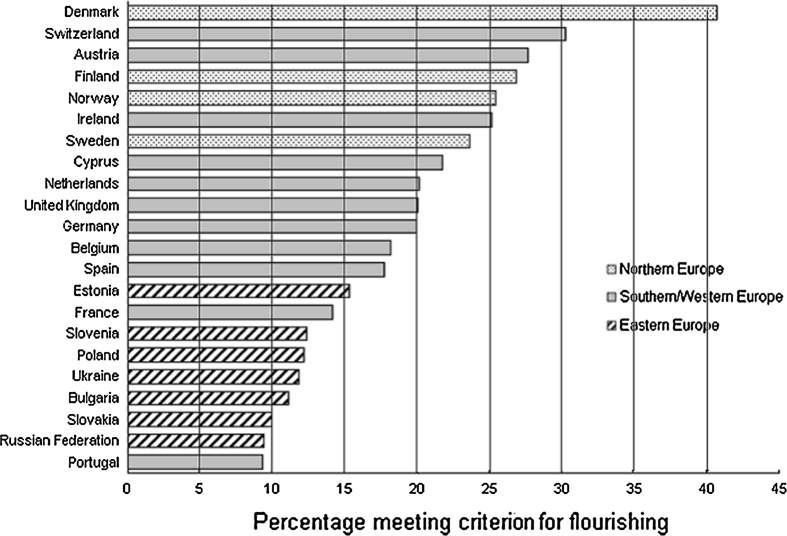
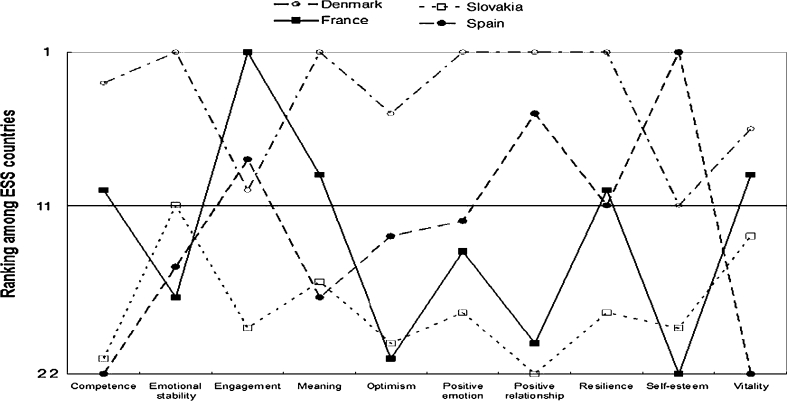
Governments around the world are recognising the importance of measuring subjective well-being as an indicator of progress. But how should well-being be measured? A conceptual framework is offered which equates high well-being with positive mental health. Well-being is seen as lying at the opposite end of a spectrum to the common mental disorders (depression, anxiety). By examining internationally agreed criteria for depression and anxiety (DSM and ICD classifications), and defining the opposite of each symptom, we identify ten features of positive well-being. These combine feeling and functioning, i.e. hedonic and eudaimonic aspects of well-being: competence, emotional stability, engagement, meaning, optimism, positive emotion, positive relationships, resilience, self esteem, and vitality. An operational definition of flourishing is developed, based on psychometric analysis of indicators of these ten features, using data from a representative sample of 43,000 Europeans. Application of this definition to respondents from the 23 countries which participated in the European Social Survey (Round 3) reveals a four-fold difference in flourishing rate, from 41% in Denmark to less than 10% in Slovakia, Russia and Portugal. There are also striking differences in country profiles across the 10 features. These profiles offer fresh insight into cultural differences in well-being, and indicate which features may provide the most promising targets for policies to improve well-being. Comparison with a life satisfaction measure shows that valuable information would be lost if well-being was measured by life satisfaction. Taken together, our findings reinforce the need to measure subjective well-being as a multi-dimensional construct in future surveys.
Overview
The claims and statistics of this paper haven’t been checked yet.
Free: it reads the open-access text and checks the first 5 claims that cite a source we can check. Create a free account to check every claim.
Integrity signals
Registry
Cites
Statistics
Figures
Verification
Claims the paper makes
The claims and statistics of this paper haven’t been checked yet.
Free: it reads the open-access text and checks the first 5 claims that cite a source we can check. Create a free account to check every claim.
Claims other papers make about this one
Each is checked against this paper’s own text: does it say what the citing paper says it does?
The source backs part of the claim, not all of it — or backs it for a different population, condition or comparison.
In the citing paper
“If flourishing encompasses emotional resonance, relational quality, and mutual regulation (4, 5), then sex differences in physiological attunement may influence how individuals engage in supportive, co-regulatory interactions that sustain psychological health.”
From Physiological attunement and flourishing: understanding the influence of relationships on health (2025) · cites this paper as [4]
Experimental — accuracy not yet measured
Self-check
Percentages, sums and reported differences re-computed from the paper’s own numbers.
The self-check needs the paper’s full text.
Citations
Cites
Diagnostic and Statistical Manual of Mental Disorders
Williams, J. B. W., & First, M. (2013) · Encyclopedia of Social Work · doi:10.1093/acrefore/9780199975839.013.104 · Cited by 109,519
The CES-D Scale: A Self-Report Depression Scale for Research in the General Population
Radloff, L. S. (1977) · Applied Psychological Measurement · doi:10.1177/014662167700100306 · Cited by 53,267
Development and validation of brief measures of positive and negative affect: The PANAS scales.
Watson, D., Clark, L. A., & Tellegen, A. (1988) · Journal of Personality and Social Psychology · doi:10.1037/0022-3514.54.6.1063 · Cited by 32,433 · cited 2×
“Proponents of this view have included Bradburn (1969), Watson et al. (1988), and Diener et al. (1999).”
BackgroundAlternative Ways of Assessing Model Fit
Browne, M. W., & Cudeck, R. (1992) · Sociological Methods & Research · doi:10.1177/0049124192021002005 · Cited by 27,200 · cited 2×
“In general, CFI and GFI values of .90 or above, and RMSEA values of .06 or below are indicative of good empirical fit (Browne and Cudeck 1993; Byrne 1994).”
BackgroundTesting Structural Equation Models.
Mueller, C. W., Bollen, K. A., & Long, J. S. (1994) · Contemporary Sociology · doi:10.2307/2074955 · Cited by 14,120
Subjective well-being: Three decades of progress.
Diener, E., Suh, E. M., Lucas, R. E., & Smith, H. L. (1999) · Psychological Bulletin · doi:10.1037/0033-2909.125.2.276 · Cited by 12,910
On Happiness and Human Potentials: A Review of Research on Hedonic and Eudaimonic Well-Being
Ryan, R. M., & Deci, E. L. (2001) · Annual Review of Psychology · doi:10.1146/annurev.psych.52.1.141 · Cited by 11,567 · cited 4×
“Some conceptual approaches to well-being have focused exclusively on the hedonic aspects (e.g. Bradburn 1969; Diener et al. 1999; Watson et al. 1988), while others have focused exclusively on eudaimonic aspects (e.g. Antonovsky 1993; Jahoda 1958; Ryan and Deci 2001; Ryff 1989).”
BackgroundMethodInfluentialThe structure of psychological well-being revisited.
Ryff, C. D., & Keyes, C. L. M. (1995) · Journal of Personality and Social Psychology · doi:10.1037//0022-3514.69.4.719 · Cited by 10,285 · cited 4×
“Similar findings have been reported in other studies (e.g. Chirkov and Ryan 2001; Diener et al. 2009; Ryff and Keyes 1995), indicating that a global measure of life satisfaction is no substitute for the information gained from a multi-dimensional approach.”
BackgroundResultInfluentialTesting Structural Equation Models.
Clogg, C. C., Bollen, K. A., & Long, J. S. (1995) · Social Forces · doi:10.2307/2580595 · Cited by 8,211
Flourish: A Visionary New Understanding of Happiness and Well-Being
(2011) · Choice Reviews Online · doi:10.5860/choice.48-7217 · Cited by 5,543 · cited 3×
“Our conceptual framework is more in keeping with the approaches of Keyes (2002), Seligman (2002, 2011), Tennant et al. (2007), and the recent work of Diener et al. (2010a, b), all of which incorporate both hedonic and eudaimonic aspects of wellbeing.”
BackgroundMethodResult
Research works printed but not linked: 4
- Böhnke P First European quality of life survey: Life satisfaction, happiness and sense of belonging 2005 Luxembourg Office for Official Publications of the European Communities
- Diener, E., Suh, E. M., & Sapyta, J. (1997). Cited in Diener, E., & Oshi, M. (2004). Are Scandinavians happier than Asians? Issues in comparing nations on subjective wellbeing. In F. Columbus (Ed.), Politics and economics of Asia (pp. 1–25). Hauppauge, NY: Nova Science Publishers.
- Jowell R The Central Co-ordinating Team European Social Survey 2002/2003: Technical report 2003 London Centre for Comparative Social Surveys, City University
- Seligman M Authentic happiness: Using the new positive psychology to realize your potential for lasting fulfilment 2002 New York Free Press
Cited by
Items 101–200 of 1,000
Assessing College Life Adjustment of Students With Disabilities: Application of the PERMA Framework
Tansey, T. N., Smedema, S. M., Umucu, E., Iwanaga, K., Wu, J.-R., Cardoso, E. D. S., & Strauser, D. (2017) · Rehabilitation Counseling Bulletin · doi:10.1177/0034355217702136 · Cited by 118
“According to Huppert and So (2013) to flourish is more than an absence of problems; flourishing is the opposite of mental disorder rather than merely its absence.”
BackgroundPrevalence and correlates of positive mental health in Chinese adolescents
Guo, C., Tomson, G. B., Keller, C., & Söderqvist, F. (2018) · BMC Public Health · doi:10.1186/s12889-018-5133-2 · Cited by 109
“A growing body of evidence shows that high levels of well-being are good for individuals and society, and are associated with a range of positive outcomes, for example, good health and life expectancy and satisfaction [12].”
BackgroundPezirkianidis, C., Stalikas, A., Lakioti, A., & Yotsidi, V. (2019) · Current Psychology · doi:10.1007/s12144-019-00236-7 · Cited by 109
“Huppert and So’s theory and instrument (Huppert and So 2013) follow the same logic and make an attempt to list the opposite symptoms of depression and anxiety based on DSM and International Classification of Diseases (ICD) criteria.”
BackgroundHu, X., Jing, C., & Wang, Y. (2020) · Information Processing & Management · doi:10.1016/j.ipm.2020.102409 · Cited by 117
Elevating Subjective Well-Being Through Physical Exercises: An Intervention Study
Iwon, K., Skibinska, J., Jasielska, D., & Kalwarczyk, S. (2021) · Frontiers in Psychology · doi:10.3389/fpsyg.2021.702678 · Cited by 115
Psychological Capital and Burnout in Teachers: The Mediating Role of Flourishing
Freire, C., Ferradás, M. D. M., Bértoa, A. G., Núñez, J. C., Rodríguez, S., & Piñeiro, I. (2020) · International Journal of Environmental Research and Public Health · doi:10.3390/ijerph17228403 · Cited by 115
“Third, the idea of flourishing as a negative predictor of teacher burnout links conceptually with the positive psychology approach, which emphasizes the idea that flourishing represents the mirror opposite of the symptoms of common mental disorders [9], and as such is the best guarantee of preventing or reducing these…”
BackgroundMethodThe implementation of mindfulness in healthcare systems: a theoretical analysis
Demarzo, M., Cebolla, A., & García‐Campayo, J. (2014) · General Hospital Psychiatry · doi:10.1016/j.genhosppsych.2014.11.013 · Cited by 108
“Preliminary evidence on the impact of brief mindfulness interventions on health already exists [25–27], and it is feasible to speculate that such initiatives could have a considerable impact on the population’s perceived stress levels, quality of life and well-being, preventing future cases of anxiety or depression [2…”
BackgroundFilo, K., & Coghlan, A. (2016) · Event Management · doi:10.3727/152599516x14610017108701 · Cited by 71
“More recently, well-being scholars have added social well-being as a measure of social functioning, social support, and social contribution (Huppert & So, 2013; Keyes, 1998).”
BackgroundFrom Happiness to Flourishing at Work: A Southern African Perspective
Rothmann, S. (2013) · Cross-cultural advancements in positive psychology · doi:10.1007/978-94-007-6368-5_7 · Cited by 133
Flourishing-at-Work: The Role of Positive Organizational Practices
Redelinghuys, K., Rothmann, S., & Botha, E. (2018) · Psychological Reports · doi:10.1177/0033294118757935 · Cited by 108
“This is also a prerequisite for the scientific examination of flourishing in the workplace (Huppert & So, 2013; Rothmann, 2013).”
BackgroundMorgan, B. E., & Simmons, L. K. (2021) · Frontiers in Education · doi:10.3389/feduc.2021.642632 · Cited by 108
“Despite there being disagreement over the components of wellbeing and alternate conceptions of wellbeing proposed (e.g., Ryff (1989) theory of psychological wellbeing), there is wide agreement that wellbeing is a multi-faceted construct (Ryff, 1989; Ryan and Deci, 2001; Huppert and So, 2013).”
BackgroundOrpana, H., Vachon, J., Dykxhoorn, J., McRae, L., & Jayaraman, G. (2016) · Health Promotion and Chronic Disease Prevention in Canada · doi:10.24095/hpcdp.36.1.01 · Cited by 97
“Hedonia is reflected in measures of positive affect and satisfaction with life (emotional well-being), while eudaimonia taps into functioning well, for example, being able to engage in valued activities and have meaningful relationships (psychological and social well-being).(22) Outcomes FIGURE 1 Positive mental healt…”
BackgroundSelf-Perceived Employability and Meaningful Work: The Mediating Role of Courage on Quality of Life
Magnano, P., Santisi, G., Zammitti, A., Zarbo, R., & Nuovo, S. D. (2019) · Sustainability · doi:10.3390/su11030764 · Cited by 106
“Although these two perspectives have been grown as separate frameworks, recently some authors have integrated them [62] because of the substantial overlap between the two constructs [63–65].”
BackgroundWidlund, A., Tuominen, H., & Korhonen, J. (2021) · Contemporary Educational Psychology · doi:10.1016/j.cedpsych.2021.101997 · Cited by 97
“…is a multidimensional phenomenon consisting of cognitive as well as affective dimensions, and it has been described as comprising both the presence of positive (e.g., engagement) as well as the absence of negative indicators (e.g., burnout) (see e.g., Hascher, 2008; Huppert & So, 2013; Tov, 2018).”
BackgroundTeacher well-being and student achievement: A multilevel analysis
Granziera, H., Martin, A. J., & Collie, R. J. (2023) · Social Psychology of Education · doi:10.1007/s11218-022-09751-1 · Cited by 107
“In the present investigation, we conceptualize well-being as a teachers’ evaluations of and functioning in their work environment (Collie et al., 2016; Huppert & So, 2013).”
MethodVillieux, A., Sovet, L., Jung, S.-C., & Guilbert, L. (2016) · Personality and Individual Differences · doi:10.1016/j.paid.2015.08.027 · Cited by 96
Authentic Leadership, Trust (in the Leader), and Flourishing: Does Precariousness Matter?
Kleynhans, D. J., Heyns, M. M., Stander, M. W., & Beer, L. T. D. (2022) · Frontiers in Psychology · doi:10.3389/fpsyg.2022.798759 · Cited by 105
Happiness Research: A Review of Critiques
Frawley, A. (2015) · Sociology Compass · doi:10.1111/soc4.12236 · Cited by 85
Jiang, S. (2017) · Journal of Health Communication · doi:10.1080/10810730.2016.1276986 · Cited by 100
“One’s emotional well-being (e.g., sense of feeling good, happiness, life satisfaction, self-confidence) can contribute greatly to people’s overall mental and physical health (Huppert & So, 2013).”
BackgroundConceptual approaches to wellbeing in buildings: a scoping review
Hanc, M.-L., McAndrew, C., & Ucci, M. (2018) · Building Research & Information · doi:10.1080/09613218.2018.1513695 · Cited by 77
Rethinking flourishing: Critical insights and qualitative perspectives from the U.S. Midwest
Willen, S. S., Williamson, A. F., Walsh, C. C., Hyman, M. S., & Tootle, W. (2021) · SSM - Mental Health · doi:10.1016/j.ssmmh.2021.100057 · Cited by 100
Population Ageing and Australia's Future
McDonald, P., Kendig, H. L., & Piggott, J. (2016) · ANU Press eBooks · doi:10.22459/paaf.11.2016 · Cited by 104
Measurement Invariance of the Flourishing Scale among a Large Sample of Canadian Adolescents
Romano, I., Ferro, M. A., Patte, K. A., Diener, E., & Leatherdale, S. T. (2020) · International Journal of Environmental Research and Public Health · doi:10.3390/ijerph17217800 · Cited by 96
“Definitions of flourishing have referred to a state in which hedonic and eudemonic wellbeing are simultaneously present [21,24].”
BackgroundVictimization and Its Consequences for Well-Being: A Between- and Within-Person Analysis
Janssen, H. J., Oberwittler, D., & Koeber, G. (2021) · Journal of Quantitative Criminology · doi:10.1007/s10940-019-09445-6 · Cited by 74
Bolstering Workplace Psychological Well-Being Through Transactional and Transformational Leadership
Hannah, S. T., Perez, A. L. U., Lester, P. B., & Quick, J. C. (2020) · Journal of Leadership & Organizational Studies · doi:10.1177/1548051820933623 · Cited by 107
“Those with high stress tolerance use active, problem-focused coping styles versus avoidant or self-focused coping styles, and are less likely to ruminate (Huppert & So, 2013; Maddi, 1995); and are thus better able to operate effectively in challenging organizational settings (Jex et al., 2001).”
BackgroundMethodInfluentialFlourishing in critical dialogue
VanderWeele, T. J., Case, B. W., Chen, Y., Cowden, R. G., Johnson, B. R., Lee, M. T., Lomas, T., & Long, K. N. G. (2022) · SSM - Mental Health · doi:10.1016/j.ssmmh.2022.100172 · Cited by 96
Mediators of psychological well-being in adolescent boys
Lubans, D. R., Smith, J. J., Morgan, P. J., Beauchamp, M. R., Miller, A., Lonsdale, C., Parker, P., & Dally, K. (2016) · Journal of Adolescent Health · doi:10.1016/j.jadohealth.2015.10.010 · Cited by 90
Customer service well-being: scale development and validation
Falter, M., & Hadwich, K. (2019) · Service Industries Journal · doi:10.1080/02642069.2019.1652599 · Cited by 97
Martela, F., & Ryan, R. M. (2023) · Perspectives on Psychological Science · doi:10.1177/17456916221141099 · Cited by 99
“…starts already with the name for this category, which is variously referred to as eudai-monia (e.g., OECD, 2013; Stone & Krueger, 2018), eudai-monic well-being (e.g., National Research Council, 2013), psychological/positive functioning (Keyes, 2002), or flourishing (e.g., Huppert & So, 2013).”
BackgroundNew Statistics For Old?—Measuring the Wellbeing of The UK
Allin, P., & Hand, D. J. (2017) · Journal of the Royal Statistical Society Series A: Statistics in Society · doi:10.1111/rssa.12188 · Cited by 80
Loton, D. J., & Waters, L. E. (2017) · Frontiers in Psychology · doi:10.3389/fpsyg.2017.01707 · Cited by 99
“These findings tell us that building a full state of mental health in teens involves understanding the factors that minimize illbeing and studying the factors that maximize wellbeing, the latter of which is defined as a state of feeling good and functioning well (Huppert and So, 2013).”
BackgroundDevelopment of the short version of the Scales of General Well-Being: The 14-item SGWB
Longo, Y., Coyne, I. J., & Joseph, S. (2017) · Personality and Individual Differences · doi:10.1016/j.paid.2017.11.042 · Cited by 98
“…Coyne, and Joseph (2017) examined similarities and differences in the six most widely used conceptions of well-being (i.e., Diener et al., 2010; Huppert & So, 2013; Keyes, 2002; Ryan, Huta & Deci, 2008; Seligman, 2011; Waterman et al., 2010), each of which offers a multidimensional…”
BackgroundNurse well-being: A concept analysis
Patrician, P. A., Bakerjian, D., Billings, R., Chenot, T. M., Hooper, V. D., Johnson, C. S., & Sables-Baus, S. (2022) · Nursing Outlook · doi:10.1016/j.outlook.2022.03.014 · Cited by 105
Lai, S., Leung, C., Kwok, S. Y. C. L., Hui, A. N. N., Lo, H. H. M., Leung, J. T. Y., & Tam, H.-L. (2018) · Frontiers in Psychology · doi:10.3389/fpsyg.2018.01090 · Cited by 94
“A multidimensional understanding of wellbeing provides theoretical and practical insights in the application of positive psychology at the different level of human organizations (Huppert and So, 2013; Kern et al., 2015).”
BackgroundThe Power of Music: An Exploration of the Evidence
Hallam, S., & Himonides, E. (2022) · Open Book Publishers · doi:10.11647/obp.0292 · Cited by 135
Servant leadership influencing store-level profit: The mediating effect of employee flourishing
Giolito, V. J., Liden, R. C., van Dierendonck, D., & Cheung, G. W. (2021) · Journal of Business Ethics · doi:10.1007/s10551-020-04509-1 · Cited by 87
“While prior theories examine to what extent people have a good life, employee flourishing reflects the extent to which people think and feel that they lead a fulfilling life in the world (Huppert and So 2013; Keyes 1998, 2002; McMullin 2018; Ryff and Singer 2000).”
BackgroundHill, J. L., Kern, M. L., Seah, W. T., & DRIEL, J. H. V. (2020) · ECNU Review of Education · doi:10.1177/2096531120928084 · Cited by 97
Organizational stress and well-being in competitive sport: a systematic review
Simpson, R. A. C., Didymus, F. F., & Williams, T. L. (2021) · International Review of Sport and Exercise Psychology · doi:10.1080/1750984x.2021.1975305 · Cited by 98
Finding consensus on well-being in education
Curren, R., Boniwell, I., Ryan, R. M., Oades, L. G., Brighouse, H., Unterhalter, E., Kristjansson, K. R., de Ruyter, D., Macleod, C., Morris, I., et al. (2024) · Theory and Research in Education · doi:10.1177/14778785241259852 · Cited by 92
“…as anger and sadness), are thought to have high SWB. Diener’s SWB model has been regularly used by social scientists when drawing broad comparisons between nations or understanding factors that enable people to live their lives in more fulfilling ways (Goodman et al., 2018; Huppert and So, 2013).”
Well-being and Transport: Taking Stock and Looking Forward
Reardon, L., & Abdallah, S. (2013) · Transport Reviews · doi:10.1080/01441647.2013.837117 · Cited by 99
“A fourth approach relates to the flourishing or eudaimonic account of wellbeing (Dolan et al., 2006; Huppert & So, 2011; Keyes, Schmotkin, & Ryff, 2002; Michaelson et al., 2009; Ryff, 1989).”
BackgroundSironi, E. (2019) · Quality & Quantity · doi:10.1007/s11135-019-00835-3 · Cited by 101
CSR for Happiness: Corporate determinants of societal happiness as social responsibility
Chia, A., Kern, M. L., & Neville, B. A. (2020) · Business Ethics A European Review · doi:10.1111/beer.12274 · Cited by 92
Positive Education in Australia: Practice, Measurement, and Future Directions
Slemp, G. R., Chin, T.-C., Kern, M. L., Siokou, C., Loton, D., Oades, L. G., Vella-Brodrick, D., & Waters, L. (2017) · Social and Emotional Learning in Australia and the Asia-Pacific · doi:10.1007/978-981-10-3394-0_6 · Cited by 85
“…competence, emotional stability, engagement, meaning, optimism, positive emotion, positive relationships, resilience, self-esteem, and vitality Huppert and So (2013) Psycho-social systems A psycho-social system approach is captured by the five domains of positive functioning: attention and…”
BackgroundJongbloed, J. (2018) · European Educational Research Journal · doi:10.1177/1474904118770818 · Cited by 97
“Note: Table 1 is an adaptation and re-analysis of Huppert and So’s work (Huppert and So, 2011; Huppert et al., 2013) and modeled on four extant models of flourishing (see Hone et al.”
BackgroundMethodResultInfluentialStudents’ well-being in tertiary environments: insights into the (unrecognised) role of lecturers
Eloff, I., O’Neil, S., & Kanengoni, H. (2021) · Teaching in Higher Education · doi:10.1080/13562517.2021.1931836 · Cited by 97
Burr, C., & Cristianini, N. (2019) · Minds and Machines · doi:10.1007/s11023-019-09497-4 · Cited by 75
Autonomy and identity: the role of two developmental tasks on adolescent's wellbeing
Ruiz, W. D. G., & Yabut, H. J. (2024) · Frontiers in Psychology · doi:10.3389/fpsyg.2024.1309690 · Cited by 106
Crespo, R. F., & Mesurado, B. (2014) · Journal of Happiness Studies · doi:10.1007/s10902-014-9541-4 · Cited by 100
Schotanus-Dijkstra, M., Drossaert, C. H., Pieterse, M. E., Walburg, J. A., & Bohlmeijer, E. T. (2015) · JMIR Research Protocols · doi:10.2196/resprot.4162 · Cited by 76
“Flourishing is defined as the presence of high levels of the affective or “feeling good” dimension of well-being (ie, hedonic well-being) in combination with high levels of the psychological functioning or “living well” dimension of well-being (ie, eudaimonic well-being) [4,9,11].”
BackgroundThe Philosophical Basis of Eudaimonic Psychology
Haybron, D. M. (2016) · International handbooks of quality-of-life · doi:10.1007/978-3-319-42445-3_2 · Cited by 97
Kosorić, V., Huang, H., Tablada, A., Lau, S., & Tan, H. T. W. (2019) · Renewable and Sustainable Energy Reviews · doi:10.1016/j.rser.2019.04.056 · Cited by 87
Being as Having, Loving, and Doing: A Theory of Human Well-Being
Martela, F. (2024) · Personality and Social Psychology Review · doi:10.1177/10888683241263634 · Cited by 99
“As regards psychological research on the nature of well-being (Diener, Lucas, & Oishi, 2018; Huppert & So, 2013; Keyes, 2007; Martela & Sheldon, 2019; Ryff & Keyes, 1995), the present work contributes to the debate about what it is and how it should be measured by providing an integrative theory of…”
BackgroundPsychology of Child Well-Being
Holte, A., Barry, M. M., Bekkhus, M., Borge, A. I. H., Bowes, L., Casas, F., Friborg, O., Grinde, B., Headey, B., Jozefiak, T., et al. (2013) · Springer eBooks · doi:10.1007/978-90-481-9063-8_13 · Cited by 109
Bohlmeijer, E. T., Lamers, S. M. A., & Fledderus, M. (2015) · Behaviour Research and Therapy · doi:10.1016/j.brat.2014.12.014 · Cited by 81
The impact of mentoring on the Canadian early career teachers' well-being
Kutsyuruba, B., Godden, L., & Bosica, J. (2019) · International Journal of Mentoring and Coaching in Education · doi:10.1108/ijmce-02-2019-0035 · Cited by 81
“Flourishing refers to the optimal ways of functioning characterized by goodness, wholeness and high levels of well-being that result in resilience, self-fulfillment, contentment, happiness and mental health (Frederickson and Losada, 2005; Haybron, 2008; Huppert and So, 2013; Martin andMarsh, 2006).”
BackgroundLiu, J., Bartholomew, K., & Chung, P.-K. (2017) · School Mental Health · doi:10.1007/s12310-017-9223-6 · Cited by 81
“The eudemonic approach is comprised of various aspects of feeling and functioning, such as emotional stability, optimism, positive emotions, and vitality (Huppert & So, 2013).”
Böhnke, J. R., & Croudace, T. J. (2016) · British Journal of Psychiatry · doi:10.1192/bjp.bp.115.165530 · Cited by 78
“If well-being is in fact a multidimensional construct, 7,46,53 the finding of a strong general factor in a small set of items is not surprising.”
Job satisfaction and subjective well-being in Europe
Cannas, M., Sergi, B. S., Sironi, E., & Mentel, U. (2019) · Economics & Sociology · doi:10.14254/2071-789x.2019/12-4/11 · Cited by 106
“…approaches in a cross-sectional setting with the advantage of using an innovative and composite measure of wellbeing (Optimal Wellbeing as in Huppert and So, 2013), with the restriction of using a binary wellbeing indicator instead of a metrical outcome variable and with the limit of using…”
MethodPsychological Capital, Well-being, and Distress of International Students
Prasath, P. R., Xiong, Y., Zhang, Q., & Jeon, L. (2022) · International Journal for the Advancement of Counselling · doi:10.1007/s10447-022-09473-1 · Cited by 90
“To flourish, individuals must possess an optimal level of functioning in all five core elements (Huppert & So, 2013; Seligman, 2011).”
BackgroundMoortel, D. D., Vandenheede, H., Muntaner, C., & Vanroelen, C. (2014) · BMC Public Health · doi:10.1186/1471-2458-14-938 · Cited by 80
Chaves, C., Castellanos, T., Abrams, M. P., & Vázquez, C. (2018) · Social Psychiatry and Psychiatric Epidemiology · doi:10.1007/s00127-018-1558-2 · Cited by 92
“, positive expectations for oneself or one’s country), and social trust [26].”
BackgroundResultFord, T., Hayes, R., Byford, S., Edwards, V., Fletcher, M., Logan, S., Norwich, B., Pritchard, W., Allen, K., Allwood, M., et al. (2019) · Psychological Medicine · doi:10.1017/s0033291718001484 · Cited by 77
“Both suggested that TCM changed teachers’ behaviour but lacked the power to detect any impact on child mental health and did not evaluate cost-effectiveness (Martin, 2009; Hutchings et al., 2013; Hickey et al., 2017).”
BackgroundWell-Being as a Cognitive Load Reducing Agent: A Review of the Literature
Hawthorne, B. S., Vella‐Brodrick, D., & Hattie, J. (2019) · Frontiers in Education · doi:10.3389/feduc.2019.00121 · Cited by 88
“Despite these two differing philosophical traditions of well-being, a general consensus amongst scholars and researchers is that well-being is a complex, multi-dimensional construct (e.g., Ryff and Keyes, 1995; Diener et al., 2010; Seligman, 2011; Huppert and So, 2013).”
BackgroundMindfulness, self-compassion and wellbeing
McKay, T., & Walker, B. R. (2020) · Personality and Individual Differences · doi:10.1016/j.paid.2020.110412 · Cited by 87
Optimal human functioning around the world: A new index of eudaimonic well‐being in 166 nations
Joshanloo, M. (2018) · British Journal of Psychology · doi:10.1111/bjop.12316 · Cited by 93
Coworker influence on employee performance: a conservation of resources perspective
Singh, B., Selvarajan, T. T., & Solansky, S. T. (2019) · Journal of Managerial Psychology · doi:10.1108/jmp-09-2018-0392 · Cited by 89
A review of measurement tools for child wellbeing
Cho, E. Y.-N., & Yu, F.-Y. (2020) · Children and Youth Services Review · doi:10.1016/j.childyouth.2020.105576 · Cited by 85
Sandseter, E. B. H., & Seland, M. (2015) · Child Indicators Research · doi:10.1007/s12187-015-9349-8 · Cited by 78
Twigg, L., Duncan, C., & Weich, S. (2020) · Journal of Adolescence · doi:10.1016/j.adolescence.2020.02.002 · Cited by 55
Orkibi, H., Hamama, L., Gavriel‐Fried, B., & Ronen, T. (2015) · Youth & Society · doi:10.1177/0044118x15581171 · Cited by 80
“Our conceptual model draws from a positive psychological framework of personal and interpersonal flourishing (Huppert & So, 2013; Keyes, 2006; Lippman et al., 2014; Seligman, 2011) and from past research on how selfcontrol relates to positive and negative emotions, both personally and directly in…”
Backgroundthe MYRIAD team, Kuyken, W., Nuthall, E., Byford, S., Crane, C., Dalgleish, T., Ford, T., Greenberg, M. T., Ukoumunne, O. C., Viner, R. M., et al. (2017) · Trials · doi:10.1186/s13063-017-1917-4 · Cited by 77
“There have been many calls to develop programmes for adolescents to reduce risk of mental ill-health, promote wellbeing and develop life skills across the spectrum of wellbeing and functioning [14, 15].”
BackgroundThe Role of Compassion in Shaping Social Entrepreneurs’ Prosocial Opportunity Recognition
Yitshaki, R., Kropp, F., & Honig, B. (2021) · Journal of Business Ethics · doi:10.1007/s10551-021-04860-x · Cited by 88
“Self-compassion is associated with actions to increase multiple aspects of one’s well-being, both hedonic and virtuous, that can include emotional stability, positive emotions and relationships, resilience, and selfesteem (Huppert & So, 2013; MacBeth & Gumley, 2012).”
BackgroundDevcich, D. A., Rix, G., Bernay, R., & Graham, E. (2017) · Journal of Applied School Psychology · doi:10.1080/15377903.2017.1316333 · Cited by 51
“Although there has been some debate around the definition of well-being (Dodge, Daly, Huyton, & Sanders, 2012), this relatively broad concept can be considered to encapsulate both feeling good and functioning well (Huppert & So, 2013).”
BackgroundExploring the Relationship Between Chinese EFL Students' Grit, Well-Being, and Classroom Enjoyment
Yang, P. (2021) · Frontiers in Psychology · doi:10.3389/fpsyg.2021.762945 · Cited by 86
“PP scholars have conceived many principles to enlighten the paradigms of well-being (Huppert and So, 2013; Rusk and Waters, 2015; Butler and Kern, 2016).”
BackgroundSystematic review of interventions to improve the psychological well-being of general practitioners
Murray, M., Murray, L., & Donnelly, M. (2016) · BMC Family Practice · doi:10.1186/s12875-016-0431-1 · Cited by 75
Yıldırım, M., & Green, Z. A. (2023) · British Journal of Guidance and Counselling · doi:10.1080/03069885.2023.2172551 · Cited by 78
Hickie, I. B., Davenport, T. A., Burns, J. M., Milton, A. C., Ospina‐Pinillos, L., Whittle, L., Ricci, C. S., McLoughlin, L. T., Mendoza, J., Cross, S. P., et al. (2019) · Medical Journal of Australia · doi:10.5694/mja2.50349 · Cited by 70
Logan, A. C., Berman, B., & Prescott, S. L. (2023) · International Journal of Environmental Research and Public Health · doi:10.3390/ijerph20065065 · Cited by 85
“, “how satisfied are you with your life nowadays?”)—only one-third of those who reported high life-satisfaction were actually flourishing [13].”
BackgroundInfluentialWilliams, P., Kern, M. L., & Waters, L. E. (2015) · Psychology of Well-Being Theory Research and Practice · doi:10.1186/s13612-015-0032-0 · Cited by 93
“This multi-dimensional model of work happiness parallels recent developments in wellbeing theory to multi-dimensional frameworks (e.g. Huppert and So 2013; Seligman 2011).”
MethodMuseum object handling: A health-promoting community-based activity for dementia care
Camic, P. M., Hulbert, S., & Kimmel, J. (2017) · Journal of Health Psychology · doi:10.1177/1359105316685899 · Cited by 73
A systematic concept analysis of mental health promotion
Tamminen, N., Solin, P., Barry, M. M., Kannas, L. K., Stengård, E., & Kettunen, T. (2016) · International Journal of Mental Health Promotion · doi:10.1080/14623730.2016.1204934 · Cited by 72
“Nowadays, the model of mental health as subjective well-being is employed, for example, in positive psychology and the work on flourishing (e.g. Huppert & So, 2013; Keyes & Simoes, 2012).”
MethodMartin, S. D., Urban, R. W., Johnson, A. H., Magner, D., Wilson, J., & Zhang, Y. (2021) · Journal of Professional Nursing · doi:10.1016/j.profnurs.2021.11.008 · Cited by 75
Raudenská, P. (2023) · Humanities and Social Sciences Communications · doi:10.1057/s41599-023-02299-1 · Cited by 80
Analytic methodology for demographic variation analyses for wave 1 of the global flourishing study
Padgett, R. N., Bradshaw, M., Chen, Y., Cowden, R. G., Jang, S. J., Kim, E. S., Shiba, K., Johnson, B. R., & VanderWeele, T. J. (2025) · BMC Global and Public Health · doi:10.1186/s44263-025-00140-2 · Cited by 77
Grant, A. M. (2017) · Consulting psychology journal · doi:10.1037/cpb0000086 · Cited by 85
Self-employment, personal values, and varieties of happiness–unhappiness.
Warr, P. B. (2018) · Journal of Occupational Health Psychology · doi:10.1037/ocp0000095 · Cited by 82
“…by Keyes (2002) in terms of five dimensions—social integration, social contribution, social coherence, social actualization, and social acceptance—and some or all of these have been included in different models of flourishing (Diener et al., 2010; Huppert & So, 2013; Ryff, 1989; Seligman, 2011).”
BackgroundOrpana, H., Vachon, J., Dykxhoorn, J. L., & Jayaraman, G. (2017) · Health Promotion and Chronic Disease Prevention in Canada · doi:10.24095/hpcdp.37.4.03 · Cited by 81
LA FELICIDAD EN EL TRABAJO: VALIDACIÓN DE UNA ESCALA DE MEDIDA
Ramírez-García, C., de Perea, J. G. Á., & del Junco, J. G. (2019) · Revista de Administração de Empresas · doi:10.1590/s0034-759020190503 · Cited by 90
“La dualidad hedonista y eudaimónica se completa con el bienestar social (Fisher, 2014) así como con el concepto de flourishment, entendido como la experiencia de una vida que “va bien”, una combinación de sentirse bien y funcionar efectivamente (Huppert & So, 2013).”
BackgroundValidating the Flourishing Scale and the Scale of Positive and Negative Experience in India
Singh, K. K., Junnarkar, M., & Jaswal, S. (2016) · Mental Health Religion & Culture · doi:10.1080/13674676.2016.1229289 · Cited by 74
“Some researchers combined the hedonic and eudaimonic components, and looked at well-being as a mixture of feeling good and functioning well (Huppert & So, 2013).”
BackgroundMusikanski, L., Cloutier, S. A., Berejnoi, E., Briggs, D., Colbert, J., Strasser, G., & Russell, S. (2017) · Journal of Social Change · doi:10.5590/josc.2017.09.1.02 · Cited by 88
Neuroticism and internet addiction: What is next? A systematic conceptual review
Marciano, L., Camerini, A.-L., & Schulz, P. J. (2021) · Personality and Individual Differences · doi:10.1016/j.paid.2021.111260 · Cited by 73
Holy-Hasted, W., & Burchell, B. J. (2022) · Cities · doi:10.1016/j.cities.2022.103569 · Cited by 75
Flourishing Classrooms: Applying a Systems-Informed Approach to Positive Education
Allison, L., Waters, L. E., & Kern, M. L. (2020) · Contemporary School Psychology · doi:10.1007/s40688-019-00267-8 · Cited by 75
Measurement of flourishing: a scoping review
Rule, A., Abbey, C., Wang, H., Rozelle, S., & Singh, M. K. (2024) · Frontiers in Psychology · doi:10.3389/fpsyg.2024.1293943 · Cited by 67
“Hedonia was generally measured as a single indicator representing happiness/positive affect (Keyes et al., 2008; Huppert and So, 2013; Butler and Kern, 2016; VanderWeele, 2017) or as a pair of indicators representing happiness and unhappiness, respectively (Rautenbach and Rothmann, 2017).”
BackgroundMethodInfluentialRautenbach, C., & Rothmann, S. (2017) · Journal of Psychology in Africa · doi:10.1080/14330237.2017.1347748 · Cited by 52
“Individuals flourish when they strongly confirm positive emotion; at least four positive characteristics, and three features of positive functioning (Huppert & So, 2013) .”
BackgroundKopra, E. I., Ferris, J., WINSTOCK, A. R., Kuypers, K. P. C., Young, A. H., & Rucker, J. (2023) · Journal of Psychopharmacology · doi:10.1177/02698811231158245 · Cited by 68
“However, the use of such scales would have been impractical given the wide range of conditions investigated; and we also highlight the relevance of measuring broader aspects of wellbeing and functioning beyond symptoms attributed to a specific condition, which has been emphasised in modern mental health research (Hupp…”
BackgroundChallenges in Defining and Measuring Well-Being and Their Implications for Policy
Huppert, F. A. (2017) · Springer eBooks · doi:10.1007/978-3-319-56889-8_28 · Cited by 67
Self-citationWell-Being and Everyday Ethical Consumption
Ganglmair‐Wooliscroft, A., & Wooliscroft, B. (2017) · Journal of Happiness Studies · doi:10.1007/s10902-017-9944-0 · Cited by 79
The protective effects of wellbeing and flourishing on long-term mental health risk
Burns, R. A., Windsor, T. D., Butterworth, P., & Anstey, K. J. (2021) · SSM - Mental Health · doi:10.1016/j.ssmmh.2021.100052 · Cited by 70
Donald, W. E., & Jackson, D. A. (2022) · International Journal of Environmental Research and Public Health · doi:10.3390/ijerph19116911 · Cited by 73
“The Ten Features of Positive Wellbeing (TFPW) index comprises a six-item subscale of positive characteristics and a four-item subscale of positive functioning based on a systematic approach to identifying relevant dimensions of subjective wellbeing [30].”
Influential
Metadata
- Authors
- Huppert, F. A., & So, T. T. C.
- Affiliations
- University of Cambridge (GB)
- Corresponding author
- Huppert, Felicia A.
- ORCID
- Huppert, Felicia A.
- Venue
- Social Indicators Research
- Published
- 2011-12-15
- Volume
- 110
- Issue
- 3
- Pages
- 837-861
- ISSN
- 0303-8300 (ISSN-L)
- 1573-0921
- PMC
- PMC3545194
- OpenAlex
- W1992646537
- Cited by
- 1,864
- References
- 88
- Citations by year
- 2026: 170 · 2025: 196 · 2024: 209 · 2023: 187 · 2022: 214 · 2021: 173 · 2020: 159 · 2019: 131 · 2018: 109 · 2017: 101 · 2016: 74 · 2015: 67 · 2014: 46 · 2013: 24 · 2012: 4
- FWCI
- 32.30
- Type
- journal article
- Language
- en
- Open access
- hybrid
- doi.org
- Licence
- cc-by-nc
- Locations
- Social Indicators Research (publishedVersion, cc-by-nc)
- Europe PMC (PubMed Central) (publishedVersion, cc-by-nc)
- PubMed Central (publishedVersion, cc-by-nc)
- PubMed (publishedVersion)
- Research Bank (Australian Catholic University) (submittedVersion)
- RePEc: Research Papers in Economics (submittedVersion)
- Topics
- Social Sciences › Psychology › Social Psychology › Psychological Well-being and Life Satisfaction
- Social Sciences › Sociology and Political Science › Quality of Life Measurement
- Social Sciences › Psychology › Developmental and Educational Psychology › Flow Experience in Various Fields
- Keywords
- eudaimonia, subjective well-being, positive mental health, positive well-being, hedonic well-being, eudaimonic well-being, depression, anxiety, life satisfaction, well-being measurement, European Social Survey
About these checks
Registry, retraction, Cites and statistics results are computed, not judged, with one exception: a printed reference that no index lists is read once by a model before it counts as a citation error. Claims are extracted by a model and kept only when their quote appears verbatim in the text; each cited source is then checked, with a model’s help, for whether it says what the claim relies on. Those verdicts can be wrong — read the claim’s quote and the cited source before relying on one.
Statistics and arithmetic are recomputed, not judged.
Confidence bands are shown only for fields calibrated on our annotated test set. None is calibrated yet, so no band is shown.
What counts as a claim ›How we measure confidence ›How we check this ›
Are you an author, or do you see a problem with this page? Request a review
Data sources
Bibliographic data: Semantic Scholar, OpenAlex, Crossref.
Contains information from the Semantic Scholar Academic Graph Datasets, made available under the ODC Attribution License (ODC-BY 1.0).
Semantic Scholar’s data is described in: Kinney, R., et al. (2023). The Semantic Scholar Open Data Platform. arXiv:2301.10140.
