

Flourishing Across Europe: Application of a New Conceptual Framework for Defining Well-Being
Open accessThe DOI matches its Crossref record, with a small difference in title or year; 80 of the 88 references it cites were found in a registry or an index.
Abstract
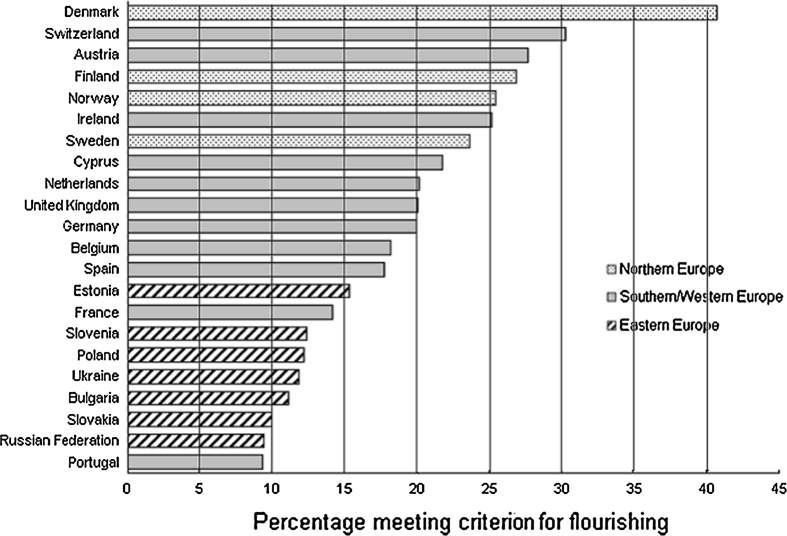
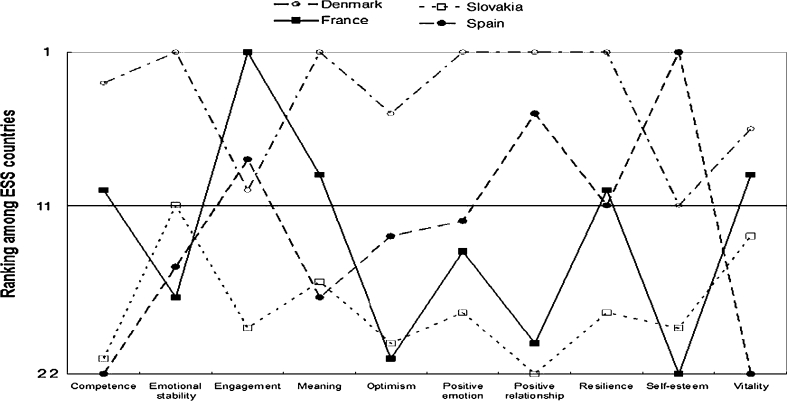
Governments around the world are recognising the importance of measuring subjective well-being as an indicator of progress. But how should well-being be measured? A conceptual framework is offered which equates high well-being with positive mental health. Well-being is seen as lying at the opposite end of a spectrum to the common mental disorders (depression, anxiety). By examining internationally agreed criteria for depression and anxiety (DSM and ICD classifications), and defining the opposite of each symptom, we identify ten features of positive well-being. These combine feeling and functioning, i.e. hedonic and eudaimonic aspects of well-being: competence, emotional stability, engagement, meaning, optimism, positive emotion, positive relationships, resilience, self esteem, and vitality. An operational definition of flourishing is developed, based on psychometric analysis of indicators of these ten features, using data from a representative sample of 43,000 Europeans. Application of this definition to respondents from the 23 countries which participated in the European Social Survey (Round 3) reveals a four-fold difference in flourishing rate, from 41% in Denmark to less than 10% in Slovakia, Russia and Portugal. There are also striking differences in country profiles across the 10 features. These profiles offer fresh insight into cultural differences in well-being, and indicate which features may provide the most promising targets for policies to improve well-being. Comparison with a life satisfaction measure shows that valuable information would be lost if well-being was measured by life satisfaction. Taken together, our findings reinforce the need to measure subjective well-being as a multi-dimensional construct in future surveys.
Overview
The claims and statistics of this paper haven’t been checked yet.
Free: it reads the open-access text and checks the first 5 claims that cite a source we can check. Create a free account to check every claim.
Integrity signals
Registry
Cites
Statistics
Figures
Verification
Claims the paper makes
The claims and statistics of this paper haven’t been checked yet.
Free: it reads the open-access text and checks the first 5 claims that cite a source we can check. Create a free account to check every claim.
Claims other papers make about this one
Each is checked against this paper’s own text: does it say what the citing paper says it does?
The source backs part of the claim, not all of it — or backs it for a different population, condition or comparison.
In the citing paper
“If flourishing encompasses emotional resonance, relational quality, and mutual regulation (4, 5), then sex differences in physiological attunement may influence how individuals engage in supportive, co-regulatory interactions that sustain psychological health.”
From Physiological attunement and flourishing: understanding the influence of relationships on health (2025) · cites this paper as [4]
Experimental — accuracy not yet measured
Self-check
Percentages, sums and reported differences re-computed from the paper’s own numbers.
The self-check needs the paper’s full text.
Citations
Cites
Diagnostic and Statistical Manual of Mental Disorders
Williams, J. B. W., & First, M. (2013) · Encyclopedia of Social Work · doi:10.1093/acrefore/9780199975839.013.104 · Cited by 109,519
The CES-D Scale: A Self-Report Depression Scale for Research in the General Population
Radloff, L. S. (1977) · Applied Psychological Measurement · doi:10.1177/014662167700100306 · Cited by 53,267
Development and validation of brief measures of positive and negative affect: The PANAS scales.
Watson, D., Clark, L. A., & Tellegen, A. (1988) · Journal of Personality and Social Psychology · doi:10.1037/0022-3514.54.6.1063 · Cited by 32,433 · cited 2×
“Proponents of this view have included Bradburn (1969), Watson et al. (1988), and Diener et al. (1999).”
BackgroundAlternative Ways of Assessing Model Fit
Browne, M. W., & Cudeck, R. (1992) · Sociological Methods & Research · doi:10.1177/0049124192021002005 · Cited by 27,200 · cited 2×
“In general, CFI and GFI values of .90 or above, and RMSEA values of .06 or below are indicative of good empirical fit (Browne and Cudeck 1993; Byrne 1994).”
BackgroundTesting Structural Equation Models.
Mueller, C. W., Bollen, K. A., & Long, J. S. (1994) · Contemporary Sociology · doi:10.2307/2074955 · Cited by 14,120
Subjective well-being: Three decades of progress.
Diener, E., Suh, E. M., Lucas, R. E., & Smith, H. L. (1999) · Psychological Bulletin · doi:10.1037/0033-2909.125.2.276 · Cited by 12,910
On Happiness and Human Potentials: A Review of Research on Hedonic and Eudaimonic Well-Being
Ryan, R. M., & Deci, E. L. (2001) · Annual Review of Psychology · doi:10.1146/annurev.psych.52.1.141 · Cited by 11,567 · cited 4×
“Some conceptual approaches to well-being have focused exclusively on the hedonic aspects (e.g. Bradburn 1969; Diener et al. 1999; Watson et al. 1988), while others have focused exclusively on eudaimonic aspects (e.g. Antonovsky 1993; Jahoda 1958; Ryan and Deci 2001; Ryff 1989).”
BackgroundMethodInfluentialThe structure of psychological well-being revisited.
Ryff, C. D., & Keyes, C. L. M. (1995) · Journal of Personality and Social Psychology · doi:10.1037//0022-3514.69.4.719 · Cited by 10,285 · cited 4×
“Similar findings have been reported in other studies (e.g. Chirkov and Ryan 2001; Diener et al. 2009; Ryff and Keyes 1995), indicating that a global measure of life satisfaction is no substitute for the information gained from a multi-dimensional approach.”
BackgroundResultInfluentialTesting Structural Equation Models.
Clogg, C. C., Bollen, K. A., & Long, J. S. (1995) · Social Forces · doi:10.2307/2580595 · Cited by 8,211
Flourish: A Visionary New Understanding of Happiness and Well-Being
(2011) · Choice Reviews Online · doi:10.5860/choice.48-7217 · Cited by 5,543 · cited 3×
“Our conceptual framework is more in keeping with the approaches of Keyes (2002), Seligman (2002, 2011), Tennant et al. (2007), and the recent work of Diener et al. (2010a, b), all of which incorporate both hedonic and eudaimonic aspects of wellbeing.”
BackgroundMethodResult
Research works printed but not linked: 4
- Böhnke P First European quality of life survey: Life satisfaction, happiness and sense of belonging 2005 Luxembourg Office for Official Publications of the European Communities
- Diener, E., Suh, E. M., & Sapyta, J. (1997). Cited in Diener, E., & Oshi, M. (2004). Are Scandinavians happier than Asians? Issues in comparing nations on subjective wellbeing. In F. Columbus (Ed.), Politics and economics of Asia (pp. 1–25). Hauppauge, NY: Nova Science Publishers.
- Jowell R The Central Co-ordinating Team European Social Survey 2002/2003: Technical report 2003 London Centre for Comparative Social Surveys, City University
- Seligman M Authentic happiness: Using the new positive psychology to realize your potential for lasting fulfilment 2002 New York Free Press
Cited by
Items 201–300 of 1,000
Dreger, S., Buck, C., & Bolte, G. (2014) · BMJ Open · doi:10.1136/bmjopen-2014-005095 · Cited by 74
“The WHO-5 is considered a valid instrument to evaluate PMH in populationbased studies20 and assesses PMH with items covering the eudaimonic perspective on well-being as well as items covering the hedonic dimensions of well-being.17 An average score of the index was calculated for the study population and those with va…”
BackgroundInfluentialWilliams, P., Kern, M. L., & Waters, L. E. (2016) · Frontiers in Psychology · doi:10.3389/fpsyg.2016.00878 · Cited by 75
“Fisher’s model of work happiness parallels recent advances in well-being theory, which suggest that well-being is multidimensional in nature (e.g., Forgeard et al., 2011; Seligman, 2012; Huppert and So, 2013) and has received some empirical support (Williams et al., 2015).”
Downward, P. M., Hallmann, K., & Rasciute, S. (2017) · European Journal of Public Health · doi:10.1093/eurpub/ckx063 · Cited by 73
“This scale is thought to capture positive emotions (33) and is a life evaluation measure (8).”
BackgroundLongo, Y., Jovanović, V., de Carvalho, J. S., & Karaś, D. (2020) · Assessment (Odessa, Fla.) · doi:10.1177/1073191117748394 · Cited by 54
“For example, Seligman (2011) and Huppert and So (2013) have proposed conceptualizations and measures of well-being including both positive feeling and positive functioning constructs (e.g., happiness, meaning).”
BackgroundMomtaz, Y. A., Hamid, T. A., Haron, S. A., & Bagat, M. F. (2015) · Archives of Gerontology and Geriatrics · doi:10.1016/j.archger.2015.11.001 · Cited by 73
SWB as a Measure of Individual Well-Being
Clark, A. E. (2016) · Oxford University Press eBooks · doi:10.1093/oxfordhb/9780199325818.013.17 · Cited by 85
“13 The first is that of flourishing, as described in Huppert and So (2009). This was originally based on the answers to seven different well-being questions, the first of which was a happiness question.”
Influence of fear of happiness on flourishing: Mediator roles of hope agency and hope pathways
Belen, H., Yıldırım, M., & Belen, F. S. (2020) · Australian Journal of Psychology · doi:10.1111/ajpy.12279 · Cited by 71
Donaldson, S. I., & Donaldson, S. I. (2020) · Journal of Well-Being Assessment · doi:10.1007/s41543-020-00033-1 · Cited by 83
Revisiting the Happy-Productive Worker Thesis from a Eudaimonic Perspective: A Systematic Review
Silla, J. M. P., García, D. M., Soriano, A., Kozusznik, M. W., Villajos, E., Magdaleno, J., Djourova, N. P., & Ayala, Y. (2021) · Sustainability · doi:10.3390/su13063174 · Cited by 68
“Interestingly, Huppert and So [68] utilized a symptom-combination methodology similar to the one used to identify mental health disorders in the Diagnostic and Statistical Manuals of Mental Disorders [70] to offer an operational definition of flourishing.”
BackgroundMethodInfluentialMans, K., Kettner, H., Erritzøe, D., Haijen, E. C. H. M., Kaelen, M., & Carhart-Harris, R. L. (2021) · Frontiers in Psychiatry · doi:10.3389/fpsyt.2021.647909 · Cited by 67
“There is a reliable inverse relationship between mental well-being and mental illness (2) and evidence suggests that this relationship is continuous rather than discrete (3, 4).”
BackgroundA systematic review of school-based positive psychology interventions to foster teacher wellbeing
Vo, D. T., & Allen, K. (2022) · Teachers and Teaching · doi:10.1080/13540602.2022.2137138 · Cited by 71
Joshanloo, M., Jovanović, V., & Taylor, T. E. (2019) · PLoS ONE · doi:10.1371/journal.pone.0223221 · Cited by 71
“In fact, there is increasing recognition of the need to integrate hedonic and eudaimonic approaches to well-being rather than relying solely on one and dismissing the other [15, 31].”
BackgroundWingert, J. R., Jones, J. C., Swoap, R., & Wingert, H. M. (2020) · Journal of American College Health · doi:10.1080/07448481.2020.1764005 · Cited by 68
“Previous research has shown that higher levels of PERMA correlate with improved physical health,(33) which mirrors similar findings on the positive relationship between wellbeing and physical health.(44,45) Students in the MBSP group retained in college by the end of the following semester at a modestly, but nonsignif…”
ResultEthics of Digital Well-Being: A Multidisciplinary Approach
Burr, C., & Floridi, L. (2020) · Philosophical studies series · doi:10.1007/978-3-030-50585-1 · Cited by 78
Flourishing During Emerging Adulthood from a Gender Perspective
de la Fuente, R., Jiménez, Á. P., Sánchez‐Queija, I., & Elgarresta, I. L. (2019) · Journal of Happiness Studies · doi:10.1007/s10902-019-00204-9 · Cited by 66
Pancheva, M. G., Ryff, C. D., & Lucchini, M. (2020) · Journal of Happiness Studies · doi:10.1007/s10902-020-00325-6 · Cited by 71
Flourishing in the Brazilian context: Evidence of the validity of the PERMA-profiler scale
Carvalho, T. F., Aquino, S. D., & Natividade, J. C. (2021) · Current Psychology · doi:10.1007/s12144-021-01587-w · Cited by 76
“The results found for optimism and self-esteem proved to be positive, as expected (e.g., Huppert & So, 2013; Wrosch & Scheier, 2003).”
BackgroundMethodResultPositive Artificial Intelligence in Education (P-AIED): A Roadmap
Bittencourt, I. I., Challco, G. C., Santos, J., Fernandes, S. C. S., Silva, J., Batista, N., Hutz, C. S., & Isotani, S. (2023) · International Journal of Artificial Intelligence in Education · doi:10.1007/s40593-023-00357-y · Cited by 74
Lomas, T., Pawelski, J. O., & VanderWeele, T. J. (2023) · International Journal of Wellbeing · doi:10.5502/ijw.v13i4.3665 · Cited by 83
Haapasalo, V., de Vries, H., Vandelanotte, C., Rosenkranz, R. R., & Duncan, M. J. (2018) · Preventive Medicine · doi:10.1016/j.ypmed.2018.09.003 · Cited by 65
IEEE 7010: A New Standard for Assessing the Well-being Implications of Artificial Intelligence
Schiff, D., Ayesh, A., Musikanski, L., & Havens, J. C. (2020) · 2020 IEEE International Conference on Systems, Man, and Cybernetics (SMC) · doi:10.1109/smc42975.2020.9283454 · Cited by 62
Kabadayi, S., Livne‐Tarandach, R., & Pirson, M. A. (2023) · Journal of Services Marketing · doi:10.1108/jsm-03-2023-0110 · Cited by 68
Sun, Y., & Liu, L. (2023) · BMC Psychology · doi:10.1186/s40359-023-01366-1 · Cited by 76
“Academic well-being encompasses students’ emotional and psychological well-being in relation to their academic experiences [7].”
BackgroundLosada-Otálora, M., Peña-García, N., & Sánchez, I. D. (2020) · International Journal of Quality and Service Sciences · doi:10.1108/ijqss-02-2020-0023 · Cited by 71
The Ethics of Digital Well-Being: A Multidisciplinary Perspective
Burr, C., & Floridi, L. (2020) · Philosophical studies series · doi:10.1007/978-3-030-50585-1_1 · Cited by 75
“Huppert and So (2013), for example, argue that ten factors are needed: competence, emotional stability, engagement, meaning, optimism, positive emotion, positive relationships, resilience, self-esteem, and vitality.”
BackgroundA systematic review of adolescent flourishing
Waigel, N. C., & Lemos, V. (2023) · Europe’s Journal of Psychology · doi:10.5964/ejop.6831 · Cited by 63
Collie, R. J., & Martin, A. J. (2023) · Teaching and Teacher Education · doi:10.1016/j.tate.2023.104233 · Cited by 70
Social Connectedness and Flourishing: The Mediating Role of Hopelessness
Çapan, B. E. (2016) · Universal Journal of Educational Research · doi:10.13189/ujer.2016.040501 · Cited by 77
“Flourishing, defined as the combination of social, emotional and psychological well-being [2], is a popular concept that has recently been discussed in positive psychology [3, 4, 5, 6].”
Influentialvan Rensburg, C. J., Rothmann, S., & Diedericks, E. (2017) · SA Journal of Industrial Psychology · doi:10.4102/sajip.v43i0.1422 · Cited by 76
“Flourishing can be linked to several theoretical models that conceptualise flourishing aspects through research done by Keyes (2002), Diener et al. (2010), Seligman (2011), Huppert and So (2013), and Noble and McGrath (2015), as indicated in Table 1.”
BackgroundCallea, A., Rosa, D. D., Ferri, G., Lipari, F., & Costanzi, M. (2019) · Sustainability · doi:10.3390/su11041022 · Cited by 71
Social media use and adolescents’ well-being: A note on flourishing
Marciano, L., & Viswanath, K. (2023) · Frontiers in Psychology · doi:10.3389/fpsyg.2023.1092109 · Cited by 68
“Today, the concept of flourishing (Henderson and Knight, 2012; Huppert, 2013; Willen, 2021) mirrors these multifacets by measuring a sense of growing and prospering, and it has been pointed out as a new conceptual framework for defining wellbeing (Huppert, 2013).”
BackgroundInfluentialStephens, J. M., Iasiello, M. P., Ali, K., van Agteren, J. E., & Fassnacht, D. B. (2023) · Behavioral Sciences · doi:10.3390/bs13050436 · Cited by 75
“For example, depression involves the presence of negative affect, anhedonia, and a lack of positive affect, while emotional wellbeing involves positive affect, hedonia, and the absence of negative affect [12,39].”
BackgroundWu, D., & Dong, X. (2024) · Frontiers in Psychology · doi:10.3389/fpsyg.2024.1358776 · Cited by 75
Bagdžiūnienė, D., Žukauskaitė, I., Bulotaitė, L., & Sargautytė, R. (2025) · Frontiers in Psychology · doi:10.3389/fpsyg.2025.1517359 · Cited by 75
“Huppert and So (2013) distinguish three main approaches in studying well-being: hedonic as subjective well-being (Diener, 2000), eudaimonic as psychological well-being (Ryff and Singer, 2008) and well-being as a combination of hedonic, eudaimonic and social well-being (Keyes, 2002).”
The development and initial validation of a multidimensional flourishing scale
Mesurado, B., Crespo, R. F., Rodríguez, O., Debeljuh, P., & Carlier, S. I. (2018) · Current Psychology · doi:10.1007/s12144-018-9957-9 · Cited by 73
“…and resilience^ (Frederickson and Losada 2005, p. 678); Huppert and So define it as Ba combination of feeling good and functioning effectively^ (Huppert and So 2013, p. 837); Seligman refers to Ban arrangement of positive emotion, engagement, meaning, positive relationships and accomplishment^…”
BackgroundAnčić, B., Domazet, M., & Župarić‐Iljić, D. (2019) · Geoforum · doi:10.1016/j.geoforum.2019.07.018 · Cited by 59
Ethical Leadership, Flourishing, and Extra-Role Behavior Among Nurses
El‐Gazar, H. E., & Zoromba, M. A. (2021) · SAGE Open Nursing · doi:10.1177/23779608211062669 · Cited by 61
Becoming an agent of change for school and student well-being
Roffey, S. (2015) · Educational and Child Psychology · doi:10.53841/bpsecp.2015.32.1.21 · Cited by 59
“Huppert and So (2011) carried out a major study in 23 European countries with 43,000 adults identifying the main elements of well-being.”
BackgroundEstimating the costs of gender-based violence in the European Union
Walby, S., & Olive, P. (2014) · CLOK (University of Central Lancashire) · doi:10.2839/79629 · Cited by 50
Gonza, G., & Burger, A. (2016) · Journal of Happiness Studies · doi:10.1007/s10902-016-9797-y · Cited by 63
“Second, empirical research on the relationship between the eudaimonic and other aspects of SWB provides evidence that this correlation is smaller than for the relationship between affect and life evaluation (Clark and Senik 2011; Diener et al. 2009; Huppert and So 2013).”
BackgroundClarke, T., & Basilio, M. (2018) · Thinking Skills and Creativity · doi:10.1016/j.tsc.2018.06.005 · Cited by 61
Analytic methodology for childhood predictor analyses for wave 1 of the Global Flourishing Study
Padgett, R. N., Bradshaw, M., Chen, Y., Cowden, R. G., Jang, S. J., Kim, E. S., Shiba, K., Johnson, B. R., & VanderWeele, T. J. (2025) · BMC Global and Public Health · doi:10.1186/s44263-025-00142-0 · Cited by 64
Resilience in the General Population: Standardization of the Resilience Scale (RS-11)
Kocalevent, R., Zenger, M., Heinen, I., Dwinger, S., Decker, O., & Brähler, E. (2015) · PLoS ONE · doi:10.1371/journal.pone.0140322 · Cited by 63
“Furthermore, self-esteem, mindfulness and empowerment have previously been associated with better psychological functioning and resilience processes [20].”
BackgroundThe Clustering of Lifestyle Behaviours in New Zealand and their Relationship with Optimal Wellbeing
Prendergast, K. B., Mackay, L. M., & Schofield, G. (2016) · International Journal of Behavioral Medicine · doi:10.1007/s12529-016-9552-0 · Cited by 61
The benefit mindset: The psychology of contribution and everyday leadership
Buchanan, A., & Kern, M. L. (2017) · International Journal of Wellbeing · doi:10.5502/ijw.v7i1.538 · Cited by 61
“Whereas early scholarship focused primarily on hedonic wellbeing (i.e., feeling good, with a focus on emotion), the past decade has increasingly seen a shift toward more sophisticated models of wellbeing (e.g., Huppert & So, 2013; Ryff & Singer, 1998; Seligman, 2012).”
BackgroundZhang, D., Chan, D. C.-C., Niu, L., Liu, H., Zou, D., Chan, A. T. Y., Gao, T. T., Zhong, B., Sit, R. W. S., & Wong, S. Y. S. (2017) · Journal of Affective Disorders · doi:10.1016/j.jad.2017.11.082 · Cited by 63
Kern, M. L., Zeng, G., Hou, H., & Peng, K. (2018) · Journal of Psychoeducational Assessment · doi:10.1177/0734282918789561 · Cited by 63
Carreno, D. F., Eisenbeck, N., Pérez‐Escobar, J. A., & García‐Montes, J. M. (2021) · Frontiers in Psychology · doi:10.3389/fpsyg.2021.648280 · Cited by 63
“, 2013), while emotional stability has been identified as one of the main features of flourishing (Huppert and So, 2013).”
BackgroundRey, L., Mérida‐López, S., Sánchez‐Álvarez, N., & Extremera, N. (2019) · International Journal of Environmental Research and Public Health · doi:10.3390/ijerph16122114 · Cited by 60
“Thus, flourishing constitutes a novel approach that integrates classic components of well-being and is, thus, regarded as a promising background for understanding well-being [34].”
BackgroundPhan, H. P., Ngu, B. H., Chen, S. C., Wu, L., Shi, S.-Y., Lin, R.-Y., Shih, J.-H., & Wang, H. (2020) · Frontiers in Psychology · doi:10.3389/fpsyg.2020.01602 · Cited by 60
“Flourishing in this case, similar to other comparable definitions (e.g., Diener et al., 2010; Huppert and So, 2013), is positive and reflects improvement, accomplishment, and self-fulfillment.”
ResultZábó, V., Csiszár, A., Ungvari, Z. I., & Purebl, G. (2023) · GeroScience · doi:10.1007/s11357-023-00856-9 · Cited by 63
“…opposite to the symptoms of mental disorders [37–39], (3) flourishing [34], (4) “hedo-eude-monic” well-being [33, 38, 40–43], (5) classical models of mental health [44–51], (6) balanced models of mental health [52–55], and (7) the sum of the components of well-being [33, 39, 40, 42, 43, 56, 57].”
BackgroundHe, J., Iskhar, S., Yan, Y., & Moldobaeva, A. (2023) · Frontiers in Psychology · doi:10.3389/fpsyg.2023.1241335 · Cited by 61
“Examples of good aspects include work satisfaction, professional dedication, and engagement (Huppert and So, 2013; Collie and Martin, 2017).”
BackgroundMultidimensional versus unidimensional approaches to well-being
VanderWeele, T. J., & Johnson, B. R. (2025) · Nature Human Behaviour · doi:10.1038/s41562-025-02187-5 · Cited by 65
Children and Young Peoples’ Views on Well-Being: A Qualitative Study
Vujčić, M. T., Brajša‐Žganec, A., & Franc, R. (2018) · Child Indicators Research · doi:10.1007/s12187-018-9559-y · Cited by 61
Collie, R. J., Bostwick, K. C. P., & Martin, A. J. (2019) · Educational Psychology · doi:10.1080/01443410.2019.1663791 · Cited by 59
From ill-being to well-being: Bipolar or bivariate?
Zhao, Y., & Tay, L. (2022) · The Journal of Positive Psychology · doi:10.1080/17439760.2022.2109204 · Cited by 66
Prati, G. (2022) · Archives of Gerontology and Geriatrics · doi:10.1016/j.archger.2022.104791 · Cited by 60
Questioning Contemporary Universalist Approaches to Human Flourishing
Fowers, B. J., Novak, L. F., Kiknadze, N. C., & Calder, A. J. (2022) · Review of General Psychology · doi:10.1177/10892680221138230 · Cited by 57
“Their description of scale construction clarifies that the Flourishing Scale (FS) is susceptible to all three challenges in the literature.”
BackgroundInfluentialSupport for a general factor of well-being
Longo, Y., Coyne, I. J., Joseph, S., & Gustavsson, P. J. (2016) · Personality and Individual Differences · doi:10.1016/j.paid.2016.03.082 · Cited by 63
“We further test this hypothesis using a recent well-being scale, which includes indicators of positive feeling and positive functioning (Huppert & So, 2013).”
Influentialde la Fuente, R., Jiménez, Á. P., & Sánchez‐Queija, I. (2017) · Evaluation & the Health Professions · doi:10.1177/0163278717703446 · Cited by 55
“It is the combination in a single construct of feeling good and functioning effectively in one’s life (Huppert, 2009; Huppert & So, 2013; Keyes, 2002; Ryff & Singer, 1998).”
InfluentialKyriazos, T. A., & Stalikas, A. (2018) · Psychology · doi:10.4236/psych.2018.97104 · Cited by 66
“Ryan and Deci (2001) relate well-being to optimal experience (like flow; Csikszentmihalyi, 1975/2000) and generally to optimal psychological functioning (Keyes, 2002; Huppert & So, 2013; Kahneman, Diener, & Schwarz, 1999).”
BackgroundWhat do we know about interventions to improve educator wellbeing? A systematic literature review
Cann, R., Sinnema, C., Rodway, J., & Daly, A. J. (2024) · Journal of Educational Change · doi:10.1007/s10833-023-09490-w · Cited by 54
“However, resilience also encompasses ideas about how long it takes a person to recover after a setback (Huppert & So, 2013), so it could be argued it is more related to coping with negative conditions than being a measure of a positive state.”
Gudka, M., Gardiner, K. L. K., & Lomas, T. (2023) · The Journal of Positive Psychology · doi:10.1080/17439760.2021.1991447 · Cited by 54
“…– such as psychological well-being (Ryff, 1989) and social well-being (Keyes & Lee, 1998) – into the broader term ‘flourishing’ because it can be, and indeed has been, considered as a fundamental component of flourishing (see Diener et al., 2010; Huppert & So, 2013; Keyes, 2002; Seligman, 2018).”
BackgroundPrendergast, K. B., Schofield, G. M., & Mackay, L. M. (2015) · BMC Public Health · doi:10.1186/s12889-016-2755-0 · Cited by 54
“measures of optimal wellbeing, which take into account hedonic and eudaimonic aspects of wellbeing, should be used to determine and characterise those individuals with the highest levels of wellbeing [5, 10].”
BackgroundMethodResultInfluentialBurns, R. A., Butterworth, P., & Anstey, K. J. (2016) · Social Psychiatry and Psychiatric Epidemiology · doi:10.1007/s00127-016-1192-9 · Cited by 66
Huang, L., Kern, M. L., & Oades, L. G. (2020) · International Journal of Environmental Research and Public Health · doi:10.3390/ijerph17155538 · Cited by 61
A qualitative exploration of individual differences in wellbeing for highly sensitive individuals
Black, B., & Kern, M. L. (2020) · Humanities and Social Sciences Communications · doi:10.1057/s41599-020-0482-8 · Cited by 61
“…Bharara et al., 2019; Ryff, 1989b; Wong et al., 2011), many of the existing wellbeing models either are based upon academics ’ theories (e.g., Huppert and So, 2013; Martela and Sheldon, 2019; Seligman, 2011), or arise from patterns across groups of people (e.g., Cummins, 1998; Diener et al.,…”
BackgroundStudent values and wellbeing in mathematics education: perspectives of Chinese primary students
Hill, J. L., & Seah, W. T. (2022) · ZDM · doi:10.1007/s11858-022-01418-7 · Cited by 64
Bürger, S., Holzer, J., Yanagida, T., Schober, B., & Spiel, C. (2023) · School Mental Health · doi:10.1007/s12310-023-09574-1 · Cited by 59
“Multidimensional measures of well-being show only moderate correlations with life satisfaction measures (Huppert & So, 2013), underlining the 1 3 more comprehensive character of the well-being construct.”
BackgroundKendig, H. L., Loh, V., O’Loughlin, K., Byles, J., & Nazroo, J. Y. (2015) · Journal of Population Ageing · doi:10.1007/s12062-015-9132-0 · Cited by 59
“…and societal ageing, there is increasing recognition of the value of multi-dimensional indicators of well-being including subjective measures that complement more traditional, objective measures of physical health and material wealth (Dolan et al. 2011; Huppert and So 2013; Stiglitz et al. 2009).”
BackgroundChildren’s Discourses of Natural Spaces: Considerations for children’s Subjective Well-Being
Adams, S., & Savahl, S. (2016) · Child Indicators Research · doi:10.1007/s12187-016-9374-2 · Cited by 65
“…the eudaimonic and hedonic conceptualisations of well-being- hedonic conceptualisations are aligned with life satisfaction and the pursuit of happiness, while eudaimonic conceptualisations are aligned with purposiveness, engagement, and meaning in life (see Huppert and So 2013; Ryan and Deci 2001).”
BackgroundGreen, Z. A. (2019) · International Journal for Educational and Vocational Guidance · doi:10.1007/s10775-019-09401-7 · Cited by 56
“This ties in with the recommendation of Huppert and So (2013) and Seligman (2011) that well-being must be studied based on subjective well-being and psychological well-being.”
BackgroundTHE CALLING OF EMPLOYEES AND WORK ENGAGEMENT: THE ROLE OF FLOURISHING AT WORK
Erum, H., Abid, G., & Contreras, F. (2020) · Business Management and Education · doi:10.3846/bme.2020.11430 · Cited by 59
Caristia, S., De Vito, M., Sarro, A., Leone, A., Pecere, A., Zibetti, A., Filigheddu, N., Zeppegno, P., Prodam, F., Faggiano, F., et al. (2020) · Nutrients · doi:10.3390/nu12082290 · Cited by 42
“Secondary outcomes identified indicators and scales used for well-being and quality of life measurement: Cantril’s ladder of life scale [39], scale of positive and negative experience (SPANE) [40], the European social survey well-being [41], the life satisfaction scale/life satisfaction index (LSI) [42,43], the CES-D…”
Wiese, C. W., Tay, L., Su, R., & Diener, E. (2018) · Applied Psychology Health and Well-Being · doi:10.1111/aphw.12119 · Cited by 61
“…health is not solely the absence of negative psychological states (e.g. ill-being, depression, anxiety), but also the presence of positive psychological states (e.g. well-being, happiness, purpose, meaning; Huppert & So, 2013; Seligman & Csikszentmihalyi, 2000; World Health Organization, 1946).”
BackgroundBurke, J., & Minton, S. J. (2019) · Irish Educational Studies · doi:10.1080/03323315.2018.1512887 · Cited by 61
Oades, L. G., Ozturk, C., Hou, H., & Slemp, G. R. (2020) · The Journal of Positive Psychology · doi:10.1080/17439760.2020.1789711 · Cited by 44
Referee Abuse, Intention to Quit, and Well-Being
Downward, P. M., Webb, T., & Dawson, P. (2023) · Research Quarterly for Exercise and Sport · doi:10.1080/02701367.2023.2184459 · Cited by 55
“Multi-dimensional measures may thus give further insight into the details of flourishing (Huppert & So, 2013) and provide some granular foci for policy seeking to improve eudaimonic well-being (Diener et al., 2013) or targeting specific dimensions of well-being (Ruggeri et al., 2020).”
BackgroundEffect of nature on the mental health and well-being of children and adolescents: meta-review
Lomax, T., Butler, J. A., Cipriani, A., & Singh, I. (2024) · The British Journal of Psychiatry · doi:10.1192/bjp.2024.109 · Cited by 58
Salsa dance and Zumba fitness: Acute responses during community-based classes
Domene, P. A., Moir, H. J., Pummell, E. K. L., & Easton, C. (2015) · Journal of sport and health science/Journal of Sport and Health Science · doi:10.1016/j.jshs.2015.04.004 · Cited by 58
Am I who I say I am? Unobtrusive self-representation and personality recognition on Facebook
Hall, M., & Caton, S. J. (2017) · PLoS ONE · doi:10.1371/journal.pone.0184417 · Cited by 61
“The modified mechanisms of [66,67]can be found in the Online Appendix (S1 Text.”
Flourishing and health in critical perspective: An invitation to interdisciplinary dialogue
Willen, S. S. (2021) · SSM - Mental Health · doi:10.1016/j.ssmmh.2021.100045 · Cited by 56
Commentary: Mental health and public health
Marmot, M. G. (2014) · International Journal of Epidemiology · doi:10.1093/ije/dyu054 · Cited by 51
Finch, J., Waters, A. M., & Farrell, L. J. (2023) · Journal of Affective Disorders · doi:10.1016/j.jad.2022.12.169 · Cited by 54
van Agteren, J. E., & Iasiello, M. P. (2020) · Australian Psychologist · doi:10.1111/ap.12440 · Cited by 57
Examining the effect of mindfulness on well-being: self-connection as a mediator
Klussman, K., Curtin, N., Langer, J., & Nichols, A. (2020) · Journal of Pacific Rim Psychology · doi:10.1017/prp.2019.29 · Cited by 54
Öztemel, K., & Akyol, E. Y. (2020) · Journal of Career Assessment · doi:10.1177/1069072720930664 · Cited by 49
Delhey, J., & Steckermeier, L. C. (2016) · World Development · doi:10.1016/j.worlddev.2016.07.007 · Cited by 53
Ramírez‐Maestre, C., Correa, M., Rivas, T., López-Martínez, A. E., Serrano‐Ibáñez, E. R., & Esteve, R. (2017) · Personality and Individual Differences · doi:10.1016/j.paid.2017.05.035 · Cited by 51
Applied Pedagogies for Higher Education: Real World Learning and Innovation across the Curriculum
Morley, D. A., & Jamil, M. G. (2020) · Springer eBooks · doi:10.1007/978-3-030-46951-1 · Cited by 66
Educating for Comprehensive Well-being
Wortham, S. E. F., Jones, R. L., Peters, W. H., Morris, S. L., & García-Huidobro, J. C. (2020) · ECNU Review of Education · doi:10.1177/2096531120928448 · Cited by 58
Longitudinal associations between domains of flourishing
Chen, Y., Węziak‐Białowolska, D., Lee, M. T., Białowolski, P., McNeely, E., & VanderWeele, T. J. (2022) · Scientific Reports · doi:10.1038/s41598-022-06626-5 · Cited by 57
Umucu, E., Chan, F., Phillips, B. N., Tansey, T. N., Berven, N. L., & Hoyt, W. T. (2022) · Rehabilitation Counseling Bulletin · doi:10.1177/00343552221127032 · Cited by 49
“Huppert and So (2013) reported that resilience was positively correlated with positive emotion, engagement, relationship, meaning, and competence, with small to moderate effect sizes.”
BackgroundVolstad, C., Hughes, J. R., Jakubec, S. L., Flessati, S., Jackson, L. A., & Martin‐Misener, R. (2020) · International Journal of Qualitative Studies on Health and Well-Being · doi:10.1080/17482631.2020.1834259 · Cited by 58
Ansari, S., Khan, I., & Iqbal, N. (2024) · Journal of Affective Disorders · doi:10.1016/j.jad.2024.09.029 · Cited by 58
The Science of Wellbeing and Positive Psychology
Oades, L. G., & Mossman, L. H. (2017) · Cambridge University Press eBooks · doi:10.1017/9781316339275.003 · Cited by 65
“Shorthand defi nitions oft en combine these two approaches in phrases such as “ feeling good and functioning well ” (see Huppert and So, 2013 ) .”
BackgroundAdaptation of the PERMA well-being scale into Turkish: Validity and reliability studies
Eliüşük, B. A. (2018) · Educational Research and Reviews · doi:10.5897/err2017.3435 · Cited by 56
Flourishing workplaces: a multisensory approach to design and POE
Clements-Croome, D. J., Turner, B., & Pallaris, K. (2019) · Intelligent Buildings International · doi:10.1080/17508975.2019.1569491 · Cited by 54
“(Huppert and So 2013) Huppert and So (2013) describe a European survey – 43,000 subjects in 23 countries – which aimed to define what is meant by flourishing and this resulted in defining 10 attributes of positive wellbeing or flourishing.”
BackgroundDidino, D., Александровна, Т. Е., Барышева, Г. А., & Casati, F. (2019) · Health and Quality of Life Outcomes · doi:10.1186/s12955-019-1100-6 · Cited by 56
“Huppert and So [18], using a different measure, also reported a lower level of flourishing in the Russian population, compared to other European countries.”
BackgroundResultSuccess in Mathematics and Academic Wellbeing in Primary-School Students
Rodríguez, S., Regueiro, B., Piñeiro, I., Valle, A., Sánchez, B., Vieites, T., & Rodríguez-Llorente, C. (2020) · Sustainability · doi:10.3390/su12093796 · Cited by 53
“According to Huppert and So [15], wellbeing is a multidimensional construct covering both negative (anxiety and negative feelings) and positive (perceived competence, perceived utility, and mastery motivation) factors as plausible indicators of academic wellbeing.”
BackgroundResult
Metadata
- Authors
- Huppert, F. A., & So, T. T. C.
- Affiliations
- University of Cambridge (GB)
- Corresponding author
- Huppert, Felicia A.
- ORCID
- Huppert, Felicia A.
- Venue
- Social Indicators Research
- Published
- 2011-12-15
- Volume
- 110
- Issue
- 3
- Pages
- 837-861
- ISSN
- 0303-8300 (ISSN-L)
- 1573-0921
- PMC
- PMC3545194
- OpenAlex
- W1992646537
- Cited by
- 1,864
- References
- 88
- Citations by year
- 2026: 170 · 2025: 196 · 2024: 209 · 2023: 187 · 2022: 214 · 2021: 173 · 2020: 159 · 2019: 131 · 2018: 109 · 2017: 101 · 2016: 74 · 2015: 67 · 2014: 46 · 2013: 24 · 2012: 4
- FWCI
- 32.30
- Type
- journal article
- Language
- en
- Open access
- hybrid
- doi.org
- Licence
- cc-by-nc
- Locations
- Social Indicators Research (publishedVersion, cc-by-nc)
- Europe PMC (PubMed Central) (publishedVersion, cc-by-nc)
- PubMed Central (publishedVersion, cc-by-nc)
- PubMed (publishedVersion)
- Research Bank (Australian Catholic University) (submittedVersion)
- RePEc: Research Papers in Economics (submittedVersion)
- Topics
- Social Sciences › Psychology › Social Psychology › Psychological Well-being and Life Satisfaction
- Social Sciences › Sociology and Political Science › Quality of Life Measurement
- Social Sciences › Psychology › Developmental and Educational Psychology › Flow Experience in Various Fields
- Keywords
- eudaimonia, subjective well-being, positive mental health, positive well-being, hedonic well-being, eudaimonic well-being, depression, anxiety, life satisfaction, well-being measurement, European Social Survey
About these checks
Registry, retraction, Cites and statistics results are computed, not judged, with one exception: a printed reference that no index lists is read once by a model before it counts as a citation error. Claims are extracted by a model and kept only when their quote appears verbatim in the text; each cited source is then checked, with a model’s help, for whether it says what the claim relies on. Those verdicts can be wrong — read the claim’s quote and the cited source before relying on one.
Statistics and arithmetic are recomputed, not judged.
Confidence bands are shown only for fields calibrated on our annotated test set. None is calibrated yet, so no band is shown.
What counts as a claim ›How we measure confidence ›How we check this ›
Are you an author, or do you see a problem with this page? Request a review
Data sources
Bibliographic data: Semantic Scholar, OpenAlex, Crossref.
Contains information from the Semantic Scholar Academic Graph Datasets, made available under the ODC Attribution License (ODC-BY 1.0).
Semantic Scholar’s data is described in: Kinney, R., et al. (2023). The Semantic Scholar Open Data Platform. arXiv:2301.10140.
