

Flourishing Across Europe: Application of a New Conceptual Framework for Defining Well-Being
Open accessThe DOI matches its Crossref record, with a small difference in title or year; 80 of the 88 references it cites were found in a registry or an index.
Abstract
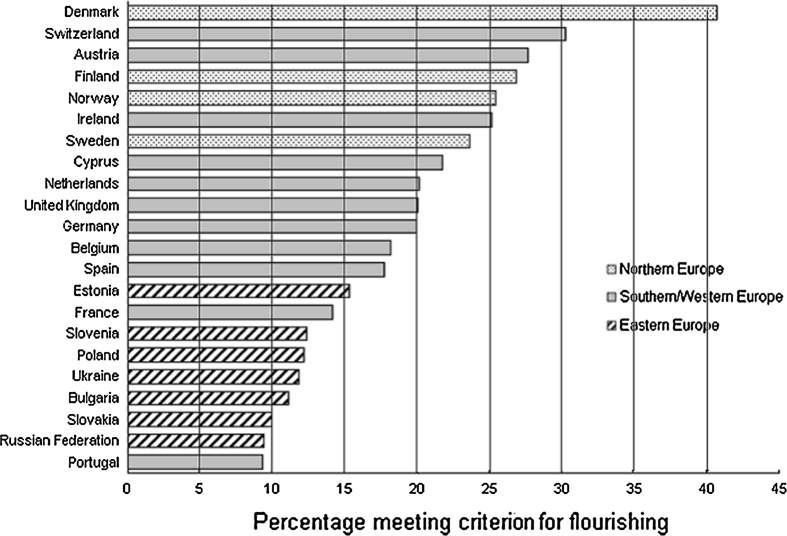
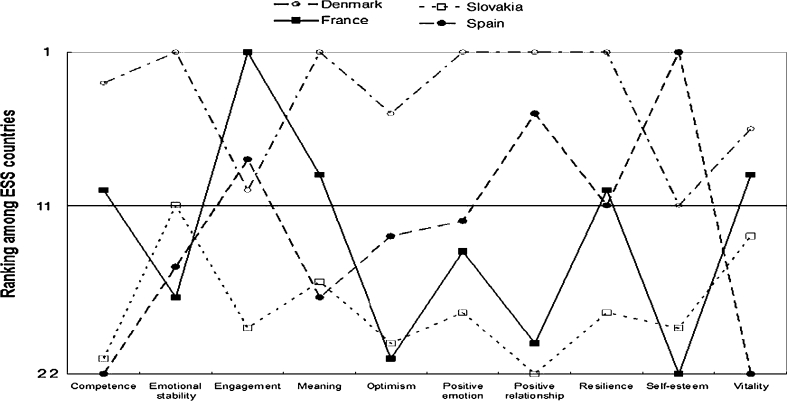
Governments around the world are recognising the importance of measuring subjective well-being as an indicator of progress. But how should well-being be measured? A conceptual framework is offered which equates high well-being with positive mental health. Well-being is seen as lying at the opposite end of a spectrum to the common mental disorders (depression, anxiety). By examining internationally agreed criteria for depression and anxiety (DSM and ICD classifications), and defining the opposite of each symptom, we identify ten features of positive well-being. These combine feeling and functioning, i.e. hedonic and eudaimonic aspects of well-being: competence, emotional stability, engagement, meaning, optimism, positive emotion, positive relationships, resilience, self esteem, and vitality. An operational definition of flourishing is developed, based on psychometric analysis of indicators of these ten features, using data from a representative sample of 43,000 Europeans. Application of this definition to respondents from the 23 countries which participated in the European Social Survey (Round 3) reveals a four-fold difference in flourishing rate, from 41% in Denmark to less than 10% in Slovakia, Russia and Portugal. There are also striking differences in country profiles across the 10 features. These profiles offer fresh insight into cultural differences in well-being, and indicate which features may provide the most promising targets for policies to improve well-being. Comparison with a life satisfaction measure shows that valuable information would be lost if well-being was measured by life satisfaction. Taken together, our findings reinforce the need to measure subjective well-being as a multi-dimensional construct in future surveys.
Overview
The claims and statistics of this paper haven’t been checked yet.
Free: it reads the open-access text and checks the first 5 claims that cite a source we can check. Create a free account to check every claim.
Integrity signals
Registry
Cites
Statistics
Figures
Verification
Claims the paper makes
The claims and statistics of this paper haven’t been checked yet.
Free: it reads the open-access text and checks the first 5 claims that cite a source we can check. Create a free account to check every claim.
Claims other papers make about this one
Each is checked against this paper’s own text: does it say what the citing paper says it does?
The source backs part of the claim, not all of it — or backs it for a different population, condition or comparison.
In the citing paper
“If flourishing encompasses emotional resonance, relational quality, and mutual regulation (4, 5), then sex differences in physiological attunement may influence how individuals engage in supportive, co-regulatory interactions that sustain psychological health.”
From Physiological attunement and flourishing: understanding the influence of relationships on health (2025) · cites this paper as [4]
Experimental — accuracy not yet measured
Self-check
Percentages, sums and reported differences re-computed from the paper’s own numbers.
The self-check needs the paper’s full text.
Citations
Cites
Diagnostic and Statistical Manual of Mental Disorders
Williams, J. B. W., & First, M. (2013) · Encyclopedia of Social Work · doi:10.1093/acrefore/9780199975839.013.104 · Cited by 109,519
The CES-D Scale: A Self-Report Depression Scale for Research in the General Population
Radloff, L. S. (1977) · Applied Psychological Measurement · doi:10.1177/014662167700100306 · Cited by 53,267
Development and validation of brief measures of positive and negative affect: The PANAS scales.
Watson, D., Clark, L. A., & Tellegen, A. (1988) · Journal of Personality and Social Psychology · doi:10.1037/0022-3514.54.6.1063 · Cited by 32,433 · cited 2×
“Proponents of this view have included Bradburn (1969), Watson et al. (1988), and Diener et al. (1999).”
BackgroundAlternative Ways of Assessing Model Fit
Browne, M. W., & Cudeck, R. (1992) · Sociological Methods & Research · doi:10.1177/0049124192021002005 · Cited by 27,200 · cited 2×
“In general, CFI and GFI values of .90 or above, and RMSEA values of .06 or below are indicative of good empirical fit (Browne and Cudeck 1993; Byrne 1994).”
BackgroundTesting Structural Equation Models.
Mueller, C. W., Bollen, K. A., & Long, J. S. (1994) · Contemporary Sociology · doi:10.2307/2074955 · Cited by 14,120
Subjective well-being: Three decades of progress.
Diener, E., Suh, E. M., Lucas, R. E., & Smith, H. L. (1999) · Psychological Bulletin · doi:10.1037/0033-2909.125.2.276 · Cited by 12,910
On Happiness and Human Potentials: A Review of Research on Hedonic and Eudaimonic Well-Being
Ryan, R. M., & Deci, E. L. (2001) · Annual Review of Psychology · doi:10.1146/annurev.psych.52.1.141 · Cited by 11,567 · cited 4×
“Some conceptual approaches to well-being have focused exclusively on the hedonic aspects (e.g. Bradburn 1969; Diener et al. 1999; Watson et al. 1988), while others have focused exclusively on eudaimonic aspects (e.g. Antonovsky 1993; Jahoda 1958; Ryan and Deci 2001; Ryff 1989).”
BackgroundMethodInfluentialThe structure of psychological well-being revisited.
Ryff, C. D., & Keyes, C. L. M. (1995) · Journal of Personality and Social Psychology · doi:10.1037//0022-3514.69.4.719 · Cited by 10,285 · cited 4×
“Similar findings have been reported in other studies (e.g. Chirkov and Ryan 2001; Diener et al. 2009; Ryff and Keyes 1995), indicating that a global measure of life satisfaction is no substitute for the information gained from a multi-dimensional approach.”
BackgroundResultInfluentialTesting Structural Equation Models.
Clogg, C. C., Bollen, K. A., & Long, J. S. (1995) · Social Forces · doi:10.2307/2580595 · Cited by 8,211
Flourish: A Visionary New Understanding of Happiness and Well-Being
(2011) · Choice Reviews Online · doi:10.5860/choice.48-7217 · Cited by 5,543 · cited 3×
“Our conceptual framework is more in keeping with the approaches of Keyes (2002), Seligman (2002, 2011), Tennant et al. (2007), and the recent work of Diener et al. (2010a, b), all of which incorporate both hedonic and eudaimonic aspects of wellbeing.”
BackgroundMethodResult
Research works printed but not linked: 4
- Böhnke P First European quality of life survey: Life satisfaction, happiness and sense of belonging 2005 Luxembourg Office for Official Publications of the European Communities
- Diener, E., Suh, E. M., & Sapyta, J. (1997). Cited in Diener, E., & Oshi, M. (2004). Are Scandinavians happier than Asians? Issues in comparing nations on subjective wellbeing. In F. Columbus (Ed.), Politics and economics of Asia (pp. 1–25). Hauppauge, NY: Nova Science Publishers.
- Jowell R The Central Co-ordinating Team European Social Survey 2002/2003: Technical report 2003 London Centre for Comparative Social Surveys, City University
- Seligman M Authentic happiness: Using the new positive psychology to realize your potential for lasting fulfilment 2002 New York Free Press
Cited by
Items 601–700 of 1,000
Genel İyi Oluş Ölçeği Kısa Formu’nun Türkçeye Uyarlama Çalışması
Odacı, H., Kaya, F., & Kınık, Ö. (2021) · Buca eğitim fakültesi dergisi (Online)/Buca Eğitim Fakültesi dergisi · doi:10.53444/deubefd.841481 · Cited by 17
Dollion, N., Poirier, M., Auffret, F., François, N., Plusquellec, P., Grandgeorge, M., Handi’Chiens, & Mira, F. (2024) · PLoS ONE · doi:10.1371/journal.pone.0295702 · Cited by 18
A close analysis of eight flourishing measures
Novak, L. F., Fowers, B. J., Kiknadze, N. C., & Calder, A. J. (2024) · The Journal of Positive Psychology · doi:10.1080/17439760.2024.2322468 · Cited by 18
“…Flourishing Index (VanderWeele, 2017); the PERMA model and an associated measure (Butler & Kern, 2016; Seligman, 2011); the European Social Survey (Huppert & So, 2013); the Flourishing Scale (Diener et al., 2010); the Mental Health Continuum (Keyes, 2002); the Psychological Well-Being Scale…”
Flourishing and the scope of medicine and public health
VanderWeele, T. J. (2024) · Journal of Epidemiology & Community Health · doi:10.1136/jech-2023-220553 · Cited by 17
Lam, J. R., Park, H. R. P., & Gatt, J. M. (2024) · Frontiers in Psychiatry · doi:10.3389/fpsyt.2024.1333828 · Cited by 19
“McLellan and Steward ’ s School Wellbeing Scale (28) for children (7 – 16 years old) was inspired by Huppert and So ’ s (29) use of both subjective and psychological wellbeing in their adult indicators for social policy study.”
BackgroundRusso, A., Mansouri, M., Santisi, G., & Zammitti, A. (2024) · International journal of organizational analysis · doi:10.1108/ijoa-09-2024-4834 · Cited by 20
Eckersley, R. (2016) · Oxford Development Studies · doi:10.1080/13600818.2016.1166197 · Cited by 19
“…optimism, positive emotion, positive relationships, resilience, self-esteem and vitality) found that an average of only 16% were flourishing, with scores ranging from 41% in Demark to 9% in Portugal (Huppert & So, 2013); these scores are much lower than typically reported for life satisfaction.”
BackgroundHe, Y., Hutson, B., Bloom, J. L., & Cuevas, A. E. P. (2020) · NACADA Journal · doi:10.12930/nacada-18-02 · Cited by 18
“Researchers have developed measures to test these various aspects of individual well-being (Butler & Kern, 2013; Huppert et al., 2009; Huppert & So, 2013; Steger, Frazier, Oishi, & Kaler, 2006) and have explored the nature of well-being in the workplace.”
BackgroundHee-Jung, L. E. E. (2020) · Journal of Tourism and Cultural Change · doi:10.1080/14766825.2020.1800022 · Cited by 19
Who Are the Flourishing Emerging Adults on the Urban East Coast of Australia?
Sofija, E., Harris, N., Sebar, B., & Phung, D. T. (2021) · International Journal of Environmental Research and Public Health · doi:10.3390/ijerph18031125 · Cited by 17
“The existing studies on flourishing suggest that the rates and predictors of flourishing vary across countries and populations [11,16,30,31].”
BackgroundFurtak, A., & Barnard, A. (2021) · SA Journal of Industrial Psychology · doi:10.4102/sajip.v47i0.1809 · Cited by 19
“This can be attributed to its relationship to desirable outcomes such as productivity and good relationships (Huppert & So, 2013).”
BackgroundFlorecimiento y salud mental óptima en tiempos de COVID-19
Estrada, A. R. B. (2021) · Psicología Iberoamericana · doi:10.48102/pi.v29i1.244 · Cited by 19
The Predictive Roles of Character Strengths and Personality Traits on Flourishing
Eksı, H., Demırcı, İ., ALBAYRAK, İ., & Ekşi, F. (2022) · International Journal of Psychology and Educational Studies · doi:10.52380/ijpes.2022.9.2.534 · Cited by 20
“Flourishing is key to maintaining the desired life (Huppert & So, 2013) and success in social and academic life (Seligman, 2011); and universities open many doors.”
BackgroundInside-Out-Outside-In: A dual approach process model to developing work happiness
Williams, P., Kern, M. L., & Waters, L. E. (2016) · International Journal of Wellbeing · doi:10.5502/ijw.v6i2.489 · Cited by 21
“However, evidence suggests that elements of wellbeing being not assessed by SWB measures, (for example relationships) strongly influence how people assess their quality of life and therefore also their levels of subjective wellbeing (Huppert & So, 2013).”
BackgroundInfluentialPositivity is an up‐to‐date predictor of well‐functioning instead of a eudaemon
Oláh, A. (2019) · Asian Journal Of Social Psychology · doi:10.1111/ajsp.12362 · Cited by 18
“In rationale, the same theoretical suggestion was proposed by Huppert and So (2013) in their flourishing model of mental health in which flourishing as a positive pole of mental health can be described by the mirror opposite syndrome of mental illness.”
BackgroundExploring mathematical wellbeing across cultures: insights from diverse students
Hunter, J., & Hill, J. L. (2024) · Mathematics Education Research Journal · doi:10.1007/s13394-024-00500-5 · Cited by 17
The impact of COVID-19 on dual career athletes: Three typologies of coping
Cartigny, E., Vickers, E., Harrison, G. E., Appleby, R., & McCullogh, N. (2022) · Journal of Sports Sciences · doi:10.1080/02640414.2022.2065088 · Cited by 18
Lorenz, T., Algner, M., & Binder, B. (2022) · Frontiers in Psychology · doi:10.3389/fpsyg.2022.896741 · Cited by 19
Hope across cultures: Lessons from the International Hope Barometer
Krafft, A. M., Guse, T., & Slezáčková, A. (2023) · Cross-cultural advancements in positive psychology · doi:10.1007/978-3-031-24412-4 · Cited by 17
Savchenko, O. V., & Lavrynenko, D. (2023) · Habitus · doi:10.32782/2663-5208.2023.52.29 · Cited by 20
Liljedahl, S., Mossberg, A., Grenner, H., & Wærn, M. (2023) · BMC Psychiatry · doi:10.1186/s12888-023-05357-9 · Cited by 19
“Flourishing refers to optimal mental health whereby a person possesses and demonstrates high levels of psychological well-being, emotional health, and social connectivity [18, 19].”
BackgroundMethodChen, Z., Guo, N., Chen, T., Liao, L., Hu, S., & Wang, L. (2024) · Nursing and Health Sciences · doi:10.1111/nhs.13085 · Cited by 16
Beresford, K., Kern, M. L., & Jarden, A. (2024) · The Journal of Positive Psychology · doi:10.1080/17439760.2024.2322467 · Cited by 18
“Creativity not only promotes well-being (Torrance, 1981), but is also promoted by well-being, such that a bi-directional relationship between the two exists (Huppert & So, 2013).”
Díaz, M. D. M., & Fernández-Abascal, E. G. (2024) · Applied Research in Quality of Life · doi:10.1007/s11482-024-10342-9 · Cited by 21
“…the unilateral approach of the study of well-being has aroused interest (Kashdan et al., 2008; Henderson & Knight, 2012), and most researchers now believe that well-being is a multidimensional construct (Die - ner, 2009; Gallagher et al., 2009; Huppert & So, 2013; Prilleltensky et al., 2015).”
Birau, M. M. (2024) · Psychology and Marketing · doi:10.1002/mar.22112 · Cited by 20
Nofal, H. A. E., Mohamed, A. E., Almadani, N. A., Mahfouz, R., Bahri, H. A., Ali, H. T., & Elrafey, D. S. (2025) · Frontiers in Public Health · doi:10.3389/fpubh.2025.1639333 · Cited by 19
““Flourishing” refers to a state of optimal well-being characterized by both eudaimonic well-being (functioning effectively, achieving personal growth, and fulfilling one’s potential) and hedonic well-being (experiencing positive emotions and life satisfaction) (8).”
Baldwin, C., Cave, B., & Rawstorne, P. (2019) · International Journal of Community Well-Being · doi:10.1007/s42413-019-00041-x · Cited by 21
Whose Happiness in Which Cities? A Quantile Approach
Morrison, P. S. (2021) · Sustainability · doi:10.3390/su132011290 · Cited by 16
“Although the two instruments are not specifically designed to pick up eudaimonic features of wellbeing [52], the high ends of both life satisfaction and happiness have been found to be highly correlated with flourishing [53].”
BackgroundPerson-environment fit: Does it matter for tourism students’ career outcomes in an era of crisis?
Choy, M. W., & Yeung, A. S. (2022) · Journal of Hospitality Leisure Sport & Tourism Education · doi:10.1016/j.jhlste.2022.100414 · Cited by 23
Burns, R. A. (2019) · Journal of Happiness Studies · doi:10.1007/s10902-019-00077-y · Cited by 16
Fabio, A. D., & Duradoni, M. (2019) · Frontiers in Psychology · doi:10.3389/fpsyg.2019.01060 · Cited by 18
Laurìa, A., Secchi, S., & Vessella, L. (2020) · Sustainability · doi:10.3390/su12229733 · Cited by 19
Positive Psychological Well-Being at Work: The Role of Eudaimonia
der Kinderen, S., & Khapova, S. N. (2021) · Springer eBooks · doi:10.1007/978-3-030-30025-8_79 · Cited by 14
Phan, H. P., & Ngu, B. H. (2014) · EPubDev Repository · doi:10.5923/j.ijap.20140403.05 · Cited by 22
Hallam, S., & Himonides, E. (2022) · Open Book Publishers · doi:10.11647/obp.0292.08 · Cited by 16
Fabian, M. (2020) · Journal of Happiness Studies · doi:10.1007/s10902-020-00333-6 · Cited by 16
Conradson, H. E., Hayden, K. A., Russell‐Mayhew, S., Raffin Bouchal, S., & King‐Shier, K. (2022) · Obesity Science & Practice · doi:10.1002/osp4.605 · Cited by 15
“For the purpose of this scoping review, PPWB is defined as a multi‐dimensional construct that includes the domains of positive emotions, positive relationships, positive characteristics, and positive functions.(14,17) Specifically, the constructs included in this review are: gratitude, optimism, self‐ compassion, posi…”
BackgroundMethodSumner, A. L., Cartwright, T., Ballieux, H., & Edginton, T. L. (2025) · British Journal of Health Psychology · doi:10.1111/bjhp.12793 · Cited by 17
“…is increasing interest in understanding the factors associated with optimal psychological functioning or 'flourishing' for children and adolescents (Huppert & So, 2013; Witten et al., 2019), the rising rates of mental health problems internationally have emerged as the primary focus (Hafstad &…”
The Subjectivity of Subjective Well-Being
Almeida, P. M., & Ramos, P. F. A. (2025) · SAGE Open · doi:10.1177/21582440251329860 · Cited by 19
“The study by Huppert and So (2013) used in depth interviews to investigate well-being perceptions across different demographic groups, uncovering the diversity of experiences and meanings associated with subjective well-being.”
Du, W., & Liu, L. (2025) · BMC Psychology · doi:10.1186/s40359-025-03445-x · Cited by 19
“It emerges as a distinct construct potentially bridging concepts across positive psychology, emotion regulation, and eudaimonic well-being frameworks [3, 11, 14, 39, 58], suggesting it warrants further conceptual attention.”
InfluentialArslan, G., & Coşkun, M. (2025) · Journal of Personality Assessment · doi:10.1080/00223891.2025.2569671 · Cited by 11
“Different versions of multidimensional measurement tools have been developed to assess dimensions of PERMA (e.g., Butler & Kern, 2016; Huppert & So, 2013).”
Lai, R., Southam, J. A., Mageean, L., Roffey, S., & Allen, K. (2026) · Educational Psychology Review · doi:10.1007/s10648-025-10107-2 · Cited by 17
“A review of four positive psychology wellbeing theories (Diener et al., 2010; Huppert & So, 2013; Keyes, 2002; Seligman, 2011) by Hone and colleagues (2014) revealed that PERMA demonstrated the highest level of correlation to each of the other theories, suggesting that it captures most essential…”
Liu, B., Ma, P., & Jia, F. (2026) · Frontiers in Psychology · doi:10.3389/fpsyg.2026.1700298 · Cited by 16
“While this index has been criticized for its simplification of internal national diversity (Killen and Wainryb, 2000), it remains a robust and widely replicated instrument in cross-cultural psychological and educational research (Huppert and So, 2013).”
Exploring the Concept and Experience of Hope – Empirical Findings and the Virtuous Circle of Hope
Krafft, A. M., & Walker, A. M. (2018) · Social indicators research series · doi:10.1007/978-3-319-78470-0_2 · Cited by 18
Self-Disclosure on Social Media and Its Influence on the Well-Being of Youth
Malaysia, U. S. I., Kasmani, M. F., Aziz, A. R. A., Malaysia, U. S. I., Sawai, R. P., & Malaysia, U. S. I. (2022) · Jurnal Komunikasi Malaysian Journal of Communication · doi:10.17576/jkmjc-2022-3803-17 · Cited by 24
Keum, B. T. (2024) · Emerging Adulthood · doi:10.1177/21676968241226492 · Cited by 17
“Research has shown that individuals who fl ourish are more likely to be resilient (Ryff & Singer, 2003), possess the ability and mindset to work through problems and challenges (Reschly et al., 2008), and experience life satisfaction (Huppert & So, 2013).”
InfluentialEnhancing mental wellbeing by changing mindsets? Results from two randomized controlled trials
Schreiber, C., & Schotanus-Dijkstra, M. (2024) · BMC Psychology · doi:10.1186/s40359-023-01470-2 · Cited by 15
Global and School-Specific Subjective Well-Being as Predictors of Educational Outcomes
Renshaw, T. L., Clark, K. N., Farley, C. D., Franzmann, T. K., & Yang, N.-J. (2024) · School Mental Health · doi:10.1007/s12310-024-09684-4 · Cited by 15
“Our findings support the notion that understanding SWB within contextually specific domains, such as at school, is a worthy endeavor (Huppert & So, 2013; Seligman, 2011).”
Exploring determinants of flourishing: a comprehensive network analysis of retirees in Taiwan
Hsu, W.-C., Huang, N.-C., Li, C.-L., & Hu, S. C. (2024) · BMC Public Health · doi:10.1186/s12889-024-19466-x · Cited by 16
Lei, Y. (2024) · Frontiers in Psychology · doi:10.3389/fpsyg.2024.1448446 · Cited by 17
Genes, Environments and Core Features of Eudaimonic Wellbeing
Røysamb, E., & Nes, R. B. (2016) · International handbooks of quality-of-life · doi:10.1007/978-3-319-42445-3_16 · Cited by 17
Human Flourishing and Integrated Care Models: The Development of the Flourish Index
Faul, A. C., D’Ambrosio, J. G., Yankeelov, P. A., Cotton, S. G., Furman, C. D., Hall-Faul, M., Gordon, B., & Wright, R. B. (2018) · The Gerontologist · doi:10.1093/geront/gny114 · Cited by 17
Fahd, S., & Hanif, R. (2019) · Journal of Human Behavior in the Social Environment · doi:10.1080/10911359.2018.1543629 · Cited by 17
Job Demands–Resources and Flourishing: Exploring Workplace Bullying as a Potential Mediator
Nel, E., & Coetzee, M. (2019) · Psychological Reports · doi:10.1177/0033294119839032 · Cited by 16
“Despite the various positive individual and organizational well-being outcomes relating to flourishing, the majority of research suggests low levels of flourishing among individuals globally (Hone et al., 2014; Huppert and So, 2013; Keyes, 2006, 2007; Wissing & Temane, 2013).”
BackgroundBartonicek, A., Wickham, S. R., Pat, N., & Conner, T. S. (2021) · BMC Public Health · doi:10.1186/s12889-021-10690-3 · Cited by 16
“social welfare systems [13, 31, 47, 55, 68], community and family factors, such as childhood socioeconomic sta-”
BackgroundCamic, P. M., Dickens, L., Zeilig, H., & Strohmaier, S. (2021) · Wellcome Open Research · doi:10.12688/wellcomeopenres.16819.2 · Cited by 18
Можем ли мы объяснить различия в моделях потребления алкоголя: обзор теоретических подходов
Roshchina, Y. M., & Кондратенко, В. А. (2021) · Journal of Economic Sociology · doi:10.17323/1726-3247-2021-3-129-157 · Cited by 20
Kil, H., Lacourse, É., Mageau, G. A., Pelletier‐Dumas, M., Dorfman, A., Stolle, D., Lina, J., & de la Sablonnière, R. (2023) · Frontiers in Psychology · doi:10.3389/fpsyg.2022.1016397 · Cited by 17
“Perceived control describes the perception that one has the capacity to significantly influence events or outcomes in one’s life (Burger, 1989), thus fitting into the self-competence area of well-being (Huppert and So, 2013).”
BackgroundMahamid, F., Veronese, G., & Bdier, D. (2023) · Middle East Current Psychiatry · doi:10.1186/s43045-023-00282-9 · Cited by 8
Putting the Athlete First: a Comprehensive Assessment of Elite Para Athlete Well-Being
Macdougall, H., O’Halloran, P., Sherry, E., & Shields, N. (2017) · Journal of Well-Being Assessment · doi:10.1007/s41543-017-0003-8 · Cited by 15
“While other models of well-being exist (e.g., PERMA, Flourishing, The Mental Health Continuum; Huppert and So 2013; Keyes 2002; Seligman 2011), measures associated with these models do not currently provide the same level of detail required to comprehensively measure well-being.”
MethodGóngora, V. C., & Solano, A. C. (2018) · Psicodebate · doi:10.18682/pd.v18i1.740 · Cited by 15
Goldbeck, F., Haipt, A., Rosenbaum, D., Rohe, T., Fallgatter, A. J., Hautzinger, M., & Ehlis, A. (2019) · Frontiers in Human Neuroscience · doi:10.3389/fnhum.2018.00540 · Cited by 16
“The findings support the notion of an anti-relation between flourishing and mental illness (Huppert and So, 2013).”
Lahat, L., & Sened, I. (2019) · Journal of European Social Policy · doi:10.1177/0958928719891339 · Cited by 15
“Some measure these factors using one item, while others utilize indices constructed of many items (Diener and Seligman, 2004; European Social Survey, 2015; Helliwell et al., 2015; Huppert and So, 2013; Pavot, 2018).”
MethodKazak, Z., Lochbaum, M. R., & Canpolat, A. M. (2021) · Sustainability · doi:10.3390/su13137450 · Cited by 17
“According to the 23 countries’ data that participated in the European Social Survey, it has been revealed a four-fold difference in flourishing rate, from 41% in Denmark to less than 10% in Slovakia, Russia, and Portugal [7].”
BackgroundWell-Being’s Predictive Value: A Gamified Approach to Managing Smart Communities
Hall, M., Caton, S., & Weinhardt, C. (2013) · Lecture Notes in Computer Science · doi:10.1007/978-3-642-39371-6_2 · Cited by 14
“Ten identical questions covering varying aspects of human flourishing were posed to facilitate prediction of said dimension [9].”
BackgroundFuller-Thomson, E., Ko, B. K. D., Carrique, L., & MacNeil, A. (2022) · International Journal of Applied Positive Psychology · doi:10.1007/s41042-022-00062-6 · Cited by 14
Academic flourishing and student formation
VanderWeele, T. J., & Case, B. W. (2025) · International Journal of Wellbeing · doi:10.5502/ijw.v15i2.5003 · Cited by 15
Pozitív pszichológia: Az elmélettől a gyakorlatig
Nagy, H. (2019) · Magyar Pszichológiai Szemle · doi:10.1556/0016.2019.74.3.2 · Cited by 16
Tape, N., Branson, V., Dry, M. J., & Turnbull, D. A. (2021) · The Educational and Developmental Psychologist · doi:10.1080/20590776.2021.1986356 · Cited by 17
“well-being is a multifaceted construct, commonly defined as the combination of feeling good and functioning well (e.g., Huppert & So, 2013).”
BackgroundBahl, S., Milne, G. R., & Miller, E. G. (2023) · Journal of Consumer Affairs · doi:10.1111/joca.12542 · Cited by 15
Huynh, H. V., Proeschold‐Bell, R. J., Sohail, M. M., Nalianya, M., Wafula, S., Amanya, C., Vann, V., Loem, P., Baghdady, A., Al‐Khalaf, M. S., et al. (2023) · Psychology in the Schools · doi:10.1002/pits.23043 · Cited by 14
Bienestar, salud mental óptima y florecimiento: esclareciendo y diferenciando conceptos complejos
Consultoría, Z. P., & Estrada, A. R. B. (2023) · Liberabit Revista Peruana de Psicología · doi:10.24265/liberabit.2023.v29n2.680 · Cited by 17
Clarke, T., & McLellan, R. (2023) · School Psychology International · doi:10.1177/01430343231215836 · Cited by 14
“Separate models then speci fi cally examined the two main wellbeing dimensions: feeling (life satisfaction) and functioning (eudaimonia) (Huppert & So, 2011).”
Aliyev, B., Rustamov, E., Satıcı, S. A., & Nuriyeva, U. Z. (2024) · BMC Psychology · doi:10.1186/s40359-024-01593-0 · Cited by 16
“Additionally, these individuals put more effort into achieving their goals and spend their days more productively [8, 11].”
BackgroundEvaluating flourishing: a comparative analysis of four measures using item pool visualization
Ploke, V., Batinic, B., & Stieger, S. (2024) · Frontiers in Psychology · doi:10.3389/fpsyg.2024.1458946 · Cited by 16
Developing Employability Capital in University Students: A Practical Guide
Donald, W. E. (2025) · Routledge eBooks · doi:10.4324/9781003562429 · Cited by 14
Finding peers “like me”: Student strategies for increasing belonging and flourishing in STEM
Chaffee, R., Björklund, P., Braverman, C., Gupta, P., Hammerness, K. M., Daly, A. J., MacPherson, A. C., Adams, J. D., Abouelkheir, M., Francis, J., et al. (2025) · Journal of Applied Developmental Psychology · doi:10.1016/j.appdev.2025.101758 · Cited by 17
Ryan, R. M. (2025) · Psychology of sport and exercise · doi:10.1016/j.psychsport.2025.102932 · Cited by 17
Empowering students: positive higher education strategies
Li, H. (2025) · Frontiers in Psychology · doi:10.3389/fpsyg.2025.1561267 · Cited by 17
Anderson, J., & Baldwin, C. (2016) · International handbooks of quality-of-life · doi:10.1007/978-94-024-0878-2_17 · Cited by 14
How Design Can (Not) Support Human Flourishing
Pohlmeyer, A. E. (2017) · Springer eBooks · doi:10.1007/978-3-319-51787-2_14 · Cited by 16
Flourishing within the Working-Aged Finnish Population
Kainulainen, S. (2018) · Applied Research in Quality of Life · doi:10.1007/s11482-018-9671-7 · Cited by 16
“(Ilmarinen 2000.)”
Seok, C. B., Ching, P. L., & Ismail, R. (2020) · Sustainability · doi:10.3390/su12020580 · Cited by 14
“Flourishing is an essential value because it is about positive well-being, good life experience, feeling well, and the ability to function effectively [10].”
BackgroundOptimization: an attempt to establish empirical evidence for theoretical and practical purposes
Phan, H. P., & Ngu, B. H. (2020) · European Journal of Psychology of Education · doi:10.1007/s10212-020-00484-3 · Cited by 14
Choi, J., Ryu, J., & Yang, Z. (2021) · Journal of Psychoeducational Assessment · doi:10.1177/0734282920986395 · Cited by 14
“A positive psychology perspective highlights the importance of psychological well-being and effective functioning, rather than personal deficiency or limitations (Huppert & So, 2013; Seligman & Csikszentmihalyi, 2000).”
BackgroundEmbracing Arts curricula as integral for children’s wellbeing
Clarke, T., & McLellan, R. (2021) · Pastoral Care in Education · doi:10.1080/02643944.2021.1899271 · Cited by 18
Students’ Self-Reported Well-Being Under Corona Measures, Lessons for the Future
Meulenbroeks, R. R., & van Joolingen, W. (2021) · Heliyon · doi:10.1016/j.heliyon.2022.e08733 · Cited by 15
Rando, B., Abreu, A. M., & Blanca, M. J. (2022) · Current Psychology · doi:10.1007/s12144-022-03325-2 · Cited by 15
Salama-Younes, M., & Alzahrani, M. R. (2018) · Journal of Educational and Psychological Studies [JEPS] · doi:10.53543/jeps.vol12iss4pp708-723 · Cited by 16
The emotion regulation strategies of flourishing adults
Richard-Sephton, P. B., Crisp, D. A., & Burns, R. A. (2023) · Current Psychology · doi:10.1007/s12144-023-05332-3 · Cited by 14
“…also proposed which define flourishing as a continuum on a unidimen - sional scale on which degrees of flourishing are captured (Butler & Kern, 2016; Diener et al., 2009; VanderWeele, 2017 ), in contrast to a discrete flourishing state (Huppert & So, 2013 ; Keyes, 2002, 2006 ; Keyes et al., 2008).”
Future Orientation and Psychological Well-Being in Adolescence: Two Multiple-Step Models
Seginer, R. (2017) · Palgrave Macmillan UK eBooks · doi:10.1057/978-1-137-60191-9_15 · Cited by 20
Baldwin, C., Vincent, P., Anderson, J., & Rawstorne, P. (2020) · International Journal of Community Well-Being · doi:10.1007/s42413-020-00067-6 · Cited by 18
“It evolved from developments in psychology where individual subjective well-being is conceived of as split between momentary experiences of pleasure or positive emotions (hedonic well-being) and more important, long-term and active processes of ‘well-doing’ (Aristotle’s eudaimonia) (see, e.g. Keyes 2002; Ryan and Deci…”
BackgroundInfluentialJones, P. M., & Drummond, P. D. (2022) · Current Psychology · doi:10.1007/s12144-021-02672-w · Cited by 17
“However, a negative effect can also be experienced if material goals are prized more than other values (Diener & Biswas-Diener, 2009), and financial problems have also been found to be a predictor of depression (Huppert & So, 2011).”
BackgroundEmotional and behavioural difficulties and mental (ill)health
Ford, T. J., & Parker, C. (2016) · Emotional and Behavioural Difficulties · doi:10.1080/13632752.2016.1139300 · Cited by 15
Flourishing and Self-Control in Adolescence: The Role of Perceived Parenting
Mirandi, M., Lis, A., Mazzeschi, C., Li, J., Salmi, L. P., & Delvecchio, E. (2023) · International Journal of Environmental Research and Public Health · doi:10.3390/ijerph20166568 · Cited by 19
Psychosocial correlates of flourishing in the late lifespan
Fastame, M. C., Manca, C., Mulas, I., & Ruiu, M. (2024) · Aging Clinical and Experimental Research · doi:10.1007/s40520-024-02703-z · Cited by 15
“Altogether, extending previous evidence (e.g., [5, 13, 14, 20]), the current findings let us speculate that a very high level of flourishing, combined with a good degree of confidence in one’s mental functioning and a supportive social capital could represent a crucial protective factor for…”
BackgroundPsychological Benefits of Arts Participation for Emerging Adulthood: A Pathway to Flourishing
Fan, J., Ni, X., Wu, T., Wang, Y., & Qian, Y. (2024) · Behavioral Sciences · doi:10.3390/bs14060448 · Cited by 15
“It emphasizes the individual’s positive mental health and capacity to function well in life [29].”
BackgroundLea, C., Kirby, Y., & Tilley, J. (2024) · Qualitative Research in Psychology · doi:10.1080/14780887.2024.2364330 · Cited by 14
“The current study uses a broad definition of well-being that reflects a multi-faceted concept comprising short-and long-term emotions and feelings, a positive outlook regarding one’s self and life, and meaning and purpose (Henderson and Knight 2012; Huppert and So 2013).”
Lomas, T., Padgett, R. N., Lai, A. Y., Pawelski, J. O., & VanderWeele, T. J. (2024) · The Journal of Positive Psychology · doi:10.1080/17439760.2024.2370538 · Cited by 13
Velez, M. J., Marujo, H. Á., Charepe, Z. B., Querido, A., & Laranjeira, C. (2024) · European Journal of Investigation in Health Psychology and Education · doi:10.3390/ejihpe14070140 · Cited by 16
“…impact psychological well-being, i.e., mental disorders—such as depression, anxiety, and substance abuse—can impair various dimensions of psychological well-being, including emotional well-being, self-esteem, personal growth, and the ability to establish and maintain positive relationships [45,46].”
Background
Metadata
- Authors
- Huppert, F. A., & So, T. T. C.
- Affiliations
- University of Cambridge (GB)
- Corresponding author
- Huppert, Felicia A.
- ORCID
- Huppert, Felicia A.
- Venue
- Social Indicators Research
- Published
- 2011-12-15
- Volume
- 110
- Issue
- 3
- Pages
- 837-861
- ISSN
- 0303-8300 (ISSN-L)
- 1573-0921
- PMC
- PMC3545194
- OpenAlex
- W1992646537
- Cited by
- 1,864
- References
- 88
- Citations by year
- 2026: 170 · 2025: 196 · 2024: 209 · 2023: 187 · 2022: 214 · 2021: 173 · 2020: 159 · 2019: 131 · 2018: 109 · 2017: 101 · 2016: 74 · 2015: 67 · 2014: 46 · 2013: 24 · 2012: 4
- FWCI
- 32.30
- Type
- journal article
- Language
- en
- Open access
- hybrid
- doi.org
- Licence
- cc-by-nc
- Locations
- Social Indicators Research (publishedVersion, cc-by-nc)
- Europe PMC (PubMed Central) (publishedVersion, cc-by-nc)
- PubMed Central (publishedVersion, cc-by-nc)
- PubMed (publishedVersion)
- Research Bank (Australian Catholic University) (submittedVersion)
- RePEc: Research Papers in Economics (submittedVersion)
- Topics
- Social Sciences › Psychology › Social Psychology › Psychological Well-being and Life Satisfaction
- Social Sciences › Sociology and Political Science › Quality of Life Measurement
- Social Sciences › Psychology › Developmental and Educational Psychology › Flow Experience in Various Fields
- Keywords
- eudaimonia, subjective well-being, positive mental health, positive well-being, hedonic well-being, eudaimonic well-being, depression, anxiety, life satisfaction, well-being measurement, European Social Survey
About these checks
Registry, retraction, Cites and statistics results are computed, not judged, with one exception: a printed reference that no index lists is read once by a model before it counts as a citation error. Claims are extracted by a model and kept only when their quote appears verbatim in the text; each cited source is then checked, with a model’s help, for whether it says what the claim relies on. Those verdicts can be wrong — read the claim’s quote and the cited source before relying on one.
Statistics and arithmetic are recomputed, not judged.
Confidence bands are shown only for fields calibrated on our annotated test set. None is calibrated yet, so no band is shown.
What counts as a claim ›How we measure confidence ›How we check this ›
Are you an author, or do you see a problem with this page? Request a review
Data sources
Bibliographic data: Semantic Scholar, OpenAlex, Crossref.
Contains information from the Semantic Scholar Academic Graph Datasets, made available under the ODC Attribution License (ODC-BY 1.0).
Semantic Scholar’s data is described in: Kinney, R., et al. (2023). The Semantic Scholar Open Data Platform. arXiv:2301.10140.
