

Flourishing Across Europe: Application of a New Conceptual Framework for Defining Well-Being
Open accessThe DOI matches its Crossref record, with a small difference in title or year; 80 of the 88 references it cites were found in a registry or an index.
Abstract
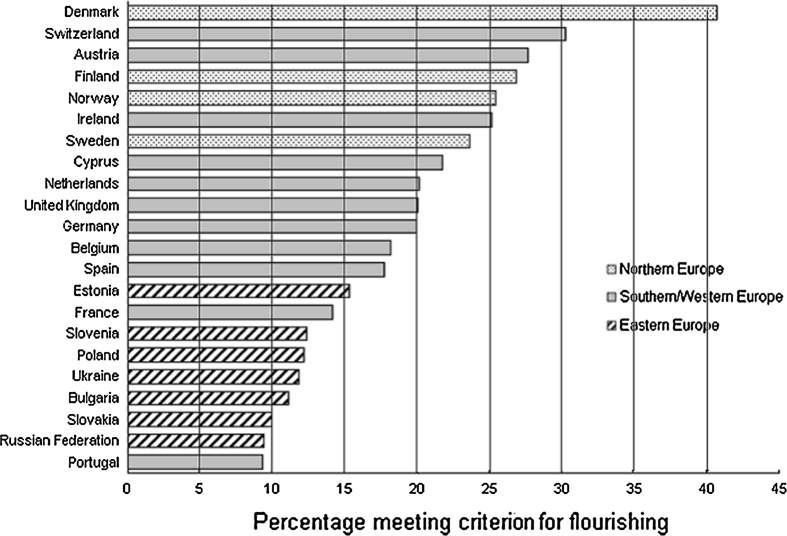
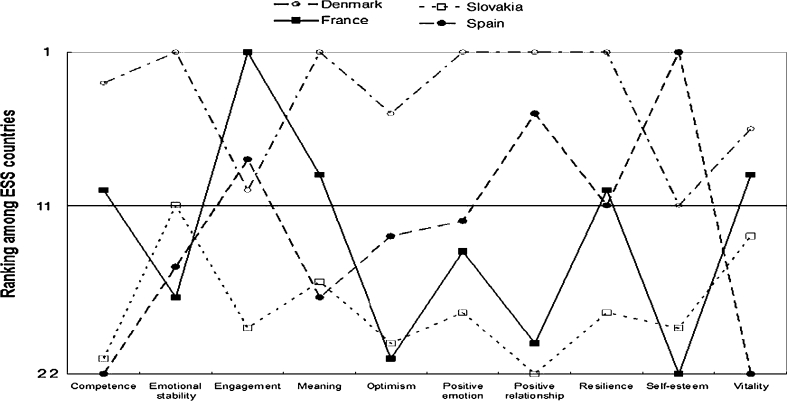
Governments around the world are recognising the importance of measuring subjective well-being as an indicator of progress. But how should well-being be measured? A conceptual framework is offered which equates high well-being with positive mental health. Well-being is seen as lying at the opposite end of a spectrum to the common mental disorders (depression, anxiety). By examining internationally agreed criteria for depression and anxiety (DSM and ICD classifications), and defining the opposite of each symptom, we identify ten features of positive well-being. These combine feeling and functioning, i.e. hedonic and eudaimonic aspects of well-being: competence, emotional stability, engagement, meaning, optimism, positive emotion, positive relationships, resilience, self esteem, and vitality. An operational definition of flourishing is developed, based on psychometric analysis of indicators of these ten features, using data from a representative sample of 43,000 Europeans. Application of this definition to respondents from the 23 countries which participated in the European Social Survey (Round 3) reveals a four-fold difference in flourishing rate, from 41% in Denmark to less than 10% in Slovakia, Russia and Portugal. There are also striking differences in country profiles across the 10 features. These profiles offer fresh insight into cultural differences in well-being, and indicate which features may provide the most promising targets for policies to improve well-being. Comparison with a life satisfaction measure shows that valuable information would be lost if well-being was measured by life satisfaction. Taken together, our findings reinforce the need to measure subjective well-being as a multi-dimensional construct in future surveys.
Overview
The claims and statistics of this paper haven’t been checked yet.
Free: it reads the open-access text and checks the first 5 claims that cite a source we can check. Create a free account to check every claim.
Integrity signals
Registry
Cites
Statistics
Figures
Verification
Claims the paper makes
The claims and statistics of this paper haven’t been checked yet.
Free: it reads the open-access text and checks the first 5 claims that cite a source we can check. Create a free account to check every claim.
Claims other papers make about this one
Each is checked against this paper’s own text: does it say what the citing paper says it does?
The source backs part of the claim, not all of it — or backs it for a different population, condition or comparison.
In the citing paper
“If flourishing encompasses emotional resonance, relational quality, and mutual regulation (4, 5), then sex differences in physiological attunement may influence how individuals engage in supportive, co-regulatory interactions that sustain psychological health.”
From Physiological attunement and flourishing: understanding the influence of relationships on health (2025) · cites this paper as [4]
Experimental — accuracy not yet measured
Self-check
Percentages, sums and reported differences re-computed from the paper’s own numbers.
The self-check needs the paper’s full text.
Citations
Cites
Diagnostic and Statistical Manual of Mental Disorders
Williams, J. B. W., & First, M. (2013) · Encyclopedia of Social Work · doi:10.1093/acrefore/9780199975839.013.104 · Cited by 109,519
The CES-D Scale: A Self-Report Depression Scale for Research in the General Population
Radloff, L. S. (1977) · Applied Psychological Measurement · doi:10.1177/014662167700100306 · Cited by 53,267
Development and validation of brief measures of positive and negative affect: The PANAS scales.
Watson, D., Clark, L. A., & Tellegen, A. (1988) · Journal of Personality and Social Psychology · doi:10.1037/0022-3514.54.6.1063 · Cited by 32,433 · cited 2×
“Proponents of this view have included Bradburn (1969), Watson et al. (1988), and Diener et al. (1999).”
BackgroundAlternative Ways of Assessing Model Fit
Browne, M. W., & Cudeck, R. (1992) · Sociological Methods & Research · doi:10.1177/0049124192021002005 · Cited by 27,200 · cited 2×
“In general, CFI and GFI values of .90 or above, and RMSEA values of .06 or below are indicative of good empirical fit (Browne and Cudeck 1993; Byrne 1994).”
BackgroundTesting Structural Equation Models.
Mueller, C. W., Bollen, K. A., & Long, J. S. (1994) · Contemporary Sociology · doi:10.2307/2074955 · Cited by 14,120
Subjective well-being: Three decades of progress.
Diener, E., Suh, E. M., Lucas, R. E., & Smith, H. L. (1999) · Psychological Bulletin · doi:10.1037/0033-2909.125.2.276 · Cited by 12,910
On Happiness and Human Potentials: A Review of Research on Hedonic and Eudaimonic Well-Being
Ryan, R. M., & Deci, E. L. (2001) · Annual Review of Psychology · doi:10.1146/annurev.psych.52.1.141 · Cited by 11,567 · cited 4×
“Some conceptual approaches to well-being have focused exclusively on the hedonic aspects (e.g. Bradburn 1969; Diener et al. 1999; Watson et al. 1988), while others have focused exclusively on eudaimonic aspects (e.g. Antonovsky 1993; Jahoda 1958; Ryan and Deci 2001; Ryff 1989).”
BackgroundMethodInfluentialThe structure of psychological well-being revisited.
Ryff, C. D., & Keyes, C. L. M. (1995) · Journal of Personality and Social Psychology · doi:10.1037//0022-3514.69.4.719 · Cited by 10,285 · cited 4×
“Similar findings have been reported in other studies (e.g. Chirkov and Ryan 2001; Diener et al. 2009; Ryff and Keyes 1995), indicating that a global measure of life satisfaction is no substitute for the information gained from a multi-dimensional approach.”
BackgroundResultInfluentialTesting Structural Equation Models.
Clogg, C. C., Bollen, K. A., & Long, J. S. (1995) · Social Forces · doi:10.2307/2580595 · Cited by 8,211
Flourish: A Visionary New Understanding of Happiness and Well-Being
(2011) · Choice Reviews Online · doi:10.5860/choice.48-7217 · Cited by 5,543 · cited 3×
“Our conceptual framework is more in keeping with the approaches of Keyes (2002), Seligman (2002, 2011), Tennant et al. (2007), and the recent work of Diener et al. (2010a, b), all of which incorporate both hedonic and eudaimonic aspects of wellbeing.”
BackgroundMethodResult
Research works printed but not linked: 4
- Böhnke P First European quality of life survey: Life satisfaction, happiness and sense of belonging 2005 Luxembourg Office for Official Publications of the European Communities
- Diener, E., Suh, E. M., & Sapyta, J. (1997). Cited in Diener, E., & Oshi, M. (2004). Are Scandinavians happier than Asians? Issues in comparing nations on subjective wellbeing. In F. Columbus (Ed.), Politics and economics of Asia (pp. 1–25). Hauppauge, NY: Nova Science Publishers.
- Jowell R The Central Co-ordinating Team European Social Survey 2002/2003: Technical report 2003 London Centre for Comparative Social Surveys, City University
- Seligman M Authentic happiness: Using the new positive psychology to realize your potential for lasting fulfilment 2002 New York Free Press
Cited by
Items 301–400 of 1,000
One- to three-year-old children’s experience of subjective wellbeing in day care
Seland, M., Sandseter, E. B. H., & Bratterud, Å. (2015) · Contemporary Issues in Early Childhood · doi:10.1177/1463949114567272 · Cited by 61
“Email: mos@dmmh.no degree of wellbeing has many positive consequences, such as effective learning, productivity, good health and longer life expectancy (Huppert and So, 2013).”
BackgroundYeh, C. S., & Barrington, R. (2023) · Teaching and Teacher Education · doi:10.1016/j.tate.2023.104072 · Cited by 52
“…teacher wellbeing interventions should target the enhancement of multiple aspects of teacher wellbeing rather than merely focusing on a unidimensional construct of wellbeing and a de fi cit view (such as reducing stress and burnout in Huppert & So, 2013; Perry et al., 2015; and Pillay et al., 2005).”
BackgroundThe role of social support, being present and self-kindness in university student well-being
Stallman, H. M., Ohan, J. L., & Chiera, B. (2017) · British Journal of Guidance and Counselling · doi:10.1080/03069885.2017.1343458 · Cited by 56
“Subjective well-being can be defined as consistent feelings of being well, satisfied or content, such that the individual feels productive and able to handle life stressors (e.g. Diener & Seligman, 2004; Huppert & So, 2013; World Health Organization, 1946).”
BackgroundUmucu, E., Grenawalt, T. A., Reyes, A., Tansey, T. N., Brooks, J., Lee, B., Gleason, C. E., & Chan, F. (2018) · Rehabilitation Counseling Bulletin · doi:10.1177/0034355218808061 · Cited by 52
“Both Seligman’s (2011) and Diener et al.’s (2010) works on flourishing integrate the hedonic and eudaimonic views of well-being and propose that optimal flourishing occurs when these two components of well-being are present within an individual at the same time (Huppert & So, 2013).”
BackgroundValidity and Reliability of the Flourishing Scale in a Sample of Older Adults in Iran
Ramandi, Z. F., Soleimani, M. A., Allen, K., Görgülü, Ö., & Motalebi, S. A. (2020) · Clinical Interventions in Aging · doi:10.2147/cia.s251067 · Cited by 50
A short empirical note on perfectionism and flourishing
Stoeber, J., & Corr, P. J. (2015) · Personality and Individual Differences · doi:10.1016/j.paid.2015.10.036 · Cited by 46
“To investigate whether perfectionistic concerns and perfectionistic strivings show different relationships with flourishing, we used unpublished data in combination with previously published data from Stoeber and Corr (2015).(1) As concerns the three dimensions of Hewitt and Flett's (1991) model, we regarded self-orie…”
Roldán-Merino, J. F., Lluch‐Canut, T., Casas, I., Sanromà‐Ortíz, M., Ferré‐Grau, C., Sequeira, C., Falcó‐Pegueroles, A., Soares, D., & Llobet, M. P. (2017) · Journal of Psychiatric and Mental Health Nursing · doi:10.1111/jpm.12358 · Cited by 53
The Effect of Social Support on Psychological Flourishing and Distress Among Migrants in Australia
Plooy, D., Lyons, A., & Kashima, E. S. (2018) · Journal of Immigrant and Minority Health · doi:10.1007/s10903-018-0745-2 · Cited by 47
Happiness and age in European adults: The moderating role of gross domestic product per capita.
Morgan, J. R., Robinson, O. C., & Thompson, T. (2015) · Psychology and Aging · doi:10.1037/pag0000034 · Cited by 57
The transformative potential of AI-enabled personalization across cultures
Mehmood, K., Verleye, K., Keyser, A. D., & Larivière, B. (2024) · Journal of Services Marketing · doi:10.1108/jsm-08-2023-0286 · Cited by 50
Iasiello, M. P., van Agteren, J. E., Ali, K., Fassnacht, D. B., Kyrios, M., Kashdan, T. B., & Kolovos, E. (2024) · International Journal of Wellbeing · doi:10.5502/ijw.v14i2.3621 · Cited by 51
Joshanloo, M., & Blasco‐Belled, A. (2023) · International Journal of Environmental Research and Public Health · doi:10.3390/ijerph20032374 · Cited by 48
“We also relied on a list of eudaimonic variables to identify the components of eudaimonic well-being [54], such as competence, meaning, engagement, optimism, and vitality, among others.”
MethodJob flourishing research: A systematic literature review
A’yuninnisa, R. N., Carminati, L., & Wilderom, C. P. M. (2023) · Current Psychology · doi:10.1007/s12144-023-04618-w · Cited by 53
Rapacciuolo, A., Filardi, P. P., Cuomo, R., Mauriello, V., Quarto, M., Kisslinger, A., Savarese, G., Illario, M., & Tramontano, D. (2016) · Journal of Aging Research · doi:10.1155/2016/4768420 · Cited by 44
“Considering the close relationship of highwell-being with key health outcomes, tracking and improvingwell-being is becoming increasingly important for global organizations, governments, companies, and communities worldwide [31, 32].”
BackgroundAntecedents of flourishing at work in a fast-moving consumer goods company
Rautenbach, C., & Rothmann, S. (2017) · Journal of Psychology in Africa · doi:10.1080/14330237.2017.1321846 · Cited by 47
Exploring Diener’s Multidimensional Conceptualization of Well-Being Through Network Psychometrics
Giuntoli, L., & Vidotto, G. (2020) · Psychological Reports · doi:10.1177/0033294120916864 · Cited by 52
Defining and Measuring Human Well-Being
Clark, D. A. (2014) · Springer eBooks · doi:10.1007/978-94-007-5784-4_66 · Cited by 46
Villalobos, J. Á. C., & Marrero, R. J. (2017) · Suma Psicológica · doi:10.1016/j.sumpsi.2017.01.002 · Cited by 54
“…en ambos tipos de bienestar que las características de personalidad (DeNeve & Cooper, 1998; Steel et al., 2008); y que el optimismo y la autoestima (Huppert & So, 2013), junto con el neuroticismo y la extraversión, sean predictores más potentes del bienestar subjetivo y psicológico que los…”
BackgroundInfluentialKandasamy, V., Hirai, A. H., Ghandour, R. M., & Kogan, M. D. (2018) · Journal of Developmental & Behavioral Pediatrics · doi:10.1097/dbp.0000000000000559 · Cited by 45
Testing the interrelationship between mental well-being and mental distress in young people
Hides, L. M., Quinn, C. A., Stoyanov, S. R., Cockshaw, W. D., Kavanagh, D. J., Shochet, I. M., Deane, F. P., Kelly, P. J., & Keyes, C. L. M. (2019) · The Journal of Positive Psychology · doi:10.1080/17439760.2019.1610478 · Cited by 43
Abun, D., Magallanes, T., Foronda, S. L. G., & Encarnacion, M. J. (2020) · International Journal of Research in Business and Social Science (2147-4478) · doi:10.20525/ijrbs.v9i2.623 · Cited by 66
“It gives a positive feeling or flourishing and usually, such positive well-being would lead to effective functioning (Huppert & So, 2013).”
BackgroundMoreno, R. L., Pérez, M. L. V., Ogallar, A., & Godoy‐Izquierdo, D. (2020) · Health Psychology Open · doi:10.1177/2055102920947905 · Cited by 48
The Changing Nature of Teachers’ Work and Its Impact on Wellbeing
McCallum, F. (2020) · Springer eBooks · doi:10.1007/978-981-15-6667-7_2 · Cited by 52
Beyond Life Satisfaction: Wellbeing Correlates of Adolescents’ Academic Attainment
Clarke, T., McLellan, R., & Harold, G. T. (2023) · School Psychology Review · doi:10.1080/2372966x.2023.2217980 · Cited by 51
“Positive psychology conceptualizes overall wellbeing as the combination of “ feeling good” (hedonia) and “ functioning well” (eudaimonia), two overlapping yet distinct experiences (Huppert & So, 2013).”
Cultural Variation in Flourishing
Kiknadze, N. C., & Fowers, B. J. (2023) · Journal of Happiness Studies · doi:10.1007/s10902-023-00677-9 · Cited by 45
“Flourishing and associated constructs have been studied in many disciplines, including psychology, sociology, anthropology, economics, philosophy, and political science (e.g., Fowers et al., 2023a; Haybron, 2013 ; Matthews and Izquierdo, 2009).”
BackgroundInfluentialEliciting eudaimonic well-being in the tourism experiential space: Evidence from online reviews
Zhang, X., Li, C., & Ma, G. (2024) · Tourism Management · doi:10.1016/j.tourman.2024.104955 · Cited by 43
Guðmundsdóttir, D. G., Ásgeirsdóttir, B. B., Huppert, F. A., Sigfúsdóttir, I. D., Valdimarsdóttir, U. A., & Hauksdóttir, A. (2015) · Journal of Happiness Studies · doi:10.1007/s10902-015-9639-3 · Cited by 48
“Well-being is a broader term where happiness can be seen as a component of well-being related to feelings rather than functions [(e.g. Huppert and So (2013)].”
BackgroundSelf-citationLomas, T. (2018) · New Ideas in Psychology · doi:10.1016/j.newideapsych.2018.01.002 · Cited by 44
Not All Are Equal: A Latent Profile Analysis of Well-Being Among the Self-Employed
Bujacz, A., Eib, C., & Toivanen, S. (2019) · Journal of Happiness Studies · doi:10.1007/s10902-019-00147-1 · Cited by 46
Vitamin D as a Biomarker of Ill Health among the Over-50s: A Systematic Review of Cohort Studies
Caristia, S., Filigheddu, N., Barone‐Adesi, F., Sarro, A., Testa, T., Magnani, C., Aimaretti, G., Faggiano, F., & Marzullo, P. (2019) · Nutrients · doi:10.3390/nu11102384 · Cited by 43
“Well-being and quality of life Mental status related to all positive and negative evaluation and emotive reactions to lived experiences Cantril’s Ladder of Life Scale [45], Scale of Positive and Negative Experience (SPANE) [46], the European Social Survey well-being [47], the Life Satisfaction scale/Life Satisfaction…”
BackgroundSandseter, E. B. H., & Seland, M. (2017) · Child Indicators Research · doi:10.1007/s12187-017-9504-5 · Cited by 41
“…securing the children’s well-being and health (NMER, 2017), and knowing that a high degree of well-being promotes better health and quality of life (Huppert & So, 2013; Mashford-Scott et al., 2012), the way practitioners in ECEC meet the children and their willingness and time to engage in play…”
BackgroundGómez‐Baya, D., Berjano, R. M., Gaspar, T., & Gomes, P. F. (2018) · Scandinavian Journal of Psychology · doi:10.1111/sjop.12450 · Cited by 43
The Highest Hierarchy of Consumption: A Literature Review of Consumer Well-Being
Congcong, Z., & Wei, H. (2019) · Open Journal of Social Sciences · doi:10.4236/jss.2019.74012 · Cited by 51
“Thirdly, the uniqueness of consumer well-being lies in that it includes not only subjective psychological feelings, but also consumers’s perception of quality of life [3].”
BackgroundBranson, V., Palmer, E., Dry, M. J., & Turnbull, D. A. (2019) · Stress and Health · doi:10.1002/smi.2896 · Cited by 44
Hui, B. P. H., Wu, A. M. S., Siu, N. Y.-F., Chung, M.-L., & Pun, N. (2019) · International Journal of Environmental Research and Public Health · doi:10.3390/ijerph16224367 · Cited by 42
“Flourishing refers to optimal human functioning, and its core components include meaning and purpose, supportive and rewarding relationships, engagement and interest, contribution to the well-being of others, competence, self-acceptance, optimism, and being respected [35], though some argued it should be a combination…”
BackgroundFaulkner, G., Weatherson, K., Patte, K., Qian, W., & Leatherdale, S. T. (2020) · Preventive Medicine · doi:10.1016/j.ypmed.2020.106179 · Cited by 36
Usman, M., Ali, M., Mughal, F., & Agyemang‐Mintah, P. (2020) · Journal of Public Administration Research and Theory · doi:10.1093/jopart/muaa043 · Cited by 46
Guse, T., Vescovelli, F., & Croxford, S.-A. (2017) · Youth & Society · doi:10.1177/0044118x17697237 · Cited by 44
Lereya, S. T., Patalay, P., & Deighton, J. (2022) · JCPP Advances · doi:10.1002/jcv2.12074 · Cited by 45
Grénman, M., Hakala, U., Mueller, B., & Uusitalo, O. (2023) · International Journal of Consumer Studies · doi:10.1111/ijcs.12994 · Cited by 45
The Prevalence of Mental Ill Health in Elite Counter-Strike Athletes
Birch, P. D. J., Smith, M. J., Arumuham, A., de Gortari, A. B. O., & Sharpe, B. T. (2024) · Journal of Electronic Gaming and Esports · doi:10.1123/jege.2024-0006 · Cited by 40
Tu, Y., Lu, X., Wang, S., & Liu, Y. (2020) · Personality and Individual Differences · doi:10.1016/j.paid.2020.109865 · Cited by 43
Protective factors for mental and psychological wellbeing in Australian adults: A review
Heinsch, M., Wells, H., Sampson, D. L., Wootten, A. C., Cupples, M., Sutton, C., & KAY‐LAMBKIN, F. J. (2020) · Mental Health & Prevention · doi:10.1016/j.mhp.2020.200192 · Cited by 49
Videogames and wellbeing: A comprehensive review
Johnson, D. M., Jones, C. M., Scholes, L., & Carras, M. C. (2013) · QUT ePrints (Queensland University of Technology) · Cited by 70
Housing and Subjective Class Identification in Urban China
Chen, W., Wu, X., & Miao, J. (2019) · Chinese Sociological Review · doi:10.1080/21620555.2019.1601012 · Cited by 39
Cordero, A. C., Chafi, M. B., & Karlsson, M. (2019) · Journal of Corporate Real Estate · doi:10.1108/jcre-01-2019-0002 · Cited by 45
Salem, H. (2020) · Journal of Refugee Studies · doi:10.1093/jrs/feaa116 · Cited by 39
Elemo, A. S., Ahmed, A. H., Kara, E., & Zerkeshi, M. K. (2021) · International Journal of Mental Health and Addiction · doi:10.1007/s11469-021-00522-1 · Cited by 39
Positive psychology and language learning: A systematic scoping review
Aydın, S., & Tekin, I. (2023) · Review of Education · doi:10.1002/rev3.3420 · Cited by 43
Unlocking flourishing at workplace: An integrative review and framework
Verma, R., Sekar, S., & Mukhopadhyay, S. (2024) · Applied Psychology · doi:10.1111/apps.12591 · Cited by 45
Ahmed, I. (2017) · International Journal of Healthcare Management · doi:10.1080/20479700.2017.1298228 · Cited by 47
Zhuang, M., She, Z., Cai, Z., Huang, Z. R., Xiang, Q., Wang, P., & Zhu, F. (2018) · Frontiers in Psychology · doi:10.3389/fpsyg.2018.00593 · Cited by 40
“In addition, the findings also contribute to well-being research by considering psychological flourishing as the indicator, which responded to the call to use integrative indicator to enhance the accuracy and comprehensiveness in well-being studies (Huppert and So, 2013).”
BackgroundExamining the well-being and creativity of schoolchildren in France
Fanchini, A., Jongbloed, J., & Dirani, A. (2018) · Cambridge Journal of Education · doi:10.1080/0305764x.2018.1536197 · Cited by 60
The impact of workplace bullying on flourishing: The moderating role of emotional intelligence
Nel, E. (2019) · SA Journal of Industrial Psychology · doi:10.4102/sajip.v45i0.1603 · Cited by 38
A jóllét és a mentális egészség mérése: a Mentális Egészség Teszt
Vargha, A., Zábó, V., Török, R., & Oláh, A. (2020) · Mentálhigiéné és Pszichoszomatika · doi:10.1556/0406.21.2020.014 · Cited by 52
“Függelék, 14. tétel); illetve (3) a boldogság globális szintje (Huppert & So, 2013; vö.”
Navare, A. V., & Pandey, A. (2022) · International Journal of Cross Cultural Management · doi:10.1177/14705958221111239 · Cited by 40
Toward a Flourishing Neighborhood: the Association of Happiness and Sense of Community
Ross, A., Talmage, C. A., & Searle, M. (2018) · Applied Research in Quality of Life · doi:10.1007/s11482-018-9656-6 · Cited by 43
“Flourishing is a term used by many authors (see Diener et al. 2010; Huppert and So 2013) to indicate an overall state of well-being.”
Background“I love this stuff!”: a Canadian case study of mentor–coach well-being
Hollweck, T. (2019) · International Journal of Mentoring and Coaching in Education · doi:10.1108/ijmce-02-2019-0036 · Cited by 39
Staines, J., & Selwyn, J. (2020) · Child & Family Social Work · doi:10.1111/cfs.12721 · Cited by 37
Design for subjective well-being in interior architecture
Petermans, A., & Pohlmeyer, A. E. (2014) · Data Archiving and Networked Services (DANS) · doi:10.13140/2.1.1584.2241 · Cited by 37
A prototype analysis of New Zealand adolescents’ conceptualizations of wellbeing
Bharara, G., Duncan, S., Jarden, A., & Hinckson, E. (2019) · International Journal of Wellbeing · doi:10.5502/ijw.v9i4.975 · Cited by 36
“…five components of wellbeing in his PERMA model (positive emotion, engagement, relationships, meaning and purpose, and accomplishment), whereas Huppert and So (2013) proposed 10 components of wellbeing (including positive relationships, positive emotions, self-esteem and emotional stability).”
BackgroundMethodInfluentialFactor Structure of Urdu Version of the Flourishing Scale
Choudhry, F. R., Al‐Worafi, Y. M., Akram, B., Ahmed, M. A., Haq, M. A. U., Khan, T. M., Rehman, I. U., Barki, N., Munawar, K., Kamal, A., et al. (2018) · Frontiers in Psychology · doi:10.3389/fpsyg.2018.01513 · Cited by 38
Emotional Well-being Among Public Employees: A Comparative Perspective
Lahat, L., & Ofek, D. (2020) · Review of Public Personnel Administration · doi:10.1177/0734371x20939642 · Cited by 43
A Salutogenic Mental Health Model: Flourishing as a Metaphor for Good Mental Health
Mjøsund, N. H. (2021) · Springer eBooks · doi:10.1007/978-3-030-63135-2_5 · Cited by 46
Andersen, S., Davidsen, M., Nielsen, L., & Tolstrup, J. (2021) · BMC Psychology · doi:10.1186/s40359-021-00621-7 · Cited by 27
“It is difficult to capture mental health with few measurements [26].”
BackgroundSocial isolation and well-being in veterans with mental illness
Grenawalt, T. A., Lu, J., Hamner, K. M., Gill, C., & Umucu, E. (2022) · Journal of Mental Health · doi:10.1080/09638237.2021.2022625 · Cited by 37
A Theory of Subjective Wellbeing
Fabian, M. (2022) · doi:10.1093/oso/9780197635261.001.0001 · Cited by 54
SOME CONCEPTUAL AND METHODOLOGICAL ISSUES ON HAPPINESS: LESSONS FROM EVOLUTIONARY BIOLOGY
Ng, Y. (2015) · The Singapore Economic Review · doi:10.1142/s0217590815400019 · Cited by 37
“Similarly, the ten dimensions of happiness of Huppert and So (2013) may be reduced to one.”
BackgroundRuminating on the Positive: Paths from Trait Positive Emotionality to Event-Specific Gratitude
Harding, K. A., Murphy, K. M., & Mezulis, A. H. (2017) · Journal of Happiness Studies · doi:10.1007/s10902-017-9940-4 · Cited by 35
“…that is closely related to the frequency of event-specific positive emotions (Diener et al. 1991), while wellbeing is more broadly defined as a combination of adaptive emotions and functioning determined by intrinsic and environmental sources (Cropanzano and Dasborough 2015; Huppert and So 2013).”
BackgroundDefining and Measuring Child and Youth Thriving: A Scoping Review
Ettinger, A. K., Risser, L. R., Rahman, S., Rigas, D., Abromitis, R. A., Stokes, L. R., Chavis, V., & Miller, E. B. (2022) · PEDIATRICS · doi:10.1542/peds.2022-056902 · Cited by 41
Lara, E., Martín‐María, N., Forsman, A. K., Cresswell‐Smith, J., Donisi, V., Ådnanes, M., Kaasbøll, J., Melby, L. M. H., Nordmyr, J., Nyholm, L., et al. (2019) · Journal of Happiness Studies · doi:10.1007/s10902-019-00090-1 · Cited by 42
Hori, D., Oi, Y., Ohtaki, Y., Andrea, C.-S., Takahashi, T., Shiraki, N., Ikeda, T., Ikeda, Y., Doki, S., Sasahara, S., et al. (2019) · Environmental Health and Preventive Medicine · doi:10.1186/s12199-019-0823-7 · Cited by 43
“Other studies have also identified a gap between flourishing mental and self-rated health [13, 49].”
BackgroundMarques‐Quinteiro, P., Graça, A. M., Coelho, F. A., & Martins, D. D. A. (2021) · Frontiers in Psychology · doi:10.3389/fpsyg.2021.692433 · Cited by 35
Maskileyson, D., Seddig, D., & Davidov, E. (2021) · Frontiers in Political Science · doi:10.3389/fpos.2021.665004 · Cited by 42
Shiba, K., Cowden, R. G., Gonzalez, N., Lee, M. T., Lomas, T., Lai, A. Y., & VanderWeele, T. J. (2022) · Frontiers in Public Health · doi:10.3389/fpubh.2022.824960 · Cited by 35
Does Physical Activity in Natural Outdoor Environments Improve Wellbeing? A Meta-Analysis
Kelley, C., Mack, D. E., & Wilson, P. M. (2022) · Sports · doi:10.3390/sports10070103 · Cited by 42
“Wellbeing has become a focal point of research across the past two decades [1,2].”
BackgroundleBrasseur, R. (2022) · Frontiers in Environmental Science · doi:10.3389/fenvs.2022.950894 · Cited by 36
“(2014) referred to HWB as “flourishing,” as first noted by Keyes (2002); “positive functioning” (Huppert and So, 2013) has also been documented.”
BackgroundSaarinen, A. I. L., Keltikangas‐Järvinen, L., Pulkki-Råbäck, L., Cloninger, C. R., Elovainio, M. J., Lehtimäki, T. J., Raitakari, O. T., & Hintsanen, M. (2019) · The Journal of Positive Psychology · doi:10.1080/17439760.2019.1663251 · Cited by 37
Clarifying concepts: “Well-being” in sport
Trainor, L. R., & Bundon, A. (2023) · Frontiers in Sports and Active Living · doi:10.3389/fspor.2023.1256490 · Cited by 39
“There is growing research supporting the notion that well-being is valuable, not only because it is associated with “ feeling good ” but that it is central to increased productivity, improved overall health, longevity, resilience, personal growth, and quality of life (14, 30, 37, 52, 135, 136).”
BackgroundChristoforou, R., Lange, S., & Schweiker, M. (2024) · Journal of Building Engineering · doi:10.1016/j.jobe.2024.108560 · Cited by 38
de la Iglesia, G., & Solano, A. C. (2018) · Frontiers in Psychology · doi:10.3389/fpsyg.2018.02027 · Cited by 36
Doherty, K., Barry, M., Belisario, J. S. M., Morrison, C. P., Car, J., & Doherty, G. J. (2019) · International Journal of Human-Computer Studies · doi:10.1016/j.ijhcs.2019.102373 · Cited by 37
““is no longer able to function in their everyday life” (Huppert and So, 2013).”
BackgroundReligion and human flourishing
Wormley, A. S., Vornlocher, C., Aglozo, E. Y., Jayawickreme, E., Johnson, K. A., Moon, J. W., Cappellen, P. V., Verma, A., & Cohen, A. B. (2023) · The Journal of Positive Psychology · doi:10.1080/17439760.2023.2297208 · Cited by 38
“Across four prominent models of flourishing (Diener et al., 2010; Huppert & So, 2013; Keyes, 2002; Seligman, 2011), Agenor et al. (2017) identified six common thematic components that include meaning and purpose, positive relationships, positive emotions, engagement, competence, and self-esteem.”
Maurer, M. M., Daukantaité, D., & Hoff, E. V. (2021) · PLoS ONE · doi:10.1371/journal.pone.0259191 · Cited by 38
“[16] studied the factor structure of Huppert and So’s [17] 10 well-being indicators—happiness, emotional stability, vitality, resilience (aspects of “feeling good”, or hedonia), competence, engagement, meaning, optimism, positive relationships and self-esteem (aspects of positive functioning, or eudaimonia)—in two dif…”
BackgroundChild maltreatment and post-traumatic growth: Implications for the well-being of young adults
Jankovic, C., Sharp, J. L., & Thielking, M. (2022) · Child Abuse & Neglect · doi:10.1016/j.chiabu.2022.105783 · Cited by 38
Feingold, J. H., Murray, H. B., & Keefer, L. (2019) · Journal of Clinical Gastroenterology · doi:10.1097/mcg.0000000000001234 · Cited by 34
Fiabilidad y validez de la Escala del Contínuum de Salud Mental (MHC–SF) en el contexto ecuatoriano
Peña-Contreras, E., Castro, S. E. L., Bueno-Pacheco, A., Aguilar-Sizer, M., Lee, C. K., & Medina, W. P. A. (2017) · Ciencias Psicológicas · doi:10.22235/cp.v11i2.1499 · Cited by 39
Indigenous and Non-Indigenous Theories of Wellbeing and Their Suitability for Wellbeing Policy
Mackean, T., Shakespeare, M., & Fisher, M. (2022) · International Journal of Environmental Research and Public Health · doi:10.3390/ijerph191811693 · Cited by 50
“Again, individualized theories positing personal attributes of wellbeing [37,54] and living conditions theories focused on favourable environments may both have important insights to offer, within such a broader approach to policy.”
BackgroundInfluentialCorrell, C. U., Cortese, S., Solmi, M., Boldrini, T., Demyttenaere, K., Domschke, K., Fusar‐Poli, P., Gorwood, P. A. P. M., Harvey, P. D., Keefe, R. S. E., et al. (2025) · World Psychiatry · doi:10.1002/wps.21338 · Cited by 39
“Well-being is usually regarded as a multi-dimensional construct, in contrast with the long-standing assumption that positive human experience can be adequately assessed using a single item about life satisfaction or happiness 20 .”
Worker’s well-being. Evidence from the apparel industry in Mexico
Węziak‐Białowolska, D., Białowolski, P., & McNeely, E. (2019) · Intelligent Buildings International · doi:10.1080/17508975.2019.1618785 · Cited by 37
Zhang, M. X., Yang, H. M., Tong, K. K., & Wu, A. M. S. (2020) · Journal of Behavioral Addictions · doi:10.1556/2006.2020.00046 · Cited by 38
Skovlund, S. E., Troelsen, L. H., Klim, L., Jakobsen, P. E., & Ejskjær, N. (2021) · Research Involvement and Engagement · doi:10.1186/s40900-021-00309-7 · Cited by 33
“In analysing insights from the workshop, a wider array of empirical research pertaining to healthrelated constructs such as self-efficacy [72], flourishing [88, 89], illness beliefs [90], capacity [91], and a multitude of factors such as diabetes behaviors, barriers, resources, opportunities and attitudes [31] were ta…”
BackgroundEvaluation of Existing Indexes of Sustainable Well-Being and Propositions for Improvement
Brulé, G. (2022) · Sustainability · doi:10.3390/su14021027 · Cited by 34
“In the field of well-being, the same critique is often made by eudemonic approaches to hedonic indicators [55].”
BackgroundMariappanadar, S. (2024) · Sustainability · doi:10.3390/su16135356 · Cited by 41
“Mental well-being is defined as feeling good now and functioning well in day-to-day activities [37].”
BackgroundRaudenská, P. (2019) · Social Science Research · doi:10.1016/j.ssresearch.2019.102369 · Cited by 32
Psychometric evaluation of the mental health continuum – short form in Swedish adolescents
Söderqvist, F., & Larm, P. (2021) · Current Psychology · doi:10.1007/s12144-021-01626-6 · Cited by 35
Datu, J. A. D., Lee, A., Fung, W. K., Cheung, R. Y. M., & Chung, K. K. H. (2022) · Journal of School Psychology · doi:10.1016/j.jsp.2022.08.003 · Cited by 32
Gokcen, N., Hefferon, K., & Attree, E. A. (2012) · International Journal of Wellbeing · doi:10.5502/ijw.v2i1.1 · Cited by 40
“…populations have confirmed that flourishing is a construct distinct from subjective wellbeing, both with regard to its multidimensionality and to the generally low rate of co-occurrence of flourishing and indicators of subjective wellbeing such as life satisfaction (Huppert & So, 2009, 2011).”
BackgroundPezirkianidis, C., Stalikas, A., Efstathiou, E., & Karakasidou, E. (2016) · The European Journal of Counselling Psychology · doi:10.5964/ejcop.v4i1.75 · Cited by 37
“In addition, according to the PERMA theory (Seligman, 2011), the European Social Survey theory (Huppert & So, 2013) and the Flourishing theory (Diener et al., 2010), meaning in life is one of the most essential variables that contribute to well-being (Hone, Jarden, Schofield, & Duncan, 2014).”
MethodMercier, J.-M., Hosseiny, F., Rodrigues, S., Friio, A., Brémault‐Phillips, S., Shields, D., & Dupuis, G. (2023) · International Journal of Environmental Research and Public Health · doi:10.3390/ijerph20043628 · Cited by 35
Metadata
- Authors
- Huppert, F. A., & So, T. T. C.
- Affiliations
- University of Cambridge (GB)
- Corresponding author
- Huppert, Felicia A.
- ORCID
- Huppert, Felicia A.
- Venue
- Social Indicators Research
- Published
- 2011-12-15
- Volume
- 110
- Issue
- 3
- Pages
- 837-861
- ISSN
- 0303-8300 (ISSN-L)
- 1573-0921
- PMC
- PMC3545194
- OpenAlex
- W1992646537
- Cited by
- 1,864
- References
- 88
- Citations by year
- 2026: 170 · 2025: 196 · 2024: 209 · 2023: 187 · 2022: 214 · 2021: 173 · 2020: 159 · 2019: 131 · 2018: 109 · 2017: 101 · 2016: 74 · 2015: 67 · 2014: 46 · 2013: 24 · 2012: 4
- FWCI
- 32.30
- Type
- journal article
- Language
- en
- Open access
- hybrid
- doi.org
- Licence
- cc-by-nc
- Locations
- Social Indicators Research (publishedVersion, cc-by-nc)
- Europe PMC (PubMed Central) (publishedVersion, cc-by-nc)
- PubMed Central (publishedVersion, cc-by-nc)
- PubMed (publishedVersion)
- Research Bank (Australian Catholic University) (submittedVersion)
- RePEc: Research Papers in Economics (submittedVersion)
- Topics
- Social Sciences › Psychology › Social Psychology › Psychological Well-being and Life Satisfaction
- Social Sciences › Sociology and Political Science › Quality of Life Measurement
- Social Sciences › Psychology › Developmental and Educational Psychology › Flow Experience in Various Fields
- Keywords
- eudaimonia, subjective well-being, positive mental health, positive well-being, hedonic well-being, eudaimonic well-being, depression, anxiety, life satisfaction, well-being measurement, European Social Survey
About these checks
Registry, retraction, Cites and statistics results are computed, not judged, with one exception: a printed reference that no index lists is read once by a model before it counts as a citation error. Claims are extracted by a model and kept only when their quote appears verbatim in the text; each cited source is then checked, with a model’s help, for whether it says what the claim relies on. Those verdicts can be wrong — read the claim’s quote and the cited source before relying on one.
Statistics and arithmetic are recomputed, not judged.
Confidence bands are shown only for fields calibrated on our annotated test set. None is calibrated yet, so no band is shown.
What counts as a claim ›How we measure confidence ›How we check this ›
Are you an author, or do you see a problem with this page? Request a review
Data sources
Bibliographic data: Semantic Scholar, OpenAlex, Crossref.
Contains information from the Semantic Scholar Academic Graph Datasets, made available under the ODC Attribution License (ODC-BY 1.0).
Semantic Scholar’s data is described in: Kinney, R., et al. (2023). The Semantic Scholar Open Data Platform. arXiv:2301.10140.
