

Exercise interventions for the prevention and treatment of sarcopenia. A systematic umbrella review.
Open accessThe DOI matches its Crossref record; 40 of the 40 references it cites were found in a registry or an index.
Abstract
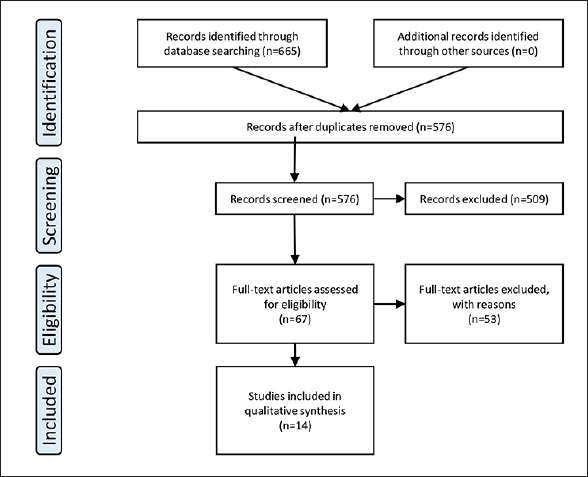
OBJECTIVES: The aim of this systematic review is to provide an overview of the efficacy of different exercise interventions to counter sarcopenia in older adults. This review will allow the Belgian Society of Gerontology and Geriatrics and other scientific societies to formulate specific exercise recommendations in their Clinical Guidelines for Sarcopenia. DESIGN: We used the method of a systematic umbrella-review. Based on the level of evidence, we formulated specific recommendations for clinical practice. METHODS: Two databases (Pubmed and Web Of Science) were searched systematically and methodological quality of the reviews was assessed. Extracted data was than mapped to an exercise category and an overall synthesis (bottom line statements) was formulated for each of these exercise categories. Subsequently, we assigned a rating of the quality of the evidence supporting each bottom line statement. RESULTS: We identified 14 systematic reviews or meta-analyses, encompassing four exercise categories: resistance training, resistance training + nutritional supplementation, multimodal exercise programmes and bloodflow restriction training. Importantly, very few systematic reviews or meta-analyses clearly mentioned baseline sarcopenia status. There is high quality evidence for a positive and significant effect of resistance training on muscle mass, muscle strength, and physical performance. The added effect of nutritional supplementation for resistance training on muscle function appears limited. Blood flow restriction training is a novel training method that has a significant impact on muscle strength. CONCLUSION: Since sarcopenia is affecting all skeletal muscles in the body, we recommend training the large muscle groups in a total body approach. Although low-intensity resistance training (≤50% 1RM) is sufficient to induce strength gains, we recommend a high-intensity resistance training program (i.e. 80% 1RM) to obtain maximal strength gains. Multimodal exercises and blood flow restriction resistance training may be considered as well.
Overview
The claims and statistics of this paper haven’t been checked yet.
Free: it reads the open-access text and checks the first 5 claims that cite a source we can check. Create a free account to check every claim.
Integrity signals
Registry
Cites
Statistics
Figures
Verification
Claims the paper makes
The claims and statistics of this paper haven’t been checked yet.
Free: it reads the open-access text and checks the first 5 claims that cite a source we can check. Create a free account to check every claim.
Claims other papers make about this one
Each is checked against this paper’s own text: does it say what the citing paper says it does?
The source backs part of the claim, not all of it — or backs it for a different population, condition or comparison.
In the citing paper
“Compared with no exercise (control), RT significantly improved muscle strength, size (hypertrophy), power, endurance, contraction velocity, gait speed, balance, and multiple physical function outcomes.”
From American College of Sports Medicine Position Stand. Resistance Training Prescription for Muscle Function, Hypertrophy, and Physical Performance in Healthy Adults: An Overview of Reviews (2026) · cites this paper as [42]
Experimental — accuracy not yet measuredThe source backs part of the claim, not all of it — or backs it for a different population, condition or comparison.
In the citing paper
“Compared with CTRL, multicomponent function was impacted by standard RT (17,24,42,45,159), elastic band RT (60,61), and home-based RT (64).”
From American College of Sports Medicine Position Stand. Resistance Training Prescription for Muscle Function, Hypertrophy, and Physical Performance in Healthy Adults: An Overview of Reviews (2026) · cites this paper as [42]
Experimental — accuracy not yet measuredThe cited source says what the claim attributes to it.
In the citing paper
“Compared with CTRL, muscle hypertrophy was positively affected by standard RT (17,24,30,32,33,37,38,40,42–47,50,127), circuit RT (57,58), and elastic band RT (60,62).”
The cited source says what the claim attributes to it.
In the citing paper
“However, the same review also stated that a low certainty of evidence exists against using a combination of resistance training and nutritional supplementation, such as increased protein intake [30].”
From Effects of nutrition and exercise interventions on persons with sarcopenic obesity: an umbrella review of meta-analyses of randomised controlled trials (2023) · cites this paper as [30]
In the citing paper
“Additionally, an umbrella review conducted in 2019 provides high-quality evidence that resistance training in older adults with diagnosed sarcopenia significantly enhances muscle strength, mass and performance.”
From Effects of nutrition and exercise interventions on persons with sarcopenic obesity: an umbrella review of meta-analyses of randomised controlled trials (2023) · cites this paper as [30]
Self-check
Percentages, sums and reported differences re-computed from the paper’s own numbers.
The self-check needs the paper’s full text.
Citations
Cites
Preferred Reporting Items for Systematic Reviews and Meta-Analyses: the PRISMA statement
Moher, D., Liberati, A., Tetzlaff, J., Altman, D. G., & for the PRISMA Group (2009) · BMJ · doi:10.1136/bmj.b2535 · Cited by 83,823
Preferred Reporting Items for Systematic Reviews and Meta-Analyses: The PRISMA Statement
Moher, D., Liberati, A., Tetzlaff, J., Altman, D. G., & The PRISMA Group (2009) · PLoS Medicine · doi:10.1371/journal.pmed.1000097 · Cited by 64,042
Preferred reporting items for systematic reviews and meta-analyses: the PRISMA Statement.
(2009) · PubMed Central · Cited by 44,859
Liberati, A., Altman, D. G., Tetzlaff, J., Mulrow, C., Gøtzsche, P. C., Ioannidis, J. P. A., Clarke, M., Devereaux, P. J., Kleijnen, J., & Moher, D. (2009) · PLoS Medicine · doi:10.1371/journal.pmed.1000100 · Cited by 28,164
Rayyan-a web and mobile app for systematic reviews.
Ouzzani, M., Hammady, H., Fedorowicz, Z., & Elmagarmid, A. (2016) · Systematic Reviews · doi:10.1186/s13643-016-0384-4 · Cited by 26,092
Wang, G., Ma, R., Qiao, G., Wada, K., Aizawa, Y., & Satoh, T. (2015) · Integrative Medicine International · doi:10.1159/000368408 · Cited by 18,657
Liberati, A., Altman, D. G., Tetzlaff, J., Mulrow, C., Gotzsche, P. C., Ioannidis, J. P. A., Clarke, M., Devereaux, P. J., Kleijnen, J., & Moher, D. (2009) · BMJ · doi:10.1136/bmj.b2700 · Cited by 17,648
Sarcopenia: revised European consensus on definition and diagnosis
Cruz-Jentoft, A. J., Bahat, G., Bauer, J., Boirie, Y., Bruyère, O., Cederholm, T., Cooper, C., Landi, F., Rolland, Y., Sayer, A. A., et al. (2019) · Age and Ageing · doi:10.1093/ageing/afy169 · Cited by 13,818 · cited 2×
“The consequences of sarcopenia in older people are serious and life-changing: it has an impact on morbidity, disability, health care costs and mortality (3, 5).”
Self-citationSarcopenia: European consensus on definition and diagnosis
Cruz-Jentoft, A. J., Baeyens, J. P., Bauer, J. M., Boirie, Y., Cederholm, T., Landi, F., Martin, F. C., Michel, J.-P., Rolland, Y., Schneider, S. M., et al. (2010) · Age and Ageing · doi:10.1093/ageing/afq034 · Cited by 11,601
Cochrane Handbook for Systematic Reviews of Interventions Version 5.0.1. The Cochrane Collaboration
Higgins, J. P. T., Green, S. R., & Higgins, J. P. T. (2008) · Cited by 7,247
Development of AMSTAR: A measurement tool to assess the methodological quality of systematic reviews
Shea, B. J., Grimshaw, J. M., Wells, G. A., Boers, M., Andersson, N., Hamel, C., Porter, A. C., Tugwell, P., Moher, D., & Bouter, L. M. (2007) · BMC Medical Research Methodology · doi:10.1186/1471-2288-7-10 · Cited by 4,374
Sarcopenia in Asia: Consensus Report of the Asian Working Group for Sarcopenia
Chen, L.-K., Liu, L.-K., Woo, J., Assantachai, P., Auyeung, T.-W., Bahyah, K. S., Chou, M.-Y., Chen, L.-Y., Hsu, P.-S., Krairit, O., et al. (2014) · Journal of the American Medical Directors Association · doi:10.1016/j.jamda.2013.11.025 · Cited by 4,051
Sarcopenia: revised European consensus on definition and diagnosis
Cruz-Jentoft, A. J., Bahat, G., Bauer, J., Boirie, Y., Bruyère, O., Cederholm, T., Cooper, C., Landi, F., Rolland, Y., Sayer, A. A., et al. (2019) · Age and Ageing · doi:10.1093/ageing/afz046 · Cited by 3,803
Self-citationFielding, R. A., Vellas, B., Evans, W. J., Bhasin, S., Morley, J. E., Newman, A. B., Abellan van Kan, G., Andrieu, S., Bauer, J., Breuille, D., et al. (2011) · Journal of the American Medical Directors Association · doi:10.1016/j.jamda.2011.01.003 · Cited by 3,256
Studenski, S. A., Peters, K. W., Alley, D. E., Cawthon, P. M., McLean, R. R., Harris, T. B., Ferrucci, L., Guralnik, J. M., Fragala, M. S., Kenny, A. M., et al. (2014) · The Journals of Gerontology: Series A · doi:10.1093/gerona/glu010 · Cited by 2,545
Sarcopenia: origins and clinical relevance
Rosenberg, I. H. (1997) · The Journal of Nutrition · doi:10.1093/jn/127.5.990s · Cited by 2,399
Dent, E., Morley, J. E., Cruz-Jentoft, A. J., Arai, H., Kritchevsky, S. B., Guralnik, J., Bauer, J. M., Pahor, M., Clark, B. C., Cesari, M., et al. (2018) · The Journal of nutrition, health and aging · doi:10.1007/s12603-018-1139-9 · Cited by 1,130 · cited 2×
“The consequences of sarcopenia in older people are serious and life-changing: it has an impact on morbidity, disability, health care costs and mortality (3, 5).”
Self-citationWelcome to the ICD‐10 code for sarcopenia
Anker, S. D., Morley, J. E., & von Haehling, S. (2016) · Journal of Cachexia, Sarcopenia and Muscle · doi:10.1002/jcsm.12147 · Cited by 983
Resistance exercise for muscular strength in older adults: a meta-analysis
Peterson, M. D., Rhea, M. R., Sen, A., & Gordon, P. M. (2010) · Ageing Research Reviews · doi:10.1016/j.arr.2010.03.004 · Cited by 808
Sarcopenia: origins and clinical relevance
Rosenberg, I. H. (2011) · Clinics in Geriatric Medicine · doi:10.1016/j.cger.2011.03.003 · Cited by 786 · cited 1×
“494 Received December 14, 2018 Accepted for publication January 2, 2019 Introduction Since the introduction of the term ‘sarcopenia’ by Rosenberg in 1988 to describe the age-related decline in muscle mass (1), this phenomenon has received increasing attention by researchers and clinicians.”
Hughes, L., Paton, B., Rosenblatt, B., Gissane, C., & Patterson, S. D. (2017) · British Journal of Sports Medicine · doi:10.1136/bjsports-2016-097071 · Cited by 766 · cited 1×
“[High quality of evidence] Blood flow restriction (BFR) strength training is a relatively novel training method, which has a significant positive impact on muscle strength (22).”
Nutrition and physical activity in the prevention and treatment of sarcopenia: systematic review.
the IOF-ESCEO Sarcopenia Working Group, Beaudart, C., Dawson, A., Shaw, S. C., Harvey, N. C., Kanis, J. A., Binkley, N., Reginster, J. Y., Chapurlat, R., Chan, D. C., et al. (2017) · Osteoporosis International · doi:10.1007/s00198-017-3980-9 · Cited by 602
Self-citationInfluence of Resistance Exercise on Lean Body Mass in Aging Adults: A Meta-Analysis
PETERSON, M. D., SEN, A., & GORDON, P. M. (2011) · Medicine & Science in Sports & Exercise · doi:10.1249/mss.0b013e3181eb6265 · Cited by 558
Vitamin D and vitamin D analogues for preventing fractures in post-menopausal women and older men
Avenell, A., Mak, J. C., & O'Connell, D. L. (2014) · Cochrane Database of Systematic Reviews · doi:10.1002/14651858.cd000227.pub4 · Cited by 482 · cited 1×
“…of Gerontology and Geriatrics (30), we recommend to monitor the serum calcium since a small but significant increase in gastrointestinal symptoms and renal disease was reported to be associated with vitamin D and calcium intake, probably related to the hypercalcaemia and nephrolithiasis (31).”
Yoshimura, Y., Wakabayashi, H., Yamada, M., Kim, H., Harada, A., & Arai, H. (2017) · Journal of the American Medical Directors Association · doi:10.1016/j.jamda.2017.03.019 · Cited by 365
An evidence-based comparison of operational criteria for the presence of sarcopenia
Dam, T.-T., Peters, K. W., Fragala, M., Cawthon, P. M., Harris, T. B., McLean, R., Shardell, M., Alley, D. E., Kenny, A., Ferrucci, L., et al. (2014) · The Journals of Gerontology Series A: Biological Sciences and Medical Sciences · doi:10.1093/gerona/glu013 · Cited by 363
Interventions for sarcopenia and muscle weakness in older people
Borst, S. E. (2004) · Age and Ageing · doi:10.1093/ageing/afh201 · Cited by 350
Csapo, R., & Alegre, L. M. (2016) · Scandinavian Journal of Medicine & Science in Sports · doi:10.1111/sms.12536 · Cited by 239 · cited 5×
“…a positive and significant effect of resistance training on muscle mass (five studies of which four meta-analyses (20, 21, 27-29)), muscle strength (seven studies of which five meta-analyses (19-21, 24, 26, 28, 29)) and physical performance (three studies of which one meta-analysis (25, 28, 29)).”
InfluentialPapa, E. V., Dong, X., & Hassan, M. (2017) · Clinical Interventions in Aging · doi:10.2147/cia.s104674 · Cited by 233 · cited 2×
“…a positive and significant effect of resistance training on muscle mass (five studies of which four meta-analyses (20, 21, 27-29)), muscle strength (seven studies of which five meta-analyses (19-21, 24, 26, 28, 29)) and physical performance (three studies of which one meta-analysis (25, 28, 29)).”
Estimation of sarcopenia prevalence using various assessment tools
Beaudart, C., Reginster, J., Slomian, J., Buckinx, F., Dardenne, N., Quabron, A., Slangen, C., Gillain, S., Pétermans, J., & Bruyère, O. (2014) · Experimental Gerontology · doi:10.1016/j.exger.2014.11.014 · Cited by 183
Self-citationTherapeutic Interventions for Frail Elderly Patients: Part I. Published Randomized Trials
Bibas, L., Levi, M., Bendayan, M., Mullie, L., Forman, D. E., & Afilalo, J. (2014) · Progress in Cardiovascular Diseases · doi:10.1016/j.pcad.2014.07.004 · Cited by 171
Antoniak, A. E., & Greig, C. A. (2017) · BMJ Open · doi:10.1136/bmjopen-2016-014619 · Cited by 160
the Sarcopenia Guidelines Development group of the Belgian Society of Gerontology and Geriatrics (BSGG), De Spiegeleer, A., Beckwée, D., Bautmans, I., & Petrovic, M. (2018) · Drugs & Aging · doi:10.1007/s40266-018-0566-y · Cited by 160 · cited 4×
“In addition to our findings and based on the work of the guideline development working group Pharmacology of the Belgian Society of Gerontology and Geriatrics (30), we recommend to monitor the serum calcium since a small but significant increase in gastrointestinal symptoms and renal disease was reported to be associa…”
InfluentialSelf-citationLiberman, K., Forti, L. N., Beyer, I., & Bautmans, I. (2017) · Current Opinion in Clinical Nutrition & Metabolic Care · doi:10.1097/mco.0000000000000335 · Cited by 133
Self-citationMartins, W. R., de Oliveira, R. J., Carvalho, R. S., Damasceno, V. D. O., Maldaner, V., & Silva, M. S. (2013) · Archives of Gerontology and Geriatrics · doi:10.1016/j.archger.2013.03.002 · Cited by 132
Prevalence of sarcopenia: the impact of different diagnostic cut-off limits.
Beaudart, C., Reginster, J.-Y., Slomian, J., Buckinx, F., Locquet, M., & Bruyère, O. (2014) · PubMed · Cited by 110
Self-citationTheodorakopoulos, C., Jones, J., Bannerman, E., & Greig, C. A. (2017) · Nutrition Research · doi:10.1016/j.nutres.2017.05.002 · Cited by 86 · cited 1×
“…a positive and significant effect of resistance training on muscle mass (five studies of which four meta-analyses (20, 21, 27-29)), muscle strength (seven studies of which five meta-analyses (19-21, 24, 26, 28, 29)) and physical performance (three studies of which one meta-analysis (25, 28, 29)).”
Buch, A., Kis, O., Carmeli, E., Keinan‐Boker, L., Berner, Y., Barer, Y., Shefer, G., Marcus, Y., & Stern, N. (2017) · Ageing Research Reviews · doi:10.1016/j.arr.2017.04.003 · Cited by 60
Austin, T. M., Richter, R. R., & Sebelski, C. A. (2014) · Physical Therapy · doi:10.2522/ptj.20130627 · Cited by 56 · cited 1×
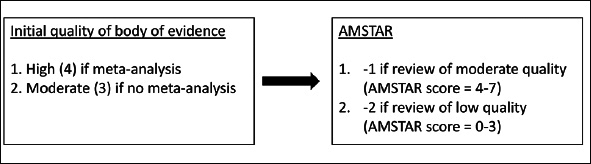
“Finally, we assigned a rating of the quality of the evidence (1 very low - 2 Low - 3 Moderate - 4 High) supporting each bottom line statement by using a method that is based on the Grading of Recommendations Assessment, Development and Evaluation (GRADE) approach for primary evidence (15).”
Identification and treatment of older persons with sarcopenia
Lauretani, F., Bautmans, I., Vita, F. D., Nardelli, A., Ceda, G. P., & Maggio, M. G. (2014) · The Aging Male · doi:10.3109/13685538.2014.958457 · Cited by 28
Self-citation
Research works printed but not linked: 13
- De Spiegeleer A Pharmacological Interventions to Improve Muscle Mass, Muscle Strength and Physical Performance in Older People: An Umbrella Review of Systematic Reviews and Meta-analyses Drugs Aging 35 8 2018 719 734 PubMed PMID: 30047068 10.1007/s40266-018-0566-y 30047068 · DOI · Paper page
- Liberman, K., et al., The effects of exercise on muscle strength, body composition, physical functioning and the inflammatory profile of older adults: a systematic review. Current Opinion in Clinical Nutrition and Metabolic Care. 20(1): p. 30–53. 27755209
- Buch, A., et al., Circuit resistance training is an effective means to enhance muscle strength in older and middle aged adults A systematic review and meta-analysis. Ageing Research Reviews. 37: p. 16–27. 28457933 · DOI
- Csapo, R. and L.M. Alegre, Effects of resistance training with moderate vs heavy loads on muscle mass and strength in the elderly: A meta-analysis. Scand J Med Sci Sports. 26(9): p. 995–1006. 26302881 · DOI · Paper page
- Theodorakopoulos, C., et al., Effectiveness of nutritional and exercise interventions to improve body composition and muscle strength or function in sarcopenic obese older adults: A systematic review. Nutrition Research. 43: p. 3–15. 28739051 · DOI · Paper page
- Yoshimura, Y., et al., Interventions for Treating Sarcopenia: A Systematic Review and Meta-Analysis of Randomized Controlled Studies. Journal of the American Medical Directors Association. 18(6). 28549707 · DOI · Paper page
- Borst SE Interventions for sarcopenia and muscle weakness in older people Age Ageing 33 6 2004 548 555 PubMed PMID: 15385272 10.1093/ageing/afh201 15385272 · DOI · Paper page
- Peterson MD Resistance exercise for muscular strength in older adults: a meta-analysis Ageing Res Rev 9 3 2010 226 237 PubMed PMID: 20385254, PMCID 2892859 10.1016/j.arr.2010.03.004 20385254 PMC2892859 · DOI · Paper page
- Papa EV Dong XY Hassan M Resistance training for activity limitations in older adults with skeletal muscle function deficits: a systematic review Clinical Interventions in Aging 12 2017 955 961 PubMed PMID: 28670114, PMCID 5479297 10.2147/CIA.S104674 28670114 PMC5479297 · DOI · Paper page
- Beaudart, C., et al., Nutrition and physical activity in the prevention and treatment of sarcopenia: systematic review. Osteoporosis International. 28(6): p. 1817–1833. PMC5457808 28251287 · DOI · Paper page
- Antoniak, A.E. and C.A. Greig, The effect of combined resistance exercise training and vitamin D-3 supplementation on musculoskeletal health and function in older adults: a systematic review and meta-analysis. Bmj Open. 7(7). PMC5541589 28729308 · DOI · Paper page
- Liberman K The effects of exercise on muscle strength, body composition, physical functioning and the inflammatory profile of older adults: a systematic review Curr Opin Clin Nutr Metab Care 20 1 2017 30 53 PubMed PMID: 27755209 10.1097/MCO.0000000000000335 27755209 · DOI · Paper page
- Hughes, L., et al., Blood flow restriction training in clinical musculoskeletal rehabilitation: a systematic review and meta-analysis. Br J Sports Med. 51(13): p. 1003–1011. 28259850 · DOI · Paper page
Cited by
Sarcopenia: A Contemporary Health Problem among Older Adult Populations
Papadopoulou, S. (2020) · Nutrients · doi:10.3390/nu12051293 · Cited by 588
“Additionally, they recommend the following training parameters: 1–4 sets of 8–15 repetitions during 2–3 training moments a week [96].”
BackgroundEl Assar, M., Álvarez-Bustos, A., Sosa, P., Angulo, J., & Rodríguez-Mañas, L. (2022) · International Journal of Molecular Sciences · doi:10.3390/ijms23158713 · Cited by 371
Xia, L., Zhao, R., Wan, Q., Wu, Y., Zhou, Y., Wang, Y., Cui, Y., Shen, X., & Wu, X. (2020) · Cancer Medicine · doi:10.1002/cam4.3428 · Cited by 321
Poor Oral Health as a Determinant of Malnutrition and Sarcopenia
Azzolino, D., Passarelli, P. C., De Angelis, P., Piccirillo, G. B., D’Addona, A., & Cesari, M. (2019) · Nutrients · doi:10.3390/nu11122898 · Cited by 289
“Furthermore, since sarcopenia is a systemic process [15,21], it has been recommended to perform a holistic training involving all muscle groups [15].”
BackgroundLu, L., Mao, L., Feng, Y., Ainsworth, B. E., Liu, Y., & Chen, N. (2021) · BMC Geriatrics · doi:10.1186/s12877-021-02642-8 · Cited by 252
“Two reviews showed that RT can improve muscle strength and physical performance [24, 25] and that MT can increase physical performance [26].”
Background
Metadata
- Authors
- Beckwée, D., Delaere, A., Aelbrecht, S., Baert, V., Beaudart, C., Bruyere, O., de Saint-Hubert, M., & Bautmans, I.
- Affiliations
- Vrije Universiteit Brussel (BE)
- University of Liège (BE)
- Corresponding author
- Bautmans, Ivan
- Venue
- The Journal of nutrition, health and aging
- Publisher
- Elsevier BV
- Published
- 2019-06
- Volume
- 23
- Issue
- 6
- Pages
- 494-502
- ISSN
- 1279-7707 (ISSN-L)
- PMC
- PMC12280365
- OpenAlex
- W2941075934
- Cited by
- 330
- References
- 39
- Citations by year
- 2026: 35 · 2025: 59 · 2024: 40 · 2023: 51 · 2022: 58 · 2021: 54 · 2020: 24 · 2019: 8
- FWCI
- 4.27
- Type
- journal article
- Language
- en
- Open access
- hybrid
- doi.org
- Licence
- cc-by-nc-nd
- www.elsevier.com/tdm/userlicense/1.0/ (tdm)
- www.elsevier.com/legal/tdmrep-license (tdm)
- creativecommons.org/licenses/by-nc-nd/4.0/ (vor, 1648 d)
- Locations
- The journal of nutrition health & aging (publishedVersion, cc-by-nc-nd)
- Europe PMC (PubMed Central) (publishedVersion, cc-by-nc-nd)
- PubMed Central (publishedVersion, cc-by-nc-nd)
- PubMed (publishedVersion)
- Ghent University Academic Bibliography (Ghent University) (submittedVersion, cc-by-nc-nd)
- Lirias (KU Leuven) (submittedVersion, cc-by-nc-nd)
- DIAL (Catholic University of Leuven) (submittedVersion, other-oa)
- ORBi (University of Liège) (submittedVersion)
- VUBIR (Vrije Universiteit Brussel) (submittedVersion)
- Topics
- Health Sciences › Medicine › Physiology (medical) › Nutrition and Health in Aging
- Health Sciences › Nursing › Nutrition and Dietetics › Muscle metabolism and nutrition
- Life Sciences › Biochemistry, Genetics and Molecular Biology › Molecular Biology › Muscle Physiology and Disorders
- Keywords
- sarcopenia, exercise intervention, older adults, resistance training, dietary supplementation, multimodal training, blood flow restriction training, muscle strength, muscle mass, physical performance, clinical guidelines
- MeSH terms
- Aged, Exercise Therapy, Humans, Exercise, Sarcopenia
About these checks
Registry, retraction, Cites and statistics results are computed, not judged, with one exception: a printed reference that no index lists is read once by a model before it counts as a citation error. Claims are extracted by a model and kept only when their quote appears verbatim in the text; each cited source is then checked, with a model’s help, for whether it says what the claim relies on. Those verdicts can be wrong — read the claim’s quote and the cited source before relying on one.
Statistics and arithmetic are recomputed, not judged.
Confidence bands are shown only for fields calibrated on our annotated test set. None is calibrated yet, so no band is shown.
What counts as a claim ›How we measure confidence ›How we check this ›
Are you an author, or do you see a problem with this page? Request a review
Data sources
Bibliographic data: Semantic Scholar, OpenAlex, Crossref.
Contains information from the Semantic Scholar Academic Graph Datasets, made available under the ODC Attribution License (ODC-BY 1.0).
Semantic Scholar’s data is described in: Kinney, R., et al. (2023). The Semantic Scholar Open Data Platform. arXiv:2301.10140.
