

A Consideration of the Psychological Aspects to Managing Patients with Painful Diabetic Neuropathy: An Insight into Pain Management Services at a Tertiary Centre in the UK
Open accessThe DOI matches its Crossref record; 58 of the 58 references it cites were found in a registry or an index; 12 of the 41 sources its claims cite were checked for support.
Abstract
Painful diabetic neuropathy (pDN) is characterised by both sensory and affective disturbances, suggesting a complex bidirectional relationship of neuropathic pain and mood disorders. Data on pDN indicate that neuropathic pain reduces quality of life, including mood and physical and social functioning. Depression and pain coping strategies such as catastrophising and social support predict pain severity. There is a significant and reciprocal relationship between depressed mood and increased pain. The key features of assessing people with neuropathic pain in relation to psychological aspects of their health are discussed in the context of management in a tertiary pain management centre (The Walton Centre, Liverpool, UK) including cognitive behavioural interventions amongst others to improve the quality of life in patients with pDN. We consider psychological issues as a factor influencing treatment and outcome in patients with pDN. © 2020, The Author(s).
Overview
CoChat Summary
## TL;DR
This paper is a narrative review and service description arguing that painful diabetic neuropathy (pDN) should be managed biopsychosocially, with psychological assessment and intervention integrated into care. It uses the Walton Centre Pain Management Programme (PMP) in Liverpool as an example and emphasizes that pain reduction is not the main goal; improving function, mood, and quality of life is.
## Key findings
- pDN is described as a debilitating condition associated with poor quality of life, functional impairment, and morbidity; the paper states that diabetic peripheral polyneuropathy affects 50% of patients with diabetes.
- The paper notes that current international guidelines expect only about 1 in 3 patients to achieve “good outcomes” from neuropathic pain agents, defined as greater than 50% pain relief.
- At The Walton Centre, the PMP service has existed for over 30 years and has seen approximately 4500 patients through multidisciplinary assessment clinics since 2014; about 5% of these patients have diabetic neuropathy.
- Psychological treatment within the PMP aims to improve quality of life and mood-related measures, using tools such as the BDI-II (21 items), PCS (13 items), and PSEQ (10 items); the paper also reports that PMPs can produce clinically significant improvement in pain and psychological measures by 19–55% post-treatment and 17–44% at 9-month follow-up in the residential INPUT Pain Management Unit cited.
## Methods
- Narrative review based largely on a lecture given at the 4th British Symposium on Diabetic Neuropathy (November 2019, University of Liverpool) and on the psychological services provided for patients in The Walton Centre NHS Foundation Trust PMP.
- Brief literature review using key search terms on pDN and psychological interventions/pain management programmes; the paper says it retrieved cross-sectional studies, cohort studies, RCTs, systematic reviews, and thematic reviews.
- No new human or animal studies were conducted by the authors; the paper is based on previously published studies and service information.
## Limitations
- The paper is a narrative review, so it does not present a new comparative study or primary outcome analysis of the Walton Centre service.
- The paper itself notes that the Walton Centre audit data in Table 2 are unpublished, which limits direct verification from the article text.
- Evident from the text: several claims and percentages are drawn from cited studies or service experience rather than from the authors’ own systematically collected original dataset, so the strength of evidence varies across points.
Model-written summary. Check it against the paper before relying on it.
Integrity signals
Registry
Cites
Statistics
Figures
Verification
Claims the paper makes
9 Valid · 3 Not valid · 19 Not checked · 10 Own results and interpretations
The cited sources support only part of this claim — read each source’s verdict below.
In the paper
“and is an established risk factor for poorer quality of life, and sleep, and symptoms of depression and anxiety [6].”
§ A Consideration of the Psychological Aspects to Managing Patients with Painful Diabetic Neuropathy: An Insight into Pain Management Services at a Tertiary Centre in the UK > Introduction
What the sources say
- Partly supportedcites [6] Gylfadottir SS Christensen DH Nicolaisen SK Diabetic polyneuropathy and pain, prevalence, and patient characteristics: a cross-sectional questionnaire study of 5,514 patients with recently diagnosed type 2 diabetes Pain 2020 161 3 574 583 31693539 PMC7017941 sourceExperimental — accuracy not yet measured
Section 3.6 reports that possible diabetic polyneuropathy was associated with lower quality of life, poorer sleep, and more symptoms of depression and anxiety in patients with recently diagnosed type 2 diabetes. But this cross-sectional study establishes associations, not that neuropathy is a risk factor; the introduction also says the impact of neuropathy independent of pain was uncertain. (LLM, conf=0.86)
boostedstates a cause- Asserted: passes — The authors put it forward as true.
- Checkable: passes — It can be checked against evidence.
- Load-bearing: passes — The paper’s conclusions depend on it.
- Based: passes — The paper gives a reason why it holds.
- Partly supported
The sources with a verdict support this claim; the rest weren’t checked yet, have no full text we could read, or their verdicts aren’t rated yet.
In the paper
“An early systematic review in 1999 [28], which was subsequently updated in 2012 as a Cochrane review [29], concluded that Cognitive Behavioral Therapy (CBT) (on which PMPs are based) is an effective intervention in the armoury of the management of chronic pain.”
§ A Consideration of the Psychological Aspects to Managing Patients with Painful Diabetic Neuropathy: An Insight into Pain Management Services at a Tertiary Centre in the UK > Results > The Walton Centre PMP Assessment in Clinic
What the sources say
- Not checked — no full text of the sourcecites [28] Morley S Eccleston C Williams A Systematic review and meta-analysis of randomized controlled trials of cognitive behaviour therapy and behaviour therapy for chronic pain in adults, excluding headache Pain 1999 80 1 1 13 10204712 source
- Supportedcites [29] Williams AC, Eccleston C, Morley S. Psychological therapies for the management of chronic pain (excluding headache) in adults. Cochrane Database Syst Rev. 2012;11(11):Cd007407. PMC6483325 23152245 source
The Authors’ Conclusions (page unavailable) explicitly say CBT is effective for chronic pain when delivered by experienced or appropriately trained staff. The Summary of results reports benefits that vary by outcome and comparator. The paper also cites a CBT-informed pain management programme, consistent with the parenthetical description of PMPs. (LLM, conf=0.92)
plainstates a cause- Asserted: passes — The authors put it forward as true.
- Checkable: passes — It can be checked against evidence.
- Load-bearing: passes — The paper’s conclusions depend on it.
- Based: passes — The paper gives a reason why it holds.
Every source the paper cites for this claim was checked and supports it.
In the paper
“A recent study of 50 individuals with pDN based in Iran showed improved pain acceptance following intervention after 3 months [41].”
§ A Consideration of the Psychological Aspects to Managing Patients with Painful Diabetic Neuropathy: An Insight into Pain Management Services at a Tertiary Centre in the UK > Results > Psychological Treatments
What the sources say
- Supportedcites [41] Taheri AA, Foroughi AA, Mohammadian Y, et al. The effectiveness of acceptance and commitment therapy on pain acceptance and pain perception in patients with painful diabetic neuropathy: a randomized controlled trial. Diabetes Ther. 2020;11(8):1695–1708. PMC7376796 32533548 source
Methods > Randomization reports 50 participants assigned to intervention and control groups, with pain acceptance measured again at a three-month follow-up. Methods > Participants locates the study in Kermanshah, Iran. Results > Table 2 shows higher pain-acceptance scores in the intervention group at follow-up than at baseline and in the control group. (LLM, conf=0.91)
plainstates a causen = 50- Asserted: passes — The authors put it forward as true.
- Checkable: passes — It can be checked against evidence.
- Load-bearing: unclear — It is unclear whether the paper’s conclusions depend on it.
- Based: passes — The paper gives a reason why it holds.
- Supported
In the paper
“Additionally, people with moderate-to-severe depressive symptoms are more likely to develop pain [18].”
§ A Consideration of the Psychological Aspects to Managing Patients with Painful Diabetic Neuropathy: An Insight into Pain Management Services at a Tertiary Centre in the UK > Results > Psychosocial Impact in Diabetic Neuropathy There is a notable evidence base that discusses the interference on physical and psychological functioning of neuropathic pain in the context and out of the context of diabetes [12, 13]. Indeed, mental comorbidity and sleep disorders are factors associated with pDN and greater pain intensity, more diabetes complications and lower quality of life [14]. It is not uncommon to assess patients in a tertiary centre and discover comorbid psychological distress. Previous studies have highlighted the magnitude of psychological burden in this population [12, 13]. Vileikyte et al. demonstrated that diabetic neuropathy (n = 338) is a risk factor for depression due to pDN with increased pain, unsteadiness and restrictions in activities of daily living significantly predicting poorer outcomes on the Hospital Anxiety and Depression subscale (HADS-D) over 18 months [15]. Both depression and anxiety are closely related to pain and pain intensity [16, 17]. Additionally, people with moderate-to-severe depressive symptoms are more likely to develop pain [18]. Indeed, Collins et al. suggested that anxiety disorders (32%) were more prevalent than depression (22%) in diabetes [19] which is replicated by other studies in pDN that found anxiety disorders to be as prevalent as depression [20]. The intensity of pain experienced in pDN directly impacts function and increasing intensity of pDN is associated with increased anxiety and depression. Clearly, there is a complex bidirectional relationship of anxiety/depression and pDN [20]. As clinical psychologists within the pain management service we conceptualise pain as a causative factor in many mood-related difficulties. Often these factors do not work in a linear fashion, and how we cope with pain can be affected by pre-existing psychological vulnerabilities which forms a part of the assessment process. Primary depressive or anxiety disorder should be treated in the first instance before embarking on psychological interventions for pain; we refer individuals on to the relevant mental health services once the primary issues have been managed.
What the sources say
- Not checked — no full text of the sourcecites [18] Von Korff M Le Resche L Dworkin SF First onset of common pain symptoms: a prospective study of depression as a risk factor Pain 1993 55 2 251 258 8309712 source
hedgedstates an association- Asserted: passes — The authors put it forward as true.
- Checkable: passes — It can be checked against evidence.
- Load-bearing: unclear — It is unclear whether the paper’s conclusions depend on it.
- Based: passes — The paper gives a reason why it holds.
In the paper
“in a database analysis of approximately 4300 people with diabetes, patients who were adherent to pDN medications were more adherent to oral antidiabetic medications [36].”
§ A Consideration of the Psychological Aspects to Managing Patients with Painful Diabetic Neuropathy: An Insight into Pain Management Services at a Tertiary Centre in the UK > Results > Psychological Treatments
What the sources say
- Not checked — no full text of the sourcecites [36] Oladapo AO Barner JC Rascati KL Strassels SA A retrospective database analysis of neuropathic pain and oral antidiabetic medication use and adherence among Texas adults with type 2 diabetes enrolled in Medicaid Clin Ther 2012 34 3 605 613 22386828 source
plainstates an associationn = 4,300- Asserted: passes — The authors put it forward as true.
- Checkable: passes — It can be checked against evidence.
- Load-bearing: unclear — It is unclear whether the paper’s conclusions depend on it.
- Based: passes — The paper gives a reason why it holds.
15 more claims
Create a free account to see all 41 claims and to verify the 2 references still open.
- Probably not a substantial claim. 12
- It may state two separate claims as one. 14
Citations
Cites
A Brief Measure for Assessing Generalized Anxiety Disorder: The GAD-7
Spitzer, R. L., Kroenke, K., Williams, J. B. W., & Löwe, B. (2006) · Archives of Internal Medicine · doi:10.1001/archinte.166.10.1092 · Cited by 31,765 · cited 1×
“In addition to the measures stated above, a number of tools have been utilised and validated to screen depression (PHQ-9 [50, 51], HADS [52, 53]) and anxiety (HADS [52], Generalised Anxiety Disorder 7-item scale (GAD-7) [54, 55]) in diabetes.”
MethodThe Pain Catastrophizing Scale: Development and validation.
Sullivan, M. J. L., Bishop, S. R., & Pivik, J. (1995) · Psychological Assessment · doi:10.1037//1040-3590.7.4.524 · Cited by 8,227 · cited 1×
“Pain Catastrophising Scale (PCS) is a 13-item self-report measure designed to assess catastrophic thoughts or feelings accompanying the experience of pain [47].”
BackgroundLöwe, B., Decker, O., Müller, S., Brähler, E., Schellberg, D., Herzog, W., & Herzberg, P. Y. (2008) · Medical Care · doi:10.1097/mlr.0b013e318160d093 · Cited by 4,527 · cited 1×
“In addition to the measures stated above, a number of tools have been utilised and validated to screen depression (PHQ-9 [50, 51], HADS [52, 53]) and anxiety (HADS [52], Generalised Anxiety Disorder 7-item scale (GAD-7) [54, 55]) in diabetes.”
MethodCore outcome measures for chronic pain clinical trials: IMMPACT recommendations
Dworkin, R. H., Turk, D. C., Farrar, J. T., Haythornthwaite, J. A., Jensen, M. P., Katz, N. P., Kerns, R. D., Stucki, G., Allen, R. R., Bellamy, N., et al. (2005) · Pain · doi:10.1016/j.pain.2004.09.012 · Cited by 3,732 · cited 2×
“but improvement in quality of life and moodrelated measures [32]; some measures included”
BackgroundCore outcome domains for chronic pain clinical trials: IMMPACT recommendations
Turk, D. C., Dworkin, R. H., Allen, R. R., Bellamy, N., Brandenburg, N., Carr, D. B., Cleeland, C., Dionne, R., Farrar, J. T., Galer, B. S., et al. (2003) · Pain · doi:10.1016/j.pain.2003.08.001 · Cited by 3,510
The pain self-efficacy questionnaire: Taking pain into account
Nicholas, M. K. (2007) · European Journal of Pain · doi:10.1016/j.ejpain.2005.12.008 · Cited by 1,656 · cited 1×
“Pain Self-Efficacy Questionnaire (PSEQ) is a 10-item questionnaire, developed to assess the confidence people with ongoing pain have in performing activities while in pain [48].”
BackgroundPsychological therapies for the management of chronic pain (excluding headache) in adults
Williams, A. C. D. C., Eccleston, C., & Morley, S. (2012) · Cochrane Database of Systematic Reviews · doi:10.1002/14651858.cd007407.pub3 · Cited by 1,634
Morley, S., Eccleston, C., & Williams, A. (1999) · Pain · doi:10.1016/s0304-3959(98)00255-3 · Cited by 1,597 · cited 1×
“An early systematic review in 1999 [28], which was subsequently updated in 2012”
BackgroundYoung, M. J., Boulton, A. J. M., Macleod, A. F., Williams, D. R. R., & Sonksen, P. H. (1993) · Diabetologia · doi:10.1007/bf00400697 · Cited by 1,502
Dyck, P. J., Kratz, K. M., Karnes, J. L., Litchy, W. J., Klein, R., Pach, J. M., Wilson, D. M., O'Brien, P. C., & Melton, L. J. (1993) · Neurology · doi:10.1212/wnl.43.4.817 · Cited by 1,482
Chronic pain-associated depression: Antecedent or consequence of chronic pain? A review
Fishbain, D. A., Cutler, R., Rosomoff, H. L., & Rosomoff, R. S. (1997) · The Clinical Journal of Pain · doi:10.1097/00002508-199706000-00006 · Cited by 1,074 · cited 1×
“Both depression and anxiety are closely related to pain and pain intensity [16, 17].”
BackgroundMcWilliams, L. A., Cox, B. J., & Enns, M. W. (2003) · Pain · doi:10.1016/s0304-3959(03)00301-4 · Cited by 951 · cited 1×
“Both depression and anxiety are closely related to pain and pain intensity [16, 17].”
BackgroundMultidisciplinary rehabilitation for chronic low back pain: systematic review
Guzmán, J., Esmail, R., Karjalainen, K., Malmivaara, A., Irvin, E., & Bombardier, C. (2001) · BMJ · doi:10.1136/bmj.322.7301.1511 · Cited by 941 · cited 1×
“The reduction or relief of pain is not a primary aim of treatment, although improvements in pain are often reported [22, 23].”
BackgroundBoulton, A. J. M., Malik, R. A., Arezzo, J. C., & Sosenko, J. M. (2004) · Diabetes Care · doi:10.2337/diacare.27.6.1458 · Cited by 913 · cited 1×
“pDN is a debilitating feature of diabetic neuropathy which results in poor quality of life, functional impairment and morbidity [9].”
BackgroundAbbott, C. A., Malik, R. A., van Ross, E. R. E., Kulkarni, J., & Boulton, A. J. M. (2011) · Diabetes Care · doi:10.2337/dc11-1108 · Cited by 868
Loeser, J. D., & Melzack, R. (1999) · The Lancet · doi:10.1016/s0140-6736(99)01311-2 · Cited by 701 · cited 1×
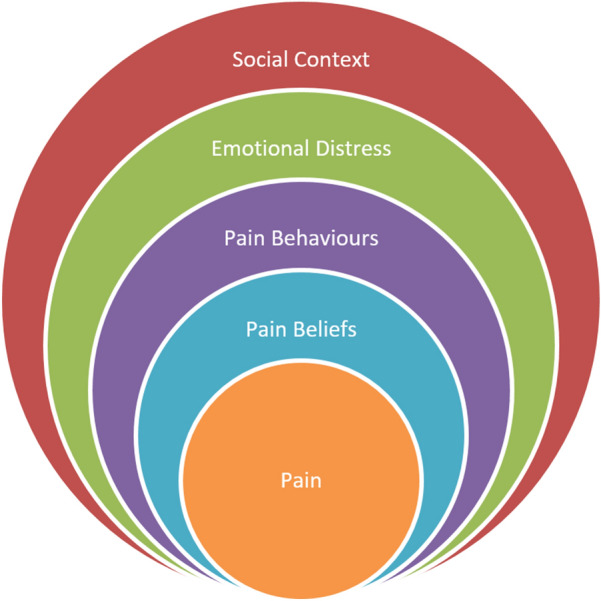
“Figure 1 and Table 1 highlight the key domains and areas for assessment in patients with persistent pain within the PMP service [24].”
BackgroundAcceptance and commitment therapy and mindfulness for chronic pain: Model, process, and progress.
McCracken, L. M., & Vowles, K. E. (2014) · American Psychologist · doi:10.1037/a0035623 · Cited by 627
Gore, M., Brandenburg, N. A., Dukes, E., Hoffman, D. L., Tai, K.-S., & Stacey, B. (2005) · Journal of Pain and Symptom Management · doi:10.1016/j.jpainsymman.2005.04.009 · Cited by 525 · cited 2×
“suggested that anxiety disorders (32%) were more prevalent than depression (22%) in diabetes [19] which is replicated by other studies in pDN that found anxiety disorders to be as prevalent as depression [20].”
BackgroundResultDepression and Advanced Complications of Diabetes
Lin, E. H. B., Rutter, C. M., Katon, W., Heckbert, S. R., Ciechanowski, P., Oliver, M. M., Ludman, E. J., Young, B. A., Williams, L. H., McCulloch, D. K., et al. (2010) · Diabetes Care · doi:10.2337/dc09-1068 · Cited by 519
Diabetic Peripheral Neuropathy: Epidemiology, Diagnosis, and Pharmacotherapy
Iqbal, Z., Azmi, S., Yadav, R., Ferdousi, M., Kumar, M., Cuthbertson, D. J., Lim, J., Malik, R. A., & Alam, U. (2018) · Clinical Therapeutics · doi:10.1016/j.clinthera.2018.04.001 · Cited by 487 · cited 1×
“Patients should be routinely counselled about the effectiveness of neuropathic pain agents in that only about one in three people will achieve ‘good outcomes’ [11].”
BackgroundSelf-citationAnxiety and depression symptoms in patients with diabetes
Collins, M. M., Corcoran, P., & Perry, I. J. (2009) · Diabetic Medicine · doi:10.1111/j.1464-5491.2008.02648.x · Cited by 465 · cited 1×
“suggested that anxiety disorders (32%) were more prevalent than depression (22%) in diabetes [19] which is replicated by other studies in pDN that found anxiety disorders to be as prevalent as depression [20].”
Resultvan Tulder, M. W., Ostelo, R., Vlaeyen, J. W. S., Linton, S. J., Morley, S. J., & Assendelft, W. J. J. (2001) · Spine · doi:10.1097/00007632-200102010-00012 · Cited by 456
Self-Efficacy and Chronic Pain Outcomes: A Meta-Analytic Review
Jackson, T., Wang, Y., Wang, Y., & Fan, H. (2014) · The Journal of Pain · doi:10.1016/j.jpain.2014.05.002 · Cited by 411 · cited 1×
“In chronic pain, it relates to self-efficacy, a feeling of being effective in managing symptoms and pain intensity [26].”
BackgroundThe Hospital Anxiety and Depression Scale: A diagnostic meta-analysis of case-finding ability
Brennan, C., Worrall-Davies, A., McMillan, D., Gilbody, S., & House, A. (2010) · Journal of Psychosomatic Research · doi:10.1016/j.jpsychores.2010.04.006 · Cited by 374 · cited 2×
“Vileikyte et al. demonstrated that diabetic neuropathy (n = 338) is a risk factor for depression due to pDN with increased pain, unsteadiness and restrictions in activities of daily living significantly predicting poorer outcomes on the Hospital Anxiety and Depression subscale (HADS-D) over 18 months [15].”
MethodClinical characteristics and economic costs of patients with painful neuropathic disorders
Berger, A., Dukes, E. M., & Oster, G. (2004) · The Journal of Pain · doi:10.1016/j.jpain.2003.12.004 · Cited by 351 · cited 3×
“We consider psychological issues as a factor influencing treatment and outcome in patients with pDN. Keywords: Acceptance and commitment therapy; Anxiety; Cognitive behavioural therapy; Depression; Painful diabetic neuropathy; Pain management programme H. Twiddy (&) B. Frank Department of Pain Medicine, The Walton Cen…”
BackgroundInfluentialFirst onset of common pain symptoms: a prospective study of depression as a risk factor
Von Korff, M., Resche, L. L., & Dworkin, S. F. (1993) · Pain · doi:10.1016/0304-3959(93)90154-h · Cited by 334
Peripheral neuropathic pain—a multidimensional burden for patients
Meyer‐Rosberg, K., Kvarnström, A., Kinnman, E., Gordh, T., Nordfors, L., & Kristofferson, A. (2001) · European Journal of Pain · doi:10.1053/eujp.2001.0259 · Cited by 247 · cited 2×
“Previous studies have highlighted the magnitude of psychological burden in this population [12, 13].”
BackgroundPrevalence of symptoms of depression and anxiety in a diabetes clinic population
Lloyd, C. E., Dyer, P. H., & Barnett, A. H. (2000) · Diabetic Medicine · doi:10.1046/j.1464-5491.2000.00260.x · Cited by 244 · cited 2×
“Vileikyte et al. demonstrated that diabetic neuropathy (n = 338) is a risk factor for depression due to pDN with increased pain, unsteadiness and restrictions in activities of daily living significantly predicting poorer outcomes on the Hospital Anxiety and Depression subscale (HADS-D) over 18 months [15].”
Methodvan Tulder, M. W., Ostelo, R., Vlaeyen, J. W. S., Linton, S. J., Morley÷, S. J., & Assendelft, W. J. J. (2000) · Spine · doi:10.1097/00007632-200010150-00024 · Cited by 204 · cited 1×
“The reduction or relief of pain is not a primary aim of treatment, although improvements in pain are often reported [22, 23].”
Backgroundvan Steenbergen-Weijenburg, K. M., de Vroege, L., Ploeger, R. R., Brals, J. W., Vloedbeld, M. G., Veneman, T. F., Hakkaart-van Roijen, L., Rutten, F. F., Beekman, A. T., & van der Feltz-Cornelis, C. M. (2010) · BMC Health Services Research · doi:10.1186/1472-6963-10-235 · Cited by 200 · cited 1×
“In addition to the measures stated above, a number of tools have been utilised and validated to screen depression (PHQ-9 [50, 51], HADS [52, 53]) and anxiety (HADS [52], Generalised Anxiety Disorder 7-item scale (GAD-7) [54, 55]) in diabetes.”
MethodCalles-Escandón, J., Lovato, L. C., Simons-Morton, D. G., Kendall, D. M., Pop-Busui, R., Cohen, R. M., Bonds, D. E., Fonseca, V. A., Ismail-Beigi, F., Banerji, M. A., et al. (2010) · Diabetes Care · doi:10.2337/dc09-1471 · Cited by 160
Gylfadottir, S. S., Christensen, D. H., Nicolaisen, S. K., Andersen, H., Callaghan, B. C., Itani, M., Khan, K. S., Kristensen, A. G., Nielsen, J. S., Sindrup, S. H., et al. (2020) · Pain · doi:10.1097/j.pain.0000000000001744 · Cited by 151 · cited 1×
“Diabetic peripheral polyneuropathy (also known as diabetic neuropathy) affects 50% of patients with diabetes [3–5] and is an established risk factor for poorer quality of life, and sleep, and symptoms of depression and anxiety [6].”
BackgroundVileikyte, L., Peyrot, M., Gonzalez, J. S., Rubin, R. R., Garrow, A. P., Stickings, D., Waterman, C., Ulbrecht, J. S., Cavanagh, P. R., & Boulton, A. J. M. (2009) · Diabetologia · doi:10.1007/s00125-009-1363-2 · Cited by 123 · cited 1×
“demonstrated that diabetic neuropathy (n = 338) is a risk factor for depression due to pDN with increased pain, unsteadiness and restrictions in activities of daily living significantly predicting poorer outcomes on the Hospital Anxiety and Depression subscale (HADS-D) over 18 months [15].”
BackgroundPhysical Therapy Modalities and Rehabilitation Techniques in the Management of Neuropathic Pain
Akyüz, G., & Kenis, O. (2013) · American Journal of Physical Medicine & Rehabilitation · doi:10.1097/phm.0000000000000037 · Cited by 122 · cited 1×
“Modifications to the introduction to the importance of physiotherapy, in terms of helping people to modulate movement in neuropathic pain conditions, can be vital [34].”
BackgrounddaCosta DiBonaventura, M., Cappelleri, J. C., & Joshi, A. V. (2011) · Pain Medicine · doi:10.1111/j.1526-4637.2010.01012.x · Cited by 112 · cited 1×
“There is a significant burden not only financially on health care but also for individuals in terms of the impact on their lifestyles and quality of life as well as theirmood [8].”
BackgroundEmerging Relationships between Exercise, Sensory Nerves, and Neuropathic Pain
Cooper, M. A., Kluding, P. M., & Wright, D. E. (2016) · Frontiers in Neuroscience · doi:10.3389/fnins.2016.00372 · Cited by 105 · cited 1×
“Musculoskeletal disease pain can be readily amenable to physical exercise, whereas neuropathic pain conditions including pDN are less so, although some benefit may still occur with exercise [33].”
BackgroundTreating pain in diabetic neuropathy: current and developmental drugs
Alam, U., Sloan, G., & Tesfaye, S. (2020) · Drugs · doi:10.1007/s40265-020-01259-2 · Cited by 104 · cited 1×
“Moderate improvements in pain are considered to be approximately 30–50% pain relief, whereas a good outcome is considered greater than 50% pain relief [10].”
BackgroundSelf-citationDaniel, H. C., Narewska, J., Serpell, M., Hoggart, B., Johnson, R., & Rice, A. S. C. (2008) · European Journal of Pain · doi:10.1016/j.ejpain.2007.11.006 · Cited by 101 · cited 1×
“At The Walton Centre the two main groups are run over either 16 days or 5 days over 6-week periods [40].”
BackgroundA Review of the Emotional Aspects of Neuropathic Pain: From Comorbidity to Co-Pathogenesis
Torta, R., Ieraci, V., & Zizzi, F. (2017) · Pain and Therapy · doi:10.1007/s40122-017-0088-z · Cited by 97 · cited 2×
“Previous studies have highlighted the magnitude of psychological burden in this population [12, 13].”
BackgroundArnarson, Þ. Ö., Ólason, D. Þ., Smári, J., & SigurÐsson, J. F. (2008) · Nordic Journal of Psychiatry · doi:10.1080/08039480801962681 · Cited by 91 · cited 1×
“These are namely: Beck’s Depression Inventory 2nd Edition (BDI-II) consists of 21 items to assess the intensity of depression in both clinical and non-clinical populations [46].”
MethodIdentification of depression in diabetes: the efficacy of PHQ-9 and HADS-D
Reddy, P., Philpot, B., Ford, D., & Dunbar, J. A. (2010) · British Journal of General Practice · doi:10.3399/bjgp10x502128 · Cited by 90 · cited 1×
“However, there is a word of caution: these instruments are not diagnostic but should be used for screening purposes [56] as elevated scores can be as a result of diabetes symptomatology.”
BackgroundDarnall, B. D., Carr, D. B., & Schatman, M. E. (2017) · Pain Medicine · doi:10.1093/pm/pnw166 · Cited by 90 · cited 1×
“However, there are some factors, from a Table 1 Key areas for biopsychosocial assessment [57]”
BackgroundDoes Treatment With Duloxetine for Neuropathic Pain Impact Glycemic Control?
Hardy, T., Sachson, R., Shen, S., Armbruster, M., & Boulton, A. J. M. (2007) · Diabetes Care · doi:10.2337/dc06-0947 · Cited by 79
van de Wetering, E. J., Lemmens, K. M. M., Nieboer, A. P., & Huijsman, R. (2010) · European Journal of Pain · doi:10.1016/j.ejpain.2009.11.010 · Cited by 73
Ishizawa, K., Babazono, T., Horiba, Y., Nakajima, J., Takasaki, K., Miura, J., Sakura, H., & Uchigata, Y. (2016) · Journal of Diabetes and its Complications · doi:10.1016/j.jdiacomp.2016.02.004 · Cited by 58 · cited 3×
“Similar findings were also noted in the DIACET study conducted in an over 65 years population in Japan (n = 4283) where a higher Patient Health Questionnaire-9 (PHQ-9) was associated with increased odds ratios for retinopathy, symptoms related to peripheral neuropathy and autonomic neuropathy, and end-stage renal dise…”
ResultInfluentialCommunity Psychology in Britain
Burton, M., Boyle, S., Psy, C. H. D. C., & Kagan, C. (2007) · International Community Psychology · doi:10.1007/978-0-387-49500-2_11 · Cited by 56 · cited 1×
“Adapted approaches such as the Brief CBT-CP are eminently feasible in a community setting; however, this will clearly require restructuring of services and community and/or ambulatory psychological input which are generally underdeveloped [45].”
MethodNaranjo, C., Ortega-Jiménez, P., del Reguero, L., Moratalla, G., & Failde, I. (2020) · Diabetes Research and Clinical Practice · doi:10.1016/j.diabres.2020.108236 · Cited by 55 · cited 1×
“Indeed, mental comorbidity and sleep disorders are factors associated with pDN and greater pain intensity, more diabetes complications and lower quality of life [14].”
BackgroundDepression and Advanced Complications of Diabetes: A prospective cohort study
Ballenger, J. C. (2011) · Yearbook of Psychiatry and Applied Mental Health · doi:10.1016/j.ypsy.2010.10.014 · Cited by 46
Beehler, G. P., Murphy, J. L., King, P. R., Dollar, K. M., Kearney, L. K., Haslam, A., Wade, M., & Goldstein, W. R. (2019) · The Clinical Journal of Pain · doi:10.1097/ajp.0000000000000747 · Cited by 39
The National Pain Audit for specialist pain services in England and Wales 2010–2014
Price, C., Williams, A. C. D. C., Smith, B. H., & Bottle, A. (2018) · British Journal of Pain · doi:10.1177/2049463718814277 · Cited by 32 · cited 3×
“The format of group-based PMPs follows the multidisciplinary guidelines set out in the British Pain Society guidelines.”
BackgroundInfluentialThe Efficacy of a Multidisciplinary Group Program for Patients with Refractory Chronic Pain
Inoue, M., Inoue, S., Ikemoto, T., Arai, Y.-C. P., Nakata, M., Miyazaki, A., Nishihara, M., Kawai, T., Hatakeyama, N., Yamaguchi, S., et al. (2014) · Pain Research and Management · doi:10.1155/2014/728063 · Cited by 29 · cited 1×
“Other studies have drawn similar conclusions in mixed pain groups [30, 31].”
ResultTaheri, A. A., Foroughi, A. A., Mohammadian, Y., Ahmadi, S. M., Heshmati, K., Hezarkhani, L. A., & Parvizifard, A. A. (2020) · Diabetes Therapy · doi:10.1007/s13300-020-00851-9 · Cited by 28 · cited 1×
“showed improved pain acceptance following intervention after 3 months [41].”
BackgroundOladapo, A. O., Barner, J. C., Rascati, K. L., & Strassels, S. A. (2012) · Clinical Therapeutics · doi:10.1016/j.clinthera.2012.02.007 · Cited by 24 · cited 1×
“For instance, in a database analysis of approximately 4300 people with diabetes, patients who were adherent to pDN medications were more adherent to oral antidiabetic medications [36].”
BackgroundLocus of Control Patterns in Headaches and Chronic Pain
Cano‐García, F. J., Franco, L. R., & López‐Jiménez, A. M. (2013) · Pain Research and Management · doi:10.1155/2013/424839 · Cited by 23 · cited 1×
“Psychologists working in chronic pain gather information regarding an individual’s locus of control [25]; how much does the individual feel that they can be an agent in bringing about change in their circumstances? This is broadly more relevant to diabetes in terms of treatment adherence and the ability and capability…”
BackgroundPai, Y.-W., Tang, C.-L., Lin, C.-H., Lin, S.-Y., Lee, I.-T., & Chang, M.-H. (2021) · Diabetes & Metabolism · doi:10.1016/j.diabet.2020.04.004 · Cited by 20 · cited 2×
“[37] showed that increased postprandial glycaemic exposure, as assessed by high glycated haemoglobin (HbA1c) and near-normal fasting plasma glucose levels, is associated with an increased risk of pDN in type 2 diabetes.”
BackgroundSmith, J. G., Knight, L., Stewart, A., Smith, E. L., & McCracken, L. M. (2016) · British Journal of Pain · doi:10.1177/2049463715601445 · Cited by 19 · cited 1×
“Other studies have drawn similar conclusions in mixed pain groups [30, 31].”
Result(2012) · Cited by 9
(2010) · PubMed
Research works printed but not linked: 1
- Jensen MP, Karoly P. Self-report scales and procedures for assessing pain in adults. Handbook of pain assessment, 2nd ed. New York, NY, US: Guilford Press; 2001. p. 15–34.
Cited by
Painful Diabetic Peripheral Neuropathy: Practical Guidance and Challenges for Clinical Management
Preston, F., Riley, D. R. J., Azmi, S., & Alam, U. (2023) · Diabetes Metabolic Syndrome and Obesity · doi:10.2147/dmso.s370050 · Cited by 73
Self-citationDeer, T. R., Hayek, S. M., Grider, J. S., Pope, J. E., Brogan, S. E., Gulati, A., Hagedorn, J. M., Strand, N. H., Hah, J. M., Yaksh, T. L., et al. (2024) · Neuromodulation Technology at the Neural Interface · doi:10.1016/j.neurom.2024.08.006 · Cited by 33
Bai, Y., Ma, J.-H., Yu, Y., & Wang, Z. (2022) · Pain Management Nursing · doi:10.1016/j.pmn.2022.05.005 · Cited by 30
Kaddech, N., Guelmami, N., Bonsaksen, T., Doggui, R., Beji, C., & Ati, J. E. (2022) · Healthcare · doi:10.3390/healthcare10050951 · Cited by 13
Pharmacologic and Nonpharmacologic Management of Neuropathic Pain
Feldman, A., & Weaver, J. (2024) · Seminars in Neurology · doi:10.1055/s-0044-1791770 · Cited by 9
“13 There is weak evidence that citalopram, paroxetine, and escitalopram have bene fi t in DPN. 14 Clinical pearl : For refractory pain, one may consider third-linemedicationsincludingcannabinoids; other ASMssuch as carbamazepine,oxcarbazepine,topiramate, and lamotrigine; and SSRIs such as citalopram, paroxetine, and es…”
Influential
Metadata
- Authors
- Twiddy, H., Frank, B., & Alam, U.
- Affiliations
- Walton Centre (GB)
- University of Liverpool (GB)
- Corresponding author
- Twiddy, Hannah
- Venue
- Diabetes Therapy
- Published
- 2020-12-26
- Volume
- 12
- Issue
- 2
- Pages
- 487-498
- ISSN
- 1869-6953 (ISSN-L)
- 1869-6961
- PMC
- PMC7846618
- OpenAlex
- W3118027502
- Cited by
- 15
- References
- 58
- Citations by year
- 2026: 2 · 2025: 1 · 2024: 5 · 2023: 2 · 2022: 4 · 2021: 1
- FWCI
- 0.22
- Type
- journal article
- Language
- en
- Open access
- gold
- doi.org
- Licence
- cc-by-nc
- creativecommons.org/licenses/by-nc/4.0 (tdm)
- creativecommons.org/licenses/by-nc/4.0 (vor)
- Locations
- Diabetes Therapy (publishedVersion, cc-by-nc)
- Europe PMC (PubMed Central) (publishedVersion, other-oa)
- PubMed Central (publishedVersion, cc-by-nc)
- PubMed (publishedVersion)
- Topics
- Health Sciences › Medicine › Physiology (medical) › Pain Mechanisms and Treatments
- Health Sciences › Medicine › Endocrinology, Diabetes and Metabolism › Diabetes Management and Education
- Health Sciences › Medicine › Anesthesiology and Pain Medicine › Pain Management and Treatment
- Keywords
- diabetic neuropathic pain, neuropathic pain, psychological factors in pain, depression, pain coping, catastrophizing, social support, quality of life, cognitive-behavioural intervention, pain management services, mood disorders
About these checks
Registry, retraction, Cites and statistics results are computed, not judged, with one exception: a printed reference that no index lists is read once by a model before it counts as a citation error. Claims are extracted by a model and kept only when their quote appears verbatim in the text; each cited source is then checked, with a model’s help, for whether it says what the claim relies on. Those verdicts can be wrong — read the claim’s quote and the cited source before relying on one.
The claim verdicts this report counts are experimental: their accuracy is not yet measured.
A language model drew the claims from the paper on 2026-10-11, under version 3 of the claim definition (model deepseek-v4.1-flash, prompt extract-v3).
A second model labelled each claim on 2026-10-11 (model jev-1.13-20260917, definition revision gold-guideline-v0.2).
Cited sources are checked with a language model’s help (gpt-6-sol).
Statistics and arithmetic are recomputed, not judged.
Confidence bands are shown only for fields calibrated on our annotated test set. None is calibrated yet, so no band is shown.
What counts as a claim ›How we measure confidence ›How we check this ›
Are you an author, or do you see a problem with this page? Request a review
Data sources
Bibliographic data: Semantic Scholar, OpenAlex, Crossref.
Contains information from the Semantic Scholar Academic Graph Datasets, made available under the ODC Attribution License (ODC-BY 1.0).
Semantic Scholar’s data is described in: Kinney, R., et al. (2023). The Semantic Scholar Open Data Platform. arXiv:2301.10140.
