

Agroecological principles and elements and their implications for transitioning to sustainable food systems. A review
Open accessThe DOI matches its Crossref record; 71 of the 71 references it cites were found in a registry or an index.
Abstract
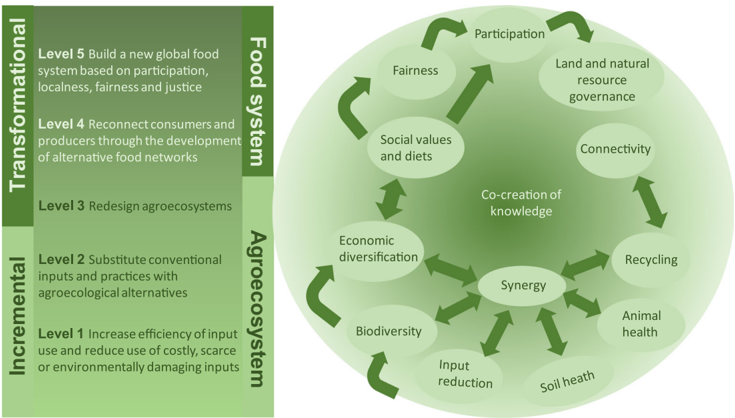
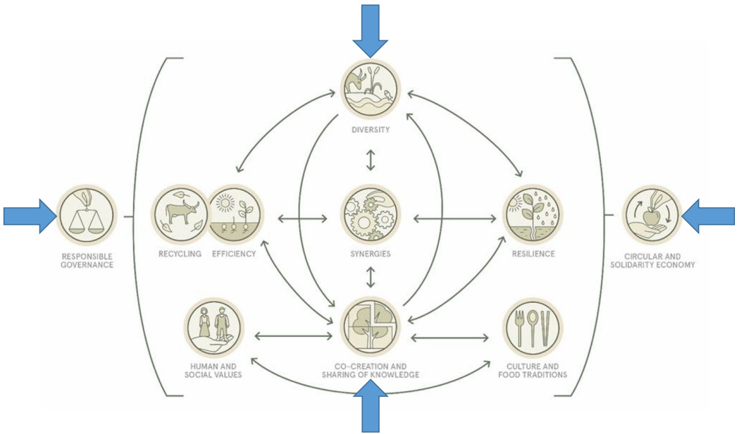
There is consensus that the global food system is not delivering good nutrition for all and is causing environmental degradation and loss of biodiversity, such that a profound transformation is needed to meet the challenges of persistent malnutrition and rural poverty, aggravated by the growing consequences of climate change. Agroecological approaches have gained prominence in scientific, agricultural and political discourse in recent years, suggesting pathways to transform agricultural and food systems that address these issues. Here we present an extensive literature review of concepts, definitions and principles of agroecology, and their historical evolution, considering the three manifestations of agroecology as a science, a set of practices and a social movement; and relate them to the recent dialogue establishing a set of ten iconic elements of agroecology that have emerged from a global multi-stakeholder consultation and synthesis process. Based on this, a consolidated list of principles is developed and discussed in the context of presenting transition pathways to more sustainable food systems. The major outcomes of this paper are as follows. (1) Definition of 13 consolidated agroecological principles: recycling; input reduction; soil health; animal health; biodiversity; synergy; economic diversification; co-creation of knowledge; social values and diets; fairness; connectivity; land and natural resource governance; participation. (2) Confirmation that these principles are well aligned and complementary to the 10 elements of agroecology developed by FAO but articulate requirements of soil and animal health more explicitly and distinguish between biodiversity and economic diversification. (3) Clarification that application of these generic principles can generate diverse pathways for incremental and transformational change towards more sustainable farming and food systems. (4) Identification of four key entry points associated with the elements: diversity; circular and solidarity economy; co-creation and sharing of knowledge; and, responsible governance to enable plausible pathways of transformative change towards sustainable agriculture and food systems.
Overview
The claims and statistics of this paper haven’t been checked yet.
Free: it reads the open-access text and checks the first 5 claims that cite a source we can check. Create a free account to check every claim.
Integrity signals
Registry
Cites
Statistics
Figures




Verification
Claims the paper makes
The claims and statistics of this paper haven’t been checked yet.
Free: it reads the open-access text and checks the first 5 claims that cite a source we can check. Create a free account to check every claim.
Claims other papers make about this one
Each is checked against this paper’s own text: does it say what the citing paper says it does?
The source backs part of the claim, not all of it — or backs it for a different population, condition or comparison.
In the citing paper
“the 13 principles of agroecology (HLPE, 2019) are closely aligned with the 10 elements and serve as a science-policy interface that facilitates debate, bridges diverse knowledge systems, and informs policymaking”
From Agroecology for sustainable development: evidence on multidimensional performance from a cross-country TAPE assessment in Africa (2025) · cites this paper as Wezel et al., 2020
Experimental — accuracy not yet measuredThe cited source says what the claim attributes to it.
In the citing paper
“According to the principles, agroecology concerns the direction of change in agricultural systems (Wezel et al. 2020).”
From Methodological challenges in assessing the viability of agroecological practices: lessons from a multi-case study in Africa (2025) · cites this paper as Wezel et al. 2020
The cited source says what the claim attributes to it.
In the citing paper
“They combine practices that can be related to one or various of the agroecological principles identified by Wezel et al. (2020) to respond to a diversity of constraints and challenges.”
From Methodological challenges in assessing the viability of agroecological practices: lessons from a multi-case study in Africa (2025) · cites this paper as Wezel et al. (2020)
The cited source says what the claim attributes to it.
In the citing paper
“In its conceptual and methodological evolution, agroecology has integrated a larger scope into its analysis, moving from the plot and farm to the landscape unit (Wezel etal., 2020).”
From Agroecological planning of productive systems with functional connectivity to the ecological landscape matrix: two Colombian case studies (2024) · cites this paper as Wezel et al., 2020
The cited source says what the claim attributes to it.
In the citing paper
“Agroecology is identified as an important solution to increase the sustainability of agricultural and food systems.”
From The socio-economic performance of agroecology. A review (2024) · cites this paper as Wezel et al. 2020
1 more claim about this paper
Create a free account to see every claim other papers make about this one.
Self-check
Percentages, sums and reported differences re-computed from the paper’s own numbers.
The self-check needs the paper’s full text.
Citations
Cites
Food and Agriculture Organization of the United Nations
(2022) · Permanent Missions to the United Nations · doi:10.18356/9789210018289c230 · Cited by 5,384
Colman (2022) · doi:10.1073/pnas · Cited by 4,370
Ontologies, socio-technical transitions (to sustainability), and the multi-level perspective
Geels, F. W. (2010) · Research Policy · doi:10.1016/j.respol.2010.01.022 · Cited by 1,718 · cited 4×
“Some transitions begin at a small scale, a ‘niche’ or protected space in which farmer cooperatives, social movements, businesses, local government or other groups experiment with and adapt alternative ways of doing things (Geels 2010; Hinrichs 2014).”
BackgroundMethodInfluentialSmith, A., Voß, J.-P., & Grin, J. (2010) · Research Policy · doi:10.1016/j.respol.2010.01.023 · Cited by 1,691 · cited 2×
“…multi-level perspective has been used, to consider how dynamic processes and interactions across scales can support whole-system transformative change (Geels 2010; Smith et al. 2010), but also what issues of power relations drive changes or establish ‘lock-ins’ (IPES-Food 2018; Leach et al. 2020).”
BackgroundMethodAgroecology as a science, a movement and a practice. A review
Wezel, A., Bellon, S., Doré, T., Francis, C., Vallod, D., & David, C. (2009) · Agronomy for Sustainable Development · doi:10.1051/agro/2009004 · Cited by 1,504
Self-citationAltieri, M. A., & Toledo, V. M. (2011) · Journal of Peasant Studies · doi:10.1080/03066150.2011.582947 · Cited by 1,279 · cited 2×
“eignty, local knowledge, social justice, local identity and culture, and indigenous rights for seeds and breeds (Altieri and Toledo 2011; Nyéléni 2015; Rosset et al. 2011) (Fig.”
BackgroundAgroecological practices for sustainable agriculture. A review
Wezel, A., Casagrande, M., Celette, F., Vian, J.-F., Ferrer, A., & Peigné, J. (2014) · Agronomy for Sustainable Development · doi:10.1007/s13593-013-0180-7 · Cited by 1,227 · cited 1×
“…beneficial biological interactions and synergies amongst the components of agroecosystems (Gliessman 1990), minimizing synthetic and toxic external inputs and using ecological processes and ecosystem services for the development and implementation of agricultural practices (Wezel et al. 2014) (Fig.”
BackgroundSelf-citationAgroecology: The Ecology of Sustainable Food Systems
Gliessman, S. R. (2007) · Andalas University Repository (Andalas University) · Cited by 1,061
Comparative Influences of Precipitation and River Stage on Groundwater Levels in Near-River Areas
Kim, I., Park, D., Kyung, D., Kim, G., Kim, S., & Lee, J. (2015) · Sustainability · doi:10.3390/su8010001 · Cited by 1,060
Global assessment of agricultural system redesign for sustainable intensification
Pretty, J., Benton, T. G., Bharucha, Z. P., Dicks, L. V., Flora, C. B., Godfray, H. C. J., Goulson, D., Hartley, S., Lampkin, N., Morris, C., et al. (2018) · Nature Sustainability · doi:10.1038/s41893-018-0114-0 · Cited by 1,022 · cited 1×
“This consensus acknowledges the need to address aspects that go well beyond a simple metric of productivity, embracing environmental and socially progressive outcomes (Caron et al. 2018; Pretty et al. 2018; Tittonell 2014).”
BackgroundAgroecology: The Ecology of Food Systems
Francis, C., Lieblein, G., Gliessman, S., Breland, T. A., Creamer, N., Harwood, R., Salomonsson, L., Helenius, J., Rickerl, D., Salvador, R., et al. (2003) · Journal of Sustainable Agriculture · doi:10.1300/j064v22n03_10 · Cited by 975 · cited 4×
“2009) and the application of the concept to whole agri-food systems from food production through to consumption and all that goes on in between (Francis et al. 2003).”
BackgroundMethodInfluentialAgroecology: The Science Of Sustainable Agriculture, Second Edition
Altieri, M. A. (1995) · Medical Entomology and Zoology · Cited by 904
Sharrock, S. L. (2016) · CGSPace A Repository of Agricultural Research Outputs (Consultative Group for International Agricultural Research) · Cited by 803
Change, I. P. O. C. (2022) · Cambridge University Press eBooks · doi:10.1017/9781009157988 · Cited by 798
The Politics of Social-Ecological Resilience and Sustainable Socio-Technical Transitions
Smith, A., & Stirling, A. (2010) · Ecology and Society · doi:10.5751/es-03218-150111 · Cited by 779
Ecological intensification of agriculture — sustainable by nature
Tittonell, P. (2014) · Current Opinion in Environmental Sustainability · doi:10.1016/j.cosust.2014.08.006 · Cited by 770 · cited 1×
“This consensus acknowledges the need to address aspects that go well beyond a simple metric of productivity, embracing environmental and socially progressive outcomes (Caron et al. 2018; Pretty et al. 2018; Tittonell 2014).”
BackgroundCultivating Food Justice: Race, Class, and Sustainability
(2011) · The MIT Press eBooks · doi:10.7551/mitpress/8922.001.0001 · Cited by 705
Altieri, M. A. (1995) · doi:10.3362/9781788532310 · Cited by 612
Reijntjes, C., Haverkort, B., & Waters‐Bayer, A. (1992) · Macmillan eBooks · Cited by 601
Jones, A. D., Shrinivas, A., & Bezner-Kerr, R. (2014) · Food Policy · doi:10.1016/j.foodpol.2014.02.001 · Cited by 596 · cited 1×
“Application of the social values and dietary principle (9) impact nutrition directly, supported by maintaining and enhancing biodiversity (5) on fields and farms (Bellon et al. 2016; Bezner Kerr et al. 2019b; Demeke et al. 2017; Jones et al. 2014; Lachat et al. 2018; Powell et al. 2015).”
BackgroundCultivating Food Justice: Race, Class, and Sustainability
Alkon, A. H., & Agyeman, J. (2011) · Project Muse (Johns Hopkins University) · Cited by 589
Transforming food systems with agroecology
Gliessman, S. (2016) · Agroecology and Sustainable Food Systems · doi:10.1080/21683565.2015.1130765 · Cited by 526 · cited 1×
“The transition pathway framework of Gliessman (2007, 2016) comprises five different levels (Fig.”
BackgroundTheories of practices: Agency, technology, and culture
Spaargaren, G. (2011) · Global Environmental Change · doi:10.1016/j.gloenvcha.2011.03.010 · Cited by 440 · cited 1×
“Food retail, consumption and production practices can be shifted over time through a dynamic interaction between innovations in food production, enterprises, social movement advocacy, policy and cultural change (Hinrichs 2014; Spaargaren 2011).”
BackgroundAgroecology as a Transdisciplinary, Participatory, and Action-Oriented Approach
Méndez, V. E., Bacon, C. M., & Cohen, R. (2013) · Agroecology and Sustainable Food Systems · doi:10.1080/10440046.2012.736926 · Cited by 438 · cited 2×
“(Méndez et al. 2013; Gliessman 2018) across ecological, agricultural, food, nutritional and social sciences.”
BackgroundBringing agroecology to scale: key drivers and emblematic cases
Mier y Terán Giménez Cacho, M., Giraldo, O. F., Aldasoro, M., Morales, H., Ferguson, B. G., Rosset, P., Khadse, A., & Campos, C. (2018) · Agroecology and Sustainable Food Systems · doi:10.1080/21683565.2018.1443313 · Cited by 413
Biodiversity can support a greener revolution in Africa
Snapp, S. S., Blackie, M. J., Gilbert, R. A., Bezner-Kerr, R., & Kanyama-Phiri, G. Y. (2010) · Proceedings of the National Academy of Sciences · doi:10.1073/pnas.1007199107 · Cited by 405 · cited 2×
“This is because less money is spent on buying inputs and so there is less reliance on credit, and therefore, potentially more resources to buy food (Hwang et al. 2016; Kangmennaang et al. 2017; Snapp et al. 2010) although potential trade-offs might exist, since depending on quantity and type of inputs, crop yields cou…”
BackgroundSelf-citationAgroecology: The Ecology of Sustainable Food Systems, Third Edition
Gliessman, S. R. (2014) · doi:10.1201/b17881 · Cited by 401
Improving diets with wild and cultivated biodiversity from across the landscape
Powell, B., Thilsted, S. H., Ickowitz, A., Termote, C., Sunderland, T., & Herforth, A. (2015) · Food Security · doi:10.1007/s12571-015-0466-5 · Cited by 382 · cited 1×
“Application of the social values and dietary principle (9) impact nutrition directly, supported by maintaining and enhancing biodiversity (5) on fields and farms (Bellon et al. 2016; Bezner Kerr et al. 2019b; Demeke et al. 2017; Jones et al. 2014; Lachat et al. 2018; Powell et al. 2015).”
BackgroundProspects from agroecology and industrial ecology for animal production in the 21st century
Dumont, B., Fortun-Lamothe, L., Jouven, M., Thomas, M., & Tichit, M. (2013) · Animal · doi:10.1017/s1751731112002418 · Cited by 369 · cited 2×
“…principles can be found in the scientific literature—Reijntjes et al. (1992), Altieri (1995), Altieri and Nicolls (2005), Stassart et al. (2012), Dumont et al. (2013), Nicholls et al. (2016)—that are summarised in Migliorini and Wezel et al. (2018), and more recently by CIDSE (2018), FAO…”
BackgroundRosset, P. M., Machín Sosa, B., Roque Jaime, A. M., & Ávila Lozano, D. R. (2011) · Journal of Peasant Studies · doi:10.1080/03066150.2010.538584 · Cited by 366 · cited 1×
“…supporting diverse forms of smallholder food production and family farming, farmers and rural communities, food sovereignty, local knowledge, social justice, local identity and culture, and indigenous rights for seeds and breeds (Altieri and Toledo 2011; Nyéléni 2015; Rosset et al. 2011) (Fig.”
BackgroundAgroecology: Researching the Ecological Basis for Sustainable Agriculture
Gliessman, S. R. (1990) · Ecological Studies · doi:10.1007/978-1-4612-3252-0_1 · Cited by 359 · cited 1×
“…systems by harnessing natural processes, creating beneficial biological interactions and synergies amongst the components of agroecosystems (Gliessman 1990), minimizing synthetic and toxic external inputs and using ecological processes and ecosystem services for the development and…”
BackgroundFood systems for sustainable development: proposals for a profound four-part transformation
Caron, P., Ferrero y de Loma-Osorio, G., Nabarro, D., Hainzelin, E., Guillou, M., Andersen, I., Arnold, T., Astralaga, M., Beukeboom, M., Bickersteth, S., et al. (2018) · Agronomy for Sustainable Development · doi:10.1007/s13593-018-0519-1 · Cited by 343
Agroecology as a territory in dispute: between institutionality and social movements
Giraldo, O. F., & Rosset, P. M. (2018) · The Journal of Peasant Studies · doi:10.1080/03066150.2017.1353496 · Cited by 341 · cited 2×
“national members such as the Brazilian Landless Workers Movement (MST), are important actors contributing to debates around transition to sustainable food systems, with their varyingly political, civil societies’ and peasants’ views on agroecology as a means to distinguish their practices and vision for food system tr…”
BackgroundA quantitative and qualitative historical analysis of the scientific discipline of agroecology
Wezel, A., & Soldat, V. (2009) · International Journal of Agricultural Sustainability · doi:10.3763/ijas.2009.0400 · Cited by 315 · cited 1×
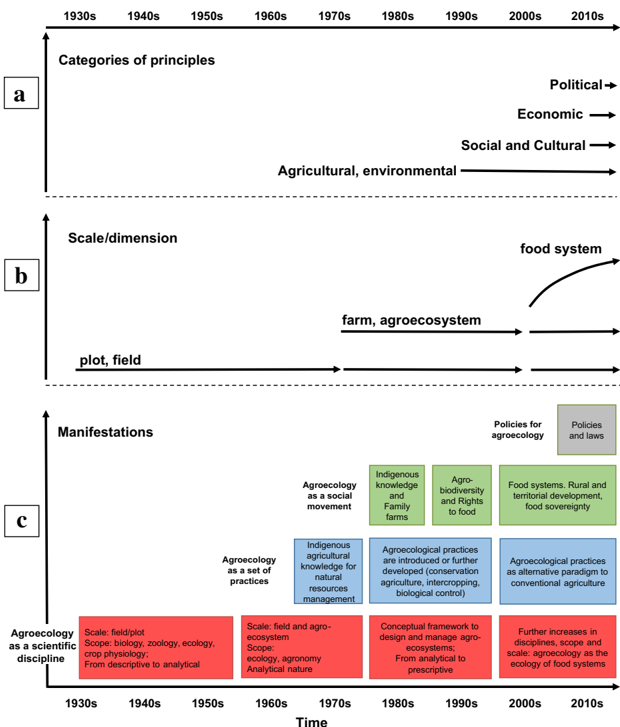
“Although much more visible in the last 20 years, agroecology has a long history (Wezel and Soldat 2009).”
BackgroundSelf-citationTransitions to sustainability: a change in thinking about food systems change?
Hinrichs, C. C. (2014) · Agriculture and Human Values · doi:10.1007/s10460-014-9479-5 · Cited by 310 · cited 4×
“food production, enterprises, social movement advocacy, policy and cultural change (Hinrichs 2014; Spaargaren 2011).”
BackgroundMethodInfluentialBarrios, E., Gemmill-Herren, B., Bicksler, A., Siliprandi, E., Brathwaite, R., Moller, S., Batello, C., & Tittonell, P. (2020) · Ecosystems and People · doi:10.1080/26395916.2020.1808705 · Cited by 293 · cited 3×
“In addition to the five levels described above, the FAO agroecology framework recognises all 10 elements as potential entry points for transformative change towards sustainable food and agricultural systems and the facilitative role of visual narratives and nexus analysis (Barrios et al. 2020).”
BackgroundInfluentialSelf-citationGliessman, S. (2018) · Agroecology and Sustainable Food Systems · doi:10.1080/21683565.2018.1432329 · Cited by 290 · cited 3×
“…concepts and principles to the design and management of sustainable food systems (Gliessman 2007); and more recently (iii) the integration of research, education, action and change that brings sustainability to all parts of the food system: ecological, economic and social (Gliessman 2018).”
BackgroundAgroecological research: Conforming—Or transforming the dominant agro-food regime
Levidow, L., Pimbert, M., & Vanloqueren, G. (2014) · Agroecology and Sustainable Food Systems · doi:10.1080/21683565.2014.951459 · Cited by 253 · cited 1×
“These small-scale changes may foster alternative models of food systems which are either marginalised, get absorbed by, or challenge, the dominant system (Brunori et al. 2011; Elzen et al. 2017; Levidow et al. 2014).”
BackgroundDietary species richness as a measure of food biodiversity and nutritional quality of diets
Lachat, C., Raneri, J. E., Smith, K. W., Kolsteren, P., Van Damme, P., Verzelen, K., Penafiel, D., Vanhove, W., Kennedy, G., Hunter, D., et al. (2018) · Proceedings of the National Academy of Sciences · doi:10.1073/pnas.1709194115 · Cited by 248 · cited 1×
“Application of the social values and dietary principle (9) impact nutrition directly, supported by maintaining and enhancing biodiversity (5) on fields and farms (Bellon et al. 2016; Bezner Kerr et al. 2019b; Demeke et al. 2017; Jones et al. 2014; Lachat et al. 2018; Powell et al. 2015).”
BackgroundMarsden, T. (2013) · Journal of Rural Studies · doi:10.1016/j.jrurstud.2011.10.001 · Cited by 236 · cited 4×
“and spatially (occurring in a specific territorial location) (Marsden 2013).”
BackgroundInfluentialAgroecology: Principles for the Conversion and Redesign of Farming Systems
CI, N., & MA, A. (2016) · Journal of Ecosystem & Ecography · doi:10.4172/2157-7625.s5-010 · Cited by 216 · cited 8×
“…found in the scientific literature—Reijntjes et al. (1992), Altieri (1995), Altieri and Nicolls (2005), Stassart et al. (2012), Dumont et al. (2013), Nicholls et al. (2016)—that are summarised in Migliorini and Wezel et al. (2018), and more recently by CIDSE (2018), FAO (2018d) and INKOTA (2019).”
BackgroundInfluentialMigliorini, P., & Wezel, A. (2017) · Agronomy for Sustainable Development · doi:10.1007/s13593-017-0472-4 · Cited by 206
Self-citationAgroecology: The Ecology of Sustainable Food Systems, Second Edition
Gliessman, S. R. (2006) · doi:10.1201/b17420 · Cited by 190
Leach, M., Nisbett, N., Cabral, L., Harris, J., Hossain, N., & Thompson, J. (2020) · World Development · doi:10.1016/j.worlddev.2020.105024 · Cited by 181 · cited 1×
“These small-scale changes may foster alternative models of food systems which are either marginalised, get absorbed by, or challenge, the dominant system (Brunori et al. 2011; Elzen et al. 2017; Levidow et al. 2014).”
BackgroundEcological Intensification: Local Innovation to Address Global Challenges
Tittonell, P. A., Klerkx, L., Baudron, F., Félix, G. F., Ruggia, A., van Apeldoorn, D. F., Dogliotti, S., Mapfumo, P., & Rossing, W. A. H. (2016) · Sustainable agriculture reviews · doi:10.1007/978-3-319-26777-7_1 · Cited by 171 · cited 1×
“Examples of collaborative efforts to initiate transformative change include democratically designed ‘innovation platforms’, where stakeholders are brought together to coordinate amongst themselves the development of technical, social and institutional innovations (Tittonell et al. 2016).”
BackgroundAgroecology and Politics. How To Get Sustainability? About the Necessity for a Political Agroecology
de Molina, M. G. (2013) · Agroecology and Sustainable Food Systems · doi:10.1080/10440046.2012.705810 · Cited by 164
Bezner Kerr, R., Kangmennaang, J., Dakishoni, L., Nyantakyi-Frimpong, H., Lupafya, E., Shumba, L., Msachi, R., Boateng, G. O., Snapp, S. S., Chitaya, A., et al. (2019) · Agriculture, Ecosystems & Environment · doi:10.1016/j.agee.2019.04.004 · Cited by 155
Brunori, G., Rossi, A., & Malandrin, V. (2020) · International journal of sociology of agriculture and food · doi:10.48416/ijsaf.v18i1.257 · Cited by 147
Bellon, M. R., Ntandou-Bouzitou, G. D., & Caracciolo, F. (2016) · PLoS ONE · doi:10.1371/journal.pone.0162535 · Cited by 146 · cited 1×
“Application of the social values and dietary principle (9) impact nutrition directly, supported by maintaining and enhancing biodiversity (5) on fields and farms (Bellon et al. 2016; Bezner Kerr et al. 2019b; Demeke et al. 2017; Jones et al. 2014; Lachat et al. 2018; Powell et al. 2015).”
BackgroundBezner Kerr, R., Hickey, C., Lupafya, E., & Dakishoni, L. (2019) · The Journal of Peasant Studies · doi:10.1080/03066150.2018.1547897 · Cited by 146 · cited 5×
“Application of the social values and dietary principle (9) impact nutrition directly, supported by maintaining and enhancing biodiversity (5) on fields and farms (Bellon et al. 2016; Bezner Kerr et al. 2019b; Demeke et al. 2017; Jones et al. 2014; Lachat et al. 2018; Powell et al. 2015).”
BackgroundInfluentialSelf-citationClarifying the socioeconomic dimensions of agroecology: between principles and practices
Dumont, A. M., Vanloqueren, G., Stassart, P. M., & Baret, P. V. (2016) · Agroecology and Sustainable Food Systems · doi:10.1080/21683565.2015.1089967 · Cited by 128 · cited 3×
“Stassart et al. (2012) and Dumont et al. (2016) added further socio-economic principles for agroecology relating to social equity, democratic governance, creating collective knowledge, financial independence, market access and autonomy, and diversity of knowledge and experience.”
BackgroundAgroecology in Europe: Research, Education, Collective Action Networks, and Alternative Food Systems
Wezel, A., Goette, J., Lagneaux, E., Passuello, G., Reisman, E., Rodier, C., & Turpin, G. (2018) · Sustainability · doi:10.3390/su10041214 · Cited by 114 · cited 6×
“…found in the scientific literature—Reijntjes et al. (1992), Altieri (1995), Altieri and Nicolls (2005), Stassart et al. (2012), Dumont et al. (2013), Nicholls et al. (2016)—that are summarised in Migliorini and Wezel et al. (2018), and more recently by CIDSE (2018), FAO (2018d) and INKOTA (2019).”
BackgroundInfluentialSelf-citationScaling up and out as a Pathway for Food System Transitions
Pitt, H., & Jones, M. (2016) · Sustainability · doi:10.3390/su8101025 · Cited by 103 · cited 2×
“Transitions include political, socio-cultural, economic, environmental and technological shifts in rules, practices, institutions and values, leading to more sustainable modes of production and consumption (Marsden 2013; Pitt and Jones 2016).”
BackgroundVal, V., Rosset, P. M., Zamora Lomelí, C., Giraldo, O. F., & Rocheleau, D. (2019) · Agroecology and Sustainable Food Systems · doi:10.1080/21683565.2019.1600099 · Cited by 102 · cited 1×
“These social movement actors have played a crucial role in raising the political dimensions of agroecology, providing alternative models for food systems and emphasizing the need for more systemic changes to occur, such as through grassroots farmer-to-farmer networks (Val et al. 2019).”
BackgroundKnowledge politics in participatory climate change adaptation research on agroecology in Malawi
Bezner Kerr, R., Nyantakyi-Frimpong, H., Dakishoni, L., Lupafya, E., Shumba, L., Luginaah, I., & Snapp, S. S. (2018) · Renewable Agriculture and Food Systems · doi:10.1017/s1742170518000017 · Cited by 100 · cited 1×
“In this respect, horizontal sharing and co-creation of knowledge (principle 8—co-creation of knowledge) are important (Bezner Kerr et al. 2018; Mier y Teran Gimenez Cacho et al. 2018).”
BackgroundSelf-citationIşlar, M. (2019) · Lund University Publications (Lund University) · Cited by 99
THE OPTIONS BY CONTEXT APPROACH: A PARADIGM SHIFT IN AGRONOMY
Sinclair, F., & Coe, R. (2019) · Experimental Agriculture · doi:10.1017/s0014479719000139 · Cited by 96 · cited 2×
“…involvement of a range of stakeholders and especially the local knowledge of farmers in developing locally adapted practice, is central to both the set of consolidated principles and the FAO elements and a key tenet of transdisciplinary science in an agricultural context (Sinclair and Coe 2019).”
BackgroundSelf-citationStassart, P. M., Baret, P. V., Grégoire, J., Hance, T., Mormont, M., Reheul, D., Stilmant, D., Vanloqueren, G., & Visser, M. (2013) · Digital Access to Libraries (Université catholique de Louvain (UCL), l'Université de Namur (UNamur) and the Université Saint-Louis (USL-B)) · Cited by 95
Political Agroecology in Mexico: A Path toward Sustainability
Toledo, V. M., & Barrera-Bassols, N. (2017) · Sustainability · doi:10.3390/su9020268 · Cited by 93
Kangmennaang, J., Kerr, R. B., Lupafya, E., Dakishoni, L., Katundu, M., & Luginaah, I. (2017) · Food Security · doi:10.1007/s12571-017-0669-z · Cited by 88 · cited 2×
“…money is spent on buying inputs and so there is less reliance on credit, and therefore, potentially more resources to buy food (Hwang et al. 2016; Kangmennaang et al. 2017; Snapp et al. 2010) although potential trade-offs might exist, since depending on quantity and type of inputs, crop yields…”
BackgroundSelf-citationAgroecology for Food Security and Nutrition
Gliessman, S., & Tittonell, P. (2015) · Agroecology and Sustainable Food Systems · doi:10.1080/21683565.2014.972001 · Cited by 86
AgroEcological Transitions : changes and breakthroughs in the making
Elzen, B., Augustyn, A. M., Barbier, M., & van Mierlo, B. (2017) · doi:10.18174/407609 · Cited by 85 · cited 3×
“Through the transition levels towards sustainable food systems, agroecology presents multiple pathways for the transformation of farming and food systems co-created to suit different local contexts, based on a social-ecological systems approach (see also Elzen et al. 2017; IPES-Food 2016).”
BackgroundSustainable Agriculture Reviews
Lichtfouse, É. (2017) · Sustainable agriculture reviews · doi:10.1007/978-3-319-48006-0 · Cited by 63
Singh, B. K., Trivedi, P., Singh, S., Macdonald, C. A., & Verma, J. P. (2018) · Microbiology Australia · doi:10.1071/ma18006 · Cited by 62 · cited 2×
“…conventional inputs that have negative impacts on the environment is envisaged, replacing them bymaking use of co-existing biota (such as the plant microbiome or natural enemies of pests) to improve plant nutrient uptake, stress tolerance and defences against pests and diseases (Singh et al. 2018).”
BackgroundHwang, T., Ndolo, V., Katundu, M., Nyirenda, B., Kerr, R. B., Arntfield, S. D., & Trust Beta (2015) · Food Chemistry · doi:10.1016/j.foodchem.2015.10.067 · Cited by 60
Self-citationPositive outcomes between crop diversity and agricultural employment worldwide
Garibaldi, L. A., & Pérez-Méndez, N. (2019) · Ecological Economics · doi:10.1016/j.ecolecon.2019.106358 · Cited by 52 · cited 1×
“Higher labour requirements could also mean increased employment opportunities both in agriculture and agri-food businesses, as one review found for diversified farming systems (Garibaldi and Pérez-Méndez 2019).”
BackgroundIlieva, R. T., & Hernandez, A. (2018) · Sustainability · doi:10.3390/su10114057 · Cited by 47
Agroecology now - connecting the dots to enable agroecology transformations
Anderson, C., Pimbert, M. P., Chappell, M. J., Brem-Wilson, J., Claeys, P., Kiss, C., Maughan, C., Milgroom, J., McAllister, G., Moeller, N. I., et al. (2020) · Agroecology and Sustainable Food Systems · doi:10.1080/21683565.2019.1709320 · Cited by 43 · cited 1×
“Furthermore, to transition to a just and inclusive food system will require changes in economic policies that support local and regional food systems, raising questions of how to address power dynamics in order to shift the dominant narrative (Anderson et al. 2020).”
BackgroundTO CONTROL OR NOT TO CONTROL: HOW DO WE LEARN MORE ABOUT HOW AGRONOMIC INNOVATIONS PERFORM ON FARMS?
Coe, R., Njoloma, J., & Sinclair, F. (2017) · Experimental Agriculture · doi:10.1017/s0014479717000102 · Cited by 28
Self-citationSystems science at the scale of impact
Sinclair, F. (2017) · Routledge eBooks · doi:10.4324/9781315618791-3 · Cited by 14 · cited 2×
“…inputs, so that many different efficiencies can be envisaged and in agriculture, increasing one efficiency ratio such as yield per unit of land or labour has often been associated with reduction in other efficiencies such as yield per unit of fossil fuel input or biodiversity loss (Sinclair 2017).”
BackgroundSelf-citationAgroecological Principles and Practices for Grass-based Farming Systems
Peeters, A., & Wezel, A. (2017) · Agroecological Practices for Sustainable Agriculture · doi:10.1142/9781786343062_0011 · Cited by 11 · cited 1×
“Peeters and Wezel (2017) defined agroecological principles specifically for grass-based farming systems.”
BackgroundSelf-citation
Research works printed but not linked: 11
- FAO (2015b) Final report for the international symposium on agroecology for food security and nutrition. 18–19 September 2014. Rome. http://www.fao.org/3/a-i4327e.pdf
- FAO (2018c) Second International Symposium on Agroecology. Scaling up agroecology to achieve the sustainable development goals (SDGs). http://www.fao.org/about/meetings/second-international-agroecology-symposium/en/
- FAO (2019) Report of the Conference of FAO. 41st Session. Rome, 22–29 2019. http://www.fao.org/3/na421en/na421en.pdf
- 31. HLPE (2019) Agroecological and other innovative approaches for sus- tainable agriculture and food systems that enhance food security and nutrition. A report by the High Level Panel of Experts on Food Security and Nutrition of the Committee on World Food Security, Rome http://www.fao.org/cfs/cfs-hlpe/en/
- 33. IAASTD (International Assessment of Agricultural Knowledge, Science and Technology for Development) (2009) Agriculture at a cross- roads: global report. B.D. MacIntyre, H.R. Herren, J. Wakhungu, R.T. Watson, eds. Washington, DC, Island Press
- IPCC (2019) Climate change and land. Panel in Climate Change IPCC, Intergovernmental
- 47. Patton (2018) Principles-focus evaluation: the guide. The Guilford Press, New York, NY
- 49. Pimbert M, Lemke S (2018) Food environments: using agroecology to enhance dietary diversity. In: UNSCN (United Nations System Standing Committee on Nutrition) Report 43: addressing equity, equality and non-discrimination in the food system: pathways to reform, pp. 33-42. https://www.unscn.org/uploads/web/news/ UNSCN-News43.pdf
- 56. Silici L (2014) Agroecology -what it is and what it has to offer. IIED, London, UK, 28 p
- 59. Sinclair F, Wezel A, Mbow C, Chomba C, Robiglio V, Harrison R (2019) The contribution of agroecological approaches to realizing climate- resilient agriculture. Background Paper. Global Commission on Adaptation, Rotterdam https://cdn.gca.org/assets/2019-12/ TheContributionsOfAgroecologicalApproaches.pdf
- 67. Tittonell P (2015) Food security and ecosystem services in a changing world: it is time for agroecology. In FAO, Agroecology for Food Security and Nutrition: Proceedings of the FAO International Symposium, pp. 16-35. Rome, Itlay
Cited by
Viewpoint: The case for a six-dimensional food security framework
Clapp, J., Moseley, W. G., Burlingame, B., & Termine, P. (2022) · Food Policy · doi:10.1016/j.foodpol.2021.102164 · Cited by 512
Can agroecology improve food security and nutrition? A review
Bezner Kerr, R., Madsen, S., Stüber, M., Liebert, J., Enloe, S., Borghino, N., Parros, P., Mutyambai, D. M., Prudhon, M., & Wezel, A. (2021) · Global Food Security · doi:10.1016/j.gfs.2021.100540 · Cited by 359
Self-citationMitigation Pathways Compatible with Long-term Goals
(2023) · Climate Change 2022 - Mitigation of Climate Change · doi:10.1017/9781009157926.005 · Cited by 288
Sustainable Agri-Food Systems: Environment, Economy, Society, and Policy
El Bilali, H., Strassner, C., & Ben Hassen, T. (2021) · Sustainability · doi:10.3390/su13116260 · Cited by 213
Clapp, J. (2023) · The Journal of Peasant Studies · doi:10.1080/03066150.2022.2129013 · Cited by 213
“…presented as not just a science, but also a social movement and a practice that centers on the use of diverse production methods that minimize external inputs and work with rather than against nature (e.g. Wezel et al. 2020; Altieri and Nicholls 2020; Bezner Kerr et al. 2021; Van Der Ploeg 2021).”
Background
Metadata
- Authors
- Wezel, A., Herren, B. G., Kerr, R. B., Barrios, E., Gonçalves, A. L. R., & Sinclair, F.
- Affiliations
- Institut Supérieur d'Agriculture Rhône-Alpes (FR)
- Cornell University (US)
- Food and Agriculture Organization of the United Nations (IT)
- Instituto Federal Catarinense (BR)
- Bangor University (GB)
- Corresponding author
- Wezel, Alexander
- Venue
- Agronomy for Sustainable Development
- Published
- 2020-10-27
- Volume
- 40
- Issue
- 6
- Pages
- 40
- ISSN
- 1773-0155 (ISSN-L)
- 1774-0746
- OpenAlex
- W3095607637
- Cited by
- 926
- References
- 71
- Citations by year
- 2026: 212 · 2025: 208 · 2024: 173 · 2023: 169 · 2022: 108 · 2021: 55 · 2020: 1
- FWCI
- 125.87
- Type
- journal article
- Language
- en
- Open access
- hybrid
- doi.org
- Licence
- cc-by
- creativecommons.org/licenses/by/4.0 (tdm)
- creativecommons.org/licenses/by/4.0 (vor)
- Locations
- Agronomy for Sustainable Development (publishedVersion, cc-by)
- HAL (submittedVersion, other-oa)
- Funders
- McKnight Foundation
- Consortium of International Agricultural Research Centers
- Topics
- Social Sciences › Development › Agriculture, Land Use, Rural Development
- Life Sciences › Agricultural and Biological Sciences › General Agricultural and Biological Sciences › Plant and soil sciences
- Life Sciences › Agricultural and Biological Sciences › Agronomy and Crop Science › Sustainable Agricultural Systems Analysis
- Keywords
- agroecology, agroecological principles, sustainable food systems, food system transformation, soil health, biodiversity, circular economy, solidarity economy, knowledge co-creation, participatory governance, economic diversification, animal health, food system resilience, climate change adaptation, malnutrition, rural poverty
About these checks
Registry, retraction, Cites and statistics results are computed, not judged, with one exception: a printed reference that no index lists is read once by a model before it counts as a citation error. Claims are extracted by a model and kept only when their quote appears verbatim in the text; each cited source is then checked, with a model’s help, for whether it says what the claim relies on. Those verdicts can be wrong — read the claim’s quote and the cited source before relying on one.
Statistics and arithmetic are recomputed, not judged.
Confidence bands are shown only for fields calibrated on our annotated test set. None is calibrated yet, so no band is shown.
What counts as a claim ›How we measure confidence ›How we check this ›
Are you an author, or do you see a problem with this page? Request a review
Data sources
Bibliographic data: Semantic Scholar, OpenAlex, Crossref.
Contains information from the Semantic Scholar Academic Graph Datasets, made available under the ODC Attribution License (ODC-BY 1.0).
Semantic Scholar’s data is described in: Kinney, R., et al. (2023). The Semantic Scholar Open Data Platform. arXiv:2301.10140.
