

Agroecological principles and elements and their implications for transitioning to sustainable food systems. A review
Open accessThe DOI matches its Crossref record; 71 of the 71 references it cites were found in a registry or an index.
Abstract
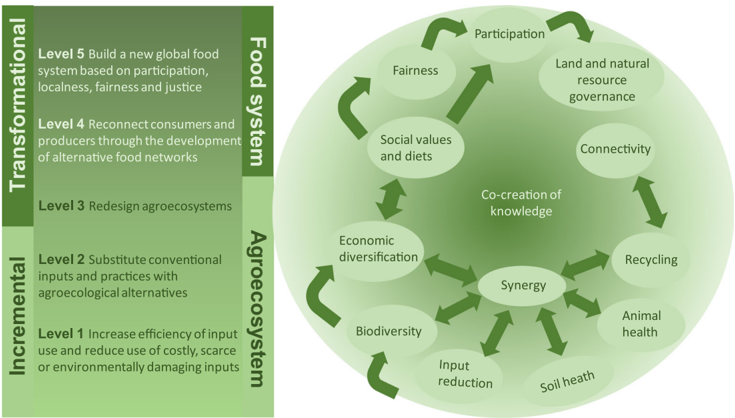
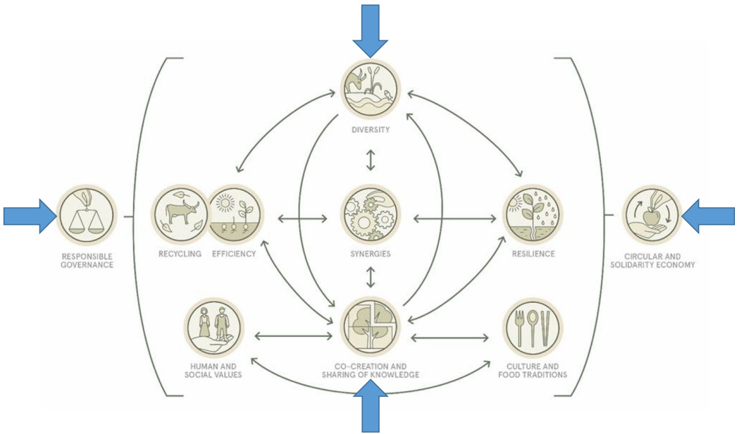
There is consensus that the global food system is not delivering good nutrition for all and is causing environmental degradation and loss of biodiversity, such that a profound transformation is needed to meet the challenges of persistent malnutrition and rural poverty, aggravated by the growing consequences of climate change. Agroecological approaches have gained prominence in scientific, agricultural and political discourse in recent years, suggesting pathways to transform agricultural and food systems that address these issues. Here we present an extensive literature review of concepts, definitions and principles of agroecology, and their historical evolution, considering the three manifestations of agroecology as a science, a set of practices and a social movement; and relate them to the recent dialogue establishing a set of ten iconic elements of agroecology that have emerged from a global multi-stakeholder consultation and synthesis process. Based on this, a consolidated list of principles is developed and discussed in the context of presenting transition pathways to more sustainable food systems. The major outcomes of this paper are as follows. (1) Definition of 13 consolidated agroecological principles: recycling; input reduction; soil health; animal health; biodiversity; synergy; economic diversification; co-creation of knowledge; social values and diets; fairness; connectivity; land and natural resource governance; participation. (2) Confirmation that these principles are well aligned and complementary to the 10 elements of agroecology developed by FAO but articulate requirements of soil and animal health more explicitly and distinguish between biodiversity and economic diversification. (3) Clarification that application of these generic principles can generate diverse pathways for incremental and transformational change towards more sustainable farming and food systems. (4) Identification of four key entry points associated with the elements: diversity; circular and solidarity economy; co-creation and sharing of knowledge; and, responsible governance to enable plausible pathways of transformative change towards sustainable agriculture and food systems.
Overview
The claims and statistics of this paper haven’t been checked yet.
Free: it reads the open-access text and checks the first 5 claims that cite a source we can check. Create a free account to check every claim.
Integrity signals
Registry
Cites
Statistics
Figures




Verification
Claims the paper makes
The claims and statistics of this paper haven’t been checked yet.
Free: it reads the open-access text and checks the first 5 claims that cite a source we can check. Create a free account to check every claim.
Claims other papers make about this one
Each is checked against this paper’s own text: does it say what the citing paper says it does?
The source backs part of the claim, not all of it — or backs it for a different population, condition or comparison.
In the citing paper
“the 13 principles of agroecology (HLPE, 2019) are closely aligned with the 10 elements and serve as a science-policy interface that facilitates debate, bridges diverse knowledge systems, and informs policymaking”
From Agroecology for sustainable development: evidence on multidimensional performance from a cross-country TAPE assessment in Africa (2025) · cites this paper as Wezel et al., 2020
Experimental — accuracy not yet measuredThe cited source says what the claim attributes to it.
In the citing paper
“According to the principles, agroecology concerns the direction of change in agricultural systems (Wezel et al. 2020).”
From Methodological challenges in assessing the viability of agroecological practices: lessons from a multi-case study in Africa (2025) · cites this paper as Wezel et al. 2020
The cited source says what the claim attributes to it.
In the citing paper
“They combine practices that can be related to one or various of the agroecological principles identified by Wezel et al. (2020) to respond to a diversity of constraints and challenges.”
From Methodological challenges in assessing the viability of agroecological practices: lessons from a multi-case study in Africa (2025) · cites this paper as Wezel et al. (2020)
The cited source says what the claim attributes to it.
In the citing paper
“In its conceptual and methodological evolution, agroecology has integrated a larger scope into its analysis, moving from the plot and farm to the landscape unit (Wezel etal., 2020).”
From Agroecological planning of productive systems with functional connectivity to the ecological landscape matrix: two Colombian case studies (2024) · cites this paper as Wezel et al., 2020
The cited source says what the claim attributes to it.
In the citing paper
“Agroecology is identified as an important solution to increase the sustainability of agricultural and food systems.”
From The socio-economic performance of agroecology. A review (2024) · cites this paper as Wezel et al. 2020
1 more claim about this paper
Create a free account to see every claim other papers make about this one.
Self-check
Percentages, sums and reported differences re-computed from the paper’s own numbers.
The self-check needs the paper’s full text.
Citations
Cites
Food and Agriculture Organization of the United Nations
(2022) · Permanent Missions to the United Nations · doi:10.18356/9789210018289c230 · Cited by 5,384
Colman (2022) · doi:10.1073/pnas · Cited by 4,370
Ontologies, socio-technical transitions (to sustainability), and the multi-level perspective
Geels, F. W. (2010) · Research Policy · doi:10.1016/j.respol.2010.01.022 · Cited by 1,718 · cited 4×
“Some transitions begin at a small scale, a ‘niche’ or protected space in which farmer cooperatives, social movements, businesses, local government or other groups experiment with and adapt alternative ways of doing things (Geels 2010; Hinrichs 2014).”
BackgroundMethodInfluentialSmith, A., Voß, J.-P., & Grin, J. (2010) · Research Policy · doi:10.1016/j.respol.2010.01.023 · Cited by 1,691 · cited 2×
“…multi-level perspective has been used, to consider how dynamic processes and interactions across scales can support whole-system transformative change (Geels 2010; Smith et al. 2010), but also what issues of power relations drive changes or establish ‘lock-ins’ (IPES-Food 2018; Leach et al. 2020).”
BackgroundMethodAgroecology as a science, a movement and a practice. A review
Wezel, A., Bellon, S., Doré, T., Francis, C., Vallod, D., & David, C. (2009) · Agronomy for Sustainable Development · doi:10.1051/agro/2009004 · Cited by 1,504
Self-citationAltieri, M. A., & Toledo, V. M. (2011) · Journal of Peasant Studies · doi:10.1080/03066150.2011.582947 · Cited by 1,279 · cited 2×
“eignty, local knowledge, social justice, local identity and culture, and indigenous rights for seeds and breeds (Altieri and Toledo 2011; Nyéléni 2015; Rosset et al. 2011) (Fig.”
BackgroundAgroecological practices for sustainable agriculture. A review
Wezel, A., Casagrande, M., Celette, F., Vian, J.-F., Ferrer, A., & Peigné, J. (2014) · Agronomy for Sustainable Development · doi:10.1007/s13593-013-0180-7 · Cited by 1,227 · cited 1×
“…beneficial biological interactions and synergies amongst the components of agroecosystems (Gliessman 1990), minimizing synthetic and toxic external inputs and using ecological processes and ecosystem services for the development and implementation of agricultural practices (Wezel et al. 2014) (Fig.”
BackgroundSelf-citationAgroecology: The Ecology of Sustainable Food Systems
Gliessman, S. R. (2007) · Andalas University Repository (Andalas University) · Cited by 1,061
Comparative Influences of Precipitation and River Stage on Groundwater Levels in Near-River Areas
Kim, I., Park, D., Kyung, D., Kim, G., Kim, S., & Lee, J. (2015) · Sustainability · doi:10.3390/su8010001 · Cited by 1,060
Global assessment of agricultural system redesign for sustainable intensification
Pretty, J., Benton, T. G., Bharucha, Z. P., Dicks, L. V., Flora, C. B., Godfray, H. C. J., Goulson, D., Hartley, S., Lampkin, N., Morris, C., et al. (2018) · Nature Sustainability · doi:10.1038/s41893-018-0114-0 · Cited by 1,022 · cited 1×
“This consensus acknowledges the need to address aspects that go well beyond a simple metric of productivity, embracing environmental and socially progressive outcomes (Caron et al. 2018; Pretty et al. 2018; Tittonell 2014).”
Background
Research works printed but not linked: 11
- FAO (2015b) Final report for the international symposium on agroecology for food security and nutrition. 18–19 September 2014. Rome. http://www.fao.org/3/a-i4327e.pdf
- FAO (2018c) Second International Symposium on Agroecology. Scaling up agroecology to achieve the sustainable development goals (SDGs). http://www.fao.org/about/meetings/second-international-agroecology-symposium/en/
- FAO (2019) Report of the Conference of FAO. 41st Session. Rome, 22–29 2019. http://www.fao.org/3/na421en/na421en.pdf
- 31. HLPE (2019) Agroecological and other innovative approaches for sus- tainable agriculture and food systems that enhance food security and nutrition. A report by the High Level Panel of Experts on Food Security and Nutrition of the Committee on World Food Security, Rome http://www.fao.org/cfs/cfs-hlpe/en/
- 33. IAASTD (International Assessment of Agricultural Knowledge, Science and Technology for Development) (2009) Agriculture at a cross- roads: global report. B.D. MacIntyre, H.R. Herren, J. Wakhungu, R.T. Watson, eds. Washington, DC, Island Press
- IPCC (2019) Climate change and land. Panel in Climate Change IPCC, Intergovernmental
- 47. Patton (2018) Principles-focus evaluation: the guide. The Guilford Press, New York, NY
- 49. Pimbert M, Lemke S (2018) Food environments: using agroecology to enhance dietary diversity. In: UNSCN (United Nations System Standing Committee on Nutrition) Report 43: addressing equity, equality and non-discrimination in the food system: pathways to reform, pp. 33-42. https://www.unscn.org/uploads/web/news/ UNSCN-News43.pdf
- 56. Silici L (2014) Agroecology -what it is and what it has to offer. IIED, London, UK, 28 p
- 59. Sinclair F, Wezel A, Mbow C, Chomba C, Robiglio V, Harrison R (2019) The contribution of agroecological approaches to realizing climate- resilient agriculture. Background Paper. Global Commission on Adaptation, Rotterdam https://cdn.gca.org/assets/2019-12/ TheContributionsOfAgroecologicalApproaches.pdf
- 67. Tittonell P (2015) Food security and ecosystem services in a changing world: it is time for agroecology. In FAO, Agroecology for Food Security and Nutrition: Proceedings of the FAO International Symposium, pp. 16-35. Rome, Itlay
Cited by
Viewpoint: The case for a six-dimensional food security framework
Clapp, J., Moseley, W. G., Burlingame, B., & Termine, P. (2022) · Food Policy · doi:10.1016/j.foodpol.2021.102164 · Cited by 512
Can agroecology improve food security and nutrition? A review
Bezner Kerr, R., Madsen, S., Stüber, M., Liebert, J., Enloe, S., Borghino, N., Parros, P., Mutyambai, D. M., Prudhon, M., & Wezel, A. (2021) · Global Food Security · doi:10.1016/j.gfs.2021.100540 · Cited by 359
Self-citationMitigation Pathways Compatible with Long-term Goals
(2023) · Climate Change 2022 - Mitigation of Climate Change · doi:10.1017/9781009157926.005 · Cited by 288
Sustainable Agri-Food Systems: Environment, Economy, Society, and Policy
El Bilali, H., Strassner, C., & Ben Hassen, T. (2021) · Sustainability · doi:10.3390/su13116260 · Cited by 213
Clapp, J. (2023) · The Journal of Peasant Studies · doi:10.1080/03066150.2022.2129013 · Cited by 213
“…presented as not just a science, but also a social movement and a practice that centers on the use of diverse production methods that minimize external inputs and work with rather than against nature (e.g. Wezel et al. 2020; Altieri and Nicholls 2020; Bezner Kerr et al. 2021; Van Der Ploeg 2021).”
BackgroundEwert, F., Baatz, R., & Finger, R. (2023) · Annual Review of Resource Economics · doi:10.1146/annurev-resource-102422-090105 · Cited by 183
Richard, B., Qi, A., & Fitt, B. D. L. (2021) · Plant Pathology · doi:10.1111/ppa.13493 · Cited by 194
Financial Profitability of Diversified Farming Systems: A Global Meta-Analysis
Sánchez, A. C., Kamau, H., Grazioli, F., & Jones, S. K. (2022) · Ecological Economics · doi:10.1016/j.ecolecon.2022.107595 · Cited by 183
Agroecological crop protection for sustainable agriculture
Deguine, J., Aubertot, J., Bellon, S., Côté, F., Lauri, P., Lescourret, F., Ratnadass, A., Scopel, É., Andrieu, N., Bàrberi, P., et al. (2023) · Advances in agronomy · doi:10.1016/bs.agron.2022.11.002 · Cited by 203
Akanmu, A. O., Akol, A. M., Ndolo, D. O., Kutu, F. R., & Babalola, O. O. (2023) · Frontiers in Sustainable Food Systems · doi:10.3389/fsufs.2023.1143061 · Cited by 163
“The practice of small-scale farming employs the principles of recycling, diversity, synergy, and integration as well as social processes that value community involvement and empowerment, is the major means of promoting an agroecological development paradigm set to meet the world’s food needs in this era of increasing…”
BackgroundAgroecology as a transformative approach to tackle climatic, food, and ecosystemic crises
Bezner Kerr, R., Postigo, J. C., Smith, P., Cowie, A., Singh, P. K., Rivera-Ferre, M., Tirado-von der Pahlen, M. C., Campbell, D., & Neufeldt, H. (2023) · Current Opinion in Environmental Sustainability · doi:10.1016/j.cosust.2023.101275 · Cited by 133
Falconnier, G. N., Cardinael, R., Corbeels, M., Baudron, F., Chivenge, P., Couëdel, A., Ripoche, A., Affholder, F., Naudin, K., Benaillon, E., et al. (2023) · Outlook on Agriculture · doi:10.1177/00307270231199795 · Cited by 125
“Soil health is one of the 13 HLPE principles of agroecology, and is re fl ected in three of the ten FAO agroecology elements, namely diversity, synergy and resilience (Wezel et al., 2020).”
BackgroundInfluentialPetersen-Rockney, M., Baur, P., Guzman, A., Bender, S. F., Calo, A. J., Castillo, F., Master, K. D., Dumont, A. M., Esquivel, K., Kremen, C., et al. (2021) · Frontiers in Sustainable Food Systems · doi:10.3389/fsufs.2021.564900 · Cited by 172
“As explained in the Introduction, diversifying processes offer farmers an alternative pathway (Wezel et al., 2020).”
BackgroundAmede, T., Konde, A. A., Muhinda, J. J., & Bigirwa, G. (2023) · Sustainability · doi:10.3390/su15075731 · Cited by 122
Responsible plant nutrition: A new paradigm to support food system transformation
Dobermann, A., Bruulsema, T. W., Çakmak, İ., Gerard, B. G., Majumdar, K., McLaughlin, M., Reidsma, P., Vanlauwe, B., Wollenberg, L., Zhang, F. S., et al. (2022) · Global Food Security · doi:10.1016/j.gfs.2022.100636 · Cited by 139
The socio-economic performance of agroecology. A review
Mouratiadou, I., Wezel, A., Kamilia, K., Marchetti, A., Paracchini, M. L., & Bàrberi, P. (2024) · Agronomy for Sustainable Development · doi:10.1007/s13593-024-00945-9 · Cited by 96
“This can imply, for example, incrementing interactions among different farm level components, increasing synergies among farms and across landscapes, and creating more diversity in the whole agro-ecosystem (Wezel et al. 2020).”
BackgroundSelf-citationHuman and social values in agroecology
Bezner Kerr, R., Liebert, J., Kansanga, M., & Kpienbaareh, D. (2022) · Elementa: Science of the Anthropocene · doi:10.1525/elementa.2021.00090 · Cited by 95
Adelodun, B., Kareem, K. Y., Kumar, P., Kumar, V., Choi, K. S., Yadav, K. K., Yadav, A. N., El-Denglawey, A., Cabral-Pinto, M. M. S., Son, C. T., et al. (2021) · Journal of Cleaner Production · doi:10.1016/j.jclepro.2021.128451 · Cited by 109
Ntihinyurwa, P. D., & de Vries, W. T. (2021) · Land · doi:10.3390/land10020129 · Cited by 101
“It includes the aspects of diversity, quality, access, sustainability, acceptability and utilization of food [64,65,69] along with food sovereignty [46,47,155], which are also achievable under the conditions of land fragmentation scenarios [11,32,33,66].”
BackgroundInfluentialSachet, E., Mertz, O., Le Coq, J.-F., Cruz-Garcia, G. S., Francesconi, W., Bonin, M., & Quintero, M. (2021) · Frontiers in Sustainable Food Systems · doi:10.3389/fsufs.2021.709401 · Cited by 89
Amoak, D., Luginaah, I., & McBean, G. A. (2022) · Sustainability · doi:10.3390/su142113954 · Cited by 106
Emancipatory agroecologies: social and political principles
Giraldo, O. F., & Rosset, P. M. (2022) · The Journal of Peasant Studies · doi:10.1080/03066150.2022.2120808 · Cited by 98
“While Dumont, Wartenberg, and Baret (2021), Sandhu (2021), Kapgen and Roudart (2020), Wezel et al. (2020), Anderson et al. (2019, 2020) and González de Molina et al. (2019), and González de Molina and Lopez-Garcia (2021), among others, have all elaborated one form or another of social principles…”
BackgroundClimate-Smart Pest Management in Sustainable Agriculture: Promises and Challenges
Bouri, M., Arslan, K. S., & Şahin, F. (2023) · Sustainability · doi:10.3390/su15054592 · Cited by 95
Gargano, G., Licciardo, F., Verrascina, M., & Zanetti, B. (2021) · Sustainability · doi:10.3390/su13042215 · Cited by 93
Mehrabi, S., Mesa, J. C. P., & Giagnocavo, C. (2022) · Agriculture · doi:10.3390/agriculture12020203 · Cited by 96
Röös, E., Mayer, A. C. R., Müller, A. W., Kalt, G., Ferguson, S., Erb, K., Hart, R., Matej, S., Kaufmann, L., Pfeifer, C., et al. (2022) · The Science of The Total Environment · doi:10.1016/j.scitotenv.2022.157612 · Cited by 95
“Despite recent attempts to de fi ne and describe it more closely (FAO, 2018b; Wezel et al., 2020), agroecology comes in many forms and context-speci fi c implementations (Bezner Kerr et al., 2021; Lampkin et al., 2020; Gallardo-López et al., 2018).”
BackgroundFamily farming in climate change: Strategies for resilient and sustainable food systems
Chao, K. (2024) · Heliyon · doi:10.1016/j.heliyon.2024.e28599 · Cited by 101
“The efforts of family farmers are also vital in maintaining soil health and biodiversity, potentially offsetting some of climate change ’ s adverse effects [16].”
BackgroundImpact of Zero Budget Natural Farming on Crop Yields in Andhra Pradesh, SE India
Duddigan, S., Collins, C. D., Hussain, Z., Osbahr, H., Shaw, L. J., Sinclair, F., Sizmur, T., Thallam, V. K., & Winowiecki, L. A. (2022) · Sustainability · doi:10.3390/su14031689 · Cited by 78
“…to build on the foundation of our simple metric of productivity in terms of yield, to encompass environmental and socially progressive outcomes [13] of ZBNF to reflect contributions to other SDGs. the assessment of the efficacy of ZBNF need to build on the foundation of our simple metric of…”
BackgroundSelf-citationStratton, A. E., Wittman, H., & Blesh, J. (2021) · Agronomy for Sustainable Development · doi:10.1007/s13593-021-00688-x · Cited by 70
Socio-Technical Innovation Bundles for Agri-Food Systems Transformation
Barrett, C. B., Benton, T. G., Fanzo, J., Herrero, M., Nelson, R., Bageant, E., Buckler, E. S., Cooper, K., Culotta, I., Fan, S., et al. (2022) · Sustainable development goals series · doi:10.1007/978-3-030-88802-2 · Cited by 92
Achieving win-win outcomes for biodiversity and yield through diversified farming
Jones, S. K., Sánchez, A. C., Beillouin, D., Juventia, S. D., Mosnier, A., Remans, R., & Estrada-Carmona, N. (2022) · Basic and Applied Ecology · doi:10.1016/j.baae.2022.12.005 · Cited by 79
Fantini, A. (2022) · Agroecology and Sustainable Food Systems · doi:10.1080/21683565.2022.2127044 · Cited by 76
“The agroecological paradigm, by highlighting the interconnection between the ecological, productive, cultural, economic and social dimensions, seems to provide adequate solutions for this objective (Rosset, Martínez-Torres, 2012; Gliessman, 2006; Altieri 2016; Arnauld de Sastre, 2019; Tittonell et al. 2020; Wezel et a…”
BackgroundZimmermann, B., Claß‐Mahler, I., von Cossel, M., Lewandowski, I. M., Weik, J., Spiller, A., Nitzko, S., Lippert, C., Krimly, T., Pergner, I., et al. (2021) · Agronomy · doi:10.3390/agronomy11091710 · Cited by 83
“Overall, the abandonment of chemical pesticides is expected to have predominantly positive effects in terms of regulating habitat, and cultural services, but at the same time, provisioning services are expected to be significantly impaired in terms of yield levels and yield stability [31,87,88].”
BackgroundAddressing agricultural labour issues is key to biodiversity-smart farming
Daum, T., Baudron, F., Birner, R., Qaim, M., & Graß, I. (2023) · Biological Conservation · doi:10.1016/j.biocon.2023.110165 · Cited by 89
“Other factors, such as cultural and social considerations, also play a significant role (Altieri et al., 2012; Wezel et al., 2020).”
BackgroundMixed farming systems: potentials and barriers for climate change adaptation in food systems
Baker, E., Kerr, R. B., Deryng, D., Farrell, A. D., Gurney‐Smith, H., & Thornton, P. K. (2023) · Current Opinion in Environmental Sustainability · doi:10.1016/j.cosust.2023.101270 · Cited by 82
Self-citationAgroecology and resilience of smallholder food security: a systematic review
Dagunga, G., Ayamga, M., Laube, W., Ansah, I. G. K., Kornher, L., & Kotu, B. H. (2023) · Frontiers in Sustainable Food Systems · doi:10.3389/fsufs.2023.1267630 · Cited by 77
Raveloaritiana, E., & Wanger, T. C. (2026) · Nature Communications · doi:10.1038/s41467-025-67757-7 · Cited by 78
Vizuete, B., Oteros‐Rozas, E., & García‐Llorente, M. (2024) · Agriculture and Human Values · doi:10.1007/s10460-023-10537-0 · Cited by 60
“Although we recognize the existence of other well-known frameworks for the analysis of agroecological practices (e.g., those proposed in FAO 2019; HLP 2019; Wezel et al. 2020), we argue that these three approaches together encompass most of the diversity of neo-rural land-related activities.”
El Rol de la Agroecología en el Desarrollo Rural Sostenible en Ecuador
Caicedo-Aldaz, J. C., & Herrera-Sánchez, D. J. (2022) · Revista Científica Zambos. · doi:10.69484/rcz/v1/n2/24 · Cited by 68
“Wezel et al. (2020) señalan que la implementación exitosa de la agroecología requiere un entorno político favorable, incluyendo políticas públicas específicas y financiamiento adecuado.”
BackgroundInfluentialBorrello, M., Cembalo, L., & Vecchio, R. (2021) · PLoS ONE · doi:10.1371/journal.pone.0255130 · Cited by 59
Sietz, D., Klimek, S., & Dauber, J. (2022) · Communications Earth & Environment · doi:10.1038/s43247-022-00527-1 · Cited by 65
A systematic literature review of life cycle assessments in the durum wheat sector
Zingale, S., Guarnaccia, P., Matarazzo, A., Lagioia, G., & Ingrao, C. (2022) · The Science of The Total Environment · doi:10.1016/j.scitotenv.2022.157230 · Cited by 58
Evidence on the multidimensional performance of agroecology in Mali using TAPE
Lucantoni, D., Sy, M. R., Goïta, M., Veyret-Picot, M., Vicovaro, M., Bicksler, A., & Mottet, A. (2023) · Agricultural Systems · doi:10.1016/j.agsy.2022.103499 · Cited by 53
Explaining the impact of agroecology on farm-level transitions to food security in Malawi
Madsen, S., Kerr, R. B., LaDue, N., Luginaah, I., Dzanja, C., Dakishoni, L., Lupafya, E., Shumba, L., & Hickey, C. (2021) · Food Security · doi:10.1007/s12571-021-01165-9 · Cited by 62
“A fundamental principle of agroecology is replacing synthetic inputs with biological inputs, such as compost or animal manure for synthetic fertilizer (Wezel et al., 2020).”
BackgroundSelf-citationNorthcott, T., Lawrence, M., Parker, C., & Baker, P. (2023) · Agriculture and Human Values · doi:10.1007/s10460-022-10412-4 · Cited by 51
Can agroecology help in meeting our 2050 protein requirements?
Sijpestijn, G. F., Wezel, A., & Chriki, S. (2022) · Livestock Science · doi:10.1016/j.livsci.2022.104822 · Cited by 57
Self-citationMultidimensional and multiscale assessment of agroecological transitions. A review
Darmaun, M., Chevallier, T., Hossard, L., Lairez, J., Scopel, É., Chotte, J., Lambert-Derkimba, A., & de Tourdonnet, S. (2023) · International Journal of Agricultural Sustainability · doi:10.1080/14735903.2023.2193028 · Cited by 54
“…considered publications related to sustainability or resilience because they are the main stated goals of the transition to agroecological systems (Altieri & Nicholls, 2012; Barrios et al., 2020; Dendoncker et al., 2018; Gliessman, 2016; Miles et al., 2017; Mottet et al., 2020; Wezel et al., 2020).”
BackgroundInfluentialStrategies for breeding crops for future environments
Salse, J., Barnard, R. L., Veneault‐Fourrey, C., & Rouached, H. (2023) · Trends in Plant Science · doi:10.1016/j.tplants.2023.08.007 · Cited by 55
Beyond agroecology: Agricultural rewilding, a prospect for livestock systems
Corson, M. S., Mondière, A., Morel, L., & van der Werf, H. M. G. (2022) · Agricultural Systems · doi:10.1016/j.agsy.2022.103410 · Cited by 63
Giagnocavo, C., Duque-Acevedo, M., Terán-Yépez, E., Herforth‐Rahmé, J., Defossez, E., Carlesi, S., Delalieux, S., Gkisakis, V., Márton, A., Molina‐Delgado, D., et al. (2024) · Technology in Society · doi:10.1016/j.techsoc.2024.102763 · Cited by 61
de Mendonça, G. C., Costa, R. C. A., Parras, R., de Oliveira, L. C. M., Abdo, M. T. V. N., Pacheco, F. A. L., & Pissarra, T. C. T. (2022) · The Science of The Total Environment · doi:10.1016/j.scitotenv.2022.156185 · Cited by 53
Terán-Samaniego, K., Parra, J. M. R., Vargas‐Arispuro, I., Martínez‐Téllez, M. Á., Garza-Lagler, M. C., Félix-Gurrola, D., de la Peña, M. L. M., Tafolla-Arellano, J. C., García-Figueroa, J. A., & Espinoza-López, P. C. (2025) · Sustainability · doi:10.3390/su17051805 · Cited by 63
Walthall, B., Vicente‐Vicente, J. L., Friedrich, J., Piorr, A., & García, D. L. (2024) · Environmental Science & Policy · doi:10.1016/j.envsci.2024.103748 · Cited by 56
Chidawanyika, F., Muriithi, B. W., Niassy, S., Ouya, F. O., Pittchar, J. O., Kassie, M. B., & Khan, Z. R. (2023) · Environmental Sustainability · doi:10.1007/s42398-023-00260-1 · Cited by 56
An Ecosystem-Based Approach to Climate-Smart Agriculture with Some Considerations for Social Equity
Akamani, K. (2021) · Agronomy · doi:10.3390/agronomy11081564 · Cited by 54
Sustainable Agriculture and Sustainable Development Goals (SDGs)
Atapattu, A. J., Ranasinghe, C. S., Nuwarapaksha, T. D., Udumann, S. S., & Dissanayaka, N. S. (2024) · Practice, progress, and proficiency in sustainability · doi:10.4018/979-8-3693-4864-2.ch001 · Cited by 72
An Operational Approach to Agroecology-Based Local Agri-Food Systems
López-García, D., & González de Molina, M. (2021) · Sustainability · doi:10.3390/su13158443 · Cited by 43
“A growing number of agroecology studies emphasize the key role of bottom-up governance schemes and quality participatory processes for the development and stability of extensive agroecology transition processes [7,33].”
BackgroundInfluentialGeck, M. S., Crossland, M., & Lamanna, C. A. (2023) · Outlook on Agriculture · doi:10.1177/00307270231196309 · Cited by 55
Notenbaert, A. M. O., Douxchamps, S., Villegas, D., Arango, J., Paul, B. K., Burkart, S., Rao, I. M., Kettle, C. J., Rudel, T. K., Vázquez, E., et al. (2021) · Frontiers in Sustainable Food Systems · doi:10.3389/fsufs.2021.742842 · Cited by 57
“…crises such as climate change and malnutrition, contrasting with the dominant industrial agricultural model based on the use of external inputs (Wezel et al., 2020), while improved forages have been proposed as an important entry point for the sustainable intensification of livestock…”
BackgroundInfluentialDas, K. P., Sharma, D., & Satapathy, B. K. (2022) · Journal of Cleaner Production · doi:10.1016/j.jclepro.2022.133137 · Cited by 46
Romero, M., Faye, A., Betancur‐Corredor, B., Baumüller, H., & von Braun, J. (2024) · Food Security · doi:10.1007/s12571-024-01504-6 · Cited by 51
“Based on these definitions, the HLPE put forward 13 principles that encompass not only the management of the agricultural and ecological aspects of agri-food systems but also socioeconomic, cultural and political principles with a wide scope (HLPE, 2019; Wezel et al., 2020).”
Notaro, M., Gary, C., Coq, J.-F. L., Metay, A., & Rapidel, B. (2021) · Agricultural Systems · doi:10.1016/j.agsy.2021.103332 · Cited by 51
Research strategies to catalyze agroecological transitions in low- and middle-income countries
Jones, S. K., Bergamini, N., Beggi, F., Lesueur, D., Vinceti, B., Bailey, A., DeClerck, F., Estrada-Carmona, N., Fadda, C., Hainzelin, E. M., et al. (2022) · Sustainability Science · doi:10.1007/s11625-022-01163-6 · Cited by 49
Anim-Jnr, A. S., Sasu, P., Boesch, C., Mabiki, F. P., Frimpong, Y. O., Emmambux, M. N., & Greathead, H. M. R. (2023) · Sustainability · doi:10.3390/su152115326 · Cited by 51
“This pathway involves diversifying farm operations and managing the interactions between agroecosystem components [41].”
BackgroundInfluentialNkansah‐Dwamena, E. (2023) · Circular Economy and Sustainability · doi:10.1007/s43615-023-00320-y · Cited by 56
“Agroecol-ogy integrates ecological principles and local knowledge, promoting sustainable practices [36, 37] and sharing resource efficiency, resilience, and environmental impact minimization with circular agriculture.”
Ecological Intensification of Food Production by Integrating Forages
Franco, J. G., Berti, M. T., Grabber, J. H., Hendrickson, J., Nieman, C. C., Pinto, P., Tassel, D. L. V., & Picasso, V. (2021) · Agronomy · doi:10.3390/agronomy11122580 · Cited by 51
A global database of diversified farming effects on biodiversity and yield
Jones, S. K., Sánchez, A. C., Juventia, S. D., & Estrada-Carmona, N. (2021) · Scientific Data · doi:10.1038/s41597-021-01000-y · Cited by 49
“Arthropoda 0 137 (8) 0 0 243 (35) 0 936 (330) 0 112 (35) 1121 (573) 275 (19) 2824 (1000)”
Bjørnåvold, A., David, M., Bohan, D. A., Gibert, C., Rousselle, J.-M., & Passel, S. V. (2022) · Ecological Economics · doi:10.1016/j.ecolecon.2022.107440 · Cited by 63
Kormelinck, A. G., Bijman, J., Trienekens, J. H., & Klerkx, L. (2022) · Agriculture and Human Values · doi:10.1007/s10460-022-10316-3 · Cited by 55
Governance and degradation of soil in the EU. An overview of policies with a focus on soil erosion
Efthimiou, N. (2024) · Soil and Tillage Research · doi:10.1016/j.still.2024.106308 · Cited by 47
“Protein” Industry Convergence and Its Implications for Resilient and Equitable Food Systems
Howard, P. H., Ajena, F., Yamaoka, M., & Clarke, A. (2021) · Frontiers in Sustainable Food Systems · doi:10.3389/fsufs.2021.684181 · Cited by 53
“…particularly in regards to animal-source foods’ effects on public health, the environment, and social and animal welfare (Pauly et al., 2002; Steinfeld et al., 2006; Worm et al., 2006; Rockström et al., 2009; HLPE, 2014; Bowles et al., 2019; Ryschawy et al., 2019; Willett et al., 2019; FAO, 2020b).”
BackgroundThe political economy of agroecological transitions: key analytical dimensions
McKay, B. M., Nehring, R., & Catacora‐Vargas, G. (2024) · The Journal of Peasant Studies · doi:10.1080/03066150.2024.2399138 · Cited by 45
“Growing interest and literature on the topic have resulted in various and often competing interpretations over the definition of agroecology and its different roles (see Giraldo and Rosset 2018; Wezel et al. 2020).”
Ecosystem Services at the Farm Level—Overview, Synergies, Trade‐Offs, and Stakeholder Analysis
Morizet-Davis, J., Vidaurre, N. A. M., Reinmuth, E., Rezaei‐Chiyaneh, E., Schlecht, V., Schmidt, S., Singh, K., Vargas‐Carpintero, R., Wagner, M., & von Cossel, M. (2023) · Global Challenges · doi:10.1002/gch2.202200225 · Cited by 46
Permaculture enhances carbon stocks, soil quality and biodiversity in Central Europe
Reiff, J., Jungkunst, H. F., Mauser, K. M., Kampel, S., Regending, S., Rösch, V., Zaller, J. G., & Entling, M. H. (2024) · Communications Earth & Environment · doi:10.1038/s43247-024-01405-8 · Cited by 50
“The United Nations Food and Agriculture Organization (FAO) proposes agroecology as a key approach to achieving the Sustainable Development Goals (SDG), especially to end hunger, achieve food security and improved nutrition, and promote sustainable agriculture (SDG No. 2) 20 .”
Chand, R., Joshi, P. K., & Khadka, S. (2022) · India studies in business and economics · doi:10.1007/978-981-19-0763-0 · Cited by 46
Kraak, V. I., & Niewolny, K. L. (2024) · Sustainability · doi:10.3390/su16041469 · Cited by 49
“Representative democracy ( n = 1) [95] Participatory democracy ( n = 1) [95] Pre-figurative or deliberative democracy ( n = 1) [95] Other: food democracy ( n = 2) [92,94] democratic governance and accountability ( n = 3) [101,104,107].”
Wang, J., Hou, J., Wang, L., Zhu, Z., Han, B., Chen, L., & Liu, W. (2024) · Environmental Pollution · doi:10.1016/j.envpol.2024.125394 · Cited by 40
Hu, M., Tang, H., Yu, Q., & Wu, W. (2024) · Sustainable Production and Consumption · doi:10.1016/j.spc.2024.12.003 · Cited by 47
Henríquez‐Piskulich, P., Schapheer, C., Vereecken, N. J., & Villagra, C. (2021) · Sustainability · doi:10.3390/su13126728 · Cited by 44
Nature-Based One Health Approaches to Urban Agriculture Can Deliver Food and Nutrition Security
Ebenso, B., Otu, A., Giusti, A., Cousin, P., Adetimirin, V. O., Razafindralambo, H. L., Effa, E., Gkisakis, V., Thiaré, O., Levavasseur, V., et al. (2022) · Frontiers in Nutrition · doi:10.3389/fnut.2022.773746 · Cited by 42
“Such practices can ultimately reduce other greenhouse gases – GHG (NO2, CH4), yield improvement, reduce fertilizer required, reduce fuel consumption and improve urban water quality (32).”
BackgroundAbiya, A. A., Mfuti, D. K., Beesigamukama, D., Kassie, M. B., Mureithi, D., Thairu, D., Wesonga, J. M., Tanga, C. M., & Niassy, S. (2022) · Agronomy · doi:10.3390/agronomy12092211 · Cited by 40
Elouattassi, Y., Ferioun, M., Ghachtouli, N. E., Derraz, K., & Rachidi, F. (2023) · Journal of Agriculture and Environment for International Development (JAEID) · doi:10.36253/jaeid-14672 · Cited by 50
Progress towards sustainable agriculture hampered by siloed scientific discourses
Fischer, K., Vico, G., Röcklinsberg, H., Liljenström, H., & Bommarco, R. (2024) · Nature Sustainability · doi:10.1038/s41893-024-01474-9 · Cited by 46
“Instead, we need “transforma-tive transitions” 19 , a “paradigmatic shift” 22 or even an “agroecological revolution” 20 .”
InfluentialPromoting equity and justice: harnessing the right to food for Africa's food security
Onyeaka, H. N., Siyanbola, K. F., Akinsemolu, A. A., Tamasiga, P., Mbaeyi‐Nwaoha, I. E., Okonkwo, C. E., Odeyemi, O. A., & Oladipo, E. K. (2024) · Agriculture & Food Security · doi:10.1186/s40066-024-00505-0 · Cited by 47
The ideology of innovation: philanthropy and racial capitalism in global food governance
Canfield, M. C. (2022) · The Journal of Peasant Studies · doi:10.1080/03066150.2022.2099739 · Cited by 57
“…is premised not on proprietary technologies, but rather relies on local, indigenous, and traditional knowledge shared through horizontal co-learning among food producers as well as scientists and academics ( ‘ Declaration of the International Forum for Agroecology ’ 2015; Wezel et al. 2020).”
BackgroundGuell, C., Ville, A. S., Anderson, S. G., Murphy, M. M., Iese, V., Kiran, S., Hickey, G. M., & Unwin, N. C. (2024) · The Lancet Diabetes & Endocrinology · doi:10.1016/s2213-8587(24)00100-1 · Cited by 37
Sustainable Agriculture and Soil Conservation
Castellini, M., Diacono, M., Gattullo, C. E., & Stellacci, A. M. (2021) · Applied Sciences · doi:10.3390/app11094146 · Cited by 34
Agroecology as a Philosophy of Life
James, D., Wolff, R., & Wittman, H. K. (2023) · Agriculture and Human Values · doi:10.1007/s10460-023-10455-1 · Cited by 45
“Use of the term “agroecology” has greatly increased over the past few decades, with scholars (e.g., Anderson et al. 2019; Bezner Kerr 2020), civil society actors (e.g., HLPE 2019; IPES-Food 2016), social movements (e.g., La Via Campe-sina 2019), and intergovernmental organizations (e.g., FAO 2018a,…”
BackgroundA decade of advances in the study of buckwheat for organic farming and agroecology (2013-2023)
Vieites‐Álvarez, Y., Reigosa, M. J., & Sánchez‐Moreiras, A. M. (2024) · Frontiers in Plant Science · doi:10.3389/fpls.2024.1354672 · Cited by 43
From value chains to food webs: The quest for lasting food systems
Knorr, D., & Augustin, M. A. (2021) · Trends in Food Science & Technology · doi:10.1016/j.tifs.2021.02.037 · Cited by 41
Elements of agroecological pest and disease management
Belmain, S. R., Tembo, Y. L. B., Mkindi, A. G., Arnold, S. E. J., & Stevenson, P. C. (2022) · Elementa Science of the Anthropocene · doi:10.1525/elementa.2021.00099 · Cited by 39
Ortiz-Valverde, R., Aránguiz, P., & Peris, J. (2022) · Environmental Innovation and Societal Transitions · doi:10.1016/j.eist.2022.11.002 · Cited by 41
Innovation, Technology Development and Transfer
Change, I. P. O. C. (2023) · Cambridge University Press eBooks · doi:10.1017/9781009157926.018 · Cited by 41
Sustainability and the Food Industry: A Bibliometric Analysis
Şimşek, E. K., Mikail, K. A. R. A., Kalıpçı, M. B., & Eren, R. (2024) · Sustainability · doi:10.3390/su16073070 · Cited by 41
Governance networks for agroecology transitions in rural Europe
Gava, O., Vanni, F., Schwarz, G., Guisepelli, E., Vincent, A. A., Pražan, J., Weißhaidinger, R., Frick, R., Hrabalová, A., Carolus, J., et al. (2024) · Journal of Rural Studies · doi:10.1016/j.jrurstud.2024.103482 · Cited by 43
SEGAE: An online serious game to learn agroecology
Jouan, J., Carof, M., Baccar, R., Bareille, N., Bastian, S., Brogna, D., Burgio, G., Couvreur, S., Cupiał, M., Dufrêne, M., et al. (2021) · Agricultural Systems · doi:10.1016/j.agsy.2021.103145 · Cited by 46
Candiago, S., Winkler, K. J., Giombini, V., Giupponi, C., & Vigl, L. E. (2022) · Sustainability Science · doi:10.1007/s11625-022-01223-x · Cited by 31
Agroecological transitions in the mind
Soini, E., & Coe, R. (2023) · Elementa Science of the Anthropocene · doi:10.1525/elementa.2022.00026 · Cited by 36
Strieder, M. M., Piñas, J. A. V., Ampese, L. C., Costa, J. M., Forster‐Carneiro, T., & Rostagno, M. A. (2023) · Journal of Cleaner Production · doi:10.1016/j.jclepro.2023.137716 · Cited by 34
A safe agricultural space for biodiversity
García-Vega, D., Dumas, P., Prudhomme, R., Kremen, C., & Aubert, P. (2024) · Frontiers in Sustainable Food Systems · doi:10.3389/fsufs.2024.1328800 · Cited by 39
Metadata
- Authors
- Wezel, A., Herren, B. G., Kerr, R. B., Barrios, E., Gonçalves, A. L. R., & Sinclair, F.
- Affiliations
- Institut Supérieur d'Agriculture Rhône-Alpes (FR)
- Cornell University (US)
- Food and Agriculture Organization of the United Nations (IT)
- Instituto Federal Catarinense (BR)
- Bangor University (GB)
- Corresponding author
- Wezel, Alexander
- Venue
- Agronomy for Sustainable Development
- Published
- 2020-10-27
- Volume
- 40
- Issue
- 6
- Pages
- 40
- ISSN
- 1773-0155 (ISSN-L)
- 1774-0746
- OpenAlex
- W3095607637
- Semantic Scholar
- c5a128a829b43b2b4d39d83eb9f0c2985df5369a
- Cited by
- 926
- References
- 71
- Citations by year
- 2026: 212 · 2025: 208 · 2024: 173 · 2023: 169 · 2022: 108 · 2021: 55 · 2020: 1
- FWCI
- 125.87
- Type
- journal article
- Language
- en
- Open access
- hybrid
- doi.org
- Licence
- cc-by
- creativecommons.org/licenses/by/4.0 (tdm)
- creativecommons.org/licenses/by/4.0 (vor)
- Locations
- Agronomy for Sustainable Development (publishedVersion, cc-by)
- HAL (submittedVersion, other-oa)
- Funders
- McKnight Foundation
- Consortium of International Agricultural Research Centers
- Topics
- Social Sciences › Development › Agriculture, Land Use, Rural Development
- Life Sciences › Agricultural and Biological Sciences › General Agricultural and Biological Sciences › Plant and soil sciences
- Life Sciences › Agricultural and Biological Sciences › Agronomy and Crop Science › Sustainable Agricultural Systems Analysis
- Keywords
- agroecology, agroecological principles, sustainable food systems, food system transformation, soil health, biodiversity, circular economy, solidarity economy, knowledge co-creation, participatory governance, economic diversification, animal health, food system resilience, climate change adaptation, malnutrition, rural poverty
About these checks
Registry, retraction, Cites and statistics results are computed, not judged, with one exception: a printed reference that no index lists is read once by a model before it counts as a citation error. Claims are extracted by a model and kept only when their quote appears verbatim in the text; each cited source is then checked, with a model’s help, for whether it says what the claim relies on. Those verdicts can be wrong — read the claim’s quote and the cited source before relying on one.
Statistics and arithmetic are recomputed, not judged.
Confidence bands are shown only for fields calibrated on our annotated test set. None is calibrated yet, so no band is shown.
What counts as a claim ›How we measure confidence ›How we check this ›
Are you an author, or do you see a problem with this page? Request a review
Data sources
Bibliographic data: Semantic Scholar, OpenAlex, Crossref.
Contains information from the Semantic Scholar Academic Graph Datasets, made available under the ODC Attribution License (ODC-BY 1.0).
Semantic Scholar’s data is described in: Kinney, R., et al. (2023). The Semantic Scholar Open Data Platform. arXiv:2301.10140.
