

Textile dye wastewater characteristics and constituents of synthetic effluents: a critical review
Open accessThe DOI matches its Crossref record; 97 of the 97 references it cites were found in a registry or an index.
Abstract
Textile industries are responsible for one of the major environmental pollution problems in the world, because they release undesirable dye effluents. Textile wastewater contains dyes mixed with various contaminants at a variety of ranges. Therefore, environmental legislation commonly obligates textile factories to treat these effluents before discharge into the receiving watercourses. The treatment efficiency of any pilot-scale study can be examined by feeding the system either with real textile effluents or with artificial wastewater having characteristics, which match typical textile factory discharges. This paper presents a critical review of the currently available literature regarding typical and real characteristics of the textile effluents, and also constituents including chemicals used for preparing simulated textile wastewater containing dye, as well as the treatments applied for treating the prepared effluents. This review collects the scattered information relating to artificial textile wastewater constituents and organises it to help researchers who are required to prepare synthetic wastewater. These ingredients are also evaluated based on the typical characteristics of textile wastewater, and special constituents to simulate these characteristics are recommended. The processes carried out during textile manufacturing and the chemicals corresponding to each process are also discussed.
Overview
The claims and statistics of this paper haven’t been checked yet.
Free: it reads the open-access text and checks the first 5 claims that cite a source we can check. Create a free account to check every claim.
Integrity signals
Registry
Cites
Statistics
Figures
Verification
Claims the paper makes
The claims and statistics of this paper haven’t been checked yet.
Free: it reads the open-access text and checks the first 5 claims that cite a source we can check. Create a free account to check every claim.
Claims other papers make about this one
Each is checked against this paper’s own text: does it say what the citing paper says it does?
In the citing paper
“According to Gong et al., these hybrids are more efficient for the adsorption of organic contaminants compared to even activated carbon.70”
From Recent advances on the removal of dyes from wastewater using various adsorbents: a critical review (2021) · cites this paper as [70]
Self-check
Percentages, sums and reported differences re-computed from the paper’s own numbers.
The self-check needs the paper’s full text.
Citations
Cites
A Critical Review on Textile Wastewater Treatments: Possible Approaches
Holkar, C. R., Jadhav, A. J., Pinjari, D. V., Mahamuni, N. M., & Pandit, A. B. (2016) · Journal of Environmental Management · doi:10.1016/j.jenvman.2016.07.090 · Cited by 1,927 · cited 1×
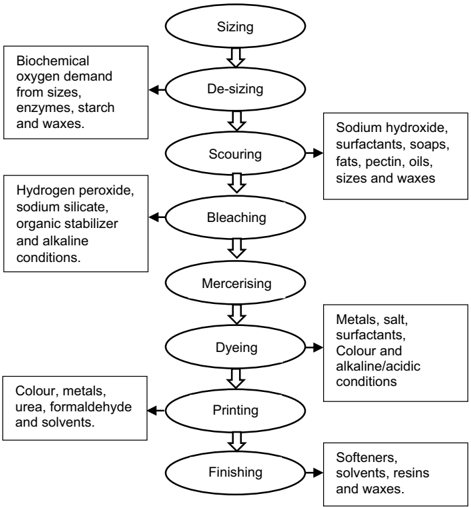
“1 The main pollutants discharged from each step of textile wet processing (after Holkar et al. (2016))”
dos Santos, A. B., Cervantes, F. J., & van Lier, J. B. (2007) · Bioresource Technology · doi:10.1016/j.biortech.2006.11.013 · Cited by 1,155
Vandevivere, P. C., Bianchi, R., & Verstraete, W. (1998) · Journal of Chemical Technology & Biotechnology · doi:10.1002/(sici)1097-4660(199808)72:4<289::aid-jctb905>3.0.co;2-# · Cited by 1,050
Colour in textile effluents - sources, measurement, discharge consents and simulation: a review
O’Neill, C., Hawkes, F. R., Hawkes, D. L., Lourenço, N. D., Pinheiro, H. M., & Delée, W. (1999) · Journal of Chemical Technology & Biotechnology · doi:10.1002/(sici)1097-4660(199911)74:11<1009::aid-jctb153>3.0.co;2-n · Cited by 905
Production, Characterization and Treatment of Textile Effluents: A Critical Review
R Ananthashankar, A. G. (2013) · Journal of Chemical Engineering & Process Technology · doi:10.4172/2157-7048.1000182 · Cited by 754 · cited 4×
“This amount of water is required when chemicals are applied on the fabrics and during the rinsing process of the final products (Ghaly et al. 2014).”
Influential(2012) · doi:10.5772/32373 · Cited by 640
Use of Chlorella vulgaris for bioremediation of textile wastewater
Lim, S.-L., Chu, W.-L., & Phang, S.-M. (2010) · Bioresource Technology · doi:10.1016/j.biortech.2010.04.092 · Cited by 541
Alaton, I. A., Balcioglu, I. A., & Bahnemann, D. W. (2002) · Water Research · doi:10.1016/s0043-1354(01)00335-9 · Cited by 518
Cotton Textile Processing: Waste Generation and Effluent Treatment
Babu, B. R., Parande, A. K., Raghu, S., & Kumar, T. P. (2007) · The journal of cotton science/Journal of cotton science · Cited by 433
Garrote, G., Domínguez, H., & Parajó, J. C. (1999) · Journal of Chemical Technology & Biotechnology · doi:10.1002/(sici)1097-4660(199911)74:11<1101::aid-jctb146>3.0.co;2-m · Cited by 400
Research works printed but not linked: 10
- Adinew B (2012) Textile effluent treatment and decolorization tech- niques-a review. Chem Bulg J Sci Educ 21:434-456
- Bradbury MJ, Collishaw PS, Moorhouse S (2000) Controlled rinsing: a stepchange in reactive dye application technology. Colour J India Ann 5:73-80
- Cumnan S, Yimrattanabovorn J (2012) The use of constructed wet- land for azo dye textile wastewater. Int J Civil Eng Build Mater 2:150-158
- Hussain J, Hussain I, Arif M (2004) Characterization of textile waste- water. J Ind Pollut Control 20:137-144
- Joshi VJ, Santani DD (2012) Physicochemical characterization and heavy metal concentration in effluent of textile industry. Univ J Environ Res Technol 2:93-96
- Kaur H, Sharma G (2015) Removal of dyes from textile industry efflu- ent: a review. Int J Humanit Soc Sci 2(4):59-63
- Nopkhuntod S, Dararat S, Yimrattanabovorn J (2012) Removal of reactive dyes from wastewater by shale. Songklanakarin J Sci Technol 34:117-123
- Shelley TR (1994) Dye pollution clean-up by synthetic mineral. Int Dyer 79:26-31
- Upadhye VB, Joshi SS (2012) Advances in wastewater treatment-a review. Int J Chem Sci Appl 3:264-268
- Uysal Y, Aktas D, Caglar Y (2014) Determination of colour removal effciency of Lemna minor L. from industrial effluents. J Environ Prot Ecol 15:1718-1726
Cited by
Items 101–200 of 1,000
Mobarak, M. B., Sikder, M. F., Muntaha, K. S., Islam, M. S., Rabbi, S. M. F., & Chowdhury, F. (2025) · Nanoscale Advances · doi:10.1039/d5na00035a · Cited by 115
Shaikh, W. A., Chakraborty, S., & Islam, R. U. (2019) · International Journal of Environmental Science and Technology · doi:10.1007/s13762-019-02473-6 · Cited by 112
Khan, A. S., Ibrahim, T. H., Jabbar, N. A., Khamis, M. I., Nancarrow, P., & Mjalli, F. S. (2021) · RSC Advances · doi:10.1039/d0ra10560k · Cited by 112
Lam, S., Choong, M.-K., Sin, J., Zeng, H., Huang, L., Hua, L., Li, H., Jaffari, Z. H., & Cho, K. H. (2022) · Journal of environmental chemical engineering · doi:10.1016/j.jece.2022.108284 · Cited by 112
Shah, S. S., Sharma, T., Dar, B. A., & Bamezai, R. K. (2021) · Environmental Chemistry and Ecotoxicology · doi:10.1016/j.enceco.2021.05.002 · Cited by 113
Recent advances and perspective of electrocoagulation in the treatment of wastewater: A review
Akter, S., Suhan, M. B. K., & Islam, M. S. (2022) · Environmental Nanotechnology Monitoring & Management · doi:10.1016/j.enmm.2022.100643 · Cited by 110
Dyeing of textiles with natural dyes extracted from Terminalia arjuna and Thespesia populnea fruits
Amutha, K. B., Annapoorani, G. S., & Sudhapriya, N. (2020) · Industrial Crops and Products · doi:10.1016/j.indcrop.2020.112303 · Cited by 109
Subcritical and supercritical water oxidation for dye decomposition
Javaid, R., Qazi, U. Y., Ikhlaq, A., Zahid, M., & Alazmi, A. S. (2021) · Journal of Environmental Management · doi:10.1016/j.jenvman.2021.112605 · Cited by 108
The Application of Modified Natural Polymers in Toxicant Dye Compounds Wastewater: A Review
Ishak, S. A., Murshed, M. F., Akil, H. M., Ismail, N., Rasib, S. Z. M., & Al-Gheethi, A. A. S. (2020) · Water · doi:10.3390/w12072032 · Cited by 107
“The different types of dyes are listed in Table 3 [34].”
BackgroundZuorro, A., Lavecchia, R., Monaco, M. M., Iervolino, G., & Vaiano, V. (2019) · Catalysts · doi:10.3390/catal9080645 · Cited by 106
Functionalized nanoparticles and their environmental remediation potential: a review
Rafeeq, H., Hussain, A., Ambreen, A., Zill-e-Huma, Waqas, M., Bilal, M., & Iqbal, H. M. N. (2022) · Journal of nanostructure in chemistry · doi:10.1007/s40097-021-00468-9 · Cited by 104
“About 60% of the dyes used in pigmentation production for various textiles are used in the textile industry [151].”
Background3D-printed red mud/metakaolin-based geopolymers as water pollutant sorbents of methylene blue
Gonçalves, N. P. F., Olhero, S. M., Labrincha, J. A., & Novais, R. M. (2022) · Journal of Cleaner Production · doi:10.1016/j.jclepro.2022.135315 · Cited by 103
Wahlström, N., Steinhagen, S., Toth, G. B., Pavia, H., & Edlund, U. (2020) · Carbohydrate Polymers · doi:10.1016/j.carbpol.2020.116841 · Cited by 102
Ceretta, M. B., Nercessian, D., & Wolski, E. A. (2021) · Frontiers in Microbiology · doi:10.3389/fmicb.2021.651025 · Cited by 100
“This type of effluent are characterized for having a wide range of pH between values of 5 and 12 (Singh and Singh, 2017; Yaseen and Scholz, 2019; Paździor and Bilińska, 2020; Samuchiwal et al., 2021), elevated chemical oxygen demand (COD) from 10 to 2250 mgO2 L−1 (Ghaly et al.”
BackgroundInfluentialBhagat, S. K., Pilario, K. E., Babalola, O. E., Tiyasha, T., Yaqub, M., Onu, C. E., Pyrgaki, K., Falah, M. W., Jawad, A. H., Yaseen, D. A., et al. (2022) · Journal of Cleaner Production · doi:10.1016/j.jclepro.2022.135522 · Cited by 102
Self-citationMa, Z., Chang, H., Liang, Y. Q., Meng, Y., Li, R., & Liang, H. (2023) · Separation and Purification Technology · doi:10.1016/j.seppur.2023.125853 · Cited by 100
SnSe/SnO2 nanocomposites: novel material for photocatalytic degradation of industrial waste dyes
Kaur, D., Bagga, V., Behera, N., Thakral, B., Asija, A., Kaur, J., & Kaur, S. (2019) · Advanced Composites and Hybrid Materials · doi:10.1007/s42114-019-00130-7 · Cited by 97
Sathe, S. M., Chakraborty, I., Dubey, B., & Ghangrekar, M. M. (2021) · Environmental Research · doi:10.1016/j.envres.2021.112135 · Cited by 97
Recent Bio-Advances in Metal-Organic Frameworks
Tibbetts, I., & Κostakis, G. E. (2020) · Molecules · doi:10.3390/molecules25061291 · Cited by 96
Paul, D. R., & Nehra, S. P. (2020) · Environmental Science and Pollution Research · doi:10.1007/s11356-020-09432-6 · Cited by 95
Mota, H. P., Quadrado, R. F. N., Iglesias, B. A., & Fajardo, A. R. (2020) · Applied Catalysis B: Environmental · doi:10.1016/j.apcatb.2020.119208 · Cited by 95
Sharma, R., & Malaviya, P. (2021) · Chemosphere · doi:10.1016/j.chemosphere.2021.133358 · Cited by 95
Paul, R. K., & Ahmaruzzaman, M. (2025) · RSC Advances · doi:10.1039/d5ra04336k · Cited by 97
Polymer-Based Devices and Remediation Strategies for Emerging Contaminants in Water
Alipoori, S., Rouhi, H., Linn, E., Stumpfl, H., Mokarizadeh, H., Esfahani, M. R., Koh, A. S., Weinman, S. T., & Wujcik, E. K. (2021) · ACS Applied Polymer Materials · doi:10.1021/acsapm.0c01171 · Cited by 94
Lee, J. H., Ahn, Y., & Kwak, S. (2022) · ACS Omega · doi:10.1021/acsomega.2c01068 · Cited by 93
Chen, W., He, X., Jiang, Z., Li, B. J., Li, X., & Lin, L. (2022) · Chemical Engineering Journal · doi:10.1016/j.cej.2022.139071 · Cited by 93
A review on the laccase assisted decolourization of dyes: Recent trends and research progress
Jeyabalan, J., Veluchamy, A., Priyan, V. V., Kumar, A., Chandrasekar, R., & Narayanasamy, S. (2023) · Journal of the Taiwan Institute of Chemical Engineers · doi:10.1016/j.jtice.2023.105081 · Cited by 94
Cyclodextrin Polymers and Cyclodextrin-Containing Polysaccharides for Water Remediation
Cova, T. F. G. G., Murtinho, D., Aguado, R. J., Pais, A. A. C. C., & Valente, A. J. M. (2021) · Polysaccharides · doi:10.3390/polysaccharides2010002 · Cited by 92
Tarekegn, M. M., Balakrishnan, R. M., Hiruy, A. M., & Dekebo, A. H. (2021) · RSC Advances · doi:10.1039/d1ra03918k · Cited by 92
A comprehensive review on spinel based novel catalysts for visible light assisted dye degradation
Shah, P. V., Unnarkat, A. P., Patel, F., Shah, M., & Shah, P. (2022) · Process Safety and Environmental Protection · doi:10.1016/j.psep.2022.03.030 · Cited by 93
Hummadi, K. K., Luo, S., & He, S. (2021) · Chemosphere · doi:10.1016/j.chemosphere.2021.131907 · Cited by 92
Yadav, A., Sharma, P., Panda, A. B., & Shahi, V. K. (2021) · Journal of environmental chemical engineering · doi:10.1016/j.jece.2021.105904 · Cited by 90
Patel, D., Singh, A., Rao, A. S., Singh, R. S., & Sonwani, R. K. (2024) · Journal of Environmental Management · doi:10.1016/j.jenvman.2024.122804 · Cited by 90
Adsorption of anionic dyes from textile wastewater utilizing raw corncob
Salih, S. J., Abdul Kareem, A. S., & Anwer, S. S. (2022) · Heliyon · doi:10.1016/j.heliyon.2022.e10092 · Cited by 82
“Figure 5a-b show the adsorption of dyes on the corncob surface at various pHs [1, 2, 3, 4, 5, 6, 7, 8, 9, 10, 11].”
BackgroundYadav, M., Singh, N., Annu, A., Khan, S. A., Raorane, C. J., & Shin, D. K. (2024) · Polymers · doi:10.3390/polym16172417 · Cited by 93
“The The dye concentration reported in textile e ffl uent ranges from 10 to 250 mg/L [19]. dyes discharged in textile effluent can range between 60 mg/L and 200 mg/L [20 However, this range can vary for di ff erent textile industries. for Acid Orange 10 dye, it is 45 mg/L [18].”
BackgroundAbhisek, K., Vhatkar, S. S., Mathew, H. T., Singh, P., & Oraon, R. (2025) · Discover Chemistry. · doi:10.1007/s44371-025-00111-4 · Cited by 89
“Yaseen et al. reviewed several works of literature and found up to 800 mg/L of dye concentration in the industrial effluent released from the cotton industries [13].”
Tianzhi, W., Wei-jie, W., Hu, H., & Khu, S. (2021) · Journal of Cleaner Production · doi:10.1016/j.jclepro.2021.127798 · Cited by 88
Mishra, S., Nayak, J. K., & Maiti, A. (2020) · Clean Technologies and Environmental Policy · doi:10.1007/s10098-020-01809-y · Cited by 88
Anitha, B., & Khadar, M. A. (2020) · Solid State Sciences · doi:10.1016/j.solidstatesciences.2020.106392 · Cited by 87
Silver nanoparticles-based composite for dye removal: A comprehensive review
Sana, S. S., Haldhar, R., Parameswaranpillai, J., Chavali, M. S., & Kim, S. (2022) · Cleaner Materials · doi:10.1016/j.clema.2022.100161 · Cited by 87
Upadhyay, S. K., Rani, N., Kumar, V., Mythili, R., & Jain, D. (2023) · Microbiological Research · doi:10.1016/j.micres.2023.127419 · Cited by 88
Yuvaraj, A., Govarthanan, M., Karmegam, N., Biruntha, M., Senthilkumar, D., Arthanari, M., Govindarajan, R. K., Tripathi, S., Ghosh, S., Kumar, P., et al. (2020) · Chemosphere · doi:10.1016/j.chemosphere.2020.129240 · Cited by 85
Sharma, K., Sharma, S., Sharma, V., Mishra, P. K., Ekielski, A., Sharma, V., & Kumar, V. (2021) · Nanomaterials · doi:10.3390/nano11061403 · Cited by 85
“waste is mainly because of the textile and dye industry [8,9].”
BackgroundTran, T. H., Le, A. H., Pham, T. H., Duong, L. D., Nguyen, X. C., Nadda, A. K., Chang, S. W., Chung, W. J., Nguyen, D. D., & Nguyen, D. T. (2022) · Environmental Research · doi:10.1016/j.envres.2022.113178 · Cited by 90
Menon, P. M., Singh, T. S. A., Pani, N., & Nidheesh, P. V. (2020) · Chemosphere · doi:10.1016/j.chemosphere.2020.128739 · Cited by 83
Agarwal, S., & Singh, A. P. (2022) · Journal of Cleaner Production · doi:10.1016/j.jclepro.2022.130384 · Cited by 83
Saravanan, S., Carolin, C. F., Kumar, P. S., Boobalan, C., & Rangasamy, G. (2022) · Chemosphere · doi:10.1016/j.chemosphere.2022.136266 · Cited by 83
Aguilar‐Aguilar, A., de León-Martínez, L. D., Forgionny, A., Acelas, N. Y., Mendoza, S. R., & Zárate‐Guzmán, A. I. (2023) · The Science of The Total Environment · doi:10.1016/j.scitotenv.2023.167426 · Cited by 83
Current status of textile wastewater management practices and effluent characteristics in Tanzania
Bidu, J. M., der Bruggen, B. V., Rwiza, M. J., & Njau, K. N. (2021) · Water Science & Technology · doi:10.2166/wst.2021.133 · Cited by 83
Jasrotia, R., Prakash, J., Kumar, R., Verma, R., Kumari, S., Kumar, S., Singh, V. P., Nadda, A. K., & Kalia, S. (2022) · Chemosphere · doi:10.1016/j.chemosphere.2022.133706 · Cited by 82
Song, B., Chen, M., Zeng, G., Gong, J., Shen, M., Xiong, W., Zhou, C., Tang, X., Yang, Y., & Wang, W. (2020) · Journal of Hazardous Materials · doi:10.1016/j.jhazmat.2020.122957 · Cited by 81
Phenol removal from wastewater using waste products
Naguib, D. M., & Badawy, N. M. (2019) · Journal of environmental chemical engineering · doi:10.1016/j.jece.2019.103592 · Cited by 81
Aragaw, T. A., & Angerasa, F. T. (2020) · Heliyon · doi:10.1016/j.heliyon.2020.e04975 · Cited by 80
“The textile dyeing effluent has toxic properties and changes the water body's characteristics [1].”
BackgroundMethodAlam, M. Z., Bari, M. N., & Kawsari, S. (2022) · Environmental and Sustainability Indicators · doi:10.1016/j.indic.2022.100176 · Cited by 80
Potential applications of spent adsorbents and catalysts: Re-valorization of waste
Rial, J. B., & Ferreira, M. L. (2022) · The Science of The Total Environment · doi:10.1016/j.scitotenv.2022.153370 · Cited by 80
Du, S., Zhao, P. F., Wang, L., He, G., & Jiang, X. (2023) · Results in Engineering · doi:10.1016/j.rineng.2023.100995 · Cited by 80
Selective Adsorption of Metal–Organic Framework toward Methylene Blue: Behavior and Mechanism
Li, Y., Gao, C., Jiao, J., Cui, J., Ze’an, L., & Song, Q. (2021) · ACS Omega · doi:10.1021/acsomega.1c05299 · Cited by 78
Plant microbe based remediation approaches in dye removal: A review
Gayathiri, E., Prakash, P., Selvam, K., Awasthi, M. K., Ravindran, G., Karri, R. R., Ragunathan, M. G., Jayanthi, J. G., Mani, V., Poudineh, M. A., et al. (2022) · Bioengineered · doi:10.1080/21655979.2022.2049100 · Cited by 79
Ahmad, R., & Ansari, K. (2022) · International Journal of Biological Macromolecules · doi:10.1016/j.ijbiomac.2022.07.092 · Cited by 78
Tanveer, R., Yasar, A., Nizami, A., & Tabinda, A. B. (2022) · Journal of Cleaner Production · doi:10.1016/j.jclepro.2022.135366 · Cited by 79
Majhi, D., & Patra, B. N. (2020) · RSC Advances · doi:10.1039/d0ra08125f · Cited by 79
Bioremediation of textile dye wastewater using microalgae: current trends and future perspectives
Premaratne, M., Nishshanka, G., Liyanaarachchi, V., Nimarshana, P., & Ariyadasa, T. U. (2021) · Journal of Chemical Technology & Biotechnology · doi:10.1002/jctb.6845 · Cited by 71
Naz, F., & Saeed, K. (2022) · Applied Water Science · doi:10.1007/s13201-022-01649-9 · Cited by 77
Adsorption of organic dyes onto nanozeolites: A machine learning study
Oviedo, L. R., Oviedo, V. R., Nora, L. D. D., & da Silva, W. L. (2023) · Separation and Purification Technology · doi:10.1016/j.seppur.2023.123712 · Cited by 77
Dao, T. M., & Luu, T. L. (2020) · Bioresource Technology Reports · doi:10.1016/j.biteb.2020.100583 · Cited by 77
Bioremediation of malachite green dye by two bacterial strains isolated from textile effluents
Roy, D. C., Biswas, S. K., Sheam, M. M., Hasan, M. R., Saha, A. K., Roy, A. K., Haque, M. E., Rahman, M., & Tang, S.-S. (2020) · Current Research in Microbial Sciences · doi:10.1016/j.crmicr.2020.06.001 · Cited by 76
Danish, M., & Muneer, M. (2021) · Applied Surface Science · doi:10.1016/j.apsusc.2021.150262 · Cited by 76
Xiang, X., Chen, D., Li, N., Xu, Q., Li, H., He, J., & Lu, J. (2021) · Separation and Purification Technology · doi:10.1016/j.seppur.2021.119910 · Cited by 76
Rodrigues, A. F. S., da Silva, A. F., da Silva, F. L. B., dos Santos, K. M., de Oliveira, M. P., Nobre, M. M. R., Catumba, B. D., Sales, M. B., Silva, A., Braz, A. K. D. S., et al. (2023) · Process Biochemistry · doi:10.1016/j.procbio.2023.01.014 · Cited by 76
Gökkuş, Ö., Brillas, E., & Sirés, I. (2023) · The Science of The Total Environment · doi:10.1016/j.scitotenv.2023.169143 · Cited by 76
“A content of 50 mg L (cid:0) 1 of TOC was chosen for this dye, a typical content in textile industry wastewater (Yaseen and Scholz, 2019).”
de Souza, C. C., de Souza, L. Z. M., Yılmaz, M., de Oliveira, M. A., Bezerra, A. C. D. S., da Silva, E. F., Dumont, M. R., & Machado, A. R. T. (2022) · Cleaner Materials · doi:10.1016/j.clema.2022.100052 · Cited by 76
Tasew, A. T., Worku, Z., Nkambule, T. T. I., & Fito, J. (2021) · International Journal of Environmental Science and Technology · doi:10.1007/s13762-021-03230-4 · Cited by 74
“The nature of the effluent is recalcitrant, toxic, non-biodegradable, mutagenic, carcinogenic, colorful, and environmentally unacceptable effluent which is normally far beyond the maximum permissible discharging limit (Yaseen and Scholz 2018).”
BackgroundŁagiewka, J., Nowik-Zając, A., Pajdak, A., & Zawierucha, I. (2023) · Carbohydrate Polymers · doi:10.1016/j.carbpol.2023.120615 · Cited by 74
Thoa, L. T. K., Thao, T. T. P., Nguyen-Thi, M.-L., Chung, N. Đ., Ooi, C. W., Park, S.-M., Lan, T. T., Quảng, H. T., Khoo, K. S., Show, P. L., et al. (2023) · Chemosphere · doi:10.1016/j.chemosphere.2023.138392 · Cited by 75
Magdaleno, A. L., Brillas, E., Garcia‐Segura, S., & dos Santos, A. J. (2024) · Separation and Purification Technology · doi:10.1016/j.seppur.2024.127295 · Cited by 74
Eradication of Fatal Textile Industrial Dyes by Wastewater Treatment
(2021) · Biointerface Research in Applied Chemistry · doi:10.33263/briac121.567587 · Cited by 73
“The huge amount of dye consumption releases pollutants and produces environmental pollution through the effluents getting discharged from the textile industries or others [52].”
BackgroundRen, X., Guo, M., Xue, L., Xu, L., Li, L., Yang, L., Wang, M., Xin, Y., Ding, F., & Wang, Y. (2023) · Applied Surface Science · doi:10.1016/j.apsusc.2023.157446 · Cited by 73
Keshta, B. E., Yu, H., Wang, L., Hong, Y., Jian, S., Uddin, M. A., Ouyang, C., Wang, Y., Yuan, X., Zhang, Y., et al. (2025) · npj Clean Water · doi:10.1038/s41545-024-00413-7 · Cited by 73
Elbedwehy, A. M., & Atta, A. M. (2020) · Polymers · doi:10.3390/polym12020338 · Cited by 73
“Dyes such as methylene blue (MB) are extensively used in many industries including leather, textiles, paper, and clothing [1–3].”
Titchou, F. E., Zazou, H., Afanga, H., Gaayda, J. E., Akbour, R. A., Hamdani, M., & Oturan, M. A. (2021) · Journal of Electroanalytical Chemistry · doi:10.1016/j.jelechem.2021.115560 · Cited by 72
Activity enhanced TiO2 nanomaterials for photodegradation of dyes - A review
Thambiliyagodage, C. J. (2021) · Environmental Nanotechnology Monitoring & Management · doi:10.1016/j.enmm.2021.100592 · Cited by 72
Sun, J., Jiang, C., Wu, Z., Liu, Y., & Sun, S. (2022) · Chemosphere · doi:10.1016/j.chemosphere.2022.136107 · Cited by 72
Hydrogen production from wastewater, storage, economy, governance and applications: a review
Elgarahy, A. M., Eloffy, M. G., Hammad, A., Saber, A. N., El‐Sherif, D. M., Mohsen, A., Abouzid, M., & Elwakeel, K. Z. (2022) · Environmental Chemistry Letters · doi:10.1007/s10311-022-01480-3 · Cited by 72
Ahmadi, A., Sarrafzadeh, M., Hosseinian, A., & Ghaffari, S. (2021) · Journal of environmental chemical engineering · doi:10.1016/j.jece.2021.106999 · Cited by 72
Yakamercan, E., Bhatt, P., Aygün, A., Adesope, A. W., & Şimşek, H. (2023) · Environmental Pollution · doi:10.1016/j.envpol.2023.121680 · Cited by 73
Anjiraki, M. K., Ghiyasiyan-Arani, M., Khudair, Z. F., Baladi, M., Shabani‐Nooshabadi, M., & Salavati‐Niasari, M. (2024) · Solar Energy · doi:10.1016/j.solener.2024.112615 · Cited by 71
Hamza, A. M., & Alshamsi, H. A. (2024) · Scientific Reports · doi:10.1038/s41598-024-73915-6 · Cited by 71
Hossain, M. I., Zhang, Y., Haque, A. N. M. A., & Naebe, M. (2025) · Materials · doi:10.3390/ma18112513 · Cited by 72
“The detailed chemical composition containing dyes in textile wastewater and their constituent chemicals and environmental impacts [61] is crucial.”
Alshabib, M., Oluwadamilare, M. A., Tanimu, A., Abdulazeez, I., Alhooshani, K. R., & Ganiyu, S. A. (2020) · Applied Surface Science · doi:10.1016/j.apsusc.2020.147749 · Cited by 71
Borchert, A. J., Henson, W. R., & Beckham, G. T. (2021) · Current Opinion in Biotechnology · doi:10.1016/j.copbio.2021.06.007 · Cited by 71
Kandasamy, K., Surendhiran, S., Jagan, K. S. G., Kumar, G. S., Khadar, Y. A. S., & Rajasingh, P. (2023) · Applied Surface Science Advances · doi:10.1016/j.apsadv.2022.100364 · Cited by 70
Kumari, S., Singh, R. K., Jahangeer, J., & Garg, M. C. (2024) · Water Air & Soil Pollution · doi:10.1007/s11270-024-07532-4 · Cited by 70
“In contrast, synthetic dyes are artificially produced through the utilisation of a range of organic molecules (Benkhaya et al., 2020; Yaseen & Scholz, 2019).”
Eco-friendly adsorbents for industrial dye removal: A comprehensive review of low-cost alternatives
Kassa, A., Engida, A., & Endaye, M. (2025) · Desalination and Water Treatment · doi:10.1016/j.dwt.2025.101362 · Cited by 74
Coria-Oriundo, L. L., Battaglini, F., & Wirth, S. A. (2021) · Ecotoxicology and Environmental Safety · doi:10.1016/j.ecoenv.2021.112237 · Cited by 70
Physico-Chemical Water Quality Parameters Analysis on Textile
Bakar, N. A., Othman, N., Yunus, Z. M., Daud, Z., Norisman, N. S., & Hisham, M. H. (2020) · IOP Conference Series Earth and Environmental Science · doi:10.1088/1755-1315/498/1/012077 · Cited by 70
Pino, E., Calderón, C., Herrera, F. V., Cifuentes, G., & Arteaga, G. (2020) · Frontiers in Chemistry · doi:10.3389/fchem.2020.00365 · Cited by 69
Wang, L., Zhu, Z., Wang, F., Qi, Y., Zhang, W., & Wang, C. (2021) · Chemosphere · doi:10.1016/j.chemosphere.2021.130367 · Cited by 69
Ali, A., Muslim, M., Neogi, I., Afzal, M. F., AlArifi, A. S., & Ahmad, M. (2022) · ACS Omega · doi:10.1021/acsomega.2c01869 · Cited by 68
Singh, R., Singh, T. S., Odiyo, J. O., Smith, J. A., & Edokpayi, J. N. (2020) · Journal of Chemistry · doi:10.1155/2020/8318049 · Cited by 68
“Methylene blue (MB) has found extensive use in the coloring of textiles [3, 4].”
BackgroundWang, Y., Geng, Q., Yang, J., Liu, Y., & Liu, C. (2020) · ACS Omega · doi:10.1021/acsomega.0c04285 · Cited by 67
Metadata
- Authors
- Yaseen, D. A., & Scholz, M.
- Affiliations
- University of Salford (GB)
- Lund University (SE)
- Corresponding author
- Scholz, M.
- Venue
- International Journal of Environmental Science and Technology
- Published
- 2018-11-27
- Volume
- 16
- Issue
- 2
- Pages
- 1193-1226
- ISSN
- 1735-1472 (ISSN-L)
- 1735-2630
- OpenAlex
- W2901997077
- Semantic Scholar
- 3011c780608bf0435a046bc215c6c0b9b481d222
- Cited by
- 2,052
- References
- 96
- Citations by year
- 2026: 255 · 2025: 292 · 2024: 320 · 2023: 343 · 2022: 341 · 2021: 300 · 2020: 167 · 2019: 31
- FWCI
- 54.46
- Type
- journal article
- Language
- en
- Open access
- hybrid
- doi.org
- Licence
- cc-by
- creativecommons.org/licenses/by/4.0 (tdm)
- Locations
- International Journal of Environmental Science and Technology (publishedVersion, cc-by)
- University of Salford Institutional Repository (University of Salford) (submittedVersion, cc-by)
- Lund University Publications (Lund University) (submittedVersion)
- Funders
- Government of Iraq
- Topics
- Physical Sciences › Environmental Science › Water Science and Technology › Coagulation and Flocculation Studies
- Physical Sciences › Materials Science › Polymers and Plastics › Dyeing and Modifying Textile Fibers
- Physical Sciences › Environmental Science › Water Science and Technology › Adsorption and biosorption for pollutant removal
- Keywords
- dyeing wastewater, synthetic wastewater, dye effluents, wastewater treatment, textile industry pollution
About these checks
Registry, retraction, Cites and statistics results are computed, not judged, with one exception: a printed reference that no index lists is read once by a model before it counts as a citation error. Claims are extracted by a model and kept only when their quote appears verbatim in the text; each cited source is then checked, with a model’s help, for whether it says what the claim relies on. Those verdicts can be wrong — read the claim’s quote and the cited source before relying on one.
Statistics and arithmetic are recomputed, not judged.
Confidence bands are shown only for fields calibrated on our annotated test set. None is calibrated yet, so no band is shown.
What counts as a claim ›How we measure confidence ›How we check this ›
Are you an author, or do you see a problem with this page? Request a review
Data sources
Bibliographic data: Semantic Scholar, OpenAlex, Crossref.
Contains information from the Semantic Scholar Academic Graph Datasets, made available under the ODC Attribution License (ODC-BY 1.0).
Semantic Scholar’s data is described in: Kinney, R., et al. (2023). The Semantic Scholar Open Data Platform. arXiv:2301.10140.
