

Textile dye wastewater characteristics and constituents of synthetic effluents: a critical review
Open accessThe DOI matches its Crossref record; 97 of the 97 references it cites were found in a registry or an index.
Abstract
Textile industries are responsible for one of the major environmental pollution problems in the world, because they release undesirable dye effluents. Textile wastewater contains dyes mixed with various contaminants at a variety of ranges. Therefore, environmental legislation commonly obligates textile factories to treat these effluents before discharge into the receiving watercourses. The treatment efficiency of any pilot-scale study can be examined by feeding the system either with real textile effluents or with artificial wastewater having characteristics, which match typical textile factory discharges. This paper presents a critical review of the currently available literature regarding typical and real characteristics of the textile effluents, and also constituents including chemicals used for preparing simulated textile wastewater containing dye, as well as the treatments applied for treating the prepared effluents. This review collects the scattered information relating to artificial textile wastewater constituents and organises it to help researchers who are required to prepare synthetic wastewater. These ingredients are also evaluated based on the typical characteristics of textile wastewater, and special constituents to simulate these characteristics are recommended. The processes carried out during textile manufacturing and the chemicals corresponding to each process are also discussed.
Overview
The claims and statistics of this paper haven’t been checked yet.
Free: it reads the open-access text and checks the first 5 claims that cite a source we can check. Create a free account to check every claim.
Integrity signals
Registry
Cites
Statistics
Figures
Verification
Claims the paper makes
The claims and statistics of this paper haven’t been checked yet.
Free: it reads the open-access text and checks the first 5 claims that cite a source we can check. Create a free account to check every claim.
Claims other papers make about this one
Each is checked against this paper’s own text: does it say what the citing paper says it does?
In the citing paper
“According to Gong et al., these hybrids are more efficient for the adsorption of organic contaminants compared to even activated carbon.70”
From Recent advances on the removal of dyes from wastewater using various adsorbents: a critical review (2021) · cites this paper as [70]
Self-check
Percentages, sums and reported differences re-computed from the paper’s own numbers.
The self-check needs the paper’s full text.
Citations
Cites
A Critical Review on Textile Wastewater Treatments: Possible Approaches
Holkar, C. R., Jadhav, A. J., Pinjari, D. V., Mahamuni, N. M., & Pandit, A. B. (2016) · Journal of Environmental Management · doi:10.1016/j.jenvman.2016.07.090 · Cited by 1,927 · cited 1×
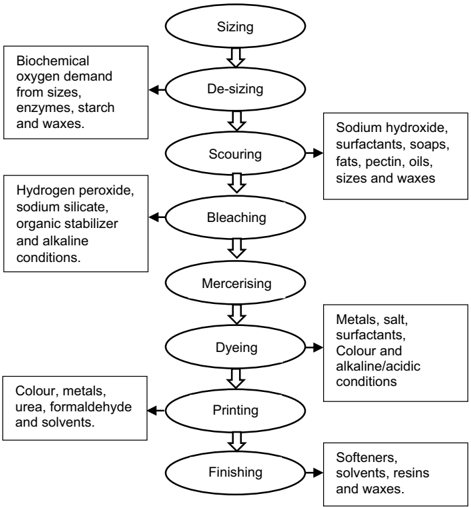
“1 The main pollutants discharged from each step of textile wet processing (after Holkar et al. (2016))”
dos Santos, A. B., Cervantes, F. J., & van Lier, J. B. (2007) · Bioresource Technology · doi:10.1016/j.biortech.2006.11.013 · Cited by 1,155
Vandevivere, P. C., Bianchi, R., & Verstraete, W. (1998) · Journal of Chemical Technology & Biotechnology · doi:10.1002/(sici)1097-4660(199808)72:4<289::aid-jctb905>3.0.co;2-# · Cited by 1,050
Colour in textile effluents - sources, measurement, discharge consents and simulation: a review
O’Neill, C., Hawkes, F. R., Hawkes, D. L., Lourenço, N. D., Pinheiro, H. M., & Delée, W. (1999) · Journal of Chemical Technology & Biotechnology · doi:10.1002/(sici)1097-4660(199911)74:11<1009::aid-jctb153>3.0.co;2-n · Cited by 905
Production, Characterization and Treatment of Textile Effluents: A Critical Review
R Ananthashankar, A. G. (2013) · Journal of Chemical Engineering & Process Technology · doi:10.4172/2157-7048.1000182 · Cited by 754 · cited 4×
“This amount of water is required when chemicals are applied on the fabrics and during the rinsing process of the final products (Ghaly et al. 2014).”
Influential(2012) · doi:10.5772/32373 · Cited by 640
Use of Chlorella vulgaris for bioremediation of textile wastewater
Lim, S.-L., Chu, W.-L., & Phang, S.-M. (2010) · Bioresource Technology · doi:10.1016/j.biortech.2010.04.092 · Cited by 541
Alaton, I. A., Balcioglu, I. A., & Bahnemann, D. W. (2002) · Water Research · doi:10.1016/s0043-1354(01)00335-9 · Cited by 518
Cotton Textile Processing: Waste Generation and Effluent Treatment
Babu, B. R., Parande, A. K., Raghu, S., & Kumar, T. P. (2007) · The journal of cotton science/Journal of cotton science · Cited by 433
Garrote, G., Domínguez, H., & Parajó, J. C. (1999) · Journal of Chemical Technology & Biotechnology · doi:10.1002/(sici)1097-4660(199911)74:11<1101::aid-jctb146>3.0.co;2-m · Cited by 400
Research works printed but not linked: 10
- Adinew B (2012) Textile effluent treatment and decolorization tech- niques-a review. Chem Bulg J Sci Educ 21:434-456
- Bradbury MJ, Collishaw PS, Moorhouse S (2000) Controlled rinsing: a stepchange in reactive dye application technology. Colour J India Ann 5:73-80
- Cumnan S, Yimrattanabovorn J (2012) The use of constructed wet- land for azo dye textile wastewater. Int J Civil Eng Build Mater 2:150-158
- Hussain J, Hussain I, Arif M (2004) Characterization of textile waste- water. J Ind Pollut Control 20:137-144
- Joshi VJ, Santani DD (2012) Physicochemical characterization and heavy metal concentration in effluent of textile industry. Univ J Environ Res Technol 2:93-96
- Kaur H, Sharma G (2015) Removal of dyes from textile industry efflu- ent: a review. Int J Humanit Soc Sci 2(4):59-63
- Nopkhuntod S, Dararat S, Yimrattanabovorn J (2012) Removal of reactive dyes from wastewater by shale. Songklanakarin J Sci Technol 34:117-123
- Shelley TR (1994) Dye pollution clean-up by synthetic mineral. Int Dyer 79:26-31
- Upadhye VB, Joshi SS (2012) Advances in wastewater treatment-a review. Int J Chem Sci Appl 3:264-268
- Uysal Y, Aktas D, Caglar Y (2014) Determination of colour removal effciency of Lemna minor L. from industrial effluents. J Environ Prot Ecol 15:1718-1726
Cited by
Items 401–500 of 1,000
Balarabe, B. Y., Bowmik, S., Ghosh, A., & Maity, P. (2022) · Journal of Magnetism and Magnetic Materials · doi:10.1016/j.jmmm.2022.169823 · Cited by 40
Lee, G., Park, G., Kim, S., & Jhung, S. H. (2022) · Journal of Hazardous Materials · doi:10.1016/j.jhazmat.2022.130133 · Cited by 40
Dyeing wastewater treatment in horizontal-vertical constructed wetland using organic waste media
Benny, C. K., & Chakraborty, S. (2023) · Journal of Environmental Management · doi:10.1016/j.jenvman.2023.117213 · Cited by 40
Preparation of Nano Zeolite and itsApplication in Water Treatment
Ghadhban, M. Y., Abdulmajed, Y. R., Ali, F. D., & Al-Sharify, Z. T. (2020) · IOP Conference Series Materials Science and Engineering · doi:10.1088/1757-899x/870/1/012054 · Cited by 39
Aziz, Y. S. A., Sanad, M. M. S., Abdelhameed, R. M., & Zaki, A. H. (2023) · Frontiers in Chemistry · doi:10.3389/fchem.2022.1102920 · Cited by 39
“In general, the textile effluent is characterized by high pH, intense color, high chemical and biochemical oxygen demands (COD and BOD5, respectively), and high concentrations of total suspended and dissolved solids (Yaseen and Scholz, 2019).”
BackgroundPatel, R. V., Yadav, A., & Shahi, V. K. (2025) · The Science of The Total Environment · doi:10.1016/j.scitotenv.2025.178749 · Cited by 39
Al-Abdallat, Y., Jum’h, I., Bsoul, A. A., Jumah, R., & Telfah, A. (2019) · Water Air & Soil Pollution · doi:10.1007/s11270-019-4310-y · Cited by 40
“The disposal of the textile industry wastewater is one of the most important environmental problems since it is commonly contains large amount of organic chemicals described by low biodegradability, dyes, and salinity (Yaseen and Scholz 2019; Tzitzi et al. 1994).”
BackgroundXu, S., Leng, Q., Wu, X., Xu, Z., Hu, J., Wu, D., Dongxu, J. I. N. G., Wang, P., & Dong, F. (2020) · Energy Conversion and Management · doi:10.1016/j.enconman.2020.113639 · Cited by 39
Synthesis of a novel arginine-modified starch resin and its adsorption of dye wastewater
Zhang, H., Wang, P., Zhang, Y., Cheng, B., Zhu, R., & Li, F. (2020) · RSC Advances · doi:10.1039/d0ra05727d · Cited by 39
Astaraki, H., Masoudpanah, S. M., & Alamolhoda, S. (2021) · Journal of Materials Research and Technology · doi:10.1016/j.jmrt.2021.06.046 · Cited by 39
Kumar, G., & Dutta, R. K. (2022) · Environmental Science and Pollution Research · doi:10.1007/s11356-022-19853-0 · Cited by 40
Moussadik, A., Lazar, N.-E., Mazkad, D., Brigiano, F. S., Baert, K., Hauffman, T., Benzaouak, A., Abrouki, Y., Kacimi, M., Tielens, F., et al. (2022) · Journal of Photochemistry and Photobiology A Chemistry · doi:10.1016/j.jphotochem.2022.114289 · Cited by 39
Munawar, T., Fatima, S., Nadeem, M. S., Mukhtar, F., Akbar, U. A., Hakeem, A. S., & Iqbal, F. (2023) · Journal of Materials Science Materials in Electronics · doi:10.1007/s10854-023-10095-5 · Cited by 39
Resource recovery and treatment of wastewaters using filamentous fungi
Sar, T., Marchlewicz, A., Harirchi, S., Mantzouridou, F. T., Hosoglu, M. I., Akbas, M. Y., Hellwig, C., & Taherzadeh, M. J. (2024) · Science of The Total Environment · doi:10.1016/j.scitotenv.2024.175752 · Cited by 38
Ding, S., Li, X., Qiao, X., Liu, Y., Wang, H., & Ma, C. (2024) · Environmental Pollution · doi:10.1016/j.envpol.2024.124938 · Cited by 38
Wang, M., Murphy, R., & Christie, I. (2025) · Sustainability · doi:10.3390/su17020631 · Cited by 38
Gambino, I., Terzaghi, E., Baldini, E., Bergna, G., Palmisano, G., & Guardo, A. D. (2025) · Environmental Science Processes & Impacts · doi:10.1039/d4em00639a · Cited by 38
“14 16 – 19 Moreover, textile wastes are also characterized by the presence of MPs. 20 Clothing and textile processes in general contribute to the largest release of MPs into the environment, mostly through WWTPs. 20,21 22 – 25 As mentioned by some authors, 25 no data on direct emission of MPs…”
Biological decolourization of textile industry wastewater by a developed bacterial consortium
Madhushika, H. G., Ariyadasa, T. U., & Gunawardena, S. H. P. (2019) · Water Science & Technology · doi:10.2166/wst.2020.010 · Cited by 38
Yabalak, E., Özay, Y., Gizir, A. M., & Dızge, N. (2020) · Journal of Cleaner Production · doi:10.1016/j.jclepro.2020.125207 · Cited by 38
Gholamian, S., Hamzehloo, M., & Farrokhnia, A. (2020) · Journal of environmental chemical engineering · doi:10.1016/j.jece.2020.104937 · Cited by 38
Removal of cationic dye using polyvinyl alcohol membrane functionalized by D-glucose and agar
Nguyen, T. T., Phung, T. K., Bui, X., Doan, V., Tran, T. V., Nguyen, D. V., Lim, K. T., & Nguyen, T. D. (2021) · Journal of Water Process Engineering · doi:10.1016/j.jwpe.2021.101982 · Cited by 38
Ding, F., Ren, P., Wang, G., Wu, S., Du, Y., & Zou, X. (2021) · International Journal of Biological Macromolecules · doi:10.1016/j.ijbiomac.2021.03.194 · Cited by 38
Removal of Methylene Blue dye from textile wastewater using vertical flow constructed wetland
Jayalakshmi, R., Soundaranayaki, K., & Kannan, M. S. (2022) · Materials Today Proceedings · doi:10.1016/j.matpr.2022.12.030 · Cited by 38
Rawat, D., Sharma, U., Yadav, A., Poria, P., Farooqi, F., Pani, B., Mukherjee, P., Singh, M., Sharma, R. S., & Mishra, V. (2023) · Journal of Water Process Engineering · doi:10.1016/j.jwpe.2023.103668 · Cited by 38
Nadeem, M. S., Munawar, T., Mukhtar, F., Rabbani, A. W., Khan, S. A., Koç, M., & Iqbal, F. (2023) · Materials Science and Engineering B · doi:10.1016/j.mseb.2023.116705 · Cited by 38
Baral, S. C., Maneesha, P., Datta, S., Dukiya, K., Sasmal, D., Samantaray, K. S., Krupa, B. R. V., Dasgupta, A., & Sen, S. (2024) · JCIS Open · doi:10.1016/j.jciso.2024.100102 · Cited by 38
Ahmed, T., Ahsan, A., Khan, M. H. R. B., Nahian, T. K., Antar, R. H., Hasan, A., Karim, M. R., Shafiquzzaman, M., & Imteaz, M. A. (2024) · Journal of Environmental Management · doi:10.1016/j.jenvman.2024.121337 · Cited by 37
Pandey, K., Saha, P., & Rao, K. V. B. (2019) · Preparative Biochemistry & Biotechnology · doi:10.1080/10826068.2019.1692219 · Cited by 37
“The maximum dye tolerance for both the isolates VITAKB20 and KPB6 was also in the range of the dyehouse concentration, which is essential for treatment of these wastewaters.([44]) The two isolates VITAKB20 and KPB6 were chosen for further identification.”
BackgroundHasanin, M. S. (2020) · Environmental Science and Pollution Research · doi:10.1007/s11356-020-09104-5 · Cited by 37
Xu, S., Leng, Q., Jin, D., Wu, X., Xu, Z., Wang, P., Wu, D., & Dong, F. (2020) · Desalination · doi:10.1016/j.desal.2020.114541 · Cited by 37
Dindorkar, S. S., Patel, R. V., & Yadav, A. (2022) · Water Science & Technology · doi:10.2166/wst.2022.142 · Cited by 37
Alarcón, M. A. D. F., Pacheco, C. R., Bustos, K. A. G., Meza, K. T., Terán-Hilares, F., Tanaka, D. A. P., Andrade, G. J. C., & Hilares, R. T. (2022) · Water · doi:10.3390/w14244104 · Cited by 37
Weber, A. C., da Silva, B. E., Cordeiro, S. G., Henn, G. S., Costa, B., dos Santos, J. S. H., Corbellini, V. A., Ethur, E. M., & Hoehne, L. (2023) · International Journal of Biological Macromolecules · doi:10.1016/j.ijbiomac.2023.125723 · Cited by 37
Assessment of Wastewater Contaminants Caused by Textile Industries
Dhameliya, K. B., & Ambasana, C. (2023) · Journal of Pure and Applied Microbiology · doi:10.22207/jpam.17.3.09 · Cited by 36
Fahimah, N., Salami, I. R. S., Oginawati, K., & Mubiarto, H. (2024) · Emerging contaminants · doi:10.1016/j.emcon.2024.100313 · Cited by 36
Tsai, P.-F., & Yuan, S. (2024) · Sensors · doi:10.3390/s25010057 · Cited by 37
Masum, M. H., Islam, M. B., Anowar, M. R., Arsh, K., & Alam, S. (2025) · Discover Environment · doi:10.1007/s44274-025-00245-3 · Cited by 36
Montañez‐Barragán, B., Sanz, J. L., Gutiérrez-Macías, P., Morato-Cerro, A., Rodríguez‐Vázquez, R., & Barragán‐Huerta, B. E. (2019) · Extremophiles · doi:10.1007/s00792-019-01149-w · Cited by 36
Tišma, M., Šalić, A., Planinić, M., Zelić, B., Potočnik, M., Šelo, G., & Bucić‐Kojić, A. (2020) · Journal of Water Process Engineering · doi:10.1016/j.jwpe.2020.101327 · Cited by 36
Sethulekshmi, S., & Chakraborty, S. (2021) · Journal of environmental chemical engineering · doi:10.1016/j.jece.2021.106379 · Cited by 36
Le, T. M. H., Nuisin, R., Mongkolnavin, R., Painmanakul, P., & Sairiam, S. (2022) · Separation and Purification Technology · doi:10.1016/j.seppur.2022.120711 · Cited by 36
Birnal, P., de Lucas, M. C. M., Pochard, I., Herbst, F., Heintz, O., Saviot, L., Domenichini, B., & Imhoff, L. (2022) · Applied Surface Science · doi:10.1016/j.apsusc.2022.155213 · Cited by 36
Ben, S. K., Gupta, S., Raj, K. K., & Chandra, V. (2023) · Chemical Physics Letters · doi:10.1016/j.cplett.2023.140469 · Cited by 36
Boukarma, L., Aziam, R., Aboussabek, A., Qdhy, S. E., Zerbet, M., Sinan, F., & Chiban, M. (2023) · Bioresource Technology · doi:10.1016/j.biortech.2023.130197 · Cited by 36
Ahlawat, K., Jangra, R., & Prakash, R. (2024) · ACS Omega · doi:10.1021/acsomega.4c00516 · Cited by 36
Recent advances in microbial fuel cell technology for energy generation from wastewater sources
Zadeh, P. G., Rezania, S., Fattahi, M., Dang, P., Vasseghian, Y., & Aminabhavi, T. M. (2024) · Process Safety and Environmental Protection · doi:10.1016/j.psep.2024.06.077 · Cited by 35
Transforming textile waste into nanocellulose for a circular future
Sathasivam, T., Sugiarto, S., Yew, M. P. Y., Oh, X. Y., Chan, S. Y., Chan, B. Q. Y., Tim, M. J., & Kai, D. (2024) · Nanoscale · doi:10.1039/d4nr01839g · Cited by 38
Paiu, M., Favier, L., & Gavrilescu, M. C. (2025) · Plants · doi:10.3390/plants14243835 · Cited by 35
Herbert, A., Kumar, U., & Janardhan, P. (2020) · Water Environment Research · doi:10.1002/wer.1491 · Cited by 35
“Among all, the industries which are using dyes in their manufacturing process or manufacturing dyes itself contribute a lot in terms of water pollution (Yaseen & Scholz, 2019).”
BackgroundTeng, X. P., Bryan, M. Y. K., Chai, P. V., & Law, J. Y. (2021) · Materials Today Proceedings · doi:10.1016/j.matpr.2021.01.766 · Cited by 35
Lee, J., Seong, S., Jin, S., Jeong, Y., & Noh, J. (2021) · Journal of Industrial and Engineering Chemistry · doi:10.1016/j.jiec.2021.05.029 · Cited by 35
Poolwong, J., Kiatboonyarit, T., Achiwawanich, S., Butburee, T., Khemthong, P., & Kityakarn, S. (2021) · Nanomaterials · doi:10.3390/nano11071715 · Cited by 35
“This process releases a lot of wastes containing both organic dyes and chemicals into the environment [1,2].”
Backgroundde Almeida, É. J. R., Halfeld, G. G., Reginatto, V., & de Andrade, A. R. (2021) · Journal of environmental chemical engineering · doi:10.1016/j.jece.2021.106221 · Cited by 35
Chan, K., & Zinchenko, A. A. (2022) · Journal of environmental chemical engineering · doi:10.1016/j.jece.2022.108055 · Cited by 35
François, M., Lin, K.-S., Rachmadona, N., & Khoo, K. S. (2023) · The Science of The Total Environment · doi:10.1016/j.scitotenv.2023.162437 · Cited by 35
Bioremediation of dyes: a brief review of bioreactor performance
Tiwari, H., Sonwani, R. K., & Singh, R. S. (2023) · Environmental Technology Reviews · doi:10.1080/21622515.2023.2184276 · Cited by 36
“Textile e ffl uent waste studies conducted over the past decade have shown that the average range of BOD 5 and COD are (80-6000) mg/L and (150-30,000) mg/L, respectively [19].”
BackgroundMutharasi, Y., Kaleekkal, N. J., Arumugham, T., BANAT, F. A., & Kapavarapu, M. S. (2020) · Chemical Engineering and Processing - Process Intensification · doi:10.1016/j.cep.2020.108191 · Cited by 35
Li, Y., Bi, R., Su, Y., Li, Y., Yang, C., You, X., Shen, J., Yuan, J., Zhang, R., & Jiang, Z. (2021) · Separation and Purification Technology · doi:10.1016/j.seppur.2021.118372 · Cited by 35
Joshi, P., Raju, N. J., Siddaiah, N. S., & Karunanidhi, D. (2022) · Urban Climate · doi:10.1016/j.uclim.2022.101309 · Cited by 34
A review on textile solid waste management: Disposal and recycling
Ahmed, S. M., Xue, G., & Mirza, S. N. A. (2024) · Waste Management & Research The Journal for a Sustainable Circular Economy · doi:10.1177/0734242x241257093 · Cited by 34
“…do not induce a high risk of nitrogen oxides generation during incineration, there is a large amount of CO 2 and greenhouse gas will form owing to the high carbon content in textile solid waste (Candie et al., 2021; Muthu, 2014; Parvathi, 2009; Yacout and Hassouna, 2016; Yaseen and Scholz, 2019).”
Phan, K.-H., Le, L.-T., Ninh, T.-T. N., Tran, C., Nguyen, T.-T., Nguyen, D.-T.-D., Tra, V.-T., Tran, T.-D., Nguyen, T.-B., Mai, T.-P., et al. (2024) · Case Studies in Chemical and Environmental Engineering · doi:10.1016/j.cscee.2024.101018 · Cited by 35
Zia, J., Shringi, A. K., & Riaz, U. (2025) · Cleaner Chemical Engineering · doi:10.1016/j.clce.2025.100182 · Cited by 34
Urošević, T., & Trivunac, K. V. (2020) · Elsevier eBooks · doi:10.1016/b978-0-12-817378-7.00003-3 · Cited by 34
Construction of two dimensional anion exchange membranes to boost acid recovery performances
Zhang, P., Wu, Y., Liu, W., Cui, P., Huang, Q., & Ran, J. (2020) · Journal of Membrane Science · doi:10.1016/j.memsci.2020.118692 · Cited by 34
Budnyak, T. M., Onwumere, J. N., Pylypchuk, I. V., Jaworski, A., Chen, J., Rokicińska, A., Lindström, M. E., Kuśtrowski, P., Sevastyanova, O., & Slabon, A. (2021) · Chemosphere · doi:10.1016/j.chemosphere.2021.130538 · Cited by 34
Alayan, H. M., Aljumaily, M. M., Alsaadi, M. A., Mjalli, F. S., & Hashim, M. A. (2021) · Toxicological & Environmental Chemistry Reviews · doi:10.1080/02772248.2021.1932888 · Cited by 34
“This group of dyes is considered toxic colorants and can cause harmful effects, therefore, the targeted removal of such compounds has attracted a growing amount of attention (Yaseen and Scholz 2019).”
BackgroundRemoval of crystal violet by Cu-chitosan nano-biocomposite particles using Box–Behnken design
Shukla, S. K., Pandey, S., Saha, S., Singh, H. R., Mishra, P. K., Kumar, S., & Jha, S. K. (2021) · Journal of environmental chemical engineering · doi:10.1016/j.jece.2021.105847 · Cited by 34
Self-supported Ag nanoparticles on AgTi2(PO4)3 for hazardous dyes reduction in industrial wastewater
Moussadik, A., Brigiano, F. S., Tielens, F., Halim, M., Kacimi, M., & Hamidi, A. E. (2021) · Journal of environmental chemical engineering · doi:10.1016/j.jece.2021.106939 · Cited by 34
de Souza, W. F. C., Almeida, F. L. C., de Melo, A. M., Prata, A. S., Forte, M. B. S., de Castro, R. J. S., & Sato, H. H. (2022) · Food and Bioprocess Technology · doi:10.1007/s11947-022-02780-w · Cited by 34
Vu, T.-P.-T., Tran, D.-T., & Pham, Q.-T. (2022) · Journal of Cleaner Production · doi:10.1016/j.jclepro.2022.135007 · Cited by 34
Chowdhury, M. F., Kim, C., & Jang, A. (2023) · Chemosphere · doi:10.1016/j.chemosphere.2023.138878 · Cited by 34
Saravanan, A., Yaashikaa, P. R., Ramesh, B., Shaji, A., & Deivayanai, V. C. (2024) · Food and Chemical Toxicology · doi:10.1016/j.fct.2024.114491 · Cited by 34
A Mini Review on Antiwetting Studies in Membrane Distillation for Textile Wastewater Treatment
Yang, G., Zhang, J., Peng, M., Du, E., Wang, Y., Shan, G., Ling, L., Ding, H., Gray, S. R., & Xie, Z. (2021) · Processes · doi:10.3390/pr9020243 · Cited by 34
“The composition of textile effluent is complex with variations depending on the processing techniques and raw materials, but is mainly composed of a wide variety of dyes, multiple ions, and various surfactants [2].”
BackgroundIşık, B., Çakar, F., & Cankurtaran, Ö. (2023) · Materials Science and Engineering B · doi:10.1016/j.mseb.2023.116451 · Cited by 33
Kiran, S., Albargi, H. B., Afzal, G., Aimun, U., Anjum, M. N., Qadir, M. B., Khaliq, Z., Jalalah, M., Irfan, M., & Abdullah, M. M. (2023) · Applied Water Science · doi:10.1007/s13201-023-02000-6 · Cited by 33
“Because they contain hazardous, non-degradable pollutants absorbed by surface water, sediment, and soil, textile effluents are regarded as the primary industrial concerns (Yaseen and Scholz 2019).”
BackgroundPiezoelectric catalysts for water pollutant remediation: Achievements, challenges, and perspectives
Lü, Y., Hao, C., Gao, S., Zhao, X., An, X., & Hu, G. (2025) · Materials Today · doi:10.1016/j.mattod.2025.04.015 · Cited by 33
Ramdzan, N. S. M., Fen, Y. W., Omar, N. A. S., Anas, N. A. A., Liew, J. Y. C., Daniyal, . M. E. M. M., & Hashim, H. S. (2021) · Measurement · doi:10.1016/j.measurement.2021.109728 · Cited by 33
Ye, H., Chen, D., Li, N., Xu, Q., Li, H., He, J., & Lu, J. (2021) · Journal of Membrane Science · doi:10.1016/j.memsci.2021.119619 · Cited by 33
Saleh, M., Işık, Z., Yabalak, E., Yalvaç, M., & Dızge, N. (2021) · Water Environment Research · doi:10.1002/wer.1659 · Cited by 33
“The presence of dyes in the water bodies blocks sunlight and inhibits photochemical reactions that cause a decrease in the percentage of dissolved oxygen (Yaseen & Scholz, 2019).”
BackgroundCheng, J., Gao, B., Tang, H., Sun, Z., Xu, L., Wang, L., & Cao, D. (2022) · Science China Chemistry · doi:10.1007/s11426-021-1186-2 · Cited by 33
Xu, X., Zhang, J., Tao, F., Dong, Y., Wang, L., & Hong, T. (2022) · Materials Science and Engineering B · doi:10.1016/j.mseb.2022.115676 · Cited by 33
Environmentally Friendly Wastewater Treatment Methods for the Textile Industry
Sachidhanandham, A., & Periyasamy, A. P. (2021) · Handbook of Nanomaterials and Nanocomposites for Energy and Environmental Applications · doi:10.1007/978-3-030-36268-3_54 · Cited by 20
Lim, J. H., Goh, K., Ng, D. Y. F., Jiang, X., Chuah, C. Y., Chew, J. W., & Wang, R. (2022) · Chemical Engineering Journal · doi:10.1016/j.cej.2022.137963 · Cited by 34
Naderahmadian, A., Eftekhari‐Sis, B., Jafari, H., Zirak, M., Padervand, M., Mahmoudi, G., & Samadi, M. (2023) · International Journal of Biological Macromolecules · doi:10.1016/j.ijbiomac.2023.125753 · Cited by 33
Synergetic piezo-photocatalytic effect in NaNbO3/WO3 photocatalyst for RhB degradation
Yan, X., Zhang, S., Pan, L., Ai, T., Li, Z., & Niu, Y. (2023) · Inorganic Chemistry Communications · doi:10.1016/j.inoche.2023.111510 · Cited by 33
Uğan, M., Onaç, C., Kaya, A., Köseoğlu, D., & Akdoğan, A. (2024) · Journal of Molecular Liquids · doi:10.1016/j.molliq.2024.124249 · Cited by 33
Reuse of Textile Dyeing Wastewater Treated by Electrooxidation
Pinto, C., Fernandes, A., Lopes, A., Nunes, M. J., Baía, A., Ciríaco, L., & Pacheco, M. J. (2022) · Water · doi:10.3390/w14071084 · Cited by 32
“The volume and characteristics of the wastewaters generated by the textile industry depend on the type of fabric processed, the industrial processes applied, the type of equipment used and the water consumption [3,4].”
BackgroundChen, Q., Zhou, D., Zhu, Y., Luo, M., & Wu, Z. (2024) · Desalination · doi:10.1016/j.desal.2024.117985 · Cited by 32
Deena, S. R., Nagarajan, S. V., Raman, T., Venkatachalam, P., & Parthasarathy, M. (2020) · Journal of Environmental Management · doi:10.1016/j.jenvman.2020.111406 · Cited by 32
Mahana, A., & Mehta, S. K. (2021) · Environmental Science and Pollution Research · doi:10.1007/s11356-021-12682-7 · Cited by 32
Emerging technologies for mixed industrial wastewater treatment in developing countries: An overview
Nidheesh, P. V., Ravindran, V., Gopinath, A., & Kumar, M. (2021) · Environmental Quality Management · doi:10.1002/tqem.21762 · Cited by 32
Xue, H., Bi, Z., Cheng, J., Xiong, S., & Wang, Y. (2021) · Industrial & Engineering Chemistry Research · doi:10.1021/acs.iecr.1c01254 · Cited by 32
Ceramic membrane overview and applications in textile industry: a review
Ağtaş, M., Dilaver, M., & Koyuncu, İ. (2021) · Water Science & Technology · doi:10.2166/wst.2021.290 · Cited by 32
Dammak, M., Hlima, H. B., Tounsi, L., Michaud, P., Fendri, I., & Abdelkafi, S. (2022) · Bioresource Technology · doi:10.1016/j.biortech.2022.127584 · Cited by 32
Gowriboy, N., Kalaivizhi, R., Munuswamy‐Ramanujam, G., & Aswathy, K. A. (2022) · Journal of Cleaner Production · doi:10.1016/j.jclepro.2022.134399 · Cited by 32
Areej, F., Munawar, T., Mukhtar, F., Nadeem, M. S., Akbar, U. A., Hakeem, A. S., & Iqbal, F. (2023) · Applied Nanoscience · doi:10.1007/s13204-023-02786-6 · Cited by 32
Aziz, G. M., Hussein, S. I., M‐Ridha, M. J., Mohammed, S. J., Abed, K. M., Muhamad, M. H., & Hasan, H. A. (2023) · Biocatalysis and Agricultural Biotechnology · doi:10.1016/j.bcab.2023.102671 · Cited by 33
Kore, V. S., Manjare, S. D., & Taralkar, S. V. (2023) · Journal of Water Process Engineering · doi:10.1016/j.jwpe.2023.104472 · Cited by 32
Adsorption of methylene blue dye on feather keratin/silk fibroin porous aerogels
Xing, X., Zhang, X., Feng, Y., & Yang, X. (2023) · Journal of the Taiwan Institute of Chemical Engineers · doi:10.1016/j.jtice.2023.105298 · Cited by 32
Vidya, C., Manjunatha, C., Sudeep, M., Ashoka, S., & Raj, M. A. L. A. (2020) · SN Applied Sciences · doi:10.1007/s42452-020-2537-2 · Cited by 32
Metadata
- Authors
- Yaseen, D. A., & Scholz, M.
- Affiliations
- University of Salford (GB)
- Lund University (SE)
- Corresponding author
- Scholz, M.
- Venue
- International Journal of Environmental Science and Technology
- Published
- 2018-11-27
- Volume
- 16
- Issue
- 2
- Pages
- 1193-1226
- ISSN
- 1735-1472 (ISSN-L)
- 1735-2630
- OpenAlex
- W2901997077
- Semantic Scholar
- 3011c780608bf0435a046bc215c6c0b9b481d222
- Cited by
- 2,052
- References
- 96
- Citations by year
- 2026: 255 · 2025: 292 · 2024: 320 · 2023: 343 · 2022: 341 · 2021: 300 · 2020: 167 · 2019: 31
- FWCI
- 54.46
- Type
- journal article
- Language
- en
- Open access
- hybrid
- doi.org
- Licence
- cc-by
- creativecommons.org/licenses/by/4.0 (tdm)
- Locations
- International Journal of Environmental Science and Technology (publishedVersion, cc-by)
- University of Salford Institutional Repository (University of Salford) (submittedVersion, cc-by)
- Lund University Publications (Lund University) (submittedVersion)
- Funders
- Government of Iraq
- Topics
- Physical Sciences › Environmental Science › Water Science and Technology › Coagulation and Flocculation Studies
- Physical Sciences › Materials Science › Polymers and Plastics › Dyeing and Modifying Textile Fibers
- Physical Sciences › Environmental Science › Water Science and Technology › Adsorption and biosorption for pollutant removal
- Keywords
- dyeing wastewater, synthetic wastewater, dye effluents, wastewater treatment, textile industry pollution
About these checks
Registry, retraction, Cites and statistics results are computed, not judged, with one exception: a printed reference that no index lists is read once by a model before it counts as a citation error. Claims are extracted by a model and kept only when their quote appears verbatim in the text; each cited source is then checked, with a model’s help, for whether it says what the claim relies on. Those verdicts can be wrong — read the claim’s quote and the cited source before relying on one.
Statistics and arithmetic are recomputed, not judged.
Confidence bands are shown only for fields calibrated on our annotated test set. None is calibrated yet, so no band is shown.
What counts as a claim ›How we measure confidence ›How we check this ›
Are you an author, or do you see a problem with this page? Request a review
Data sources
Bibliographic data: Semantic Scholar, OpenAlex, Crossref.
Contains information from the Semantic Scholar Academic Graph Datasets, made available under the ODC Attribution License (ODC-BY 1.0).
Semantic Scholar’s data is described in: Kinney, R., et al. (2023). The Semantic Scholar Open Data Platform. arXiv:2301.10140.
