

Textile dye wastewater characteristics and constituents of synthetic effluents: a critical review
Open accessThe DOI matches its Crossref record; 97 of the 97 references it cites were found in a registry or an index.
Abstract
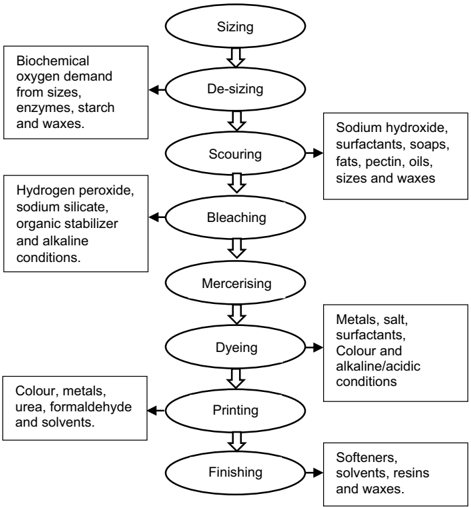
Textile industries are responsible for one of the major environmental pollution problems in the world, because they release undesirable dye effluents. Textile wastewater contains dyes mixed with various contaminants at a variety of ranges. Therefore, environmental legislation commonly obligates textile factories to treat these effluents before discharge into the receiving watercourses. The treatment efficiency of any pilot-scale study can be examined by feeding the system either with real textile effluents or with artificial wastewater having characteristics, which match typical textile factory discharges. This paper presents a critical review of the currently available literature regarding typical and real characteristics of the textile effluents, and also constituents including chemicals used for preparing simulated textile wastewater containing dye, as well as the treatments applied for treating the prepared effluents. This review collects the scattered information relating to artificial textile wastewater constituents and organises it to help researchers who are required to prepare synthetic wastewater. These ingredients are also evaluated based on the typical characteristics of textile wastewater, and special constituents to simulate these characteristics are recommended. The processes carried out during textile manufacturing and the chemicals corresponding to each process are also discussed.
Overview
The claims and statistics of this paper haven’t been checked yet.
Free: it reads the open-access text and checks the first 5 claims that cite a source we can check. Create a free account to check every claim.
Integrity signals
Registry
Cites
Statistics
Figures
Verification
Claims the paper makes
The claims and statistics of this paper haven’t been checked yet.
Free: it reads the open-access text and checks the first 5 claims that cite a source we can check. Create a free account to check every claim.
Claims other papers make about this one
Each is checked against this paper’s own text: does it say what the citing paper says it does?
In the citing paper
“According to Gong et al., these hybrids are more efficient for the adsorption of organic contaminants compared to even activated carbon.70”
From Recent advances on the removal of dyes from wastewater using various adsorbents: a critical review (2021) · cites this paper as [70]
Self-check
Percentages, sums and reported differences re-computed from the paper’s own numbers.
The self-check needs the paper’s full text.
Citations
Cites
A Critical Review on Textile Wastewater Treatments: Possible Approaches
Holkar, C. R., Jadhav, A. J., Pinjari, D. V., Mahamuni, N. M., & Pandit, A. B. (2016) · Journal of Environmental Management · doi:10.1016/j.jenvman.2016.07.090 · Cited by 1,927 · cited 1×
“1 The main pollutants discharged from each step of textile wet processing (after Holkar et al. (2016))”
dos Santos, A. B., Cervantes, F. J., & van Lier, J. B. (2007) · Bioresource Technology · doi:10.1016/j.biortech.2006.11.013 · Cited by 1,155
Vandevivere, P. C., Bianchi, R., & Verstraete, W. (1998) · Journal of Chemical Technology & Biotechnology · doi:10.1002/(sici)1097-4660(199808)72:4<289::aid-jctb905>3.0.co;2-# · Cited by 1,050
Colour in textile effluents - sources, measurement, discharge consents and simulation: a review
O’Neill, C., Hawkes, F. R., Hawkes, D. L., Lourenço, N. D., Pinheiro, H. M., & Delée, W. (1999) · Journal of Chemical Technology & Biotechnology · doi:10.1002/(sici)1097-4660(199911)74:11<1009::aid-jctb153>3.0.co;2-n · Cited by 905
Production, Characterization and Treatment of Textile Effluents: A Critical Review
R Ananthashankar, A. G. (2013) · Journal of Chemical Engineering & Process Technology · doi:10.4172/2157-7048.1000182 · Cited by 754 · cited 4×
“This amount of water is required when chemicals are applied on the fabrics and during the rinsing process of the final products (Ghaly et al. 2014).”
Influential(2012) · doi:10.5772/32373 · Cited by 640
Use of Chlorella vulgaris for bioremediation of textile wastewater
Lim, S.-L., Chu, W.-L., & Phang, S.-M. (2010) · Bioresource Technology · doi:10.1016/j.biortech.2010.04.092 · Cited by 541
Alaton, I. A., Balcioglu, I. A., & Bahnemann, D. W. (2002) · Water Research · doi:10.1016/s0043-1354(01)00335-9 · Cited by 518
Cotton Textile Processing: Waste Generation and Effluent Treatment
Babu, B. R., Parande, A. K., Raghu, S., & Kumar, T. P. (2007) · The journal of cotton science/Journal of cotton science · Cited by 433
Garrote, G., Domínguez, H., & Parajó, J. C. (1999) · Journal of Chemical Technology & Biotechnology · doi:10.1002/(sici)1097-4660(199911)74:11<1101::aid-jctb146>3.0.co;2-m · Cited by 400
Research works printed but not linked: 10
- Adinew B (2012) Textile effluent treatment and decolorization tech- niques-a review. Chem Bulg J Sci Educ 21:434-456
- Bradbury MJ, Collishaw PS, Moorhouse S (2000) Controlled rinsing: a stepchange in reactive dye application technology. Colour J India Ann 5:73-80
- Cumnan S, Yimrattanabovorn J (2012) The use of constructed wet- land for azo dye textile wastewater. Int J Civil Eng Build Mater 2:150-158
- Hussain J, Hussain I, Arif M (2004) Characterization of textile waste- water. J Ind Pollut Control 20:137-144
- Joshi VJ, Santani DD (2012) Physicochemical characterization and heavy metal concentration in effluent of textile industry. Univ J Environ Res Technol 2:93-96
- Kaur H, Sharma G (2015) Removal of dyes from textile industry efflu- ent: a review. Int J Humanit Soc Sci 2(4):59-63
- Nopkhuntod S, Dararat S, Yimrattanabovorn J (2012) Removal of reactive dyes from wastewater by shale. Songklanakarin J Sci Technol 34:117-123
- Shelley TR (1994) Dye pollution clean-up by synthetic mineral. Int Dyer 79:26-31
- Upadhye VB, Joshi SS (2012) Advances in wastewater treatment-a review. Int J Chem Sci Appl 3:264-268
- Uysal Y, Aktas D, Caglar Y (2014) Determination of colour removal effciency of Lemna minor L. from industrial effluents. J Environ Prot Ecol 15:1718-1726
Cited by
Items 601–700 of 1,000
Abdollahi, J., Moghaddam, M. R. A., & Habibzadeh, S. (2025) · Environmental Research · doi:10.1016/j.envres.2025.121889 · Cited by 25
Mao, G., Wang, F., Wang, J., Chen, P., Zhang, X., Zhang, H., Wang, Z., & Song, A. (2021) · Journal of Cleaner Production · doi:10.1016/j.jclepro.2021.129437 · Cited by 25
Bhardwaj, A., Nag, S., Dahiya, A., Pandey, P., Arora, M., & Babu, J. N. (2022) · CLEAN - Soil Air Water · doi:10.1002/clen.202100108 · Cited by 26
Robust mitigation of FO membrane fouling by coagulation-floatation process: Role of microbubbles
Huang, M., Liang, Z., Ren, L., Wu, Q., Li, J., Song, J., & Meng, L. (2022) · Desalination · doi:10.1016/j.desal.2022.115693 · Cited by 25
He, Y., Fu, Q., Li, X., Yin, L., Wang, D., & Liu, Y. (2022) · The Science of The Total Environment · doi:10.1016/j.scitotenv.2022.153865 · Cited by 25
Zhu, M., Cao, Z., Yang, H., Xu, Z., & Cheng, C. (2022) · Separation and Purification Technology · doi:10.1016/j.seppur.2022.121775 · Cited by 25
Nisa, F. U., Naseem, K., Aziz, A., Hassan, W., Fatima, N., Najeeb, J., Rehman, S. U., Khalid, A., & Khan, M. E. (2024) · Reviews in Inorganic Chemistry · doi:10.1515/revic-2024-0042 · Cited by 24
A short review on water management and reuse in textile industry – a sustainable approach
Thombre, N. V., Patil, P. S., Yadav, A., & Patwardhan, A. (2025) · Discover Water · doi:10.1007/s43832-025-00215-z · Cited by 24
Textile Wastewater Treatment by Membrane and Electrooxidation Processes: A Critical Review
Espinosa, M., Afonso, C., Saraiva, B., Vione, D. V., & Fernandes, A. (2026) · Clean Technologies · doi:10.3390/cleantechnol8010009 · Cited by 24
“The dye uptake is also enhanced by auxiliary chemicals [11,12].”
InfluentialDegradation Mechanism of Organic Dyes by Effective Transition Metal Oxide
Rani, B., Thamizharasan, G., Nayak, A. K., & Sahu, N. K. (2020) · Wiley eBooks · doi:10.1002/9781119631422.ch7 · Cited by 24
Hoang, N. B., Nguyen, T. T., Nguyen, D. V., & Tan, L. V. (2020) · Materials Today Proceedings · doi:10.1016/j.matpr.2020.09.391 · Cited by 24
Electrochemical degradation of emerging pollutants via laser-induced graphene electrodes
Thamaraiselvan, C., Bandyopadhyay, D., Powell, C. D., & Arnusch, C. J. (2021) · Chemical Engineering Journal Advances · doi:10.1016/j.ceja.2021.100195 · Cited by 24
Saranya, P., Ramesh, S. T., & Gandhimathi, R. (2021) · Water Practice & Technology · doi:10.2166/wpt.2021.123 · Cited by 24
“…of alginate is believed to be by one of the following mechanisms: charge neutralization along with bridging the gap between the particles, or by the formation of calcium alginate gel, which is especially more effective at high calcium concentrations (Yaseen & Scholz 2019; Zhao et al. 2020, 2012).”
BackgroundInfluentialZhang, Y., Yang, Q., Liang, J., Luo, Y., Liu, Q., Yang, Y., & Sun, X. (2022) · Journal of Physics and Chemistry of Solids · doi:10.1016/j.jpcs.2022.110893 · Cited by 24
Reactive Blue 19 dye removal by UV-LED/chlorine advanced oxidation process
Gholizade, A., Asadollahfardi, G., & Rezaei, R. (2022) · Environmental Science and Pollution Research · doi:10.1007/s11356-022-22273-9 · Cited by 24
“Another environmental problem associated with this industry is the unacceptable effluent (Yaseen and Scholz 2019).”
BackgroundMaulana, A., Adiandri, R. S., Boopathy, R., & Setiadi, T. (2022) · Journal of Bioscience and Bioengineering · doi:10.1016/j.jbiosc.2022.08.005 · Cited by 24
Sagadevan, S., Lett, J. A., Fatimah, I., Selvi, K., Sivasankaran, R. P., Weldegebrieal, G. K., & Oh, W. (2022) · Processes · doi:10.3390/pr10102098 · Cited by 24
Poly(vinyl alcohol) (PVA)-based nanofibers materials for azo dye adsorption: an overview
Matabola, K. P., Mokhena, T. C., Sikhwivhilu, K. K., Mokhothu, T. H., & Mochane, M. J. (2022) · International Journal of Environmental Science and Technology · doi:10.1007/s13762-022-04666-y · Cited by 24
“This explains the high dye concentrations in textile wastewaters which can range from 10 to 800 mg L−1 (Yaseen and Scholz 2019).”
BackgroundOng, M. D., Vasquez, I., Alvarez, B., Cho, D. R., Williams, M. B., Vincent, D., Ali, M. A., Aich, N., Pinto, A. H., & Choudhury, M. R. (2023) · Membranes · doi:10.3390/membranes13020143 · Cited by 24
Banerjee, F., & Samanta, S. K. (2023) · Materials Chemistry Frontiers · doi:10.1039/d2qm01028c · Cited by 24
Seleman, M., Sime, T., Ayele, A., Sergawie, A., Nkambule, T. T. I., & Fito, J. (2023) · International Journal of Biomaterials · doi:10.1155/2023/2012069 · Cited by 24
“Due to the presence of dyes and additives used (such as caustic soda, sodium carbonate, and salts) during the textile manufacturing steps [49], Cu (II) ion occurs in textile efuent [50].”
BackgroundTantuvoy, S., Kumar, M., & Nambi, I. M. (2023) · Journal of environmental chemical engineering · doi:10.1016/j.jece.2023.110721 · Cited by 24
Hossain, S. A., Sarkar, S., Bose, S., & Das, P. (2023) · Surfaces and Interfaces · doi:10.1016/j.surfin.2023.103281 · Cited by 24
Moneer, A. A. (2023) · The Egyptian Journal of Aquatic Research · doi:10.1016/j.ejar.2023.08.007 · Cited by 24
Drummer, S., Mkhari, O., & Chowdhury, M. R. (2024) · Next Nanotechnology · doi:10.1016/j.nxnano.2024.100069 · Cited by 24
Thambiliyagodage, C. J., Liyanaarachchi, H., Jayanetti, M., Ekanayake, G., Mendis, A., Samarakoon, U., & Vigneswaran, S. (2024) · Scientific Reports · doi:10.1038/s41598-024-63452-7 · Cited by 24
Farhat, Z., Kumar, A., & Das, C. (2024) · Surfaces and Interfaces · doi:10.1016/j.surfin.2024.104601 · Cited by 24
Paixão, R. M., da Silva, L. H. B. R., Vieira, M. F., de Amorim, M. T. P., Bergamasco, R., & Vieira, A. M. S. (2024) · Environmental Technology · doi:10.1080/09593330.2024.2369733 · Cited by 24
“Consequently, environmental regulations mandate that industries treat this wastewater before discharging it into water bodies [4], as it can pose significant risks to aquatic ecosystems and human health due to the presence of heavy metals and aromatic compounds [5].”
Kusworo, T. D., Purwanto, P., Jos, B., Budiyono, B., Astuti, D. A. P., Inamullah, A. M. A., & Dalanta, F. (2024) · Process Safety and Environmental Protection · doi:10.1016/j.psep.2024.08.048 · Cited by 24
Al‐Salmi, F. A., Fayad, E., Mubarak, M. F., & Hemdan, M. (2025) · International Journal of Environmental & Analytical Chemistry · doi:10.1080/03067319.2025.2522259 · Cited by 24
Jasińska, A., Góralczyk-Bińkowska, A., Soboń, A., & Długoński, J. (2019) · International Journal of Environmental Science and Technology · doi:10.1007/s13762-019-02290-x · Cited by 24
Önder, A., & Özay, H. (2021) · Chemical Engineering and Processing - Process Intensification · doi:10.1016/j.cep.2021.108427 · Cited by 24
Urbina-Suarez, N. A., Rivera-Caicedo, C., González-Delgado, Á. D., Barajas-Solano, A. F., & Machuca‐Martínez, F. (2023) · Toxics · doi:10.3390/toxics11040366 · Cited by 24
“Most of the dyes used in the textile industry are synthetic and can be classified into azo, anthraquinone, sulfur, phthalocyanine, and triarylmethane groups; according to their chemical structure and their mode of application, can be classified as reactive, direct, dispersed, primary and vat dyeing [68].”
BackgroundRecent advances of piezo‐catalysis and photocatalysis for efficient environmental remediation
Alshammari, K. F. (2024) · Luminescence · doi:10.1002/bio.4808 · Cited by 24
Bukhari, S. N. U. S., Shah, A. A., Liu, W., Channa, I. A., Chandio, A. D., Chandio, I. A., & Ibupoto, Z. H. (2024) · Ceramics International · doi:10.1016/j.ceramint.2024.07.440 · Cited by 23
Abdu, M., Babaee, S., Worku, A., Diale, P. P., Msagati, T. A. M., & Fito, J. (2025) · Inorganic Chemistry Communications · doi:10.1016/j.inoche.2025.114078 · Cited by 25
Application of nano-TiO 2 @adsorbent composites in the treatment of dye wastewater: A review
Guo, J., Zhou, T., Guo, H., Ge, C., & Lu, J. (2025) · Journal of Engineered Fibers and Fabrics · doi:10.1177/15589250251329450 · Cited by 23
“10,11 Dye molecules impede the transmission of light and disrupt the process of photosynthesis.”
Cetina, M., Mihovilović, P., Pešić, A., & Vojnović, B. (2025) · Molecules · doi:10.3390/molecules30122593 · Cited by 25
“Textile wastewaters are characterised by altered colouration and significantly increased values of temperatures, pH, conductivity, turbidity and suspended matter accompanied by high chemical oxygen demand (COD) and biochemical oxygen demand (BOD) [1].”
Jin, J., Li, H.-S., Yan, W., Wang, Y.-C., Qiao, Q., Zhang, Q.-J., Wu, S.-Y., Lu, Y.-H., Ping, S.-F., & Jiang, Z.-Y. (2020) · Spectrochimica Acta Part A Molecular and Biomolecular Spectroscopy · doi:10.1016/j.saa.2020.118232 · Cited by 23
Magnetic methacrylated gelatin- g -polyelectrolyte for methylene blue sorption
Ruiz, C., Vera, M., Rivas, B. L., Sánchez, S. A., & Urbano, B. F. (2020) · RSC Advances · doi:10.1039/d0ra08188d · Cited by 23
KIT-6 induced mesostructured TiO2 for photocatalytic degradation of methyl blue
Siraj, Z., Maafa, I. M., Shafiq, I., Shezad, N., Akhter, P., Yang, W., & Hussain, M. (2021) · Environmental Science and Pollution Research · doi:10.1007/s11356-021-14442-z · Cited by 23
“These intense effluents from industries release into the ecosystem, causing severe environmental problems, specifically, water pollution (Hamayun et al. 2022; Yaseen and Scholz 2019).”
BackgroundChen, H., Park, Y., Kwon, E. E., Tsang, Y. F., Bui, X., Khiem, T. C., You, S., Hu, C., & Lin, K. A. (2021) · Journal of Colloid and Interface Science · doi:10.1016/j.jcis.2021.11.186 · Cited by 23
“Specifically, a carcinogenic dye, Rhodamine B (RB), was selected as a representative refractory, toxic, and widely detected contaminant [30, 31] to evaluate the MPS activation ability of these catalysts.”
Congo red recovery from water using green extraction solvents
Villar, L., Sas, O. G., Sánchez, P. B., Domínguez, Á., & González, B. (2021) · Water Resources and Industry · doi:10.1016/j.wri.2021.100170 · Cited by 23
Ultrathin graphene oxide membrane for pilot scale dyehouse effluent treatment
Liu, Z., Ma, Z., Wang, X., Ye, D., Yu, H. L., & Xin, J. H. (2022) · Desalination · doi:10.1016/j.desal.2022.115876 · Cited by 23
Photocatalytic oxidation of textile dye using sugarcane bagasse-Nb2O5 as a catalyst
de Almeida, A. R., Monteiro, F. C., Monteiro, J. F. H. L., Tiburtius, E. R. L., & Pessôa, C. A. (2022) · Journal of Photochemistry and Photobiology A Chemistry · doi:10.1016/j.jphotochem.2022.114103 · Cited by 23
Graphene Oxide‐Based Adsorbents for Organic‐Dyes Removal from Contaminated Water: A Review
Thu, L. D., & Tran, H. V. (2022) · Zeitschrift für anorganische und allgemeine Chemie · doi:10.1002/zaac.202200140 · Cited by 23
Bagwade, P. P., Magdum, V. V., Malavekar, D. B., Chitare, Y. M., Gunjakar, J. L., Patil, U. M., & Lokhande, C. D. (2022) · Journal of Materials Science Materials in Electronics · doi:10.1007/s10854-022-09174-w · Cited by 23
Cuebas‐Irizarry, M. F., & Grunden, A. M. (2023) · Microbial Biotechnology · doi:10.1111/1751-7915.14258 · Cited by 23
Kartiko, D. C., Adhe, K. R., Dewi, H. S. C. P., & Erta, E. (2023) · Lumbung Inovasi Jurnal Pengabdian kepada Masyarakat · doi:10.36312/linov.v8i2.1328 · Cited by 23
“Namun, pewarna sintetis menghasilkan limbah berbahaya yang dapat menyebabkan pencemaran lingkungan seperti, mencemari tanah, sedimen, dan air permukaan di sekitarnya (Yaseen & Scholz, 2019).”
BackgroundHu, H., Zhao, L., Yao, L., He, M., Lv, Y., & Li, R. (2024) · Journal of Chromatography A · doi:10.1016/j.chroma.2024.464781 · Cited by 23
Sahin, B., Ozbey‐Unal, B., Dızge, N., Keskinler, B., & Balçık, Ç. (2024) · Colloids and Surfaces B Biointerfaces · doi:10.1016/j.colsurfb.2024.113986 · Cited by 23
Esfahani, E. B., Zeidabadi, F. A., Jafarikojour, M., & Mohseni, M. (2024) · The Science of The Total Environment · doi:10.1016/j.scitotenv.2024.175796 · Cited by 23
Pei, L., Sun, S., Yi, J., Shen, J., An, Y., Sun, G. Z., & Wang, J. (2024) · Polymer · doi:10.1016/j.polymer.2024.127814 · Cited by 23
Quantum chemical investigation of the degradation of acid orange 7 by different oxidants
Badeji, A. A., Omoniyi, M. T., Ogunbayo, T. B., Oladipo, S. D., & Akinbulu, I. A. (2024) · Discover Chemistry. · doi:10.1007/s44371-024-00059-x · Cited by 23
“Effluents of AO7 dyes are produced during dyeing and finishing processes because they do not have a complete degree of fixation on the fiber or material [18, 19].”
Harjati, F., Citradewi, P. W., Purwiandono, G., & Fatimah, I. (2020) · Arabian Journal of Chemistry · doi:10.1016/j.arabjc.2020.05.032 · Cited by 23
Al‐Qahtani, S. D., Snari, R. M., Alamrani, N. A., Aljuhani, E. H., Bayazeed, A. A., Aldawsari, A. M., & El‐Metwaly, N. M. (2022) · Journal of Materials Research and Technology · doi:10.1016/j.jmrt.2022.03.087 · Cited by 23
Manjubaashini, N., Thangadurai, T. D., & Nehru, K. (2022) · Journal of Materials Research and Technology · doi:10.1016/j.jmrt.2022.11.182 · Cited by 23
Green Synthesis of Mixed ZnO-SnO2 Nanoparticles for Solar-Assisted Degradation of Synthetic Dyes
Algarni, T. S., Al-Mohaimeed, A. M., Abduh, N. A. Y., Habab, R. A., & Alqahtani, S. M. (2023) · Catalysts · doi:10.3390/catal13121509 · Cited by 22
“The adverse effect of the discharge of untreated aqueous solutions of dyes not only affects water ecosystems but also represents a serious threat to human, plant, and animal health [6,7].”
Gujar, J. P., Gautam, M. K., & Modhera, B. (2025) · Biomass Conversion and Biorefinery · doi:10.1007/s13399-025-06795-z · Cited by 22
Alarcón, M. A. D. F., Jarro, R. Y. A., Ahmed, M. A., Bustos, K. A. G., Tanaka, D. A. P., & Hilares, R. T. (2022) · Ultrasonics Sonochemistry · doi:10.1016/j.ultsonch.2022.106144 · Cited by 22
“The physicochemical characteristics and composition of the textile wastewater depend on different factors such as the stage of the process from which it was released, the country, the machinery used for its management, and the season due to demands of the market for certain types of clothing for each period of the yea…”
BackgroundSingh, J. K., Kumar, P., & Vishwakarma, S. (2022) · Water Air & Soil Pollution · doi:10.1007/s11270-022-05799-z · Cited by 22
Manzar, M. S., Ahmad, T., Zubair, M., Ullah, N., Alqahtani, H. A., da Gama, B. M. V., Georgin, J., Nasir, M., Mu’azu, N. D., AlGhamdi, J. M., et al. (2023) · Process Safety and Environmental Protection · doi:10.1016/j.cherd.2023.02.047 · Cited by 22
Yousefzadeh, Z., Montazer, M., & Mianehro, A. (2023) · Carbohydrate Polymers · doi:10.1016/j.carbpol.2023.121622 · Cited by 22
Pandey, A., Kant, G., Chaudhary, A., Amesho, K. T. T., Reddy, K., & Bux, F. (2024) · World Journal of Microbiology and Biotechnology · doi:10.1007/s11274-023-03863-2 · Cited by 22
“Textile wastewater typically contains dyes, heavy metals, nitrates, phosphates, high levels of COD, and sulphates, all of which pose environmental hazards (Yaseen and Scholz 2019).”
BackgroundStability and performance of aerobic granular sludge for treatment of textile-dyeing wastewater
Pan, K., Zhou, Q., Guo, T., Chen, Y., Li, F., Ding, M., & Li, J. (2024) · Journal of Water Process Engineering · doi:10.1016/j.jwpe.2024.105401 · Cited by 22
Alsalme, A., Eltawil, M. A., Alsaeedi, H., Mohammed, N. N., Amin, A. E., Hijazy, H. M., Abdel-Messih, M. F., Sultan, A., & Ahmed, M. A. (2025) · Materials Chemistry and Physics · doi:10.1016/j.matchemphys.2025.130367 · Cited by 22
Madi, K., Agueniou, F., Chebli, D., Tahraoui, H., Bouguettoucha, A., Zhang, J., & Amrane, A. (2025) · Colloids and Surfaces A Physicochemical and Engineering Aspects · doi:10.1016/j.colsurfa.2025.136469 · Cited by 22
Biotransformation of xenobiotics by hairy roots
Jha, P., Sen, R., Jobby, R., Sachar, S., Bhatkalkar, S. G., & Desai, N. S. (2020) · Phytochemistry · doi:10.1016/j.phytochem.2020.112421 · Cited by 22
Tehrim, A., Dai, M. Q., Wu, X., Umair, M. M., Ali, I., Amjed, M. A., Rong, R., Javaid, S. F., & Peng, C. (2021) · Journal of Applied Polymer Science · doi:10.1002/app.50655 · Cited by 22
Giordano, E. D. V., Brassesco, M. E., Camiscia, P., Picó, G. A., & Valetti, N. W. (2021) · Water Air & Soil Pollution · doi:10.1007/s11270-021-05085-4 · Cited by 22
“Nevertheless, a high dye concentration (100 to 500 mg/L) is usually found on other less efficient industrial textile wastewaters (Yaseen & Scholz, 2019).”
BackgroundTailoring Chitosan/LTA Zeolite Hybrid Aerogels for Anionic and Cationic Dye Adsorption
de Luna, M. S., Greco, F., Pastore, R., Mensitieri, G., Filippone, G., Aprea, P., Mallamace, D., Mallamace, F., & Chen, S. H. (2021) · International Journal of Molecular Sciences · doi:10.3390/ijms22115535 · Cited by 22
Sočo, E., Papciak, D., Michel, M. M., Pająk, D., Domoń, A., & Kupiec, B. (2021) · Minerals · doi:10.3390/min11070774 · Cited by 22
“Additionally, textile wastewaters are often alkaline [99,100].”
Alemu, A., & Kerie, E. (2022) · Water Practice & Technology · doi:10.2166/wpt.2022.063 · Cited by 22
Morenas, B., Saqib, S., Mukhtar, A., Stromberg, J., & Wu, S. X. (2025) · Energies · doi:10.3390/en18215692 · Cited by 21
Gezahegn, G. Y., Worku, Z., Angassa, K., Nkambule, T. T. I., & Fito, J. (2021) · Arabian Journal for Science and Engineering · doi:10.1007/s13369-021-05776-4 · Cited by 21
“Actually, textile industrial wastewater compositions are significantly influenced by types of fabric produced, chemical types consumed, equipment used in the processes, and the fabric weight [19].”
BackgroundSutar, R. S., Barkul, R. P., & Patil, M. K. (2021) · Journal of Molecular Liquids · doi:10.1016/j.molliq.2021.117191 · Cited by 21
Zeljković, S., Balaban, M., Gajić, D., Vračević, S., Ivas, T., Vranković, D., & Jelić, D. (2022) · Green Chemistry Letters and Reviews · doi:10.1080/17518253.2022.2108343 · Cited by 21
“especially since many of them are non-biodegradable and toxic (1).”
BackgroundMajumder, S., Dhara, B., Mitra, A. K., & Dey, S. (2023) · Environmental Science and Pollution Research · doi:10.1007/s11356-023-25431-9 · Cited by 21
“The mining industries release a significant amount of heavy metals that are toxic to aquatic life and public health, whereas the textile industries discard colored wastewater containing toxic, carcinogenic, and mutagenic dyestuffs (Islam et al. 2015, Yaseen and Scholz 2019).”
Reusing spent fluid catalytic cracking catalyst as an adsorbent in wastewater treatment applications
Gameiro, T., Costa, C., Labrincha, J. A., & Novais, R. M. (2023) · Materials Today Sustainability · doi:10.1016/j.mtsust.2023.100555 · Cited by 21
A comprehensive review on textile wastewater treatment by coupling TiO2 with PVDF membrane
Zeitoun, Z., & Selem, N. Y. (2023) · Bulletin of the National Research Centre/Bulletin of the National Research Center · doi:10.1186/s42269-023-01131-9 · Cited by 21
“A large variety of inputs, as chemicals and dyestuff, are used in these processes and unfortunately, not all the inputs are contained in the final product, therefore, they become waste and discharged to the environment (Jahan et al. 2022; Yaseen and Scholz 2019).”
BackgroundAk, C., Razzaque, S. M. A., Haque, M. A., Akter, A., Ganguli, S., Islam, M. N., Nur, A. S. M., & Sabur, M. A. (2023) · Chemistry of Inorganic Materials · doi:10.1016/j.cinorg.2023.100019 · Cited by 21
Rajesh, Y., Boricha, H., Suryavanshi, A., Gajare, A., Jain, S. N., & Suresh, K. (2023) · Materials Today Proceedings · doi:10.1016/j.matpr.2023.11.046 · Cited by 21
Baral, S. C., Maneesha, P., Mishra, P. K., Dhanapal, P., & Sen, S. (2023) · Optical Materials · doi:10.1016/j.optmat.2023.114653 · Cited by 21
Dilshad, S., Muslim, M., Ahmed, A., Ali, A., Firdaus, S., Alam, M. J., Ahmad, S., Ahmad, M., & Ahmad, A. (2023) · Journal of Molecular Structure · doi:10.1016/j.molstruc.2023.137350 · Cited by 21
Chen, X., Chen, X., Li, B., Ma, J., Zhao, B., Shao, N., & Wang, Y. (2024) · Surfaces and Interfaces · doi:10.1016/j.surfin.2024.104368 · Cited by 21
Gindose, T. G., Atisme, T. B., Gebreslassie, G., Gebresilassie, A. B., & Zereffa, E. A. (2024) · Materials Advances · doi:10.1039/d4ma00357h · Cited by 21
Suhaimi, N. A. A., Roslan, N. N., Amirul, N. B., Lau, H. L. H., Hasman, A. A., Nur, M., Lim, J. W., & Usman, A. (2024) · Reaction Kinetics Mechanisms and Catalysis · doi:10.1007/s11144-024-02712-z · Cited by 21
“An intriguing question is whether this concept is generally applicable for simultaneous photocatalytic degradation of many concomitant dyes in multicomponent mixtures, which are mostly found in real wastewaters [33].”
Chan, A., Rubiyatno, R., & Ахметов, Ж. Б. (2024) · Tropical Aquatic and Soil Pollution · doi:10.53623/tasp.v4i2.476 · Cited by 21
“The wasted dye will end up as coloured effluent that reaches to the surface water which is estimated to be around 200 billion litres [7].”
BackgroundMethylene blue decolorizing bacteria isolated from water sewage in Yogyakarta, Indonesia
Michelle, M., Siregar, R. A. N., Sanjaya, A., Lucy, J., & Pinontoan, R. (2020) · Biodiversitas Journal of Biological Diversity · doi:10.13057/biodiv/d210338 · Cited by 21
“Most of these dyes are not readily degradable under natural conditions and resistant to conventional wastewater treatment systems (Yaseen and Scholz 2019).”
BackgroundMate, C. J., Mishra, S. K., & Srivastava, P. K. (2020) · Polymer Bulletin · doi:10.1007/s00289-020-03263-8 · Cited by 21
Yadav, S., Jain, A., & Malhotra, P. (2021) · Sustainable materials and technologies · doi:10.1016/j.susmat.2021.e00315 · Cited by 22
Molla, A., Choi, H., Sakong, H., & Youk, J. H. (2021) · Materials Research Bulletin · doi:10.1016/j.materresbull.2021.111519 · Cited by 21
Sharma, B., Kumari, N., Mathur, S., & Sharma, V. (2021) · Environmental Science and Pollution Research · doi:10.1007/s11356-021-16846-3 · Cited by 21
“…and Biotechnology, Banasthali Vidyapith, Rajasthan 304022, India 1 3 Textile industries are regarded as one of the major contributors of water pollution due to processes that demand a huge volume of water such as yarn production, dyeing, finishing, etc. as reviewed by Yaseen and Scholz (2019).”
BackgroundRosly, N. Z., Ishak, S., Abdullah, A. H., Kamarudin, M. A., Ashari, S. E., & Ahmad, S. A. A. (2021) · Journal of Saudi Chemical Society · doi:10.1016/j.jscs.2021.101402 · Cited by 21
“In these modern times, the toxic nature of wastewater discharged from various industries (e.g., textile, printing, and leather) is a matter of concern, especially to the environment and human health [1–2].”
A Critique on Synthesis and Application of Binders in Textiles Pigment Printing
Elshemy, N., Haggag, K., & Elshemy, N. (2022) · Egyptian Journal of Chemistry · doi:10.21608/ejchem.2022.116492.5264 · Cited by 21
Valadez-Renteria, E., UC, J. O., & Rodríguez‐González, V. (2022) · Journal of Environmental Management · doi:10.1016/j.jenvman.2022.115204 · Cited by 21
Reuse of wool dyeing wastewater after electrochemical treatment at a BDD anode
Pinto, C., Fernandes, A., Marques, A. M., Ciríaco, L., Miguel, R. A. L., Lopes, A. M. C., & Pacheco, M. J. (2022) · Journal of Water Process Engineering · doi:10.1016/j.jwpe.2022.102972 · Cited by 21
Permana, M. D., Noviyanti, A. R., Lestari, P. R., Kumada, N., Eddy, D. R., & Rahayu, I. (2022) · ChemEngineering · doi:10.3390/chemengineering6050069 · Cited by 22
Mohanty, S. S., & Kumar, A. (2025) · Frontiers in Environmental Engineering · doi:10.3389/fenve.2025.1553712 · Cited by 20
Yadav, S., & Malhotra, P. (2025) · Topics in Catalysis · doi:10.1007/s11244-025-02200-1 · Cited by 21
Metadata
- Authors
- Yaseen, D. A., & Scholz, M.
- Affiliations
- University of Salford (GB)
- Lund University (SE)
- Corresponding author
- Scholz, M.
- Venue
- International Journal of Environmental Science and Technology
- Published
- 2018-11-27
- Volume
- 16
- Issue
- 2
- Pages
- 1193-1226
- ISSN
- 1735-1472 (ISSN-L)
- 1735-2630
- OpenAlex
- W2901997077
- Semantic Scholar
- 3011c780608bf0435a046bc215c6c0b9b481d222
- Cited by
- 2,052
- References
- 96
- Citations by year
- 2026: 255 · 2025: 292 · 2024: 320 · 2023: 343 · 2022: 341 · 2021: 300 · 2020: 167 · 2019: 31
- FWCI
- 54.46
- Type
- journal article
- Language
- en
- Open access
- hybrid
- doi.org
- Licence
- cc-by
- creativecommons.org/licenses/by/4.0 (tdm)
- Locations
- International Journal of Environmental Science and Technology (publishedVersion, cc-by)
- University of Salford Institutional Repository (University of Salford) (submittedVersion, cc-by)
- Lund University Publications (Lund University) (submittedVersion)
- Funders
- Government of Iraq
- Topics
- Physical Sciences › Environmental Science › Water Science and Technology › Coagulation and Flocculation Studies
- Physical Sciences › Materials Science › Polymers and Plastics › Dyeing and Modifying Textile Fibers
- Physical Sciences › Environmental Science › Water Science and Technology › Adsorption and biosorption for pollutant removal
- Keywords
- dyeing wastewater, synthetic wastewater, dye effluents, wastewater treatment, textile industry pollution
About these checks
Registry, retraction, Cites and statistics results are computed, not judged, with one exception: a printed reference that no index lists is read once by a model before it counts as a citation error. Claims are extracted by a model and kept only when their quote appears verbatim in the text; each cited source is then checked, with a model’s help, for whether it says what the claim relies on. Those verdicts can be wrong — read the claim’s quote and the cited source before relying on one.
Statistics and arithmetic are recomputed, not judged.
Confidence bands are shown only for fields calibrated on our annotated test set. None is calibrated yet, so no band is shown.
What counts as a claim ›How we measure confidence ›How we check this ›
Are you an author, or do you see a problem with this page? Request a review
Data sources
Bibliographic data: Semantic Scholar, OpenAlex, Crossref.
Contains information from the Semantic Scholar Academic Graph Datasets, made available under the ODC Attribution License (ODC-BY 1.0).
Semantic Scholar’s data is described in: Kinney, R., et al. (2023). The Semantic Scholar Open Data Platform. arXiv:2301.10140.
