

Textile dye wastewater characteristics and constituents of synthetic effluents: a critical review
Open accessThe DOI matches its Crossref record; 97 of the 97 references it cites were found in a registry or an index.
Abstract
Textile industries are responsible for one of the major environmental pollution problems in the world, because they release undesirable dye effluents. Textile wastewater contains dyes mixed with various contaminants at a variety of ranges. Therefore, environmental legislation commonly obligates textile factories to treat these effluents before discharge into the receiving watercourses. The treatment efficiency of any pilot-scale study can be examined by feeding the system either with real textile effluents or with artificial wastewater having characteristics, which match typical textile factory discharges. This paper presents a critical review of the currently available literature regarding typical and real characteristics of the textile effluents, and also constituents including chemicals used for preparing simulated textile wastewater containing dye, as well as the treatments applied for treating the prepared effluents. This review collects the scattered information relating to artificial textile wastewater constituents and organises it to help researchers who are required to prepare synthetic wastewater. These ingredients are also evaluated based on the typical characteristics of textile wastewater, and special constituents to simulate these characteristics are recommended. The processes carried out during textile manufacturing and the chemicals corresponding to each process are also discussed.
Overview
The claims and statistics of this paper haven’t been checked yet.
Free: it reads the open-access text and checks the first 5 claims that cite a source we can check. Create a free account to check every claim.
Integrity signals
Registry
Cites
Statistics
Figures
Verification
Claims the paper makes
The claims and statistics of this paper haven’t been checked yet.
Free: it reads the open-access text and checks the first 5 claims that cite a source we can check. Create a free account to check every claim.
Claims other papers make about this one
Each is checked against this paper’s own text: does it say what the citing paper says it does?
In the citing paper
“According to Gong et al., these hybrids are more efficient for the adsorption of organic contaminants compared to even activated carbon.70”
From Recent advances on the removal of dyes from wastewater using various adsorbents: a critical review (2021) · cites this paper as [70]
Self-check
Percentages, sums and reported differences re-computed from the paper’s own numbers.
The self-check needs the paper’s full text.
Citations
Cites
A Critical Review on Textile Wastewater Treatments: Possible Approaches
Holkar, C. R., Jadhav, A. J., Pinjari, D. V., Mahamuni, N. M., & Pandit, A. B. (2016) · Journal of Environmental Management · doi:10.1016/j.jenvman.2016.07.090 · Cited by 1,927 · cited 1×
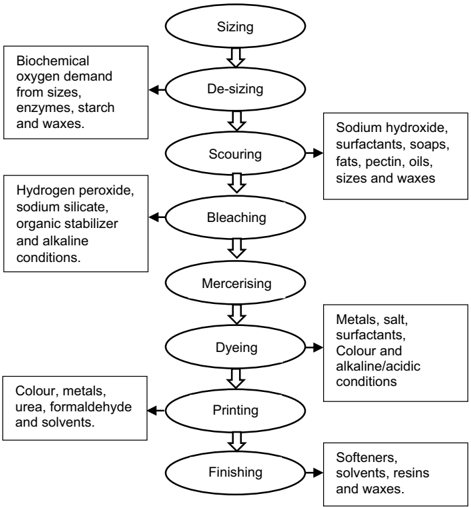
“1 The main pollutants discharged from each step of textile wet processing (after Holkar et al. (2016))”
dos Santos, A. B., Cervantes, F. J., & van Lier, J. B. (2007) · Bioresource Technology · doi:10.1016/j.biortech.2006.11.013 · Cited by 1,155
Vandevivere, P. C., Bianchi, R., & Verstraete, W. (1998) · Journal of Chemical Technology & Biotechnology · doi:10.1002/(sici)1097-4660(199808)72:4<289::aid-jctb905>3.0.co;2-# · Cited by 1,050
Colour in textile effluents - sources, measurement, discharge consents and simulation: a review
O’Neill, C., Hawkes, F. R., Hawkes, D. L., Lourenço, N. D., Pinheiro, H. M., & Delée, W. (1999) · Journal of Chemical Technology & Biotechnology · doi:10.1002/(sici)1097-4660(199911)74:11<1009::aid-jctb153>3.0.co;2-n · Cited by 905
Production, Characterization and Treatment of Textile Effluents: A Critical Review
R Ananthashankar, A. G. (2013) · Journal of Chemical Engineering & Process Technology · doi:10.4172/2157-7048.1000182 · Cited by 754 · cited 4×
“This amount of water is required when chemicals are applied on the fabrics and during the rinsing process of the final products (Ghaly et al. 2014).”
Influential(2012) · doi:10.5772/32373 · Cited by 640
Use of Chlorella vulgaris for bioremediation of textile wastewater
Lim, S.-L., Chu, W.-L., & Phang, S.-M. (2010) · Bioresource Technology · doi:10.1016/j.biortech.2010.04.092 · Cited by 541
Alaton, I. A., Balcioglu, I. A., & Bahnemann, D. W. (2002) · Water Research · doi:10.1016/s0043-1354(01)00335-9 · Cited by 518
Cotton Textile Processing: Waste Generation and Effluent Treatment
Babu, B. R., Parande, A. K., Raghu, S., & Kumar, T. P. (2007) · The journal of cotton science/Journal of cotton science · Cited by 433
Garrote, G., Domínguez, H., & Parajó, J. C. (1999) · Journal of Chemical Technology & Biotechnology · doi:10.1002/(sici)1097-4660(199911)74:11<1101::aid-jctb146>3.0.co;2-m · Cited by 400
Research works printed but not linked: 10
- Adinew B (2012) Textile effluent treatment and decolorization tech- niques-a review. Chem Bulg J Sci Educ 21:434-456
- Bradbury MJ, Collishaw PS, Moorhouse S (2000) Controlled rinsing: a stepchange in reactive dye application technology. Colour J India Ann 5:73-80
- Cumnan S, Yimrattanabovorn J (2012) The use of constructed wet- land for azo dye textile wastewater. Int J Civil Eng Build Mater 2:150-158
- Hussain J, Hussain I, Arif M (2004) Characterization of textile waste- water. J Ind Pollut Control 20:137-144
- Joshi VJ, Santani DD (2012) Physicochemical characterization and heavy metal concentration in effluent of textile industry. Univ J Environ Res Technol 2:93-96
- Kaur H, Sharma G (2015) Removal of dyes from textile industry efflu- ent: a review. Int J Humanit Soc Sci 2(4):59-63
- Nopkhuntod S, Dararat S, Yimrattanabovorn J (2012) Removal of reactive dyes from wastewater by shale. Songklanakarin J Sci Technol 34:117-123
- Shelley TR (1994) Dye pollution clean-up by synthetic mineral. Int Dyer 79:26-31
- Upadhye VB, Joshi SS (2012) Advances in wastewater treatment-a review. Int J Chem Sci Appl 3:264-268
- Uysal Y, Aktas D, Caglar Y (2014) Determination of colour removal effciency of Lemna minor L. from industrial effluents. J Environ Prot Ecol 15:1718-1726
Cited by
Items 701–800 of 1,000
Li, F., Choong, T. S. Y., Soltani, S., Abdullah, L. C., & Jamil, S. N. A. M. (2022) · Pertanika journal of science & technology · doi:10.47836/pjst.30.2.13 · Cited by 20
Recycling of heavy metals and modification of biochar derived from Napier grass using HNO3
Qin, J., Wang, J., Long, J., Huang, J. Y., Tang, S., Hou, H., & Peng, P.-Q. (2022) · Journal of Environmental Management · doi:10.1016/j.jenvman.2022.115556 · Cited by 20
Altay, P., Koçak, D., Çelikkanat, Ö. T., & Ofluoğlu, T. (2022) · Journal of Textile Engineering & Fashion Technology · doi:10.15406/jteft.2022.08.00320 · Cited by 20
Muntean, S. G., Halip, L., Nistor, M. A., & Păcurariu, C. (2023) · Magnetochemistry · doi:10.3390/magnetochemistry9070163 · Cited by 20
Cotton Textile Dyeing by Plant-Derived Colorants in the Presence of Natural Additives
Brudzyńska, P., Sionkowska, A., & Grisel, M. (2023) · Fibers and Polymers · doi:10.1007/s12221-023-00332-3 · Cited by 20
Carbon nanotubes–based nanoadsorbents in wastewater treatment
Egbosiuba, T. C., Ani, I. J., Okafor, B. O., Mustapha, S., Tijani, J. O., Igwegbe, C. A., Okoye, C. C., Ulakpa, W. C., Ezennajiego, E. E., & Abdulkareem, A. S. (2023) · Elsevier eBooks · doi:10.1016/b978-0-443-18456-7.00006-7 · Cited by 20
Recent advancements and approaches towards dye industries effluent treatment
Muduli, M., Choudhary, M., Sonpal, V., & Ray, S. (2023) · Sustainable Water Resources Management · doi:10.1007/s40899-023-00975-3 · Cited by 20
“CPCB (central pollution control board) has acknowledged dye effluent as the most toxic among other industrial waste-waters because of the dye's long residence time in the environment, challenging biodegradation character with thermal and photostability properties (Yaseen and Scholz 2019).”
BackgroundEfficient acid/alkali recovery enabled by only one negatively charged microporous polymer membrane
Wu, W., Yan, J., Li, H., Zuo, P., Yang, Z., & Xu, T. (2024) · AIChE Journal · doi:10.1002/aic.18395 · Cited by 20
Basavanagoudra, H., Jangannanavar, V. D., Patil, M. K., Inamdar, S. R., & Goudar, K. M. (2024) · Chemical Physics Impact · doi:10.1016/j.chphi.2024.100578 · Cited by 20
Pelatihan Teknik Ecoprint Sebagai Alternatif Peluang Usaha
Hendrayanti, S., Fauziyanti, W., & Estuti, E. P. (2023) · Jurnal Abdimas Ekonomi dan Bisnis · doi:10.31294/abdiekbis.v3i2.2873 · Cited by 20
“Bisnis ecoprint bisa menjadi pilihan berbisnis fesyen yang bersifat kreatif, inovatif, eksklusif dan beda dari yang lain(Yaseen & Scholz, 2019).”
BackgroundDesign, mechanism and environmental application of Fenton-type based catalytic membranes
Huang, Y., Chang, H., Cheng, X., & Liang, H. (2024) · Separation and Purification Technology · doi:10.1016/j.seppur.2024.130619 · Cited by 20
Chitosan based polyelectrolyte complexes development for anionic and cationic dyes adsorption
Ali, E. A., Ismail, M., & Elsabee, M. Z. (2020) · Egyptian Journal of Chemistry · doi:10.21608/ejchem.2020.20522.2229 · Cited by 20
“Therefore, a dye containing effluents has to be sufficiently treated before they are discharged into the water system[2].”
BackgroundKalpana, R., Maheshwaran, M., Vimali, E., Soosai, M. R., Shivamathi, C. S., Moorthy, I. G., Ashokkumar, B., & Varalakshmi, P. (2020) · ChemistrySelect · doi:10.1002/slct.202001648 · Cited by 20
Sakhi, D., Elmchaouri, A., Rakhila, Y., Abouri, M., Souabi, S., Hamdani, M., & Jada, A. (2020) · Desalination and Water Treatment · doi:10.5004/dwt.2020.25929 · Cited by 20
Ng, K. H., Chen, K., Cheng, C. K., & Vo, D. N. (2020) · Journal of Hazardous Materials · doi:10.1016/j.jhazmat.2020.124532 · Cited by 20
Dassi, R. B., Chamam, B., Méricq, J. P., Faur, C., Mir, L. E., Trabelsi, I., & Héran, M. (2020) · International Journal of Environmental Science and Technology · doi:10.1007/s13762-020-03026-y · Cited by 20
Using Rice Bran Hydrogel Beads to Remove Dye from Aqueous Solutions
Hong, G., Yu, T.-J., Lee, H.-C., & Ma, C. (2021) · Sustainability · doi:10.3390/su13105640 · Cited by 20
“Approximately 10,000 types of dyes are manufactured globally each year, which has led to the aggravation of water pollution and damage to the balance of the ecosystem [6,7].”
BackgroundDadashi, J., Ghafuri, H., & Sajjadi, M. (2021) · Colloids and Interface Science Communications · doi:10.1016/j.colcom.2021.100455 · Cited by 20
Elcik, H., Fortunato, L., Vrouwenvelder, J. S., & Ghaffour, N. (2021) · Journal of Water Process Engineering · doi:10.1016/j.jwpe.2021.102296 · Cited by 20
Oxidation of Textile Dye Through Electrocoagulation Process Using Scrap Iron Electrodes
Maman, R. D., Behling, L., da Luz, V. C., Dervanoski, A., Rosa, C. D., & Pasquali, G. D. L. (2022) · Water Air & Soil Pollution · doi:10.1007/s11270-022-05564-2 · Cited by 20
“(1234567890) concentration (72–956 mg L−1), salt content, color content (1450–4750 ADMI), BOD (10–1800 mg L−1), turbidity (1665–2484 NTU), total organic carbon (TOC) (54–530 mg L−1), and low biodegradability (Savin & Butnaru, 2008; Syafalni et al., 2012; Carmen & Daniel, 2012; Albuquerque et al., 2013; Kobya et al., 2…”
InfluentialAyed, A. B., Hadrich, B., Sciara, G., Lomascolo, A., Bertrand, E., Faulds, C. B., Zouari-Mechichi, H., Record, É., & Mechichi, T. (2022) · Microorganisms · doi:10.3390/microorganisms10061137 · Cited by 21
Zosenko, O. O., Kushch, O. V., Kompanets, M. O., Anishchenko, V. M., & Shendrik, A. N. (2022) · Journal of environmental chemical engineering · doi:10.1016/j.jece.2022.108149 · Cited by 20
Jaramillo-Fierro, X., Cuenca, G., & Ramón, J. (2022) · Nanomaterials · doi:10.3390/nano12183137 · Cited by 20
“Among the various industries, the textile industry is characterized by the generation of significant amounts of wastewater, in which dyes are some of the main components [1,2].”
BackgroundSonocatalysis and Photocatalysis in Ba 0.5 Sr 0.5 TiO 3 ceramics
Tiwari, S., Gaur, A., & Vaish, R. (2023) · International Journal of Applied Ceramic Technology · doi:10.1111/ijac.14467 · Cited by 20
Dyes and Dyeing of Textiles: An Overview of Sustainability Issues
de Oliveira, C. R. S., de Oliveira, P. V., de Aguiar, G. C. O., Missner, M. E. P., Tewo, R. K., Júnior, A. H. D. S., Mapossa, A. B., & de Aguiar, C. R. L. (2025) · Springer eBooks · doi:10.1007/978-981-96-4975-4_1 · Cited by 19
Hidayat, E., Hamid, N. A. H., Sarbani, N. M. M., Samitsu, S., Aoyagi, M., Harada, H., & Safari, M. A. M. (2025) · Chemosphere · doi:10.1016/j.chemosphere.2025.144709 · Cited by 19
Laid, N., Bouanimba, N., Ahmede, A. B., Toureche, A., & Sehili, T. (2020) · Acta Physica Polonica A · doi:10.12693/aphyspola.137.305 · Cited by 19
Laccase: A Green Solution for Environmental Problems
Sondhi, S., Chopra, N. K., Kumar, A. A., & Gupta, N. (2023) · Advances in Environmental and Engineering Research · doi:10.21926/aeer.2302030 · Cited by 19
Dyes and Heavy Metals Removal from Aqueous Solutions Using Raw and Modified Diatomite
Muntean, S. G., Nistor, M. A., Nastas, R., & Petuhov, O. (2023) · Processes · doi:10.3390/pr11082245 · Cited by 19
Alanazi, A. A. (2023) · Desalination and Water Treatment · doi:10.5004/dwt.2023.29519 · Cited by 19
Application of Agricultural Waste in Anionic Dyes Removal from Wastewater
Egbosiuba, T. C. (2022) · Sustainable textiles · doi:10.1007/978-981-19-2852-9_7 · Cited by 19
Hao, R. X., Ji, H., Gao, L., Chen, J., Shi, Y., Yang, J., & Yuan, C. (2023) · Chemical Engineering Research and Design · doi:10.1016/j.cherd.2023.09.016 · Cited by 19
Wadhawan, G., Kalra, A., & Gupta, A. K. (2024) · 3 Biotech · doi:10.1007/s13205-024-04036-0 · Cited by 20
“Real textile wastewater is characterized by strong color, alkaline nature, high total dissolved solids (TDS), high chemical oxygen demand (COD), and high biochemical oxygen demand (BOD) (Samuchiwal et al. 2021a; Vasniwal et al. 2016; Yaseen and Scholz 2019).”
Photothermal degradation of triphenylmethane dye wastewater by Fe3O4@C-laccase
Wei, Y., Xie, W., Wang, X., Chong, Q., Li, S., & Chen, Z. (2024) · International Journal of Biological Macromolecules · doi:10.1016/j.ijbiomac.2024.137053 · Cited by 19
Mohammed, A. H., Mhammedsharif, R. M., Jalil, P. J., Mhammedsharif, S. M., & Mohammed, A. S. (2024) · Heliyon · doi:10.1016/j.heliyon.2024.e40747 · Cited by 19
“Synthetic dyes, which are frequently released into the water sources, are extremely stable and resistant to breakdown, and also, they are damage aquatic life and human health [20,21].”
Fayyaz, I., Saddick, S., Mahmood, R. T., Asad, M. J., Hussain, M. A., Hu, J., Awais, M., Khan, M. I., & Saydaxmetova, S. R. (2025) · Results in Engineering · doi:10.1016/j.rineng.2025.103980 · Cited by 19
Wang, Z., Gao, L., Chen, X., Jin, H., Wei, H., Ma, L., Gu, Q., & Liu, X. (2025) · Journal of Colloid and Interface Science · doi:10.1016/j.jcis.2025.02.213 · Cited by 19
Bayburt, C., Karaduman, A. B., Gürsu, B. Y., Tunçel, M., & Yamaç, M. (2019) · International Journal of Environmental Science and Technology · doi:10.1007/s13762-019-02519-9 · Cited by 19
Chantarasiri, A. (2020) · International Journal of Environmental Research and Public Health · doi:10.3390/ijerph17207531 · Cited by 19
“Yaseen and Scholz [40] reviewed the typical characteristics of real textile wastewater reported from many studies [41–43].”
BackgroundDe-Colorization of Azo Dyes C.B-10X Blue and C.B.M-10X Blue by Ozonation for Wastewater Treatment
Sajid, M., Ahmad, M. I., Shafqat, S. S., Pasha, M. K., & Asim, M. (2020) · University of Wah Journal of Science and Technology (UWJST) · doi:10.56220/uwjst.v4i0.49 · Cited by 19
Trimeric Cationic Surfactant Coacervation as a Versatile Approach for Removing Organic Pollutants
Liu, B., Zhao, W., Shen, Y., Fan, Y., & Wang, Y. (2021) · Langmuir · doi:10.1021/acs.langmuir.1c00557 · Cited by 19
Ficus religiosa bark an efficient adsorbent for Alizarin Red S dye: Equilibrium and kinetic analysis
Gul, A., Muhammad, S., Nawaz, S., Munir, S., Rehman, K. U., Ahmad, S., & Humphrey, O. S. (2021) · Journal of the Iranian Chemical Society · doi:10.1007/s13738-021-02413-7 · Cited by 20
Andia-Huaracha, S. C., Zapana-Cayo, L. M., Aragón, F. F. H., Aquino, J. C. R., Coaquira, J. A. H., Gonzales-Lorenzo, C. D., Ayala-Arenas, J. S., Solis, J. L., Morais, P. C., & Pacheco‐Salazar, D. G. (2022) · Journal of Nanoparticle Research · doi:10.1007/s11051-022-05421-7 · Cited by 19
“Nowadays, a variety of colorants are introduced into water bodies such as rivers and oceans from industrial wastes, primarily as a result of the use of organic dyes in the textile industry that are disposed of in sanitary landfills without prior treatment (Yaseen and Scholz 2019).”
BackgroundPatel, R. V., Raj, G. B., Chaubey, S., & Yadav, A. (2022) · Water Science & Technology · doi:10.2166/wst.2022.193 · Cited by 19
Shibu, M. C., Benoy, M. D., Kumar, G. S., Duraimurugan, J., Vasudevan, V., Shkir, M., & AL-Otaibi, O. (2023) · Diamond and Related Materials · doi:10.1016/j.diamond.2023.109778 · Cited by 19
Sharma, B., Tiwari, S., Bisht, S., Bhrdwaj, A., Nayarisseri, A., & Tewari, L. (2023) · Journal of environmental chemical engineering · doi:10.1016/j.jece.2023.109629 · Cited by 20
Ramzan, M., Javed, M., Iqbal, S., Alhujaily, A., Mahmood, Q., Aroosh, K., Bahadur, A., Qayyum, M. A., Awwad, N. S., Ibrahium, H. A., et al. (2023) · Inorganics · doi:10.3390/inorganics11040156 · Cited by 19
Bacterial nanocellulose and its application in heavy metals and dyes removal: a review
Sahari, N. S., Shahir, S., Ibrahim, Z., Hasmoni, S. H., & Altowayti, W. A. H. (2023) · Environmental Science and Pollution Research · doi:10.1007/s11356-023-30067-w · Cited by 21
“Filtration and adsorption are the common physical treatments; they are inexpensive and simple (Pei et al. 2016; Yaseen and Scholz 2019).”
BackgroundGadow, S. I., & Li, Y. (2019) · Journal of Material Cycles and Waste Management · doi:10.1007/s10163-019-00944-z · Cited by 19
Redha, Z. M., Yusuf, H. A., Burhan, S., & Ahmed, I. (2021) · International journal of energy and environmental engineering · doi:10.1007/s40095-020-00380-y · Cited by 19
Dmour, H. A., Kooli, F., Mohmoud, A., Liu, Y., & Popoola, S. A. (2021) · Materials · doi:10.3390/ma14102528 · Cited by 19
“Among the sectors that consumed a huge amount of fresh water are the agricultural and industrial activities [1].”
BackgroundMeftah, S., Meftah, K., Ballou, I., Amahrous, A., Darkaoui, B., Belcaid, A., Taib, M., Malous, K., Oukani, E., & Bouyazza, L. (2025) · Environmental Science and Pollution Research · doi:10.1007/s11356-025-37207-4 · Cited by 18
“…range found in textile industrial effluents (0,01–0,05 g/L) (Behera et al. 2021; “Caractéristiques des eaux usées de teinture textile et constitu-ants des effluents synthétiques: revue critique | Revue interna-tionale des sciences et technologies de l’environnement” n.d.); Yaseen and Scholz 2019).”
Liu, C., Shuai, A., Bo, J., Wang, X., Xu, X., Cao, J., Han, X., & He, Q. (2026) · Water Research · doi:10.1016/j.watres.2026.125320 · Cited by 18
Thabet, R. H., Fouad, M. K., Ali, I. A., Sherbiny, S. A. E., & Tony, M. A. (2021) · Water and Environment Journal · doi:10.1111/wej.12756 · Cited by 18
Jothibas, M., Suganya, S., Muthuvel, A., & Paulson, E. (2023) · Inorganic Chemistry Communications · doi:10.1016/j.inoche.2023.110511 · Cited by 18
Amine-Functionalized MWCNTs for the Removal of Mordant Black 11 Dye
Qazi, R. A., Ullah, N., Bibi, N., Khattak, R., Jamila, N., Begum, B., Aman, N., Rahayu, F., & Karami, A. M. (2023) · Water Air & Soil Pollution · doi:10.1007/s11270-023-06662-5 · Cited by 19
“…methods such as coagulation, flocculation, membrane separations, oxidation, adsorption, ion exchange, electrochemical process, advanced oxidation process, biodegradation, photocatalysis, and other processes have been employed to eradicate colorants from textile wastewater (Yaseen & Scholz, 2019).”
MethodNguyen, M. B., Lan, P. T., Anh, N. T., Tung, N. N., Guan, S., Ting, V. P., Nguyen, T.-T.-B., Doan, H. V., Tung, M. T., & Лам, Т. Д. (2023) · RSC Advances · doi:10.1039/d3ra07546j · Cited by 18
Yadav, S., Chander, S., & Gupta, A. (2024) · Surfaces and Interfaces · doi:10.1016/j.surfin.2024.104058 · Cited by 18
Hashem, A. A., El-Wahab, R. M. A., Selim, M. M., & Badawy, A. A. (2024) · International Journal of Environmental Science and Technology · doi:10.1007/s13762-024-05564-1 · Cited by 18
“…degradation, biological treatment, membrane filtration, oxidation, adsorption, ion exchange, ozonation, and more (Heidarinejad et al. 2018; Yadav et al. 2022; Yaseen and Scholz 2019; Dindorkar et al. 2022; Ibrahim et al. 2022, 2019; Badawy et al. 2020; ElHarby et al. 2019; Nady et al. 2023).”
Averheim, A., dos Reis, G. S., Grimm, A., Bergna, D., Heponiemi, A., Lassi, U. M., & Thyrel, M. (2024) · Bioresource Technology · doi:10.1016/j.biortech.2024.130698 · Cited by 18
Review of Plasma Surface Engineering Technology Toward Sustainable Textile Materials
Ssekasamba, H., Tebyetekerwa, M., Haodong, C., Balilonda, A., Ssegwanyi, S., Gao, Q., & Tang, X. (2024) · Materials Circular Economy · doi:10.1007/s42824-024-00114-z · Cited by 18
“These effluents are characterized by a high pH value, heavy metal ions, dissolved and suspended solids, and high COD and BOD values (Adane et al. 2021; Yaseen & Scholz 2018).”
In situ oxidation of reduced graphene oxide membranes by peracetic acid for dye desalination
Deng, E., Chen, K., Quigley, A. E., Yuan, M., Zhu, L., Kralles, Z. T., Freeman, B. D., Dai, N., & Lin, H. (2024) · Journal of Membrane Science · doi:10.1016/j.memsci.2024.122991 · Cited by 18
Sharma, P., Monisha, B., Kumar, P. S., Krishnaswamy, V. G., & Rangasamy, G. (2024) · Desalination and Water Treatment · doi:10.1016/j.dwt.2024.100654 · Cited by 18
Jeyabalan, J., Veluchamy, A., & Narayanasamy, S. (2025) · International Journal of Biological Macromolecules · doi:10.1016/j.ijbiomac.2025.142557 · Cited by 18
Adsorption of Methylene Blue onto Iron Oxide Magnetic Nanoparticles Coated with Sugarcane Bagasse
Razali, S. Z., Aziz, M. Y., Edinur, H. A., & Ishak, A. R. (2020) · IOP Conference Series Earth and Environmental Science · doi:10.1088/1755-1315/596/1/012052 · Cited by 18
Applications of EPS in Environmental Bioremediations
Kumawat, T. K., Kumawat, V., Sharma, S., Kandwani, N., & Biyani, M. (2021) · Springer series on polymer and composite materials · doi:10.1007/978-3-030-75289-7_11 · Cited by 18
Textile Effluent Treatment Using Natural CoagulantOpuntia strictain Comparison with Alum
Hussain, G., & Haydar, S. (2021) · CLEAN - Soil Air Water · doi:10.1002/clen.202000342 · Cited by 18
Akar, S. T., Koc, E., Sayın, F., Kara, İ., & Akar, T. (2021) · Journal of Environmental Management · doi:10.1016/j.jenvman.2021.113548 · Cited by 18
Nguyen, D. T. C., Vo, D. V. N., Nguyen, T. T., Nguyen, T. T. T., Nguyen, T. T. L., & Tran, T. V. (2022) · International Journal of Environmental Science and Technology · doi:10.1007/s13762-021-03888-w · Cited by 18
“The synthetic dyes-related contamination of wastewater brings a variety of adverse impacts on the environment and human health (Yaseen and Scholz 2019).”
BackgroundTarekegn, M. M., Balakrishnan, R. M., Hiruy, A. M., Dekebo, A. H., & Maanyam, H. S. (2022) · Air Soil and Water Research · doi:10.1177/11786221221094037 · Cited by 18
“The increasing textile, tannery, leather, pigment and dyes, petroleum refining, paints, and wood processing industries were among the high emitters identified in the past(Yaseen & Scholz, 2018, 2019).”
BackgroundMixed imidazole ligand MIL-88A for enhanced photo-Fenton decomposition of azo dye
Tan, C.-E., Su, E.-C., & Wey, M. (2022) · Solar Energy · doi:10.1016/j.solener.2022.09.041 · Cited by 18
Şahin, M., Arslan, Y., & Tomul, F. (2022) · International Journal of Environmental & Analytical Chemistry · doi:10.1080/03067319.2022.2140417 · Cited by 18
Zhao, S., Yang, Y., Lu, R., Wang, Y., Huang, H., Hu, Y., Rodriguez, R. D. D., & Chen, J. (2023) · Colloids and Surfaces A Physicochemical and Engineering Aspects · doi:10.1016/j.colsurfa.2023.131912 · Cited by 18
Self-grown Ag2O nanoparticles on Ag-NASICON material for efficient visible light photocatalysis
Moussadik, A., Mazkad, D., Lazar, N.-E., Benzaouak, A., Abrouki, Y., Kacimi, M., Halim, M., Tielens, F., & Hamidi, A. E. (2024) · Optical Materials · doi:10.1016/j.optmat.2023.114803 · Cited by 18
Li, C., Jin, K., Hou, K., Su, X., Chen, A., Zhai, S., Cai, Z., & Zhao, Y. (2024) · Colloids and Surfaces A Physicochemical and Engineering Aspects · doi:10.1016/j.colsurfa.2024.133355 · Cited by 18
Beker, S. A., Truskewycz, A., Cole, I. S., & Ball, A. S. (2020) · New Journal of Chemistry · doi:10.1039/d0nj03013a · Cited by 18
Kopperi, H., Hemalatha, M., Ravi Kiran, B., Santhosh, J., & Venkata Mohan, S. (2023) · Environmental Pollution · doi:10.1016/j.envpol.2023.121320 · Cited by 17
Afoma, U. M., Malik, J., Singh, S., Mishra, A. K., Naushad, Z., Tomar, A., Mishra, M. K., Verma, V. V., & Sharma, V. K. (2026) · Biomass Conversion and Biorefinery · doi:10.1007/s13399-025-06984-w · Cited by 17
“Typically, textile wastewater exhibits (i) High Organic Load: Illustrated by Chemical Oxygen Demand (COD) values often ranging from 500 to 5,000 mg/L and Biochemical Oxygen Demand (BOD 5 ) values from 100 to 2,000 mg/L [20].”
Alouani, M. E., Saufi, H., Aouan, B., Bassam, R., Tourtit, M. B., Bassam, A., Ahmina, W., Rachdi, Y., Belaaouad, S., & Alehyen, S. (2026) · Sustainability · doi:10.3390/su18062721 · Cited by 18
Rao, A., Thakur, P., & Thakur, A. (2026) · Inorganic Chemistry Communications · doi:10.1016/j.inoche.2026.116562 · Cited by 17
Guo, Y., Jiang, Z.-Y., Wang, Y., Jin, J., Yan, W., Zhao, Z., Ma, Y.-M., Yan, L., Jiang, Z., & Qiao, Q. (2021) · Journal of Molecular Structure · doi:10.1016/j.molstruc.2021.131961 · Cited by 17
Kamenická, B., & Weidlich, T. (2023) · Catalysts · doi:10.3390/catal13030460 · Cited by 17
Bhattacharya, A., Garg, S., & Chatterjee, P. (2023) · Environmental Science and Pollution Research · doi:10.1007/s11356-023-28500-1 · Cited by 17
Huang, Q., Zhu, J., Liu, J., Qi, F., Pu, Y., Zhang, N., Wang, M., & Tang, X. (2023) · Applied Surface Science · doi:10.1016/j.apsusc.2023.158451 · Cited by 17
Kore, V. S., Manjare, S. D., Patil, A. D., & Dhanke, P. B. (2023) · Chemical Engineering and Processing - Process Intensification · doi:10.1016/j.cep.2023.109550 · Cited by 17
Wondim, T. T., Dzwairo, B. R., Aklog, D., Janka, E., Samarakoon, G., & Dereseh, M. M. (2023) · Environmental Monitoring and Assessment · doi:10.1007/s10661-023-11952-w · Cited by 17
“Besides manufacturing products, a textile factory generates a large volume of highly concentrated, and commingled wastewater, which in turn pollutes the global environment (Imtiazuddin et al., 2012; Liugė & Paliulis, 2023; Yaseen & Scholz, 2018).”
BackgroundLa, D. D., Bình, K. H., Bui, T. T., Tran, K. V. Q., Vũ, T. T., Le, T. H., Kim, S. S., Chung, W., Thi, H. P. N., & Nguyen, D. D. (2024) · Nano-Structures & Nano-Objects · doi:10.1016/j.nanoso.2024.101125 · Cited by 17
Nguyen, M. L., Nguyen, T. T., & Ngo, H. L. (2025) · RSC Advances · doi:10.1039/d5ra01265a · Cited by 17
Li, X., Zhang, X., Song, Z., Wang, C., Bai, J., Shen, J., & Zhang, R. (2025) · Advanced Composites and Hybrid Materials · doi:10.1007/s42114-025-01424-9 · Cited by 17
“It has been reported that the concentration of dyes in textile wastewater generally ranges from 20 to 50 mg/L across different regions worldwide, with some textile factories exceeding 200 mg/L [4].”
Kim, M., Zhao, W., Tsapatsis, M., & Stein, A. (2020) · Chemistry of Materials · doi:10.1021/acs.chemmater.9b05395 · Cited by 17
Jing, Y.-J., & Kang, L. (2020) · Ceramics International · doi:10.1016/j.ceramint.2020.04.200 · Cited by 17
RetractedA Polymeric Composite Material (rGO/PANI) for Acid Blue 129 Adsorption
Kukulski, T., Wacławek, S., Silvestri, D., Krawczyk, K., Padil, V. V. T., Fryczkowski, R., Janicki, J., & Černík, M. (2020) · Polymers · doi:10.3390/polym12051051 · Cited by 17
“The wastewater from the dyeing industry has many toxic properties and it has to be treated before the release to the environment [35].”
BackgroundXu, N., Hao, Z., Xiao, C., Zhang, X., Yan, F., Dirican, M., & Yan, C. (2020) · Journal of Membrane Science · doi:10.1016/j.memsci.2020.118180 · Cited by 17
Majumdar, A., & Sinha, S. K. (2021) · Benchmarking An International Journal · doi:10.1108/bij-09-2020-0482 · Cited by 17
de Paula, F. D. C., Effting, L., Arízaga, G. G. C., Giona, R. M., Tessaro, A. L., Bezerra, F. M., & Bail, A. (2021) · Environmental Technology · doi:10.1080/09593330.2021.1871662 · Cited by 17
“organic compounds, challenging to remove fromwater[4].”
Çiftçioğlu-Gözüaçık, B., Ergenekon, S. M., Ozbey‐Unal, B., Balçık, Ç., Karagündüz, A., Dızge, N., & Keskinler, B. (2021) · Water Science & Technology · doi:10.2166/wst.2021.261 · Cited by 17
Afsharpour, M., Elyasi, M., & Javadian, H. (2021) · Molecules · doi:10.3390/molecules26216569 · Cited by 17
Akinremi, C. A., Adeogun, A. I., Poupin, M., & Huddersman, K. D. (2021) · ACS Omega · doi:10.1021/acsomega.1c03964 · Cited by 17
Kadam, S. K., Tamboli, A. S., Chandanshive, V. V., Govindwar, S. P., Choo, Y., & Pak, J. (2021) · Journal of Hazardous Materials · doi:10.1016/j.jhazmat.2021.127710 · Cited by 17
Leng, Q., Xu, S., Wu, X., Wang, S., Jin, D., Wang, P., Wu, D., & Dong, F. (2022) · Electrocatalysis · doi:10.1007/s12678-022-00712-y · Cited by 17
“However, due to some pollutants' high chemical stability and toxicity, conventional sewage treatment plants hardly remove these pollutants from wastewater [3, 4].”
Background
Metadata
- Authors
- Yaseen, D. A., & Scholz, M.
- Affiliations
- University of Salford (GB)
- Lund University (SE)
- Corresponding author
- Scholz, M.
- Venue
- International Journal of Environmental Science and Technology
- Published
- 2018-11-27
- Volume
- 16
- Issue
- 2
- Pages
- 1193-1226
- ISSN
- 1735-1472 (ISSN-L)
- 1735-2630
- OpenAlex
- W2901997077
- Semantic Scholar
- 3011c780608bf0435a046bc215c6c0b9b481d222
- Cited by
- 2,052
- References
- 96
- Citations by year
- 2026: 255 · 2025: 292 · 2024: 320 · 2023: 343 · 2022: 341 · 2021: 300 · 2020: 167 · 2019: 31
- FWCI
- 54.46
- Type
- journal article
- Language
- en
- Open access
- hybrid
- doi.org
- Licence
- cc-by
- creativecommons.org/licenses/by/4.0 (tdm)
- Locations
- International Journal of Environmental Science and Technology (publishedVersion, cc-by)
- University of Salford Institutional Repository (University of Salford) (submittedVersion, cc-by)
- Lund University Publications (Lund University) (submittedVersion)
- Funders
- Government of Iraq
- Topics
- Physical Sciences › Environmental Science › Water Science and Technology › Coagulation and Flocculation Studies
- Physical Sciences › Materials Science › Polymers and Plastics › Dyeing and Modifying Textile Fibers
- Physical Sciences › Environmental Science › Water Science and Technology › Adsorption and biosorption for pollutant removal
- Keywords
- dyeing wastewater, synthetic wastewater, dye effluents, wastewater treatment, textile industry pollution
About these checks
Registry, retraction, Cites and statistics results are computed, not judged, with one exception: a printed reference that no index lists is read once by a model before it counts as a citation error. Claims are extracted by a model and kept only when their quote appears verbatim in the text; each cited source is then checked, with a model’s help, for whether it says what the claim relies on. Those verdicts can be wrong — read the claim’s quote and the cited source before relying on one.
Statistics and arithmetic are recomputed, not judged.
Confidence bands are shown only for fields calibrated on our annotated test set. None is calibrated yet, so no band is shown.
What counts as a claim ›How we measure confidence ›How we check this ›
Are you an author, or do you see a problem with this page? Request a review
Data sources
Bibliographic data: Semantic Scholar, OpenAlex, Crossref.
Contains information from the Semantic Scholar Academic Graph Datasets, made available under the ODC Attribution License (ODC-BY 1.0).
Semantic Scholar’s data is described in: Kinney, R., et al. (2023). The Semantic Scholar Open Data Platform. arXiv:2301.10140.
