

The DOI matches its Crossref record; 110 of the 110 references it cites were found in a registry or an index.
The Mental Health of Elite Athletes: A Narrative Systematic Review
Open accessAbstract
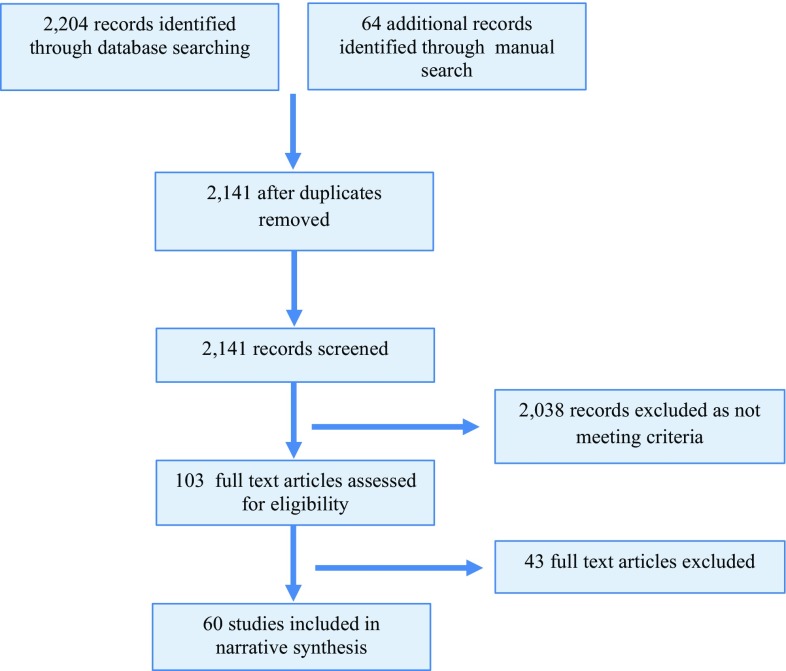
BACKGROUND: The physical impacts of elite sport participation have been well documented; however, there is comparatively less research on the mental health and psychological wellbeing of elite athletes. OBJECTIVE: This review appraises the evidence base regarding the mental health and wellbeing of elite-level athletes, including the incidence and/or nature of mental ill-health and substance use. METHODS: A systematic search of the PubMed, EMBASE, SPORTDiscus, PsycINFO, Cochrane and Google Scholar databases, up to and including May 2015, was conducted. RESULTS: The search yielded a total of 2279 records. Following double screening, 60 studies were included. The findings suggested that elite athletes experience a broadly comparable risk of high-prevalence mental disorders (i.e. anxiety, depression) relative to the general population. Evidence regarding other mental health domains (i.e. eating disorders, substance use, stress and coping) is less consistent. These results are prefaced, however, by the outcome of the quality assessment of the included studies, which demonstrated that relatively few studies (25 %) were well reported or methodologically rigorous. Furthermore, there is a lack of intervention-based research on this topic. CONCLUSION: The evidence base regarding the mental health and wellbeing of elite athletes is limited by a paucity of high-quality, systematic studies. Nonetheless, the research demonstrates that this population is vulnerable to a range of mental health problems (including substance misuse), which may be related to both sporting factors (e.g. injury, overtraining and burnout) and non-sporting factors. More high-quality epidemiological and intervention studies are needed to inform optimal strategies to identify and respond to player mental health needs.
Overview
The claims and statistics of this paper haven’t been checked yet.
Run the check — free, no account needed. It reads the open-access text and checks the sources it cites.
Integrity signals
Registry
Cites
Statistics
Figures
Verification
Claims the paper makes
The claims and statistics of this paper haven’t been checked yet.
Run the check — free, no account needed. It reads the open-access text and checks the sources it cites.
Claims other papers make about this one
Each is checked against this paper’s own text: does it say what the citing paper says it does?
The cited source says what the claim attributes to it.
In the citing paper
“To date, research has primarily examined the mental health outcomes of elite athletes [15–18], with comparatively less research focusing on understanding these psychological experiences among coaches [19].”
From The Mental Health of Elite-Level Coaches: A Systematic Scoping Review (2024) · cites this paper as [17]
Self-check
Percentages, sums and reported differences re-computed from the paper’s own numbers.
The self-check needs the paper’s full text.
Citations
Cites
The prevalence and correlates of eating disorders in the National Comorbidity Survey Replication
Hudson, J. I., Hiripi, E., Pope, H. G., & Kessler, R. C. (2007) · Biological Psychiatry · doi:10.1016/j.biopsych.2006.03.040 · Cited by 4,973 · cited 1×
“However, there was a tendency for higher vulnerability to these conditions in athletes involved in sports requiring a particularly lean body shape [21, 35, 38– 40] and in female athletes [41–43]—the latter being consistent with the findings of general population studies [87].”
Mental health of young people: A global public-health challenge
Patel, V., Flisher, A. J., Hetrick, S., & McGorry, P. (2007) · The Lancet · doi:10.1016/s0140-6736(07)60368-7 · Cited by 3,126 · cited 1×
“Such models should capitalise on an early-intervention framework [102–104], ensuring early detection and prompt access to high-quality, evidence-based interventions.”
Self-citationYoung People’s Help-Seeking for Mental Health Problems
Rickwood, D., Deane, F. P., Wilson, C. J., & Ciarrochi, J. (2005) · Australian e-Journal for the Advancement of Mental Health · doi:10.5172/jamh.4.3.218 · Cited by 1,619 · cited 1×
“Importantly, the mental health of hard-to-engage populations, such as young men [107] and older men [108, 109], could be targeted.”
How Emotions Influence Performance in Competitive Sports
Lazarus, R. S. (2000) · The Sport Psychologist · doi:10.1123/tsp.14.3.229 · Cited by 1,085 · cited 1×
“The ways by which athletes appraise and cope with these stressors can be a powerful determinant of the impact the stressors have on both their mental health and their sporting success [18].”
Prevalence of Eating Disorders in Elite Athletes Is Higher Than in the General Population
Sundgot-Borgen, J. K., & Torstveit, M. K. (2004) · Clinical Journal of Sport Medicine · doi:10.1097/00042752-200401000-00005 · Cited by 1,077 · cited 2×
“Three reported a higher incidence of eating disorder or body dissatisfaction in elite athletes relative to controls [36], especially in sports emphasising leanness or lower body weight [21, 35].”
Defining elite athletes: Issues in the study of expert performance in sport psychology
Swann, C., Moran, A., & Piggott, D. (2015) · Psychology of Sport and Exercise · doi:10.1016/j.psychsport.2014.07.004 · Cited by 998 · cited 1×
“While the included studies focused specifically on elite-level competition at the national or international level, differences between the included sports in terms of training, remuneration, media pressure and other salient variables must be considered [89].”
PHYSICAL ACTIVITY AND MENTAL HEALTH: THE ASSOCIATION BETWEEN EXERCISE AND MOOD
Peluso, M. A. M., & Andrade, L. H. (2005) · Clinics · doi:10.1590/s1807-59322005000100012 · Cited by 804 · cited 1×
“…that physical activity has a positive effect on mental health [6, 7], a review has found that intense physical activity performed at the elite athlete level might instead compromise mental wellbeing, increasing symptoms of anxiety and depression through overtraining, injury and burnout [8].”
Psychology of the elite athlete: An exploratory study
Mahoney, M. J., & Avener, M. (1977) · Cognitive Therapy and Research · doi:10.1007/bf01173634 · Cited by 615 · cited 1×
“Mahoney and Avener [80] Quantitative; crosssectional, observational Psychological factors and cognitive strategies 12 (12:0) Gymnastics; USA Self-verbalisations and certain forms of mental imagery differentiated Olympic-level and nonOlympic-level gymnasts.”
Gulliver, A., Griffiths, K. M., & Christensen, H. (2012) · BMC Psychiatry · doi:10.1186/1471-244x-12-157 · Cited by 611 · cited 3×
“Given that stigma, poor mental health literacy and negative past experiences of mental health help seeking are key barriers for elite athletes [12], more welldesigned studies, drawing on larger samples, are needed.”
Coping in sport: A systematic review
Nicholls, A. R., & Polman, R. C. J. (2006) · Journal of Sports Sciences · doi:10.1080/02640410600630654 · Cited by 575 · cited 1×
“Such an understanding is required to provide guidance for sport practitioners—including coaches, medical staff and sport psychologists—in developing the coping abilities of elite athletes and, in turn, improving their emotional wellbeing [20].”
Research works printed but not linked: 3
- Maestu J, Jurimae J, Jurimae T. Psychological and biochemical markers of heavy training stress in highly trained male rowers. Med dello Sport. 2003;56(2):95–101.
- Hainline B. Mind, body and sport: understanding and supporting student-athlete mental wellness. Indianapolis: National Collegiate Athletic Association; 2014.
- Thompson R, Sherman R. Managing student-athletes’ mental health issues. Indianapolis: National Collegiate Athletic Association; 2007.
Cited by
Sorted by citations
Items 901–1,000 of 1,000
Coaching and Athlete Mental Health
Vella, S. A., & Liddle, S. K. (2020) · Springer eBooks · doi:10.1007/978-3-030-63912-9_14 · Cited by 3
Hamilton, K. (2020) · Summit (Simon Fraser University)
The Flexible Mind Approach: What Is It, and What Does It Offer?
White, R. G., Bethell, A., Charnock, L., Leckey, S., & Penpraze, V. (2021) · Springer eBooks · doi:10.1007/978-3-030-64942-5_1
Yang, H. (2021) · E3S Web of Conferences · doi:10.1051/e3sconf/202127103021
Subjective body awareness and well-being in athletes and active exercisers
Tokola, R. (2021) · Jyväskylä University Digital Archive (University of Jyväskylä)
Bigg, J. L. (2021) · The Atrium (University of Guelph)
Trauma-Sensitive and Responsive Coaching
Hansen, M. A., Turner, B., & Davis, A. (2021) · Advances in psychology, mental health, and behavioral studies (APMHBS) book series · doi:10.4018/978-1-7998-7473-7.ch008
Peters, A., Tapia, J., & Clines, S. H. (2021) · International Journal of Athletic Therapy & Training · doi:10.1123/ijatt.2020-0125
PREVALENCE OF TRAIT ANXIETY AND ANXIETY DISORDERS IN ATHLETES
Karnaukh, T. V., & Бабак, С. В. (2021) · Bulletin of Problems Biology and Medicine · doi:10.29254/2077-4214-2021-3-161-41-48
An examination of injury risk and subjective measures of training in amateur Rugby Union
Griffin, A. (2021) · Arrow@dit (Dublin Institute of Technology) · doi:10.34961/7123
Athletes’ Emotional Determinants Accordingly Reflected in Their Personal Lives
Setyawati, H., Khalid, N. H. M., Sumekto, D. R., Rahayu, T., Darmawan, A., Putri, D., Sari, R. V., Kusumaningtyas, T., Pratama, L., & Florentina, T. (2021) · International Conference on Sports, Health, and Physical Education (ISMINA) · doi:10.4108/eai.28-4-2021.2312207
“Meanwhile, [8] showed that elite athletes’ key factors on emotions consistency might involve their psychological strikes of unjustness, overtraining and burnout, serious public and media covers; and overseeing progressing serious weights to perform in their individual lives.”
BackgroundEvaluation of mental health resources for an intercollegiate athletics program
Dwelle, A. J. (2021)
Donohue, B. C., Breslin, G., & Murphy, S. M. (2021) · Sport Exercise and Performance Psychology · doi:10.1093/oso/9780197512494.003.0013
Investigation of Nutritional Habits of Athletes Before and During the New Type of Corona Virus
DOĞAN, E., & RAHİMOV, O. (2021) · Kesit Akademi · doi:10.29228/kesit.51858
Programa de intervenção para a saúde mental em atletas e treinadores a partir do eneagrama
de Mendonça, I. C. P., & Bastos, A. D. A. (2022) · Revista Brasileira de Psicologia do Esporte · doi:10.31501/rbpe.v11i1.12352
Appendix: International Society for Sports Psychiatry Curriculum 2018
Mistry, A. D., McCabe, T., & Currie, A. (2020) · Cambridge University Press eBooks · doi:10.1017/9781108767187.013
Mistry, A. D., McCabe, T., & Currie, A. (2020) · Cambridge University Press eBooks · doi:10.1017/9781108767187.015
da Silva, M. M., França, T. T., & Oliveira, M. D. P. E. (2022) · Programa de Iniciação Científica - PIC/UniCEUB - Relatórios de Pesquisa · doi:10.5102/pic.n0.2020.8238
Stress-Resistenz-Trainings für Topathleten
Sallen, J. (2016) · Springer eBooks · doi:10.1007/978-3-662-49411-0_25-1
Mistry, A. D., McCabe, T., & Currie, A. (2020) · Cambridge University Press eBooks · doi:10.1017/9781108767187.001
Mistry, A. D., McCabe, T., & Currie, A. (2020) · Cambridge University Press eBooks · doi:10.1017/9781108767187.002
Garcı́a-Falgueras, A. (2019) · Springer eBooks · doi:10.1007/978-3-319-16999-6_2783-1
Mistry, A. D., McCabe, T., & Currie, A. (2020) · Cambridge University Press eBooks · doi:10.1017/9781108767187.014
Use of psychotropic substances in elite sports
Exner, J., Seifritz, E., & Claussen, M. C. (2020) · Swiss Sports & Exercise Medicine · doi:10.34045/sems/2020/34
RUELAS, J. A., KACZMAR, K. S., ALMARAZ, E. L., & Livingston, J. (2022) · The Journal of Sports Medicine and Physical Fitness · doi:10.23736/s0022-4707.22.13885-5
Facer‐Childs, E. R. (2022) · Medicine & Science in Sports & Exercise · doi:10.1249/mss.0000000000002933
Karunakaran, B., & Kaleeswaran, P. (2022) · International Journal of Health Sciences · doi:10.53730/ijhs.v6ns8.11592
Saúde Mental no Desporto de Alta Competição
Gomes, E., Andrade, R., Valente, C., & Espregueira‐Mendes, J. (2022) · Revista de Medicina Desportiva informa · doi:10.23911/saude_mental_desporto_2022_nov
Fontana, R. S., Jeckell, A. S., & Creado, S. (2022) · Springer eBooks · doi:10.1007/978-3-031-08364-8_21
Protecting and Promoting the Wellbeing of High-Performance Swimmers
Uzzell, K. S. (2023) · Cronfa (Swansea University) · doi:10.23889/suthesis.62923
طلفاح, ش. س., سعيد, ن. م. م. ب., & حتامله, م. ع. (2023) · مجلة تطبیقات علوم الریاضة · doi:10.21608/jaar.2023.293988
Koyunoğlu, T., Atalay, E., & Aras, Ö. (2023) · Turkish Journal of Sports Medicine · doi:10.47447/tjsm.0662
Study of overall adjustment among handball players
Singh, H., Kishore, K., Bal, B. S., Singh, A., & Paul, M. (2023) · International Journal of Advanced Academic Studies · doi:10.33545/27068919.2023.v5.i6a.993
“2016) [3] conducted a systematic narrative review and also suggested the prevalence of mental illness in elite athletes was comparable to the general population.”
ResultDurukan, E., & Çataldirek, S. (2023) · Özgür Yayınları eBooks · doi:10.58830/ozgur.pub176.c830
Spor Bilimleri Üzerine Araştırmalar- V
Coşkun, A., Kartal, A., Kermen, A., Şentürk, H. E., Uğurlu, A., Esin, İ., Akkaya, C., Dereceli, Ç., Dereceli, E., Durukan, E., et al. (2023) · Özgür Yayınları eBooks · doi:10.58830/ozgur.pub176
Fonksiyonel Egzersiz Bandı Olarak Bilinen TRX Antrenmanlarının Sportif Performansa Etkisi
Gırak, İ. (2023) · Özgür Yayınları eBooks · doi:10.58830/ozgur.pub176.c831
Can Yoga Pranayama Practices Improve Burnout in Elite Mountain Bikers
Liang, W., Le, L., Yaling, C., Hongbo, Y., Yu, Z., & Yunzhu, D. (2023) · International Journal of Yoga · doi:10.4103/ijoy.ijoy_184_22
“YPP could also be effective in acting as a support, as described low social support from trainers or coaches was associated with burnout in the review of the mental health of elite athletes.[36] While the importance of elite athlete mental health is gaining attention, targeted, disorder‐specific models of care are yet…”
BackgroundMiguel, I., Sofia, R. M., & Dias, C. (2023) · International Journal of Sport and Exercise Psychology · doi:10.1080/1612197x.2023.2238296 · Cited by 1
“…to increasing performance demands, training loads, and speci fi c sport-related stressors (e.g., intense public and media scrutiny, managing ongoing competitive pressures to perform, and injuries), which can a ff ect mental health (Henriksen et al., 2020; Rice et al., 2016; Weinberg & Gould, 2019).”
Bobby, G. (2018) · International Journal of Yogic Human Movement and Sports Sciences · doi:10.22271/yogic.2018.v3.i2p.1413
“According to a number of studies, athletes are generally less depressed and worried than the general population, and they are also better at handling stress and have higher levels of self-esteem and positive body images (Rice et al.,2016; Gouttebarge et al.,2019) [13, 4].”
BackgroundAn Analysis on Mental Health in College Sports at a Small Faith-Based Midwest University
Jordan, T. A., Egland-Young, M., & Maynor, K. (2023) · Concordia Journal of Communication Research · doi:10.54416/lsfu9671
“Rice et al. (2016) stated that: “Athletes tend to not seek support for mental health problems for reasons such as stigma, lack of understanding about mental health and its potential influence on performance, and the perception of help-seeking as a sign of weakness” (p. 1334). A review mentioned in the article found th…”
BackgroundInfluentialCiências do Esporte e Educação Física: contribuições contemporâneas em pesquisa
Santos, M. B. D., Souza Neto, O. A. D., Souza, P. C. D., Carneiro, P. G., Cassiano, C. S. S., Marques, W. R. A., Júnior, J. B. M., Souza, F. A. G., Cunha, M. A. T., Berg, R. D. S., et al. (2023) · Editora Científica Digital eBooks · doi:10.37885/978-65-5360-399-8
Puga, T. B., Mazumder, R. M., Ruan, T., Thiel, G. E., Scigliano, N., & Treffer, K. D. (2023) · The Journal of Medical Research · doi:10.31254/jmr.2023.9401
Ho, P. A., Stull, T., & Noordsy, D. L. (2023) · Springer eBooks · doi:10.1007/978-3-031-36864-6_15
Levinsohn, E. A., & Twark, C. (2023) · Springer eBooks · doi:10.1007/978-3-031-36864-6_13
The Impact of Martial Arts on Mental Health.Preprint
Hiciano, R. A., & Piper, B. J. (2023) · medRxiv · doi:10.1101/2023.09.17.23295679
Sportpsychologische Betreuung bei psychischem und psychosozialem Stress
Sulprizio, M., Schäfer, A., & Kleinert, J. (2023) · Springer eBooks · doi:10.1007/978-3-662-66208-3_8
طلفاح, ش. س., سعيد, ن. م. م. ب., & حتامله, م. ع. (2023) · مجلة تطبیقات علوم الریاضة · doi:10.21608/jaar.2022.140204.1292
Myers, C. (2023) · Springer eBooks · doi:10.1007/978-3-031-45061-7_2
Does the Mental Health and Well-Being of the Athletic Trainer Affect Patients?
Eason, C. M. (2023) · Journal of Athletic Training · doi:10.4085/1062-6050-0565.22
Elite athletes’ leisure styles: Sport in or out of it
Turkmani, E. M., Jafarloo, H. R. S., Bagheri, H., & Dzioban, K. (2023) · Loisir et Société / Society and Leisure · doi:10.1080/07053436.2023.2274183
“At the professional level, athletes may lose their job if their outcomes do not meet expectations, which causes negative psychological consequences for athletes such as stress, anxiety, and depression (Rice et al. , 2016; Thelwell et al. , 2007).”
BackgroundAbdulla, V., Glushkova, N., К.С., Н., Bakasheva, M., & Sagoe, D. (2023) · Performance Enhancement & Health · doi:10.1016/j.peh.2023.100270
Dawood, M., Ali, A., & Ahmed, F. (2023) · Annals of Human and Social Sciences · doi:10.35484/ahss.2023(4-iv)19
Tamir, I. (2023) · Frontiers in Communication · doi:10.3389/fcomm.2023.1259534
Association of stress with agility and vertical jump performance in badminton athletes
Garud, M. M., Azeem, Z., & Palekar, T. J. K. (2023) · Saudi Journal of Sports Medicine · doi:10.4103/sjsm.sjsm_13_23
Using imagery for acceptance and wellbeing in sport
Vealey, R. S., & Pacewicz, C. E. (2024) · Journal of Imagery Research in Sport and Physical Activity · doi:10.1515/jirspa-2024-0003
An analysis of mental health service usage and injuries among NCAA Division I collegiate athletes
Fawver, B. J., Larson, J., Kim, J., Parameswaran, U., & Kosbab, E. (2024) · Journal for the Study of Sports and Athletes in Education · doi:10.1080/19357397.2024.2321822
“These data broadly support the existing literature on athlete mental health and injury (e.g., Putukian, 2016; Rice et al., 2016) which suggests mental health may play a significant role in injury occurrence or recurrence.”
Kaur, P. (2024) · International Journal of Advanced Academic Studies · doi:10.33545/27068919.2024.v6.i3a.1135
implications of COVID-19 on mental health and well-being in young athletes in Malta
Bezzina, D., Pace, M., & Kerr-Cumbo, R. (2021) · Malta Journal of Education · doi:10.62695/rodd2419
Schmidt, R. N., Schneeberger, A. R., & Claussen, M. C. (2024) · Swiss Sports & Exercise Medicine · doi:10.34045/sems/2024/16
Rodriguez, J. C., & Abellanosa, G. G. (2024) · European Journal of Physical Education and Sport Science · doi:10.46827/ejpe.v10i5.5222
Psychiatric Treatment with Elite Athletes: A Stepwise Approach to Mitigate Risk
Manocchio, A. M., Akpobiyeri, A. O., & Stillman, M. A. (2024) · Medical Research Archives · doi:10.18103/mra.v12i4.5275
Home Anxiety Assessment and Influencing Factors among Adolescent Athletes in Yantai City
Chen, Y., Ye, C., Yang, L., Ma, Y., Zhang, X., & Wang, J. (2024) · Children · doi:10.3390/children11060628
“They employ techniques such as self-suggestion, situational imitation, relaxation techniques, and psychological guidance to mitigate the impact of anxiety during sports competitions, enabling them to perform at their best [32–34].”
MethodDoorley, J. D., Kaneko, Y. A., Jenkins, J., Choukas, N. R., & Ginsburg, R. D. (2024) · Elsevier eBooks · doi:10.1016/b978-0-443-11844-9.00088-6
Variables and instruments for assessing mental health in competitive swimmers: A narrative review
Trinidad, A. (2023) · F1000Research · doi:10.12688/f1000research.140504.3
Mind or Medal: Elite Athletes’ Mental Health Management in Sports Events
Tsai, C.-H. K., & Steinmeyer, S. A. (2024) · Journal of Hospitality & Tourism Cases · doi:10.1177/21649987241241902 · Cited by 1
“Athletes are less likely to seek help when struggling with mental health for reasons including stigma, a lack of understanding about the possible effects of mental health on performance, and the impression of getting help as a sign of weakness (Rice, 2016).”
The unseen battle: Exploring the intersection between mental health struggles in elite athletes
Rhodes, O. (2024) · Sociología del Deporte · doi:10.46661/socioldeporte.9601 · Cited by 1
de Oliveira, R. V., Moura, H. S., de Sousa, J. O., Schuelter‐Trevisol, F., & Trevisol, D. J. (2024) · Journal of Health Sciences · doi:10.17921/2447-8938.2024v26n2p106-114
Mental Health Care of the Baseball Player
Nobleza, D. (2024) · Clinics in Sports Medicine · doi:10.1016/j.csm.2024.05.007
Health status of senior netball players, their medication use and attitudes towards doping
de Abreu, M., Nolte, K., van Rensburg, D. C. J., & Swart, X. (2024) · Frontiers in Sports and Active Living · doi:10.3389/fspor.2024.1436080
“Additionally, data suggested that athletes lack an understanding of mental health and its in fl uence on athletic performance (25).”
BackgroundThe Signs Were There: Navigating the Challenges of Mental Health in Intercollegiate Athletics
Watson, R. D., Johnson, J. E., & Walker, K. B. (2024) · Case Studies in Sport and Exercise Psychology · doi:10.1123/cssep.2024-0006
К.П., Щ. (2024) · Modern Humanities Success · doi:10.58224/2618-7175-2024-9-155-159
Velloso, C., & Scovel, S. (2024) · Journalism · doi:10.1177/14648849241304383
“Previous studies suggest that athletes in team-based sports are more likely to reach out for help (Rice et al., 2016), and public support from teammates can positively impact media coverage of a given situation (Parrott et al., 2021).”
COMPARATIVE ANALYSIS OF MENTAL HEALTH AMONG THE PLAYERS OF CRICKET AND VOLLEYBALL
Patel, V., Panchal, D., Rathod, K., & Rathod, T. (2024) · Divyayatan - A Journal of Lakulish Yoga University. · doi:10.69919/ah1xh657
“It has been revealed that professional athletes have a similar likelihood of experiencing mental health problems as the general population, with an elevated risk of dealing with injury, retirement, or failure in performance (Castaldelli-Maia et al., 2019; Rice et al., 2016).”
Kaski, S., & Kinnunen, U. M. (2024) · Journal of Clinical Sport Psychology · doi:10.1123/jcsp.2024-0004 · Cited by 1
Assessing the Effects of Dodgeball on Cardiorespiratory Fitness and Mental Toughness
Krishnan, K., Krishnan, P., Pang, R. M. T., & Gan, Q. F. (2024) · Lecture notes in bioengineering · doi:10.1007/978-981-97-4186-1_16
Lucibello, K. M., Gohari, M. R., Ferro, M. A., Faulkner, G., Sabiston, C. M., Leatherdale, S. T., & Patte, K. A. (2024) · International Journal of Sport and Exercise Psychology · doi:10.1080/1612197x.2024.2443652
“Sport level is another contextual factor, as averse mental health and illness outcomes are more commonly noted among elite athletes compared to recreational athletes (Rice et al., 2016).”
Spor Bilimleri Alanında Akademik Araştırma ve Değerlendirmeler VIII
Mutlu, T. O., Kaya, E., Bingöl, E., Menteş, G., Aktaş, F., Aktaş, Y., Çoban, C., Heb, S., Şentürk, H. E., Salman, K., et al. (2024) · Özgür Yayınları eBooks · doi:10.58830/ozgur.pub635
Genç Boksörlerde Bağıl Yaş, Zihinsel Dayanıklılık ve Algılanan Performans
Ceylan, E., & Mülazımoğlu, O. (2024) · Özgür Yayınları eBooks · doi:10.58830/ozgur.pub635.c2746
E-Sporcularda Performans Kaygısı ve Stres Yönetimi
Menteş, G. (2024) · Özgür Yayınları eBooks · doi:10.58830/ozgur.pub635.c2740
Beden Eğitimi ve Spor Öğretiminde Mesleki Kişilik Tiplerinin Önemi
Heb, S., & Şentürk, H. E. (2024) · Özgür Yayınları eBooks · doi:10.58830/ozgur.pub635.c2743
Collegiate Student-Athletes' Psychological Distress and Counseling Use during COVID-19
Slavin, L. E. (2022) · University of North Texas Digital Library (University of North Texas) · doi:10.12794/metadc1944247
Uzzell, K. S., Knight, C. J., Pankow, K., & Hill, D. M. (2025) · The Sport Psychologist · doi:10.1123/tsp.2023-0142
College Student Athletes and Psychological Well-being in Retirement
Shander, K. (2021) · University of North Texas Digital Library (University of North Texas) · doi:10.12794/metadc1833525
The Mental Health Screening of Student Athletes by NCAA Athletic Departments
Drew, M. (2021) · University of North Texas Digital Library (University of North Texas) · doi:10.12794/metadc1808358
Mikesell, M. (2021) · University of North Texas Digital Library (University of North Texas) · doi:10.12794/metadc1833572
Barrett, S. L. (2021) · University of North Texas Digital Library (University of North Texas) · doi:10.12794/metadc1833513
Mikesell, M. (2018) · University of North Texas Digital Library (University of North Texas) · doi:10.12794/metadc1248438
The female athlete’s mind: mental health experiences and support in women’s cricket academies
Brooker, R. S., Ogden, D. J., Plateau, C. R., & Barker, J. B. (2025) · International Journal of Adolescence and Youth · doi:10.1080/02673843.2025.2474036
“However, for athletes, the developmental challenges are compounded by sport-specific stressors which can impede good mental health and exacerbate the risk of mental illness (e.g. injury, selection concerns and pressure to perform; Biggin et al., 2017; Rice et al., 2016).”
Ojio, Y., & Kawamura, S. (2025) · Discover Mental Health · doi:10.1007/s44192-025-00162-0
Sleep and mental health following retirement from sport (PhD Academy Award)
Montero, A. (2025) · British Journal of Sports Medicine · doi:10.1136/bjsports-2025-109859
Mental Health Symptoms and Disorders in Elite Paralympic Athletes
Zhang, A. (2025) · Advances in Psychiatry and Behavioral Health · doi:10.1016/j.ypsc.2025.02.002 · Cited by 1
Chia-Smith, Y.-D. (2024) · International Journal of Racket Sports Science · doi:10.30827/ijrss.33192
“If untreated stress escalates into health issues it can lead to lasting emotional scars that are tough to overcome (Gustafsson et al. 2011; Rice et al., 2016).”
Metadata
- Authors
- Rice, S. M., Purcell, R., De Silva, S., Mawren, D., McGorry, P. D., & Parker, A. G.
- Affiliations
- The University of Melbourne (AU)
- Orygen (AU)
- Corresponding author
- Rice, Simon M.
- Venue
- Sports Medicine
- Published
- 2016-02-20
- Volume
- 46
- Issue
- 9
- Pages
- 1333-1353
- ISSN
- 0112-1642 (ISSN-L)
- 1179-2035
- PMC
- PMC4996886
- OpenAlex
- W2278084024
- Cited by
- 1,205
- References
- 110
- Citations by year
- 2026: 175 · 2025: 161 · 2024: 157 · 2023: 148 · 2022: 155 · 2021: 129 · 2020: 105 · 2019: 74 · 2018: 64 · 2017: 27 · 2016: 10
- FWCI
- 10.78
- Type
- journal article
- Language
- en
- Open access
- hybrid
- doi.org
- Locations
- Sports Medicine (publishedVersion, cc-by)
- PubMed Central (publishedVersion, cc-by)
- PubMed (publishedVersion)
- Victoria University Research Repository (Victoria University) (submittedVersion, cc-by)
- Minerva Access (University of Melbourne) (submittedVersion, cc-by)
- Swinburne figshare (Swinburne University of Technology) (submittedVersion, cc-by)
- Funders
- Society for Mental Health Research (Early Career Fellowship)
- Topics
- Social Sciences › Psychology › Developmental and Educational Psychology › Sport Psychology and Performance
- Social Sciences › Psychology › Clinical Psychology › Psychological Treatments and Assessments
- Social Sciences › Psychology › Clinical Psychology › COVID-19 and Mental Health
- Keywords
- elite athletes, mental health, psychological well-being, anxiety, depression, eating disorders, substance use, stress coping, burnout, overtraining, injuries, mental health interventions
- MeSH terms
- Adaptation, Psychological, Anxiety, Feeding and Eating Disorders, Competitive Behavior, Depression, Humans, Mental Health, Risk Factors, Stress, Psychological, Incidence, Substance-Related Disorders, Athletes
About these checks
Registry, retraction, Cites and statistics results are computed, not judged, with one exception: a printed reference that no index lists is read once by a model before it counts as a citation error. Claims are extracted by a model and kept only when their quote appears verbatim in the text; each cited source is then checked, with a model’s help, for whether it says what the claim relies on. Those verdicts can be wrong — read the claim’s quote and the cited source before relying on one.
Statistics and arithmetic are recomputed, not judged.
Confidence bands are shown only for fields calibrated on our annotated test set. None is calibrated yet, so no band is shown.
What counts as a claim ›How we measure confidence ›How we check this ›
Are you an author, or do you see a problem with this page? Request a review
