

The DOI matches its Crossref record; 110 of the 110 references it cites were found in a registry or an index.
The Mental Health of Elite Athletes: A Narrative Systematic Review
Open accessAbstract
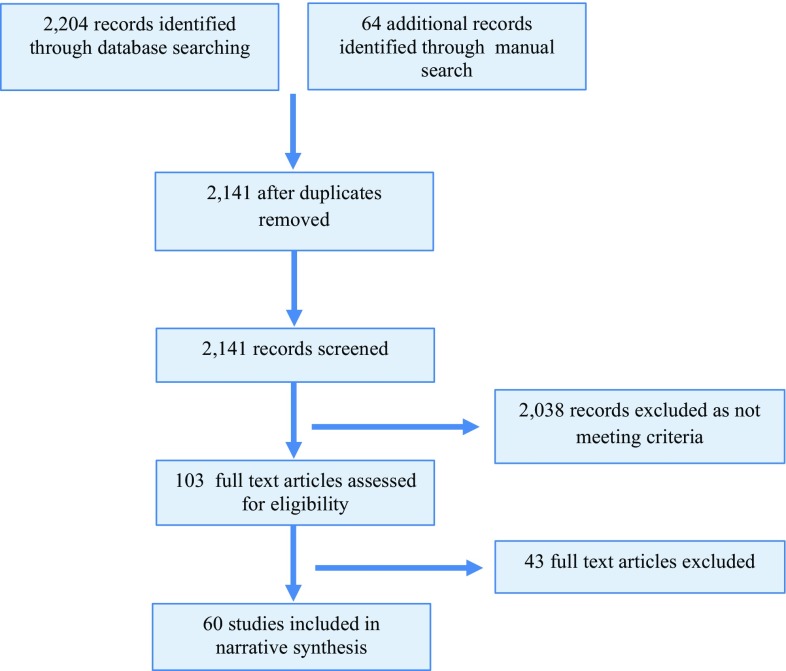
BACKGROUND: The physical impacts of elite sport participation have been well documented; however, there is comparatively less research on the mental health and psychological wellbeing of elite athletes. OBJECTIVE: This review appraises the evidence base regarding the mental health and wellbeing of elite-level athletes, including the incidence and/or nature of mental ill-health and substance use. METHODS: A systematic search of the PubMed, EMBASE, SPORTDiscus, PsycINFO, Cochrane and Google Scholar databases, up to and including May 2015, was conducted. RESULTS: The search yielded a total of 2279 records. Following double screening, 60 studies were included. The findings suggested that elite athletes experience a broadly comparable risk of high-prevalence mental disorders (i.e. anxiety, depression) relative to the general population. Evidence regarding other mental health domains (i.e. eating disorders, substance use, stress and coping) is less consistent. These results are prefaced, however, by the outcome of the quality assessment of the included studies, which demonstrated that relatively few studies (25 %) were well reported or methodologically rigorous. Furthermore, there is a lack of intervention-based research on this topic. CONCLUSION: The evidence base regarding the mental health and wellbeing of elite athletes is limited by a paucity of high-quality, systematic studies. Nonetheless, the research demonstrates that this population is vulnerable to a range of mental health problems (including substance misuse), which may be related to both sporting factors (e.g. injury, overtraining and burnout) and non-sporting factors. More high-quality epidemiological and intervention studies are needed to inform optimal strategies to identify and respond to player mental health needs.
Overview
The claims and statistics of this paper haven’t been checked yet.
Run the check — free, no account needed. It reads the open-access text and checks the sources it cites.
Integrity signals
Registry
Cites
Statistics
Figures
Verification
Claims the paper makes
The claims and statistics of this paper haven’t been checked yet.
Run the check — free, no account needed. It reads the open-access text and checks the sources it cites.
Claims other papers make about this one
Each is checked against this paper’s own text: does it say what the citing paper says it does?
The cited source says what the claim attributes to it.
In the citing paper
“To date, research has primarily examined the mental health outcomes of elite athletes [15–18], with comparatively less research focusing on understanding these psychological experiences among coaches [19].”
From The Mental Health of Elite-Level Coaches: A Systematic Scoping Review (2024) · cites this paper as [17]
Self-check
Percentages, sums and reported differences re-computed from the paper’s own numbers.
The self-check needs the paper’s full text.
Citations
Cites
The prevalence and correlates of eating disorders in the National Comorbidity Survey Replication
Hudson, J. I., Hiripi, E., Pope, H. G., & Kessler, R. C. (2007) · Biological Psychiatry · doi:10.1016/j.biopsych.2006.03.040 · Cited by 4,973 · cited 1×
“However, there was a tendency for higher vulnerability to these conditions in athletes involved in sports requiring a particularly lean body shape [21, 35, 38– 40] and in female athletes [41–43]—the latter being consistent with the findings of general population studies [87].”
Mental health of young people: A global public-health challenge
Patel, V., Flisher, A. J., Hetrick, S., & McGorry, P. (2007) · The Lancet · doi:10.1016/s0140-6736(07)60368-7 · Cited by 3,126 · cited 1×
“Such models should capitalise on an early-intervention framework [102–104], ensuring early detection and prompt access to high-quality, evidence-based interventions.”
Self-citationYoung People’s Help-Seeking for Mental Health Problems
Rickwood, D., Deane, F. P., Wilson, C. J., & Ciarrochi, J. (2005) · Australian e-Journal for the Advancement of Mental Health · doi:10.5172/jamh.4.3.218 · Cited by 1,619 · cited 1×
“Importantly, the mental health of hard-to-engage populations, such as young men [107] and older men [108, 109], could be targeted.”
How Emotions Influence Performance in Competitive Sports
Lazarus, R. S. (2000) · The Sport Psychologist · doi:10.1123/tsp.14.3.229 · Cited by 1,085 · cited 1×
“The ways by which athletes appraise and cope with these stressors can be a powerful determinant of the impact the stressors have on both their mental health and their sporting success [18].”
Prevalence of Eating Disorders in Elite Athletes Is Higher Than in the General Population
Sundgot-Borgen, J. K., & Torstveit, M. K. (2004) · Clinical Journal of Sport Medicine · doi:10.1097/00042752-200401000-00005 · Cited by 1,077 · cited 2×
“Three reported a higher incidence of eating disorder or body dissatisfaction in elite athletes relative to controls [36], especially in sports emphasising leanness or lower body weight [21, 35].”
Defining elite athletes: Issues in the study of expert performance in sport psychology
Swann, C., Moran, A., & Piggott, D. (2015) · Psychology of Sport and Exercise · doi:10.1016/j.psychsport.2014.07.004 · Cited by 998 · cited 1×
“While the included studies focused specifically on elite-level competition at the national or international level, differences between the included sports in terms of training, remuneration, media pressure and other salient variables must be considered [89].”
PHYSICAL ACTIVITY AND MENTAL HEALTH: THE ASSOCIATION BETWEEN EXERCISE AND MOOD
Peluso, M. A. M., & Andrade, L. H. (2005) · Clinics · doi:10.1590/s1807-59322005000100012 · Cited by 804 · cited 1×
“…that physical activity has a positive effect on mental health [6, 7], a review has found that intense physical activity performed at the elite athlete level might instead compromise mental wellbeing, increasing symptoms of anxiety and depression through overtraining, injury and burnout [8].”
Psychology of the elite athlete: An exploratory study
Mahoney, M. J., & Avener, M. (1977) · Cognitive Therapy and Research · doi:10.1007/bf01173634 · Cited by 615 · cited 1×
“Mahoney and Avener [80] Quantitative; crosssectional, observational Psychological factors and cognitive strategies 12 (12:0) Gymnastics; USA Self-verbalisations and certain forms of mental imagery differentiated Olympic-level and nonOlympic-level gymnasts.”
Gulliver, A., Griffiths, K. M., & Christensen, H. (2012) · BMC Psychiatry · doi:10.1186/1471-244x-12-157 · Cited by 611 · cited 3×
“Given that stigma, poor mental health literacy and negative past experiences of mental health help seeking are key barriers for elite athletes [12], more welldesigned studies, drawing on larger samples, are needed.”
Coping in sport: A systematic review
Nicholls, A. R., & Polman, R. C. J. (2006) · Journal of Sports Sciences · doi:10.1080/02640410600630654 · Cited by 575 · cited 1×
“Such an understanding is required to provide guidance for sport practitioners—including coaches, medical staff and sport psychologists—in developing the coping abilities of elite athletes and, in turn, improving their emotional wellbeing [20].”
Research works printed but not linked: 3
- Maestu J, Jurimae J, Jurimae T. Psychological and biochemical markers of heavy training stress in highly trained male rowers. Med dello Sport. 2003;56(2):95–101.
- Hainline B. Mind, body and sport: understanding and supporting student-athlete mental wellness. Indianapolis: National Collegiate Athletic Association; 2014.
- Thompson R, Sherman R. Managing student-athletes’ mental health issues. Indianapolis: National Collegiate Athletic Association; 2007.
Cited by
Sorted by citations
Items 801–900 of 1,000
Ojio, Y., Izawa, S., Watanabe, Y. W., Oliffe, J. L., & Rice, S. M. (2026) · International Journal of Sport and Exercise Psychology · doi:10.1080/1612197x.2026.2620797 · Cited by 1
Self-citationThe psychological landscape of elite rugby league: a scoping review
Humphreys, C., Liddelow, C., & Poulus, D. (2026) · International Journal of Sport and Exercise Psychology · doi:10.1080/1612197x.2026.2637008 · Cited by 1
Khan, I., Dewan, Z. A., Akhtar, M., Sawaira, F., Rehman, H. U., Rao, T., Imran, F., Abbas, A., Malik, T., & Alokozay, E. (2026) · Annals of Medicine and Surgery · doi:10.1097/ms9.0000000000004809 · Cited by 3
“However, intervention-based research in this field is scarce to explore the cause of this issue [4] .”
InfluentialRisk and protective factors in the mental health of elite sports coaches: A scoping review
Kowalski, T., Nowosadko, N. A., Mazur, W., Sławińska, M., Karbowska, J., Zając, J., Waleriańczyk, W., & Gorgol, J. (2026) · International Journal of Sports Science & Coaching · doi:10.1177/17479541261483235 · Cited by 2
Ogden, D. J., Woodman, T., Plateau, C. R., & Barker, J. B. (2026) · International Review of Sport and Exercise Psychology · doi:10.1080/1750984x.2026.2643699 · Cited by 2
Mifsud, D., van Rensburg, D. C., Busch, B., Mankowska, R., Taylor, B., Kerkhoffs, G. M. M. J., & Gouttebarge, V. (2026) · BMC Sports Science Medicine and Rehabilitation · doi:10.1186/s13102-026-01664-2 · Cited by 1
“It has been noted that mental health symptoms among both current and former elite athletes are substantial and come close to the prevalence in the general population [2].”
InfluentialJewett, R., Durand‐Bush, N., Primeau, C., & Slingerland, K. J. V. (2026) · The Sport Psychologist · doi:10.1123/tsp.2025-0095 · Cited by 1
Positive psychology interventions in sports: A systematic review
Riedl, N. R., Geisen, M., & Klatt, S. (2026) · Performance Enhancement & Health · doi:10.1016/j.peh.2026.100436 · Cited by 1
Nambron, A., Vasanthi, G., Sreedharan, S. C., & Valappil, I. N. K. (2026) · Cuadernos de Psicología del Deporte · doi:10.6018/cpd.683181 · Cited by 1
Saroha, S., Bangari, D., Singh, Y., & Seniya, C. (2026) · Discover Mental Health · doi:10.1007/s44192-026-00494-5 · Cited by 1
“Studies included in this review suggest that performance anxiety is associated with factors such as unhealthy perfectionism, evaluative pressure, and expectations from parents and coaches [13, 24, 32].”
InfluentialSihanto, F. N., & Hakiki, N. (2026) · Sport Sciences for Health · doi:10.1007/s11332-026-01809-3 · Cited by 1
“Beyond their acute physiological burden, musculoskeletal injuries carry sustained psychological consequences including elevated depression, anxiety, and social isolation among affected adolescents [4, 5].”
Grygorowicz, M., Maksym-Krzesa, S., Zakliczyńska, H., Ussorowska-Krokosz, A., Wiernicka, M., & Wiernicka, M. (2026) · Journal of science and medicine in sport · doi:10.1016/j.jsams.2026.06.012 · Cited by 1
Farhani, Z., Ghouili, H., Boukari, S., Ceylan, H. İ., Dridi, A., Souissi, N., Dhahbi, W., Bouassida, A., Mavritsakis, N., Muntean, R. I., et al. (2026) · Medicine · doi:10.1097/md.0000000000049444 · Cited by 1
“[115,116] The superior technical-tactical performance quality observed during continuous longer bouts suggests that this bout structure may accelerate skill acquisition and tactical development through enhanced quality repetitions and problem-solving opportunities, potentially reducing the total…”
The Dark Side of Sport: Trauma and Mental Health Symptomology in Athletes
Trautmann, A., Alexander, K. N., Fleming, D. J. M., Page, L. A., Cook, M. L., Bradshaw, S. D., & Dorsch, T. E. (2026) · Journal of Interpersonal Violence · doi:10.1177/08862605261459049 · Cited by 1
“Athletes reported being involved in less elite sport settings compared to samples seen in other research studies (Aron et al., 2019; Rice et al., 2016; Willson et al., 2025), and less than one-third of the sample reported ever experiencing any form of authority violence.”
Kaczmarek, F., Matecka, M., Bartkowiak-Wieczorek, J., Kmiecik, M., Kaczmarek, K., Gajniak, P., Fiutak, M., Stężycka, J., Krupa, K. K., Marchwiak, S., et al. (2026) · Journal of Clinical Medicine · doi:10.3390/jcm15176582 · Cited by 1
“Professional help is required in high-risk situations or at certain times such as after a serious injury, during the transition to retirement and following performance difficulties [3].”
InfluentialServants in the Weight Room: Coaches Using Servant Leadership to Improve Student-Athlete Well-being
Schary, D. P. (2017) · Strength and conditioning journal · doi:10.1519/ssc.0000000000000347 · Cited by 3
Perspektive Beratung und Training im Leistungssport
Brand, R., & Schweizer, G. (2019) · Basiswissen Psychologie · doi:10.1007/978-3-662-59082-9_9 · Cited by 1
The Importance of Sport Psychology in Basketball
LaBode-Richman, V. M., & Groenewal, P. H. (2020) · Springer eBooks · doi:10.1007/978-3-662-61070-1_77 · Cited by 3
Beukes, E. W., Wilkins, L., Zaborski, Z., & Allen, P. M. (2019) · Anglia Ruskin Research Online (Anglia Ruskin University) · Cited by 1
Understanding Mental Health and Wellbeing in Sport
Heaney, C. (2021) · Routledge eBooks · doi:10.4324/9781003153450-15 · Cited by 2
“1 Sample mental health risk factors (Gouttebarge et al., 2019; Henriksen et al., 2020; Howells & Lucassen, 2018; Jeckell et al., 2020; Kuettel & Larsen, 2019; Moesch et al., 2018; Poucher et al., 2019; Putukian, 2020; Rao, 2020; Reardon et al., 2019; Rice et al., 2019; Rice et al., 2016; Sarac et al., 2018; Schinke et…”
BackgroundInfluentialSmith, C. (2021) · Emerald Group Publishing Limited eBooks · doi:10.1108/978-1-83982-936-920211010 · Cited by 1
Blurring Sport Boundaries in Postsecondary: Examining Experiences of Dancers as Student-athletes
Tacuri, N., Zinga, D., & Molnar, D. S. (2021) · Journal of Dance Education · doi:10.1080/15290824.2021.1988090 · Cited by 1
“Research suggests that athletes are faced with heavy training loads, busy competition schedules, and increased pressure when playing, performing, and practicing (Rice et al. 2016).”
BackgroundThe Peculiarities of Health-Related Quality of Life in Recreational and Competitive Athletes
Tilindienė, I., Petkūnė, L., & Ivanauskas, D. (2022) · Baltic Journal of Sport and Health Sciences · doi:10.33607/bjshs.v4i123.1146 · Cited by 1
“Scientists (Rice et al., 2016) determined that competitive athletes were more likely to experience psychological disorders due to factors such as stress, pre-competition pressure to perform as well as possible, higher risk of injury, high publicity and media attention that recreational athletes did not face.”
BackgroundGüler, B., & Yanar, N. (2022) · Apuntes Universitarios · doi:10.17162/au.v12i3.1140 · Cited by 1
Trauma-Sensitive and Responsive Coaching
Hansen, M. A., Turner, B., & Davis, A. (2022) · IGI Global eBooks · doi:10.4018/978-1-6684-6315-4.ch028 · Cited by 1
Creating an Environment That Supports Mental Well-Being and Resilience
Kroshus, E. (2022) · Springer eBooks · doi:10.1007/978-3-031-08364-8_4 · Cited by 2
Exploring perceptions of depression: a performer perspective
Lebrun, F., Collins, D. J., MacNamara, Á., & Rodgers, S. (2023) · International Journal of Sport and Exercise Psychology · doi:10.1080/1612197x.2022.2161099 · Cited by 2
“This is, especially, valuable in sport as the symptoms (Doherty et al., 2016; Lebrun et al., 2018) and prevalence of certain type of mental health symptoms and/or disorder(s) can di ff er from one sport to another (Rice et al., 2016; Schaal et al., 2011).”
BackgroundCamilo, J. A. D. O., Moraes, R. D. D. M. D., do NASCIMENTO, J. S., & Galán, C. H. (2023) · Retos · doi:10.47197/retos.v49.98425 · Cited by 1
Yönal, M. (2023) · Özgür Yayınları eBooks · doi:10.58830/ozgur.pub176.c832 · Cited by 1
Screening and Referral for Behavioral Health Symptoms in Collegiate Athletes
Thompson, T., Kaplan, S. G., Conway, R., & Miles, C. M. (2023) · Clinical Journal of Sport Medicine · doi:10.1097/jsm.0000000000001185 · Cited by 3
Edwards, C. D. (2023) · Springer eBooks · doi:10.1007/978-3-031-36864-6_9 · Cited by 1
Fitri, M., Anwar, S., & Ramadhan, M. H. (2023) · Annals of Applied Sport Science · doi:10.61186/aassjournal.1197 · Cited by 1
“Maintaining health conditions by doing daily exercises can also help reduce tension and stress from social distancing because negative life events affect the mental health of elite athletes (17).”
A wellness application: use of imagery for athletes’ stress reduction and relaxation
Alicea, S. K., Sackett, S. C., & Winter, A. (2024) · Journal of Imagery Research in Sport and Physical Activity · doi:10.1515/jirspa-2023-0036 · Cited by 2
Exploring The Role of Nature of Sports in Lifestyle and Sports Engagement of Student-Athletes
Garban, C., Reillo, L. J., & Longakit, J. C. (2023) · Sports Medicine Curiosity Journal · doi:10.15294/smcj.v2i2.75834 · Cited by 1
“According to Rice et al. [35], numerous stress management techniques fall into various heuristic categories; first, understanding why these techniques work in certain situations is necessary to understand the stress and emotion processes.”
BackgroundJiménez, L. (2023) · ITF Coaching & Sport Science Review · doi:10.52383/itfcoaching.v31i90.441 · Cited by 1
Copeland, C., Reynolds, A. L., & Ackley, J. L. (2024) · Journal of Intercollegiate Sport · doi:10.17161/jis.v17i2.20761 · Cited by 1
“Elite athletes experience a higher risk of mental disorders relative to the general population; specifically, in diagnoses such as anxiety, depression, and alcohol use disorders (Gouttebarge et al., 2019; Purcell et al., 2019; Rice et al., 2016).”
BackgroundImpacto das dietas restritas na saúde mental de atletas
de Souza, A. C. D., Silva, V. S., & Maynard, D. D. C. (2024) · Research Society and Development · doi:10.33448/rsd-v13i7.46192 · Cited by 1
Figueroa, L. S. M., Silva-Barboza, C., Ñaña-Cordova, A. M., Torres-Zegarra, B. C., Chapoñan-Agip, N. V., & Runzer-Colmenares, F. M. (2024) · Revista de Neuro-Psiquiatría · doi:10.20453/rnp.v87i2.4965 · Cited by 1
Montero, A., Baranoff, J. A., Adams, R., & Drummond, M. (2024) · Sport & Exercise Psychology Review · doi:10.53841/bpssepr.2024.19.1.21 · Cited by 1
Psychological Assessment and Intervention at the Boston Marathon
Brown, J. L., Raeder, R., Troyanos, C., & Dyer, K. S. (2024) · Sports Medicine · doi:10.1007/s40279-024-02116-y · Cited by 3
Karabay, D., Yildiz, M., Caliskan, N., & Kaya, D. Ö. (2024) · Journal of Spinal Cord Medicine · doi:10.1080/10790268.2024.2408053 · Cited by 1
“While athletes may possess an increased pain tolerance due to their rigorous training (33), they can also experience more psychological distress, such as anxiety and depression, arising from injuries compared to the general population (34).”
Santos, F., Newman, T. J., Vella, S. A., Camiré, M., Rathwell, S., Strachan, L., MacDonald, D. J., Pierce, S., Ferreira, M., & Milistetd, M. (2024) · International Sport Coaching Journal · doi:10.1123/iscj.2023-0131 · Cited by 1
Treating Depression in Athletes
Dougherty, J. W., & Baron, D. A. (2024) · Psychiatric Annals · doi:10.3928/00485713-20241112-01 · Cited by 1
Basketbolda Çeviklik: Performans ve Başarı Arasındaki Köprü
Salman, K. (2024) · Özgür Yayınları eBooks · doi:10.58830/ozgur.pub635.c2744 · Cited by 1
Tackling Mental Health: A Pre-Post Study of College Athletes’ Wellbeing
Ellis, A., MacKewn, A. S., Brown, L., Culley, A., & Bynum, A. (2025) · Psychology · doi:10.4236/psych.2025.162013 · Cited by 1
Exploring professional cricketers’ well-being: Insights and influences
Ely, G., Roberts, R., Woodman, T., Jones, E. S., Evans, L., Cropper, M., & Peirce, N. S. (2025) · Journal of Applied Sport Psychology · doi:10.1080/10413200.2025.2500968 · Cited by 1
“For example, several consensus statements (e.g. Gorczynski et al., 2021; Reardon et al., 2019) and systematic reviews (Gouttebarge et al., 2019; Prior et al., 2024; Rice et al., 2016, 2019) have been published in the last decade.”
Decisions about the management of mental distress in professional footballers
James, I. A., Turner, M. J., & James, C. A. (2025) · The Cognitive Behaviour Therapist · doi:10.1017/s1754470x25000121 · Cited by 1
“’ it is important for club staff to anticipate difficulties, and therefore provide support at those times when players are most vulnerable, such as during transition periods (injury involving surgery, post-injury, following de-selection, nearing retirement; Rice et al ., 2016).”
De l’anorexie athlétique à l’anorexie mentale
Heuzey, M. L. (2017) · Pratiques en nutrition · doi:10.1016/j.pranut.2017.06.008 · Cited by 1
Vasilevskaya, A., & Tartaglia, M. C. (2018) · Springer eBooks · doi:10.1007/978-3-319-95376-2_12 · Cited by 2
The Preparticipation Physical: The WTA Experience and Findings
Taylor, W. C., Adams, B. B., Martin, K., Parker-Simmons, S. E., Safron, M., Herde, B., & Stroia, K. A. (2018) · Springer eBooks · doi:10.1007/978-3-319-71498-1_11 · Cited by 1
The Psychological Response to Injury and Illness
Putukian, M. (2020) · Springer eBooks · doi:10.1007/978-3-030-44754-0_8 · Cited by 2
Scoping review: Konsep layanan kedokteran olahraga di rumah sakit
Paramita, B. L., & Ayuningtyas, D. (2021) · Jurnal Keolahragaan · doi:10.21831/jk.v9i1.33244 · Cited by 1
“…41–42), resiko tertularnya penyakit infeksi(Ahmadinejad et al., 2014, pp. 1–7; Setyaningrum, 2019, pp. 42–43), resiko terjadinya ketidakseimbangan gizi(Rismayanthi, 2016, p. 1), resiko terjadinya gangguan kesehatan mental(Chang et al., 2020, pp. 216–218; Moreland et al., 2018, pp. 65–66; Rice…”
Mental Health Concerns in Athletes
Putukian, M. (2021) · Springer eBooks · doi:10.1007/978-3-030-66321-6_34 · Cited by 1
Dehghanpouri, H., Vosadi, E., & Mokaberian, M. (2021) · DOAJ (DOAJ: Directory of Open Access Journals) · doi:10.30476/intjsh.2021.90432.1132 · Cited by 1
“However, the evidence associated with other mental health areas (for instance, eating disorders, drug use, stress, and opposition) is less compatible (36).”
BackgroundEstresse mental em atletas de elite: Uma revisão sistemática
Farias, E. R., & da Silva, M. F. L. (2021) · Research Society and Development · doi:10.33448/rsd-v10i7.16838 · Cited by 1
Memorable messages that shape student-athletes’ perceptions of seeking mental health services
Reich, A. L. (2019) · NC Digital Online Collection of Knowledge and Scholarship (The University of North Carolina at Greensboro) · Cited by 1
da Silva, G. M., dos Santos, A. M., & Nakano, T. D. C. (2022) · Research Society and Development · doi:10.33448/rsd-v11i1.24594 · Cited by 1
Stressregulation und Sport: Ein Überblick zum Stand der Forschung
Gerber, M., & Fuchs, R. (2017) · Springer eBooks · doi:10.1007/978-3-662-49411-0_26-1 · Cited by 1
Yamazaki, M., Toussaint, J., & Antero, J. (2022) · Journal of Experimental Neurology · doi:10.33696/neurol.3.058
Joy, E. A. (2022) · Springer eBooks · doi:10.1007/978-3-031-08364-8_9 · Cited by 1
Spor, Sağlık ve Ergoterapi Kavramının İncelenmesi
Dereceli, Ç., & Dereceli, E. (2023) · Özgür Yayınları eBooks · doi:10.58830/ozgur.pub176.c829 · Cited by 1
Understanding mental health in malaysian elite sports
Lew, P. C. F., & Wong, R. S. K. (2021) · Malaysian Journal of Movement Health & Exercise · doi:10.4103/2231-9409.328215 · Cited by 1
Understanding the Barriers and Facilitators to Help-Seeking in Irish Equestrian Sport
Tobin, G., & Losty, C. (2023) · European Journal of Sport Sciences · doi:10.24018/ejsport.2023.2.6.121
Attachment and Performance Under Pressure on a Sport Motor Task
Blacker, M. (2018) · Brock University Digital Repository (Brock University) · Cited by 1
Buckley, G., Hall, L. B., Lassemillante, A. M., & Belski, R. (2021) · Research Square · doi:10.21203/rs.3.rs-145763/v1 · Cited by 1
“Further to these athletic transitions as times of risk; events such as injury, illness, social/relationship issues, illness of family members, burnout and loss of a coach are all risk factors for the development of disordered eating (DE) or poor mental health, and are of particular interest given the changes due to th…”
BackgroundThe Killing of a Sacred Veneer: Depressive Symptoms in Athletes
Tahtinen, R. E. (2021) · Liverpool John Moores University · doi:10.24377/ljmu.t.00014387 · Cited by 1
Case Studies in Sports Psychiatry
Runswick, O. R. (2021) · Journal of Mental Health · doi:10.1080/09638237.2021.1952957 · Cited by 1
A Survey of Lifestyle and Performance Factors of Elite and Pre-Elite AthletesPreprint
Burns, L., Weissensteiner, J. R., Cohen, M. M., & Bird, S. R. (2021) · Research Square · doi:10.21203/rs.3.rs-950972/v1 · Cited by 1
Garcı́a-Falgueras, A. (2021) · Springer eBooks · doi:10.1007/978-3-319-19650-3_2783 · Cited by 1
(2019) · Elsevier eBooks · doi:10.1016/b978-0-12-813150-3.00004-8 · Cited by 1
Mindfulness Training and Health-Related Quality of Life in Male NCAA Division I AthletesPreprint
Haraldsdóttir, K., Anderson, S. C., Sanfilippo, J. L., McGehee, C., & Watson, A. M. (2023) · medRxiv · doi:10.1101/2023.03.09.23287051 · Cited by 1
Kong, C., Wang, J., Chen, D., Li, Y., Qin, Y., & Li, N. (2023) · Research Square · doi:10.21203/rs.3.rs-3453386/v1 · Cited by 3
de Jesus, M. S., Winckler, C., Gebara, L., Solé, S., Santos, S. M. C. B., Sarubbi, V., da Silva, M. O., & Demarzo, M. (2025) · Qeios · doi:10.32388/pyedek.2 · Cited by 1
Laulan, P., Cuadrado, J., Philippe, R. A., & Rimmele, U. (2026) · Research Square · doi:10.21203/rs.3.rs-8649683/v1 · Cited by 1
Psychische Erkrankungen bei Leistungssportlern
Hennig, O., Breido, F., Brüßler, S., & Reichert, M. (2017) · DNP - Der Neurologe und Psychiater · doi:10.1007/s15202-017-1861-x
“Trotz methodischer Einschränkungen weisen die beschriebenen Studien bei Leistungssportlern insgesamt auf ein der Allgemeinbevölkerung entsprechendes Risiko für 36 DNP – Der Neurologe & Psychiater 2017; 18 (11-12) Fortbildung psychische Erkrankungen hin.”
BackgroundInfluentialEhlers, N., & Eichenberg, C. (2017) · Sigmund Freud PrivatUniversität Wien (SFU) · doi:10.15135/2017.5.2.63-81
“Im Leistungssport gilt der fortlaufende Wettbewerbsdruck als zentraler Stressor (Rice et al., 2016).”
BackgroundPsychological ill-being in athletes: The role of perfectionism within the football environment
Smith, E. P. (2017) · White Rose eTheses Online (University of Leeds, The University of Sheffield, University of York)
Jacobs, K. (2018) · Scholarship@Western (Western University)
Rúbio, K., Costa, M. R. L., & Lima, L. T. (2018) · Revista Brasileira de Psicologia do Esporte · doi:10.31501/rbpe.v8i2.9531
A longitudinal examination of the motivation and mental health of elite athletes
Sheehan, R. B. (2018) · University of Limerick Institutional Repository (University of Limerick) · doi:10.34961/5974
Spindler, D. J. (2018) · Research Online (University of Wollongong)
Changes in Athletes’ Psycho-Emotional Stress in the Course of Annual Macrocycle
Gamzin, M. A., Петрович, Б. К., Савченко, А. А., & Kakukhin, A. D. (2019) · Journal of Siberian Federal University Humanities & Social Sciences · doi:10.17516/1997-1370-0436
What sporting factors have an impact on the mood of male professional athletes
White, S. A. (2019) · White Rose eTheses Online (University of Leeds, The University of Sheffield, University of York)
Retired Female Gymnasts' Reflections on Body Image and Sense of Self
Casanova, B. (2019) · doi:10.31390/gradschool_theses.4993
“…image perspectives being positively influenced and perhaps protected them from the aforementioned detriments such as depression, anxiety and identity loss/confusion associated with early stages of sport retirement (Haase et al., 2002; Nordin et al., 2003; Rice et al., 2016; Rudd & Carter, 2006).”
BackgroundInfluentialPromotion of mental health referral efficacy in college athletic trainers
Dettl, M. G. (2019) · NC Digital Online Collection of Knowledge and Scholarship (The University of North Carolina at Greensboro)
Innovation of Self-service System of College Mental Health in the Age of Big Data
Zhang, T., & Xu, C. (2020) · Advances in intelligent systems and computing · doi:10.1007/978-981-15-2568-1_59
Connaughton, E. (2019) · Arrow@dit (Dublin Institute of Technology)
Kearns, M. L. (2017) · University of Limerick Institutional Repository (University of Limerick) · doi:10.13140/rg.2.2.23989.12002
Rogers, T., Larkin, J., & Cavaday, N. (2020) · Cambridge University Press eBooks · doi:10.1017/9781108767187.012
Athletics: Energy Levels, Exercise Addiction and Disordered Eating
Dudgeon, E., McGregor, R., & Robinson, R. (2020) · Cambridge University Press eBooks · doi:10.1017/9781108767187.004
American Football: Cognitive Impairment
McCabe, T., Stewart, W., Pandya, M. A., Kasper, J., & Sanders, S. (2020) · Cambridge University Press eBooks · doi:10.1017/9781108767187.003
Football: Alcohol and Barriers to Support
Mistry, A., Peters, S., Chatterjee, R., & Cotterill, D. (2020) · Cambridge University Press eBooks · doi:10.1017/9781108767187.008
Golf: Alcohol, Anxiety and Sleep Problems
Creado, S., Hopley, P., Murray, A., & Hull, M. (2020) · Cambridge University Press eBooks · doi:10.1017/9781108767187.009
Cricket: Mental Health Emergencies
Mahmood, H., Hopley, P., & Foster, P. (2020) · Cambridge University Press eBooks · doi:10.1017/9781108767187.006
Johnston, A., Al-Dawoud, M., & Pattinson, C. (2020) · Cambridge University Press eBooks · doi:10.1017/9781108767187.005
Rugby: Concussion and Mental Health Symptoms
McCabe, T., Lester, C., Kemp, S. P. T., & Vickerman, R. (2020) · Cambridge University Press eBooks · doi:10.1017/9781108767187.010
Addressing the context and make up of mental health issues in high-performing athletes
Lebrun, F. (2020) · CLOK (University of Central Lancashire)
Assessing the level of well-being in individuals practicing sport
Pieniążek, M., Mańko, G., Sosulska, A., Jaszczur-Nowicki, J., Lozinska, I., & Jarząbek, B. (2020) · Rehabilitacja Medyczna · doi:10.5604/01.3001.0014.2672
Langlois-Pelletier, N., Verret, C., & Massé, L. (2020) · Revue de psychoéducation · doi:10.7202/1073995ar
Metadata
- Authors
- Rice, S. M., Purcell, R., De Silva, S., Mawren, D., McGorry, P. D., & Parker, A. G.
- Affiliations
- The University of Melbourne (AU)
- Orygen (AU)
- Corresponding author
- Rice, Simon M.
- Venue
- Sports Medicine
- Published
- 2016-02-20
- Volume
- 46
- Issue
- 9
- Pages
- 1333-1353
- ISSN
- 0112-1642 (ISSN-L)
- 1179-2035
- PMC
- PMC4996886
- OpenAlex
- W2278084024
- Cited by
- 1,205
- References
- 110
- Citations by year
- 2026: 175 · 2025: 161 · 2024: 157 · 2023: 148 · 2022: 155 · 2021: 129 · 2020: 105 · 2019: 74 · 2018: 64 · 2017: 27 · 2016: 10
- FWCI
- 10.78
- Type
- journal article
- Language
- en
- Open access
- hybrid
- doi.org
- Locations
- Sports Medicine (publishedVersion, cc-by)
- PubMed Central (publishedVersion, cc-by)
- PubMed (publishedVersion)
- Victoria University Research Repository (Victoria University) (submittedVersion, cc-by)
- Minerva Access (University of Melbourne) (submittedVersion, cc-by)
- Swinburne figshare (Swinburne University of Technology) (submittedVersion, cc-by)
- Funders
- Society for Mental Health Research (Early Career Fellowship)
- Topics
- Social Sciences › Psychology › Developmental and Educational Psychology › Sport Psychology and Performance
- Social Sciences › Psychology › Clinical Psychology › Psychological Treatments and Assessments
- Social Sciences › Psychology › Clinical Psychology › COVID-19 and Mental Health
- Keywords
- elite athletes, mental health, psychological well-being, anxiety, depression, eating disorders, substance use, stress coping, burnout, overtraining, injuries, mental health interventions
- MeSH terms
- Adaptation, Psychological, Anxiety, Feeding and Eating Disorders, Competitive Behavior, Depression, Humans, Mental Health, Risk Factors, Stress, Psychological, Incidence, Substance-Related Disorders, Athletes
About these checks
Registry, retraction, Cites and statistics results are computed, not judged, with one exception: a printed reference that no index lists is read once by a model before it counts as a citation error. Claims are extracted by a model and kept only when their quote appears verbatim in the text; each cited source is then checked, with a model’s help, for whether it says what the claim relies on. Those verdicts can be wrong — read the claim’s quote and the cited source before relying on one.
Statistics and arithmetic are recomputed, not judged.
Confidence bands are shown only for fields calibrated on our annotated test set. None is calibrated yet, so no band is shown.
What counts as a claim ›How we measure confidence ›How we check this ›
Are you an author, or do you see a problem with this page? Request a review
