

The DOI matches its Crossref record; 103 of the 103 references it cites were found in a registry or an index.
Assessing the role of muscle protein breakdown in response to nutrition and exercise in humans.
Open accessAbstract
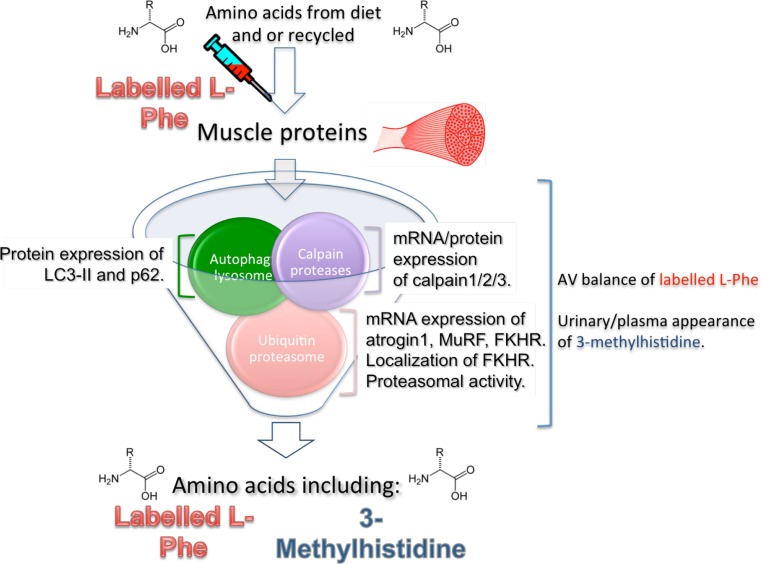
Muscle protein breakdown (MPB) is an important metabolic component of muscle remodeling, adaptation to training, and increasing muscle mass. Degradation of muscle proteins occurs via the integration of three main systems-autophagy and the calpain and ubiquitin-proteasome systems. These systems do not operate independently, and the regulation is complex. Complete degradation of a protein requires some combination of the systems. Determination of MPB in humans is technically challenging, leading to a relative dearth of information. Available information on the dynamic response of MPB primarily comes from stable isotopic methods with expression and activity measures providing complementary information. It seems clear that resistance exercise increases MPB, but not as much as the increase in muscle protein synthesis. Both hyperaminoacidemia and hyperinsulinemia inhibit the post-exercise response of MPB. Available data do not allow a comprehensive examination of the mechanisms behind these responses. Practical nutrition recommendations for interventions to suppress MPB following exercise are often made. However, it is likely that some degree of increased MPB following exercise is an important component for optimal remodeling. At this time, it is not possible to determine the impact of nutrition on any individual muscle protein. Thus, until we can develop and employ better methods to elucidate the role of MPB following exercise and the response to nutrition, recommendations to optimize post exercise nutrition should focus on the response of muscle protein synthesis. The aim of this review is to provide a comprehensive examination of the state of knowledge, including methodological considerations, of the response of MPB to exercise and nutrition in humans.
Overview
The claims and statistics of this paper haven’t been checked yet.
Run the check — free, no account needed. It reads the open-access text and checks the sources it cites.
Integrity signals
Registry
Cites
Statistics
Figures
Verification
Claims the paper makes
The claims and statistics of this paper haven’t been checked yet.
Run the check — free, no account needed. It reads the open-access text and checks the sources it cites.
Claims other papers make about this one
Each is checked against this paper’s own text: does it say what the citing paper says it does?
In the citing paper
“Therefore, at the muscle cell level, processes of muscle protein metabolism could be influenced by APP, even in a short period such as 6 weeks.”
From Effect of resistance training and fish protein intake on motor unit firing pattern and motor function of elderly (2018) · cites this paper as Tipton et al., 2018
In the citing paper
“Muscle proteins are constantly being broken down and synthesized, and they are controlled predominantly by physical activity and food consumption (Landi et al., 2016; Tipton et al., 2018).”
From Effect of resistance training and fish protein intake on motor unit firing pattern and motor function of elderly (2018) · cites this paper as Tipton et al., 2018
Self-check
Percentages, sums and reported differences re-computed from the paper’s own numbers.
The self-check needs the paper’s full text.
Citations
Cites
Gene Ontology: tool for the unification of biology
Ashburner, M., Ball, C. A., Blake, J. A., Botstein, D., Butler, H., Cherry, J. M., Davis, A. P., Dolinski, K., Dwight, S. S., Eppig, J. T., et al. (2000) · Nature Genetics · doi:10.1038/75556 · Cited by 43,206
Vandesompele, J., De Preter, K., Pattyn, F., Poppe, B., Van Roy, N., De Paepe, A., & Speleman, F. (2002) · Genome Biology · doi:10.1186/gb-2002-3-7-research0034 · Cited by 20,038
The MIQE guidelines: minimum information for publication of quantitative real-time PCR experiments
Bustin, S. A., Benes, V., Garson, J. A., Hellemans, J., Huggett, J., Kubista, M., Mueller, R., Nolan, T., Pfaffl, M. W., Shipley, G. L., et al. (2009) · Clinical Chemistry · doi:10.1373/clinchem.2008.112797 · Cited by 16,303 · cited 1×
“reporting of qRT-PCR studies were published [65].”
Sequencing technologies – the next generation
Metzker, M. L. (2010) · Nature Reviews Genetics · doi:10.1038/nrg2626 · Cited by 7,066
Pfaffl, M. W., Tichopad, A., Prgomet, C., & Neuvians, T. P. (2004) · Biotechnology Letters · doi:10.1023/b:bile.0000019559.84305.47 · Cited by 5,065
Identification of ubiquitin ligases required for skeletal muscle atrophy.
Bodine, S. C., Latres, E., Baumhueter, S., Lai, V. K.-M., Nunez, L., Clarke, B. A., Poueymirou, W. T., Panaro, F. J., Na, E., Dharmarajan, K., et al. (2001) · Science · doi:10.1126/science.1065874 · Cited by 3,521
Real-time RT-PCR normalisation; strategies and considerations
Huggett, J. F., Dheda, K. U. J., Bustin, S. A., & Zumla, A. I. (2005) · Genes and Immunity · doi:10.1038/sj.gene.6364190 · Cited by 1,858
Reactome: a database of reactions, pathways and biological processes
Croft, D., O'Kelly, G., Wu, G., Haw, R., Gillespie, M., Matthews, L., Caudy, M., Garapati, P., Gopinath, G., Jassal, B., et al. (2011) · Nucleic Acids Research · doi:10.1093/nar/gkq1018 · Cited by 1,751
The underappreciated role of muscle in health and disease
Wolfe, R. R. (2006) · American Journal of Clinical Nutrition · doi:10.1093/ajcn/84.3.475 · Cited by 1,641
Multiple types of skeletal muscle atrophy involve a common program of changes in gene expression
Lecker, S. H., Jagoe, R. T., Gilbert, A., Gomes, M., Baracos, V., Bailey, J., Price, S. R., Mitch, W. E., & Goldberg, A. L. (2004) · The FASEB Journal · doi:10.1096/fj.03-0610com · Cited by 1,539
GSEA-P : a desktop application for Gene Set Enrichment Analysis
Subramanian, A., Kuehn, H., Gould, J., Tamayo, P., & Mesirov, J. P. (2007) · Bioinformatics · doi:10.1093/bioinformatics/btm369 · Cited by 1,399
Twenty-Five Years of Quantitative PCR for Gene Expression Analysis
VanGuilder, H. D., Vrana, K. E., & Freeman, W. M. (2008) · BioTechniques · doi:10.2144/000112776 · Cited by 1,246
Mixed muscle protein synthesis and breakdown after resistance exercise in humans
Phillips, S. M., Tipton, K. D., Aarsland, A., Wolf, S. E., & Wolfe, R. R. (1997) · American Journal of Physiology-Endocrinology and Metabolism · doi:10.1152/ajpendo.1997.273.1.e99 · Cited by 1,132
Self-citationThe Molecular Basis of Skeletal Muscle Atrophy
Jackman, R. W., & Kandarian, S. C. (2004) · American Journal of Physiology-Cell Physiology · doi:10.1152/ajpcell.00579.2003 · Cited by 1,008 · cited 2×
“Whereas mechanistic data are lacking from human studies, data from animal models suggest that the UPP and calpain systems play a much larger role than autophagy [17].”
BackgroundAn abundant supply of amino acids enhances the metabolic effect of exercise on muscle protein
Biolo, G., Tipton, K. D., Klein, S., & Wolfe, R. R. (1997) · American Journal of Physiology-Endocrinology and Metabolism · doi:10.1152/ajpendo.1997.273.1.e122 · Cited by 825
Self-citationDu, J., Wang, X., Miereles, C., Bailey, J. L., Debigaré, R., Zheng, B., Price, S. R., & Mitch, W. E. (2004) · Journal of Clinical Investigation · doi:10.1172/jci18330 · Cited by 730
Biolo, G., Maggi, S. P., Williams, B. D., Tipton, K. D., & Wolfe, R. R. (1995) · American Journal of Physiology-Endocrinology and Metabolism · doi:10.1152/ajpendo.1995.268.3.e514 · Cited by 713 · cited 10×
“Given that exercise increases the metabolism of the muscle with little impact on other tissues, it is a reasonable assumption that measurements made using these AV models following exercise represent changes in muscle metabolism [3, 7].”
BackgroundMethodResultInfluentialSelf-citationTipton, K. D., Rasmussen, B. B., Miller, S. L., Wolf, S. E., Owens-Stovall, S. K., Petrini, B. E., & Wolfe, R. R. (2001) · American Journal of Physiology-Endocrinology and Metabolism · doi:10.1152/ajpendo.2001.281.2.e197 · Cited by 526
Self-citationWitard, O. C., Jackman, S. R., Breen, L., Smith, K., Selby, A., & Tipton, K. D. (2014) · The American Journal of Clinical Nutrition · doi:10.3945/ajcn.112.055517 · Cited by 517
Self-citationIsotope Tracers in Metabolic Research: Principles and Practice of Kinetic Analysis
Wolfe, R. R., & Chinkes, D. L. (2004) · Medical Entomology and Zoology · Cited by 497
Areta, J. L., Burke, L. M., Ross, M. L., Camera, D. M., West, D. W. D., Broad, E. M., Jeacocke, N. A., Moore, D. R., Stellingwerff, T., Phillips, S. M., et al. (2013) · The Journal of Physiology · doi:10.1113/jphysiol.2012.244897 · Cited by 495
Louis, E., Raue, U., Yang, Y., Jemiolo, B., & Trappe, S. (2007) · Journal of Applied Physiology · doi:10.1152/japplphysiol.00679.2007 · Cited by 478
Solomon, V., & Goldberg, A. L. (1996) · Journal of Biological Chemistry · doi:10.1074/jbc.271.43.26690 · Cited by 433
A database for post-genome analysis
Kanehisa, M. I. (1997) · Trends in Genetics · doi:10.1016/s0168-9525(97)01223-7 · Cited by 420
Molecular cloning of a novel mammalian calcium-dependent protease distinct from both m- and μ-types
Sorimachi, H., Imajoh‐Ohmi, S., Emori, Y., Kawasaki, H., Ohno, S., Minami, Y., & Suzuki, K. (1989) · Journal of Biological Chemistry · doi:10.1016/s0021-9258(19)47225-6 · Cited by 381
Resistance training reduces the acute exercise-induced increase in muscle protein turnover
Phillips, S. M., Tipton, K. D., Ferrando, A. A., & Wolfe, R. R. (1999) · American Journal of Physiology-Endocrinology and Metabolism · doi:10.1152/ajpendo.1999.276.1.e118 · Cited by 336
Self-citationChapman, J. R., & Waldenström, J. (2015) · PLoS ONE · doi:10.1371/journal.pone.0141853 · Cited by 329
Pathways to the analysis of microarray data
Curtis, R. K., Orešič, M., & Vidal‐Puig, A. (2005) · Trends in biotechnology · doi:10.1016/j.tibtech.2005.05.011 · Cited by 309
Hrúz, T., Wyss, M., Docquier, M., Pfaffl, M. W., Masanetz, S., Borghi, L., Verbrugghe, P., Kalaydjieva, L. V., Stefan Bleuler, A., Laule, O., et al. (2011) · BMC Genomics · doi:10.1186/1471-2164-12-156 · Cited by 292
The involvement of the ubiquitin proteasome system in human skeletal muscle remodelling and atrophy
Murton, A. J., Constantin, D., & Greenhaff, P. L. (2008) · Biochimica et Biophysica Acta (BBA) - Molecular Basis of Disease · doi:10.1016/j.bbadis.2008.10.011 · Cited by 286
Protein and amino acids for athletes
Tipton, K. D., & Wolfe, R. R. (2004) · Journal of Sports Sciences · doi:10.1080/0264041031000140554 · Cited by 274
Self-citationStructural Insights into E1-Catalyzed Ubiquitin Activation and Transfer to Conjugating Enzymes
Lee, I., & Schindelin, H. (2008) · Cell · doi:10.1016/j.cell.2008.05.046 · Cited by 265
Biolo, G., Williams, B. D., Fleming, R. Y., & Wolfe, R. R. (1999) · Diabetes · doi:10.2337/diabetes.48.5.949 · Cited by 256
Effect of exercise and recovery on muscle protein synthesis in human subjects
Carraro, F., Stuart, C. A., Hartl, W. H., Rosenblatt, J., & Wolfe, R. R. (1990) · American Journal of Physiology-Endocrinology and Metabolism · doi:10.1152/ajpendo.1990.259.4.e470 · Cited by 247
Nutritional interventions to augment resistance training-induced skeletal muscle hypertrophy
Morton, R. W., McGlory, C., & Phillips, S. M. (2015) · Frontiers in Physiology · doi:10.3389/fphys.2015.00245 · Cited by 234
Abdulla, H., Smith, K., Atherton, P. J., & Idris, I. (2016) · Diabetologia · doi:10.1007/s00125-015-3751-0 · Cited by 229
Féasson, L., Stockholm, D., Freyssenet, D. G., Richard, I., Duguez, S., Beckmann, J. S., & Denis, C. (2002) · The Journal of Physiology · doi:10.1113/jphysiol.2002.018689 · Cited by 224
Non-canonical ubiquitin-based signals for proteasomal degradation
Kravtsova‐Ivantsiv, Y., & Ciechanover, A. J. (2012) · Journal of Cell Science · doi:10.1242/jcs.093567 · Cited by 221
Rapid measurement of whole body and forearm protein turnover using a [2H5]phenylalanine model
Thompson, G. N., Pacy, P. J., Merritt, H., Ford, G. C., Read, M. A., Cheng, K., & Halliday, D. (1989) · American Journal of Physiology-Endocrinology and Metabolism · doi:10.1152/ajpendo.1989.256.5.e631 · Cited by 202
Sheffield-Moore, M., Yeckel, C. W., Volpi, E., Wolf, S. E., Morio, B., Chinkes, D. L., Paddon-Jones, D., & Wolfe, R. R. (2004) · American Journal of Physiology-Endocrinology and Metabolism · doi:10.1152/ajpendo.00334.2003 · Cited by 197
Atherton, P. J., Greenhaff, P. L., Phillips, S. M., Bodine, S. C., Adams, C. M., & Lang, C. H. (2016) · American Journal of Physiology-Endocrinology and Metabolism · doi:10.1152/ajpendo.00257.2016 · Cited by 180
Glynn, E. L., Fry, C. S., Drummond, M. J., Dreyer, H. C., Dhanani, S., Volpi, E., & Rasmussen, B. B. (2010) · American Journal of Physiology-Regulatory, Integrative and Comparative Physiology · doi:10.1152/ajpregu.00077.2010 · Cited by 177
LGMD2A: genotype–phenotype correlations based on a large mutational survey on the calpain 3 gene
Sáenz, A., Leturcq, F., Cobo, A. M., Poza, J. J., Ferrer, X., Otaegui, D., Camaño, P., Urtasun, M., Vilchez, J. J., Gutiérrez‐Rivas, E., et al. (2005) · Brain · doi:10.1093/brain/awh408 · Cited by 176
Resistance-training-induced adaptations in skeletal muscle protein turnover in the fed state
Phillips, S. M., Parise, G., Roy, B. D., Tipton, K. D., Wolfe, R. R., & Tarnopolsky, M. A. (2002) · Canadian Journal of Physiology and Pharmacology · doi:10.1139/y02-134 · Cited by 168
Self-citationMascher, H., Tannerstedt, J., Brink-Elfegoun, T., Ekblom, B. T., Gustafsson, T. P., & Blomstrand, E. (2007) · American Journal of Physiology-Endocrinology and Metabolism · doi:10.1152/ajpendo.00504.2007 · Cited by 165
Measurement of Autophagy in Cells and Tissues
Tanida, I., & Waguri, S. (2010) · Methods in molecular biology · doi:10.1007/978-1-60761-756-3_13 · Cited by 162
Carbohydrate Does Not Augment Exercise-Induced Protein Accretion versus Protein Alone
STAPLES, A. W., BURD, N. A., WEST, D. W. D., CURRIE, K. D., ATHERTON, P. J., MOORE, D. R., RENNIE, M. J., MACDONALD, M. J., BAKER, S. K., & PHILLIPS, S. M. (2011) · Medicine & Science in Sports & Exercise · doi:10.1249/mss.0b013e31820751cb · Cited by 162
Biolo, G., Chinkes, D. L., Zhang, X., & Wolfe, R. R. (1992) · Journal of Parenteral and Enteral Nutrition · doi:10.1177/0148607192016004305 · Cited by 159
Modulation of autophagy and ubiquitin-proteasome pathways during ultra-endurance running
Jamart, C., Francaux, M., Millet, G. Y., Deldicque, L., Frère, D., & Féasson, L. (2012) · Journal of Applied Physiology · doi:10.1152/japplphysiol.00952.2011 · Cited by 157
Koopman, R., Beelen, M., Stellingwerff, T., Pennings, B., Saris, W. H. M., Kies, A. K., Kuipers, H., & van Loon, L. J. C. (2007) · American Journal of Physiology-Endocrinology and Metabolism · doi:10.1152/ajpendo.00135.2007 · Cited by 150
Is there a maximal anabolic response to protein intake with a meal?
Deutz, N. E., & Wolfe, R. R. (2013) · Clinical Nutrition · doi:10.1016/j.clnu.2012.11.018 · Cited by 144
Coffey, V. G., SHIELD, A. J., Canny, B. J., Carey, K. A., Cameron‐Smith, D., & Hawley, J. A. (2005) · American Journal of Physiology-Endocrinology and Metabolism · doi:10.1152/ajpendo.00299.2005 · Cited by 144
McGlory, C., Devries, M. C., & Phillips, S. M. (2017) · Journal of Applied Physiology · doi:10.1152/japplphysiol.00613.2016 · Cited by 135
Human NADH:ubiquinone oxidoreductase deficiency: radical changes in mitochondrial morphology?
Koopman, W. J. H., Verkaart, S., Visch, H.-J., Vries, S. E. V. E., Nijtmans, L. G. J., Smeitink, J. A. M., & Willems, P. H. G. M. (2007) · American Journal of Physiology-Cell Physiology · doi:10.1152/ajpcell.00194.2006 · Cited by 134
Protein Considerations for Optimising Skeletal Muscle Mass in Healthy Young and Older Adults
Witard, O., Wardle, S., Macnaughton, L., Hodgson, A., & Tipton, K. (2016) · Nutrients · doi:10.3390/nu8040181 · Cited by 132
Self-citationExercise‐induced changes in protein metabolism
Tipton, K. D., & Wolfe, R. R. (1998) · Acta Physiologica Scandinavica · doi:10.1046/j.1365-201x.1998.00306.x · Cited by 125
Self-citationYang, Y., Jemioło, B., & Trappe, S. W. (2006) · Journal of Applied Physiology · doi:10.1152/japplphysiol.00438.2006 · Cited by 125
Dargelos, É., Poussard, S., Brulé, C., Daury, L., & Cottin, P. (2007) · Biochimie · doi:10.1016/j.biochi.2007.07.018 · Cited by 116
Ca2+ activation of diffusible and bound pools of μ‐calpain in rat skeletal muscle
Murphy, R. M., Verburg, E., & Lamb, G. D. (2006) · The Journal of Physiology · doi:10.1113/jphysiol.2006.114090 · Cited by 114
Trappe, T. A., Williams, R. H., Carrithers, J. A., Raue, U., Esmarck, B., Kjær, M., & Hickner, R. C. (2003) · The Journal of Physiology · doi:10.1113/jphysiol.2003.051755 · Cited by 100
Kim, H. J., Jamart, C., Deldicque, L., An, G.-L., Lee, Y. H., Kim, C. K., Raymackers, J., & Francaux, M. (2010) · Medicine & Science in Sports & Exercise · doi:10.1249/mss.0b013e3181e4c5d1 · Cited by 94
Moberg, M., Apró, W., & Blomstrand, E. (2011) · American Journal of Physiology-Endocrinology and Metabolism · doi:10.1152/ajpendo.00353.2011 · Cited by 93
Hector, A. J., McGlory, C., Damas, F., Mazara, N., Baker, S. K., & Phillips, S. M. (2018) · The FASEB Journal · doi:10.1096/fj.201700158rr · Cited by 91
An isotopic method for measurement of muscle protein fractional breakdown rate in vivo
Zhang, X. J., Chinkes, D. L., Sakurai, Y., & Wolfe, R. R. (1996) · American Journal of Physiology-Endocrinology and Metabolism · doi:10.1152/ajpendo.1996.270.5.e759 · Cited by 90
Measurement of muscle protein fractional synthesis and breakdown rates from a pulse tracer injection
Zhang, X., Chinkes, D. L., & Wolfe, R. R. (2002) · American Journal of Physiology-Endocrinology and Metabolism · doi:10.1152/ajpendo.00053.2002 · Cited by 88
Assessment of skeletal muscle proteolysis and the regulatory response to nutrition and exercise
Pasiakos, S. M., & Carbone, J. W. (2014) · IUBMB Life · doi:10.1002/iub.1291 · Cited by 79
Zhang, J., Xia, S., Block, E. R., & Patel, J. M. (2002) · American Journal of Physiology-Cell Physiology · doi:10.1152/ajpcell.00048.2002 · Cited by 78
In vivo analysis of fluid transport in cystic fibrosis airway epithelia of bronchial xenografts
Zhang, J. Y., Yankaskas, J. R., Wilson, J. M., & Engelhardt, J. F. (1996) · American Journal of Physiology-Cell Physiology · doi:10.1152/ajpcell.1996.270.5.c1326 · Cited by 77
Human soleus muscle protein synthesis following resistance exercise
Trappe, T. A., Raue, U., & Tesch, P. A. (2004) · Acta Physiologica Scandinavica · doi:10.1111/j.1365-201x.2004.01348.x · Cited by 76
Murphy, R. M., Goodman, C. A., McKenna, M. J., Bennie, J. A., Leikis, M. J., & Lamb, G. D. (2007) · Journal of Applied Physiology · doi:10.1152/japplphysiol.01422.2006 · Cited by 73
Camera, D. M., Burniston, J. G., Pogson, M. A., Smiles, W. J., & Hawley, J. A. (2017) · The FASEB Journal · doi:10.1096/fj.201700531r · Cited by 72
Stefanetti, R. J., Lamon, S., Wallace, M. A., Vendelbo, M. H., Russell, A. P., & Vissing, K. (2014) · Pflügers Archiv - European Journal of Physiology · doi:10.1007/s00424-014-1587-y · Cited by 71
Protein synthesis and breakdown in skin and muscle: a leg model of amino acid kinetics
Biolo, G., Gastaldelli, A., Zhang, X. J., & Wolfe, R. R. (1994) · American Journal of Physiology-Endocrinology and Metabolism · doi:10.1152/ajpendo.1994.267.3.e467 · Cited by 71
Thomas, K. C., Zheng, X., Suarez, F. G., Raftery, J. M., Quinlan, K. G. R., Yang, N., North, K. N., & Houweling, P. J. (2014) · PLoS ONE · doi:10.1371/journal.pone.0088653 · Cited by 69
The meteoric rise of regulated intracellular proteolysis
Mayer, R. J. (2000) · Nature Reviews Molecular Cell Biology · doi:10.1038/35040090 · Cited by 66
Identifying aggressive prostate cancer foci using a DNA methylation classifier
Mundbjerg, K., Chopra, S. S., Mehrdad Alemozaffar, A., Duymich, C. E., Lakshminarasimhan, R., Nichols, P. W., Aron, M., Siegmund, K. D., Ukimura, O., Aron, M., et al. (2017) · Genome biology · doi:10.1186/s13059-016-1129-3 · Cited by 64
Nedergaard, A., Vissing, K., Overgaard, K., Kjær, M., & Schjerling, P. (2007) · Journal of Applied Physiology · doi:10.1152/japplphysiol.01445.2006 · Cited by 57
Murphy, R. M., & Lamb, G. D. (2009) · Journal of Biological Chemistry · doi:10.1074/jbc.m808655200 · Cited by 55
Carbone, J. W., Pasiakos, S. M., Vislocky, L. M., Anderson, J. M., & Rodriguez, N. R. (2014) · Applied Physiology, Nutrition, and Metabolism · doi:10.1139/apnm-2013-0433 · Cited by 49
Wilkinson, D. J., Cegielski, J., Phillips, B. E., Boereboom, C., Lund, J. N., Atherton, P. J., & Smith, K. (2015) · Physiological Reports · doi:10.14814/phy2.12433 · Cited by 49
Holm, L., O’Rourke, B., Ebenstein, D. B., Toth, M. J., Bechshoeft, R. L., Holstein‐Rathlou, N., Kjær, M., & Matthews, D. E. (2013) · American Journal of Physiology-Endocrinology and Metabolism · doi:10.1152/ajpendo.00579.2012 · Cited by 44
Thompson, G. N., Pacy, P. J., Ford, G. C., & Halliday, D. (1989) · Journal of Mass Spectrometry · doi:10.1002/bms.1200180507 · Cited by 38
Dalbo, V. J., Roberts, M. D., Hassell, S., & Kerksick, C. M. (2013) · European Journal of Nutrition · doi:10.1007/s00394-012-0349-x · Cited by 35
Stefanetti, R. J., Lamon, S., Rahbek, S. K., Farup, J., Zacharewicz, E., Wallace, M. A., Vendelbo, M. H., Russell, A. P., & Vissing, K. (2014) · Journal of Applied Physiology · doi:10.1152/japplphysiol.00136.2013 · Cited by 35
Methods for measuring tissue protein breakdown rate in vivo
Chinkes, D. L. (2005) · Current Opinion in Clinical Nutrition & Metabolic Care · doi:10.1097/01.mco.0000170754.25372.37 · Cited by 34
Pleiotropic Effects of ATP·Mg2+ Binding in the Catalytic Cycle of Ubiquitin-activating Enzyme
Tokgöz, Z., Bohnsack, R. N., & Haas, A. L. (2006) · Journal of Biological Chemistry · doi:10.1074/jbc.m513562200 · Cited by 34
Molecular Responses to Moderate Endurance Exercise in Skeletal Muscle
Pasiakos, S. M., McClung, H. L., McClung, J. P., Urso, M. L., Pikosky, M. A., Cloutier, G. J., Fielding, R. A., & Young, A. (2010) · International Journal of Sport Nutrition and Exercise Metabolism · doi:10.1123/ijsnem.20.4.282 · Cited by 33
Reitelseder, S., Agergaard, J., Doessing, S., Helmark, I. C., Schjerling, P., van Hall, G., Kjær, M., & Holm, L. (2013) · European Journal of Nutrition · doi:10.1007/s00394-013-0530-x · Cited by 32
Dickinson, J. M., Reidy, P. T., Gundermann, D. M., Borack, M. S., Walker, D. K., D’Lugos, A. C., Volpi, E., & Rasmussen, B. B. (2016) · Journal of Applied Physiology · doi:10.1152/japplphysiol.00632.2016 · Cited by 30
Vesali, R. F., Klaude, M., Thunblad, L., Rooyackers, O., & Wernerman, J. (2004) · Metabolism · doi:10.1016/j.metabol.2004.02.017 · Cited by 28
ICAM-1-mediated leukocyte adhesion is critical for the activation of endothelial LSP1
Hossain, M., Qadri, S. M., Su, Y., & Liu, L. (2013) · American Journal of Physiology-Cell Physiology · doi:10.1152/ajpcell.00297.2012 · Cited by 28
Katsanos, C. S., Chinkes, D. L., Sheffield‐Moore, M., Aarsland, A. A., Kobayashi, H., & Wolfe, R. R. (2005) · American Journal of Physiology-Endocrinology and Metabolism · doi:10.1152/ajpendo.00141.2005 · Cited by 26
Rennie, M. J., Phillips, S. M., & Smith, K. (2008) · Journal of Applied Physiology · doi:10.1152/japplphysiol.90782.2008 · Cited by 23
Glynn, E. L., Fry, C. S., Drummond, M. J., Dreyer, H. C., Dhanani, S., Volpi, E., & Rasmussen, B. B. (2010) · The FASEB Journal · doi:10.1096/fasebj.24.1_supplement.740.5 · Cited by 22
Doherty, M. K., Brownridge, P., Owen, M. A. G., Davies, S. J., Young, I. S., & Whitfield, P. D. (2012) · Journal of Proteomics · doi:10.1016/j.jprot.2012.03.025 · Cited by 22
Hansen, M., Trappe, T. A., Crameri, R. M., Qvortrup, K., Kjær, M., & Langberg, H. (2009) · Scandinavian Journal of Medicine and Science in Sports · doi:10.1111/j.1600-0838.2007.00766.x · Cited by 21
Measuring protein breakdown rate in individual proteins in vivo
Holm, L., & Kjær, M. (2010) · Current Opinion in Clinical Nutrition & Metabolic Care · doi:10.1097/mco.0b013e32833c3c64 · Cited by 20
The effect of strenuous aerobic exercise on skeletal muscle myofibrillar proteolysis in humans
Haus, J. M., Miller, B. F., Carroll, C. C., Weinheimer-Haus, E. M., & Trappe, T. A. (2006) · Scandinavian Journal of Medicine and Science in Sports · doi:10.1111/j.1600-0838.2006.00566.x · Cited by 18
Tuvdendorj, D., Chinkes, D. L., Herndon, D. N., Zhang, X., & Wolfe, R. R. (2013) · American Journal of Physiology-Endocrinology and Metabolism · doi:10.1152/ajpendo.00552.2012 · Cited by 17
McGlory, C., & Phillips, S. M. (2014) · Current Opinion in Clinical Nutrition & Metabolic Care · doi:10.1097/mco.0000000000000083 · Cited by 15
Sunderland, K., Roberts, M. D., Dalbo, V. J., & Kerksick, C. M. (2012) · The Journal of Strength and Conditioning Research · doi:10.1519/jsc.0b013e3182779830 · Cited by 7
Virtanen, C., & Takahashi, M. T. (2008) · Applied Physiology Nutrition and Metabolism · doi:10.1139/h07-150 · Cited by 7
Wilkinson, D. J., Atherton, P. J., Phillips, B. E., Greenhaff, P. L., & Smith, K. (2015) · American Journal of Physiology-Endocrinology and Metabolism · doi:10.1152/ajpendo.00581.2014 · Cited by 6
Cited by
Sorted by citations
Skeletal muscle atrophy: From mechanisms to treatments
Yin, L., Li, N., Jia, W., Wang, N., Liang, M., Yang, X., & Du, G. (2021) · Pharmacological Research · doi:10.1016/j.phrs.2021.105807 · Cited by 423
Stimuli and sensors that initiate skeletal muscle hypertrophy following resistance exercise
Wackerhage, H., Schoenfeld, B. J., Hamilton, D. L., Lehti, M., & Hulmi, J. J. (2019) · Journal of Applied Physiology · doi:10.1152/japplphysiol.00685.2018 · Cited by 357
Self-citationSchranner, D., Kastenmüller, G., Schönfelder, M., Römisch‐Margl, W., & Wackerhage, H. (2020) · Sports Medicine - Open · doi:10.1186/s40798-020-0238-4 · Cited by 263
Roberts, M. D., McCarthy, J. J., Hornberger, T. A., Phillips, S. M., Mackey, A. L., Nader, G. A., Boppart, M. D., Kavazis, A. N., Reidy, P. T., Ogasawara, R., et al. (2023) · Physiological Reviews · doi:10.1152/physrev.00039.2022 · Cited by 214
Antioxidant and Adaptative Response Mediated by Nrf2 during Physical Exercise
Vargas-Mendoza, N., Morales‐González, Á., Madrigal‐Santillán, E., Madrigal‐Bujaidar, E., Álvarez‐González, I., García-Melo, L. F., Anguiano‐Robledo, L., Fregoso-Aguilar, T. A., & Morales‐González, J. A. (2019) · Antioxidants · doi:10.3390/antiox8060196 · Cited by 170
Metadata
- Authors
- Tipton, K. D., Hamilton, D. L., & Gallagher, I. J.
- Affiliations
- University of Stirling (GB)
- Corresponding author
- Tipton, Kevin D.
- Venue
- Sports Medicine
- Published
- 2018-01-24
- Volume
- 48
- Issue
- S1
- Pages
- 53-64
- ISSN
- 0112-1642 (ISSN-L)
- 1179-2035
- PMC
- PMC5790854
- OpenAlex
- W2785778503
- Cited by
- 152
- References
- 103
- Citations by year
- 2026: 12 · 2025: 16 · 2024: 20 · 2023: 20 · 2022: 28 · 2021: 26 · 2020: 16 · 2019: 8 · 2018: 6
- FWCI
- 1.57
- Type
- journal article
- Language
- en
- Open access
- hybrid
- doi.org
- Licence
- Locations
- Sports Medicine (publishedVersion, cc-by)
- PubMed Central (publishedVersion, cc-by)
- PubMed (publishedVersion)
- Durham Research Online (Durham University) (acceptedVersion, cc-by)
- Durham Research Online (Durham University) (submittedVersion, cc-by)
- Deakin Research Online (Deakin University) (submittedVersion)
- Stirling Online Research Repository (University of Stirling) (submittedVersion, cc-by)
- Figshare (submittedVersion, cc-by)
- Funders
- PepsiCo
- Gran Sasso Science Institute
- Topics
- Health Sciences › Nursing › Nutrition and Dietetics › Muscle metabolism and nutrition
- Life Sciences › Biochemistry, Genetics and Molecular Biology › Molecular Biology › Muscle Physiology and Disorders
- Health Sciences › Medicine › Physiology (medical) › Cardiovascular and exercise physiology
- Keywords
- muscle protein degradation, muscle protein synthesis, resistance training, post-exercise nutrition, autophagy, calpain, ubiquitin-proteasome system, hyperaminoacidemia, hyperinsulinemia, muscle remodeling, muscle mass
- MeSH terms
- Humans, Muscle Proteins, Nutritional Status, Exercise, Muscle, Skeletal
About these checks
Registry, retraction, Cites and statistics results are computed, not judged, with one exception: a printed reference that no index lists is read once by a model before it counts as a citation error. Claims are extracted by a model and kept only when their quote appears verbatim in the text; each cited source is then checked, with a model’s help, for whether it says what the claim relies on. Those verdicts can be wrong — read the claim’s quote and the cited source before relying on one.
Statistics and arithmetic are recomputed, not judged.
Confidence bands are shown only for fields calibrated on our annotated test set. None is calibrated yet, so no band is shown.
What counts as a claim ›How we measure confidence ›How we check this ›
Are you an author, or do you see a problem with this page? Request a review
