

New Horizons in Carbohydrate Research and Application for Endurance Athletes
Open accessThe DOI matches its Crossref record; 189 of the 191 references it cites were found in a registry or an index; 3 of the 209 sources its claims cite were checked for support.
Abstract
The importance of carbohydrate as a fuel source for exercise and athletic performance is well established. Equally well developed are dietary carbohydrate intake guidelines for endurance athletes seeking to optimize their performance. This narrative review provides a contemporary perspective on research into the role of, and application of, carbohydrate in the diet of endurance athletes. The review discusses how recommendations could become increasingly refined and what future research would further our understanding of how to optimize dietary carbohydrate intake to positively impact endurance performance. High carbohydrate availability for prolonged intense exercise and competition performance remains a priority. Recent advances have been made on the recommended type and quantity of carbohydrates to be ingested before, during and after intense exercise bouts. Whilst reducing carbohydrate availability around selected exercise bouts to augment metabolic adaptations to training is now widely recommended, a contemporary view of the so-called train-low approach based on the totality of the current evidence suggests limited utility for enhancing performance benefits from training. Nonetheless, such studies have focused importance on periodizing carbohydrate intake based on, among other factors, the goal and demand of training or competition. This calls for a much more personalized approach to carbohydrate recommendations that could be further supported through future research and technological innovation (e.g., continuous glucose monitoring). Despite more than a century of investigations into carbohydrate nutrition, exercise metabolism and endurance performance, there are numerous new important discoveries, both from an applied and mechanistic perspective, on the horizon.
Overview
CoChat Summary
TL;DR
This narrative review synthesizes contemporary evidence on carbohydrate intake for endurance athletes, emphasizing periodized and increasingly personalized carbohydrate availability for training and competition. It concludes that high carbohydrate availability remains central for performance, while the “train-low” approach has limited utility for enhancing training performance benefits and may mainly offer time efficiency.
Key findings
- Pre-competition glycogen loading is recommended at 10–12 g·kg⁻¹ body mass for 36–48 h before competition, but is not currently recommended for events shorter than 90 min; muscle glycogen concentrations can reach 793 ± 170 mmol·kg⁻¹ dry mass in highly trained populations.
- During exercise, up to 60 g·h⁻¹ of rapidly oxidized carbohydrates is recommended for sessions up to 3 h; when intake exceeds 60 g·h⁻¹, glucose-fructose blends in a ratio approaching unity (1:0.8) appear superior to the commonly used 2:1 ratio for oxidation efficiency and gut comfort. Current guidelines do not advise more than 90 g·h⁻¹, though limited data suggest up to 120 g·h⁻¹ may be tolerated and may benefit recovery markers, with performance benefit still unclear.
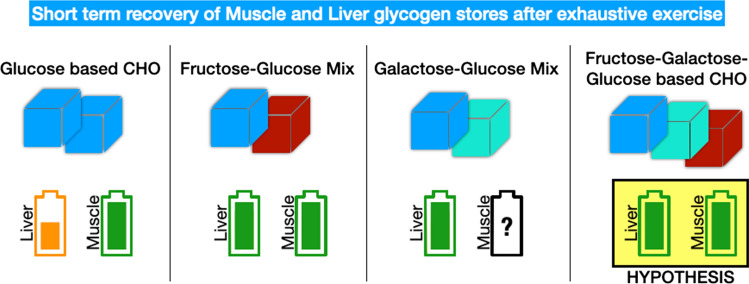
- Post-exercise rapid glycogen repletion is recommended at 1.0–1.2 g·kg⁻¹ BM·h⁻¹ for the first 4 h; glucose-fructose mixtures may better target both liver and muscle glycogen repletion, whereas galactose-glucose favorably affects liver glycogen but muscle glycogen effects are unknown.
- A contemporary view of carbohydrate periodization and “train-low” suggests limited utility for enhancing performance benefits from training, though it may be a time-efficient strategy; personalized carbohydrate intake is advocated, but continuous glucose monitoring during exercise cannot currently be advised due to limited validity.
Methods
- Narrative review of existing literature on carbohydrate nutrition, exercise metabolism, and endurance performance; no primary data collection or systematic meta-analysis is reported.
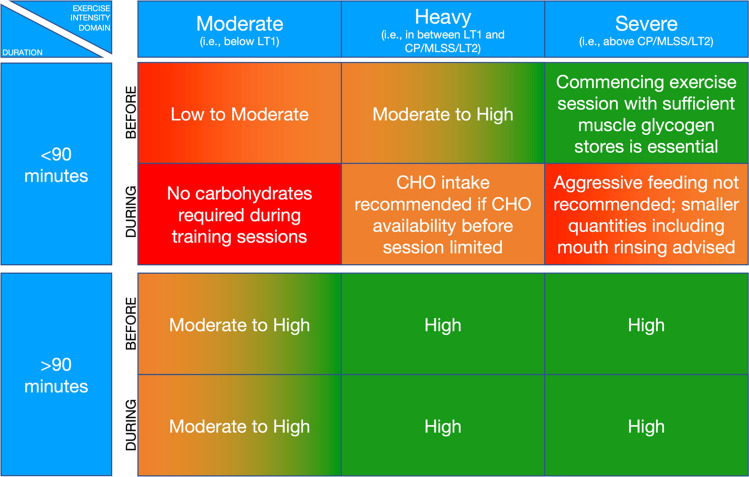
- The paper synthesizes current dietary guidelines and selected studies across pre-exercise, during-exercise, post-exercise, training adaptation, and personalization topics, and presents research questions in Table 1 and frameworks in Figs. 1–2.
- Main analysis is interpretive/narrative synthesis, with recommendations based on cited evidence rather than a formal systematic search or quantitative pooling.
Limitations
- The paper states that many scientific unknowns remain and lists numerous research questions in Table 1, including optimal glycogen storage with <24 h between sessions, liver glycogen supercompensation, exogenous carbohydrate oxidation at high absolute intensities, and recovery carbohydrate doses for elite athletes.
- The paper states that most research has investigated carbohydrate intake in healthy male populations and that current knowledge is often based on moderately trained rather than elite athletes; it also notes limited validity of continuous glucose monitoring during exercise and no successful independent validation of ultrasound for muscle glycogen.
- Evident from the text: as a narrative review, it does not report a systematic search strategy, risk-of-bias assessment, or meta-analytic synthesis, so recommendations reflect the authors’ selected interpretation of the literature.
Model-written summary. Check it against the paper before relying on it.
Integrity signals
Registry
Cites
Statistics
Figures
Verification
Claims the paper makes
3 Valid · 2 Not valid · 129 Not checked · 31 Own results and interpretations
The cited sources support only part of this claim — read each source’s verdict below.
In the paper
“While energy for adenosine triphosphate (ATP) production can be derived both from fats and carbohydrates, it is carbohydrates that are primarily utilized at high exercise intensities [14, 15].”
§ New Horizons in Carbohydrate Research and Application for Endurance Athletes > Importance of Carbohydrates for Competition and High-Intensity Training Sessions
What the sources say
- Not checked — no full text of the sourcecites [14] Romijn JA Coyle EF Sidossis LS Gastaldelli A Horowitz JF Endert E Regulation of endogenous fat and carbohydrate metabolism in relation to exercise intensity and duration Am J Physiol-Endocrinol Metab 1993 265 E380 E391 10.1152/ajpendo.1993.265.3.E380 8214047 source
- Partly supportedcites [15] van Loon LJC Greenhaff PL Constantin-Teodosiu D Saris WH Wagenmakers AJM The effects of increasing exercise intensity on muscle fuel utilisation in humans J Physiol 2001 536 295 304 10.1111/j.1469-7793.2001.00295.x 11579177 PMC2278845 sourceExperimental — accuracy not yet measured
Our copy of van Loon et al. (2001) consists only of the abstract (itself cut off mid-sentence at 'muscle pyruvate dehydrogenase') plus repository metadata; repeated searches for Results/Discussion text returned nothing further. The Abstract supports the direction of the claim: muscle glycogen and plasma glucose (carbohydrate) oxidation rates rose with every increment in intensity (40, 55, 75% W(max)) while whole-body fat oxidation peaked at 55% W(max) (32 +/- 2 kJ min(-1)) and declined at 75% W(max) (19 +/- 2 kJ min(-1)). However, no passage in our copy states that carbohydrates are the primary/predominant fuel, and the data are confined to eight trained cyclists exercising up to 75% W(max), so the 'primarily utilized at high exercise intensities' part of the attribution is not established by the text we hold. (LLM, conf=0.68)
plainstates an association- Asserted: passes — The authors put it forward as true.
- Checkable: passes — It can be checked against evidence.
- Load-bearing: passes — The paper’s conclusions depend on it.
- Based: passes — The paper gives a reason why it holds.
Every source the paper cites for this claim was checked and supports it.
In the paper
“However, endogenous carbohydrate oxidation was not further spared by the higher carbohydrate dose, and thus whether there would be an additional performance benefit requires clarification.”
§ New Horizons in Carbohydrate Research and Application for Endurance Athletes > Importance of Carbohydrates for Competition and High-Intensity Training Sessions > During Competition
What the sources say
- Supportedcites [71] Podlogar T Bokal Š Cirnski S Increased exogenous but unaltered endogenous carbohydrate oxidation with combined fructose-maltodextrin ingested at 120 g h−1 versus 90 g h−1 at different ratios Eur J Appl Physiol 2022 10.1007/s00421-022-05019-w PMC9560939 35951130 source
The Abstract Results and Results (Substrate oxidation rates and blood metabolites, p. 6) state that endogenous CHO oxidation did not differ between the 120 g h−1 and 90 g h−1 conditions (2.15 ± 0.30 vs 2.20 ± 0.33 g min−1; p = 0.786). The Discussion explicitly says 'there was no sparing of endogenous CHO stores with an ingestion rate of 120 g h−1 as compared with 90 g h−1', and the Conclusion reiterates 'no additional sparing of endogenous carbohydrates'. The hedged follow-up about performance benefits is likewise mirrored in the Abstract Conclusions ('Further studies should investigate potential performance effects'). (LLM, conf=0.95)
plain- Asserted: passes — The authors put it forward as true.
- Checkable: passes — It can be checked against evidence.
- Load-bearing: passes — The paper’s conclusions depend on it.
- Based: passes — The paper gives a reason why it holds.
- Supported
Every source the paper cites for this claim was checked and supports it.
In the paper
“We have recently shown higher exogenous carbohydrate oxidation during prolonged endurance exercise in highly trained athletes with carbohydrate ingestion at 120 g·h−1 as compared to 90 g·h−1 [71].”
§ New Horizons in Carbohydrate Research and Application for Endurance Athletes > Importance of Carbohydrates for Competition and High-Intensity Training Sessions > During Competition
What the sources say
- Supportedcites [71] Podlogar T Bokal Š Cirnski S Increased exogenous but unaltered endogenous carbohydrate oxidation with combined fructose-maltodextrin ingested at 120 g h−1 versus 90 g h−1 at different ratios Eur J Appl Physiol 2022 10.1007/s00421-022-05019-w PMC9560939 35951130 source
The Abstract Results (p.1) report exogenous CHO oxidation of 1.51 ± 0.22 g min−1 at 120 g h−1 versus 1.29 ± 0.16 g min−1 at 90 g h−1 (p = 0.026) during 3 h of endurance exercise in highly trained cyclists, and the Discussion and Conclusions state this as increased exogenous CHO oxidation at 120 g h−1 compared with the recommended 90 g h−1. The only qualifier the citing sentence omits is that the two conditions also differed in fructose-to-glucose-based ratio (0.8:1 vs 1:2), which the source explicitly notes; the rate comparison itself is exactly what the source reports. (LLM, conf=0.93)
plainstates a cause- Asserted: passes — The authors put it forward as true.
- Checkable: passes — It can be checked against evidence.
- Load-bearing: passes — The paper’s conclusions depend on it.
- Based: passes — The paper gives a reason why it holds.
- Supported
None of the sources cited for this claim have been checked yet.
In the paper
“and this shows that sufficient carbohydrate intake is required to start an exercise session with normal liver glycogen stores.”
§ New Horizons in Carbohydrate Research and Application for Endurance Athletes > Importance of Carbohydrates for Competition and High-Intensity Training Sessions > Pre-competition
What the sources say
- Not checked yetcites [41] Nilsson LH Hultman E Liver glycogen in man—the effect of total starvation or a carbohydrate-poor diet followed by carbohydrate refeeding Scand J Clin Lab Investig 1973 32 325 330 10.3109/00365517309084355 4771102 source
Checked before — its earlier verdict is held back until a new check runs.
plainstates a cause- Asserted: passes — The authors put it forward as true.
- Checkable: passes — It can be checked against evidence.
- Load-bearing: passes — The paper’s conclusions depend on it.
- Based: passes — The paper gives a reason why it holds.
- Not checked yet
None of the sources cited for this claim have been checked yet.
In the paper
“Varying carbohydrate intake does indeed change fasting liver glycogen concentrations [41]”
§ New Horizons in Carbohydrate Research and Application for Endurance Athletes > Importance of Carbohydrates for Competition and High-Intensity Training Sessions > Pre-competition
What the sources say
- Not checked yetcites [41] Nilsson LH Hultman E Liver glycogen in man—the effect of total starvation or a carbohydrate-poor diet followed by carbohydrate refeeding Scand J Clin Lab Investig 1973 32 325 330 10.3109/00365517309084355 4771102 source
Checked before — its earlier verdict is held back until a new check runs.
boostedstates a cause- Asserted: passes — The authors put it forward as true.
- Checkable: passes — It can be checked against evidence.
- Load-bearing: passes — The paper’s conclusions depend on it.
- Based: passes — The paper gives a reason why it holds.
- Not checked yet
112 more claims
Create a free account to see all 165 claims and to verify the 205 references still open.
- It may state two separate claims as one. 27
- Probably not a substantial claim. 22
Claims other papers make about this one
Each is checked against this paper’s own text: does it say what the citing paper says it does?
The source backs part of the claim, not all of it — or backs it for a different population, condition or comparison.
In the citing paper
“Complete replenishment of muscle glycogen stores typically unfolds over a 24–36 h period post-exercise, provided that 7–12 g·kg−1 carbohydrate are consumed per day [15–18].”
From Nutritional Strategies to Improve Post-exercise Recovery and Subsequent Exercise Performance: A Narrative Review (2025) · cites this paper as [18]
Experimental — accuracy not yet measuredThe source backs part of the claim, not all of it — or backs it for a different population, condition or comparison.
In the citing paper
“it is inferred that the co-ingestion of glucose and fructose-based carbohydrates during the post-exercise recovery phase is likely more beneficial than other carbohydrate sources, given its superior efficacy in faster gastrointestinal absorption and glycogen stores and its association with reduced gastrointestinal discomfort when an optimal carbohydrate dosage of 1–1.2 g·kg−1⋅h−1 is consumed [18]”
From Nutritional Strategies to Improve Post-exercise Recovery and Subsequent Exercise Performance: A Narrative Review (2025) · cites this paper as [18]
Experimental — accuracy not yet measuredThe cited source says what the claim attributes to it.
In the citing paper
“Carbohydrate ingestion during endurance exercise is a well-established strategy for enhancing performance (1 -3).”
From Carbohydrate ingestion during prolonged exercise and net skeletal muscle glycogen utilization: A meta-analysis. (2026) · cites this paper as [1]
The cited source says what the claim attributes to it.
In the citing paper
“Nevertheless, co-ingestion of glucose with fructose is preferred owing to reduced gastrointestinal complaints and the beneficial effect on liver glycogen replenishment, as discussed below [18, 22, 26]”
From Nutritional Strategies to Improve Post-exercise Recovery and Subsequent Exercise Performance: A Narrative Review (2025) · cites this paper as [18]
In the citing paper
“Moreover, CHO should account for 45–65% of total caloric intake (60, 61).”
From Junior athletes’ nutritional demands: a narrative review of consumption and prevalence of eating disorders (2024) · cites this paper as [60]
Citations
Cites
Romijn, J. A., Coyle, E. F., Sidossis, L. S., Gastaldelli, A., Horowitz, J. F., Endert, E., & Wolfe, R. R. (1993) · American Journal of Physiology-Endocrinology and Metabolism · doi:10.1152/ajpendo.1993.265.3.e380 · Cited by 1,747 · cited 2×
“2 of this article, it appears that absolute exercise intensity during exercise is a large determinant of total energy, and consequently carbohydrate [14] and exogenous carbohydrate oxidation rates [172, 173].”
BackgroundDiet, muscle glycogen and physical performance.
Bergström, J., Hermansen, L., Hultman, E., & Saltin, B. (1967) · Acta Physiologica Scandinavica · doi:10.1111/j.1748-1716.1967.tb03720.x · Cited by 1,740 · cited 2×
“, a reduction in exercise capacity [27, 53] and thus a reduction in training intensity and/or duration.”
BackgroundExercise, GLUT4, and skeletal muscle glucose uptake
Richter, E. A., & Hargreaves, M. (2013) · Physiological Reviews · doi:10.1152/physrev.00038.2012 · Cited by 1,407 · cited 2×
“The latter could in turn result in accumulation of glucose within the cell and a reduced glucose gradient between muscle cells and blood [115, 116].”
BackgroundNutrition and Athletic Performance
(2016) · Medicine & Science in Sports & Exercise · doi:10.1249/mss.0000000000000852 · Cited by 1,305
Biomarkers of mitochondrial content in skeletal muscle of healthy young human subjects
Larsen, S., Nielsen, J., Hansen, C. N., Nielsen, L. B., Wibrand, F., Stride, N., Schroder, H. D., Boushel, R., Helge, J. W., Dela, F., et al. (2012) · The Journal of Physiology · doi:10.1113/jphysiol.2012.230185 · Cited by 1,180 · cited 1×
“A recent study indicated that the capacity to utilize fat during exercise in an overnight fasted state is best correlated with CS activity [162], a marker of mitochondrial content [163] that is itself well correlated with training volume [144].”
BackgroundMuscle glycogen utilization during prolonged strenuous exercise when fed carbohydrate
Coyle, E. F., Coggan, A. R., Hemmert, M. K., & Ivy, J. L. (1986) · Journal of Applied Physiology · doi:10.1152/jappl.1986.61.1.165 · Cited by 1,022 · cited 1×
“Carbohydrate ingestion during exercise maintains stable blood glucose levels over long exercise sessions [52] and maintains carbohydrate oxidation rates despite declining muscle glycogen stores so that ingested carbohydrates substitute endogenous carbohydrate stores [53, 54].”
BackgroundCarbohydrates for training and competition
Burke, L. M., Hawley, J. A., Wong, S. H. S., & Jeukendrup, A. E. (2011) · Journal of Sports Sciences · doi:10.1080/02640414.2011.585473 · Cited by 985 · cited 10×
“2 g·kg−1BM·h−1 to optimize repletion of glycogen stores for the first 4 h, when rapid repletion of glycogen stores is required, after which a normal diet reflecting daily fuel needs, which may be up to 12 g·kg−1 BM, is recommended [1, 2, 120].”
BackgroundInfluentialThe effects of increasing exercise intensity on muscle fuel utilisation in humans
van Loon, L. J. C., Greenhaff, P. L., Constantin‐Teodosiu, D., Saris, W. H. M., & Wagenmakers, A. J. M. (2001) · The Journal of Physiology · doi:10.1111/j.1469-7793.2001.00295.x · Cited by 897 · cited 1×
“While energy for adenosine triphosphate (ATP) production can be derived both from fats and carbohydrates, it is carbohydrates that are primarily utilized at high exercise intensities [14, 15].”
BackgroundJoyner, M. J., & Casey, D. P. (2015) · Physiological Reviews · doi:10.1152/physrev.00035.2013 · Cited by 833 · cited 1×
“It could be that athletes whose energy turnover rates during exercise are very high and thus have a high glucose flux to muscle due to increased blood flow proportional to absolute exercise intensity [83] could benefit from carbohydrate ingestion rates that are higher than currently recommended, but this requires furt…”
BackgroundMeasurement of substrate oxidation during exercise by means of gas exchange measurements
Jeukendrup, A. E., & Wallis, G. A. (2005) · International Journal of Sports Medicine · doi:10.1055/s-2004-830512 · Cited by 799 · cited 1×
“However, the importance of an ability to oxidize fats at high intensities should not be discounted [18], as a valid method to quantify its contribution to ATP production during exercise at high intensities is yet to be established [19].”
BackgroundSelf-citation
Research works printed but not linked: 3
- Hawley JA Schabort E Noakes TD Dennis SC Carbohydrate-loading and exercise performance an update Sports Med. 1997 24 2 73 81 10.2165/00007256-199724020-00001 9291549 · DOI · Paper page
- Jentjens RLPG, Achten J, Jeukendrup AE. High oxidation rates from combined carbohyrates ingested during exercise. Med Sci Sports Exerc. 2004;36:1551–8. http://journals.lww.com/00005768-200409000-00014. 15354037 · DOI · Paper page
- Pirnay F, Crielaard JM, Pallikarakis N, Lacroix M, Mosora F, Krzentowski G, et al. Fate of exogenous glucose during exercise of different intensities in humans. 1982. www.physiology.org/journal/jappl. Accessed 23 Apr 2022. 7153158 · DOI · Paper page
Cited by
Athletes’ nutritional demands: a narrative review of nutritional requirements
Amawi, A., AlKasasbeh, W., Jaradat, M., Almasri, A., Alobaidi, S., Hammad, A. A., Bishtawi, T., Fataftah, B., Turk, N., Saoud, H. A., et al. (2024) · Frontiers in Nutrition · doi:10.3389/fnut.2023.1331854 · Cited by 154
Flockhart, M., & Larsen, F. J. (2023) · Sports Medicine · doi:10.1007/s40279-023-01910-4 · Cited by 103
“One of the current trends in endurance sports is to optimize carbohydrate intake for maximal exogenous carbohydrate oxidation and thereby improving performance [30].”
BackgroundNaderi, A., Rothschild, J. A., Santos, H. O., Hamidvand, A., Koozehchian, M. S., Ghazzagh, A., Berjisian, E., & Podlogar, T. (2025) · Sports Medicine · doi:10.1007/s40279-025-02213-6 · Cited by 77
“…recovery phase is likely more beneficial than other carbohydrate sources, given its superior efficacy in faster gastrointestinal absorption and glycogen stores and its association with reduced gastrointestinal discomfort when an optimal carbohydrate dosage of 1–1.2 g·kg −1 ⋅ h −1 is consumed [18].”
InfluentialSelf-citationAl‐Beltagi, M., Saeed, N. K., Bediwy, A. S., El-Sawaf, Y., Elbatarny, A. M., & Elbeltagi, R. M. (2025) · World Journal of Gastroenterology · doi:10.3748/wjg.v31.i22.106835 · Cited by 78
“Consistency is key to improving GI tolerance[213].”
Cao, W., He, Y., Fu, R. G., Chen, Y., Yu, J., & He, Z. (2025) · Nutrients · doi:10.3390/nu17050918 · Cited by 49
“…is followed, variations in performance occur due to differences in an athlete’s specialized abilities, physiological state, pre-competition conditions (such as training location), environmental factors (e.g., temperature and humidity), the level of competition, and pace tactics employed by…”
InfluentialBianchi, E., Erbasan, H., Riso, P., & Perna, S. (2024) · Nutrients · doi:10.3390/nu16203454 · Cited by 39
“Some evidence suggests that carbohydrate restriction may impair anaerobic and strength performance [32,33].”
BackgroundGallo, G., Faelli, E. L., Ruggeri, P., Filipas, L., Codella, R., Plews, D. J., & Maunder, E. (2024) · European Journal of Applied Physiology · doi:10.1007/s00421-024-05440-3 · Cited by 36
“…~ 3–7 days later, having consumed a breakfast containing ~ 2 g kg −1 of carbohydrate (in line with general guidelines about pre-exercise meal, Podlogar and Wallis 2022) and ~ 800 mL of water 1 h beforehand, and having refrained from caffeine, vigorous exercise, and alcohol for 24 h.…”
MethodDurability as an index of endurance exercise performance: Methodological considerations
Hunter, B., Maunder, E., JONES, A. M., Gallo, G., & Muniz‐Pumares, D. (2025) · Experimental Physiology · doi:10.1113/ep092120 · Cited by 36
Prins, P., Noakes, T. D., Buga, A., Gerhart, H. D., Cobb, B. M., D’Agostino, D. P., Volek, J. S., Buxton, J. D., Heckman, K., Plank, E. N., et al. (2025) · American Journal of Physiology-Cell Physiology · doi:10.1152/ajpcell.00583.2024 · Cited by 33
Amawi, A., Khataybeh, B., Al Aqaili, R., Ababneh, N., Alnimer, L., Qoqazeh, A., Oukal, F., Jahrami, H., Mousa Ay, K., Al Saoud, H., et al. (2024) · Frontiers in Nutrition · doi:10.3389/fnut.2024.1390204 · Cited by 26
“Moreover, CHO should account for 45–65% of total caloric intake (60, 61).”
BackgroundSubstrate utilization and durability during prolonged intermittent exercise in elite road cyclists
Ørtenblad, N., Zachariassen, M., Nielsen, J., & Gejl, K. D. (2024) · European Journal of Applied Physiology · doi:10.1007/s00421-024-05437-y · Cited by 20
“While it is generally accepted that CHO intake during prolonged exercise prevents reductions in performance by preserving liver glycogen and blood glucose levels and perhaps also muscle glycogen, the optimal dose of CHO is debated (Podlogar and Wallis 2022).”
Backgroundde Pinho, I. C., Giorelli, G., & Toledo, D. O. (2024) · Discover Psychology · doi:10.1007/s44202-024-00275-7 · Cited by 26
“The vitamins and minerals abundant in whole foods, such as B vitamins and magnesium, are crucial for the synthesis of neurotransmitters like dopamine, serotonin, and GABA, which regulate mood, sleep, and stress responses [16, 44, 45].”
Stoian, M., & Mănescu, D. C. (2026) · Nutrients · doi:10.3390/nu18040693 · Cited by 17
“Training–Fuel Coupling offers a theoretical framework for interpreting this logic: the calculated alternation of energetic states maintains the dual sensitivity of AMPK–mTOR, preventing signal desensitization and optimizing adaptive efficiency [26–30].”
Álvarez‐Herms, J., González-Benito, A., Corbi, F., & Odriozola, A. (2023) · European Journal of Applied Physiology · doi:10.1007/s00421-023-05331-z · Cited by 19
“Therefore, the detrimental effect on gut health in athletes may be related mainly to the chronicity of endurance exercise and highly specialized nutrition (Stellingwerff and Cox 2014; Pasiakos et al. 2021; Podlogar and Wallis 2022).”
Technological advances in elite sport: Should a line be drawn?
Wilkins, B. W., & Joyner, M. J. (2024) · Journal of Applied Physiology · doi:10.1152/japplphysiol.00329.2024 · Cited by 16
Talsnes, R. K., Moxnes, E. F., Nystad, T., & Sandbakk, Ø. B. (2023) · Frontiers in Physiology · doi:10.3389/fphys.2022.1089867 · Cited by 16
“Although training sessions are initiated with adequate muscle glycogen stores, it could be argued that the high training loads of endurance athletes (including twice-a-day sessions) already induces sufficient “train low” molecular signaling (Podlogar and Wallis, 2022).”
BackgroundMethodInfluentialNutritional considerations for vegetarian athletes: A narrative review
Luna, F., Rossi, E. V., & Arrieta, E. M. (2024) · Human Nutrition & Metabolism · doi:10.1016/j.hnm.2024.200267 · Cited by 16
Carb‐Loaded Passion: A Comprehensive Exploration of Carbohydrates in Shaping Aphrodisiac Effects
Chandra, P., Porwal, M., Rastogi, V., Tyagi, S. J., Sharma, H., & Verma, A. K. (2024) · Macromolecular Symposia · doi:10.1002/masy.202400064 · Cited by 17
Kripp, A. M., Feichter, A., & König, D. (2024) · Frontiers in Nutrition · doi:10.3389/fnut.2024.1473747 · Cited by 15
Moitzi, A. M., & König, D. (2023) · Nutrients · doi:10.3390/nu15133028 · Cited by 20
“Depending on which metabolic or structural adaptation is to be the focus of the current training load, it must be decided whether more or less carbohydrates should be supplied [1,2].”
BackgroundJiménez-Alfageme, R., Garrone, F. P., Rodríguez-Sánchez, N., Romero-García, D., Sospedra, I., Giménez-Monzó, D., Ayala-Guzmán, C. I., & Sanz, J. M. M. (2025) · Sports Medicine - Open · doi:10.1186/s40798-024-00801-w · Cited by 15
“Furthermore, it is well established that ingesting CHO during endurance competition can improve performance because it helps to maintain stable blood glucose levels and provides additional fuel for working muscles [4].”
Maqsood, S., Arshad, M. T., Ikram, A., & Abdullahi, M. A. (2025) · eFood · doi:10.1002/efd2.70055 · Cited by 14
Elghobashy, M. E., Richards, A. J., Malekzadeh, R., PATEL, D., Turner, L. V., Burr, J. F., Power, G. A., Laham, R., Riddell, M. C., & Cheng, A. J. (2024) · Medicine & Science in Sports & Exercise · doi:10.1249/mss.0000000000003440 · Cited by 13
Glycaemic Effects of a 156-km Ultra-trail Race in Athletes: An Observational Field Study
Parent, C., Mauvieux, B., Lespagnol, É., Hingrand, C., Vauthier, J., Noirez, P., Hurdiel, R., Martinet, Q., Delaunay, P., Besnard, S., et al. (2024) · Sports Medicine · doi:10.1007/s40279-024-02013-4 · Cited by 14
“Lastly, we cannot exclude the possibility that diet also influenced post-race glycaemic metrics, all the more since current nutritional guidelines recommend athletes ingest carbohydrates as soon as possible after competition [47].”
What is a cycling race simulation anyway: a review on protocols to assess durability in cycling
Peeters, W. M., Barrett, M., & Podlogar, T. (2025) · European Journal of Applied Physiology · doi:10.1007/s00421-025-05725-1 · Cited by 11
“Nutrition and especially carbohydrate intake undoubtedly plays a crucial role in prolonged endurance events (Podlogar and Wallis 2022) and has been shown to directly affect time to task failure and/or performance with nutrition in days leading to the exercise bout (Hawley et al. 1997; Bergström et…”
Self-citationCarbohydrate Ingestion on Exercise Metabolism and Physical Performance
Noakes, T. D., Prins, P., Buga, A., D'Agostino, D. P., Volek, J. S., & Koutnik, A. P. (2026) · Endocrine Reviews · doi:10.1210/endrev/bnaf038 · Cited by 14
Performance Enhancement Strategies For Badminton Athletes: A Systematic Review
Karyono, T. H., Hidayat, R. A., Ihsan, F., Susanto, N., Wijanarko, T., García-Jiménez, J. V., Eken, Ö., Latino, F., & Tafuri, F. (2024) · Retos · doi:10.47197/retos.v57.107124 · Cited by 16
“Research by (Podlogar & Wallis, 2022) highlighted that adequate rest between training sessions can help restore energy and improve performance consistency.”
BackgroundHamilton, R., McCarthy, O. M., Bain, S. C., & Bracken, R. M. (2024) · European Journal of Sport Science · doi:10.1002/ejsc.12201 · Cited by 12
“This might help guide nutrition strategies during exercise and in the post - exercise recovery period (Bowler et al., 2022; DuBose et al., 2020; Kinrade & Galloway, 2021; Podlogar & Wallis, 2022).”
BackgroundDasa, M. S., Bu, O. A., Sandbakk, Ø. B., Rønnestad, B. R., Plasqui, G., Gundersen, H. S., & Kristoffersen, M. (2024) · Journal of Applied Physiology · doi:10.1152/japplphysiol.00706.2024 · Cited by 12
Rothschild, J. A., Dudley-Rode, H., Carpenter, H., Smith, A. S. M., Plews, D. J., & Maunder, E. (2026) · Journal of Applied Physiology · doi:10.1152/japplphysiol.00861.2025 · Cited by 10
Evidence-based sports supplements: A redox analysis
Margaritelis, N. V., Cobley, J. N., Nastos, G. G., Παπανικολάου, Κ., Bailey, S. J., Kritsiligkou, P., & Nikolaidis, M. G. (2024) · Free Radical Biology and Medicine · doi:10.1016/j.freeradbiomed.2024.08.012 · Cited by 11
Frazer, R., Bowler, A.-L. M., Condo, D., Cox, G. R., Pelly, F. E., & Slater, G. (2024) · International Journal of Sport Nutrition and Exercise Metabolism · doi:10.1123/ijsnem.2024-0002 · Cited by 11
Fuchs, C. J., Veeraiah, P., Hermans, W. J. H., Brauwers, B., Voncken, R., Brouwers, K., Petrick, H. L., Hendriks, F. K., Bels, J. L. M., van den Hurk, J., et al. (2025) · The Journal of Physiology · doi:10.1113/jp289115 · Cited by 10
Morton, J. P., Fell, J. M., Gonzalez, J. T., Hearris, M. A., Podlogar, T., Pugh, J. N., & Wallis, G. A. (2026) · Journal of Nutrition · doi:10.1016/j.tjnut.2026.101442 · Cited by 12
“As discussed previously [65], such data suggest glucose-fructose blends may also be applicable (or glucose polymer) even at these moderate ingestion rates due to the additional flexibility afforded if CHO intakes need to be increased as exercise progresses during a prolonged endurance event.”
Self-citationValenzuela, P. L., Santalla, A., Alejo, L. B., Merlo, A., Bustos, A., Bellés, L. C., Ferrer, R., Maffiuletti, N. A., Barranco‐Gil, D., Pinós, T., et al. (2023) · Journal of sport and health science/Journal of Sport and Health Science · doi:10.1016/j.jshs.2023.11.006 · Cited by 11
Development of Fruit-Based Carbohydrate Gel for Endurance Athletes
de Assis, R. C., Valentim, A. B., Barbosa, I., da Silva, J. Y. G., Aquino, A., Viana, J. D. D. R., Rabelo, C. A. F., de Sousa, P. H. M., Maia, C. S. C., Fernandes, V. B., et al. (2024) · Processes · doi:10.3390/pr12102304 · Cited by 11
Helleputte, S., Podlogar, T., & Gonzalez, J. T. (2025) · Performance Nutrition · doi:10.1186/s44410-025-00013-7 · Cited by 11
“…remains very anecdotal, and hard evidence is absent [57] The ‘carbolution debate’ (> 120 versus 90 g/h of exogenous CHO intake) is still ongoing [94, 95] ▪ Does aggressive CHO fuelling (> 120 g/h versus 90 g/h) result in consistently higher glucose concentrations throughout exercise as observed…”
Self-citationPodlogar, T., Cooper-Smith, N., Gonzalez, J. T., & Wallis, G. A. (2025) · Performance Nutrition · doi:10.1186/s44410-025-00003-9 · Cited by 11
“A future advance could, therefore, be tailoring of carbohydrate intakes for athletes based on their individual peak capacity for exogenous carbohydrate oxidation, as previously suggested [2].”
Self-citationUCI Sports Nutrition Project: The Science of Successful Cycling Performance
Valenzuela, P. L., Leo, P. D., Mateo‐March, M., Gallo, G., Seiler, S., & Mujika, I. (2025) · International Journal of Sport Nutrition and Exercise Metabolism · doi:10.1123/ijsnem.2025-0157 · Cited by 9
Miguel‐Ortega, Á., Calleja-González, J., & Mielgo‐Ayuso, J. (2024) · Sport Sciences for Health · doi:10.1007/s11332-024-01261-1 · Cited by 10
“…present data suggest that, although a cause–effect relationship between dietary intake and BC-performance cannot be determined, elite female players in these sports disciplines may experience beneficial outcomes with lower intakes of total energy, CHO, protein, and fat than previously recommended.”
Barney, D. E., Cheung, S. N., Harris, A. R., Berryman, C. E., & Hennigar, S. R. (2024) · Current Developments in Nutrition · doi:10.1016/j.cdnut.2024.104475 · Cited by 8
“…recommendation is that current evidence does not support performance bene fi ts related to high-fat diets, especially when fat is consumed at the expense of carbohydrates [37,42], and restricting fat intake increases the risk for de fi ciencies in other nutrients, such as fat-soluble vitamins [3].”
Alternative biological functions of lactose: a narrative review
Anguita‐Ruiz, A., Vatanparast, H., Walsh, C. M., Barbara, G., Natoli, S., Eisenhauer, B., Ramirez‐Mayans, J. A., Anderson, G. H., Guerville, M., Ligneul, A., et al. (2025) · Critical Reviews in Food Science and Nutrition · doi:10.1080/10408398.2025.2470394 · Cited by 11
“…before endurance exercise is recommended as a strategy for increasing carbohydrate storage; however, a lack of evidence prohibits specific guidance on whether the types of carbohydrates ingested at this time impact the effectiveness of preexercise fueling differently (Podlogar and Wallis 2022).”
Naselli, F., Cardinale, P. S., Vasto, S., Proia, P., Baldassano, S., & Caradonna, F. (2024) · Human Movement · doi:10.5114/hm/193084 · Cited by 8
“During training, endogenous carbohydrate reserves are progressively depleted due to energy expenditures. rapid carbohydrate replenishment after training is essential to restore and optimize glycogen reserves for subsequent training sessions [66].”
Perna, S., Doria, C., Trezza, A., Tucci, M., Martini, D., Bo’, C. D., Bianchi, E., Borrelli, M., Vinelli, V., Leone, A., et al. (2024) · International Journal of Food Sciences and Nutrition · doi:10.1080/09637486.2024.2379823 · Cited by 10
“…be useful to confirm these results in a larger sample of subjects and to conduct sport-specific investigations examining the same effect on other type of athletes such as those involved in endurance training for which carbohydrates are crucial for athletic performance (Podlogar and Wallis 2022).”
Mateo‐March, M., Moya‐Ramón, M., Sánchez‐Jiménez, J. L., Peña‐González, I., & Javaloyes, A. (2025) · Scandinavian Journal of Medicine and Science in Sports · doi:10.1111/sms.70057 · Cited by 8
“Nutritional status, untracked here, influences durability via carbohydrate availability [14, 25].”
Alves, J., Pérez, F. J. G., Toro-Román, V., Bartolomé, I., Maynar-Mariño, M., & Barrientos, G. (2024) · Nutrients · doi:10.3390/nu16121895 · Cited by 7
“The roles of carbohydrates and proteins in endurance athletes have been extensively documented, continuing to be a subject of interest for performance optimization and recovery [3,4].”
BackgroundPoon, E. T., Lau, K.-W., Tsang, J. H., Zhang, X., & Wongpipit, W. (2025) · Journal of the International Society of Sports Nutrition · doi:10.1080/15502783.2025.2561670 · Cited by 7
“Without real-time glucose data, tailoring personalized carbohydrate refueling strategies based on individual needs becomes challenging, which may increase the likelihood of experiencing suboptimal glycemic episodes, such as hypoglycemia, during training and competition [6].”
Physiological Responder Profiles and Fatigue Dynamics in Prolonged Cycling
Odriozola-Martínez, A., Tîrnȃucȃ, C., Corbi, F., González, A., & Álvarez‐Herms, J. (2025) · Journal of Functional Morphology and Kinesiology · doi:10.3390/jfmk10040472 · Cited by 6
Margolis, L. M., Allen, J. T., Murphy, N. E., Carrigan, C. T., Howard, E. E., Barney, D. E., Drummer, D. J., Michalak, J., Ferrando, A. A., Pasiakos, S. M., et al. (2025) · American Journal of Physiology-Endocrinology and Metabolism · doi:10.1152/ajpendo.00418.2024 · Cited by 7
Turner, O., Chessor, R. J., & Mitchell, N. (2025) · Performance Nutrition · doi:10.1186/s44410-025-00001-x · Cited by 7
“Previous research has proposed various tools to enable athletes to periodise their nutrition, such as periodisa-tion approaches [11], colour coded frameworks [37, 39], and educational plate tools [47].”
InfluentialNutrition for Mountain Biking and Cyclocross
Oosthuyse, T., Muros, J. J., & Zabala, M. (2025) · International Journal of Sport Nutrition and Exercise Metabolism · doi:10.1123/ijsnem.2025-0036 · Cited by 5
Wilson, P. B. (2025) · Sports Medicine · doi:10.1007/s40279-025-02372-6 · Cited by 7
“Glucose–fructose in a 2:1 ratio was used for the 90-g/h and 112.5-g/h conditions in King et al. [34] and for all three carbohydrate doses in King et al. [35], and there is some evidence that a ratio closer to 1:1 is optimal with rates > 90 g/h [5 ].”
InfluentialScrivin, R., Costa, R. J. S., Pelly, F. E., Lis, D. M., & Slater, G. (2023) · Frontiers in Nutrition · doi:10.3389/fnut.2023.1133022 · Cited by 5
“Given the critical role carbohydrates play as a substrate during exercise to support performance enhancement (10, 11), carbohydrate intake guidelines have been established for athletes, including total daily targets, plus specific guidance before, during, and after exercise (12, 13).”
BackgroundÁlvarez‐Herms, J., Burtscher, M., González-Benito, A., Corbi, F., & Odriozola-Martínez, A. (2025) · Journal of Athletic Training · doi:10.4085/1062-6050-0143.24 · Cited by 5
Strategic carbohydrate feeding improves performance in ketogenic trained athletes
Carpenter, M., Brouner, J., & Spendiff, O. (2025) · Clinical Nutrition · doi:10.1016/j.clnu.2025.06.016 · Cited by 5
Varðardóttir, B., Ólafsdóttir, A. S., & Guðmundsdóttir, S. L. (2024) · Physiological Reports · doi:10.14814/phy2.16112 · Cited by 6
“Such compensatory behaviors or strategies could theoretically mitigate the risk of REDs (Podlogar & Wallis, 2022).”
BackgroundDurability as an independent parameter of endurance performance in cycling
Barsumyan, A., Soost, C., Shyla, R., Graw, J. A., Bliemel, C., & Burchard, R. (2025) · BMC Sports Science Medicine and Rehabilitation · doi:10.1186/s13102-025-01238-8 · Cited by 4
“Participants were instructed to consume a standardized breakfast of ~ 2 g·kg − 1 carbohydrate and ~ 800 mL of water one hour prior to testing, following general pre-workout nutritional guidelines [14].”
Noakes, T. D., Buga, A., Volek, J. S., & Prins, P. (2025) · Frontiers in Nutrition · doi:10.3389/fnut.2025.1627404 · Cited by 4
“…CHO intake would balance the CHO equation for this case study, it fails to explain two historical observations: Even as recently as 2010, Hawaiian Ironman triathletes typically consumed carbohydrates at much lower rates ( ∼ 60 g/h) (27) during the marathon leg compared to current practices (26).”
Dean, E., Osborne, A., Subar, D. A., Hendrickse, P. W., & Gaffney, C. J. (2025) · Experimental Physiology · doi:10.1113/ep093136 · Cited by 6
“Duringprolonged moderate to high-intensity steady-state exercise such as marathon running or long-distance cycling, carbohydrate supplementation provides an exogenous source of carbohydrate, helping to prevent hypoglycaemia and glycogen depletion (Podlogar & Wallis, 2022).”
InfluentialEnergy, carbohydrates and fats in clinical sports nutrition
Kozjek, A. K., Knap, K., Tonin, G., Kozjek, N. R., & Gleeson, M. (2026) · Clinical Nutrition ESPEN · doi:10.1016/j.clnesp.2025.102900 · Cited by 4
Tyler, C. J., Felton, L., Ferrari, A., Keedle, K., Manwaring, R., & Stella, A. B. (2026) · British Journal of Sports Medicine · doi:10.1136/bjsports-2025-110977 · Cited by 4
The effect of nutrition on badminton athlete performance: A systematic review
Hidayat, R. A., Fadli, I., Nugroho, S., Kozina, Z. L., & Satya, P. (2024) · Retos · doi:10.47197/retos.v56.105005 · Cited by 8
“For example, while some studies emphasise the importance of carbohydrates as the primary energy source (Podlogar & Wallis, 2022).”
BackgroundTrehalose Improved 20-min Cycling Time-Trial Performance After 100-min Cycling in Amateur Cyclists
Gobbi, N., de Oliveira, L. F., da Silva, R. P., Oliveira, T. N., Möller, G. B., Murasaki, J., Ramires, M. A., Azevedo, R. D. A., Artioli, G. G., Roschel, H., et al. (2024) · International Journal of Sport Nutrition and Exercise Metabolism · doi:10.1123/ijsnem.2023-0241 · Cited by 3
“Carbohydrate (CHO) is considered an essential substrate for endurance cycling performance (Podlogar & Wallis, 2022).”
Lundberg, H. E., Larsen, S. E., Sundgot‐Borgen, J., & Mathisen, T. F. (2026) · Journal of the International Society of Sports Nutrition · doi:10.1080/15502783.2026.2634184 · Cited by 3
“When EA is low, the body lacks sufficient resources to support key physiological processes, including endocrine function, skeletal health, immune responses, and metabolic regulation [2].”
Enhanced durability predicts success in amateur road cycling: evidence of power output declines
Barsumyan, A., Soost, C., & Burchard, R. (2025) · Frontiers in Sports and Active Living · doi:10.3389/fspor.2025.1530162 · Cited by 3
Ketogenic diets, exercise performance, and training adaptations
Borszcz, F. K., Gabiatti, M. P., de Lucas, R. D., & Hansen, F. (2023) · Current Opinion in Clinical Nutrition & Metabolic Care · doi:10.1097/mco.0000000000000940 · Cited by 6
“Nevertheless, studies demonstrating this are still incipient, so carbohydrate-based diets are still the best approach for endurance performance events [11].”
Diet and Nutraceuticals for Mental and Physical Performance in Athletes
Spriet, L. L. (2022) · Sports Medicine · doi:10.1007/s40279-022-01794-w · Cited by 3
“The first paper in this supplement examines new horizons in the application of carbohydrate research for endurance athletes [1].”
BackgroundDunn, R. A., Tinsley, G. M., Palmer, T. B., Benjamin, C. L., & Sekiguchi, Y. (2024) · Nutrients · doi:10.3390/nu16223792 · Cited by 2
Tarocchi, M., Pellegrino, A., Skroče, K., Zignoli, A., Cavadini, L. C., Bodini, C., Pagliai, G., Toncelli, L., Stefani, L., Vanni, S., et al. (2024) · Nutrients · doi:10.3390/nu16223824 · Cited by 2
“The American College of Sports Medicine guidelines currently take into consideration the intensity and duration of the exercise as a guide to consuming supplementary carbohydrates (CHOs) during exercise and in the recovery phase, in order to fully replenish the glycogen stores [2,6,7].”
Fortis, H. O., Ravikanti, S., Barrett, J. S., Lopez, E. M., Bampouras, T. M., Haworth, J. J., Areta, J. L., & Pugh, J. N. (2025) · International Journal of Sport Nutrition and Exercise Metabolism · doi:10.1123/ijsnem.2024-0244 · Cited by 2
Devrim-Lanpir, A., Eroğlu, M. N., ÖZYILDIRIM, M., & Louis, J. B. (2025) · European Journal of Sport Science · doi:10.1002/ejsc.70055 · Cited by 3
“…in‐race nutrition predominantly emphasize carbohydrate (CHO) intake, as it is critical for sustaining endurance performance, maintaining blood glucose levels, and preserving key fuel sources such as muscle and liver glycogen (Podlogar and Wallis 2022; Tiller et al. 2019; Tiller and Millet 2025).”
Wardenaar, F. C., Aussieker, T., Dolan, E., Fernández-Campos, C., Kavouras, S. A., Ormsbee, M. J., Rawson, E. S., Saunders, B., Schott, K. D., Sekiguchi, Y., et al. (2025) · International Journal of Sport Nutrition and Exercise Metabolism · doi:10.1123/ijsnem.2025-0161 · Cited by 2
A U-shaped dose–response of carbohydrate–protein supplementation on rowing performance
Wang, X., & Wu, H. (2025) · Frontiers in Nutrition · doi:10.3389/fnut.2025.1651457 · Cited by 2
“Consensus guidelines recommend specific intake rates to maintain performance; for exercise lasting over 2 h, this intake is typically between 60 and 90 grams per hour (2, 4).”
Siri, M., Hosseini, E. M., Mazhari, S. A., Jalali, P., Soltaninejad, K., Raji, M. A., Yazdekhasti, N., Naseri, E., Mohammadi, A., & Maleki, M. H. (2025) · Nutrition & Metabolism · doi:10.1186/s12986-025-01067-z · Cited by 2
“Carbohydrates, the body’s primary source of energy during intense activities, are used quickly, and their depletion could limit endurance in repeated efforts [16].”
The Role of FODMAPs in Sports Nutrition: A Narrative Review and Clinical Implications
Kołodziejczyk, A., Staśkiewicz‐Bartecka, W., & Kardas, M. (2026) · Nutrients · doi:10.3390/nu18020239 · Cited by 2
Amatori, S., Radice, R., Podlogar, T., Gobbi, E., Belli, A., Loche, F., Bertuccioli, A., Sudano, M., Baldari, C., Rocchi, M., et al. (2026) · European Journal of Sport Science · doi:10.1002/ejsc.70127 · Cited by 2
Self-citationLis, D. M., & Strobel, N. (2026) · International Journal of Sport Nutrition and Exercise Metabolism · doi:10.1123/ijsnem.2025-0198 · Cited by 3
Assessment of Nutritional Practices of Mountain Runners before and during Competitions
Walczak, J., Staśkiewicz‐Bartecka, W., Białek-Dratwa, A., Grajek, M. K., Kiciak, A., Bielaszka, A., & Kardas, M. (2024) · Nutrients · doi:10.3390/nu16162588 · Cited by 4
“On both days before the competition, carbohydrate intake values were too low to optimize muscle glycogen stores compared to recommendations for endurance athletes participating in competitions lasting more than 90 min [13,20].”
BackgroundResultde Cali, U. S., Tello, N. C., Caballero-Lozada, A. F., del Valle, U., Marín-Herrada, S., de Cali, U. S., Hidalgo-Santander, J. F., del Valle, U., Barahona-Guzmán, J. P., Martín, U. S., et al. (2025) · Revista Facultad Nacional de Salud Pública · doi:10.17533/udea.rfnsp.e356821 · Cited by 2
Jimenez‐Perez, I., Aladro-Gonzalvo, A. R., Morán, A. V., Camacho-García, A., Martínez, A. E., & Pérez‐Soriano, P. (2023) · Applied Sciences · doi:10.3390/app13042362 · Cited by 2
The effect of the carbohydrate loading method on improving the performance of amateur runners
Sudirman, S., Zainuddin, M. S., & Husnul, D. (2024) · Jurnal SPORTIF Jurnal Penelitian Pembelajaran · doi:10.29407/js_unpgri.v10i2.23063 · Cited by 1
Ketogenic diet - A gateway to optimize aerobic and anaerobic athletic performance
Kaur, D., Alzahrani, A., Alhusayni, A. I., & Ahsan, M. (2024) · Retos · doi:10.47197/retos.v60.106754 · Cited by 1
Lima, F. F., Beck, H. A. D. P., & Maynard, D. D. C. (2025) · Research Society and Development · doi:10.33448/rsd-v14i4.48597 · Cited by 1
Elibol, E., Çaylak, B. N., & Göl, S. (2025) · BMC Sports Science Medicine and Rehabilitation · doi:10.1186/s13102-025-01116-3 · Cited by 1
“The most effective way to achieve muscle glycogen synthesis is by consuming sufficient carbohydrate sources [2, 5].”
Post-Exercise Nutrition Knowledge and Adherence to Recommendations Among Amateur Endurance Athletes
Csanaky, L., Asztalos, Á. C., Tóth, D., Polyák, É., & Figler, M. (2025) · Nutrients · doi:10.3390/nu17223629 · Cited by 1
“…to current sports nutrition guidelines, following an endurance-type training load, an intake of 1–1.2 g · BW − 1 · h − 1 of carbohydrate is recommended during the four-hour period after exercise to ensure the fastest possible replenishment of glycogen stores in the muscles and liver [11–16].”
InfluentialGuppy, G., Brouner, J., & Spendiff, O. (2025) · Journal of the International Society of Sports Nutrition · doi:10.1080/15502783.2025.2598232 · Cited by 1
“To overcome this limitation during prolonged exercise, strategies involving the consumption of CHO-rich foods and supplements have been extensively researched and applied in practice [6].”
Bravo‐Sànchez, A., Ramírez-delaCruz, M., Sánchez-Infante, J., Abián, P., & Abián‐Vicén, J. (2026) · Applied Sciences · doi:10.3390/app16062967 · Cited by 1
Fleitas‐Paniagua, P. R., Rasica, L., Azevedo, R. D. A., Iannetta, D., Alvares, T. S., Zagatto, A. M., & Murias, J. M. (2026) · Scandinavian Journal of Medicine and Science in Sports · doi:10.1111/sms.70288 · Cited by 2
“The ultimate goal of CHO supplementation during a long-duration endurance exercise (i.e., > 60 min) is to increase exogenous CHO oxidation (CHO ox ) in order to maintain carbohydrate availability and sustain high carbohydrate oxidation rates, particularly by sparing liver glycogen stores [3–5].”
Does a low-carbohydrate diet impede endurance sports performance? Yes
Burke, L. M., & Noakes, T. D. (2026) · American Journal of Clinical Nutrition · doi:10.1016/j.ajcnut.2026.101268 · Cited by 2
“…high CHO availability is achieved by a combination of strategies, noting they both contribute to body CHO reserves and influence their absolute and store-specific rates of use [11,13], The amount of CHO intake required to achieve high availability is situation-and athlete-specific [14,15].”
Khedr, E. H., & Alomran, M. M. (2026) · Biodegradation · doi:10.1007/s10532-026-10332-8 · Cited by 1
“From a sports nutrition perspective, carbohydrates remain the primary fuel source for endurance, high-intensity, and intermittent exercise, driving both muscle contraction and central nervous system function (Podlogar and Wallis 2022).”
ОПТИМІЗАЦІЯ ВУГЛЕВОДНОГО ЕНЕРГОЗАБЕЗПЕЧЕННЯ В ТРИАТЛОНІ
Куйбіда, В., Коханець, П., & Lopatynska, V. V. (2023) · Theory and practice of physical culture and sports · doi:10.31470/2786-6424-1/2023-16-21 · Cited by 1
Eating Plans to Cut Body Fat, Gain Muscle, and Prepare for Competition
Saxena, D., & Dass, A. (2024) · Advances in medical diagnosis, treatment, and care (AMDTC) book series · doi:10.4018/979-8-3693-6317-1.ch005 · Cited by 1
Efectos del ejercicio sobre la glucosa y el lactato en triatletas amateurs
Galan, J., Comas, A. V., García, M. S., Méndez, O. A. N., Tavera, J. C. M., Segade, A. S., & Oviedo, G. R. (2024) · Retos · doi:10.47197/retos.v62.106123 · Cited by 1
Kontinuerlig blodsukkermonitorering for utøvere – nytt, men nyttig?
Norum, M. (2023) · Norsk tidsskrift for ernæring · doi:10.18261/ntfe.21.4.3
Recovery practices of slovenian sport climbers
Podlogar, T. (2023) · Kinesiologia Slovenica scientific journal on sport · doi:10.52165/kinsi.29.3.132-152
Self-citationLee, S. J. L., van Rens, F. E. C. A., & Peiffer, J. J. (2024) · International Journal of Sports Physiology and Performance · doi:10.1123/ijspp.2023-0143
Mizumoto, M. (2023) · Digital Library of Theses and Dissertations (Universidade de São Paulo) · doi:10.11606/d.5.2023.tde-01032024-112815
-, A. S., & Tirkey, D. (2024) · International Journal For Multidisciplinary Research · doi:10.36948/ijfmr.2024.v06i03.19830
“Moreover, the carbohydrate content of energy drinks provides a readily available source of fuel for muscles during prolonged exercise (Podlogar & Wallis, 2022).”
BackgroundZhang, Z., & Cai, J. (2024) · Molecular & cellular biomechanics · doi:10.62617/mcb.v21.142
“…of human biomechanics, combined with the characteristics of athletes’ training actions, the motion parameters and characteristic indicators of various muscle groups of the human body are determined, and the MSIF technology is used to establish the multi-group athletes’ motion data model [9,10].”
MethodDietary habits of shooting athletes: a comparative study of Slovenian and foreign athletes
Jakus, T., Černe, N., & Stubelj, M. (2025) · Annales Kinesiologiae · doi:10.35469/ak.2024.460
“Current nutritional guidelines for athletes advise to consume carbohydrates during exercise at different rates Tadeja JAKUS, Nika ČERNE, Mojca STUBELJ: DIETARY HABITS OF SHOOTING ATHLETES ..., 129 – 147 (30-90 g/h) and in relation to the duration of exercise bouts (Podlogar & Wallis, 2022).”
Metadata
- Authors
- Podlogar, T., & Wallis, G. A.
- Affiliations
- University of Birmingham (GB)
- Corresponding author
- Wallis, Gareth A.
- Venue
- Sports Medicine
- Published
- 2022-09-29
- Volume
- 52
- Issue
- S1
- Pages
- 5-23
- ISSN
- 0112-1642 (ISSN-L)
- 1179-2035
- PMC
- PMC9734239
- OpenAlex
- W4297964698
- Semantic Scholar
- bec187988f8e8e27ed3764a69494fd8466102c21
- Cited by
- 109
- References
- 191
- Citations by year
- 2026: 19 · 2025: 43 · 2024: 34 · 2023: 12 · 2022: 1
- FWCI
- 3.23
- Type
- journal article
- Language
- en
- Open access
- hybrid
- doi.org
- Licence
- cc-by
- creativecommons.org/licenses/by/4.0 (tdm)
- creativecommons.org/licenses/by/4.0 (vor)
- Locations
- Sports Medicine (publishedVersion, cc-by)
- PubMed Central (publishedVersion, cc-by)
- PubMed (publishedVersion)
- University of Birmingham Research Portal (University of Birmingham) (submittedVersion, cc-by)
- University of Birmingham Research Portal (University of Birmingham) (submittedVersion, other-oa)
- Funders
- PepsiCo
- Gran Sasso Science Institute
- Topics
- Health Sciences › Nursing › Nutrition and Dietetics › Muscle metabolism and nutrition
- Health Sciences › Medicine › Orthopedics and Sports Medicine › Sports Performance and Training
- Health Sciences › Medicine › Physiology (medical) › Cardiovascular and exercise physiology
- Keywords
- carbohydrate intake, endurance athletes, endurance performance, carbohydrate availability, exercise metabolism, carbohydrate supplementation, continuous glucose monitoring, personalized nutrition
- MeSH terms
- Blood Glucose, Dietary Carbohydrates, Humans, Physical Endurance, Blood Glucose Self-Monitoring, Athletic Performance, Athletes
About these checks
Registry, retraction, Cites and statistics results are computed, not judged, with one exception: a printed reference that no index lists is read once by a model before it counts as a citation error. Claims are extracted by a model and kept only when their quote appears verbatim in the text; each cited source is then checked, with a model’s help, for whether it says what the claim relies on. Those verdicts can be wrong — read the claim’s quote and the cited source before relying on one.
The claim verdicts this report counts are experimental: their accuracy is not yet measured.
A language model drew the claims from the paper on 2026-11-19, under version 3 of the claim definition (model deepseek-v4.1-flash, prompt extract-v3).
A second model labelled each claim on 2026-11-19 (model jev-1.13-20260917, definition revision gold-guideline-v0.2).
Cited sources are checked with a language model’s help (qwen3.8-omni-flash).
Statistics and arithmetic are recomputed, not judged.
Confidence bands are shown only for fields calibrated on our annotated test set. None is calibrated yet, so no band is shown.
What counts as a claim ›How we measure confidence ›How we check this ›
Are you an author, or do you see a problem with this page? Request a review
Data sources
Bibliographic data: Semantic Scholar, OpenAlex, Crossref.
Contains information from the Semantic Scholar Academic Graph Datasets, made available under the ODC Attribution License (ODC-BY 1.0).
Semantic Scholar’s data is described in: Kinney, R., et al. (2023). The Semantic Scholar Open Data Platform. arXiv:2301.10140.
