

New Horizons in Carbohydrate Research and Application for Endurance Athletes
Open accessThe DOI matches its Crossref record; 191 of the 191 references it cites were found in a registry or an index; 3 of the 209 sources its claims cite were checked for support.
Abstract
The importance of carbohydrate as a fuel source for exercise and athletic performance is well established. Equally well developed are dietary carbohydrate intake guidelines for endurance athletes seeking to optimize their performance. This narrative review provides a contemporary perspective on research into the role of, and application of, carbohydrate in the diet of endurance athletes. The review discusses how recommendations could become increasingly refined and what future research would further our understanding of how to optimize dietary carbohydrate intake to positively impact endurance performance. High carbohydrate availability for prolonged intense exercise and competition performance remains a priority. Recent advances have been made on the recommended type and quantity of carbohydrates to be ingested before, during and after intense exercise bouts. Whilst reducing carbohydrate availability around selected exercise bouts to augment metabolic adaptations to training is now widely recommended, a contemporary view of the so-called train-low approach based on the totality of the current evidence suggests limited utility for enhancing performance benefits from training. Nonetheless, such studies have focused importance on periodizing carbohydrate intake based on, among other factors, the goal and demand of training or competition. This calls for a much more personalized approach to carbohydrate recommendations that could be further supported through future research and technological innovation (e.g., continuous glucose monitoring). Despite more than a century of investigations into carbohydrate nutrition, exercise metabolism and endurance performance, there are numerous new important discoveries, both from an applied and mechanistic perspective, on the horizon.
Overview
CoChat Summary
TL;DR
This narrative review synthesizes contemporary evidence on carbohydrate intake for endurance athletes, emphasizing periodized and increasingly personalized carbohydrate availability for training and competition. It concludes that high carbohydrate availability remains central for performance, while the “train-low” approach has limited utility for enhancing training performance benefits and may mainly offer time efficiency.
Key findings
- Pre-competition glycogen loading is recommended at 10–12 g·kg⁻¹ body mass for 36–48 h before competition, but is not currently recommended for events shorter than 90 min; muscle glycogen concentrations can reach 793 ± 170 mmol·kg⁻¹ dry mass in highly trained populations.
- During exercise, up to 60 g·h⁻¹ of rapidly oxidized carbohydrates is recommended for sessions up to 3 h; when intake exceeds 60 g·h⁻¹, glucose-fructose blends in a ratio approaching unity (1:0.8) appear superior to the commonly used 2:1 ratio for oxidation efficiency and gut comfort. Current guidelines do not advise more than 90 g·h⁻¹, though limited data suggest up to 120 g·h⁻¹ may be tolerated and may benefit recovery markers, with performance benefit still unclear.
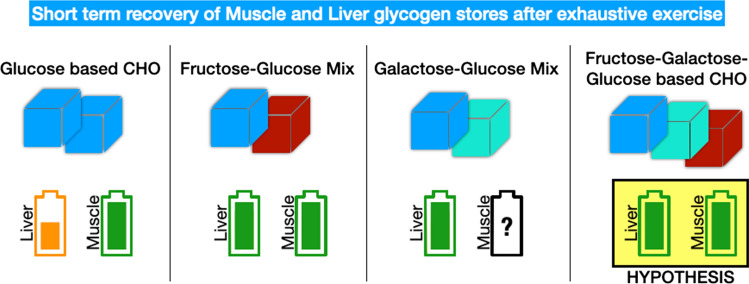
- Post-exercise rapid glycogen repletion is recommended at 1.0–1.2 g·kg⁻¹ BM·h⁻¹ for the first 4 h; glucose-fructose mixtures may better target both liver and muscle glycogen repletion, whereas galactose-glucose favorably affects liver glycogen but muscle glycogen effects are unknown.
- A contemporary view of carbohydrate periodization and “train-low” suggests limited utility for enhancing performance benefits from training, though it may be a time-efficient strategy; personalized carbohydrate intake is advocated, but continuous glucose monitoring during exercise cannot currently be advised due to limited validity.
Methods
- Narrative review of existing literature on carbohydrate nutrition, exercise metabolism, and endurance performance; no primary data collection or systematic meta-analysis is reported.
- The paper synthesizes current dietary guidelines and selected studies across pre-exercise, during-exercise, post-exercise, training adaptation, and personalization topics, and presents research questions in Table 1 and frameworks in Figs. 1–2.
- Main analysis is interpretive/narrative synthesis, with recommendations based on cited evidence rather than a formal systematic search or quantitative pooling.
Limitations
- The paper states that many scientific unknowns remain and lists numerous research questions in Table 1, including optimal glycogen storage with <24 h between sessions, liver glycogen supercompensation, exogenous carbohydrate oxidation at high absolute intensities, and recovery carbohydrate doses for elite athletes.
- The paper states that most research has investigated carbohydrate intake in healthy male populations and that current knowledge is often based on moderately trained rather than elite athletes; it also notes limited validity of continuous glucose monitoring during exercise and no successful independent validation of ultrasound for muscle glycogen.
- Evident from the text: as a narrative review, it does not report a systematic search strategy, risk-of-bias assessment, or meta-analytic synthesis, so recommendations reflect the authors’ selected interpretation of the literature.
Model-written summary. Check it against the paper before relying on it.
Integrity signals
Registry
Cites
Statistics
Figures
Verification
Claims the paper makes
3 Valid · 2 Not valid · 129 Not checked · 31 Own results and interpretations
The cited sources support only part of this claim — read each source’s verdict below.
In the paper
“While energy for adenosine triphosphate (ATP) production can be derived both from fats and carbohydrates, it is carbohydrates that are primarily utilized at high exercise intensities [14, 15].”
§ New Horizons in Carbohydrate Research and Application for Endurance Athletes > Importance of Carbohydrates for Competition and High-Intensity Training Sessions
What the sources say
- Not checked — no full text of the sourcecites [14] Romijn JA Coyle EF Sidossis LS Gastaldelli A Horowitz JF Endert E Regulation of endogenous fat and carbohydrate metabolism in relation to exercise intensity and duration Am J Physiol-Endocrinol Metab 1993 265 E380 E391 10.1152/ajpendo.1993.265.3.E380 8214047 source
- Partly supportedcites [15] van Loon LJC Greenhaff PL Constantin-Teodosiu D Saris WH Wagenmakers AJM The effects of increasing exercise intensity on muscle fuel utilisation in humans J Physiol 2001 536 295 304 10.1111/j.1469-7793.2001.00295.x 11579177 PMC2278845 sourceExperimental — accuracy not yet measured
Our copy of van Loon et al. (2001) consists only of the abstract (itself cut off mid-sentence at 'muscle pyruvate dehydrogenase') plus repository metadata; repeated searches for Results/Discussion text returned nothing further. The Abstract supports the direction of the claim: muscle glycogen and plasma glucose (carbohydrate) oxidation rates rose with every increment in intensity (40, 55, 75% W(max)) while whole-body fat oxidation peaked at 55% W(max) (32 +/- 2 kJ min(-1)) and declined at 75% W(max) (19 +/- 2 kJ min(-1)). However, no passage in our copy states that carbohydrates are the primary/predominant fuel, and the data are confined to eight trained cyclists exercising up to 75% W(max), so the 'primarily utilized at high exercise intensities' part of the attribution is not established by the text we hold. (LLM, conf=0.68)
plainstates an association- Asserted: passes — The authors put it forward as true.
- Checkable: passes — It can be checked against evidence.
- Load-bearing: passes — The paper’s conclusions depend on it.
- Based: passes — The paper gives a reason why it holds.
Every source the paper cites for this claim was checked and supports it.
In the paper
“However, endogenous carbohydrate oxidation was not further spared by the higher carbohydrate dose, and thus whether there would be an additional performance benefit requires clarification.”
§ New Horizons in Carbohydrate Research and Application for Endurance Athletes > Importance of Carbohydrates for Competition and High-Intensity Training Sessions > During Competition
What the sources say
- Supportedcites [71] Podlogar T Bokal Š Cirnski S Increased exogenous but unaltered endogenous carbohydrate oxidation with combined fructose-maltodextrin ingested at 120 g h−1 versus 90 g h−1 at different ratios Eur J Appl Physiol 2022 10.1007/s00421-022-05019-w PMC9560939 35951130 source
The Abstract Results and Results (Substrate oxidation rates and blood metabolites, p. 6) state that endogenous CHO oxidation did not differ between the 120 g h−1 and 90 g h−1 conditions (2.15 ± 0.30 vs 2.20 ± 0.33 g min−1; p = 0.786). The Discussion explicitly says 'there was no sparing of endogenous CHO stores with an ingestion rate of 120 g h−1 as compared with 90 g h−1', and the Conclusion reiterates 'no additional sparing of endogenous carbohydrates'. The hedged follow-up about performance benefits is likewise mirrored in the Abstract Conclusions ('Further studies should investigate potential performance effects'). (LLM, conf=0.95)
plain- Asserted: passes — The authors put it forward as true.
- Checkable: passes — It can be checked against evidence.
- Load-bearing: passes — The paper’s conclusions depend on it.
- Based: passes — The paper gives a reason why it holds.
- Supported
Every source the paper cites for this claim was checked and supports it.
In the paper
“We have recently shown higher exogenous carbohydrate oxidation during prolonged endurance exercise in highly trained athletes with carbohydrate ingestion at 120 g·h−1 as compared to 90 g·h−1 [71].”
§ New Horizons in Carbohydrate Research and Application for Endurance Athletes > Importance of Carbohydrates for Competition and High-Intensity Training Sessions > During Competition
What the sources say
- Supportedcites [71] Podlogar T Bokal Š Cirnski S Increased exogenous but unaltered endogenous carbohydrate oxidation with combined fructose-maltodextrin ingested at 120 g h−1 versus 90 g h−1 at different ratios Eur J Appl Physiol 2022 10.1007/s00421-022-05019-w PMC9560939 35951130 source
The Abstract Results (p.1) report exogenous CHO oxidation of 1.51 ± 0.22 g min−1 at 120 g h−1 versus 1.29 ± 0.16 g min−1 at 90 g h−1 (p = 0.026) during 3 h of endurance exercise in highly trained cyclists, and the Discussion and Conclusions state this as increased exogenous CHO oxidation at 120 g h−1 compared with the recommended 90 g h−1. The only qualifier the citing sentence omits is that the two conditions also differed in fructose-to-glucose-based ratio (0.8:1 vs 1:2), which the source explicitly notes; the rate comparison itself is exactly what the source reports. (LLM, conf=0.93)
plainstates a cause- Asserted: passes — The authors put it forward as true.
- Checkable: passes — It can be checked against evidence.
- Load-bearing: passes — The paper’s conclusions depend on it.
- Based: passes — The paper gives a reason why it holds.
- Supported
None of the sources cited for this claim have been checked yet.
In the paper
“and this shows that sufficient carbohydrate intake is required to start an exercise session with normal liver glycogen stores.”
§ New Horizons in Carbohydrate Research and Application for Endurance Athletes > Importance of Carbohydrates for Competition and High-Intensity Training Sessions > Pre-competition
What the sources say
- Not checked yetcites [41] Nilsson LH Hultman E Liver glycogen in man—the effect of total starvation or a carbohydrate-poor diet followed by carbohydrate refeeding Scand J Clin Lab Investig 1973 32 325 330 10.3109/00365517309084355 4771102 source
Checked before — its earlier verdict is held back until a new check runs.
plainstates a cause- Asserted: passes — The authors put it forward as true.
- Checkable: passes — It can be checked against evidence.
- Load-bearing: passes — The paper’s conclusions depend on it.
- Based: passes — The paper gives a reason why it holds.
- Not checked yet
None of the sources cited for this claim have been checked yet.
In the paper
“Varying carbohydrate intake does indeed change fasting liver glycogen concentrations [41]”
§ New Horizons in Carbohydrate Research and Application for Endurance Athletes > Importance of Carbohydrates for Competition and High-Intensity Training Sessions > Pre-competition
What the sources say
- Not checked yetcites [41] Nilsson LH Hultman E Liver glycogen in man—the effect of total starvation or a carbohydrate-poor diet followed by carbohydrate refeeding Scand J Clin Lab Investig 1973 32 325 330 10.3109/00365517309084355 4771102 source
Checked before — its earlier verdict is held back until a new check runs.
boostedstates a cause- Asserted: passes — The authors put it forward as true.
- Checkable: passes — It can be checked against evidence.
- Load-bearing: passes — The paper’s conclusions depend on it.
- Based: passes — The paper gives a reason why it holds.
- Not checked yet
112 more claims
Create a free account to see all 165 claims and to verify the 205 references still open.
- It may state two separate claims as one. 27
- Probably not a substantial claim. 22
Claims other papers make about this one
Each is checked against this paper’s own text: does it say what the citing paper says it does?
The source backs part of the claim, not all of it — or backs it for a different population, condition or comparison.
In the citing paper
“Complete replenishment of muscle glycogen stores typically unfolds over a 24–36 h period post-exercise, provided that 7–12 g·kg−1 carbohydrate are consumed per day [15–18].”
From Nutritional Strategies to Improve Post-exercise Recovery and Subsequent Exercise Performance: A Narrative Review (2025) · cites this paper as [18]
Experimental — accuracy not yet measuredThe source backs part of the claim, not all of it — or backs it for a different population, condition or comparison.
In the citing paper
“it is inferred that the co-ingestion of glucose and fructose-based carbohydrates during the post-exercise recovery phase is likely more beneficial than other carbohydrate sources, given its superior efficacy in faster gastrointestinal absorption and glycogen stores and its association with reduced gastrointestinal discomfort when an optimal carbohydrate dosage of 1–1.2 g·kg−1⋅h−1 is consumed [18]”
From Nutritional Strategies to Improve Post-exercise Recovery and Subsequent Exercise Performance: A Narrative Review (2025) · cites this paper as [18]
Experimental — accuracy not yet measuredThe cited source says what the claim attributes to it.
In the citing paper
“Carbohydrate ingestion during endurance exercise is a well-established strategy for enhancing performance (1 -3).”
From Carbohydrate ingestion during prolonged exercise and net skeletal muscle glycogen utilization: A meta-analysis. (2026) · cites this paper as [1]
The cited source says what the claim attributes to it.
In the citing paper
“Nevertheless, co-ingestion of glucose with fructose is preferred owing to reduced gastrointestinal complaints and the beneficial effect on liver glycogen replenishment, as discussed below [18, 22, 26]”
From Nutritional Strategies to Improve Post-exercise Recovery and Subsequent Exercise Performance: A Narrative Review (2025) · cites this paper as [18]
In the citing paper
“Moreover, CHO should account for 45–65% of total caloric intake (60, 61).”
From Junior athletes’ nutritional demands: a narrative review of consumption and prevalence of eating disorders (2024) · cites this paper as [60]
Citations
Cites
Romijn, J. A., Coyle, E. F., Sidossis, L. S., Gastaldelli, A., Horowitz, J. F., Endert, E., & Wolfe, R. R. (1993) · American Journal of Physiology-Endocrinology and Metabolism · doi:10.1152/ajpendo.1993.265.3.e380 · Cited by 1,747 · cited 2×
“2 of this article, it appears that absolute exercise intensity during exercise is a large determinant of total energy, and consequently carbohydrate [14] and exogenous carbohydrate oxidation rates [172, 173].”
BackgroundDiet, muscle glycogen and physical performance.
Bergström, J., Hermansen, L., Hultman, E., & Saltin, B. (1967) · Acta Physiologica Scandinavica · doi:10.1111/j.1748-1716.1967.tb03720.x · Cited by 1,740 · cited 2×
“, a reduction in exercise capacity [27, 53] and thus a reduction in training intensity and/or duration.”
BackgroundExercise, GLUT4, and skeletal muscle glucose uptake
Richter, E. A., & Hargreaves, M. (2013) · Physiological Reviews · doi:10.1152/physrev.00038.2012 · Cited by 1,407 · cited 2×
“The latter could in turn result in accumulation of glucose within the cell and a reduced glucose gradient between muscle cells and blood [115, 116].”
BackgroundNutrition and Athletic Performance
(2016) · Medicine & Science in Sports & Exercise · doi:10.1249/mss.0000000000000852 · Cited by 1,305
Biomarkers of mitochondrial content in skeletal muscle of healthy young human subjects
Larsen, S., Nielsen, J., Hansen, C. N., Nielsen, L. B., Wibrand, F., Stride, N., Schroder, H. D., Boushel, R., Helge, J. W., Dela, F., et al. (2012) · The Journal of Physiology · doi:10.1113/jphysiol.2012.230185 · Cited by 1,180 · cited 1×
“A recent study indicated that the capacity to utilize fat during exercise in an overnight fasted state is best correlated with CS activity [162], a marker of mitochondrial content [163] that is itself well correlated with training volume [144].”
BackgroundMuscle glycogen utilization during prolonged strenuous exercise when fed carbohydrate
Coyle, E. F., Coggan, A. R., Hemmert, M. K., & Ivy, J. L. (1986) · Journal of Applied Physiology · doi:10.1152/jappl.1986.61.1.165 · Cited by 1,022 · cited 1×
“Carbohydrate ingestion during exercise maintains stable blood glucose levels over long exercise sessions [52] and maintains carbohydrate oxidation rates despite declining muscle glycogen stores so that ingested carbohydrates substitute endogenous carbohydrate stores [53, 54].”
BackgroundCarbohydrates for training and competition
Burke, L. M., Hawley, J. A., Wong, S. H. S., & Jeukendrup, A. E. (2011) · Journal of Sports Sciences · doi:10.1080/02640414.2011.585473 · Cited by 985 · cited 10×
“2 g·kg−1BM·h−1 to optimize repletion of glycogen stores for the first 4 h, when rapid repletion of glycogen stores is required, after which a normal diet reflecting daily fuel needs, which may be up to 12 g·kg−1 BM, is recommended [1, 2, 120].”
BackgroundInfluentialThe effects of increasing exercise intensity on muscle fuel utilisation in humans
van Loon, L. J. C., Greenhaff, P. L., Constantin‐Teodosiu, D., Saris, W. H. M., & Wagenmakers, A. J. M. (2001) · The Journal of Physiology · doi:10.1111/j.1469-7793.2001.00295.x · Cited by 897 · cited 1×
“While energy for adenosine triphosphate (ATP) production can be derived both from fats and carbohydrates, it is carbohydrates that are primarily utilized at high exercise intensities [14, 15].”
BackgroundJoyner, M. J., & Casey, D. P. (2015) · Physiological Reviews · doi:10.1152/physrev.00035.2013 · Cited by 833 · cited 1×
“It could be that athletes whose energy turnover rates during exercise are very high and thus have a high glucose flux to muscle due to increased blood flow proportional to absolute exercise intensity [83] could benefit from carbohydrate ingestion rates that are higher than currently recommended, but this requires furt…”
BackgroundMeasurement of substrate oxidation during exercise by means of gas exchange measurements
Jeukendrup, A. E., & Wallis, G. A. (2005) · International Journal of Sports Medicine · doi:10.1055/s-2004-830512 · Cited by 799 · cited 1×
“However, the importance of an ability to oxidize fats at high intensities should not be discounted [18], as a valid method to quantify its contribution to ATP production during exercise at high intensities is yet to be established [19].”
BackgroundSelf-citationMuscle and Blood Metabolites during a Soccer Game: Implications for Sprint Performance
KRUSTRUP, P., MOHR, M., STEENSBERG, A., BENCKE, J., KJÆR, M., & BANGSBO, J. (2006) · Medicine & Science in Sports & Exercise · doi:10.1249/01.mss.0000222845.89262.cd · Cited by 742
Gollnick, P. D., Piehl, K., & Saltin, B. (1974) · The Journal of Physiology · doi:10.1113/jphysiol.1974.sp010639 · Cited by 643 · cited 1×
“While muscle glycogen depletion is more commonly associated with prolonged strenuous endurance exercise, even short but intense exercise bouts can result in significant reduction of muscle glycogen content [30, 34, 35].”
BackgroundWhat is Best Practice for Training Intensity and Duration Distribution in Endurance Athletes?
Seiler, S. (2010) · International Journal of Sports Physiology and Performance · doi:10.1123/ijspp.5.3.276 · Cited by 625 · cited 2×
“Commencing training sessions with insufficient carbohydrate availability would result in a reduction in the duration and/or intensity of the session, which are collectively the most important determinants of successful long-term endurance improvements [143].”
BackgroundCarbohydrate sensing in the human mouth: effects on exercise performance and brain activity
Chambers, E. S., Bridge, M. W., & Jones, D. A. (2009) · The Journal of Physiology · doi:10.1113/jphysiol.2008.164285 · Cited by 594
Carbohydrate feeding during prolonged strenuous exercise can delay fatigue
Coyle, E. F., Hagberg, J. M., Hurley, B. F., Martin, W. H., Ehsani, A. A., & Holloszy, J. O. (1983) · Journal of Applied Physiology · doi:10.1152/jappl.1983.55.1.230 · Cited by 487 · cited 2×
“Carbohydrate ingestion during exercise maintains stable blood glucose levels over long exercise sessions [52] and maintains carbohydrate oxidation rates despite declining muscle glycogen stores so that ingested carbohydrates substitute endogenous carbohydrate stores [53, 54].”
BackgroundThe effect of carbohydrate mouth rinse on 1-h cycle time trial performance
CARTER, J. M., JEUKENDRUP, A. E., & JONES, D. A. (2004) · Medicine & Science in Sports & Exercise · doi:10.1249/01.mss.0000147585.65709.6f · Cited by 437
A Study of the Glycogen Metabolism during Exercise in Man
Bergström, J., & Hultman, E. (1967) · Scandinavian Journal of Clinical and Laboratory Investigation · doi:10.3109/00365516709090629 · Cited by 426
A Step Towards Personalized Sports Nutrition: Carbohydrate Intake During Exercise
Jeukendrup, A. (2014) · Sports Medicine · doi:10.1007/s40279-014-0148-z · Cited by 412
The Relative Value of Fat and Carbohydrate as Sources of Muscular Energy
Krogh, A., & Lindhard, J. (1920) · Biochemical Journal · doi:10.1042/bj0140290 · Cited by 411 · cited 1×
“Research showing the importance of carbohydrates for performance began to emerge as early as the 1920s [4].”
BackgroundThe bioenergetics of world class cycling
Jeukendrup, A. E., Craig, N. P., & Hawley, J. A. (2000) · Journal of Science and Medicine in Sport · doi:10.1016/s1440-2440(00)80008-0 · Cited by 411 · cited 1×
“For instance, elite cyclists are reported to cover more than 30,000 km on the bike in a single year [145].”
BackgroundGastrointestinal Complaints During Exercise: Prevalence, Etiology, and Nutritional Recommendations
de Oliveira, E. P., Burini, R. C., & Jeukendrup, A. (2014) · Sports Medicine · doi:10.1007/s40279-014-0153-2 · Cited by 402
Nutrition for endurance sports: Marathon, triathlon, and road cycling
Jeukendrup, A. E. (2011) · Journal of Sports Sciences · doi:10.1080/02640414.2011.610348 · Cited by 388 · cited 3×
“5 h and when 60–90 g·h−1 of carbohydrates are ingested [1, 2, 60].”
BackgroundOosthuyse, T., & Bosch, A. N. (2010) · Sports Medicine · doi:10.2165/11317090-000000000-00000 · Cited by 380 · cited 1×
“However, there are some important metabolism differences between the sexes [191, 192] and/or relatively large populations of athletes with, e.”
BackgroundRegulation of skeletal muscle glycogen phosphorylase and PDH during maximal intermittent exercise
Parolin, M. L., Chesley, A., Matsos, M. P., Spriet, L. L., Jones, N. L., & Heigenhauser, G. J. F. (1999) · American Journal of Physiology-Endocrinology and Metabolism · doi:10.1152/ajpendo.1999.277.5.e890 · Cited by 334 · cited 1×
“, competitions and high-intensity training sessions) places large demands on carbohydrates [12].”
BackgroundSherman, W., Costill, D., Fink, W., & Miller, J. (1981) · International Journal of Sports Medicine · doi:10.1055/s-2008-1034594 · Cited by 325 · cited 2×
“However, the evidence is not as conclusive, as glycogen loading before shorter duration events does not always translate into performance improvements [30, 36].”
BackgroundPeriodized Nutrition for Athletes
Jeukendrup, A. E. (2017) · Sports Medicine · doi:10.1007/s40279-017-0694-2 · Cited by 299 · cited 1×
“The concept is well described elsewhere [138, 139].”
Effect of initial muscle glycogen levels on protein catabolism during exercise
Lemon, P. W., & Mullin, J. P. (1980) · Journal of Applied Physiology · doi:10.1152/jappl.1980.48.4.624 · Cited by 291 · cited 1×
“However, focusing solely on activation of pathways such as AMPK could be too reductionist, as it does not account for the recovery that is required after such a session, as, for instance, it is well known that protein breakdown is increased during such sessions [152, 153].”
BackgroundNutritional Intake and Gastrointestinal Problems during Competitive Endurance Events
PFEIFFER, B., STELLINGWERFF, T., HODGSON, A. B., RANDELL, R., PÖTTGEN, K., RES, P., & JEUKENDRUP, A. E. (2012) · Medicine & Science in Sports & Exercise · doi:10.1249/mss.0b013e31822dc809 · Cited by 287 · cited 1×
“In addition to carbohydrate availability manipulations to influence training adaptations, the concept of training the gut also needs to be considered to become a part of the training process to potentially improve tolerance to high carbohydrate ingestion rates during exercise especially [133, 134], as the prevalence o…”
BackgroundSkeletal muscle adaptation: training twice every second day vs. training once daily
Hansen, A. K., Fischer, C. P., Plomgaard, P., Andersen, J. L., Saltin, B., & Pedersen, B. K. (2005) · Journal of Applied Physiology · doi:10.1152/japplphysiol.00163.2004 · Cited by 286
Study on Food Intake and Energy Expenditure During Extreme Sustained Exercise: The Tour de France
Saris, W., van Erp-Baart*, M., Brouns, F., Westerterp, K., & Hoor, F. (1989) · International Journal of Sports Medicine · doi:10.1055/s-2007-1024951 · Cited by 285 · cited 1×
“It has been reported that elite cyclists can tolerate more than 90 g·h−1 of carbohydrates mostly from glucose-based carbohydrates [70].”
BackgroundYeo, W. K., Paton, C. D., Garnham, A. P., Burke, L. M., Carey, A. L., & Hawley, J. A. (2008) · Journal of Applied Physiology · doi:10.1152/japplphysiol.90882.2008 · Cited by 283 · cited 1×
“Using this approach, some studies demonstrated metabolic benefits, such as reduced reliance on carbohydrates during moderate-intensity exercise [140, 141].”
BackgroundJeukendrup, A. E., & Jentjens, R. (2000) · Sports Medicine · doi:10.2165/00007256-200029060-00004 · Cited by 279 · cited 5×
“It is believed that at this ingestion rate, the sodiumglucose linked transporters (SGLT1) in the small intestine become saturated [25].”
BackgroundInfluentialThe Science of Cycling: Factors Affecting Performance ??? Part 2
Faria, E. W., Parker, D. L., & Faria, I. E. (2005) · Sports Medicine · doi:10.2165/00007256-200535040-00003 · Cited by 271
Variation in Total Body Water with Muscle Glycogen Changes in Man
Olsson, K., & Saltin, B. (1970) · Acta Physiologica Scandinavica · doi:10.1111/j.1748-1716.1970.tb04764.x · Cited by 264
Carbohydrate-Loading and Exercise Performance: An Update
Hawley, J. A., Schabort, E. J., Noakes, T. D., & Dennis, S. C. (1997) · Sports Medicine · doi:10.2165/00007256-199724020-00001 · Cited by 263
Nilsson, L. H., & Hultman, E. (1973) · Scandinavian Journal of Clinical and Laboratory Investigation · doi:10.3109/00365517309084355 · Cited by 263 · cited 2×
“Varying carbohydrate intake does indeed change fasting liver glycogen concentrations [41], and this shows that sufficient carbohydrate intake is required to start an exercise session with normal liver glycogen stores.”
BackgroundFlockhart, M., Nilsson, L. C., Tais, S., Ekblom, B., Apró, W., & Larsen, F. J. (2021) · Cell Metabolism · doi:10.1016/j.cmet.2021.02.017 · Cited by 257 · cited 1×
“A recent study utilizing CGM devices compared daily blood glucose profiles in elite trained athletes with those in a sedentary population and discovered large discrepancies in blood glucose concentrations throughout the day between both groups [189].”
BackgroundTønnessen, E., Sylta, Ø., Haugen, T. A., Hem, E., Svendsen, I. S., & Seiler, S. (2014) · PLoS ONE · doi:10.1371/journal.pone.0101796 · Cited by 255
Muscle metabolism during exercise and heat stress in trained men: effect of acclimation
Febbraio, M. A., Snow, R. J., Hargreaves, M., Stathis, C. G., Martin, I. K., & Carey, M. F. (1994) · Journal of Applied Physiology · doi:10.1152/jappl.1994.76.2.589 · Cited by 251 · cited 1×
“This effect is somewhat alleviated with heat acclimation [110], making another argument towards the importance of undertaking heat acclimation before competing in the heat [111].”
BackgroundStellingwerff, T., & Cox, G. R. (2014) · Applied Physiology, Nutrition, and Metabolism · doi:10.1139/apnm-2014-0027 · Cited by 246 · cited 1×
“It is now well established that carbohydrate intake during exercise improves exercise performance/capacity [48].”
BackgroundPostexercise muscle glycogen resynthesis in humans.
Burke, L. M., van Loon, L. J. C., & Hawley, J. A. (2017) · Journal of Applied Physiology · doi:10.1152/japplphysiol.00860.2016 · Cited by 242 · cited 3×
“It is believed that for a full repletion of muscle glycogen stores, 24–36 h [21] are required, whereas for the complete repletion of liver glycogen, 11–25 h are needed [119].”
BackgroundImpey, S. G., Hearris, M. A., Hammond, K. M., Bartlett, J. D., Louis, J., Close, G. L., & Morton, J. P. (2018) · Sports Medicine · doi:10.1007/s40279-018-0867-7 · Cited by 232 · cited 4×
“individuals provided promising results [10, 138].”
BackgroundInfluentialCarbohydrate availability and exercise training adaptation: Too much of a good thing?
Bartlett, J. D., Hawley, J. A., & Morton, J. P. (2015) · European Journal of Sport Science · doi:10.1080/17461391.2014.920926 · Cited by 230 · cited 1×
“individuals provided promising results [10, 138].”
Carbohydrate ingestion can completely suppress endogenous glucose production during exercise
Jeukendrup, A. E., Wagenmakers, A. J. M., Stegen, J. H. C. H., Gijsen, A. P., Brouns, F., & Saris, W. H. M. (1999) · American Journal of Physiology-Endocrinology and Metabolism · doi:10.1152/ajpendo.1999.276.4.e672 · Cited by 219 · cited 2×
“In addition to this, exogenous carbohydrates can spare or even completely suppress liver glycogen breakdown [55, 56].”
BackgroundHowarth, K. R., Moreau, N. A., Phillips, S. M., & Gibala, M. J. (2009) · Journal of Applied Physiology · doi:10.1152/japplphysiol.90333.2008 · Cited by 218
Achten, J., Halson, S. L., Moseley, L., Rayson, M. P., Casey, A., & Jeukendrup, A. E. (2004) · Journal of Applied Physiology · doi:10.1152/japplphysiol.00973.2003 · Cited by 214 · cited 1×
“Building on the previous evidence that sufficient carbohydrate intake can ameliorate symptoms of overtraining [166, 167], it has recently been proposed that there might be a link between relative RED-S and overtraining and that a common confounding factor is carbohydrate [11].”
BackgroundJeukendrup, A. E. (2017) · Sports Medicine · doi:10.1007/s40279-017-0690-6 · Cited by 208 · cited 1×
“In addition to carbohydrate availability manipulations to influence training adaptations, the concept of training the gut also needs to be considered to become a part of the training process to potentially improve tolerance to high carbohydrate ingestion rates during exercise especially [133, 134], as the prevalence o…”
BackgroundLeg muscle metabolism during exercise in the heat and cold
Fink, W. J., Costill, D. L., & Van Handel, P. J. (1975) · European Journal of Applied Physiology and Occupational Physiology · doi:10.1007/bf00999931 · Cited by 207
Liver glycogen metabolism during and after prolonged endurance-type exercise
Gonzalez, J. T., Fuchs, C. J., Betts, J. A., & van Loon, L. J. C. (2016) · American Journal of Physiology-Endocrinology and Metabolism · doi:10.1152/ajpendo.00232.2016 · Cited by 206 · cited 3×
“Due to limited endogenous carbohydrate availability [20, 21] in endurance sports such as road cycling and cross-country skiing, energy requirements for races can exceed the capacity to store carbohydrates by more than 100% [22, 23].”
BackgroundRe-Examining High-Fat Diets for Sports Performance: Did We Call the ‘Nail in the Coffin’ Too Soon?
Burke, L. M. (2015) · Sports Medicine · doi:10.1007/s40279-015-0393-9 · Cited by 201 · cited 1×
“Thus, strategies have been proposed to circumvent this issue, such as increasing carbohydrate storage before the start of competition [24]—also known as carbohydrate or glycogen loading, increasing exogenous carbohydrate availability by carbohydrate feeding during exercise [25] and/ or reducing reliance on endogenousl…”
BackgroundLeg glucose uptake during maximal dynamic exercise in humans
Katz, A., Broberg, S., Sahlin, K., & Wahren, J. (1986) · American Journal of Physiology-Endocrinology and Metabolism · doi:10.1152/ajpendo.1986.251.1.e65 · Cited by 198 · cited 1×
“The latter could in turn result in accumulation of glucose within the cell and a reduced glucose gradient between muscle cells and blood [115, 116].”
BackgroundTraining with Low Muscle Glycogen Enhances Fat Metabolism in Well-Trained Cyclists
HULSTON, C. J., VENABLES, M. C., MANN, C. H., MARTIN, C., PHILP, A., BAAR, K., & JEUKENDRUP, A. E. (2010) · Medicine & Science in Sports & Exercise · doi:10.1249/mss.0b013e3181dd5070 · Cited by 196 · cited 1×
“Using this approach, some studies demonstrated metabolic benefits, such as reduced reliance on carbohydrates during moderate-intensity exercise [140, 141].”
BackgroundStellingwerff, T., Spriet, L. L., Watt, M. J., Kimber, N. E., Hargreaves, M., Hawley, J. A., & Burke, L. M. (2006) · American Journal of Physiology-Endocrinology and Metabolism · doi:10.1152/ajpendo.00268.2005 · Cited by 195 · cited 2×
“In other words, increasing fat oxidation rates as such should not come in front of the goal to improve one’s aerobic capacity, especially in the light of evidence demonstrating that training with low carbohydrate availability can result in a reduced ability to exercise at high intensities [164] due to reduced ability…”
BackgroundA history of continuous glucose monitors (CGMs) in self-monitoring of diabetes mellitus
Olczuk, D., & Priefer, R. (2018) · Diabetes & Metabolic Syndrome: Clinical Research & Reviews · doi:10.1016/j.dsx.2017.09.005 · Cited by 194 · cited 1×
“These devices have a rich history in the field of diabetes treatment, and their utility has clearly been demonstrated [184].”
BackgroundBishop, D. J., Granata, C., & Eynon, N. (2014) · Biochimica et Biophysica Acta (BBA) - General Subjects · doi:10.1016/j.bbagen.2013.10.012 · Cited by 189
Influence of elevated muscle temperature on metabolism during intense, dynamic exercise
Febbraio, M. A., Carey, M. F., Snow, R. J., Stathis, C. G., & Hargreaves, M. (1996) · American Journal of Physiology-Regulatory, Integrative and Comparative Physiology · doi:10.1152/ajpregu.1996.271.5.r1251 · Cited by 187 · cited 1×
“Among potential mechanisms are reduced carbohydrate absorption due to redistribution of the blood flow from the intestines towards the skin to support evaporative heat loss or a reduction in gastric emptying, which may be exacerbated with hypohydration [113], and/or increased rates of glycogenolysis due to elevated mu…”
BackgroundMaximizing Cellular Adaptation to Endurance Exercise in Skeletal Muscle
Hawley, J. A., Lundby, C., Cotter, J. D., & Burke, L. M. (2018) · Cell Metabolism · doi:10.1016/j.cmet.2018.04.014 · Cited by 182 · cited 1×
“However, as the athlete exhausts possibilities to improve performance by increasing training duration and/or intensity, reducing carbohydrate availability before training sessions could potentially be a useful strategy to increase the metabolic perturbation required to elicit training adaptations [148, 149] in a simil…”
BackgroundEvidence that supports the prescription of low-carbohydrate high-fat diets: A narrative review
Noakes, T. D., & Windt, J. (2017) · British Journal of Sports Medicine · doi:10.1136/bjsports-2016-096491 · Cited by 178 · cited 1×
“Another popular reason for undertaking training with low carbohydrate availability is the notion that such an approach would lead to increases in fat oxidation rates during competition and spare endogenous carbohydrate stores with a limited storage capacity and by doing so improve performance [18, 159].”
BackgroundCarbohydrate Dependence During Prolonged, Intense Endurance Exercise
Hawley, J. A., & Leckey, J. J. (2015) · Sports Medicine · doi:10.1007/s40279-015-0400-1 · Cited by 172 · cited 1×
“Evidence indicates that utilization of carbohydrates and not fats is crucial to sustain the exercise intensities observed in elite athletes [16, 17].”
BackgroundJentjens, R. L. P. G., & Jeukendrup, A. E. (2005) · British Journal of Nutrition · doi:10.1079/bjn20041368 · Cited by 171
Stellingwerff, T., Heikura, I. A., Meeusen, R., Bermon, S., Seiler, S., Mountjoy, M. L., & Burke, L. M. (2021) · Sports Medicine · doi:10.1007/s40279-021-01491-0 · Cited by 171 · cited 2×
“Sufficient energy availability from carbohydrates is required for athletes to sustain the demands of competition and recover for subsequent competitions [11].”
BackgroundMuscle Glycogen Metabolism and High-Intensity Exercise Performance: A Narrative Review
Vigh-Larsen, J. F., Ørtenblad, N., Spriet, L. L., Overgaard, K., & Mohr, M. (2021) · Sports Medicine · doi:10.1007/s40279-021-01475-0 · Cited by 169 · cited 4×
“While muscle glycogen depletion is more commonly associated with prolonged strenuous endurance exercise, even short but intense exercise bouts can result in significant reduction of muscle glycogen content [30, 34, 35].”
BackgroundInfluentialCarbohydrate ingestion and single muscle fiber glycogen metabolism during prolonged running in men
Tsintzas, O. K., Williams, C., Boobis, L., & Greenhaff, P. (1996) · Journal of Applied Physiology · doi:10.1152/jappl.1996.81.2.801 · Cited by 166 · cited 1×
“While some studies have found sparing of muscle glycogen with carbohydrate supplementation during exercise [57, 58], most of the studies assessing whole muscle glycogen utilization did not see this effect [28] and a recently published study that evaluated different carbohydrate ingestion rates during cycling exercise…”
ResultFat adaptation followed by carbohydrate loading compromises high-intensity sprint performance
Havemann, L., West, S. J., Goedecke, J. H., Macdonald, I. A., St Clair Gibson, A., Noakes, T. D., & Lambert, E. V. (2006) · Journal of Applied Physiology · doi:10.1152/japplphysiol.00813.2005 · Cited by 165 · cited 1×
“In other words, increasing fat oxidation rates as such should not come in front of the goal to improve one’s aerobic capacity, especially in the light of evidence demonstrating that training with low carbohydrate availability can result in a reduced ability to exercise at high intensities [164] due to reduced ability…”
BackgroundCosta, R. J. S., Miall, A., Khoo, A., Rauch, C., Snipe, R., Camões-Costa, V., & Gibson, P. (2017) · Applied Physiology, Nutrition, and Metabolism · doi:10.1139/apnm-2016-0453 · Cited by 162 · cited 1×
“In addition to carbohydrate availability manipulations to influence training adaptations, the concept of training the gut also needs to be considered to become a part of the training process to potentially improve tolerance to high carbohydrate ingestion rates during exercise especially [133, 134], as the prevalence o…”
BackgroundContextualising Maximal Fat Oxidation During Exercise: Determinants and Normative Values
Maunder, E., Plews, D. J., & Kilding, A. E. (2018) · Frontiers in Physiology · doi:10.3389/fphys.2018.00599 · Cited by 158 · cited 1×
“This view appears to be too simplistic, as numerous factors affect substrate utilization rates, including exercise intensity, training status, sex, acute and/or chronic diet [160, 161].”
BackgroundThe training characteristics of the world’s most successful female cross-country skier.
Solli, G. S., Tønnessen, E., & Sandbakk, Ø. (2017) · Frontiers in Physiology · doi:10.3389/fphys.2017.01069 · Cited by 157 · cited 1×
“Large training volumes are reported in other endurance sports as well [146].”
BackgroundKozlowski, S., Brzezinska, Z., Kruk, B., Kaciuba-Uscilko, H., Greenleaf, J. E., & Nazar, K. (1985) · Journal of Applied Physiology · doi:10.1152/jappl.1985.59.3.766 · Cited by 154
High Oxidation Rates from Combined Carbohydrates Ingested during Exercise
JENTJENS, R. L. P. G., ACHTEN, J., & JEUKENDRUP, A. E. (2004) · Medicine & Science in Sports & Exercise · doi:10.1249/01.mss.0000139796.07843.1d · Cited by 153
Metabolism and performance following carbohydrate ingestion late in exercise
COGGAN, A. R., & COYLE, E. F. (1989) · Medicine & Science in Sports & Exercise · doi:10.1249/00005768-198902000-00011 · Cited by 153 · cited 1×
“More recently, building on previous work [157], the effects of delayed carbohydrate feeding in a glycogen depleted state (i.”
BackgroundGranata, C., Jamnick, N. A., & Bishop, D. J. (2018) · Sports Medicine · doi:10.1007/s40279-018-0894-4 · Cited by 149
Exogenous carbohydrate oxidation during ultraendurance exercise
Jeukendrup, A. E., Moseley, L., Mainwaring, G. I., Samuels, S., Perry, S., & Mann, C. H. (2006) · Journal of Applied Physiology · doi:10.1152/japplphysiol.00981.2004 · Cited by 147 · cited 1×
“Carbohydrate ingestion during exercise maintains stable blood glucose levels over long exercise sessions [52] and maintains carbohydrate oxidation rates despite declining muscle glycogen stores so that ingested carbohydrates substitute endogenous carbohydrate stores [53, 54].”
BackgroundJentjens, R. L. P. G., Wagenmakers, A. J. M., & Jeukendrup, A. E. (2002) · Journal of Applied Physiology · doi:10.1152/japplphysiol.00482.2001 · Cited by 146
Gastric emptying, absorption, and carbohydrate oxidation during prolonged exercise
Rehrer, N. J., Wagenmakers, A. J., Beckers, E. J., Halliday, D., Leiper, J. B., Brouns, F., Maughan, R. J., Westerterp, K., & Saris, W. H. (1992) · Journal of Applied Physiology · doi:10.1152/jappl.1992.72.2.468 · Cited by 143 · cited 1×
“mers [89] or use of drinks with different osmolality [90], whereas effects of caffeine co-ingestion yielded mixed results [91, 92].”
ResultFrom Lab to Real World: Heat Acclimation Considerations for Elite Athletes
Casadio, J. R., Kilding, A. E., Cotter, J. D., & Laursen, P. B. (2016) · Sports Medicine · doi:10.1007/s40279-016-0668-9 · Cited by 138 · cited 1×
“This effect is somewhat alleviated with heat acclimation [110], making another argument towards the importance of undertaking heat acclimation before competing in the heat [111].”
BackgroundThe effect of glucose infusion on glucose kinetics during a 1-h time trial
CARTER, J. M., JEUKENDRUP, A. E., MANN, C. H., & JONES, D. A. (2004) · Medicine & Science in Sports & Exercise · doi:10.1249/01.mss.0000139892.69410.d8 · Cited by 137
Oxidation rates of orally ingested carbohydrates during prolonged exercise in men
Wagenmakers, A. J., Brouns, F., Saris, W. H., & Halliday, D. (1993) · Journal of Applied Physiology · doi:10.1152/jappl.1993.75.6.2774 · Cited by 137 · cited 1×
“1 g·min−1, even if the ingestion rate is higher [25, 64, 65].”
BackgroundOxidation of Combined Ingestion of Maltodextrins and Fructose during Exercise
WALLIS, G. A., ROWLANDS, D. S., SHAW, C., JENTJENS, R. L. P. G., & JEUKENDRUP, A. E. (2005) · Medicine & Science in Sports & Exercise · doi:10.1249/01.mss.0000155399.23358.82 · Cited by 134
Self-citationOxidation of exogenous glucose, sucrose, and maltose during prolonged cycling exercise
Jentjens, R. L. P. G., Venables, M. C., & Jeukendrup, A. E. (2004) · Journal of Applied Physiology · doi:10.1152/japplphysiol.01023.2003 · Cited by 134
Burke, L. M., Hawley, J. A., Jeukendrup, A., Morton, J. P., Stellingwerff, T., & Maughan, R. J. (2018) · International Journal of Sport Nutrition and Exercise Metabolism · doi:10.1123/ijsnem.2018-0289 · Cited by 132
Skeletal Muscle Glycogen Content at Rest and During Endurance Exercise in Humans: A Meta-Analysis
Areta, J. L., & Hopkins, W. G. (2018) · Sports Medicine · doi:10.1007/s40279-018-0941-1 · Cited by 130 · cited 5×
“Even if a training session is initiated with adequate muscle glycogen stores, they will be markedly reduced by the end of it [28], creating a suitable environment for activation of crucial molecular signaling pathways thought to be responsible for positive adaptations [138].”
BackgroundResultInfluentialAnderson, L., Orme, P., Naughton, R. J., Close, G. L., Milsom, J., Rydings, D., O’Boyle, A., Di Michele, R., Louis, J., Hambly, C., et al. (2017) · International Journal of Sport Nutrition and Exercise Metabolism · doi:10.1123/ijsnem.2016-0259 · Cited by 126 · cited 1×
“For instance, energy turnover using goldstandard techniques has been assessed in many sporting contexts, including football [174], cycling [22] and tennis [175].”
MethodBetts, J. A., & Williams, C. (2010) · Sports Medicine · doi:10.2165/11536900-000000000-00000 · Cited by 125 · cited 1×
“2 g·kg−1BM·h−1 to optimize repletion of glycogen stores for the first 4 h, when rapid repletion of glycogen stores is required, after which a normal diet reflecting daily fuel needs, which may be up to 12 g·kg−1 BM, is recommended [1, 2, 120].”
BackgroundJentjens, R. L. P. G., Underwood, K., Achten, J., Currell, K., Mann, C. H., & Jeukendrup, A. E. (2006) · Journal of Applied Physiology · doi:10.1152/japplphysiol.00322.2005 · Cited by 125 · cited 1×
“From the applied perspective, currently, the most important solution to circumvent this is combining glucose- and fructose-based carbohydrates so higher exogenous carbohydrate oxidation rates can be achieved than those seen with glucose alone [118].”
BackgroundSwifter, higher, stronger: What’s on the menu?
Burke, L. M., & Hawley, J. A. (2018) · Science · doi:10.1126/science.aau2093 · Cited by 122
Caffeine Increases Exogenous Carbohydrate Oxidation during Exercise
Yeo, S. E., Jentjens, R. L. P. G., Wallis, G. A., & Jeukendrup, A. E. (2005) · Journal of Applied Physiology · doi:10.1152/japplphysiol.00170.2005 · Cited by 121 · cited 1×
“mers [89] or use of drinks with different osmolality [90], whereas effects of caffeine co-ingestion yielded mixed results [91, 92].”
ResultSelf-citationCarbohydrate ingestion and glycogen utilization in different muscle fibre types in man
Tsintzas, O. K., Williams, C., Boobis, L., & Greenhaff, P. (1995) · The Journal of Physiology · doi:10.1113/jphysiol.1995.sp021046 · Cited by 117 · cited 1×
“While some studies have found sparing of muscle glycogen with carbohydrate supplementation during exercise [57, 58], most of the studies assessing whole muscle glycogen utilization did not see this effect [28] and a recently published study that evaluated different carbohydrate ingestion rates during cycling exercise…”
ResultGastric emptying during exercise: effects of heat stress and hypohydration
Neufer, P. D., Young, A. J., & Sawka, M. N. (1989) · European Journal of Applied Physiology and Occupational Physiology · doi:10.1007/bf00643521 · Cited by 114 · cited 1×
“Among potential mechanisms are reduced carbohydrate absorption due to redistribution of the blood flow from the intestines towards the skin to support evaporative heat loss or a reduction in gastric emptying, which may be exacerbated with hypohydration [113], and/or increased rates of glycogenolysis due to elevated mu…”
BackgroundStellingwerff, T., Peeling, P., Garvican-Lewis, L. A., Hall, R., Koivisto, A. E., Heikura, I. A., & Burke, L. M. (2019) · Sports Medicine · doi:10.1007/s40279-019-01159-w · Cited by 114 · cited 1×
“Thus, it appears that sufficient pre-exercise carbohydrate intake plays a crucial role in sustaining intense exercise in hypoxia [106].”
BackgroundImpey, S. G., Hammond, K. M., Shepherd, S. O., Sharples, A. P., Stewart, C., Limb, M., Smith, K., Philp, A., Jeromson, S., Hamilton, D. L., et al. (2016) · Physiological Reports · doi:10.14814/phy2.12803 · Cited by 109 · cited 1×
“Thus, training with low carbohydrate availability should likely be at best viewed as a more time efficient way to train [138, 147] rather than the optimal way.”
BackgroundKreitzman, S., Coxon, A., & Szaz, K. (1992) · The American Journal of Clinical Nutrition · doi:10.1093/ajcn/56.1.292s · Cited by 105 · cited 1×
“It must also be acknowledged that glycogen storage causes water retention and thus elevates athletes’ BM [37, 38].”
BackgroundGonzalez, J. T., Fuchs, C. J., Smith, F. E., Thelwall, P. E., Taylor, R., Stevenson, E. J., Trenell, M. I., Cermak, N. M., & van Loon, L. J. C. (2015) · American Journal of Physiology-Endocrinology and Metabolism · doi:10.1152/ajpendo.00376.2015 · Cited by 95
The Myths Surrounding Pre-Exercise Carbohydrate Feeding
Jeukendrup, A. E., & Killer, S. C. (2010) · Annals of Nutrition and Metabolism · doi:10.1159/000322698 · Cited by 92 · cited 1×
“This would advance practical advice not only from the perspective of optimization of liver glycogen levels, but also from the perspective of preventing consequences of rebound hypoglycemia, which can occur in some athletes when exercise bouts are initiated close to a meal [47].”
BackgroundDenufosol Tetrasodium in Patients with Cystic Fibrosis and Normal to Mildly Impaired Lung Function
Accurso, F. J., Moss, R. B., Wilmott, R. W., Anbar, R. D., Schaberg, A. E., Durham, T. A., & Ramsey, B. W. (2010) · American Journal of Respiratory and Critical Care Medicine · doi:10.1164/rccm.201008-1267oc · Cited by 91
Rogers, M. A., Appaneal, R. N., Hughes, D., Vlahovich, N., Waddington, G., Burke, L. M., & Drew, M. (2021) · British Journal of Sports Medicine · doi:10.1136/bjsports-2019-101517 · Cited by 89 · cited 1×
“Unfortunately, the prevalence of relative energy deficiency in sport (RED-S) remains high [165].”
BackgroundEnergy balance in cross-country skiers: a study using doubly labeled water
SJ??DIN, A. M., ANDERSSON, A. B., H??GBERG, J. M., & WESTERTERP, K. R. (1994) · Medicine & Science in Sports & Exercise · doi:10.1249/00005768-199406000-00011 · Cited by 87
Curvilinear Dose–Response Relationship of Carbohydrate (0–120 g·h−1) and Performance
SMITH, J. W., PASCOE, D. D., PASSE, D. H., RUBY, B. C., STEWART, L. K., BAKER, L. B., & ZACHWIEJA, J. J. (2013) · Medicine & Science in Sports & Exercise · doi:10.1249/mss.0b013e31827205d1 · Cited by 87 · cited 1×
“, > 90 g·h−1) remains inconclusive, as there appears to be no further improvement in performance [80], no sparing of endogenous carbohydrate stores [71] and, in some cases, aggressive carbohydrate feeding during exercise can result in increased muscle glycogen utilization [81, 82].”
BackgroundNielsen, J., Cheng, A. J., Ørtenblad, N., & Westerblad, H. (2014) · The Journal of Physiology · doi:10.1113/jphysiol.2014.271528 · Cited by 82
Fructose and Galactose Enhance Postexercise Human Liver Glycogen Synthesis
DÉCOMBAZ, J., JENTJENS, R., ITH, M., SCHEURER, E., BUEHLER, T., JEUKENDRUP, A., & BOESCH, C. (2011) · Medicine & Science in Sports & Exercise · doi:10.1249/mss.0b013e318218ca5a · Cited by 80 · cited 1×
“, glucosefructose and galactose-glucose mixtures) [43, 45, 123].”
Glucose Plus Fructose Ingestion for Post-Exercise Recovery—Greater than the Sum of Its Parts?
Gonzalez, J., Fuchs, C., Betts, J., & Van Loon, L. (2017) · Nutrients · doi:10.3390/nu9040344 · Cited by 77
(1993) · Journal of the American Dietetic Association · doi:10.1016/0002-8223(93)91681-f · Cited by 76
Glucose kinetics during prolonged exercise in euglycaemic and hyperglycaemic subjects
Hawley, J. A., Bosch, A. N., Weltan, S. M., Dennis, S. C., & Noakes, T. D. (1994) · Pfl�gers Archiv European Journal of Physiology · doi:10.1007/bf00388300 · Cited by 75 · cited 1×
“, 10 mmol·L−1) enabled muscles to utilize up to 2 g·min−1 of exogenous glucose [75].”
BackgroundFletcher, G., Eves, F. F., Glover, E. I., Robinson, S. L., Vernooij, C. A., Thompson, J. L., & Wallis, G. A. (2017) · The American Journal of Clinical Nutrition · doi:10.3945/ajcn.116.133520 · Cited by 75 · cited 1×
“This view appears to be too simplistic, as numerous factors affect substrate utilization rates, including exercise intensity, training status, sex, acute and/or chronic diet [160, 161].”
BackgroundSelf-citationViribay, A., Arribalzaga, S., Mielgo-Ayuso, J., Castañeda-Babarro, A., Seco-Calvo, J., & Urdampilleta, A. (2020) · Nutrients · doi:10.3390/nu12051367 · Cited by 74 · cited 2×
“For instance, aggressive provision of carbohydrate intake during exercise deemed beneficial among one population [73] in another population could lead to unwanted increase in muscle glycogen utilization [81].”
BackgroundHetlelid, K. J., Plews, D. J., Herold, E., Laursen, P. B., & Seiler, S. (2015) · BMJ Open Sport & Exercise Medicine · doi:10.1136/bmjsem-2015-000047 · Cited by 72
Rowlands, D. S., Houltham, S., Musa-Veloso, K., Brown, F., Paulionis, L., & Bailey, D. (2015) · Sports Medicine · doi:10.1007/s40279-015-0381-0 · Cited by 71 · cited 1×
“, the fraction of ingested carbohydrates being oxidized) as well as gut comfort, and this occurs even at glucose ingestion rates below 60 g·h−1 when glucose absorption is thought not to be limiting [69].”
BackgroundRunning performance has a structural basis
Weyand, P. G., & Davis, J. A. (2005) · Journal of Experimental Biology · doi:10.1242/jeb.01609 · Cited by 70 · cited 1×
“, W·kg−1) and/or reduce exercise economy [39, 40].”
Bishop, D. J., Botella, J., & Granata, C. (2019) · The Journal of Physiology · doi:10.1113/jp277634 · Cited by 70 · cited 2×
“One of the fundamental principles of endurance training is achieving sufficient training volume [143, 144].”
BackgroundMuscle metabolism during sprint exercise in man: influence of sprint training
Barnett, C., Carey, M., Proietto, J., Cerin, E., Febbraio, M. A., & Jenkins, D. (2004) · Journal of Science and Medicine in Sport · doi:10.1016/s1440-2440(04)80026-4 · Cited by 68 · cited 2×
“While muscle glycogen depletion is more commonly associated with prolonged strenuous endurance exercise, even short but intense exercise bouts can result in significant reduction of muscle glycogen content [30, 34, 35].”
BackgroundPhysical demands and power profile of different stage types within a cycling grand tour
Sanders, D., & Heijboer, M. (2019) · European Journal of Sport Science · doi:10.1080/17461391.2018.1554706 · Cited by 68 · cited 1×
“In addition to this, even within sports commonly characterized as featuring extreme energy turnover rates, day-to-day differences are such that provision of exact carbohydrate guidelines would be too inaccurate [22, 170].”
BackgroundHammond, K. M., Sale, C., Fraser, W., Tang, J., Shepherd, S. O., Strauss, J. A., Close, G. L., Cocks, M., Louis, J., Pugh, J., et al. (2019) · The Journal of Physiology · doi:10.1113/jp278209 · Cited by 68 · cited 1×
“Recent data support an important role for dietary carbohydrate, as low carbohydrate, but not low energy availability, affects bone health markers [168], and deliberately inducing low carbohydrate availability to promote training adaptations and remaining in energy balance by increasing fat intake does not offer any be…”
BackgroundKing, A. J., O'Hara, J. P., Morrison, D. J., Preston, T., & King, R. F. G. J. (2018) · Physiological Reports · doi:10.14814/phy2.13555 · Cited by 65 · cited 1×
“, > 90 g·h−1) remains inconclusive, as there appears to be no further improvement in performance [80], no sparing of endogenous carbohydrate stores [71] and, in some cases, aggressive carbohydrate feeding during exercise can result in increased muscle glycogen utilization [81, 82].”
BackgroundBlunting the rise in body temperature reduces muscle glycogenolysis during exercise in humans
Febbraio, M., Snow, R., Stathis, C., Hargreaves, M., & Carey, M. (1996) · Experimental Physiology · doi:10.1113/expphysiol.1996.sp003969 · Cited by 64 · cited 1×
“Among potential mechanisms are reduced carbohydrate absorption due to redistribution of the blood flow from the intestines towards the skin to support evaporative heat loss or a reduction in gastric emptying, which may be exacerbated with hypohydration [113], and/or increased rates of glycogenolysis due to elevated mu…”
BackgroundOxidation of exogenous [13C]galactose and [13C]glucose during exercise
Leijssen, D. P., Saris, W. H., Jeukendrup, A. E., & Wagenmakers, A. J. (1995) · Journal of Applied Physiology · doi:10.1152/jappl.1995.79.3.720 · Cited by 64
Kasper, A. M., Cocking, S., Cockayne, M., Barnard, M., Tench, J., Parker, L., McAndrew, J., Langan‐Evans, C., Close, G. L., & Morton, J. P. (2016) · European Journal of Sport Science · doi:10.1080/17461391.2015.1041063 · Cited by 61 · cited 1×
“In line with this, carbohydrate and caffeine mouth rinsing have been shown to improve high-intensity exercise performance when conducted under a carbohydraterestricted state [156].”
BackgroundII. Hypoglykämie, Arbeitsfähigkeit und Ermüdung1
Christensen, E. H., & Hansen, O. (1939) · Skandinavisches Archiv Für Physiologie · doi:10.1111/j.1748-1716.1939.tb01321.x · Cited by 61
Fuelling the female athlete: Carbohydrate and protein recommendations
Moore, D. R., Sygo, J., & Morton, J. P. (2022) · European Journal of Sport Science · doi:10.1080/17461391.2021.1922508 · Cited by 60 · cited 1×
“However, there are some important metabolism differences between the sexes [191, 192] and/or relatively large populations of athletes with, e.”
BackgroundFate of exogenous glucose during exercise of different intensities in humans
Pirnay, F., Crielaard, J. M., Pallikarakis, N., Lacroix, M., Mosora, F., Krzentowski, G., Luyckx, A. S., & Lefebvre, P. J. (1982) · Journal of Applied Physiology · doi:10.1152/jappl.1982.53.6.1620 · Cited by 59 · cited 1×
“2 of this article, it appears that absolute exercise intensity during exercise is a large determinant of total energy, and consequently carbohydrate [14] and exogenous carbohydrate oxidation rates [172, 173].”
BackgroundCarbohydrate balance in competitive runners during successive days of intense training
Kirwan, J. P., Costill, D. L., Mitchell, J. B., Houmard, J. A., Flynn, M. G., Fink, W. J., & Beltz, J. D. (1988) · Journal of Applied Physiology · doi:10.1152/jappl.1988.65.6.2601 · Cited by 58 · cited 1×
“Building on the previous evidence that sufficient carbohydrate intake can ameliorate symptoms of overtraining [166, 167], it has recently been proposed that there might be a link between relative RED-S and overtraining and that a common confounding factor is carbohydrate [11].”
BackgroundJensen, R., Ørtenblad, N., Stausholm, M. H., Skjærbæk, M. C., Larsen, D. N., Hansen, M., Holmberg, H., Plomgaard, P., & Nielsen, J. (2020) · The Journal of Physiology · doi:10.1113/jp280247 · Cited by 57 · cited 3×
“It has been demonstrated that glycogen loading increases exercise capacity by sparing of the intra-myofibrillar glycogen pool and that the intramyofibrillar pool in type I muscle fibers is the best predictor of prolonged exercise capacity [29].”
BackgroundInfluentialFuchs, C. J., Gonzalez, J. T., Beelen, M., Cermak, N. M., Smith, F. E., Thelwall, P. E., Taylor, R., Trenell, M. I., Stevenson, E. J., & van Loon, L. J. C. (2016) · Journal of Applied Physiology · doi:10.1152/japplphysiol.01023.2015 · Cited by 56 · cited 2×
“, fructose and glucose) for optimization of muscle glycogen storage [45, 122], the benefits appear to lie with the time course of liver glycogen replenishment that is quicker when composite carbohydrates are ingested (i.”
BackgroundSubstrate Metabolism and Exercise Performance with Caffeine and Carbohydrate Intake
HULSTON, C. J., & JEUKENDRUP, A. E. (2008) · Medicine & Science in Sports & Exercise · doi:10.1249/mss.0b013e318182a9c7 · Cited by 55 · cited 1×
“mers [89] or use of drinks with different osmolality [90], whereas effects of caffeine co-ingestion yielded mixed results [91, 92].”
ResultO'Brien, W. J., & Rowlands, D. S. (2011) · American Journal of Physiology-Gastrointestinal and Liver Physiology · doi:10.1152/ajpgi.00419.2010 · Cited by 55
Katz, A. (2022) · European Journal of Applied Physiology · doi:10.1007/s00421-022-04935-1 · Cited by 54 · cited 1×
“Further seminal work conducted in the 1960s [5], as reviewed elsewhere [3, 6], clarified the importance of dietary carbohydrates for exercise and in particular the role of muscle glycogen in endurance performance.”
BackgroundFailure to Repeatedly Supercompensate Muscle Glycogen Stores in Highly Trained Men
MCINERNEY, P., LESSARD, S. J., BURKE, L. M., COFFEY, V. G., LO GIUDICE, S. L., SOUTHGATE, R. J., & HAWLEY, J. A. (2005) · Medicine & Science in Sports & Exercise · doi:10.1249/01.mss.0000155699.51360.2f · Cited by 51 · cited 1×
“Indeed, evidence indicates that maintaining high muscle glycogen concentration could be difficult in these circumstances [33].”
BackgroundPostexercise Muscle Glycogen Synthesis with Combined Glucose and Fructose Ingestion
WALLIS, G. A., HULSTON, C. J., MANN, C. H., ROPER, H. P., TIPTON, K. D., & JEUKENDRUP, A. E. (2008) · Medicine & Science in Sports & Exercise · doi:10.1249/mss.0b013e31817e0f7e · Cited by 51 · cited 1×
“, fructose and glucose) for optimization of muscle glycogen storage [45, 122], the benefits appear to lie with the time course of liver glycogen replenishment that is quicker when composite carbohydrates are ingested (i.”
BackgroundSelf-citationBurelle, Y., Lamoureux, M.-C., Pèronnet, F., Massicotte, D., & Lavoie, C. (2006) · British Journal of Nutrition · doi:10.1079/bjn20061799 · Cited by 51 · cited 1×
“Galactose has typically not been recommended to be ingested during exercise due to a belief that it is not as readily oxidized [61, 62].”
BackgroundExercise twice‐a‐day potentiates markers of mitochondrial biogenesis in men
Andrade‐Souza, V. A., Ghiarone, T., Sansonio, A., Santos Silva, K. A., Tomazini, F., Arcoverde, L., Fyfe, J., Perri, E., Saner, N., Kuang, J., et al. (2020) · The FASEB Journal · doi:10.1096/fj.201901207rr · Cited by 51 · cited 1×
“In addition to this, recent evidence indicates that the time between two exercise sessions rather than carbohydrate availability is the important modulator of the training responses after the second exercise bout [154, 155].”
BackgroundDietary sugars, exercise and hepatic carbohydrate metabolism
Gonzalez, J. T., & Betts, J. A. (2019) · Proceedings of the Nutrition Society · doi:10.1017/s0029665118002604 · Cited by 50 · cited 1×
“It is believed that for a full repletion of muscle glycogen stores, 24–36 h [21] are required, whereas for the complete repletion of liver glycogen, 11–25 h are needed [119].”
BackgroundPasiakos, S. M. (2020) · Annual Review of Nutrition · doi:10.1146/annurev-nutr-011720-122637 · Cited by 48
Dose-Response Effects of Ingested Carbohydrate on Exercise Metabolism in Women
WALLIS, G. A., YEO, S. E., BLANNIN, A. K., & JEUKENDRUP, A. E. (2007) · Medicine & Science in Sports & Exercise · doi:10.1249/01.mss.0000241645.28467.d3 · Cited by 47 · cited 2×
“For instance, aggressive provision of carbohydrate intake during exercise deemed beneficial among one population [73] in another population could lead to unwanted increase in muscle glycogen utilization [81].”
BackgroundSelf-citationPugh, J. N., Wagenmakers, A. J. M., Doran, D. A., Fleming, S. C., Fielding, B. A., Morton, J. P., & Close, G. L. (2020) · American Journal of Physiology-Endocrinology and Metabolism · doi:10.1152/ajpendo.00452.2019 · Cited by 46
Urdampilleta, A., Arribalzaga, S., Viribay, A., Castañeda-Babarro, A., Seco-Calvo, J., & Mielgo-Ayuso, J. (2020) · Nutrients · doi:10.3390/nu12072094 · Cited by 45 · cited 1×
“Nonetheless, limited data support that carbohydrate intakes of up to 120 g·h−1 offer some benefits over 90 g·h−1 regarding post-exercise markers of muscle damage and recovery [72, 73].”
BackgroundMuscle metabolism and impaired sprint performance in an elite women’s football game
Krustrup, P., Mohr, M., Nybo, L., Draganidis, D., Randers, M. B., Ermidis, G., Ørntoft, C., Røddik, L., Batsilas, D., Poulios, A., et al. (2022) · Scandinavian Journal of Medicine & Science in Sports · doi:10.1111/sms.13970 · Cited by 45 · cited 1×
“Currently, the best solution is to draw on previous studies investigating glycogen breakdown by muscle biopsy in different sports disciplines, such as weightlifting [178], athletics [179], rugby [180], men’s football [181], women’s football [182] and Australian Rules football [183].”
BackgroundHokken, R., Laugesen, S., Aagaard, P., Suetta, C., Frandsen, U., Ørtenblad, N., & Nielsen, J. (2021) · Acta Physiologica · doi:10.1111/apha.13561 · Cited by 42 · cited 1×
“Currently, the best solution is to draw on previous studies investigating glycogen breakdown by muscle biopsy in different sports disciplines, such as weightlifting [178], athletics [179], rugby [180], men’s football [181], women’s football [182] and Australian Rules football [183].”
BackgroundA Comprehensive Review of Continuous Glucose Monitoring Accuracy during Exercise Periods
Muñoz Fabra, E., Díez, J.-L., Bondia, J., & Laguna Sanz, A. J. (2021) · Sensors · doi:10.3390/s21020479 · Cited by 42
Noakes, T. D. (2022) · Nutrients · doi:10.3390/nu14040862 · Cited by 42
Hearris, M. A., Pugh, J. N., Langan-Evans, C., Mann, S. J., Burke, L., Stellingwerff, T., Gonzalez, J. T., & Morton, J. P. (2022) · Journal of Applied Physiology · doi:10.1152/japplphysiol.00091.2022 · Cited by 38
Podlogar, T., Bokal, Š., Cirnski, S., & Wallis, G. A. (2022) · European Journal of Applied Physiology · doi:10.1007/s00421-022-05019-w · Cited by 38
Self-citationGranata, C., Oliveira, R. S. F., Little, J. P., & Bishop, D. J. (2020) · American Journal of Physiology-Endocrinology and Metabolism · doi:10.1152/ajpendo.00233.2019 · Cited by 37
Fell, J. M., Hearris, M. A., Ellis, D. G., Moran, J. E. P., Jevons, E. F. P., Owens, D. J., Strauss, J. A., Cocks, M., Louis, J. B., Shepherd, S. O., et al. (2021) · The Journal of Physiology · doi:10.1113/jp281127 · Cited by 37 · cited 1×
“While some studies have found sparing of muscle glycogen with carbohydrate supplementation during exercise [57, 58], most of the studies assessing whole muscle glycogen utilization did not see this effect [28] and a recently published study that evaluated different carbohydrate ingestion rates during cycling exercise…”
ResultYoung, A. J., Berryman, C. E., Kenefick, R. W., Derosier, A. N., Margolis, L. M., Wilson, M. A., Carrigan, C. T., Murphy, N. E., Carbone, J. W., Rood, J. C., et al. (2018) · Frontiers in Physiology · doi:10.3389/fphys.2018.00830 · Cited by 36 · cited 2×
“, 22 days of sojourning at altitude) alleviated the reduced ability to oxidize exogenous carbohydrates during exercise [103].”
BackgroundMuscle glycogen utilisation during Rugby match play: effects of pre-game carbohydrate
Bradley, W. J., Morehen, J. C., Haigh, J., Clarke, J., Donovan, T. F., Twist, C., Cotton, C., Shepherd, S., Cocks, M., Sharma, A., et al. (2016) · Journal of Science and Medicine in Sport · doi:10.1016/j.jsams.2016.03.008 · Cited by 35 · cited 1×
“Currently, the best solution is to draw on previous studies investigating glycogen breakdown by muscle biopsy in different sports disciplines, such as weightlifting [178], athletics [179], rugby [180], men’s football [181], women’s football [182] and Australian Rules football [183].”
BackgroundROWE, J. T., KING, R. F. G. J., KING, A. J., MORRISON, D. J., PRESTON, T., WILSON, O. J., & O’HARA, J. P. (2022) · Medicine & Science in Sports & Exercise · doi:10.1249/mss.0000000000002764 · Cited by 35
Pelly, F. E., O'Connor, H. T., Denyer, G. S., & Caterson, I. D. (2011) · Nutrition Reviews · doi:10.1111/j.1753-4887.2011.00396.x · Cited by 34 · cited 3×
“Further seminal work conducted in the 1960s [5], as reviewed elsewhere [3, 6], clarified the importance of dietary carbohydrates for exercise and in particular the role of muscle glycogen in endurance performance.”
BackgroundLeckey, J. J., Burke, L. M., Morton, J. P., & Hawley, J. A. (2016) · Journal of Applied Physiology · doi:10.1152/japplphysiol.00855.2015 · Cited by 33 · cited 1×
“Evidence indicates that utilization of carbohydrates and not fats is crucial to sustain the exercise intensities observed in elite athletes [16, 17].”
BackgroundLow-Carbohydrate Training Increases Protein Requirements of Endurance Athletes
GILLEN, J. B., WEST, D. W. D., WILLIAMSON, E. P., FUNG, H. J. W., & MOORE, D. R. (2019) · Medicine & Science in Sports & Exercise · doi:10.1249/mss.0000000000002036 · Cited by 33 · cited 1×
“However, focusing solely on activation of pathways such as AMPK could be too reductionist, as it does not account for the recovery that is required after such a session, as, for instance, it is well known that protein breakdown is increased during such sessions [152, 153].”
BackgroundCarbohydrate Intake in the Context of Exercise in People with Type 1 Diabetes
Scott, S., Kempf, P., Bally, L., & Stettler, C. (2019) · Nutrients · doi:10.3390/nu11123017 · Cited by 33 · cited 1×
“, diabetes type 1 [193] that would potentially benefit from more research work.”
BackgroundMcConell, G. K., Wadley, G. D., Le plastrier, K., & Linden, K. C. (2020) · The Journal of Physiology · doi:10.1113/jp277619 · Cited by 33 · cited 1×
“However, as the athlete exhausts possibilities to improve performance by increasing training duration and/or intensity, reducing carbohydrate availability before training sessions could potentially be a useful strategy to increase the metabolic perturbation required to elicit training adaptations [148, 149] in a simil…”
BackgroundGejl, K. D., & Nybo, L. (2021) · Journal of the International Society of Sports Nutrition · doi:10.1186/s12970-021-00435-3 · Cited by 33 · cited 1×
“However, a recent meta-analysis of nine studies investigating long-term benefits of carbohydrate periodization on performance outcomes suggests that this approach does not always enhance performance in the long term over training with high carbohydrate availability [142].”
BackgroundGlucose Polymer Molecular Weight Does Not Affect Exogenous Carbohydrate Oxidation
ROWLANDS, D. S., WALLIS, G. A., SHAW, C., JENTJENS, R. L. P. G., & JEUKENDRUP, A. E. (2005) · Medicine & Science in Sports & Exercise · doi:10.1249/01.mss.0000177586.68399.f5 · Cited by 32 · cited 1×
“mers [89] or use of drinks with different osmolality [90], whereas effects of caffeine co-ingestion yielded mixed results [91, 92].”
ResultSelf-citationEnergy Expenditure during Extreme Endurance Exercise: The Giro d’Italia
PLASQUI, G., RIETJENS, G., LAMBRIKS, L., WOUTERS, L., & SARIS, W. H. M. (2019) · Medicine & Science in Sports & Exercise · doi:10.1249/mss.0000000000001814 · Cited by 32 · cited 3×
“Due to limited endogenous carbohydrate availability [20, 21] in endurance sports such as road cycling and cross-country skiing, energy requirements for races can exceed the capacity to store carbohydrates by more than 100% [22, 23].”
BackgroundMethodEffect of Metabolic Rate on the Oxidation of Ingested Glucose and Fructose During Exercise
Massicotte, D., Péronnet, F., Adopo, E., Brisson, G., & Hillaire-Marcel, C. (1994) · International Journal of Sports Medicine · doi:10.1055/s-2007-1021043 · Cited by 30 · cited 1×
“2 of this article, it appears that absolute exercise intensity during exercise is a large determinant of total energy, and consequently carbohydrate [14] and exogenous carbohydrate oxidation rates [172, 173].”
BackgroundO'Hara, J. P., Woods, D. R., Mellor, A., Boos, C., Gallagher, L., Tsakirides, C., Arjomandkhah, N. C., Holdsworth, D. A., Cooke, C. B., Morrison, D. J., et al. (2017) · Physiological Reports · doi:10.14814/phy2.13101 · Cited by 30
Diurnal variations in muscle and liver glycogen differ depending on the timing of exercise
Iwayama, K., Tanabe, Y., Tanji, F., Ohnishi, T., & Takahashi, H. (2021) · The Journal of Physiological Sciences · doi:10.1186/s12576-021-00821-1 · Cited by 29 · cited 2×
“, during the night) liver glycogen stores decrease [41]; so, in the morning they can be substantially depleted [42].”
BackgroundFactors Influencing AMPK Activation During Cycling Exercise: A Pooled Analysis and Meta-Regression
Rothschild, J. A., Islam, H., Bishop, D. J., Kilding, A. E., Stewart, T., & Plews, D. J. (2022) · Sports Medicine · doi:10.1007/s40279-021-01610-x · Cited by 29 · cited 1×
“In line with this, a recent analysis demonstrated that both the degree of muscle glycogen utilization during exercise, which is mainly influenced by intensity/duration, and muscle glycogen concentrations at the end of an exercise bout, which could be influenced by carbohydrate availability pre- and during exercise, ar…”
BackgroundThe application of lactose in sports nutrition
Odell, O. J., & Wallis, G. A. (2020) · International Dairy Journal · doi:10.1016/j.idairyj.2020.104970 · Cited by 27 · cited 1×
“It has been hypothesized (but not established) that combining glucose with both galactose and fructose would result in more rapid replenishment of both glycogen pools [126].”
BackgroundSelf-citationGhiarone, T., Andrade-Souza, V. A., Learsi, S. K., Tomazini, F., Ataide-Silva, T., Sansonio, A., Fernandes, M. P., Saraiva, K. L., Figueiredo, R. C. B. Q., Tourneur, Y., et al. (2019) · Journal of Applied Physiology · doi:10.1152/japplphysiol.00060.2019 · Cited by 26 · cited 1×
“In addition to this, recent evidence indicates that the time between two exercise sessions rather than carbohydrate availability is the important modulator of the training responses after the second exercise bout [154, 155].”
BackgroundGlycogen Utilization during Running: Intensity, Sex, and Muscle-Specific Responses
IMPEY, S. G., JEVONS, E., MEES, G., COCKS, M., STRAUSS, J., CHESTER, N., LAURIE, I., TARGET, D., HODGSON, A., SHEPHERD, S. O., et al. (2020) · Medicine & Science in Sports & Exercise · doi:10.1249/mss.0000000000002332 · Cited by 26 · cited 1×
“Currently, the best solution is to draw on previous studies investigating glycogen breakdown by muscle biopsy in different sports disciplines, such as weightlifting [178], athletics [179], rugby [180], men’s football [181], women’s football [182] and Australian Rules football [183].”
BackgroundHawley, J. A., Bosch, A. N., Weltan, S. M., Dennis, S. C., & Noakes, T. D. (1994) · European Journal of Applied Physiology and Occupational Physiology · doi:10.1007/bf00843733 · Cited by 25 · cited 1×
“Bypassing intestinal absorption by infusing glucose and maintaining glycaemia did not result in higher exogenous glucose oxidation rates [74], whereas infusing glucose to maintain hyperglycemia (i.”
BackgroundModeling Intermittent Cycling Performance in Hypoxia Using the Critical Power Concept
SHEARMAN, S., DWYER, D., SKIBA, P., & TOWNSEND, N. (2016) · Medicine & Science in Sports & Exercise · doi:10.1249/mss.0000000000000794 · Cited by 25 · cited 1×
“Both exercise in hypoxia and in the heat reduce the workloads at which the boundaries between moderate/heavy and heavy/ severe exercise intensity domains occur ([99, 100]), making it more difficult to interpret studies due to potentially different energy turnover (i.”
BackgroundPostexercise Fructose–Maltodextrin Ingestion Enhances Subsequent Endurance Capacity
MAUNDER, E., PODLOGAR, T., & WALLIS, G. A. (2018) · Medicine & Science in Sports & Exercise · doi:10.1249/mss.0000000000001516 · Cited by 25 · cited 2×
“Namely, two studies [125, 127] quantified utilization of in-recovery ingested carbohydrates in the subsequent exercise bout and found an increase in its use, indicating an increased carbohydrate availability.”
BackgroundSelf-citationThe effects of environmental hypoxia on substrate utilisation during exercise: a meta-analysis
Griffiths, A., Shannon, O. M., Matu, J., King, R., Deighton, K., & O’Hara, J. P. (2019) · Journal of the International Society of Sports Nutrition · doi:10.1186/s12970-019-0277-8 · Cited by 24 · cited 1×
“When comparing exercise at the same relative exercise intensity between hypoxia and normoxia, there appear to be no differences in substrate oxidation rates [101], whereas if the absolute intensity is matched, there is an increase in carbohydrate oxidation rates [102].”
BackgroundExercise intensity regulates the effect of heat stress on substrate oxidation rates during exercise
Maunder, E., Plews, D. J., Merien, F., & Kilding, A. E. (2020) · European Journal of Sport Science · doi:10.1080/17461391.2019.1674928 · Cited by 22 · cited 1×
“which drives increased carbohydrate oxidation rates [99, 117].”
Pectin-Alginate Does Not Further Enhance Exogenous Carbohydrate Oxidation in Running
BARBER, J. F. P., THOMAS, J., NARANG, B., HENGIST, A., BETTS, J. A., WALLIS, G. A., & GONZALEZ, J. T. (2020) · Medicine & Science in Sports & Exercise · doi:10.1249/mss.0000000000002262 · Cited by 22 · cited 1×
“More recently, use of hydrogel-forming carbohydrate drinks and gels has been popularized, and while the majority of studies found this strategy not to affect exogenous carbohydrate oxidation rates [95, 96], a recent study found that there could be a positive effect when using solely monosaccharide-based carbohydrate s…”
BackgroundSelf-citationCarbohydrate supplementation: A critical review of recent innovations
Baur, D. A., & Saunders, M. J. (2021) · European Journal of Applied Physiology · doi:10.1007/s00421-020-04534-y · Cited by 22 · cited 1×
“There have been many attempts to increase exogenous carbohydrate oxidation rates by co-ingestion of carbohydrates with other nutrients or nutritional supplements, a topic recently reviewed by Baur and Saunders [85].”
BackgroundMaunder, E., Plews, D. J., Wallis, G. A., Brick, M. J., Leigh, W. B., Chang, W.-L., Stewart, T., Watkins, C. M., & Kilding, A. E. (2022) · European Journal of Applied Physiology · doi:10.1007/s00421-021-04820-3 · Cited by 22 · cited 1×
“A recent study indicated that the capacity to utilize fat during exercise in an overnight fasted state is best correlated with CS activity [162], a marker of mitochondrial content [163] that is itself well correlated with training volume [144].”
BackgroundSelf-citationAreta, J. L., Iraki, J., Owens, D. J., Joanisse, S., Philp, A., Morton, J. P., & Hallén, J. (2020) · Experimental Physiology · doi:10.1113/ep088795 · Cited by 21 · cited 1×
“Recent data support an important role for dietary carbohydrate, as low carbohydrate, but not low energy availability, affects bone health markers [168], and deliberately inducing low carbohydrate availability to promote training adaptations and remaining in energy balance by increasing fat intake does not offer any be…”
BackgroundClavel, P., Tiollier, E., Leduc, C., Fabre, M., Lacome, M., & Buchheit, M. (2022) · International Journal of Sports Physiology and Performance · doi:10.1123/ijspp.2021-0222 · Cited by 21 · cited 1×
“Indeed, CGM devices appear to have limited validity during exercise [185, 186], and this may be due to the complex nature of blood glucose regulation during varying types and intensities of exercise.”
BackgroundIs There a Specific Role for Sucrose in Sports and Exercise Performance?
Wallis, G. A., & Wittekind, A. (2013) · International Journal of Sport Nutrition and Exercise Metabolism · doi:10.1123/ijsnem.23.6.571 · Cited by 19 · cited 1×
“, glucosefructose and galactose-glucose mixtures) [43, 45, 123].”
Self-citationComparable exogenous carbohydrate oxidation from lactose or sucrose during exercise
ODELL, O. J., PODLOGAR, T., & WALLIS, G. A. (2020) · Medicine & Science in Sports & Exercise · doi:10.1249/mss.0000000000002426 · Cited by 17 · cited 1×
“, 48 g·h−1), lactose (a molecule comprising glucose and galactose) can be as readily oxidized as sucrose (a molecule comprising glucose and fructose) while sparing endogenous carbohydrates [63].”
BackgroundSelf-citationAugmented muscle glycogen utilization following a single session of sprint training in hypoxia
Kasai, N., Tanji, F., Ishibashi, A., Ohnuma, H., Takahashi, H., Goto, K., & Suzuki, Y. (2021) · European Journal of Applied Physiology · doi:10.1007/s00421-021-04748-8 · Cited by 17 · cited 1×
“Besides making predictions on total energy turnover during exercise, it is useful to establish the rate of glycogen breakdown, as very high-intensity efforts can substantially reduce muscle glycogen content without very high energy turnover rates [34, 176], especially as low glycogen availability can negatively affect…”
BackgroundEffects of pre-exercise sucralose ingestion on carbohydrate oxidation during exercise
Stellingwerff, T., Godin, J.-P., Beaumont, M., Tavenard, A., Grathwohl, D., van Bladeren, P. J., Kapp, A.-F., Coutre, J. L., & Damak, S. (2013) · International Journal of Sport Nutrition and Exercise Metabolism · doi:10.1123/ijsnem.23.6.584 · Cited by 15 · cited 1×
“There was no effect from co-ingestion with protein [86], calcium [87] or sucralose [88], use of different glucose poly-”
BackgroundGray, E. A., Green, T. A., Betts, J. A., & Gonzalez, J. T. (2020) · International Journal of Sport Nutrition and Exercise Metabolism · doi:10.1123/ijsnem.2019-0211 · Cited by 15 · cited 2×
“Advancing these data are studies showing that recovery of cycling exercise capacity is greater after ingestion of a combination of glucose-based carbohydrates and fructose as compared to glucose-based carbohydrates only [124, 125], likely because of higher carbohydrate availability within both liver and muscle glycoge…”
BackgroundImpact of Post-Exercise Fructose-Maltodextrin Ingestion on Subsequent Endurance Performance
Podlogar, T., & Wallis, G. A. (2020) · Frontiers in Nutrition · doi:10.3389/fnut.2020.00082 · Cited by 14 · cited 2×
“Namely, two studies [125, 127] quantified utilization of in-recovery ingested carbohydrates in the subsequent exercise bout and found an increase in its use, indicating an increased carbohydrate availability.”
BackgroundSelf-citationMaunder, E., Plews, D. J., Merien, F., & Kilding, A. E. (2021) · International Journal of Sports Physiology and Performance · doi:10.1123/ijspp.2020-0351 · Cited by 12 · cited 2×
“Both exercise in hypoxia and in the heat reduce the workloads at which the boundaries between moderate/heavy and heavy/ severe exercise intensity domains occur ([99, 100]), making it more difficult to interpret studies due to potentially different energy turnover (i.”
BackgroundPodlogar, T., Free, B., & Wallis, G. A. (2021) · European Journal of Sport Science · doi:10.1080/17461391.2020.1730447 · Cited by 11 · cited 1×
“, liver and muscle) on whole body metabolism and performance have been investigated [158].”
BackgroundSelf-citationPasiakos, S. M., Karl, J. P., & Margolis, L. M. (2021) · Current Opinion in Clinical Nutrition & Metabolic Care · doi:10.1097/mco.0000000000000782 · Cited by 11 · cited 1×
“This is met with a reduced ability to oxidize exogenous carbohydrates during exercise at both the same absolute [103] and relative intensity [104] It was hypothesized that this is largely explained by reduced peripheral insulin sensitivity because of increased oxidative stress in hypoxia [105].”
BackgroundRowlands, D. S., Clarke, J., Green, J. G., & Shi, X. (2012) · European Journal of Applied Physiology · doi:10.1007/s00421-011-2225-4 · Cited by 10 · cited 1×
“On the other hand, 4 weeks of probiotic supplementation [93] and carbohydrate co-ingestion with l-arginine [94] increased exogenous carbohydrate oxidation rates, albeit to a degree (< 0.”
BackgroundELLIS, D. G., SPEAKMAN, J., HAMBLY, C., MORTON, J. P., CLOSE, G. L., LEWINDON, D., & DONOVAN, T. F. (2021) · Medicine & Science in Sports & Exercise · doi:10.1249/mss.0000000000002745 · Cited by 10 · cited 1×
“For instance, energy turnover using goldstandard techniques has been assessed in many sporting contexts, including football [174], cycling [22] and tennis [175].”
MethodDetko, E., O'Hara, J. P., Thelwall, P. E., Smith, F. E., Jakovljevic, D. G., King, R. F. G. J., & Trenell, M. I. (2013) · British Journal of Nutrition · doi:10.1017/s0007114512005818 · Cited by 9
Response: Commentary on the effects of hypoxia on energy substrate use during exercise
Griffiths, A., Shannon, O., Matu, J., King, R., Deighton, K., & O’Hara, J. P. (2019) · Journal of the International Society of Sports Nutrition · doi:10.1186/s12970-019-0330-7 · Cited by 9 · cited 1×
“When comparing exercise at the same relative exercise intensity between hypoxia and normoxia, there appear to be no differences in substrate oxidation rates [101], whereas if the absolute intensity is matched, there is an increase in carbohydrate oxidation rates [102].”
BackgroundAandahl, M. H., Noordhof, D. A., Tjønna, A. E., & Sandbakk, Ø. (2021) · Frontiers in Sports and Active Living · doi:10.3389/fspor.2021.664270 · Cited by 9
Bone, J. L., Ross, M. L., Tomcik, K. A., Jeacocke, N. A., McKay, A. K. A., & Burke, L. M. (2021) · Nutrients · doi:10.3390/nu13072371 · Cited by 9
Mears, S. A., Worley, J., Mason, G. S., Hulston, C. J., & James, L. J. (2020) · Applied Physiology, Nutrition, and Metabolism · doi:10.1139/apnm-2019-0802 · Cited by 8 · cited 1×
“More recently, use of hydrogel-forming carbohydrate drinks and gels has been popularized, and while the majority of studies found this strategy not to affect exogenous carbohydrate oxidation rates [95, 96], a recent study found that there could be a positive effect when using solely monosaccharide-based carbohydrate s…”
BackgroundPodlogar, T., Cirnski, S., Bokal, Š., Verdel, N., & Gonzalez, J. T. (2022) · International Journal of Sport Nutrition and Exercise Metabolism · doi:10.1123/ijsnem.2022-0067 · Cited by 7 · cited 1×
“Indeed, a recent study found improved exercise capacity with a breakfast consisting of fructose-glucose-based carbohydrates as compared to glucose-based carbohydrates only [46].”
BackgroundSelf-citationNo Effect of Protein Coingestion on Exogenous Glucose Oxidation during Exercise
ROWLANDS, D. S., & WADSWORTH, D. P. (2012) · Medicine & Science in Sports & Exercise · doi:10.1249/mss.0b013e318237e7c5 · Cited by 6 · cited 1×
“There was no effect from co-ingestion with protein [86], calcium [87] or sucralose [88], use of different glucose poly-”
BackgroundMuscle Glycogen Utilization During an Australian Rules Football Game
Routledge, H. E., Leckey, J. J., Lee, M. J., Garnham, A., Graham, S., Burgess, D., Burke, L. M., Erskine, R. M., Close, G. L., & Morton, J. P. (2019) · International Journal of Sports Physiology and Performance · doi:10.1123/ijspp.2018-0106 · Cited by 5 · cited 1×
“Currently, the best solution is to draw on previous studies investigating glycogen breakdown by muscle biopsy in different sports disciplines, such as weightlifting [178], athletics [179], rugby [180], men’s football [181], women’s football [182] and Australian Rules football [183].”
BackgroundKONDO, S., KARASAWA, T., FUKAZAWA, A., KOIKE, A., TSUTSUI, M., & TERADA, S. (2022) · Journal of Nutritional Science and Vitaminology · doi:10.3177/jnsv.68.97 · Cited by 5 · cited 1×
“Recent evidence from rats indicates that a combination of a high carbohydrate diet and exercise does not result in an increased number of glucose transporters in the intestines [137], and it could be thus speculated that improved tolerance can occur independently of improved absorption capacity.”
BackgroundNarang, B. J., Wallis, G. A., & Gonzalez, J. T. (2021) · European Journal of Sport Science · doi:10.1080/17461391.2020.1813336 · Cited by 4
Self-citationSutehall, S., Muniz-Pardos, B., Smajgl, D., Mandic, M., Jeglinski, C., Bosch, A., Galloway, S. D., & Pitsiladis, Y. (2021) · Journal of Applied Physiology · doi:10.1152/japplphysiol.00805.2020 · Cited by 3 · cited 1×
“For example, advances have been made in methodology to easier quantify stable carbon isotope abundance in expired air [190], a methodology currently used for quantification of exogenous carbohydrate oxidation rates [25].”
Background
Research works printed but not linked: 3
- Hawley JA Schabort E Noakes TD Dennis SC Carbohydrate-loading and exercise performance an update Sports Med. 1997 24 2 73 81 10.2165/00007256-199724020-00001 9291549 · DOI · Paper page
- Jentjens RLPG, Achten J, Jeukendrup AE. High oxidation rates from combined carbohyrates ingested during exercise. Med Sci Sports Exerc. 2004;36:1551–8. http://journals.lww.com/00005768-200409000-00014. 15354037 · DOI · Paper page
- Pirnay F, Crielaard JM, Pallikarakis N, Lacroix M, Mosora F, Krzentowski G, et al. Fate of exogenous glucose during exercise of different intensities in humans. 1982. www.physiology.org/journal/jappl. Accessed 23 Apr 2022. 7153158 · DOI · Paper page
Cited by
Athletes’ nutritional demands: a narrative review of nutritional requirements
Amawi, A., AlKasasbeh, W., Jaradat, M., Almasri, A., Alobaidi, S., Hammad, A. A., Bishtawi, T., Fataftah, B., Turk, N., Saoud, H. A., et al. (2024) · Frontiers in Nutrition · doi:10.3389/fnut.2023.1331854 · Cited by 154
Flockhart, M., & Larsen, F. J. (2023) · Sports Medicine · doi:10.1007/s40279-023-01910-4 · Cited by 103
“One of the current trends in endurance sports is to optimize carbohydrate intake for maximal exogenous carbohydrate oxidation and thereby improving performance [30].”
BackgroundNaderi, A., Rothschild, J. A., Santos, H. O., Hamidvand, A., Koozehchian, M. S., Ghazzagh, A., Berjisian, E., & Podlogar, T. (2025) · Sports Medicine · doi:10.1007/s40279-025-02213-6 · Cited by 77
“…recovery phase is likely more beneficial than other carbohydrate sources, given its superior efficacy in faster gastrointestinal absorption and glycogen stores and its association with reduced gastrointestinal discomfort when an optimal carbohydrate dosage of 1–1.2 g·kg −1 ⋅ h −1 is consumed [18].”
InfluentialSelf-citationAl‐Beltagi, M., Saeed, N. K., Bediwy, A. S., El-Sawaf, Y., Elbatarny, A. M., & Elbeltagi, R. M. (2025) · World Journal of Gastroenterology · doi:10.3748/wjg.v31.i22.106835 · Cited by 78
“Consistency is key to improving GI tolerance[213].”
Cao, W., He, Y., Fu, R. G., Chen, Y., Yu, J., & He, Z. (2025) · Nutrients · doi:10.3390/nu17050918 · Cited by 49
“…is followed, variations in performance occur due to differences in an athlete’s specialized abilities, physiological state, pre-competition conditions (such as training location), environmental factors (e.g., temperature and humidity), the level of competition, and pace tactics employed by…”
Influential
Metadata
- Authors
- Podlogar, T., & Wallis, G. A.
- Affiliations
- University of Birmingham (GB)
- Corresponding author
- Wallis, Gareth A.
- Venue
- Sports Medicine
- Published
- 2022-09-29
- Volume
- 52
- Issue
- S1
- Pages
- 5-23
- ISSN
- 0112-1642 (ISSN-L)
- 1179-2035
- PMC
- PMC9734239
- OpenAlex
- W4297964698
- Semantic Scholar
- bec187988f8e8e27ed3764a69494fd8466102c21
- Cited by
- 109
- References
- 191
- Citations by year
- 2026: 19 · 2025: 43 · 2024: 34 · 2023: 12 · 2022: 1
- FWCI
- 3.23
- Type
- journal article
- Language
- en
- Open access
- hybrid
- doi.org
- Licence
- cc-by
- creativecommons.org/licenses/by/4.0 (tdm)
- creativecommons.org/licenses/by/4.0 (vor)
- Locations
- Sports Medicine (publishedVersion, cc-by)
- PubMed Central (publishedVersion, cc-by)
- PubMed (publishedVersion)
- University of Birmingham Research Portal (University of Birmingham) (submittedVersion, cc-by)
- University of Birmingham Research Portal (University of Birmingham) (submittedVersion, other-oa)
- Funders
- PepsiCo
- Gran Sasso Science Institute
- Topics
- Health Sciences › Nursing › Nutrition and Dietetics › Muscle metabolism and nutrition
- Health Sciences › Medicine › Orthopedics and Sports Medicine › Sports Performance and Training
- Health Sciences › Medicine › Physiology (medical) › Cardiovascular and exercise physiology
- Keywords
- carbohydrate intake, endurance athletes, endurance performance, carbohydrate availability, exercise metabolism, carbohydrate supplementation, continuous glucose monitoring, personalized nutrition
- MeSH terms
- Blood Glucose, Dietary Carbohydrates, Humans, Physical Endurance, Blood Glucose Self-Monitoring, Athletic Performance, Athletes
About these checks
Registry, retraction, Cites and statistics results are computed, not judged, with one exception: a printed reference that no index lists is read once by a model before it counts as a citation error. Claims are extracted by a model and kept only when their quote appears verbatim in the text; each cited source is then checked, with a model’s help, for whether it says what the claim relies on. Those verdicts can be wrong — read the claim’s quote and the cited source before relying on one.
The claim verdicts this report counts are experimental: their accuracy is not yet measured.
A language model drew the claims from the paper on 2026-11-19, under version 3 of the claim definition (model deepseek-v4.1-flash, prompt extract-v3).
A second model labelled each claim on 2026-11-19 (model jev-1.13-20260917, definition revision gold-guideline-v0.2).
Cited sources are checked with a language model’s help (qwen3.8-omni-flash).
Statistics and arithmetic are recomputed, not judged.
Confidence bands are shown only for fields calibrated on our annotated test set. None is calibrated yet, so no band is shown.
What counts as a claim ›How we measure confidence ›How we check this ›
Are you an author, or do you see a problem with this page? Request a review
Data sources
Bibliographic data: Semantic Scholar, OpenAlex, Crossref.
Contains information from the Semantic Scholar Academic Graph Datasets, made available under the ODC Attribution License (ODC-BY 1.0).
Semantic Scholar’s data is described in: Kinney, R., et al. (2023). The Semantic Scholar Open Data Platform. arXiv:2301.10140.
