

The Efficacy of Targeted Mindfulness-Based Interventions for Improving Mental Health and Cognition Among Youth and Adults with ACE Histories: A Systematic Mixed Studies Review
Open accessThe DOI matches its Crossref record; 105 of the 107 references it cites were found in a registry or an index; 2 of the 4 sources its claims cite were checked for support.
Abstract
Mindfulness-based interventions (MBIs) are associated with increased psychological wellbeing. The literature suggests that individuals exposed to adverse childhood experiences (ACEs) may benefit greatly from MBIs. However, research has tended to focus on universal MBIs for this population with less attention on the effectiveness of targeted approaches. Moreover, there is growing concern regarding the methodological rigor of MBI research. This systematic mixed studies review (SMRS) reports the effectiveness of MBIs for improving mental health and cognition among individuals with ACE histories. Additionally, the review reports the quality and rigor of the included research. Systematic searches of PsycInfo, EMBASE, MEDLINE, ProQuest Dissertations and Theses, ProQuest Social Science database and the Child Development and Adolescent Studies database were conducted. Results were screened and data were extracted then synthesized using a data-based convergent synthesis design. Thirteen studies were included in the final review. Six prominent themes emerged. Themes indicated that MBIs were effective for improving mental health and cognition for individuals with ACEs. For example, improvements in mood and anxieties, as well as a better ability to manage emotions. Shortcomings in the quality of MBI research included lack of reporting of methodological details (e.g., randomization procedures) and not systematically reporting adverse event evaluations. Recommendations are made for future research to strengthen the evidence base for MBIs for individuals with ACEs. © 2022, The Author(s).
Overview
CoChat Summary
## TL;DR
This systematic mixed studies review found that targeted mindfulness-based interventions (MBIs) were generally associated with improvements in mental health and cognition among people with adverse childhood experiences (ACEs). However, the included studies were often methodologically weak, especially in reporting randomization, effect sizes, follow-up, and adverse events.
## Key findings
- The review included 13 studies; 11 studies quantitatively measured outcomes, and the authors reported that improvements in mental health and cognition were seen across most measures, with trauma symptoms not improving.
- Six main themes emerged from the combined quantitative and qualitative synthesis: improvements in mood, anxiety/stress, psychological flexibility, understanding and management of emotions, social skills, and effective coping strategies.
- Follow-up data were available in 5 studies, with follow-ups ranging from 4 weeks to 6 months; across these studies, changes in mental health and cognition were reported to maintain.
- Study quality was limited: only 3 studies met all five MMAT criteria, 7 met four, and 2 met three; effect sizes were reported in 6 of 13 studies, and only one study explicitly mentioned study-related adverse effects.
## Methods
- The authors conducted a systematic mixed studies review (SMSR) with data-based convergent synthesis, combining quantitative and qualitative evidence and using thematic analysis for qualitative data.
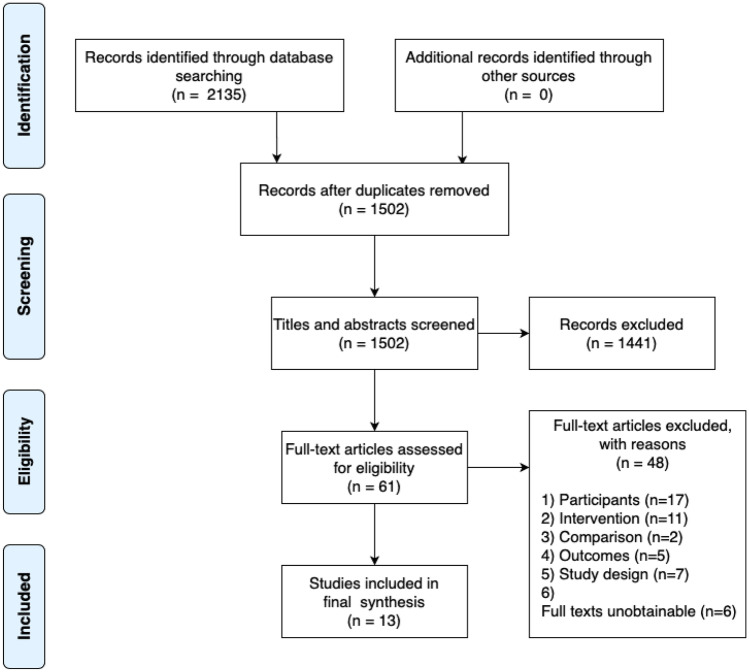
- Searches covered 1 January 2010 to 10 August 2021 in PsycInfo, EMBASE, MEDLINE, ProQuest Dissertations and Theses, ProQuest Social Science, and Child Development and Adolescent Studies; 1502 de-duplicated records were identified, 55 were screened in detail, and 13 studies were included.
- Inclusion criteria required participants with ACE histories, a targeted MBI or mindfulness-based theoretical intervention, within- or between-subject comparison, and outcomes measuring mental health and/or cognition; methodological quality was assessed with the Mixed Methods Appraisal Tool (MMAT).
## Limitations
- The paper states that methodological shortcomings were common, including lack of random assignment, lack of follow-up, non-reporting of effect sizes, and lack of reporting of adverse events.
- The review notes that differences and inconsistencies between quantitative and qualitative results were not adequately addressed in 4 mixed-methods studies.
- Evident from the text: the evidence base was small (13 studies total), and some findings relied on case studies with n = 1 and n = 2 participants, which limits representativeness and generalizability.
Model-written summary. Check it against the paper before relying on it.
Integrity signals
Registry
Cites
Statistics
Figures
Verification
Claims the paper makes
2 Valid · 0 Not valid · 6 Not checked · 26 Own results and interpretations
The cited sources support only part of this claim — read each source’s verdict below.
In the paper
“populations with ACE histories may be more susceptible to adverse effects of mindfulness than the general population, e.g. re-traumatization or deterioration in pre-existing clinical outcomes (Lindahl et al., 2017).”
§ The Efficacy of Targeted Mindfulness-Based Interventions for Improving Mental Health and Cognition Among Youth and Adults with ACE Histories: A Systematic Mixed Studies Review > Discussion > Implications for Research While the current findings have identified six themes to suggest that targeted MBIs may result in positive changes for ACE survivors, it was noted that little consideration is given to the potential negative outcomes that participants may experience. Indeed, only one study (Kimbrough et al., 2010) mentioned this, stating that no study-related effects were noted through their research process. This is unhelpful as it indicates that there may have been low level adverse effects but does not elaborate further. Worryingly, this study was the earliest published study included in the final review (Kimbrough et al., 2010), suggesting that a regression in the acknowledgement of adverse effects in the literature may have occurred. It should not be assumed from the omission of such information that adverse effects were not experienced, rather the likelihood is that they were not systematically evaluated. This is a common feature in psychological research generally with reviews finding consistently weak reporting of adverse effects (Duggan et al., 2014; Jonsson et al., 2014). One estimate suggests that only 28% of clinical research provides such data (Jonsson et al., 2014). Moreover, the current findings posit that underreporting in MBI research may be even lower, with only 8% of the included literature acknowledging adverse effects. This is particularly concerning because populations with ACE histories may be more susceptible to adverse effects of mindfulness than the general population, e.g. re-traumatization or deterioration in pre-existing clinical outcomes (Lindahl et al., 2017). The latter being very relevant due to the high levels of co-morbidity associated with ACEs (Felitti et al., 1998). It has been suggested that the reason for such underreporting of adverse effects is an effort to establish MBIs as evidence-based psychological interventions (Rozental et al., 2016). Regardless of rationale for doing so, a lack of reporting of adverse effects results in an inaccurate research record.
What the sources say
- Partly supportedcites Lindahl et al., 2017 matched to “The varieties of contemplative experience: A mixed-methods study of meditation-related challenges in Western Buddhists” (2017) sourceExperimental — accuracy not yet measured
The Results (Description of phenomenology domains; page unavailable) report that practitioners with trauma histories sometimes re-experienced traumatic memories. The Results (Description of influencing factor domains; page unavailable) also identify trauma history as a reported influence on meditation-related difficulties. The paper does not establish that people with adverse childhood experiences are more susceptible than the general population, or link that specific group to deterioration in pre-existing clinical outcomes. (LLM, conf=0.86)
hedgedstates a possible cause- Asserted: passes — The authors put it forward as true.
- Checkable: passes — It can be checked against evidence.
- Load-bearing: passes — The paper’s conclusions depend on it.
- Based: passes — The paper gives a reason why it holds.
- Partly supported
None of the sources cited for this claim have been checked yet.
In the paper
“Randomization was not appropriately performed in two RCTs (8; 13), I.e. there was a lack of description of the randomization process”
§ The Efficacy of Targeted Mindfulness-Based Interventions for Improving Mental Health and Cognition Among Youth and Adults with ACE Histories: A Systematic Mixed Studies Review > Results > Study Quality
plainn = 2- Asserted: passes — The authors put it forward as true.
- Checkable: passes — It can be checked against evidence.
- Load-bearing: unclear — It is unclear whether the paper’s conclusions depend on it.
- Based: passes — The paper gives a reason why it holds.
None of the sources cited for this claim have been checked yet.
In the paper
“Increased understanding and management of emotions. Across studies a better understanding of feelings and emotions, and how to manage these, was found”
§ The Efficacy of Targeted Mindfulness-Based Interventions for Improving Mental Health and Cognition Among Youth and Adults with ACE Histories: A Systematic Mixed Studies Review > Results
plainstates a cause- Asserted: passes — The authors put it forward as true.
- Checkable: passes — It can be checked against evidence.
- Load-bearing: passes — The paper’s conclusions depend on it.
- Based: passes — The paper gives a reason why it holds.
A result the paper reports from its own data — it cites no other source for it, so there is none to check. The quote shows it is in the paper.
In the paper
“The most commonly unmet criterion was that differences and inconsistencies between quantitative and qualitative results were not adequately addressed; this occurred in four mixed-methods study designs”
§ The Efficacy of Targeted Mindfulness-Based Interventions for Improving Mental Health and Cognition Among Youth and Adults with ACE Histories: A Systematic Mixed Studies Review > Results > Study Quality
plain- Asserted: passes — The authors put it forward as true.
- Checkable: passes — It can be checked against evidence.
- Load-bearing: unclear — It is unclear whether the paper’s conclusions depend on it.
- Based: passes — The paper gives a reason why it holds.
None of the sources cited for this claim have been checked yet.
In the paper
“Increase in social skills. A novel finding was that participating in MBIs increased participants social functioning. Specifically, by eliciting feelings of acceptance and being more comfortable to seek support”
§ The Efficacy of Targeted Mindfulness-Based Interventions for Improving Mental Health and Cognition Among Youth and Adults with ACE Histories: A Systematic Mixed Studies Review > Results
plainstates a cause- Asserted: passes — The authors put it forward as true.
- Checkable: passes — It can be checked against evidence.
- Load-bearing: passes — The paper’s conclusions depend on it.
- Based: passes — The paper gives a reason why it holds.
13 more claims
Create a free account to see all 34 claims and every source verdict.
- Probably not a substantial claim. 9
- It may state two separate claims as one. 7
- The quote only partly states this claim. 1
Citations
Cites
Preferred Reporting Items for Systematic Reviews and Meta-Analyses: the PRISMA statement
Moher, D., Liberati, A., Tetzlaff, J., Altman, D. G., & for the PRISMA Group (2009) · BMJ · doi:10.1136/bmj.b2535 · Cited by 83,823
Preferred reporting items for systematic reviews and meta-analyses: the PRISMA Statement.
(2009) · PubMed Central · Cited by 44,859
A Coefficient of Agreement for Nominal Scales
Cohen, J. (1960) · Educational and Psychological Measurement · doi:10.1177/001316446002000104 · Cited by 42,398 · cited 1×
“Interrater reliability was calculated to be, κ = 0.62 (Cohen, 1960).”
BackgroundInfluentialFelitti, V. J., Anda, R. F., Nordenberg, D., Williamson, D. F., Spitz, A. M., Edwards, V., Koss, M. P., & Marks, J. S. (1998) · American Journal of Preventive Medicine · doi:10.1016/s0749-3797(98)00017-8 · Cited by 18,943
Child abuse: Adolescent records vs. adult recall
Femina, D. D., Yeager, C. A., & Lewis, D. O. (1990) · Child Abuse & Neglect · doi:10.1016/0145-2134(90)90033-p · Cited by 8,820
(2008) · Medical Entomology and Zoology · Cited by 7,477
(1993) · Cited by 7,136
(1999) · Cited by 5,934
(2001) · Cited by 3,666
Methley, A. M., Campbell, S., Chew-Graham, C., McNally, R., & Cheraghi-Sohi, S. (2014) · BMC Health Services Research · doi:10.1186/s12913-014-0579-0 · Cited by 2,706
Meditation Programs for Psychological Stress and Well-being: A Systematic Review and Meta-analysis
Goyal, M., Singh, S., Sibinga, E. M. S., Gould, N. F., Rowland-Seymour, A., Sharma, R., Berger, Z., Sleicher, D., Maron, D. D., Shihab, H. M., et al. (2014) · JAMA Internal Medicine · doi:10.1001/jamainternmed.2013.13018 · Cited by 2,380
Development of the adolescent brain: implications for executive function and social cognition
Blakemore, S., & Choudhury, S. (2006) · Journal of Child Psychology and Psychiatry · doi:10.1111/j.1469-7610.2006.01611.x · Cited by 2,328 · cited 1×
“This is mainly because brain plasticity is greatest during this period and so children/adolescents may find learning and retaining mindfulness skills easier than adults (Belsky, 1997; Blakemore & Choudhury, 2006).”
BackgroundAdverse childhood experiences and the risk of depressive disorders in adulthood
Chapman, D. P., Whitfield, C. L., Felitti, V. J., Dube, S. R., Edwards, V. J., & Anda, R. F. (2004) · Journal of Affective Disorders · doi:10.1016/j.jad.2003.12.013 · Cited by 2,267 · cited 3×
“, 2016, 2018), which confer risk of depression, anxiety and PTSD (Chapman et al., 2004; Gratz et al., 2008; McElroy & Hevey, 2014).”
BackgroundGu, J., Strauss, C., Bond, R., & Cavanagh, K. (2015) · Clinical Psychology Review · doi:10.1016/j.cpr.2015.01.006 · Cited by 1,712
Van Dam, N. T., van Vugt, M. K., Vago, D. R., Schmalzl, L., Saron, C. D., Olendzki, A., Meissner, T., Lazar, S. W., Kerr, C. E., Gorchov, J., et al. (2018) · Perspectives on Psychological Science · doi:10.1177/1745691617709589 · Cited by 1,506
Pluye, P., & Hong, Q. N. (2014) · Annual Review of Public Health · doi:10.1146/annurev-publhealth-032013-182440 · Cited by 1,363 · cited 1×
“A systematic mixed studies review (SMSR; Pluye & Hong, 2014) was conducted.”
BackgroundMindfulness-based interventions for psychiatric disorders: A systematic review and meta-analysis
Goldberg, S. B., Tucker, R. P., Greene, P. A., Davidson, R. J., Wampold, B. E., Kearney, D. J., & Simpson, T. L. (2018) · Clinical Psychology Review · doi:10.1016/j.cpr.2017.10.011 · Cited by 1,145 · cited 1×
“Moreover, MBIs are reported to be more effective than placebo or treatment as usual for most psychiatric disorders, more clinically effective than psychoeducation and support groups, and comparable to traditional cognitive behaviour therapy (A-Tajk et al., 2015; Goldberg et al., 2018; Ruiz, 2012).”
BackgroundHong, Q. N., Gonzalez‐Reyes, A., & Pluye, P. (2018) · Journal of Evaluation in Clinical Practice · doi:10.1111/jep.12884 · Cited by 1,107
A-Tjak, J. G. L., Davis, M. L., Morina, N., Powers, M. B., Smits, J. A. J., & Emmelkamp, P. M. G. (2015) · Psychotherapy and Psychosomatics · doi:10.1159/000365764 · Cited by 1,031
McLaughlin, K. A., Greif Green, J., Gruber, M. J., Sampson, N. A., Zaslavsky, A. M., & Kessler, R. C. (2012) · Archives of General Psychiatry · doi:10.1001/archgenpsychiatry.2011.2277 · Cited by 992 · cited 1×
“Exposure to ACEs is attributable to the onset of approximately one-third of all mental disorders (Green et al., 2010; McLaughlin et al., 2012).”
BackgroundThe prevention of depressive symptoms in children and adolescents: a meta-analytic review
Horowitz, J. L., & Garber, J. (2006) · Journal of Consulting and Clinical Psychology · doi:10.1037/0022-006x.74.3.401 · Cited by 803
Hong, Q. N., Pluye, P., Bujold, M., & Wassef, M. (2017) · Systematic Reviews · doi:10.1186/s13643-017-0454-2 · Cited by 754
Kiken, L. G., Garland, E. L., Bluth, K., Palsson, O. S., & Gaylord, S. A. (2015) · Personality and Individual Differences · doi:10.1016/j.paid.2014.12.044 · Cited by 717
Cramer, H., Lauche, R., Langhorst, J., & Dobos, G. (2013) · Depression and Anxiety · doi:10.1002/da.22166 · Cited by 708 · cited 1×
“Reviews also report the benefits of yoga and other mind–body interventions in improving depression and increasing mental health generally (Bridges & Sharma, 2017; Cramer et al., 2013; Domingues, 2018), particularly when delivered in adjunct with other treatments (Taylor et al.”
BackgroundNusslock, R., & Miller, G. E. (2016) · Biological Psychiatry · doi:10.1016/j.biopsych.2015.05.017 · Cited by 672 · cited 1×
“Early life adversity is also associated with deficits in executive functioning (Nusslock & Miller, 2016).”
BackgroundDunning, D. L., Griffiths, K., Kuyken, W., Crane, C., Foulkes, L., Parker, J., & Dalgleish, T. (2019) · Journal of Child Psychology and Psychiatry · doi:10.1111/jcpp.12980 · Cited by 610
Doing A Systematic Review: A Student’s Guide
Boland, A., Cherry, M. C., Dickson, R., & Carden, J. (2020) · International Coaching Psychology Review · doi:10.53841/bpsicpr.2020.15.2.119 · Cited by 598
Variation in Susceptibility to Environmental Influence: An Evolutionary Argument
Belsky, J. (1997) · Psychological Inquiry · doi:10.1207/s15327965pli0803_3 · Cited by 562 · cited 1×
“This is mainly because brain plasticity is greatest during this period and so children/adolescents may find learning and retaining mindfulness skills easier than adults (Belsky, 1997; Blakemore & Choudhury, 2006).”
Background(2006) · PubMed · Cited by 485
Nurturing Mindfulness in Children and Youth: Current State of Research
Greenberg, M. T., & Harris, A. R. (2012) · Child Development Perspectives · doi:10.1111/j.1750-8606.2011.00215.x · Cited by 480
Lindahl, J. R., Fisher, N. E., Cooper, D. J., Rosen, R. K., & Britton, W. B. (2017) · PLOS ONE · doi:10.1371/journal.pone.0176239 · Cited by 476
Mindfulness-based approaches: are they all the same?
Chiesa, A., & Malinowski, P. (2011) · Journal of Clinical Psychology · doi:10.1002/jclp.20776 · Cited by 454 · cited 1×
“Several standardized MBIs exist (Chiesa & Malinowski, 2011) such as: mindfulness-based stress reduction (MBSR; KabatZinn, 1990), mindfulness-based cognitive therapy (MBCT; Segal et al., 2002), acceptance and commitment therapy (ACT; Hayes et al., 1999), dialectical behaviour therapy (DBT; Linehan,…”
BackgroundTheories of Counseling and Psychotherapy
Patterson, C. H., & Miriani, D. N. (1967) · Journal of Employment Counseling · doi:10.1002/j.2161-1920.1967.tb00284.x · Cited by 450
A systematic review of mindfulness-based interventions for youth in school settings
Felver, J. C., Celis-de Hoyos, C. E., Tezanos, K., & Singh, N. N. (2016) · Mindfulness · doi:10.1007/s12671-015-0389-4 · Cited by 414
Emotional intelligence mediates the relationship between mindfulness and subjective well-being
Schutte, N. S., & Malouff, J. M. (2011) · Personality and Individual Differences · doi:10.1016/j.paid.2011.01.037 · Cited by 401 · cited 1×
“…state of being fully aware in the present moment and being non-judgmental towards oneself (KabatZinn, 1990), with higher levels of mindfulness being associated with greater psychological well-being (Bränström et al., 2011; Schutte & Malouff, 2011) and less psychological stress (Hicks et al., 2020).”
BackgroundDialectical Behavior Therapy for Depressed Older Adults: A Randomized Pilot Study
Lynch, T. R., Morse, J. Q., Mendelson, T., & Robins, C. J. (2003) · The American Journal of Geriatric Psychiatry · doi:10.1097/00019442-200301000-00006 · Cited by 384
Heleniak, C., Jenness, J. L., Vander Stoep, A., McCauley, E., & McLaughlin, K. A. (2016) · Cognitive Therapy and Research · doi:10.1007/s10608-015-9735-z · Cited by 371
Mindfulness-based interventions with youth: A comprehensive meta-analysis of group-design studies
Klingbeil, D. A., Renshaw, T. L., Willenbrink, J. B., Copek, R. A., Chan, K. T., Haddock, A., Yassine, J., & Clifton, J. (2017) · Journal of School Psychology · doi:10.1016/j.jsp.2017.03.006 · Cited by 312
Doing no harm in mindfulness-based programs: Conceptual issues and empirical findings
Baer, R., Crane, C., Miller, E., & Kuyken, W. (2019) · Clinical Psychology Review · doi:10.1016/j.cpr.2019.01.001 · Cited by 307 · cited 4×
“Moreover, this SMSR has highlighted the effectiveness of using targeted MBIs to improve these domains among individuals with ACEs histories (Baer et al., 2019; Ortiz & Sibinga, 2017; Sheffler et al., 2020).”
BackgroundInfluentialPhysical abuse amplifies attention to threat and increases anxiety in children.
Shackman, J. E., Shackman, A. J., & Pollak, S. D. (2007) · Emotion · doi:10.1037/1528-3542.7.4.838 · Cited by 297
Petticrew, M., Rehfuess, E., Noyes, J., Higgins, J. P. T., Mayhew, A., Pantoja, T., Shemilt, I., & Sowden, A. (2013) · Journal of Clinical Epidemiology · doi:10.1016/j.jclinepi.2013.06.005 · Cited by 292
Mindfulness and trauma: implications for treatment
Follette, V., Palm, K. M., & Pearson, A. N. (2006) · Journal of Rational-Emotive & Cognitive-Behavior Therapy · doi:10.1007/s10942-006-0025-2 · Cited by 273
Bränström, R., Duncan, L. G., & Moskowitz, J. T. (2011) · British Journal of Health Psychology · doi:10.1348/135910710x501683 · Cited by 266 · cited 1×
“Mindfulness is the state of being fully aware in the present moment and being non-judgmental towards oneself (KabatZinn, 1990), with higher levels of mindfulness being associated with greater psychological well-being (Bränström et al., 2011; Schutte & Malouff, 2011) and less psychological stress (Hicks et al.”
BackgroundFord, B. Q., Lam, P., John, O. P., & Mauss, I. B. (2018) · Journal of Personality and Social Psychology · doi:10.1037/pspp0000157 · Cited by 264
(2012) · Re-Unir (International University of La Rioja) · Cited by 262
Mapping the Mixed Methods–Mixed Research Synthesis Terrain
Sandelowski, M., Voils, C. I., Leeman, J., & Crandell, J. L. (2012) · Journal of Mixed Methods Research · doi:10.1177/1558689811427913 · Cited by 260
Greenberg, M. T., & Abenavoli, R. (2017) · Journal of Research on Educational Effectiveness · doi:10.1080/19345747.2016.1246632 · Cited by 255
Mindfulness intervention for child abuse survivors
Kimbrough, E., Magyari, T., Langenberg, P., Chesney, M., & Berman, B. (2010) · Journal of Clinical Psychology · doi:10.1002/jclp.20624 · Cited by 247
A qualitative analysis of experiential challenges associated with meditation practice
Lomas, T., Cartwright, T., Edginton, T., & Ridge, D. (2015) · Mindfulness · doi:10.1007/s12671-014-0329-8 · Cited by 229 · cited 1×
“, 2013); and concern regarding the potential for participants to experience adverse effects when undertaking MBIs, such as re-experiencing traumatic memories (Brewin, 2015; Lomas et al., 2015; Van Dam et al., 2018).”
BackgroundRozental, A., Kottorp, A., Boettcher, J., Andersson, G., & Carlbring, P. (2016) · PLOS ONE · doi:10.1371/journal.pone.0157503 · Cited by 223
Breedvelt, J. J. F., Amanvermez, Y., Harrer, M., Karyotaki, E., Gilbody, S., Bockting, C. L. H., Cuijpers, P., & Ebert, D. D. (2019) · Frontiers in Psychiatry · doi:10.3389/fpsyt.2019.00193 · Cited by 222
Dispositional mindfulness: A critical review of construct validation research
Rau, H. K., & Williams, P. G. (2016) · Personality and Individual Differences · doi:10.1016/j.paid.2015.09.035 · Cited by 215 · cited 1×
“It has been conceptualized as both a trait, i.e. an innate characteristic, and a state, i.e. a skill that can be practiced (Rau & Williams, 2016; Tang, 2017).”
BackgroundMaheu, F. S., Dozier, M., Guyer, A. E., Mandell, D., Peloso, E., Poeth, K., Jenness, J., Lau, J. Y. F., Ackerman, J. P., Pine, D. S., et al. (2010) · Cognitive, Affective, & Behavioral Neuroscience · doi:10.3758/cabn.10.1.34 · Cited by 208 · cited 1×
“, 2015) and neglect (Maheu et al., 2010) are common risk factors for heightened emotional reactivity and an increased use of maladaptive emotion regulation strategies (Heleniak et al.”
BackgroundRelationship between adverse early experiences, stressors, psychosocial resources and wellbeing
Elroy, S. M., & Hevey, D. (2013) · Child Abuse & Neglect · doi:10.1016/j.chiabu.2013.07.017 · Cited by 195 · cited 1×
“…et al., 2010) are common risk factors for heightened emotional reactivity and an increased use of maladaptive emotion regulation strategies (Heleniak et al., 2016, 2018), which confer risk of depression, anxiety and PTSD (Chapman et al., 2004; Gratz et al., 2008; McElroy & Hevey, 2014).”
BackgroundGermer, C., & Neff, K. (2019) · Handbook of Mindfulness-Based Programmes · doi:10.4324/9781315265438-28 · Cited by 192
Qualitative Health Research: Creating a New Discipline
Morse, J. M. (2012) · Cited by 189
Brewin, C. R. (2015) · European Journal of Psychotraumatology · doi:10.3402/ejpt.v6.27180 · Cited by 181 · cited 1×
“…processes (Goyal et al., 2014); variability in intervention style (Shonin et al., 2013); and concern regarding the potential for participants to experience adverse effects when undertaking MBIs, such as re-experiencing traumatic memories (Brewin, 2015; Lomas et al., 2015; Van Dam et al., 2018).”
BackgroundJonsson, U., Alaie, I., Parling, T., & Arnberg, F. K. (2014) · Contemporary Clinical Trials · doi:10.1016/j.cct.2014.02.005 · Cited by 175
McLaughlin, K. A., Green, J. G., Gruber, M. J., Sampson, N. A., Zaslavsky, A. M., & Kessler, R. C. (2010) · Psychological Medicine · doi:10.1017/s0033291709991115 · Cited by 173 · cited 1×
“Exposure to ACEs is attributable to the onset of approximately one-third of all mental disorders (Green et al., 2010; McLaughlin et al., 2012).”
BackgroundMindfulness-Based Interventions in Psychiatry
Shapero, B. G., Greenberg, J., Pedrelli, P., de Jong, M., & Desbordes, G. (2018) · Focus · doi:10.1176/appi.focus.20170039 · Cited by 172
Gratz, K. L., Tull, M. T., Baruch, D. E., Bornovalova, M. A., & Lejuez, C. W. (2008) · Comprehensive Psychiatry · doi:10.1016/j.comppsych.2008.04.005 · Cited by 172 · cited 3×
“, 2016, 2018), which confer risk of depression, anxiety and PTSD (Chapman et al., 2004; Gratz et al., 2008; McElroy & Hevey, 2014).”
BackgroundA systematic review of mindfulness-based school interventions with early adolescents
McKeering, P., & Hwang, Y.-S. (2019) · Mindfulness · doi:10.1007/s12671-018-0998-9 · Cited by 170 · cited 1×
“Although results do indicate improvements in mental health and cognition for ACE individuals of all ages through universal MBI approaches (McKeering & Hwang, 2019; Simpson et al., 2018), a potential issue is that there is no real certainty regarding the extent to which the target population will be…”
ResultDuggan, C., Parry, G., McMurran, M., Davidson, K., & Dennis, J. (2014) · Trials · doi:10.1186/1745-6215-15-335 · Cited by 165 · cited 1×
“This is a common feature in psychological research generally with reviews finding consistently weak reporting of adverse effects (Duggan et al., 2014; Jonsson et al., 2014).”
BackgroundACEs and mental health outcomes
Sheffler, J., Stanley, I. H., & Sachs‐Ericsson, N. (2020) · Elsevier eBooks · doi:10.1016/b978-0-12-816065-7.00004-5 · Cited by 165
Mindfulness-based interventions: Towards mindful clinical integration
Shonin, E., Van Gordon, W., & Griffiths, M. D. (2013) · Frontiers in Psychology · doi:10.3389/fpsyg.2013.00194 · Cited by 153 · cited 1×
“, 2014); variability in intervention style (Shonin et al., 2013); and concern regarding the potential for participants to experience adverse effects when undertaking MBIs, such as re-experiencing traumatic memories (Brewin, 2015; Lomas et al.”
BackgroundA Conceptual Framework for Critical Appraisal in Systematic Mixed Studies Reviews
Hong, Q. N., & Pluye, P. (2019) · Journal of Mixed Methods Research · doi:10.1177/1558689818770058 · Cited by 139
The Role of Mindfulness in Reducing the Adverse Effects of Childhood Stress and Trauma
Ortiz, R., & Sibinga, E. (2017) · Children · doi:10.3390/children4030016 · Cited by 137 · cited 3×
“Therefore, MBIs may be of greater benefit to vulnerable populations and individuals (Baer et al., 2019), such as those who endure adverse childhood experiences (ACEs) (Ortiz & Sibinga, 2017; Felitti et al., 1998).”
BackgroundJavanbakht, A., King, A. P., Evans, G. W., Swain, J. E., Angstadt, M., Phan, K. L., & Liberzon, I. (2015) · Frontiers in Behavioral Neuroscience · doi:10.3389/fnbeh.2015.00154 · Cited by 130
Spidel, A., Lecomte, T., Kealy, D., & Daigneault, I. (2018) · Psychology and Psychotherapy Theory Research and Practice · doi:10.1111/papt.12159 · Cited by 129
Ironic Effects of Thought Suppression: A Meta-Analysis
Wang, D. (., Hagger, M. S., & Chatzisarantis, N. L. D. (2020) · Perspectives on Psychological Science · doi:10.1177/1745691619898795 · Cited by 123 · cited 1×
“The paradoxical effect whereby individuals who suppress negative thoughts actually ruminate over these more, results in greater distress (Wang et al., 2020).”
BackgroundCrane, R. S., & Kuyken, W. (2013) · Mindfulness · doi:10.1007/s12671-012-0121-6 · Cited by 120
Mindfulness and yoga for psychological trauma: systematic review and meta-analysis
Taylor, J., McLean, L., Korner, A., Stratton, E., & Glozier, N. (2020) · Journal of Trauma & Dissociation · doi:10.1080/15299732.2020.1760167 · Cited by 110 · cited 1×
“, 2013; Domingues, 2018), particularly when delivered in adjunct with other treatments (Taylor et al., 2020).”
BackgroundMindfulness-based cognitive therapy as an augmentation treatment for obsessive-compulsive disorder.
Key, B. L., Rowa, K., Bieling, P., McCabe, R., & Pawluk, E. J. (2017) · Clinical Psychology & Psychotherapy · doi:10.1002/cpp.2076 · Cited by 103
Modern postural yoga as a mental health promoting tool: A systematic review
Domingues, R. B. (2018) · Complementary Therapies in Clinical Practice · doi:10.1016/j.ctcp.2018.03.002 · Cited by 99 · cited 2×
“Reviews also report the benefits of yoga and other mind–body interventions in improving depression and increasing mental health generally (Bridges & Sharma, 2017; Cramer et al., 2013; Domingues, 2018), particularly when delivered in adjunct with other treatments (Taylor et al., 2020).”
BackgroundTreatment as usual and routine care in research and clinical practice
Kazdin, A. E. (2015) · Clinical Psychology Review · doi:10.1016/j.cpr.2015.08.006 · Cited by 96 · cited 1×
“Overall, the main methodological issues that arose during this review are not dissimilar to those apparent across intervention and efficacy research (Kazdin, 2015).”
BackgroundDodge, K. A. (2020) · Journal of Child Psychology and Psychiatry · doi:10.1111/jcpp.13141 · Cited by 95
The Efficacy of Yoga as a Form of Treatment for Depression
Bridges, L., & Sharma, M. (2017) · Journal of Evidence-Based Complementary & Alternative Medicine · doi:10.1177/2156587217715927 · Cited by 94 · cited 1×
“Reviews also report the benefits of yoga and other mind–body interventions in improving depression and increasing mental health generally (Bridges & Sharma, 2017; Cramer et al., 2013; Domingues, 2018), particularly when delivered in adjunct with other treatments (Taylor et al., 2020).”
BackgroundEmpirically supported psychosocial interventions for bipolar disorder: Current state of the research
Salcedo, S., Gold, A. K., Sheikh, S., Marcus, P. H., Nierenberg, A. A., Deckersbach, T., & Sylvia, L. G. (2016) · Journal of Affective Disorders · doi:10.1016/j.jad.2016.05.018 · Cited by 92
Out of our mind. Art therapy and mindfulness with refugees, political violence and trauma
Kalmanowitz, D., & Ho, R. T. H. (2016) · The Arts in Psychotherapy · doi:10.1016/j.aip.2016.05.012 · Cited by 87 · cited 1×
“Research has found targeted MBIs to be useful in teaching adult survivors of ACEs how to accept and explore their thoughts and feelings related to prior adversity (Follette et al., 2006; Gallegos et al., 2015; Kalmanowitz & Ho, 2016; Kimbrough et al., 2010).”
BackgroundMindfulness Intervention for Child Abuse Survivors: A 2.5-Year Follow-Up: MICAS-II
Earley, M. D., Chesney, M. A., Frye, J., Greene, P. A., Berman, B., & Kimbrough, E. (2014) · Journal of Clinical Psychology · doi:10.1002/jclp.22102 · Cited by 84 · cited 1×
“Importantly, results are found to maintain over time (Earley et al., 2014).”
BackgroundGallegos, A. M., Lytle, M. C., Moynihan, J. A., & Talbot, N. L. (2015) · Psychological Trauma Theory Research Practice and Policy · doi:10.1037/tra0000053 · Cited by 79
Traits and states in mindfulness meditation
Tang, Y.-Y., Hölzel, B. K., & Posner, M. I. (2016) · Nature Reviews Neuroscience · doi:10.1038/nrn.2015.7 · Cited by 73
Systematic Synthesis of Qualitative Research
Saini, M., & Shlonsky, A. (2012) · Systematic Synthesis of Qualitative Research · doi:10.1093/acprof:oso/9780195387216.003.0005 · Cited by 63
Caldwell, J. G., & Shaver, P. R. (2015) · Mindfulness · doi:10.1007/s12671-014-0298-y · Cited by 59
The art of wellness: A 14-week art therapy program for at-risk youth
Sitzer, D. L., & Stockwell, A. B. (2015) · The Arts in Psychotherapy · doi:10.1016/j.aip.2015.05.007 · Cited by 57
Jee, S. H., Couderc, J., Swanson, D. P., Gallegos, A. M., Hilliard, C., Blumkin, A. K., Cunningham, K. M., & Heinert, S. W. (2015) · Complementary Therapies in Clinical Practice · doi:10.1016/j.ctcp.2015.06.007 · Cited by 57
Current status of yoga in mental health services
Varambally, S., & Gangadhar, B. N. (2016) · International Review of Psychiatry · doi:10.3109/09540261.2016.1159950 · Cited by 54 · cited 1×
“Mindfulness techniques are also incorporated into several unstandardized interventions, e.g., yoga, art therapies and other mind–body interventions (Breedvelt et al., 2019; Ortiz & Sibinga, 2017; Varambally & Gangadhar, 2016).”
BackgroundHeleniak, C., King, K. M., Monahan, K. C., & McLaughlin, K. A. (2018) · Journal of Research on Adolescence · doi:10.1111/jora.12328 · Cited by 53
Dialectical behaviour therapy (DBT) in the treatment of borderline personality disorder
O'Connell, B., & Dowling, M. (2014) · Journal of Psychiatric and Mental Health Nursing · doi:10.1111/jpm.12116 · Cited by 52
Kirlić, N., Cohen, Z. P., & Singh, M. K. (2020) · Adversity and Resilience Science · doi:10.1007/s42844-020-00001-x · Cited by 48
Classen, C. C., Hughes, L., Clark, C., Hill Mohammed, B., Woods, P., & Beckett, B. (2021) · Journal of Trauma & Dissociation · doi:10.1080/15299732.2020.1760173 · Cited by 43
Mindfulness-Based Interventions for Young Offenders: a Scoping Review
Simpson, S., Mercer, S. W., Simpson, R., Lawrence, M., & Wyke, S. (2018) · Mindfulness · doi:10.1007/s12671-018-0892-5 · Cited by 41
Selous, C., Kelly-Irving, M., Maughan, B., Eyre, O., Rice, F., & Collishaw, S. (2020) · Psychological Medicine · doi:10.1017/s003329171900271x · Cited by 34
Acceptance and Commitment Therapy With Survivors of Adult Sexual Assault: A Case Study
Burrows, C. J. (2013) · Clinical Case Studies · doi:10.1177/1534650113479652 · Cited by 33
Van der Gucht, K., Glas, J., De Haene, L., Kuppens, P., & Raes, F. (2019) · Journal of Child and Family Studies · doi:10.1007/s10826-019-01336-5 · Cited by 32
The role of acceptance in mood improvement during Mindfulness‐Based Stress Reduction
Arlt Mutch, V. K., Evans, S., & Wyka, K. (2021) · Journal of Clinical Psychology · doi:10.1002/jclp.23017 · Cited by 30
Mindfulness in Anorexia Nervosa: An Integrated Review of the Literature
Dunne, J. (2018) · Journal of the American Psychiatric Nurses Association · doi:10.1177/1078390317711250 · Cited by 29 · cited 1×
“Preliminary research also supports the use of MBIs for bi-polar disorders and eating disorders (Dunne, 2018; Key et al., 2017; Salcedo et al., 2016).”
ResultSpidel, A., Daigneault, I., Kealy, D., & Lecomte, T. (2019) · Behavioural and Cognitive Psychotherapy · doi:10.1017/s1352465818000413 · Cited by 25
Mindfulness Intervention for Child Abuse Survivors
Kimbrough, E., Magyari, T., Chesney, M. A., & Berman, B. M. (2009) · PsycEXTRA Dataset · doi:10.1037/e517292011-413 · Cited by 23
Hicks, A., Siwik, C. J., Phillips, K. M., Zimmaro, L. A., Salmon, P. M., Burke, N., Albert, C., Fields, O., Dorsel, D., & Sephton, S. E. (2019) · International Journal of Stress Management · doi:10.1037/str0000124 · Cited by 19
indicated, N. A. (1992) · Contemporary Psychology: A Journal of Reviews · doi:10.1037/032287 · Cited by 19
DePrince, A. P., & Shirk, S. R. (2012) · Cognitive and Behavioral Practice · doi:10.1016/j.cbpra.2012.07.001 · Cited by 16
Prevention: The Role of Early Universal and Targeted Interventions
Sanders, M. R., & Morawska, A. (2010) · Springer eBooks · doi:10.1007/978-1-4419-6297-3_17 · Cited by 4 · cited 1×
“The majority of MBI research has used universal strategies to reach the target population at mass through institutions where the population is commonly found (Dodge, 2020; Sanders & Morawska, 2011).”
BackgroundMind–Body Treatments for Anxiety Disorders
Maiello, M., Ward, M. J., & Bui, É. (2019) · Current clinical psychiatry · doi:10.1007/978-3-030-30687-8_14 · Cited by 3 · cited 2×
“From a programmatic and intervention standpoint, the main findings of our review indicate that MBIs are effective for improving mental health and cognition (Domingues, 2018; Dunning et al., 2019; Maiello et al., 2020).”
BackgroundHouser, M. E. (2015) · PsycEXTRA Dataset · doi:10.1037/e506172016-001 · Cited by 3
(1994) · The Journal of Popular Culture · doi:10.1111/j.0022-3840.1994.2801_233.x · Cited by 1
Research works printed but not linked: 3
- Fields, A. (2019). The Impact of Therapeutic Yoga on Adult Female Survivors of Child Sex Abuse in Nicaragua: Exploring the Mind-Body Relationship in a Culturally Embedded Healing Process (Doctoral dissertation, Universidad Centroamericana (Nicaragua)).
- Hayes, S. C., Strosahl, K. D., & Wilson, K. G. (2011). Acceptance and commitment therapy: The process and practice of mindful change. Guilford Press.
- Norman, S. P. (2018). Improving self-regulation and managing behavior with mindfulness based intervention (Doctoral dissertation, University of Alabama Libraries).
Cited by
Trockel, M., West, C. P., Dyrbye, L. N., Sinsky, C. A., Tutty, M., Wang, H., Carlasare, L. E., Menon, N. K., & Shanafelt, T. D. (2023) · Mayo Clinic Proceedings · doi:10.1016/j.mayocp.2023.03.021 · Cited by 21
Coholic, D. A., Eys, M., Shaw, K., & Rienguette, M. (2023) · SAGE Open · doi:10.1177/21582440231192111 · Cited by 17
“…et al., 2021; Zhang et al., 2022), enhancing executive functioning (Lu et al., 2021), lowering feelings of anxiety (Borquist-Conlon et al., 2019; Moyes et al., 2022), and improving social competence, emotional resilience (Culang et al., 2021), mood, and relationships (Dai et al., 2022; Van…”
BackgroundProtective factors for adverse childhood experiences: Scoping review and evidence gap map.
Valrie, C. R., Kliewer, W. L., Gary, K. W., Cyrus, J. W. W., Hood, K. B., Williams, C. D., Lytle, L., & Shipman-Lacewell, J. R. (2025) · Psychological Trauma Theory Research Practice and Policy · doi:10.1037/tra0001676 · Cited by 10
Diamond, K. (2024) · Mindfulness · doi:10.1007/s12671-024-02408-4 · Cited by 13
“…result in impaired interoception and post-traumatic stress, which inhibit key executive functioning skills such as cognitive and emotional regulation and homeostasis that are key pre-requisites for social and educational competence (Maynard et al., 2023; Moyes et al., 2022; Schmitz et al., 2023).”
Gaskin, J., Li, W. W., van Eijk, L., & Sarnyai, Z. (2025) · Police Practice and Research · doi:10.1080/15614263.2025.2506647 · Cited by 11
“Variability in results can be attributed to several factors, including the specific MBI protocol employed, such as duration, delivery format, or components, which can may influence outcomes (Melis et al., 2022; Moyes et al., 2022).”
Metadata
- Authors
- Moyes, E., Nutman, G., & Mirman, J. H.
- Affiliations
- University of Edinburgh (GB)
- Corresponding author
- Mirman, Jessica Hafetz
- Venue
- Journal of Child & Adolescent Trauma
- Published
- 2022-05-05
- Volume
- 15
- Issue
- 4
- Pages
- 1165-1177
- ISSN
- 1936-1521 (ISSN-L)
- 1936-153X
- PMC
- PMC9684378
- OpenAlex
- W4229053024
- Cited by
- 19
- References
- 107
- Citations by year
- 2026: 5 · 2025: 4 · 2024: 7 · 2023: 3
- FWCI
- 3.20
- Type
- journal article
- Language
- en
- Open access
- hybrid
- doi.org
- Licence
- cc-by
- creativecommons.org/licenses/by/4.0 (tdm)
- creativecommons.org/licenses/by/4.0 (vor)
- Locations
- Journal of Child & Adolescent Trauma (publishedVersion, cc-by)
- PubMed Central (publishedVersion, cc-by)
- PubMed (publishedVersion)
- Edinburgh Research Explorer (University of Edinburgh) (submittedVersion, cc-by)
- Topics
- Social Sciences › Psychology › Clinical Psychology › Mindfulness and Compassion Interventions
- Social Sciences › Psychology › Clinical Psychology › Child Abuse and Trauma
- Social Sciences › Psychology › Clinical Psychology › Psychotherapy Techniques and Applications
- Keywords
- mindfulness-based interventions, adverse childhood experiences, targeted interventions, mental health, cognition, youth, adults, emotion regulation, mood, anxiety, research quality, adverse event reporting
About these checks
Registry, retraction, Cites and statistics results are computed, not judged, with one exception: a printed reference that no index lists is read once by a model before it counts as a citation error. Claims are extracted by a model and kept only when their quote appears verbatim in the text; each cited source is then checked, with a model’s help, for whether it says what the claim relies on. Those verdicts can be wrong — read the claim’s quote and the cited source before relying on one.
The claim verdicts this report counts are experimental: their accuracy is not yet measured.
A language model drew the claims from the paper on 2026-10-11, under version 3 of the claim definition (model deepseek-v4.1-flash, prompt extract-v3).
A second model labelled each claim on 2026-10-11 (model jev-1.13-20260917, definition revision gold-guideline-v0.2).
Cited sources are checked with a language model’s help (gpt-6-sol).
Statistics and arithmetic are recomputed, not judged.
Confidence bands are shown only for fields calibrated on our annotated test set. None is calibrated yet, so no band is shown.
What counts as a claim ›How we measure confidence ›How we check this ›
Are you an author, or do you see a problem with this page? Request a review
Data sources
Bibliographic data: Semantic Scholar, OpenAlex, Crossref.
Contains information from the Semantic Scholar Academic Graph Datasets, made available under the ODC Attribution License (ODC-BY 1.0).
Semantic Scholar’s data is described in: Kinney, R., et al. (2023). The Semantic Scholar Open Data Platform. arXiv:2301.10140.
