

Mortality risk attributable to high and low ambient temperature: a multicountry observational study
Open accessThe DOI matches its Crossref record; 43 of the 43 references it cites were found in a registry or an index.
Abstract
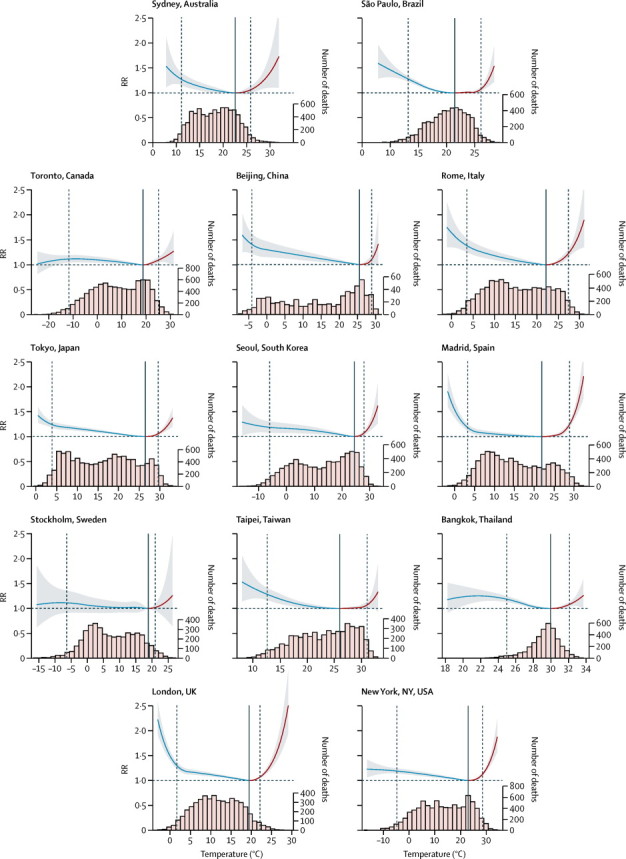
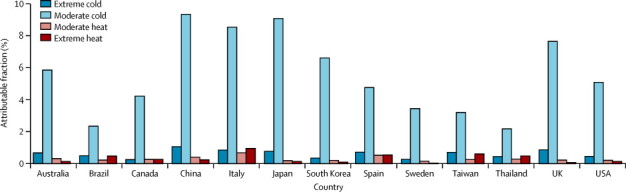
BACKGROUND: Although studies have provided estimates of premature deaths attributable to either heat or cold in selected countries, none has so far offered a systematic assessment across the whole temperature range in populations exposed to different climates. We aimed to quantify the total mortality burden attributable to non-optimum ambient temperature, and the relative contributions from heat and cold and from moderate and extreme temperatures. METHODS: We collected data for 384 locations in Australia, Brazil, Canada, China, Italy, Japan, South Korea, Spain, Sweden, Taiwan, Thailand, UK, and USA. We fitted a standard time-series Poisson model for each location, controlling for trends and day of the week. We estimated temperature-mortality associations with a distributed lag non-linear model with 21 days of lag, and then pooled them in a multivariate metaregression that included country indicators and temperature average and range. We calculated attributable deaths for heat and cold, defined as temperatures above and below the optimum temperature, which corresponded to the point of minimum mortality, and for moderate and extreme temperatures, defined using cutoffs at the 2·5th and 97·5th temperature percentiles. FINDINGS: We analysed 74,225,200 deaths in various periods between 1985 and 2012. In total, 7·71% (95% empirical CI 7·43-7·91) of mortality was attributable to non-optimum temperature in the selected countries within the study period, with substantial differences between countries, ranging from 3·37% (3·06 to 3·63) in Thailand to 11·00% (9·29 to 12·47) in China. The temperature percentile of minimum mortality varied from roughly the 60th percentile in tropical areas to about the 80-90th percentile in temperate regions. More temperature-attributable deaths were caused by cold (7·29%, 7·02-7·49) than by heat (0·42%, 0·39-0·44). Extreme cold and hot temperatures were responsible for 0·86% (0·84-0·87) of total mortality. INTERPRETATION: Most of the temperature-related mortality burden was attributable to the contribution of cold. The effect of days of extreme temperature was substantially less than that attributable to milder but non-optimum weather. This evidence has important implications for the planning of public-health interventions to minimise the health consequences of adverse temperatures, and for predictions of future effect in climate-change scenarios. FUNDING: UK Medical Research Council.
Overview
The claims and statistics of this paper haven’t been checked yet.
Free: it reads the open-access text and checks the first 5 claims that cite a source we can check. Create a free account to check every claim.
Integrity signals
Registry
Cites
Statistics
Figures
Verification
Claims the paper makes
The claims and statistics of this paper haven’t been checked yet.
Free: it reads the open-access text and checks the first 5 claims that cite a source we can check. Create a free account to check every claim.
Claims other papers make about this one
Each is checked against this paper’s own text: does it say what the citing paper says it does?
The cited source says what the claim attributes to it.
In the citing paper
“An immediate and direct impact of climate change is through human exposure to high outdoor temperatures, which is associated with morbidity and an increased risk of premature death (mortality)2–4.”
From The burden of heat-related mortality attributable to recent human-induced climate change (2021) · cites this paper as [2]
The cited source says what the claim attributes to it.
In the citing paper
“Increasing evidence from experimental, epidemiological, and econometric studies has demonstrated the effects of increased heat exposures on productivity [38], learning ability [39], and morbidity and mortality in humans [17,18,40].”
From Reduced cognitive function during a heat wave among residents of non-air-conditioned buildings: An observational study of young adults in the summer of 2016 (2018) · cites this paper as [18]
In the citing paper
“Hundreds of cardiovascular deaths each year among construction workers in Qatar may likewise be due to workplace heat (25).”
From Heat, Human Performance, and Occupational Health: A Key Issue for the Assessment of Global Climate Change Impacts (2016) · cites this paper as [25]
Self-check
Percentages, sums and reported differences re-computed from the paper’s own numbers.
The self-check needs the paper’s full text.
Citations
Cites
Quantifying heterogeneity in a meta‐analysis
Higgins, J. P. T., & Thompson, S. G. (2002) · Statistics in Medicine · doi:10.1002/sim.1186 · Cited by 36,763
(2013) · Cited by 6,752
The Effects of Climate Change on Cardiac Health
De Blois, J., Kjellstrom, T., Agewall, S., Ezekowitz, J. A., Armstrong, P. W., & Atar, D. (2015) · Cardiology · doi:10.1159/000398787 · Cited by 1,697
Relation between elevated ambient temperature and mortality: A review of the epidemiologic evidence
Basu, R. (2002) · Epidemiologic Reviews · doi:10.1093/epirev/mxf007 · Cited by 1,381
Heat-Related Deaths during the July 1995 Heat Wave in Chicago
Semenza, J. C., Rubin, C. H., Falter, K. H., Selanikio, J. D., Flanders, W. D., Howe, H. L., & Wilhelm, J. L. (1996) · New England Journal of Medicine · doi:10.1056/nejm199607113350203 · Cited by 1,376
Weather-Related Mortality: How Heat, Cold, and Heat Waves Affect Mortality in the United States
Anderson, B. G., & Bell, M. L. (2009) · Epidemiology · doi:10.1097/ede.0b013e318190ee08 · Cited by 1,229
Self-citationTime series regression studies in environmental epidemiology
Bhaskaran, K., Gasparrini, A., Hajat, S., Smeeth, L., & Armstrong, B. (2013) · International Journal of Epidemiology · doi:10.1093/ije/dyt092 · Cited by 1,150
Self-citationHigh ambient temperature and mortality: a review of epidemiologic studies from 2001 to 2008
Basu, R. (2009) · Environmental Health · doi:10.1186/1476-069x-8-40 · Cited by 1,135
Reducing and meta-analysing estimates from distributed lag non-linear models
Gasparrini, A., & Armstrong, B. (2013) · BMC Medical Research Methodology · doi:10.1186/1471-2288-13-1 · Cited by 1,081
Self-citation
Cited by
Items 201–300 of 1,006
Air pollution declines during COVID-19 lockdowns mitigate the global health burden
Venter, Z. S., Aunan, K., Chowdhury, S., & Lelieveld, J. (2020) · Environmental Research · doi:10.1016/j.envres.2020.110403 · Cited by 127
A Guide to Updating the US Government’s Social Cost of Carbon
Carleton, T. A., & Greenstone, M. (2021) · Review of Environmental Economics and Policy · doi:10.1086/720988 · Cited by 128
Zhao, Q., Li, S., Ye, T., Wu, Y. Y., Gasparrini, A., Tong, S., Urban, A., Vicedo-Cabrera, A. M., Tobías, A., Armstrong, B., et al. (2024) · PLoS Medicine · doi:10.1371/journal.pmed.1004364 · Cited by 127
“Numerous research has reported that the same extreme high temperature may be less harmful in hot regions than in cold regions, and explained this phenomenon as due to long-term acclimatisation to local heat [6,7].”
Self-citationTemperature change between neighboring days and mortality in United States: A nationwide study
Zhan, Z., Zhao, Y. K., Pang, S., Zhong, X. Y., Wu, C., & Ding, Z. (2017) · The Science of The Total Environment · doi:10.1016/j.scitotenv.2017.01.177 · Cited by 126
Self-citationTemperature and heat in informal settlements in Nairobi
Scott, A. A., Misiani, H., Okoth, J., Jordan, A. K., Gohlke, J. M., Ouma, G. O., Arrighi, J., Zaitchik, B. F., Jjemba, E. W., Verjee, S., et al. (2017) · PLoS ONE · doi:10.1371/journal.pone.0187300 · Cited by 125
Kim, Y.-O., Lee, W., Kim, H., & Cho, Y. (2020) · Environment International · doi:10.1016/j.envint.2020.105868 · Cited by 128
Self-citationThe effect of global warming on mortality
Calleja‐Agius, J., England, K., & Calleja, N. (2020) · Early Human Development · doi:10.1016/j.earlhumdev.2020.105222 · Cited by 131
Summer heat extremes in northern continents linked to developing ENSO events
Luo, M., & Lau, N. (2020) · Environmental Research Letters · doi:10.1088/1748-9326/ab7d07 · Cited by 125
“…the most harmful extreme climate and weather phenomena, summer extreme heat events have been shown to exert severe influences on human health and the eco-system (Easterling et al 2000, Kovats and Hajat 2008, Deschênes and Greenstone 2011, Ma et al 2014, Gasparrini et al 2015, Forzieri et al 2017).”
Ossola, A., Jenerette, G. D., McGrath, A., Chow, W., Hughes, L., & Leishman, M. R. (2021) · Landscape and Urban Planning · doi:10.1016/j.landurbplan.2021.104046 · Cited by 103
Geographical Variations of the Minimum Mortality Temperature at a Global Scale: A Multicountry Study
Tobías, A., Hashizume, M., Honda, Y., Sera, F., Ng, C. F. S., Kim, Y., Royé, D., Chung, Y., Đăng, T. N., Kim, H., et al. (2021) · Environmental Epidemiology · doi:10.1097/ee9.0000000000000169 · Cited by 125
Self-citationHow Blackouts during Heat Waves Amplify Mortality and Morbidity Risk
Stone, B., Gronlund, C. J., Mallen, E. S., Hondula, D. M., O’Neill, M. S., Rajput, M., Grijalva, S., Lanza, K., Harlan, S. L., Larsen, L. S., et al. (2023) · Environmental Science & Technology · doi:10.1021/acs.est.2c09588 · Cited by 124
Costa, A. F., Hoek, G., Brunekreef, B., & de León, A. P. (2016) · Environmental Health Perspectives · doi:10.1289/ehp98 · Cited by 123
“Finally, we repeated the PM10 analyses adjusting for mean temperature over a 0–10 day lag, using exposure-response and lagresponse curves according to Gasparrini et al. (2015), instead of the single-day lags of 3 or 5 days used in the primary models.”
Análise epidemiológica dos atendimentos de parada cardiorrespiratória
Zandomenighi, R. C., & Martins, E. A. P. (2018) · Revista de Enfermagem UFPE on line · doi:10.5205/1981-8963-v12i7a230822p1912-1922-2018 · Cited by 123
“vários países de diferentes climas demonstrou que o frio teve uma contribuição maior sobre a mortalidade associada às temperaturas, bem como os extremos de temperatura.(26) Isto ajuda a explicar os achados de maiores ocorrências no outono, mês em que faz frio e também ainda há grande variação de”
Large model structural uncertainty in global projections of urban heat waves
Zheng, Z., Zhao, L., & Oleson, K. W. (2021) · Nature Communications · doi:10.1038/s41467-021-24113-9 · Cited by 123
Evaluation of the Impact of Ambient Temperatures on Occupational Injuries in Spain
Martínez-Solanas, É., López-Ruiz, M., Wellenius, G. A., Gasparrini, A., Sunyer, J., Benavides, F. G., & Basagaña, X. (2018) · Environmental Health Perspectives · doi:10.1289/ehp2590 · Cited by 123
“This pattern has also been reported by studies linking temperature and mortality (Gasparrini et al. 2015b).”
InfluentialSelf-citationO’Lenick, C. R., Wilhelmi, O. V., Michael, R., Hayden, M. H., Baniassadi, A., Wiedinmyer, C., Monaghan, A. J., Crank, P. J., & Sailor, D. J. (2019) · The Science of The Total Environment · doi:10.1016/j.scitotenv.2019.01.002 · Cited by 121
Umishio, W., Ikaga, T., Kario, K., Fujino, Y., Hoshi, T., Ando, S., Suzuki, M., Yoshimura, T., Yoshino, H., Murakami, S., et al. (2019) · Hypertension · doi:10.1161/hypertensionaha.119.12914 · Cited by 121
Inequality in the availability of residential air conditioning across 115 US metropolitan areas
Romitti, Y., Wing, I. S., Spangler, K. R., & Wellenius, G. A. (2022) · PNAS Nexus · doi:10.1093/pnasnexus/pgac210 · Cited by 125
“and single parenthood); (3) race, ethnicity, and language (minority and English language proficiency); and (4) housing and transportation (multiunit structures, mobiles homes, crowding, access to personal vehicle, and group quarters).”
Derdouri, A., Wang, R., Murayama, Y., & Osaragi, T. (2021) · Remote Sensing · doi:10.3390/rs13183654 · Cited by 123
Lee, M., Shi, L., Zanobetti, A., & Schwartz, J. D. (2016) · Environmental Research · doi:10.1016/j.envres.2016.08.029 · Cited by 109
Self-citationVargo, J., Stone, B., Habeeb, D., Liu, P., & Russell, A. (2016) · Environmental Science & Policy · doi:10.1016/j.envsci.2016.08.012 · Cited by 104
Marinaccio, A., Scortichini, M., Gariazzo, C., Leva, A. D., Bonafede, M., de'Donato, F. K., Stafoggia, M., Viegi, G., Michelozzi, P., Ancona, C., et al. (2019) · Environment International · doi:10.1016/j.envint.2019.105176 · Cited by 119
Zafeiratou, S., Samoli, E., Dimakopoulou, K., Rodopoulou, S., Analitis, A., Gasparrini, A., Stafoggia, M., de'Donato, F. K., Rao, S., Monteiro, A., et al. (2021) · The Science of The Total Environment · doi:10.1016/j.scitotenv.2021.145383 · Cited by 119
Self-citationTemporal changes in mortality impacts of heat wave and cold spell in Korea and Japan
Lee, W., Choi, H. M., Lee, J. Y., Kim, D. H., Honda, Y., & Kim, H. (2018) · Environment International · doi:10.1016/j.envint.2018.04.017 · Cited by 118
Self-citationChung, Y., Yang, D., Gasparrini, A., Vicedo‐Cabrera, A. M., Ng, C. F. S., Kim, Y., Honda, Y., & Hashizume, M. (2018) · Environmental Health Perspectives · doi:10.1289/ehp2546 · Cited by 120
Self-citationLepeule, J., Litonjua, A. A., Gasparrini, A., Koutrakis, P., Sparrow, D., Vokonas, P. S., & Schwartz, J. (2018) · Environmental Research · doi:10.1016/j.envres.2018.03.039 · Cited by 108
“Interestingly, a recent multicountry study, reported that most of the effects of temperature on mortality was due to moderately non-optimum temperatures rather than extreme heat or cold events (Gasparrini et al., 2015).”
Self-citationLehnert, M., Savić, S. M., Milošević, D. D., Dunjić, J., & Geletič, J. (2021) · ISPRS International Journal of Geo-Information · doi:10.3390/ijgi10040260 · Cited by 120
A Region at Risk: The Human Dimensions of Climate Change in Asia and the Pacific
Bank, A. D. (2017) · doi:10.22617/tcs178839-2 · Cited by 119
Projection of future temperature-related mortality due to climate and demographic changes
Lee, J. Y., & Kim, H. (2016) · Environment International · doi:10.1016/j.envint.2016.06.007 · Cited by 117
Self-citationPark, S., Kario, K., Chia, Y. C., Turana, Y., Chen, C., Buranakitjaroen, P., Nailes, J. M., Hoshide, S., Siddique, S., Sison, J., et al. (2019) · Journal of Clinical Hypertension · doi:10.1111/jch.13762 · Cited by 116
Associations of Inter- and Intraday Temperature Change With Mortality
Vicedo‐Cabrera, A. M., Forsberg, B., Tobías, A., Zanobetti, A., Schwartz, J. D., Armstrong, B., & Gasparrini, A. (2016) · American Journal of Epidemiology · doi:10.1093/aje/kwv205 · Cited by 116
“Similarly to previous studies, the association is allowed to vary nonlinearly and with a distributed lag (8, 9).”
InfluentialSelf-citationZeng, J., Zhang, X., Yang, J., Bao, J., Xiang, H., Dear, K. B. G., Liu, Q., Lin, S., Lawrence, W. R., Lin, A., et al. (2017) · International Journal of Environmental Research and Public Health · doi:10.3390/ijerph14111383 · Cited by 114
“Second, a multivariate meta‐regression strategy was used to calculate the overall CVD mortality burden attributable to non‐optimal temperatures in different subgroups to identify vulnerable groups [18,19].”
InfluentialHeat-related mortality trends under recent climate warming in Spain: A 36-year observational study
Achebak, H., Devolder, D., & Ballester, J. (2018) · PLOS Medicine · doi:10.1371/journal.pmed.1002617 · Cited by 100
“The heat attributable fractions reported in our study are higher than those presented, for example, in Gasparrini et al. [37] and somewhat different, for example, from those reported by Carmona et al. [38].”
InfluentialHu, Y., Xu, Z., Jiang, F., Li, S., Liu, S., Wu, M., Yan, C., Tan, J., Yu, G., Hu, Y., et al. (2020) · Science of The Total Environment · doi:10.1016/j.scitotenv.2019.135975 · Cited by 102
Self-citationChanges in the Frequency and Intensity of Extreme Temperature Events and Human Health Concerns
Sheridan, S. C., & Allen, M. J. (2015) · Current Climate Change Reports · doi:10.1007/s40641-015-0017-3 · Cited by 112
Wu, Y. Y., Li, S., Zhao, Q., Wen, B., Gasparrini, A., Tong, S., Overcenco, A. V., Urban, A., Schneider, A. E., Entezari, A., et al. (2022) · The Lancet Planetary Health · doi:10.1016/s2542-5196(22)00073-0 · Cited by 112
“16,34 All five variables should have global data at the grid cell level.”
Self-citationModelling Lagged Associations in Environmental Time Series Data: A Simulation Study
Gasparrini, A. (2016) · Epidemiology · doi:10.1097/ede.0000000000000533 · Cited by 113
Self-citationEmergency Cardiovascular Hospitalization Risk Attributable to Cold Temperatures in Hong Kong
Tian, L., Qiu, H., Sun, S., & Lin, H. (2016) · Circulation Cardiovascular Quality and Outcomes · doi:10.1161/circoutcomes.115.002410 · Cited by 111
“It was further separated into moderate cold and extreme cold contributions.(9,10) Empirical confidence intervals were obtained by Monte Carlo simulations assuming a multivariate normal distribution of the reduced coefficients.”
The impact of temperature extremes on mortality: a time-series study in Jinan, China
Han, J., Liu, S., Zhang, J., Zhou, L., Fang, Q., Zhang, J., & Zhang, Y. (2017) · BMJ Open · doi:10.1136/bmjopen-2016-014741 · Cited by 101
Heat and cold related-mortality in 18 French cities
Pascal, M., Wagner, V., Corso, M., Laaidi, K., Ung, A. B., & Beaudeau, P. (2018) · Environment International · doi:10.1016/j.envint.2018.08.049 · Cited by 113
Extreme temperatures and mortality in Kuwait: Who is vulnerable?
Alahmad, B., Shakarchi, A. F., Khraishah, H., AlSeaidan, M., Gasana, J., Al-Hemoud, A. M., Koutrakis, P., & Fox, M. A. (2020) · The Science of The Total Environment · doi:10.1016/j.scitotenv.2020.139289 · Cited by 112
Ma, Y., Zhou, L., & Chen, K. (2020) · Environment International · doi:10.1016/j.envint.2020.105994 · Cited by 112
Meteorological factors and COVID-19 incidence in 190 countries: An observational study
Guo, C., Bo, Y., Lin, C., Li, H. B., Zeng, Y., Zhang, Y., Hossain, M. S., Chan, J. W. M., Yeung, D. W., Kwok, K. O., et al. (2020) · The Science of The Total Environment · doi:10.1016/j.scitotenv.2020.143783 · Cited by 111
Ge, Y., Martínez, L., Sun, S., Chen, Z., Zhang, F., Li, F., Sun, W., Chen, E., Pan, J., Li, C., et al. (2021) · JAMA Internal Medicine · doi:10.1001/jamainternmed.2021.4686 · Cited by 111
Desai, Y., Khraishah, H., & Alahmad, B. (2023) · The Yale Journal of Biology and Medicine · doi:10.59249/hgal4894 · Cited by 111
Liu, J., Kim, H., Hashizume, M., Lee, W., Honda, Y., Kim, S. E., He, C., Kan, H., & Chen, R. (2025) · Nature Communications · doi:10.1038/s41467-025-56067-7 · Cited by 113
“Second, we changed parameters in the main models as per previous studies 8,15,58,62 .”
Self-citationEvolution of Minimum Mortality Temperature in Stockholm, Sweden, 1901–2009
Åström, D. O., Tornevi, A., Ebi, K. L., Rocklöv, J., & Forsberg, B. (2016) · Environmental Health Perspectives · doi:10.1289/ehp.1509692 · Cited by 104
“Our results for the end of the study period are similar to those of a recent study in which the MMT in Stockholm, Sweden, was reported to be in the 93rd percentile for the period 1990–2002 (Gasparrini et al. 2015).”
Self-citationCan access to health care mitigate the effects of temperature on mortality?
Mullins, J. T., & White, C. (2020) · Journal of Public Economics · doi:10.1016/j.jpubeco.2020.104259 · Cited by 110
“Cold weather can also induce mortality through cross-infection from indoor crowding, the adverse effects of cold exposure on the immune system, and increased survival of bacteria and viruses during cold temperatures (Eurowinter Group, 1997; Gasparrini et al., 2015).”
Public Health Implications of Drought in a Climate Change Context: A Critical Review
Salvador, C., Nieto, R., Vicente-Serrano, S. M., García‐Herrera, R., Gimeno, L., & Vicedo‐Cabrera, A. M. (2023) · Annual Review of Public Health · doi:10.1146/annurev-publhealth-071421-051636 · Cited by 110
The effects of hot nights on mortality in Barcelona, Spain
Royé, D. (2017) · International Journal of Biometeorology · doi:10.1007/s00484-017-1416-z · Cited by 111
Armstrong, B., Bell, M. L., Coêlho, M. D. S. Z. S., Guo, Y. L., Guo, Y., Goodman, P., Hashizume, M., Honda, Y., Kim, H., Lavigne, É., et al. (2017) · Environmental Health Perspectives · doi:10.1289/ehp1756 · Cited by 109
“These were estimated in the preliminary daily analyses by aggregating to annual level daily fractions of deaths attributable to heat and cold obtained as described in Gasparrini (2015), using the forward method described in Gasparrini and Leone (2014).”
InfluentialSelf-citationWeinberger, K. R., Haykin, L. A., Eliot, M., Schwartz, J. D., Gasparrini, A., & Wellenius, G. A. (2017) · Environment International · doi:10.1016/j.envint.2017.07.006 · Cited by 112
“…and mortality: 179 We characterized the present-day relationship between mean daily temperature and mortality in 180 each city using distributed lag non-linear models with an overdispersed Poisson distribution and 181 a 21-day lag function, as previously described (Gasparrini et al. 2015a).”
InfluentialSelf-citationGreen Space and Deaths Attributable to the Urban Heat Island Effect in Ho Chi Minh City
Đăng, T. N., Doan, Q., Kusaka, H., Seposo, X., & Honda, Y. (2017) · American Journal of Public Health · doi:10.2105/ajph.2017.304123 · Cited by 109
Self-citationZhu, W., & Yuan, C. (2022) · Cities · doi:10.1016/j.cities.2022.104103 · Cited by 109
Cakmak, S., Hebbern, C., Vanos, J., Crouse, D. L., & Burnett, R. (2016) · Environmental Pollution · doi:10.1016/j.envpol.2016.04.067 · Cited by 97
Zhao, Y., Huang, Z., Wang, S., Hu, J., Xiao, J., Li, X., Liu, T., Zeng, W., Guo, L., Du, Q., et al. (2019) · Environmental Health · doi:10.1186/s12940-019-0529-8 · Cited by 107
Yoo, E., Eum, Y., Roberts, J. E., Gao, Q., & Chen, K. (2021) · The Science of The Total Environment · doi:10.1016/j.scitotenv.2021.148246 · Cited by 111
Heat exposure and child nutrition: Evidence from West Africa
Blom, S., Ortiz‐Bobea, A., & Hoddinott, J. F. (2022) · Journal of Environmental Economics and Management · doi:10.1016/j.jeem.2022.102698 · Cited by 107
Impact of temperature on morbidity: New evidence from China
Agarwal, S. D., Qin, Y., Shi, L., Wei, G., & Zhu, H. (2021) · Journal of Environmental Economics and Management · doi:10.1016/j.jeem.2021.102495 · Cited by 106
Estimating and projecting the effect of cold waves on mortality in 209 US cities
Wang, Y., Shi, L., Zanobetti, A., & Schwartz, J. D. (2016) · Environment International · doi:10.1016/j.envint.2016.05.008 · Cited by 106
Self-citationChen, G., Zhang, W., Li, S., Williams, G. M., Liu, C., Morgan, G. G., Jaakkola, J. J. K., & Guo, Y. (2017) · Environmental Research · doi:10.1016/j.envres.2017.03.046 · Cited by 105
Self-citationSun, Y., Hu, X., & Xie, J. (2020) · The Science of The Total Environment · doi:10.1016/j.scitotenv.2020.143595 · Cited by 106
“, 2017), temperature (Gasparrini et al., 2015; Guo et al., 2014), and humidity (Barreca and Shimshack, 2012; Ou et al.”
Zhou, Y., Meng, T., Wu, L., Duan, Y., Li, G., Shi, C., Zhang, H., Peng, Z., Fan, C., Ma, J., et al. (2019) · Environment International · doi:10.1016/j.envint.2019.105364 · Cited by 104
Luo, Y., Li, H., Huang, F., Halm‐Lutterodt, N. V., Xu, Q., Wang, A., Guo, J. C., Tao, L., Li, X., Liu, M., et al. (2017) · Environmental Pollution · doi:10.1016/j.envpol.2017.09.021 · Cited by 103
Mortality risk related to heatwaves in Finland – Factors affecting vulnerability
Kollanus, V., Tiittanen, P., & Lanki, T. (2021) · Environmental Research · doi:10.1016/j.envres.2021.111503 · Cited by 103
Coarse Particulate Air Pollution and Daily Mortality: A Global Study in 205 Cities
Liu, C., Cai, J., Chen, R., Sera, F., Guo, Y., Tong, S., Li, S., Lavigne, É., Correa, P. M., Ortega, N. V., et al. (2022) · American Journal of Respiratory and Critical Care Medicine · doi:10.1164/rccm.202111-2657oc · Cited by 104
Self-citationDual impact of global urban overheating on mortality
Wang, S., Zhan, W., Zhou, B., Tong, S., Chakraborty, T., Wang, Z., Huang, K., Du, H., Middel, A., Li, J., et al. (2025) · Nature Climate Change · doi:10.1038/s41558-025-02303-3 · Cited by 108
“Importantly, our sensitivity analysis shows that potential uncertainties associated with this data-driven approach have minimal influence on the estimates of UHI-induced annual net mortality, confirming the robustness of our key findings (Supplementary Notes 3–5).”
InfluentialSelf-citationClimate change and fetal health: The impacts of exposure to extreme temperatures in New York City
Ngo, N. S., & Horton, R. (2015) · Environmental Research · doi:10.1016/j.envres.2015.11.016 · Cited by 106
“…and cold waves with higher mortality rates (Lee et al., 2006; Barreca, 2012; Barreca et al., 2012; Deschenes and Moretti, 2009; Deschenes and Greenstone, 2011; Deschenes, 2012; Gosling et al., 2009; Li et al., 2013; Gasparrini et al. 2015) and spontaneous fetal death rates (Fukuda et al., 2014).”
Martínez-Solanas, É., & Basagaña, X. (2018) · Environmental Research · doi:10.1016/j.envres.2018.11.006 · Cited by 105
Assessment of the economic impact of heat-related labor productivity loss: a systematic review
Zhao, M., LEE, J. K. W., Kjellstrom, T. E., & Cai, W. (2021) · Climatic Change · doi:10.1007/s10584-021-03160-7 · Cited by 102
Íñiguez, C., Royé, D., & Tobías, A. (2020) · Environmental Research · doi:10.1016/j.envres.2020.110191 · Cited by 101
“The MMP was displaced to warmer temperatures in hospital admissions compared to mortality, moving the MMP from 81st to the last percentile for cardiovascular diseases, and 31st to 89th for respiratory diseases.”
InfluentialAssociation between Cold Spells and Mortality Risk and Burden: A Nationwide Study in China
Lei, J., Chen, R., Yin, P., Meng, X., Zhang, L., Liu, C., Qiu, Y., Ji, J. S., Kan, H., & Zhou, M. (2022) · Environmental Health Perspectives · doi:10.1289/ehp9284 · Cited by 102
“Epidemiological studies have provided evidence for an association between low temperature and increased mortality (Gasparrini et al. 2015) or morbidity (Ye et al. 2012).”
InfluentialSelf-citationClimatic influences on cardiovascular diseases
Abrignani, M. G., Lombardo, A., Braschi, A., Renda, N., & Abrignani, V. (2022) · World Journal of Cardiology · doi:10.4330/wjc.v14.i3.152 · Cited by 102
Longitude Position in a Time Zone and Cancer Risk in the United States
Gu, F., Xu, S., Devesa, S. S., Zhang, F., Klerman, E. B., Graubard, B. I., & Caporaso, N. E. (2017) · Cancer Epidemiology Biomarkers & Prevention · doi:10.1158/1055-9965.epi-16-1029 · Cited by 101
“Latitude also subsumes climatic factors such as temperature that influence overall mortality and may impact cancer (21).”
Does air pollution modify temperature-related mortality? A systematic review and meta-analysis
Hu, X. Y., Han, W., Wang, Y., Aunan, K., Pan, X., Huang, J., & Li, G. (2022) · Environmental Research · doi:10.1016/j.envres.2022.112898 · Cited by 101
Ambient carbon monoxide and daily mortality: a global time-series study in 337 cities
Chen, K., Breitner, S., Wolf, K., Stafoggia, M., Sera, F., Vicedo-Cabrera, A. M., Guo, Y., Tong, S., Lavigne, É., Matus, P., et al. (2021) · The Lancet Planetary Health · doi:10.1016/s2542-5196(21)00026-7 · Cited by 101
Self-citationSong, J., Huang, B., Kim, J. S., Wen, J., & Li, R. (2020) · The Science of The Total Environment · doi:10.1016/j.scitotenv.2020.137226 · Cited by 100
Estimating weekly excess mortality at sub-national level in Italy during the COVID-19 pandemic
Blangiardo, M., Cameletti, M., Pirani, M., Corsetti, G., Battaglini, M., & Baio, G. (2020) · PLoS ONE · doi:10.1371/journal.pone.0240286 · Cited by 99
Chen, J., Gao, Y., Jiang, Y., Li, H., Lv, M., Duan, W., Lai, H., Chen, R., & Wang, C. (2021) · European Heart Journal · doi:10.1093/eurheartj/ehab803 · Cited by 98
Duan, Y., Liao, Y., Li, H., Yan, S., Zhao, Z., Yu, S., Fu, Y., Wang, Z., Yin, P., Cheng, J., et al. (2019) · The Science of The Total Environment · doi:10.1016/j.scitotenv.2019.134051 · Cited by 97
Xu, R., Zhao, Q., Coêlho, M. D. S. Z. S., Saldiva, P. H. N., Zoungas, S., Huxley, R., Abramson, M. J., Guo, Y., & Li, S. (2019) · Environmental Health Perspectives · doi:10.1289/ehp5688 · Cited by 101
“We used a natural cubic spline (Chen et al. 2018; Gasparrini et al. 2010, 2015) with three degrees of freedom (df) for the lag–response dimension (lag 0–3 d).”
Self-citationLam, H. C. Y., Chan, J. C. N., Luk, A. O. Y., Chan, E. Y. Y., & Goggins, W. B. (2018) · PLoS Medicine · doi:10.1371/journal.pmed.1002612 · Cited by 100
Spatiotemporal Evolution of Heat Wave Severity and Coverage Across the United States
Keellings, D., & Moradkhani, H. (2020) · Geophysical Research Letters · doi:10.1029/2020gl087097 · Cited by 96
“Extreme heat is detrimental to human health as it exacerbates preexisting medical conditions and causes mortality rates to increase (Ahmadalipour et al., 2019; Ahmadalipour & Moradkhani, 2018; Curriero et al., 2002; Ebi, 2008; Gasparrini et al., 2015).”
Sera, F., Armstrong, B., Abbott, S., Meakin, S. R., O’Reilly, K. M., von Borries, R., Schneider, R., Royé, D., Hashizume, M., Pascal, M., et al. (2021) · Nature Communications · doi:10.1038/s41467-021-25914-8 · Cited by 96
Self-citationIntraday adaptation to extreme temperatures in outdoor activity
Fan, Y., Wang, J., Obradovich, N., & Zheng, S. (2023) · Scientific Reports · doi:10.1038/s41598-022-26928-y · Cited by 99
A dynamical systems approach to studying midlatitude weather extremes
Messori, G., Caballero, R., & Faranda, D. (2017) · Geophysical Research Letters · doi:10.1002/2017gl072879 · Cited by 98
“Moreover, this approach is ill suited to study extreme weather events, which carry major social and economic costs [e.g., Kunkel et al., 1999; Gasparrini et al., 2015] and attract intense scientific and popular attention [e.g., Herring et al., 2015].”
Sex determination using the scapula in medieval skeletons from East Anatolia.
Özer, İ., Katayama, K., Sağır, M., & Güleç, E. (2006) · PubMed · Cited by 96
Amegah, A. K., Rezza, G., & Jaakkola, J. J. K. (2016) · Environment International · doi:10.1016/j.envint.2016.02.027 · Cited by 95
Hourly associations between heat and ambulance calls
Guo, Y. (2016) · Environmental Pollution · doi:10.1016/j.envpol.2016.10.091 · Cited by 96
“To date, many studies have examined the heat effects on mortality/morbidity (hospital admission and emergency hospital visits) in different cities/regions/countries, with daily time series data (Gasparrini et al., 2015; Guo et al., 2014; Ye et al., 2012).”
Self-citationHeat Stress in Indoor Environments of Scandinavian Urban Areas: A Literature Review
Kownacki, K. L., Gao, C., Kuklane, K., & Wierzbicka, A. (2019) · International Journal of Environmental Research and Public Health · doi:10.3390/ijerph16040560 · Cited by 104
Chua, P. L., Ng, C. F. S., Tobías, A., Seposo, X., & Hashizume, M. (2021) · The Lancet Planetary Health · doi:10.1016/s2542-5196(22)00003-1 · Cited by 95
Self-citationMortality risks associated with floods in 761 communities worldwide: time series study
Yang, Z., Huang, W., McKenzie, J. E., Xu, R., Yu, P., Ye, T., Wen, B., Gasparrini, A., Armstrong, B., Tong, S., et al. (2023) · BMJ · doi:10.1136/bmj-2023-075081 · Cited by 97
“28 We also included a cubic B spline with three degrees of freedom for time to model long term trends (eg, for changes in populations), a cyclic cubic B spline with three equally spaced knots for day of the year to explain the seasonal trend, and a day of the week indicator to control for weekly…”
Self-citationNo time to lose – Green the cities now
van den Bosch, M. A., & Nieuwenhuijsen, M. J. (2016) · Environment International · doi:10.1016/j.envint.2016.11.025 · Cited by 98
Yang, J., Zhou, M., Ou, C., Yin, P., Li, M., Tong, S., Gasparrini, A., Liu, X., Li, J., Cao, L., et al. (2017) · Environmental Pollution · doi:10.1016/j.envpol.2017.02.020 · Cited by 95
“, heat waves and cold spells), public health adaptation policies should take both temperature rises and increased short-term (eg, interday or intraday variation) and long-term (eg, seasonal variation) weather variability into account while we prepare for more impacts from high temperature-related mortality burden on t…”
Self-citationGuo, P., Chen, Y., Wu, H., Zeng, J., Zeng, Z., Li, W., Zhang, Q., Huo, X., Feng, W., Lin, J., et al. (2019) · Environment International · doi:10.1016/j.envint.2019.105410 · Cited by 96
Song, J. G., Pan, R., Yi, W., Wei, Q., Qin, W., Song, S., Tang, C. K., He, Y., Liu, X., Cheng, J., et al. (2021) · The Science of The Total Environment · doi:10.1016/j.scitotenv.2021.147540 · Cited by 96
Chung, Y., Noh, H., Honda, Y., Hashizume, M., Bell, M. L., Guo, Y. L., & Kim, H. (2017) · American Journal of Epidemiology · doi:10.1093/aje/kww199 · Cited by 95
Self-citationPhung, D. T., Guo, Y., Thai, P. K., Rutherford, S., Wang, X., Nguyen, M. N., Do, C. M., Nguyen, N. H., Alam, N., & Chu, C. M.-Y. (2015) · Environmental Pollution · doi:10.1016/j.envpol.2015.06.004 · Cited by 94
Self-citationPonjoan, A., Blanch, J., Alves‐Cabratosa, L., Martí‐Lluch, R., Comas‐Cufí, M., Parramon, D., García-Gil, M., Ramos, R., & Petersen, I. (2017) · Environmental Health · doi:10.1186/s12940-017-0238-0 · Cited by 95
Chen, K., Vicedo‐Cabrera, A. M., & Dubrow, R. (2020) · Current Environmental Health Reports · doi:10.1007/s40572-020-00281-6 · Cited by 93
Metadata
- Authors
- Gasparrini, A., Guo, Y., Hashizume, M., Lavigne, E., Zanobetti, A., Schwartz, J., Tobias, A., Tong, S., Rocklöv, J., Forsberg, B., Leone, M., De Sario, M., Bell, M. L., Guo, Y.-L. L., Wu, C.-F., Kan, H., Yi, S.-M., de Sousa Zanotti Stagliorio Coelho, M., Saldiva, P. H. N., Honda, Y., Kim, H., & Armstrong, B.
- Affiliations
- London School of Hygiene & Tropical Medicine (GB)
- The University of Queensland (AU)
- Nagasaki University (JP)
- Harvard University (US)
- Queensland University of Technology (AU)
- Umeå University (SE)
- Regione Lazio (IT)
- Yale University (US)
- National Taiwan University (TW)
- Fudan University (CN)
- Seoul National University (KR)
- University of Tsukuba (JP)
- Corresponding author
- Gasparrini, Antonio
- ORCID
- Venue
- The Lancet
- Publisher
- Elsevier BV
- Published
- 2015-07
- Volume
- 386
- Issue
- 9991
- Pages
- 369-375
- ISSN
- 0099-5355 (ISSN-L)
- 0140-6736
- PMC
- PMC4521077
- OpenAlex
- W2162775913
- Semantic Scholar
- ad689db0aa12fd8b5d847aacec3d0f3aad1214f0
- Cited by
- 2,965
- References
- 43
- Citations by year
- 2026: 402 · 2025: 399 · 2024: 363 · 2023: 303 · 2022: 341 · 2021: 288 · 2020: 230 · 2019: 202 · 2018: 146 · 2017: 150 · 2016: 96 · 2015: 40
- FWCI
- 90.15
- Type
- journal article
- Language
- en
- Open access
- hybrid
- doi.org
- Licence
- cc-by
- www.elsevier.com/tdm/userlicense/1.0/ (tdm)
- creativecommons.org/licenses/by/4.0/ (vor)
- Locations
- The Lancet (publishedVersion, cc-by)
- Europe PMC (PubMed Central) (publishedVersion, other-oa)
- PubMed Central (publishedVersion, cc-by)
- PubMed (publishedVersion)
- LSHTM Research Online (London School of Hygiene and Tropical Medicine) (acceptedVersion)
- DIGITAL.CSIC (Spanish National Research Council (CSIC)) (submittedVersion, cc-by)
- QUT ePrints (Queensland University of Technology) (submittedVersion)
- Institutional Repositories DataBase (IRDB) (submittedVersion, cc-by)
- Nagasaki University's Academic Output SITE (Nagasaki University) (submittedVersion, cc-by-nc-nd)
- Funders
- UK Medical Research Council ((grant G1002296))
- Ministry of Education of the Spanish Government (PRX12/00515)
- NHMRC research fellowship ((#553043))
- ARC Discovery Grant ((DP110100651))
- Global Research Laboratory (grant K21004000001-10A0500-00710)
- Topics
- Physical Sciences › Environmental Science › Health, Toxicology and Mutagenesis › Climate Change and Health Impacts
- Physical Sciences › Environmental Science › Health, Toxicology and Mutagenesis › Air Quality and Health Impacts
- Health Sciences › Medicine › Physiology (medical) › Thermoregulation and physiological responses
- Keywords
- temperature-related mortality, ambient temperature, cold-related mortality, heat-related mortality, temperature extremes, attributable mortality, temperature-mortality relationship, climate and health, minimum mortality temperature, public health interventions, distributed lag non-linear model, meta-regression
- MeSH terms
- Climate, Cold Temperature, Hot Temperature, Humans, Mortality, Global Health, Risk Assessment
About these checks
Registry, retraction, Cites and statistics results are computed, not judged, with one exception: a printed reference that no index lists is read once by a model before it counts as a citation error. Claims are extracted by a model and kept only when their quote appears verbatim in the text; each cited source is then checked, with a model’s help, for whether it says what the claim relies on. Those verdicts can be wrong — read the claim’s quote and the cited source before relying on one.
Statistics and arithmetic are recomputed, not judged.
Confidence bands are shown only for fields calibrated on our annotated test set. None is calibrated yet, so no band is shown.
What counts as a claim ›How we measure confidence ›How we check this ›
Are you an author, or do you see a problem with this page? Request a review
Data sources
Bibliographic data: Semantic Scholar, OpenAlex, Crossref.
Contains information from the Semantic Scholar Academic Graph Datasets, made available under the ODC Attribution License (ODC-BY 1.0).
Semantic Scholar’s data is described in: Kinney, R., et al. (2023). The Semantic Scholar Open Data Platform. arXiv:2301.10140.
