

Mortality risk attributable to high and low ambient temperature: a multicountry observational study
Open accessThe DOI matches its Crossref record; 43 of the 43 references it cites were found in a registry or an index.
Abstract
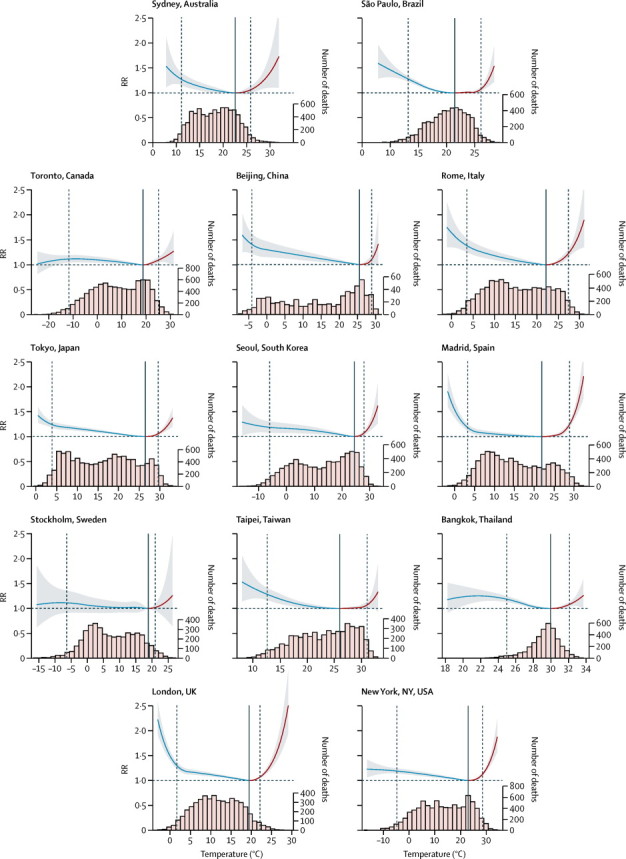
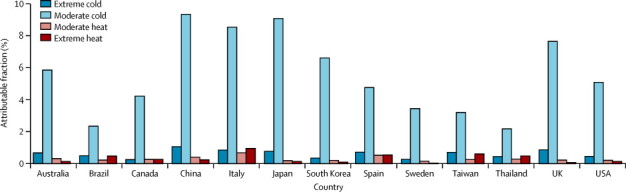
BACKGROUND: Although studies have provided estimates of premature deaths attributable to either heat or cold in selected countries, none has so far offered a systematic assessment across the whole temperature range in populations exposed to different climates. We aimed to quantify the total mortality burden attributable to non-optimum ambient temperature, and the relative contributions from heat and cold and from moderate and extreme temperatures. METHODS: We collected data for 384 locations in Australia, Brazil, Canada, China, Italy, Japan, South Korea, Spain, Sweden, Taiwan, Thailand, UK, and USA. We fitted a standard time-series Poisson model for each location, controlling for trends and day of the week. We estimated temperature-mortality associations with a distributed lag non-linear model with 21 days of lag, and then pooled them in a multivariate metaregression that included country indicators and temperature average and range. We calculated attributable deaths for heat and cold, defined as temperatures above and below the optimum temperature, which corresponded to the point of minimum mortality, and for moderate and extreme temperatures, defined using cutoffs at the 2·5th and 97·5th temperature percentiles. FINDINGS: We analysed 74,225,200 deaths in various periods between 1985 and 2012. In total, 7·71% (95% empirical CI 7·43-7·91) of mortality was attributable to non-optimum temperature in the selected countries within the study period, with substantial differences between countries, ranging from 3·37% (3·06 to 3·63) in Thailand to 11·00% (9·29 to 12·47) in China. The temperature percentile of minimum mortality varied from roughly the 60th percentile in tropical areas to about the 80-90th percentile in temperate regions. More temperature-attributable deaths were caused by cold (7·29%, 7·02-7·49) than by heat (0·42%, 0·39-0·44). Extreme cold and hot temperatures were responsible for 0·86% (0·84-0·87) of total mortality. INTERPRETATION: Most of the temperature-related mortality burden was attributable to the contribution of cold. The effect of days of extreme temperature was substantially less than that attributable to milder but non-optimum weather. This evidence has important implications for the planning of public-health interventions to minimise the health consequences of adverse temperatures, and for predictions of future effect in climate-change scenarios. FUNDING: UK Medical Research Council.
Overview
The claims and statistics of this paper haven’t been checked yet.
Free: it reads the open-access text and checks the first 5 claims that cite a source we can check. Create a free account to check every claim.
Integrity signals
Registry
Cites
Statistics
Figures
Verification
Claims the paper makes
The claims and statistics of this paper haven’t been checked yet.
Free: it reads the open-access text and checks the first 5 claims that cite a source we can check. Create a free account to check every claim.
Claims other papers make about this one
Each is checked against this paper’s own text: does it say what the citing paper says it does?
The cited source says what the claim attributes to it.
In the citing paper
“An immediate and direct impact of climate change is through human exposure to high outdoor temperatures, which is associated with morbidity and an increased risk of premature death (mortality)2–4.”
From The burden of heat-related mortality attributable to recent human-induced climate change (2021) · cites this paper as [2]
The cited source says what the claim attributes to it.
In the citing paper
“Increasing evidence from experimental, epidemiological, and econometric studies has demonstrated the effects of increased heat exposures on productivity [38], learning ability [39], and morbidity and mortality in humans [17,18,40].”
From Reduced cognitive function during a heat wave among residents of non-air-conditioned buildings: An observational study of young adults in the summer of 2016 (2018) · cites this paper as [18]
In the citing paper
“Hundreds of cardiovascular deaths each year among construction workers in Qatar may likewise be due to workplace heat (25).”
From Heat, Human Performance, and Occupational Health: A Key Issue for the Assessment of Global Climate Change Impacts (2016) · cites this paper as [25]
Self-check
Percentages, sums and reported differences re-computed from the paper’s own numbers.
The self-check needs the paper’s full text.
Citations
Cites
Quantifying heterogeneity in a meta‐analysis
Higgins, J. P. T., & Thompson, S. G. (2002) · Statistics in Medicine · doi:10.1002/sim.1186 · Cited by 36,763
(2013) · Cited by 6,752
The Effects of Climate Change on Cardiac Health
De Blois, J., Kjellstrom, T., Agewall, S., Ezekowitz, J. A., Armstrong, P. W., & Atar, D. (2015) · Cardiology · doi:10.1159/000398787 · Cited by 1,697
Relation between elevated ambient temperature and mortality: A review of the epidemiologic evidence
Basu, R. (2002) · Epidemiologic Reviews · doi:10.1093/epirev/mxf007 · Cited by 1,381
Heat-Related Deaths during the July 1995 Heat Wave in Chicago
Semenza, J. C., Rubin, C. H., Falter, K. H., Selanikio, J. D., Flanders, W. D., Howe, H. L., & Wilhelm, J. L. (1996) · New England Journal of Medicine · doi:10.1056/nejm199607113350203 · Cited by 1,376
Weather-Related Mortality: How Heat, Cold, and Heat Waves Affect Mortality in the United States
Anderson, B. G., & Bell, M. L. (2009) · Epidemiology · doi:10.1097/ede.0b013e318190ee08 · Cited by 1,229
Self-citationTime series regression studies in environmental epidemiology
Bhaskaran, K., Gasparrini, A., Hajat, S., Smeeth, L., & Armstrong, B. (2013) · International Journal of Epidemiology · doi:10.1093/ije/dyt092 · Cited by 1,150
Self-citationHigh ambient temperature and mortality: a review of epidemiologic studies from 2001 to 2008
Basu, R. (2009) · Environmental Health · doi:10.1186/1476-069x-8-40 · Cited by 1,135
Reducing and meta-analysing estimates from distributed lag non-linear models
Gasparrini, A., & Armstrong, B. (2013) · BMC Medical Research Methodology · doi:10.1186/1471-2288-13-1 · Cited by 1,081
Self-citation
Cited by
Items 601–700 of 1,006
Recent Advances in Ultrafine Fibrous Materials for Effective Warmth Retention
Wang, S., Liu, C., Wang, F., Yin, X., Yu, J., Zhang, S., & Ding, B. (2022) · Advanced Fiber Materials · doi:10.1007/s42765-022-00209-9 · Cited by 49
The burden of heat-related stroke mortality under climate change scenarios in 22 East Asian cities
Zhou, L., He, C., Kim, H., Honda, Y., Lee, W., Hashizume, M., Chen, R., & Kan, H. (2022) · Environment International · doi:10.1016/j.envint.2022.107602 · Cited by 48
Self-citationThe methodology of quantitative risk assessment studies
Rigaud, M., Buekers, J., Bessems, J. G. M., Basagaña, X., Mathy, S., Nieuwenhuijsen, M. J., & Slama, R. (2024) · Environmental Health · doi:10.1186/s12940-023-01039-x · Cited by 49
“6 Illustration of non-linear exposure response functions: A ) Fine particulate matter and mortality [85]; B ) Temperature and mortality in Rome [86], C ) Physical activity and cardiovascular events [87].”
Pyrgou, A., Castaldo, V. L., Pisello, A. L., Cotana, F., & Santamouris, M. (2017) · Solar Energy · doi:10.1016/j.solener.2017.05.040 · Cited by 48
Zhang, Y., Xiang, Q., Yu, C., Bao, J., Ho, H. C., Sun, S., Ding, Z., Hu, K., & Zhang, L. (2019) · Environmental Research · doi:10.1016/j.envres.2019.108771 · Cited by 48
Qi, H., Li, Y., Zhang, J., Chen, Y., Guo, Y., Xiao, S., Hu, J., Wang, W., Zhang, W., Hu, Y., et al. (2020) · The Science of The Total Environment · doi:10.1016/j.scitotenv.2020.138548 · Cited by 48
Self-citationFranzke, C. L. E., & Torelló‐Sentelles, H. (2020) · Climatic Change · doi:10.1007/s10584-020-02825-z · Cited by 48
Examining the benefits of cold exposure as a therapeutic strategy for obesity and type 2 diabetes
Ivanova, Y. M., & Blondin, D. P. (2021) · Journal of Applied Physiology · doi:10.1152/japplphysiol.00934.2020 · Cited by 44
Wondmagegn, B. Y., Xiang, J., Dear, K. B. G., Williams, S. S., Hansen, A. L., Pisaniello, D., Nitschke, M., Nairn, J., Scalley, B., Varghese, B. M., et al. (2021) · The Science of The Total Environment · doi:10.1016/j.scitotenv.2021.146815 · Cited by 49
Impact of Short-Term Exposure to Extreme Temperatures on Mortality: A Multi-City Study in Belgium
Demoury, C., Aerts, R., Vandeninden, B., Schaeybroeck, B. V., & Clercq, E. M. D. (2022) · International Journal of Environmental Research and Public Health · doi:10.3390/ijerph19073763 · Cited by 49
“In this pooled multi-city analysis for Belgium, we observed non-linear relationships between temperature and mortality, generally U- or J- shaped, with a slowly increasing risk with increasingly lower temperatures and a steeper increase for high temperatures, as it is generally observed [19,40].”
InfluentialBudhathoki, N. K., & Zander, K. K. (2019) · International Journal of Environmental Research and Public Health · doi:10.3390/ijerph16091578 · Cited by 47
“According to an international study analysing over 74 million deaths in 384 locations across 13 countries, extreme cold kills 20 times more people than extreme heat [22].”
Mosca, F., Sani, G. M. D., Giachetta, A., & Perini, K. (2021) · Sustainability · doi:10.3390/su132111638 · Cited by 47
Sartini, C., Barry, S., Wannamethee, S. G., Whincup, P. H., LENNON, L. T., Ford, I., & Morris, R. W. (2016) · International Journal of Cardiology · doi:10.1016/j.ijcard.2016.05.012 · Cited by 47
Weather and gastrointestinal disease in Spain: A retrospective time series regression study
Morral-Puigmal, C., Martínez-Solanas, É., Villanueva, C. M., & Basagaña, X. (2018) · Environment International · doi:10.1016/j.envint.2018.10.003 · Cited by 47
O’Lenick, C. R., Baniassadi, A., Michael, R., Monaghan, A. J., Boehnert, J., Yu, X. Q., Hayden, M. H., Wiedinmyer, C., Zhang, K., Crank, P. J., et al. (2020) · Environmental Health Perspectives · doi:10.1289/ehp6340 · Cited by 47
“Extreme heat is a leading cause of weather-related human mortality worldwide (Basu 2009; Basu and Malig 2011; Basu and Samet 2002; Benmarhnia et al. 2015; Braga et al. 2002; Bunker et al. 2016; Gasparrini et al. 2015; Hajat and Kosatky 2010; Kovats et al. 2004; Laaidi et al. 2012).”
He, G., Xu, Y., Hou, Z., Ren, Z., Zhou, M., Chen, Y., Zhou, C., Xiao, Y., Yu, M., Huang, B., et al. (2021) · The Science of The Total Environment · doi:10.1016/j.scitotenv.2021.146219 · Cited by 47
Xu, R., Shi, C., Wei, J., Lu, W., Li, Y., Liu, T., Wang, Y., Zhou, Y., Chen, G., Sun, H. W., et al. (2022) · Ecotoxicology and Environmental Safety · doi:10.1016/j.ecoenv.2022.113498 · Cited by 47
Li, S., Zhou, Y., Williams, G. M., Jaakkola, J. J. K., Ou, C., Chen, S., Yao, T., Qin, T., Wu, S., & Guo, Y. (2016) · Diabetes & Metabolism · doi:10.1016/j.diabet.2016.01.002 · Cited by 47
Self-citationDamage functions for climate-related hazards: unification and uncertainty analysis
Prahl, B. F., Rybski, D., Boettle, M., & Kropp, J. P. (2016) · Natural hazards and earth system sciences · doi:10.5194/nhess-16-1189-2016 · Cited by 49
Climate attribution of heat mortality
Mitchell, D. (2021) · Nature Climate Change · doi:10.1038/s41558-021-01049-y · Cited by 47
Analysis of Daily Ambient Temperature and Firearm Violence in 100 US Cities
Lyons, V. H., Gause, E. L., Spangler, K. R., Wellenius, G. A., & Jay, J. S. (2022) · JAMA Network Open · doi:10.1001/jamanetworkopen.2022.47207 · Cited by 46
Diurnal Temperature Range in Relation to Daily Mortality and Years of Life Lost in Wuhan, China
Zhang, Y., Yu, C., Yang, J., Zhang, L., & Cui, F. (2017) · International Journal of Environmental Research and Public Health · doi:10.3390/ijerph14080891 · Cited by 46
“According to a recent multi-country study [5], non-optimum temperatures (i.”
Winter pressures on the UK health system dominated by the Greenland Blocking weather regime
Charlton-Perez, A. J., Aldridge, R. W., Grams, C. M., & Lee, R. (2019) · Weather and Climate Extremes · doi:10.1016/j.wace.2019.100218 · Cited by 35
Early Biological Aging and Fetal Exposure to High and Low Ambient Temperature: A Birth Cohort Study
Martens, D. S., Plusquin, M., Cox, B., & Nawrot, T. S. (2019) · Environmental Health Perspectives · doi:10.1289/ehp5153 · Cited by 47
“Therefore, other heat and cold thresholds may be assumed for other populations, as acclimatization and di ff erent adaptation responses may apply for di ff erent population and climate conditions (Gasparrini et al. 2015).”
COVID-19 and thermoregulation-related problems: Practical recommendations
Daanen, H. A. M., Böse‐O’Reilly, S., Brearley, M. B., Flouris, A. D., Gerrett, N., Huynen, M. M. T. E., Jones, H. M., LEE, J. K. W., Morris, N. B., Norton, I., et al. (2020) · Temperature · doi:10.1080/23328940.2020.1790971 · Cited by 46
“Although mild cold is the dominating cause for temperature-related mortality [3], heat waves are accompanied by markedly increased mortality rates (e.”
Variation in estimates of heat-related mortality reduction due to tree cover in U.S. cities
Sinha, P., Coville, R. C., Hirabayashi, S., Lim, B., Endreny, T. A., & Nowak, D. J. (2021) · Journal of Environmental Management · doi:10.1016/j.jenvman.2021.113751 · Cited by 46
Effects of Drought on Mortality in Macro Urban Areas of Brazil Between 2000 and 2019
Salvador, C., Vicedo‐Cabrera, A. M., Libonati, R., Russo, A., Garcia, B. N., Belém, L. B. C., Gimeno, L., & Nieto, R. (2022) · GeoHealth · doi:10.1029/2021gh000534 · Cited by 47
Into the tropics: Temperature, mortality, and access to health care in Colombia
Sarmiento, J. H. (2023) · Journal of Environmental Economics and Management · doi:10.1016/j.jeem.2023.102796 · Cited by 46
Xu, Z., Watzek, J. T., Phung, D. T., Oberai, M. M., Rutherford, S., & Bach, A. J. E. (2023) · International Journal of Biometeorology · doi:10.1007/s00484-023-02525-0 · Cited by 45
“In this review, we defined heat as temperatures above an optimal temperature range or optimal temperature point which have adverse impacts on human health and well-being (Asseng et al. 2021; Gasparrini et al. 2015).”
Short-term excess mortality following tropical cyclones in the United States
Parks, R. M., Kontis, V., Anderson, G. B., Baldwin, J. W., Danaei, G., Toumi, R., Dominici, F., Ezzati, M., & Kioumourtzoglou, M. (2023) · Science Advances · doi:10.1126/sciadv.adg6633 · Cited by 45
Forceville, G., Lemonsu, A., Goria, S., Stempfelet, M., Host, S., Alessandrini, J.-M., Cordeau, E., & Pascal, M. (2023) · The Science of The Total Environment · doi:10.1016/j.scitotenv.2023.167476 · Cited by 45
Regional variation in the role of humidity on city-level heat-related mortality
Guo, Q., Mistry, M., Zhou, X., Zhao, G., Kino, K., Wen, B., Yoshimura, K., Satoh, Y., Cvijanović, I., Kim, Y., et al. (2024) · PNAS Nexus · doi:10.1093/pnasnexus/pgae290 · Cited by 46
“Therefore, epidemiologists continue to rely on T air to quantify excess deaths related to heat stress (6, 7, 33).”
Self-citationReduced heat exposure by limiting global warming to 1.5 °C
King, A. D., Donat, M. G., Lewis, S. C., Henley, B. J., Mitchell, D., Stott, P. A., Fischer, E. M., & Karoly, D. J. (2018) · Nature Climate Change · doi:10.1038/s41558-018-0191-0 · Cited by 45
Ambient concentrations of NO2 and hospital admissions for schizophrenia
Bai, L., Zhang, X., Zhang, Y., Cheng, Q., Duan, J., Gao, J., Xu, Z., Zhang, H., Wang, S., & Su, H. (2018) · Occupational and Environmental Medicine · doi:10.1136/oemed-2018-105162 · Cited by 45
Increased susceptibility to heat for respiratory hospitalizations in Hong Kong
Sun, S., Cao, W., Mason, T. G., Ran, J., Qiu, H., Li, J., Yang, Y., Lin, H., & Tian, L. (2019) · The Science of The Total Environment · doi:10.1016/j.scitotenv.2019.02.229 · Cited by 45
Ferreira, L. D. C. M., Nogueira, M. C., Pereira, R. V. D. B., Cossich, W., Rodrigues, M. M. D. S., Bustamante-Teixeira, M. T., & Carvalho, M. S. (2019) · Scientific Reports · doi:10.1038/s41598-019-50235-8 · Cited by 45
Prediction of Indoor Air Temperature Using Weather Data and Simple Building Descriptors
Aguilera, J. J., Andersen, R. K., & Toftum, J. (2019) · International Journal of Environmental Research and Public Health · doi:10.3390/ijerph16224349 · Cited by 45
Bennetts, H., Martins, L. A., van Hoof, J., & Soebarto, V. I. (2020) · International Journal of Environmental Research and Public Health · doi:10.3390/ijerph17228402 · Cited by 45
“Despite differences in individual studies, both physiological changes (for example, changes to the metabolic rate and cardiovascular system) and behavioural changes (for example, decline in activity, more time spent at home) suggest older people have increased vulnerability to prolonged periods of both high and cold t…”
Examining runner's outdoor heat exposure using urban microclimate modeling and GPS trajectory mining
Li, X., & Wang, G. (2021) · Computers Environment and Urban Systems · doi:10.1016/j.compenvurbsys.2021.101678 · Cited by 45
Ma, Y., Wang, W., Li, Z., Si, Y., Wang, J., Chen, L., Chen, W., Lin, H., Deng, F., Guo, X., et al. (2021) · Journal of Hazardous Materials · doi:10.1016/j.jhazmat.2021.127535 · Cited by 45
Tropical deforestation accelerates local warming and loss of safe outdoor working hours
Parsons, L. A., Jung, J., Masuda, Y. J., Zeppetello, L. R. V., Wolff, N. H., Kroeger, T., Battisti, D. S., & Spector, J. T. (2021) · One Earth · doi:10.1016/j.oneear.2021.11.016 · Cited by 47
Fluctuating temperature modifies heat-mortality association around the globe
Wu, Y. Y., Wen, B., Li, S., Gasparrini, A., Tong, S., Overcenco, A. V., Urban, A., Schneider, A. E., Entezari, A., Vicedo-Cabrera, A. M., et al. (2022) · The Innovation · doi:10.1016/j.xinn.2022.100225 · Cited by 47
Self-citationFatal Errors: The Mortality Value of Accurate Weather Forecasts
Shrader, J. G., Bakkensen, L., & Lemoine, D. M. (2023) · National Bureau of Economic Research · doi:10.3386/w31361 · Cited by 45
When don’t we need a new extreme event attribution study?
Clarke, B. J., Otto, F. E. L., & Jones, R. (2023) · Climatic Change · doi:10.1007/s10584-023-03521-4 · Cited by 44
“Across several major European cities including London, higher mean temperatures are associated with a greater-than-linear rise in mortality (Baccini et al. 2008; Gasparrini et al. 2015; de’ Donato et al. 2015; Mitchell et al. 2016; Vicedo-Cabrera et al. 2019).”
Li, C., Liu, Z., Li, W., Lin, Y., Hou, L., Niu, S., Xing, Y., Huang, J., Chen, Y., Zhang, S., et al. (2023) · The Lancet Planetary Health · doi:10.1016/s2542-5196(23)00051-7 · Cited by 44
Management of pulmonary hypertension in special conditions
Preston, I. R., Howard, L., Langleben, D., Lichtblau, M., Pulido, T., Souza, R., & Olsson, K. M. (2024) · European Respiratory Journal · doi:10.1183/13993003.01180-2024 · Cited by 44
“Patients with cardiovascular diseases are at four to seven times greater risk of mortality during extreme heat events [69, 70].”
Orru, H., & Åström, D. O. (2016) · International Journal of Biometeorology · doi:10.1007/s00484-016-1270-4 · Cited by 46
“The relationship between hot and cold temperatures and mortality is well established (Turner et al. 2012; Gasparrini et al. 2015).”
Impacts of ambient temperature on the burden of bacillary dysentery in urban and rural Hefei, China
CHENG, J., Xie, M., ZHAO, K. F., Wu, J., Xu, Z., Song, J., Zhao, D., Li, K., WANG, X., YANG, H. H., et al. (2017) · Epidemiology and Infection · doi:10.1017/s0950268817000280 · Cited by 44
Self-citationBao, J., Guo, Y., Wang, Q., He, Y., Ma, R., Hua, J., Jiang, C., Morabito, M., Lei, L., Peng, J., et al. (2018) · The Science of The Total Environment · doi:10.1016/j.scitotenv.2018.11.101 · Cited by 45
Self-citationDegrees and dollars – Health costs associated with suboptimal ambient temperature exposure
Liu, Y., Saha, S., Hoppe, B. O., & Convertino, M. (2019) · Science of The Total Environment · doi:10.1016/j.scitotenv.2019.04.398 · Cited by 41
“…al. (2012) and Schmeltz et al. (2016) only considered hospitalizations, despite evidence that temperature impacts a wider range of health outcomes (e.g., mortality (Gasparrini et al., 2015) and emergency department visits (Saha, Brock, Vaidyanathan, Easterling, & Luber, 2015; Zhang et al., 2014)).”
Farbu, E. H., Skandfer, M., Nielsen, C. S., Brenn, T., Stubhaug, A., & Höper, A. C. (2019) · BMJ Open · doi:10.1136/bmjopen-2019-031248 · Cited by 44
Johnson, S., Ross, Z., Kheirbek, I., & Ito, K. (2020) · Urban Climate · doi:10.1016/j.uclim.2020.100583 · Cited by 44
Recent Trends in Heat-Related Mortality in the United States: An Update through 2018
Sheridan, S. C., Dixon, P., Kalkstein, A. J., & Allen, M. J. (2020) · Weather Climate and Society · doi:10.1175/wcas-d-20-0083.1 · Cited by 44
“Globally, heat-related mortality is among the largest direct causes of weather-related mortality (e.g., Green et al. 2019).”
Mortality attributable to heat and cold among the elderly in Sofia, Bulgaria
Petkova, E. P., Dimitrova, L. K., Sera, F., & Gasparrini, A. (2021) · International Journal of Biometeorology · doi:10.1007/s00484-020-02064-y · Cited by 44
Self-citationShao, M., Yu, L., Xiao, C., Deng, J., Yang, H., Xu, W., Chen, Y., Liu, X., Ni, J., & Pan, F. (2021) · Ecotoxicology and Environmental Safety · doi:10.1016/j.ecoenv.2021.112160 · Cited by 44
Provision of Air Conditioning and Heat-Related Mortality in Texas Prisons
Skarha, J., Dominick, A., Spangler, K. R., Dosa, D. M., Rich, J. D., Savitz, D. A., & Zanobetti, A. (2022) · JAMA Network Open · doi:10.1001/jamanetworkopen.2022.39849 · Cited by 45
Self-citationChristidis, N., Mitchell, D., & Stott, P. A. (2023) · npj Climate and Atmospheric Science · doi:10.1038/s41612-023-00377-4 · Cited by 45
Storying energy consumption: Collective video storytelling in energy efficiency social marketing
Gordon, R., Waitt, G., Cooper, P., & Butler, K. A. (2018) · Journal of Environmental Management · doi:10.1016/j.jenvman.2018.02.046 · Cited by 44
Wang, W., Liu, Y., Ye, P., Xu, C., Qiu, Y., Yin, P., Liu, J., Qi, J., You, J., Lin, L., et al. (2022) · The Lancet Regional Health - Western Pacific · doi:10.1016/j.lanwpc.2022.100451 · Cited by 43
Ho, J., Goggins, W. B., Mo, P. K. H., & Chan, E. Y. Y. (2022) · International Journal of Behavioral Nutrition and Physical Activity · doi:10.1186/s12966-022-01285-1 · Cited by 43
Stanišić, S., Stanišić, N., Stojić, A., & Šoštarić, A. (2015) · Journal of Toxicology and Environmental Health · doi:10.1080/15287394.2015.1101407 · Cited by 43
“Based upon the methodology presented by Gasparrini et al. (2015), the exposure-response curve was modeled with a quadratic B-spline with three internal knots placed at the 10th, 75th, and 90th percentiles of the observed local temperature distribution and the lagresponse curve (maximum lag up to 21…”
Parks, R. M., Bennett, J. E., Foreman, K. J., Toumi, R., & Ezzati, M. (2018) · eLife · doi:10.7554/elife.35500 · Cited by 43
“Deaths from cardiorespiratory diseases have been associated with cold and warm temperatures (Basu, 2009; Basu and Samet, 2002; Bennett et al., 2014; Braga et al., 2002; Gasparrini et al., 2015).”
Temporal changes in the effects of ambient temperatures on hospital admissions in Spain
Martínez-Solanas, É., & Basagaña, X. (2019) · PLoS ONE · doi:10.1371/journal.pone.0218262 · Cited by 44
The impact of temperature on mortality across different climate zones
Longden, T. (2019) · Climatic Change · doi:10.1007/s10584-019-02519-1 · Cited by 43
“(2007) and Gasparrini et al. (2015), have been the basis of impact assessments using temperature projections from global climate models (GCMs). Examples of studies using temperature projections from GCMs include Gosling et al. (2009b), Guo et al. (2016), Gasparrini et al. (2017), Vicedo-Cabrera et al. (2018) and Lo et…”
InfluentialChen, Y., Jiang, W., Liu, X., Du, Y., Liu, L., Ordovás, J. M., Lai, C., & Shen, L. (2020) · The Journal of Nutritional Biochemistry · doi:10.1016/j.jnutbio.2019.108331 · Cited by 43
Baumgartner, J., Brauer, M. D., & Ezzati, M. (2020) · BMC Medicine · doi:10.1186/s12916-020-1499-y · Cited by 43
Guo, Y., Xie, X., Lei, L., Zhou, H., Deng, S., Xu, Y. X., Liu, Z., Bao, J., Peng, J., & Huang, C. (2020) · BMJ Open · doi:10.1136/bmjopen-2019-032974 · Cited by 43
Self-citationSalvador, C., Nieto, R., Linares, C., Díaz, J., Alves, C. A., & Gimeno, L. (2020) · The Science of The Total Environment · doi:10.1016/j.scitotenv.2020.142332 · Cited by 43
Zhu, G., Zhu, Y., Wang, Z., Meng, W., Wang, X., Feng, J., Li, J., Xiao, Y., Shi, F., & Wang, S. (2021) · BMC Public Health · doi:10.1186/s12889-020-10131-7 · Cited by 43
Liu, X., He, Y., Tang, C., Wei, Q., Xu, Z., Yi, W., Pan, R., Gao, J., Duan, J., & Su, H. (2021) · Environmental Research · doi:10.1016/j.envres.2021.110738 · Cited by 43
Wilhelmi, O. V., Howe, P. D., Hayden, M. H., & O’Lenick, C. R. (2021) · Environmental Research Letters · doi:10.1088/1748-9326/ac1760 · Cited by 46
Rahman, M. M., Garcia, E., Lim, C. C., Ghazipura, M., Alam, N., Palinkas, L. A., McConnell, R., & Thurston, G. D. (2022) · Environment International · doi:10.1016/j.envint.2022.107267 · Cited by 43
“The choice of 21 days was based on available evidence from previous studies that showed cold temperature had delayed effects and lasted for several weeks of exposure, whereas hot temperature effects were more acute (Gasparrini et al., 2015; Gasparrini and Armstrong, 2013; Guo et al., 2014).”
Temporal changes of heat-attributable mortality in Prague, Czech Republic, over 1982–2019
Urban, A., Fonseca‐Rodríguez, O., Napoli, C. D., & Plavcová, E. (2022) · Urban Climate · doi:10.1016/j.uclim.2022.101197 · Cited by 43
Direct and indirect effects of the COVID-19 pandemic on mortality in Switzerland
Riou, J., Hauser, A., Fesser, A., Althaus, C. L., Egger, M., & Konstantinoudis, G. (2023) · Nature Communications · doi:10.1038/s41467-022-35770-9 · Cited by 44
Onozuka, D., & Hagihara, A. (2016) · European Journal of Preventive Cardiology · doi:10.1177/2047487316674818 · Cited by 43
Perspectives on the Economics of the Environment in the Shadow of Coronavirus
Cazcarro, I., Duarte, R., Sarasa, C., & Serrano, A. M. (2020) · Environmental and Resource Economics · doi:10.1007/s10640-020-00493-2 · Cited by 42
High ambient temperatures are associated with urban crime risk in Chicago
Hou, K., Zhang, L., Xu, X., Yang, F. L., Chen, B., Hu, W., & Shu, R. (2022) · The Science of The Total Environment · doi:10.1016/j.scitotenv.2022.158846 · Cited by 42
Excess mortality and the COVID-19 pandemic: causes of death and social inequalities
Oh, J., Min, J., Kang, C., Kim, E., Lee, J. P., Kim, H., & Lee, W. (2022) · BMC Public Health · doi:10.1186/s12889-022-14785-3 · Cited by 43
Self-citationLavigne, É., Maltby, A. M., Côté, J.-N., Weinberger, K. R., Hebbern, C., Vicedo‐Cabrera, A. M., & Wilk, P. (2022) · Environmental Research · doi:10.1016/j.envres.2022.114999 · Cited by 43
Temporal variation of the temperature-mortality association in Spain: a nationwide analysis
Ordanovich, D., Tobías, A., & Fariñas, D. R. (2023) · Environmental Health · doi:10.1186/s12940-022-00957-6 · Cited by 42
“The contribution of extreme days was comparatively lower than moderately hot and cold temperatures [2].”
Byun, G., Choi, Y., Foo, D., Stewart, R., Song, Y., Son, J.-Y., Heo, S., Ning, X., Clark, C., Kim, H., et al. (2024) · Environment International · doi:10.1016/j.envint.2024.109166 · Cited by 42
“…ambient temperatures, including heat waves and cold spells, are associated with increased risk of mortality and morbidity from a variety of diseases, including cardiovascular, and respiratory outcomes (Anderson and Bell, 2009; Gasparrini et al., 2015; Phung et al., 2016; Son et al., 2019).”
Self-citationLiu, Y., & Li, G. (2025) · Sustainable Cities and Society · doi:10.1016/j.scs.2025.106427 · Cited by 42
Exposure-lag-response association between sunlight and schizophrenia in Ningbo, China
Gu, S., Huang, R., Yang, J., Sun, S., Xu, Y., Zhang, R., Wang, Y., Lü, B., He, T., Wang, A., et al. (2019) · Environmental Pollution · doi:10.1016/j.envpol.2018.12.023 · Cited by 42
Kuddus, M. A., McBryde, E. S., & Adegboye, O. A. (2019) · Scientific Reports · doi:10.1038/s41598-019-49135-8 · Cited by 42
He, Y., Cheng, L., Bao, J., Deng, S., Liao, W., Wang, Q., Tawatsupa, B., Hajat, S., & Huang, C. (2019) · The Science of The Total Environment · doi:10.1016/j.scitotenv.2019.135098 · Cited by 42
da Silva, I., de Almeida, D. S., Hashimoto, E. M., & Martins, L. D. (2020) · Environmental Health · doi:10.1186/s12940-020-00606-w · Cited by 42
“It was used a generalized additive model (GAM) combined with a distributed lag non-linear model (DLNM), a modeling framework that can simultaneously represent non-linear exposure-response dependencies and delayed effects [41, 42].”
Chen, C., Wang, Y.-R., Wang, Y.-C., Lin, S.-L., Chen, C.-T., Lu, M., & Guo, Y. L. (2020) · The Science of The Total Environment · doi:10.1016/j.scitotenv.2020.143373 · Cited by 42
Self-citationZheng, S., Zhu, W., Shi, Q., Wang, M., Nie, Y., Zhang, D., Cheng, Z., Yin, C., Miao, Q., Luo, Y., et al. (2021) · The Science of The Total Environment · doi:10.1016/j.scitotenv.2021.145046 · Cited by 42
Zhu, D., Zhou, Q., Liu, M., & Bi, J. (2021) · The Science of The Total Environment · doi:10.1016/j.scitotenv.2021.146760 · Cited by 42
Thomas, N., Ebelt, S., Newman, A. J., Scovronick, N., D’Souza, R. R., Moss, S. E., Warren, J. L., Strickland, M. J., Darrow, L. A., & Chang, H. H. (2021) · Environmental Health · doi:10.1186/s12940-021-00735-w · Cited by 42
“However, some multi-city mortality studies have also demonstrated that adjusting for ambient air pollution often lead to similar health effect estimates for temperature [20, 45, 46].”
Zhou, Y., Yang, J., Zhou, M., Yin, P., Chen, Z., Zhao, Q., Hu, K., Liu, Q., & Ou, C. (2021) · Environment International · doi:10.1016/j.envint.2021.106746 · Cited by 42
Błażejczyk, K., Twardosz, R., Wałach, P., Czarnecka, K., & Błażejczyk, A. (2021) · International Journal of Biometeorology · doi:10.1007/s00484-021-02202-0 · Cited by 42
Chen, S., Liu, C., Lin, G., Hänninen, O., Dong, H., & Xiong, K. (2021) · Environmental Health and Preventive Medicine · doi:10.1186/s12199-021-01030-3 · Cited by 42
Hansen, A. L., Williamson, T., Pisaniello, D., Bennetts, H., van Hoof, J., Martins, L. A., Visvanathan, R., Zuo, J., & Soebarto, V. I. (2022) · Atmosphere · doi:10.3390/atmos13010096 · Cited by 44
Zhou, Y., Wang, Y., Xu, X., Yang, J., & Ou, C. (2022) · Journal of Cleaner Production · doi:10.1016/j.jclepro.2022.133182 · Cited by 42
Indoor thermal comfort in a rural dwelling in southwest China
Wei, D. X., Zhao, G., Liu, S., & Yang, L. (2022) · Frontiers in Public Health · doi:10.3389/fpubh.2022.1029390 · Cited by 42
Climate Change and Health: Consequences of High Temperatures among Vulnerable Groups in Finland
Astone, R., & Vaalavuo, M. (2022) · International Journal of Social Determinants of Health and Health Services · doi:10.1177/00207314221131208 · Cited by 42
Peralta, A., Camprubí, L., Rodríguez‐Sanz, M., Basagaña, X., Borrell, C., & Marí-Dell’Olmo, M. (2017) · International Journal of Epidemiology · doi:10.1093/ije/dyw335 · Cited by 42
“In addition, there is no literature on the impacts of housing interventions on cold-related mortality in southern Europe.”
InfluentialPińskwar, I., Choryński, A., & Graczyk, D. (2023) · International Journal of Biometeorology · doi:10.1007/s00484-023-02592-3 · Cited by 41
“…value is set depending on the analyzed issue, for example in research embracing mortality risk attributable to high and low ambient temperature it was temperature which corresponded to a minimum mortality percentile between the 1st and the 99th percentiles of temperature (Gasparrini et al. 2015).”
Hundessa, S., Huang, W., Xu, R., Yang, Z., Zhao, Q., Gasparrini, A., Armstrong, B., Bell, M. L., Huber, V., Urban, A., et al. (2025) · The Innovation · doi:10.1016/j.xinn.2025.101110 · Cited by 41
“7,16”
Self-citation
Metadata
- Authors
- Gasparrini, A., Guo, Y., Hashizume, M., Lavigne, E., Zanobetti, A., Schwartz, J., Tobias, A., Tong, S., Rocklöv, J., Forsberg, B., Leone, M., De Sario, M., Bell, M. L., Guo, Y.-L. L., Wu, C.-F., Kan, H., Yi, S.-M., de Sousa Zanotti Stagliorio Coelho, M., Saldiva, P. H. N., Honda, Y., Kim, H., & Armstrong, B.
- Affiliations
- London School of Hygiene & Tropical Medicine (GB)
- The University of Queensland (AU)
- Nagasaki University (JP)
- Harvard University (US)
- Queensland University of Technology (AU)
- Umeå University (SE)
- Regione Lazio (IT)
- Yale University (US)
- National Taiwan University (TW)
- Fudan University (CN)
- Seoul National University (KR)
- University of Tsukuba (JP)
- Corresponding author
- Gasparrini, Antonio
- ORCID
- Venue
- The Lancet
- Publisher
- Elsevier BV
- Published
- 2015-07
- Volume
- 386
- Issue
- 9991
- Pages
- 369-375
- ISSN
- 0099-5355 (ISSN-L)
- 0140-6736
- PMC
- PMC4521077
- OpenAlex
- W2162775913
- Semantic Scholar
- ad689db0aa12fd8b5d847aacec3d0f3aad1214f0
- Cited by
- 2,965
- References
- 43
- Citations by year
- 2026: 402 · 2025: 399 · 2024: 363 · 2023: 303 · 2022: 341 · 2021: 288 · 2020: 230 · 2019: 202 · 2018: 146 · 2017: 150 · 2016: 96 · 2015: 40
- FWCI
- 90.15
- Type
- journal article
- Language
- en
- Open access
- hybrid
- doi.org
- Licence
- cc-by
- www.elsevier.com/tdm/userlicense/1.0/ (tdm)
- creativecommons.org/licenses/by/4.0/ (vor)
- Locations
- The Lancet (publishedVersion, cc-by)
- Europe PMC (PubMed Central) (publishedVersion, other-oa)
- PubMed Central (publishedVersion, cc-by)
- PubMed (publishedVersion)
- LSHTM Research Online (London School of Hygiene and Tropical Medicine) (acceptedVersion)
- DIGITAL.CSIC (Spanish National Research Council (CSIC)) (submittedVersion, cc-by)
- QUT ePrints (Queensland University of Technology) (submittedVersion)
- Institutional Repositories DataBase (IRDB) (submittedVersion, cc-by)
- Nagasaki University's Academic Output SITE (Nagasaki University) (submittedVersion, cc-by-nc-nd)
- Funders
- UK Medical Research Council ((grant G1002296))
- Ministry of Education of the Spanish Government (PRX12/00515)
- NHMRC research fellowship ((#553043))
- ARC Discovery Grant ((DP110100651))
- Global Research Laboratory (grant K21004000001-10A0500-00710)
- Topics
- Physical Sciences › Environmental Science › Health, Toxicology and Mutagenesis › Climate Change and Health Impacts
- Physical Sciences › Environmental Science › Health, Toxicology and Mutagenesis › Air Quality and Health Impacts
- Health Sciences › Medicine › Physiology (medical) › Thermoregulation and physiological responses
- Keywords
- temperature-related mortality, ambient temperature, cold-related mortality, heat-related mortality, temperature extremes, attributable mortality, temperature-mortality relationship, climate and health, minimum mortality temperature, public health interventions, distributed lag non-linear model, meta-regression
- MeSH terms
- Climate, Cold Temperature, Hot Temperature, Humans, Mortality, Global Health, Risk Assessment
About these checks
Registry, retraction, Cites and statistics results are computed, not judged, with one exception: a printed reference that no index lists is read once by a model before it counts as a citation error. Claims are extracted by a model and kept only when their quote appears verbatim in the text; each cited source is then checked, with a model’s help, for whether it says what the claim relies on. Those verdicts can be wrong — read the claim’s quote and the cited source before relying on one.
Statistics and arithmetic are recomputed, not judged.
Confidence bands are shown only for fields calibrated on our annotated test set. None is calibrated yet, so no band is shown.
What counts as a claim ›How we measure confidence ›How we check this ›
Are you an author, or do you see a problem with this page? Request a review
Data sources
Bibliographic data: Semantic Scholar, OpenAlex, Crossref.
Contains information from the Semantic Scholar Academic Graph Datasets, made available under the ODC Attribution License (ODC-BY 1.0).
Semantic Scholar’s data is described in: Kinney, R., et al. (2023). The Semantic Scholar Open Data Platform. arXiv:2301.10140.
